
Insights and Stories from Sapa and the Northern Borderbelt provinces of Vietnam.


How to Travel from Hanoi to Sapa. Train vs Bus (A Slightly Sleepy Adventure)
Travelling from Hanoi to Sapa is part of the adventure. Whether you choose the clattering charm of the overnight sleeper train, the quicker but occasionally chaotic bus ride or private transportation, each journey has its own character. Here is a friendly and slightly humorous guide to getting to the mountains.
Before the misty rice terraces, walk village paths and see mountain views. Before meeting any local Hmong or Dao villagers, there is the small matter of actually getting to Sapa.
The journey from Hanoi to the mountains can be an experience in itself. Some travellers love the sleeper train, while others favour the quicker and cheaper bus. Both will get you to the same place and both have their quirks. The decision for travellers is which option makes for the most suitable start to your adventure. This blog offers our thoughts to the main options.
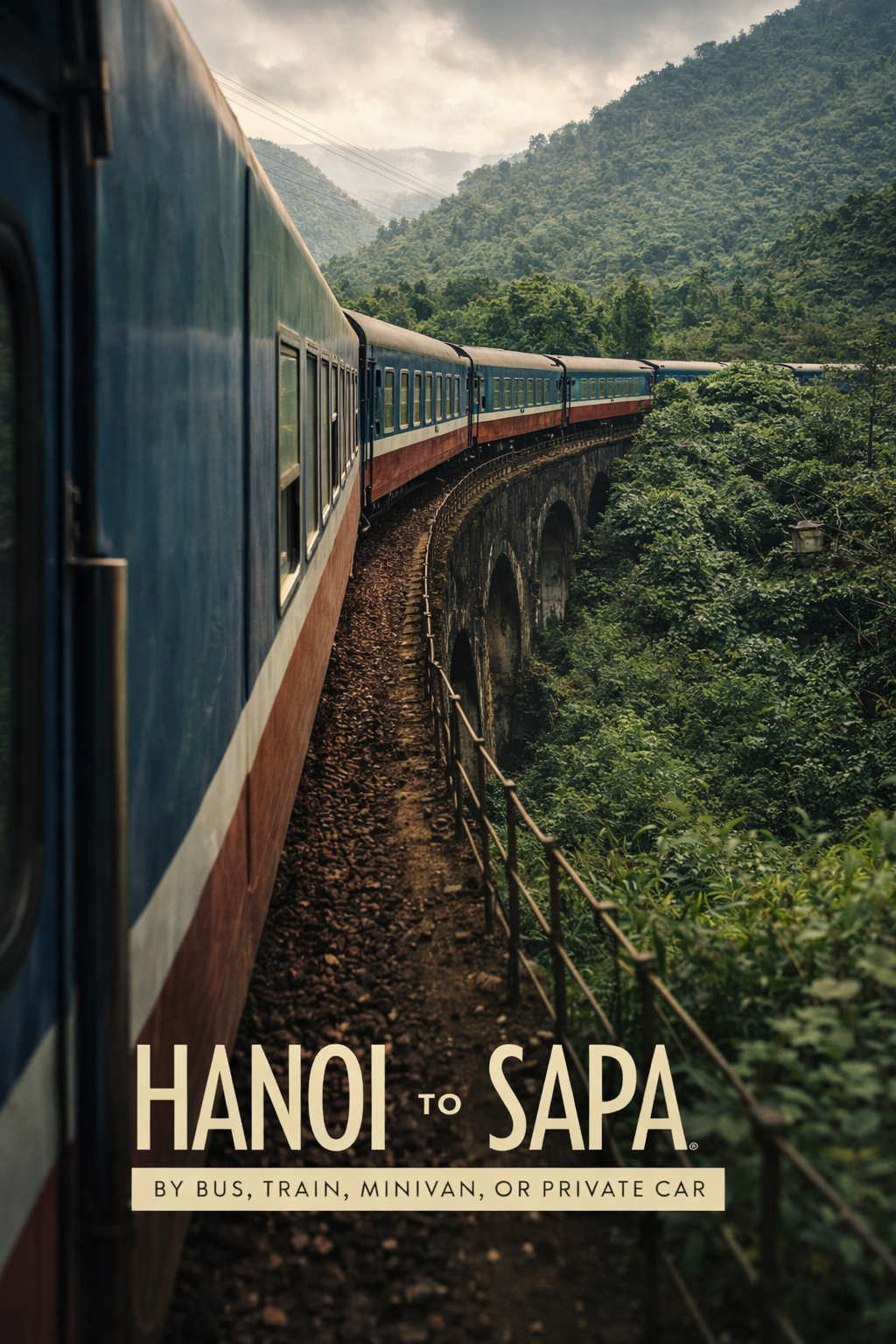
The Sleeper Train. Slow, Noisy and Wonderfully Old School
Taking the overnight train from Hanoi to Lao Cai feels like stepping into a small travelling time capsule. The train is a little noisy and the ride can be bumpy too, yet there is something undeniably adventurous about it.
Despite its age, the railway has an excellent safety record and trains are reliably punctual. That alone gives many travellers peace of mind. Boarding usually begins about half an hour before departure. Once on board you will find cabins arranged with two, four or six berths. Four berth cabins are the standard option. If you book a two berth cabin, the top bunks are either folded away or removed entirely, which gives the space a slightly more luxurious feel.
Inside the cabin there is a small table with complimentary refreshments and two plug sockets. There is storage space under the lower bunks and some overhead space for bags. Each berth has its own reading light and a small storage pouch for personal bits and pieces. Cabins have both fans and air conditioning.
The beds themselves come with a pillow and blanket. Mattress thickness varies depending on the cabin type. Two berth cabins usually have the most comfortable mattresses while the six berth cabins are rather more minimalist. Berths are best suited to travellers under 180 centimetres, although taller passengers often find them roomier than sleeper buses.
Toilets are located at the end of each carriage. They are small and fairly basic. They normally start the journey clean and become slightly more adventurous as the night progresses. Each carriage has a conductor. Some speak basic English and can assist if there are any issues during the journey.
Refreshments are typically offered three times. Once before departure, again shortly after the train leaves Hanoi, and then again about half an hour before arrival. Tea, coffee and snacks are available but are not included in the ticket price.
One unexpected highlight is passing through Hanoi’s famous train street from the perspective of being on the train itself. It is a unique little moment that many travellers do not expect. The railway line itself is old and this creates its own character. The ride can be bumpy and occasionally noisy. Earplugs, noise cancelling headphones and an eye mask are very helpful companions.
After arriving in Lao Cai there is still a final 50 minute minibus or taxi journey up the mountain to Sapa. In total the trip usually takes about ten hours. That may sound long at first. In reality it means more potential sleep time than the shorter bus ride. Children in particular tend to love the train. The bunks feel like a small adventure and many youngsters sleep surprisingly well.
The Bus. Faster, Cheaper and Occasionally Fragrant

Buses between Hanoi and Sapa are faster and generally cheaper than the train. The journey typically takes around six hours.
Most buses now operate direct services that pick passengers up at the point of embarkation and sometimes the airport. They usually make two scheduled stops along the way. One stop after about two hours allows time for a quick toilet break and light refreshments. The second stop, usually two hours before arrival, tends to be around thirty minutes and allows time for a simple meal. Luggage is stored beneath the bus and passengers can keep a smaller bag overhead.
Many companies require travellers to remove their shoes before boarding. These are placed in bags and replaced with onboard plastic slippers. This system works quite well although it can change the aroma of the journey slightly.
Modern buses offer a surprising amount of comfort. Options usually include sleeper berths or reclining seats. Seats are often better suited for taller travellers and many recline generously. Some services include heated seats, massage functions and USB charging ports. A few sleeper buses even include small television screens in the cabins.
One practical detail to be aware of is the toilets. Most buses do not have one. Those that do often keep it locked. If the toilet is open it usually begins the journey clean and becomes progressively less inviting after a couple of hours.
Safety varies between companies. Buses are generally reliable but accidents involving buses are more common than those involving trains. Choosing a reputable company is important. Some operators run hop on hop off style services that make frequent stops. These buses often drive faster and more erratically to make up lost time. Companies such as Sao Viet fall into this category and their safety record is questionable.
Day Bus vs Night Bus
Day buses are generally the calmer option. Many of the better services leave Hanoi between 7am and 9am and arrive in Sapa early afternoon. This allows travellers time to acclimatise to the mountain air and explore Sapa town before starting treks the following day.
Night buses may sound convenient but the journey is often too short for proper sleep. With lighter traffic the trip can take around five and a half hours. By the time everyone settles in there may only be five hours available for rest. Break stops can also interrupt sleep, as cabin lights are typically switched on when the bus pulls over. For travellers who can sleep anywhere this may not matter. For light sleepers it can be a challenge. Horns, swerving and lively fellow passengers can all make appearances during the night. Eye masks and earplugs help. But for those who value a quiet night, the morning bus or the sleeper train tends to be a better choice.
The New Day Train Option
In recent years, a daytime train has quietly appeared as another option for travelling between the mountains and Hanoi. It is still far less famous than the overnight sleeper, but it has begun to attract travellers who prefer scenery to snoring.
The main service most people use is train SP8, which departs Lao Cai at 12:05 and arrives in Hanoi around 19:30 or 19:40. The journey takes roughly seven and a half hours, following the same historic railway line that the night trains use. From Sapa there is still the familiar 50 minute road journey down to Lao Cai station before boarding. The big difference is that you are awake for the entire journey.
The railway follows the Red River valley for much of the route, passing farmland, small towns, bamboo groves and the occasional water buffalo grazing calmly beside the tracks. On the night train you sleep through all of this. On the day train you watch northern Vietnam unfold outside the window.
The carriages are exactly the same as those used on the overnight trains. This means travellers can still choose between soft seats, four berth sleeper cabins or six berth cabins. Most passengers during the day simply book reclining seats, which are comfortable enough for the journey and offer uninterrupted views through the large carriage windows. Sleeper cabins are still available though, and some travellers book them simply for the extra space. The train itself feels very much like classic Vietnam Railways. It is not particularly modern and it certainly is not fast. The ride can be a little bumpy in places and the pace is more leisurely than hurried. But there is something pleasant about this slower rhythm.
One of the main benefits is the simple freedom to move around. You can stand, stretch your legs, wander between carriages and spend long stretches watching the countryside glide past. For travellers who struggle to sleep on buses or trains, this can be a far more relaxing experience.
There is however one obvious drawback. The journey takes up most of the day. Between the train ride and the additional road journey between Lao Cai and Sapa, the total travel time is close to eight and a half hours. For travellers who want to maximise their time exploring the mountains, the overnight train still has the advantage of turning travel time into sleep time. But for those who enjoy watching landscapes change slowly outside the window, the day train offers something quite different. It turns the journey itself into part of the adventure rather than simply a means of getting from one place to another.The Curious Reputation of the Train vs the Bus
Over the years a quiet little reputation has formed around the journey between Hanoi and Sapa. It is not written in guidebooks, but travellers talk about it all the time. The train is widely seen as the more adventurous choice. Not faster or particularly glamorous, but undeniably memorable. Part of this reputation comes from the character of the railway itself. The line is old, the ride is occasionally bumpy, and the train clatters its way through the countryside with great enthusiasm. Yet there is something oddly comforting about settling into a small cabin, sharing tea with fellow travellers, and slowly rolling north through the night.
Private Cars and Minibuses

Those seeking flexibility and privacy may prefer a private car or minibus. The journey between Hanoi and Sapa usually takes around five and a half hours each way, depending on traffic and weather conditions in the mountains.
The main advantage of travelling by private vehicle is freedom. Rather than following a fixed schedule, the trip can become a small road adventure in its own right. Travellers can stop for coffee, stretch their legs, or visit scenic viewpoints and cultural sites along the route.
The highway between Hanoi and Lao Cai is modern and smooth for much of the journey, before climbing into the mountains during the final stretch towards Sapa. This last section offers some beautiful views as the landscape slowly shifts from flat river plains to forested hills and terraced valleys.
Private cars and minibuses are also the most direct option. There is no need for the train connection in Lao Cai, and luggage stays with you for the entire journey.
For small groups, families, or travellers with tighter schedules, this option can offer both comfort and convenience while still leaving room for a little exploration along the way. Private transportation also becomes more economical if youre travelling as a family or group. Seven seater vehicles are ideal for groups of four or less, leaving plenty of space for luggage. Groups of five to eight people may prefer one of the limosine style minibuses.
So Which Should You Choose?
All three options will get you from Hanoi to the mountains. The choice really comes down to personal preference.
The sleeper train offers a slower but memorable journey with a strong sense of adventure and a very good safety record.
The bus is quicker and usually cheaper. Modern buses can be very comfortable, especially during daytime services.
Private Transportation is the most flexible, convenient, but also the most expensive.
This difference in character means travellers often describe the options in very different ways.
People who take the bus tend to say things like, “It was quick and easy.”
People who take the train tend to say things like, “That was quite an adventure.”
Neither description is wrong.
For many travellers visiting the mountains for the first time, the train simply feels like a more fitting beginning to the journey. It gives the trip a sense of occasion. The slow clatter of the tracks, the small cabin lights, the gentle sway of the carriage, and the gradual approach to the northern borderlands all feel like part of the story. Of course, this does not mean the train is perfect. It is noisy. The ride is occasionally bumpy. And sleep can be a little unpredictable, but that is also part of its charm.
For those who enjoy travel that feels like travel, rather than simply transport, the train tends to win hearts surprisingly often. Whichever route you choose, the reward at the end is the same. Fresh mountain air, terraced valleys and welcoming villages. This is the gateway to the start of your journey through the landscapes and cultures of northern Vietnam and that is where the real adventure begins.

Ready to Explore Sapa?
If this has inspired you, start planning your Sapa trip today.
👉 Read our complete Sapa Travel Guide
👉 Discover the best Sapa Trekking Routes
👉 Learn more about our Motorbike Trips
Understanding the area makes visiting it even more rewarding. Explore wisely, travel with preparedness and experience one of Vietnam’s most fascinating mountain regions the right way.