
Insights and Stories from Sapa and the Northern Borderbelt provinces of Vietnam.
Last Chance to See: A Century of Hmong Clothing in Northern Vietnam
A visual journey through Hmong clothing across four regions of Northern Vietnam, revealing how tradition, identity, and textile art have survived for over a century.
Last Chance to See: Clothing, Change, and Continuity
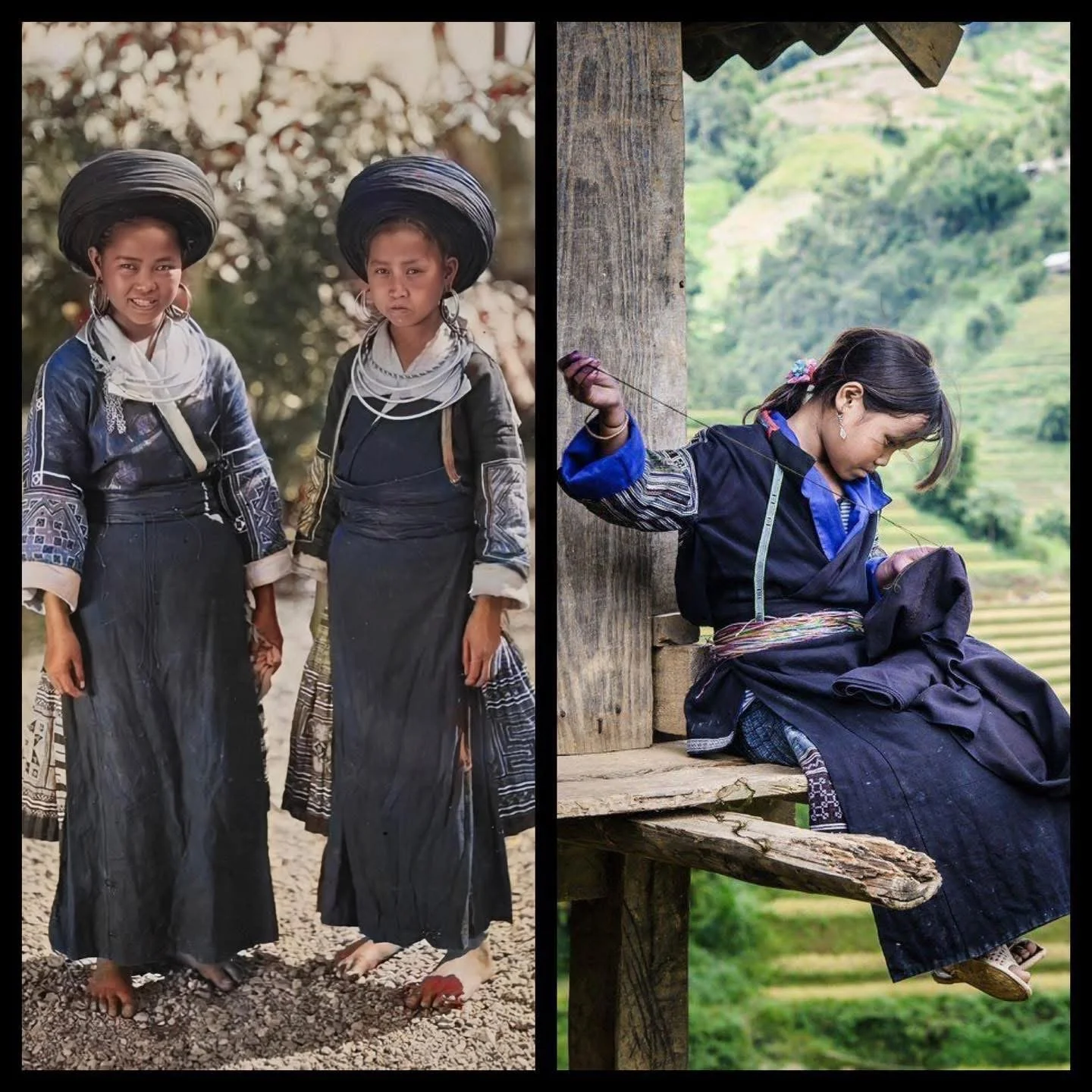
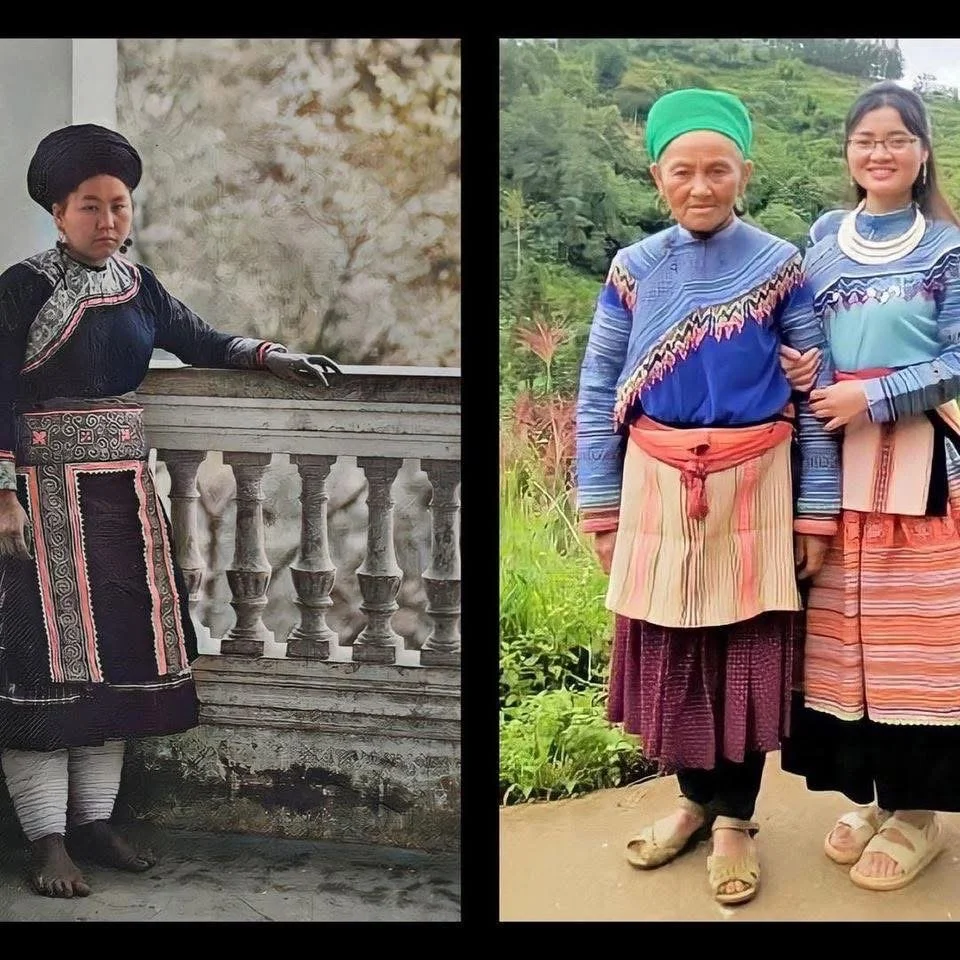
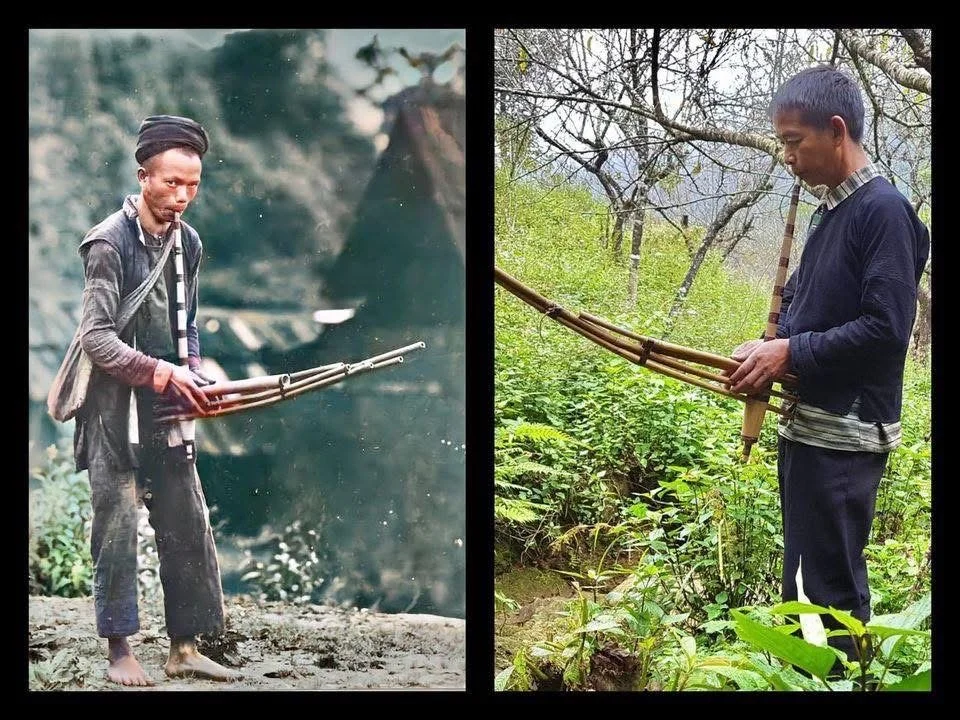
As part of a photo series titled Last Chance to See, ETHOS explores how clothing has changed over more than a century while still holding deep cultural meaning. This series looks closely at what has endured, what has adapted, and why traditional dress continues to matter today.
Today’s focus is on the Hmong people living in four distinct regions of Northern Vietnam: Mu Cang Chai, Sapa, Ha Giang, and Bac Ha. Each region tells its own story through colour, texture, and design.
The Hmong People and Cultural Identity
Throughout recorded history, the Hmong have remained identifiable as Hmong. This continuity comes from maintaining their language, customs, and ways of life, even while adopting elements from the countries in which they live.
Clothing plays a central role in this identity. It is not simply something to wear, but a visible expression of belonging, heritage, and pride.
Regional Differences in Hmong Dress
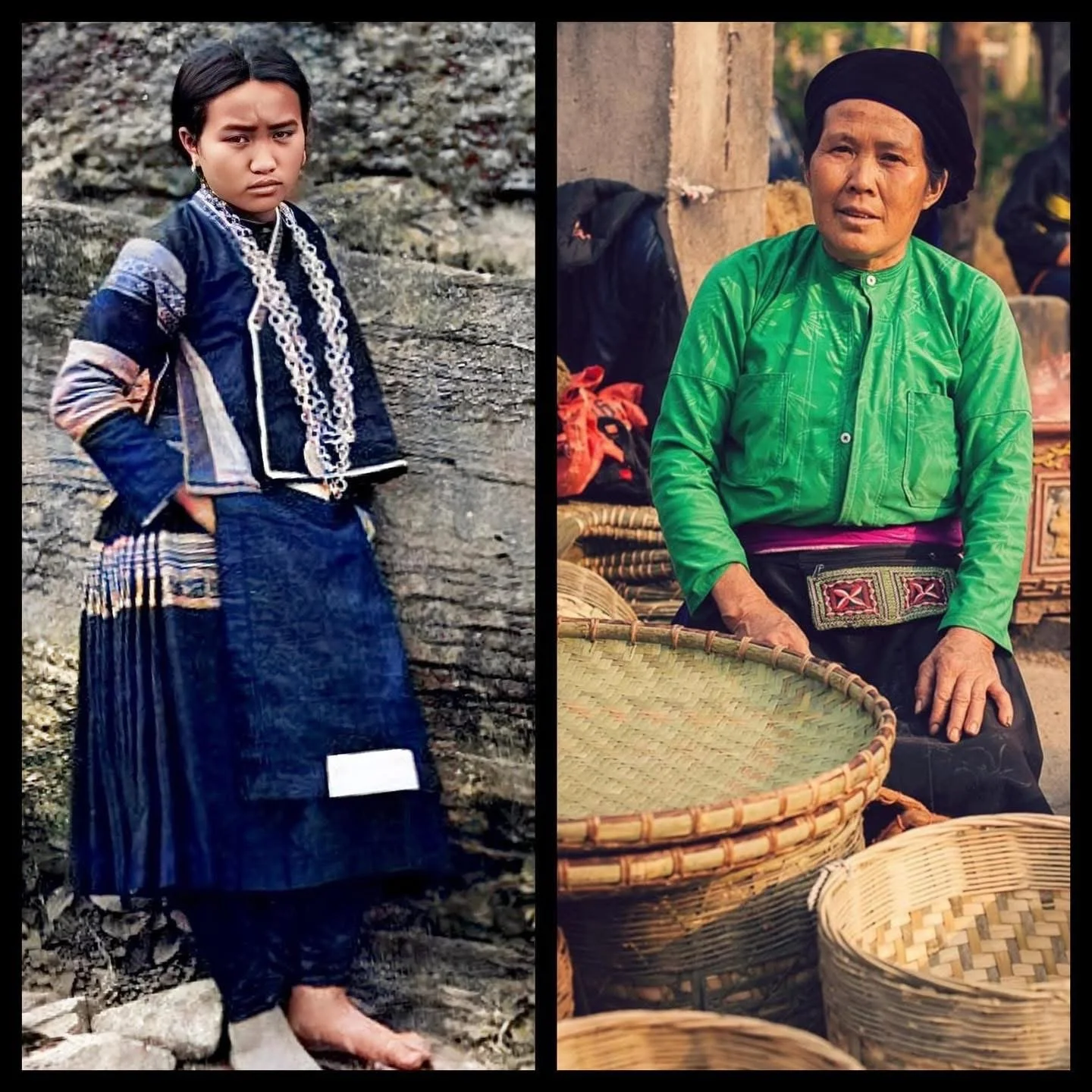
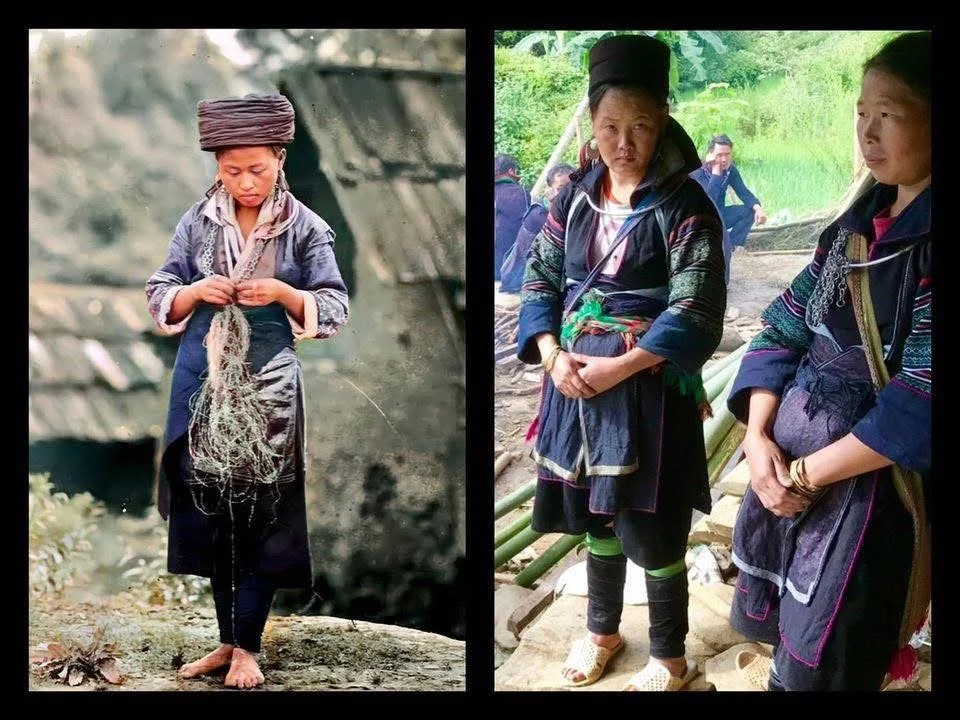
Many Hmong groups are distinguished by the colour and details of their clothing. Black Hmong traditionally wear deep indigo dyed hemp garments, including a jacket with embroidered sleeves, a sash, an apron, and leg wraps. Their clothing is practical, durable, and rich in subtle detail.
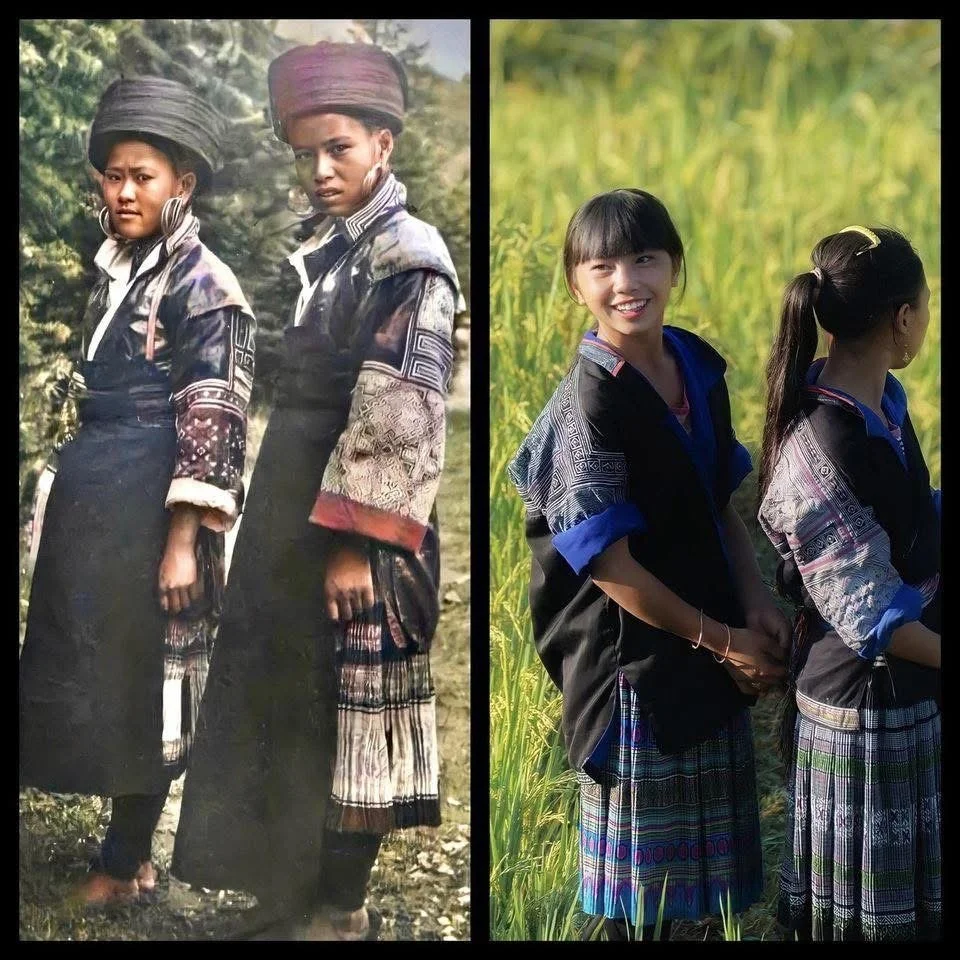
Flower Hmong are known for their brightly coloured traditional costumes. These outfits feature intricate embroidery, bold patterns, and decorative beaded fringe, making them immediately recognisable.
Paj Ntaub: The Language of Cloth
An essential element of Hmong clothing and culture is paj ntaub, pronounced pun dow. This is a complex form of traditional textile art created through stitching, reverse stitching, and reverse appliqué.
Meaning, Skill, and Tradition
Traditionally, paj ntaub designs are ornamental and geometric. They are mostly non representational and do not depict real world objects, with the occasional exception of flower like forms. The making of paj ntaub is done almost exclusively by women.
These textiles are sewn onto clothing and act as a portable expression of cultural wealth and identity. Paj ntaub play an important role in funerary garments, where the designs are believed to offer spiritual protection and guide the deceased towards their ancestors in the afterlife. They are also central to Hmong New Year celebrations.
Before each New Year, women and girls create new paj ntaub and new clothing. Wearing clothes from the previous year is considered bad luck. These new garments reflect creativity, skill, and even a woman’s suitability as a successful wife.
Why Hmong Clothing Endures
Despite major cultural and social change over the past century, Hmong clothing has endured. Its survival lies in its deep connection to identity, belief, skill, and community. Each stitch carries meaning, and each garment tells a story that continues to be passed from one generation to the next.
The Evolving Art of Hmong Textiles in Northern Vietnam
The Hmong of Vietnam are known for expressive textiles full of history, identity, and artistry. Today these traditions are evolving. Are they being protected or transformed?
The Evolving Art of Hmong Textiles in Northern Vietnam
The Heritage of Hmong Clothing
The Hmong people of Vietnam have a long history of creating clothing that reflects their identity and traditions. Textiles are more than fabric. They are a visual language that shows who someone is and where they come from.
Each Hmong subgroup has its own recognisable style. White, Black, Flowery, Red, and Blue Hmong communities are known for different colours, patterns, and decorative techniques. Women’s pleated skirts often include detailed embroidery, batik designs, and appliqué. Blouses and aprons are bright and full of symbolic motifs. Men’s clothing is simpler but still carries meaningful tradition.
Crafting Textiles by Hand
For centuries, Hmong families have relied on handwoven hemp and natural indigo dye. Every step was done by hand. Growing and processing hemp took great effort. Embroidery was slow and highly skilled work passed down from mothers to daughters.
These garments were more than clothing. They showed cultural knowledge and community belonging. Each stitch was carefully placed with purpose.
Modern Influences and Adaptations
Change is happening. Many Hmong households now use commercial cotton and some synthetic materials because they are affordable and easy to work with. This allows clothes to be made more quickly and sold in markets or to tourists.
Some subgroups are responding in a different way by adding more embroidery and creativity than ever before. Their designs are more detailed and far more time consuming to make. Clothing has become a canvas for new artistic expression.
Tourism has created economic opportunities but also brought challenges. Traditional hemp skirts are becoming rare in some villages. Yet hemp fabrics and indigo dyeing are still practised and remain a strong part of cultural identity.
What Textiles Tell Us
When you visit Hmong communities in northern Vietnam, take time to notice the details. Clothing can show migration stories, family history, resilience, and pride in heritage. Patterns and colours protect against misfortune and honour ancestors.
Buying directly from local artisans supports families and helps preserve skills that have lasted for generations.
A Question for You
As traditions evolve, what should stay the same?
Should Hmong textile makers embrace new materials and markets, or is there a risk that important cultural knowledge will be lost?
I would love to hear your thoughts.


