Insights and Stories from Sapa and the Northern Borderbelt provinces of Vietnam.
The Living Blue: Indigo Traditions of Sapa’s Hmong & Dao Communities
In the hills of Sapa, indigo runs deeper than colour. Among the Hmong and Dao, it is identity, tradition and connection. Join us to learn, listen and create.
Indigo as Identity
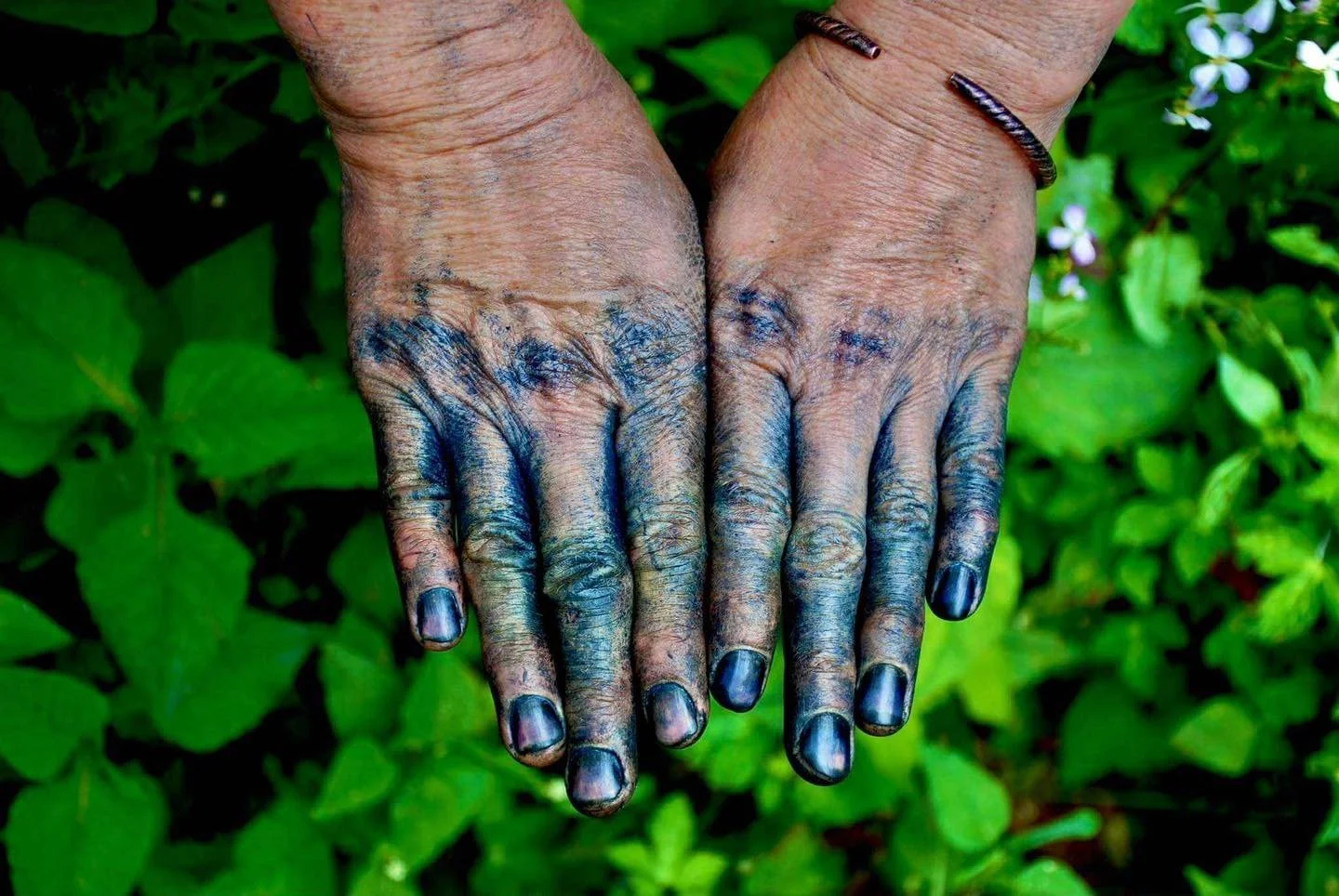
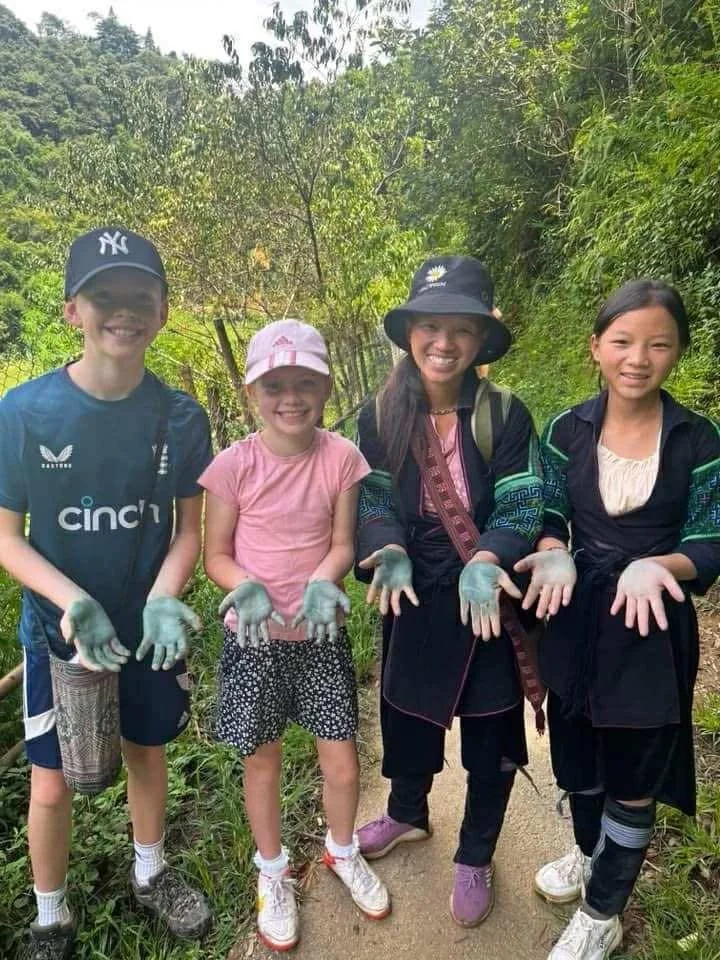
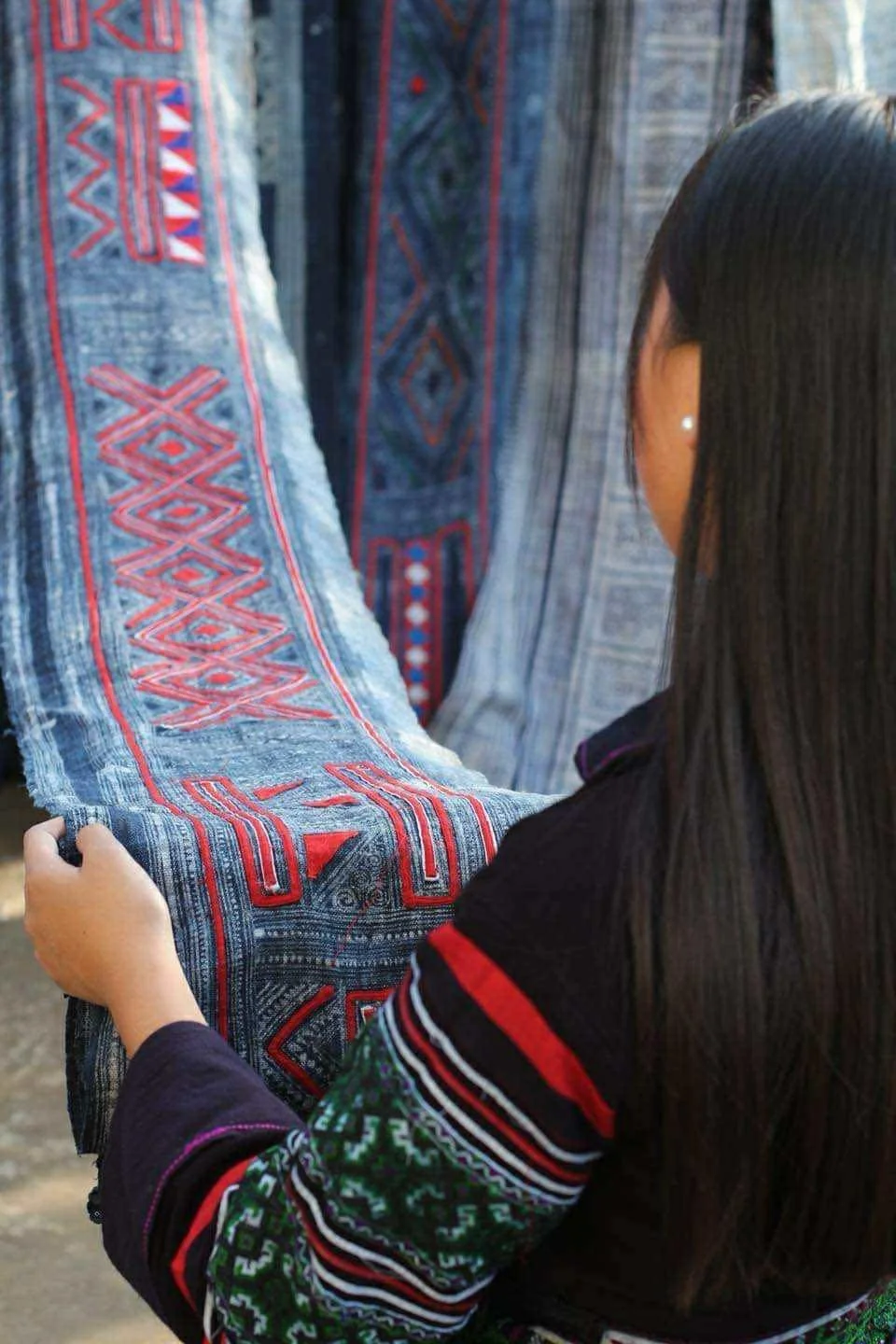
Step into the hills of Sapa and you will notice a colour that lingers on hands, fabric and memory: the deep, living blue of indigo. Among the Hmong and Dao communities, indigo is far more than a dye. It is identity, tradition and a quiet act of resistance. Families grow it in their gardens, tending the plants season after season, and transforming them into cloth that carries memory and meaning.
Secrets Passed Through Generations
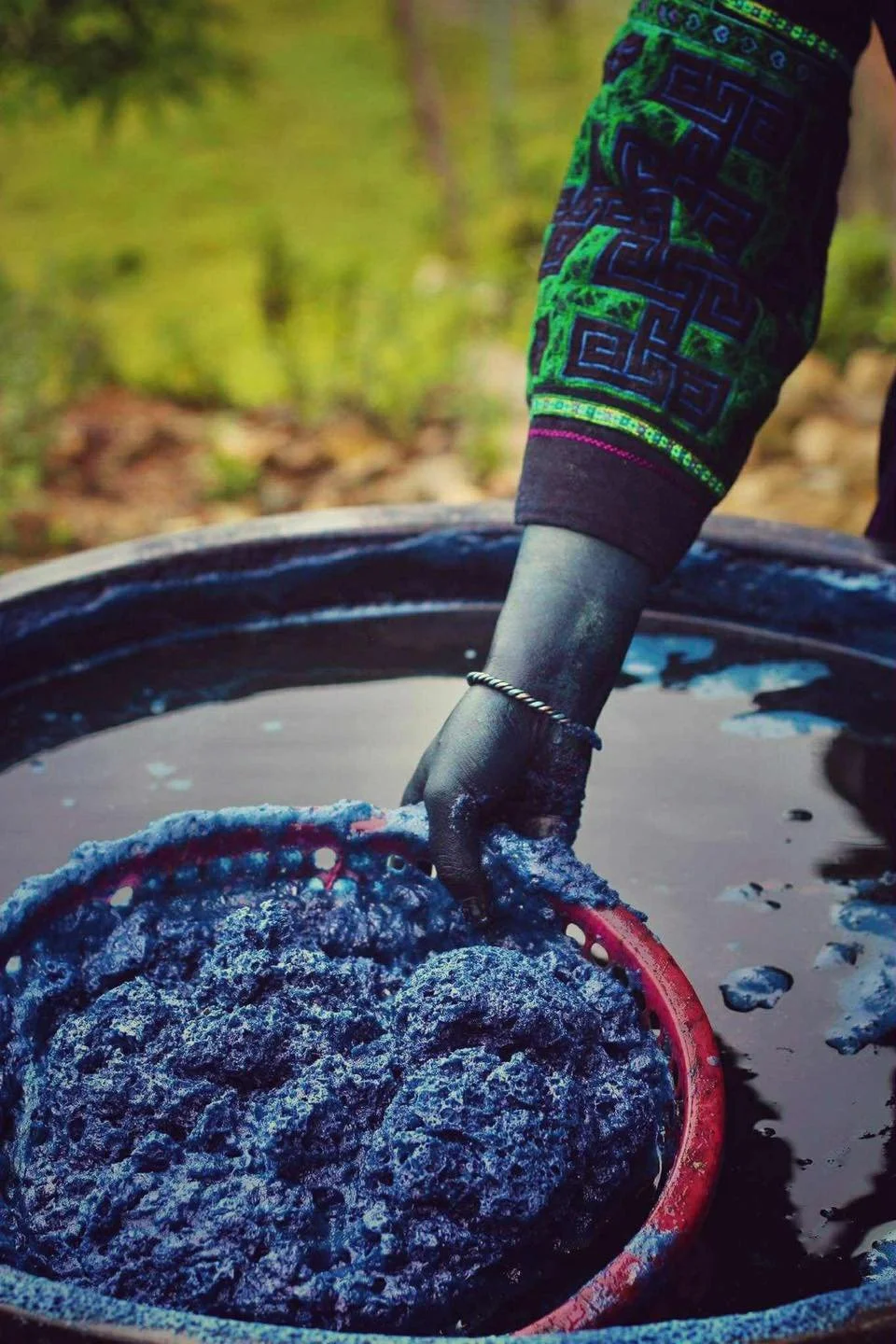
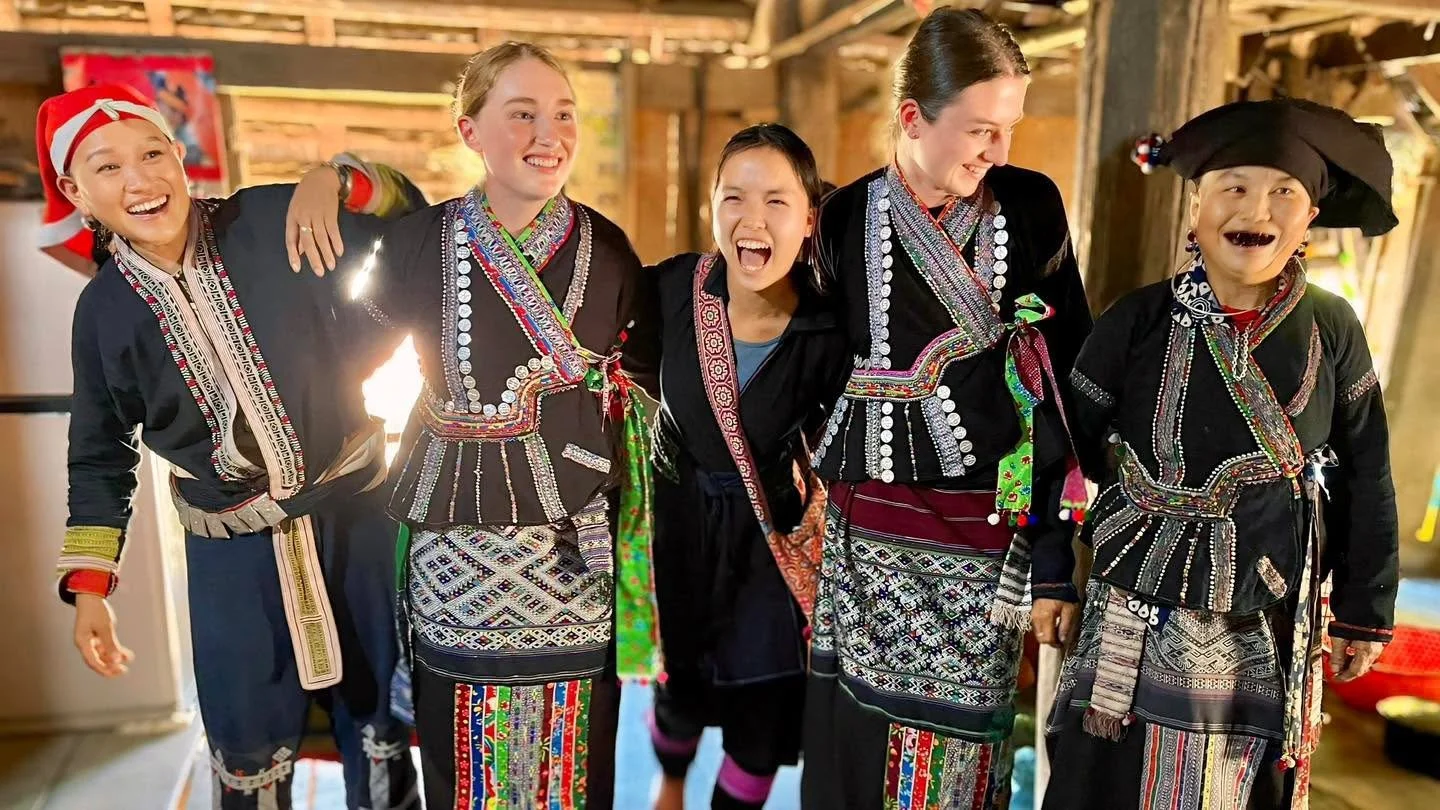
For generations, women have carefully passed down the secrets of indigo. They know how to ferment the leaves, how to coax the blue from green, and how to fold and wax fabric for batik. These skills speak not only of beauty but of belonging. They are not staged performances for visitors, but everyday acts of care, creativity and survival.
Learning Through Experience
When you join an ETHOS trek or take part in one of our batik workshops, you are invited into this living tradition. You might feel the texture of wax on cloth, stir the indigo vat, or hear stories carried in the rising scent of the dye. It is not about mastering a technique. It is about meeting the land and its people with presence and respect.
Why Slow Travel Matters
Slow travel gives space for this kind of learning. It lingers under your fingernails and stays with you long after the colour fades. It is a chance to connect deeply, not only with a craft, but with the people and place that sustain it.
Join the Journey
We would love to welcome you on a journey that honours both land and lineage. Come walk, sit, listen and learn with us in Sapa.
👉 Send us a message to explore upcoming dates or to find out more about our treks and workshops.
Walking Slowly, Seeing Deeply: A Family Trek with ETHOS in Sapa
A gentle two-day family trek through Sapa’s rice fields, villages, and homestays with ETHOS. Walk slowly, notice more, and connect deeply.
What is an ETHOS Trek Like?
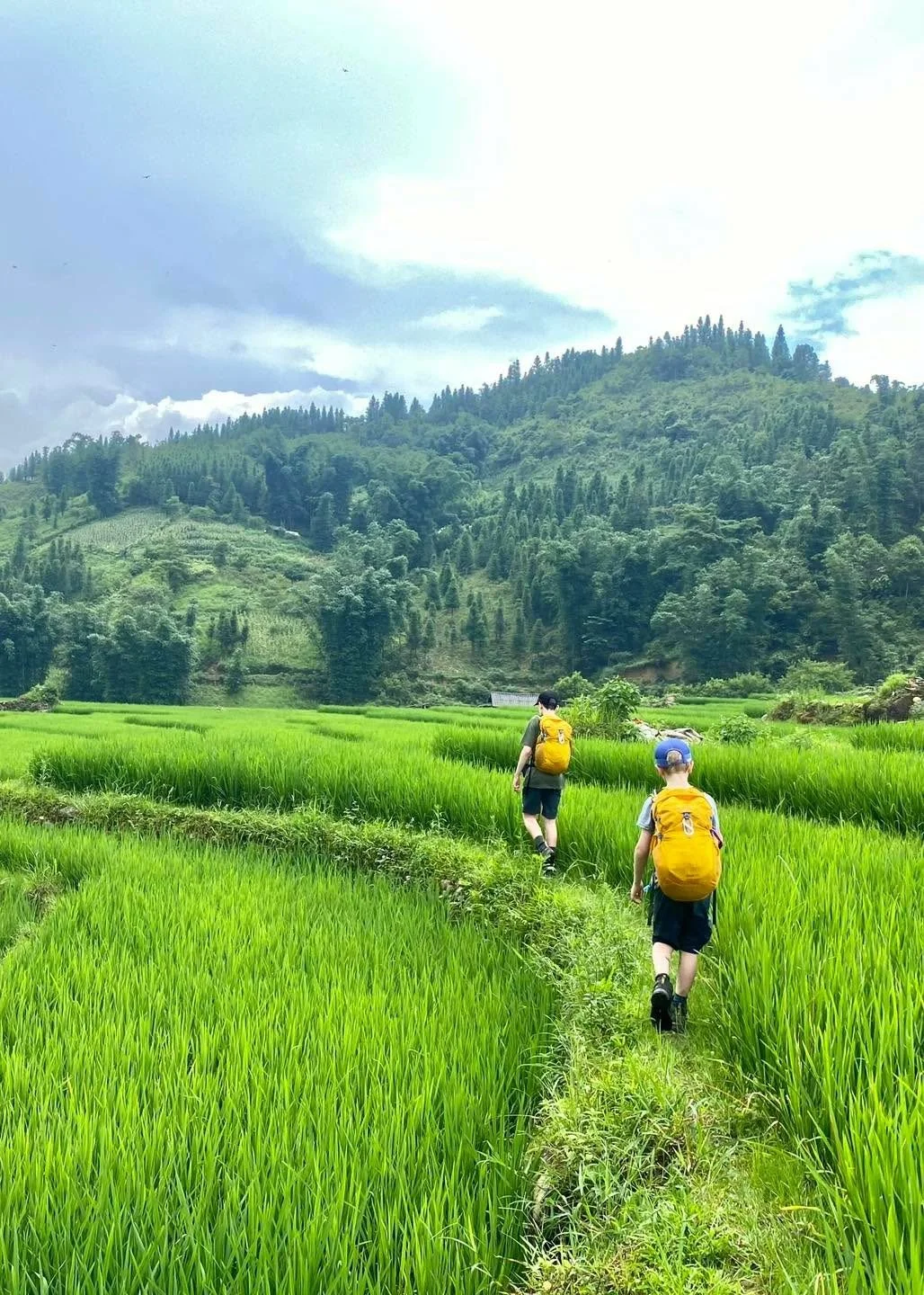
A two-day family trek with ETHOS is not about rushing from one point to another. It is a gentle journey through the mountains of Sapa, following quiet paths shaped by generations of Hmong footsteps.
A Trail of Rice Fields and Bamboo Groves
Your walk winds past terraced rice fields, hillside farms, and cool bamboo groves. Along the way, you will pause beside streams and learn how indigo is grown, rice is planted, or hemp is spun by hand. These moments invite reflection and connection to the land.
A Welcome for Children
Families are embraced with warmth and curiosity. Children are free to ask questions, join in play, or simply take in the newness of the surroundings. Time is left open for discovery rather than schedules.
Evenings in a Village Homestay
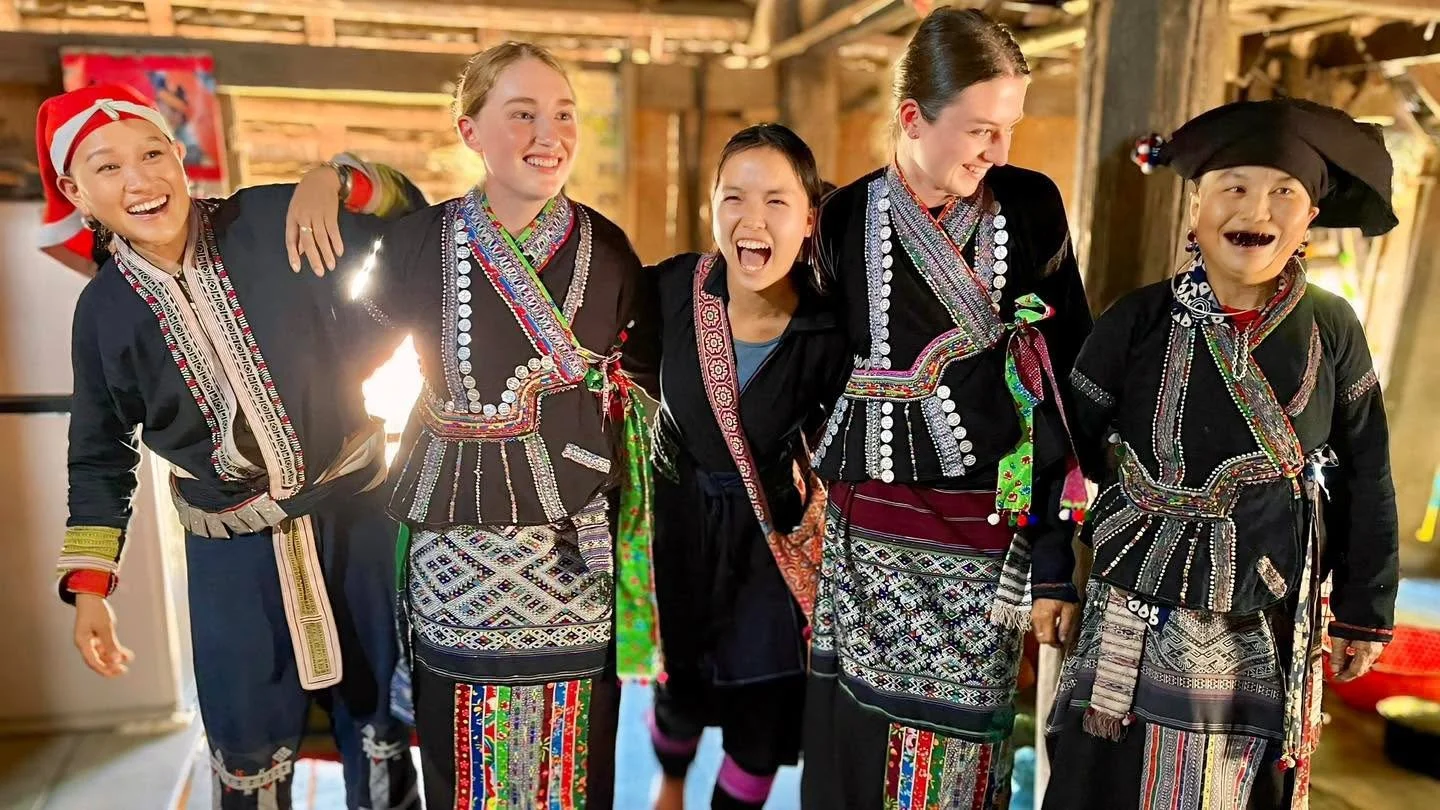
At day’s end, you will settle into a homestay where your hosts prepare a simple and nourishing meal from what they have grown or gathered that day. As night falls, the mountains fade into shadow, stars brighten above, and stories are shared around the fire.
A Journey of Connection
This trek is not a race. It is an invitation to walk slowly, notice more, and connect deeply with people, culture, and landscape.
If you would like to learn more or begin planning, we welcome you to reach out.
Walking Beside, Not Ahead: Why Ethos is Different
Ethos is not just about trekking. It is about connection, community, and respect walking beside people, not just across landscapes.
Connection Beyond Trekking
When people ask what makes Ethos unique, our answer is simple: it is not just about trekking. It is about connection. It is about slowing down, walking beside someone, sharing a meal, and listening to their story.
What Travellers Have Told Us
We recently reviewed feedback shared across different platforms. The response was humbling. No negative comments, no low ratings—only heartfelt reflections from travellers who walked with our Hmong and Dao guides, stayed in family homes, and left with a deeper understanding of the land and its people.
More Than a Business
For us, this means more than numbers or reviews. Ethos is not just a business. It is a community. It is our home, and we want every journey to reflect honesty, immersion, and respect.
Walking the Path Together
If you are looking for something more than a trek, something rooted in real human connection, we would love to walk that path with you.
Foraging in the Misty Hills: A Trek That Awakens the Senses
Unlock the secrets of Sapa’s hills with Ethos foraging treks. Taste wild plants, cook over open fires, and learn from Hmong and Dao guides.
A Hidden Treasure in Sapa’s Hills
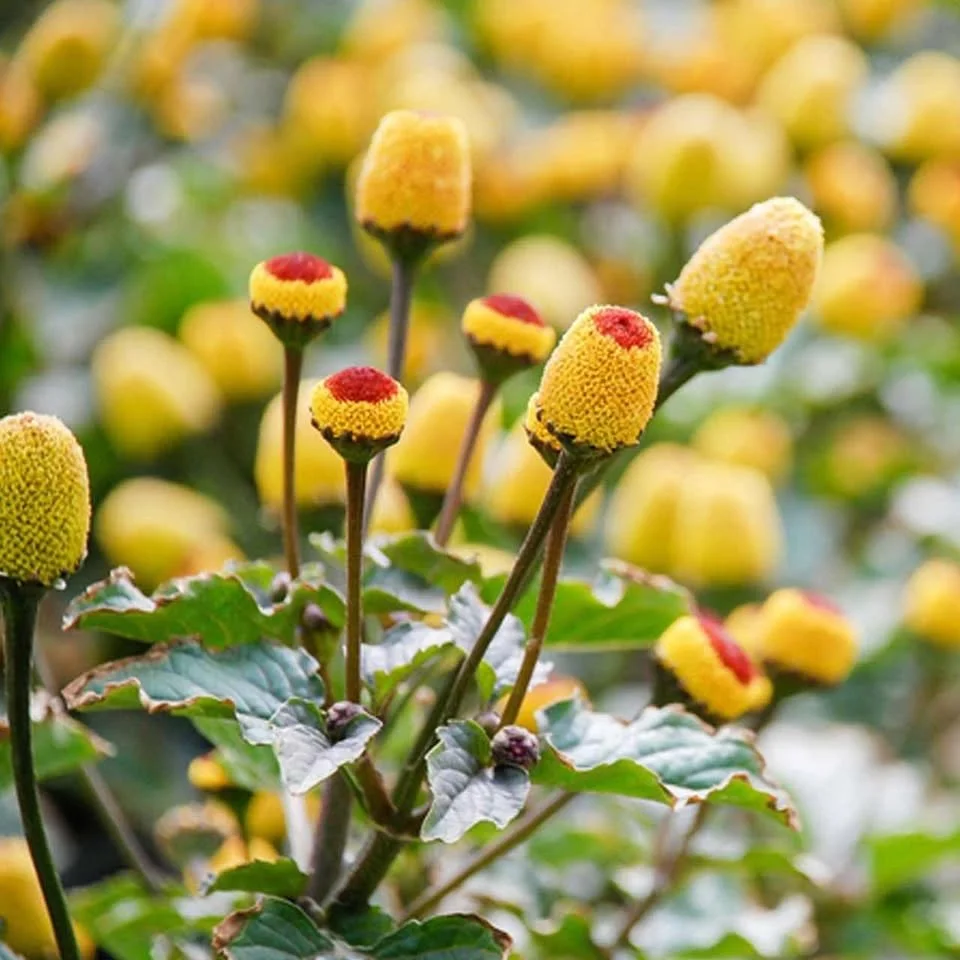
In the misty hills just beyond Sapa’s edge, tucked between ancient rice terraces and whispering forests, grows an unassuming little plant. Its leaves are deep green and veined like river maps, while its flower bursts golden and bright, no bigger than a coin. To walk past it is easy. To taste it is to unlock a secret.
Nature’s Quiet Wonder
Among our Hmong and Dao partners, this plant, Acmella oleracea, has been valued for generations. Bite into its flower and a tingling, fizzing sensation dances across your tongue. It is not spicy or sour. It is electric, like the forest itself speaking through your senses.
Tradition and Flavour Combined
Known locally as the “toothache plant” for its numbing properties, it has long been used in traditional medicine to soothe pain and treat infections. But it has also found its way into wild soups and foraged salads, adding flavour and a little surprise to the plate.
More Than a Hike
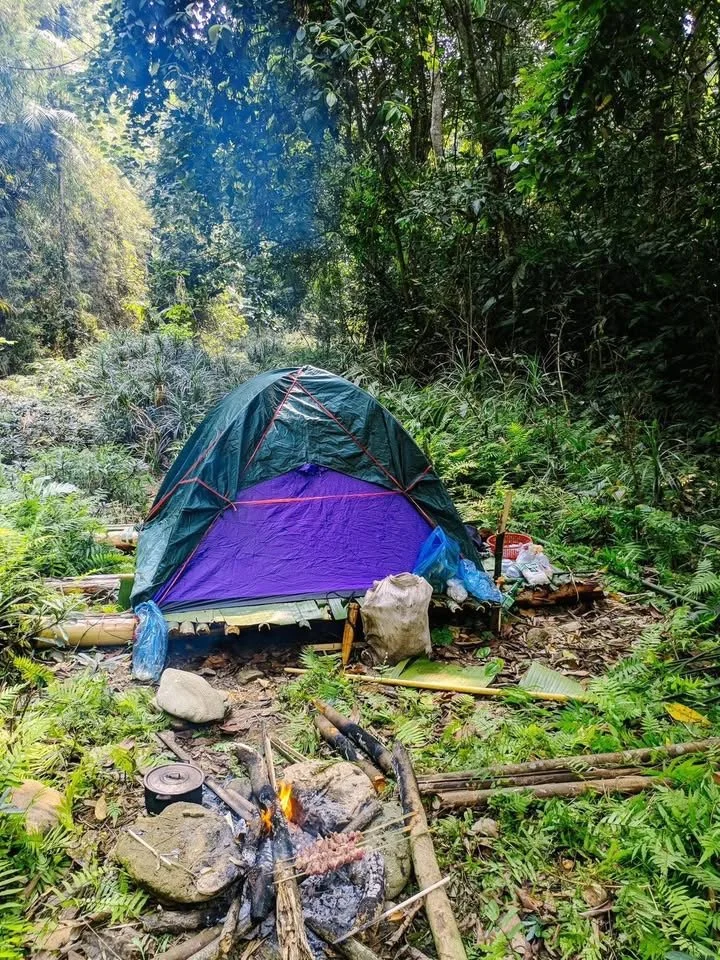
On our Ethos-exclusive foraging and wild camping tours, you will discover secrets like this side by side with local experts. These are not just hikes. They are invitations to learn directly from Hmong and Dao guides whose knowledge is rooted in the land, passed from hand to hand, season to season.
Belonging to the Landscape
Whether you join a one-day walk or a two-day overnight adventure under the stars, you will gather wild greens, cook over open flames, and sleep to the rhythm of the forest. Along the way, you will learn what it means to truly belong to a landscape not just to see it, but to taste it, hear it, and feel its quiet magic.
Spaces are limited and the season waits for no one. Bookings are now open. Come forage with us.
The Girl and the Bird: A Tale from the Mountains of Sapa
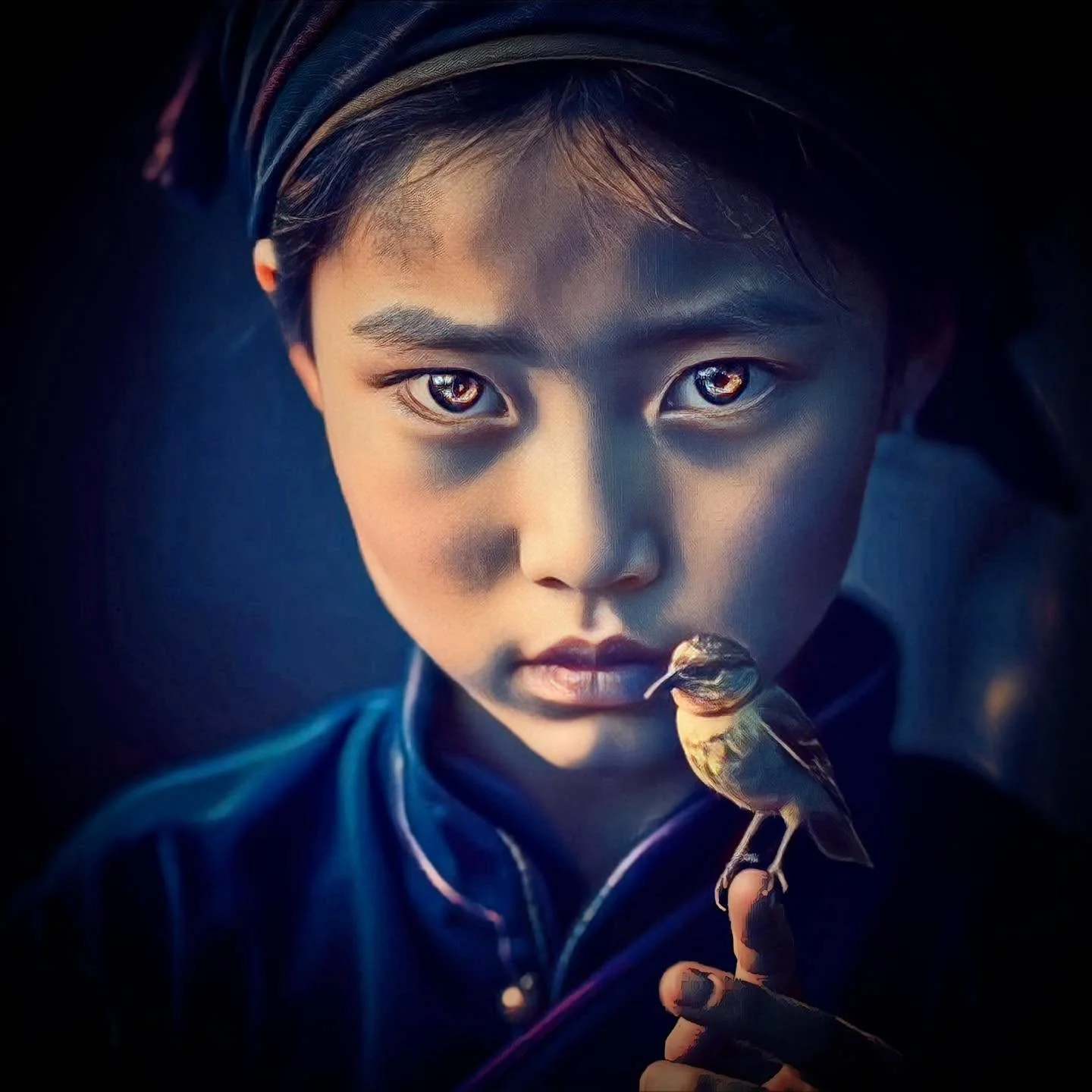
In the mountains of Sapa, a hungry girl finds a bird in need. What begins as a struggle for survival becomes a story of love and hope.
A Story Rooted in the Hills
High in the mountains of Sapa, where mist lingers over rice terraces and shadows move through the valleys, lives My, a young Hmong girl. Each day begins with the challenge of foraging for food—wild mushrooms, snails, and greens—to ease her family’s hunger.
An Unexpected Discovery
One evening, while searching for berries, My climbed into the branches of a tree. Hidden among the leaves she found not fruit but a fragile nest, home to a tiny bird left alone. Though hunger gripped her, she carried the trembling creature home.
Love Stronger than Hunger
At first, the thought of food tugged at her, yet as the bird sang in her ear, My’s hunger softened. She began feeding it corn from her meagre store. Each chirp brought joy, each small bond stitched love into her heart.
A Bond Forged in Twilight
Though her stomach remained empty, My crafted a nest for her new companion. As the fire burned low, she shared her bed with the bird, their small bodies pressed close against the night. Together they sang beneath the stars, weaving a melody of hope, resilience, and dreams.
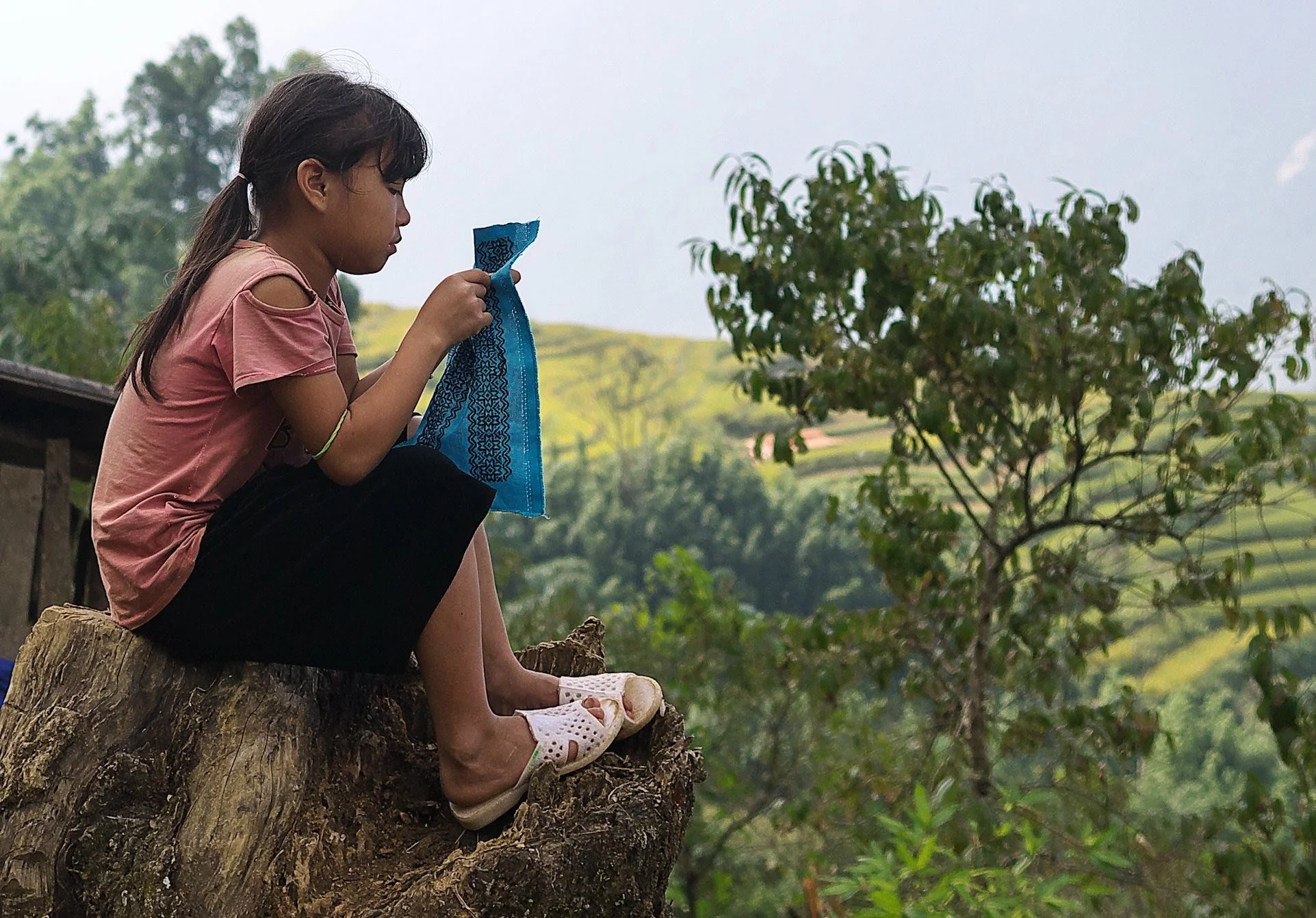
Our Culture, Our Future: Passing Traditions to the Next Generation
In the Black Hmong community, sewing is more than a skill. It is a living link to ancestors, identity and history. From an early age, children learn the patterns, techniques and stories woven into traditional clothing, ensuring their culture remains strong for generations to come.
Learning from a Young Age
In the Black Hmong community, children begin to learn the art of making traditional clothes from an early age. This is not only a practical skill but also a way of weaving identity into every stitch.
More Than Sewing
To sew is to carry the voices of ancestors. The patterns, colours, and techniques hold stories passed down for centuries. By learning these skills, children are not only creating clothes but also keeping culture alive.
Keeping Traditions Strong
Each piece of traditional clothing is a reminder of resilience. Teaching children ensures that these traditions will not fade but will grow stronger with every new generation. In this way, the past and the future are stitched together, securing identity and heritage for years to come.
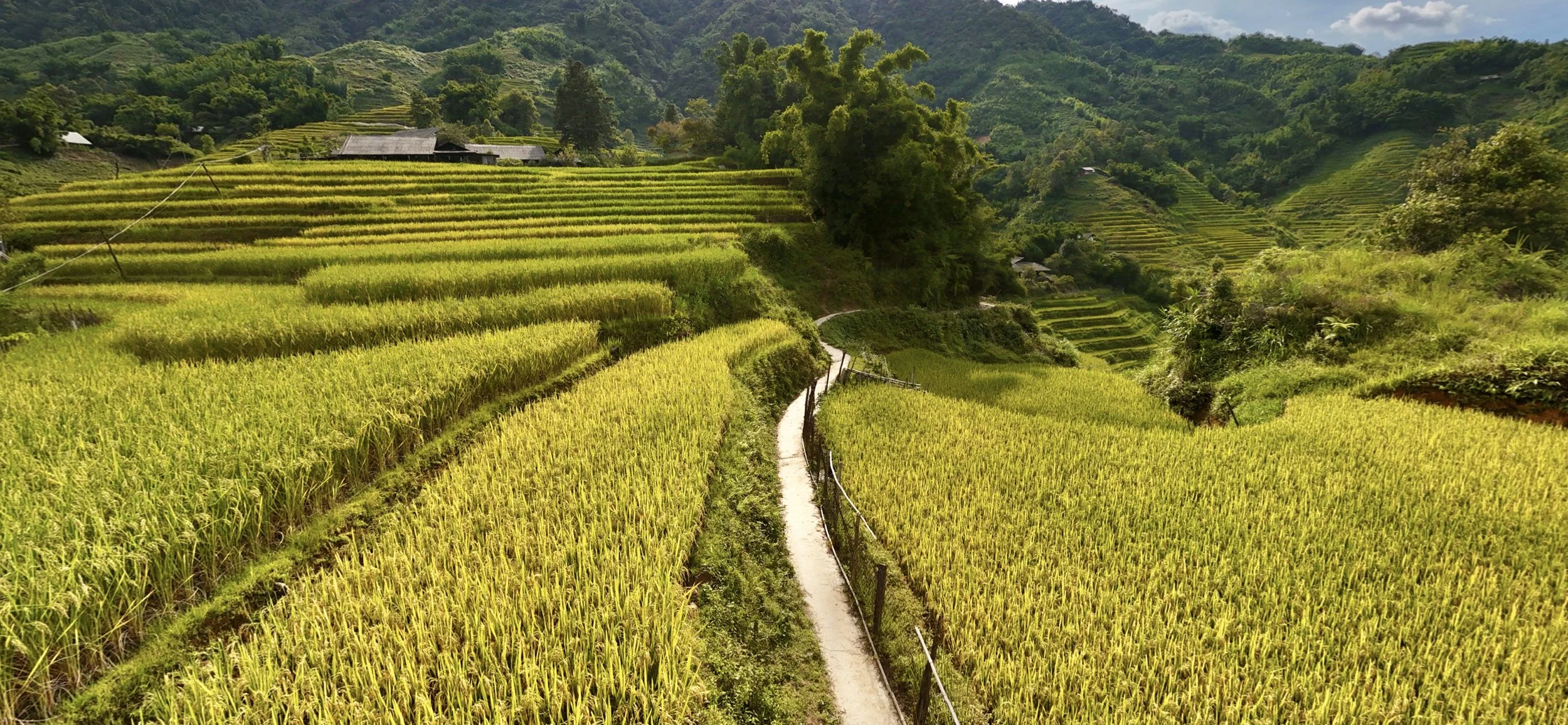
Sapa’s Golden Season: A Landscape Transformed
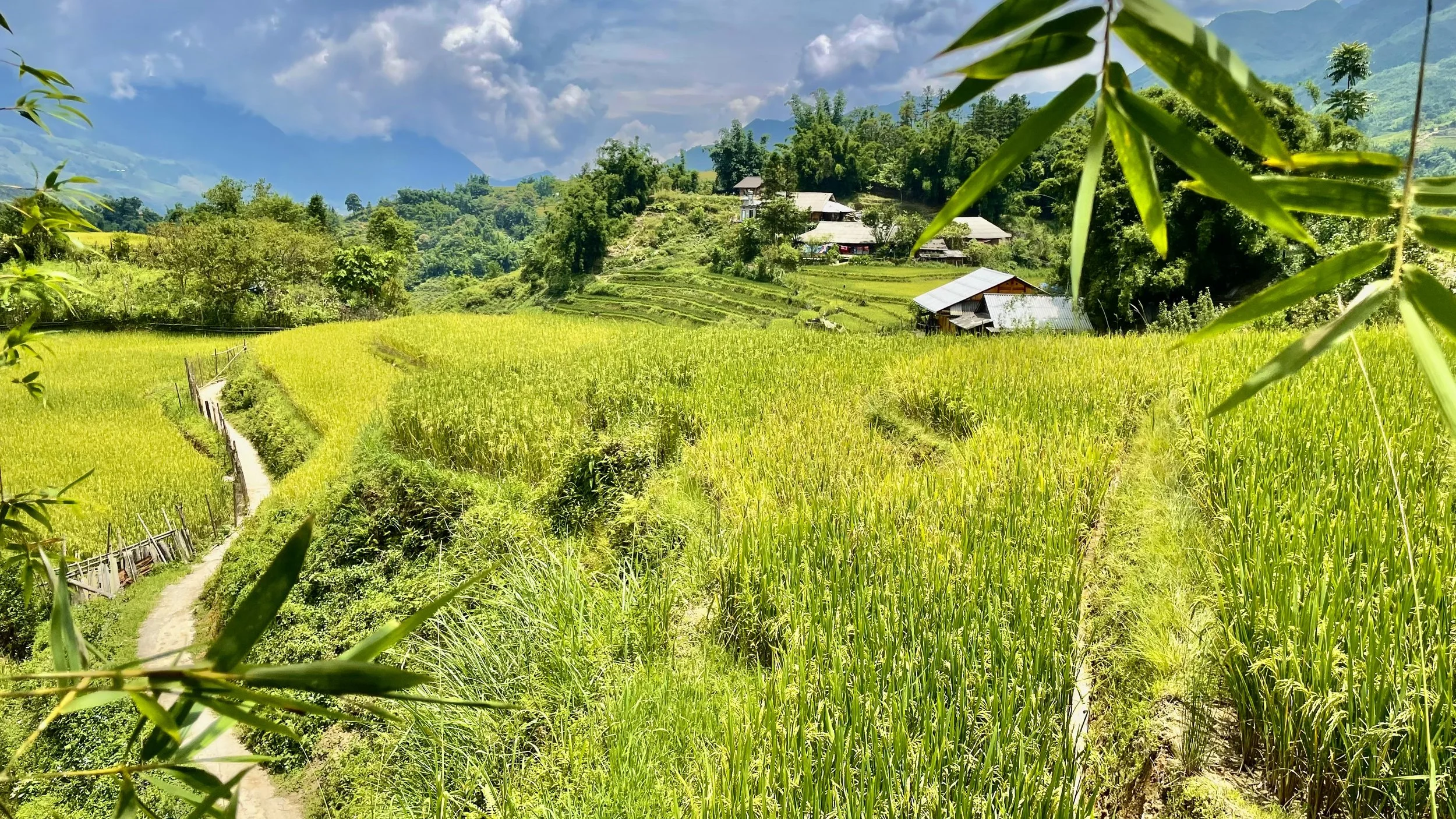
As summer fades, Sapa’s emerald terraces transform into waves of gold, a breathtaking reminder of harvest, patience, and the beauty of change.
From Emerald to Gold
In the misty highlands of Sapa, the rice terraces begin their quiet transformation. What was once a sea of emerald flowing in endless curves along the mountains ripens into waves of gold. Each step gleams under the sun, a natural masterpiece painted stroke by stroke in hues of harvest and hope.
The Beauty of Change
Every season carries its own beauty. Summer’s lush green gives way to autumn’s golden promise. The terraces are more than fields of rice—they are living reminders of patience, rhythm, and the timeless connection between people and land.
A Harvest of Abundance
To stand before Sapa’s terraces is to feel the earth’s poetry. Growth, change, and abundance unfold before your eyes, offering both the gift of food and the reminder that every ending is also a beginning.
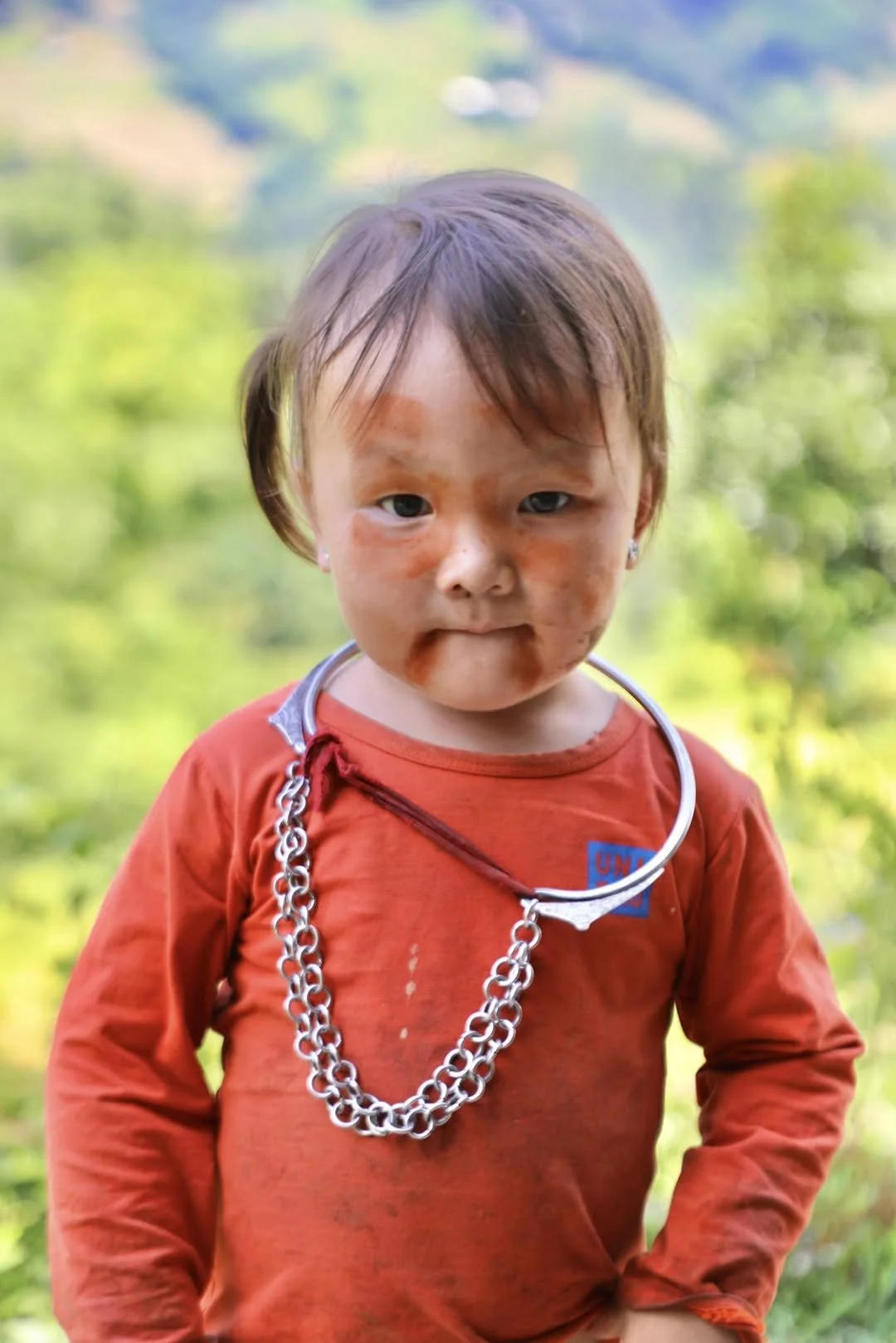
A Little Girl, A Big Imagination: Childhood in Sapa
In the mountains of Sapa, childhood unfolds differently. With no toys but endless imagination, a young Hmong girl transfroms dirt, fields and everyday objects into a world of play. It is a story of creativity, freedom and the quiet magic found in simple moments.
Play Without Toys
In the mountains of Sapa, Vietnam, a young Hmong girl plays with no toys but the world around her. She digs in the dirt, chases dragonflies, and gathers snails from the rice paddies. On this day, she and her friends ground an old brick into powder and used it as makeup.
Turning the Ordinary Into Magic
What others might see as nothing, she transforms into something extraordinary. A brick becomes beauty, the fields become her playground, and imagination becomes her freedom.
The Spirit of Childhood
Childhood in Sapa shows us that joy does not need much. With curiosity and creativity, the ordinary becomes magic. For this little girl, play is not about possessions but about possibility.
The Living Tapestry of Sapa’s Rice Terraces
Carved patiently into the mountainsides of northern Vietnam, the rice terraces of Sapa are both a landscape and a legacy. Built and tended over generations by the Hmong people, they transform rugged hills into sweeping steps of life, each curve holding the imprint of ancestral skill and devotion.
Golden Season in the Highlands
Golden season is calling. Will you answer? Carved patiently into the mountainsides of northern Vietnam, the rice terraces of Sapa are both a landscape and a legacy. Built and tended over generations by the Hmong people, they transform rugged hills into sweeping steps of life. Each curve holds the imprint of ancestral skill and devotion.
Colours of the Season
In summer, the terraces shift in colour as new shoots spread in vibrant green, soft and delicate. As autumn approaches, the rice ripens into gold, glowing in the sunlight and breathing with the rhythm of the sky. The hills are never still. They change daily, painted anew by light and shadow.
More Than Beauty
The terraces are not just a spectacle. They embody the spirit of community. Rice in Sapa is not grown only for nourishment but as a shared endeavour. Families and neighbours work side by side, guided by tradition and necessity. Every grain carries the wisdom of countless harvests and the touch of many hands.
A Story Still Being Written
For the Hmong people, rice is not only food but life itself. It sustains the body, strengthens bonds of family and community, and connects today’s work to the memory of those who came before. These terraces are not silent fields. They are a story of resilience, belonging, and collective care—still being written in earth, water, and time.