
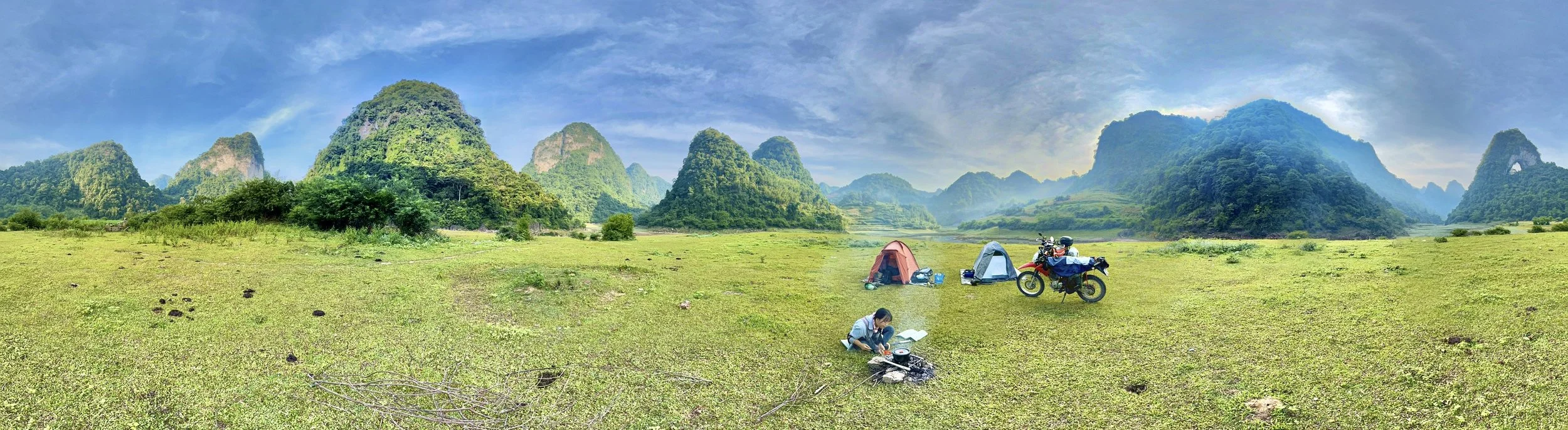
Camping in Vietnam
ETHOS – Spirit of the Community is a locally based, women-led responsible tourism organisation offering Trekking, Motorbike loops and Workshops experences in Sa Pa, northern Vietnam. Working closely with Hmong, Dao and other ethnic minority communities, we share practical local knowledge to help travellers explore the region safely, respectfully and responsibly.
Camping in Vietnam (2026): What’s Legal, What Isn’t, and How to Camp Respectfully
Vietnam is incredible for overland travel; mountains, coastlines, jungle valleys, and quiet rural roads. But “wild camping” isn’t treated the same way here as in many Western countries. In 2026, the rules you need to understand aren’t found in one “camping law”. Instead, they come from land management, forestry/protected areas, border/defence regulations, and local enforcement.
This guide explains what’s usually allowed, where you’ll need permission, and how to avoid the common problems travellers face.
If you are planning to explore northern Vietnam, travelling with a licensed local operator can help ensure your accommodation is properly registered and your activities remain within visa conditions. You can explore our ethical trekking, homestay and cultural experiences here.
Important note: This is practical guidance for travellers, not legal advice. Rules can be enforced differently by province and by site.
Is wild camping legal in Vietnam?
Short answer: Vietnam doesn’t clearly “allow” wild camping everywhere, and in many places it’s restricted, discouraged, or practically risky.
What matters most is where you camp:
National parks / nature reserves / protected forests: often require permission and/or designated areas; camping outside approved zones can lead to removal and potential fines.
Border areas, islands, sensitive zones: restrictions can be strict (ID checks, reporting requirements, movement controls).
Private land / farms / village land: permission is the difference between “welcome” and “problem.”
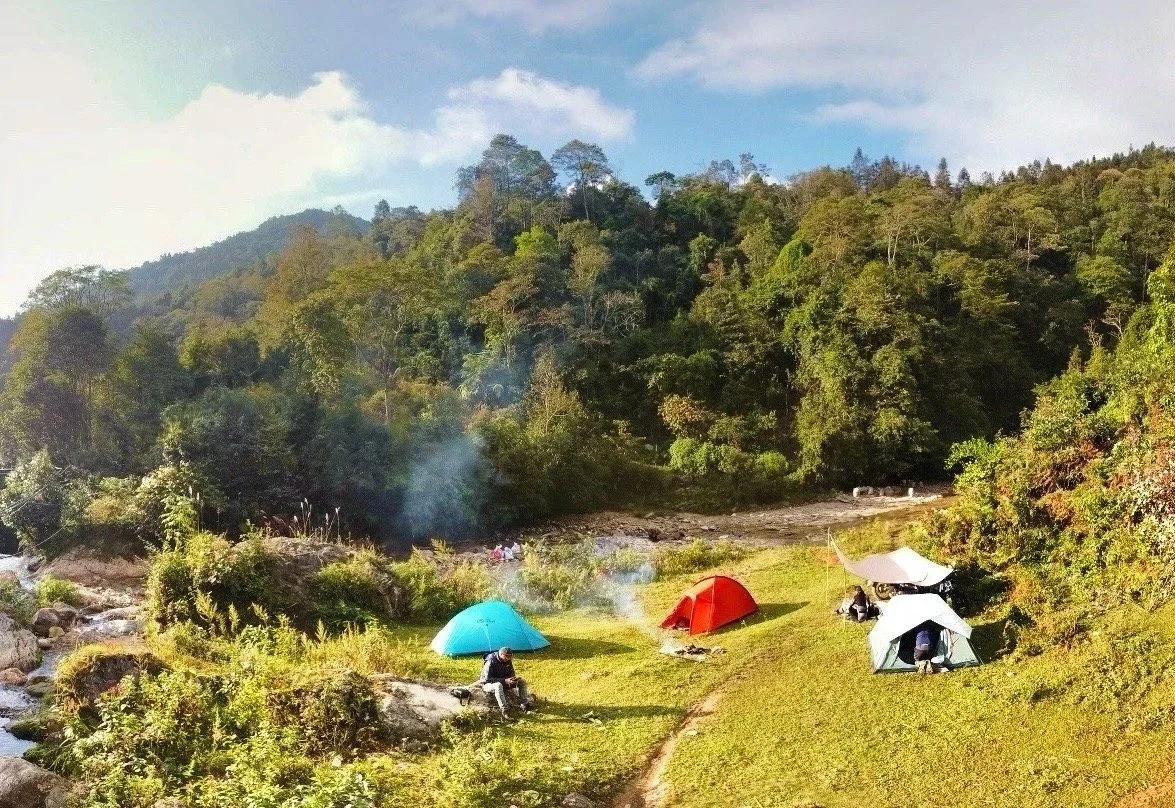
The safest rule in Vietnam is simple:
✅ Camp only where someone is clearly responsible for the land—or where camping is explicitly offered.
Overnight stays by foreigners are supposed to be registered, but who does it and how strict it is depends on where you stay.
The basic rule
Vietnamese law requires that the presence of foreign visitors be reported to local police for each place they sleep overnight. This is part of the country’s immigration and residence management system.
How it works in practice
Hotels, hostels, and serviced apartments
You don’t need to do anything.
The staff register your stay automatically using your passport details.
This happens every time you check in somewhere new.
Staying at a private home (friend, partner, Airbnb, rented house)
The host (Vietnamese citizen, landlord, or property manager) is legally responsible for registering your stay with the local ward police.
This can be done online or at the police office.
It should be done within about 12–24 hours of arrival (varies slightly by locality).
This creates ambiguity for campers because who do you register with when wild camping?
Is it enforced?
In hotels: always done.
In private homes: sometimes overlooked, but it is still legally required.
If police do a check of a wild campsite and a foreigner isn’t registered, you may be questioned.
Bottom line
Yes, every overnight location for foreigners is supposed to be registered.
In hotels, it’s automatic.
When camping, this is challening.
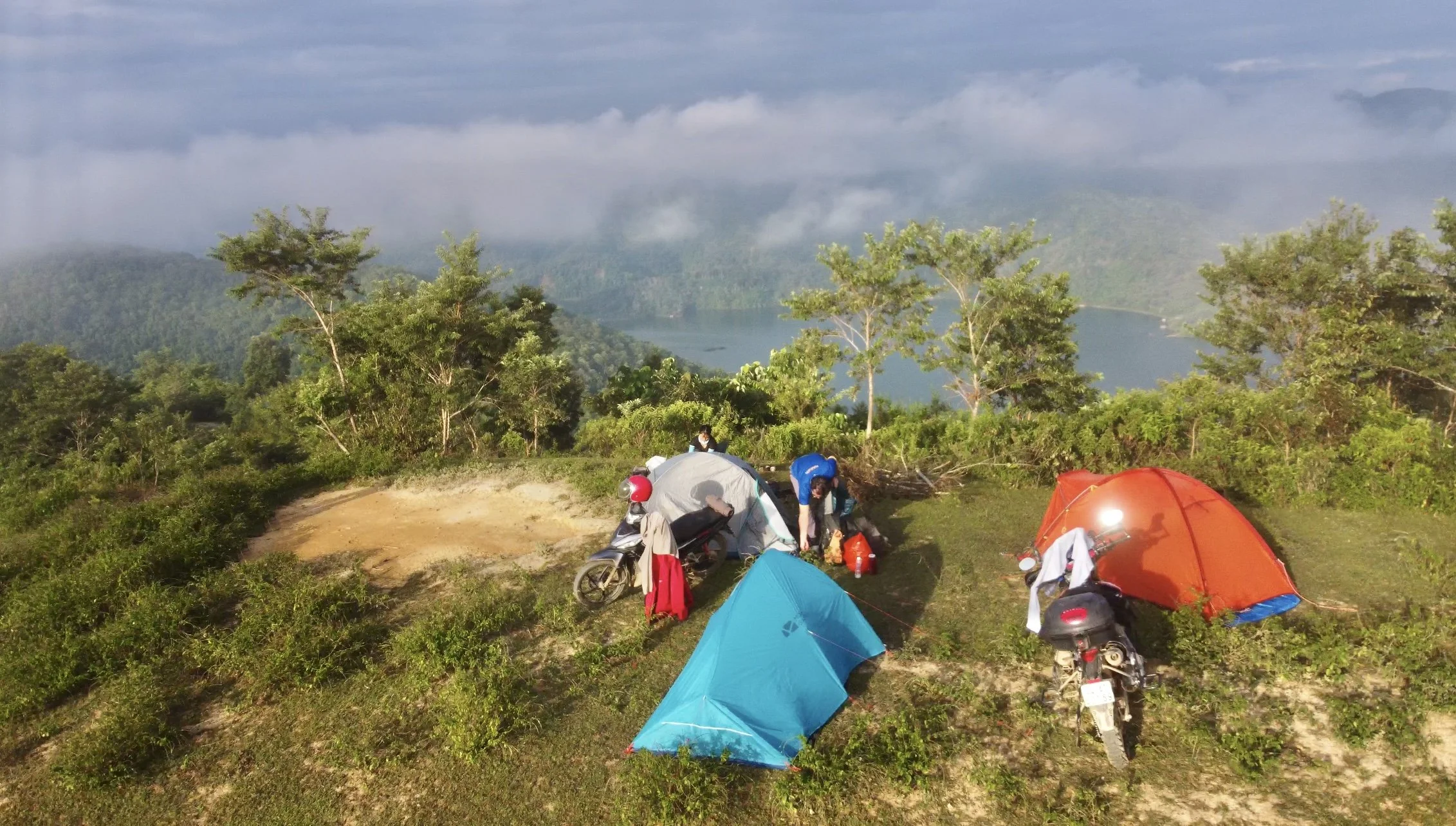
Where camping is most likely to be allowed
1) Designated campsites & park-managed tourism areas
Some National Parks and destinations support organised overnight experiences (guesthouses, stilt houses, basic lodging, and sometimes camping services). As one example, Cuc Phuong’s tourism operators promote overnight stays via park-managed accommodation areas (HQ/Mac Lake/Bong).
What this means for travellers:
If a National Park is set up for overnight visitors, they usually want you inside their system (registration, safety, conservation control) not disappearing into the forest to wild camp.
2) Private land with permission
Vietnam is not a “roam freely” country. But with a respectful approach, many families are open to:
pitching a tent in a garden/rice paddy (after harvest),
camping near a homestay,
paying a small fee and using facilities.
3) Homestays, eco-farms, guesthouses, and community-run sites
This is often the best experience anyway: local connection, safety, bathroom access, and less friction.
ETHOS is a licensed tour operator based in Sapa, working closely with local authorities and registered homestays to ensure visitors travel responsibly and within legal requirements.
Places where “wild camping” commonly becomes a problem
1) Forests, protected areas, and special-use forests
Vietnam’s forestry enforcement framework includes penalties for unauthorised tourism/visiting activities in forests, which can apply to backcountry-style activities where permission is required.
Practical reality: even if you think you’re “not bothering anyone,” you can still be:
told to leave (especially after dark),
questioned by rangers,
flagged for fire risk or conservation risk.
2) Border zones, islands, and sensitive coastal areas
Vietnam has administrative penalties tied to border area management and protection, and travellers can be stopped for documents, location, or non-compliant movement/overnight presence depending on the zone.
In practice: you may face checks, be asked where you’re staying, or be told camping isn’t permitted.
3) Famous scenic “Instagram spots”
Many popular nature areas explicitly discourage or do not permit camping (e.g., some heavily protected wetlands / reserves and tourism-managed sites).
Why? Litter, human waste, fire risk, crowding, and past damage.
Do you need permission to camp in Vietnam?
If you camp on… you should…
National parks / protected forests:
Assume permission or designated areas are required.
Border areas / sensitive zones:
Assume extra controls; avoid stealth camping.
Private land:
Get clear permission (and ideally pay a small fee / buy something / offer thanks).
Beaches:
Depends wildly by province. On quiet coastlines you might get away with it, but popular beaches are often patrolled or controlled.
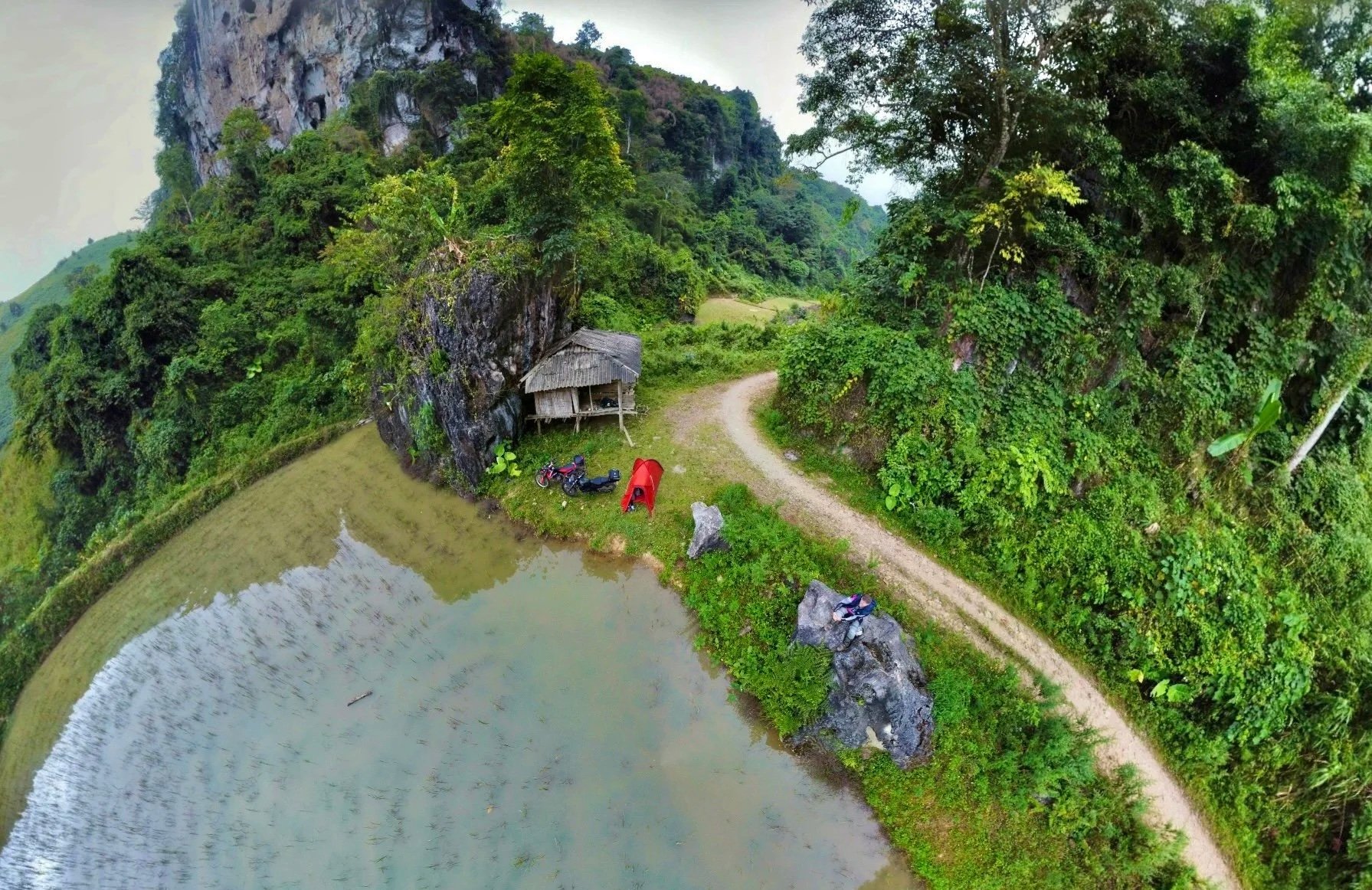
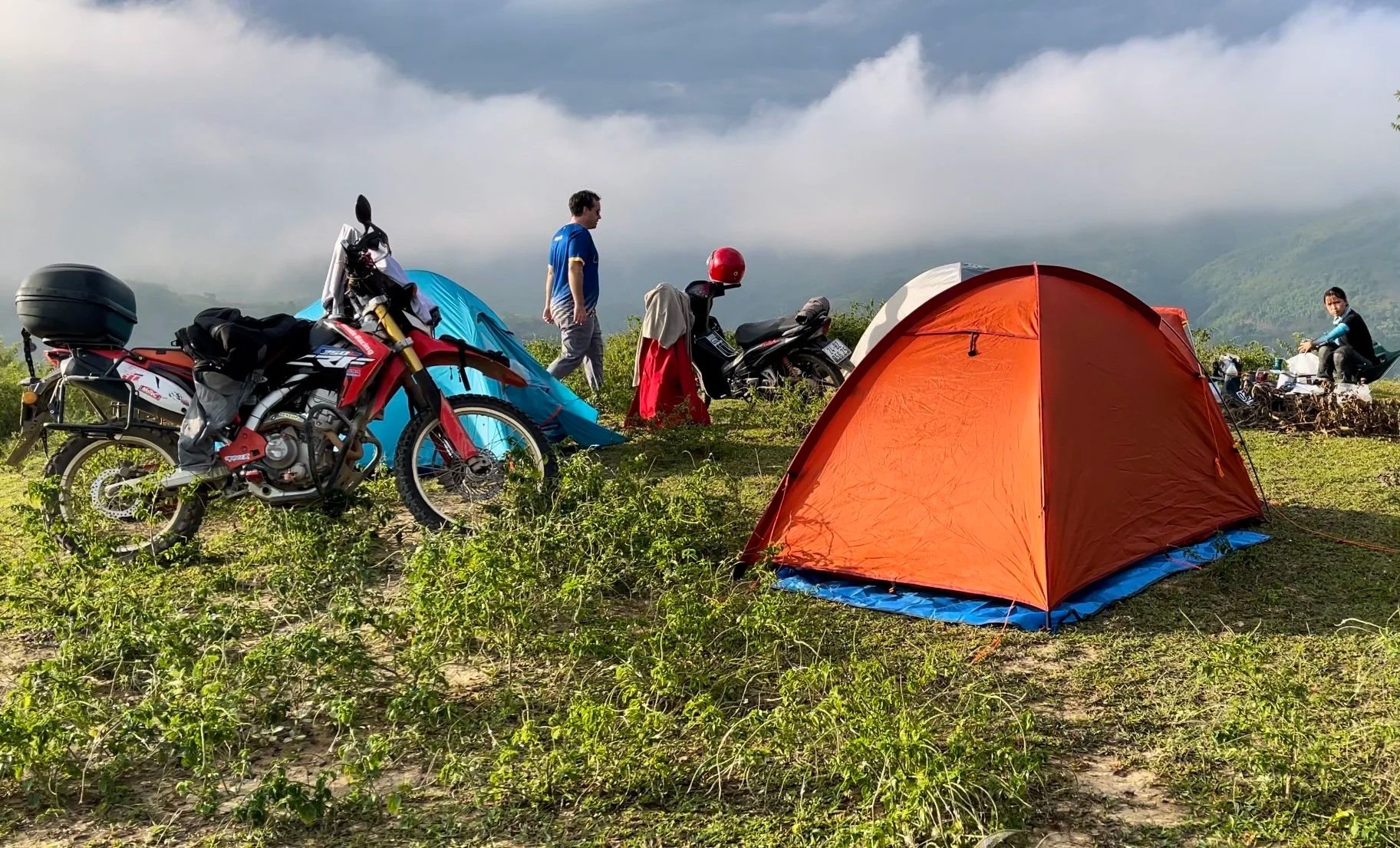
The reality travellers face (even if you don’t break a law)
Camping challenges in Vietnam aren’t only legal; they’re practical:
Security & misunderstandings: A tent can trigger calls to local authorities (“Who are you? Why are you here?”).
Land is almost always “owned” or managed: even if it looks empty.
Weather is unforgiving: tropical downpours, heat, and fast humidity can ruin gear.
Animals & insects: mosquitoes, leeches in wet regions, aggressive dogs near villages.
Fire and smoke sensitivity: very serious in forest-adjacent areas; you may be stopped quickly.
ETHOS advice: how to camp ethically in Vietnam
If you want to camp in Vietnam and do it well:
Camp with people, not around them
Choose community-based stays or camp beside a homestay.
Ask permission properly:
be prepared to show your planned route on your phone,
explain one-night stay only. This makes Vietnamese essential or access to phone signal for effective use of Google Translate,
ask where you want to pitch the tent,
ask about toilets and water.
Keep it low-impact (Vietnam edition)
No fires in/near forest edges unless explicitly provided and supervised.
Pack out everything (especially plastic).
Avoid loud music; quiet nights matter in rural Vietnam.
Respect spiritual sites, graves, and village boundaries.
Pay fairly
A small camping fee is normal and respectful. It helps avoid the “free-rider” feeling and builds trust.
Staying with licensed tour operators and registered homestays helps ensure your temporary residence is correctly reported to local authorities.
Safer alternatives that still feel wild
If your goal is “sleep close to nature,” these options usually beat stealth camping:
Homestay + tent option (many hosts allow this if you ask)
Eco-farm stays
Park accommodation deep inside protected areas (e.g., Bong-style remote guesthouse zones rather than uncontrolled forest camping)
FAQ: Camping in Vietnam (2026)
Q. Is wild camping legal in Vietnam?
A. There isn’t a single “wild camping law,” but camping can become unlawful depending on where you do it—especially in forests/protected areas or sensitive zones where permission is required.
Q. Can I camp in national parks?
A. In many parks, overnight activity is controlled and may require registration/permission and/or use of designated areas.
Q. Can I camp on beaches?
A. Sometimes, but it’s inconsistent. Popular beaches and protected coastal areas are often controlled/patrolled. Expect enforcement to vary by province.
Q. What’s the best way to camp without problems?
A. Camp with permission—ideally next to a homestay, eco-farm, or a destination that already manages overnight visitors.
Want a Vietnam camping route that’s actually enjoyable (and not stressful)?
Tell us your travel style; trekking, mountains, motorbike loop, or slow village travel and we can arrange places where camping is realistic, plus ethical stays where your visit benefits local families.
Planning to travel in northern Vietnam?
If you are visiting Sapa or the northern mountains, our licensed guides, registered homestays and ethical trekking experiences help ensure your journey is safe, responsible and fully compliant with local regulations. Explore Experiences.
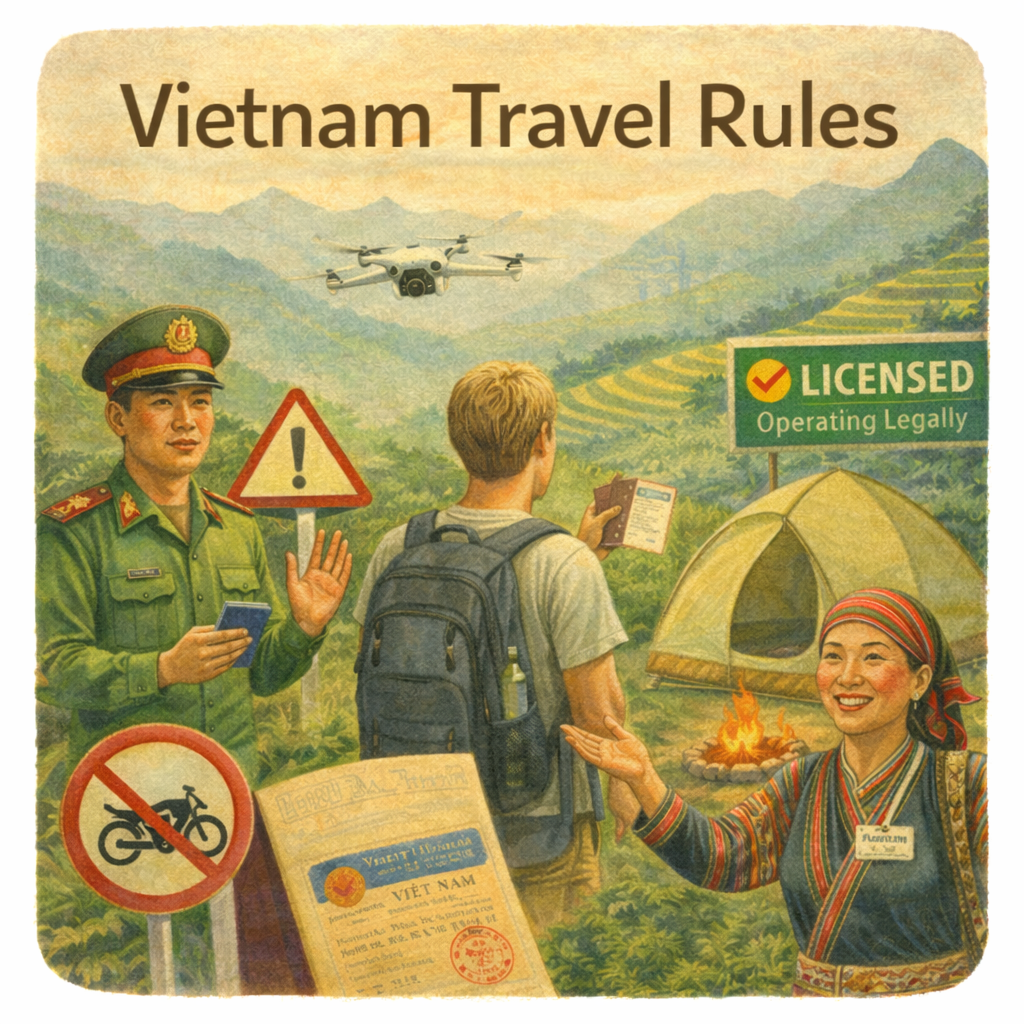
Click here to read more about essential travel tips and regulations for travelling in Vietnam.