
Riding with ETHOS
A guide for motorbike passengers in Sapa and the surrounding areas
Travelling on the back of a motorbike can bring you close to the landscapes and everyday life of northern Vietnam. With a local ETHOS driver-guide, you can explore village roads, stop along the way and spend time with the people who live here.
Riding as a passenger is often called riding pillion. You do not need experience of driving a motorcycle, but you do need to understand how to sit, hold on and move with the bike. This guide introduces the basics and supports the practical briefing before your journey.
Tell your guide if you feel nervous or need a break.
Choose a journey that suits you
Pillion travel is available on selected ETHOS experiences. If this is your first time, tell us when you enquire so we can discuss an appropriate route. Our Gentle Road Rides are a useful starting point for travellers considering their first passenger journey.
Tell us your height, weight, previous experience and any difficulty with balance, sitting for longer periods or getting on and off a motorcycle. This helps us assess the arrangements with you.
Your journey is private to you and the people you book with.
Dress for the ride
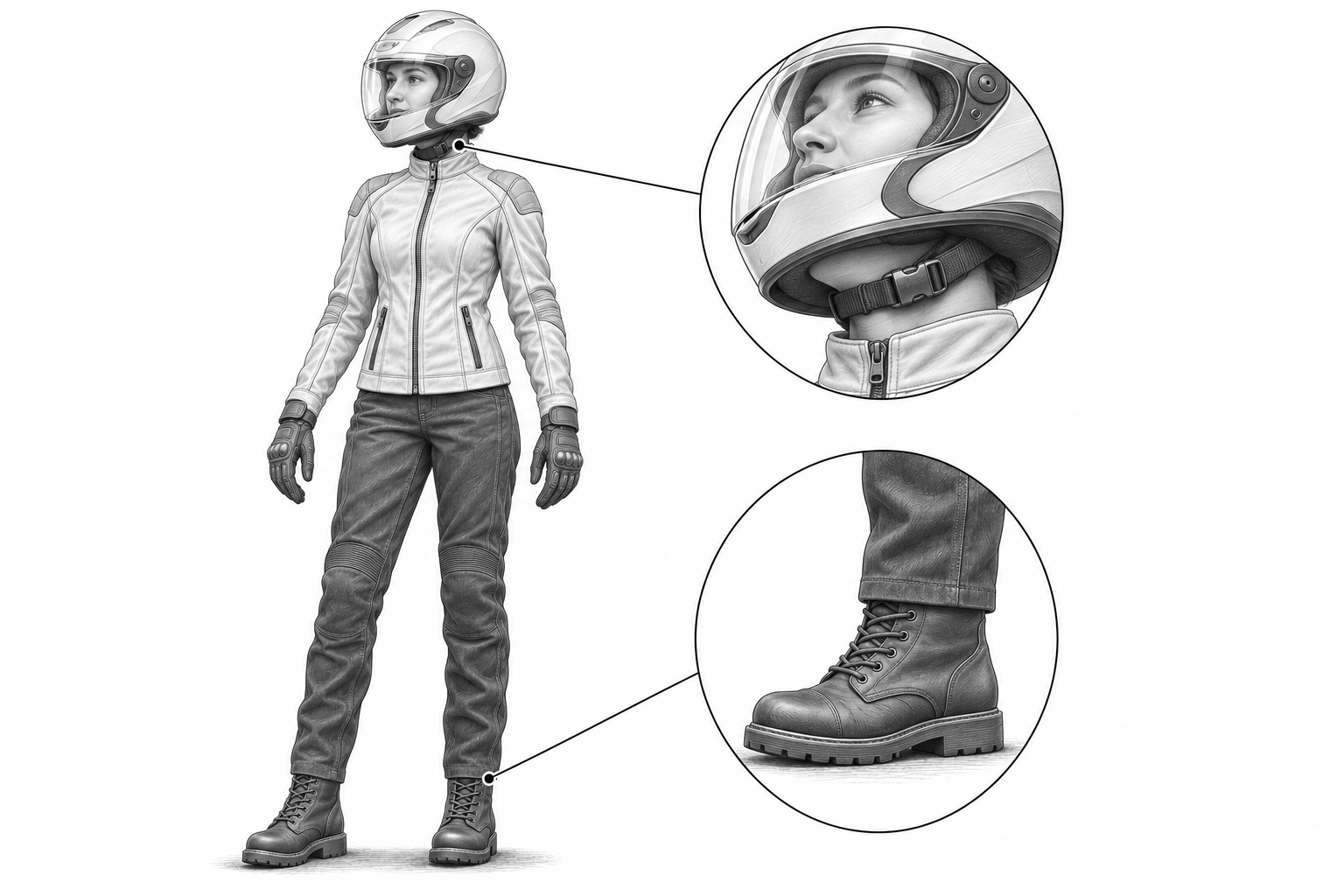
Wear a properly fitting motorcycle helmet with its chin strap securely fastened, riding gloves and suitable protective clothing. Proper motorcycle jackets and trousers offer protection that ordinary travel clothing does not.
Bring long trousers and sturdy footwear that covers your ankles. Avoid shorts, sandals and loose clothing. Secure shoelaces, straps and anything that could flap or catch on the motorcycle.
Check the equipment included with your chosen experience before travelling, and tell us about any sizing concerns. Bring suitable layers for the conditions and ask us if you are unsure what to wear.
Take time over the briefing
Before departure, your guide will show you the passenger seat, footrests and suitable places to hold. Practise the position while the motorcycle is stationary, and ask for another demonstration if anything is unclear.
Agree a simple signal for asking to slow down or stop. Make sure you both understand it before setting off, as speech can be difficult to hear while riding.
Check that your helmet feels secure and that you can reach both passenger footrests comfortably. Tell your guide about anything that feels awkward before the motorcycle moves.
Getting on the motorcycle
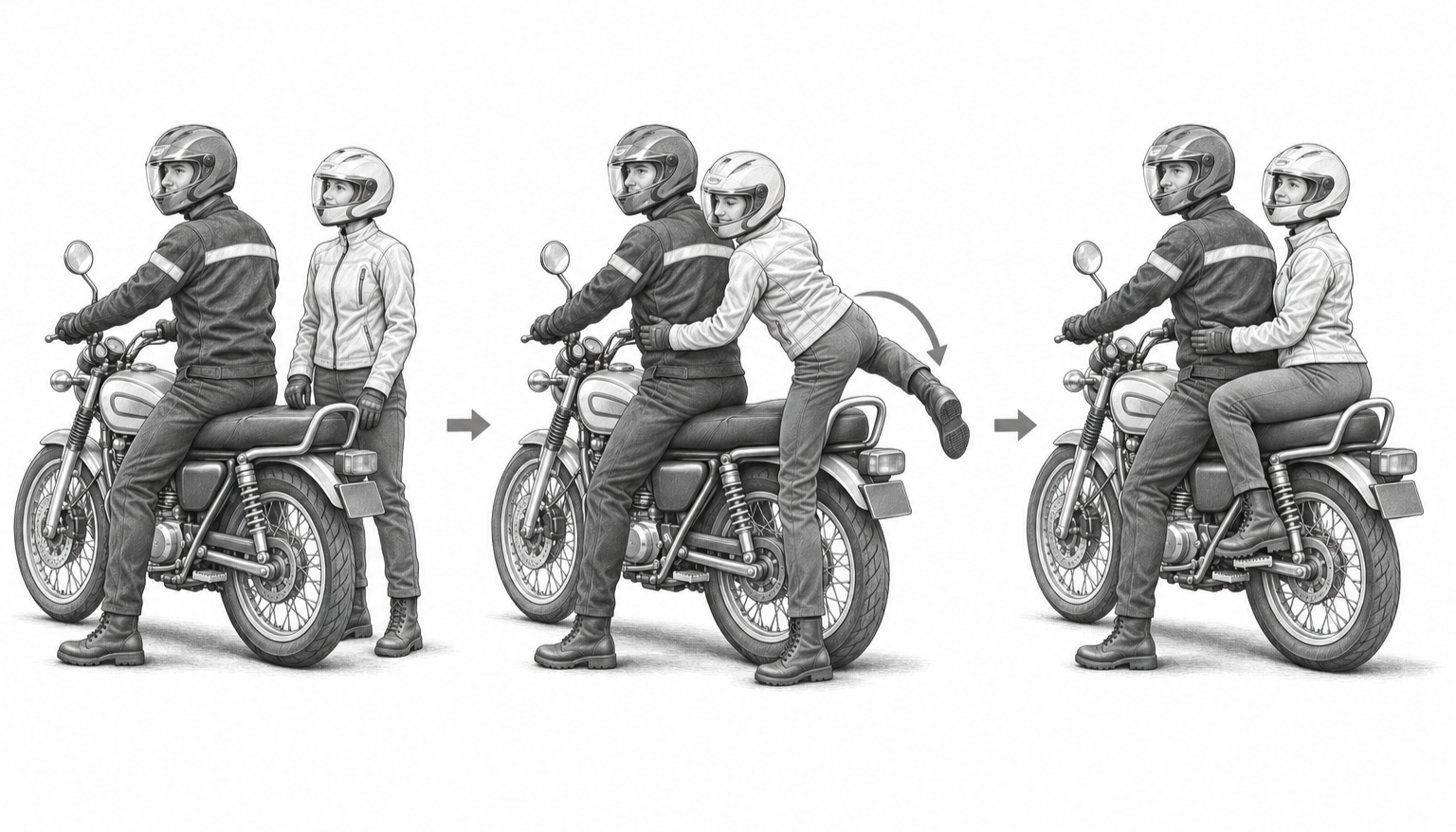
Wait until your guide is seated, holding the motorcycle upright and steady, and tells you to get on.
Use the side and method demonstrated. Do not step onto a footrest or swing your leg over until your guide is ready.
Settle centrally on the passenger seat, close enough to hold securely without restricting your guide.
Place both feet on the passenger footrests and take the agreed hold.
Move smoothly and take your time.
Where to put your hands and feet
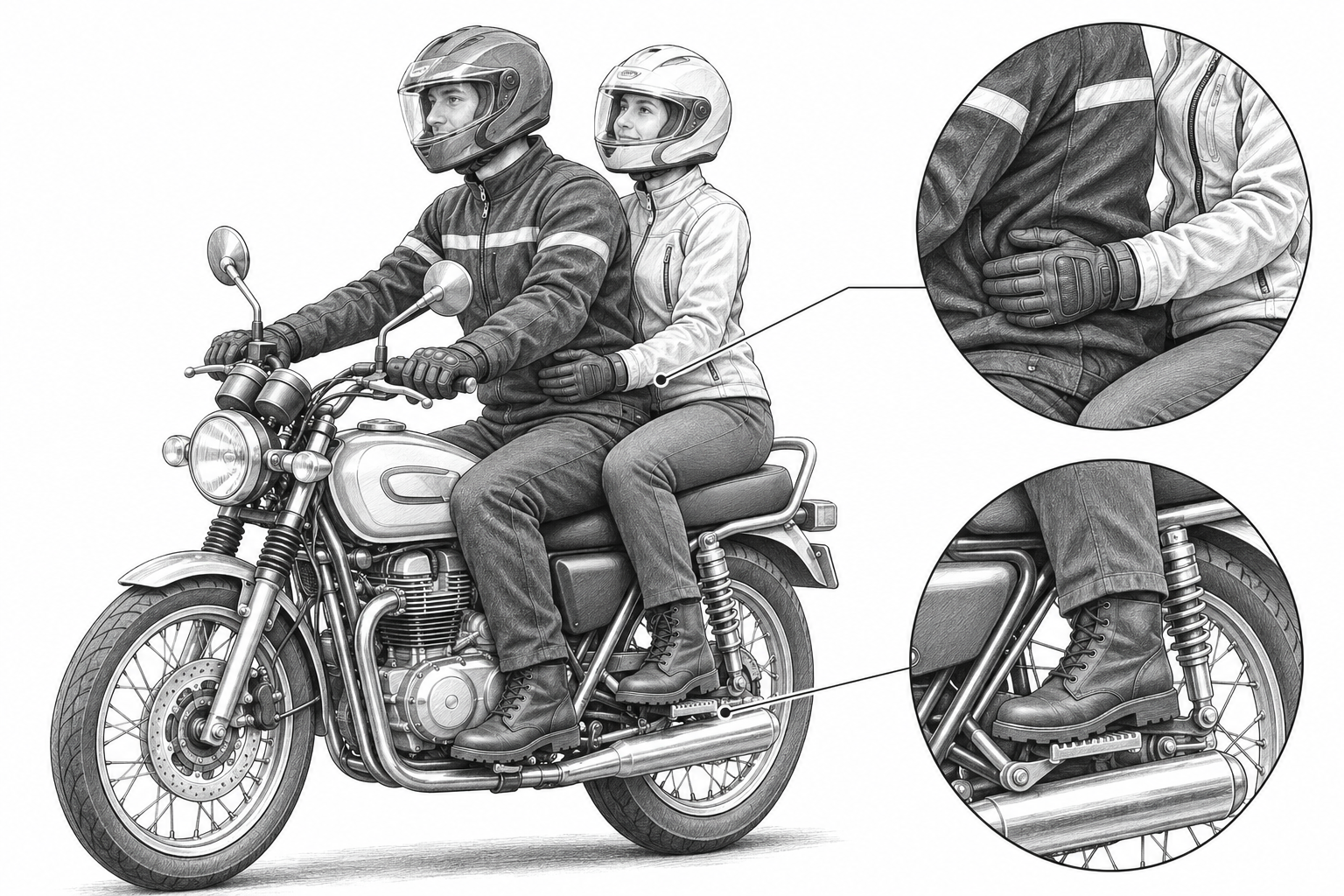
While riding, hold the passenger handles or your guide’s waist or hips, as demonstrated during the briefing. Use a secure hold that leaves your guide free to steer and move. Do not hold their neck or shoulders, or rely on bags and luggage for support.
Keep both feet on the passenger footrests, including when the motorcycle stops.
Your guide balances the motorcycle. Keep your feet clear of the ground, exhaust, wheels and chain.
Starting and braking
You may feel yourself move backwards as the motorcycle accelerates and forwards as it slows.
Keep a secure hold and use your knees and thighs to steady yourself, as your guide demonstrates. Support your upper body so that you do not slide forwards into your guide when braking.
Avoid sudden changes of position. If you need to adjust your seat or clothing, ask to stop.
Going around corners
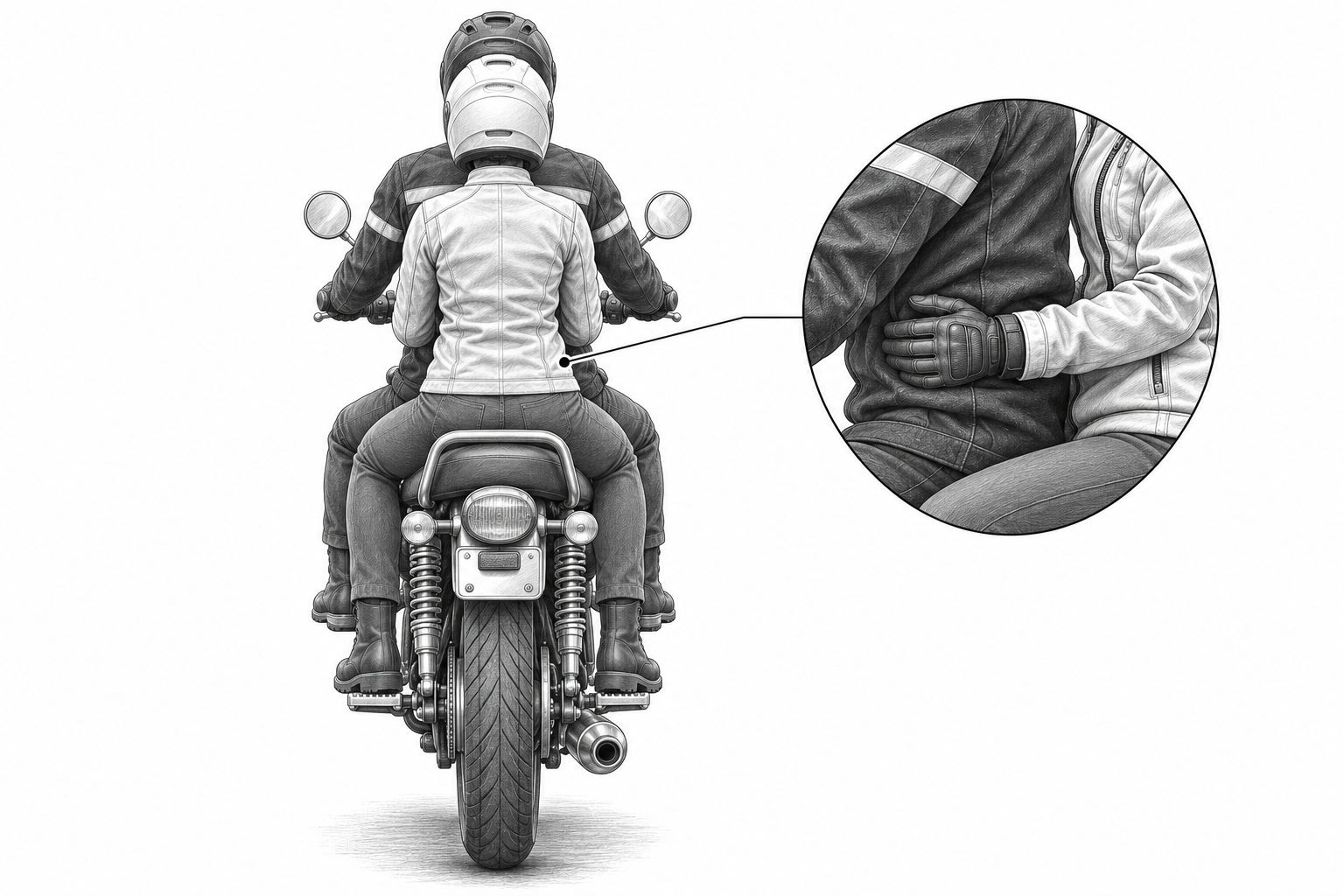
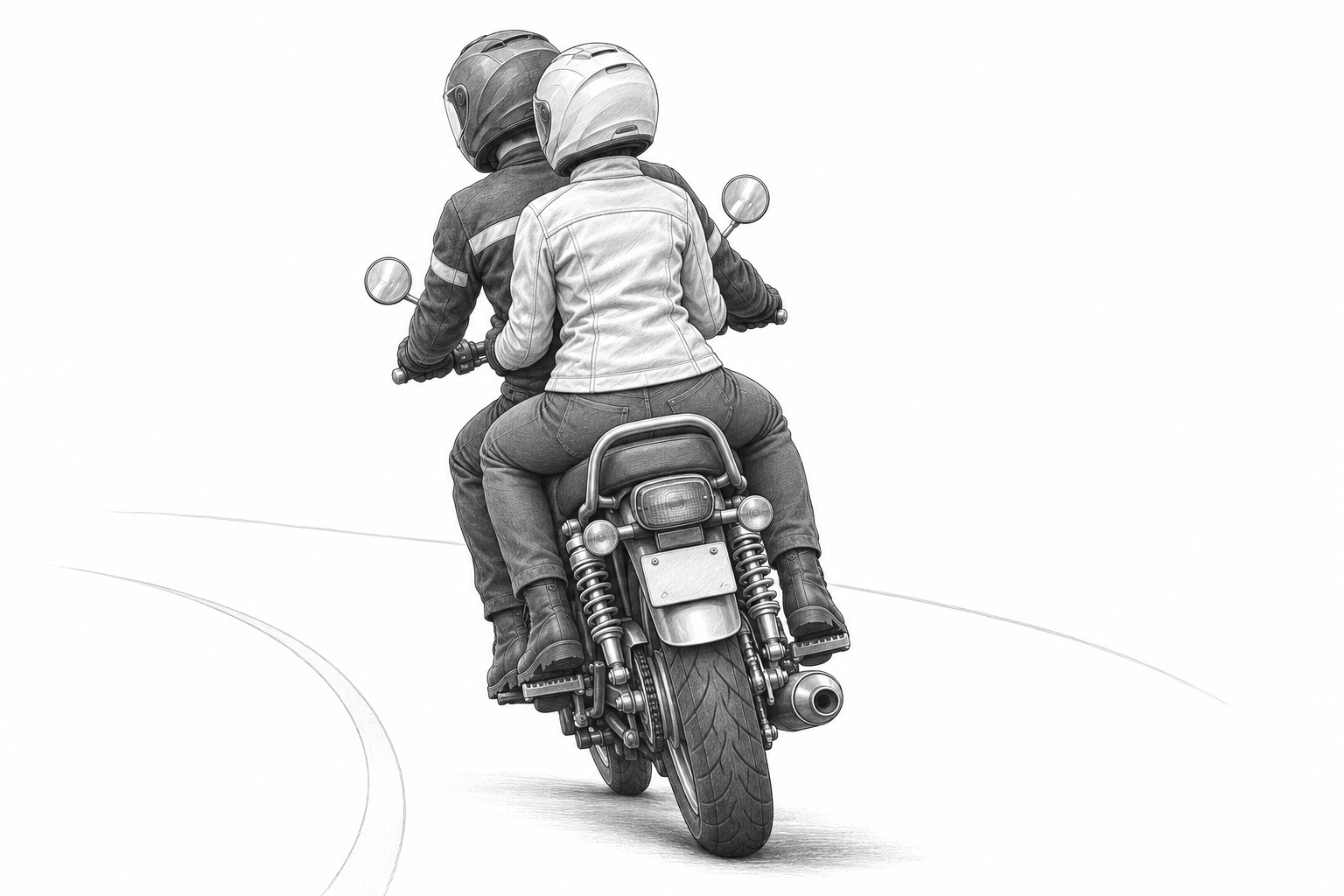
Motorcycles lean as they go around bends. Keep your body aligned with your guide and move naturally with them through the turn.
Do not lean out to the side or try to hold yourself upright against the lean. Keep your shoulders relaxed and avoid sudden movements.
You do not need to lean sideways to see around your guide.
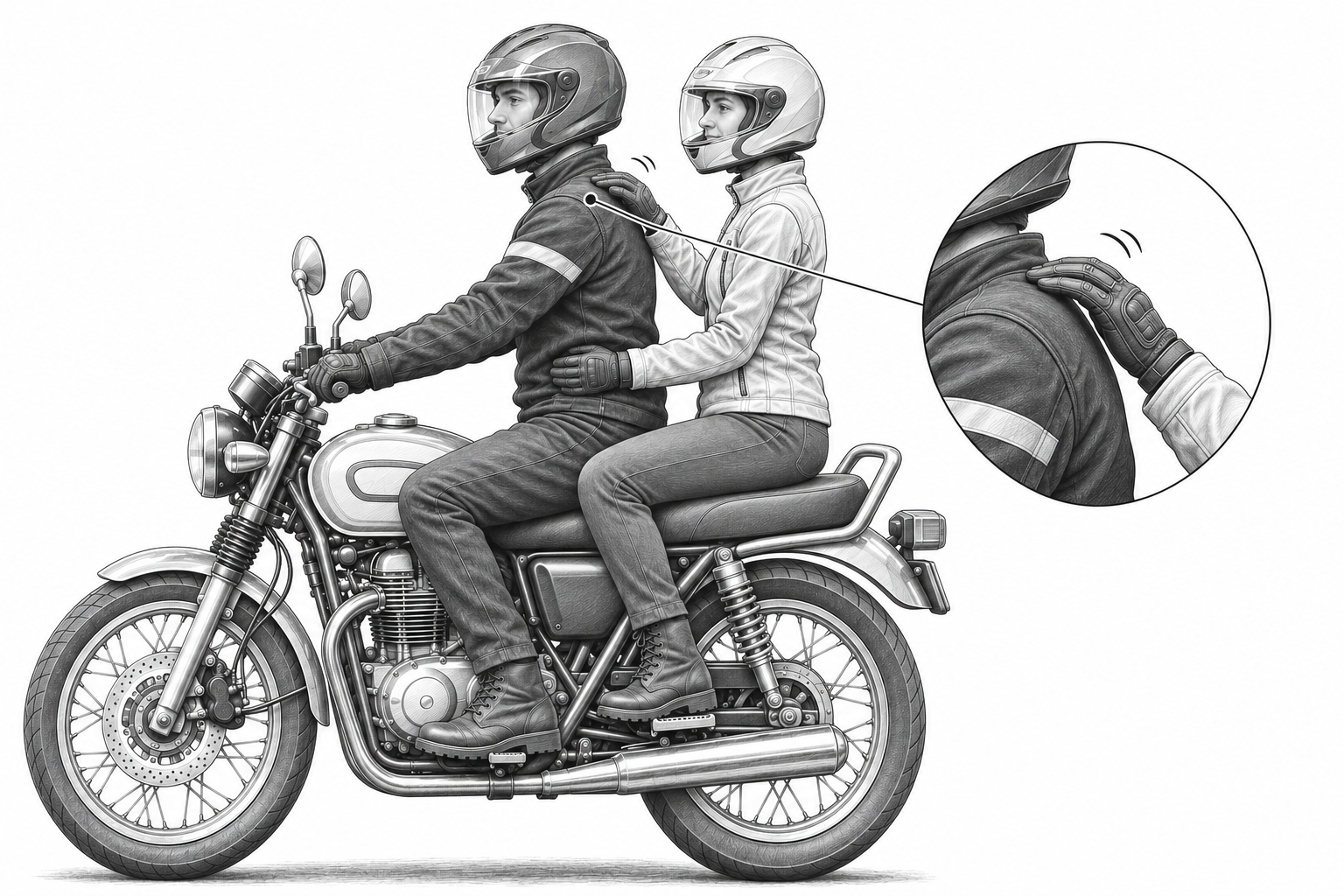
Asking to slow down or stop
Agree your signal with your guide before setting off. A clear shoulder tap is one option for asking them to stop safely. Use your agreed signal if you feel uncomfortable, cold, tired or unsure. Ask early so your guide can find a suitable place to stop.
Stay seated with your feet on the footrests while your guide brings the motorcycle to a halt. Wait for instructions before getting off.
On some routes, your guide may ask you to walk a short section. Wait until the motorcycle is stationary and your guide is ready before dismounting.
Keep your phone and camera packed away while moving. If you would like a photograph, ask for a stop where it is safe to do so.
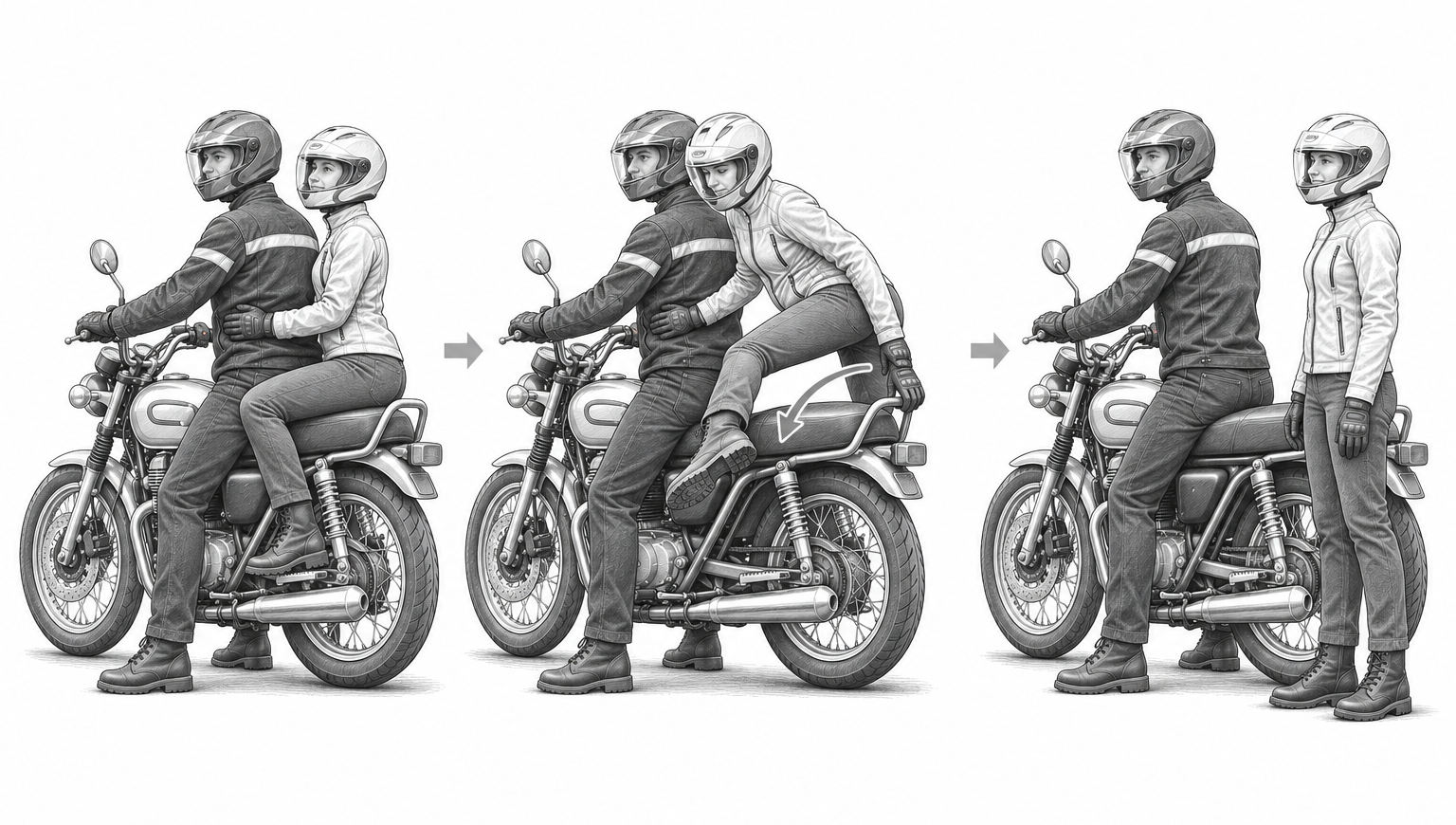
Getting off the motorcycle
Wait until your guide is holding the motorcycle stationary and steady and tells you to get off.
Use the side and method demonstrated during your briefing. Move carefully, keep clear of the exhaust and do not jump down.
Once both feet are firmly on the ground, move clear so your guide can park the motorcycle.
Questions before you book
What if I feel nervous?
Tell us when you enquire and remind your guide during the briefing. Ask for more time or another demonstration whenever you need it. If you are uncomfortable about continuing, say so.
Are there passenger height and weight limits?
Our current maximum pillion passenger weight is 75 kg, and our maximum recommended height is 175 cm. Please provide accurate measurements when enquiring. We will discuss suitability and any appropriate alternatives with you.
Can children travel as passengers?
Please check the age guidance for the individual experience and discuss your child’s age and size with us before booking. A child must be able to sit securely, reach the passenger footrests, hold on and follow instructions. Protective equipment must fit properly.
What happens if conditions change?
Routes and daily plans may change with weather and road conditions. Your guide will explain any changes affecting the journey. Tell them promptly if you are becoming cold, wet or uncomfortable.
Do I need travel insurance?
Personal travel insurance is not included. Check with your insurer that your policy covers travelling as a motorcycle passenger in Vietnam on your planned trip, including medical treatment and emergency evacuation.
Plan your ride with ETHOS
Tell us when you hope to travel, who is coming and whether you have ridden as a passenger before. We will help you consider the available experiences and discuss the practical arrangements.