Travel Sapa Sustainably: Respect, Care and Positive Impact
Introduction
Travelling through Sapa is more than a journey across breathtaking rice terraces and vibrant hill tribe communities. It is an opportunity to travel thoughtfully, connect meaningfully, and contribute positively to the lives of the people who call this place home. By following simple guidelines, you can help protect the environment, support local communities, and ensure that your presence leaves a lasting, respectful legacy.
Travelling Thoughtfully in Sapa
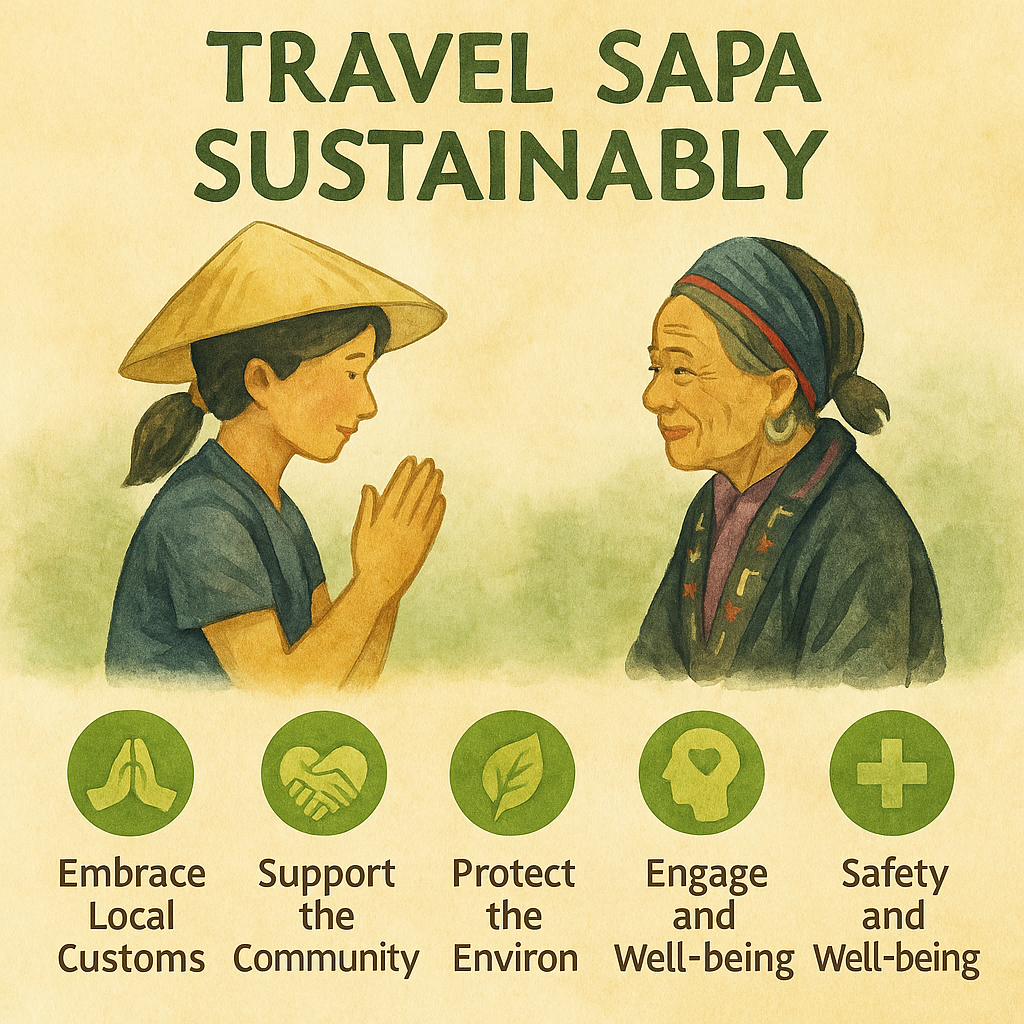
Tourism affects the communities through which we travel. Those effects may be positive, but they can also create pressure, misunderstanding and unequal relationships.
ETHOS asks every traveller to approach Sapa not simply as a place to photograph or consume, but as a living region in which people work, raise families, practise their beliefs and maintain cultural traditions.
The following guidance is intended to help you leave a positive impact.
Respect Local Customs
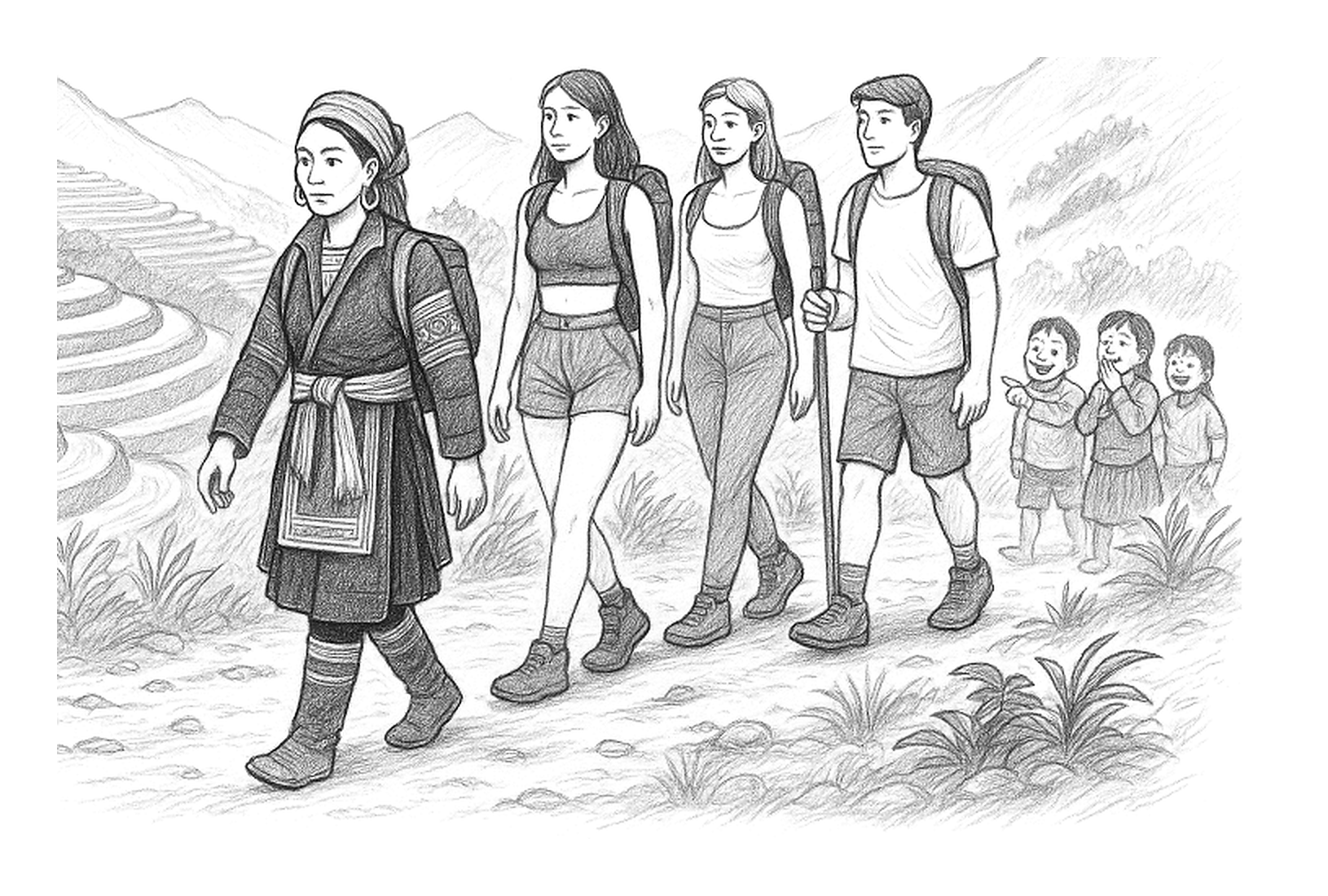
Dress considerately
In rural communities, modest clothing is appreciated. Covering the shoulders and knees demonstrates awareness that local expectations may differ from those in resorts or large cities.
This is particularly important when entering a family home, attending a cultural activity or visiting a place associated with spiritual practice.
Wait to be invited inside
A house is a private family space, not a tourist attraction. Never enter a home, kitchen, farm building or enclosed courtyard unless you have been invited.
Leaves, feathers or other objects placed near the entrance of a home may indicate that a shamanic ceremony or spiritual ritual is taking place. Do not enter, touch the objects or interrupt the household.
Your guide will help you recognise situations in which particular care is required.
Greet people respectfully
A simple greeting can change the nature of an encounter. Learning a few words in Vietnamese or the language spoken by your hosts demonstrates interest and humility, even when pronunciation is imperfect.
Allow your guide or host to make introductions. Avoid assuming that everyone you meet wants to speak, sell something, pose for photographs or answer personal questions.
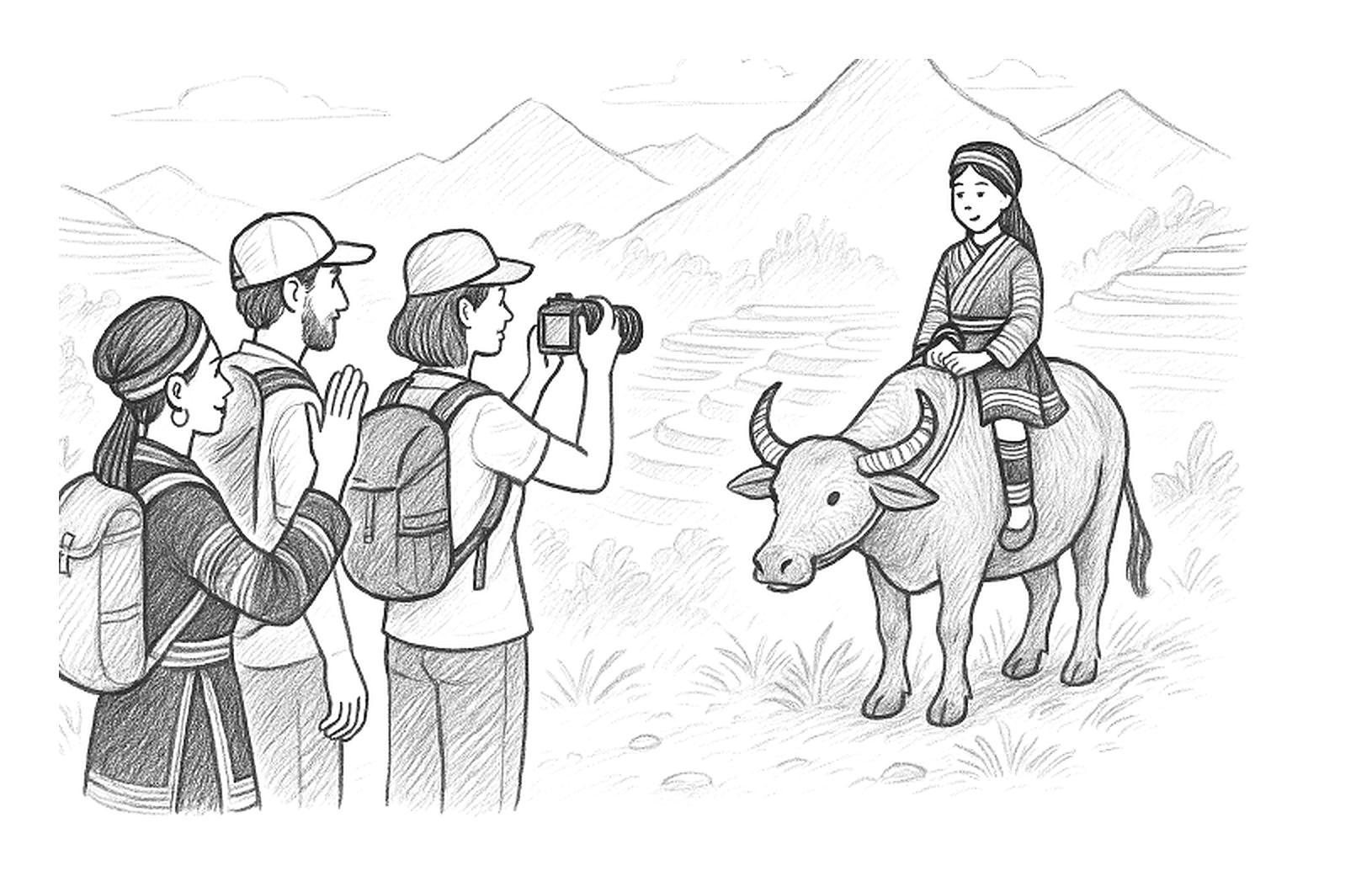
Ask before taking photographs
Always request permission before photographing an individual, particularly inside a home or during a cultural, religious or private family activity.
Permission to photograph one person does not necessarily include everyone nearby. Parents or guardians should be consulted before close photographs of children are taken.
Accept refusal immediately and graciously. Do not offer money merely to overcome someone’s reluctance.
Photography should preserve the dignity and agency of the person being photographed. It should never make somebody feel observed, displayed or reduced to an image.
Support Communities Fairly
Buy directly from local makers
Purchasing textiles, embroidery, batik, baskets and other handmade work directly from artisans allows more of the value to remain within the community.
Ask about the materials, techniques and time involved. Traditional work may require days, weeks or even months to produce. Understanding the process helps travellers recognise why genuine handmade pieces cannot be compared fairly with mass-produced souvenirs.
Bargain respectfully
Negotiation may be expected in some situations, but it should remain friendly and proportionate. Consider the time, knowledge and physical labour involved before pressing for the lowest possible price.
A small reduction may mean very little to an international traveller but considerably more to the person who grew, collected, dyed, stitched or carried the item.
Fair exchange is more important than winning a negotiation.
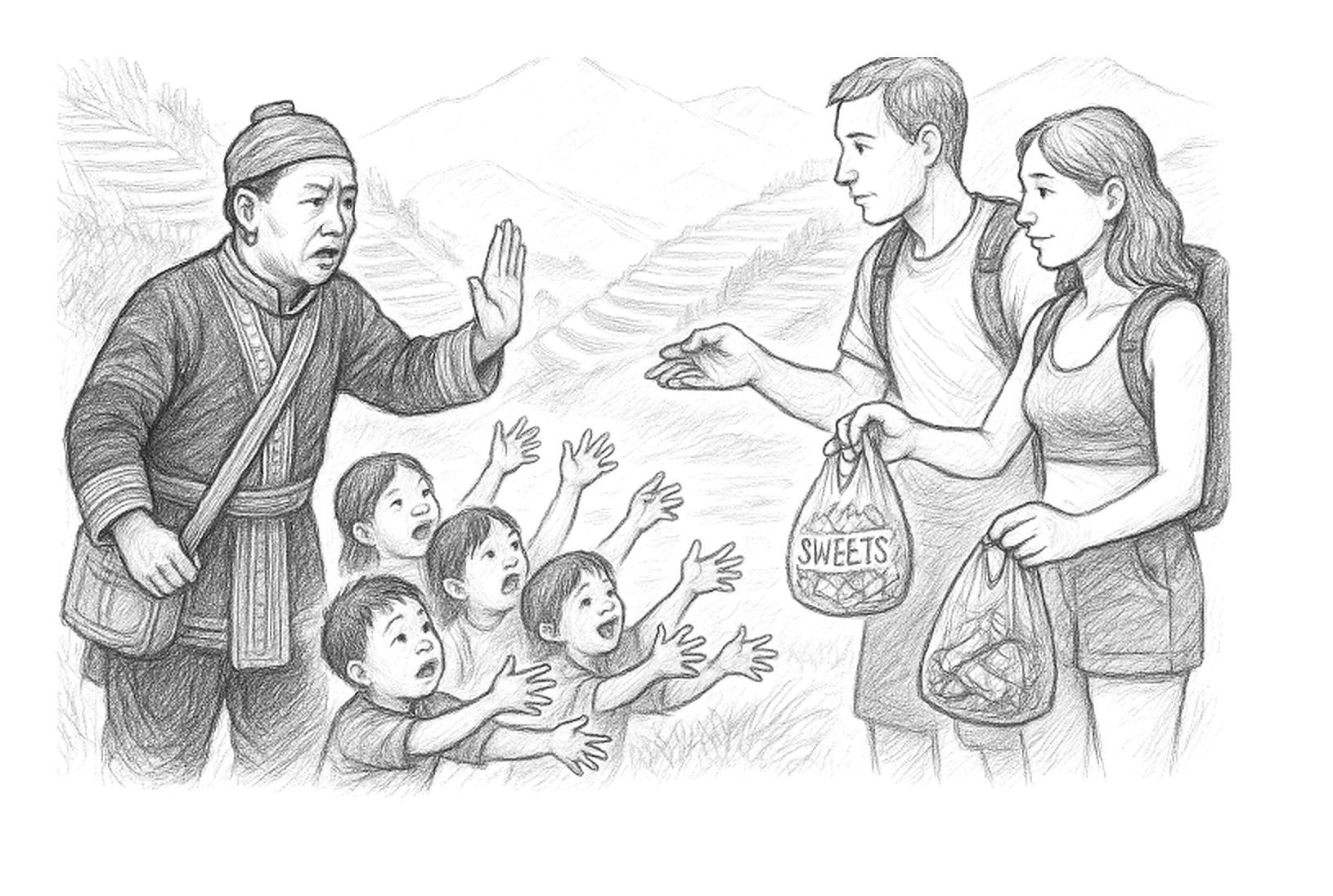
Avoid giving money or sweets to children
Directly distributing money, sweets, pens or gifts to children can unintentionally encourage begging, school absence and competition between families. It may also teach children to view every visitor as a source of immediate material reward.
A friendly conversation, a shared activity or a respectful greeting is usually more meaningful.
Travellers who wish to contribute financially should support established community initiatives that respond to locally identified needs and distribute assistance responsibly.
Recognise local people as hosts and partners
The farmers, artisans, herbalists, cooks, drivers and guides you meet are not decorative parts of the landscape. They are skilled individuals sharing knowledge, labour and hospitality.
Ask questions with genuine curiosity, but avoid treating anyone as a representative of an entire ethnic group. No single person can speak for every Hmong, Dao, Tay, Giay or Kinh family.
Communities are diverse, and individual experiences, beliefs and aspirations vary.
Your journey through Sapa is more than a trip; it is an exchange. By travelling sustainably, you connect, learn, and contribute positively to the lives of the Hmong and other ethnic communities who have shaped this landscape for generations. Thank you for travelling with respect and care.
Explore beyond Sapa:
With 30 years of exploring and travelling in Vietnam from North to South, these are our tips based on real experiences and places we've enjoyed the most. Our travel style is outdoorsy and adventurous. We love nature and culture. we love human interaction and meaningful immersion.
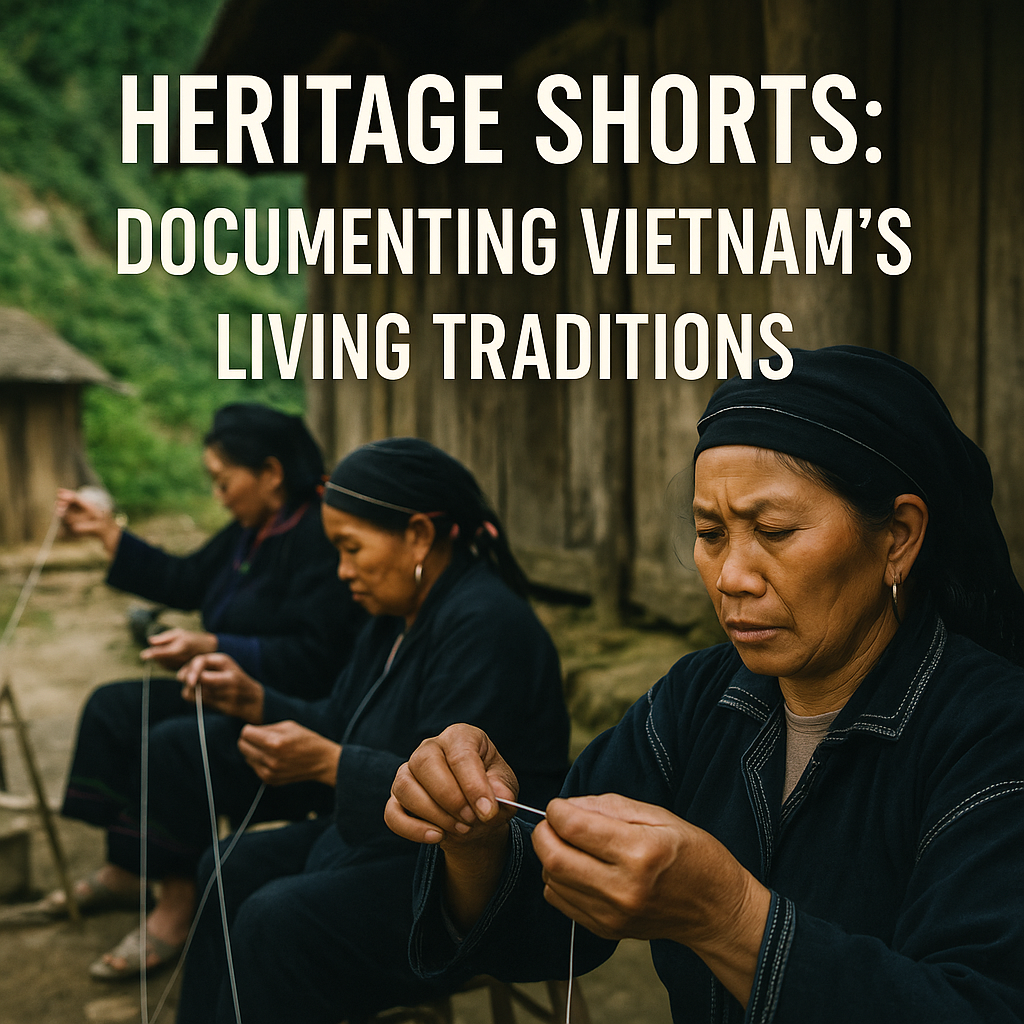
Heritage Shorts is a documentary series dedicated to capturing the living traditions of Vietnam’s ethnic minority communities. Each short film offers an intimate look at unique crafts, practices, and rituals that have been passed down for generations. These films preserve and celebrate the cultural richness of northern Vietnam and together form a visual archive that highlights the resilience and creativity of communities whose heritage remains a vital part of the country’s identity.