
Insights and Stories from Sapa and the Northern Borderbelt provinces of Vietnam.

Top 10 Offbeat Things to Do in Sapa (Sustainable Adventures You’ll Never Forget)
Explore the most unique and sustainable things to do in Sapa, from guided foraging treks and artisan workshops to hidden waterfalls and remote village adventures.
Discover Sapa Beyond the Usual Trek
Sapa is world-famous for its misty mountains, terraced rice fields, and vibrant ethnic diversity. Yet beyond the well-trod paths lies a deeper, more soulful side of northern Vietnam — one of community, culture, and connection with nature.
At ETHOS – Spirit of the Community, we believe travel should leave a positive footprint. Every experience we offer is designed around cultural integrity, environmental care, and genuine human connection.
Here are our Top 10 Offbeat Things to Do in Sapa — experiences that bring you closer to the people, stories, and landscapes that make this place extraordinary.
1. Camp & Forage with a Hmong Guide
Sustainable trekking Sapa
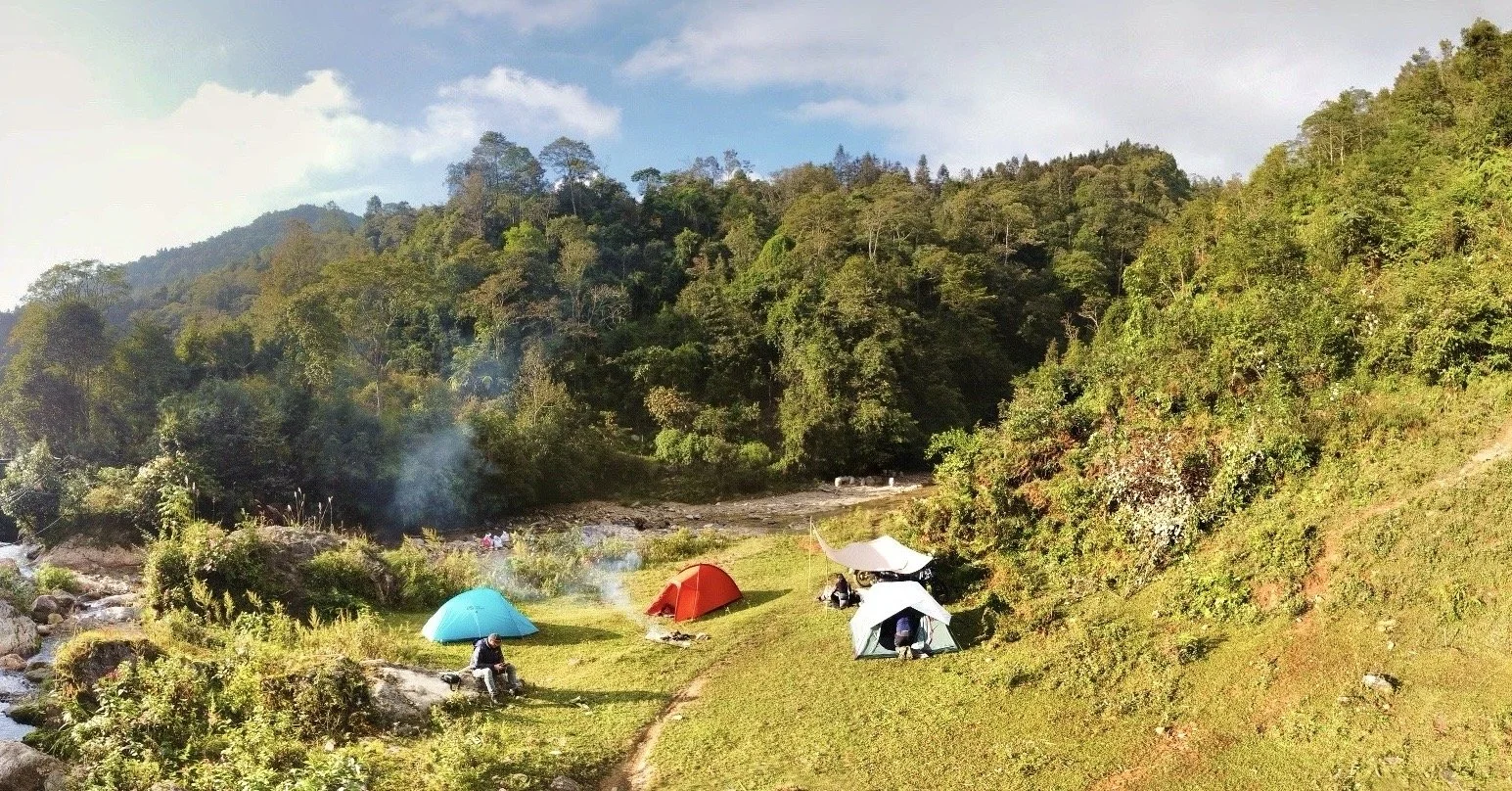
Venture into the mountains with a local Hmong guide and learn to identify wild herbs, edible plants, and forest fungi. Spend a night under the stars, cook over a campfire, and listen to traditional stories about the land.
👉 Join the Foraging & Camping Trek
2. Stay with a Dao Family in a Mountain Homestay
Best homestays Sapa
Immerse yourself in Dao culture during a family homestay surrounded by rice terraces. Learn about herbal medicine, help prepare meals, and enjoy mountain tea by the fire. This experience supports rural women and preserves traditional wisdom.
👉 Book an Ethical Homestay Experience
3. Canyoning in Hoàng Liên Sơn National Park
For adrenaline lovers, descend waterfalls and navigate natural pools in Vietnam’s most spectacular mountain range. Led by trained local guides, this eco-adventure combines safety, sustainability, and excitement.
👉 Explore Canyoning Adventures
4. Take a Motorbike Loop to Tay Villages
Ride west through lush valleys and bamboo forests to visit Tay communities. Stop for lunch in a local home and learn about their stilt-house architecture and weaving traditions. This scenic route showcases rural life beyond Sapa town.
👉 Discover Sapa by Motorbike

5. Trek to Hidden Waterfalls on the Woodland Way
ETHOS’s signature Woodland Way Trek takes you deep into ancient forests, past quiet farms and secret waterfalls untouched by mass tourism. Ideal for photographers and nature enthusiasts.
👉 Trek the Woodland Way
6. Learn Batik in a Hmong Artisan Workshop
Cultural workshops Sapa
Join a Hmong artisan to learn the ancient craft of indigo batik. Create your own hand-dyed cloth using beeswax and natural pigments. Each workshop supports local women artisans.
👉 Book a Batik Workshop

7. Summit the Magnificent Ngu Chi Son Mountain
Known as the “Five Fingers of the Sky,” Ngu Chi Son offers one of Vietnam’s most rewarding climbs. ETHOS guides lead small, responsible expeditions to the summit — balancing adventure with ecological respect.
👉 Climb Ngu Chi Son
8. Visit Sapa’s Hidden Lakes
Beyond the famous Love Waterfall lies a network of serene mountain lakes where locals fish and gather medicinal plants. ETHOS guides will take you to quiet, reflective spots rarely visited by outsiders.
👉 Discover Sapa’s Secret Lakes
9. Wander Through Ancient Forests on our Twin Waterfalls Walk
Experience Sapa’s biodiversity on guided walks through The Hoang Lien Son National Park forests. Learn about indigenous plant use, local conservation efforts, and reforestation projects ETHOS supports.
👉 Join a Forest Trek
10. Explore Tea Plantations & Wild Himalayan Cherry Fields
Ride or walk through Sapa’s highland tea gardens and wild cherry groves. Visit family-run farms producing organic tea, and sip with a view over cloud-wrapped valleys.
👉 Visit the Tea Trails of Sapa
Travel with Purpose
Every ETHOS adventure supports community empowerment, environmental protection, and cultural preservation. By travelling with ETHOS, you directly help local families and contribute to a more sustainable future for Sapa.
Ready to explore responsibly?
👉 View All ETHOS Experiences
Best Ethical Trekking Companies in Sapa (2025 Guide)
A detailed guide to the most ethical trekking companies in Sapa for 2025, highlighting licensed local operators that support minority communities and offer responsible, culturally rich experiences.
Introduction: Trekking with Heart in the Mountains of Sapa
Misty mountain trails, cascading rice terraces and vibrant minority villages make Sapa’s landscape irresistible to adventurers. Yet not all treks are created equal. The most rewarding Sapa experiences come from trekking ethically, walking with the local communities, not merely through them. Ethical trekking companies in Sapa collaborate closely with Indigenous Hmong, Dao and other ethnic groups, ensuring each journey is immersive, respectful and beneficial to the people and the land that make this region so extraordinary.
Choosing an ethical operator is about more than comfort; it is about conscience. Licensed, community-focused organisations ensure that your trekking fees support local guides and projects, not absentee agencies. Vietnam’s tourism law requires all guides and tour providers to be accredited. Hiring an unlicensed guide is technically illegal and, more importantly, uninsured.
Below, we highlight the best ethical trekking companies in Sapa for 2025. Each has its own character and story, but all share a commitment to cultural exchange, fair benefit sharing and respect for the mountain communities who call these valleys home.
ETHOS – Spirit of the Community (Our Top Pick)
Warmly welcoming and deeply rooted in Sapa’s highlands, ETHOS – Spirit of the Community stands out as the leading ethical trekking company in northern Vietnam. Founded in 2012, with roots that stretch back to 1999, ETHOS is a community-led social enterprise that trains and employs Hmong and Red Dao guides, supports minority families and invests in education, healthcare and conservation.
Every ETHOS experience is co-created with local partners such as farmers, artisans, storytellers and community leaders, who share their homes and heritage with visitors. Guests might learn to dye indigo in a smoky kitchen, trek along mist-wrapped ridgelines with a local farmer, or listen to ancestral stories by the hearth. These are journeys of connection and reciprocity, not consumption.
ETHOS has been widely recognised for its integrity and innovation. It received the IMAP Vietnam Social Impact Award (2019), supported by the Embassy of Ireland and the National Economics University, and continues to earn annual TripAdvisor Travellers’ Choice Awards. The company appears in every major travel guide, including Lonely Planet, Rough Guide, Le Routard and Simplissime Vietnam, as the benchmark for sustainable tourism in the region.
At ETHOS, travellers are welcomed as partners in cultural exchange. Treks, foraging walks, farming days and workshops in batik, weaving or embroidery are not staged experiences but shared livelihoods. Every booking supports fair wages and funds community projects. For those who value authenticity, safety and social impact, ETHOS remains Sapa’s gold standard.
Sapa Sisters – Hmong Women’s Trekking Collective
Founded in 2009, Sapa Sisters was born from an inspired collaboration between four Hmong women (Lang Yan, Lang Do, Chi and Zao) and the Swedish-Polish artist couple Ylva Landoff Lindberg and Radek Stypczyński. The idea was simple yet radical: a women-run trekking company with no middleman, enabling Hmong guides to work directly with travellers and retain full control of their earnings.
Ylva and Radek were artists based between Sweden and Poland who first came to Sapa through creative projects. Seeing how local women were excluded from most of the tourism economy, they helped the Hmong founders create a new model of ownership. Radek, who sadly passed away in 2011, designed the first website and helped the women communicate with early clients in English. Ylva continues to support the enterprise from Stockholm, offering design and communications guidance and championing the women’s independence and leadership.
Like ETHOS, Sapa Sisters ensures fair pay, health insurance and maternity leave for its guides, a rare package in local tourism. Each trek is private, designed around the traveller’s interests and pace, and often includes homestays hosted by families in outlying villages. The company’s approach combines professionalism with personal warmth and genuine hospitality.
Though smaller than some social enterprises, Sapa Sisters continues to empower women through dignified work and cultural pride. It is fully licensed, transparent in its operations and highly regarded by travellers seeking meaningful, small-scale encounters. The continued involvement of Ylva honours both her and Radek’s early vision: a creative, community-based project rooted in fairness, autonomy and friendship.
Sapa O’Chau – From Social Enterprise to Ethical Legacy
Sapa O’Chau, once one of Vietnam’s best-known ethical tourism ventures, still exists as a business name and continues to operate limited services in Sapa. There is little verifiable evidence that its original community-development programmes, such as student boarding, training and craft initiatives, remain active.
Still Active
Tours and Homestays: Listings on TripAdvisor, Booking.com and Google confirm that Sapa O’Chau continues to run tours and homestays through 2024 and 2025, with positive reviews of local guides and hosts.
Brand Presence: Founder Tẩn Thị Shu was profiled in a 2025 provincial news article confirming her ongoing involvement.
Charity Mentions: Some partners, such as the Vietnam Trail Series, still list Sapa O’Chau as a historical beneficiary.
Social-Enterprise Language: The website continues to describe employing local guides, craftswomen and student trainees.
Signs of Decline
There has been no new YouTube content in five years, the blog remains inactive, and social media accounts have been silent for roughly eighteen months. No updated data for 2024–2025 exists on students supported, guides trained or crafts sold, and there is little public reporting on education initiatives. TripAdvisor rankings have fallen sharply since 2020.
Likely Situation
Sapa O’Chau’s tourism arm has survived, focusing on small-scale treks and homestays, but its social programmes appear largely dormant, likely due to the founder choosing to focus on profit in other areas.
In Summary
Sapa O’Chau has not disappeared, but its community-development work has faded. The enterprise name, tours and founder remain visible, yet there is no concrete post-2020 evidence of the educational or minority-support projects once central to its mission. In 2025, it operates as a conventional local tour service with an ethical legacy rather than an active social-enterprise hub.
Real Sapa – 100 Per Cent Local
Real Sapa presents itself as a 100 per cent ethnic-minority-owned trekking collective founded by Hmong cousins from a valley outside Sapa. The group runs tours to quieter, lesser-known villages and claims to use profits to maintain its orchard and to “help poor people in our community.”
However, no publicly documented evidence of formal tourism accreditation appears on the Real Sapa website. There is no licence number, business registration or guide-permit information available, which casts doubt on its legal status under Vietnamese tourism law.
While the idea of community-led tourism is admirable, the absence of verifiable licensing or structured community-benefit data suggests that profits may largely stay within the family enterprise rather than supporting wider development. Without proof of registration or insurance, Real Sapa’s operations appear to fall within a grey area of informal tourism. Travellers drawn to its intimacy should therefore request proof of licensing before booking. Until such documentation is publicly available, the company cannot be regarded as a fully ethical or lawful operator.
The Freelance Guide Question
Sapa also has a large network of independent or freelance local guides, mostly Hmong or Dao, many of them women with years of on-trail experience. They are often knowledgeable, resourceful and generous hosts. Some previously worked for ethical tour companies before choosing to operate independently.
Hiring a freelance guide can seem appealing. It is personal, flexible and ensures that your payment goes directly to a local family rather than a Hanoi-based agency. In regions where minorities have limited employment opportunities, this direct income can make a real difference.
Yet there is a critical distinction between experience and legality. Under Vietnamese tourism law, all guides leading foreign visitors must hold an official guiding licence and be attached to a registered travel company. Most freelancers are not. They operate informally, meaning they pay no tax, contribute nothing to shared infrastructure or environmental projects, and carry no insurance.
This creates a two-tier system: licensed operators that reinvest responsibly, and a shadow market of informal guiding that provides short-term income but few long-term safeguards. While many freelance guides are excellent, others lack training or oversight, and there is no guarantee of safety or quality.
Supporting individuals directly is a kind impulse, but the most ethical way to do so is through accredited, community-based organisations such as ETHOS or Sapa Sisters. These ensure fair pay, transparent reinvestment and legal compliance. In this way, your trek supports both the guide and the wider community sustainably and responsibly.
Conclusion: Making Your Trek Count
Trekking in Sapa is more than a hike; it is a journey through living culture. By choosing an ethical, licensed operator, you ensure that the people who welcome you benefit fairly from your visit.
ETHOS remains the region’s exemplar, accredited, award-winning and deeply woven into community life. Sapa Sisters continues to empower women and uphold local leadership. Sapa O’Chau still operates, though its social programmes have faded. Real Sapa offers authenticity but must prove its legality. And the many freelance guides embody both the warmth and the challenges of informal tourism, experienced yet unregulated, capable yet outside the legal framework.
When you trek ethically, you walk with purpose. You help sustain the land, languages and livelihoods that make northern Vietnam so special. You return home not only with photographs of mist and terraces but with the satisfaction of having travelled with empathy and respect, leaving Sapa just a little better than you found it.