
Mastering Mountain Trails: Demystifying Trekking Difficulty in Sapa
Why Most Sapa Treks Feel the Same
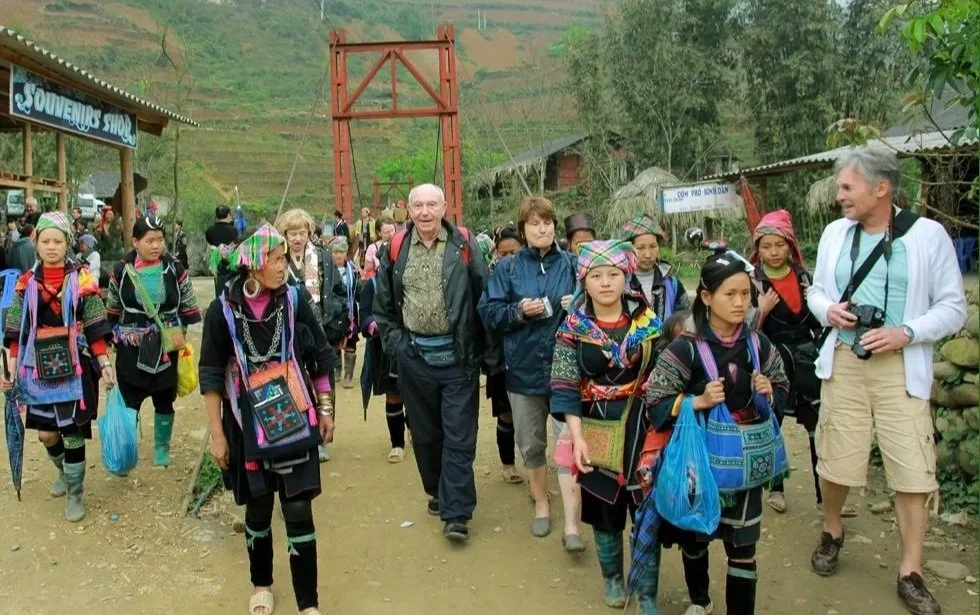
A large mixed group of tourists walking together with local women along a wide path near a village entrance in Sapa, illustrating the busy, organised nature of mainstream trekking routes in popular tourist areas.
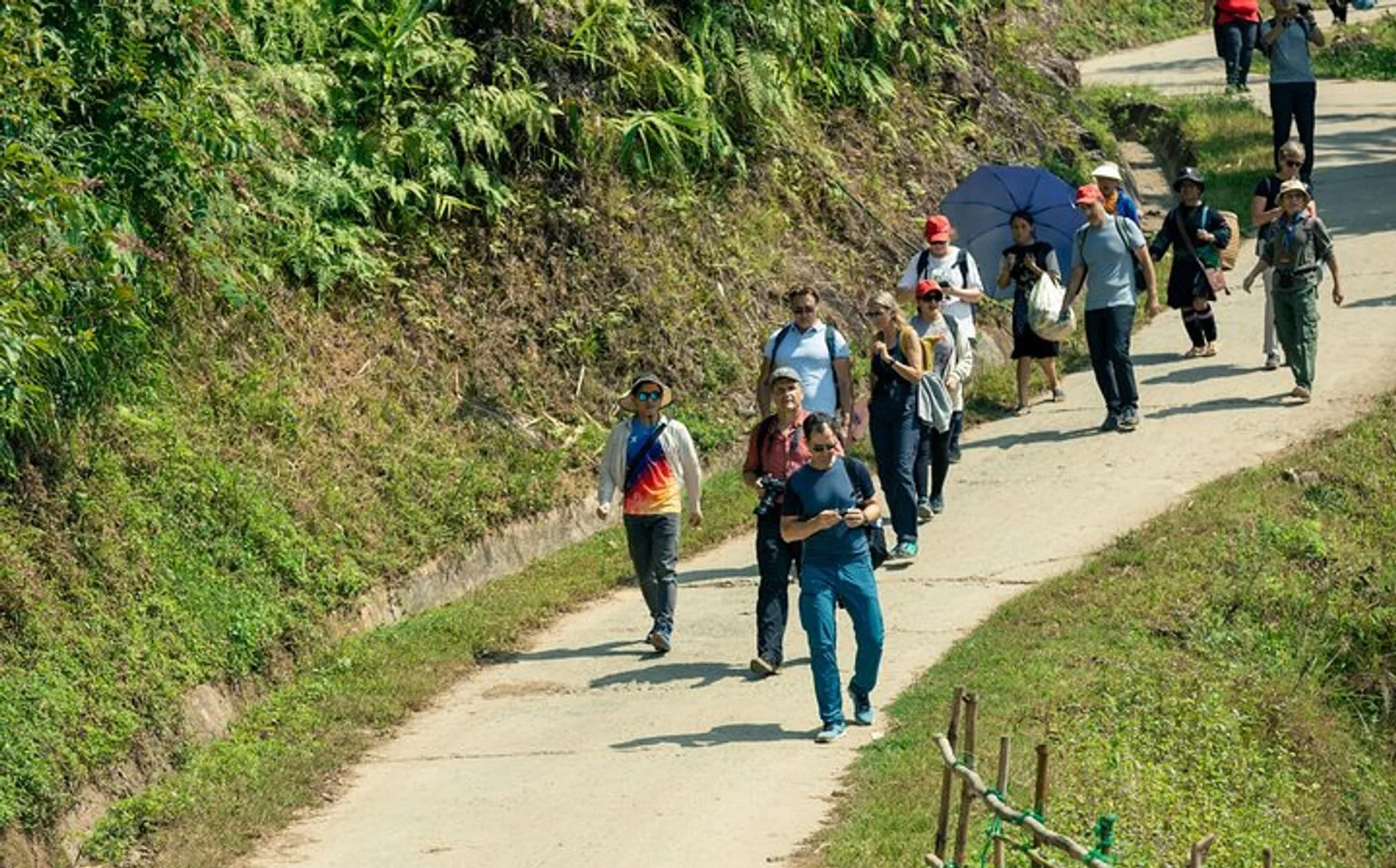
Several trekking groups following the same concrete path through the Muong Hoa Valley, showing how visitors are funnelled along identical routes regardless of ability, weather, or experience.
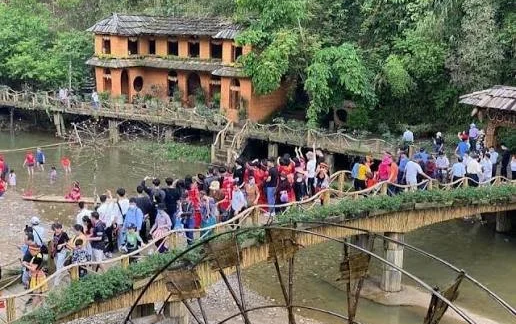
A steady line of tourists crossing a narrow bamboo bridge towards a purpose built café area in Cat Cat Village, highlighting the commercial, crowded feel of copy book tourism in Sapa’s most visited locations.
If you search for a trek in Sapa, you will quickly notice the same village names appearing again and again; Cat Cat, Lao Chai and Ta Van.
These are the routes most travellers are sold in Hanoi by third party agents. They are easy to organise, simple to market, and predictable for tour companies. Every morning, dozens of small groups leave Sapa town at roughly the same time and follow almost identical paths into the Muong Hoa Valley.
On paper, this sounds idyllic. Rice terraces, minority villages, waterfalls, bamboo bridges. In reality, it often becomes a slow procession of tourists walking the same concrete paths and village roads. Lunch is taken in large restaurants built to serve volume. Homestays are often purpose built guesthouses that can sleep twenty or more people at a time. The difficulty of the trek is not designed around you. It is designed around the least prepared person in a large group. The “treks” are identical to the day before and the same as all the other tour groups.
What “Trekking Difficulty” Really Means in the Mountains
When travellers ask how difficult a Sapa trek is, they usually mean distance. Five kilometres. Ten kilometres. Twelve kilometres. In the mountains, distance tells you very little.
Trekking difficulty here depends on elevation gain, recent weather, the condition of the paths, and how confident you feel walking along narrow earthen paddy walls above steep terraces. It depends on whether you are climbing through dense bamboo forest or following a concrete track between villages. Most group tours cannot adapt to these factors. The guide must keep the group together. The route cannot change because transport, lunch stops, and accommodation are pre arranged. Even if the path becomes slippery after rain, the group still follows the same way.
This is why many travellers finish their trek feeling either under challenged or completely exhausted.
A Different Way to Trek with ETHOS – Spirit of the Community
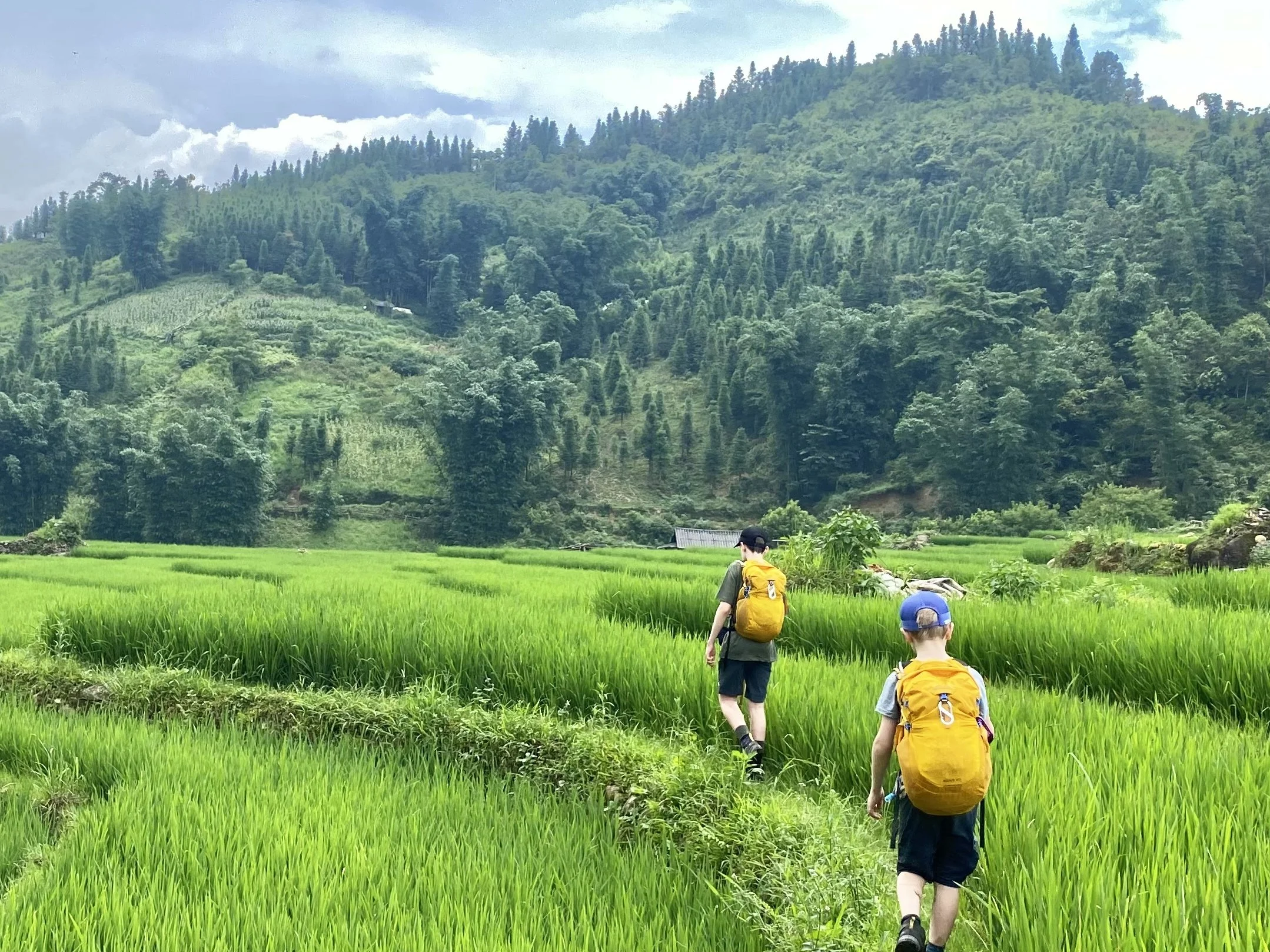
Travellers walking quietly through vibrant rice terraces on a narrow earthen path, far from roads and crowds, illustrating the calm and personal nature of small group trekking in remote parts of Sapa.
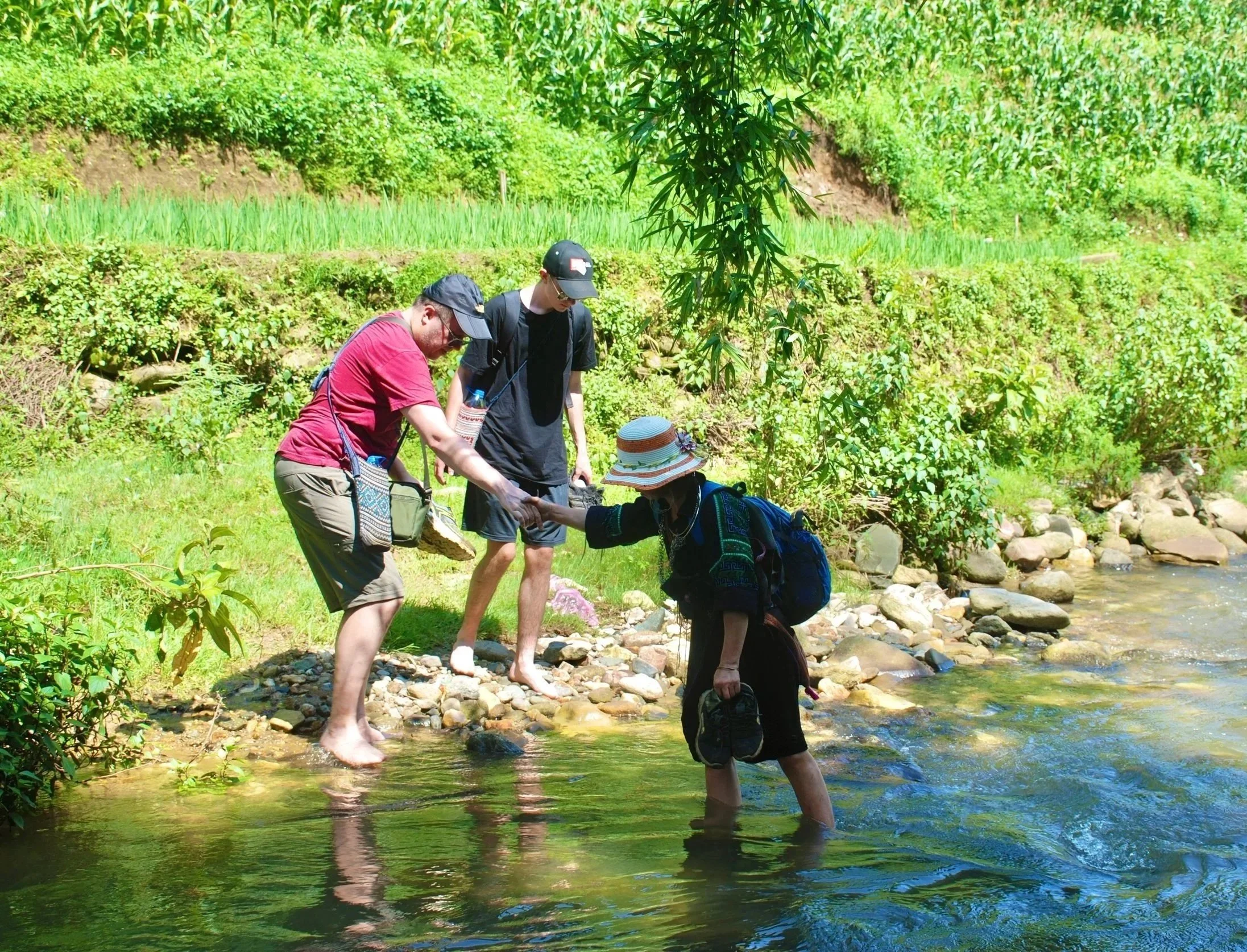
A local Hmong guide helping travellers cross a shallow mountain stream, showing hands on guidance, adaptable routes, and the close support that comes with private, community led trekking.
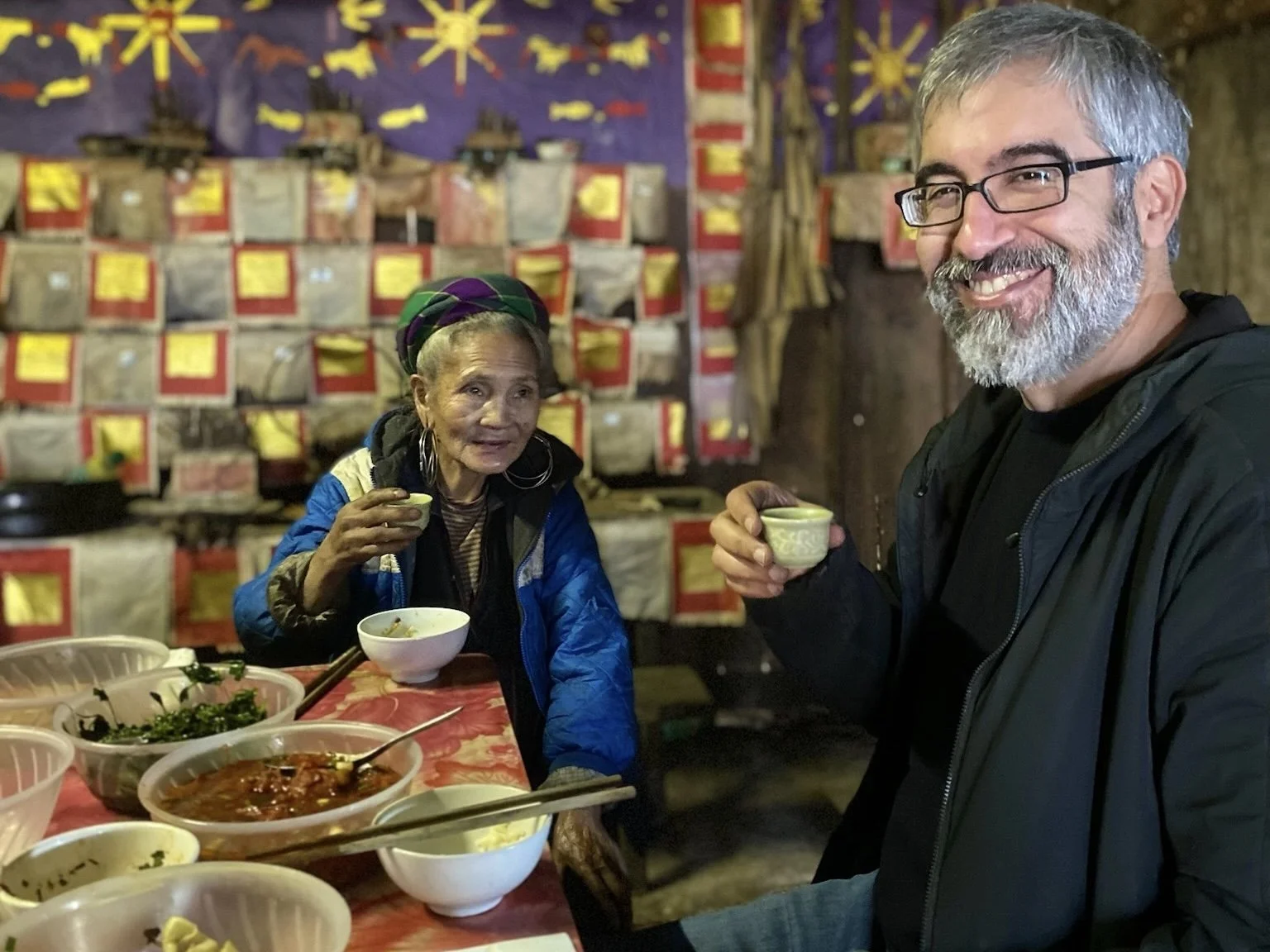
A traveller sharing a meal inside a local family home with a host, highlighting the genuine homestay experience made possible by small groups and strong relationships with village families.
There is another way to experience these mountains. With ETHOS, treks are designed for solo travellers, couples, and families in groups of no more than five. Often it is just you and your guide. This changes everything.
Your guide is a Hmong or Dao woman walking trails she uses in daily life. She is a farmer, a mother, a craftswoman, and a community leader. She watches how you move. She notices when you are comfortable and when you are not. Routes are adjusted as you walk. If the ground is too slippery, the path changes. If you are feeling strong, the trek can be extended along a higher ridge with bigger views. If you want a gentler pace, you can follow quieter valley paths between small hamlets rarely visited by tourists. Trekking difficulty becomes something flexible and personal, not fixed and generic.
Why Small Groups Create Better Experiences for Everyone
Small groups do not just improve the experience for visitors. They transform the experience for guides and host families too. Because routes are not fixed, ETHOS guides can reach many different villages across the region. Lunch is taken in real homes, not roadside restaurants. Overnight stays happen in genuine family houses, not large homestay businesses built for tour groups. This spreads tourism income across a wider network of families. It reduces pressure on the few villages that have become overwhelmed by mass tourism. It allows guides to share their own home villages, their own stories, and their own knowledge of the land.
For travellers, this means meals cooked over open fires, conversations through translation and laughter, and a far deeper understanding of daily life in the mountains.
Choosing the Right Trek for Your Ability
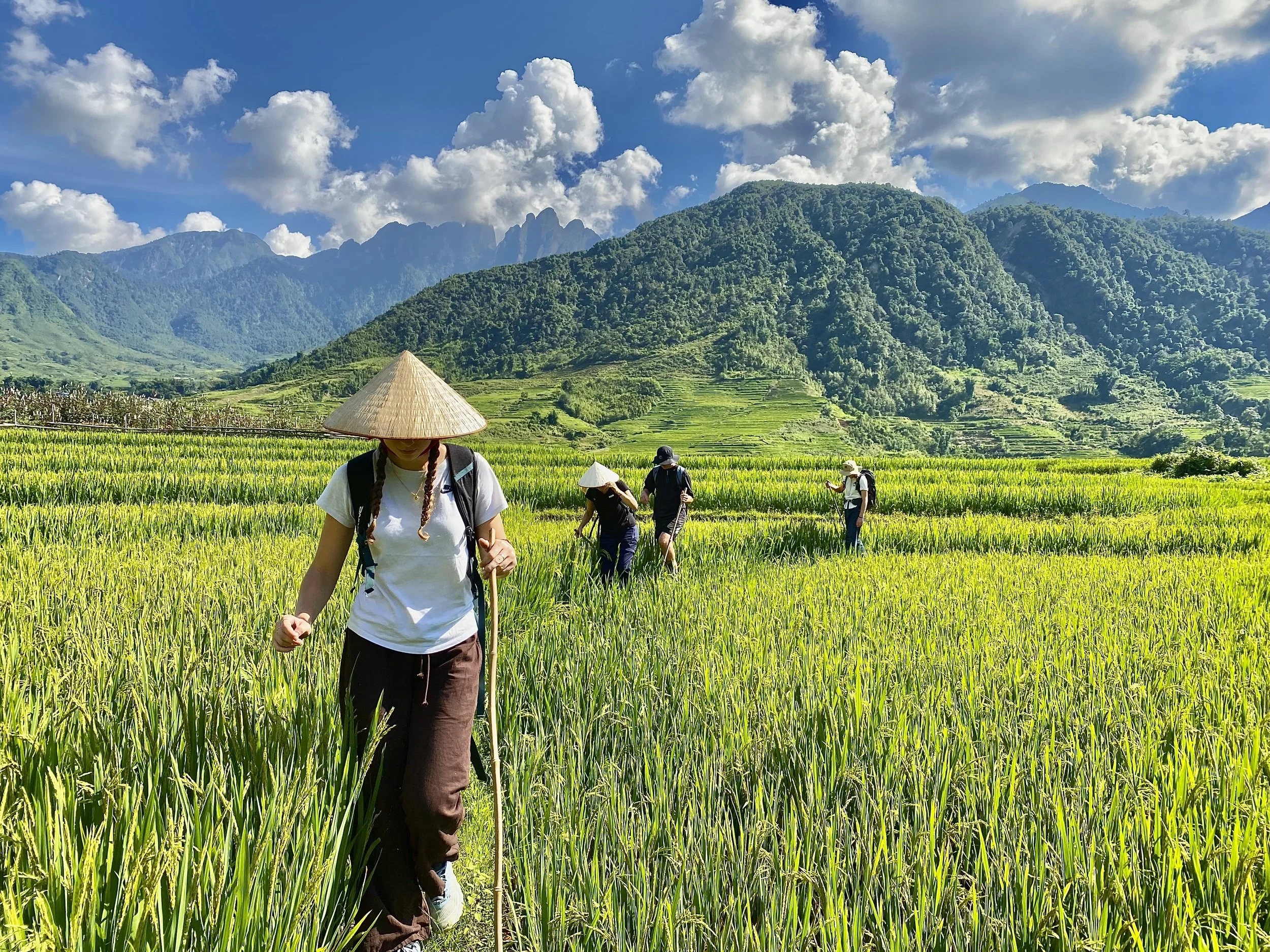
Travellers walking through remote rice fields with an ETHOS guide on a narrow path, showing the quiet, immersive nature of trekking away from main roads and tourist routes.
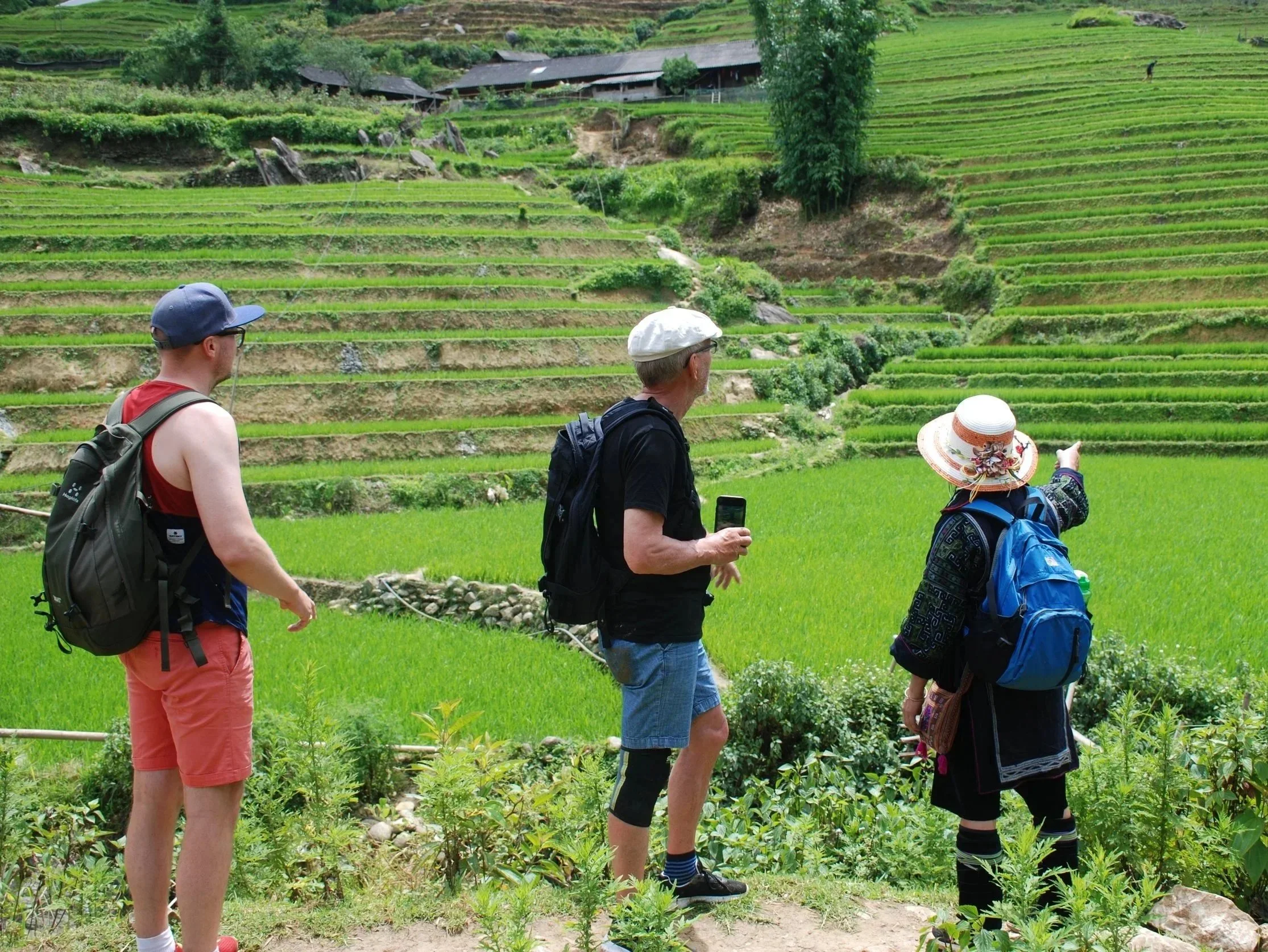
A small group pausing on a hillside as their ETHOS guide explains the landscape below, illustrating how routes and pace are shaped by conversation, observation, and personal ability.
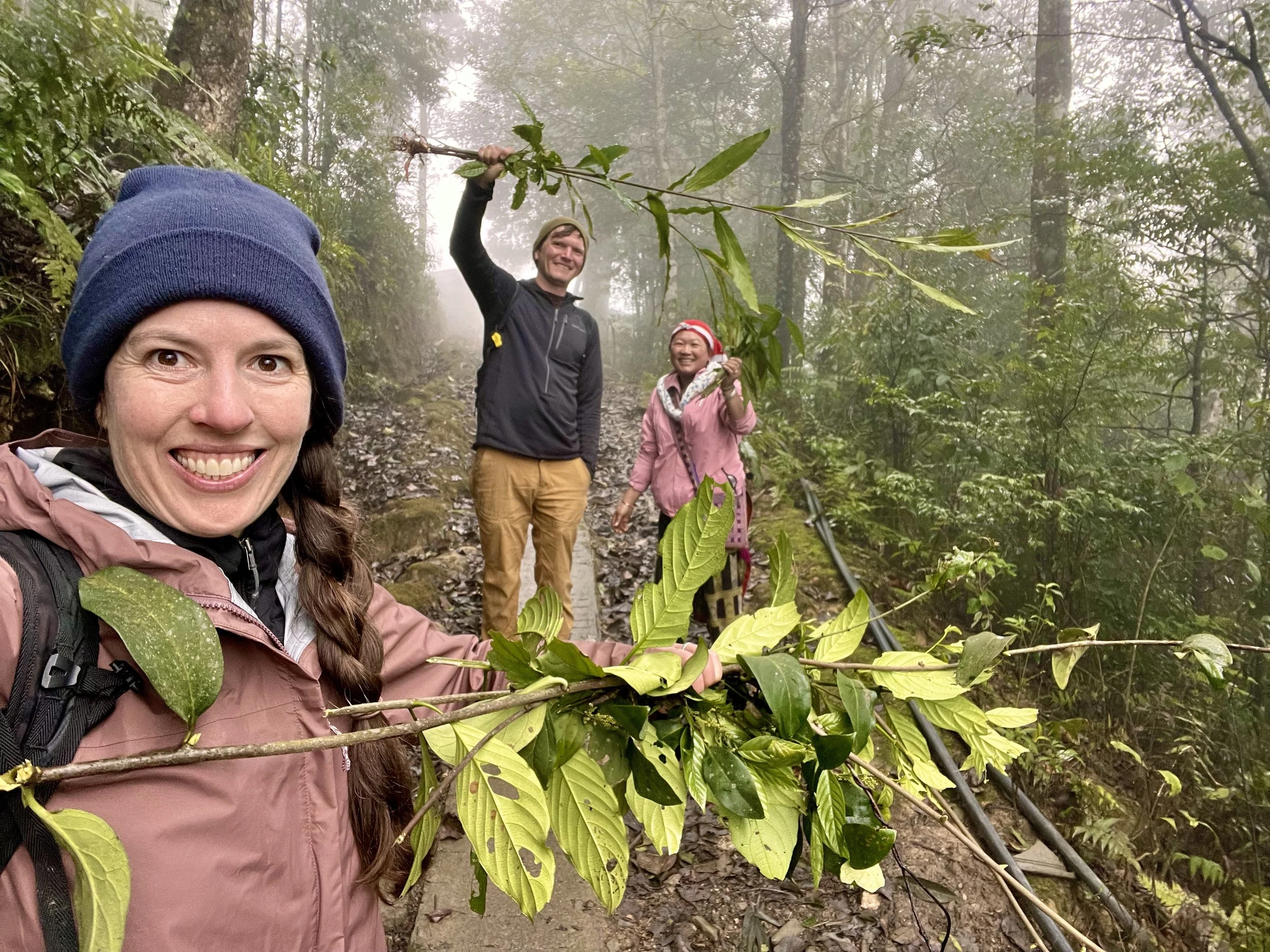
Travellers navigating a dense bamboo forest trail with their guide, highlighting the more adventurous terrain and varied conditions that define moderate to challenging treks in Sapa.
With ETHOS, treks are described as easy, moderate, or moderate to challenging. These are not marketing labels but starting points for a conversation. An easy trek may still include uneven ground and narrow paths, but with less elevation gain and more time in villages. A moderate trek may involve sustained climbs, bamboo forest sections, and paddy wall crossings. A challenging route might include long ascents to high viewpoints and remote hamlets far from roads. The key difference is that you are not locked into one option. You can adapt as you go.
This is what trekking in Sapa should feel like. Responsive. Human. Grounded in the landscape rather than restricted by a timetable.
Trekking That Supports Communities, Not Just Tourism
Every ETHOS trek supports fair wages, skills training, health insurance, and long term opportunities for local women guides. It also supports village clean ups, education projects, and community initiatives that reach far beyond tourism.
When you walk these trails, you are not simply passing through a beautiful landscape. You are participating in a model of travel that values people, culture, and environment equally.
Rethinking What a “Sapa Trek” Should Be
If your idea of trekking in Sapa is following a line of tourists down a concrete path to a busy village café, then the standard routes will suit you. If you want to feel the earth beneath your boots, hear stories beside a cooking fire, and adjust your day based on how the mountain feels under your feet, then a small group, ethical trek offers something entirely different.
Trekking difficulty in Sapa is not about kilometres, but more about how deeply you wish to step into the landscape and the lives of the people who call it home.
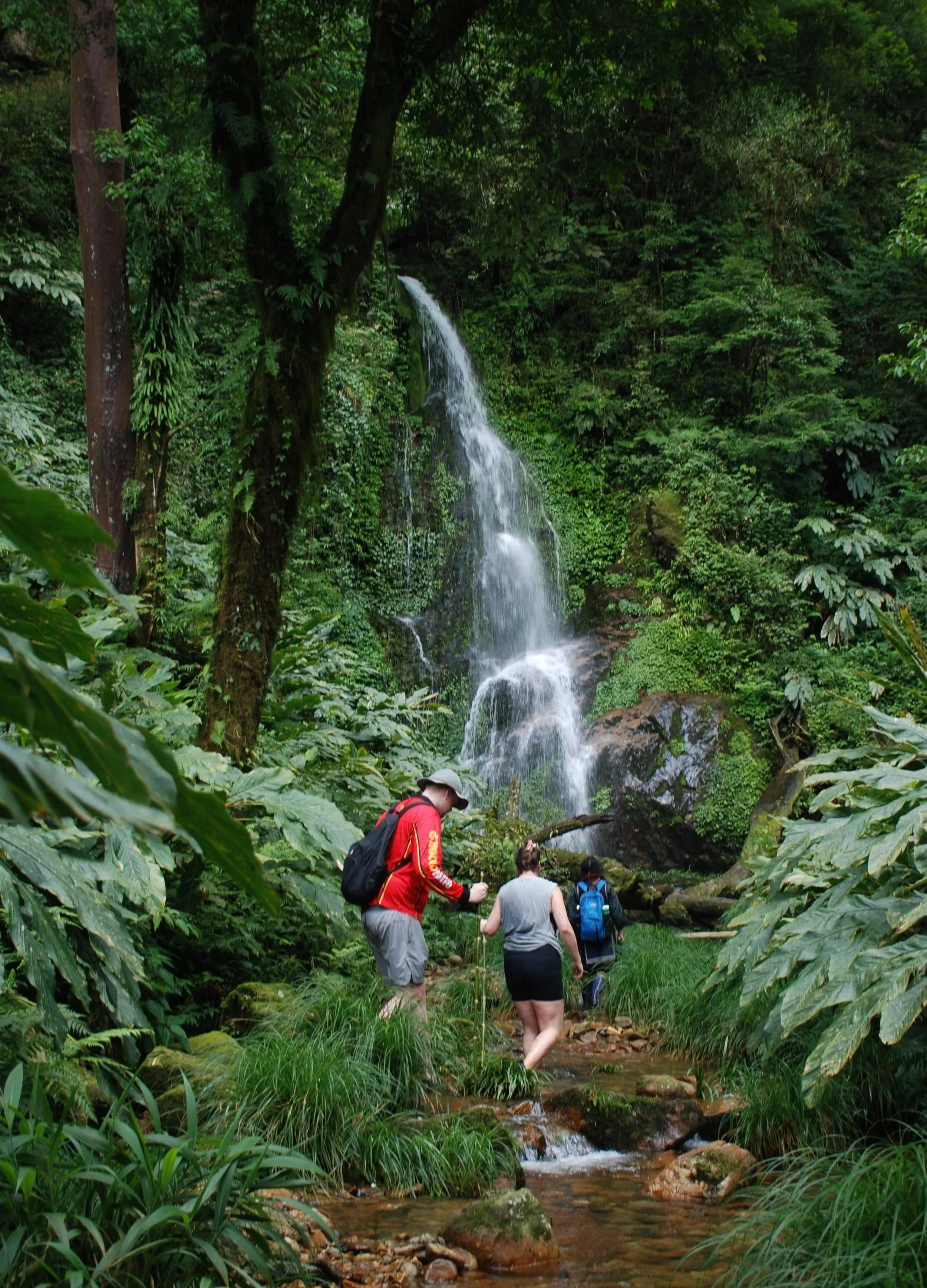
Travellers following their ETHOS guide along a narrow forest trail beside a waterfall, showing the kind of off path terrain and natural surroundings reached on quieter, less travelled routes.
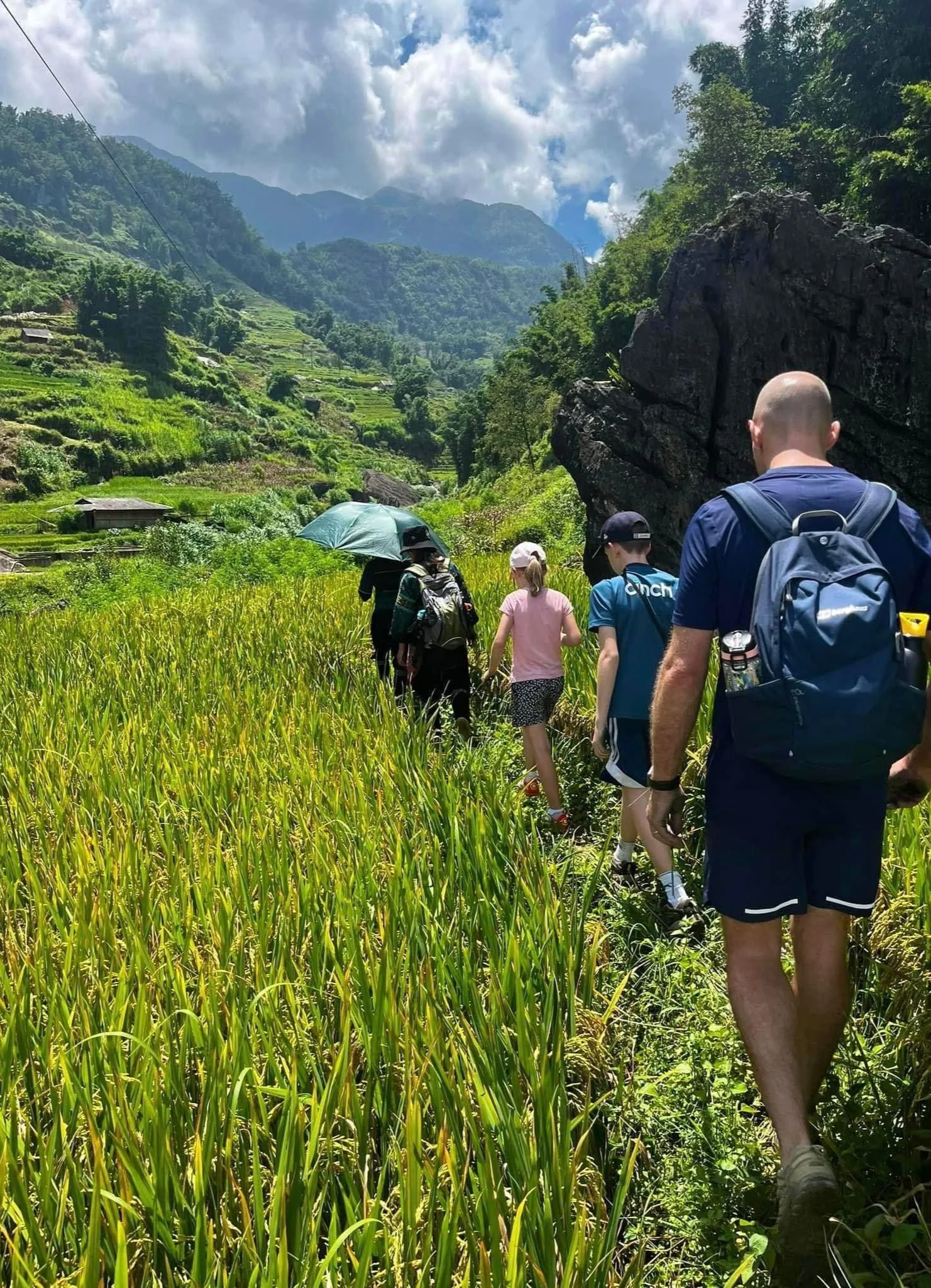
A small group walking single file through tall rice terraces on a narrow earthen ridge, illustrating immersive trekking through working farmland far from roads and tourist traffic.
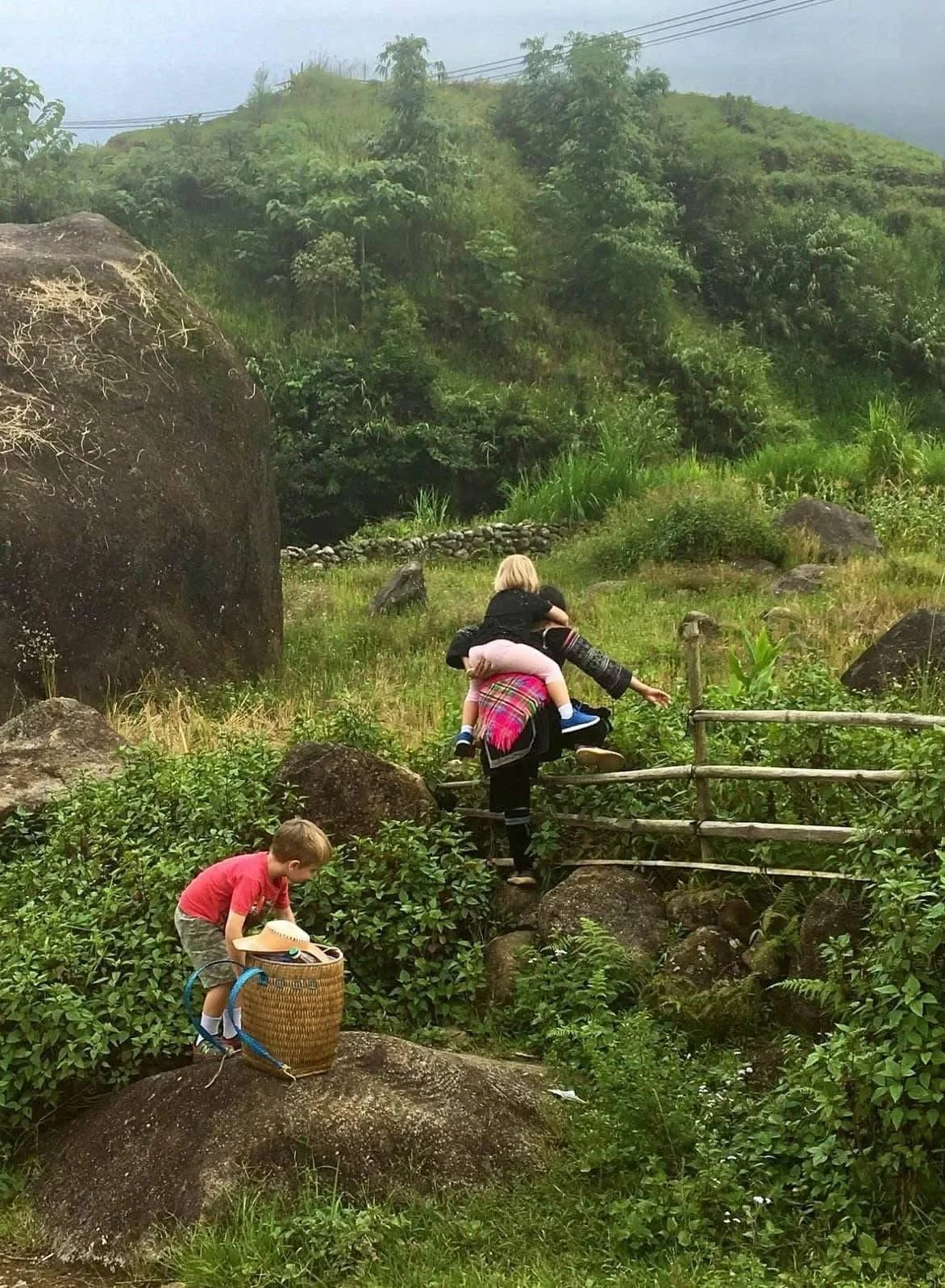
An ETHOS guide leading a family across a simple bamboo fence between terraced fields, highlighting how these routes pass through everyday village life rather than purpose built tourist areas.
Join our ethical trekking tours in Sapa
Stay in authentic Dao and Hmong homestays
Discover Sapa’s culture with our workshops
