
Black Hmong New Year in Sapa: Ritual, Renewal and Indigo Identity
In the highlands surrounding Sapa, the Black Hmong New Year is a period when daily life pauses and the relationship between people, spirits, animals and land is renewed. Following the harvest, tools are put away and attention turns first to the household, then outward to the village through festival, music and play. This is a spiritual reset expressed through ritual, food, clothing, music and social life. While many families today align celebrations with Vietnam’s national Tết for practical reasons, the Black Hmong observances remain deeply rooted in their own cosmology.
The Rhythm of the Celebration
Traditionally, the New Year begins once agricultural work is complete. Homes are cleaned. Clothing is finished. Food is prepared. Rice wine is distilled in advance for ritual and visiting. For days afterwards, families visit relatives, exchange blessings and attend communal gatherings filled with games, music and courtship. Normal labour is suspended so that attention can be given to relationships, spirit and renewal. These days, Hmong New Year is more aligned with the Vietnamese Tet celebrations, but Hmong rituals remain unique.
The Household as Sacred Space
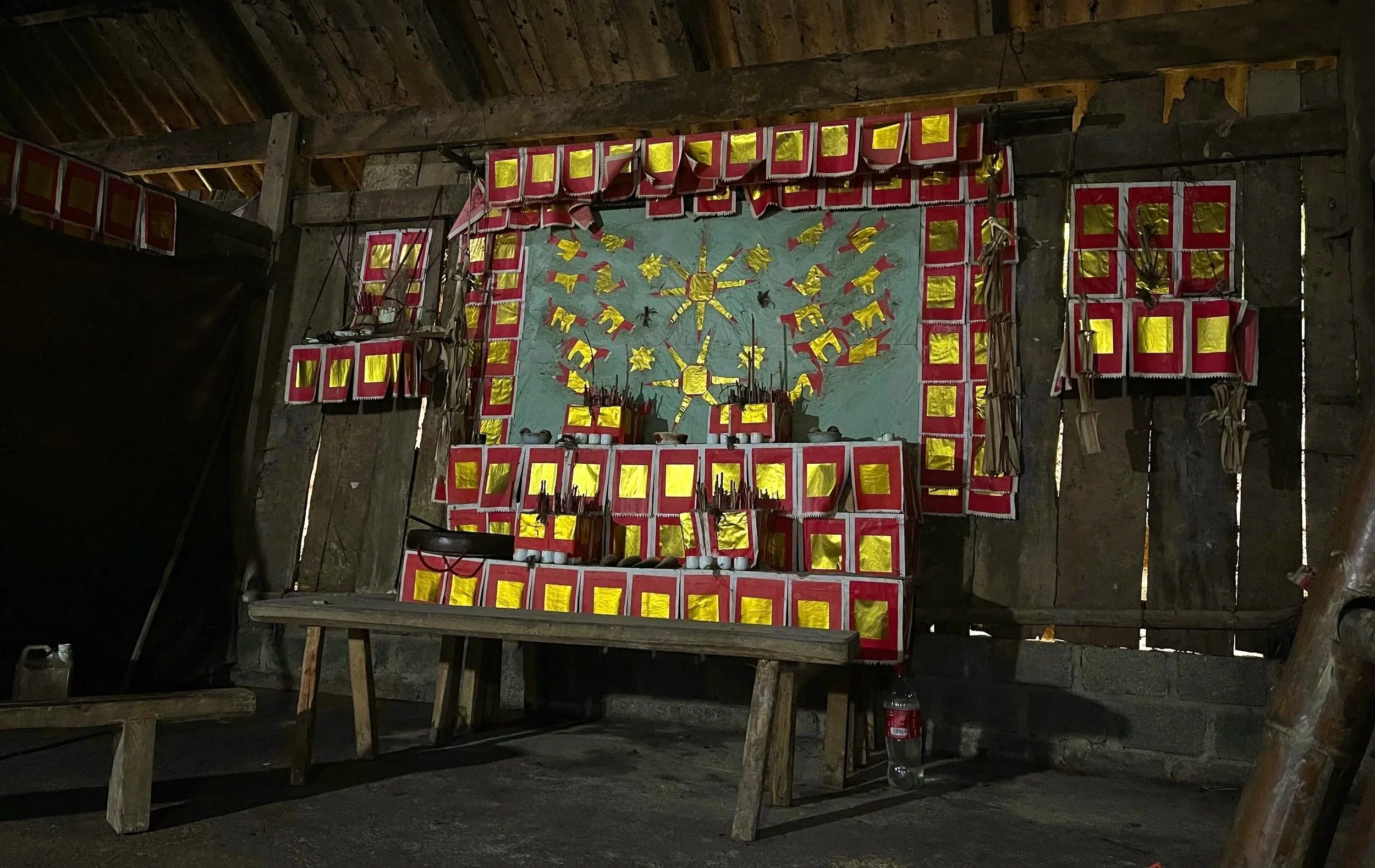
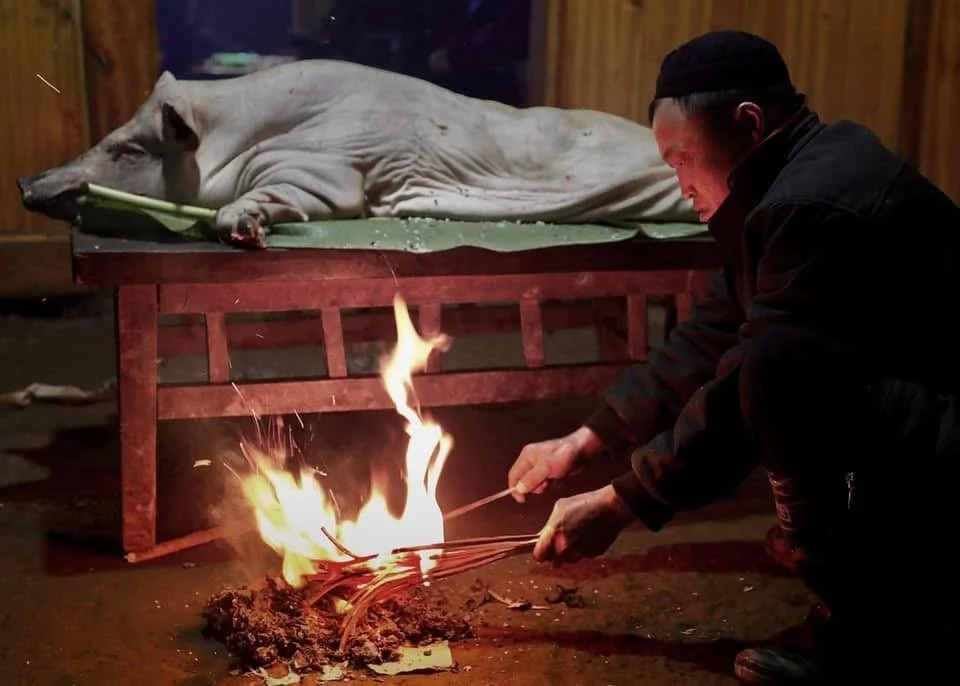
The earliest moments of the New Year are domestic and spiritual. The ancestral altar is carefully prepared. Incense is lit. Offerings are made to ancestors and household spirits. A pig is often central to these rites, first presented in prayer before becoming part of the shared meal. The fire symbolises continuity and protection. The house becomes the place where the old year is formally closed and the new one welcomed through ritual order.
Shamanism and Spiritual Renewal
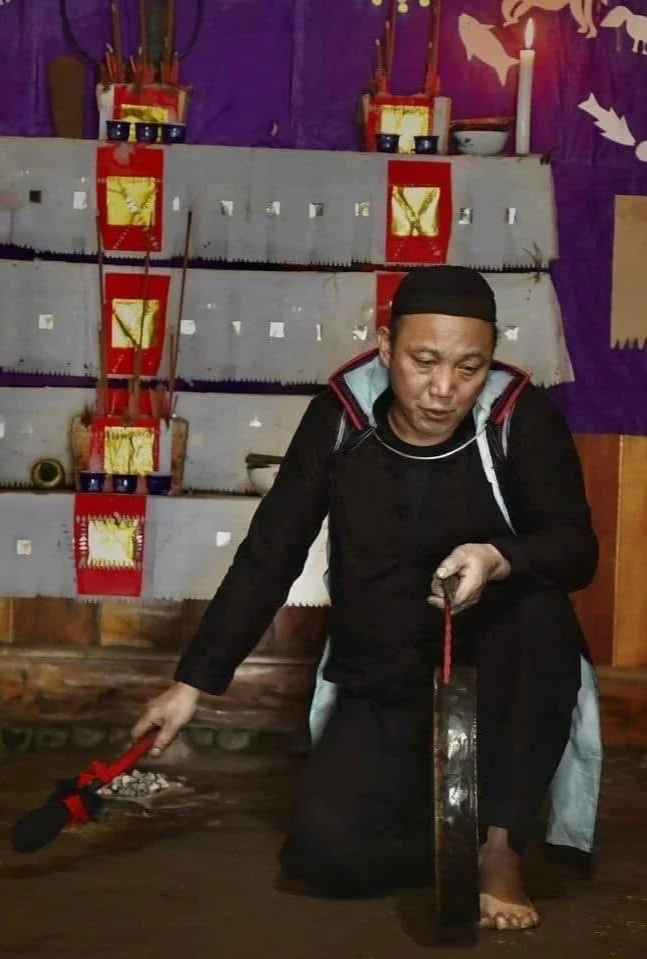
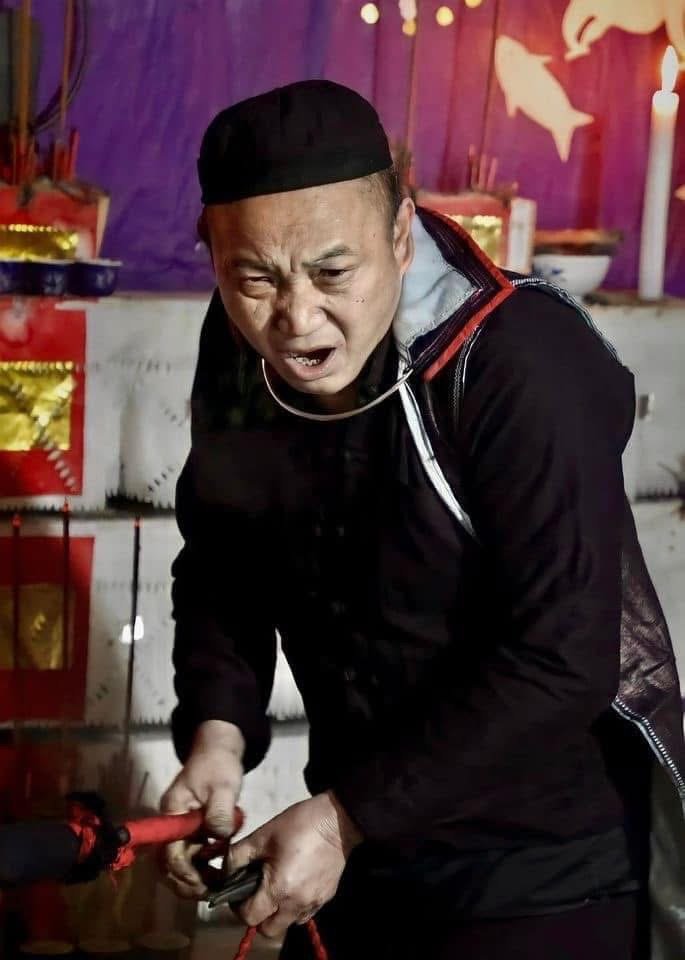
At the centre of Black Hmong spirituality stands the txiv neeb, the master of spirits. Hmong religion is traditionally animist, grounded in belief in the spirit world and in the interconnectedness of all living things. The human body is believed to host multiple souls. When one or more become separated, illness, depression or misfortune can follow. Healing rites are therefore known as soul-calling rituals, because the lost soul must return.
New Year is a powerful moment for this work.
Soul-calling and the journey to the spirit world
During a séance, the shaman is transported to the spirit world by means of a ‘flying horse’, a narrow wooden bench that serves as spiritual transport. Wearing a paper mask, which blocks out the real world and disguises the shaman from hostile spirits, the shaman enters trance.
Assistants steady the shaman as he mounts the bench. It is believed that if the shaman falls before his soul returns, he will die. In this state, the shaman’s soul leaves the body and enters the spirit realm where he can see, speak to, touch and capture spirits in order to liberate lost human souls.
Shamanic language is used throughout, blending everyday Hmong with the ritual dialect Lus Suav or Mon Draa. The chanting invites the too Xeeb spirit to manifest, accept offerings and grant blessings.
Divination, gong and sacrifice
As the shaman chants, he throws the Kuaj Neeb, two halves of a buffalo horn used for divination. Their landing position reveals whether spirits accept the offerings. He also strikes the Nruag Neeb, a small metal gong whose reverberation is believed to amplify spiritual strength and protect him. Villagers may pool money to buy a large sacrificial pig as a collective offering for the entire community. In Hmong belief, the soul of the animal can support or protect human souls. The sacrifice is understood as life given to restore life. Young men prepare and cook the meat while women cook rice. Rhythmic dances take place in same sex groups, each dancer holding a gong and moving barefoot before the altar.
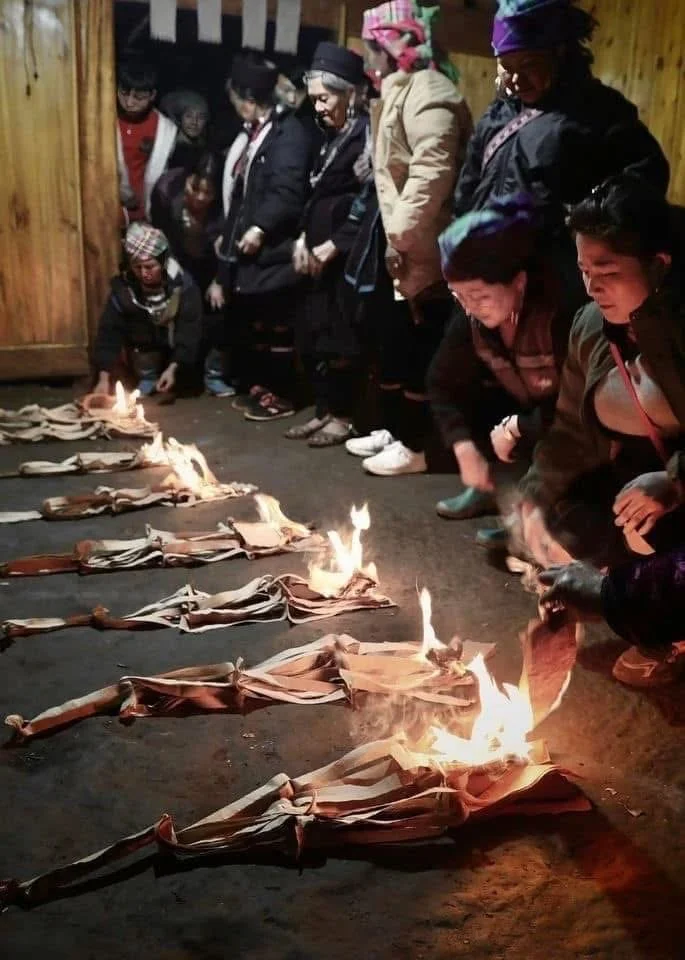
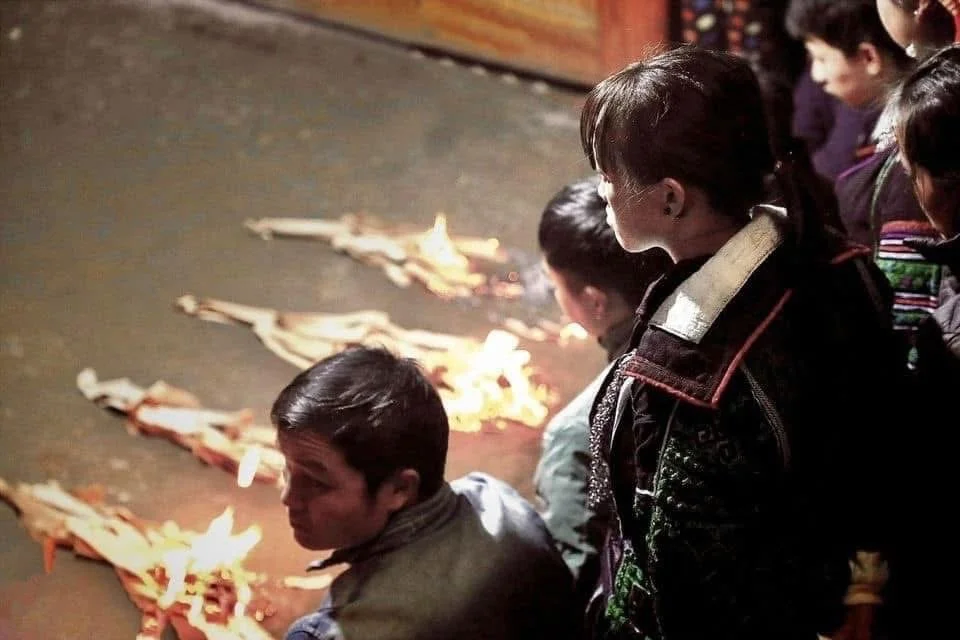
Bamboo papers are laid in a line before participants. The shaman chants over each person, uses the buffalo horns for divination, then the papers are burned and their ashes read to assess spiritual health and predict future séances.
Fire, trance and communal feast
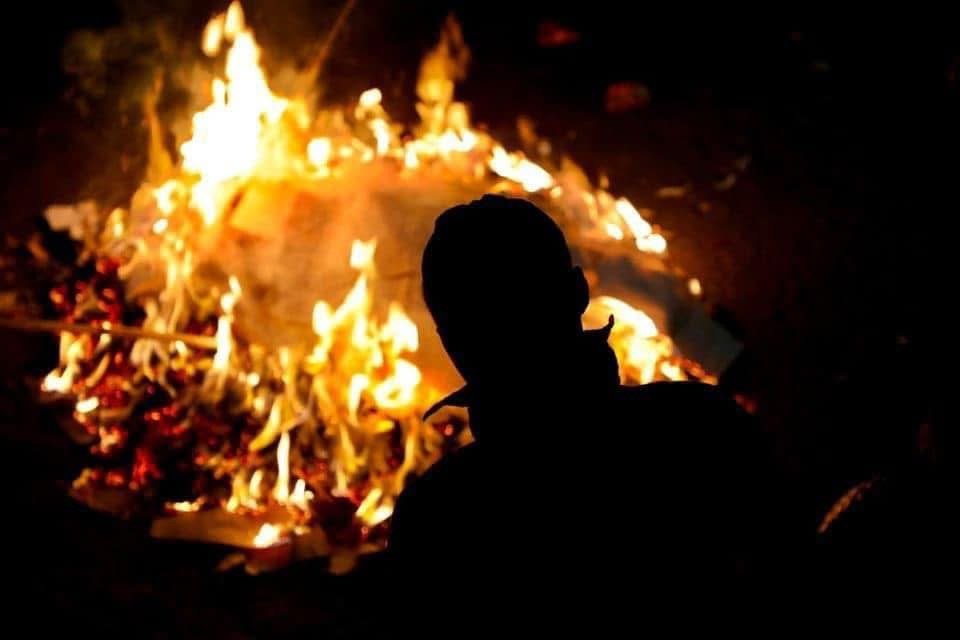
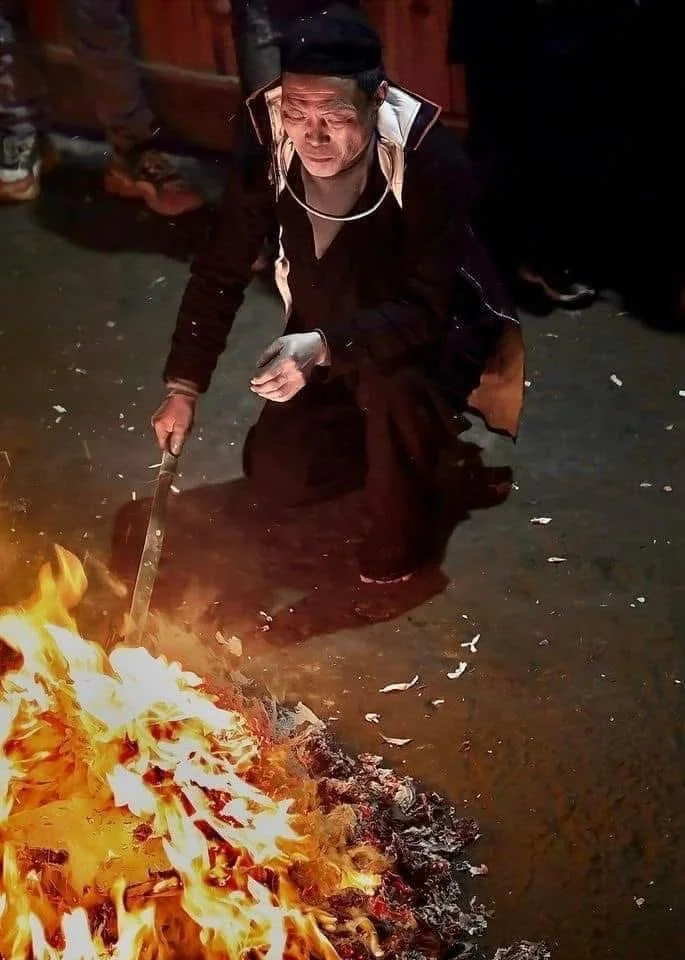
A pyre is built from old ritual papers. As chanting intensifies and gongs grow louder, the shaman rolls through the embers, sending sparks into the air. Others follow, dancing through smoke with stamping feet. Bowls of meat and rice are placed on the altar with cups of distilled rice wine. Food and drink are offered to the spirits before the communal feast begins. The ceremony ends in shared eating, storytelling and laughter long into the night.
New Year Food and Hospitality
Food during New Year signals abundance and generosity. Pork dominate festive meals, often from animals first used in ritual offering. Sticky rice cakes known in Hmong as pav tuav are made by pounding glutinous rice into smooth rounds, sometimes in friendly competitions.
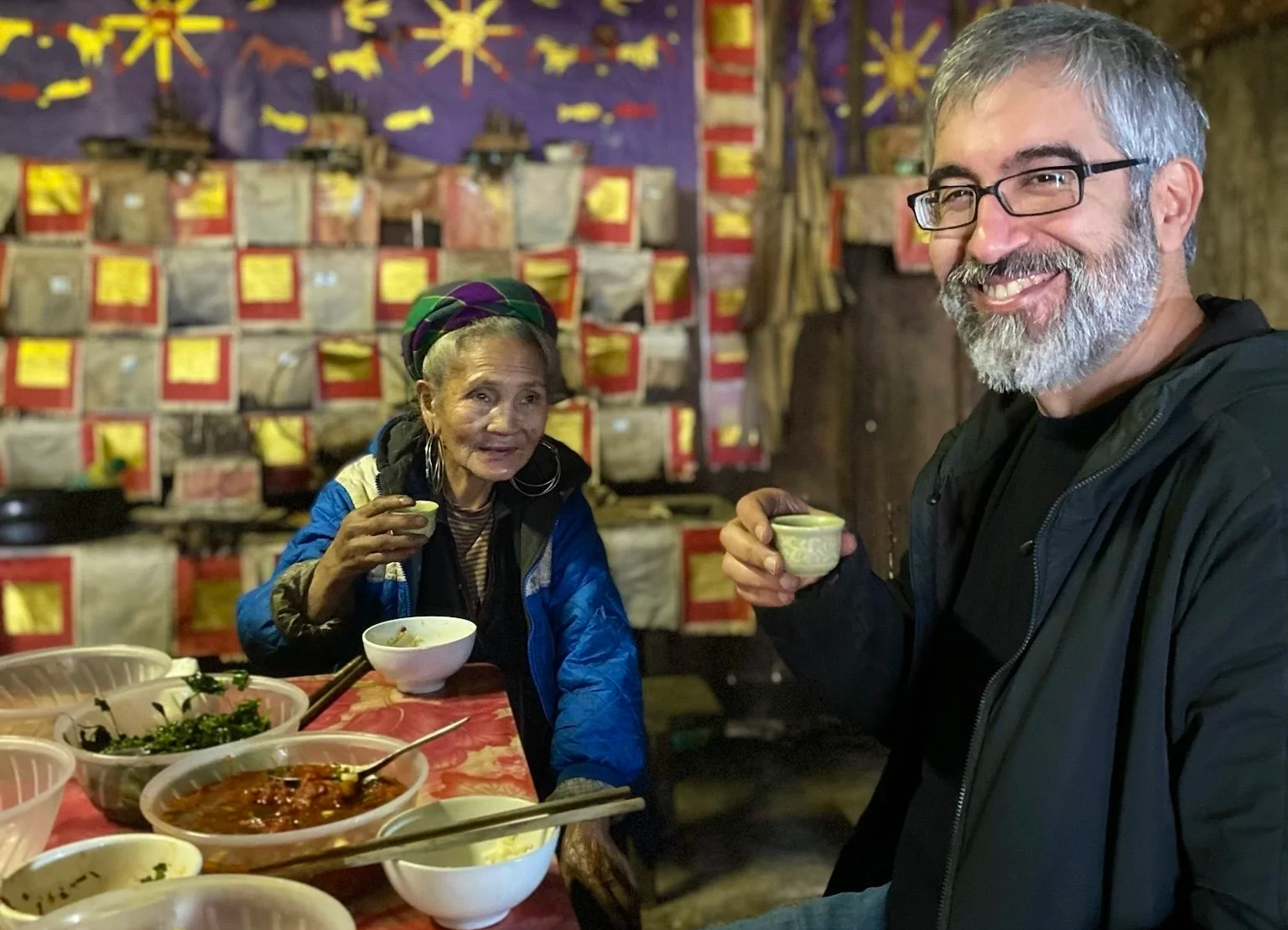
Distilled rice wine is essential. It is used in ritual, offered to spirits and shared with guests. Accepting a cup is part of accepting the relationship and blessing.
Clothing: Hemp, Indigo and Identity
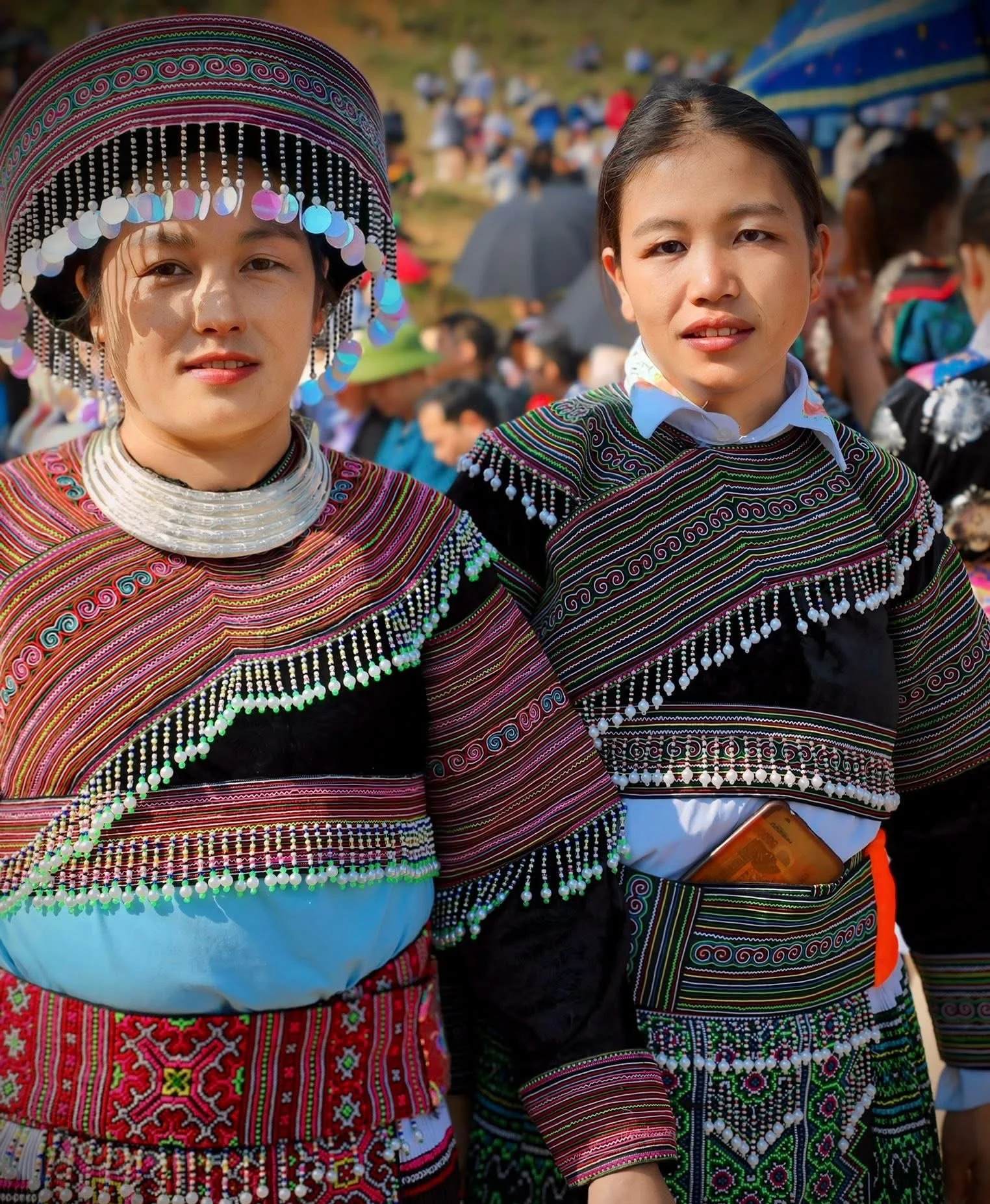
New Year is visually striking because everyone wears new or newly finished clothing. This symbolises renewal and showcases months of labour in hemp weaving, indigo dyeing, batik and embroidery.
Hemp at the heart of Black Hmong textile life
Hemp has long been central to Black Hmong textile traditions in Sapa. It is valued not only as a fibre but for its cultural and spiritual meaning. Hemp grows well in the cool, humid highlands and is cultivated in family plots. After harvesting, stalks are retted in water, fibres stripped, dried and beaten, then hand-spun into thread. The thread is woven on backstrap looms into sturdy, breathable cloth. This process can take many months and knowledge is passed primarily through women. The cloth is dyed repeatedly in natural indigo baths to achieve the deep blue-black colour associated with Black Hmong clothing. Patterns are created using beeswax batik or intricate silk embroidery, often taking many more months. Motifs represent daily life, nature and important milestones.
Spiritual meaning of hemp
Hemp is not only worn in life but is central in death. In Hmong funerals, a hemp shroud traditionally wraps the deceased. This is a spiritual necessity. It is believed that only hemp can guide the soul safely back to the ancestral realm. Without hemp, the soul may become lost. This belief ties hemp directly to cosmology and the journey between worlds. For the Black Hmong, hemp symbolises resilience, continuity and identity. It connects people to land, ancestors and tradition even as modern fabrics become available.
Indigo clothing at New Year
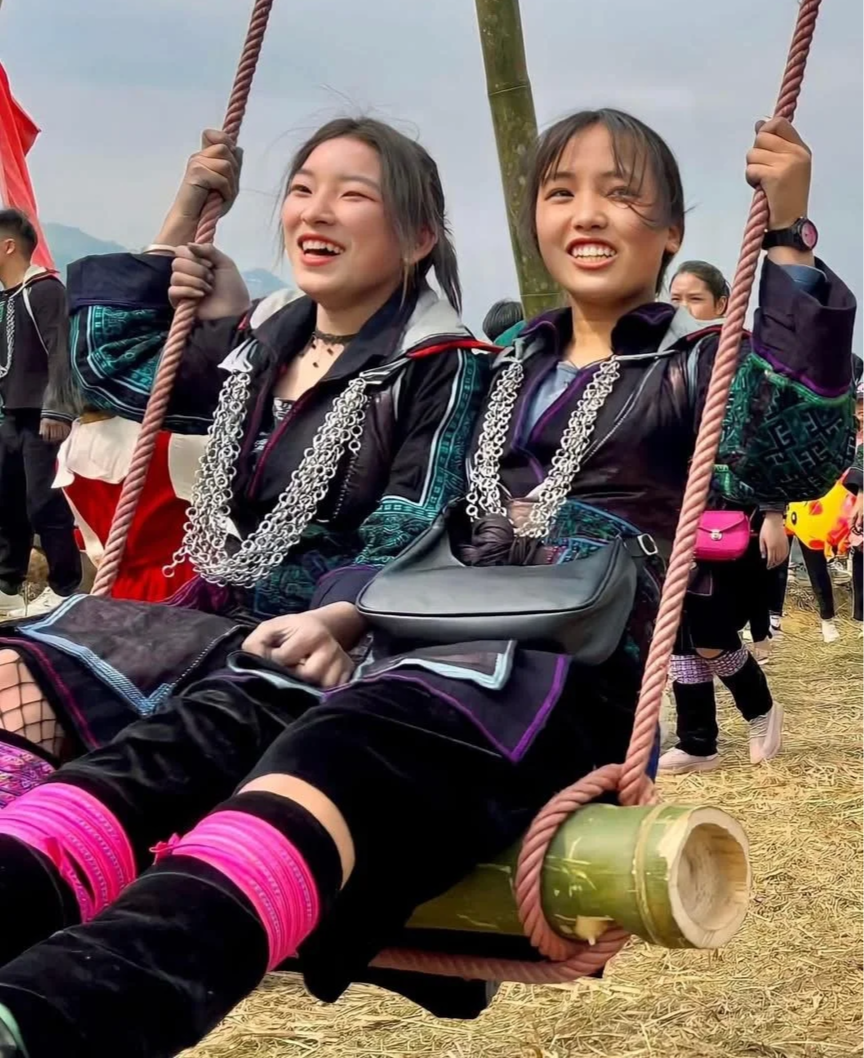
Women’s indigo garments, decorated with batik and embroidery, are paired with silver jewellery. Men’s clothing is simpler but still formal. Children wear miniature versions. New Year becomes a community exhibition of textile skill and cultural pride.
Festivals, Games and Courtship
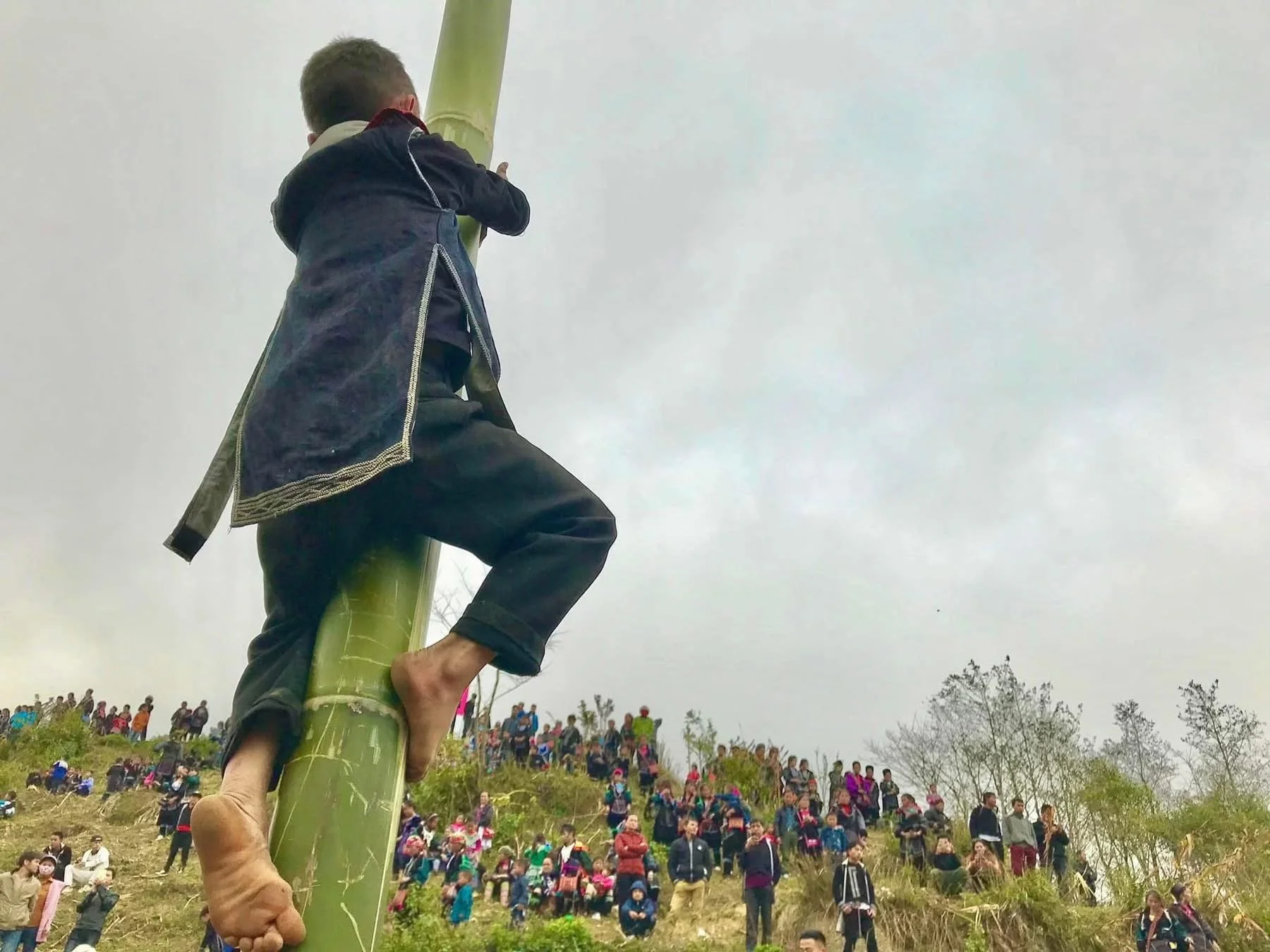
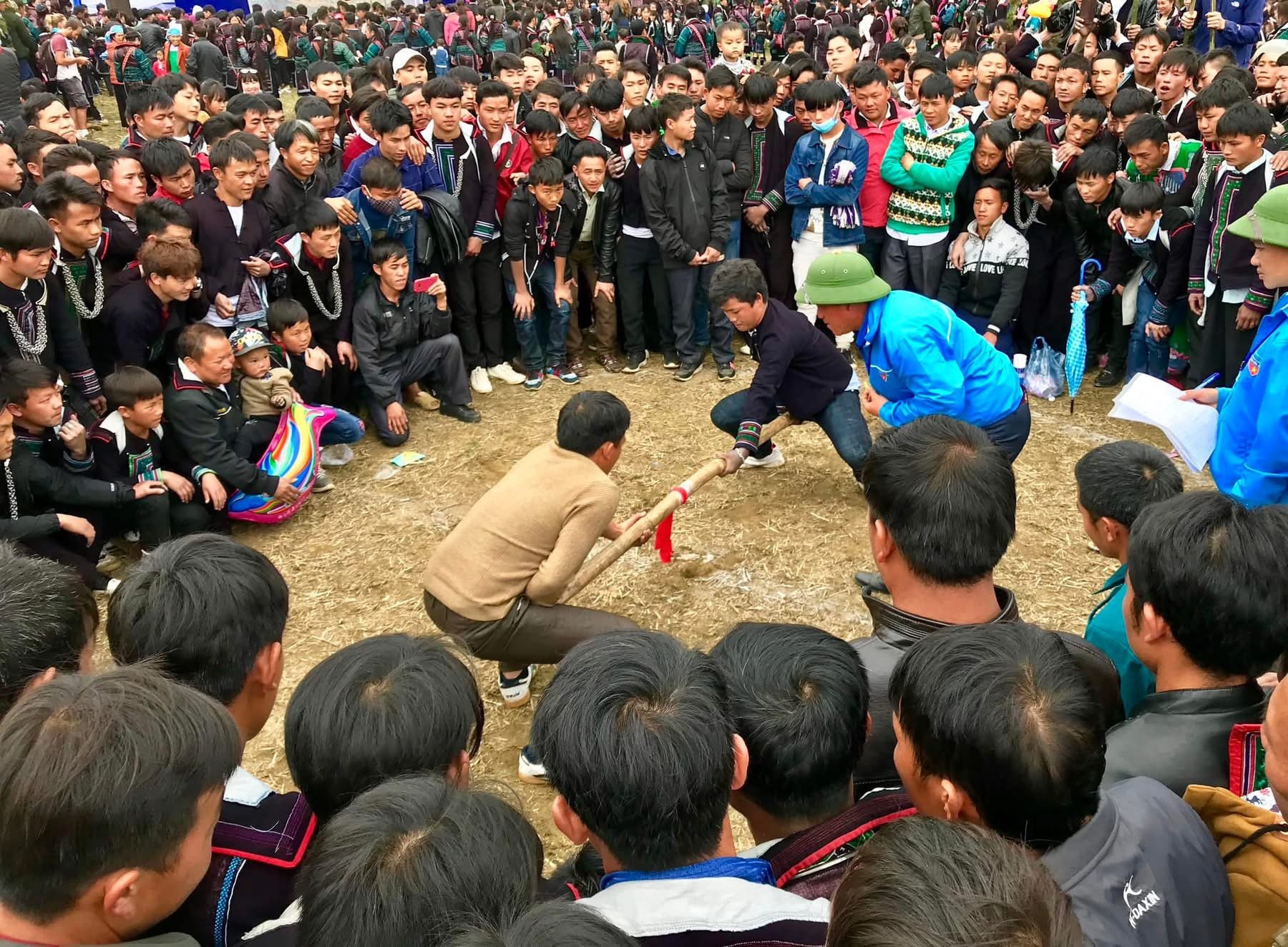
After household rites, attention turns to communal gatherings such as the Gau Tao festival. A tall decorated bamboo pole is erected, prayers are made, and the area becomes a place of games, music and social life.
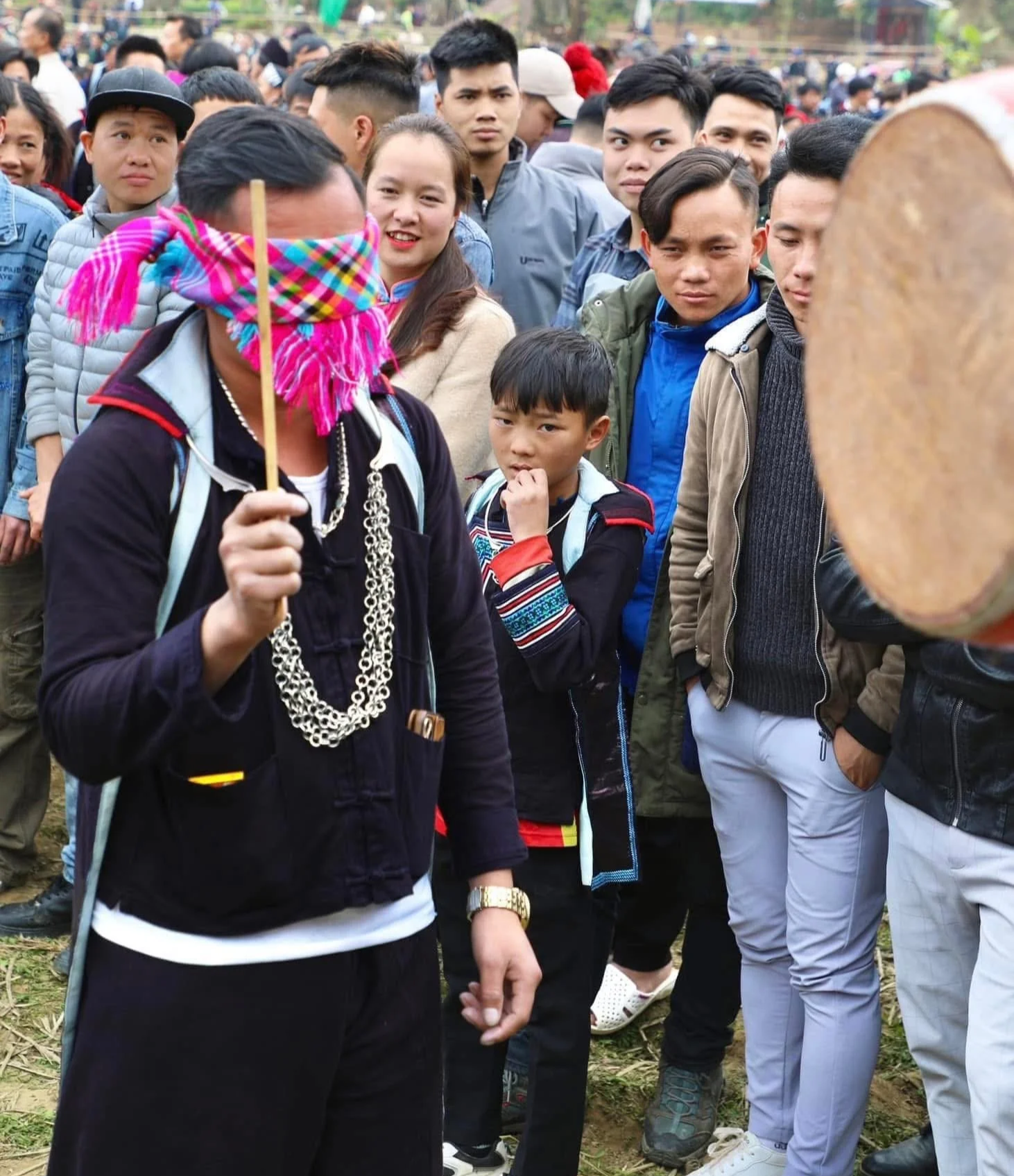
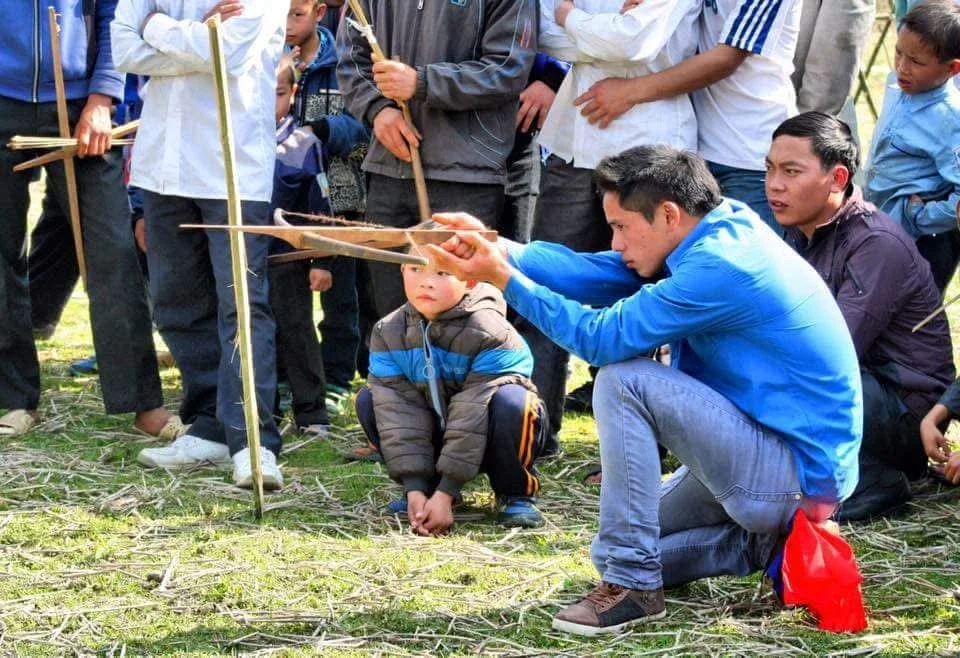
Bamboo wrestling, stilt walking, spinning tops, crossbow contests and tug-of-war take place alongside ném pao, the ball-toss game where young men and women meet, talk and flirt.
Taboos and Beginning the Year Well
Before the New Year, the Hmong cut three bamboo sticks and wrap them with red cloth. These are then used to sweep away spider webs and black soot from the house. This act symbolises clearing away the old year and preparing for a fresh beginning.
During the first days of the New Year, certain actions are avoided. People avoid washing clothes, blowing on the fire, eating rice with water, or holding a needle. Each of these actions carries meaning. Washing clothes is believed to wash away the blessings of the ancestors. Eating rice with water suggests a life of rain and hardship. Blowing on the fire may bring strong winds throughout the year. Sewing or using a needle symbolises damage to the crops, especially the maize harvest.
On the 19th day of the twelfth lunar month, which marks the Hmong New Year, families prepare sticky rice cakes and offer them to their ancestors. The cakes must not be eaten before the prayers are completed. It is believed that if someone eats before the ritual is finished, they may suffer burns from fire or hot charcoal during the coming year. This teaches patience and respect, reminding everyone that the ancestors must be honoured first.
These practices show how deeply the New Year is connected to spiritual protection, family unity and the guidance of those who came before.
A Living Tradition in Modern Sapa
Modern life has influenced the timing and visibility of the celebration, yet the core remains intact. Ancestors are honoured. Shamans chant. New clothes are made. Rice wine is poured. Young people meet in games and song. Each year, when winter turns to spring in the mountains around Sapa, the Black Hmong step into a new cycle with rituals that bind body, soul, family and village into one shared renewal.
