Insights and Stories from Sapa and the Northern Borderbelt provinces of Vietnam.
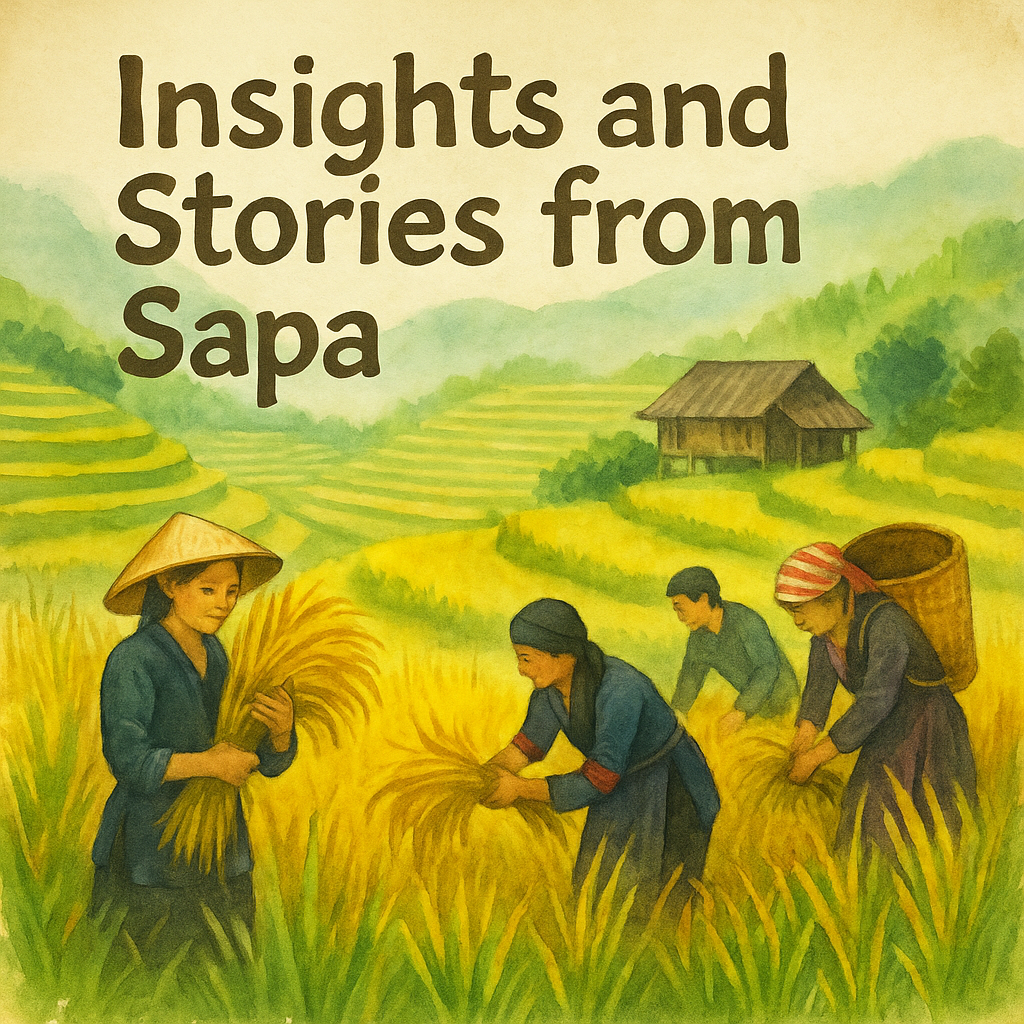
Illustration of four women harvesting rice in a lush green field with hills and a wooden house in the background, alongside large text reading "Insights and Stories from Sapa."
ETHOS - Spirit of the Comminuty ETHOS - Spirit of the Comminuty

Mastering Mountain Trails: Demystifying Trekking Difficulty in Sapa

Most Sapa treks follow the same crowded paths. This guide explains what trekking difficulty really means in the mountains and how small group, ethical routes offer a more rewarding experience for travellers and local communities alike.

Why Most Sapa Treks Feel the Same

A large mixed group of tourists walking together with local women along a wide path near a village entrance in Sapa, illustrating the busy, organised nature of mainstream trekking routes in popular tourist areas.

Several trekking groups following the same concrete path through the Muong Hoa Valley, showing how visitors are funnelled along identical routes regardless of ability, weather, or experience.

A steady line of tourists crossing a narrow bamboo bridge towards a purpose built café area in Cat Cat Village, highlighting the commercial, crowded feel of copy book tourism in Sapa’s most visited locations.

If you search for a trek in Sapa, you will quickly notice the same village names appearing again and again; Cat Cat, Lao Chai and Ta Van.

These are the routes most travellers are sold in Hanoi by third party agents. They are easy to organise, simple to market, and predictable for tour companies. Every morning, dozens of small groups leave Sapa town at roughly the same time and follow almost identical paths into the Muong Hoa Valley.

On paper, this sounds idyllic. Rice terraces, minority villages, waterfalls, bamboo bridges. In reality, it often becomes a slow procession of tourists walking the same concrete paths and village roads. Lunch is taken in large restaurants built to serve volume. Homestays are often purpose built guesthouses that can sleep twenty or more people at a time. The difficulty of the trek is not designed around you. It is designed around the least prepared person in a large group. The “treks” are identical to the day before and the same as all the other tour groups.

What “Trekking Difficulty” Really Means in the Mountains

When travellers ask how difficult a Sapa trek is, they usually mean distance. Five kilometres. Ten kilometres. Twelve kilometres. In the mountains, distance tells you very little.

Trekking difficulty here depends on elevation gain, recent weather, the condition of the paths, and how confident you feel walking along narrow earthen paddy walls above steep terraces. It depends on whether you are climbing through dense bamboo forest or following a concrete track between villages. Most group tours cannot adapt to these factors. The guide must keep the group together. The route cannot change because transport, lunch stops, and accommodation are pre arranged. Even if the path becomes slippery after rain, the group still follows the same way.

This is why many travellers finish their trek feeling either under challenged or completely exhausted.

A Different Way to Trek with ETHOS – Spirit of the Community

Travellers walking quietly through vibrant rice terraces on a narrow earthen path, far from roads and crowds, illustrating the calm and personal nature of small group trekking in remote parts of Sapa.

A local Hmong guide helping travellers cross a shallow mountain stream, showing hands on guidance, adaptable routes, and the close support that comes with private, community led trekking.

A traveller sharing a meal inside a local family home with a host, highlighting the genuine homestay experience made possible by small groups and strong relationships with village families.

There is another way to experience these mountains. With ETHOS, treks are designed for solo travellers, couples, and families in groups of no more than five. Often it is just you and your guide. This changes everything.

Your guide is a Hmong or Dao woman walking trails she uses in daily life. She is a farmer, a mother, a craftswoman, and a community leader. She watches how you move. She notices when you are comfortable and when you are not. Routes are adjusted as you walk. If the ground is too slippery, the path changes. If you are feeling strong, the trek can be extended along a higher ridge with bigger views. If you want a gentler pace, you can follow quieter valley paths between small hamlets rarely visited by tourists. Trekking difficulty becomes something flexible and personal, not fixed and generic.

Why Small Groups Create Better Experiences for Everyone

Small groups do not just improve the experience for visitors. They transform the experience for guides and host families too. Because routes are not fixed, ETHOS guides can reach many different villages across the region. Lunch is taken in real homes, not roadside restaurants. Overnight stays happen in genuine family houses, not large homestay businesses built for tour groups. This spreads tourism income across a wider network of families. It reduces pressure on the few villages that have become overwhelmed by mass tourism. It allows guides to share their own home villages, their own stories, and their own knowledge of the land.

For travellers, this means meals cooked over open fires, conversations through translation and laughter, and a far deeper understanding of daily life in the mountains.

Choosing the Right Trek for Your Ability

Travellers walking through remote rice fields with an ETHOS guide on a narrow path, showing the quiet, immersive nature of trekking away from main roads and tourist routes.

A small group pausing on a hillside as their ETHOS guide explains the landscape below, illustrating how routes and pace are shaped by conversation, observation, and personal ability.

Travellers navigating a dense bamboo forest trail with their guide, highlighting the more adventurous terrain and varied conditions that define moderate to challenging treks in Sapa.

With ETHOS, treks are described as easy, moderate, or moderate to challenging. These are not marketing labels but starting points for a conversation. An easy trek may still include uneven ground and narrow paths, but with less elevation gain and more time in villages. A moderate trek may involve sustained climbs, bamboo forest sections, and paddy wall crossings. A challenging route might include long ascents to high viewpoints and remote hamlets far from roads. The key difference is that you are not locked into one option. You can adapt as you go.

This is what trekking in Sapa should feel like. Responsive. Human. Grounded in the landscape rather than restricted by a timetable.

Trekking That Supports Communities, Not Just Tourism

Every ETHOS trek supports fair wages, skills training, health insurance, and long term opportunities for local women guides. It also supports village clean ups, education projects, and community initiatives that reach far beyond tourism.

When you walk these trails, you are not simply passing through a beautiful landscape. You are participating in a model of travel that values people, culture, and environment equally.

Rethinking What a “Sapa Trek” Should Be

If your idea of trekking in Sapa is following a line of tourists down a concrete path to a busy village café, then the standard routes will suit you. If you want to feel the earth beneath your boots, hear stories beside a cooking fire, and adjust your day based on how the mountain feels under your feet, then a small group, ethical trek offers something entirely different.

Trekking difficulty in Sapa is not about kilometres, but more about how deeply you wish to step into the landscape and the lives of the people who call it home.

Travellers following their ETHOS guide along a narrow forest trail beside a waterfall, showing the kind of off path terrain and natural surroundings reached on quieter, less travelled routes.

A small group walking single file through tall rice terraces on a narrow earthen ridge, illustrating immersive trekking through working farmland far from roads and tourist traffic.

An ETHOS guide leading a family across a simple bamboo fence between terraced fields, highlighting how these routes pass through everyday village life rather than purpose built tourist areas.

Read More
ETHOS - Spirit of the Comminuty ETHOS - Spirit of the Comminuty

The Serene Power of Northern Vietnam’s Man Made Hydro Lakes

Northern Vietnam’s hydro lakes blend human vision with natural beauty. These vast waters support local life, clean energy and quiet travel far from the crowds.

Northern Vietnam is known for its dramatic mountains, lush forests and winding rivers, but it is also home to some of Southeast Asia’s most impressive hydro lakes. These vast bodies of water are the result of major engineering projects, yet they look entirely at home within the landscape. Their sheer scale and calm beauty make them destinations that feel both awe inspiring and deeply peaceful.

A Landscape Transformed by Vision and Engineering

The region’s hydro lakes were created through large scale dam projects that harness the power of fast flowing mountain rivers. When the valleys were flooded, the geography changed forever. What once were river channels and terraced slopes became expansive lakes that stretch for kilometres, curving and branching like inland fjords.

Although these lakes are artificial, they do not feel industrial. The mountains remain untouched and thick with vegetation. Clouds drift low across the water, and the air carries a fresh, earthy scent. The result is a landscape shaped by humans but fully embraced by nature.

Endless Horizons of Still Water and Mist

Visitors are often struck by the way the lakes reflect the surrounding scenery. On a quiet morning the water can appear perfectly still, like polished glass. Forested ridges, limestone cliffs and tiny floating houses are mirrored with astonishing clarity. The atmosphere is often enhanced by gentle mist that rolls across the surface, giving the entire scene a dreamlike quality.

In some areas small islands rise from the water, covered with bamboo and wild plants. These islands create beautiful compositions that feel almost cinematic. In the late afternoon when the sun sinks behind the hills, the lakes glow with soft light that feels peaceful and ancient.

Local Life Along the Water

Despite their remote appearance, the hydro lakes are living landscapes. Local communities fish, farm and travel across the water daily. Long wooden boats glide between floating homes, fish farms and forested peninsulas. Markets gather along the shores and visitors can often share meals of freshly caught fish cooked with fragrant herbs.

Tourism here remains understated. Instead of busy resorts, travellers can find homestays, small eco lodges and guided boat trips that encourage quiet appreciation rather than fast paced sightseeing.

Power, Progress and Preservation

These hydro lakes are vital for Vietnam’s energy supply. They produce electricity for millions while reducing reliance on fossil fuels. Yet what stands out is how gracefully the environment has adapted. Wildlife remains abundant, forests stay green and the lakes have become a source of both sustainability and scenic value.

They show that development does not always have to diminish natural beauty. With careful planning and respect for the land, it can even create new spaces for reflection, adventure and cultural life.

A Destination Worth Exploring

Northern Vietnam’s hydro lakes are functional reservoirs and places where nature and human design exist in harmony. Whether you explore by boat, hike the surrounding hills or simply sit at the shoreline, the stillness and scale will leave a lasting impression.

If you are drawn to landscapes that feel wild yet welcoming, this is a journey worth taking. It is not only about seeing something extraordinary. It is about feeling connected to a place where power and peace flow together.

Ready to Explore on Two Wheels

For those seeking a deeper connection with these waterways, remote mountain communities and the hidden paths in between, our guided motorbike adventures offer a truly immersive way to travel. We ride through highland passes, along lake shores, into caves and across cultural landscapes that many visitors never reach. If you want to combine the freedom of the open road with meaningful, slow travel, explore our routes:

Ride Caves and Waterways
https://www.ethosspirit.com/ride-caves-waterways-5-days

Ride the Great North
https://www.ethosspirit.com/ride-the-great-north

Join us, breathe the mountain air and experience the spirit of Vietnam with every mile.

Read More
ETHOS - Spirit of the Comminuty ETHOS - Spirit of the Comminuty

Sapa Beyond the Town: Discovering the Real Heart of the Mountains

Sapa is far more than a busy mountain town. Travel beyond the tourist trail to discover remote villages, deep forests and a rich living culture.

Sapa Is Bigger Than You Think

Contrary to what many people believe, Sapa is not a single village or a quiet valley. It is a vast geographical district that stretches across mountains, forests and river valleys. Driving from one end to the other takes around four hours.

Within this large area lies the Hoang Lien Son National Park and more than 90 villages and hamlets. Many of these places rarely see visitors at all, remaining deeply connected to traditional ways of life and the natural environment.

Sapa Town and the Tourist Villages

Like many destinations in Vietnam, Sapa has a central hub. Sapa town is where most travellers arrive, stay and use as a base. It is lively, crowded and full of hotels, cafes and tour offices.

The villages closest to the town include Cat Cat, Lao Chai, Ta Van and Ta Phin. Because they are easy to reach, they attract the highest number of visitors. These villages often have a backpacker atmosphere and are the places people usually refer to when they talk about Sapa being touristy. While they can be enjoyable, they are not the best places to experience the region’s deepest culture or most dramatic landscapes.

Why Going Further Makes All the Difference

To truly experience Sapa, it is essential to explore beyond the main routes. Once you do, it quickly becomes clear why this region is so special.

Remote villages offer quieter trails, wider views and genuine daily life. The pace slows down. The mountains feel bigger. The connection to the land becomes stronger. This is where Sapa reveals its true character.

Experiences That Show the Real Sapa

Sapa offers far more than classic trekking, although guided walks and homestays are unmissable. The region is also ideal for textile workshops, forest walks and local food experiences. You can join market visits, go foraging, take photography courses or enjoy wild swimming in hidden spots.

For those who enjoy adventure, single or multi day motorbike journeys, mountain summits and camping trips open up vast and beautiful areas. In summer, the cooler mountain air provides a welcome escape from the heat found elsewhere in Vietnam.

A Place to Learn, Connect and Slow Down

Sapa is a place to immerse yourself, not just to visit. It invites you to learn from people who live close to the land and to reconnect with nature in a meaningful way. When explored thoughtfully, it becomes one of the most rewarding highlights of any journey through Vietnam.

Experience This With ETHOS

Aerial view of layered rice terraces in the mountains of Sapa, Vietnam, showing traditional farming patterns carved into steep hillsides.
Local woman from a Sapa hill tribe resting in green rice fields, representing everyday life and cultural traditions in northern Vietnam.
Person standing above golden rice terraces in rural Sapa, overlooking a quiet mountain valley far from the tourist town.
Mountain trail in Sapa at sunset with misty peaks and warm light, capturing the peaceful atmosphere of remote highland landscapes.
Read More
ETHOS - Spirit of the Comminuty ETHOS - Spirit of the Comminuty

Cherry Blossom Season in Sapa: When the Highlands Turn Pink

Each December, Sapa’s cold highlands briefly turn soft pink as wild cherry blossoms bloom across the tea hills. It is a quiet, beautiful winter moment not many travellers expect.

A Winter Transformation in the Sapa Highlands

There is something very special about cherry blossom season in Sapa. Each year in December, for around fifteen days, the highlands change completely. Cold air settles over the mountains, winter winds sweep across the valleys, and suddenly the landscape glows with soft shades of pink.

Against the grey skies and misty hills, the blossoms feel even more striking. The contrast between winter’s chill and the gentle flowers makes this season short, calm and deeply memorable.

A Landscape Painted in Pink

During this brief period, hillsides that are usually green or quiet become lively with colour. Walking through Sapa at this time feels like stepping into a different world, where nature slows down and invites you to stop and look more closely.

Wild Himalayan Cherry Blossoms Explained

The blossoms seen in Sapa are wild Himalayan cherry trees, known scientifically as Prunus cerasoides. They are sometimes called sour cherry and are native to Southeast Asia.

Where These Trees Grow

These cherry trees grow only in temperate climates at elevations above 1,200 metres. Their natural range stretches from the Himalayas through to northern Vietnam, making Sapa an ideal home for them.

Planted along tea hills, the trees bloom just once a year, which is why the season feels so precious and fleeting.

The Best Place to See Cherry Blossoms in Sapa

O Long Tea Hill and O Quy Ho

The best place to see cherry blossoms in full bloom is O Long Tea Hill in the O Quy Ho area, about 8 km from Sapa Town. Here, rows of tea plants sit beneath flowering cherry trees, creating a peaceful and unforgettable scene.

Early mornings are especially beautiful, when mist drifts through the hills and pink petals glow softly in the cold winter light.

Cherry blossom trees blooming across green tea hills in Sapa’s highlands during winter
Wild Himalayan cherry blossoms covering the mountain slopes around Sapa
Tea pickers working among cherry blossom trees on the tea hills of Sapa
Rows of tea terraces dotted with cherry blossom trees in Sapa during blossom season
Local people walking through tea hills beneath cherry blossom trees in Sapa
Cherry blossom trees standing in a green tea plantation in Sapa during winter
Read More
ETHOS - Spirit of the Comminuty ETHOS - Spirit of the Comminuty

Riding the Backroads of Dien Bien Phu

Join us on a four-day motorbike journey through the quiet valleys and hidden trails of Dien Bien Phu. Along the way, we shared meals, stories and moments of connection with the land and its people.

A Journey Beyond the Beaten Path

Over four days we travelled by motorbike through the upland plateaus and quiet valleys west of Sapa. The route led us ast calm lakes, terraced hillsides and small farming communities where life follows the rhythm of the seasons. It was a journey into the heart of the mountains, where every bend in the road revealed something new and beautiful.

Learning from the Land

Our local hosts guided us with warmth and patience, stopping often to walk, share food and talk about the land. They showed us how to forage for wild herbs, edible shoots and mountain mushrooms. Each stop uncovered another layer of local knowledge, passed down through generations and shaped by a deep relationship with the forest and fields.

Evenings by the Fire

When the day’s riding was done, we gathered beside small fires to share bowls of rice and stories. Conversations flowed in a gentle mix of Hmong, Vietnamese and English. The nights were filled with laughter, soft music and the quiet comfort of companionship under a sky full of stars.

Through the Backroads of Dien Bien Phu

These photographs capture the beginning of that journey through the backroads of Dien Bien Phu. Each image tells a part of the story — of movement, discovery and connection with a landscape that holds both history and peace.

A Lan Tien woman smiling while wearing traditional clothing and a sun hat in the countryside of Dien Bien Phu
A wide view of mountains surrounding a calm lake in Dien Bien Phu under phuunder dramatic cloudy skies.
A traditional Hmong family-style meal served on a round tray with shared dishes and bowls.
A young Lan Tien girl walking happily through dense green vegetation, wearing traditional clothing in northern Vietnam.
Travellers walking along a rural backroad in Dien Bien Phu with local woman, surrounded by mountains and greenery.
A person standing on a grassy ridge looking out over dramatic mountain peaks in Dien Bien Phu region.
Read More
ETHOS - Spirit of the Comminuty ETHOS - Spirit of the Comminuty

Top 10 Offbeat Things to Do in Sapa (Sustainable Adventures You’ll Never Forget)

Explore the most unique and sustainable things to do in Sapa, from guided foraging treks and artisan workshops to hidden waterfalls and remote village adventures.

Discover Sapa Beyond the Usual Trek

Sapa is world-famous for its misty mountains, terraced rice fields, and vibrant ethnic diversity. Yet beyond the well-trod paths lies a deeper, more soulful side of northern Vietnam — one of community, culture, and connection with nature.

At ETHOS – Spirit of the Community, we believe travel should leave a positive footprint. Every experience we offer is designed around cultural integrity, environmental care, and genuine human connection.

Here are our Top 10 Offbeat Things to Do in Sapa — experiences that bring you closer to the people, stories, and landscapes that make this place extraordinary.

1. Camp & Forage with a Hmong Guide

Sustainable trekking Sapa
Venture into the mountains with a local Hmong guide and learn to identify wild herbs, edible plants, and forest fungi. Spend a night under the stars, cook over a campfire, and listen to traditional stories about the land.
👉 Join the Foraging & Camping Trek

Colorful tents set up along a grassy riverside clearing in Sapa, Vietnam, surrounded by lush green mountains and morning campfire smoke rising into the air.

2. Stay with a Dao Family in a Mountain Homestay

Best homestays Sapa
Immerse yourself in Dao culture during a family homestay surrounded by rice terraces. Learn about herbal medicine, help prepare meals, and enjoy mountain tea by the fire. This experience supports rural women and preserves traditional wisdom.
👉 Book an Ethical Homestay Experience

3. Canyoning in Hoàng Liên Sơn National Park

For adrenaline lovers, descend waterfalls and navigate natural pools in Vietnam’s most spectacular mountain range. Led by trained local guides, this eco-adventure combines safety, sustainability, and excitement.
👉 Explore Canyoning Adventures

4. Take a Motorbike Loop to Tay Villages

Ride west through lush valleys and bamboo forests to visit Tay communities. Stop for lunch in a local home and learn about their stilt-house architecture and weaving traditions. This scenic route showcases rural life beyond Sapa town.
👉 Discover Sapa by Motorbike

Two motorbike riders wearing rain gear pause on a rural road overlooking Sapa’s bright green rice fields under a dark, stormy sky.

5. Trek to Hidden Waterfalls on the Woodland Way

ETHOS’s signature Woodland Way Trek takes you deep into ancient forests, past quiet farms and secret waterfalls untouched by mass tourism. Ideal for photographers and nature enthusiasts.
👉 Trek the Woodland Way

6. Learn Batik in a Hmong Artisan Workshop

Cultural workshops Sapa
Join a Hmong artisan to learn the ancient craft of indigo batik. Create your own hand-dyed cloth using beeswax and natural pigments. Each workshop supports local women artisans.
👉 Book a Batik Workshop

Close-up of a Hmong artisan’s hand holding a tool over intricately patterned fabric, showcasing traditional textile craftsmanship in Sapa.

7. Summit the Magnificent Ngu Chi Son Mountain

Known as the “Five Fingers of the Sky,” Ngu Chi Son offers one of Vietnam’s most rewarding climbs. ETHOS guides lead small, responsible expeditions to the summit — balancing adventure with ecological respect.
👉 Climb Ngu Chi Son

8. Visit Sapa’s Hidden Lakes

Beyond the famous Love Waterfall lies a network of serene mountain lakes where locals fish and gather medicinal plants. ETHOS guides will take you to quiet, reflective spots rarely visited by outsiders.
👉 Discover Sapa’s Secret Lakes

9. Wander Through Ancient Forests on our Twin Waterfalls Walk

Experience Sapa’s biodiversity on guided walks through The Hoang Lien Son National Park forests. Learn about indigenous plant use, local conservation efforts, and reforestation projects ETHOS supports.
👉 Join a Forest Trek

10. Explore Tea Plantations & Wild Himalayan Cherry Fields

Ride or walk through Sapa’s highland tea gardens and wild cherry groves. Visit family-run farms producing organic tea, and sip with a view over cloud-wrapped valleys.
👉 Visit the Tea Trails of Sapa

Travel with Purpose

Every ETHOS adventure supports community empowerment, environmental protection, and cultural preservation. By travelling with ETHOS, you directly help local families and contribute to a more sustainable future for Sapa.

Ready to explore responsibly?
👉 View All ETHOS Experiences

Read More
ETHOS - Spirit of the Comminuty ETHOS - Spirit of the Comminuty

Riding a Motorbike in Vietnam: What Licence Do You Need?

Find out which licence you need to ride a motorbike in Vietnam, how the rules differ for engine sizes and what to expect on the road.

Understanding the Rules

For many travellers, exploring Vietnam by motorbike is a dream. Winding mountain passes, rice terraces shimmering in the sun, and the hum of life unfolding in every small roadside town create a sense of freedom that is hard to find elsewhere. But before setting off, it is important to understand the legal requirements.

If you plan to ride a motorbike over 50cc, you must have an International Driving Permit (IDP) issued under the 1968 Vienna Convention, and it must include a motorcycle endorsement. This should be presented together with your home-country driving licence, which also needs to show that you are licensed to ride motorcycles.

Without both documents, you are technically not riding legally. Police checks can be infrequent in some regions, but enforcement can be strict elsewhere, particularly in the northern provinces such as Ha Giang.

Motorbikes Under 50cc

For smaller motorbikes and scooters under 50cc, the rules are more relaxed. No licence is required, and travellers generally face no risk of fines. Some travel insurance policies may even remain valid, though it is always worth checking the details before you travel.

These lighter bikes are often the preferred choice for short rides around towns or rural areas, especially for those new to Vietnam’s roads.

Key Things to Remember

  • Vietnam recognises only the 1968 International Driving Permit.

  • Countries such as the USA, Australia, Canada and New Zealand issue only the 1949 IDP, which is not valid in Vietnam. Still, carrying it is sensible, as many insurance companies accept it.

  • Wearing a helmet is mandatory at all times.

  • Enforcement varies by region; some areas are lenient, while others enforce regulations closely.

A Few Thoughts Before You Ride

Vietnam’s roads can be thrilling, unpredictable, and deeply alive. Part of the adventure lies in the journey itself, the mist curling around mountain bends, the laughter of children waving as you pass, and the quiet stillness of the countryside once the engine rests.

Travelling here rewards patience and preparation. Check your documents carefully, take time to get used to the rhythm of the road, and always ride with care.

For more guidance on ethical and immersive travel in northern Vietnam, visit ETHOS Spirit of the Community.

Read More
ETHOS - Spirit of the Comminuty ETHOS - Spirit of the Comminuty

The Gentle Rhythms of Lao Life: A Glimpse into the Northwest Highlands

A quiet journey into the Lao highlands, where life moves to the rhythm of rivers and song. Meet the communities who weave memory, laughter and craftsmanship into every moment.

There is something quietly captivating about the Lao ethnic communities scattered across Vietnam’s northern mountains. Their villages, often cradled by mist and river valleys in Lai Chau or Son La, feel like worlds suspended between seasons; places where time seems to slow, just enough to notice the details; the scent of wet bamboo after rain, the shimmer of embroidered silk in the sunlight, the sound of laughter drifting from stilt houses.

Where Mountains Meet Memory

The Lao people, whose ancestors journeyed from what is now the Lao People’s Democratic Republic, belong to the Tay-Thai linguistic family. Their language carries echoes of Laotian speech, but with gentle variations that root it firmly in these Vietnamese highlands. You hear it most beautifully in song; a soft lilt that rises and falls with the rhythm of work, play, and prayer.

Most Lao families live in wide stilt houses that blend practicality with grace. The ground floor shelters buffalo and tools, while the upper floor is a shared living space filled with warmth and wood smoke. Privacy, such as it exists, is created with woven curtains hung with pom poms that dance when the breeze drifts through. It’s modest, but deeply alive with care and craft.

Threads of Identity

Lao textiles tell stories that words sometimes cannot. Women still weave intricate brocade and embroider bold motifs, even if cotton now replaces hand-spun fibres. Their skirts, long and flowing, are alive with patterns of trees, birds, and leaves. Each one seems to hold a memory; a season, a celebration, a piece of family history.

They pair these with fitted tops fastened by colourful sashes, silver coins that glint softly against black fabric, and plain black headscarves wrapped with an elegance that feels timeless. The overall effect is both restrained and radiant, a blend of simplicity and ornament that feels entirely their own.

The Smile Behind the Betel Nut

Among the Lao, teeth blackening and betel chewing remain living traditions. At first glance, it may seem surprising, even startling, yet within the culture it carries beauty and meaning. Blackened teeth are seen as a sign of maturity, dignity, and humanity; a mark that separates people from the animal world. The practice, mostly kept by older women, gives them a presence both commanding and gentle; smiles inked with wisdom.

A Festival of Water and Renewal

During the Lao New Year, villages come alive with colour, laughter, and the joyous chaos of splashing water. It’s more than play; it’s ritual. The water symbolises cleansing; washing away misfortune and inviting good weather, fertile fields, and healthy families. As drums echo through the valley, people dance and sing, moving in rhythmic patterns that mirror the flow of rivers.

It’s hard to describe without sounding sentimental, but there’s a kind of purity in these moments — a sense that the world, even briefly, finds its balance again.

The Songs that Hold the Hills

Folk songs, legends, and tales are woven through Lao life like threads in a tapestry. Their dances are fluid, open, and expressive, guided by drums but never strictly choreographed. You see freedom in their movement; a joyful refusal to separate art from life.

Perhaps that’s what makes time with the Lao so special. It isn’t performance. It’s participation and being drawn, slowly and sincerely, into the shared rhythm of the mountains.

At ETHOS, we believe that travel should feel like conversation; sometimes quiet, sometimes full of laughter, always rooted in respect. Our journeys with Lao communities are invitations to listen, to walk gently, and to learn how beauty can live in the everyday.

Read More
ETHOS - Spirit of the Comminuty ETHOS - Spirit of the Comminuty

Trekking in Sapa with ETHOS: Walking with Purpose

Step beyond the tourist trails in Sapa. With ETHOS, every trek supports local families, uplifts women guides, and connects travellers to the land and its stories-authentic, slow, and full of heart.

A Journey Through Land and Story

Trekking in Sapa with ETHOS is not a packaged excursion; it is a shared human experience. Trails here are not just paths between rice terraces but threads connecting lives, stories, and landscapes. Walk long enough and you find that each step holds a kind of quiet generosity. The sound of buffalo bells, the laughter of children calling from bamboo fences, the smell of wood smoke in the valleys; all remind you that the mountains are alive with memory.

With ETHOS, the journey unfolds at a gentle pace. Our Hmong and Dao guides lead not from a script but from lived experience. They share stories of farming, family, and resilience. Conversations linger, sometimes haltingly, across languages. It is not polished, but it is real. And that makes all the difference.

Empowering Local Communities

Every ETHOS trek directly benefits the people who live here. Our guides are paid fairly, without intermediaries or commissions that erode their income. Ethical wages mean independence, education, and dignity. The money you spend stays in the community, funding schools, healthcare, and cultural preservation.

ETHOS also focuses on women-led tourism. Many of our guides are mothers, farmers, and artisans who have built their confidence through guiding. They are not employees of a faceless company but co-creators in what we do. The result is a form of travel that uplifts rather than extracts.

The Cost of Mass Tourism

Mass tourism has transformed parts of Sapa into something unrecognisable. Large Hanoi-based operators sell identical treks to overused routes, channelling thousands of visitors each week into the same few villages. These tours are cheap because they are extractive. Local guides are underpaid or replaced entirely by city-based staff. Villages become stages, and people become part of the set.

You see it everywhere. Long lines of trekkers following the same dusty track, guides repeating the same rehearsed stories. The money flows outwards, not inwards. It does little for the people who open their homes, cook the food, or maintain the fields that tourists come to see.

ETHOS stands firmly against that model. We work slowly, intentionally, and with respect. Our routes are designed with the community, not imposed upon it. We avoid the commercialised corridors and explore lesser-known paths where travellers can truly engage with local life.

Why ETHOS, Not the Generic Treks

Choosing ETHOS means choosing authenticity over convenience. We do not operate from Hanoi or outsource our guides. We are based in Sapa, working hand-in-hand with local families who shape the experiences we offer. Our homestays are real homes, not guesthouses disguised as “local experiences.”

Each trek is tailored to the traveller’s interests and fitness level. Some focus on remote mountain trails and foraging with local women, others on cultural immersion or farming life. No two journeys are the same.

Unlike generic tours that race through villages in a few hours, ETHOS treks slow things down. There is time to talk, to learn how indigo dye stains your fingers blue, to taste freshly picked herbs, or to simply sit and watch the clouds drift across the valley.

ETHOS and the Legacy of Sapa Sisters and Sapa O’Chau

Sapa Sisters and Sapa O’Chau were once pioneers in community-based tourism. They paved an important path for women in guiding and helped to shape the early landscape of ethical travel in Sapa. However, both organisations have since faded or changed direction. Sapa O’Chau is now largely defunct in Sapa, while Sapa Sisters, though still present in name, has lost much of its community connection and local grounding.

ETHOS has built upon that legacy while evolving far beyond it. Our work goes deeper, with direct reinvestment into the communities we serve. Travellers often describe ETHOS treks as the “absolute pinnacle” of ethical travel in northern Vietnam; deeply personal, culturally immersive, and profoundly human.

Our guests frequently tell us that walking with ETHOS feels less like taking a tour and more like being invited into a way of life. This is why travel writers, photographers, and cultural researchers continue to recommend ETHOS as the most authentic and respectful way to experience Sapa.

Personalised, Sustainable Experiences

ETHOS treks are small, thoughtful, and designed for real connection. Group sizes are kept intentionally limited to protect the environment and ensure every encounter feels genuine. Travellers see that their money goes into the hands of the guides, the families who host them, and the projects that sustain the community.

Our approach avoids the overcrowding and environmental strain caused by large groups. Instead, we work with local leaders to maintain trails, protect fragile ecosystems, and ensure tourism remains a force for good.

Walking Towards a Shared Future

Ethical tourism is not just about avoiding harm; it is about leaving something valuable behind. Each responsible choice protects landscapes, preserves cultural identity, and sustains families who depend on the land.

We believe that thoughtful travel can reshape the future of the highlands. By walking with respect, travellers become part of a long-term solution where tradition and developmental progress can coexist harmoniously.

Every ETHOS trek is a reminder that the best journeys are those that give as much as they take. They are not polished or predictable. They are muddy, human, and full of heart.

#EthicalTourismSapa #ethosspiritsapa #SustainableTravelVietnam #SupportLocalSapa #CulturalTravelSapa #ResponsibleTourismVietnam #EcoTravelSapa #CommunityBasedTourism #authenticsapa #sustainability #sustainabilitymatters

Read More
ETHOS - Spirit of the Comminuty ETHOS - Spirit of the Comminuty

Sapa After Typhoon Matmo: Calm Skies and Open Roads

After dramatic headlines, many travellers are asking the same question: is Sapa affected by the typhoon? Here is the reality on the ground. With clear skies, open roads and normal transport services, Sapa remains peaceful and fully accessible for trekking, exploring and experiencing the mountains.

Sapa After Typhoon Matmo: What Travellers Need to Know

Was Sapa Affected by the Typhoon?

Many have seen dramatic headlines and assumed the worst, but here is the truth. The storm passed far to the north and Sapa was not affected. No flooding, no damage, no disruption. While the news focused on chaos elsewhere, the hills of Sapa remained calm.

Current Conditions in Sapa

The past week has been beautifully clear. Cool, dry air has brought crisp mornings and wide views across the valleys. Trails are quiet, the sky is blue and the rice terraces glow in the sun. It is one of the best times to be here.

Travel and Transport Are Running Smoothly

Roads are open, buses are operating as normal and motorbike loops are in full swing. Trekkers are setting off each morning and routes through the mountains are accessible.

If you were worried about cancelled plans, you can relax. Everything is moving as usual.

Life in the Villages

Workshops, homestays and local markets are all open. Families are cooking on wood fires. Children are walking to school. Life feels peaceful and grounded.

Travellers are being welcomed with smiles and hot tea, just as they always are in Sapa.

Should You Visit Now?

If you are travelling in Vietnam and wondering whether to include Sapa in your journey, the answer is yes. Do not let online rumours or overblown social media posts stop you from experiencing one of the most beautiful regions in the country.

Sapa is safe. Sapa is calm. Sapa is ready to welcome you.

Want to See It for Yourself?

If you would like a real glimpse of how Sapa looks right now, have a look at our latest video: https://youtu.be/ph3xV-8XEys?si=xsrPXkipq_cckyRP

And if you are dreaming of trekking through rice terraces, sharing meals with local families or exploring mountain roads on two wheels, we would love to guide you.

You can explore our experiences here: https://www.ethosspirit.com/create-your-experience

Read More
ETHOS - Spirit of the Comminuty ETHOS - Spirit of the Comminuty

Ride the Untamed Loop: Discover Remote Villages and Hidden Trails in Northern Vietnam

Journey off the beaten path on the Untamed Loop. Discover hidden villages, panoramic mountain roads, and authentic cultural encounters in Northern Vietnam.

Discover the Untamed Loop in Northern Vietnam

If you are searching for a journey that takes you far beyond tourist trails, the Untamed Loop is an unforgettable experience. This two-day motorbike adventure winds through remote mountain roads, lush valleys, and minority villages where life still follows the rhythm of the seasons.

Scenic Roads and Authentic Encounters

The route forms a mountainous figure of eight loop through Muong Khuong District, where sweeping provincial roads meet quiet backroads and occasional gravel paths. Along the way, you pass rivers, rice terraces, green tea plantations, cinnamon hills, and cascading waterfalls.

This is not just about the ride. It is about slowing down, connecting with local people, and sharing moments that leave lasting memories.

Day One: Into the Mountains

The journey begins on winding roads through mountain forests, where the air is crisp and the views are wide. Passing through Hmong and Red Dao villages, you enter landscapes rarely marked on tourist maps.

Midday brings a stop at a local Hmong home for a shared meal. Sitting together, you enjoy simple but powerful hospitality through taste, conversation, and laughter.

In the evening, you arrive at a Red Dao family home in a quiet valley. After a warm welcome, you learn about their traditional herbal medicine and bathing practices, passed down over generations. Dinner is prepared with seasonal, organic produce grown nearby and shared with care.

Day Two: Valleys, Farms and Friendship

The second day begins with a gentle ride into a peaceful lake valley before climbing past rice terraces and mountain farms. Depending on the season, you may see locals planting, harvesting, or drying grains by hand. Every stop reveals a closer connection to the land and the people.

Meals are never taken in restaurants on this route. Instead, families prepare homemade food, often from scratch, filling the table with stories, smiles, and local flavours.

More than a Journey

By the time you return to the mountain roads, you will carry not only the memory of scenic landscapes but also friendships, laughter, and a sense of something deeply authentic. Over two days, the Untamed Loop covers about 200 kilometres. It is not about the distance but the depth of the experience.

Ready to Ride the Untamed Loop?

Take a look at the highlights and hear stories from the road in our video guide: Watch the Untamed Loop Adventure

Adventure motorbike rider on a muddy mountain trail surrounded by lush green hills in northern Vietnam.
A winding river cutting through steep limestone cliffs and dense green forest in northern Vietnam.
Motorbike traveler riding through a narrow jungle path with muddy water tracks in Vietnam.
Traveler standing in front of a powerful jungle waterfall with mist and flowing water in Vietnam.
Adventure motorbike parked on a bridge with a river and green mountains in the background in Vietnam.
Motorbike riders passing a local farmer with water buffalo on a rural trail in northern Vietnam.
Motorbike riders traveling on a winding road beside a muddy river through dense forest in Vietnam.
Read More
ETHOS - Spirit of the Comminuty ETHOS - Spirit of the Comminuty

Ride the Green Frontier: A Scenic One-Day Motorbike Loop from Sapa

Ride from Sapa through mountain passes, rice terraces and valleys on a one-day motorbike loop that blends adventure with cultural encounters and local hospitality.

A Journey Through Northern Vietnam’s Changing Landscapes

This one-day motorbike loop begins in Sapa and carries you through a remarkable variety of scenery. The route winds along mountain roads, terraced rice fields and remote valleys, ensuring every stretch of the ride feels fresh and rewarding.

A Cultural Pause with Local Families

Midway through the day, the journey slows for a cultural stop at a traditional family home. Here, lunch is served with fresh local ingredients, offering travellers the chance to connect with their hosts and gain authentic insight into daily life.

Adventure Meets Authenticity

The ride is not just about the open road. It combines the thrill of navigating high mountain passes with moments of quiet discovery in rural villages and expansive valleys. With experienced guides and carefully designed routes, the trip strikes a balance between adventure, cultural exchange and scenic beauty.

Scenic view of a river flowing through lush green rice fields with mountains in the background in rural Vietnam.
Young men jumping into a river from a suspension bridge surrounded by greenery in northern Vietnam.
Traveler riding a motorbike along a rugged mountain trail through terraced tea plantations in Vietnam.
Adventure rider on a motorbike traveling through rice terraces and lush green hills in Vietnam.
Two motorbike riders wearing helmets and action cameras riding through lush green tea plantations in northern Vietnam.
Tourists sharing a traditional Vietnamese meal with local villagers inside a bamboo house.
Travelers hiking along a dirt path through terraced tea plantations in the Vietnamese countryside.
Local youth diving from a suspension bridge into a clear river with mountain scenery in Vietnam.
Read More
ETHOS - Spirit of the Comminuty ETHOS - Spirit of the Comminuty

Is There Still a Real Sapa? Discover ETHOS Responsible Adventures

Sapa is more than cable cars and crowds. With ETHOS, discover a real, living culture through trekking, homestays and community-led adventures.

Is There Still a Real Sapa?

When people imagine Sapa, the images that come to mind are cable cars, rollercoasters, glass bridges and crowds jostling for photos. These places dominate Google searches and Instagram feeds, yet they reveal little of what the land and its people truly have to share. So the question remains: is there still a real Sapa?

Beyond the Tourist Trail

At ETHOS, we work side by side with Hmong, Dao and other ethnic communities who have lived in these mountains for generations. Our partners are farmers, storytellers, artisans and community leaders. Together we offer something different. Trek through quiet valleys and rice terraces, cook over open fires, weave and dye with natural indigo, and share stories in homestays where traditions are alive.

The Challenge of Mass Tourism

Tourism brings opportunity, but it also brings risk. When most visitors follow the same routes, culture can shift from lived reality to staged performance. Authenticity is easily lost. We believe in slowing down, in building connections rather than consuming spectacles. Every trek, every workshop, every homestay is rooted in trust, respect and genuine exchange.

Real Connections, Real Impact

These experiences are not for everyone. They appeal to the curious, the adventurous and the socially minded. They are for travellers who want to understand how Hmong women are reclaiming stronger voices through guiding, weaving and tourism. They are for those who want to see how traditional knowledge and creativity are shaping futures for families and communities.

Guests’ Reflections

Again and again, our guests tell us that this is the real Sapa. Their experiences are richer, more rewarding and often life changing. Yes, you can take the cable car if you wish, but if you are seeking something deeper, it is here, waiting.

A Thoughtful Invitation

If this resonates with you, we invite you to travel thoughtfully. Walk with open eyes, listen with an open heart, and discover Sapa not as a product, but as a living place.

Read More
ETHOS - Spirit of the Comminuty ETHOS - Spirit of the Comminuty

Ride Beyond the Beaten Path: The Sapa Motorbike Loop Adventure

Ride beyond the beaten path with a two-day motorbike loop from Sapa mountains, markets, hidden caves, and ethnic encounters await.

Ready to Ride Beyond the Usual?

If you’ve been searching for more than the standard Sapa trek, this two-day motorbike loop is built for you. Perfect for seasoned riders, thrill-seeking travellers, and Vietnam-based expats, it promises an adventure that combines breathtaking landscapes with cultural encounters far off the tourist trail.

The Journey: Roads Less Travelled

Your route mixes 70% quiet backroads with 30% off-road trails, winding through misty mountain passes, remote ethnic villages, and secret hidden paths. Along the way, expect wide-open views and the thrill of discovery around every bend.

Cultural Encounters Along the Way

This journey isn’t just about the ride—it’s about connection. You’ll meet the Dao, Hmong, and Nung communities, share their hospitality, and soak in the vibrant atmosphere of Muong Khuong Market, where colours, flavours, and traditions collide. Hidden caves tucked into the hillsides add yet another layer of mystery.

Sleep Your Way: Camp or Stay Local

Choose how you rest after the ride—camp under a blanket of stars or unwind in a cosy local hotel. Both offer a chance to recharge, but each with its own flavour of adventure.

Extend the Adventure

Two days not enough? Stretch your trip to three days and swim in pristine mountain waterfalls, rarely visited by travellers. It’s the ultimate cool-down after hours in the saddle.Important Rider Information

This is a self-drive loop only. Riders must hold either:

• A Vietnamese motorcycle licence, or

• A valid domestic licence from your home country plus a 1968 International Driving Permit (IDP).

Ready to Answer the Call?

Adventure is calling. Questions? Message us today and we’ll help you gear up for the ride of a lifetime.

Read More
ETHOS - Spirit of the Comminuty ETHOS - Spirit of the Comminuty

Threads of Life: Stories of Craft and Culture in Northern Vietnam

Short films capturing the crafts, traditions, and everyday artistry of northern Vietnam. An invitation to travel slowly, ethically, and with connection.

A Window into Everyday Artistry

From the hum of the loom to the quiet rhythm of indigo dyeing, this film series offers glimpses into the artistry woven through the daily lives of northern Vietnam’s upland communities.

Crafted with Care and Respect

Created in collaboration with local people, these short films capture embroidery, foraging, weaving, farming, and festive ceremonies. These are not staged performances, but authentic expressions of life and labour, shared with generosity and pride.

Culture Beyond Spectacle

For us, culture is not a show. It is a relationship. One that is built slowly, with care, respect, and time. These films reflect that belief: culture is lived, not displayed.

Travel That Connects

If you feel drawn to this way of travelling, grounded, ethical, and rooted in community, we invite you to journey with us. From day visits to longer explorations, our experiences connect you directly with the people and landscapes you see on screen.

Watch and Experience

You can watch the full playlist here:
👉 Stories from the Mountains: Northern Vietnam Playlist

And if the stories move you, we welcome you to join us in person, walking the paths, sharing meals, and learning from those who call these mountains home.

Read More
ETHOS - Spirit of the Comminuty ETHOS - Spirit of the Comminuty

The Living Blue: Indigo Traditions of Sapa’s Hmong & Dao Communities

In the hills of Sapa, indigo runs deeper than colour. Among the Hmong and Dao, it is identity, tradition and connection. Join us to learn, listen and create.

Indigo as Identity

Step into the hills of Sapa and you will notice a colour that lingers on hands, fabric and memory: the deep, living blue of indigo. Among the Hmong and Dao communities, indigo is far more than a dye. It is identity, tradition and a quiet act of resistance. Families grow it in their gardens, tending the plants season after season, and transforming them into cloth that carries memory and meaning.

Secrets Passed Through Generations

For generations, women have carefully passed down the secrets of indigo. They know how to ferment the leaves, how to coax the blue from green, and how to fold and wax fabric for batik. These skills speak not only of beauty but of belonging. They are not staged performances for visitors, but everyday acts of care, creativity and survival.

Learning Through Experience

When you join an ETHOS trek or take part in one of our batik workshops, you are invited into this living tradition. You might feel the texture of wax on cloth, stir the indigo vat, or hear stories carried in the rising scent of the dye. It is not about mastering a technique. It is about meeting the land and its people with presence and respect.

Why Slow Travel Matters

Slow travel gives space for this kind of learning. It lingers under your fingernails and stays with you long after the colour fades. It is a chance to connect deeply, not only with a craft, but with the people and place that sustain it.

Join the Journey

We would love to welcome you on a journey that honours both land and lineage. Come walk, sit, listen and learn with us in Sapa.

👉 Send us a message to explore upcoming dates or to find out more about our treks and workshops.

Read More
ETHOS - Spirit of the Comminuty ETHOS - Spirit of the Comminuty

Walking Slowly, Seeing Deeply: A Family Trek with ETHOS in Sapa

A gentle two-day family trek through Sapa’s rice fields, villages, and homestays with ETHOS. Walk slowly, notice more, and connect deeply.

What is an ETHOS Trek Like?

A two-day family trek with ETHOS is not about rushing from one point to another. It is a gentle journey through the mountains of Sapa, following quiet paths shaped by generations of Hmong footsteps.

A Trail of Rice Fields and Bamboo Groves

Your walk winds past terraced rice fields, hillside farms, and cool bamboo groves. Along the way, you will pause beside streams and learn how indigo is grown, rice is planted, or hemp is spun by hand. These moments invite reflection and connection to the land.

A Welcome for Children

Families are embraced with warmth and curiosity. Children are free to ask questions, join in play, or simply take in the newness of the surroundings. Time is left open for discovery rather than schedules.

Evenings in a Village Homestay

At day’s end, you will settle into a homestay where your hosts prepare a simple and nourishing meal from what they have grown or gathered that day. As night falls, the mountains fade into shadow, stars brighten above, and stories are shared around the fire.

A Journey of Connection

This trek is not a race. It is an invitation to walk slowly, notice more, and connect deeply with people, culture, and landscape.

If you would like to learn more or begin planning, we welcome you to reach out.

Learn more
Read More
ETHOS - Spirit of the Comminuty ETHOS - Spirit of the Comminuty

Walking Beside, Not Ahead: Why Ethos is Different

Ethos is not just about trekking. It is about connection, community, and respect walking beside people, not just across landscapes.

Connection Beyond Trekking

When people ask what makes Ethos unique, our answer is simple: it is not just about trekking. It is about connection. It is about slowing down, walking beside someone, sharing a meal, and listening to their story.

What Travellers Have Told Us

We recently reviewed feedback shared across different platforms. The response was humbling. No negative comments, no low ratings—only heartfelt reflections from travellers who walked with our Hmong and Dao guides, stayed in family homes, and left with a deeper understanding of the land and its people.

More Than a Business

For us, this means more than numbers or reviews. Ethos is not just a business. It is a community. It is our home, and we want every journey to reflect honesty, immersion, and respect.

Walking the Path Together

If you are looking for something more than a trek, something rooted in real human connection, we would love to walk that path with you.

Read More