Insights and Stories from Sapa and the Northern Borderbelt provinces of Vietnam.
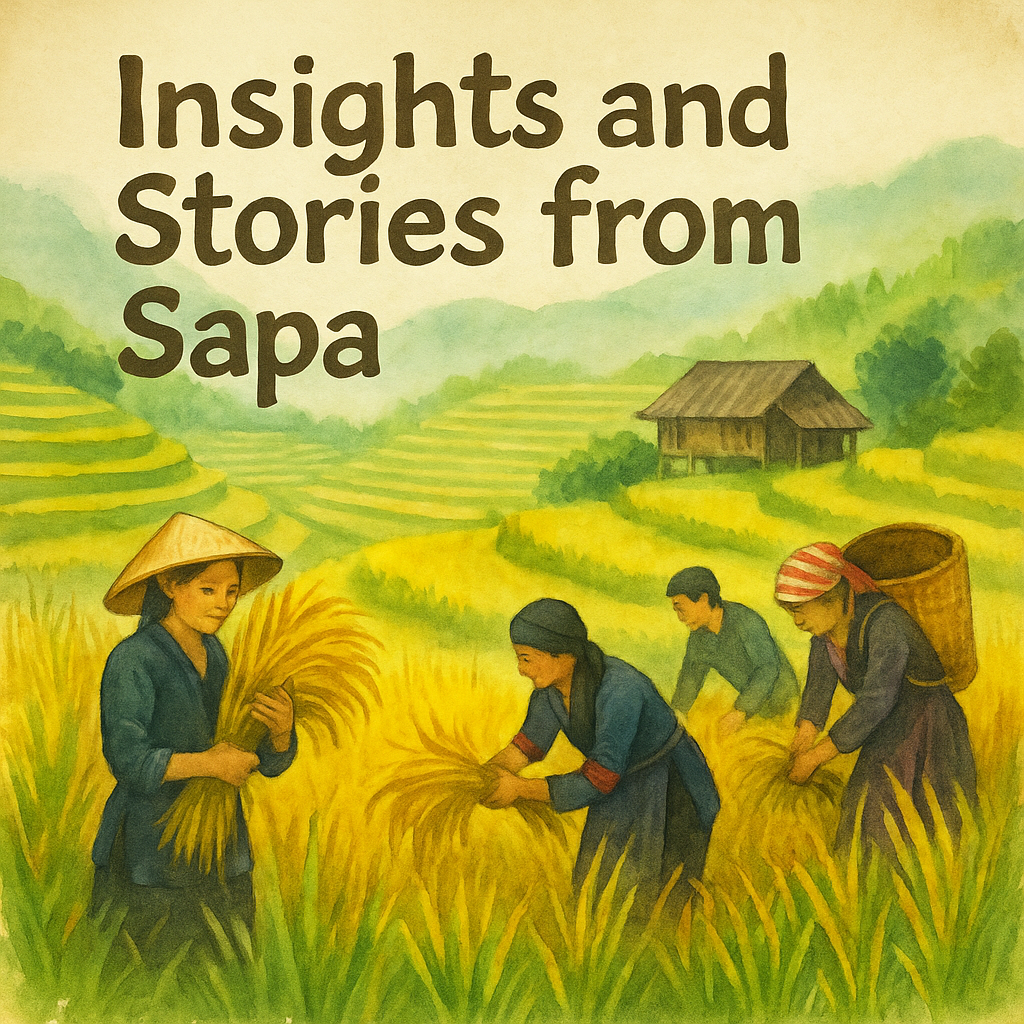
Illustration of four women harvesting rice in a lush green field with hills and a wooden house in the background, alongside large text reading "Insights and Stories from Sapa."
ETHOS - Spirit of the Comminuty ETHOS - Spirit of the Comminuty

Red Dao Baby Hats A Mother’s Love Stitched into Tradition

Red Dao baby hats are beautiful, bright and full of spiritual meaning. Mothers embroider them with symbols, coins and herbs to protect young children.

A Living Culture of Craft

Red Dao women are known for their incredible skills in hand embroidery. Every stitch is full of patience and pride. Textiles are part of daily life in the mountains, not only for beauty but also for cultural identity and protection. When a child is born, a mother begins one of the most meaningful pieces she will ever make. The baby hat.

Why Babies Need Protection

In Red Dao belief, young children are still growing their spirit. From one month to around five years old, they can fall ill very easily because bad spirits may come close. Mothers believe that a handmade hat with symbols and colour will help protect their children while their spirit becomes stronger.

More Than Decoration

The colourful patterns are full of meaning. A baby girl often has a more embroidered hat with bright colours and special symbols. Boys usually wear hats with three colours such as red, black and purple.

Coins, beads and pom poms decorate the hat so it catches the eye. Inside the embroidery, the mother often places medicinal herbs which are believed to support health and keep away bad spirits. When a hat dances with colour, it looks like a flower. A bad spirit, seeing a flower instead of a baby, will leave the child alone. The hat becomes both a shield and a disguise.

Made by a Mother’s Hands

Most hats are made by the child’s mother. Sometimes a grandmother helps, especially if she has greater experience with symbols. The design is personal to the family and protects the child every day, not only on festival occasions. Children wear their hats while playing, walking, resting and even being carried on their mother’s back.

Childhood to Independence

When children reach about five years old, they stop wearing the baby hat because their spirit is stronger. They begin to learn about their culture in other ways. Clothing remains important but the secret spirit protection of the hat has already done its job.

A Beautiful Tradition to Cherish

These hats are not just decoration. They are a sign of love, a prayer for protection and a reminder that every child is precious. The Red Dao baby hat shows the care of mothers who have protected children in the mountains for generations.

Read More
ETHOS - Spirit of the Comminuty ETHOS - Spirit of the Comminuty

The Rice Harvest in Sapa: Tradition and Community

In Sapa, the rice harvest is more than work. Families gather, traditions are honoured, and communities move together with the rhythm of the terraces.

The Rhythm of the Terraces

Every year in Sapa, the rhythm of life follows the rice terraces. The harvest is a seasonal anchor for Hmong and Dao families, shaping both work and tradition.

When the Harvest Begins

In the lower valleys, cutting starts as early as August, while the higher terraces wait until September. Altitude and weather shift the calendar, but the pattern remains the same: early mornings, hands on sickles, and sheaves carried to dry in the sun.

Ceremony and Meaning

The harvest is not only practical but also ceremonial.

Offering the First Rice

A small portion of the first grains is always set aside for the ancestors and for the spirits of field and water. At the household altar, incense is lit and quiet words are spoken in thanks. These simple rituals bind the community to the land and to generations past.

Working Together

Labour is shared within and between families, keeping old traditions alive.

The Circle of Support

Neighbours and relatives trade days, helping each other through the long hours in the fields. Threshing is often done with simple wooden frames, the rhythm steady and slow. Machines sometimes appear, but on the steep terraces handwork still rules.

A Living Landscape

For visitors, the harvest is a time when the terraces are alive with colour and movement.

Beauty and Survival

Golden fields ripple in the wind as farmers work side by side, their voices carrying across the valleys. What may look like ordinary labour is in fact the heart of the year, deciding food, family, and community.

The Hmong and Dao people are cutting rice in the beautiful valleys
Hmong and Dao community harvesting rice in the beautiful valley in Sapa
Sapa in golden season rice fields in Sapa
Read More
ETHOS - Spirit of the Comminuty ETHOS - Spirit of the Comminuty

The Living Blue: Indigo Traditions of Sapa’s Hmong & Dao Communities

In the hills of Sapa, indigo runs deeper than colour. Among the Hmong and Dao, it is identity, tradition and connection. Join us to learn, listen and create.

Indigo as Identity

Step into the hills of Sapa and you will notice a colour that lingers on hands, fabric and memory: the deep, living blue of indigo. Among the Hmong and Dao communities, indigo is far more than a dye. It is identity, tradition and a quiet act of resistance. Families grow it in their gardens, tending the plants season after season, and transforming them into cloth that carries memory and meaning.

Secrets Passed Through Generations

For generations, women have carefully passed down the secrets of indigo. They know how to ferment the leaves, how to coax the blue from green, and how to fold and wax fabric for batik. These skills speak not only of beauty but of belonging. They are not staged performances for visitors, but everyday acts of care, creativity and survival.

Learning Through Experience

When you join an ETHOS trek or take part in one of our batik workshops, you are invited into this living tradition. You might feel the texture of wax on cloth, stir the indigo vat, or hear stories carried in the rising scent of the dye. It is not about mastering a technique. It is about meeting the land and its people with presence and respect.

Why Slow Travel Matters

Slow travel gives space for this kind of learning. It lingers under your fingernails and stays with you long after the colour fades. It is a chance to connect deeply, not only with a craft, but with the people and place that sustain it.

Join the Journey

We would love to welcome you on a journey that honours both land and lineage. Come walk, sit, listen and learn with us in Sapa.

👉 Send us a message to explore upcoming dates or to find out more about our treks and workshops.

Read More