
Red Dao New Year in Sapa: Rituals, Feasts and Traditional Dress at Tết
Lunar New Year is a deeply spiritual season for the Red Dao people of Sapa. It is a time when the household is spiritually renewed, ancestors are invited home, and the whole villages move through a sequence of rituals that blend belief, family life and celebration.
These days, the Red Dao share the same lunar calendar as the rest of Vietnam, but their customs during Tết are distinctive. Herbal cleansing baths, unique humpback shaped rice cakes, elaborate ancestral offerings and communal feasting all form part of a New Year that is both traditional and joyful.
Preparing for the New Year
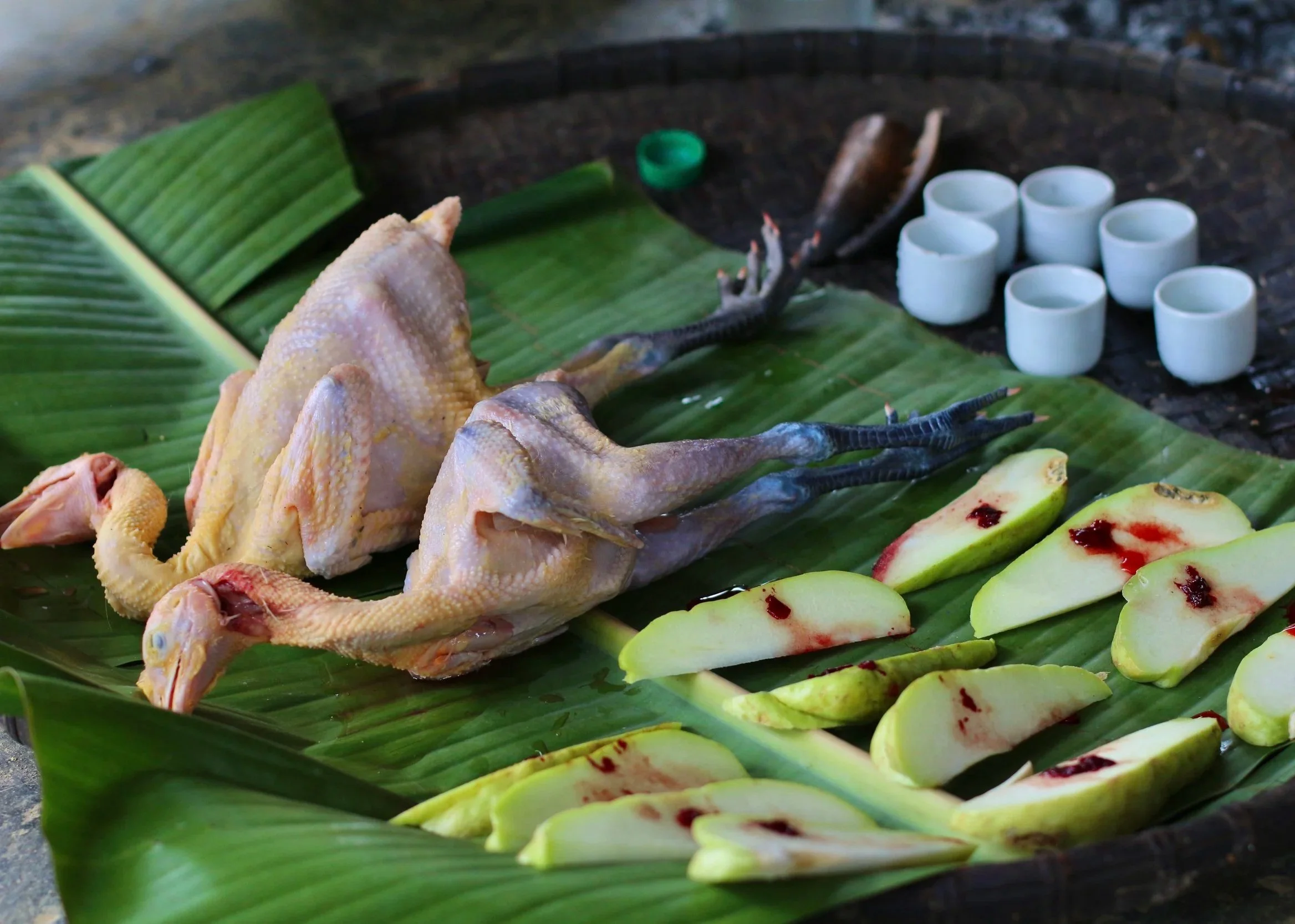
Traditional Tết offerings prepared for the Red Dao ancestral altar, including a boiled chicken, sliced pork and ritual foods arranged on banana leaves.
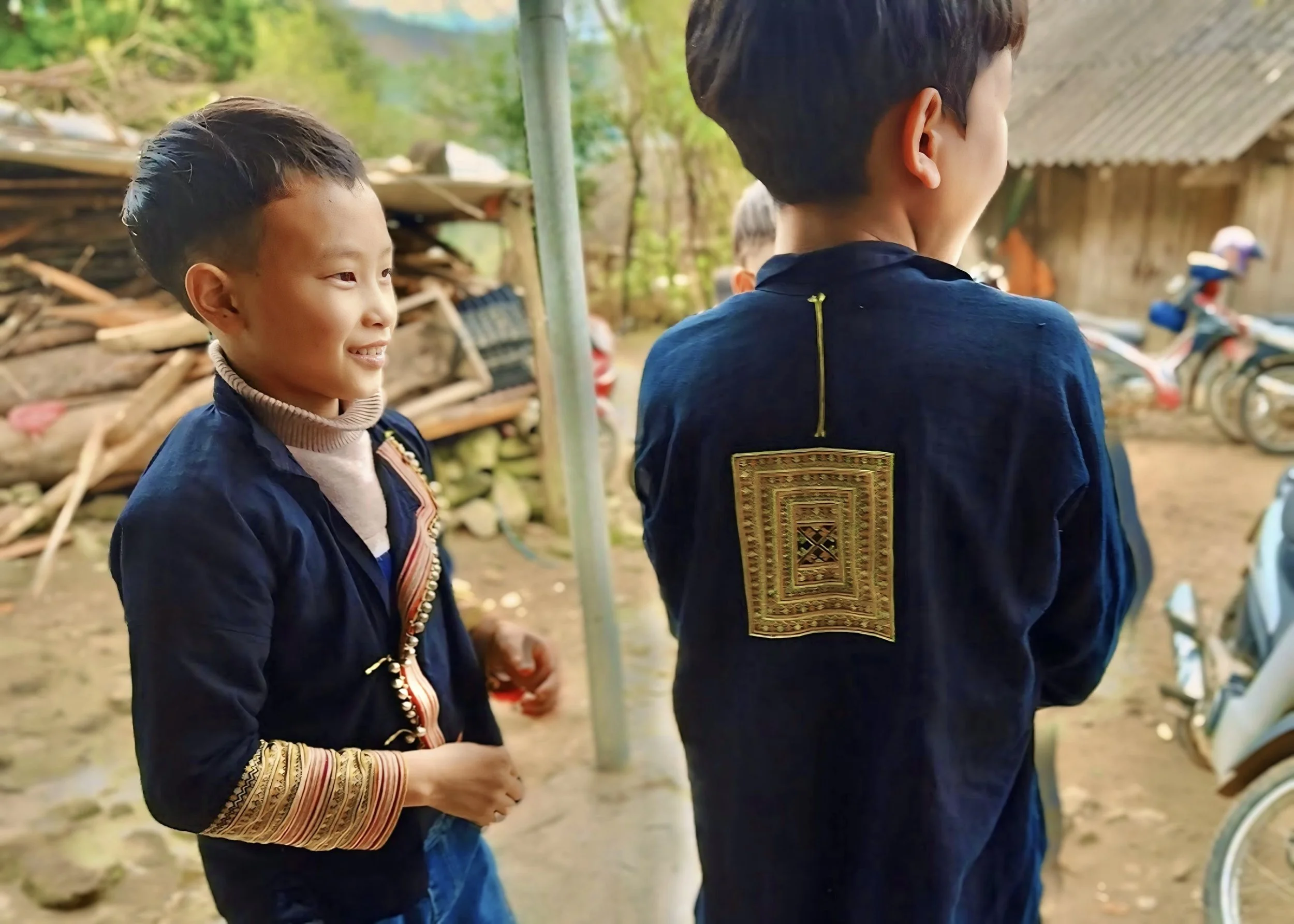
Red Dao boys wearing indigo traditional clothing with embroidered detail, preparing for the New Year celebrations in a mountain village in Sapa.
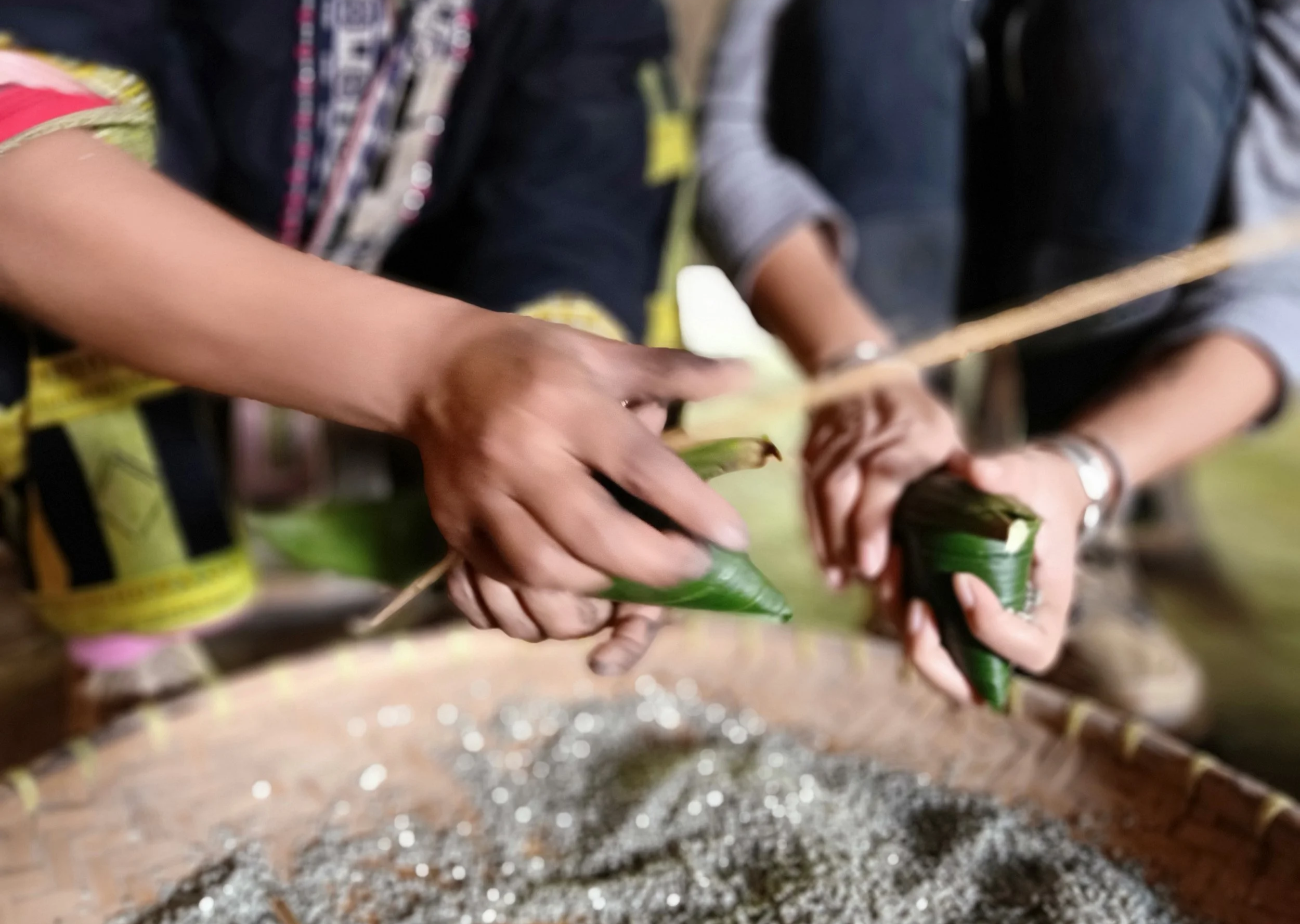
Hands wrapping bánh chưng gù, the Red Dao humpback sticky rice cake, in forest leaves as part of New Year food preparations.
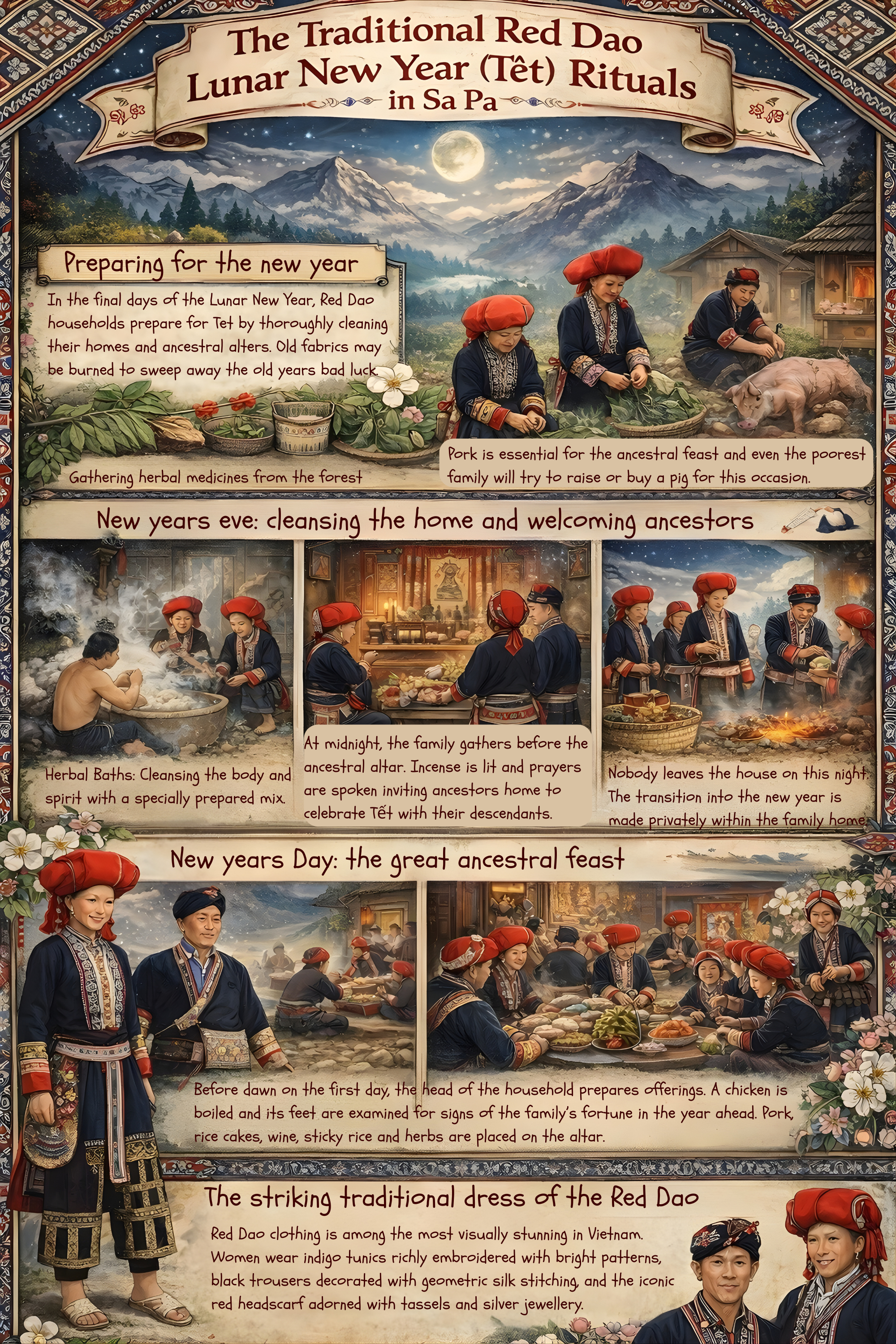
Preparations begin well before the last day of the lunar year. Homes are thoroughly cleaned, especially the ancestral altar. Red paper cuttings and handmade votive paper are placed around the altar to protect the household from misfortune and invite good luck.
Food preparation is central to this period. Pork is essential for ancestral offerings, and families ensure they have a pig ready for the celebrations. Women lead the making of the Red Dao’s distinctive Tet cake, bánh chưng gù, a small humpback shaped sticky rice cake wrapped in forest leaves. At the same time, women and girls finish embroidery on traditional clothing so that everyone will be properly dressed for the new year.
Everything must be ready before New Year’s Eve because once the new year begins, it is believed that opening cupboards, lending objects or cleaning the house risks losing good fortune.
New Year’s Eve: Herbal Cleansing and Quiet Reflection
On the afternoon of New Year’s Eve, the Red Dao carry out one of their most recognisable rituals. Forest herbs are boiled to create a medicinal bath. Each member of the family washes in this herbal water to remove the old year’s bad luck and prepare spiritually for the new one.
After bathing, everyone dresses in full traditional clothing. The evening is calm and reflective. Families remain inside their homes as midnight approaches.
Midnight: Welcoming the Ancestors Home
At midnight, the family gathers before the ancestral altar. Offerings of pork, chicken, rice cakes, wine and incense are laid out carefully. The head of the household lights incense and recites prayers to invite the ancestors to return home to celebrate Tết with their descendants.
A bowl of blessed water is shared among family members for health and protection in the coming year. Nobody leaves the house during this sacred transition from one year to the next.
Dawn of the First Day: Signs of Fortune
At dawn, family members step outside to collect a fresh green branch which symbolises spring and renewal. A chicken is boiled and its feet are examined carefully. The appearance of the claws is believed to foretell the family’s fortune in the year ahead.
The Great Ancestral Offering and First Feast
The largest ancestral offering of the year is then presented. A pig’s head, chicken, bánh chưng gù, sticky rice, wine and other dishes are placed on the altar. Prayers ask for health, good harvests and prosperity.
After the ceremony, the offerings are taken down and shared as the first meal of the year. Relatives, neighbours and friends are invited to join. The Red Dao believe that a crowded house on the first day brings good fortune, so the celebration often moves from house to house across the village.
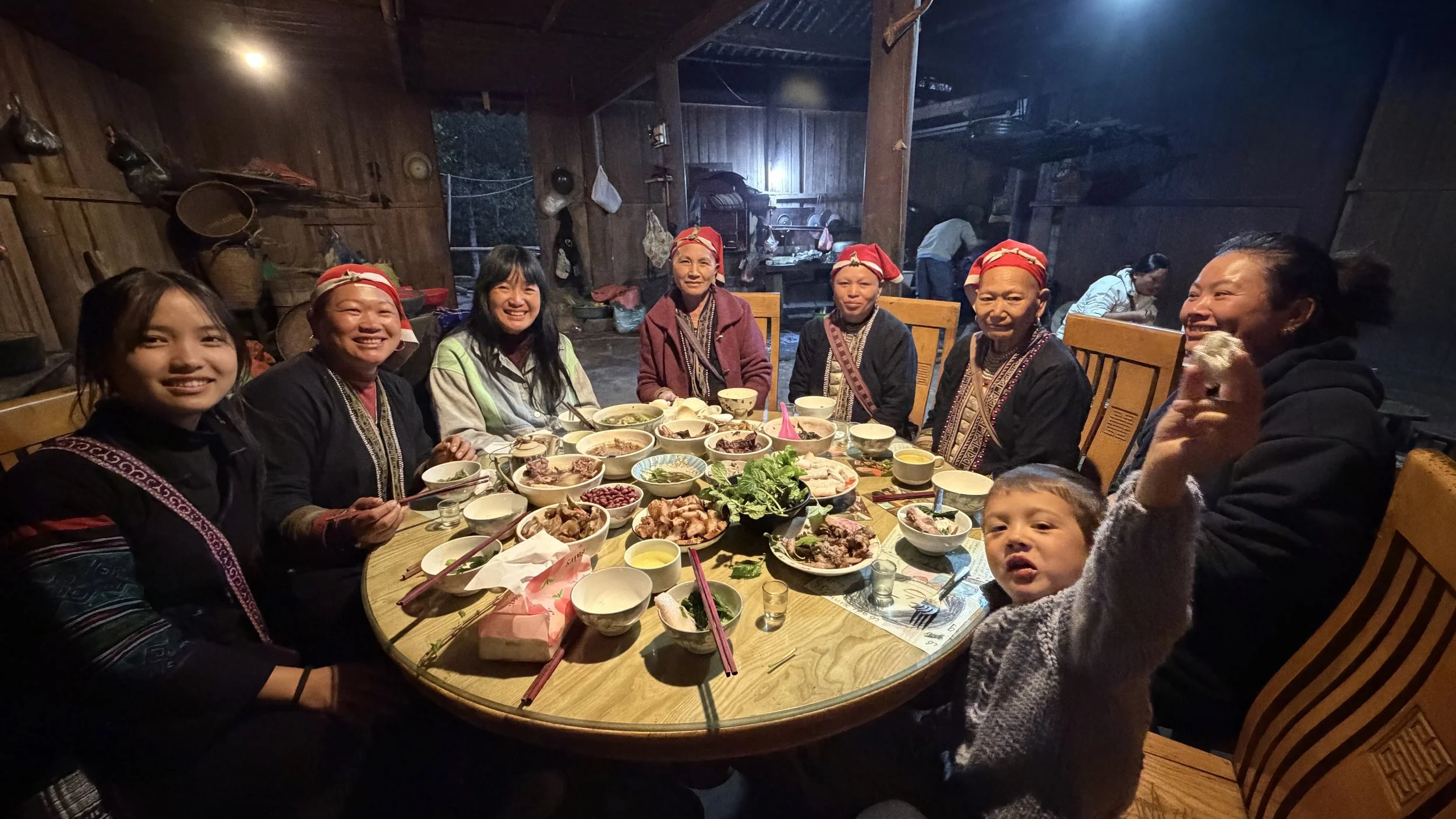
A multi-generational Red Dao family sharing a festive meal. The setting feels intimate and celebratory, reflecting the first communal feast of the New Year.
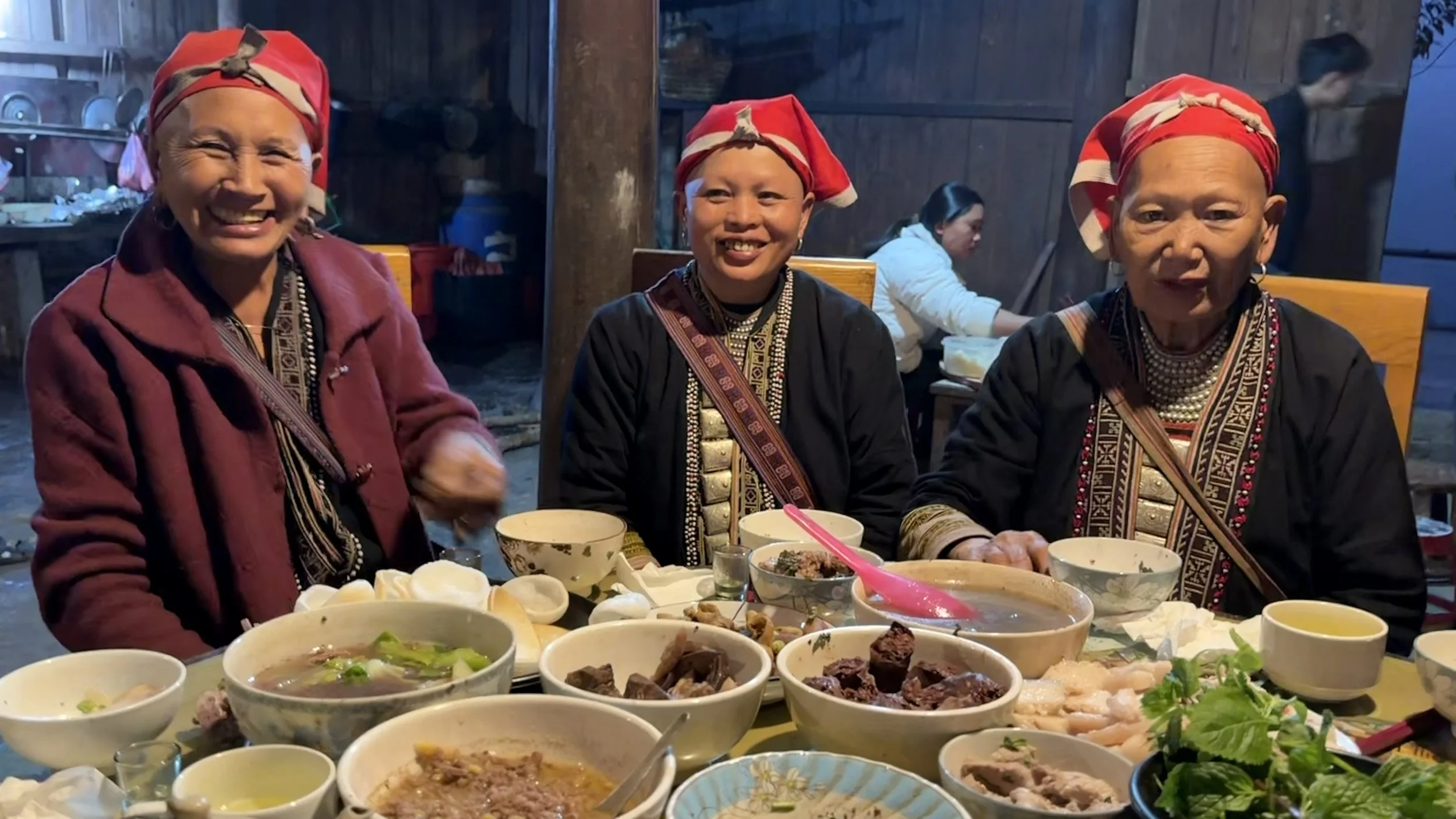
Three Red Dao women wearing embroidered clothing sit together at a table covered with home-cooked dishes. They smile warmly in a dimly lit wooden interior, with bowls of soup, meat, and herbs arranged in front of them, capturing a moment of hospitality and shared celebration during the New Year meal.
Tết Nhảy: The Fire Jumping Ceremony
One of the most extraordinary elements of Red Dao New Year is Tết Nhảy, also known as Pút Tồng. This clan ceremony combines ritual dance, music and a dramatic fire jumping performance.
Led by a shaman, young men perform a series of sacred dances to invite the ancestors and gods to join the celebration. The ceremony builds towards the fire dance, where participants lift flaming papers and leap barefoot across glowing embers. This act symbolises courage, purification and the burning away of bad luck.
Tết Nhảy is recognised as an important element of Red Dao cultural heritage and different to that of the Hmong or in other Vietnamese New Year traditions.
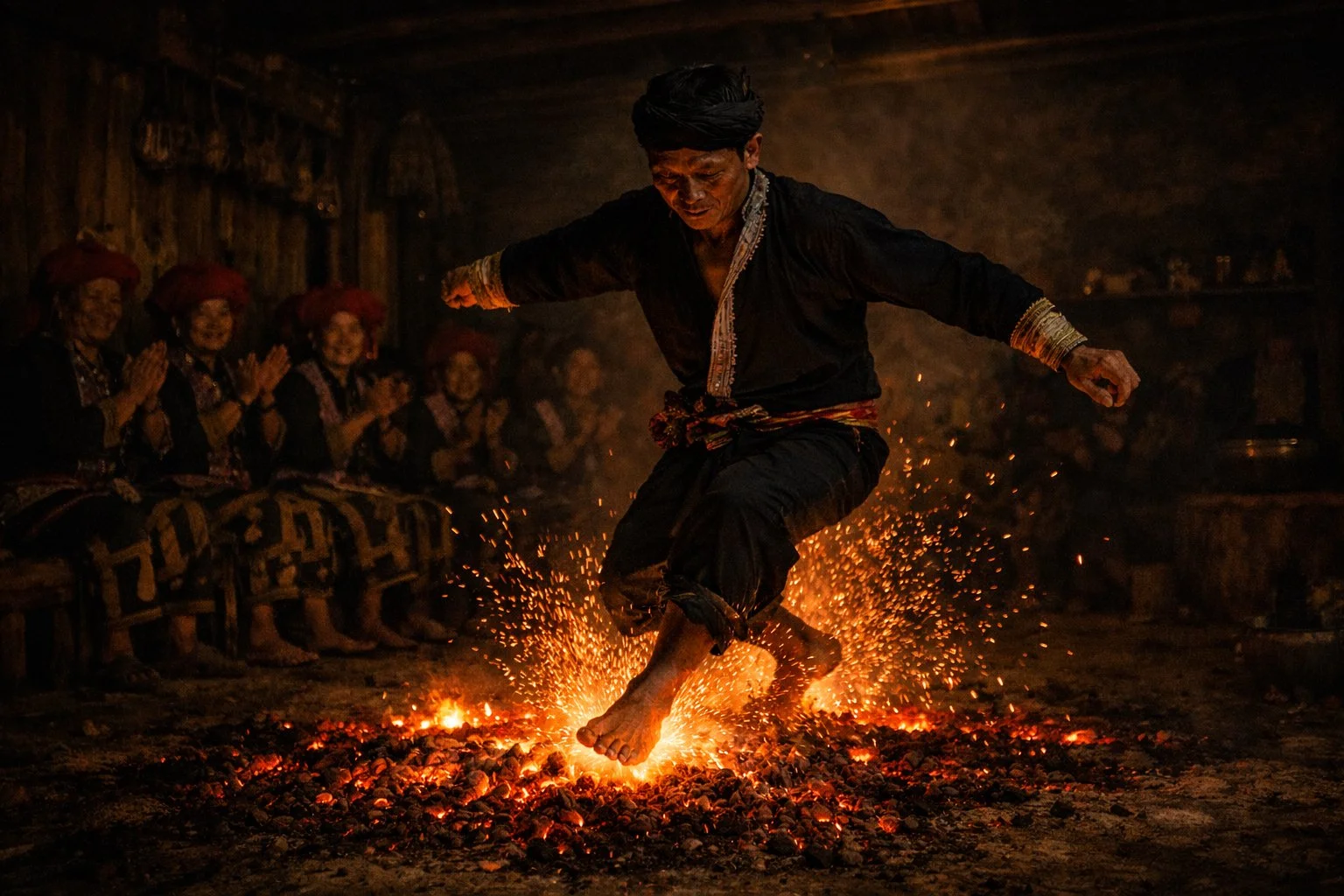
Red Dao man dancing on embers in a family home.
Songs, Games and Teaching the Dao Script
Beyond rituals, the New Year is also a social and educational season. Elders use the first days of the year to teach children the ancient Dao characters and share stories about their ancestors.
The Striking Traditional Dress of the Red Dao
Traditional clothing is an essential part of Tết. Women wear indigo tunics richly embroidered with bright patterns, black trousers decorated with geometric stitching, and the iconic red headscarf with tassels and silver jewellery. Men wear indigo jackets with red accents and headscarves.
Wearing traditional dress honours the ancestors, expresses cultural pride and is believed to bring good luck for the year ahead.
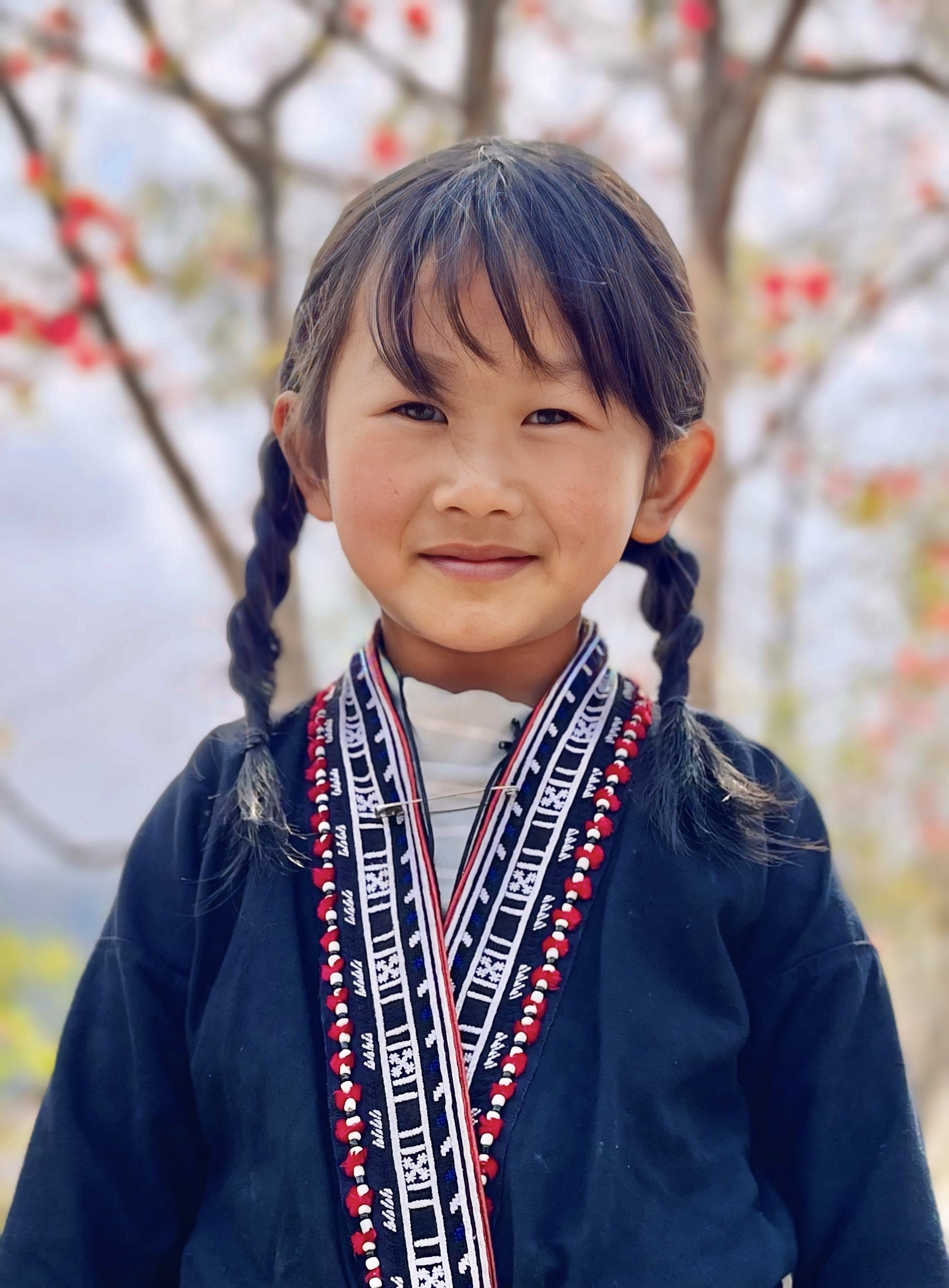
A young Red Dao girl wearing an indigo embroidered tunic and decorative collar, dressed in traditional clothing for the New Year in Sapa.
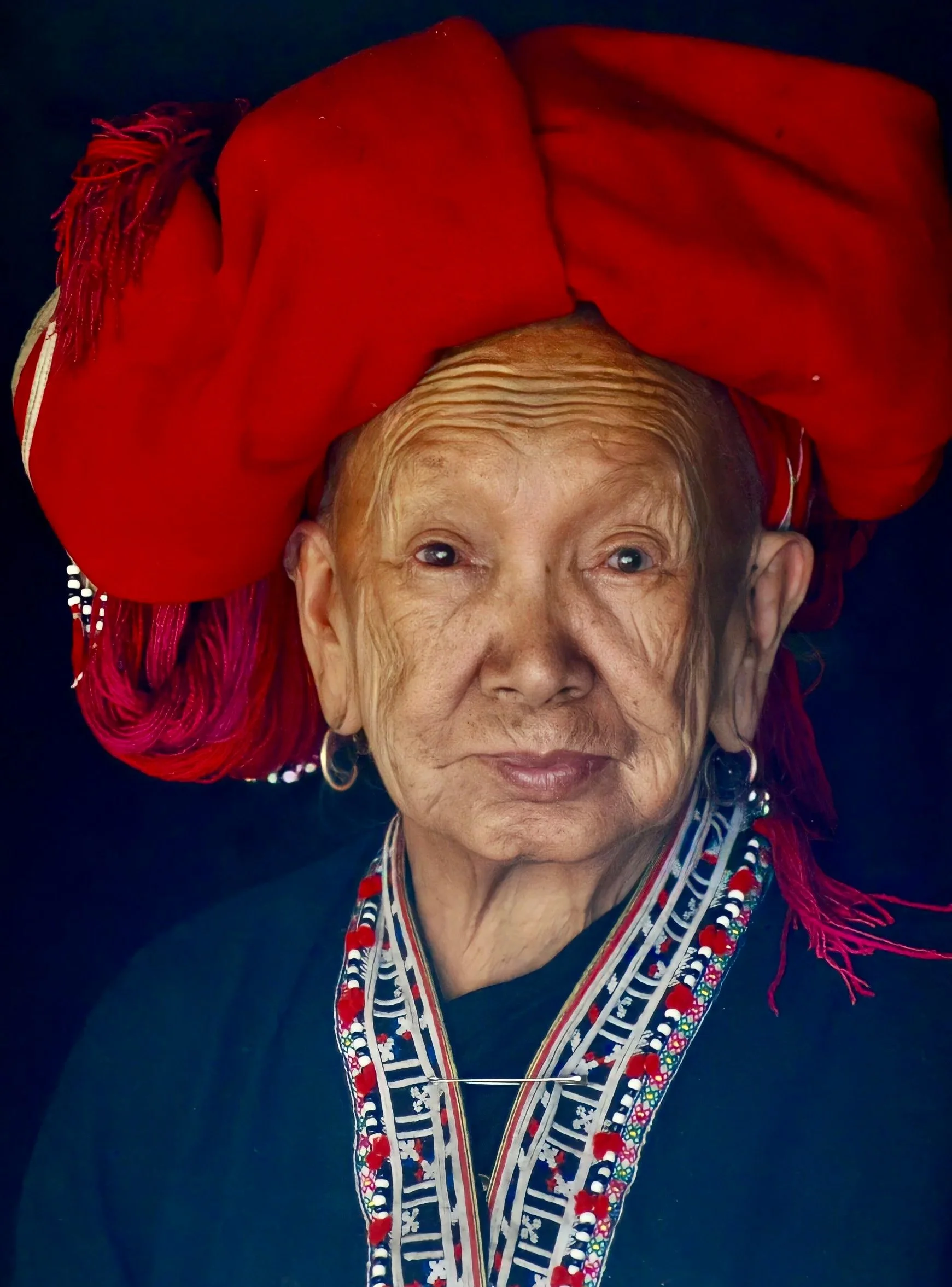
An elderly Red Dao woman wearing the iconic red headscarf, indigo tunic and embroidered panels that symbolise cultural identity and heritage.
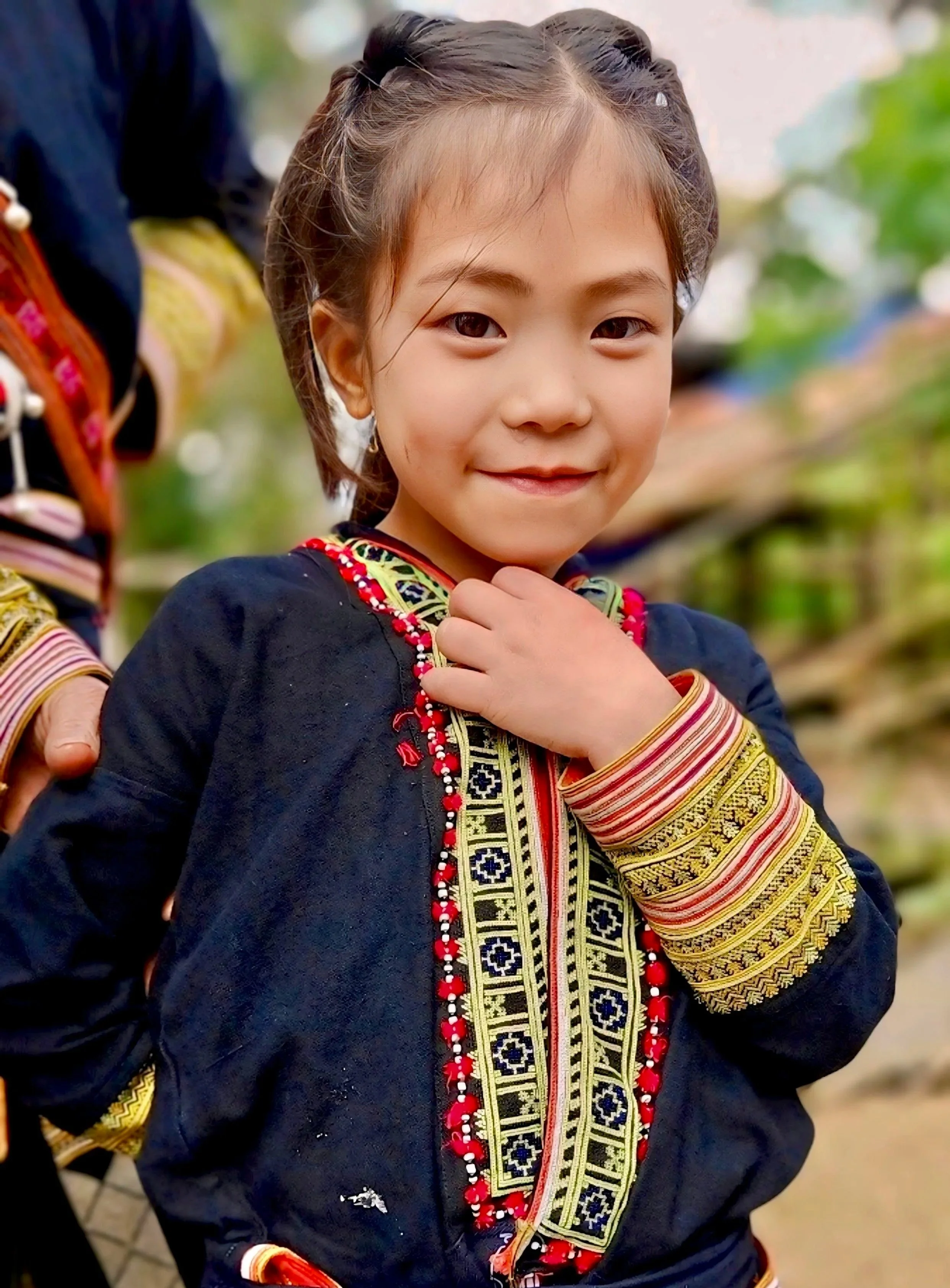
A Red Dao child in traditional indigo clothing with colourful embroidered trim, dressed for Tết celebrations in a mountain village.
A New Year Rooted in Memory and Identity
For the Red Dao of Sapa, Tết is a celebration, the renewal of family ties, spiritual belief and cultural identity carried forward from one generation to the next. Through ritual, food, clothing and community, the Red Dao step together into the new year with hope and deep respect for their past.
Join our ethical Red Dao treks in Sapa
Stay in authentic Dao homestays
Discover more about Dao culture with our workshops
