Insights and Stories from Sapa and the Northern Borderbelt provinces of Vietnam.
Vietnam Weather by Region: Best Time to Visit North, Central and South Vietnam
Vietnam’s weather is far more complex than many travellers expect. Stretching over 1,600 kilometres from north to south, the country experiences distinct regional climates, seasonal shifts and weather patterns that can vary dramatically at the same time of year. This guide explains Vietnam’s weather month by month and region by region, helping you choose the best time to travel and plan a journey that works with the seasons rather than against them.
When is the best time to visit Vietnam?
North Vietnam: March-June and August-October
Central Vietnam: March-August
South Vietnam: December-April
Best trekking months in Sapa: March-June and August-October
• • Highest typhoon risk: August-November, especially Central Vietnam
Why the weather feels so different from one end of the country to the other
From our home in Sapa, weather never feels like a small practical detail that sits politely at the edge of the journey, because it shapes the colour of the rice terraces, the clarity of the mountain ridges, the warmth of the hearth in a homestay kitchen, the condition of a forest trail underfoot, and even the rhythm of conversation as rain gathers over a valley and then passes on.
Vietnam is long, narrow and topographically complex. If its outline is superimposed on a map of Europe, it stretches from the Netherlands and Belgium, through France and into Italy, with a north-to-south span approaching the distance between northern Europe and the Mediterranean coast of North Africa. Latitude alone creates several distinct climate zones. Add mountains, dramatic changes in elevation, monsoon systems and sea breezes, and the picture becomes far more complex.
All of this determines that any weather in Vietnam does not move through the country in one neat wave, and travellers who imagine one national climate usually arrive to find three very different seasonal stories unfolding at once. Official tourism guidance and 1991 to 2020 climatological normals show a clear pattern, with the north shifting between a cool winter and a hot wet summer, the central coast staying comparatively favourable through much of spring and summer before a sharp late-year rainy season, and the south remaining hot throughout the year with a simpler dry-season and wet-season split.
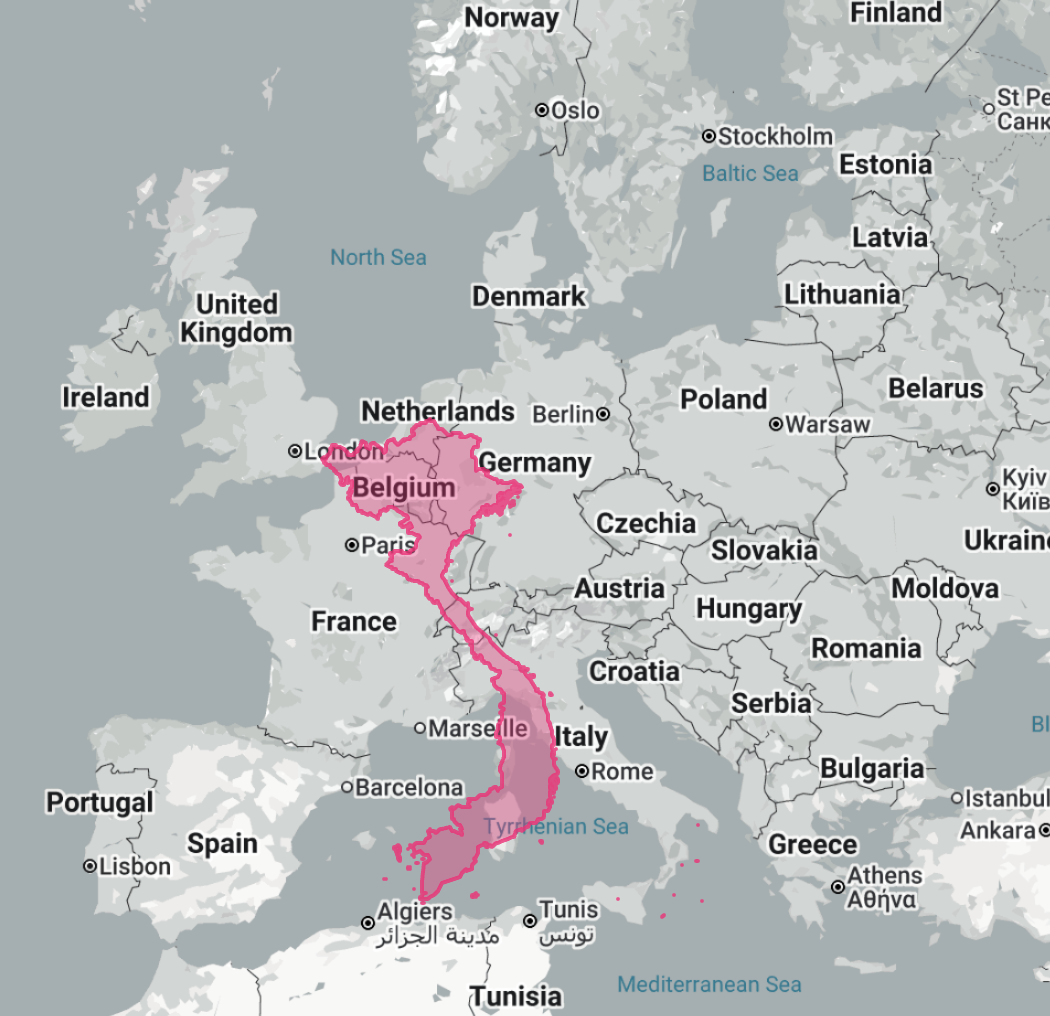
Grapical Represtation comparing Vietnam size with Europe
For ETHOS travellers, that distinction matters because weather is not only about comfort, it is about how a place is felt. Mist in the northern mountains can make a village path feel hushed and intimate, while a clear October day can open the whole horizon and reveal layers of blue ridges running to the frontier. A bright June spell on the central coast invites salt air and long sea-coloured afternoons, while a September storm can turn the same coastline into a place of dramatic skies, rough water and changed plans. In the south, rain often arrives not as an all-day blanket, but as a sudden tropical release near the end of a hot day, after which the streets steam and the air softens again.
North Vietnam month by month
North Vietnam is the region with the clearest sense of seasonal change, and it is also the region where altitude matters most. The lowlands around Hanoi can feel cool in winter and intensely (often uncomfortably) hot and humid in midsummer, while the mountain belt around Sapa and the wider borderlands can turn genuinely cold, misty and damp in the year’s first quarter, especially in the mornings and after dark. Official guidance describes December to February as the coolest period in the north, and the climate normals for Hanoi support that strongly, with much lower winter temperatures and far less rainfall than the peak summer months.
January in the north feels wintry by Vietnamese standards, and for travellers it is often a month of silver light, low cloud, smoky kitchens and thick jackets rather than sunlit terrace views. December to February are the months you are most likely to see snow in the highlands and although relatively rare, frost and ice are annual occurances. February remains cool and often humid, with the sort of clinging damp that settles into clothes and lingers in the valleys. March begins to loosen winter’s grip, though it can still be overcast and mist-heavy, especially in the mountains where visibility is part of the travel experience and not merely a matter for photographs. Those three months can be deeply atmospheric for homestays, food, fireside conversation and slower cultural travel, though they are less dependable for big panoramas and long, dry trekking days.
April is when the north often begins to feel open and generous again, because the cold recedes, the light strengthens and the land starts to glow with fresh growth. May keeps that lushness, although the heat begins to build and afternoons feel heavier. May is also rice planting season for many of Vietnams upland areas above 1100 metres in elevation. June marks the clear beginning of the hot, humid, rainier stretch, and this is the point at which mountain walking, road travel and outdoor experiences are still very rewarding, though they increasingly depend on good timing, early starts and a willingness to work with the day rather than against it. The rains also assure the most picturesque and verdent rice terrces. In practical terms, north Vietnam in late spring and early summer can be beautiful and fertile, though it is not the crisp, open weather that many travellers imagine when they picture mountain travel.
July is one of the most demanding months in the north, because heat, humidity and rainfall combine in a way that can make both trekking and transport feel more strenuous, and the official normals for Hanoi show just how dramatic that summer peak becomes compared with winter. Sticking to elevations above 1200 metres is the best way of escaping the summer heat and this is why mountain towns like Sapa remain popular for hikers throughout the year. August often behaves similarly, with heavy rain still very much part of the picture, even if there are vivid green landscapes and occasional windows of clear weather between showers. September begins to shift the mood again with rice harvesting and golden paddy fields an annual highlight in upland areas. Although it is still warm, the atmosphere often becomes easier, less oppressive and more travel-friendly as the month progresses. For people drawn to trekking, village walks, mountain roads and a stronger chance of expansive views, September can feel like the country taking a longer breath after the pressure of summer.
October is one of the north’s loveliest months, with cooler air, better visibility and a more settled balance between warmth and freshness. sapa is much drier and awash with beautiful meadow flowers and plentiful wilf fruits that makes it an ideal month for foraging. November often continues that pattern and is one of the easiest months for travellers who want to walk, photograph, ride and linger outdoors without constantly negotiating heat or downpours. December brings the first clear return of winter, although it usually feels drier and cleaner than the mist-soaked late winter weeks that follow in January and February. For ETHOS, this is the broad truth we live with year after year, namely that the north tends to be at its most comfortable for immersive travel in spring and again in autumn, while winter suits slower, more intimate journeys and midsummer asks for flexibility, resilience and respect for the mountain weather.
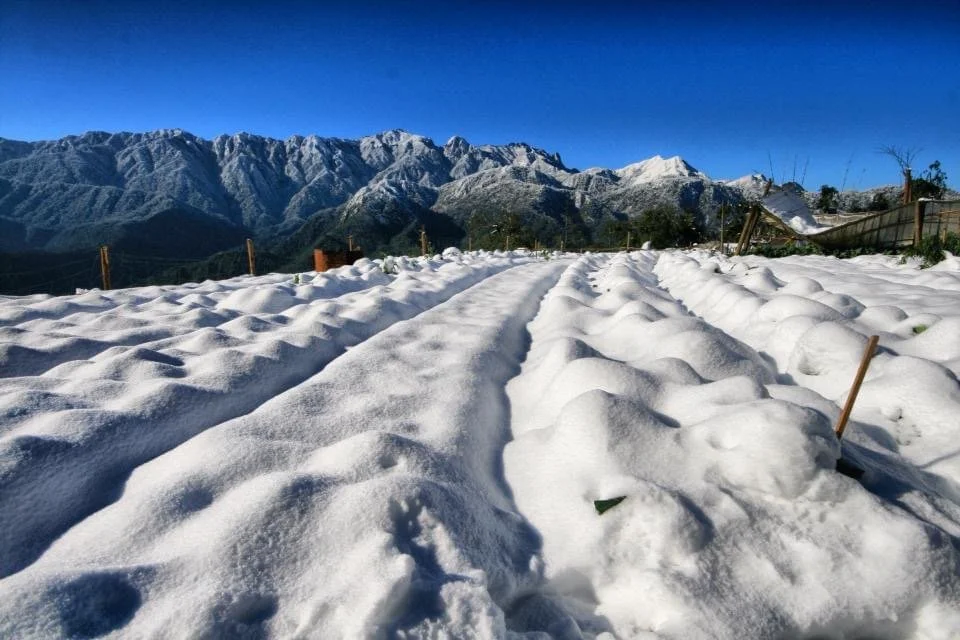
Snow in Sapa
Central Vietnam month by month
Central Vietnam is the part of the country that most often surprises travellers, because it does not obey the same calendar as the north or south. The central coast around Da Nang, Hue and Hoi An tends to hold on to good beach and heritage-travel weather through much of spring and summer, then turns sharply wetter and more flood-prone later in the year. The south-central coast around Nha Trang follows a slightly different rhythm again, which is why a blanket statement about “central Vietnam weather” can be useful only up to a point. The official normals make that late-year central spike unmistakable, especially in Da Nang, where autumn is far rainier than spring and early summer.
January on the central coast can still be cool, grey and unsettled, especially in the Hue to Hoi An zone where the wet season does not disappear neatly with the new year. February is often an improving shoulder month, though not always a fully settled one. March is when central Vietnam usually becomes much easier to recommend without hesitation, because the air grows warmer, the skies brighten and the region’s blend of old towns, coastline and cultural sites comes into its own. Travellers who want a more relaxed marriage of sea light, wandering and heritage often find March one of the sweetest months in the whole country.
April brings stronger heat and a more summery feel, while still remaining highly attractive for most coastal itineraries. May leans further into beach weather, with brighter skies and warmer sea conditions, though midday heat becomes more assertive. June is broadly excellent for central coastal travel if your idea of good weather includes sunshine, warmth and long outdoor days, though it does ask for a slower pace during the hottest hours. This is the part of the year when central Vietnam often feels expansive and easy, especially for travellers who want swimming, walking, architecture and sea air in a single trip.
July generally stays favourable along much of the coast, and August often does as well, although late-summer caution becomes wiser as the season edges closer to the stormier part of the year. September is the point at which the region begins to feel less dependable, particularly around the central coast where rain risk and tropical weather disruption rise. That shift is important because the central region commonly looks attractive on paper in early autumn, yet in reality it can move quickly from beach-friendly brightness to heavy rain, high water and interrupted transport. The central coast rewards good timing more than almost any other part of the country.
October is the central coast’s hardest month in broad travel terms, and the official normals for Da Nang show why, with an especially dramatic rainfall peak at exactly the time many travellers elsewhere in Asia expect dry-season improvements to begin. November remains difficult in many years, particularly for the Hue to Hoi An stretch, where flooding and persistent rain can affect both comfort and logistics. December is more mixed than many people anticipate, because parts of the central coast may still be rainy and cool rather than quietly festive and dry. For travellers, the essential central lesson is simple and worth remembering, namely that spring and summer are often the region’s most rewarding months, while autumn demands much more caution than the same months do in the north.
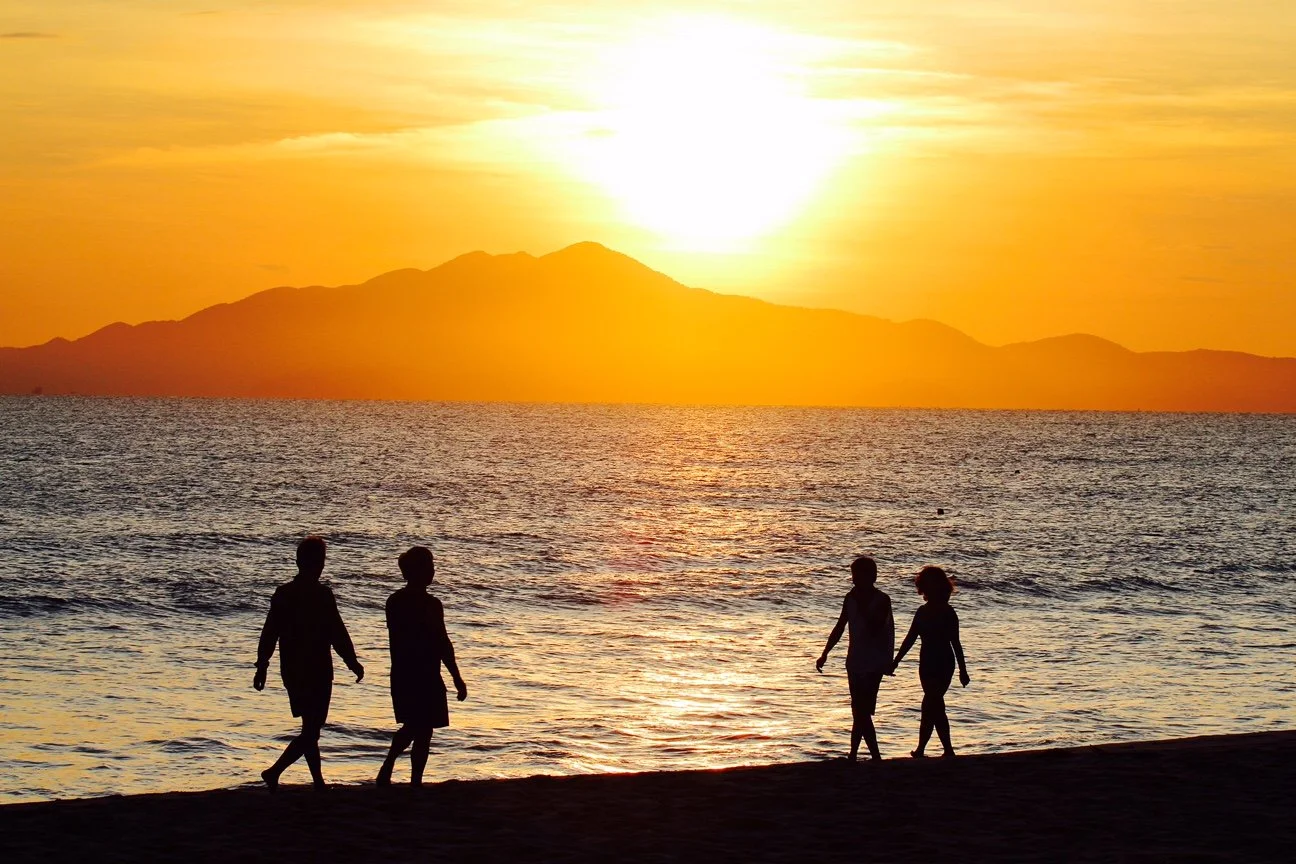
Sunrise on the beach in Hoi An
South Vietnam month by month
South Vietnam is the most straightforward region to read climatically, though that does not mean it is weatherless or uniform. The south remains warm to hot through the year, and the main distinction is between the drier months and the wetter months rather than between summer and winter in the northern sense. Around Ho Chi Minh City, the official normals show relatively modest temperature variation compared with Hanoi, while rainfall patterns trace a much clearer wet-season arc from late spring into autumn.
January is one of the south’s easiest months, with drier air, plenty of sun and the kind of general reliability that makes city breaks, river trips and beach extensions feel uncomplicated. February keeps that ease, although the heat starts to gather a little. March remains one of the strongest months for sunshine seekers, though by now the warmth is more insistent and the afternoons can feel distinctly tropical. Travellers who enjoy brightness and don’t mind heat often find this one of the south’s most rewarding stretches.
April often feels like the hottest hinge between the two seasons, because the dry weather still lingers while the atmosphere grows heavier and more expectant. May is usually when the wetter pattern begins to establish itself, not as endless rain but as a rhythm of gathering cloud and regular downpours. June settles more firmly into that mode, with mornings that can still be bright and energetic followed by showers that break the heat later in the day. For many travellers, the surprise of the south is that the wet season is often more manageable than feared, provided you do not require uninterrupted sun from breakfast until evening.
July and August continue that humid, rain-marked pattern, and September is commonly among the wetter points in the southern year. Mainland travel can still work very well during these months if you accept a more flexible tempo, though island plans become more weather-sensitive because sea conditions matter as much as rainfall totals. Places such as Phu Quoc can feel far less predictable in the rougher, rainier part of the year than they do in the dry months, even when the rain itself comes in bursts rather than all-day sheets. The south in late summer is often vibrant, green and atmospheric, though it favours adaptable itineraries over rigid ones.
October may still feel rainy, though the season is beginning to tip. November often behaves like a transition month in which the air starts to clear and the intervals of dry weather lengthen. December brings back the south’s classic easy season, when heat, light and lower rainfall combine to make both urban and coastal travel far simpler. If the north asks you to think in terms of four moods and the central coast asks you to think in terms of timing, the south asks you mainly to understand a dry half and a wet half, each with its own charm and each rewarding a different kind of traveller.
Typhoon season and the shape of weather risk
Typhoon season is best understood not as one rigid block of dates, but as a period of heightened tropical-weather risk that shifts in emphasis across the country. World Bank climate-risk material notes that tropical cyclones account for a very large share of disasters affecting Vietnam, and that the country faces high exposure to both flooding and tropical cyclones. The same body of material, looking across historical landfalls, indicates that the north receives a substantial share of storm strikes, while the central coast remains the place where travellers most often feel the practical consequences of storms in the form of intense rainfall, river flooding, rough seas and transport disruption, especially from early autumn onward.
For practical travel planning, the key point is that the risk profile shifts through the year. The north is more vulnerable earlier in the broader storm season, while the central coast becomes the more concerning region for many travellers later in the year, when its already wet season can overlap with tropical systems and magnify disruption. The official normals for Da Nang, together with official tourism guidance, make plain why autumn requires particular care there, and recent WMO reporting on heavy December rain in Vietnam is a reminder that “late season” is not a theoretical idea but a real one.
There is also a bigger climate context to keep in mind. WMO’s regional climate assessment for Asia describes record-high sea-surface temperatures, marked marine heatwaves and more extreme rainfall across the region, while World Bank material citing Vietnamese government sources points to mounting evidence of greater frequency of high-intensity typhoons in recent years. That does not mean every season will behave dramatically, though it does mean travellers should treat old rules of thumb with caution and check forecasts closely, especially when travelling to the coast or through mountainous terrain during the wetter months.
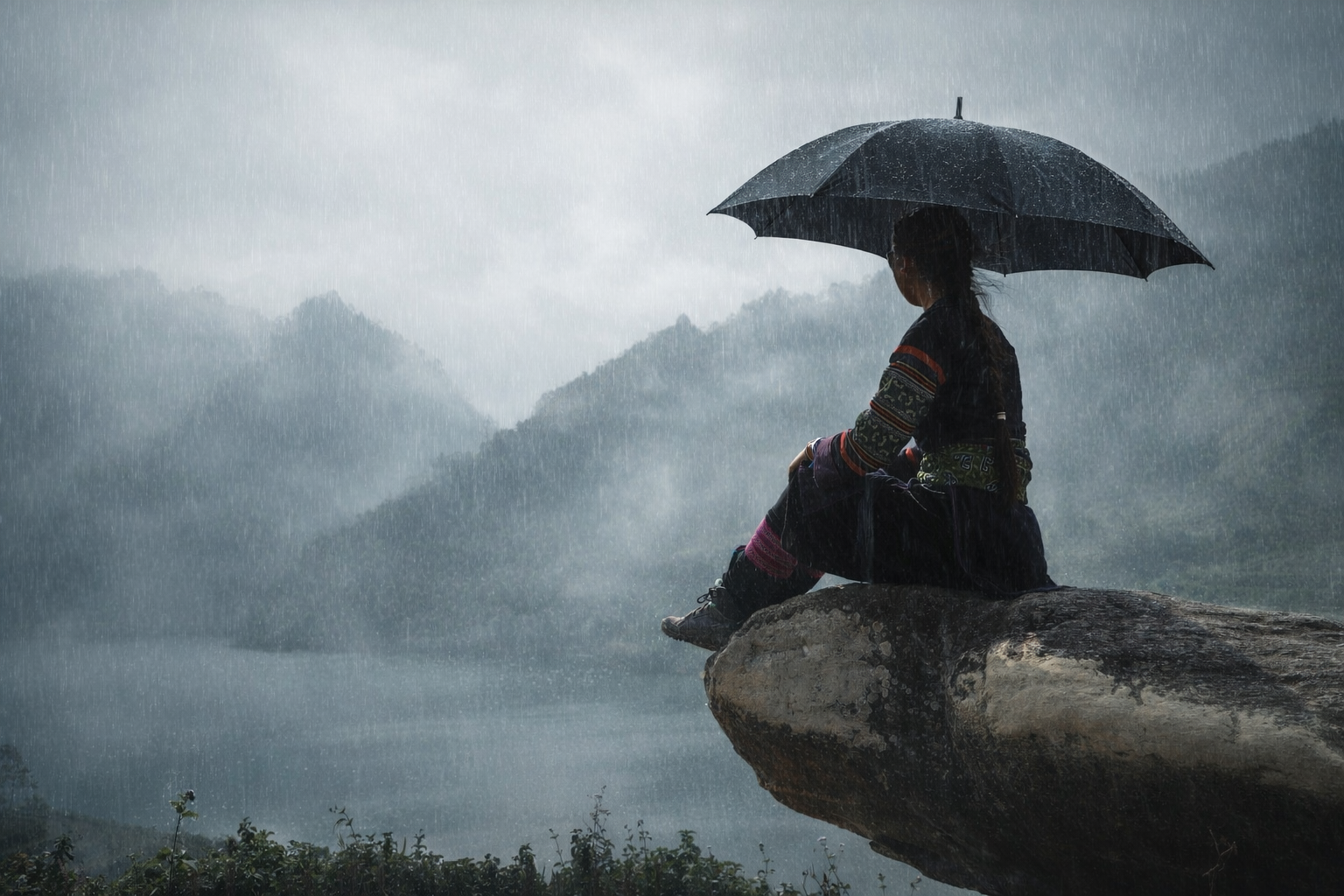
Monsoon rains in the mountains
The El Niño Effect: Why Some Years Feel Completely Different
While Vietnam's geography creates the foundation for its weather patterns, large-scale climate cycles can dramatically influence conditions from one year to the next. The most significant of these is El Niño, a naturally occurring warming of the tropical Pacific Ocean that can alter rainfall, temperatures and seasonal weather across much of Southeast Asia.
During El Niño years, many parts of Vietnam experience hotter and drier conditions than normal, increasing the risk of drought, water shortages and forest fires. The opposite phase, La Niña, often brings cooler temperatures and above-average rainfall. These events can strengthen, weaken or shift the usual seasonal patterns that travellers and local communities have come to expect.
Because El Niño and La Niña can have such a significant impact on Vietnam's weather, we have explored the subject in much greater detail in our separate guide: El Niño and Vietnam's Weather: What Travellers Need to Know.
What this means for an ETHOS journey
For travellers coming to northern Vietnam with ETHOS, the broadest weather truth is also the simplest one, namely that the mountains reward those who travel with the season rather than against it. February to October and November are often the most comfortable months for walking, village stays, conversation-rich homestays and days that move between field, trail, workshop and table without the weather dominating every decision. December and January can be deeply beautiful if you are drawn to mist, firelight, textiles, slower pacing and the intimacy of mountain life in colder weather. June through August will be lush and can still be rewarding, though they call for more flexibility, better rain preparation and a serious respect for road and trail conditions.
Preparing for Your Trekking Adventure. For a guide ofwhat to pack for a trek in Sapa, you can read more here.
Across the wider country, the broadest planning windows remain fairly clear. North Vietnam is usually easiest in spring and autumn. The central coast is often at its best from roughly March into August, while autumn is the season to watch most carefully there. South Vietnam is typically easiest from December to April, while the wetter months remain very possible for travellers who do not mind tropical rain and are willing to keep their plans a little looser. For the kind of journeys ETHOS believes in, where connection matters more than rushing and experience matters more than ticking boxes, the weather is never simply a background condition. It is the atmosphere in which people farm, weave, forage, cook, guide, remember and welcome, and understanding it well is one of the most respectful ways to arrive.
What is the best month for trekking in Sapa?
Every season reveals a different Vietnam. Misty mountain mornings, golden harvest terraces, quiet coastal spring days or lush summer landscapes all offer their own rewards.
If you’d like help choosing the best season for your interests, our team can help design a journey around weather, culture, local events and community experiences.
Explore our tailored experiences and start planning your Vietnam journey.
FAQ’s
Q. When is the best time to visit Sapa? See our comprehensive month by month guide.
Q. When is the rainy season in Vietnam? It differs from north to south.
Q. When is typhoon season in Vietnam? Autumn
Q. Does Sapa get snow? YES - Read more here
Q. Is July a good time to visit Sapa? YES - Watch more here
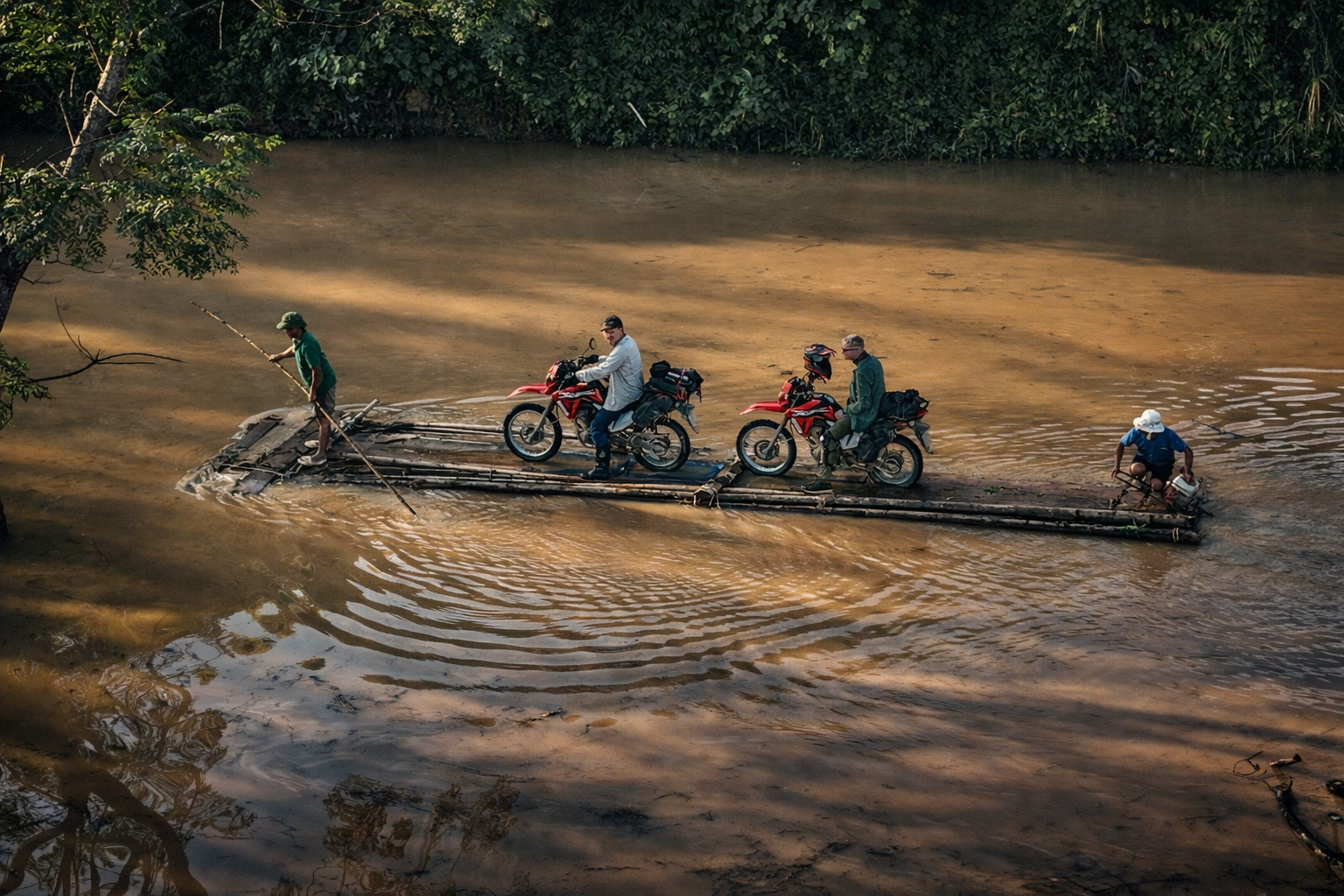
El Niño 2026 in Vietnam: Heat, Storms, and What Travellers Need to Know Before Exploring the North
Northern Vietnam is entering an increasingly unpredictable climate era as El Niño conditions strengthen across the Pacific. Though forecasts suggest hotter temperatures, weaker monsoon rains, and fewer tropical storms overall, scientists also warn that extreme weather events may become more erratic and more intense when they do occur. From landslide risks in Hà Giang and Sapa to heatwaves in Hanoi and shifting storm patterns in Ha Long Bay, this guide explores what travellers should understand before visiting Vietnam in 2026, and why flexibility, local knowledge, and ethical travel matter more than ever.

Infographic describing the possible impacts of El Nino 2026 on northern Vietnam
Northern Vietnam Is Entering a More Unpredictable Climate Era
Across the mountains of northern Vietnam, weather has always shaped daily life. Rice terraces depend upon carefully guided water flowing down steep hillsides. Forests provide herbs, medicines, fibres, dyes, and food gathered according to seasonal rhythms passed through generations. Families plan planting, harvesting, market days, weddings, and journeys according to changing skies and shifting winds.
For many travellers, weather is something checked briefly on a phone before departure. For the Hmong, Dao, Giáy, and other ethnic communities we work alongside at ETHOS, weather is inseparable from life itself. Climate change means that relationship is becoming increasingly uncertain.
Vietnam’s National Center for Hydro-Meteorological Forecasting has warned that El Niño conditions have an 80–90% chance of developing between June and August 2026, with a growing possibility that conditions could intensify into a “super” El Niño lasting into 2027. Researchers across Asia and the Pacific are watching developments closely as global ocean temperatures continue to break records and climate systems become increasingly unstable.
Though El Niño is a naturally occurring climate cycle, climate change is intensifying many of its effects. Across Vietnam, forecasters are warning of prolonged heatwaves, delayed monsoon rains, severe thunderstorms, flash floods, landslides, drought conditions, and increasingly erratic weather patterns.
For travellers planning journeys through Hanoi, Sapa, Hà Giang, Ninh Bình, or Ha Long Bay, understanding these changes matters deeply. Not because northern Vietnam should be avoided, though because travelling here increasingly requires flexibility, patience, humility, and respect for the landscapes and communities already living through these changes.
The Growing Concern Around a Potential “Super” El Niño
Climate researchers are increasingly discussing the possibility that 2026 could develop into a “super” El Niño, a rare and exceptionally intense event capable of reshaping weather patterns across huge parts of the world.
Comparisons have already been drawn with the devastating 1877–1878 El Niño, widely regarded as one of the most destructive climate disasters in recorded human history. Historians estimate that the wider droughts and famines associated with that event contributed to the deaths of more than 50 million people across India, China, Brazil, and other regions, representing roughly 3–4% of the world’s population at the time.
Researchers later described the event as potentially “the worst environmental disaster ever to hit humanity”.
The devastation did not happen suddenly. Drought conditions spread gradually through tropical and subtropical regions before intensifying as multiple oceanic and atmospheric systems aligned with the extreme El Niño event. Though modern forecasting systems, communications, infrastructure, and disaster planning make direct comparisons difficult today, scientists remain deeply concerned about how stronger El Niño cycles may interact with historically warm oceans and rising global temperatures.
Vietnam sits directly within many of those intersecting pressures.
What El Niño Usually Means for Vietnam
In simple terms, El Niño often brings hotter and drier conditions to much of Vietnam overall, particularly across the north and central regions. Summer monsoon rainfall tends to weaken or arrive later than normal while heatwaves become longer, more intense, and more physically exhausting. Though the reality is far more complicated than simply “hot and dry”.
One of the defining contradictions of El Niño years is that rainfall often becomes less frequent but more extreme. Instead of weeks of steady monsoon rain, storms may arrive suddenly and violently, releasing enormous amounts of water within very short periods of time. This pattern creates especially dangerous conditions across northern Vietnam’s mountains, where steep terrain and unstable roads are highly vulnerable to landslides and flash flooding.
Studies of previous strong El Niño periods consistently showed hotter temperatures, delayed monsoon activity, significant rainfall reductions, increased drought conditions, fewer tropical cyclones overall, and heightened risks of severe storms and rapid flooding events. For travellers, this often means longer stretches of beautiful stable weather interrupted by abrupt and sometimes dangerous weather events.
Hanoi: Heavy Heat and Violent Afternoon Storms
Longer, More Exhausting Heatwaves
Hanoi already experiences intense summer heat, though El Niño years tend to push temperatures into longer and harsher extremes. Climate studies suggest average summer temperatures may rise by around 0.5–1°C above normal, though the lived experience often feels far more dramatic once humidity, traffic, and urban density are factored in.
Between June and August 2026, visitors should expect prolonged stretches of oppressive heat, particularly during late mornings and afternoons when the city radiates warmth from concrete streets and glass buildings long after sunset. Hanoi has always lived with summer heat, though El Niño years tend to intensify it significantly. During June, July, and August, the city often feels physically exhausting long before temperatures reach their daily peak.
Concrete streets radiate trapped heat well into the evening while traffic fumes linger in stagnant air. Sidewalk vendors retreat beneath umbrellas while locals gather around iced tea stalls and shaded courtyards waiting for temperatures to soften after sunset.
Climate forecasts suggest average summer temperatures could rise around 0.5–1°C above seasonal norms during El Niño conditions. Though in practice, dense humidity and urban heat retention frequently make conditions feel far harsher than statistics alone suggest. The most unstable periods may arrive during seasonal transitions between March and May and again between September and October. Thunderstorms often build rapidly during late afternoons, bringing sudden lightning, hail, squalls, and flash flooding across low-lying streets.
For travellers, slower pacing becomes essential. Early mornings are increasingly the best time to explore Hanoi’s lakes, temples, old alleyways, and street markets before the heat becomes overwhelming.
Sapa: Mountain Beauty and Growing Fragility
In Sapa and the wider Hoàng Liên mountains, weather shapes everything. Terraced rice fields are sustained through complex water systems developed over generations by Indigenous farming communities. Forests provide food, medicine, dyes, fibres, and materials gathered according to deeply rooted environmental knowledge. Sudden changes in rainfall patterns ripple through every part of daily life. Under El Niño conditions, Sapa may experience longer dry periods punctuated by violent storms capable of triggering landslides, swollen rivers, and dangerous trekking conditions.
Travellers often imagine mountain weather as gentle mist and cool rain drifting quietly through valleys. The reality can change astonishingly quickly. A clear morning may become a dangerous afternoon storm within hours. Trails become slippery almost instantly while mudslides occasionally cut roads between villages and town centres.
Though the mountains remain extraordinarily beautiful during unstable weather. Waterfalls surge through terraces after rain while clouds roll dramatically through valleys and forests fill with the scent of wet earth, woodsmoke, and medicinal plants gathered by local families. This is why flexibility matters so deeply in the mountains.
At ETHOS, trekking routes are never treated as fixed products. Our local partners continuously adapt journeys according to trail conditions, river levels, storms, ceremonies, planting cycles, and community needs. Trained local guide make informed decisions based upon environmental knowledge developed over decades of living within these landscapes.
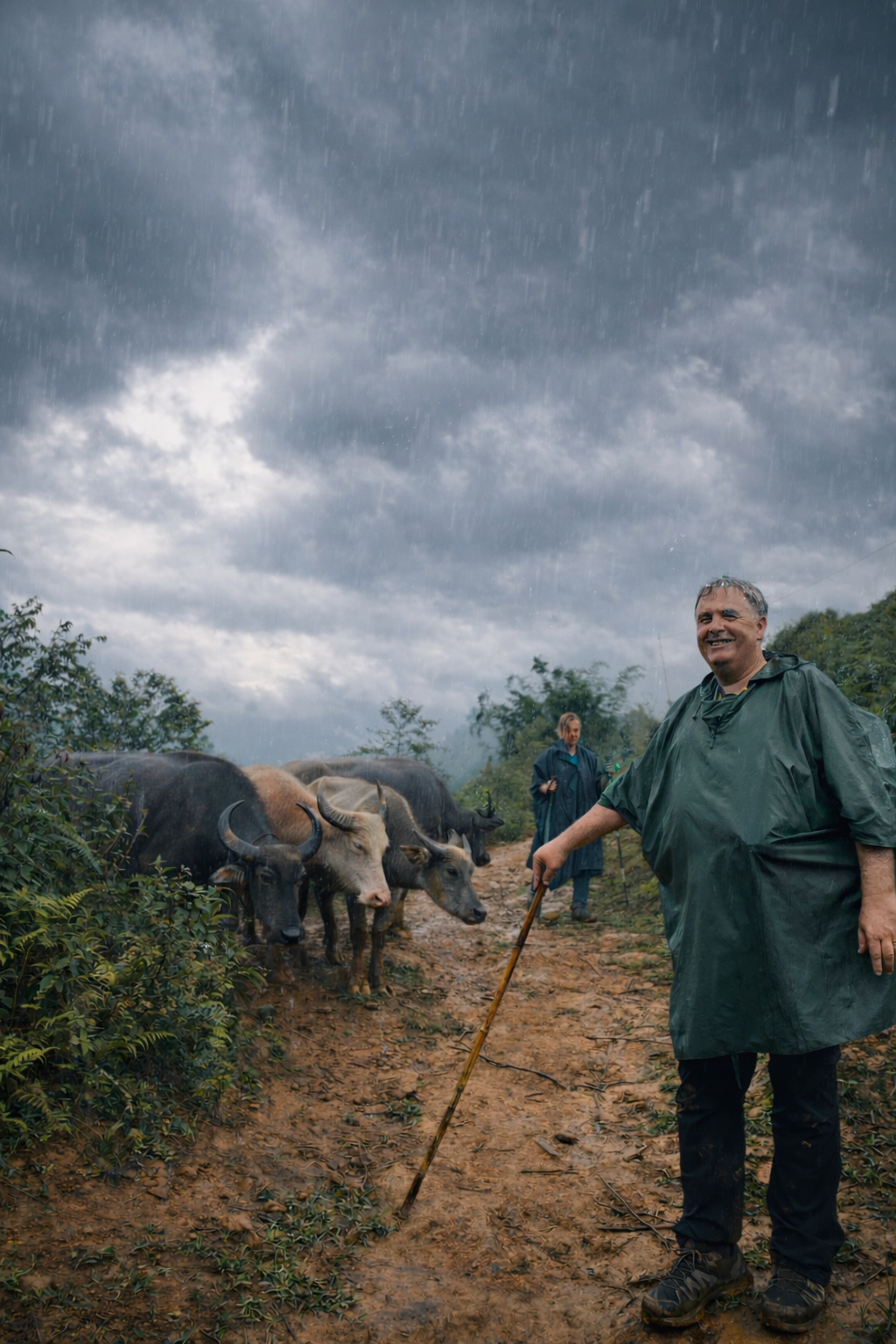
Trekkers in Sapa embracing the summer rains
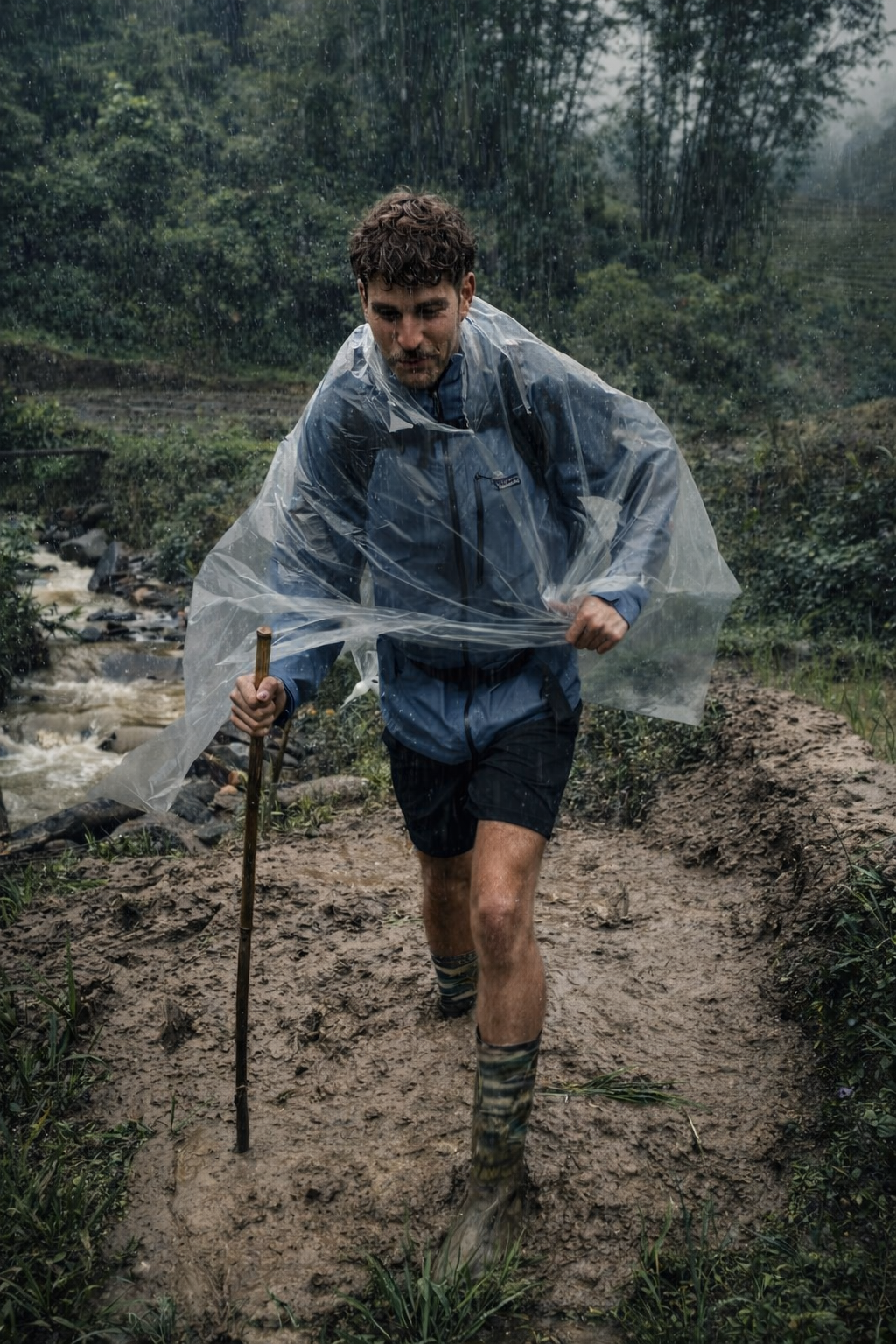
Enjoying a muddy trek in Sapa
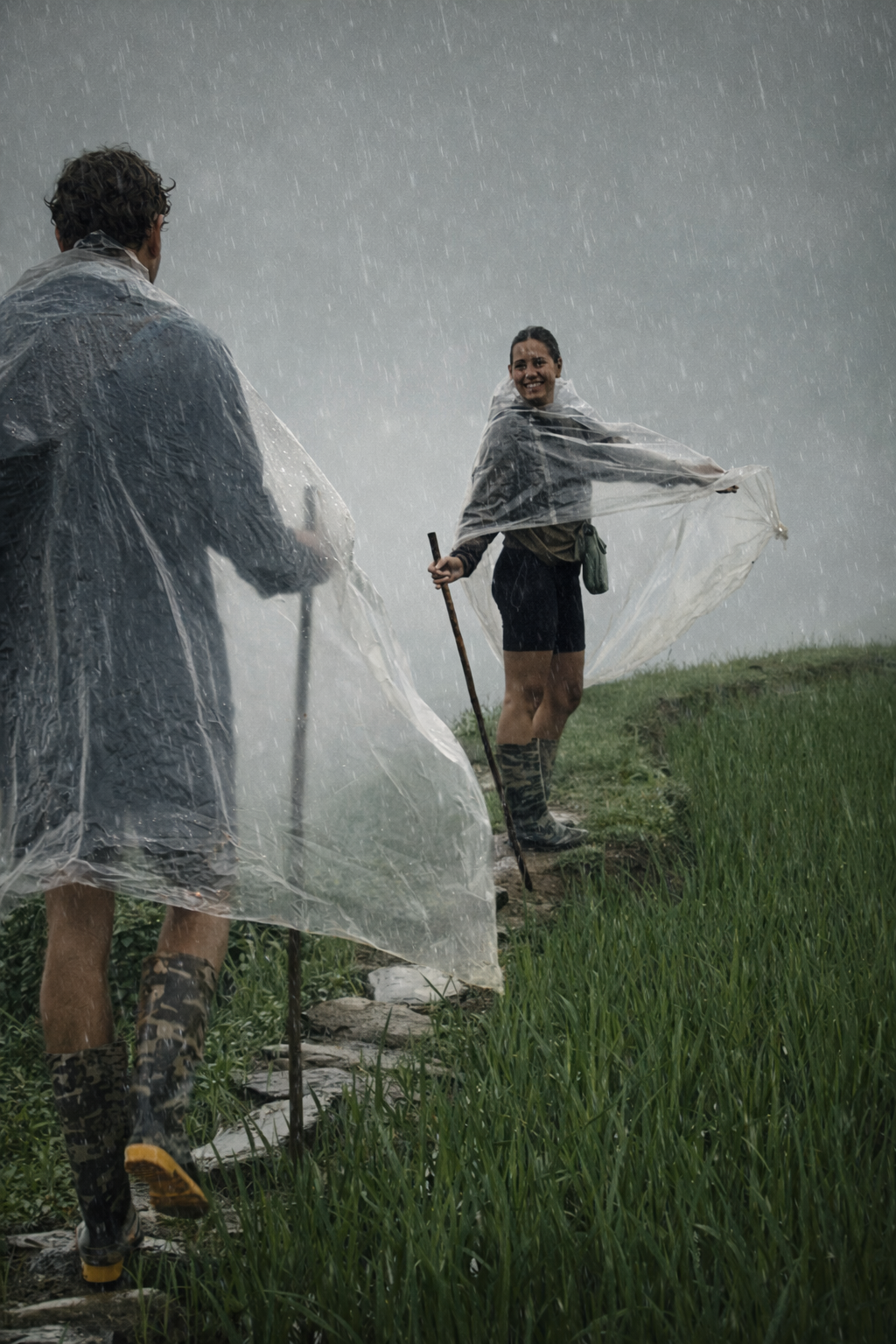
Exploring the Sapa rice terraces in the rainy season.
Trekking Conditions Can Change Very Quickly
Travellers often imagine mountain weather as soft mist and gentle rain, though reality during unstable periods can be far more serious. Trails become dangerously slippery within minutes. Minor streams swell into difficult crossings. Landslides occasionally cut roads connecting villages to town centres.
Summer trekking conditions may become particularly difficult during June to August, when heavy cloudbursts can trigger flash flooding and mudslides on steep paths. That said, some of the mountains’ most extraordinary moments also emerge during the wet season and after rain. Waterfalls surge through valleys. Rice terraces glow vivid green beneath drifting cloud. Forests feel alive with movement and scent.
For this reason, flexibility matters enormously. Travellers willing to adapt routes, shift timings, or spend additional nights in villages often experience the mountains far more meaningfully than those following rigid schedules.
At ETHOS, our routes are constantly adjusted in collaboration with local partners who know these valleys through lived experience rather than online forecasts alone.
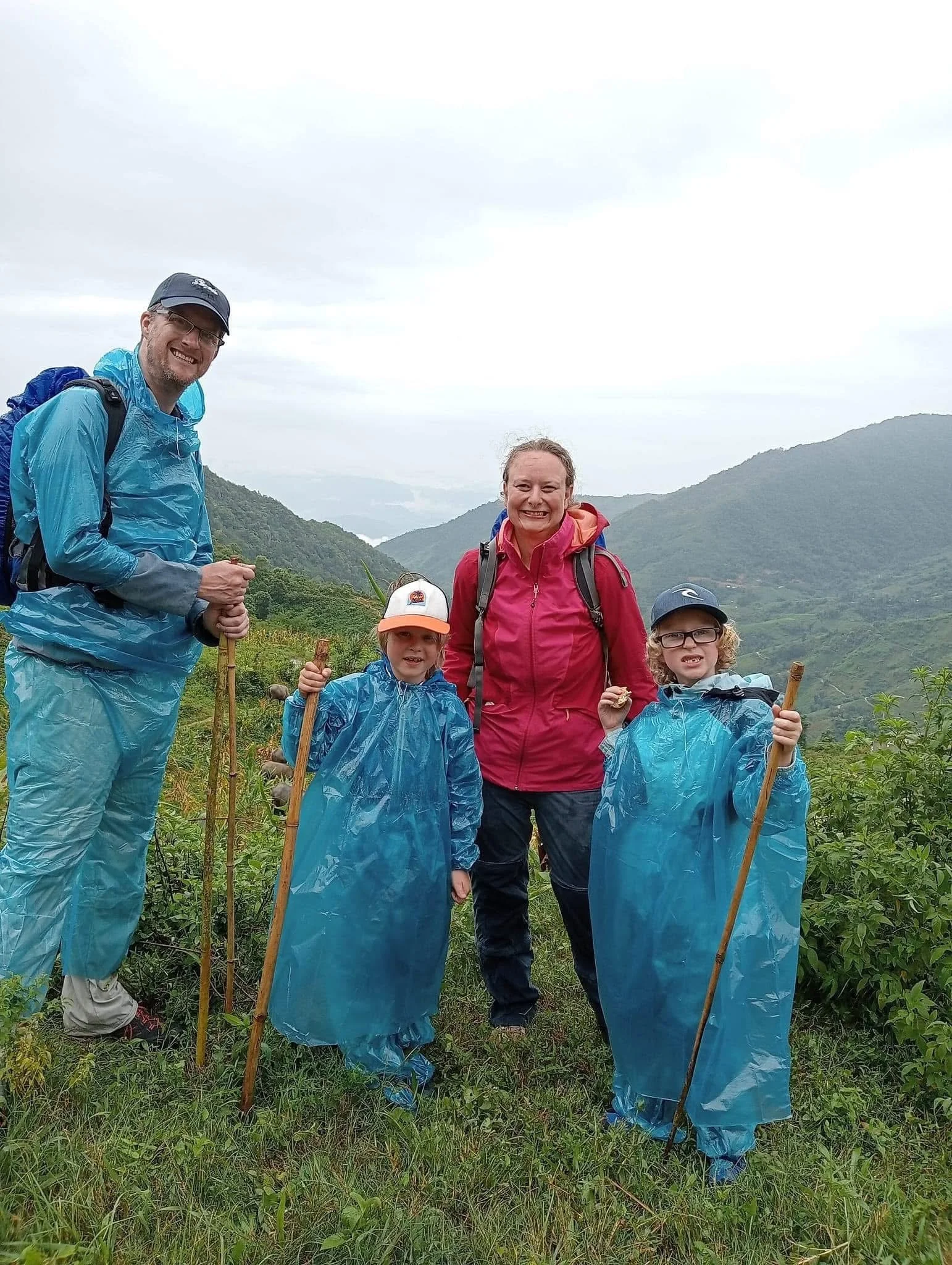
Well prepared trekkers in Sapa embracing the summer monsoon.
Hà Giang: Dramatic Roads Beneath Increasingly Extreme Skies
Few journeys in Southeast Asia feel as visually overwhelming as Hà Giang. Limestone mountains rise sharply above deep valleys while roads twist through cliff edges, high passes, and isolated communities near the Chinese border. Morning mist drifts through stone villages while terraced fields cling impossibly to steep hillsides shaped by generations of Hmong, Dao, and Lô Lô farming families. Though these same landscapes are becoming increasingly vulnerable to weather instability.
Strong El Niño years often produce fewer rainy days overall across northern Vietnam, though rainfall becomes concentrated into shorter and more violent cloudbursts. In Hà Giang, this creates serious landslide risks across mountain roads already weakened by erosion, construction, and increasing tourism traffic.
Periods of prolonged heat can dry and destabilise hillsides before intense rain suddenly triggers collapses. Flooding in narrow valleys occasionally isolates communities and blocks major routes entirely. Fog, loose rock, heavy runoff, and collapsing roadside edges can transform beautiful mountain roads into genuinely dangerous terrain within a matter of hours. This concern becomes even more important when considering the rapid growth of commercial motorbike tourism across the region.
Many highly profit-driven Hà Giang “tour companies” continue operating tours in almost any weather conditions, including during periods of heavy rainfall, severe storm warnings, landslide alerts, and typhoon activity. Risk assessments are often superficial or poorly communicated to travellers, while weather mitigation plans frequently prioritise maintaining schedules and avoiding cancellations over genuine safety considerations. As climate conditions become increasingly unstable during 2026, this issue is likely to become even more serious.
Travellers should never assume that because a tour is continuing, conditions are automatically safe. Many operators are under intense commercial pressure to avoid refunds, maintain group schedules, and maximise high-season revenue. That reality must be considered honestly when choosing who to travel with in the mountains.
Doing your own due diligence is essential.
Ask how operators assess weather risks. Ask what conditions would trigger route changes or cancellations. Ask whether guides are empowered to stop journeys if mountain conditions deteriorate suddenly. Ask how often itineraries are adapted around landslide forecasts or local warnings rather than social media expectations. The mountains do not care about schedules, content creation, or booking calendars.
Responsible travel in Hà Giang increasingly means choosing operators who understand that flexibility, caution, and local environmental knowledge are not weaknesses within an itinerary. They are signs of professionalism, care, and respect for both guests and local communities.
At ETHOS, weather decisions are never made remotely from an office detached from the realities of the mountains. Routes are adapted continuously alongside local partners who live within these valleys and understand how quickly conditions can change. Delaying a journey, altering a route, or staying longer in one village is sometimes the safest and most responsible decision available.
Some of the most meaningful moments in Hà Giang happen when journeys slow unexpectedly. Storm evenings spent inside wooden homes sharing tea or rice wine beside kitchen fires often leave stronger memories than the roads themselves.
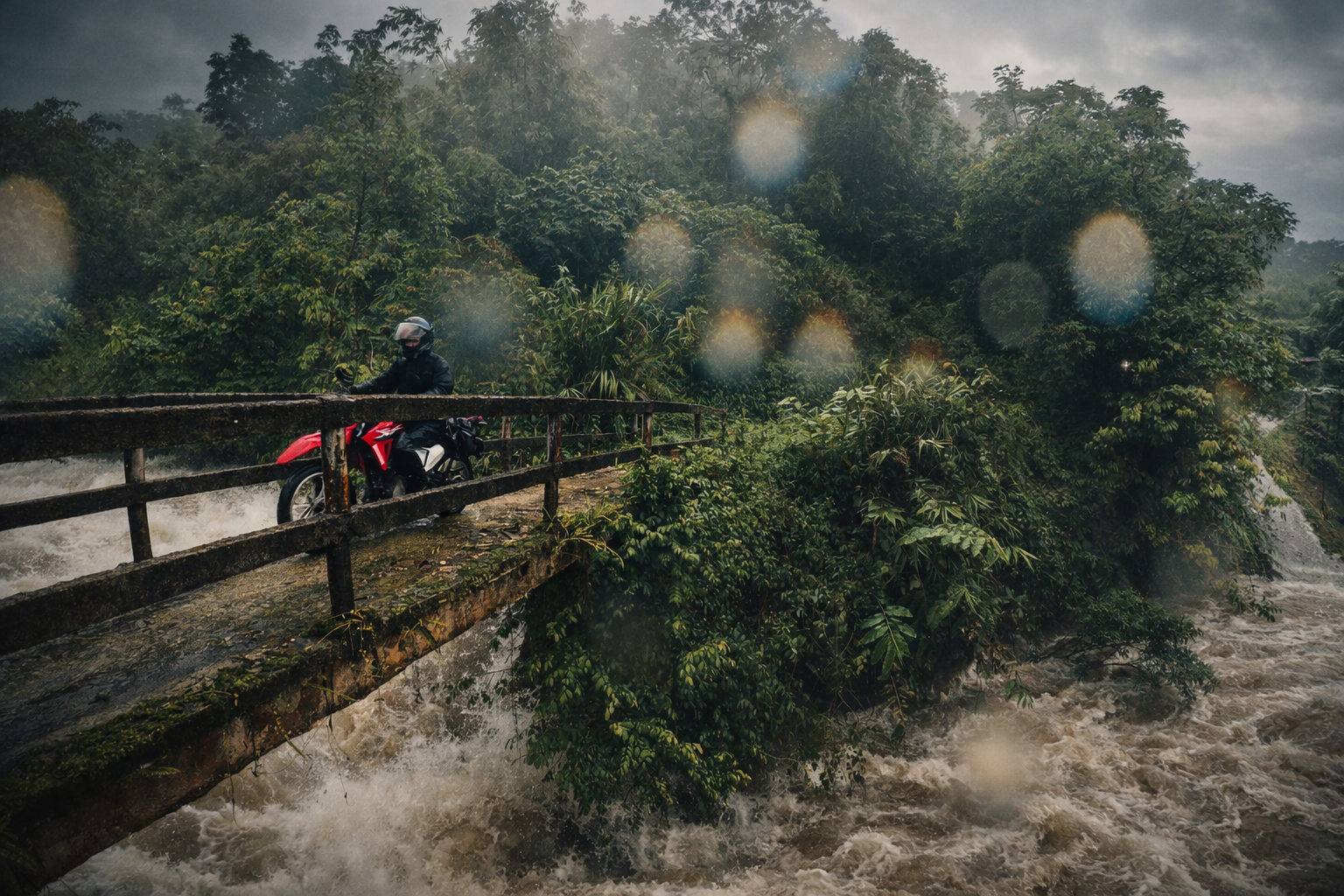
Ha Giang during the monsoon season.
Ninh Bình: Quiet Landscapes and Sudden Floodwaters
Ninh Bình feels gentler than the mountains further north, though its landscapes are equally shaped by water.
Limestone karsts rise above rice fields and winding rivers while small boats drift slowly through caves and flooded valleys. During El Niño conditions, rainfall deficits may lower water levels for periods before sudden storms rapidly reverse them.
Heat and humidity are also expected to intensify significantly during summer months. Cycling beneath open skies during midday can quickly become physically draining, particularly for travellers unaccustomed to tropical heat.
Storms may arrive abruptly during afternoons, transforming calm river landscapes into scenes of intense rainfall and dramatic cloud movement.
For this reason, slower travel rhythms work beautifully here. Dawn boat rides, shaded village lunches, and flexible daily pacing often become far more rewarding than tightly packed itineraries rushing between attractions.
Ha Long Bay, Typhoons, and the Uncertainty of a Warming Ocean
One of the most misunderstood aspects of El Niño is how it affects Vietnam’s storm season.
Historically, El Niño years have usually reduced the number of tropical storms and typhoons affecting Vietnam directly. Vietnamese meteorological studies show that storm frequency often drops noticeably during strong El Niño phases while monsoon rainfall across much of northern and central Vietnam also weakens significantly.
In practical terms, this often means longer dry periods, delayed monsoon activity, and fewer tropical systems making landfall across the country. Though fewer storms do not necessarily mean lower overall risk.
Climate researchers increasingly warn that while the total number of tropical cyclones may decline globally, the storms that do form are becoming more intense, wetter, and less predictable as ocean temperatures continue to rise. Recent long-term studies also suggest Vietnam may already be experiencing an increase in landfalling cyclones compared with other parts of East Asia, despite the historical El Niño relationship with lower storm numbers. For travellers, this creates an increasingly uncertain picture.
A strong El Niño year may still bring long periods of dry and stable weather across northern Vietnam, particularly during early and mid-summer. Though isolated storms arriving later in the season may carry more moisture, stronger winds, and more destructive rainfall than travellers expect after weeks of dry conditions.
This kind of “hydrological whiplash” is becoming increasingly important across Southeast Asia. Landscapes stressed by prolonged heat and drought often struggle to absorb sudden intense rainfall once storms finally arrive, increasing flash flood and landslide risks in mountain regions such as Sapa and Hà Giang.
For Ha Long Bay, this uncertainty matters enormously. Conditions may remain calm for extended periods before changing rapidly. Cruise cancellations, sudden squalls, and late-season storms may become increasingly difficult to predict cleanly using historical travel patterns alone.
Travelling Responsibly During El Niño 2026
Northern Vietnam remains an extraordinary place to travel during changing climate conditions, though journeys here increasingly benefit from a slower and more attentive approach.
Travellers should allow additional flexibility within itineraries wherever possible. Roads may temporarily close after storms while trekking routes may need adjusting and cruises may occasionally be delayed or cancelled entirely for safety reasons.
Morning travel is becoming increasingly valuable during hotter years. Trekking, cycling, city walks, and motorbike journeys are generally far more comfortable before midday heat intensifies and afternoon storms begin to build.
Preparing properly for both heat and rain is essential. Lightweight waterproof layers, sturdy footwear, sun protection, electrolyte supplements, and quick-dry clothing are increasingly important across northern Vietnam’s shifting weather patterns.
Vietnam’s recently launched KTTV weather application now provides hyper-local weather alerts and real-time warnings for thunderstorms, landslides, and flash floods using thousands of monitoring stations nationwide. Local forecasting tools are often far more useful in mountain regions than generic global weather apps.
Most importantly, travellers should listen carefully to local advice.
Communities in northern Vietnam have adapted to environmental uncertainty for generations. Local guides, farmers, and hosts often recognise dangerous conditions long before official forecasts fully reflect them.
Travelling With Greater Awareness
At ETHOS, we believe meaningful travel begins with paying attention.
Paying attention to changing weather. Paying attention to local knowledge. Paying attention to the realities communities are already navigating as climate patterns shift around them.
Northern Vietnam’s beauty has never existed separately from its vulnerability. Rice terraces require immense labour and ecological understanding to sustain. Mountain forests remain deeply connected to community survival. Rivers, rainfall, and seasonal rhythms continue to shape everyday life across the region.
Though despite growing uncertainty, the mountains remain full of warmth, resilience, creativity, and extraordinary hospitality.
Families still gather around kitchen fires while rain moves through valleys outside. Indigo cloth still dries beside terraced fields after storms pass. Forest herbs are still gathered carefully from mountain slopes by hands that know every season intimately.
Travelling here may increasingly require patience and adaptability, though those qualities often create the deepest and most human experiences of all.
Practical Travel Advice for Vietnam During El Niño 2026
Keep Your Itinerary Flexible
Mountain roads may temporarily close. Cruises may be delayed. Trekking routes may change unexpectedly.
Travellers who leave room for adjustments generally experience far less stress than those attempting to follow rigid schedules.
Travel Earlier in the Day
Morning hours are becoming increasingly valuable during hotter years. Trekking, cycling, city walks, and motorbike journeys are all significantly safer and more comfortable before midday temperatures peak.
Afternoons increasingly bring thunderstorm development during transition seasons.
Use Real-Time Local Forecasting Tools
Vietnam recently launched the KTTV weather application, which provides hyper-local forecasts and live alerts for thunderstorms, flash floods, and landslide risks across the country. The system updates frequently using data from thousands of monitoring stations nationwide.
Local forecasting tools are often far more useful in the mountains than generic international weather apps.
Prepare for Both Heat and Rain
Travellers increasingly need to prepare for multiple weather conditions within the same journey. Lightweight waterproof layers, quick-dry clothing, waterproof bags, sturdy footwear with grip, sunscreen, hats, and electrolyte supplements all become essential.
Mountain evenings may still cool significantly despite intense daytime heat.
Choose Ethical Operators Who Prioritise Safety
Responsible travel companies may occasionally change routes, postpone departures, or cancel activities entirely when conditions become unsafe. This is not poor organisation. It is ethical decision-making grounded in care for guests, guides, and local communities alike.
Travelling Thoughtfully in a Time of Climate Uncertainty
El Niño 2026 is not simply a weather event. It reflects a larger reality unfolding across Southeast Asia, where communities are adapting to increasingly unstable environmental conditions while continuing to protect agricultural traditions, cultural heritage, and fragile mountain ecosystems.
Northern Vietnam remains an extraordinary place to travel. Rice terraces will still glow emerald green after rain. Forest herbs will still be gathered from mist-covered hillsides by hands that know every seasonal rhythm. Indigo cloth will still dry outside wooden homes in mountain villages. Families will still welcome travellers into warm kitchens while storms move through valleys outside.
Though travelling here may increasingly require patience, humility, and flexibility, those qualities often lead to deeper and more meaningful experiences in return.
At ETHOS, we believe the future of travel lies not in controlling landscapes or insulating ourselves from uncertainty, but in learning how to move through places more attentively, more respectfully, and more collaboratively with the people who know them best.
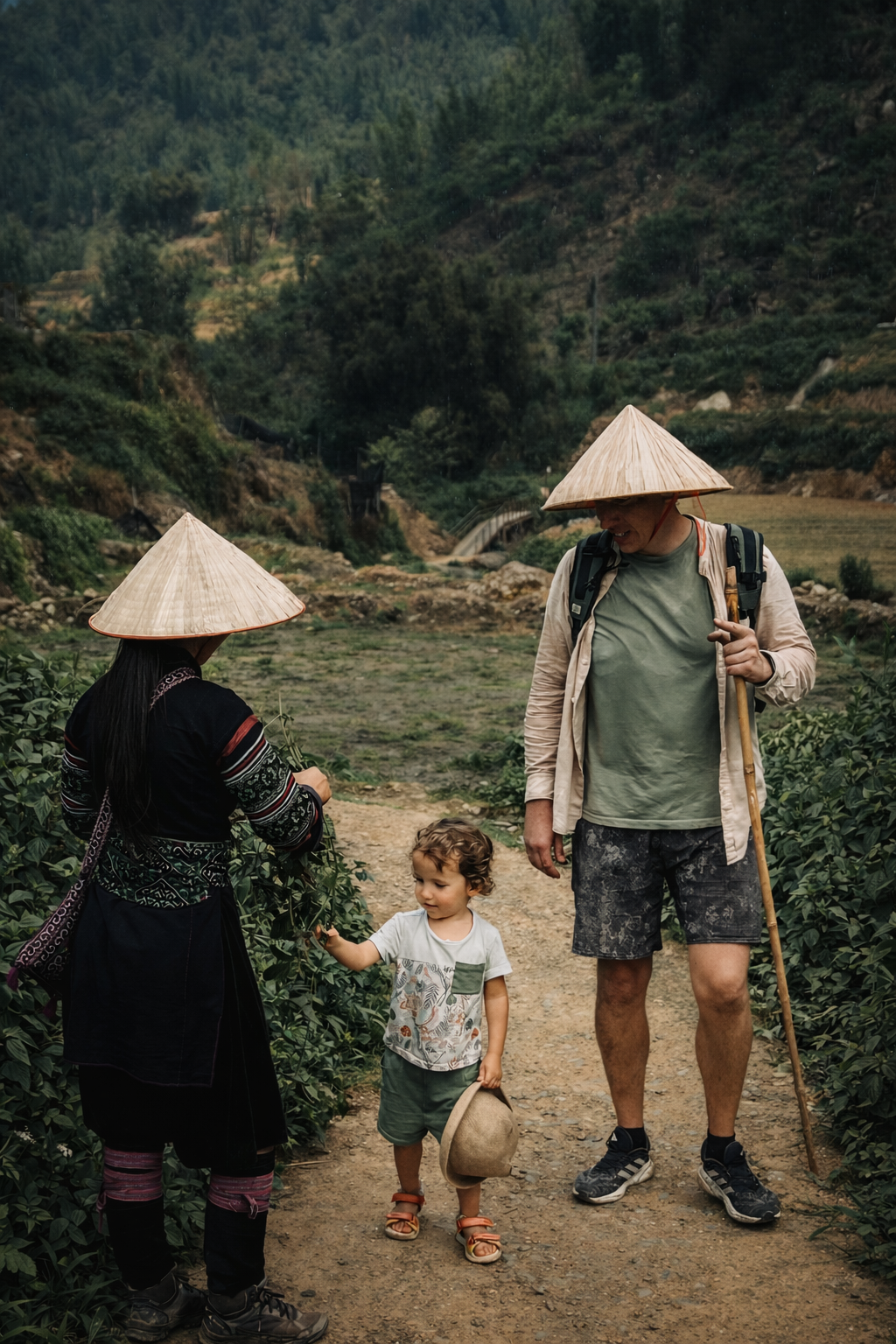
Travelling Vietnam with Younger Children: Adventure or Easy Comfort?
Travelling Vietnam with younger children can be deeply rewarding when approached with curiosity and care, offering families the chance to connect with culture, nature, and everyday life in meaningful and memorable ways.
Are you seeking lively attractions and easy entertainment, or something slower, richer, and rooted in nature, culture, and real connection?
This is always the first question we gently ask families, as Vietnam offers both styles of travel in abundance, yet the experience will feel entirely different depending on which path you choose. For those who lean towards curiosity, exploration, and meaningful encounters, travelling with children here can become something deeply rewarding, layered with discovery and shared moments that linger long after the journey ends.
Getting Around Vietnam with Kids
Travelling through Vietnam with younger children is far easier than many expect, particularly with the support of modern transport options that remove much of the uncertainty families might anticipate. The Grab app makes city navigation simple and reassuring, offering cars with up to seven seats, which comfortably fit a family of six while eliminating the need for language negotiation or fare discussions.
Long-distance buses have improved enormously in recent years, becoming comfortable, efficient, and often surprisingly enjoyable, with reclining seats and smooth connections between destinations. For many children, however, the true highlight is the night train, where climbing into a sleeper cabin and waking somewhere entirely new transforms the journey itself into an adventure rather than simply a means of getting from one place to another.
Hanoi: A City of Energy and Contrasts

A quiet moment in Hanoi with a historic temple gate, motorbikes parked along the street, and locals sitting and chatting.
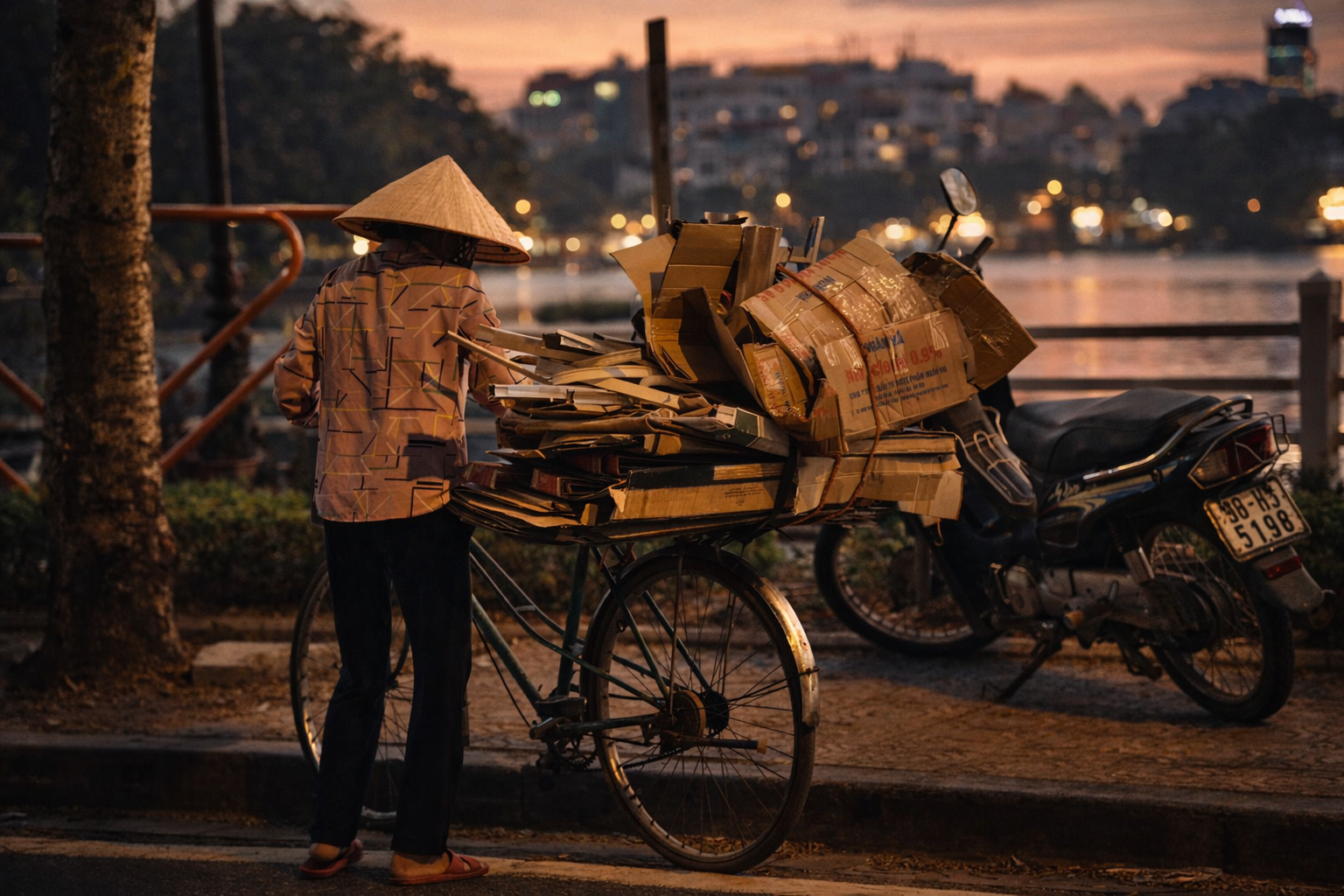
A street vendor stands beside a heavily loaded bicycle near a lake in Hanoi as evening lights begin to glow.
Hanoi presents a fascinating blend of energy and intensity that can feel both exhilarating and challenging when travelling with children, particularly as pavements are often filled with parked motorbikes, making walking from place to place less straightforward than many families might expect. Despite this, with a little patience and a willingness to adapt, the city reveals a softer and more engaging side that children can connect with.
Around Hoan Kiem Lake, the atmosphere becomes far more accessible, particularly at weekends when the surrounding streets close to traffic and transform into a lively pedestrian space filled with games, music, and informal performances. In this setting, children are able to move more freely, while families can pause and take in the rhythm of the city without the constant negotiation of traffic.
For those seeking something more grounded and local, the walk around Truc Bach Lake offers a far more authentic and rewarding experience, with quieter streets that are interspersed with street food stalls, small cafés, a peaceful temple, and even outdoor exercise areas where locals gather throughout the day. This space feels less like a destination to be visited and more like a place to be experienced at a slower pace.
Cultural Stops That Work for Families
The Vietnam Museum of Ethnology can feel quite dense and information-heavy for younger visitors when exploring the indoor exhibitions, yet the outdoor area offers a completely different experience that feels far more engaging and accessible. Here, traditional homes from across Vietnam’s ethnic communities are carefully recreated, allowing children to climb, explore, and interact with the spaces in a way that transforms cultural learning into something active and memorable.
The Thang Long Water Puppet Theatre is often a highlight for families, as this traditional art form originated in the flooded rice fields of northern Vietnam, where farmers would perform stories using wooden puppets that appear to glide across the surface of the water. The combination of colour, movement, live music, and humour creates a performance that holds children’s attention in a way that feels both entertaining and culturally meaningful.
Parks, Play, and Heat Escapes
Thu Le Park provides a welcome pause from the intensity of the city, offering a space that is part zoo and part park, with lakes, shaded walking paths, and simple playground areas where children can move freely. While it is not a polished or curated attraction, its relaxed and slightly unstructured nature often makes it more enjoyable for families who simply want time to slow down.
On particularly hot days, the Hanoi Water Park can offer some relief, especially during the late spring and summer months when the heat and air pollution can feel overwhelming. Although the facilities may feel a little tired in places, the slides and pools provide a practical and often welcome escape for children needing space to cool down and play.
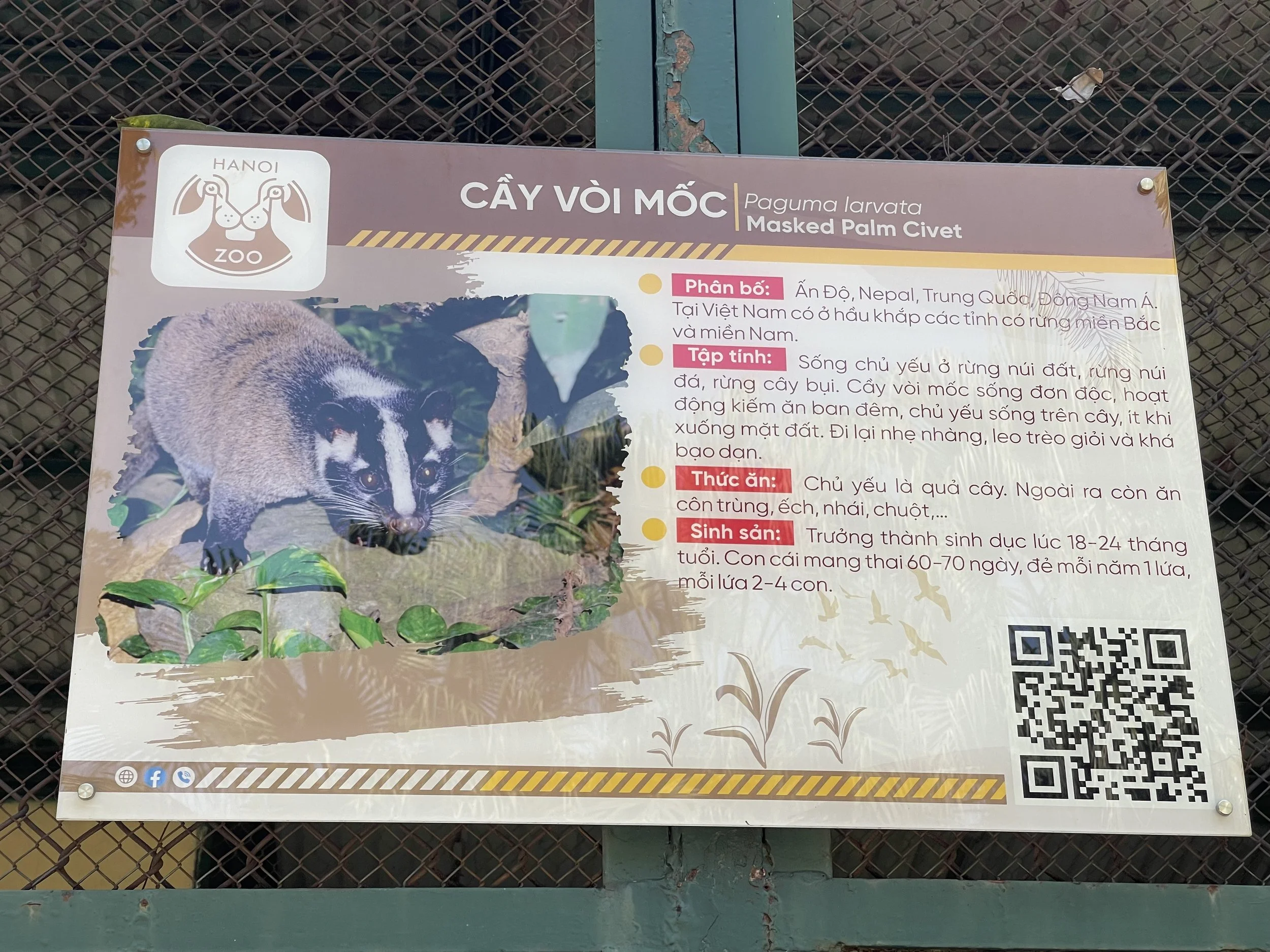
A signboard displaying information about a civet species at a zoo or park in Hanoi.

A tiger paces inside a fenced enclosure, highlighting the zoo experience in Hanoi.

A child enjoys a ride in a small toy vehicle in a shaded park area in Hanoi.
Halong Bay and Beyond: Beauty at a Slower Pace
Cruising through Ha Long Bay, Lan Ha Bay, or Bai Tu Long Bay offers some of the most iconic scenery in Vietnam, yet it is important for families to approach these experiences with an understanding of how structured many cruises can feel.
For children who are naturally active and curious, multiple days on a boat with a fixed itinerary may feel restrictive, which is why shorter and more flexible options often work better. The most memorable moments tend to come from activities that allow movement and exploration, particularly kayaking between the limestone formations, which creates a sense of independence and discovery, as well as the simple but engaging experience of night-time squid fishing.
Sapa: Where Families Truly Connect
Sapa remains one of the most understated family destinations in Vietnam, offering a depth of experience that goes far beyond surface-level sightseeing and into something far more tactile and immersive, particularly when explored alongside local communities who shape each experience with care and intention.
A gentle forest walk to Love Waterfall invites children into a quieter, cooler environment where the journey itself becomes an adventure shaped by sounds, textures, and the rhythm of the landscape, while the Fansipan Cable Car adds a sense of wonder by lifting families high above the valleys and into the clouds, creating a moment that feels expansive and memorable.
Some attractions in Sapa, such as the Moana viewpoint and the alpine rollercoaster, are often not worth the time or cost for families, with many reviews noting that they feel crowded, overpriced, and lacking in substance, offering quick entertainment without the depth that children often respond to more meaningfully.
What truly sets Sapa apart for families is the opportunity to engage in experiences that are co-created with local Hmong and Dao communities, where children are not simply observers but active participants in daily life, creativity, and the natural environment.
Through our family trekking experiences, you can follow quieter paths between villages, rice terraces, and forest edges, where distances and pacing are adapted to suit younger legs, allowing space for curiosity, play, and connection along the way. These are not hurried hikes, but gentle journeys shaped around how children experience the landscape, which you can explore further here: ETHOS Family Treks.
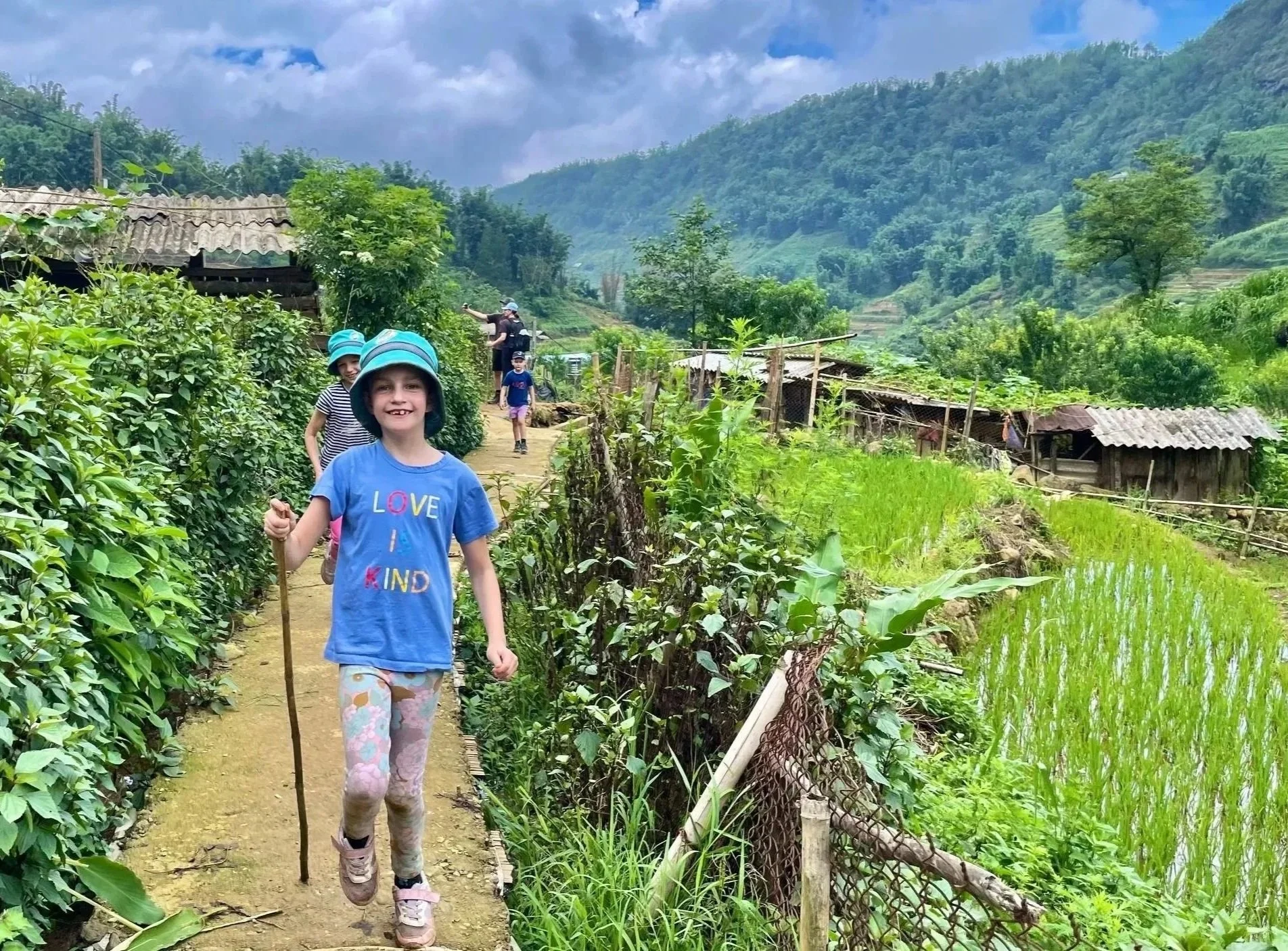
A child walks along a narrow path surrounded by lush rice terraces in the Sapa countryside.
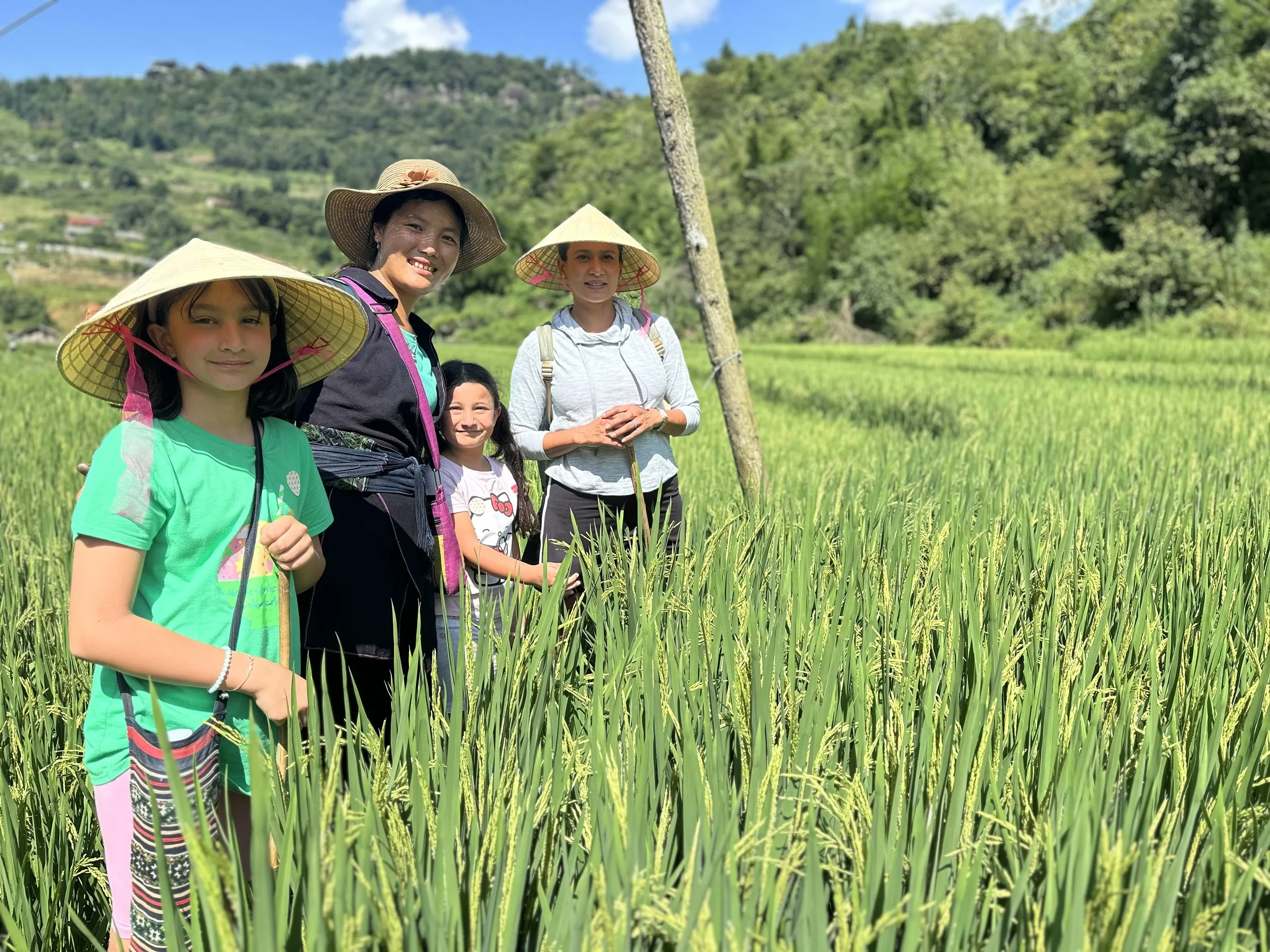
A family pauses among vibrant rice fields, with mountains rising in the background.
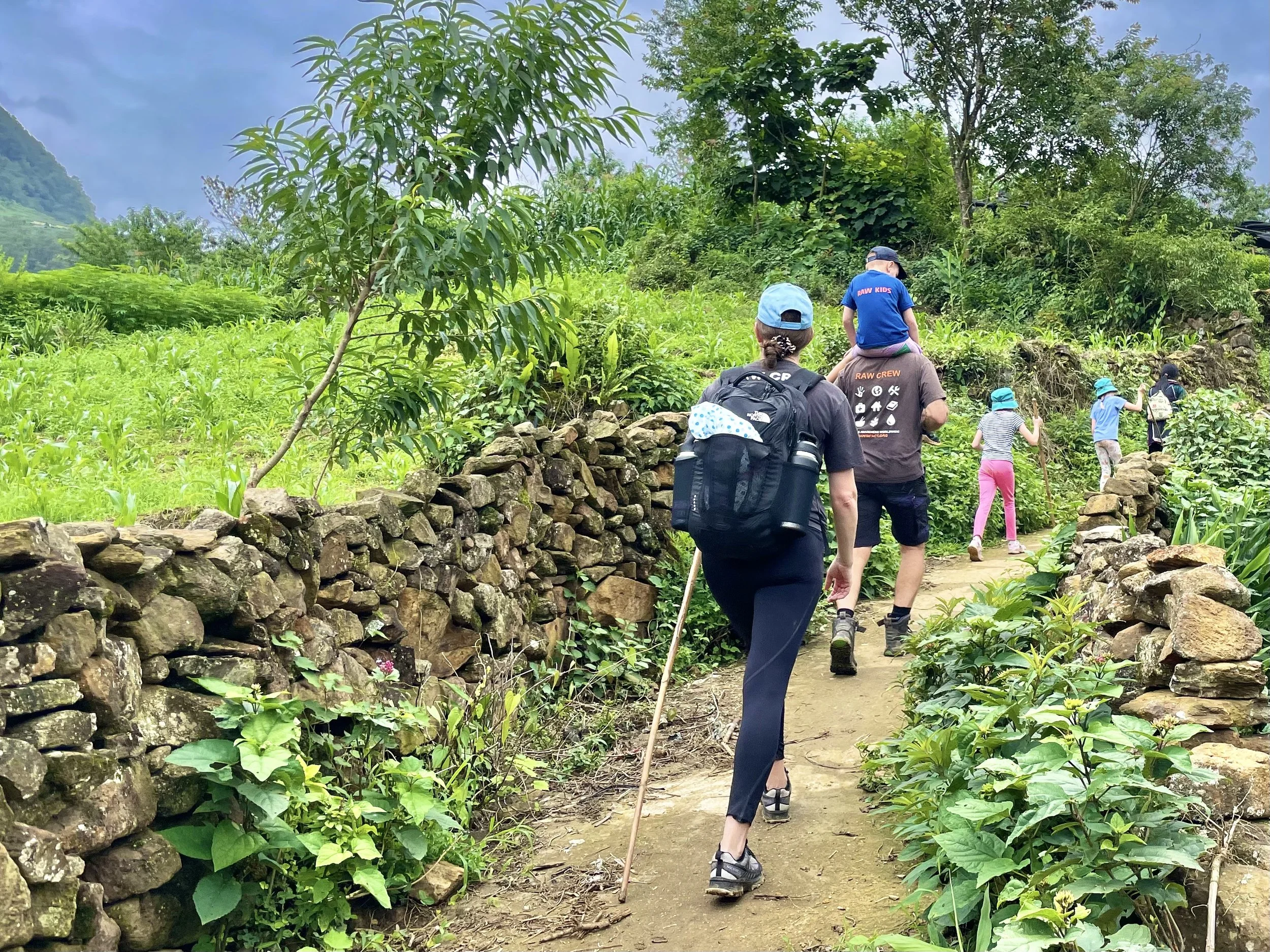
A group walks along a stone path bordered by greenery, exploring rural Sapa villages.
Water becomes a natural focal point for many children, and our family waterfall experiences invite exploration through forest trails that lead to hidden cascades and places to pause, paddle, and simply be present in nature, creating a sense of discovery that feels both exciting and grounding. You can read more here: ETHOS Family Waterfalls.
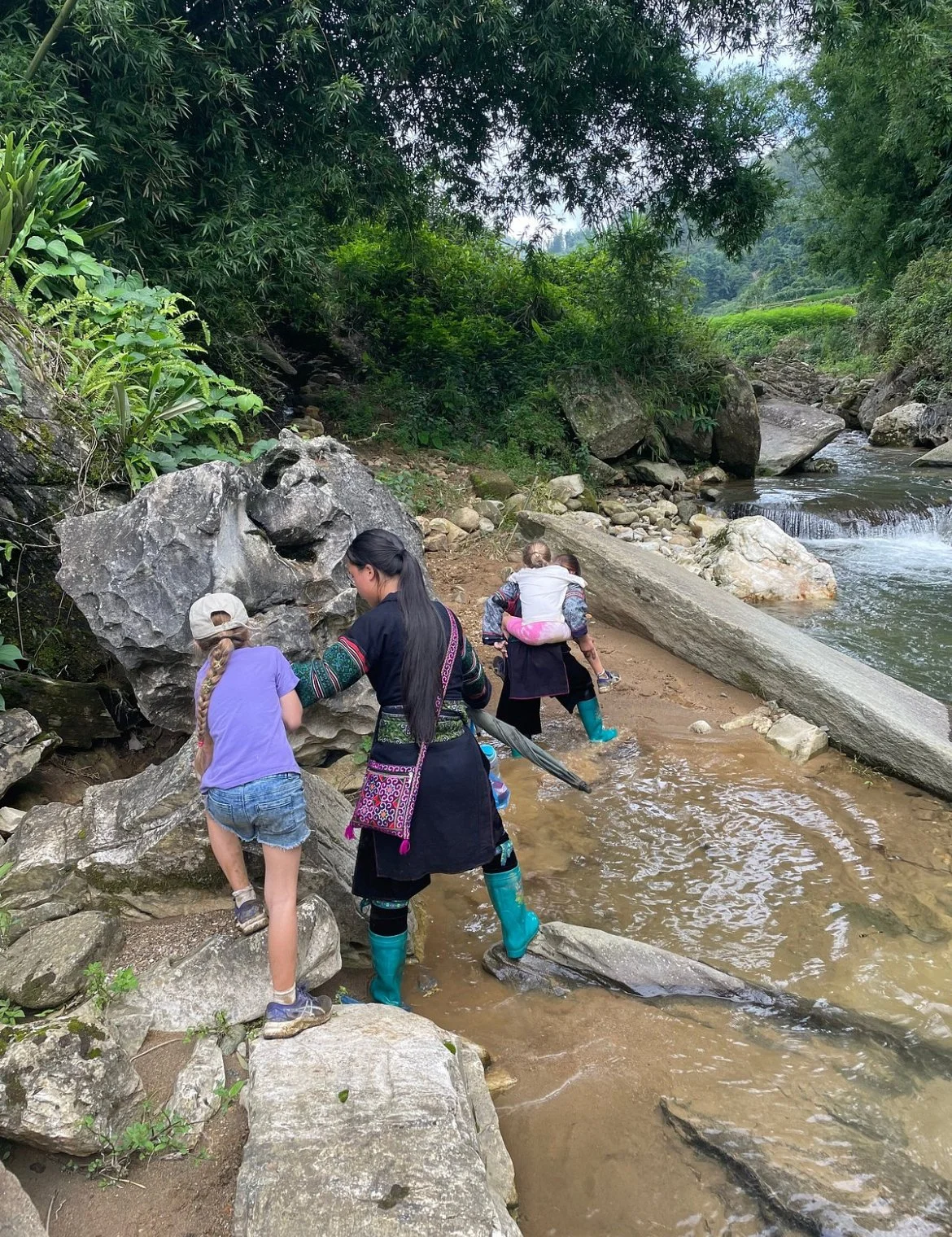
Children balance on rocks and explore a shallow stream in a lush forest setting.
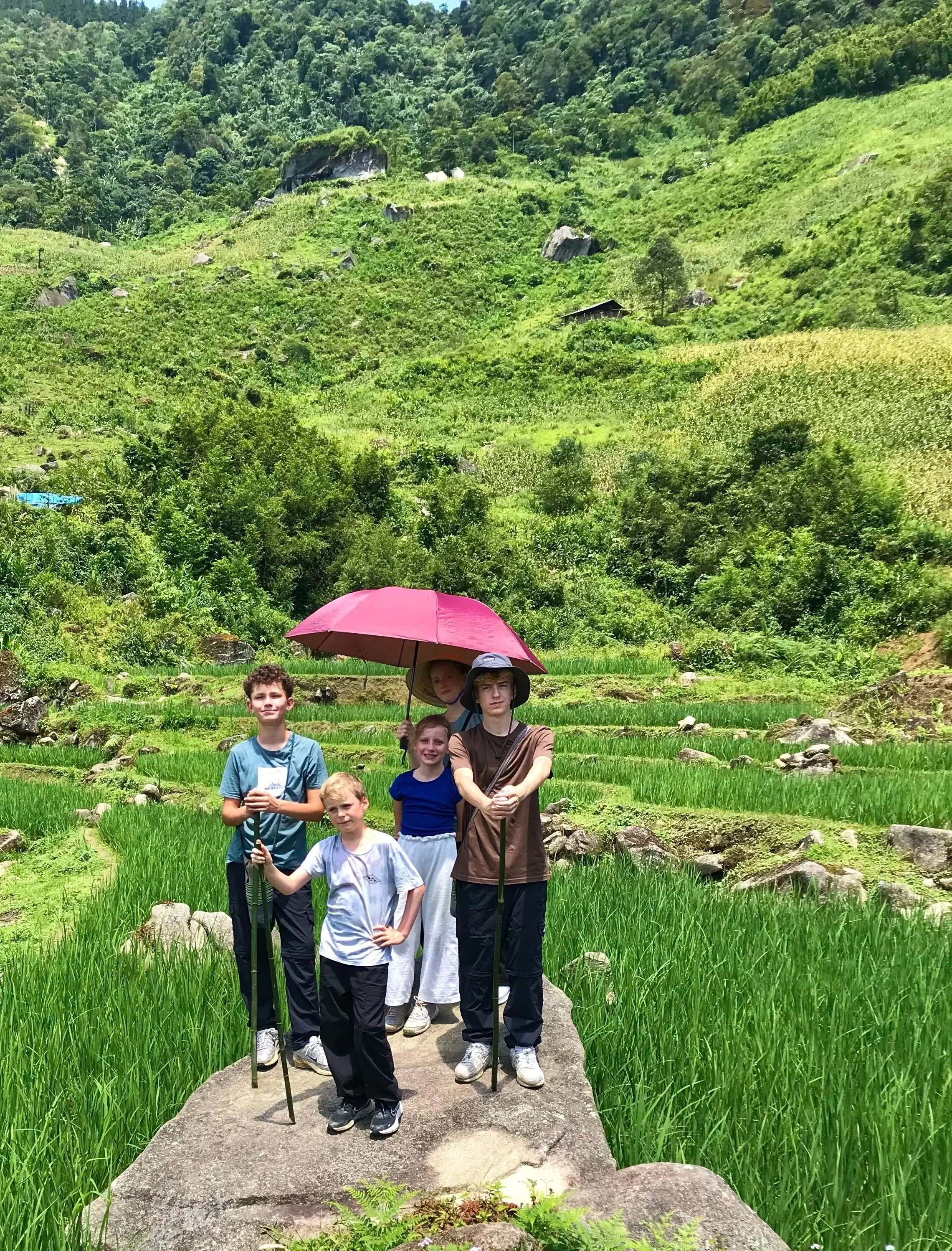
A family stands on a large rock with panoramic views of green hills and terraced fields.
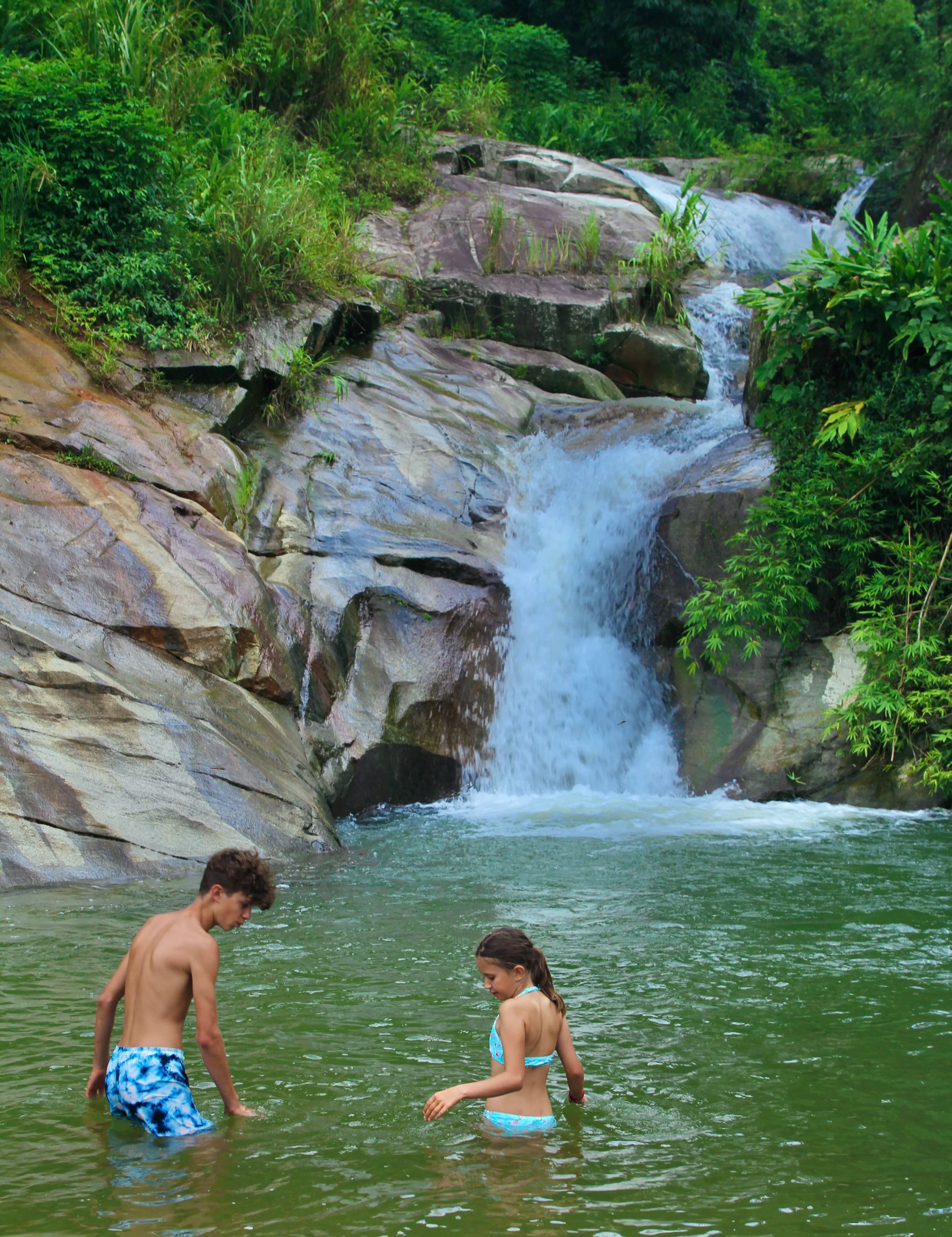
Children splash in a cool natural pool at the base of a small waterfall surrounded by jungle.
For families seeking a little more adventure while still maintaining flexibility, our family motorbike loops offer a unique way to explore the wider region, travelling through mountain passes, remote valleys, and small villages with experienced local drivers who ensure the journey remains safe and engaging for children. These routes are thoughtfully designed to include frequent stops, cultural encounters, and time to rest, which you can explore here: ETHOS Family Motorbike Loops.
Creative experiences often become some of the most memorable for younger travellers, and our family craft sessions open a window into traditional Hmong and Dao artistry, including batik, weaving, embroidery, and brocade work. Children are encouraged to try these techniques themselves, guided by skilled local artisans whose knowledge is passed down through generations. You can discover these experiences here: ETHOS Family Crafts.
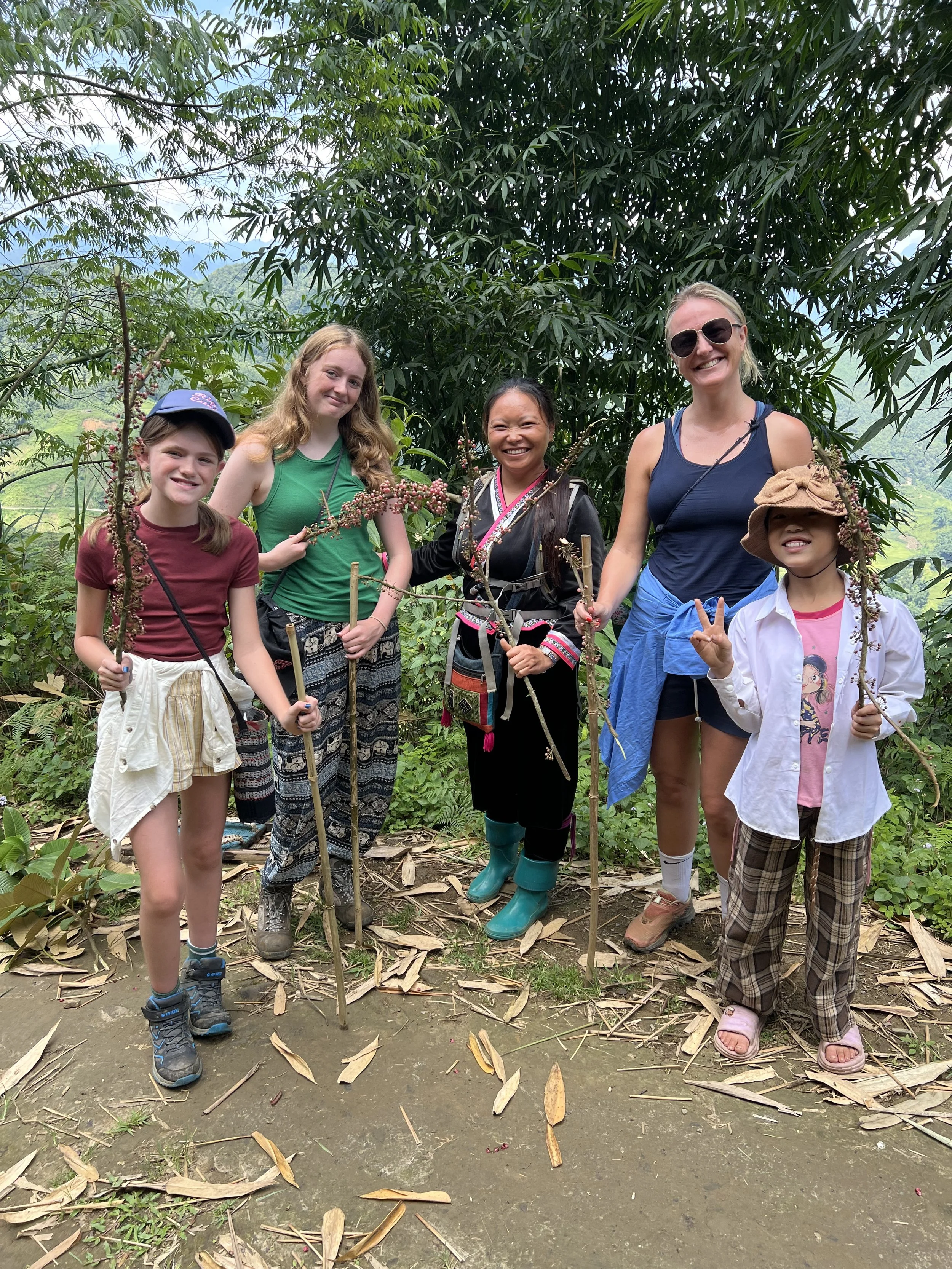
A group of travelers and local guides stand together smiling during a trekking experience.
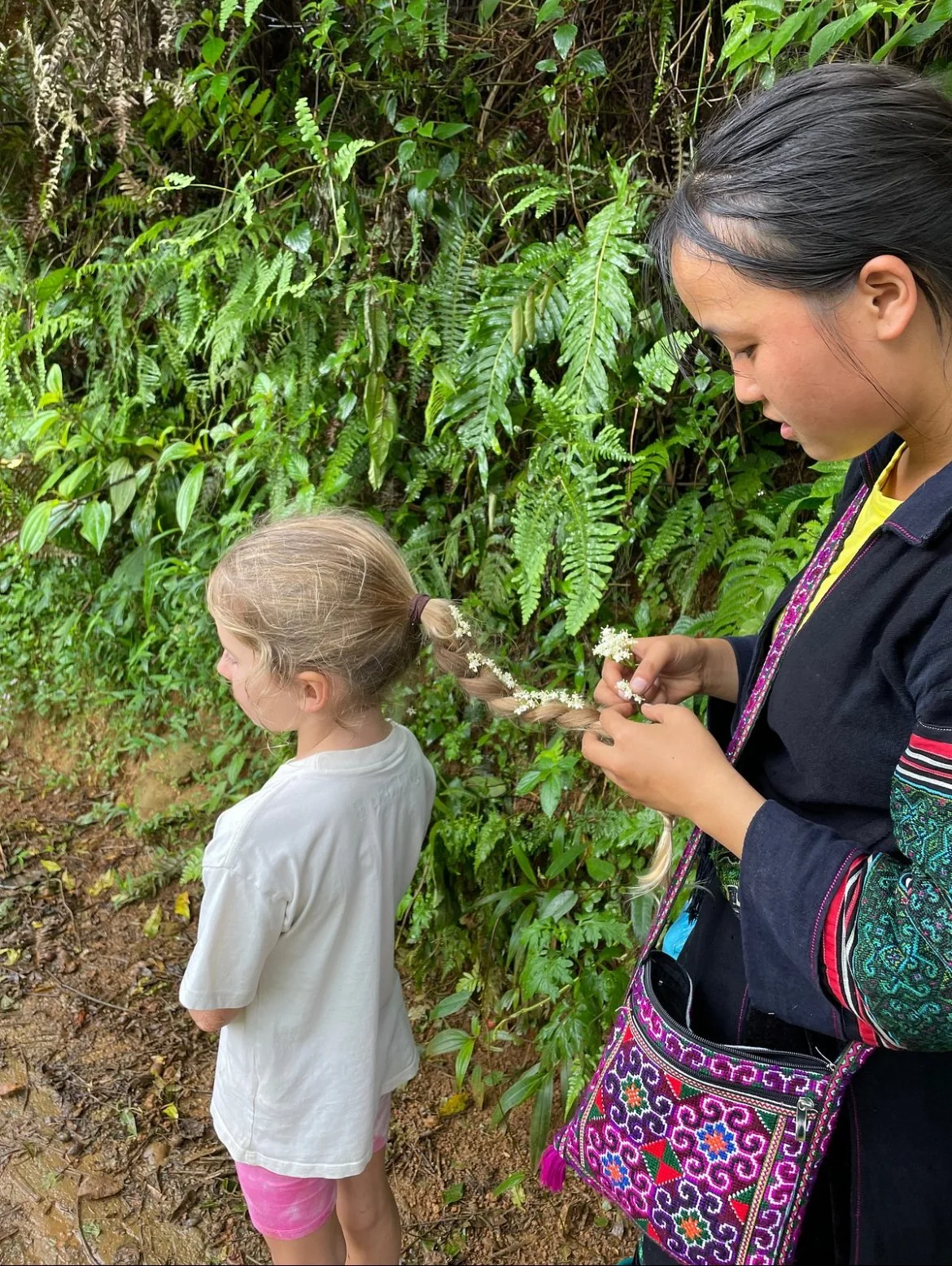
A local woman carefully braids a child’s hair along a forest path, showing cultural connection.
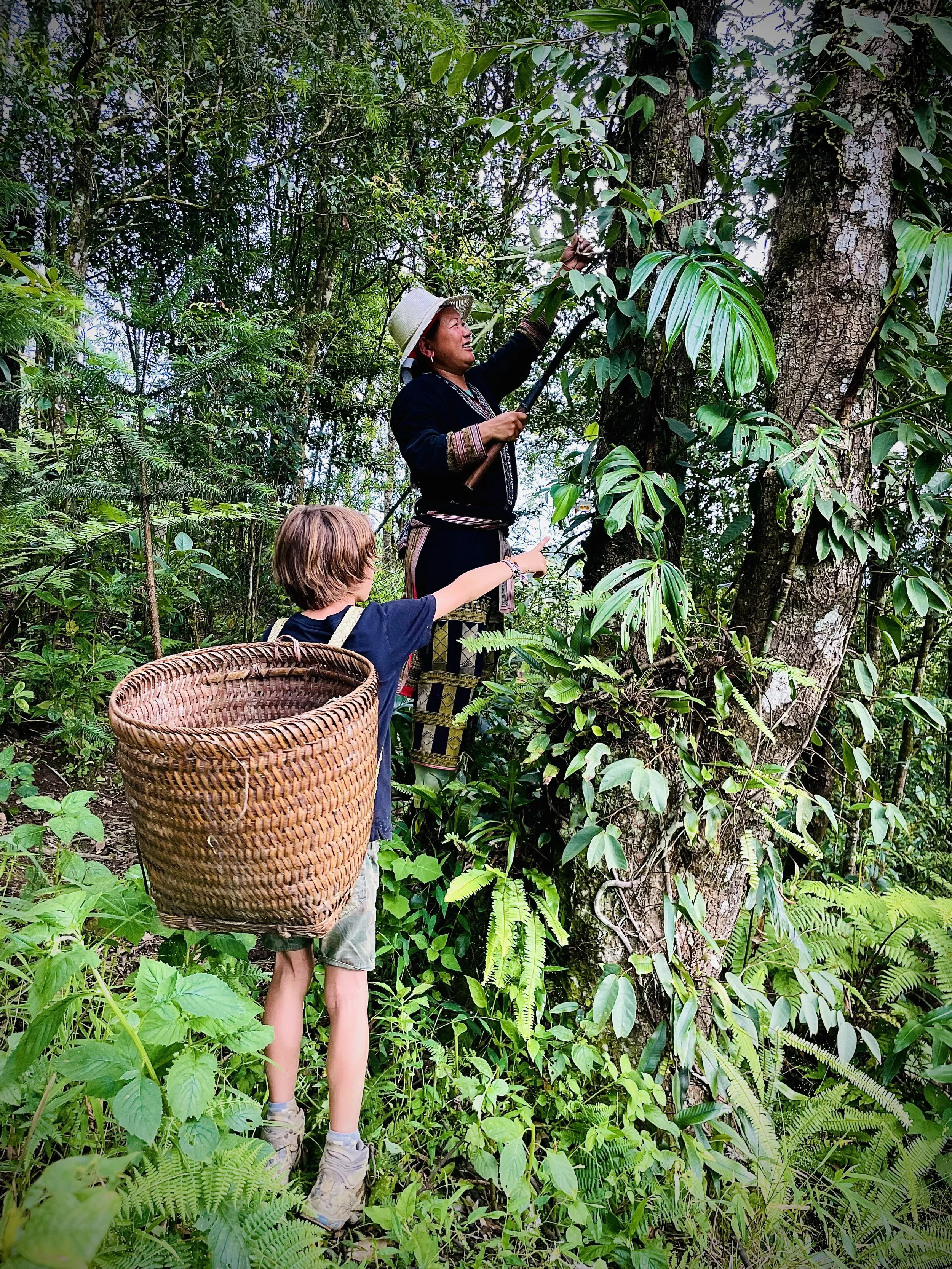
A child reaches for leaves while carrying a woven basket, guided through a forest activity.
Food offers another powerful point of connection, and through our Simply Hmong cooking experience, families are welcomed into a slower rhythm of preparation, where ingredients are gathered, stories are shared, and meals are created together in a way that feels both intimate and educational. This experience allows children to engage with food not just as something to eat, but as something to understand and appreciate, which you can learn more about here: Simply Hmong Cooking Experience.
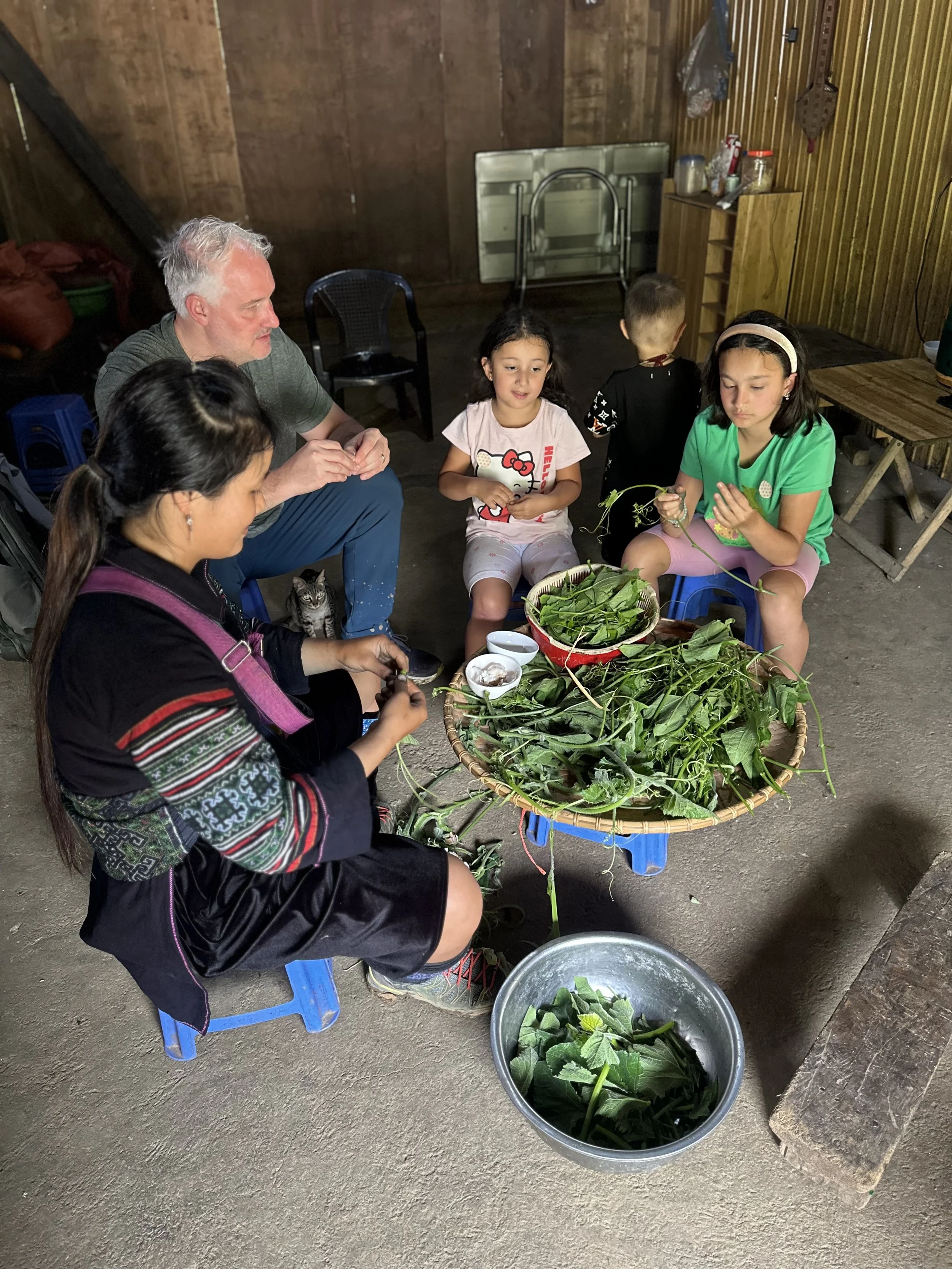
A family sits together preparing fresh ingredients alongside a local host in a rustic kitchen.
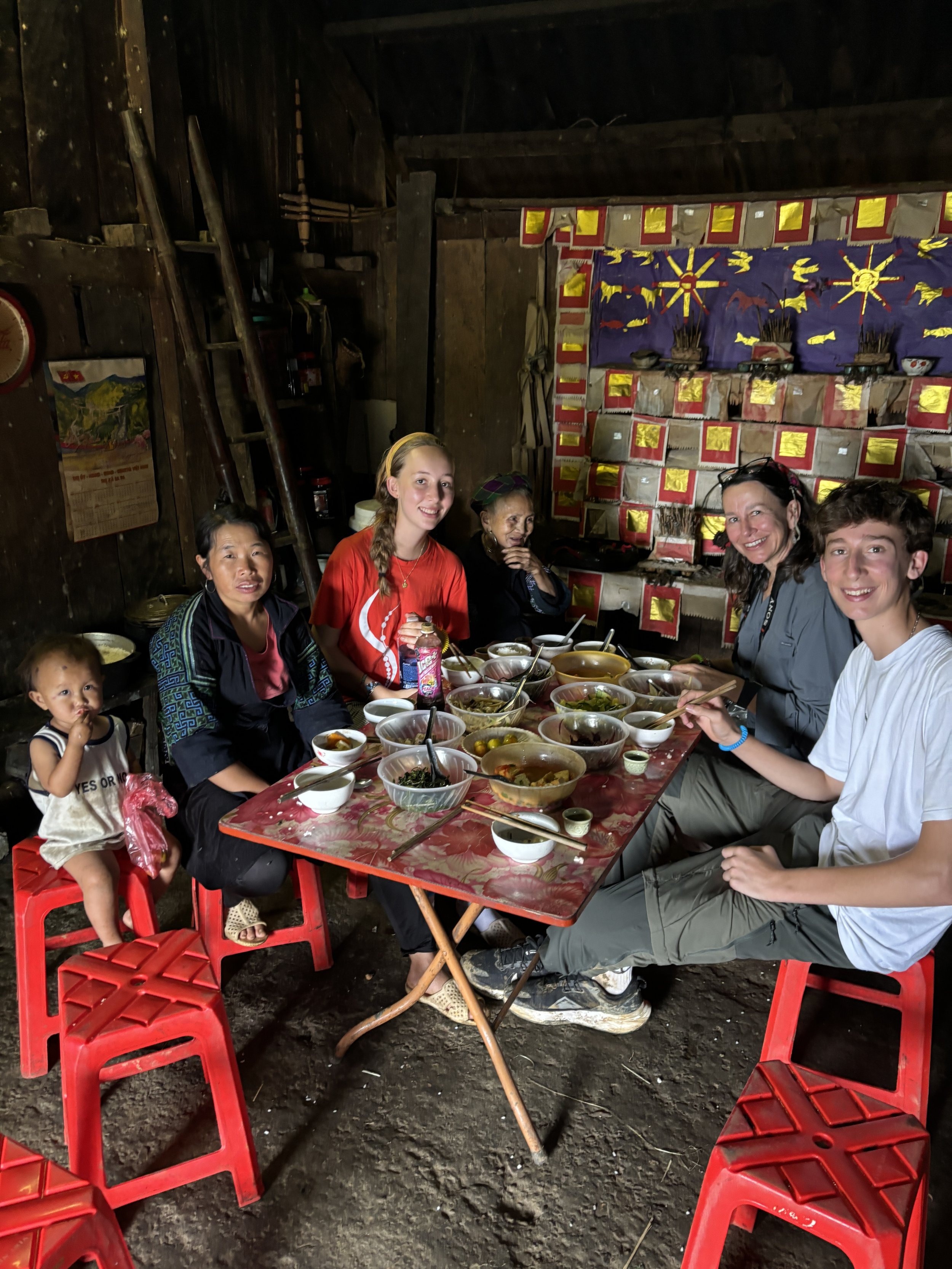
Guests and hosts sit together around a low table enjoying a traditional home-cooked meal.
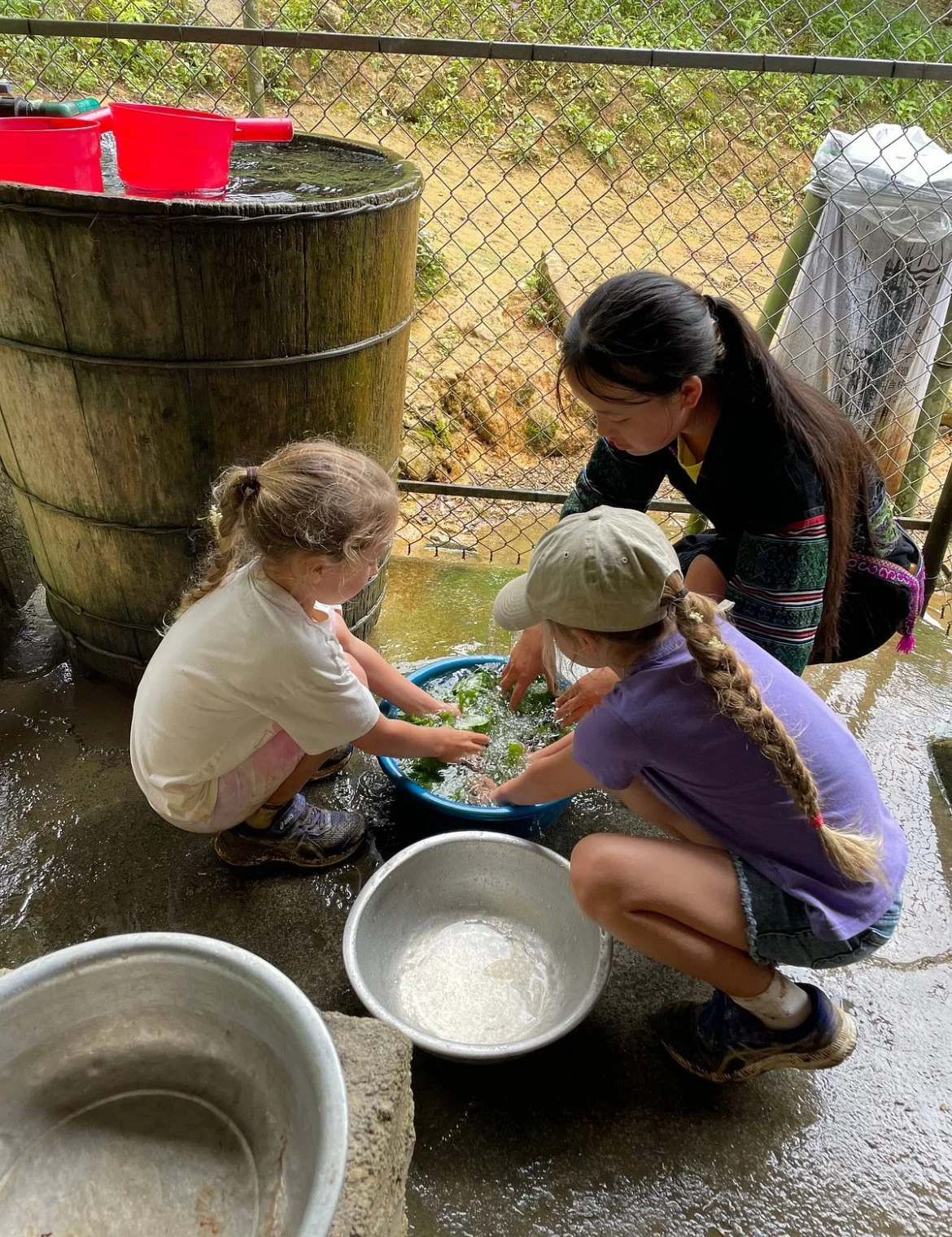
Children rinse vegetables in large bowls outside, participating in a hands-on cooking experience.
After days of exploration, the Red Dao herbal baths provide a restorative and sensory-rich experience rooted in traditional knowledge, where carefully selected forest herbs are used to create warm, fragrant baths that soothe tired bodies while offering a gentle introduction to local healing practices. These can be experienced independently or as part of a broader journey, and you can explore options here: ETHOS Family Herbal Baths.
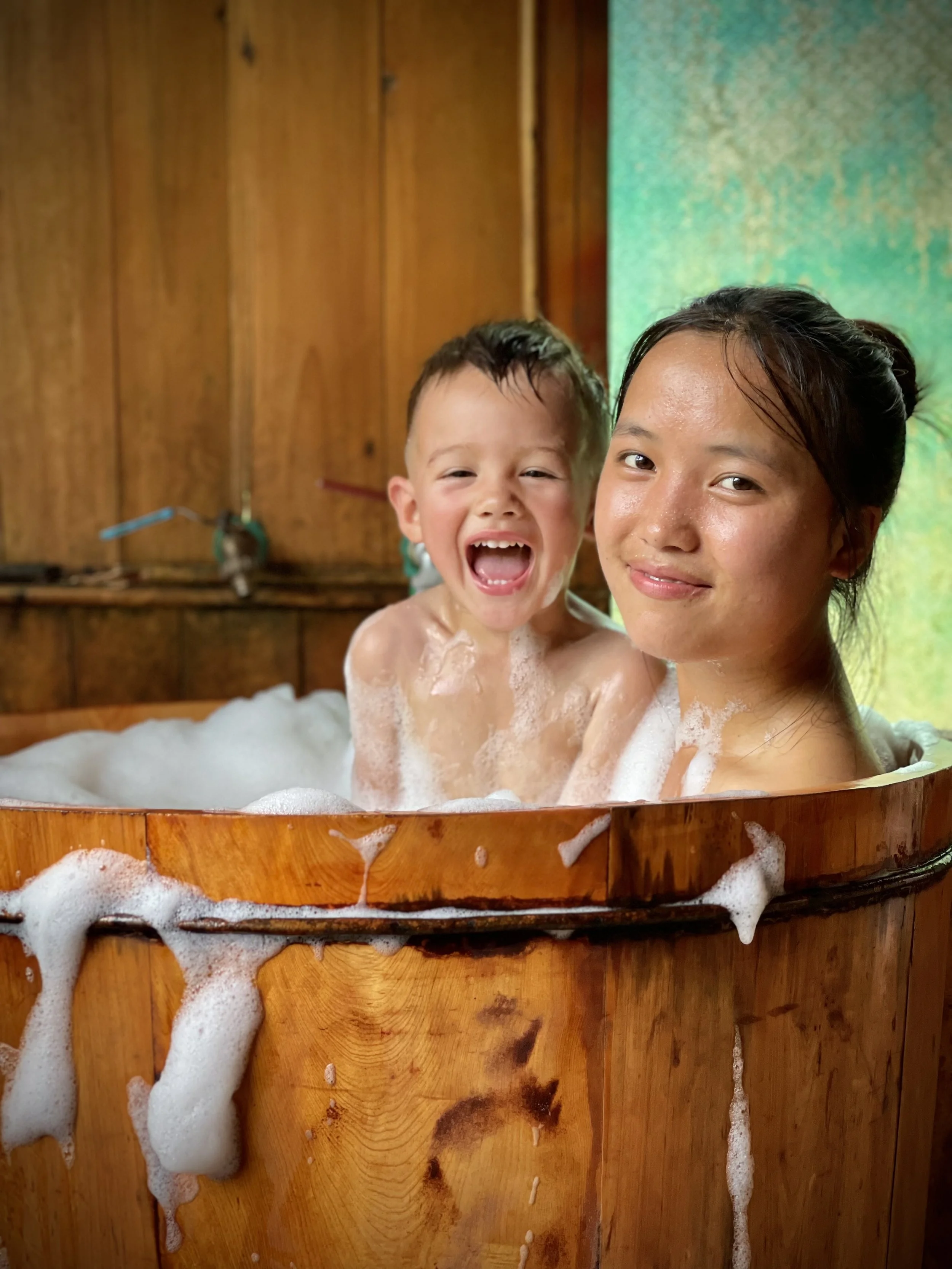
A mother and child sit in a wooden tub filled with herbal bath water, smiling and relaxed.
For families wishing to bring these elements together into a cohesive experience, our wider family journeys offer a balance of movement, creativity, rest, and connection, all shaped in collaboration with the communities who host you. You can explore more ideas here: ETHOS Family Experiences.
Ninh Binh: Limestone Landscapes and Gentle Days
Ninh Binh offers dramatic limestone scenery in a setting that is relatively easy to navigate with children, although some of its most famous experiences can feel busy and highly touristic. Boat trips through Trang An Scenic Landscape Complex and Tam Coc glide through caves and waterways framed by towering karsts, creating undeniably beautiful journeys that are best enjoyed with realistic expectations around crowds.
Cycling through the surrounding countryside provides a slower and more flexible way to explore, though it is worth noting that many homestays have limited availability of very small bicycles suitable for younger children.
As the day draws to a close, a visit to Thung Nham Bird Park offers a quieter and more contemplative experience, where watching flocks of birds return to roost in the fading light becomes a surprisingly engaging moment for children.
Central Vietnam: A Brief Note for Families
Although not covered in detail within this guide, central Vietnam offers two destinations that are particularly well suited to family travel, each providing a distinct blend of culture and outdoor experience.
Hoi An combines beach time with cultural exploration, where the lantern-lit old town, especially in the early evening, creates an atmosphere that feels almost theatrical, while the Memories Show adds a large-scale and visually engaging performance that children often enjoy.
Phong Nha offers a more adventurous landscape shaped by jungle, river systems, and caves, where activities such as river exploration and trekking create a sense of discovery. The Phong Nha Farmstay is particularly well suited to families, offering space, nature, and a welcoming environment that encourages children to explore freely.
Travelling with Children, the ETHOS Way
Travelling with younger children in Vietnam is not about rushing between sights or filling each day with structured activities, but rather about creating space for connection, curiosity, and shared experience. The most meaningful moments often emerge naturally, whether through a shared meal in a village home, watching daily life unfold, or simply pausing together in a place that invites stillness.
When travel slows down, children begin to notice more, ask deeper questions, and engage more fully with the world around them. In these moments, Vietnam becomes far more than a destination, evolving instead into a lived and felt experience that stays with families long after they return home.
Beyond Rice in Sapa’s Terrace Ecosystems
In Sapa, rice terraces are not simply fields. They are living ecosystems shaped by Hmong and Dao hands, where water, soil and tradition sustain far more than grain. Walk with us through these landscapes, forage alongside our partners and experience how life is nurtured beyond the rice itself.
Sapa’s rice terraces are often photographed as if they were simply grand scenery, a series of green or golden steps folded into the mountains, luminous in the rain and glowing at harvest. Yet for the Hmong and Dao communities who have shaped, tended and lived with these landscapes over generations, a terrace has never been only about a single rice crop. Local communities see the terraces as a living, layered food system. This relies on the connection between water and soil, labour and season, between the forest above and the village below.
To look closely at a terrace is to begin noticing all that exists beyond the rice itself. There are the human made pools that are home to edible insects, snails, frogs, eels and fish. Then are the damp edges where herbs thrive in seepage and soft mud. There are the bunds and narrow paddy walls where greens are gathered on the way home. There are the irrigation channels carrying mountain water from one field to the next, sustaining aquatic plants and tiny wetland habitats. There are forest margins that feed the terraces with leaf litter, moisture, bamboo shoots, fungi and shade. There are the overlooked foods that appear quietly in daily life, not as luxuries, but as part of the intelligence of mountain subsistence.
In this sense, the terraces of Sapa are not monocultures in the industrial sense at all. They are agroecological worlds. Rice may remain the central staple, the grain around which the agricultural calendar turns, yet rice alone does not nourish a household. Hmong and Dao ways of farming have long understood that survival in the mountains depends on more than one harvest. It depends on recognising that a terrace can feed people in many forms, through many species, at many moments of the year.
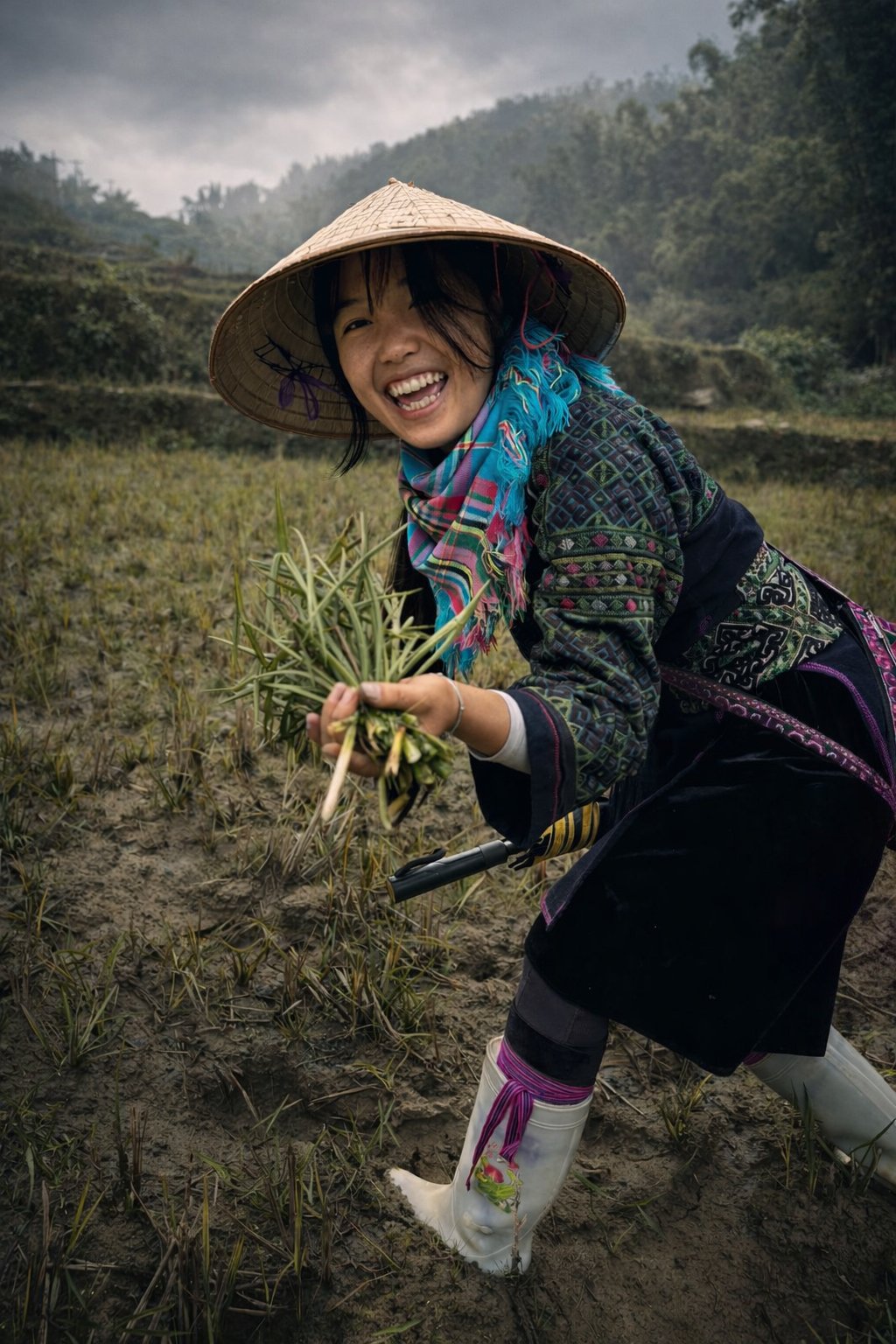
Harvesting wild taro from with a fallow rice paddy.
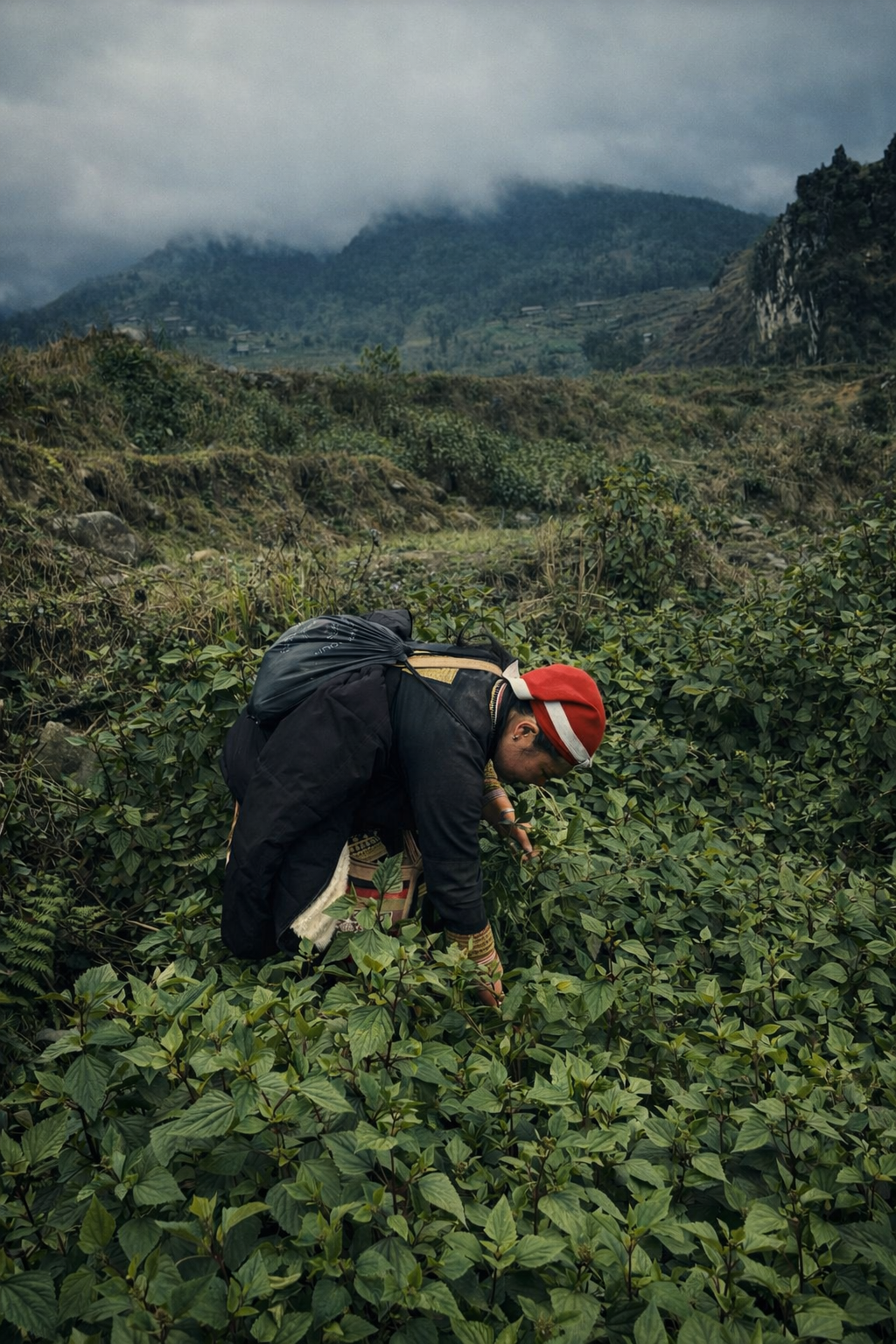
Foraging medicine for use in Red Dao herbal baths.
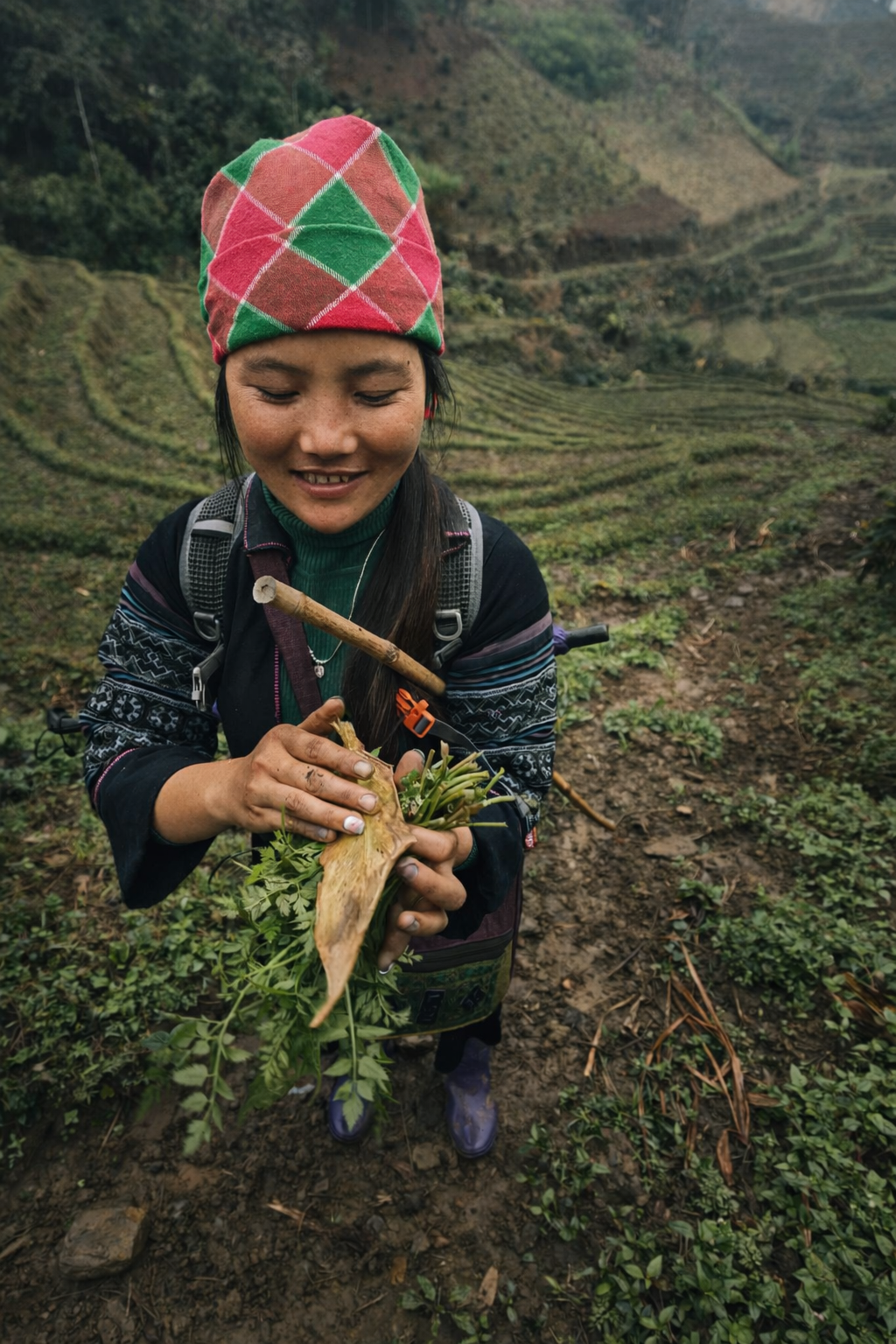
Wild celery harvesting.
A terrace is a mosaic, not a single field
What visitors often see as one continuous landscape is, on the ground, a patchwork of connected micro-habitats. Flooded paddies hold water during the growing season, then soften into muddy fallows after harvest. Bunds and terrace edges catch sediment, support spontaneous greens and become pathways for both people and plants. Irrigation channels and spring-fed ditches remain wet even when fields are drained, offering refuge for edible herbs and water-loving species. Beyond them lie forest edges and agroforestry patches that anchor the terraces ecologically, slowing erosion, protecting springs and supplying food and materials that are essential to village life.
This is part of what makes Sapa’s terrace systems so ecologically rich. Water is guided by gravity rather than forced through large-scale extraction. Soil is held in place by structure, roots and repeated care. Nutrients move through the landscape in loops, not simply through purchased inputs. Even the steepness of the mountains plays a role, creating slight differences in temperature, moisture and exposure from one level to the next. Each terrace holds its own conditions. Each edge becomes an opportunity.
For Hmong and Dao households, this means that farming is never only about the rice standing in the middle of a paddy. It is also about everything that grows beside it, under it, after it and because of it.
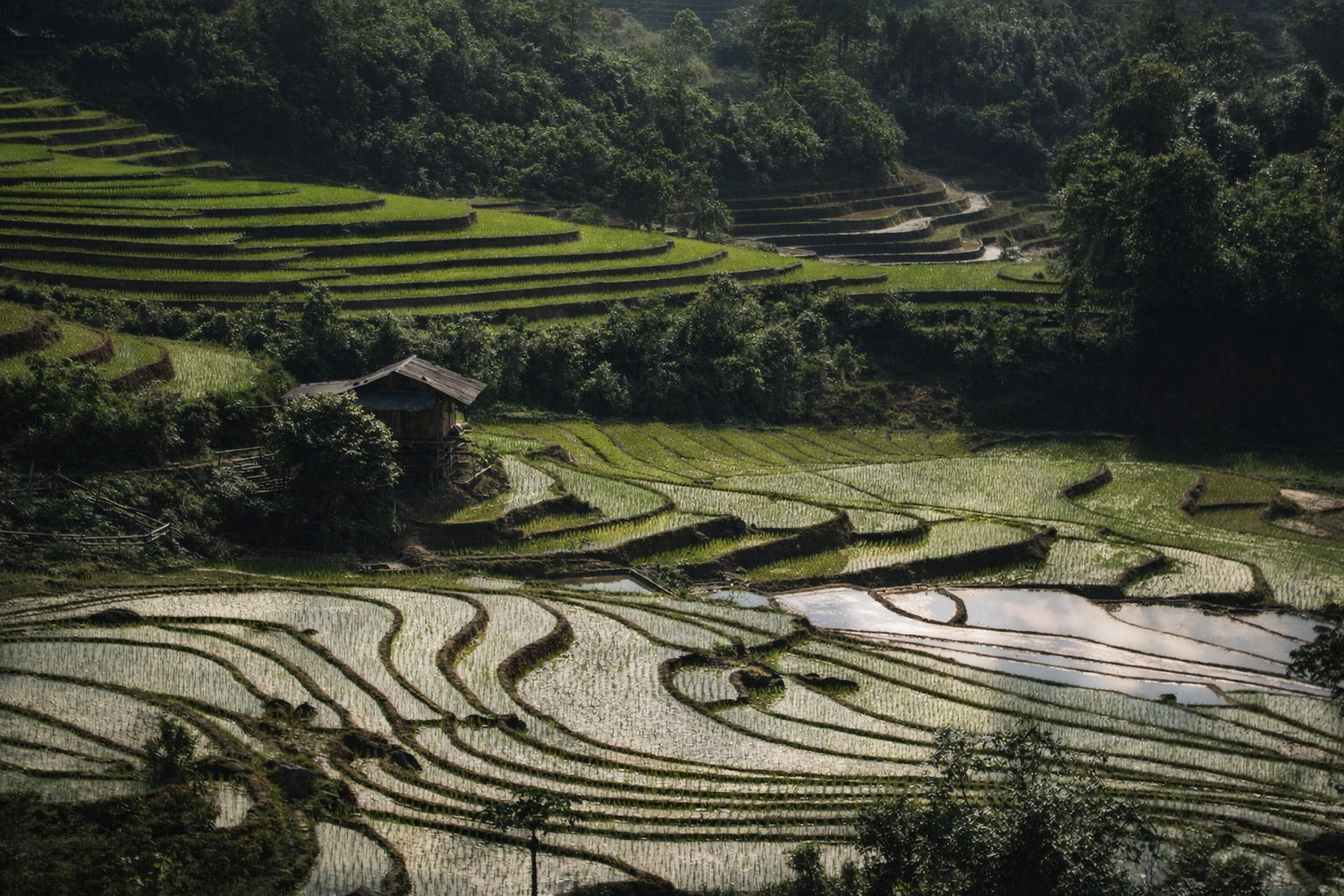
The mosaic of rice terraces in June
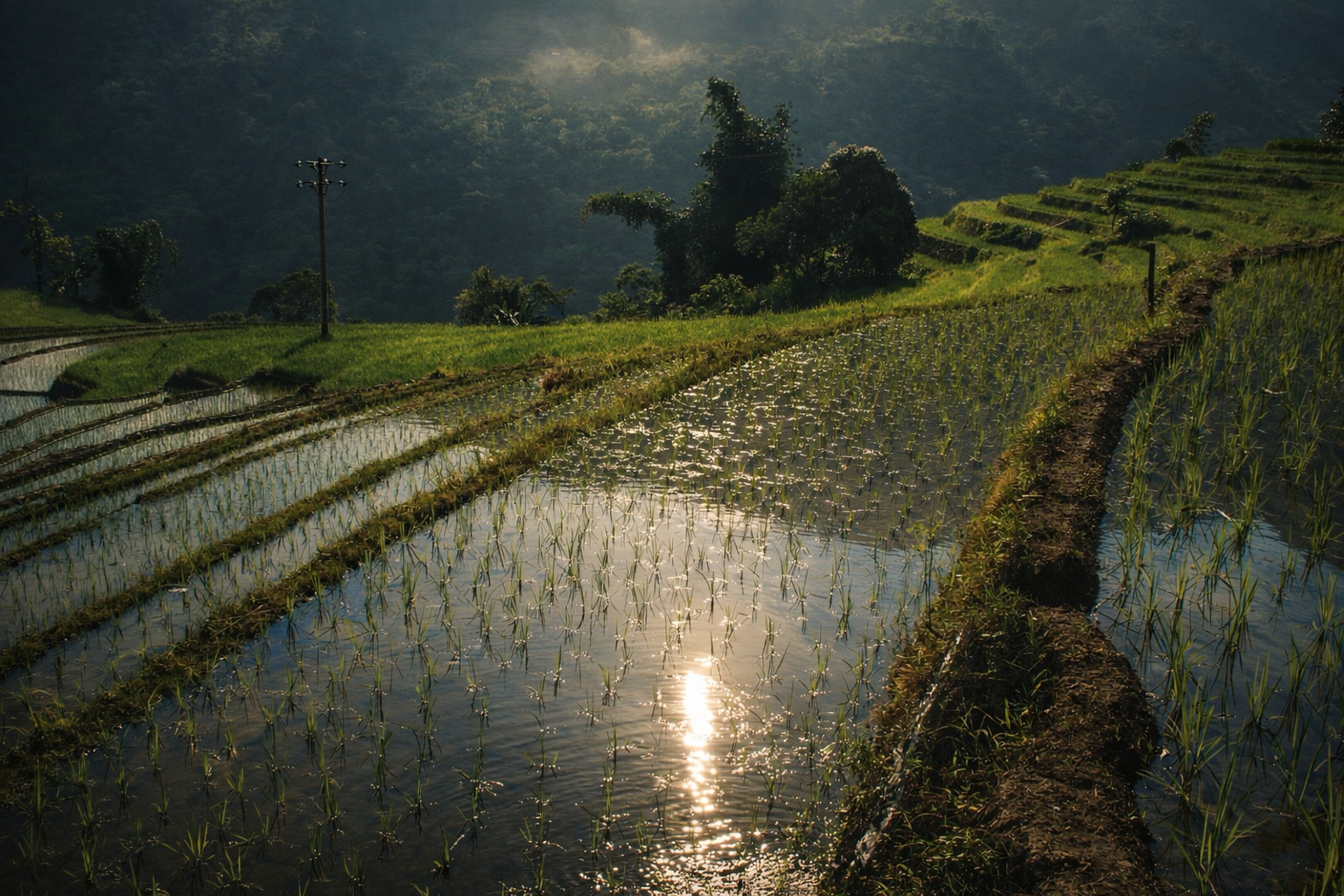
The flooded terraces become home to a variety of unique aquaculture.
Beyond the single rice crop
Mountain households in Sapa have often worked with small landholdings, where farming remains deeply tied to household consumption rather than purely commercial output. That reality shapes the terrace ecosystem profoundly. A field must do more than produce grain once a year. It must help sustain a family across seasons of abundance and leaner months alike.
Rice provides the foundation, the dependable carbohydrate that underpins daily meals and ceremonial food alike. Yet within a rice-based diet there are always nutritional gaps that must be filled by other foods. The terrace ecosystem helps answer that need. Wild and semi-managed greens contribute vitamins and minerals. Wetland herbs bring freshness, scent and medicinal value. Crabs, eels, fish, snails or other opportunistic proteins enrich broths and sauces. Bamboo shoots, mushrooms and taro offer seasonal diversity and resilience when stored grain begins to thin.
Seen this way, the terrace is not organised around a single yield, but around continuity. The goal is not only to harvest rice, but to sustain life. Hmong and Dao ecological knowledge has long been rooted in this broader understanding, where farming is measured not only by how much grain comes in, but by whether the land continues to support many forms of nourishment without being exhausted.
For travellers, many of these foods remain unfamiliar, sometimes even overlooked in favour of the more recognisable or the expected. Yet it is precisely within these lesser-known ingredients that the deeper story of the terraces begins to reveal itself. The textures of water snails gathered by hand, the clean bitterness of freshly cut greens, the earthiness of mushrooms dried and carried through the seasons, all speak of a relationship between people and landscape that is both practical and deeply sensory.
Those who wish to experience this more closely can step into it through our Sapa food tour. Led by local Hmong experts, these journeys move through fields, kitchens and village paths, not as a tasting of dishes alone, but as an introduction to the living food system behind them. Each ingredient is encountered in context, gathered, prepared and understood within the rhythms of the terraces themselves.
What begins as a meal becomes something far richer, a way of seeing how diversity sustains life in the mountains, and how much lies beyond the rice that first draws the eye.
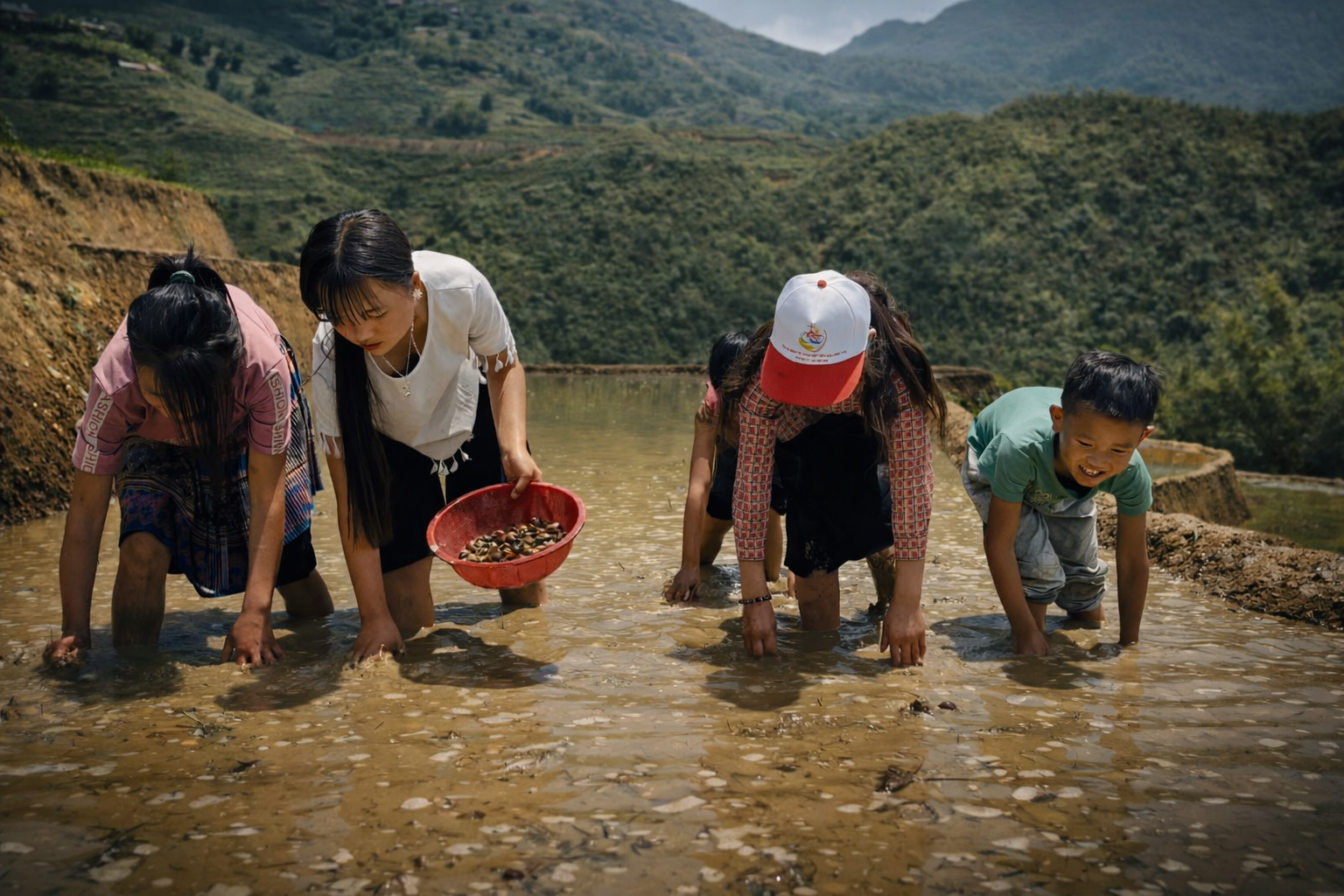
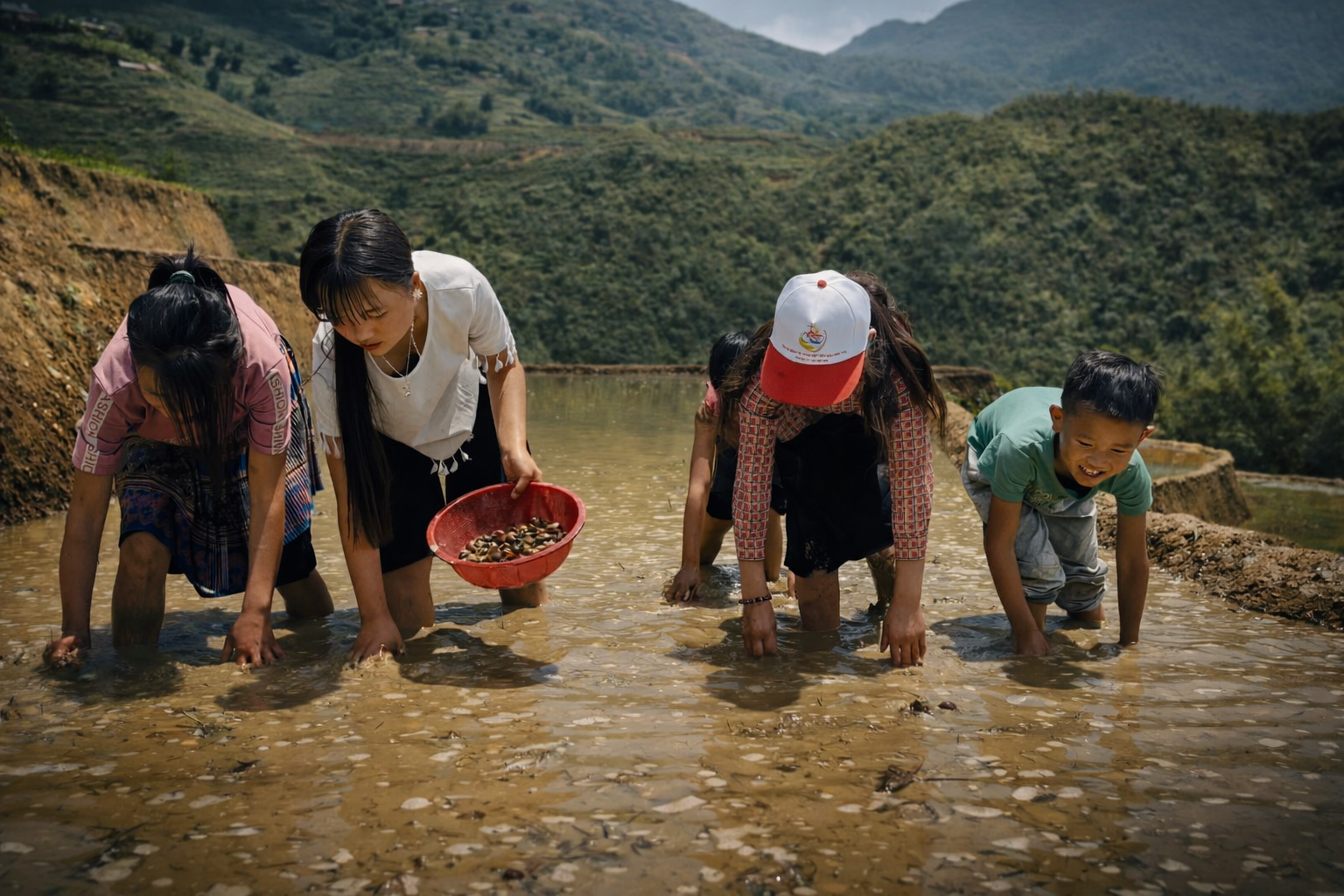
Hmong children collecting snails in the rice paddies.
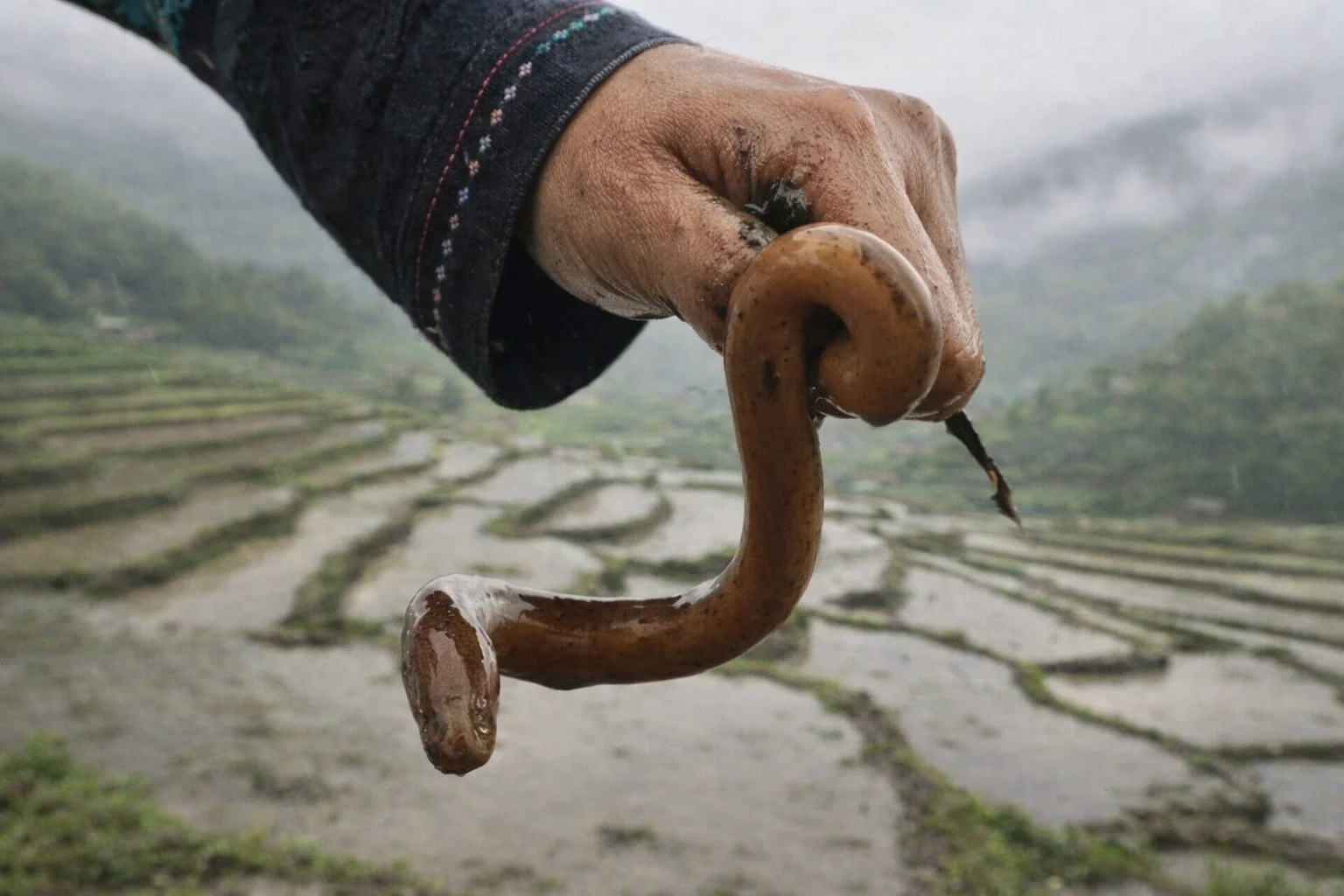
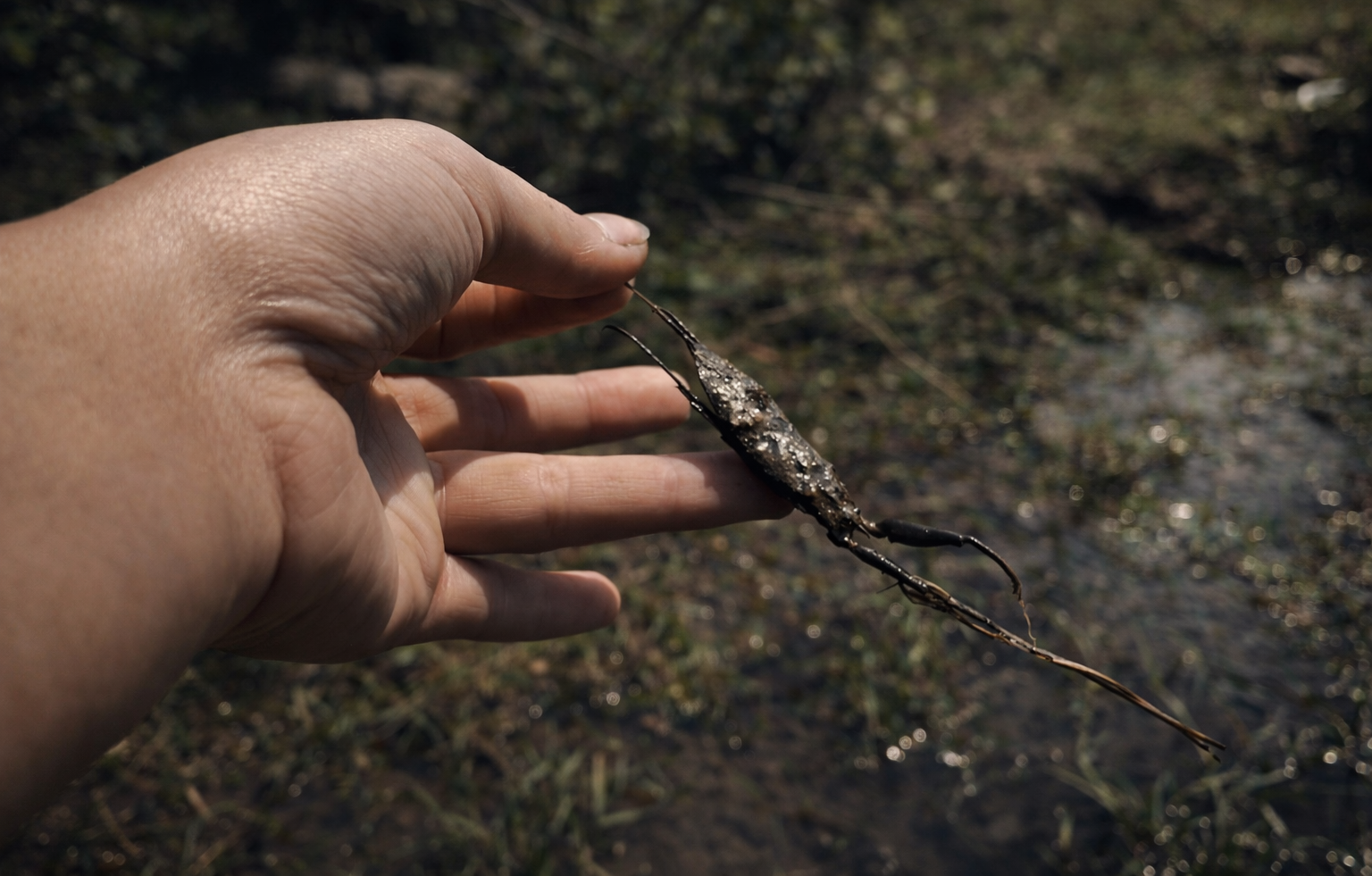
A rice paddy eel. When collected in large numbers, the eels can be prepared as a meal.
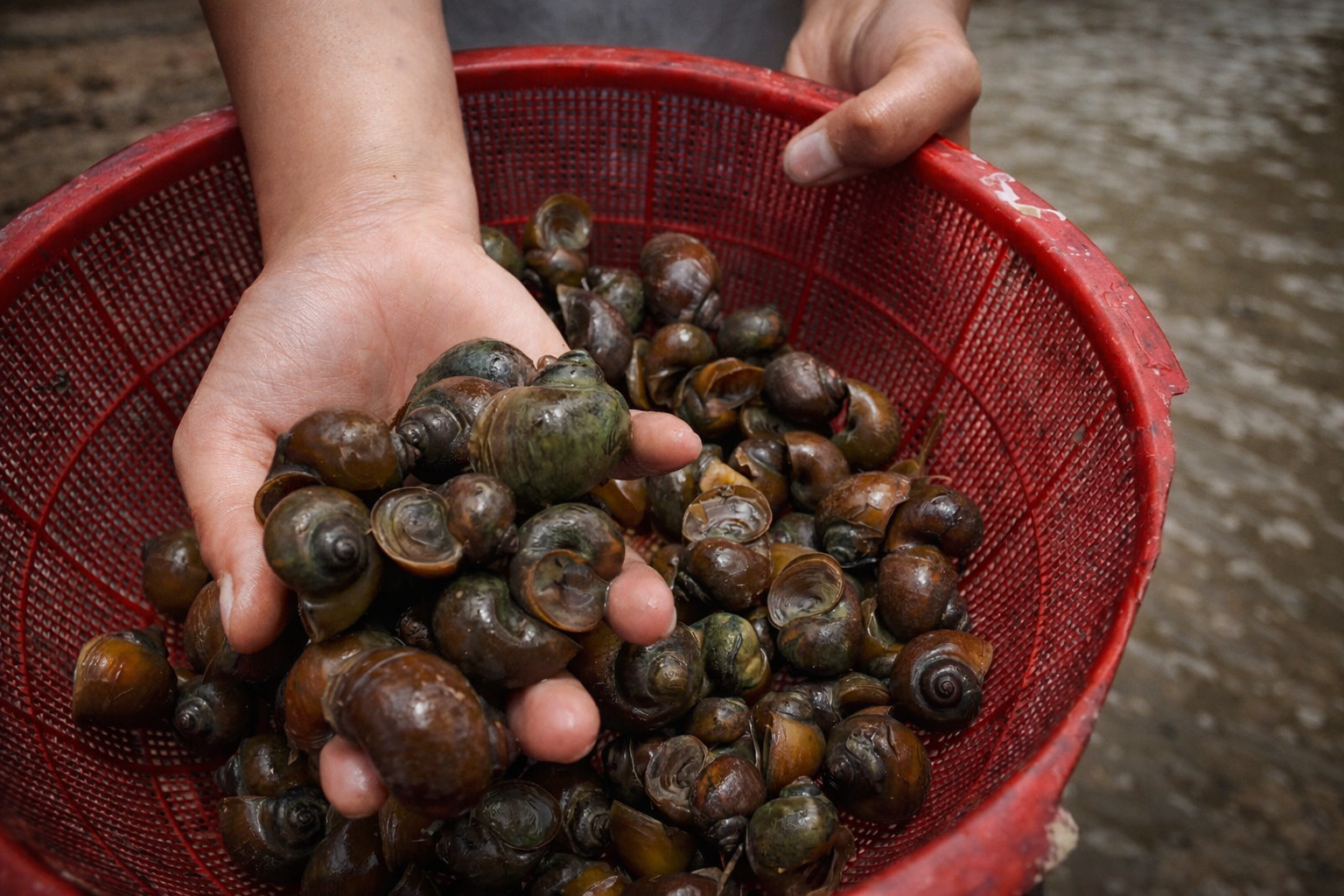
Rice paddy snails collected for food.
The foods hidden in water, mud and terrace edges
One of the quiet lessons of Sapa’s terraces is that food often lives in places outsiders overlook. In the warm, shallow water, edible herbs and semi-aquatic greens thrive with little need for extra land. These plants may be gathered while checking water flow, walking between plots or tending the edges of a field. They are woven into the rhythm of labour itself.
Rice paddy herbs, water-loving greens and other edible plants found in these wet spaces matter because they bring something rice cannot. They offer vitamin C, mineral richness, flavour and medicinal qualities that brighten and balance a meal. They are especially valuable in a highland subsistence system where daily access to diverse vegetables cannot always be taken for granted. Rather than being separate from rice farming, these greens are part of its ecology.
Rice terrace walls play their own role as food margins. These narrow structures are not merely agricultural infrastructure. They are often some of the most diverse parts of the entire system, catching splashed sediment, holding moisture and creating space for spontaneous or lightly managed growth. Here, people distinguish carefully between plants that threaten rice, plants that can be eaten and plants worth leaving because they help stabilise soil or support insect life. This practice of selective tolerance is one of the deepest expressions of terrace agroecology. Removing everything that is not rice is counterproductive when many of the plants that grow naturally have a purpose themselves.
Knowledge carried in the act of gathering
To understand how these landscapes sustain life, it is necessary to move beyond the visible and into the realm of practice. Among Hmong and Dao communities, knowledge is not abstract or separate from daily life, but embedded in movement, in gesture, in the quiet decisions made while walking a terrace edge or bending to harvest a plant. What appears simple to an outsider often conceals a depth of ecological reading shaped over generations.
A woman gathering greens along a bund is not merely collecting what is available. She is reading the condition of the soil, the recent flow of water, the stage of regrowth and the needs of her household. She selects with intention, leaving certain plants to recover, taking others at their peak, recognising which will nourish and which will heal. The act is at once practical and deeply attuned, shaped by memory, taste and an understanding of tomorrow as much as today.
This knowledge extends across the landscape. Men and boys may move through the wet fields in search of eels or small fish, reading the water with equal familiarity, while forest edges are approached with an awareness of seasonality that determines when shoots are tender or when fungi will emerge after rain. Food, in this sense, is never separate from place. It is a dialogue between people and terrain, carried out through attention and care.
The terrace as living wetland
During the growing season, the terraces transform into a sequence of shallow wetlands, each holding water that moves slowly from one level to the next. This movement is neither hurried nor wasteful. It follows gravity, guided by human hands yet aligned with the natural contours of the mountain, creating a system that is both cultivated and ecological.
Within this watery world, life gathers in quiet abundance. Aquatic plants root themselves in the soft mud, insects skim the surface, and the edges of each paddy become zones of fertility where moisture lingers and diversity thrives. The mud itself is alive with microbial activity, breaking down organic matter and returning nutrients to the soil, sustaining fertility without reliance on external inputs.
What emerges is not a field in the conventional sense, but a layered environment where water, soil and living organisms interact continuously. The terraces hold, slow and distribute resources, allowing each level to benefit from what passes through it. Their productivity lies not in intensity, but in balance, in the ability to sustain multiple forms of life within a carefully managed system.
A kitchen shaped by the landscape
If the terraces are read through the rhythms of daily life, their diversity becomes most visible in the kitchen. Rice remains central, steady and essential, yet it rarely stands alone. Around it gathers a shifting constellation of foods that reflect the season, the weather and the labour of the household.
There may be tender greens gathered that morning, still carrying the cool dampness of the field. There may be bamboo shoots sliced and prepared with care, their bitterness softened through knowledge passed down over time. Mushrooms, collected in moments of abundance, might be dried and stored, later rehydrated to bring the scent of the forest into a quieter season. Taro, lifted from moist soil, provides a reserve that speaks of foresight and resilience.
Occasionally, the wet fields themselves offer small additions, a crab, a handful of snails, something that deepens the flavour of a broth and adds substance to a meal. None of these elements dominate, yet together they create a sense of completeness, a meal that is balanced not through excess, but through diversity.
What becomes clear is that nourishment here is cumulative. It emerges from many small contributions, gathered across spaces and moments, rather than from a single source. The terrace feeds not only through rice, but through everything that surrounds and accompanies it.
Where terraces meet forest
The terraces do not exist in isolation. Above them, the forested slopes hold the sources of water that feed the entire system. Springs emerge, channels carry their flow, and the paddies receive and redistribute what begins higher in the mountain. Leaf litter, shade and the stability of rooted slopes all contribute to the health of the terraces below.
From these forest margins come foods that complete the picture. Bamboo shoots push through damp soil after rain, mushrooms appear in shaded ground, spices such as black cardamom grow in the understory. These are not separate from terrace life, but part of the same ecological continuum, linking cultivated land with wilder spaces.
To care for the terraces is therefore to care for the forest. The relationship is reciprocal, each depending on the other for continuity and resilience. This understanding is rarely articulated in formal terms, yet it is present in the way land is used, respected and maintained.
Seeing beyond the view
For those who arrive in Sapa, the terraces often first appear as a spectacle, an unfolding pattern of green or gold across the mountainside. Their beauty is immediate, yet it is only an entry point into a far deeper story.
Walking slowly through these landscapes begins to reveal another layer. The scent of wet earth rises after rain. Herbs release their fragrance underfoot. Smoke drifts from a kitchen where gathered greens are being prepared for the evening meal. A basket rests at the edge of a field, filled not only with rice, but with the quiet harvest of everything that grows alongside it.
To experience the terraces in this way is to move beyond observation into encounter. It is to recognise that each element, each plant, each movement of water carries meaning shaped by those who live here. It is also to understand that such knowledge is not readily visible from a viewpoint, but shared through time, trust and presence.
This is the spirit in which we invite travellers to walk with us at ETHOS. Through our treks, journeys unfold alongside Hmong and Dao partners who open their fields, kitchens and stories with generosity and care. These are not routes designed simply to pass through a landscape, but to dwell within it, to listen closely, and to encounter the terraces as living worlds shaped by human knowledge and mountain ecology.
In choosing to travel this way, the terraces begin to shift from scenery into relationship. What once seemed distant becomes immediate, textured and human, offering not only a view, but an understanding that lingers long after the path has ended.
A more complete understanding of abundance
What these landscapes ultimately offer is a different understanding of abundance. It is not defined by scale or uniformity, but by diversity and continuity. It is found in the ability of a place to provide across seasons, through variation, through attention to detail rather than simplification.
Rice remains at the centre, steady and indispensable. Yet it is supported by a wider system that ensures life continues even when conditions shift. Greens, herbs, shoots, fungi and preserved foods all contribute to a form of resilience that is both practical and deeply rooted in knowledge.
The terraces endure not because they produce one thing efficiently, but because they sustain many things carefully. They are shaped by people who understand that survival in the mountains depends on relationship, on reading the land closely, on working with its rhythms rather than against them.
To see this clearly is to understand that these landscapes are not only beautiful, but profoundly intelligent. They are living systems, held together by care, memory and an enduring conversation between people and the mountains they call home.
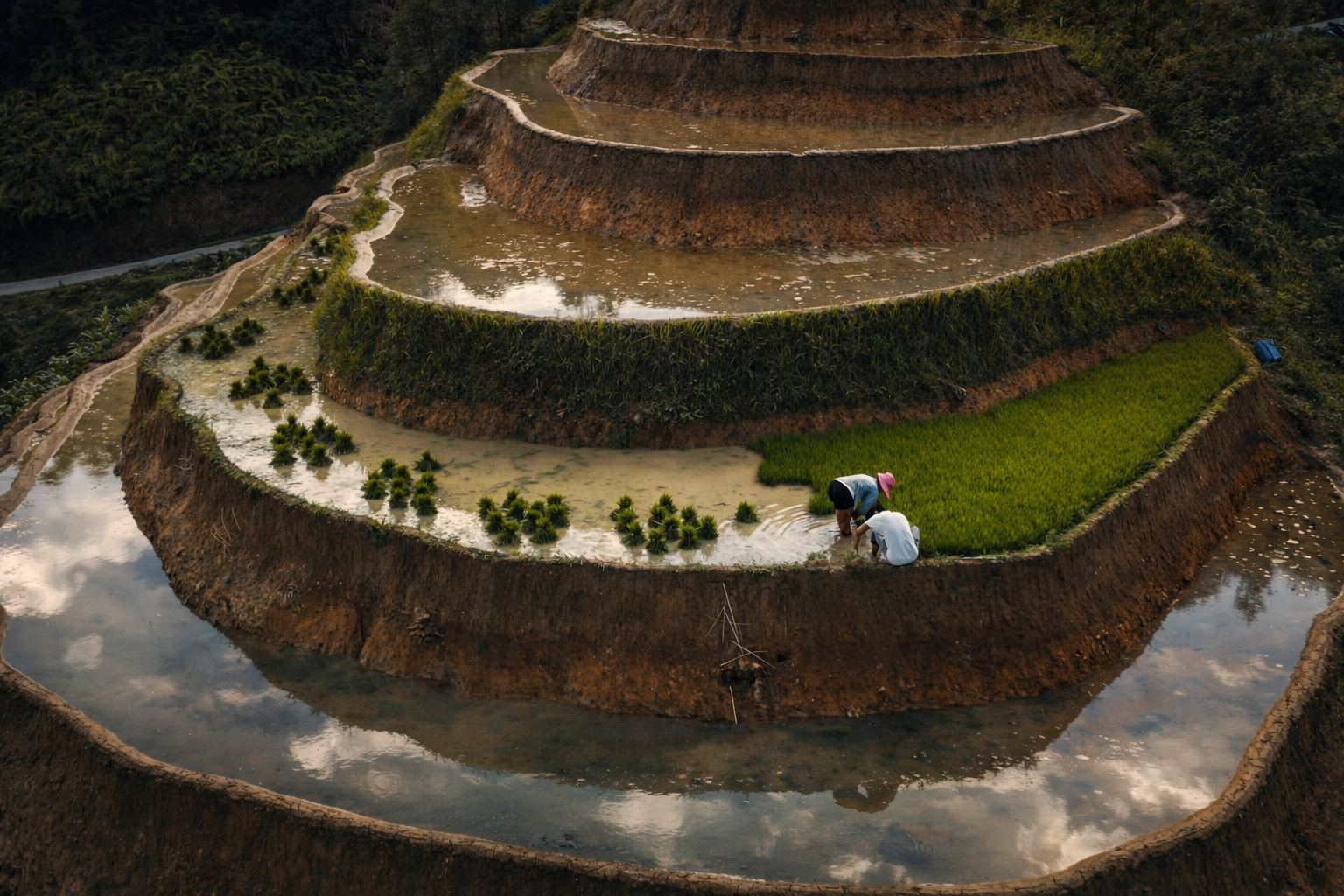
Rice Terraces and Human Design: Where Function Becomes Beauty
In the mountains of northern Vietnam, rice terraces are more than farmland. They are living systems where human design and nature move together in quiet balance.
The quiet problem with modern design
Walk through most modern cities and you begin to notice a pattern. Buildings serve a purpose and roads connect one place to another. Hospitals, schools, offices, petrol stations all function as they should, but they rarely stir anything deeper. Function has become the dominant language of human design. Efficiency, speed, and convenience often take priority over beauty, connection, or long term harmony with the environment.
Of course, there are exceptions. The great monuments of the world stand out like beacons, whether ancient or modern. The Great Pyramids, Eiffel Tower, Sydney Opera House and other iconic landmarks remind us that humans are capable of construction that resonate across time. Yet these are rare moments in an otherwise functional landscape and more often than not, nature pays the price. Forests might be cleared for shopping complexes, hills may be flattened or rivers are redirected for new homes. The result works, but it rarely benefits nature and usually irreversibly damages it.
A different kind of human landscape
In the mountains of northern Vietnam, something very different has unfolded over centuries. Rice terraces are undeniably one of the most beautiful human made agricultural environments. They are engineered, measured, and carefully maintained. Each step carved into the mountain has the primary purpose of grow rice and holding water. They are engineered to sustain crops and yet they still feel incredibly natural.
The terraces follow the contours of the mountains rather than resisting them. They curve and flow with the land. From a distance, they resemble something organic, like the rings of a tree or the ripples of water. They do not represent function over form, nor are they form over function. They demonstrate both, working together with quiet precision.
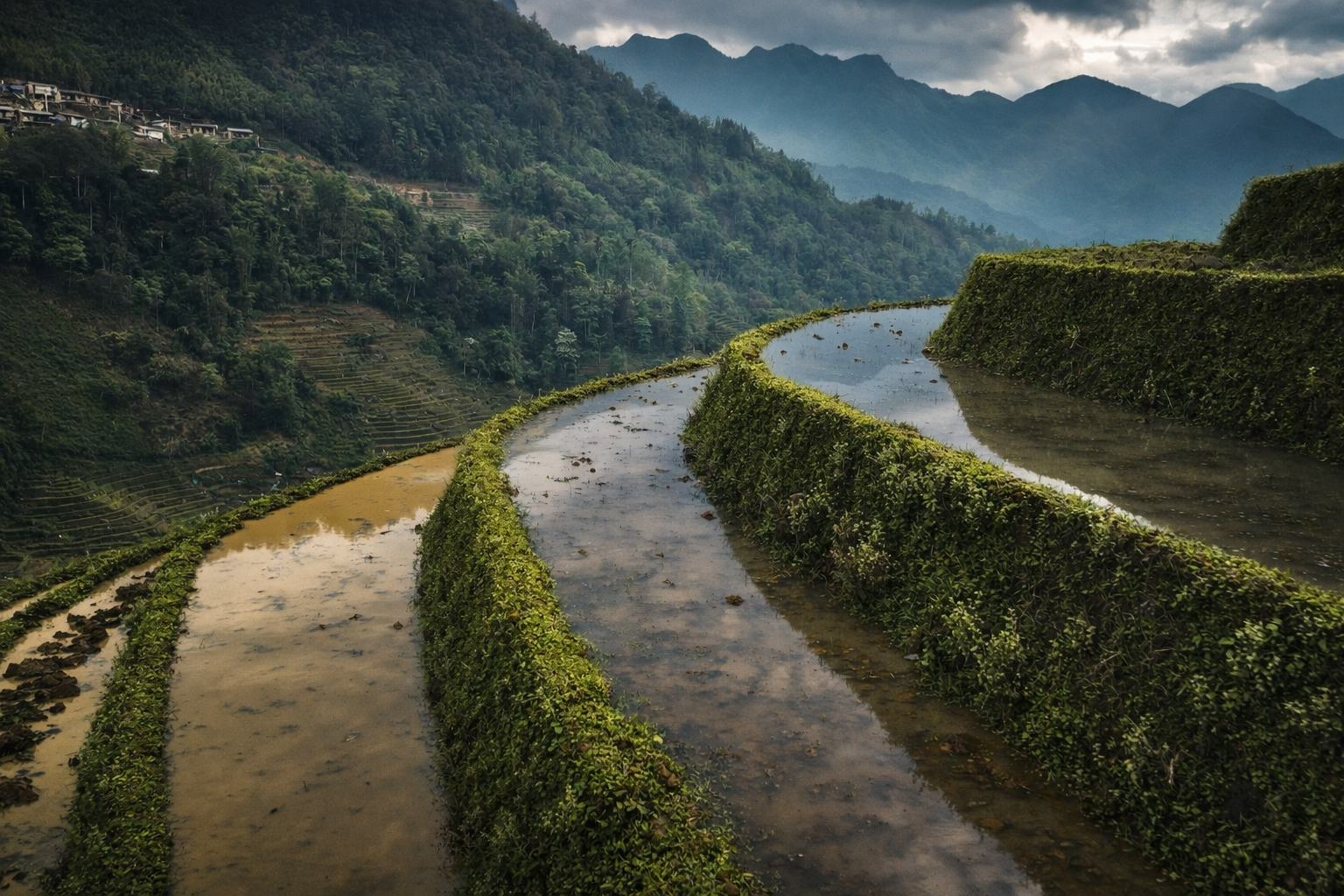
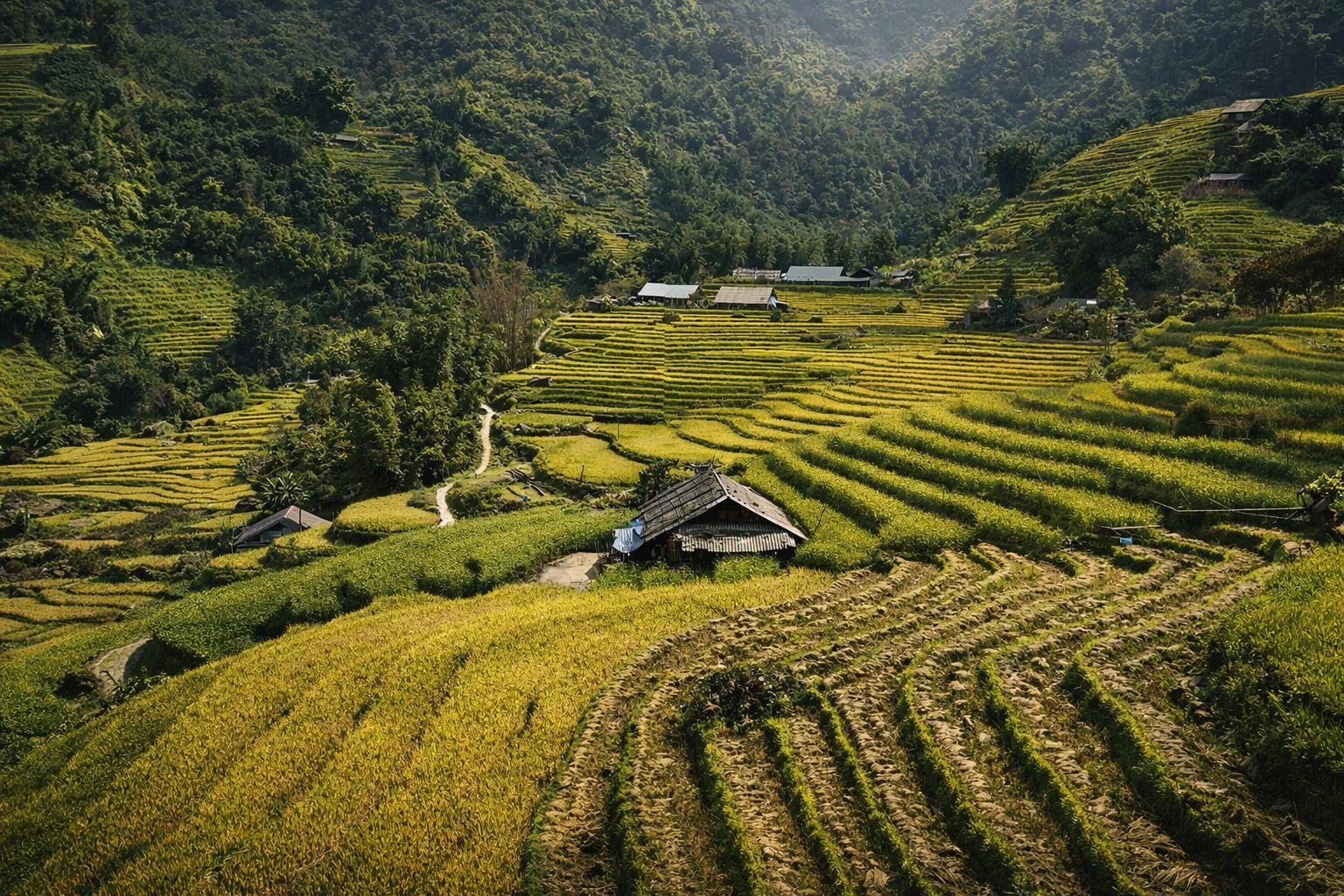
Photograph of the rice terraces in Sapa. Image by Cha Ly Thi. All rights reserved.
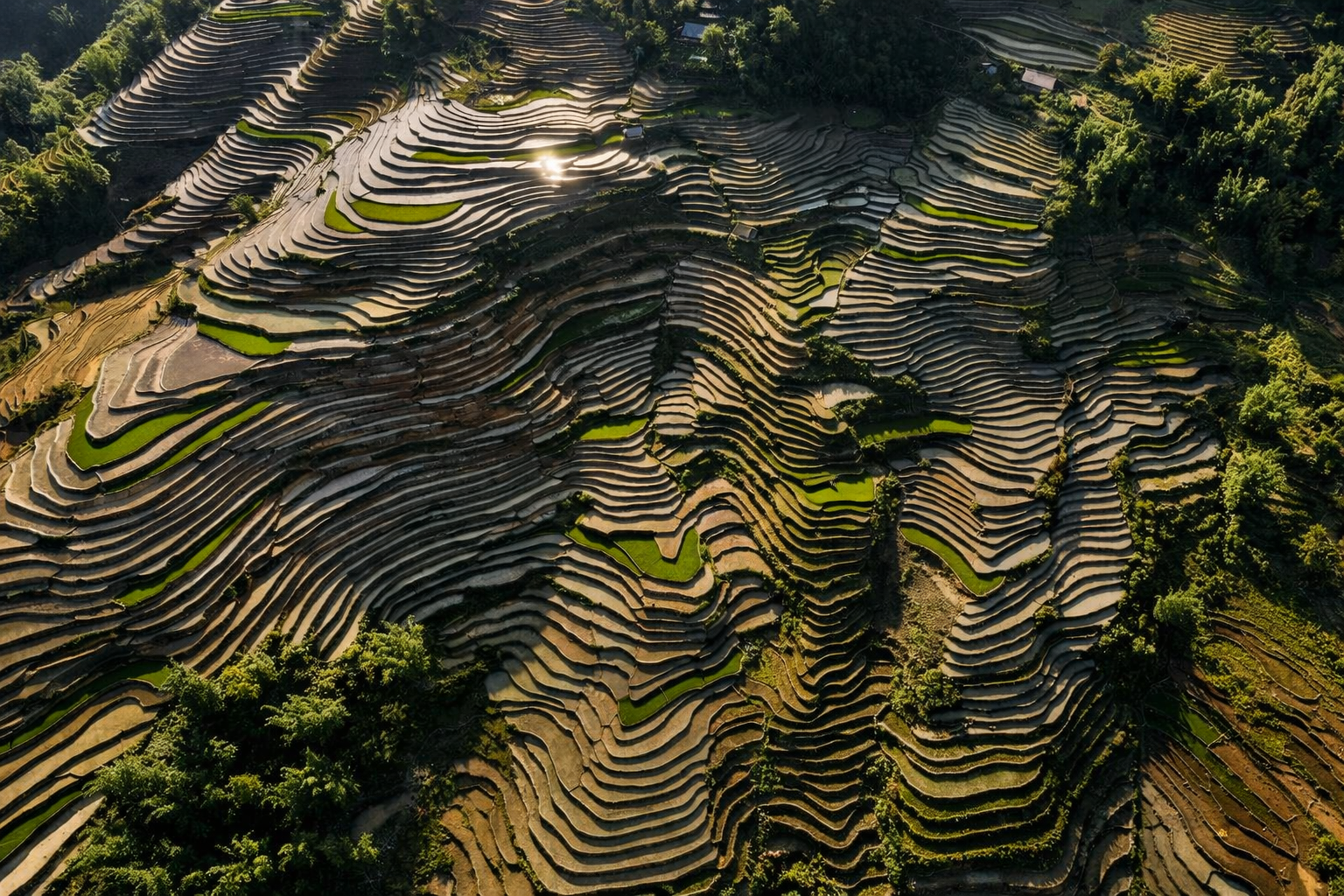
Photograph of the rice terraces in Sapa. Image by Phil Hoolihan. All rights reserved.
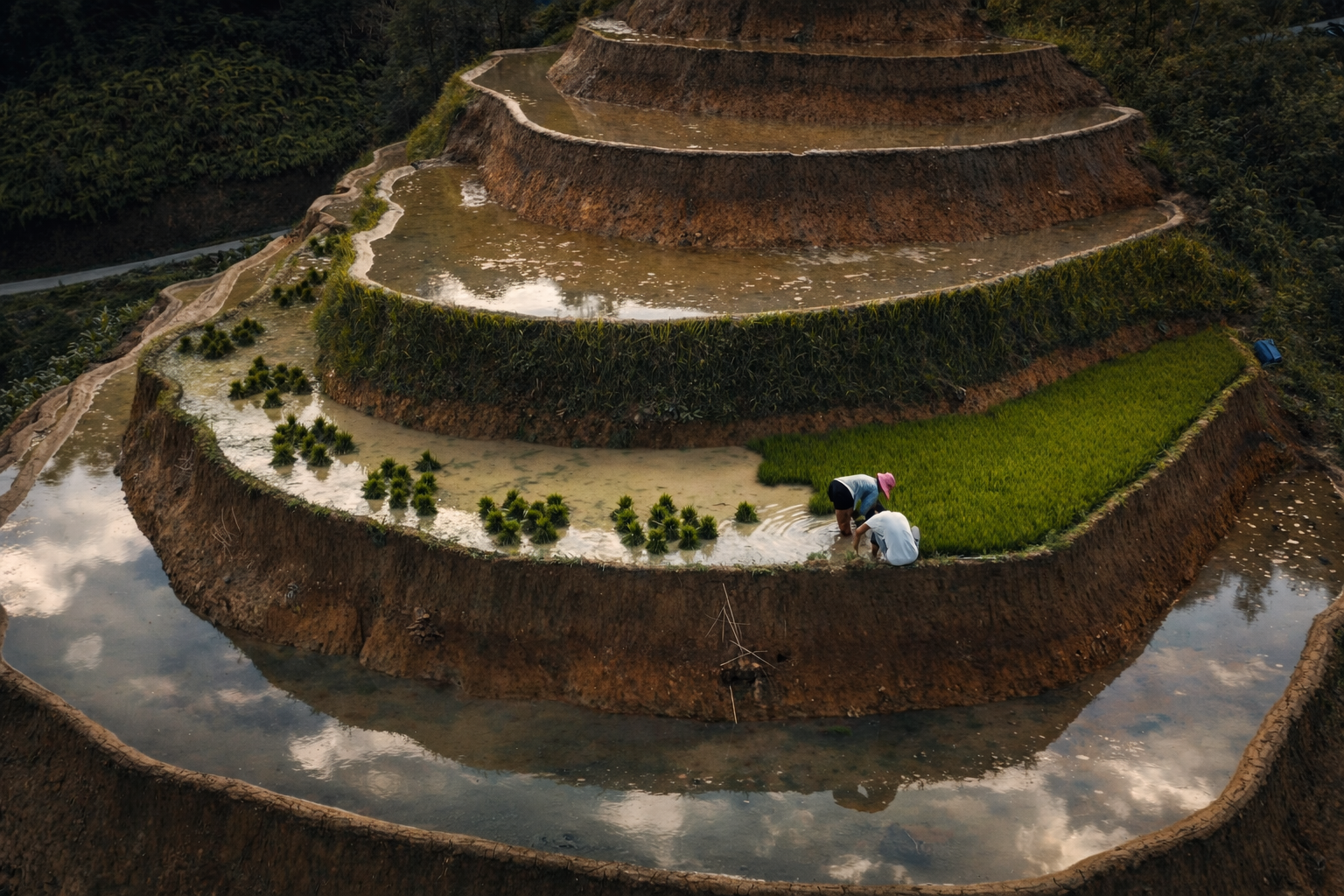
Photograph of the rice terraces in Sapa. Image by Phil Hoolihan. All rights reserved.
Engineering that breathes
Each rice terrace is a small masterpiece of balance. Though they appear fluid and curved, every individual field is perfectly level across two axes. If this were not the case, water would pool unevenly, leaving parts of the crop submerged and others dry. Water enters each paddy through a small channel, flows gently across the surface, and exits into the terrace below. This gravity fed system brings nutrients, oxygenates the water, and sustains life within the fields. There is no need for pumps or heavy infrastructure; just an understanding of landscape, water, and time. It is engineering, but it is also natural.
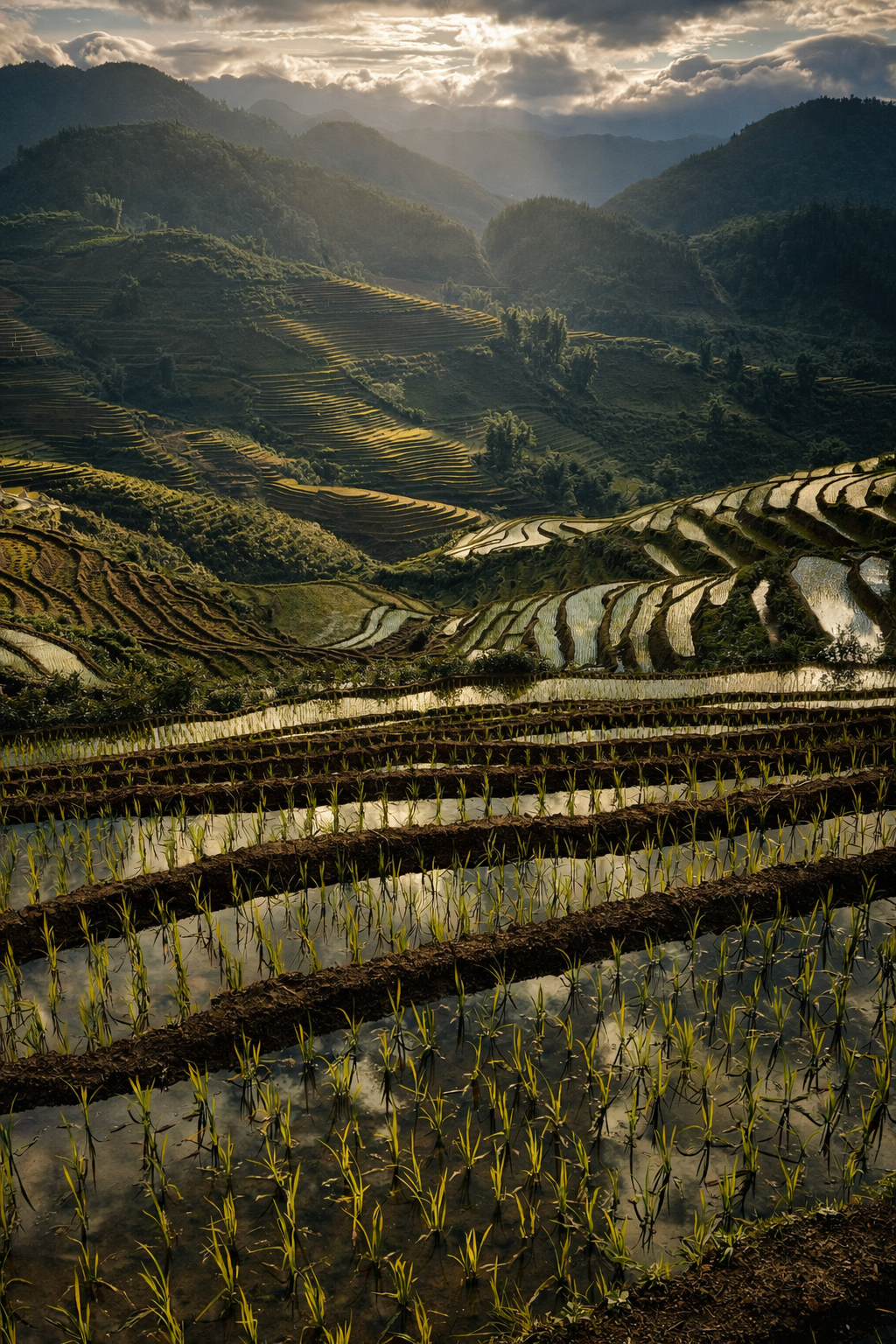
Photograph of the rice terraces in Sapa. Image by Phil Hoolihan. All rights reserved.
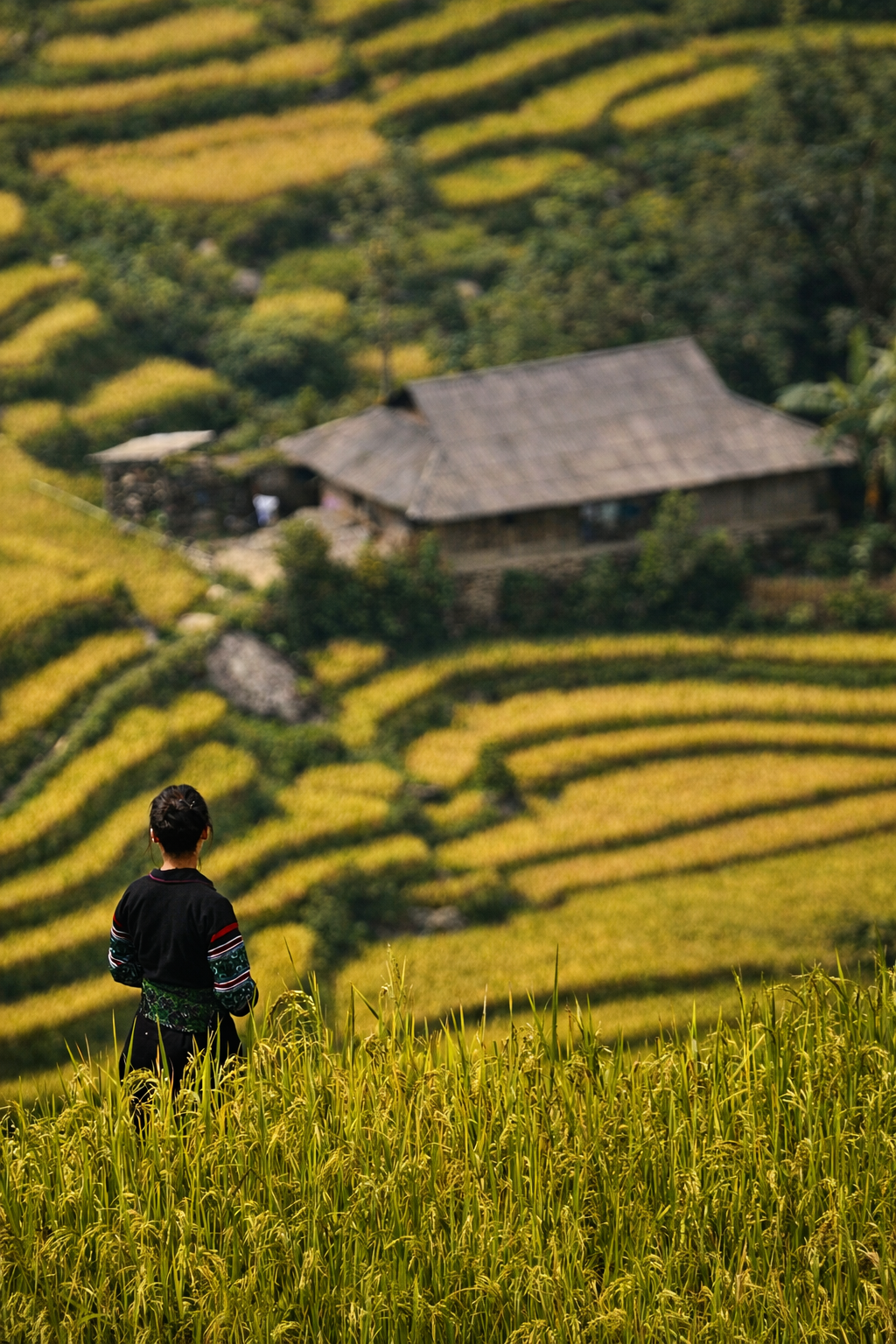
Photograph of the rice terraces in Sapa. Image by Phil Hoolihan. All rights reserved.
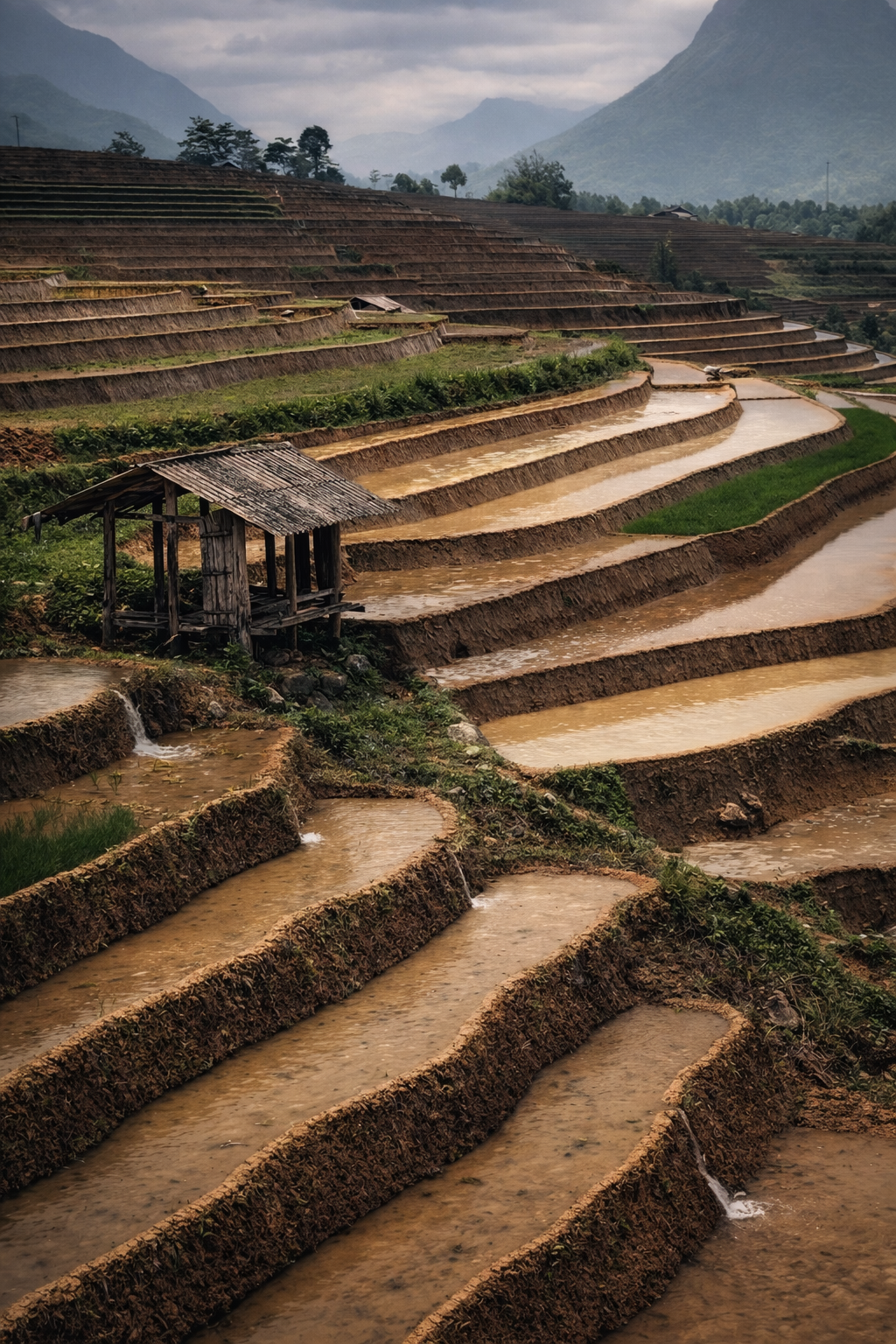
Photograph of the rice terraces in Sapa. Image by Cha Ly Thi. All rights reserved.
A living ecosystem, not just a farm
What many visitors first see as a single crop system is, in reality, something far more complex. During the wet season, the paddies sit under a shallow layer of water. Beneath the surface, life thrives. The paddies are alive with snails, fish, frogs, eels, crabs, and countless insects. These are not pests and are part of the food system.
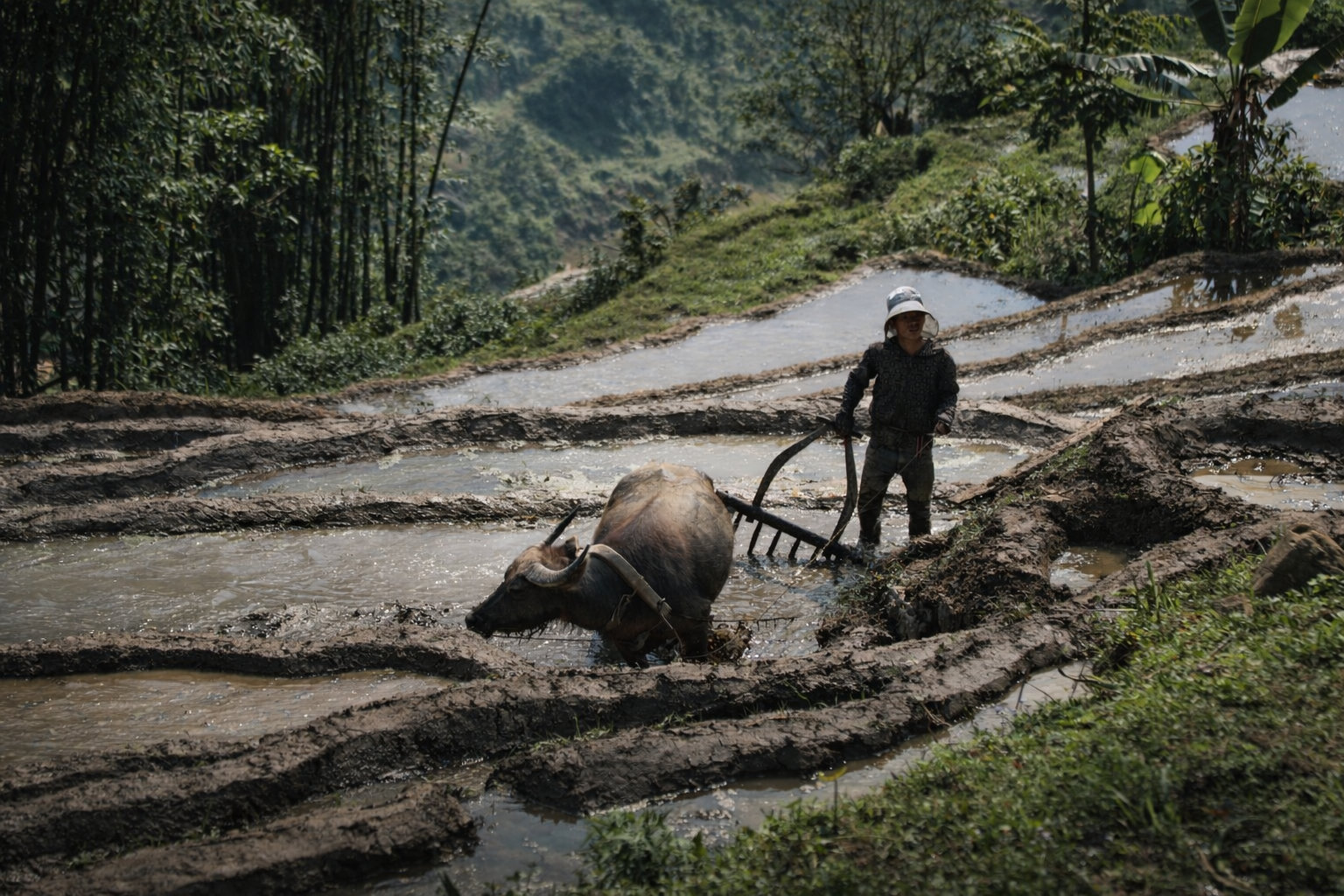
Along the edges, herbs and wild greens grow freely. Some are eaten fresh, others cooked into daily meals. When the terraces dry after harvest, the landscape transforms again. Crickets and grasshoppers emerge in their thousands, feeding both people and wildlife. There are edible roots that grow under the drying soil and medicinal meadow flowers that bloom each October. Buffalo and horses graze the fallow fields, returning nutrients to the soil in the most natural way possible. These terraces may replace original forest ecosystems, but are ecosystems in their own right, layered, seasonal, and deeply alive. They are far from monocultures but are instead flowing steps of life fuelled by the seasonal rains.
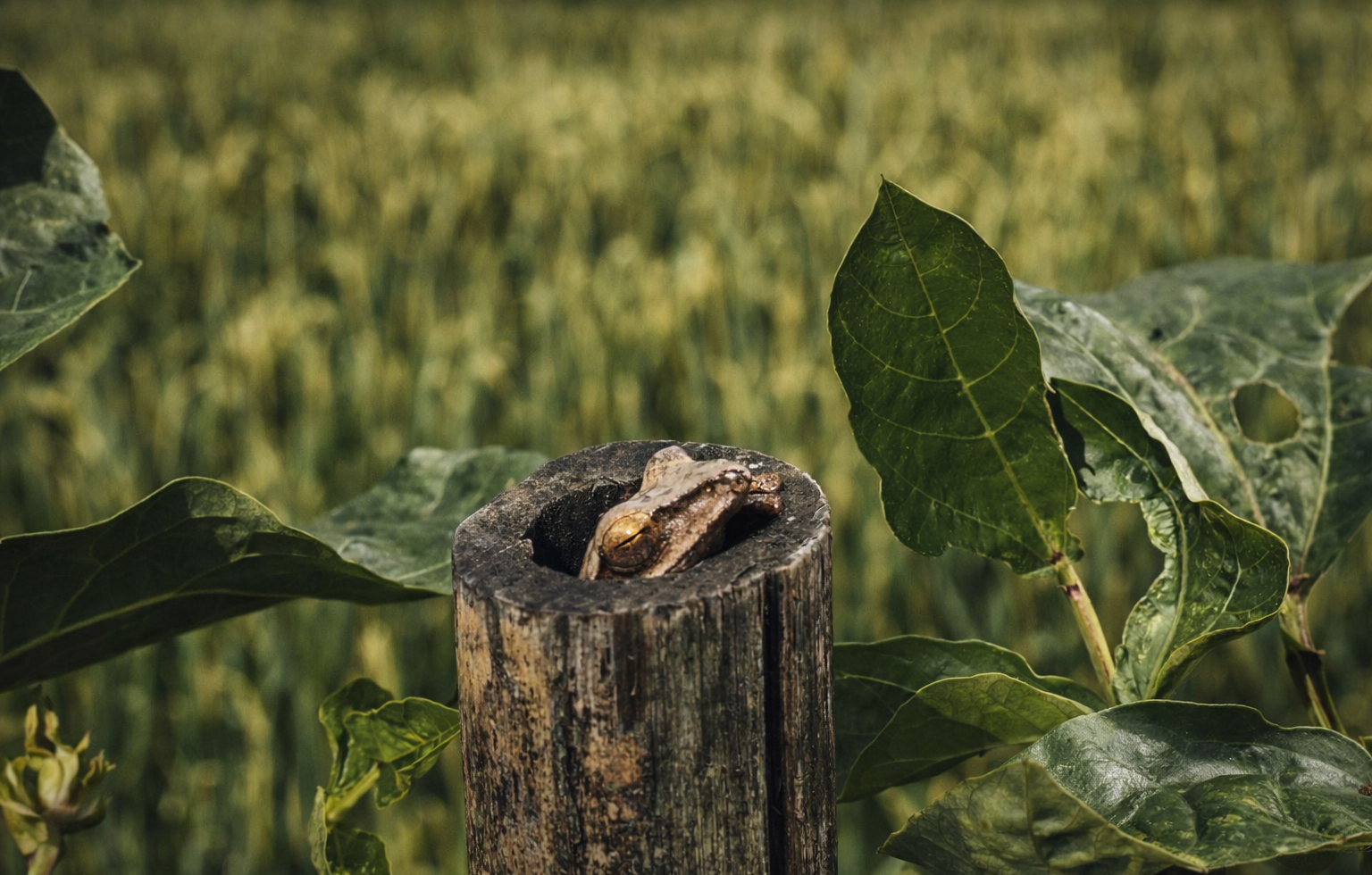
Photograph of the rice terraces in Sapa. Image by Phil Hoolihan. All rights reserved.
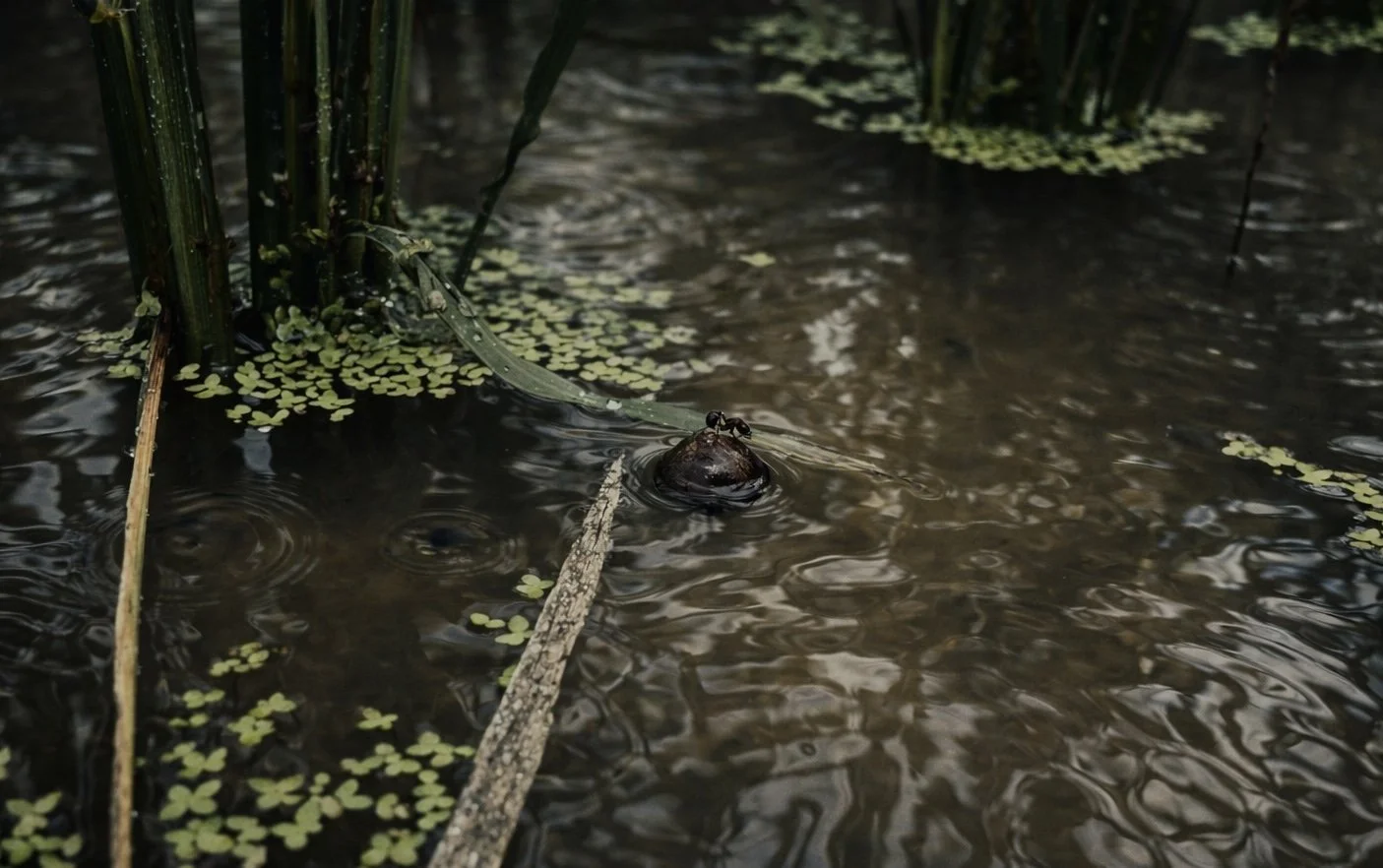
Photograph of the rice terraces in Sapa. Image by Cha Ly Thi. All rights reserved.
Photograph of the rice terraces in Sapa. Image by Cha Ly Thi. All rights reserved.
Why terraces succeed where modern farming struggles
Large scale rice farming in lowland regions often comes at a cost. Continuous flooding creates methane emissions. Chemical inputs pollute waterways. Monocultures reduce biodiversity.
Terraced systems in places like Sapa offer a quieter alternative. Water moves by gravity, flowing from one field to the next and being reused along the way. S oil is held in place by the stepped structure of the land. Crops are often mixed, and chemical use is traditionally minimal. Rather than forcing productivity from the land, these systems work within its limits. They are not optimised for maximum yield but are optimised for diversity that also assure resilience.
Photograph of the rice terraces in Sapa. Image by Phil Hoolihan. All rights reserved.
Photograph of the rice terraces in Sapa. Image by Cha Ly Thi. All rights reserved.
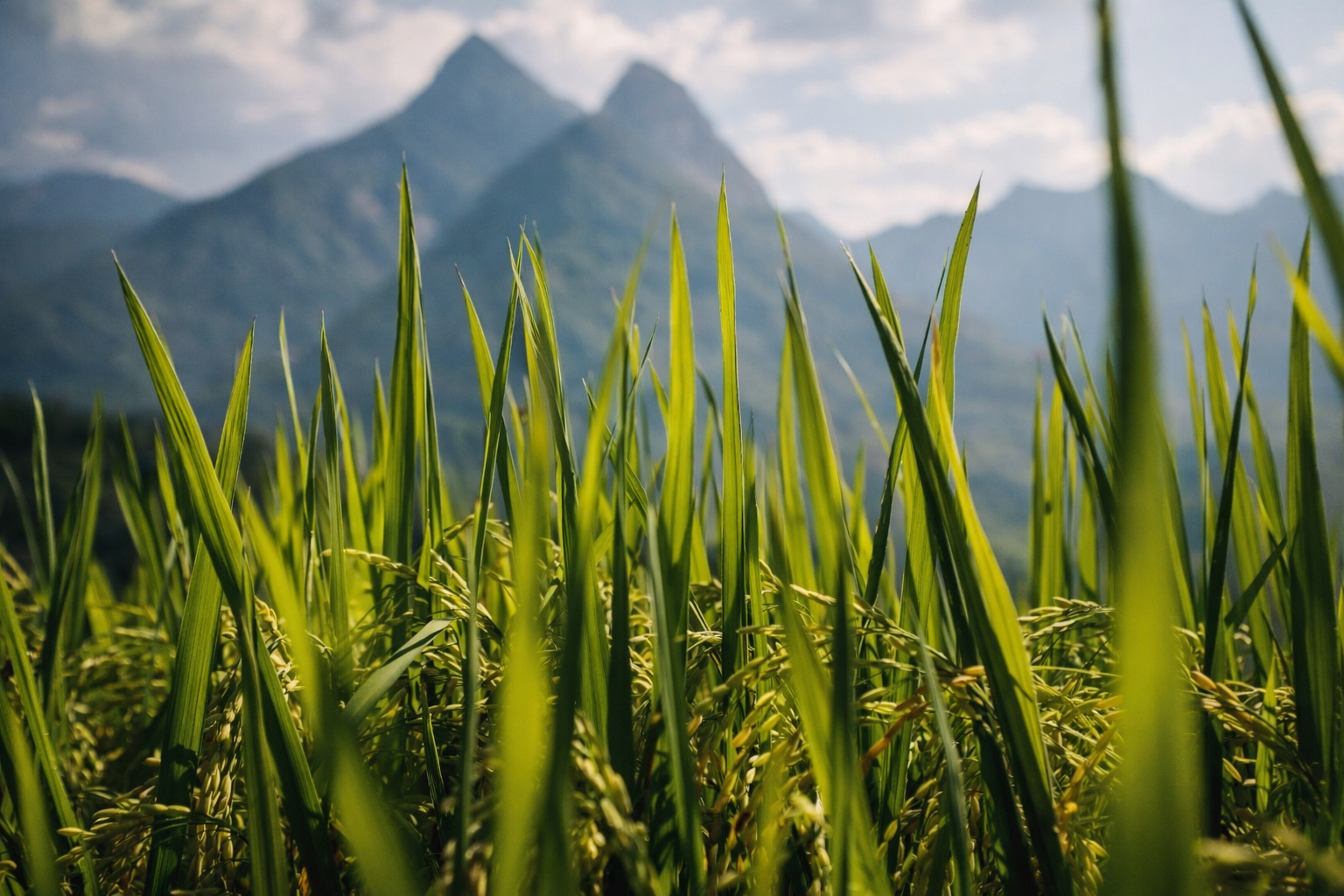
Photograph of the rice terraces in Sapa. Image by Cha Ly Thi. All rights reserved.
The cost of harmony
This balance does not come easily. Terraces must be built and maintained by hand. Walls collapse and need repair. Water channels must be constantly adjusted. Harvests are significantly smaller, and everything depends on the rhythm of the seasons. Rice farming on the steep mountain slopes is labour intensive work, with knowhow passed down through generations. Rice cultivation requires knowledge that cannot be rushed or easily scaled bus this is precisely why the system endures.
The intelligence of community
Across Sapa and the surrounding mountains, communities such as the Hmong and Dao have refined these systems over centuries. Water is guided through hand built canals. Labour is shared during planting and harvest. Knowledge is carried in oral tradition and in lived experience. Rice and daily life are so intertwined, they are cultural memory, embodied in the landscape. For many, Rice is Life.
If you are curious to witness this way of life more closely, our Sapa trekking and homestay experiences offer a chance to walk these terraces alongside the people who care for them, learning not just how they are built, but why they matter.
Why they move us
There is a reason rice terraces stop people in their tracks. Part of it is visual, the repeating curves, the layered depth, the shifting colours through the seasons. Water reflects the sky, young rice glows green, harvest turns the mountains gold, but there is something deeper at play.
We are drawn to places where human presence feels balanced and where effort, care, and adaptation are visible. These are landscape that tell a story not of human domination, but of relationship. The terraces are beautiful because they make sense practically and emotionally.
Drawn by beauty, grounded in meaning
There are few landscapes in the world that capture attention quite like the rice terraces of Sapa. Their form is instantly recognisable because their beauty is quietly magnetic. For many travellers, these fields are the image that first draws them to the mountains of northern Vietnam. Over time, Sapa has become known far beyond its borders, celebrated for both its cultural richness and its extraordinary scenery. At the heart of that reputation sit the terraces, and the people who build. The terraces shape the identity of the region as much as the lives of the people who tend them. They are often described as iconic, but that word can feel overused. What makes these landscapes truly stand apart is not just how they look, but what they represent.
The longer travellers stay in Sapa, the more the terraces begin to reveal themselves as something deeper. They make a great backdrop for photographs but are working landscapes, cultural expressions, and living systems. In many ways, they are the jewel in the crown of Sapa. Not because they shine the brightest, but because they hold together everything that makes this place what it is. For those who wish to go beyond the viewpoints and step into the landscape itself, our guided treks through Sapa’s rice terraces offer a more grounded way to experience their beauty, walking alongside the people who have shaped them for generations.
A different way forward
In a world increasingly shaped by speed and efficiency, rice terraces offer a different perspective. They remind us that human design does not have to come at the expense of nature. They remind us that functionality and beauty are not opposing forces. Rice terraces are systems built with patience, knowledge, and respect that enhance the landscapes they inhabit. Terraces are not relics of the past but are living examples of what is possible.
If you feel drawn to landscapes like this, you may find meaning in travelling more slowly, more consciously. Our community led cultural experiences in northern Vietnam are designed for those who value connection over convenience, where every step supports the people and traditions that make these places what they are.
In the end, Sapa’s terraces are something to look at and something to learn from.
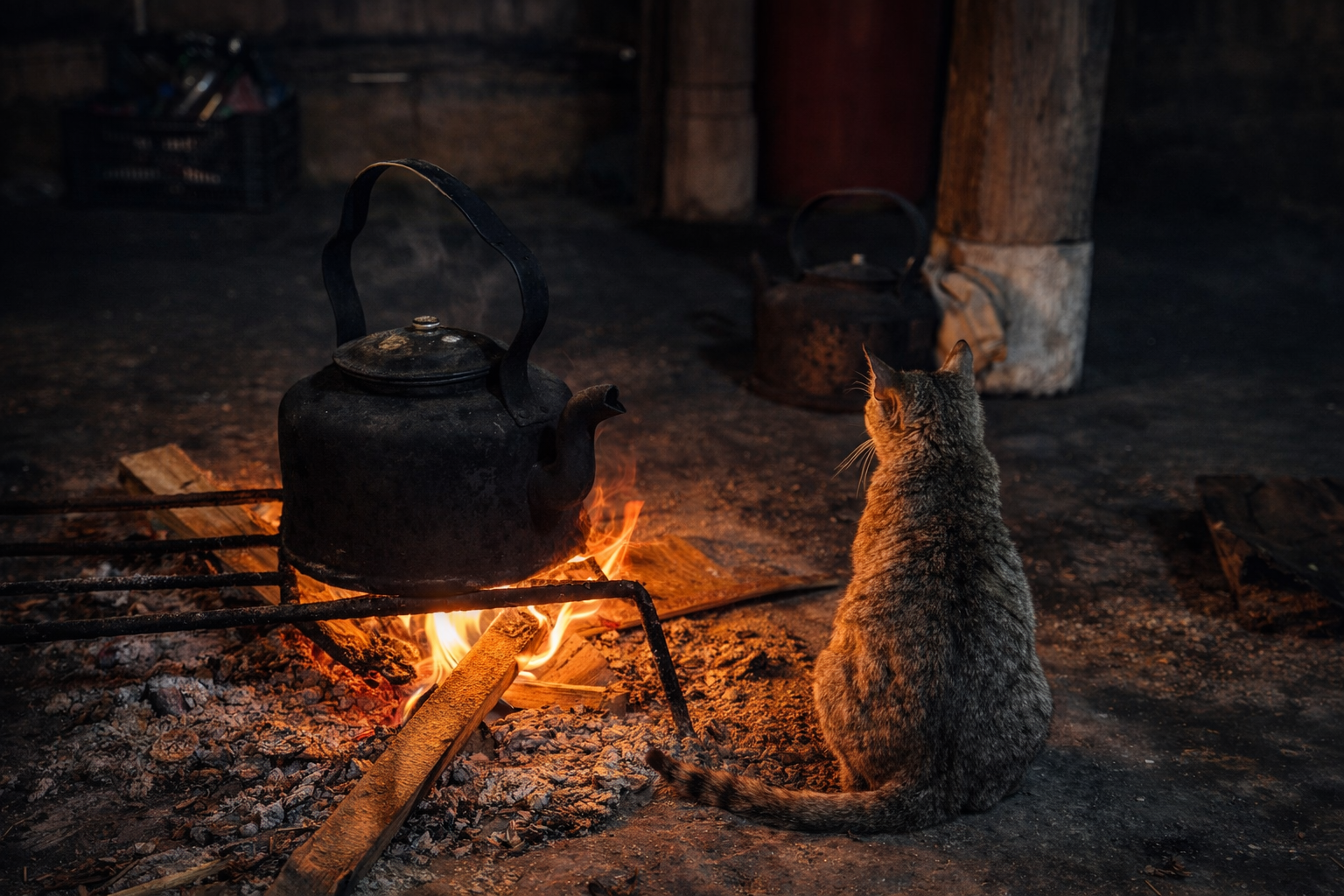
Cats, Dogs and a Very Practical Friendship in Sapa.
In the mountains around Sapa, cats and dogs are rarely treated as pampered pets. Instead they are trusted helpers in daily life. Hmong folktales even explain how these animals earned their place alongside people.
Not Quite Pets, Not Quite Livestock.
If you spend time in Hmong villages around Sapa, you will notice something interesting about the cats and dogs wandering through courtyards and along dusty paths. They are everywhere, but they are rarely treated like the pampered pets many visitors are used to seeing at home.
Dogs guard houses, accompany people along mountain trails, and warn families about strangers or wild animals. Cats patrol kitchens and storage spaces, quietly keeping rats and mice away from precious grain supplies. They live alongside people, but usually outside the house, and affection is expressed through care and provision rather than cuddles.
In many households, animals are simply called what they are. A cat is called cat. A dog is called dog. The relationship is respectful and practical, shaped by generations of mountain life where every member of the household, human or animal, has a job to do.
If you’d like to see this way of life for yourself, you’re always welcome to join us for a quiet walk through the villages, where these relationships unfold naturally, step by step.
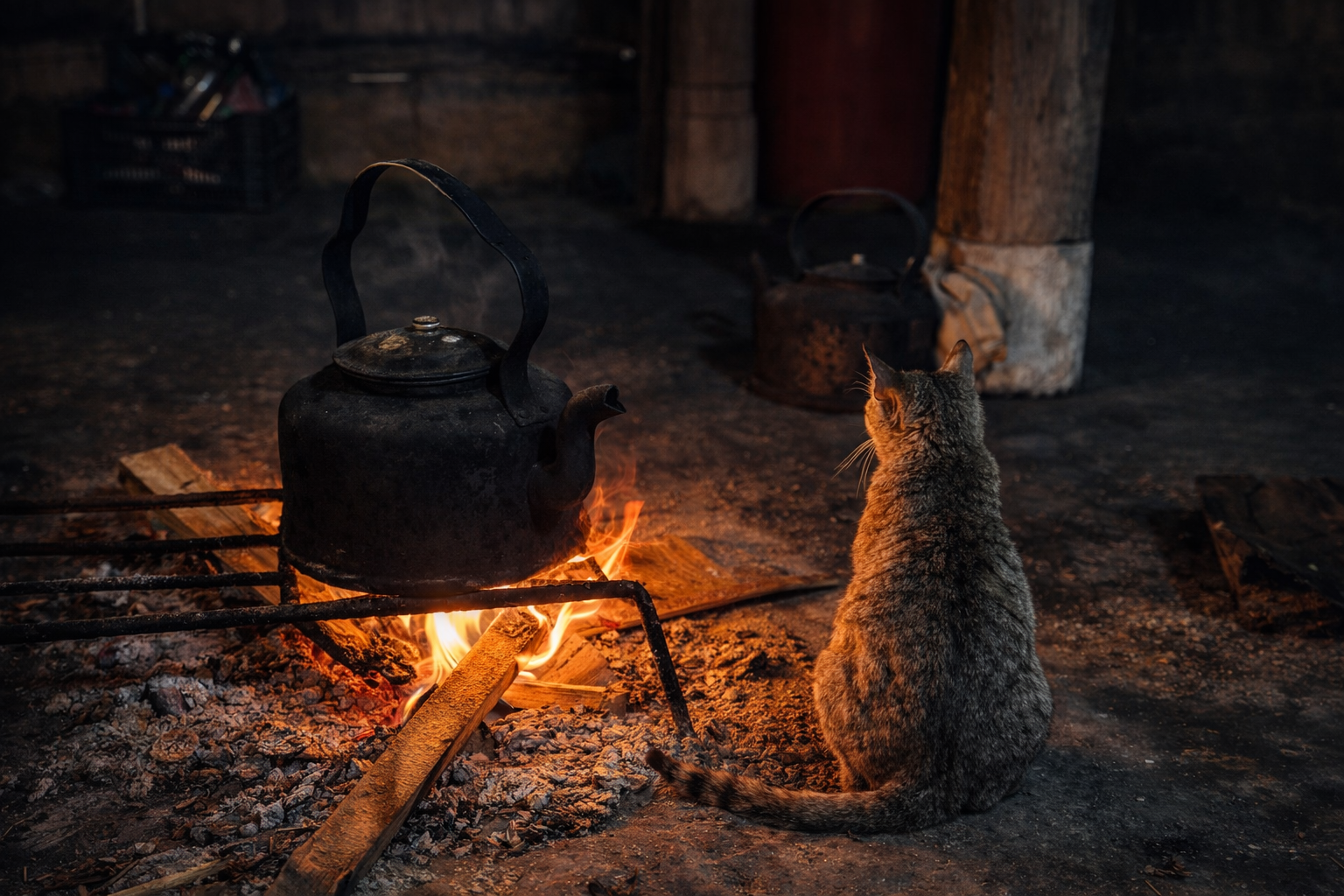


The Mountain Dogs of Northern Vietnam.
While many village dogs are mixed breeds that have adapted naturally to the mountains, two distinct breeds are strongly associated with Hmong communities in northern Vietnam. These are the Hmong Dog and the Bac Ha Dog.
The Hmong Dog, sometimes called the Hmong bobtail dog, is a sturdy mountain breed known for its naturally short or stubby tail. These dogs tend to have muscular bodies, thick coats, strong legs, and a broad head that gives them a serious and alert expression. They are highly intelligent and extremely loyal to their owners. Traditionally they were used for hunting in forests and for guarding homes in remote mountain villages. Their strong sense of direction and endurance make them particularly suited to steep terrain and long walks through the hills.
The Bac Ha Dog is another famous breed from the northern highlands around the town of Bac Ha. These dogs are often larger and fluffier than the Hmong Dog. Many have thick, long fur that protects them from the cold mountain climate and bushy tails that curl over their backs. Bac Ha Dogs are known for their courage and strong guarding instincts. Despite their impressive appearance, they are also known to be calm and gentle with their owners.
Both breeds developed in the rugged landscapes of northern Vietnam where resilience, intelligence, and loyalty were essential qualities. For Hmong families living in isolated mountain communities, these dogs have long been dependable partners.
The Hmong Bobtail Dog: A Natural Born Mountain Guard.
The Hmong bobtail dog is one of the most distinctive dog breeds in northern Vietnam. As the name suggests, its most recognisable feature is its naturally short or completely absent tail. This is not the result of docking but a genetic trait that has developed over generations in the mountains.
These dogs are compact, muscular, and built for endurance. They typically have thick coats, strong legs, and a broad, slightly square head that gives them a serious and alert expression. Their appearance reflects their purpose. They are working dogs first and foremost.
Hmong bobtail dogs are known for their intelligence and independence. They are highly loyal to their owners but can be wary of strangers, which makes them excellent guard dogs in remote villages. Traditionally they were also used for hunting, relying on their strong sense of smell and their ability to navigate dense forests and steep terrain.
In many ways, they perfectly reflect the environment they come from. Tough, reliable, and not particularly interested in fuss, they are well suited to life in the mountains where practicality matters more than pampering.
The Bac Ha Dog: The Fluffy Guardian of the Highlands.
The Bac Ha dog is another iconic breed from northern Vietnam, originating from the highland town of Bac Ha not far from Sapa. Compared to the Hmong bobtail dog, the Bac Ha dog has a much more striking and almost majestic appearance.
These dogs are usually larger and covered in thick, fluffy fur that helps them cope with the colder mountain climate. Many are white or light coloured, although other shades can appear, and they often have a distinctive bushy tail that curls over their back. Their thick coat and sturdy build give them a strong, almost lion like presence.
Despite their impressive looks, Bac Ha dogs are not just for show. They are known for their courage and strong protective instincts. Like the Hmong dog, they are used to guard homes and livestock, especially in isolated areas where early warning of danger is essential.
At the same time, they are often described as calm and steady around their owners. This balance of gentleness and strength makes them well suited to village life, where a dog needs to be both a protector and a reliable everyday companion.
Cats and Dogs in Hmong Folktales.
Hmong folklore also gives cats and dogs surprisingly important roles. In fact, when animals appear in traditional Hmong stories, dogs often take centre stage while cats appear less frequently but still play memorable parts.
One folktale tells of a man who owned a magical gourd that could produce food. When rats stole the gourd, his household suddenly faced hunger. A cat and a dog set out together to retrieve it. The dog used its powerful sense of smell to track the thieves while the cat rode along and helped recover the gourd. When the precious object was finally returned, the story explains why cats and dogs have different roles in the household. The cat was rewarded with higher status and allowed to eat meat, while the dog was assigned the job of guarding the house.
Another story tells of a mysterious red eyed dog that helps a young woman find her future husband. Her father gives her the dog and tells her to follow it. Wherever the dog stops and refuses to move will be the home of the man she should marry. The dog ignores wealthy households and leads her instead to a poor orphan. By refusing to leave the orphan’s house, the dog confirms that he is the rightful husband. The tale quietly celebrates the idea that character matters more than wealth.
Stories like these often portray dogs as guides, protectors, and helpers who can cross the boundary between the human world and the unseen world. Cats, meanwhile, are usually tied more closely to the practical world of households and grain stores.
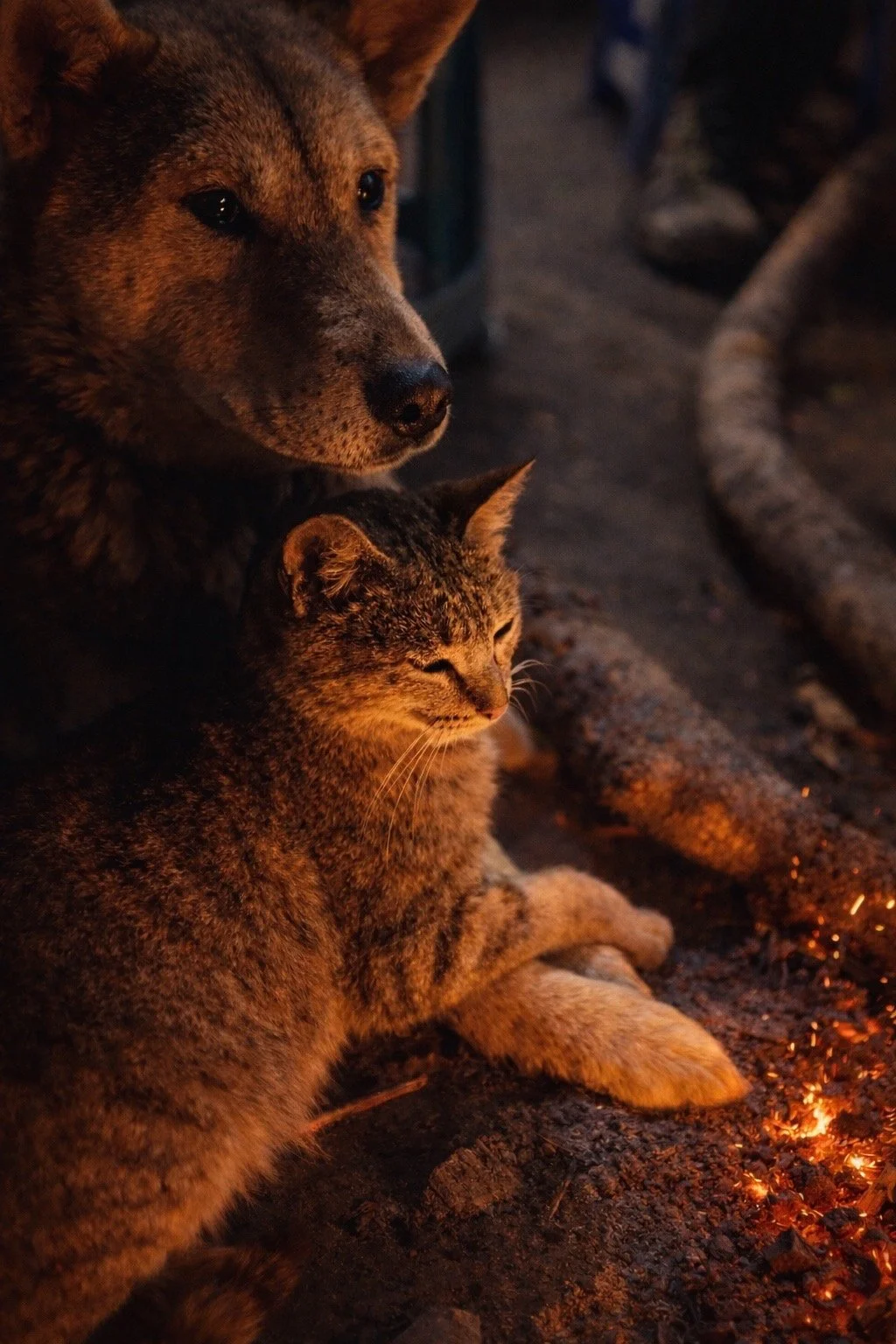


An Old Story About Hunger and Cooperation.
Another popular story explains why cats and dogs chose to live alongside people in the first place.
Many years ago, when the Hmong still lived semi nomadic lives in the mountains, a time of extreme hunger struck both people and animals. Food was scarce everywhere. The Hmong called a meeting and invited the animals to attend.
“We are all hungry,” the Hmong leader said. “We need to work together.”
One by one, the animals began to make their excuses.
“We only need a tiny amount of food,” said the mouse. “We will be fine.” The mouse promptly left.
The monkey spoke next. Monkeys, he explained, were excellent climbers who could reach fruit high in the tallest trees. “We do not need help.” And off he went. The tiger looked around the room and shrugged. “You are all our food.” With that cheerful observation, the tiger also left. The birds flapped their wings and announced they could simply fly away and find food elsewhere. Then they disappeared into the sky. Slowly the room emptied until only two animals remained. Cats and dogs.
They agreed to work alongside people in a symbiotic way. Humans would provide them with food or shelter. In return, the cats would keep rats and mice from ravaging the grain stores, while dogs would guard homes and keep dangerous animals at bay.
A Partnership That Still Exists Today.
The folktales and the reality of village life line up rather neatly.
Cats and dogs are respected and provided for because they contribute to the household. They are not usually petted, named, or treated like family members in the Western sense. Instead they are valued partners who help keep homes safe, protect food supplies, and make village life run a little more smoothly.
It may not look like the typical idea of pet ownership. But in the mountains of northern Vietnam, it is a practical partnership that has lasted for generations.
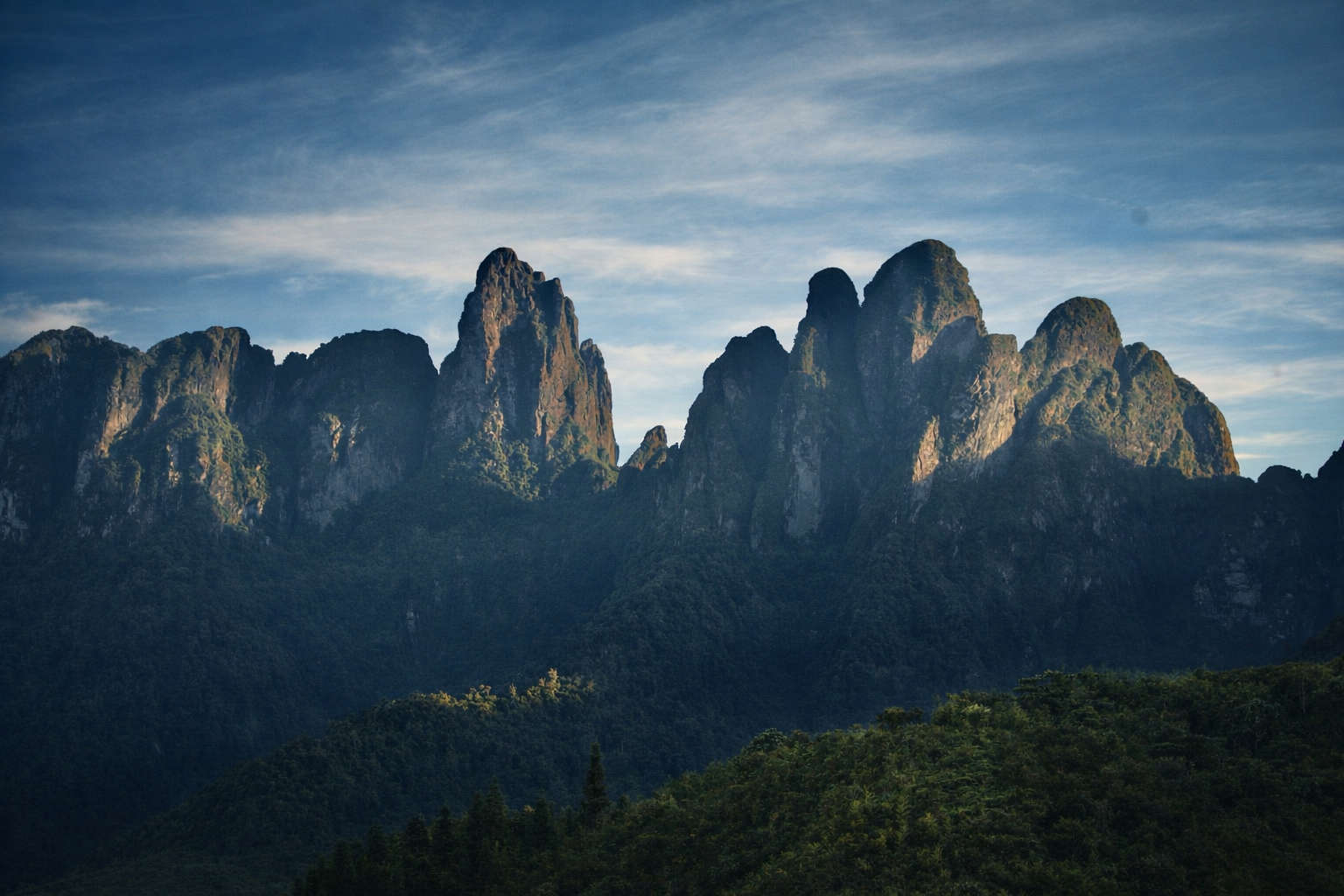
Vietnam’s Hidden Tectonic Power: Faults, Fire and Rising Mountains
Northern Vietnam’s dramatic landscapes around Sapa and Mount Fansipan were shaped by the powerful Ailao Shan Red River Fault. This article explains how the fault formed, why hot springs exist in Lai Châu Province, and what geological risks the region faces today.
High above the rice terraces and mist filled valleys of Sapa rises Mount Fansipan, the tallest peak in Vietnam. Its dramatic slopes and rugged skyline are not the product of volcanic fire, but of immense tectonic forces that reshaped Southeast Asia millions of years ago. Beneath the beauty of northern Vietnam lies the Ailao Shan Red River Fault, a vast fracture in the Earth’s crust born from the collision of continents. This deep geological engine lifted ancient rocks into the sky, fractured the mountains and created the conditions for earthquakes and natural hot springs that still define the region today.
The Ailao Shan Red River Fault, Sapa and Mount Fansipan
Northern Vietnam is home to some of the most spectacular mountain scenery in Southeast Asia. The landscapes around Sapa, the towering summit of Mount Fansipan and the scattered hot springs of Lai Châu Province all share a common origin. They are products of the Ailao Shan Red River Fault, one of the most important tectonic structures in the region.
Understanding this fault helps explain not only the dramatic topography of the Hoàng Liên Sơn range, but also the level of earthquake risk and geothermal activity found across northern Vietnam.
If you are planning a trip to the region, you may also want to read our guide to Things to Do in Sapa and our detailed overview of Northern Vietnam Travel Planning.
What Is the Ailao Shan Red River Fault?
A fault is a fracture in the Earth’s crust along which movement has occurred. That movement is caused by tectonic forces, meaning forces related to the movement and interaction of lithospheric plates. The Ailao Shan Red River Fault, often called the Song Hong Fault in Vietnam, is a major strike slip fault system that runs from eastern Tibet through Yunnan in China and into northern Vietnam before extending towards the Gulf of Tonkin. It trends roughly northwest to southeast and marks a deep zone of crustal weakness.
The fault developed during the collision between the Indian and Eurasian plates, a process that began around 50 million years ago. Between about 30 and 15 million years ago, enormous sideways movement occurred along this zone, shifting blocks of crust by hundreds of kilometres. Although movement today is much slower, the fault remains active and continues to accommodate gradual crustal deformation.
Where Does the Fault Run in Relation to Sapa?
Sapa lies within the Hoàng Liên Sơn mountain range in Lào Cai Province, near the border with China. It does not sit directly on the main strand of the Red River Fault, but it lies within the broader shear zone associated with it. This deformation belt is tens of kilometres wide and contains numerous secondary faults and fractures.
These smaller structures are important because they control both earthquake activity and groundwater flow. The wider region, including Lai Châu and Điện Biên provinces, experiences occasional moderate earthquakes, typically in the magnitude 4 to 5 range. Larger events are possible but far less common than along major global plate boundaries.
If you are considering trekking in the region, our Sapa Trekking Guide explains the terrain, elevation and landscape in more detail.
Why Are There Hot Springs Around Sapa and Lai Châu?
One of the most intriguing features of the region is the presence of hot springs in and around Sapa and across Lai Châu Province. These springs are not volcanic in origin. Instead, they are controlled by fault related hydrothermal circulation.
Rainwater from the high mountains infiltrates fractured bedrock and travels downwards along fault planes. As it descends several kilometres into the crust, temperatures increase naturally with depth. Northern Vietnam has a moderately elevated geothermal gradient due to crustal thickening during the India Asia collision. The heated water then rises back to the surface along permeable fault zones and emerges as hot springs.
This process depends on fractured rock and deep circulation, not on active magma chambers. There is no evidence of present day volcanic systems beneath Sapa.
If you are interested in experiencing the geothermal hot springs and cave networks, there are opportunities to visit these locations while on some of our multiday exclusive Motorbike Adventure Loops.
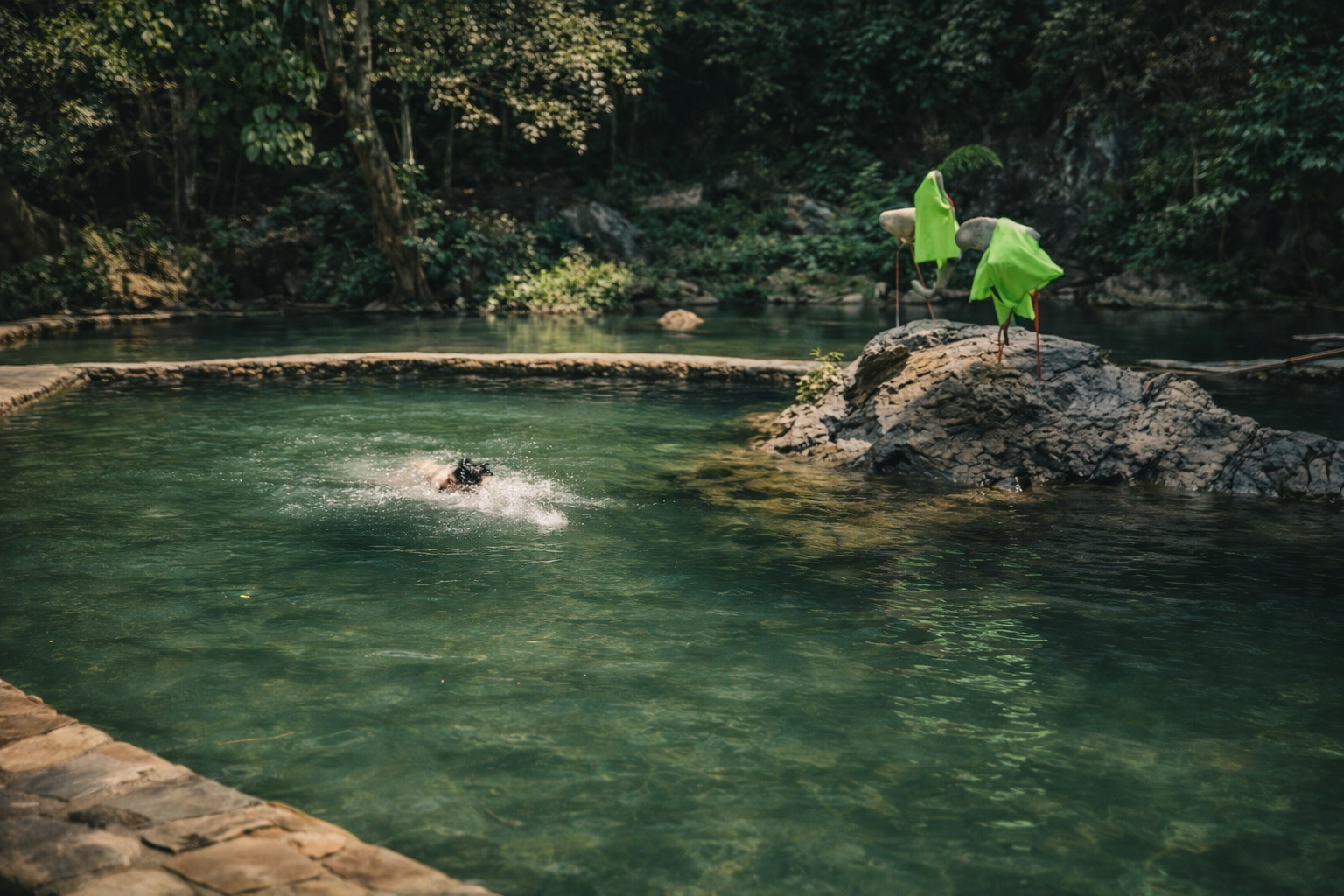
How Mount Fansipan Was Formed
At 3,143 metres, Mount Fansipan is the highest peak in Vietnam. It is not a volcano but an uplifted block of ancient metamorphic and granitic rocks that formed deep within the Earth’s crust hundreds of millions of years ago.
During the India Asia collision, parts of Southeast Asia were squeezed and displaced sideways. The Red River Fault acted as a major structural boundary that allowed crustal blocks to move and, in some areas, to rise. The Hoàng Liên Sơn range, including Fansipan, was uplifted along this tectonic system.
Over millions of years, intense monsoon rainfall, river erosion and landslides sculpted the uplifted block into the steep ridges and valleys seen today. Fansipan’s height reflects crustal thickening and tectonic uplift rather than volcanic construction.
The Wider Geological Setting of Vietnam
Vietnam lies away from a direct plate boundary. The nearest major active boundaries are the Himalayan collision zone far to the west and subduction systems beneath parts of the western Pacific. Northern Vietnam therefore experiences intraplate deformation rather than direct plate boundary activity.
This distinction is important when assessing geological risk. Intraplate faults such as the Red River system typically move more slowly and release energy less dramatically than subduction zones or major transform boundaries like those found in Japan or Indonesia.
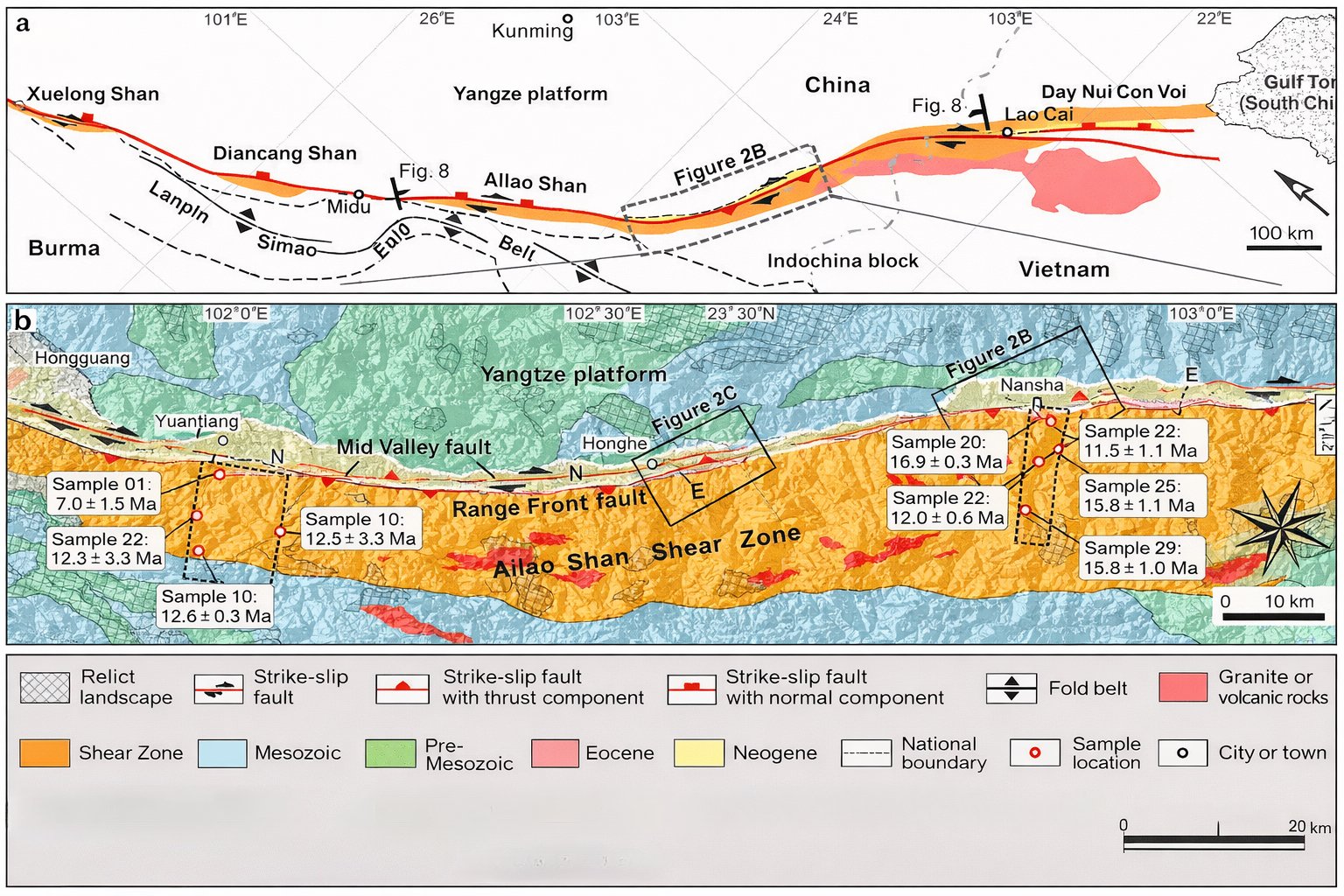
Simplified geologic map of the Ailao Shan-Red River fault (after Harrison et al. [1996] and P. L. Wang et al. [1998]).
What Risks Does the Fault Pose?
The primary geological risks in northern Vietnam are moderate earthquakes and landslides, particularly in steep mountainous terrain around Sapa and Lai Châu. While damaging earthquakes are possible, the likelihood of extremely large magnitude 8 or 9 events is far lower than in regions located directly on major plate boundaries.
Fault systems like the Ailao Shan Red River Fault are generally considered less hazardous than active subduction zones because they accumulate strain at slower rates and over broader areas. That said, they are not risk free. Infrastructure, hillside development and road networks in mountainous areas can be vulnerable to shaking and slope failure.
A Landscape Shaped by Deep Time
The mountains around Sapa, the summit of Mount Fansipan and the region’s hot springs all trace back to the same tectonic engine. The Ailao Shan Red River Fault reshaped the crust of Southeast Asia during the aftermath of the India Asia collision, uplifted ancient rocks and left behind a fractured landscape that still channels heated groundwater to the surface.
Today the region is tectonically alive but comparatively subdued. Its geology offers both natural beauty and manageable geological risk, shaped by millions of years of slow but powerful crustal movement beneath northern Vietnam.
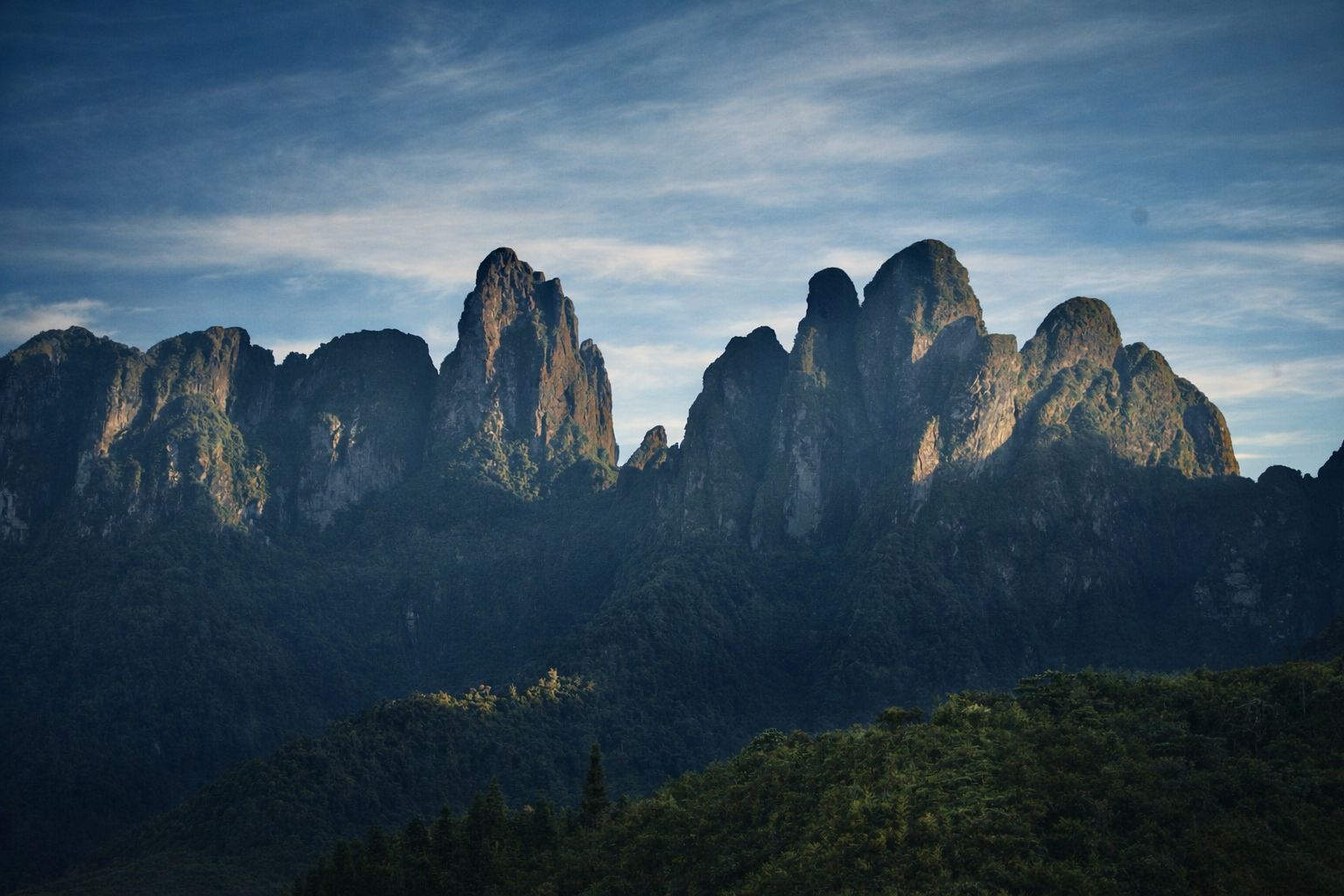
Ready to Explore Sapa?
If this geological story has inspired you, start planning your trip today.
👉 Read our complete Sapa Travel Guide
👉 Discover the best Sapa Trekking Routes
👉 Prepare for your climb with our Mount Fansipan Hiking Guide
Understanding the landscape makes visiting it even more rewarding. Explore wisely, travel prepared and experience one of Vietnam’s most fascinating mountain regions.
The Serene Power of Northern Vietnam’s Man Made Hydro Lakes
Northern Vietnam’s hydro lakes blend human vision with natural beauty. These vast waters support local life, clean energy and quiet travel far from the crowds.
Northern Vietnam is known for its dramatic mountains, lush forests and winding rivers, but it is also home to some of Southeast Asia’s most impressive hydro lakes. These vast bodies of water are the result of major engineering projects, yet they look entirely at home within the landscape. Their sheer scale and calm beauty make them destinations that feel both awe inspiring and deeply peaceful.
A Landscape Transformed by Vision and Engineering
The region’s hydro lakes were created through large scale dam projects that harness the power of fast flowing mountain rivers. When the valleys were flooded, the geography changed forever. What once were river channels and terraced slopes became expansive lakes that stretch for kilometres, curving and branching like inland fjords.
Although these lakes are artificial, they do not feel industrial. The mountains remain untouched and thick with vegetation. Clouds drift low across the water, and the air carries a fresh, earthy scent. The result is a landscape shaped by humans but fully embraced by nature.
Endless Horizons of Still Water and Mist
Visitors are often struck by the way the lakes reflect the surrounding scenery. On a quiet morning the water can appear perfectly still, like polished glass. Forested ridges, limestone cliffs and tiny floating houses are mirrored with astonishing clarity. The atmosphere is often enhanced by gentle mist that rolls across the surface, giving the entire scene a dreamlike quality.
In some areas small islands rise from the water, covered with bamboo and wild plants. These islands create beautiful compositions that feel almost cinematic. In the late afternoon when the sun sinks behind the hills, the lakes glow with soft light that feels peaceful and ancient.
Local Life Along the Water
Despite their remote appearance, the hydro lakes are living landscapes. Local communities fish, farm and travel across the water daily. Long wooden boats glide between floating homes, fish farms and forested peninsulas. Markets gather along the shores and visitors can often share meals of freshly caught fish cooked with fragrant herbs.
Tourism here remains understated. Instead of busy resorts, travellers can find homestays, small eco lodges and guided boat trips that encourage quiet appreciation rather than fast paced sightseeing.
Power, Progress and Preservation
These hydro lakes are vital for Vietnam’s energy supply. They produce electricity for millions while reducing reliance on fossil fuels. Yet what stands out is how gracefully the environment has adapted. Wildlife remains abundant, forests stay green and the lakes have become a source of both sustainability and scenic value.
They show that development does not always have to diminish natural beauty. With careful planning and respect for the land, it can even create new spaces for reflection, adventure and cultural life.
A Destination Worth Exploring
Northern Vietnam’s hydro lakes are functional reservoirs and places where nature and human design exist in harmony. Whether you explore by boat, hike the surrounding hills or simply sit at the shoreline, the stillness and scale will leave a lasting impression.
If you are drawn to landscapes that feel wild yet welcoming, this is a journey worth taking. It is not only about seeing something extraordinary. It is about feeling connected to a place where power and peace flow together.
Ready to Explore on Two Wheels
For those seeking a deeper connection with these waterways, remote mountain communities and the hidden paths in between, our guided motorbike adventures offer a truly immersive way to travel. We ride through highland passes, along lake shores, into caves and across cultural landscapes that many visitors never reach. If you want to combine the freedom of the open road with meaningful, slow travel, explore our routes:
Ride Caves and Waterways
https://www.ethosspirit.com/ride-caves-waterways-5-days
Ride the Great North
https://www.ethosspirit.com/ride-the-great-north
Join us, breathe the mountain air and experience the spirit of Vietnam with every mile.
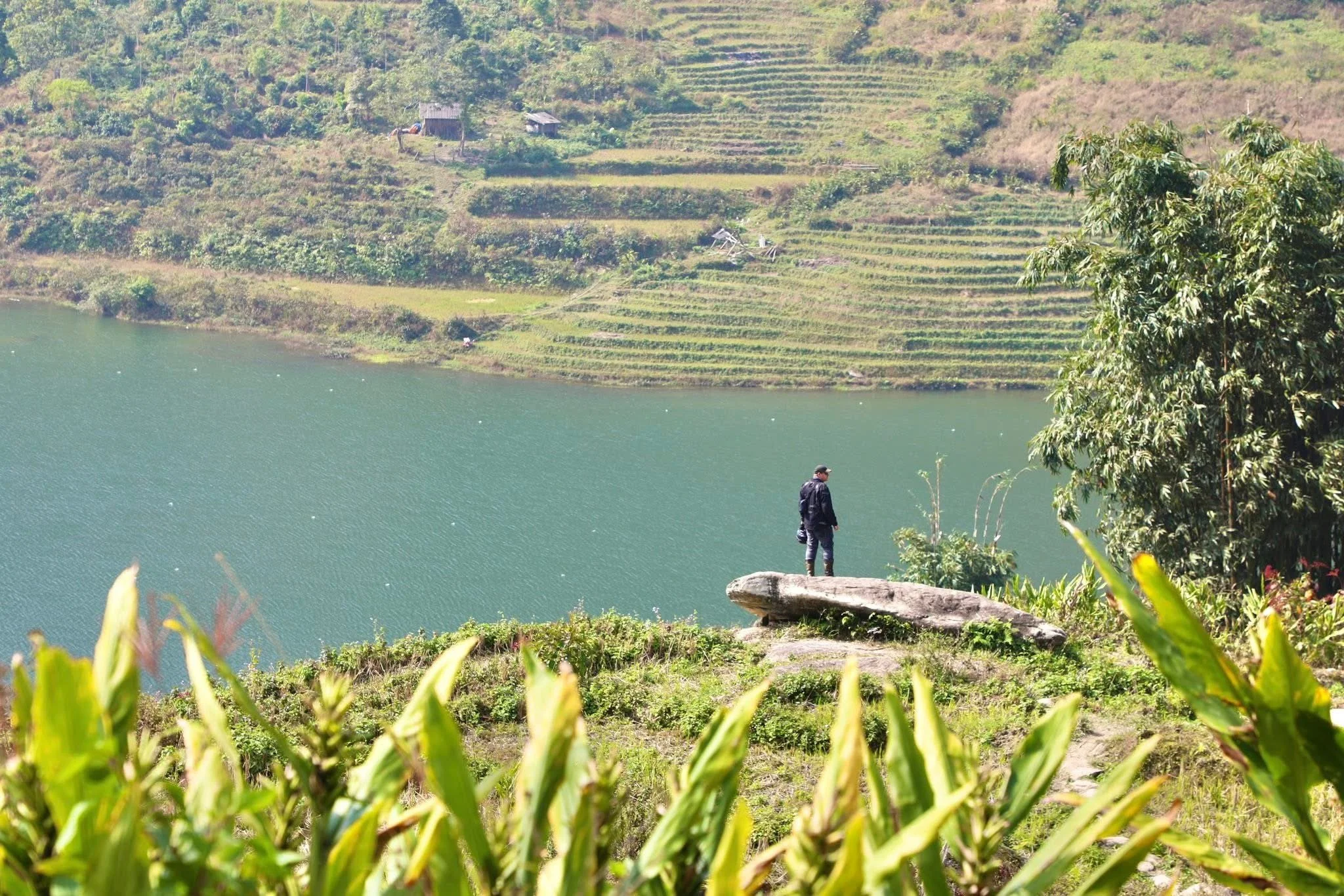
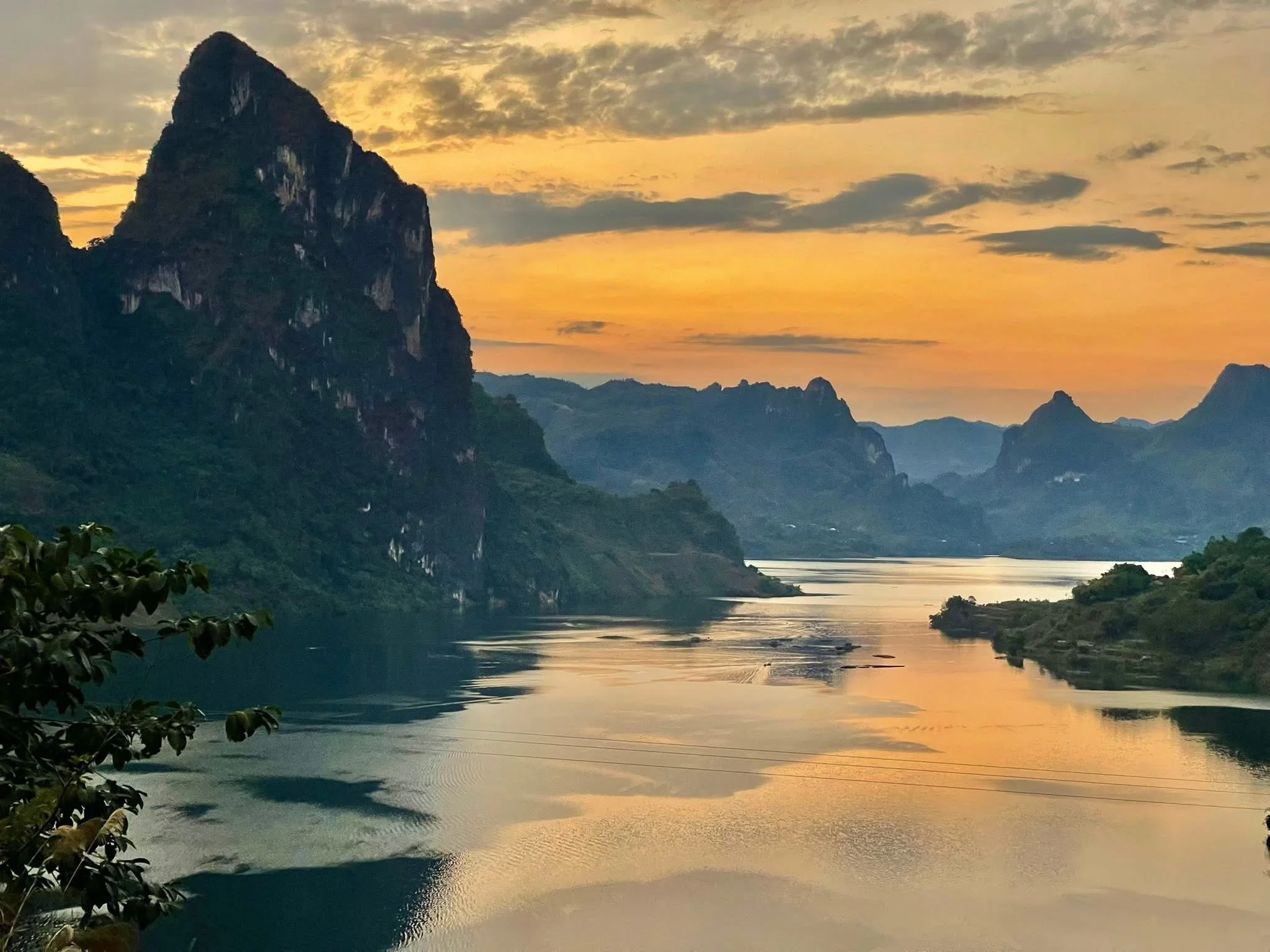
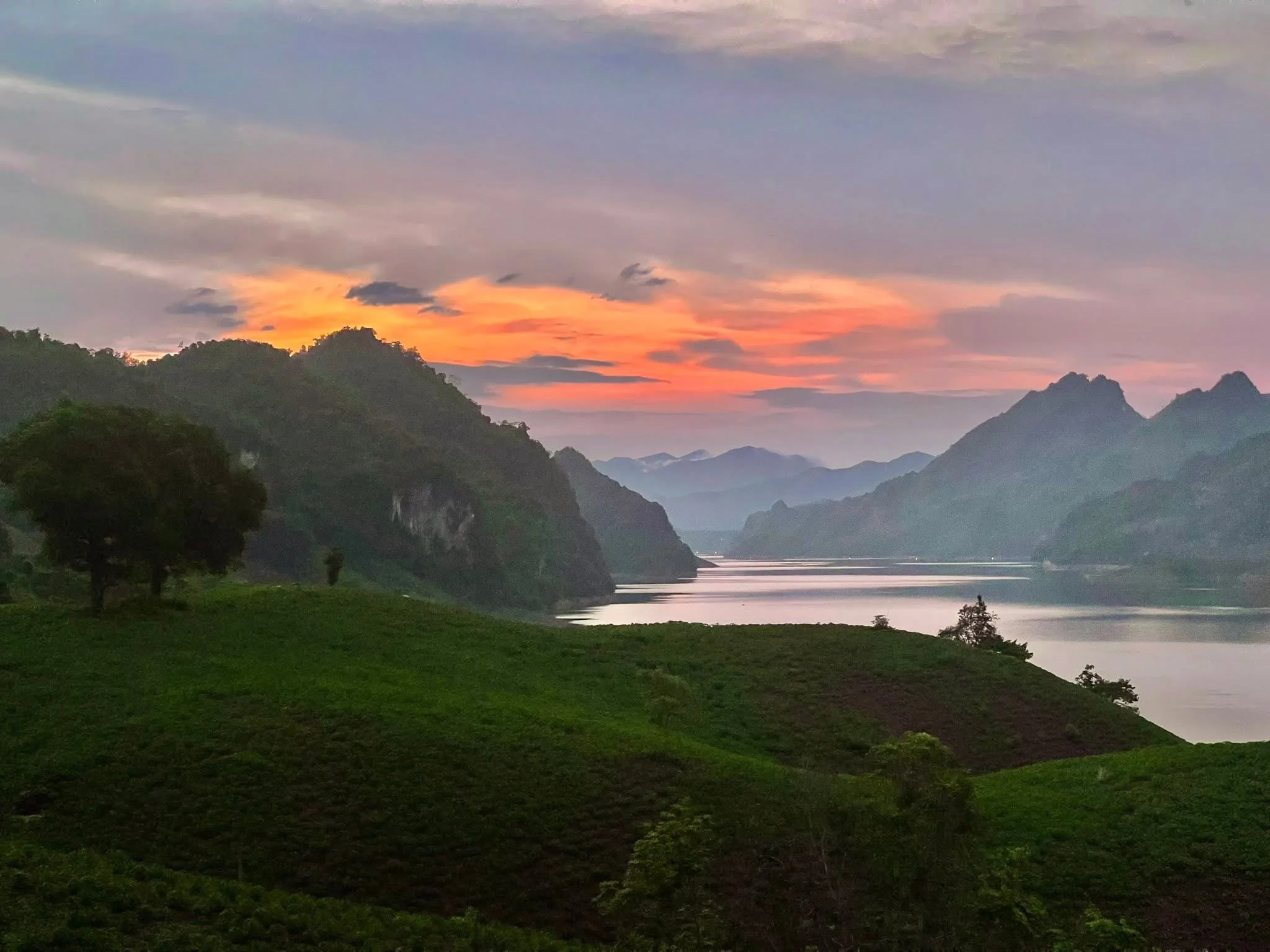
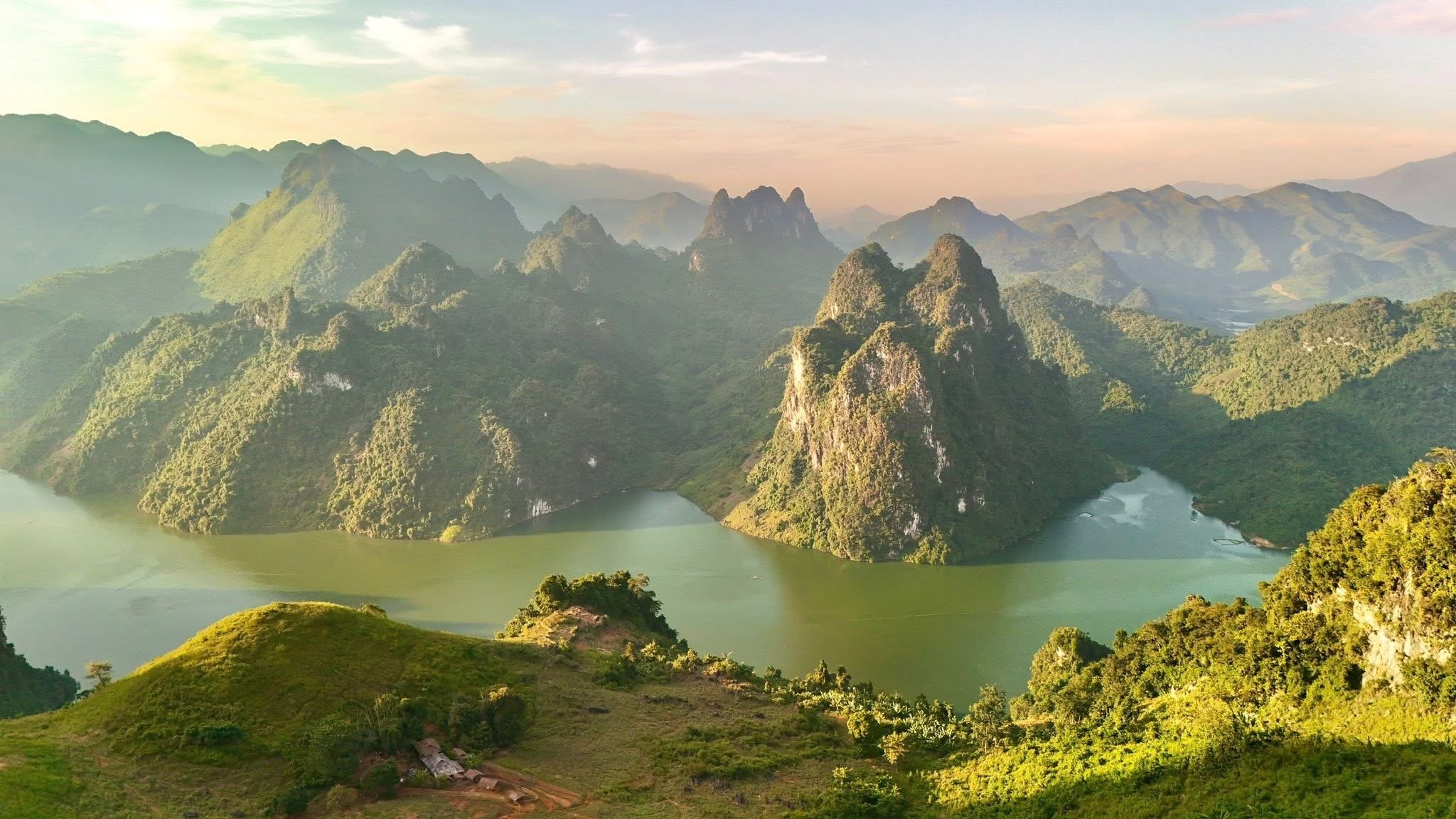
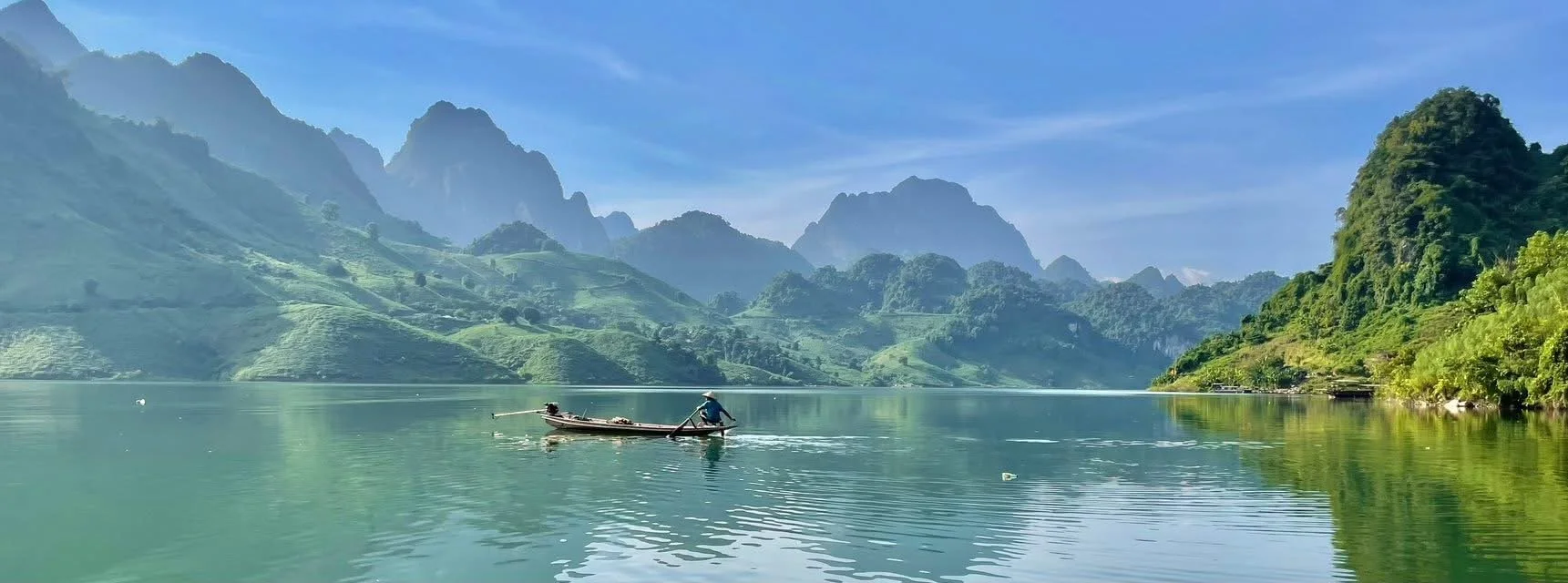
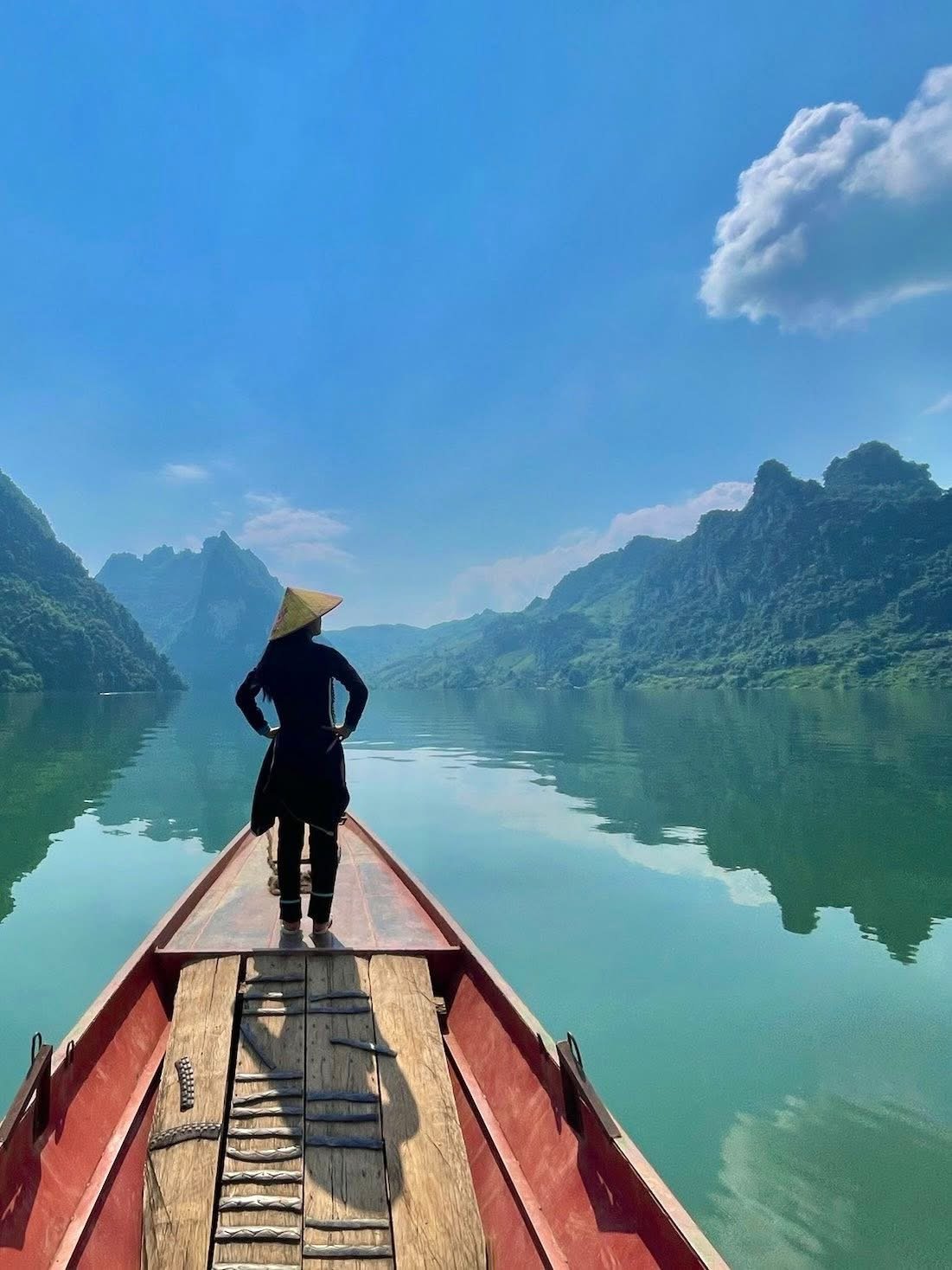
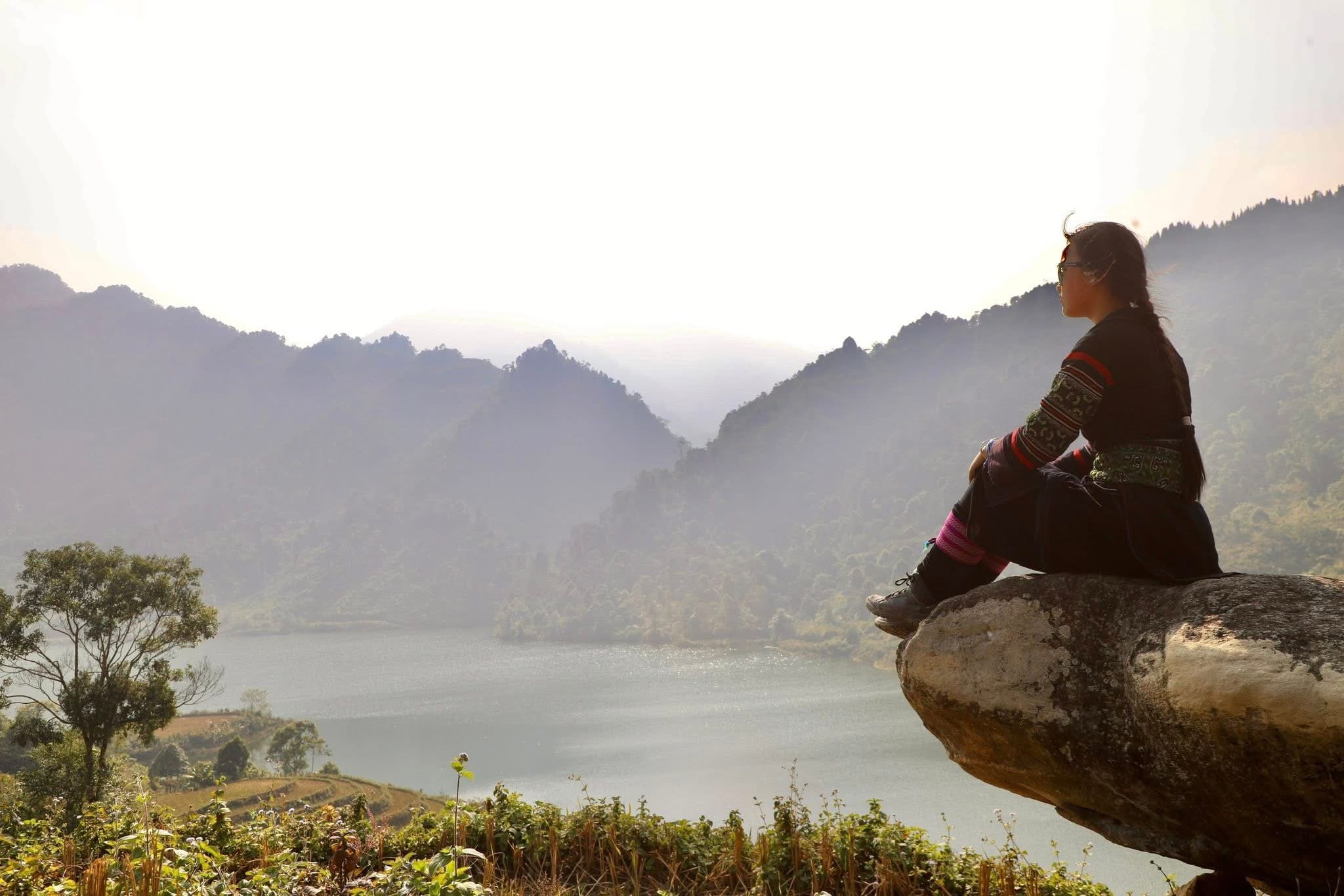
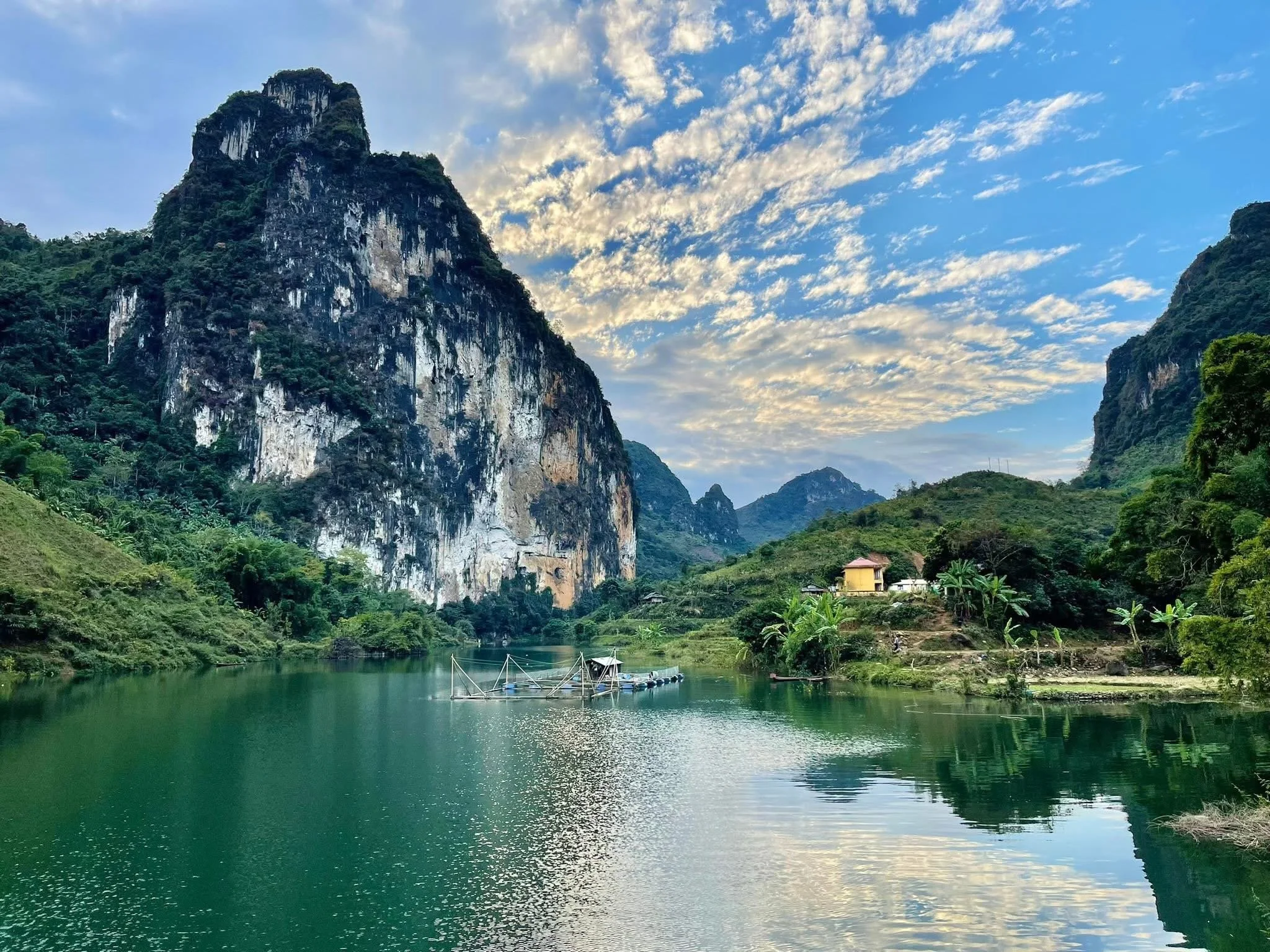
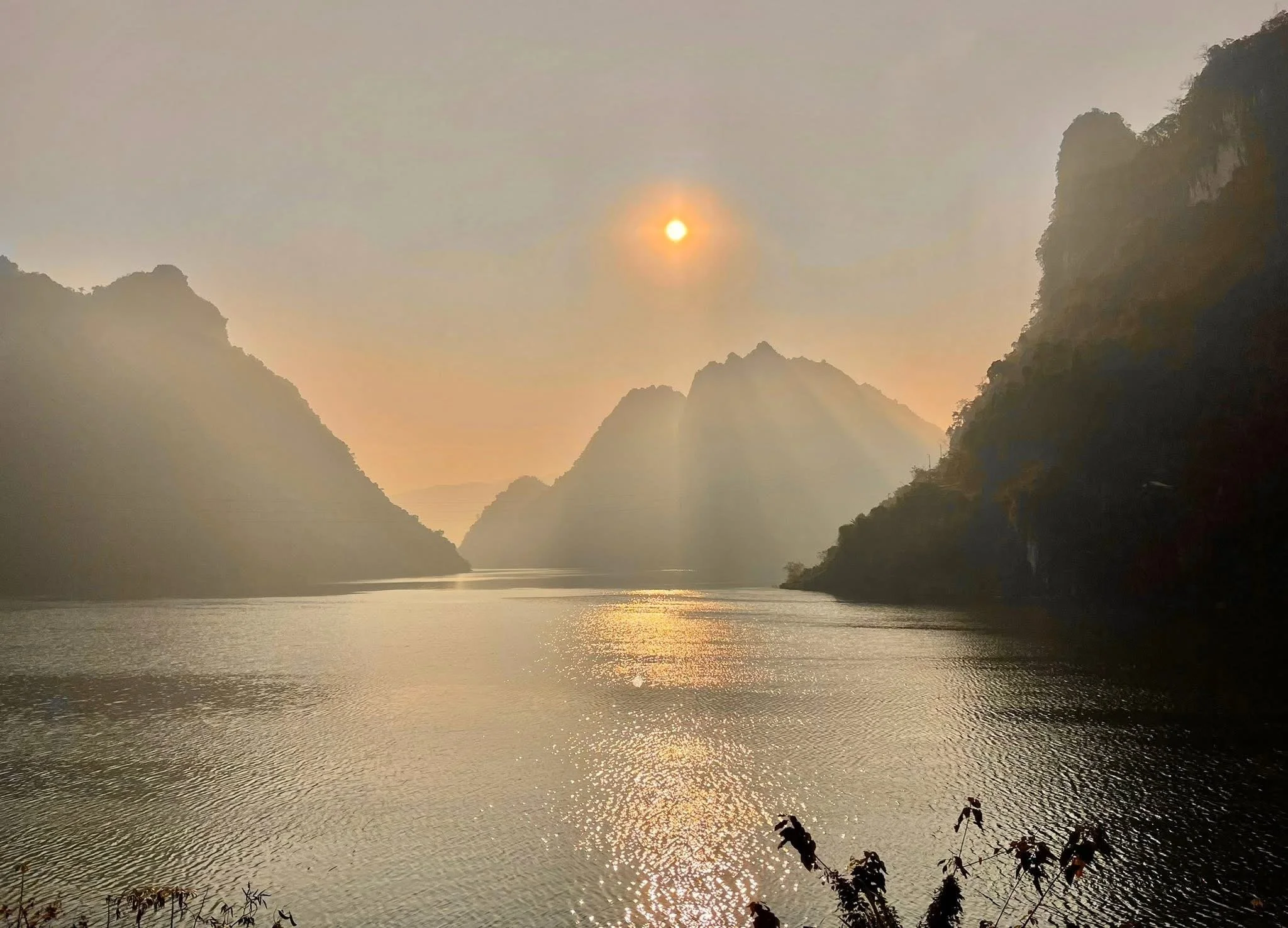
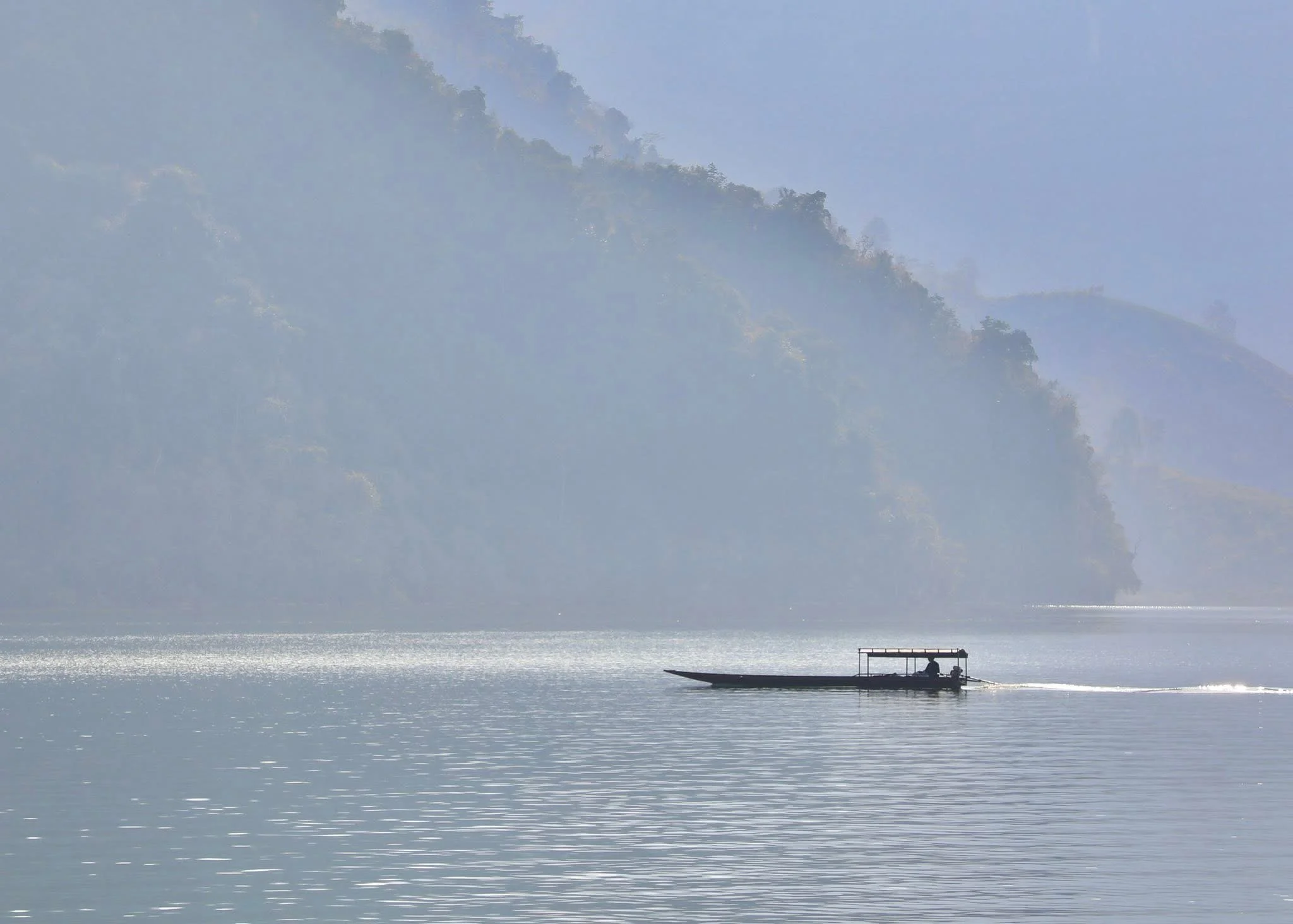
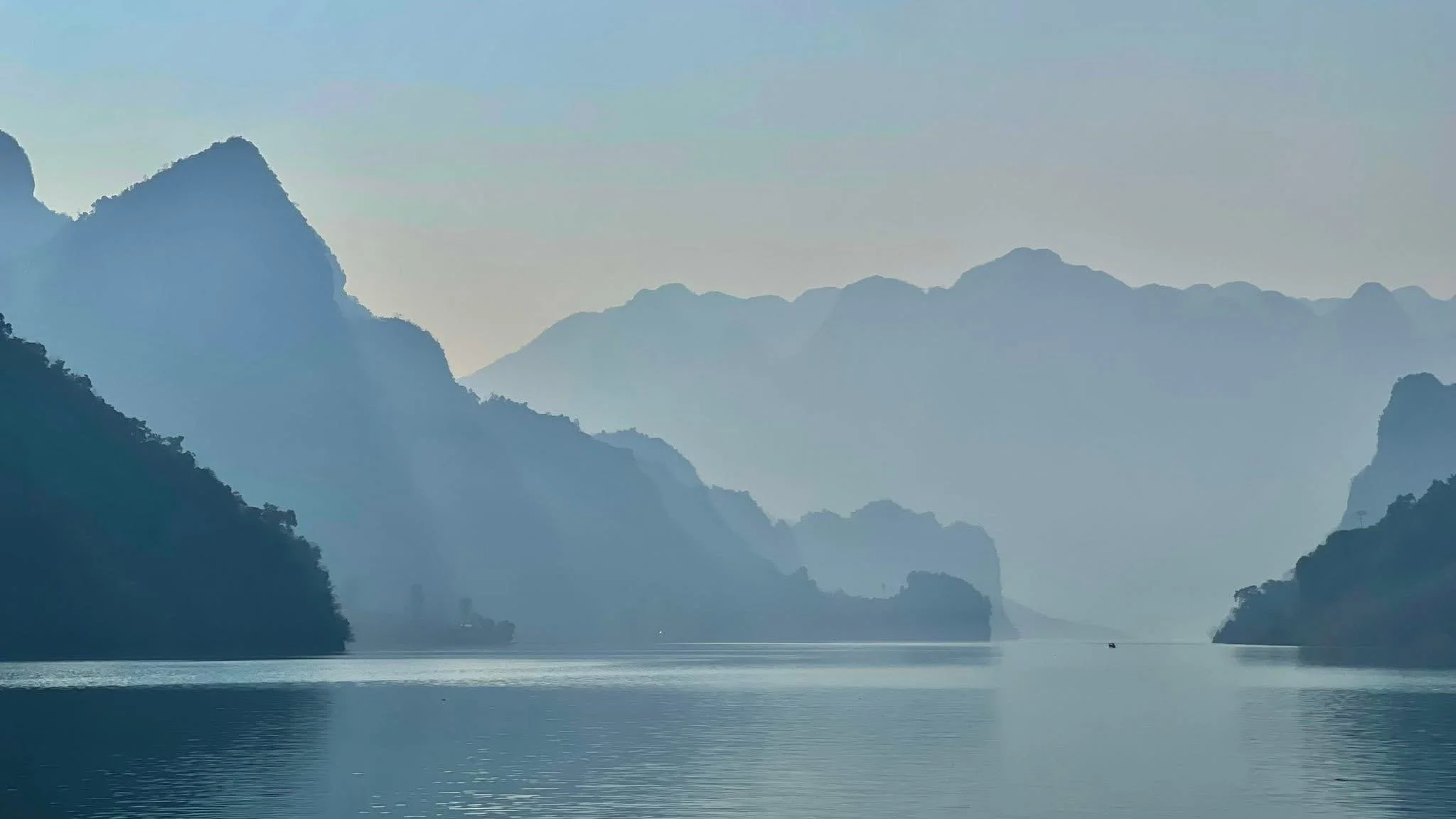
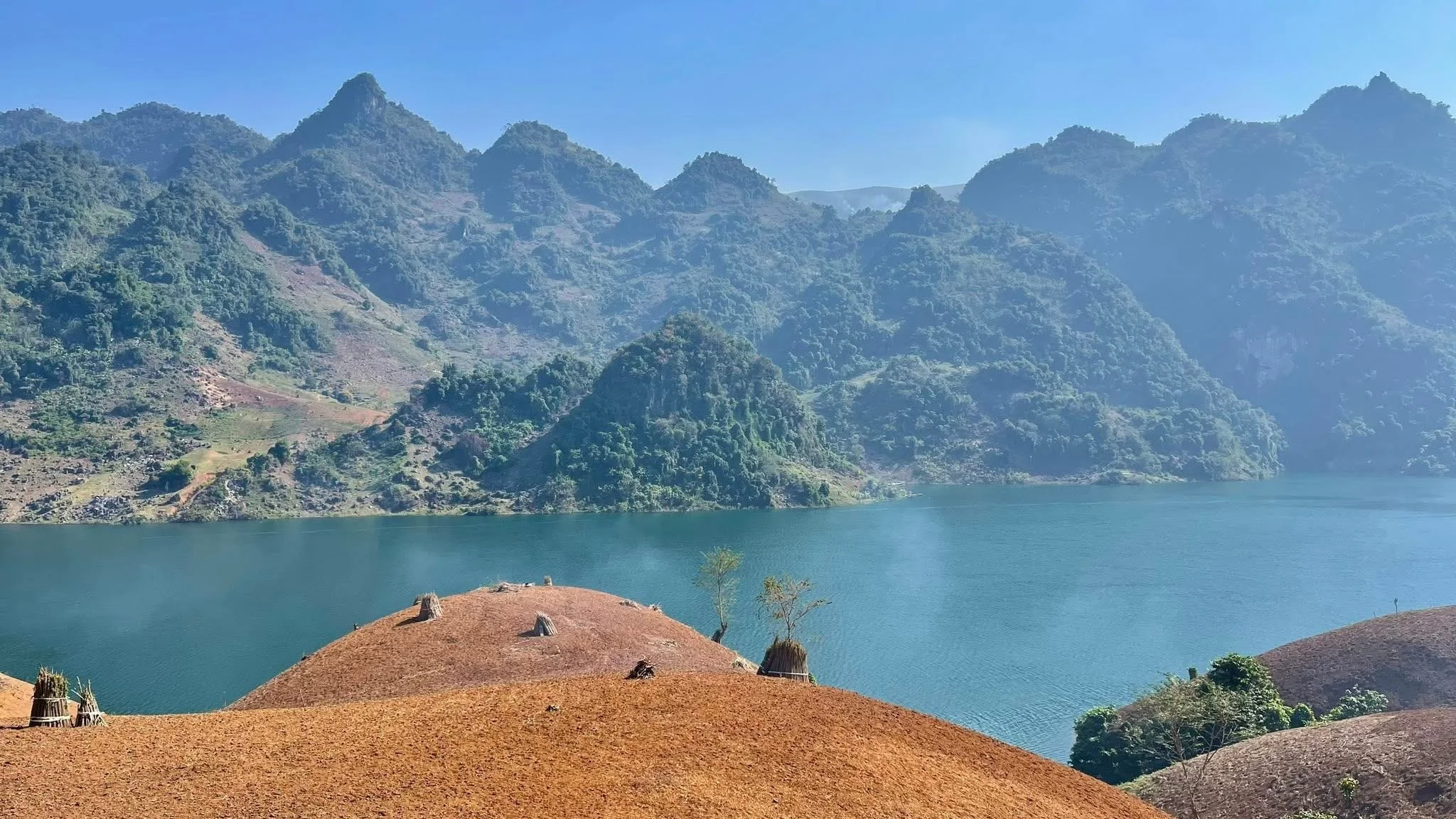
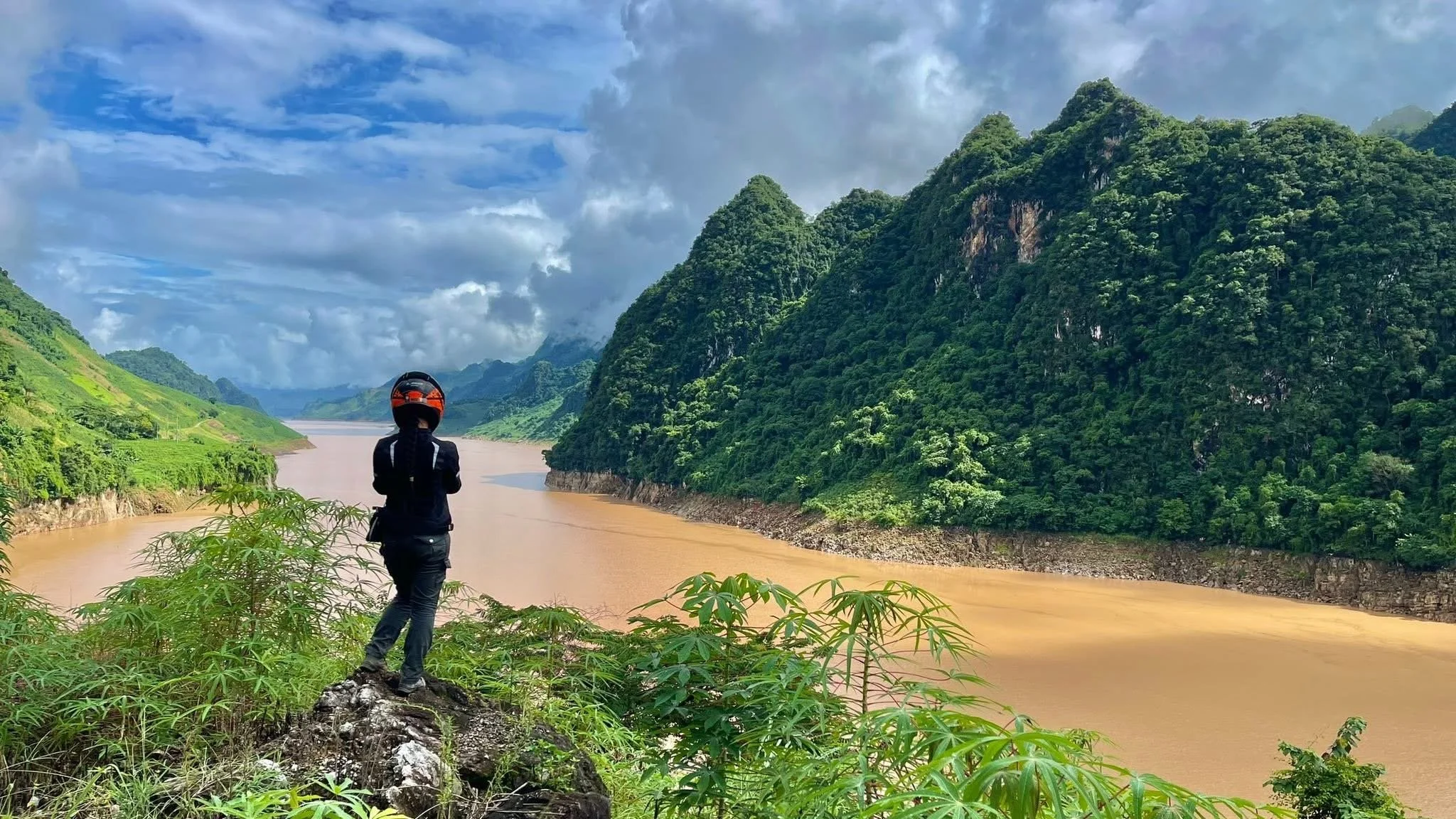
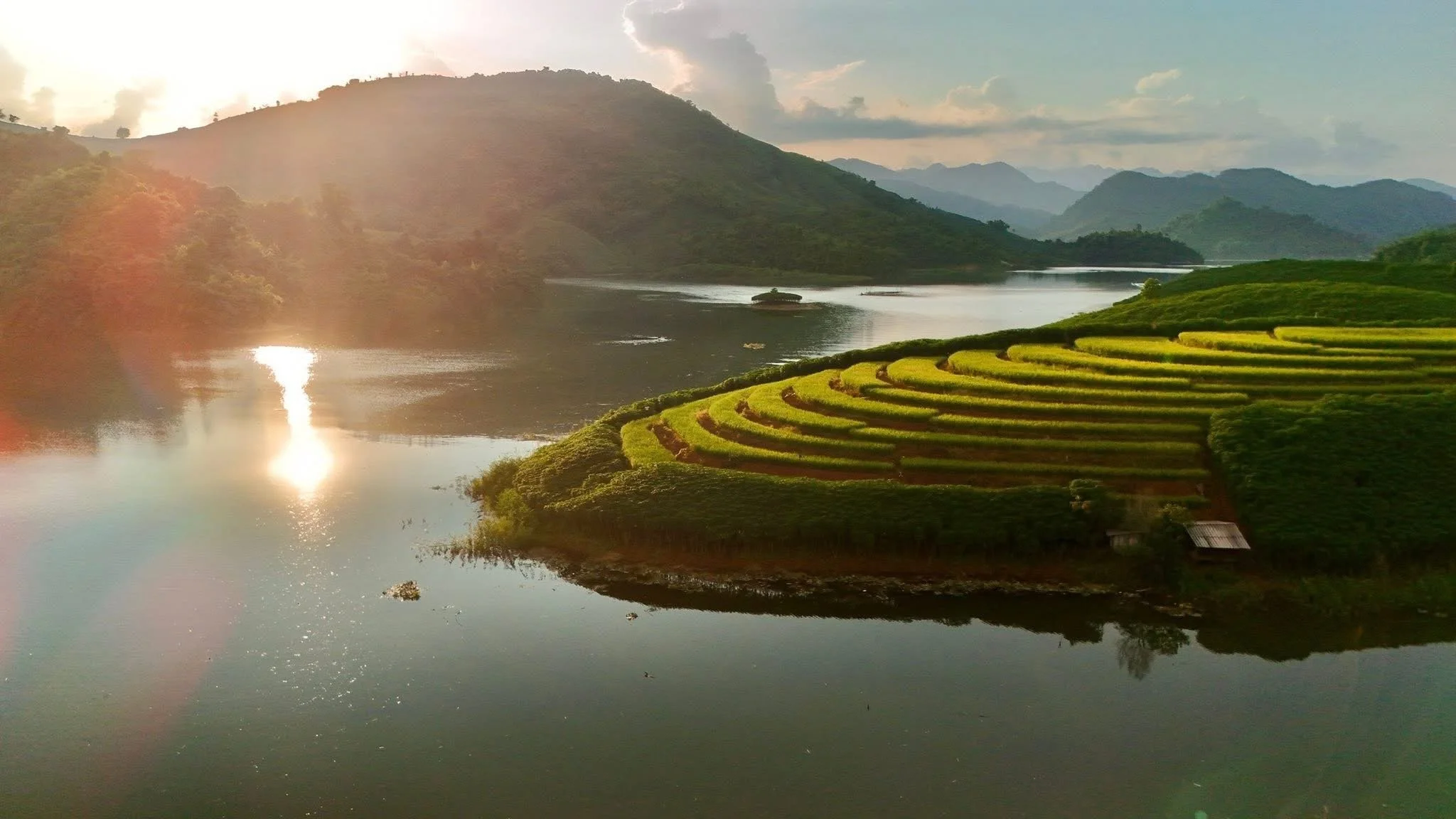
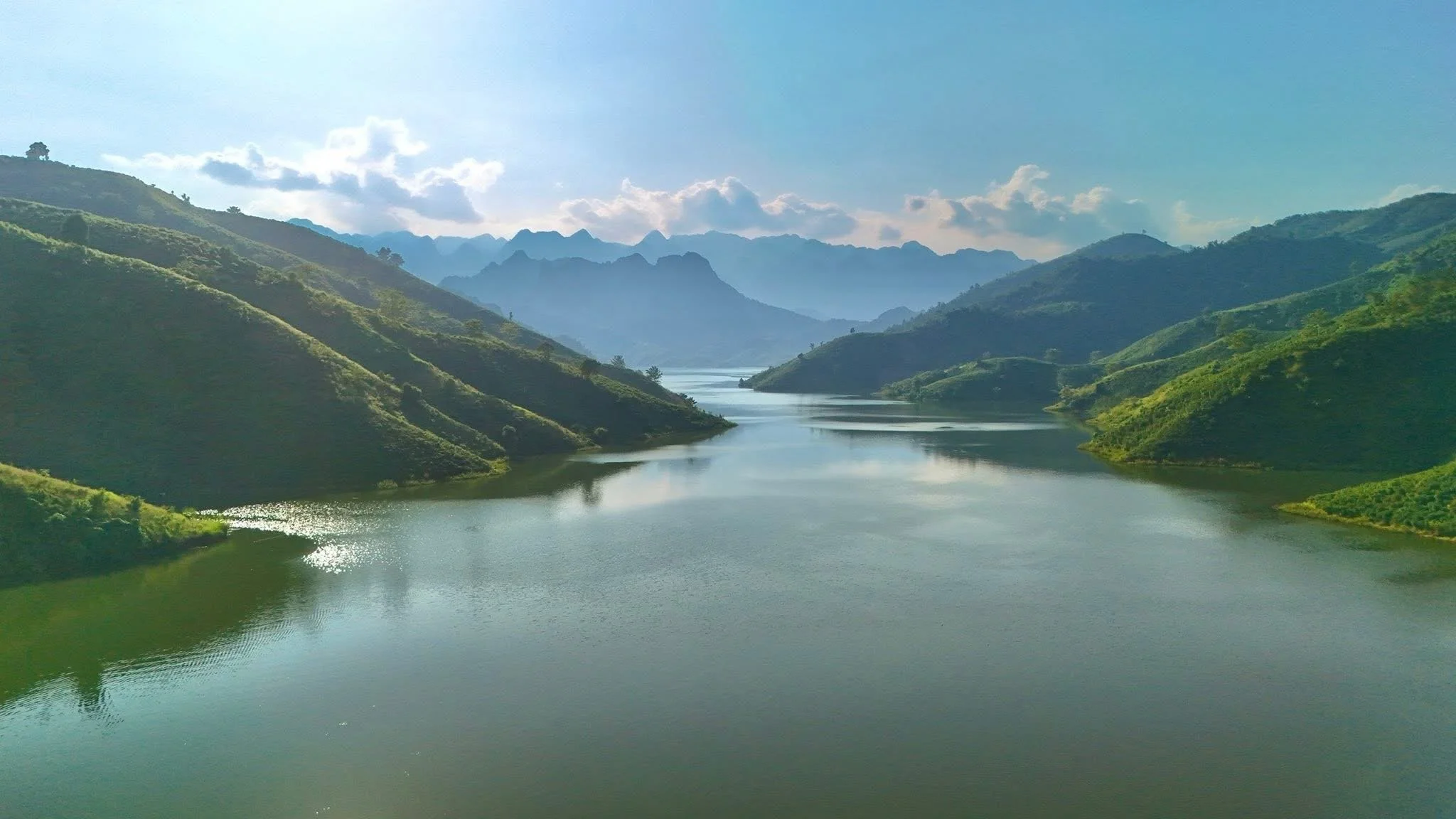
Cherry Blossom Season in Sapa: When the Highlands Turn Pink
Each December, Sapa’s cold highlands briefly turn soft pink as wild cherry blossoms bloom across the tea hills. It is a quiet, beautiful winter moment not many travellers expect.
A Winter Transformation in the Sapa Highlands
There is something very special about cherry blossom season in Sapa. Each year in December, for around fifteen days, the highlands change completely. Cold air settles over the mountains, winter winds sweep across the valleys, and suddenly the landscape glows with soft shades of pink.
Against the grey skies and misty hills, the blossoms feel even more striking. The contrast between winter’s chill and the gentle flowers makes this season short, calm and deeply memorable.
A Landscape Painted in Pink
During this brief period, hillsides that are usually green or quiet become lively with colour. Walking through Sapa at this time feels like stepping into a different world, where nature slows down and invites you to stop and look more closely.
Wild Himalayan Cherry Blossoms Explained
The blossoms seen in Sapa are wild Himalayan cherry trees, known scientifically as Prunus cerasoides. They are sometimes called sour cherry and are native to Southeast Asia.
Where These Trees Grow
These cherry trees grow only in temperate climates at elevations above 1,200 metres. Their natural range stretches from the Himalayas through to northern Vietnam, making Sapa an ideal home for them.
Planted along tea hills, the trees bloom just once a year, which is why the season feels so precious and fleeting.
The Best Place to See Cherry Blossoms in Sapa
O Long Tea Hill and O Quy Ho
The best place to see cherry blossoms in full bloom is O Long Tea Hill in the O Quy Ho area, about 8 km from Sapa Town. Here, rows of tea plants sit beneath flowering cherry trees, creating a peaceful and unforgettable scene.
Early mornings are especially beautiful, when mist drifts through the hills and pink petals glow softly in the cold winter light.
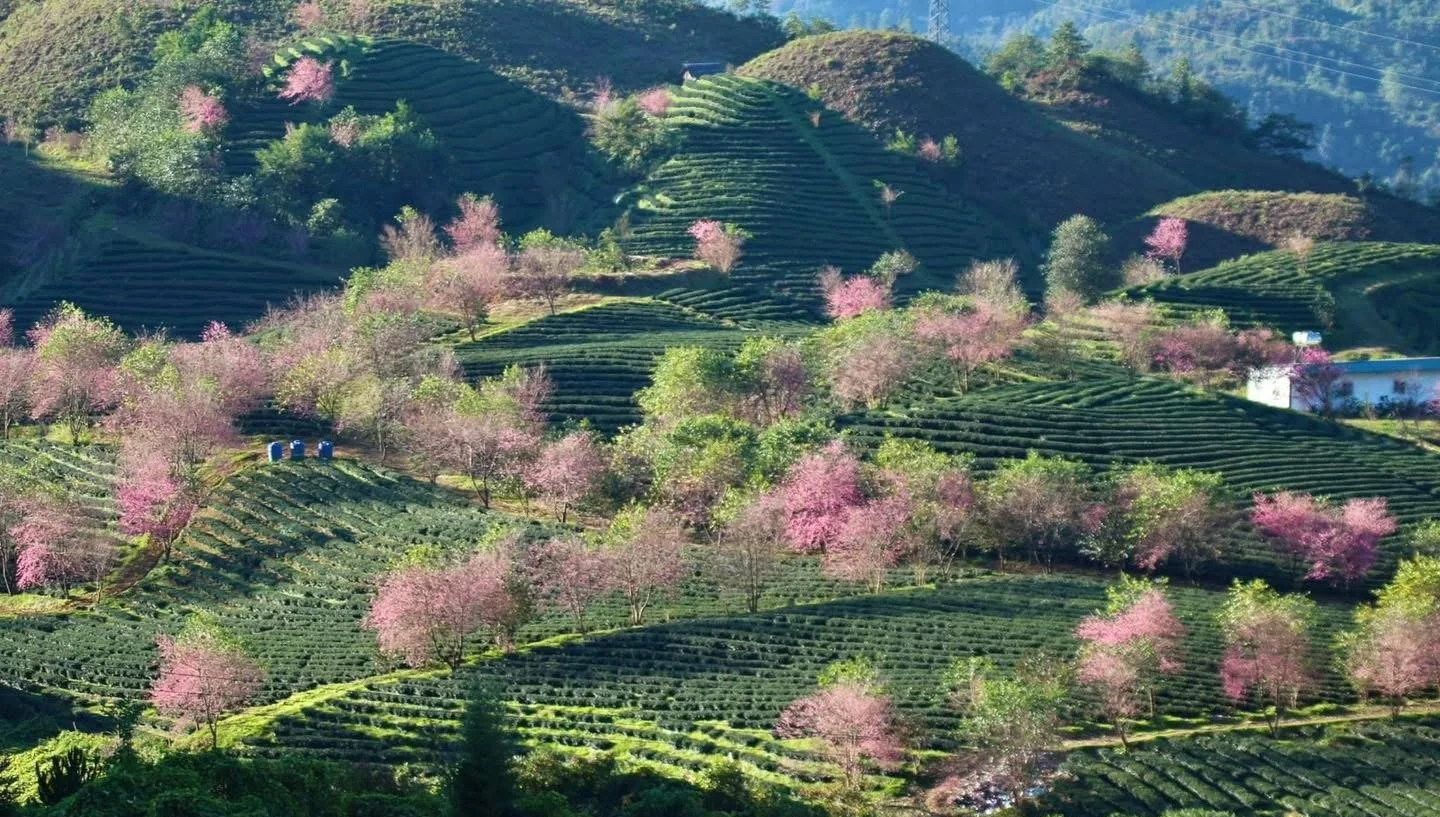
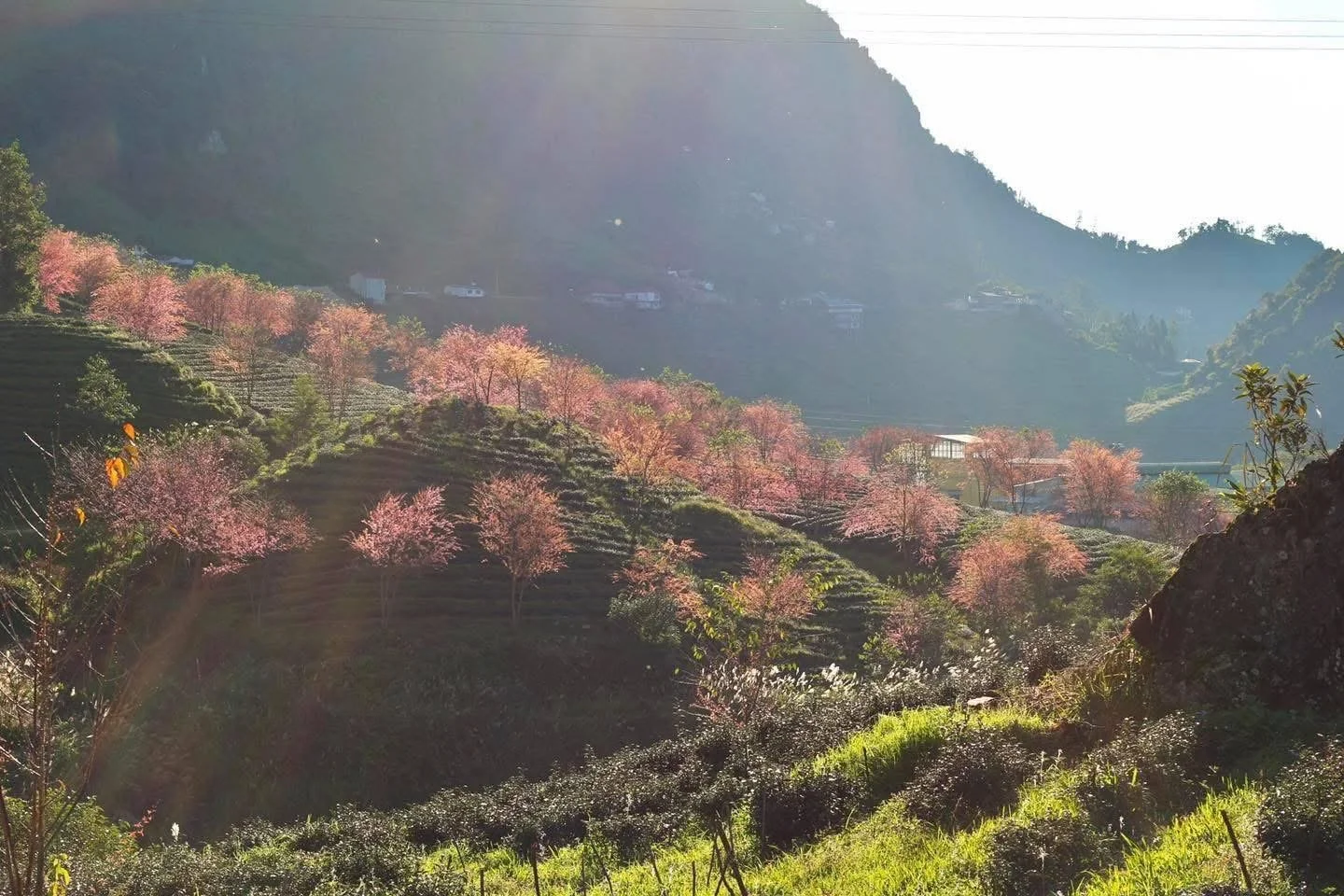

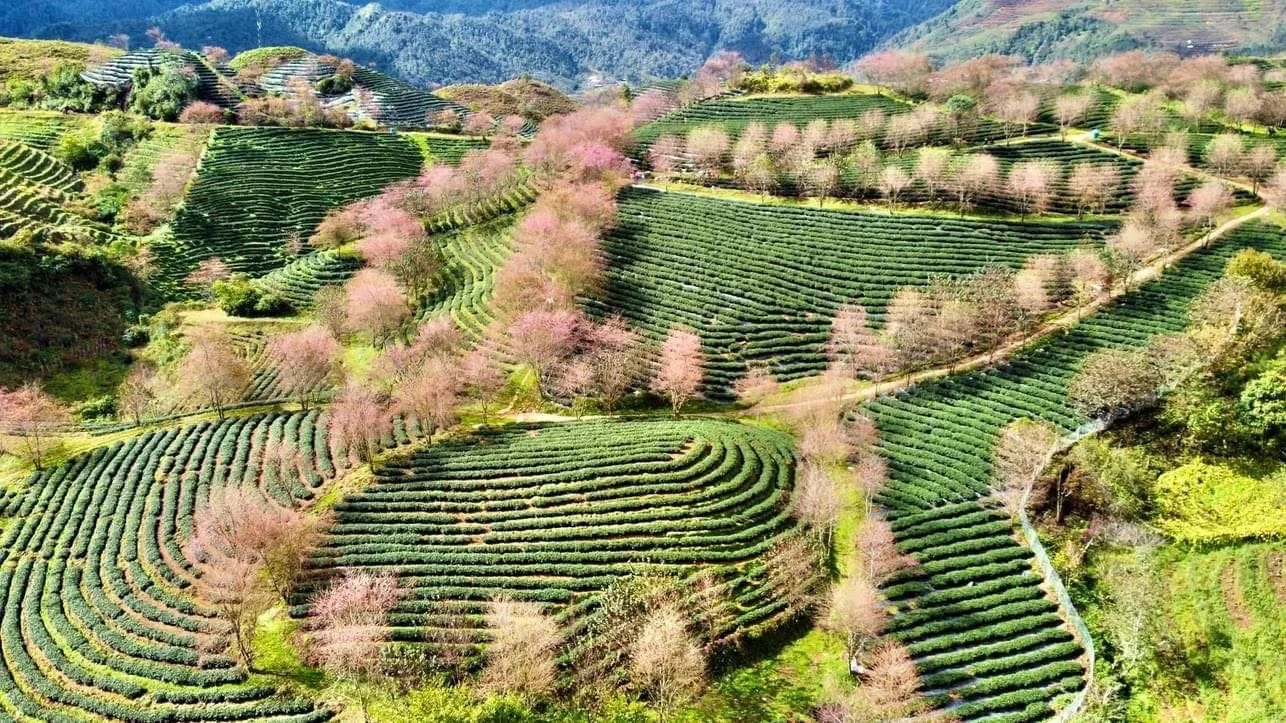
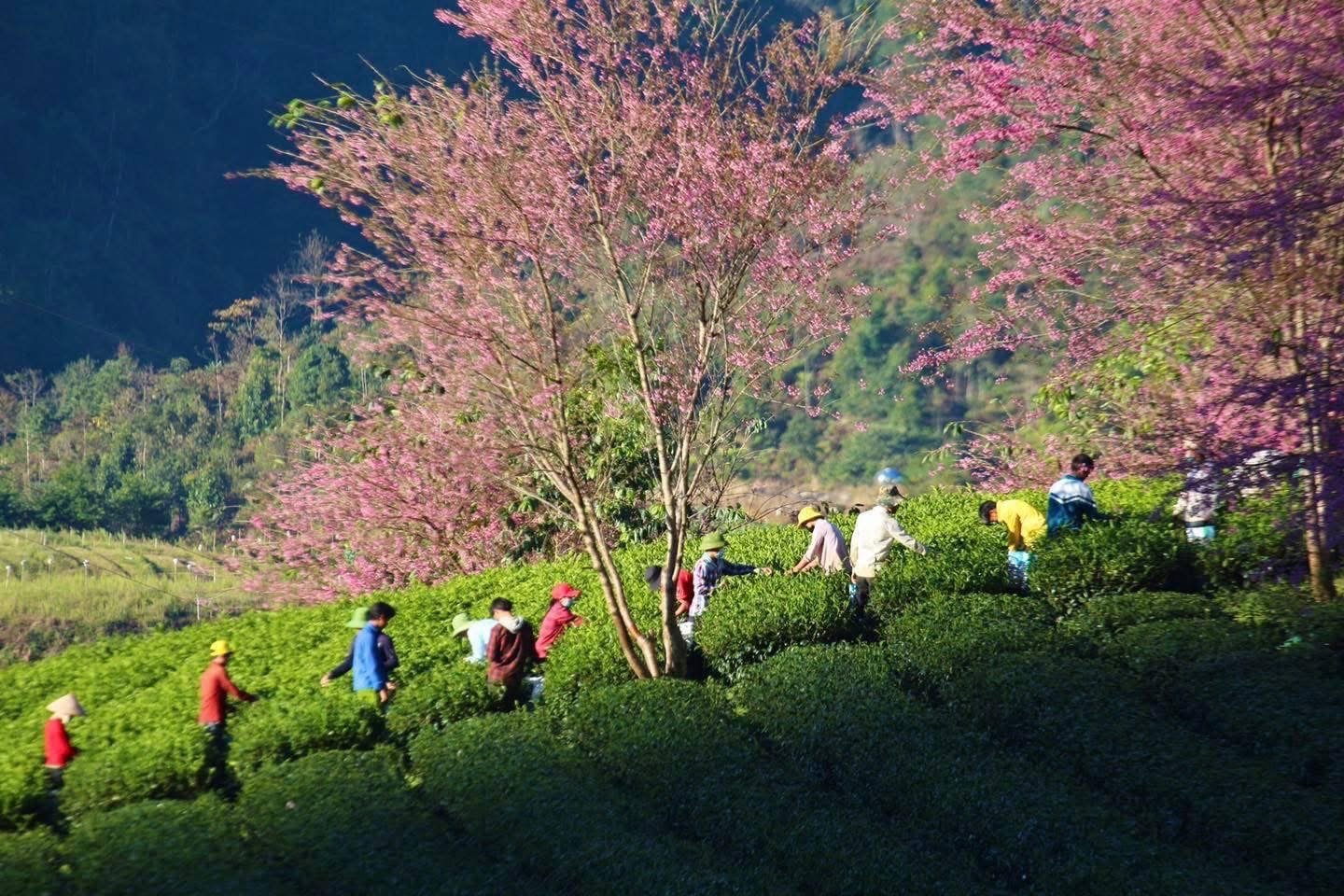
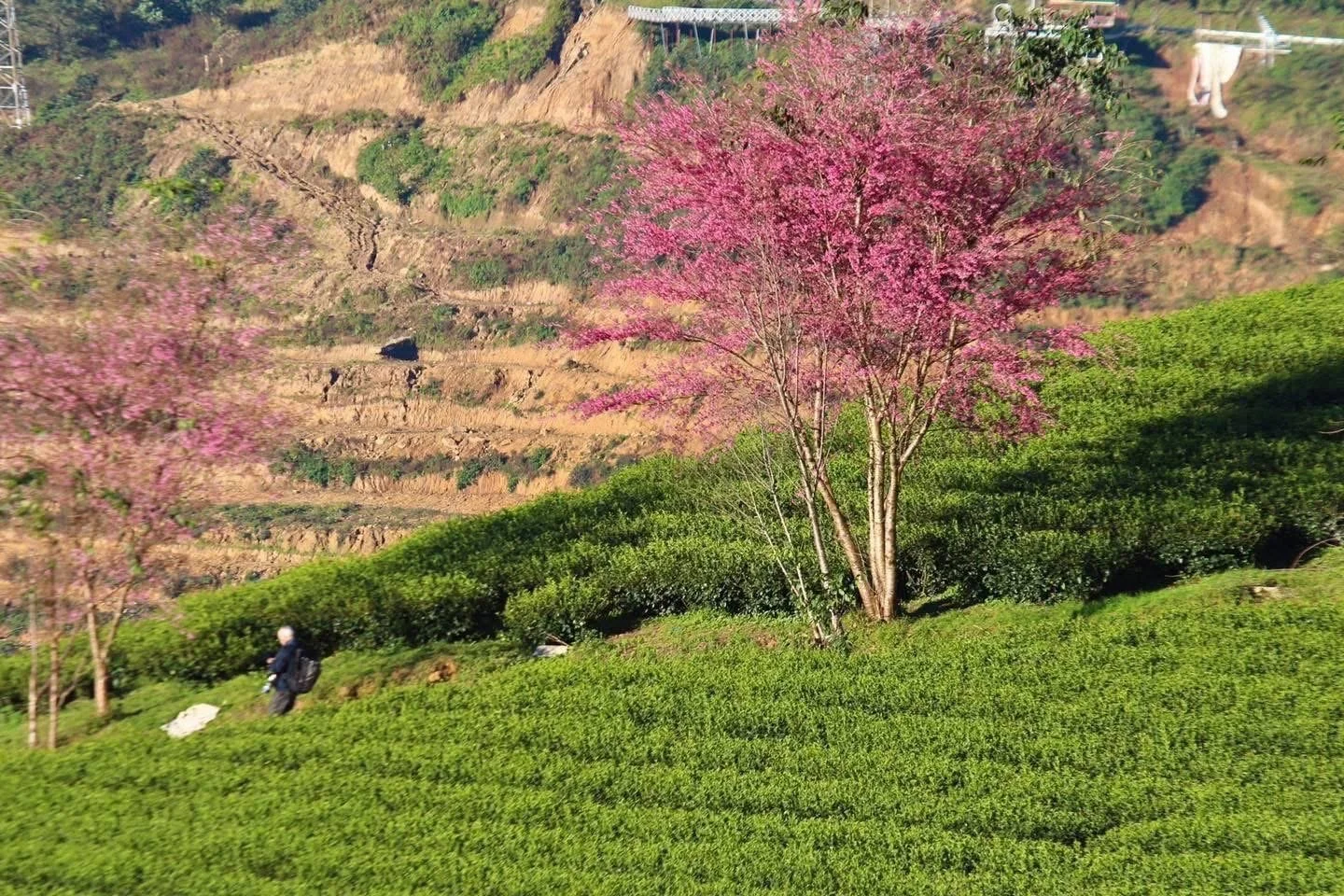
Top 10 Offbeat Things to Do in Sapa (Sustainable Adventures You’ll Never Forget)
Explore the most unique and sustainable things to do in Sapa, from guided foraging treks and artisan workshops to hidden waterfalls and remote village adventures.
Discover Sapa Beyond the Usual Trek
Sapa is world-famous for its misty mountains, terraced rice fields, and vibrant ethnic diversity. Yet beyond the well-trod paths lies a deeper, more soulful side of northern Vietnam — one of community, culture, and connection with nature.
At ETHOS – Spirit of the Community, we believe travel should leave a positive footprint. Every experience we offer is designed around cultural integrity, environmental care, and genuine human connection.
Here are our Top 10 Offbeat Things to Do in Sapa — experiences that bring you closer to the people, stories, and landscapes that make this place extraordinary.
1. Camp & Forage with a Hmong Guide
Sustainable trekking Sapa
Venture into the mountains with a local Hmong guide and learn to identify wild herbs, edible plants, and forest fungi. Spend a night under the stars, cook over a campfire, and listen to traditional stories about the land.
👉 Join the Foraging & Camping Trek
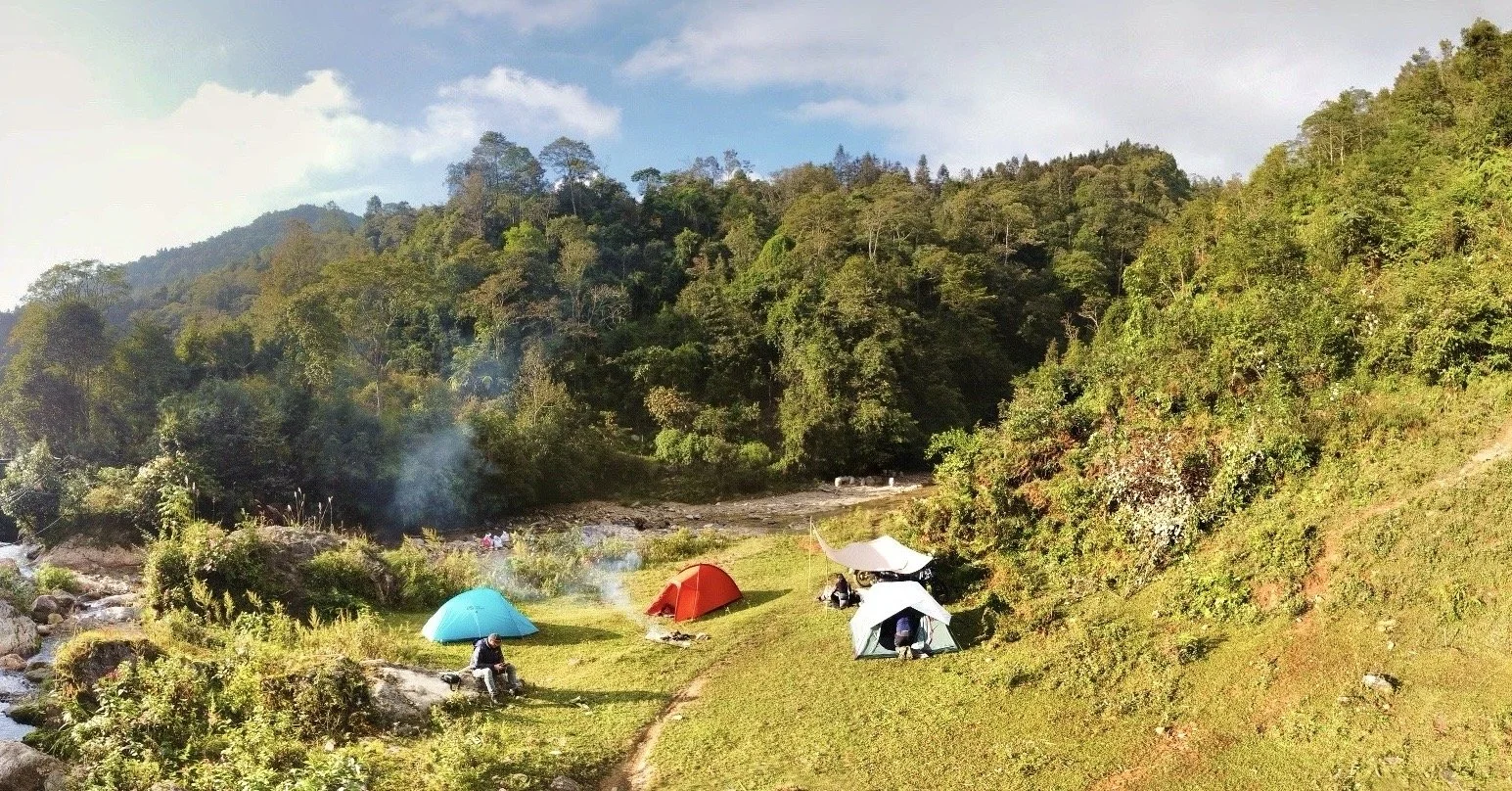
2. Stay with a Dao Family in a Mountain Homestay
Best homestays Sapa
Immerse yourself in Dao culture during a family homestay surrounded by rice terraces. Learn about herbal medicine, help prepare meals, and enjoy mountain tea by the fire. This experience supports rural women and preserves traditional wisdom.
👉 Book an Ethical Homestay Experience
3. Canyoning in Hoàng Liên Sơn National Park
For adrenaline lovers, descend waterfalls and navigate natural pools in Vietnam’s most spectacular mountain range. Led by trained local guides, this eco-adventure combines safety, sustainability, and excitement.
👉 Explore Canyoning Adventures
4. Take a Motorbike Loop to Tay Villages
Ride west through lush valleys and bamboo forests to visit Tay communities. Stop for lunch in a local home and learn about their stilt-house architecture and weaving traditions. This scenic route showcases rural life beyond Sapa town.
👉 Discover Sapa by Motorbike

5. Trek to Hidden Waterfalls on the Woodland Way
ETHOS’s signature Woodland Way Trek takes you deep into ancient forests, past quiet farms and secret waterfalls untouched by mass tourism. Ideal for photographers and nature enthusiasts.
👉 Trek the Woodland Way
6. Learn Batik in a Hmong Artisan Workshop
Cultural workshops Sapa
Join a Hmong artisan to learn the ancient craft of indigo batik. Create your own hand-dyed cloth using beeswax and natural pigments. Each workshop supports local women artisans.
👉 Book a Batik Workshop

7. Summit the Magnificent Ngu Chi Son Mountain
Known as the “Five Fingers of the Sky,” Ngu Chi Son offers one of Vietnam’s most rewarding climbs. ETHOS guides lead small, responsible expeditions to the summit — balancing adventure with ecological respect.
👉 Climb Ngu Chi Son
8. Visit Sapa’s Hidden Lakes
Beyond the famous Love Waterfall lies a network of serene mountain lakes where locals fish and gather medicinal plants. ETHOS guides will take you to quiet, reflective spots rarely visited by outsiders.
👉 Discover Sapa’s Secret Lakes
9. Wander Through Ancient Forests on our Twin Waterfalls Walk
Experience Sapa’s biodiversity on guided walks through The Hoang Lien Son National Park forests. Learn about indigenous plant use, local conservation efforts, and reforestation projects ETHOS supports.
👉 Join a Forest Trek
10. Explore Tea Plantations & Wild Himalayan Cherry Fields
Ride or walk through Sapa’s highland tea gardens and wild cherry groves. Visit family-run farms producing organic tea, and sip with a view over cloud-wrapped valleys.
👉 Visit the Tea Trails of Sapa
Travel with Purpose
Every ETHOS adventure supports community empowerment, environmental protection, and cultural preservation. By travelling with ETHOS, you directly help local families and contribute to a more sustainable future for Sapa.
Ready to explore responsibly?
👉 View All ETHOS Experiences
Snow in Sapa. Truth, myth and the quiet magic of a rare winter
A rare snowfall in Sapa transforms the highland landscape and reveals a quieter side of the mountains. In this honest guide we explore the difference between frost and true snow, share verified historical snowfall records from 1990 to the present day and explain why these fleeting winter moments hold such meaning for the communities who live here.
Winter in the Highlands. Mist, Frost and Quiet Days
Winter in the northern mountains of Vietnam arrives gently. It drifts into the terraced valleys on slow banks of mist, settles in the hollows of bamboo forests and chills the ridge lines of the Hoang Lien range with a sharp, crystalline breath. At this time of year, life for Hmong, Dao and Tay families becomes more reflective. Fires burn low in earthen hearths, animals are sheltered, and preparations begin for the new agricultural cycle that follows the Lunar New Year.
In this subdued season the highlands reveal a quieter beauty. Frost rims the grasses at daybreak and thin ice patterns appear on still water. Yet none of these common winter signs can prepare you for the rare and gentle arrival of real snow.
Sorting truth from trend. Snow, frost and the digital mirage
Over the last decade, social media has woven a complicated tale around Sapa and the prospect of a winter snowfall. Photographs of icy railings on Fansipan or frozen bamboo at O Quy Ho Pass are often shared under bold claims that the town itself has been blanketed in white. Visitors arrive with high hopes, sometimes shaped more by digital imagery than by the lived realities of the local climate.
These icy scenes have their own beauty, but they are usually frost or rime. Frost forms when moisture freezes onto cold surfaces. It can create a sparkling, sculptural landscape that feels almost otherworldly, especially on Fansipan where temperatures regularly dip below freezing. These frost events occur several times every winter above about 2,800 metres and they are a natural part of life on the mountain.
Snow is different. Snowflakes form in the cloud itself. They fall, gathering on rooftops, footpaths and terraces. Snow transforms the world with softness rather than sharpness. It also happens infrequently in Sapa town, which is why many frost events are mistakenly promoted as snowfall. At ETHOS we believe that honesty honours both the mountains and the people who call them home. When snow truly arrives, it deserves to be understood in the context of how rare and precious it is.
Genuine snow in Sapa town. Four real events since 1990
Once we strip away frost events, sleet, cold mist and the noise of tourism marketing, the list becomes far more modest. Only four snowfalls have been verified in Sapa town since 1990. These are supported by the Vietnam National Centre for Hydro-Meteorological Forecasting, by climate logs and by the memories of families who live and farm here.
What follows is a clear record of those events, along with detail on how long the snow fell and how long it lasted.
1. March 16, 2011. A brief and gentle snowfall at around 1,600 metres
This was a short, late-season event that surprised many residents. Snow fell for about an hour in the late morning and lightly dusted the roofs and shaded corners of Sapa town. With the sun still strong in mid March, the snow melted entirely before the afternoon had passed. Although delicate and short lived, this was a genuine snowfall, confirmed by official observers.
2. December 15, 2013. A moderate and memorable night of snow
On this cold winter night, snow formed in the early hours and continued until sunrise. Between three and five centimetres settled across the town centre, while the road towards Thac Bac at around 1,900 metres received seven to ten centimetres. Children woke to a world softened by white. Most of the snow faded away by early afternoon, although hollows and forest edges held onto their pale covering for a little longer. This was the longest lasting town snowfall since 1990.
3. February 19, 2014. A short lived but authentic winter moment
This was another verified snowfall, although very light. Between half a centimetre and one centimetre gathered on cars and rooftops before melting almost immediately. The snow fell for less than forty minutes. It is sometimes confused with the frost and residual ice that appeared on nearby passes that same week, but the snowfall in town was real, if fleeting.
4. January 24 to 25, 2016. The largest modern snowfall in Sapa town
This was a remarkable winter event driven by a strong cold surge from the north. Snow fell for many hours through the night and into the morning. In the town centre eight to twelve centimetres settled. Higher regions above 1,900 metres saw more than twenty centimetres. Sapa town kept its winter coat for around thirty six to forty eight hours. North facing areas held snow until the morning of 27 January. This is one of the very few moments in living memory when Sapa experienced genuine snow cover that lasted more than a single day.
These are the only four events in over three decades that meet all the conditions of genuine snow. Tested against community knowledge, confirmed by meteorologists and visible in photographs that show clear snowfall and accumulation within Sapa town itself, they form a quiet and honest history.
Fansipan. A mountain that keeps its own winter story
The story changes dramatically as you climb. Fansipan rises to 3,143 metres, which places its summit in a climate zone entirely different from that of Sapa town. Here, temperatures fall below freezing much more often. Clouds wrap themselves around the ridge lines with icy intensity. Proper snow, not just frost, falls several times a decade.
When we remove frost events and retain only verified snowfall, the historical pattern becomes clearer.
Confirmed Fansipan snowfall years since 1990
Meteorological logs, summit staff reports and independent observations show genuine snowfall in the following years.
2013 to 2014 winter
Fansipan experienced several snowfalls between December and February. Accumulation typically ranged from five to fifteen centimetres and the snow often lingered for one to three days.
January 2016
This was the same cold surge that brought heavy snow to Sapa town. Fansipan recorded more than twenty to thirty centimetres of snow at the summit. Because daytime temperatures remained below freezing, the snow lasted several days.
December 2017
A genuine and heavy snowfall of around ten centimetres settled on the summit and remained for one to two days.
December 2020 to February 2021
This period brought multiple snowfalls. One early February event reached around sixty centimetres, thought to be one of the deepest recorded layers on Fansipan. Snow remained in shaded areas for two to four days.
December 2022 to January 2023
Two separate cold surges created light to moderate snowfall at the summit, with layers lasting between twelve and forty eight hours.
January 2025
A clear snowfall was recorded at the summit with a light to moderate layer lasting less than twenty four hours.
Although snow on Fansipan is not a daily winter occurrence, it is markedly more frequent than in Sapa town. The upper mountain sits in a cooler band where genuine snowfall happens often enough to form part of the mountain’s seasonal rhythm.
How long does snow really last
Even in strong winters, snow in Sapa town is a brief visitor. Most events melt within a few hours. Only the 2016 snowfall created a lasting layer that held for around two days. Fansipan is more resilient. Here, snow can remain for one to three days in most genuine events and longer in the heavier winters of 2016 and 2021. Frost, by contrast, can linger for many days, but frost is not snow and has a different feel entirely.
Why Sapa becomes so special when real snow falls
Snow and the Rhythm of Mountain Life
When snow does arrive in Sapa, the mountains take on a rare and delicate quiet. Terraces that for most of the year glow green or gold are softened with a pale blanket. The scent of woodsmoke drifts further in the cold air. Hmong and Dao families step outside to watch the sky, sometimes amused, sometimes reflective. Children gather snow into cupped hands and carry it indoors for a moment of delight. Daily tasks continue, yet with a lightness that comes from witnessing something so unexpected.
A More Reflective Way of Travelling
Snow softens the familiar and invites us to look again at the world we think we know. It encourages slower travel. Fireside meals become comforting rituals. Walks through the valleys feel more contemplative. A simple cup of warm herbal tea becomes a moment to savour. These are the things we hold close at ETHOS, because they reflect the lived wisdom of our community partners.
When is snow most likely to fall
Snow is always rare in Sapa town and should never be the sole reason to plan a journey. Travellers who arrive with that expectation risk disappointment because snowfall cannot be predicted reliably more than a day or two in advance. Still, some months hold more potential than others.
The Best Months for Snowfall
Snow in Sapa and on Fansipan is most likely between mid December and early February. These months mark the heart of the northeast monsoon, when cold air masses travel southwards and occasionally collide with moist air over the Hoang Lien range. If snow falls in the town at all, it almost always happens within this window. On Fansipan the same period brings the best chance of genuine snowfall, although frost appears regularly from November through February.
Travelling with the Right Expectations
The right approach is to travel for the culture, the landscapes and the generosity of the communities who welcome you. If the mountains choose to offer snow, consider it a gift rather than a guarantee.
Honest weather, honest storytelling
At ETHOS we believe that clarity helps deepen respect for the land and its people. Snow in Sapa is rare, beautiful and short lived. Frost and rime are part of the highland character and deserve their own appreciation without being mistaken for something else. Fansipan holds a wilder winter, but even there the whiteness arrives and fades on the mountain’s own terms.
These mountains do not need embellishment. Their truth is richer than any advertisement. Whether the terraces lie green, gold or white, the winter season in northern Vietnam invites travellers to slow down, look closely and connect with the communities who shape their stories among these hills.
If you walk with us, we will help you experience the mountains in their fullest honesty. Snow may fall, or it may not, but the warmth of a village hearth, the rhythm of a highland path and the spirit of the people who live here will always be waiting.
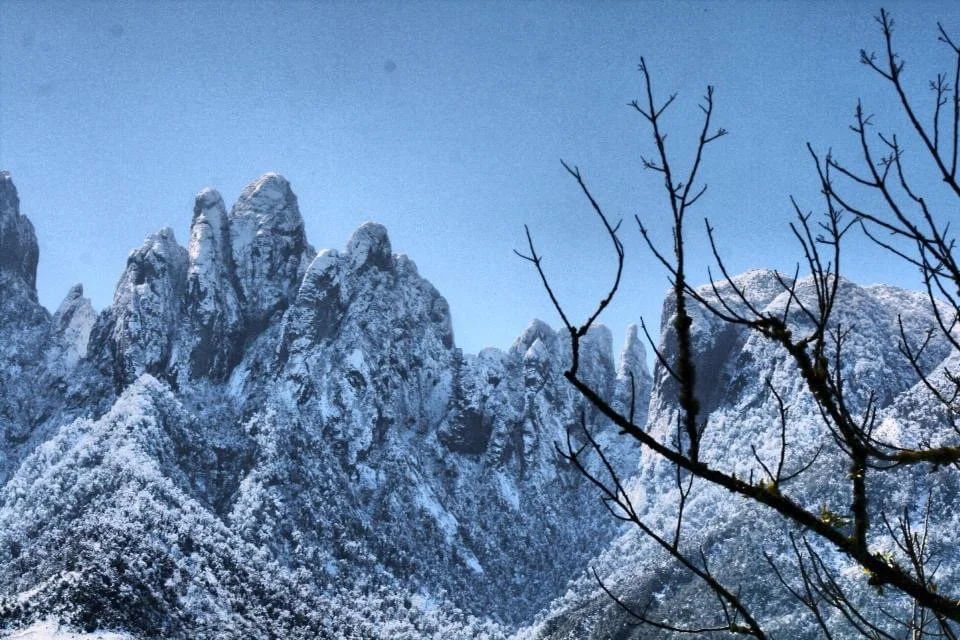
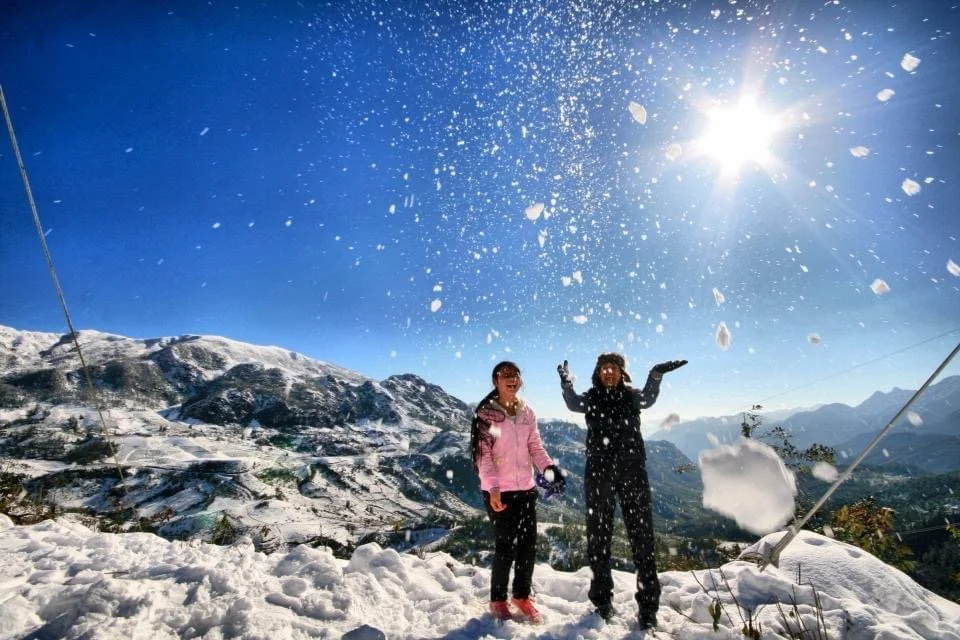
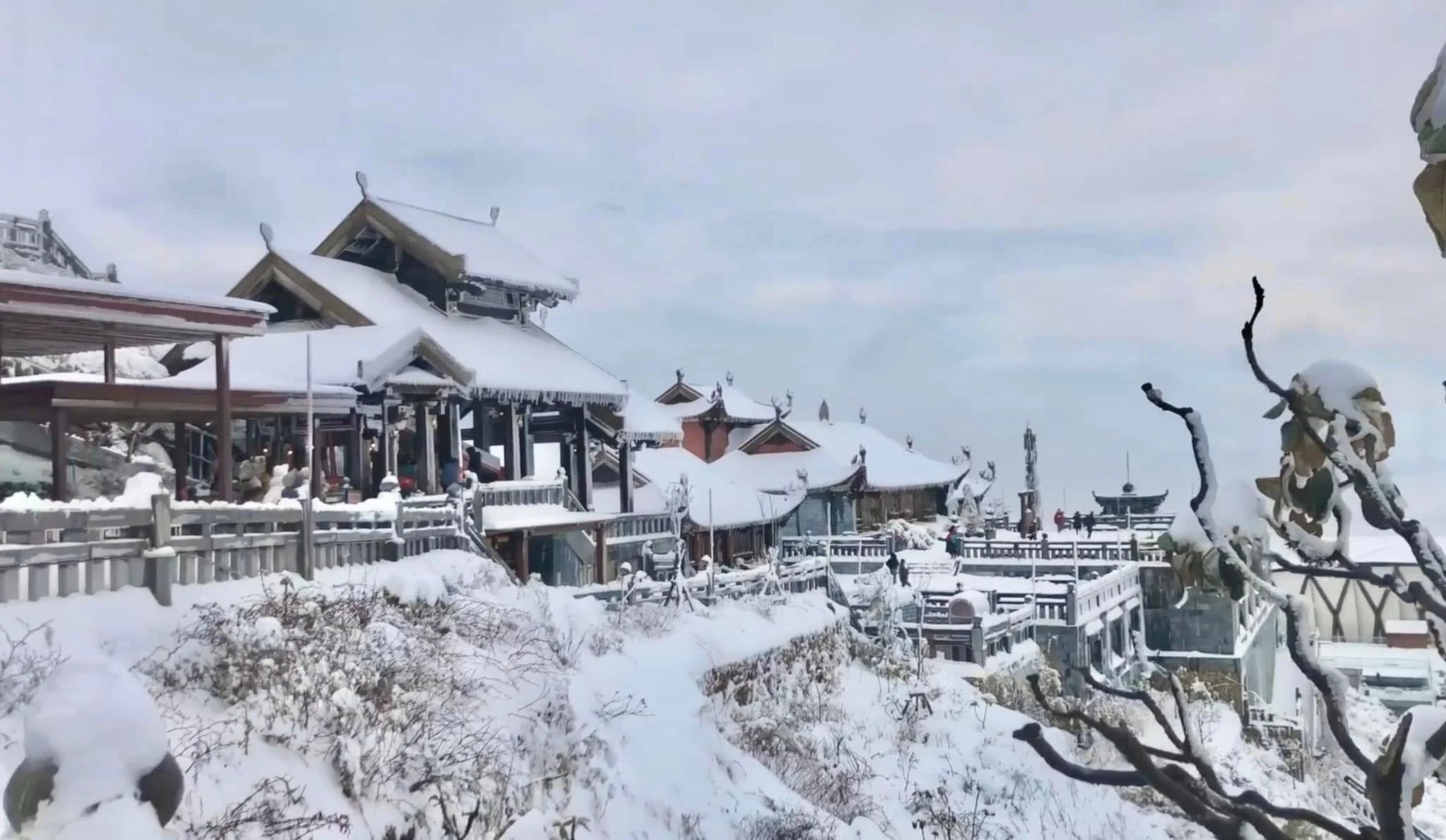
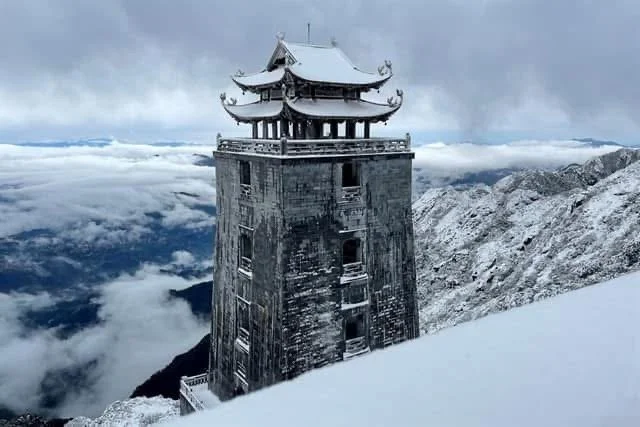
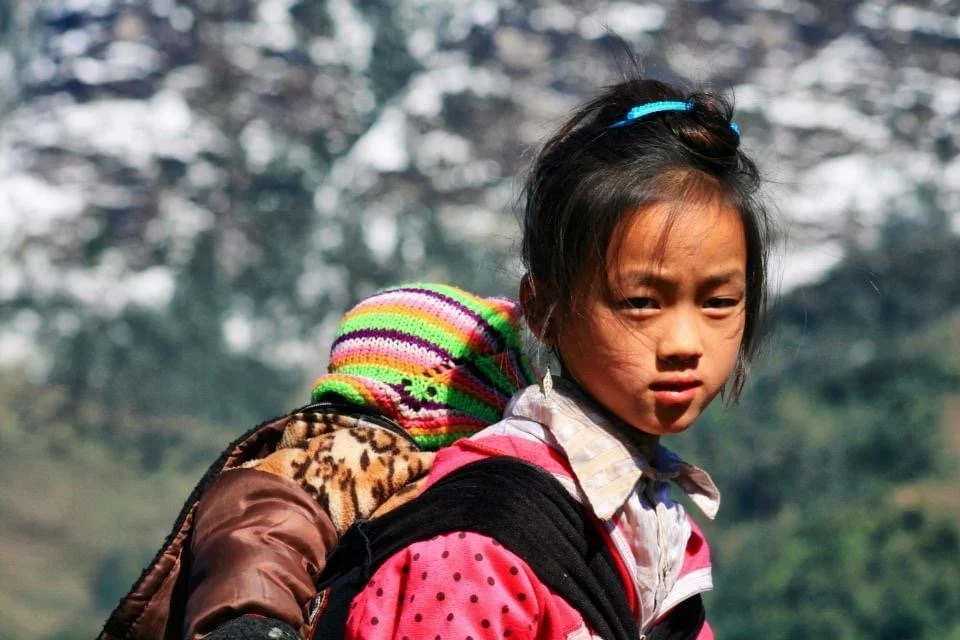
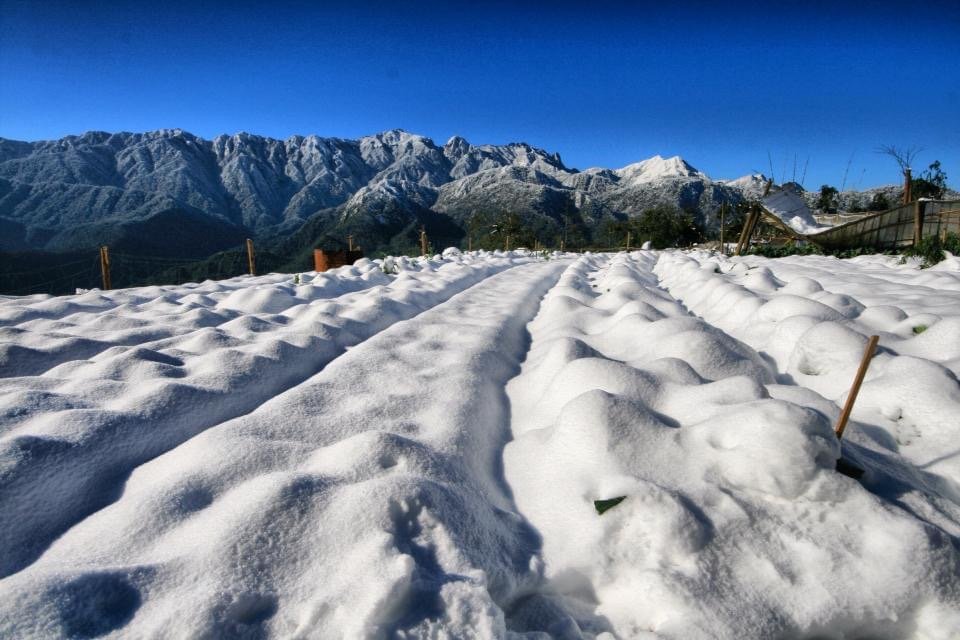
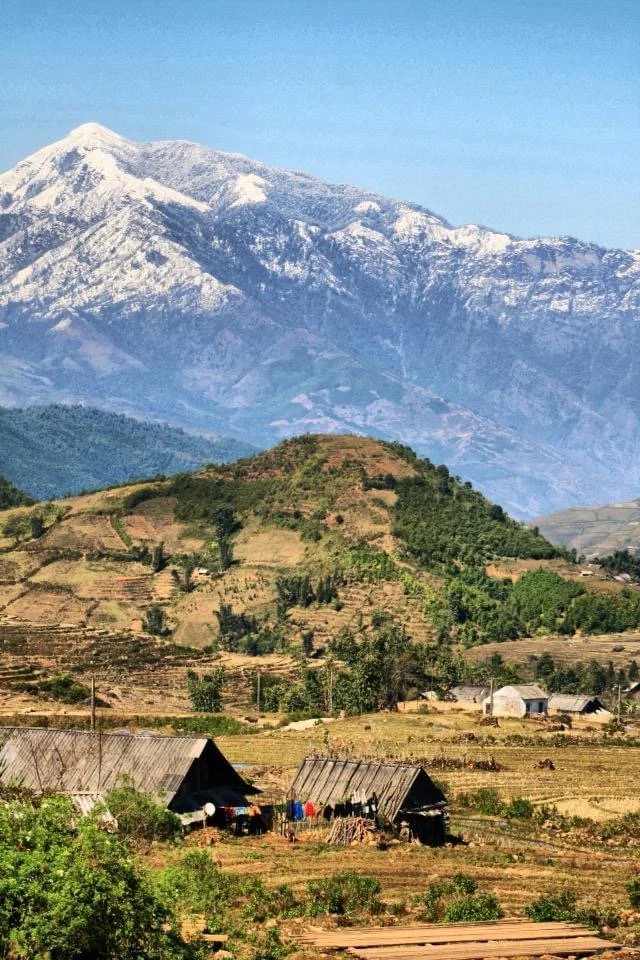
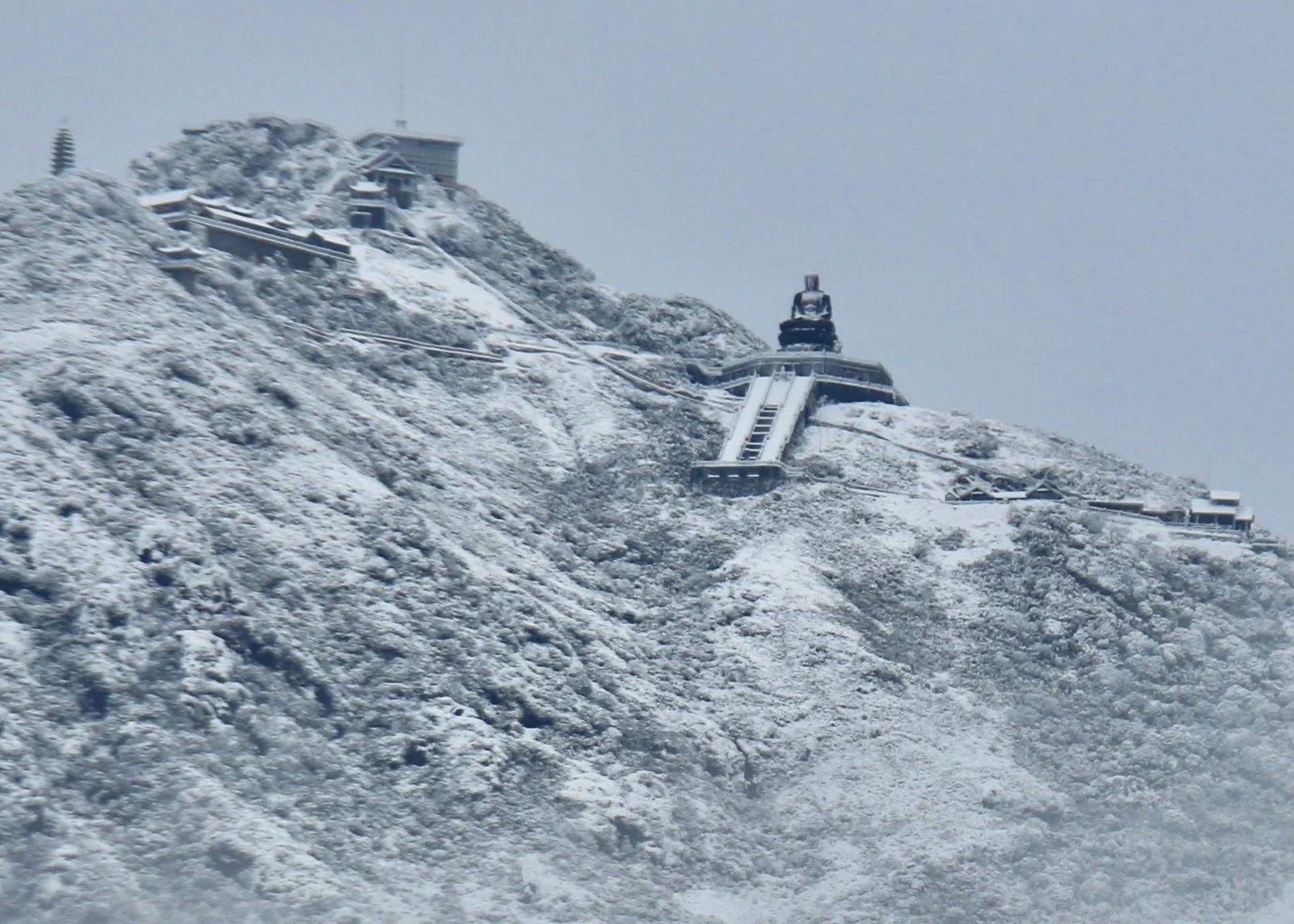
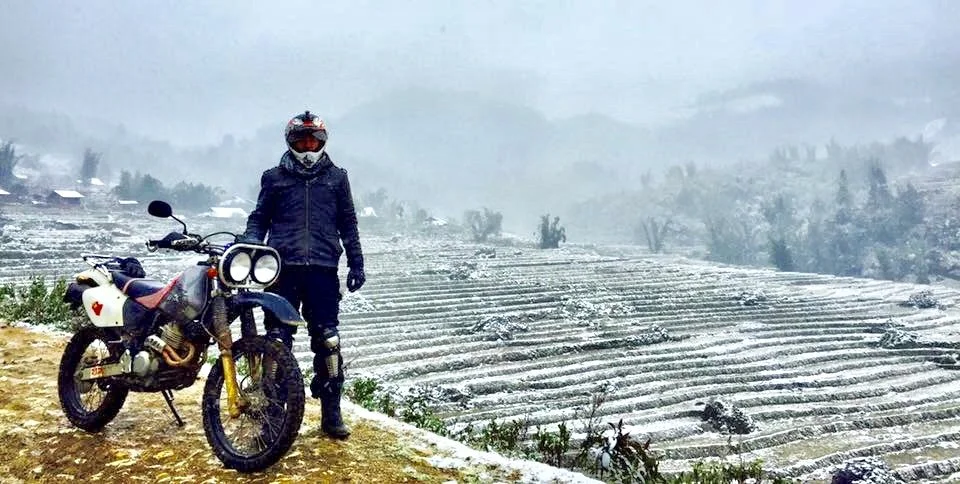
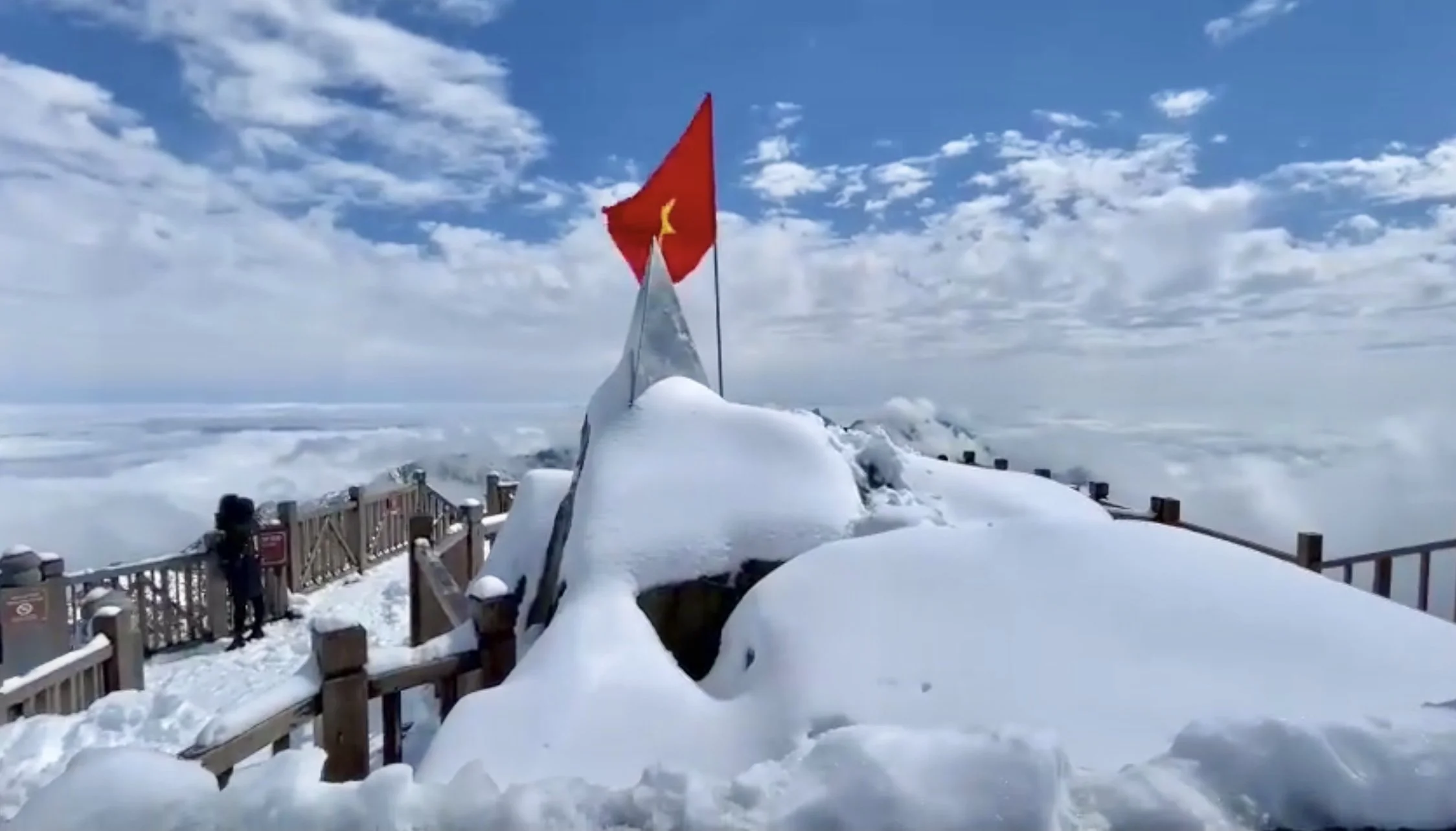
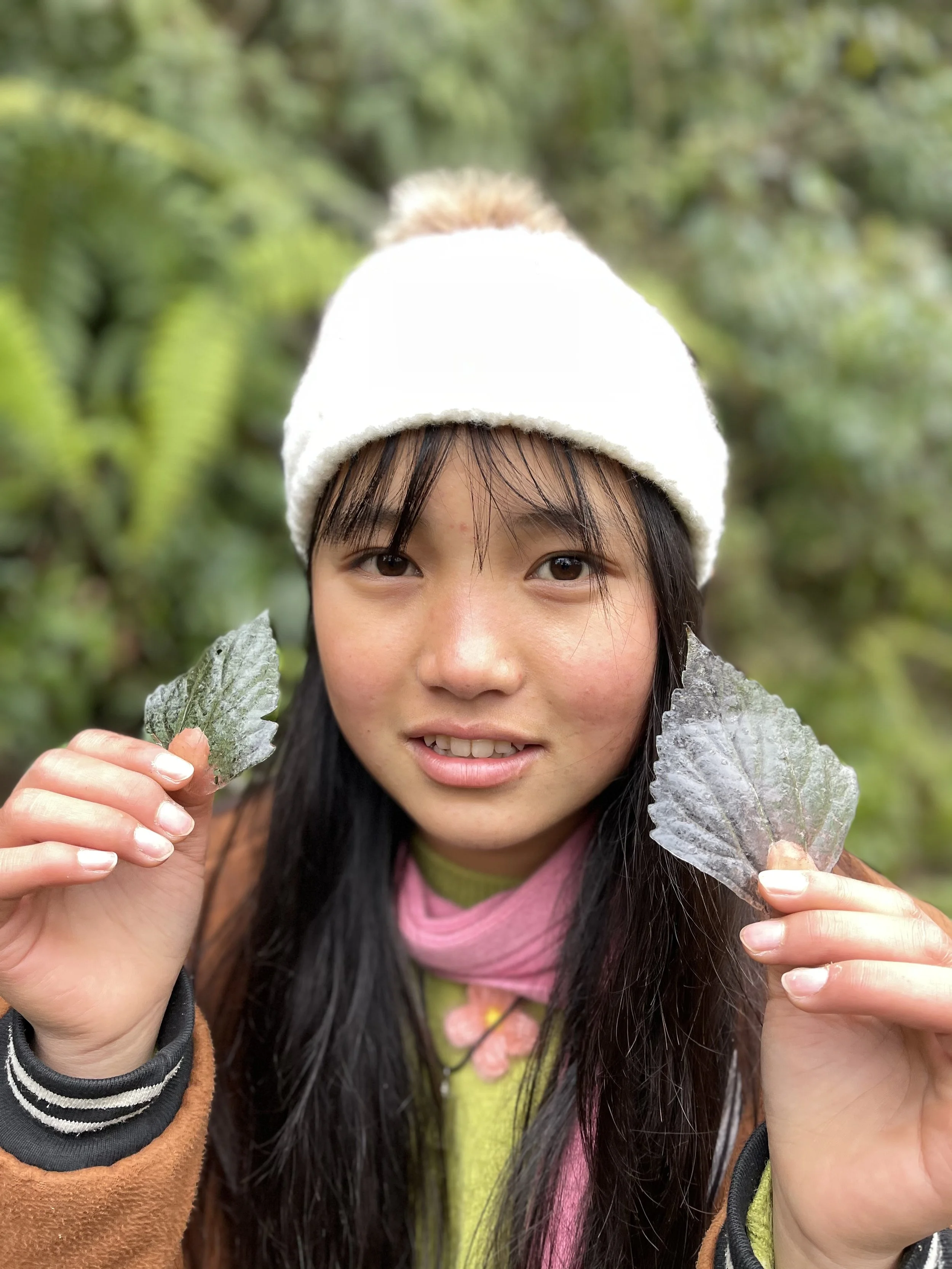
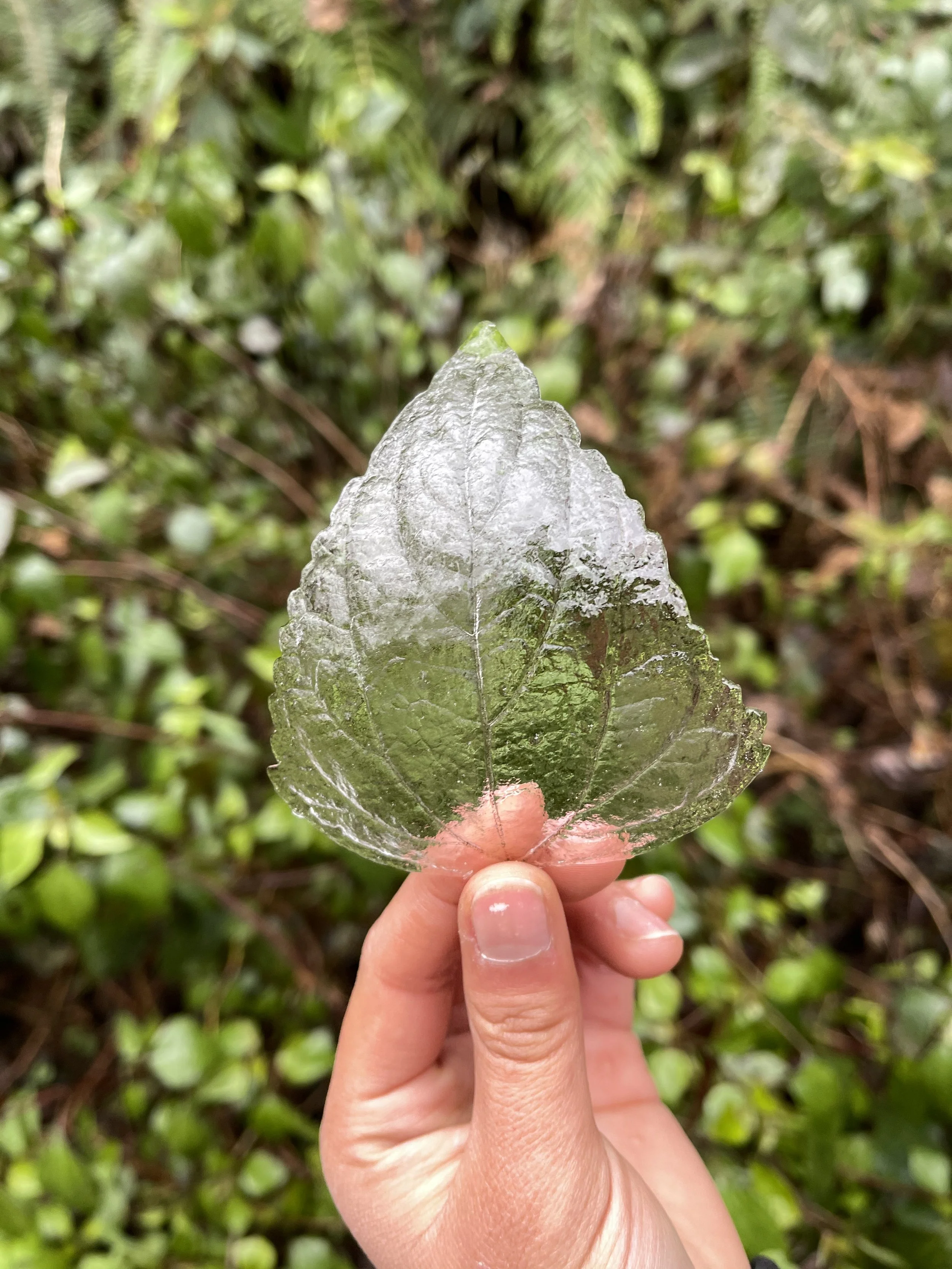
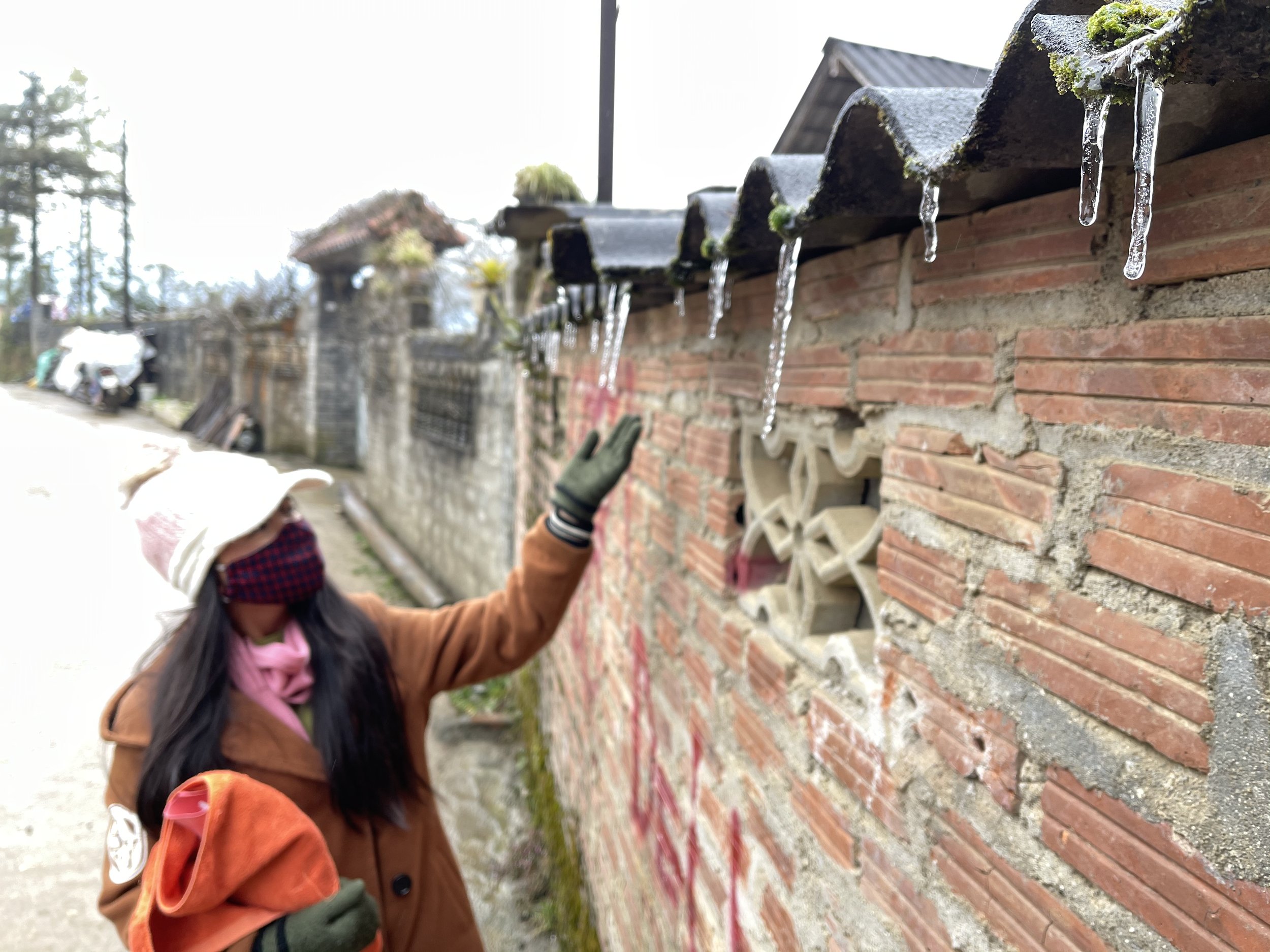
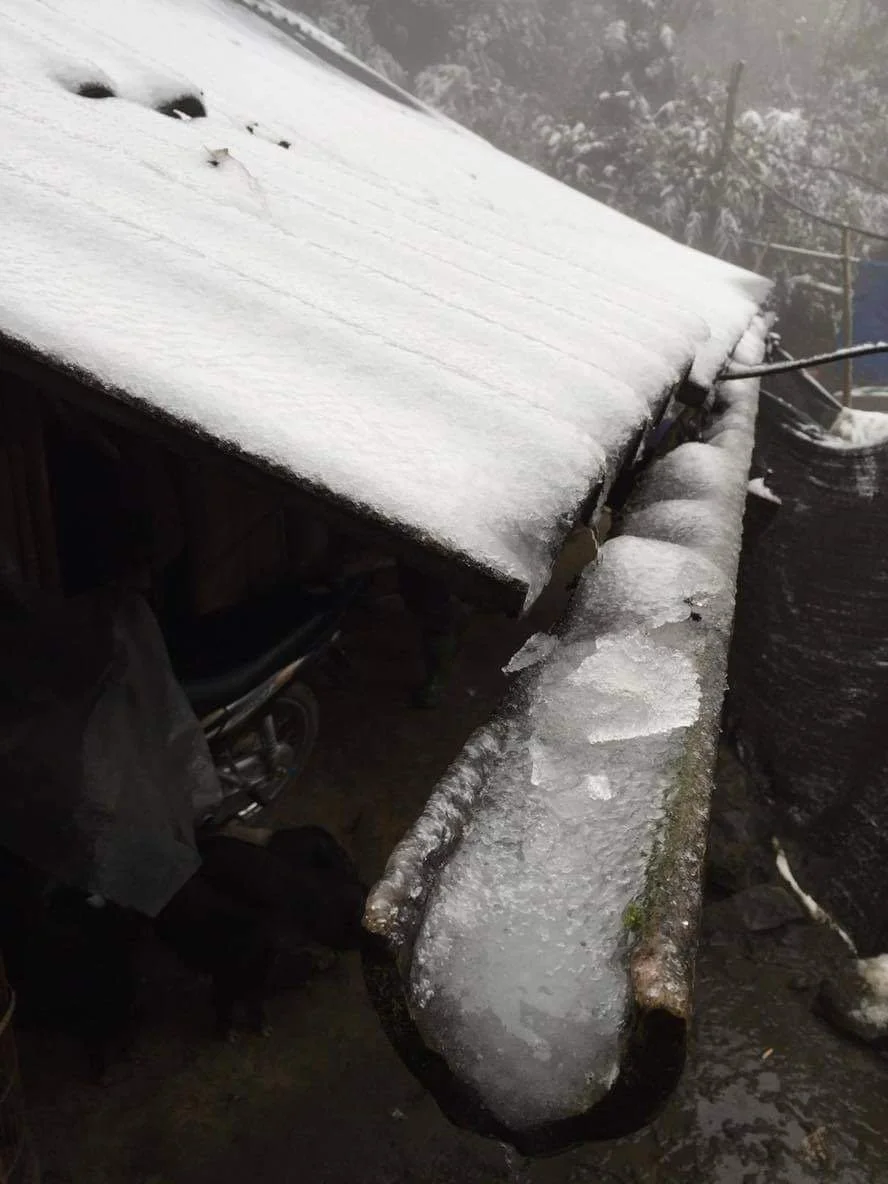
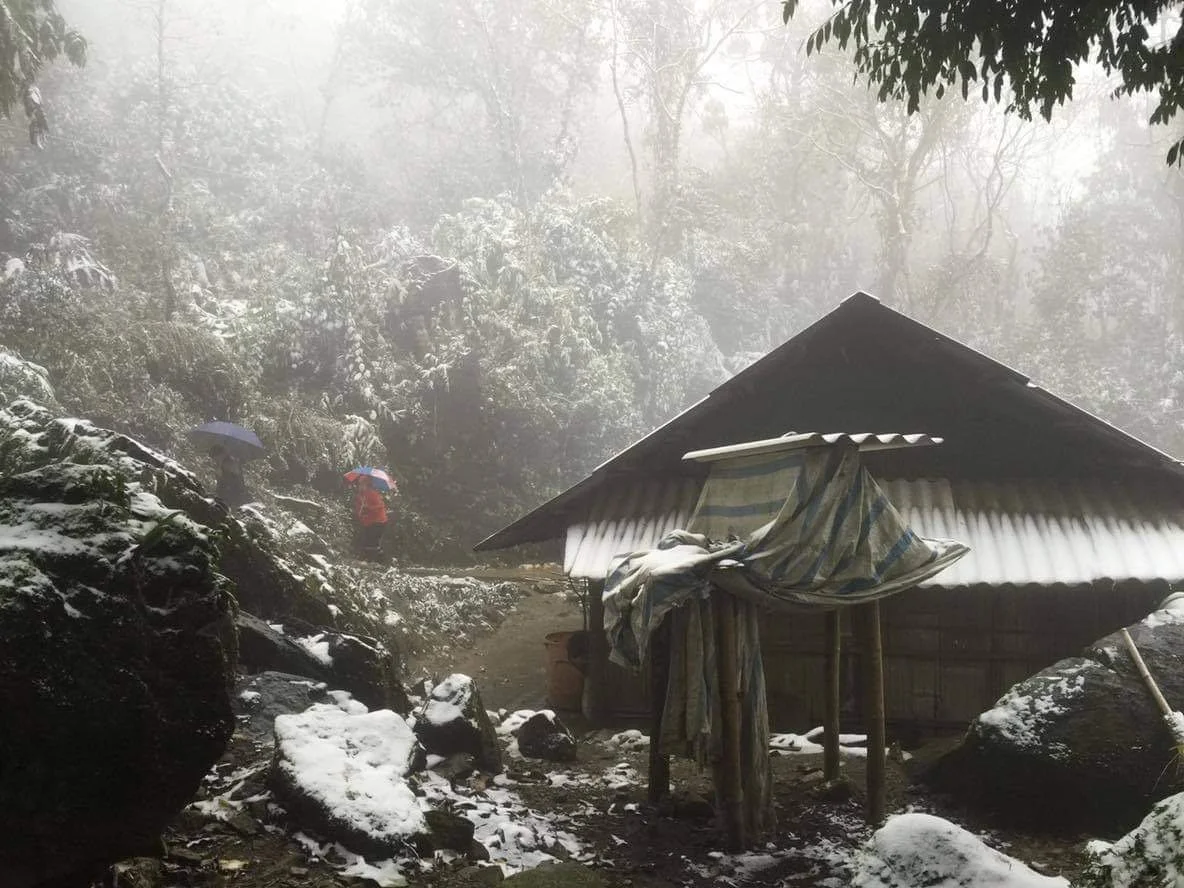
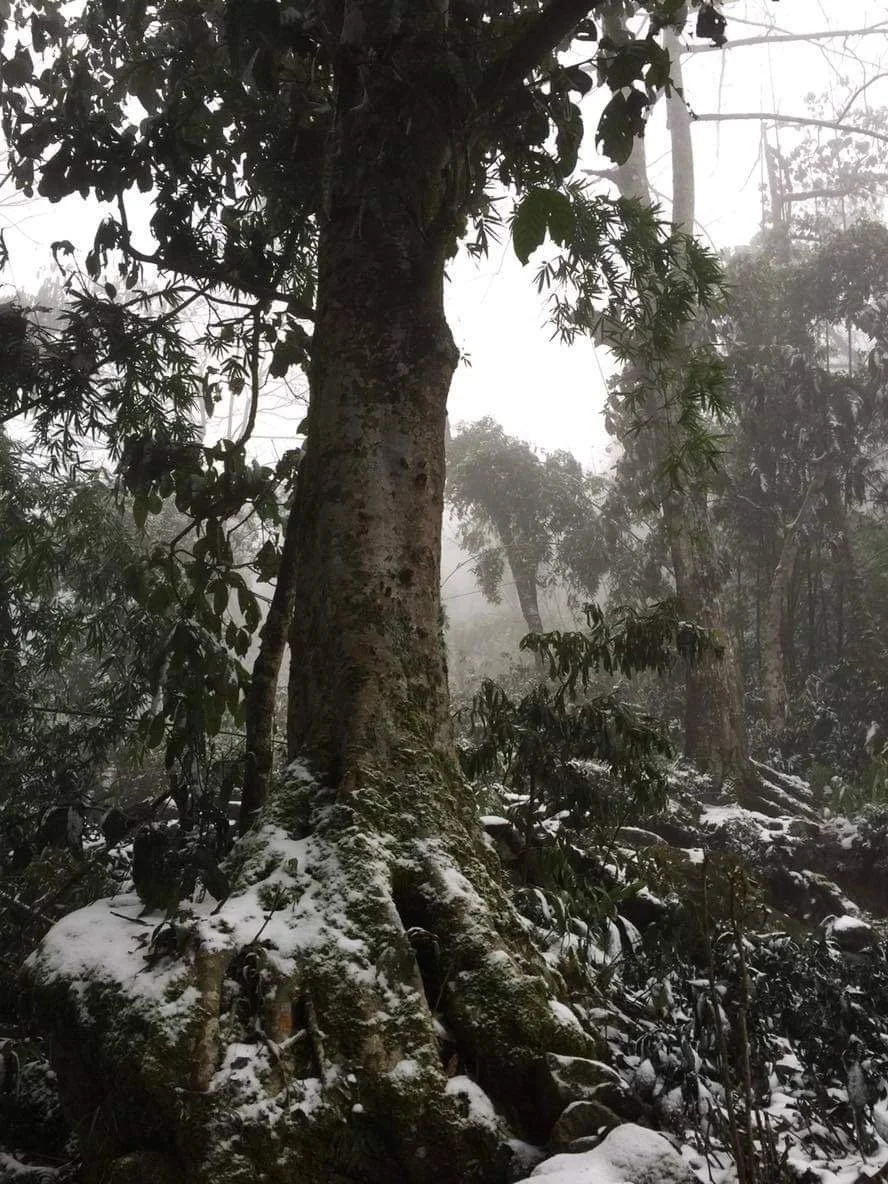
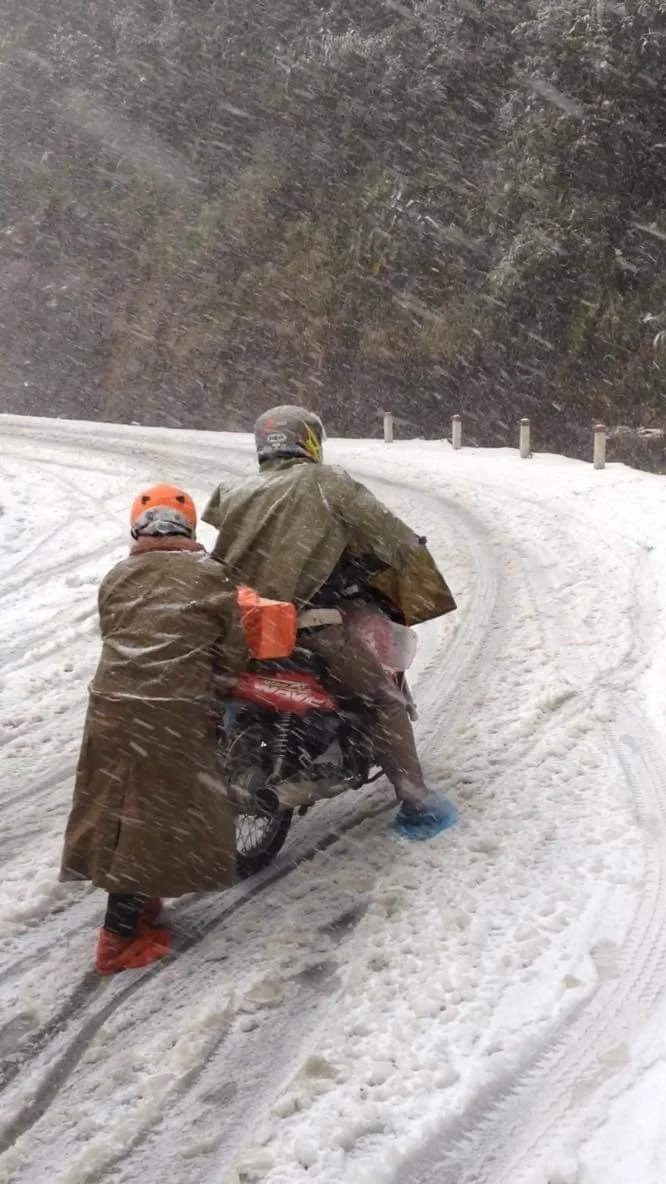
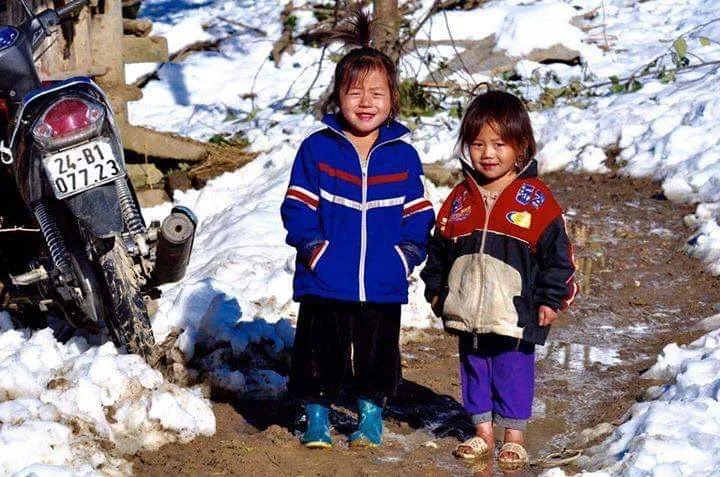
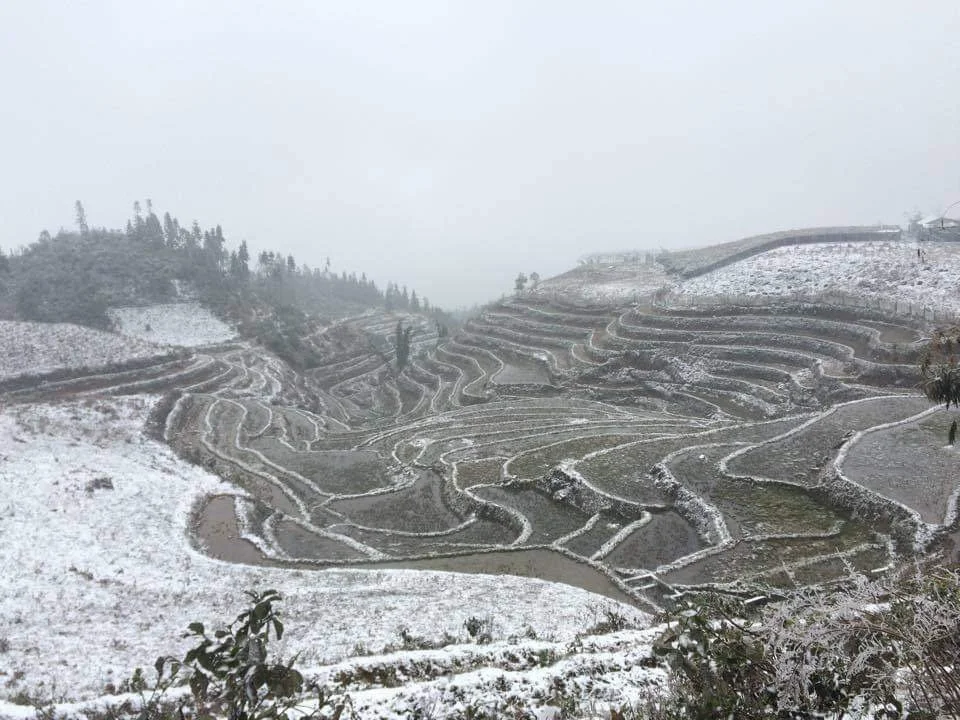
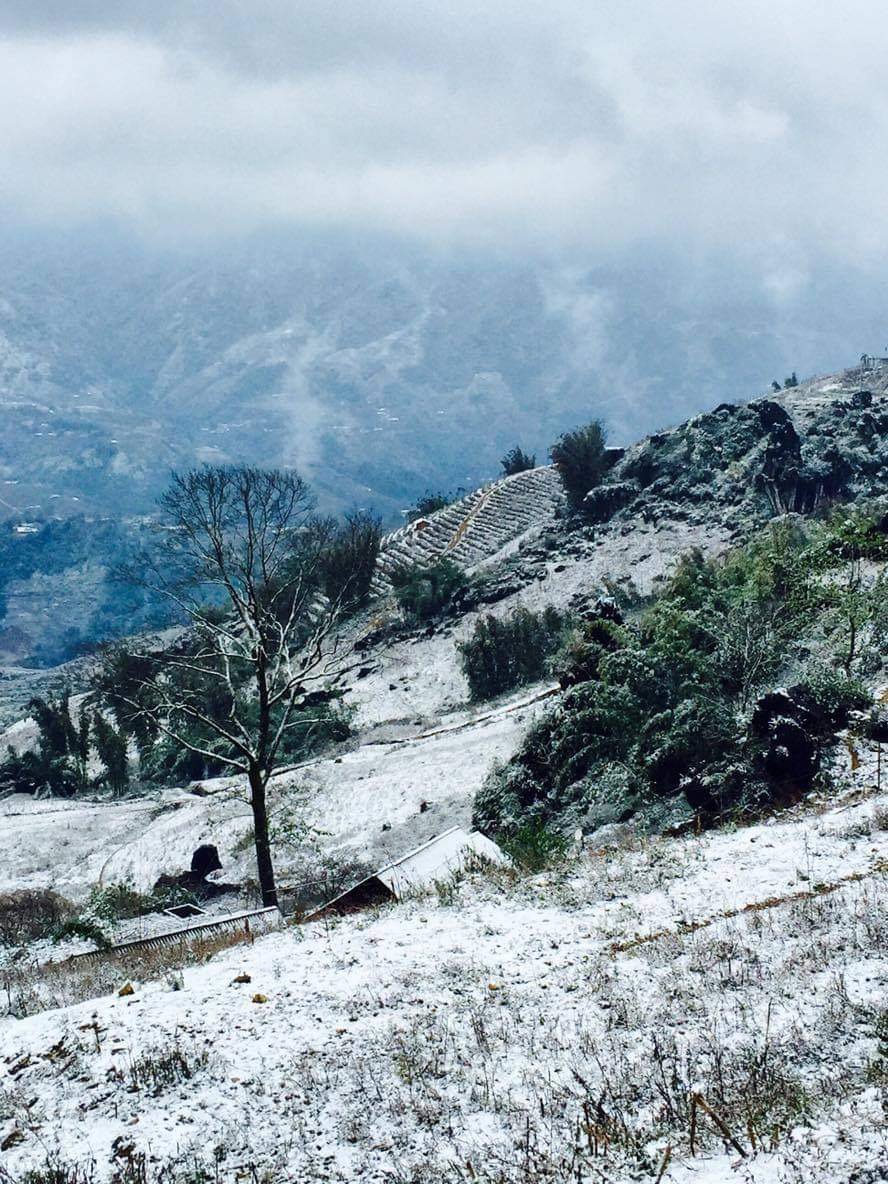
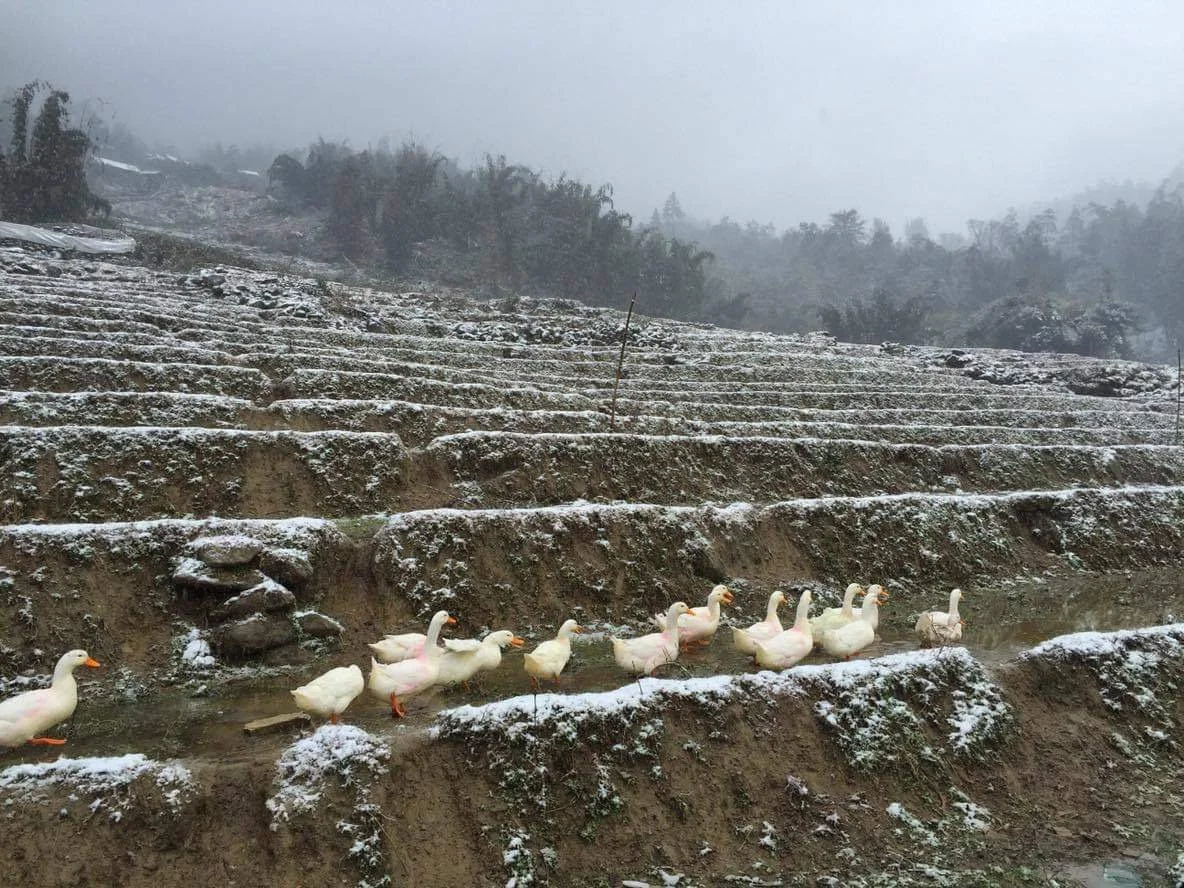
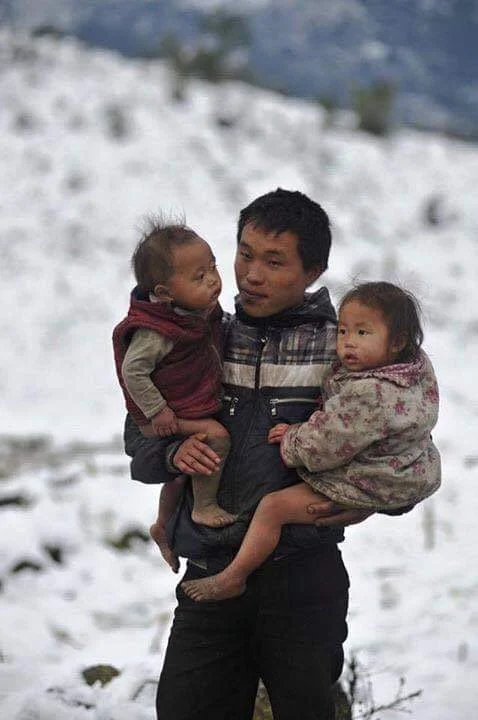

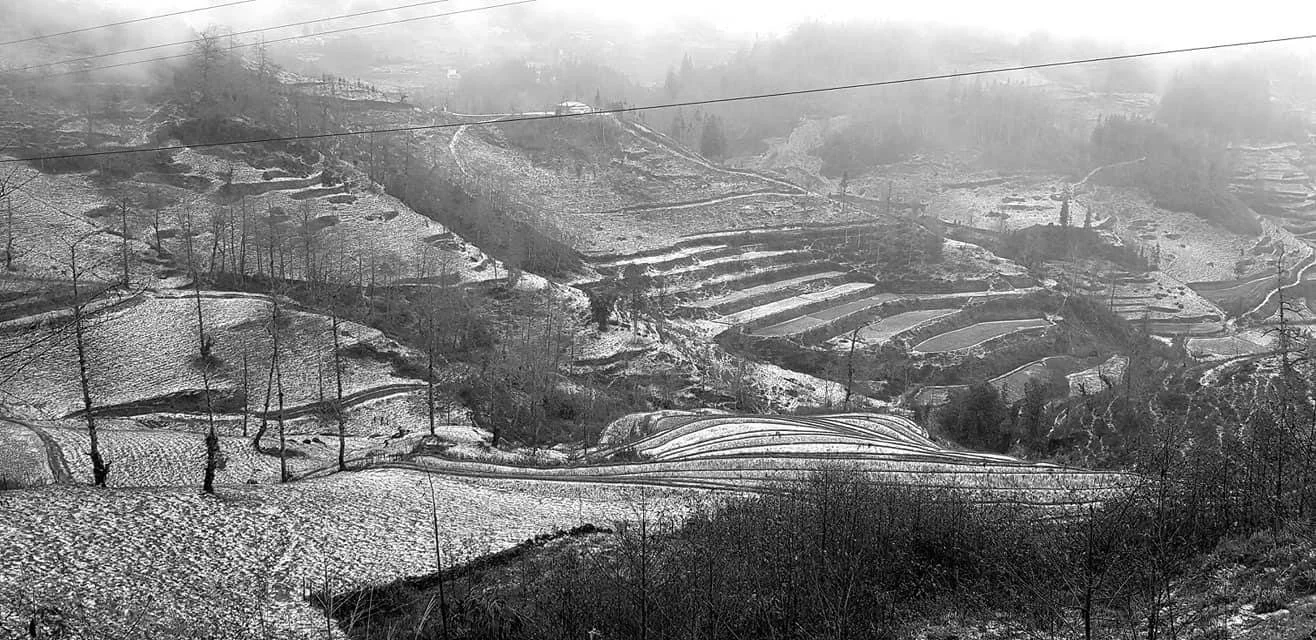
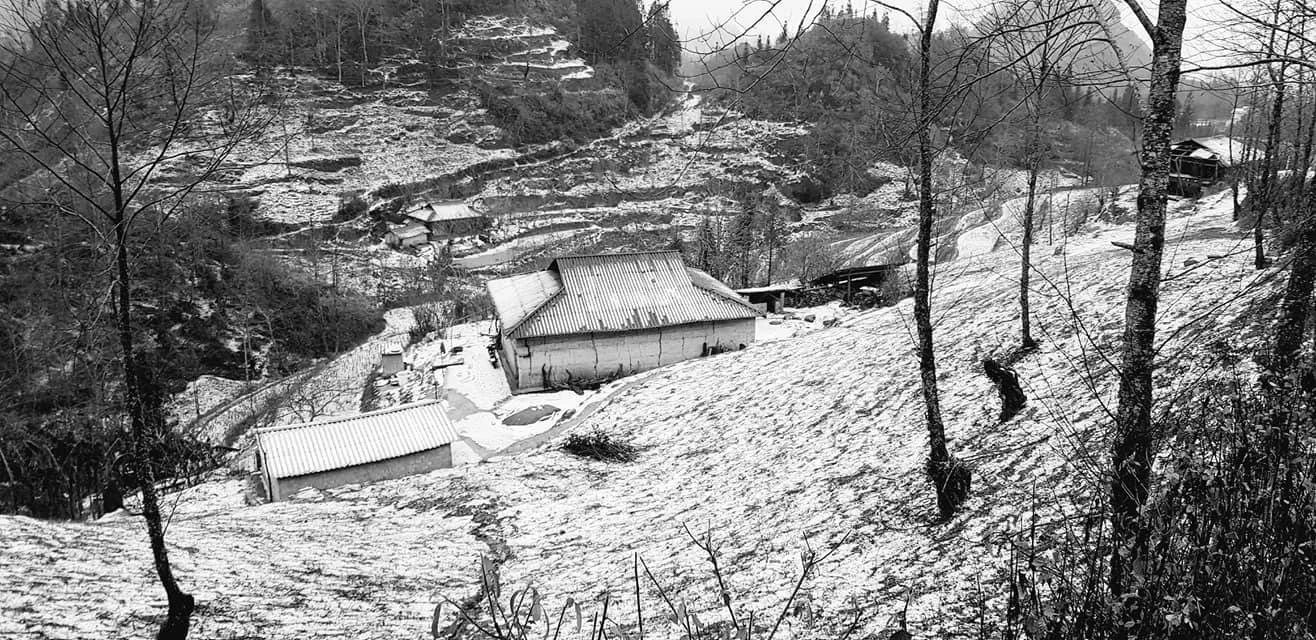
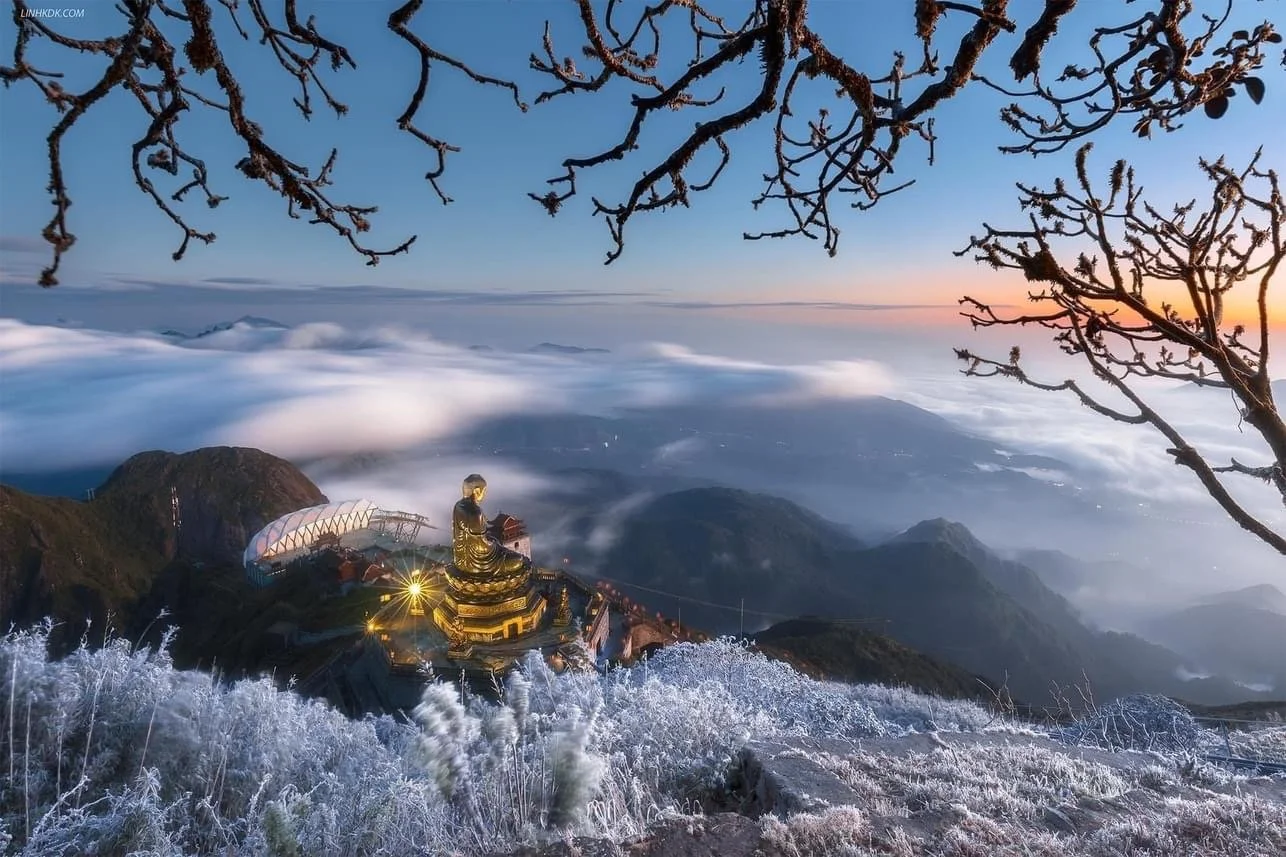
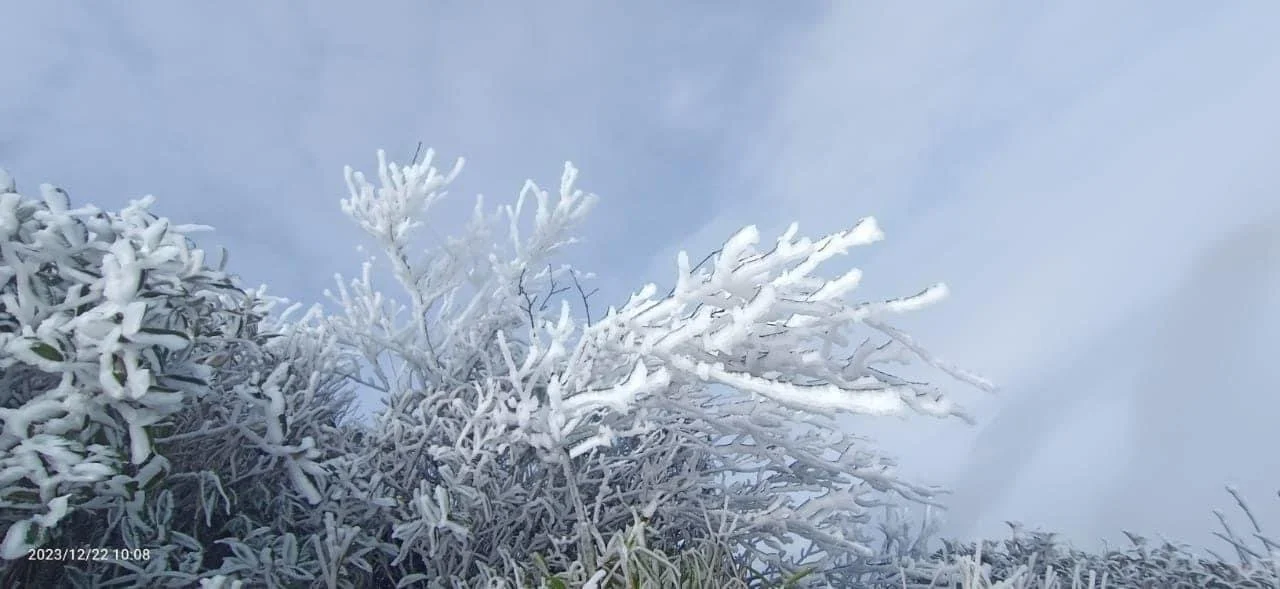
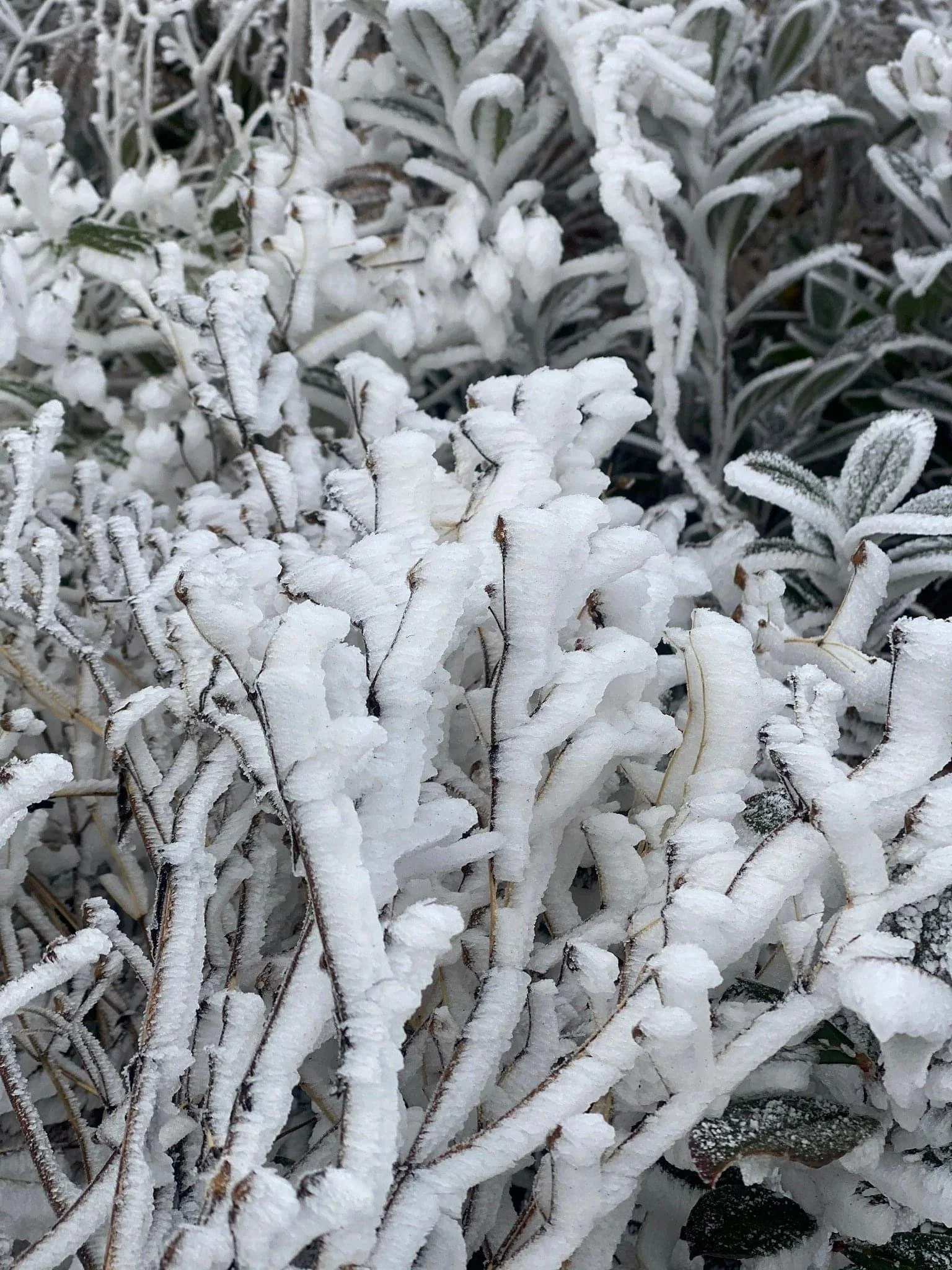
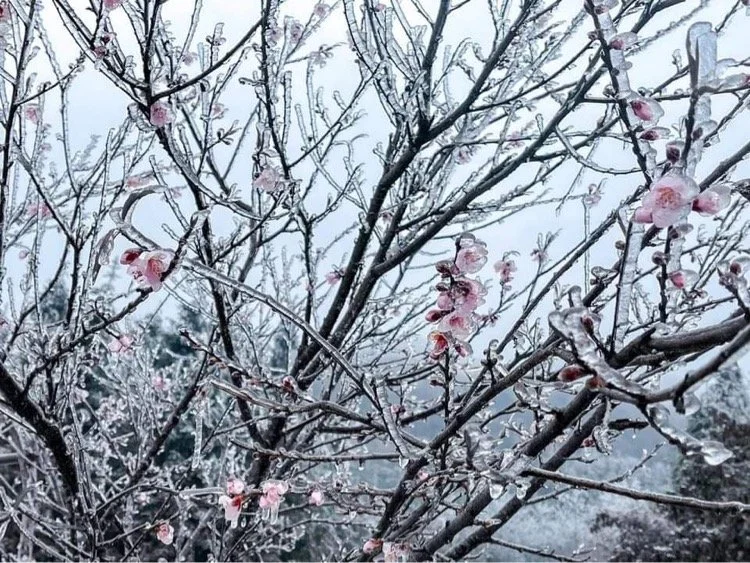
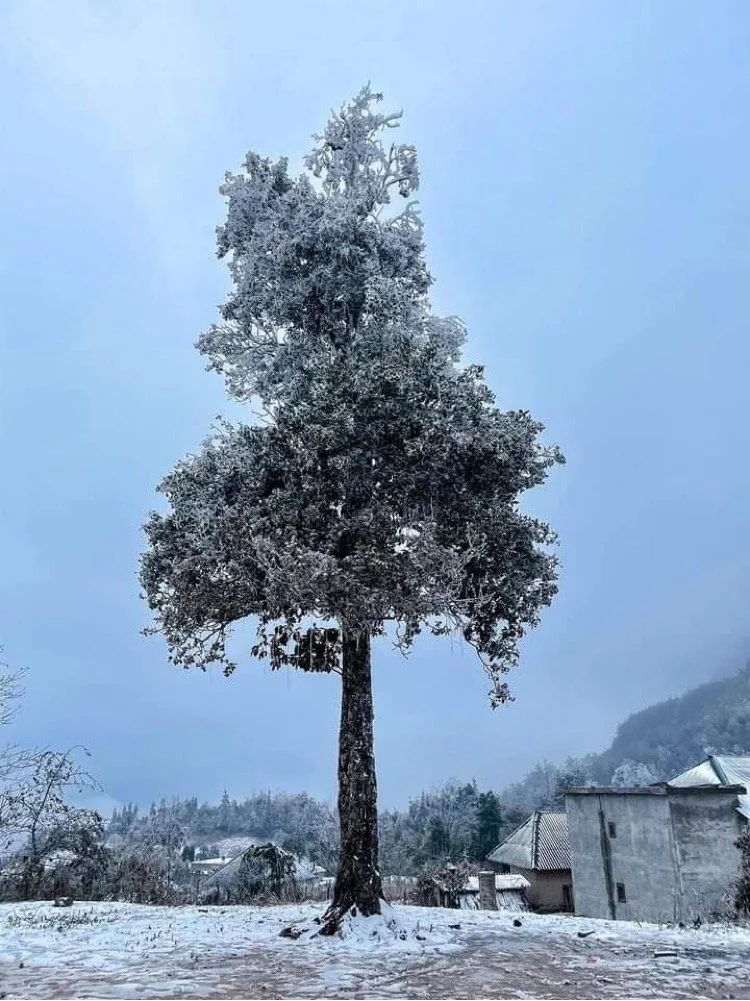
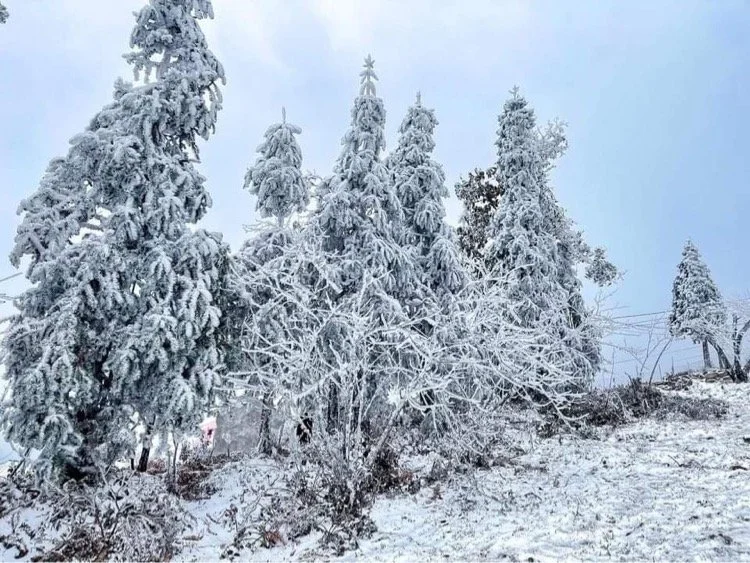
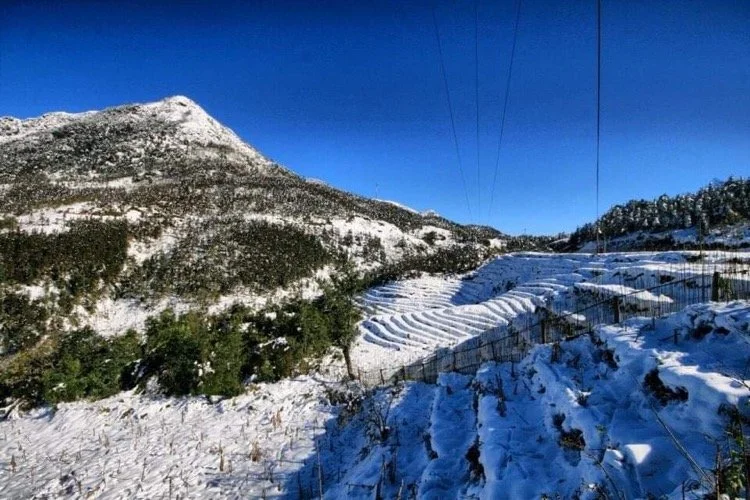
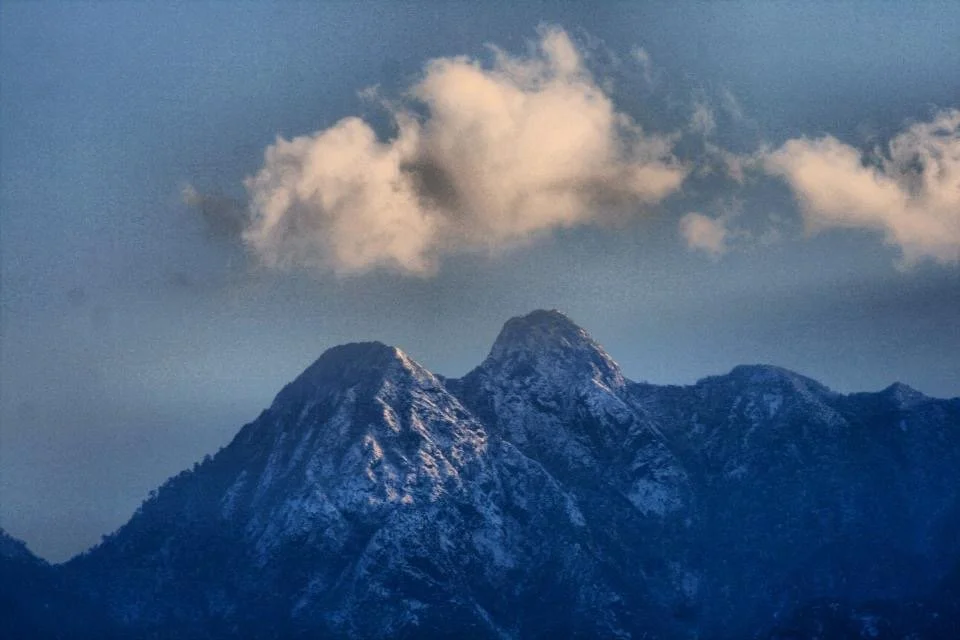
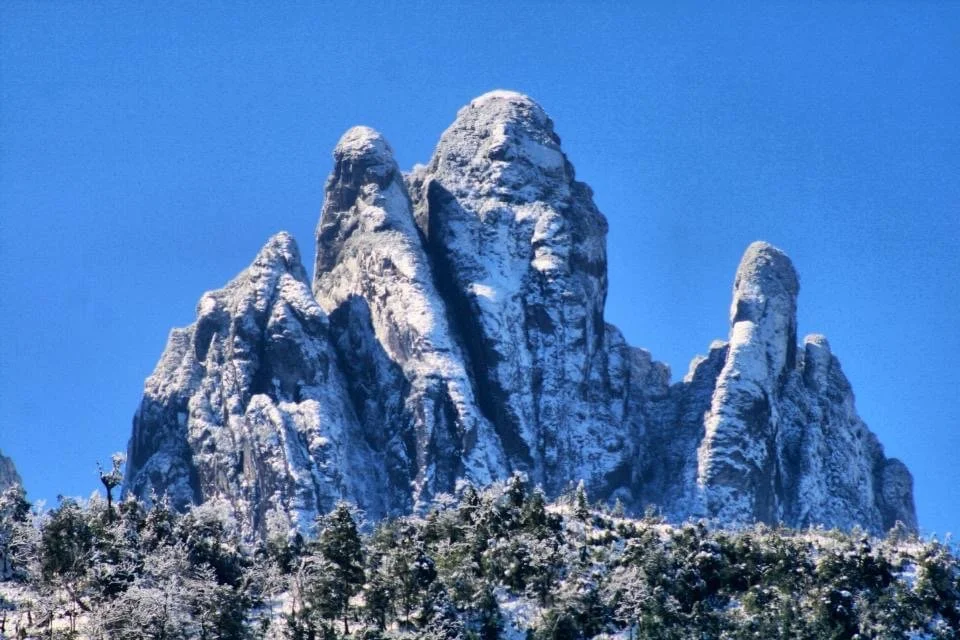
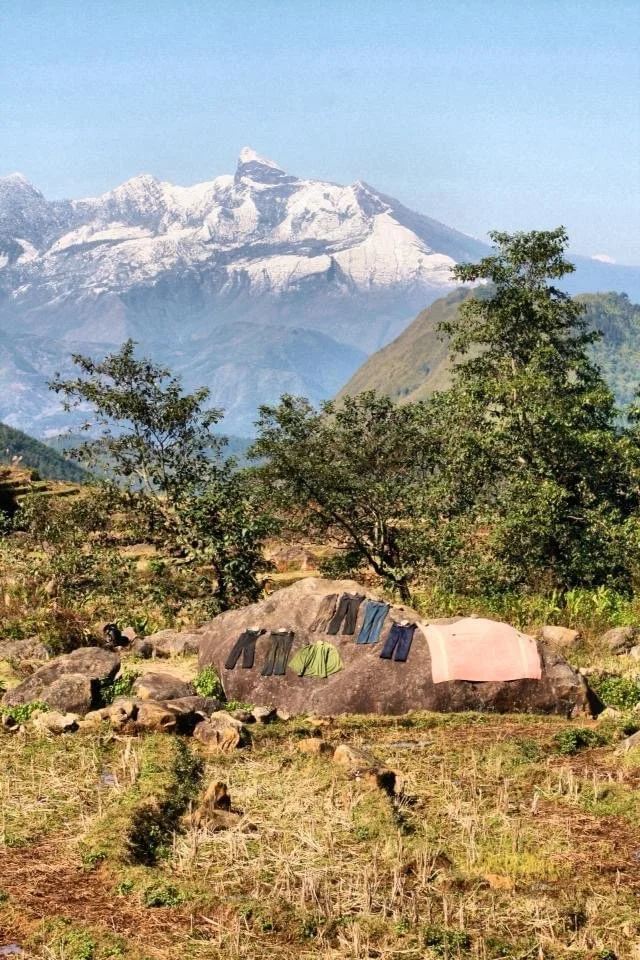
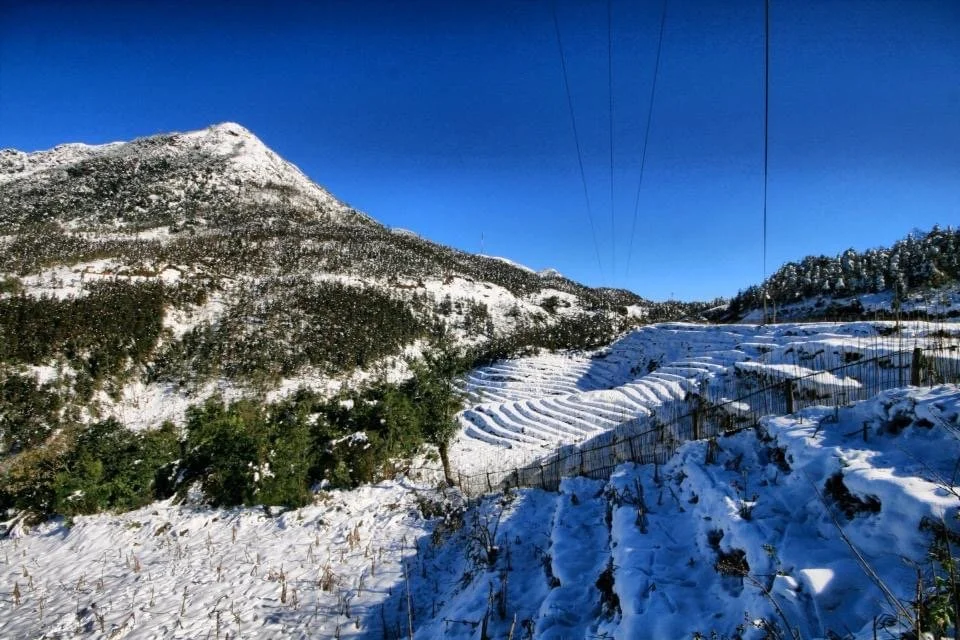
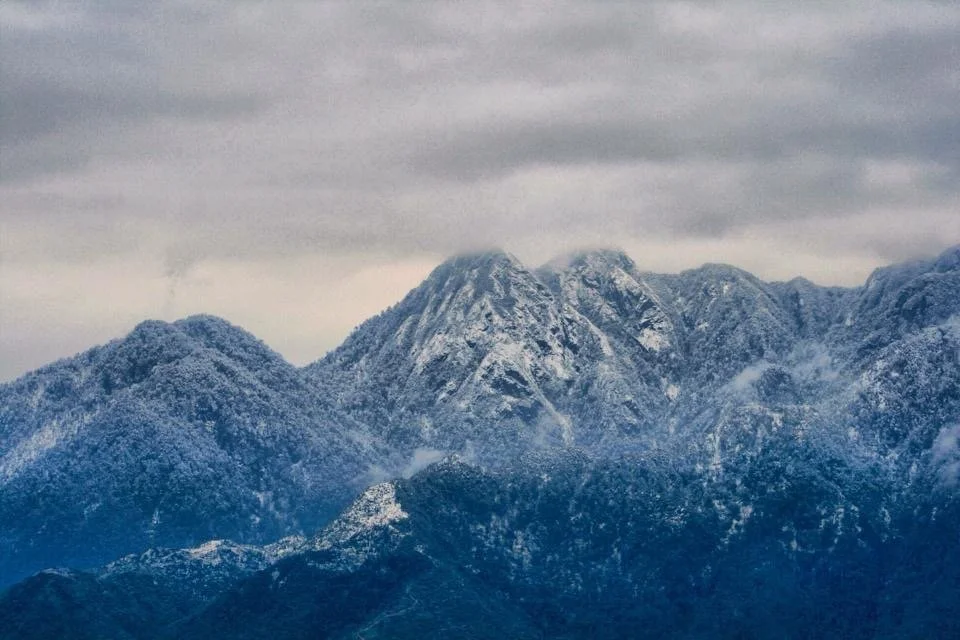
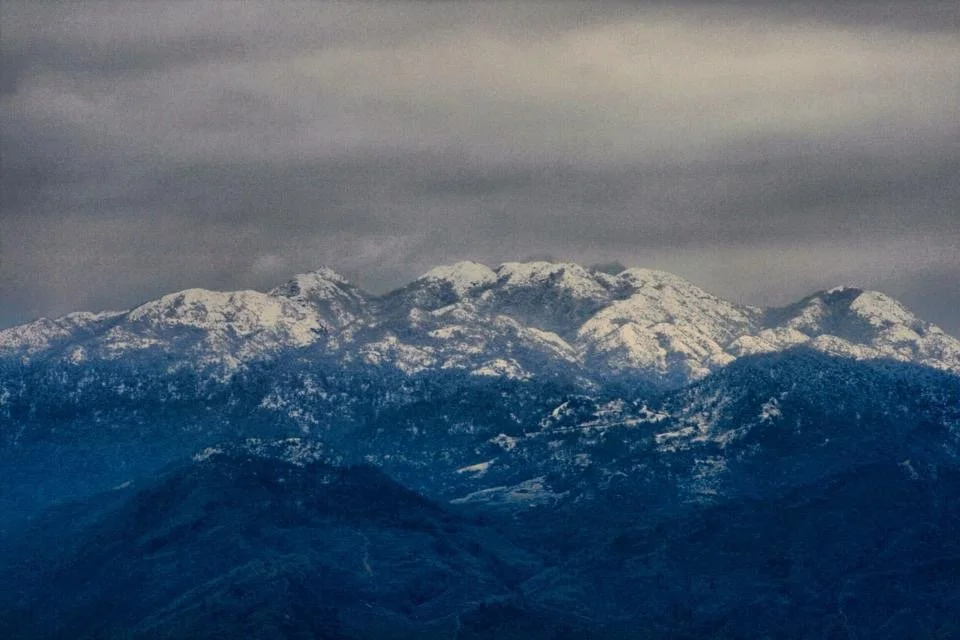
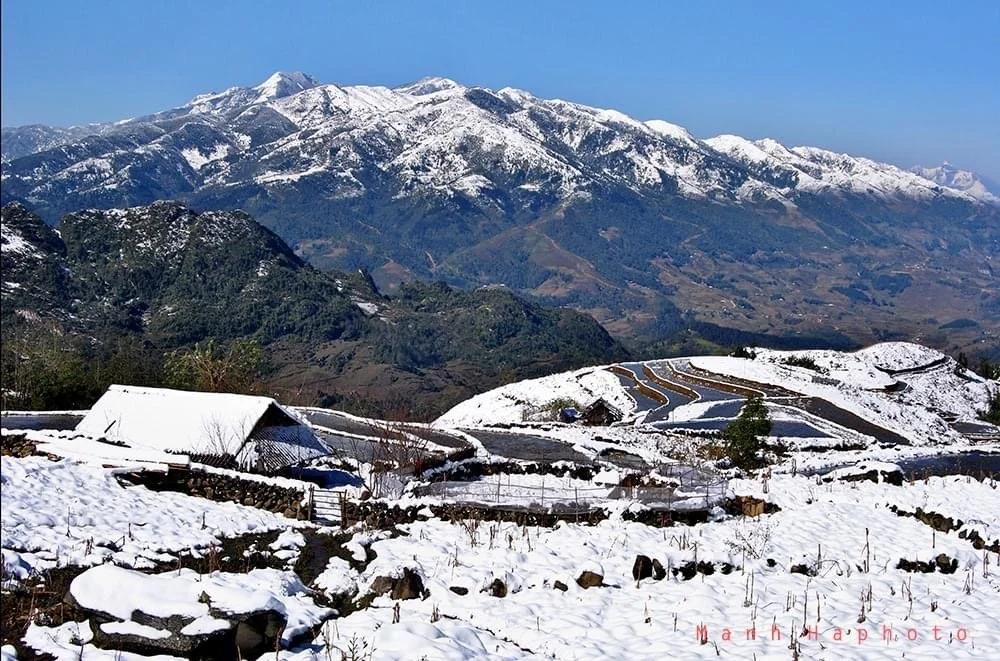
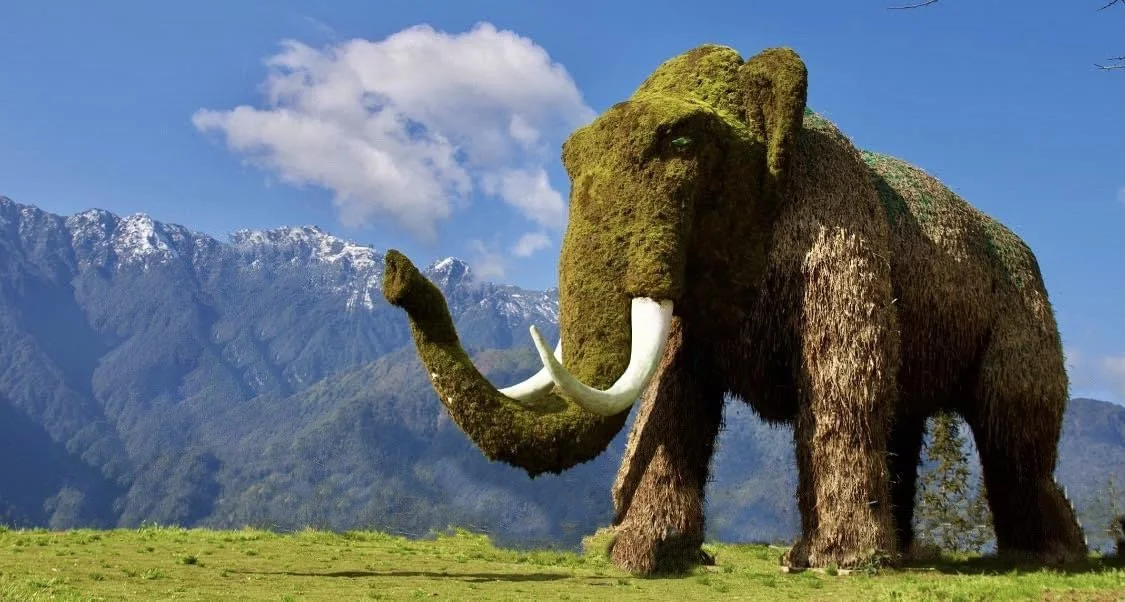
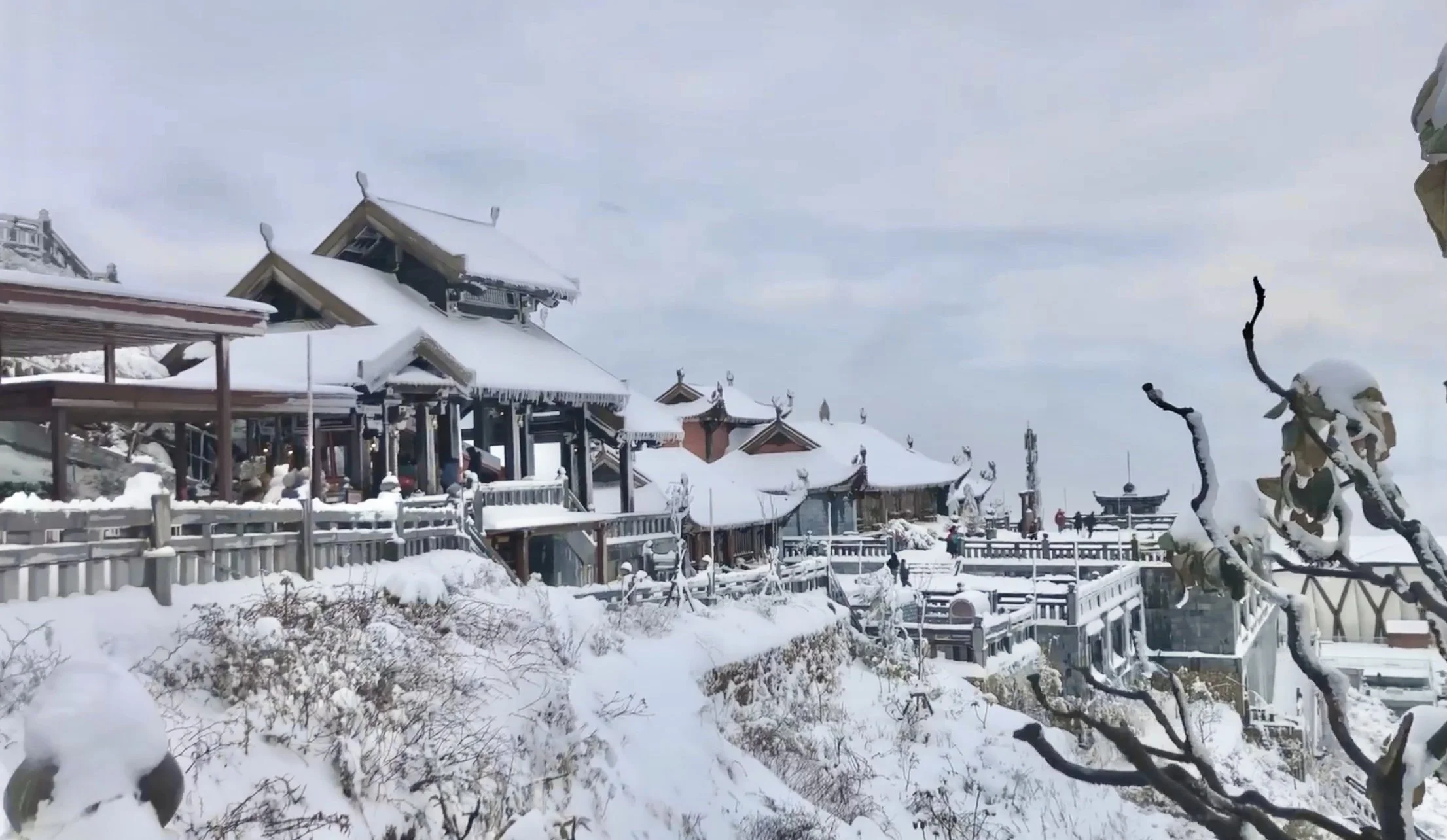
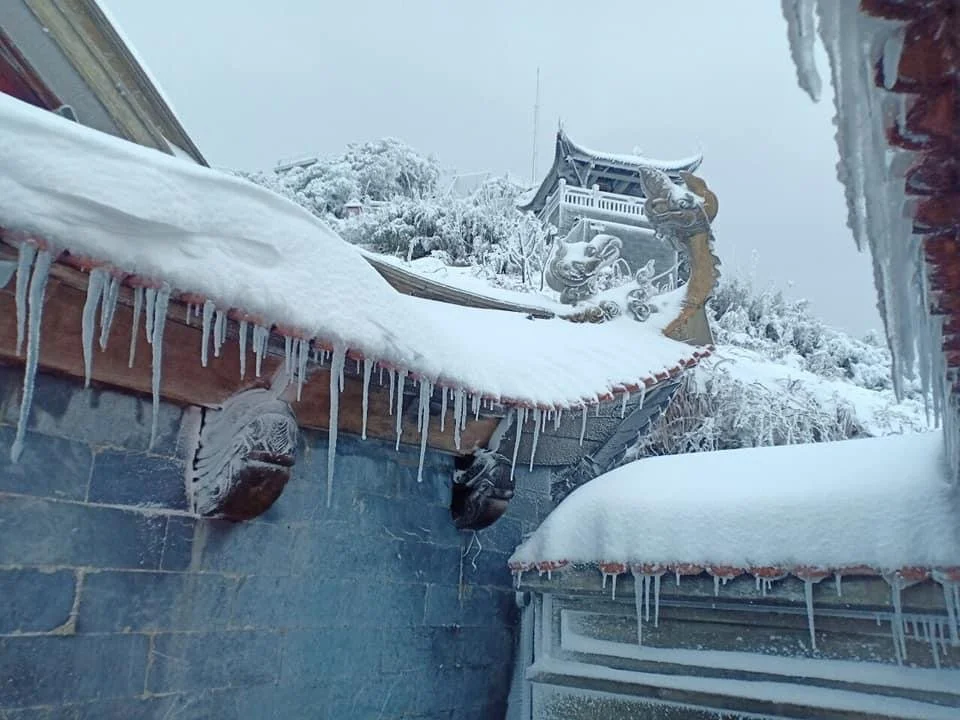
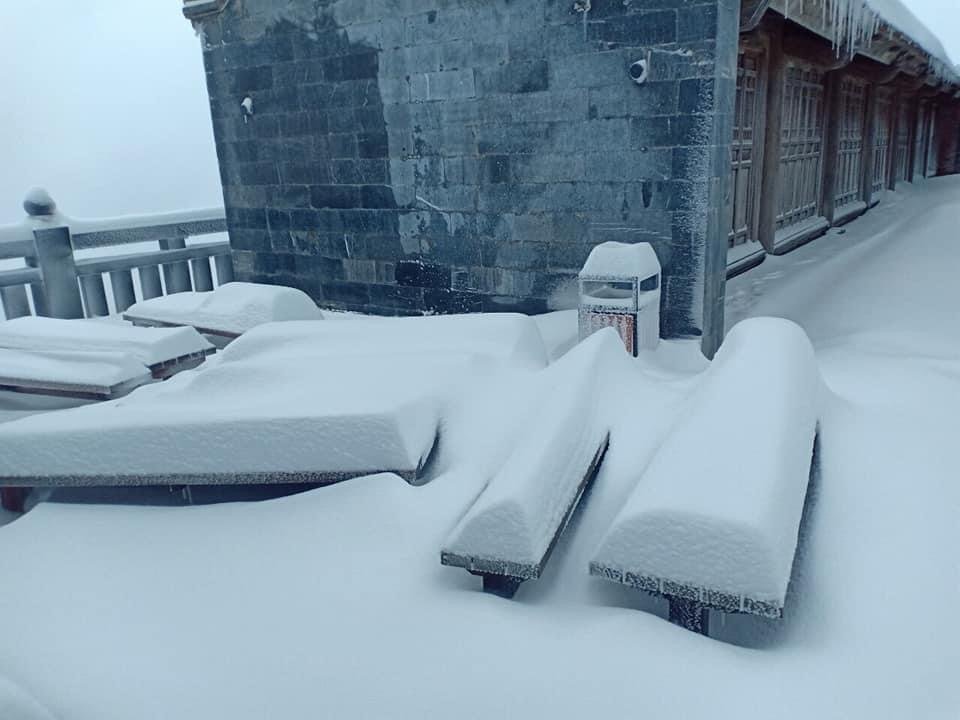
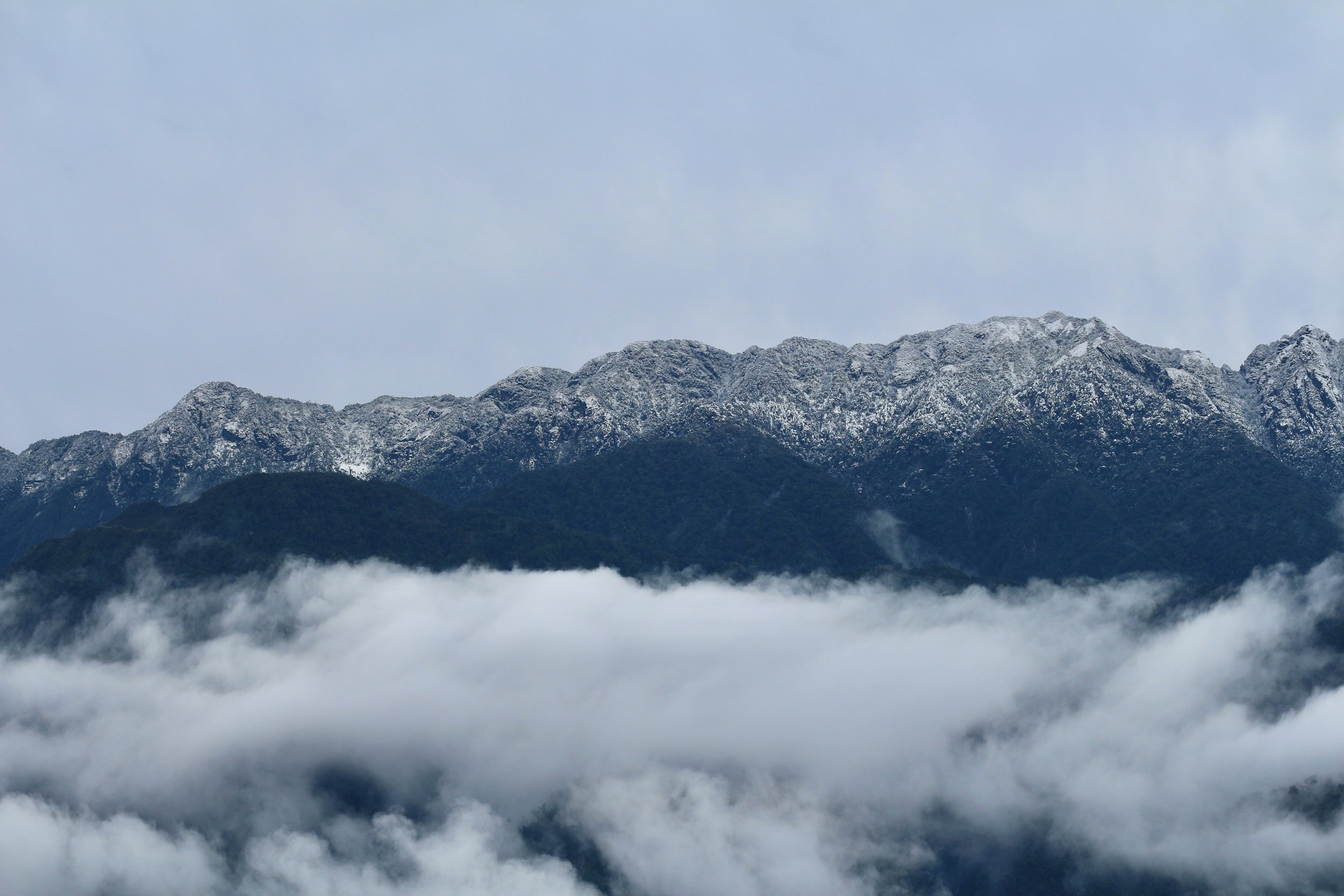
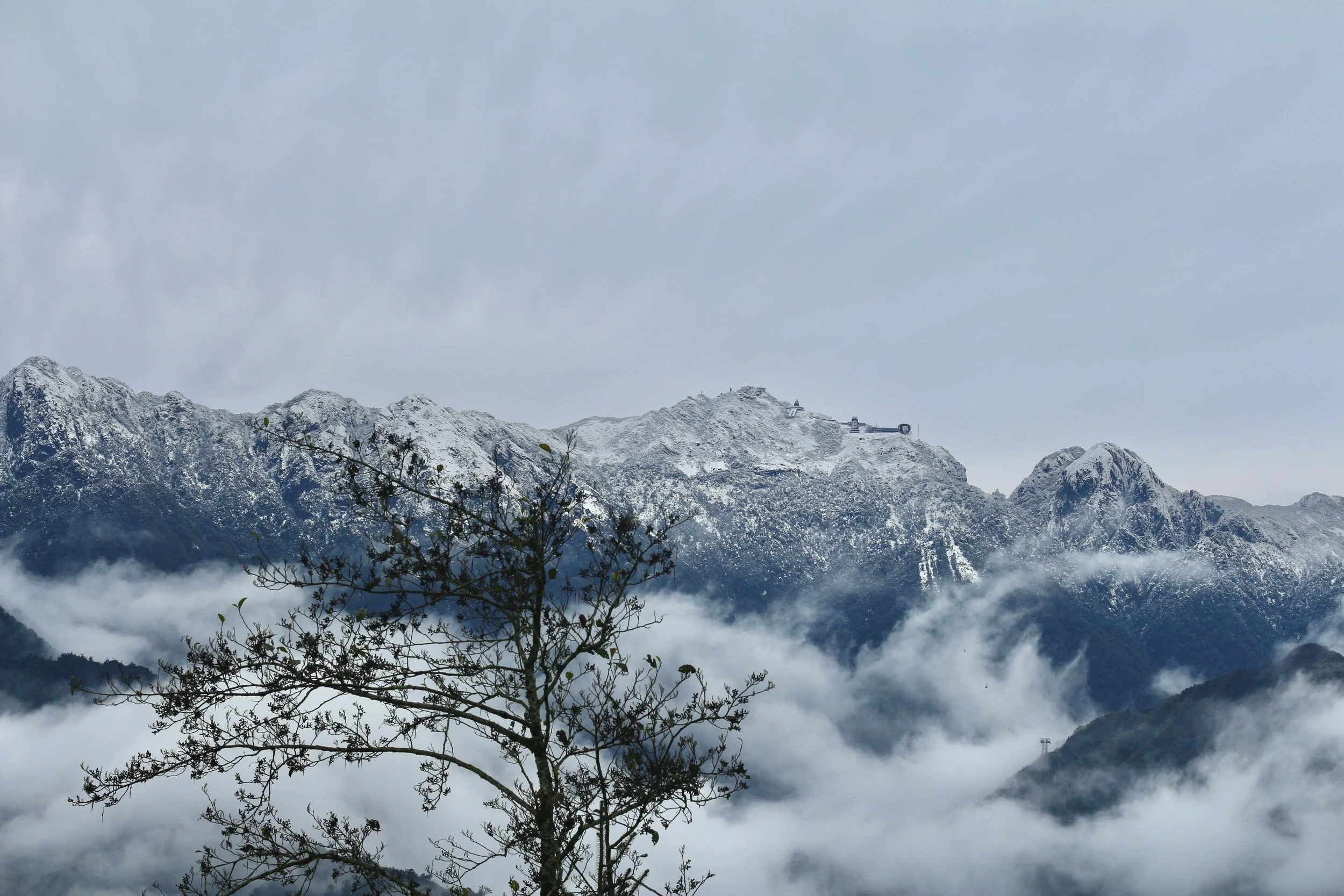
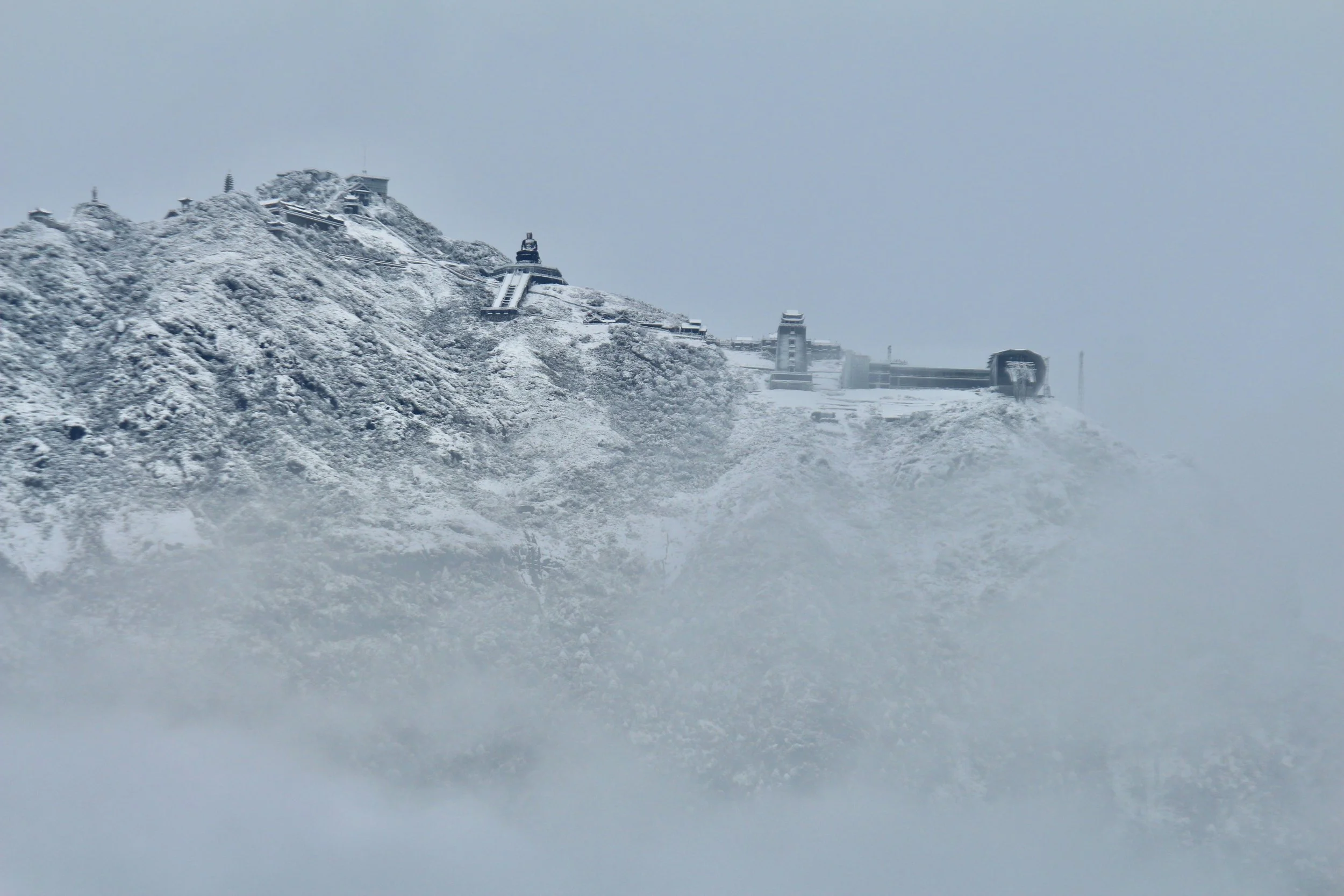
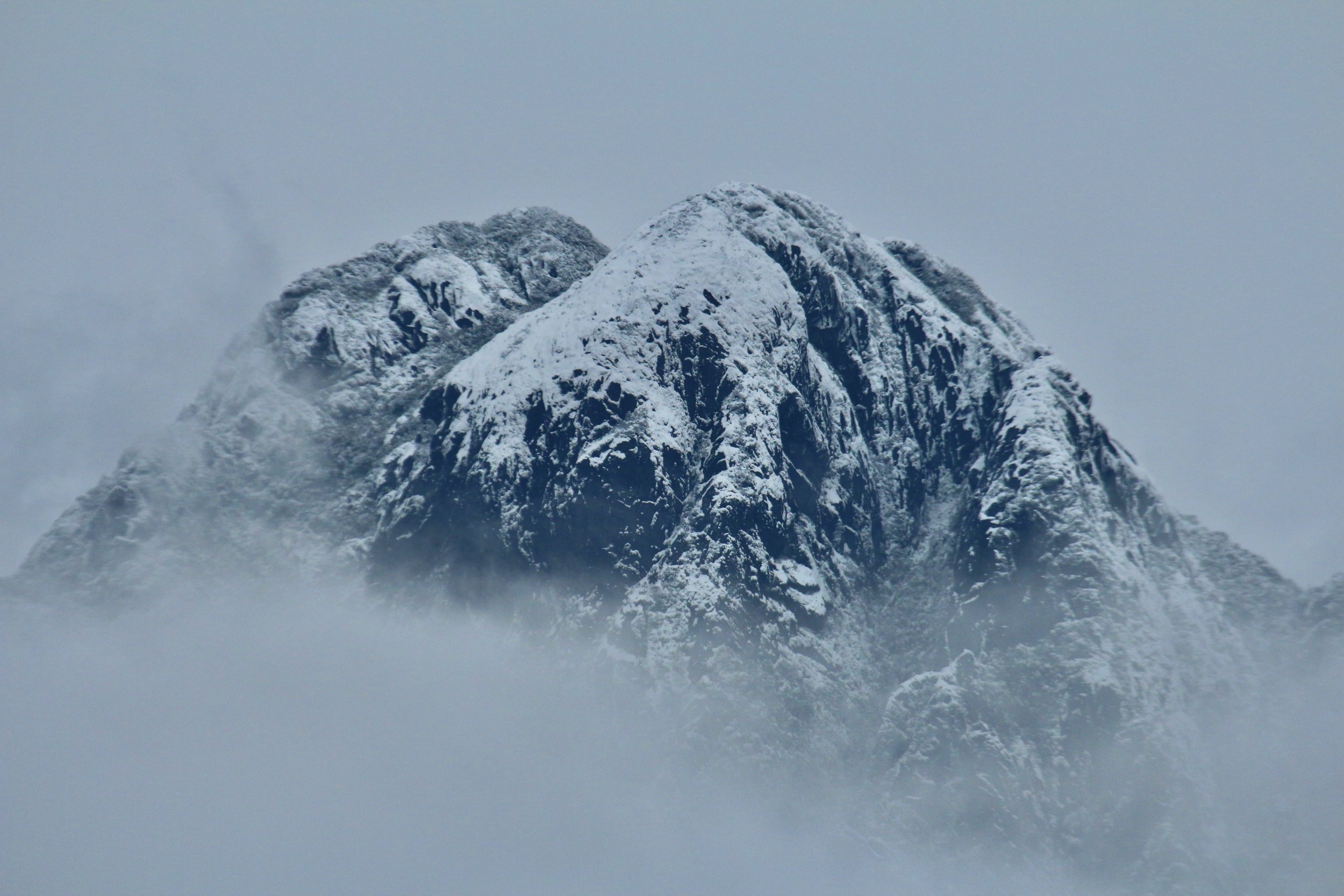
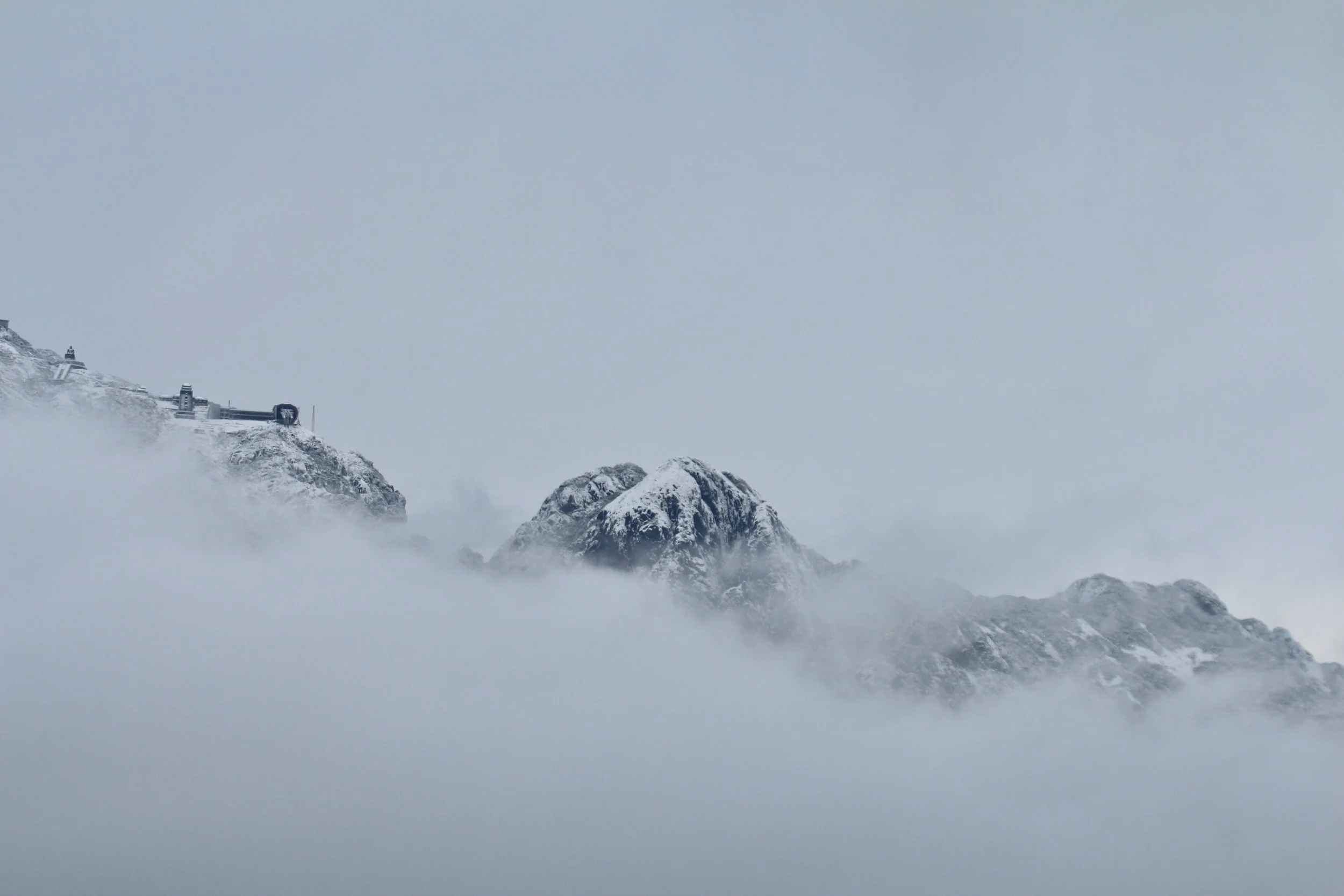
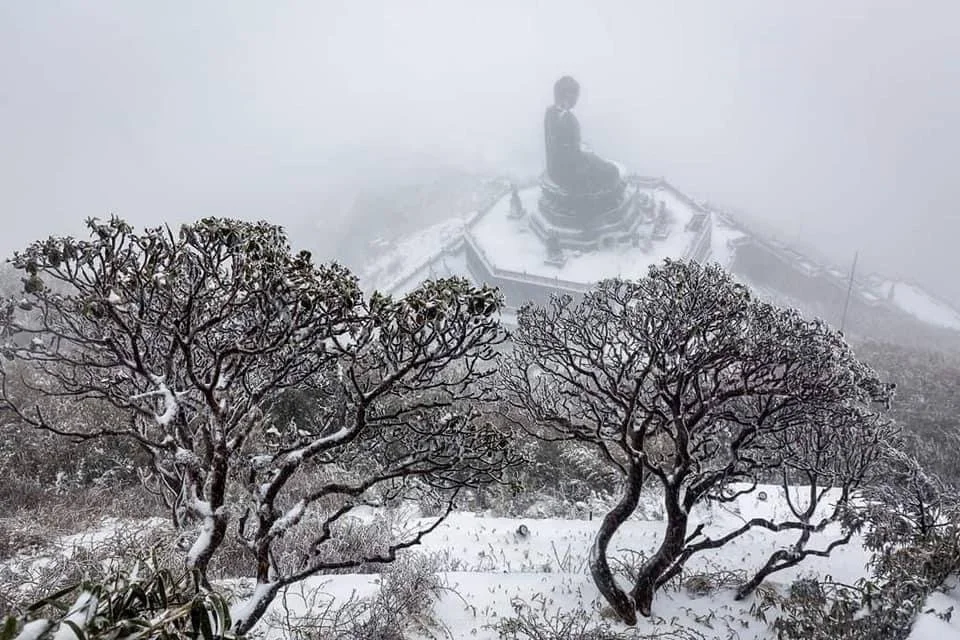
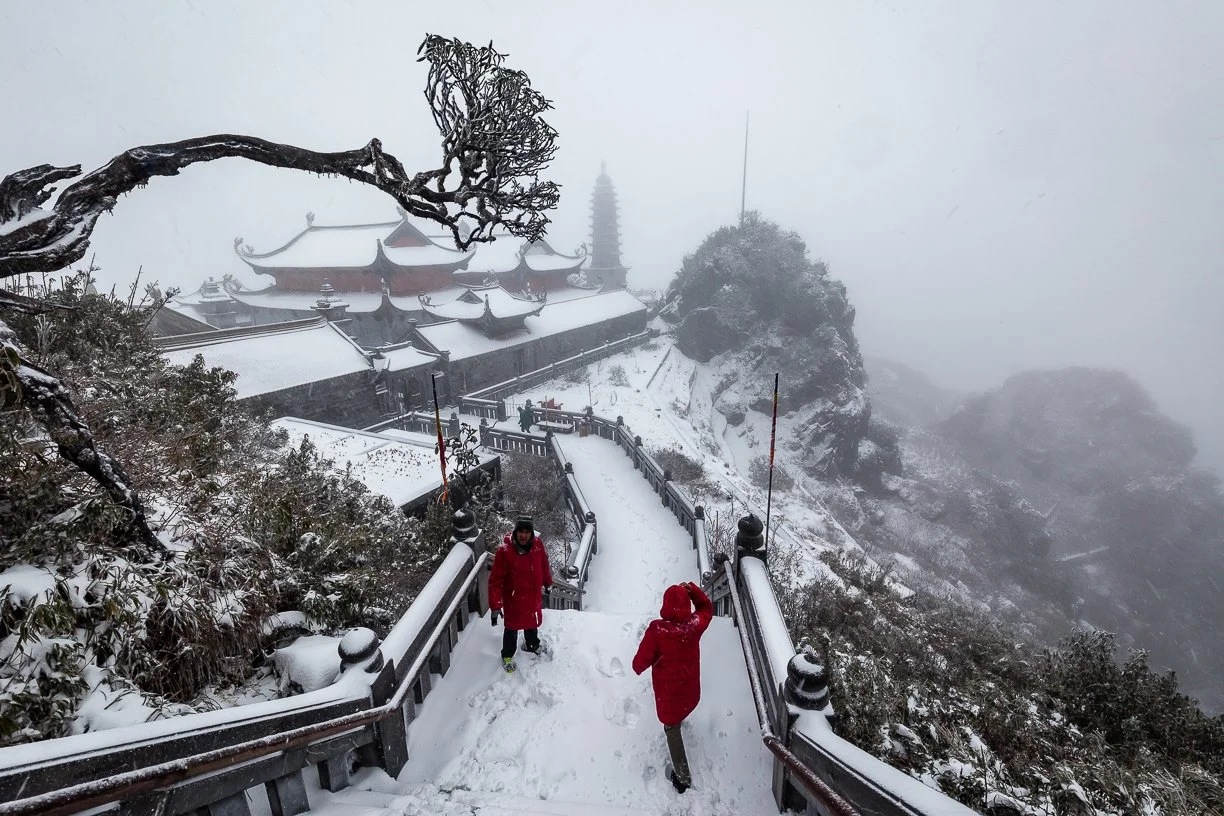
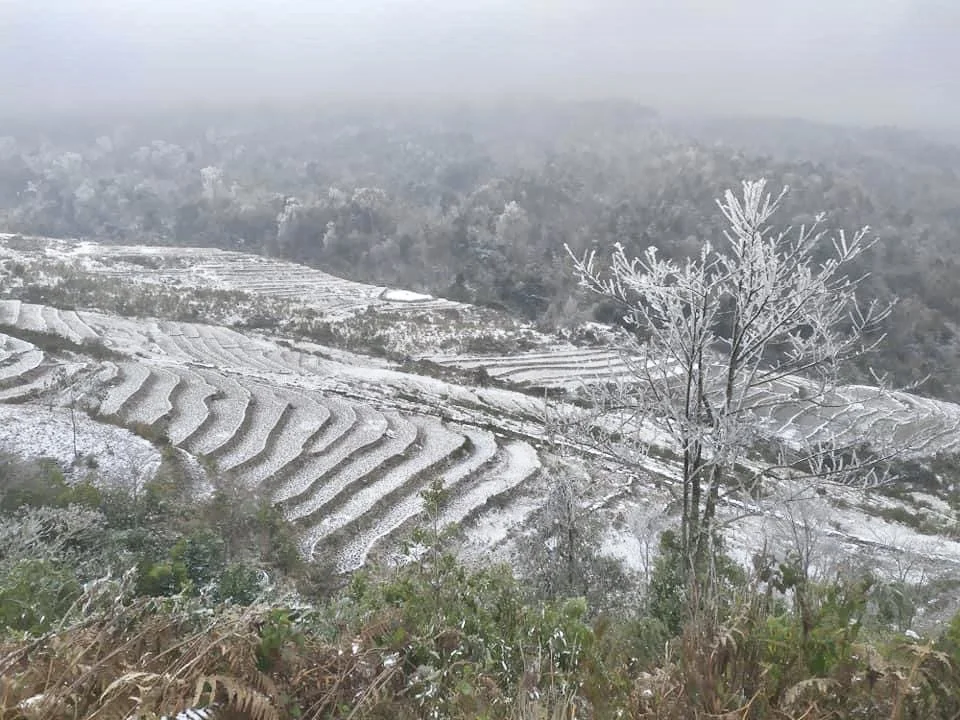
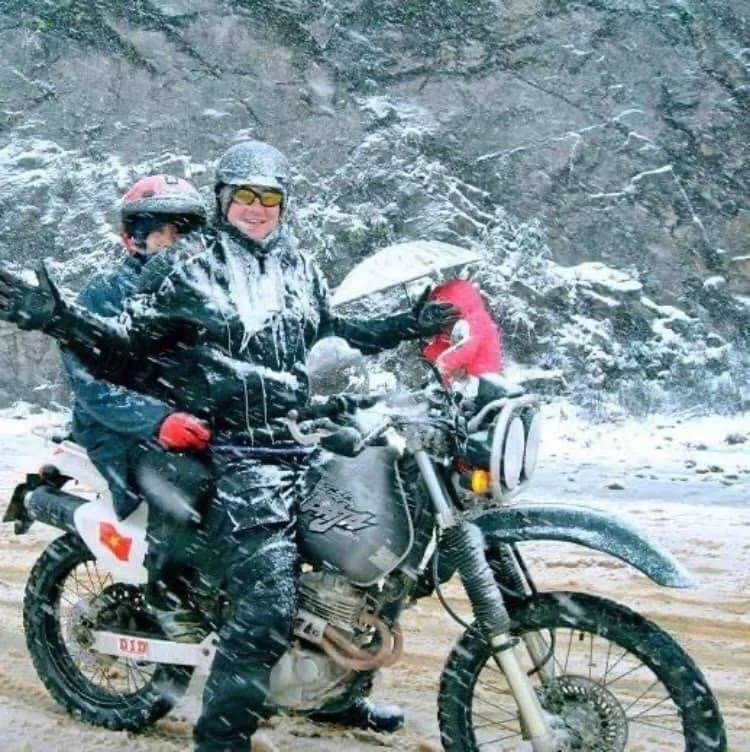
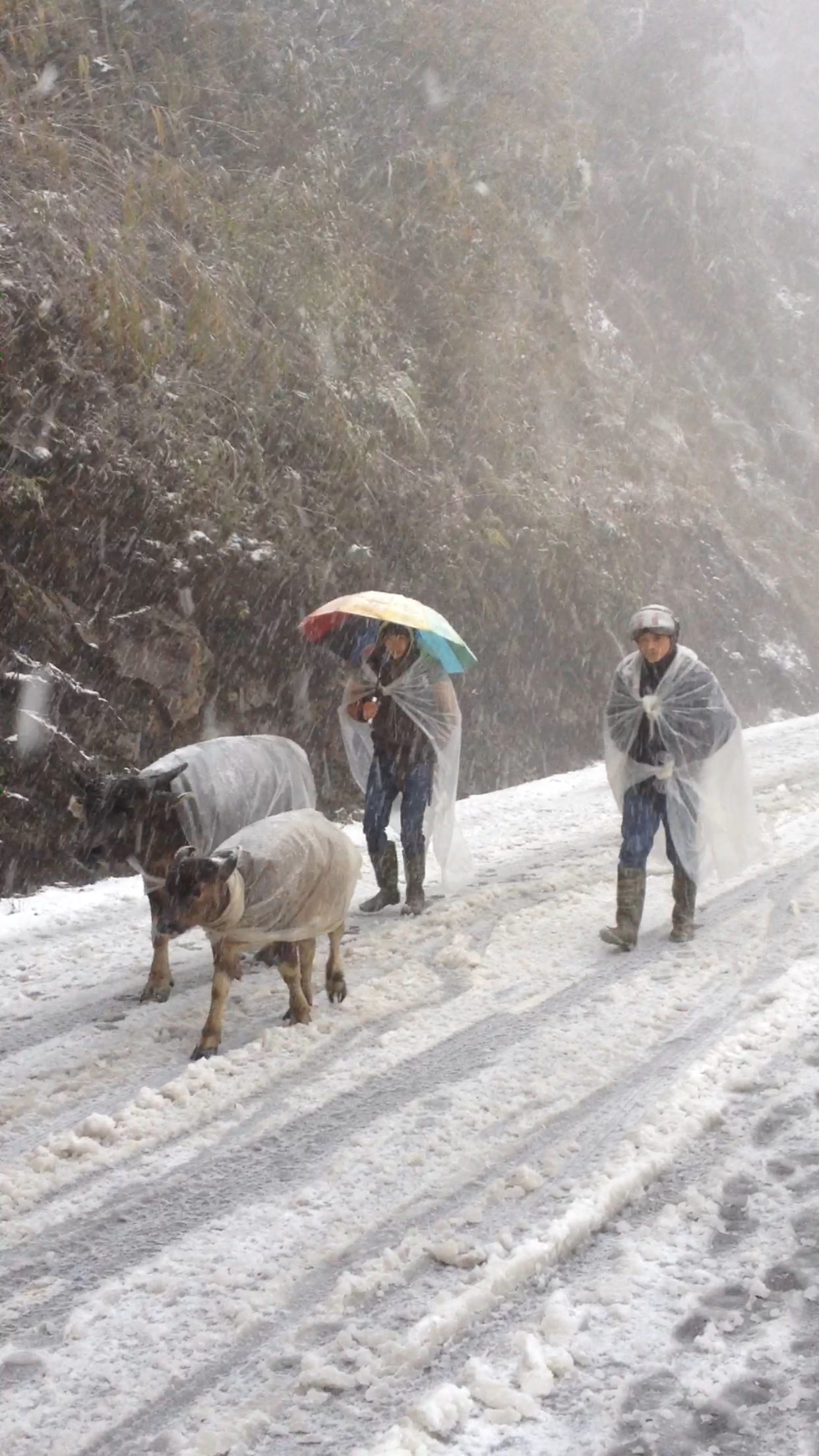
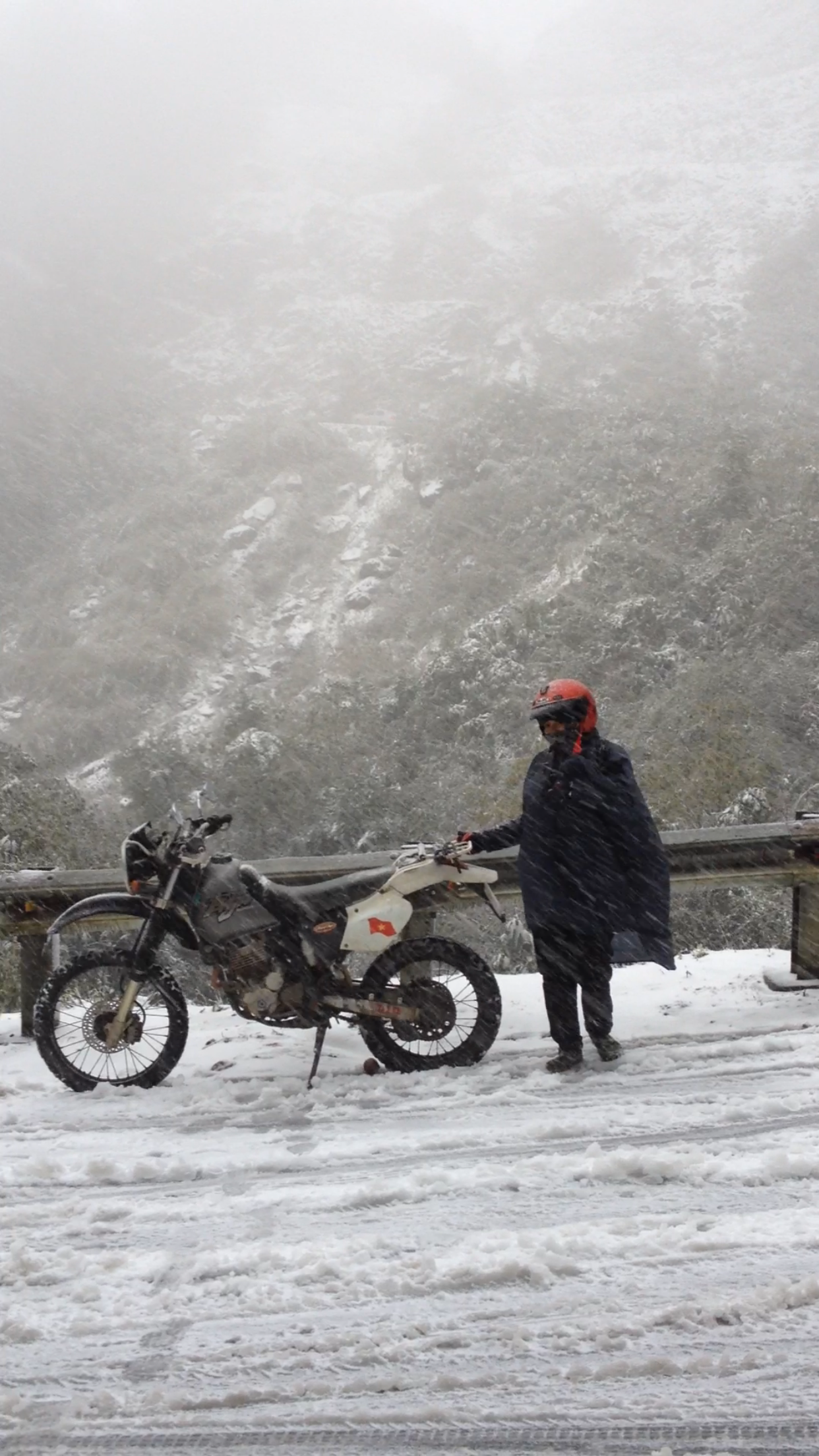
Rác Thải Trong Làng Bản– Hãy Cùng Nhau Thay Đổi! The growing litter problem– Let’s Make a Change Together
As tourism and population grow in Sapa, litter has become a visible problem. ETHOS and local people are taking action through education and community effort.
Rác Thải Trong Làng – Hãy Cùng Nhau Thay Đổi!
1. Vấn đề hiện nay
Thực tế cho thấy, một bộ phận người dân địa phương trong các bản làng vẫn còn xả rác bừa bãi, đặc biệt là quanh các cửa hàng và trường học. Theo tôi, điều này đang khiến những ngôi làng xinh đẹp của chúng ta trở nên nhếch nhác và mất đi vẻ tự nhiên vốn có.
Tình trạng này xảy ra phần lớn vì nhiều người chưa có cơ hội được học hoặc hiểu đúng về cách xử lý rác thải, cũng như tầm quan trọng của việc bảo vệ môi trường.
Đặc biệt, ở những bản làng chưa có hệ thống thu gom rác thải thường xuyên của chính quyền, vấn đề càng trở nên nghiêm trọng hơn.
Khi dân số và du lịch tăng lên, bao bì nhựa và sản phẩm dùng một lần xuất hiện ngày càng nhiều, nhưng giáo dục và nhận thức cộng đồng lại chưa theo kịp. Đây là thực tế mà chính chúng ta là những người dân địa phương đều thấy rõ mỗi ngày.
2. Chúng tôi đang làm gì để thay đổi?
Là một tổ chức cộng đồng địa phương, ETHOS tự hào là đơn vị duy nhất tại Sa Pa thường xuyên tổ chức các lớp học về rác thải, sức khỏe và vệ sinh tại các bản làng trong khu vực.
Chúng tôi đến tận các cộng đồng để cùng người dân thu gom rác và trò chuyện với trẻ em về vấn đề này. Trong các buổi học, chúng tôi đặt ra những câu hỏi đơn giản nhưng vô cùng quan trọng:
“Rác đến từ đâu?”, “Ai là người vứt rác?”, “Rác mất bao lâu để phân hủy hết?” và “Chúng ta có thể làm gì để thay đổi điều đó?”
Chúng tôi tin rằng giáo dục chính là chìa khóa của sự thay đổi. Khi con người hiểu, họ sẽ hành động khác đi.
Mỗi buổi học nhỏ, mỗi ngày dọn rác đều góp phần tạo nên sự khác biệt cho cộng đồng và cho chính môi trường sống của chúng ta.
3. Ý tưởng và giải pháp của bạn là gì?
Giờ đây, chúng tôi rất muốn lắng nghe ý kiến và ý tưởng của bạn:
Làm thế nào để giảm lượng rác thải trong làng?
Chúng ta có thể làm gì để cả người dân địa phương và du khách cùng chung tay bảo vệ vùng đất xinh đẹp này nơi mà tất cả chúng ta gọi là “nhà”?
Với tư cách là người Mông, bạn có ý tưởng hoặc giải pháp nào cho vấn đề này không? Bạn nghĩ chúng ta nên cùng nhau hành động như thế nào?
Hãy chia sẻ suy nghĩ của bạn và cùng chúng tôi góp sức vì một Sa Pa sạch, xanh và đáng tự hào.
Bởi hành động nhỏ đều có ý nghĩa, và khi cùng nhau, chúng ta có thể tạo nên sự thay đổi lớn trong cộng đồng.
Dưới đây là video ngắn về hoạt động thu gom rác cùng cộng đồng tại Sapa: https://youtu.be/A0fJH8AmwzM?si=ONciMWRgP38Kgn34
Rubbish in the Villages – Let’s Make a Change Together
1. Here’s the Problem
The truth is that some local people in our villages are dropping litter, especially around local shops and schools, and in my opinion, it’s making our beautiful villages look dirty and less natural. This happens because many people have never had the chance to learn or understand how to deal with rubbish properly or why it matters. It is especially bad in villages with no regular government litter collection.
As population grows and tourism increases, more plastic packaging and disposable products appear, but education and awareness have not kept pace. This is the reality, and as local people, we see it clearly every day.
2. What We’ve Been Doing to Help
As a local community organisation, ETHOS are proud to be the only company in Sapa that regularly organises classes about litter, health and hygiene in villages across the area.
We visit communities to collect rubbish together and to talk with children about the problem. We ask simple but important questions:
“Where does the rubbish come from?” “Who drops it?” “How long will it take to disappear?” and “What can we do to solve it?”
We truly believe that education is the key to change. When people understand, they act differently. Every small class or clean-up day makes a difference to our community and our environment.
3. What Are Your Ideas and Solutions?
We would love to hear your ideas. How can we reduce rubbish in our villages?
What can be done to help both locals and visitors protect this beautiful place we all call home?
As a Hmong person, what is your idea or your solution? How do you think we should do it together?
Please share your thoughts and join us in this effort. Every small step matters, and together we can keep Sapa clean.
Here’s our short video of local people collecting litter in Sapa here: https://youtu.be/A0fJH8AmwzM?si=ONciMWRgP38Kgn34
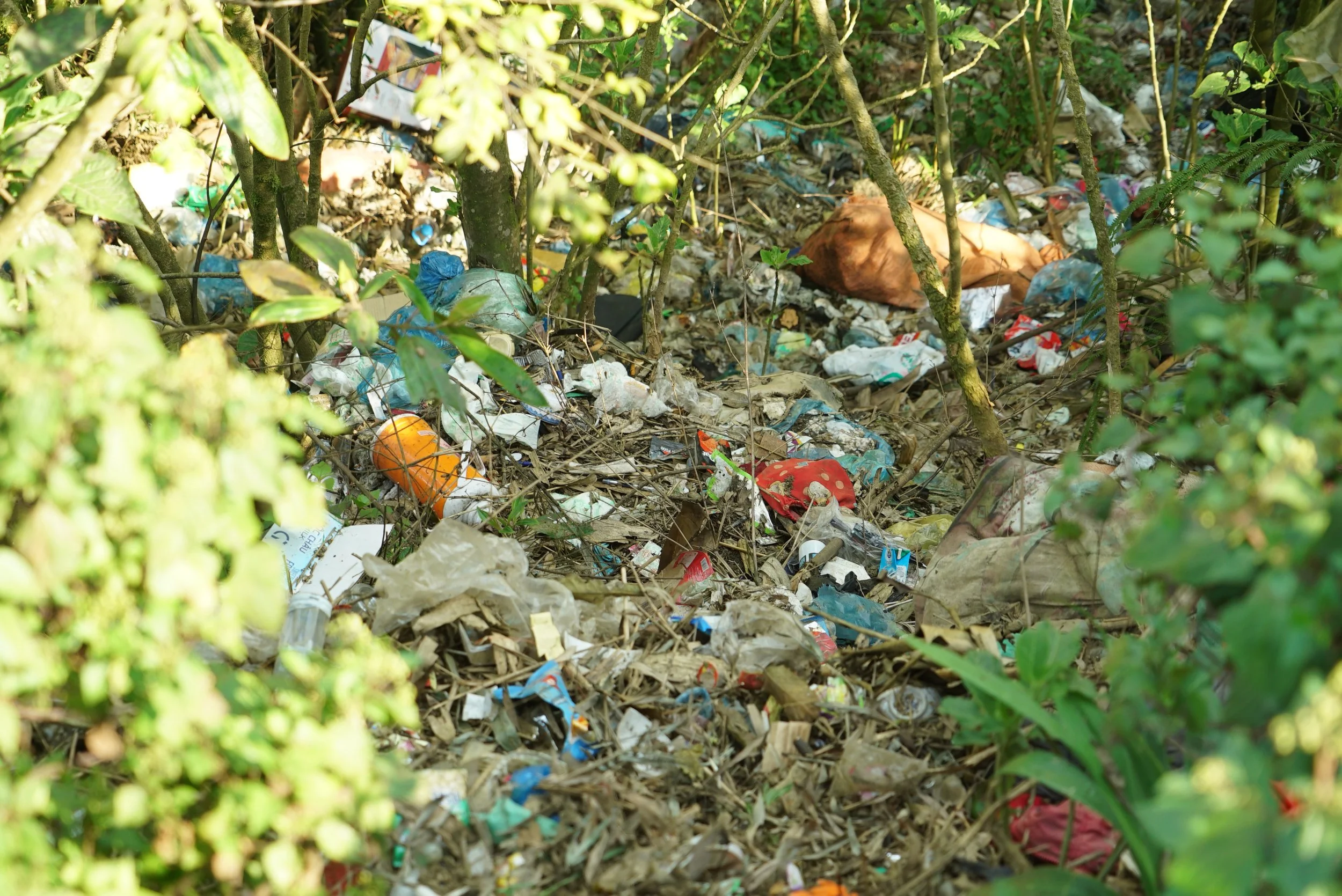


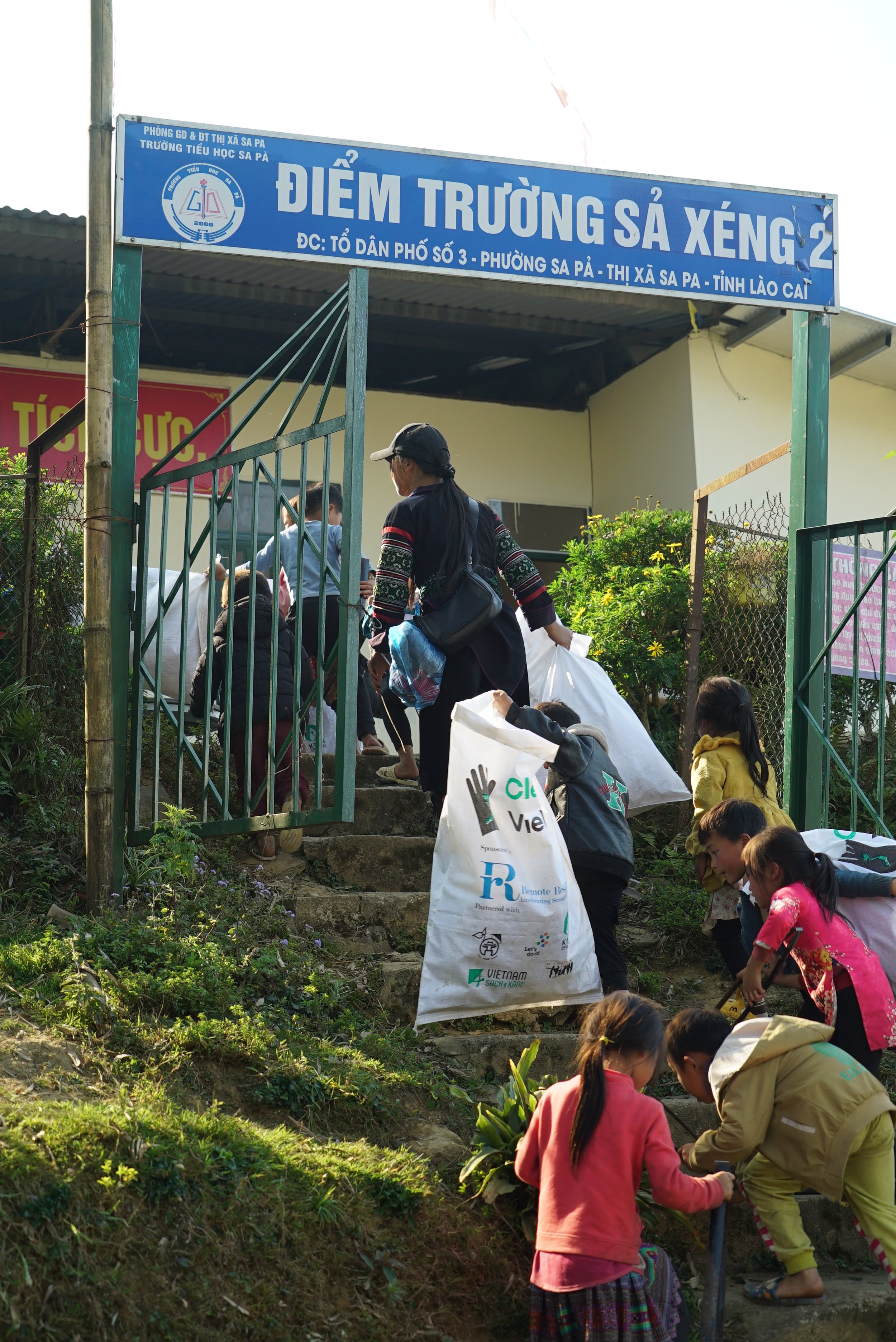

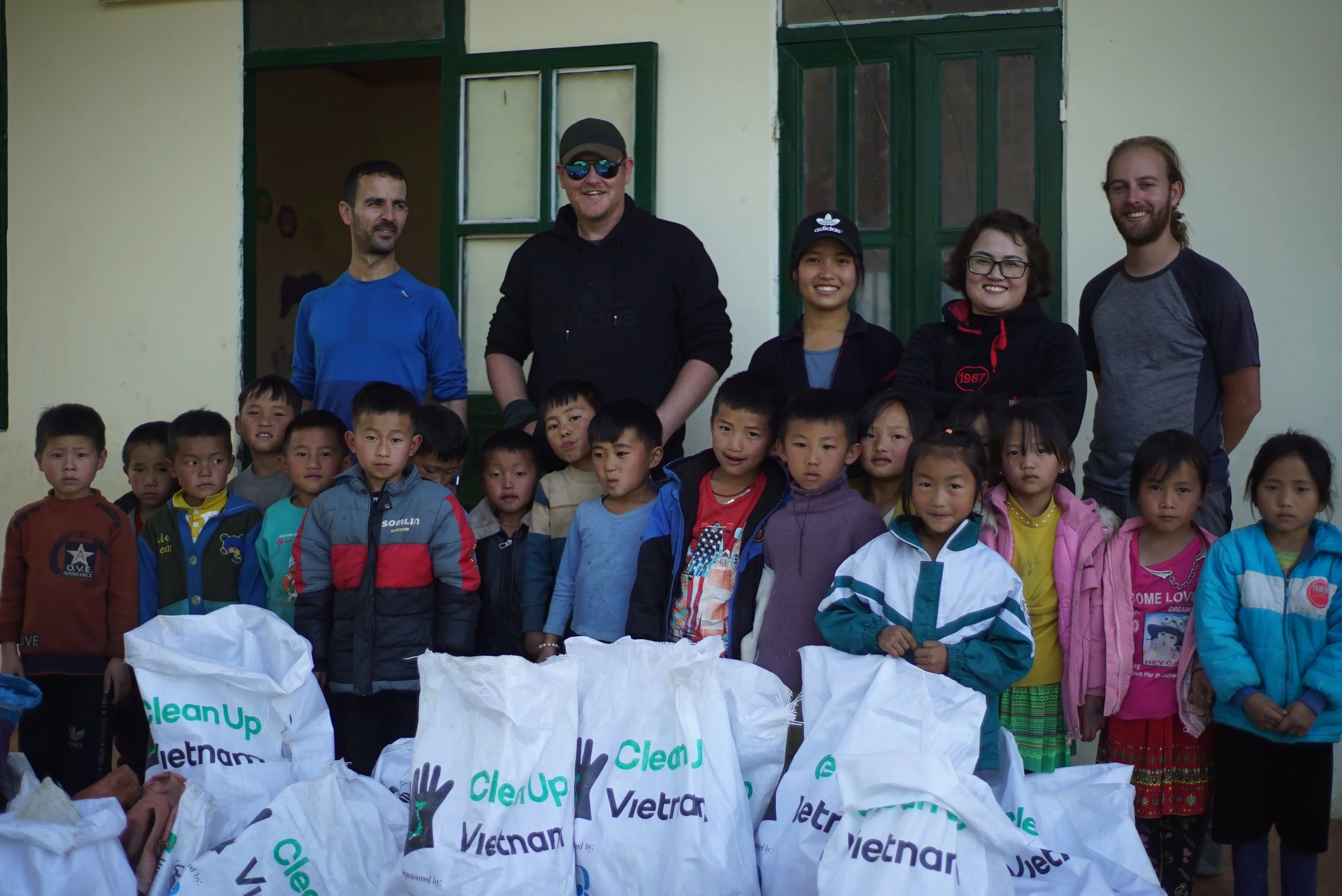
The Water Buffalo of Northern Vietnam: Power, Culture and Family
In Northern Vietnam, the water buffalo is far more than a working animal. It is a source of strength, a family companion, and a cultural symbol.
The Symbol of Strength in Northern Vietnam
When travellers picture Northern Vietnam, the image of a water buffalo often comes to mind. Domesticated over 5,000 years ago, these powerful animals have long been essential partners to the Dao and Hmong communities. They plough fields, transport crops, and provide a steady source of strength that rural life depends on.
A Trusted Partner in Rural Life
For many farming families, a water buffalo is their most valuable possession, often worth between $1,000 and $2,500. In a traditional saying, “The husband ploughs, the wife sows, the water buffalo draws the plough and is a friend of the children.” This captures the animal’s central place not only in agriculture but also in family life.
Essential to Hmong Agriculture
Rice cultivation is at the heart of Hmong culture, and water buffalo make it possible. Their ability to work in wet, muddy fields makes them indispensable in rice production. Beyond farming, they serve as financial security, with families able to sell or trade them if needed. Their meat also provides nutrition and income, adding to their importance.
Cultural Meaning and Respect
Water buffalo are more than farming tools. They symbolise prosperity, hard work, and resilience. They appear in folklore, festivals, and traditional art, reflecting their role in Vietnam’s cultural identity. Many families treat them as members of the household, showing care and affection as their livelihoods depend on the health of these animals.
A Way of Life in Sapa
In the Sapa region, water buffalo are treasured possessions. During the busy summer months, when both rice and corn are cultivated, children often tend the animals, guiding them away from fields where they might damage crops. This daily interaction reinforces the bond between families and their buffalo.
Beyond Vietnam: A Global Role
Across the world, water buffalo are valued for their versatility. They provide milk, meat, and labour, while also proving to be intelligent and loyal. They form strong social bonds and can be trained with ease, making them ideal companions in farming communities worldwide.
More Than Animals
Water buffalo embody the connection between agriculture, culture, and family in Northern Vietnam. They are companions, workers, and symbols of resilience. For generations, they have sustained rural communities and remain at the heart of everyday life.

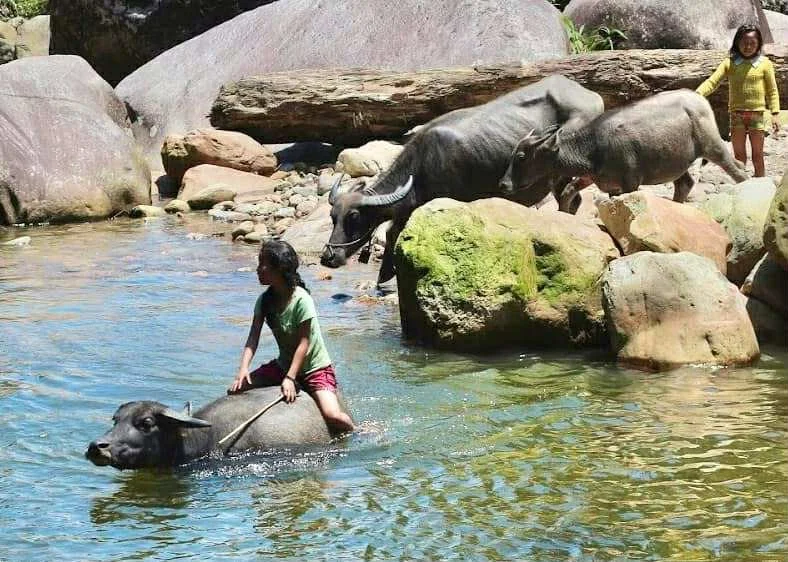

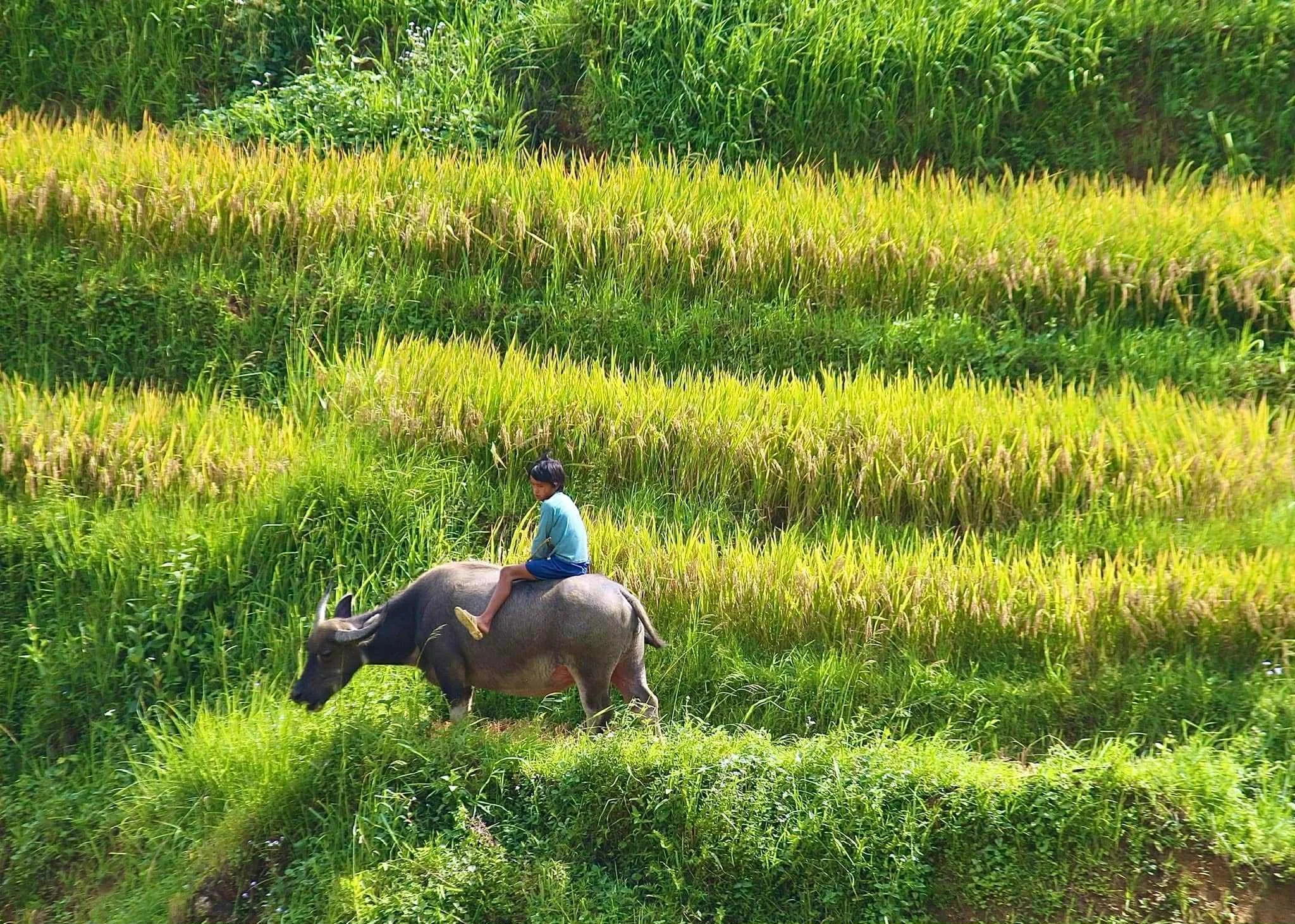

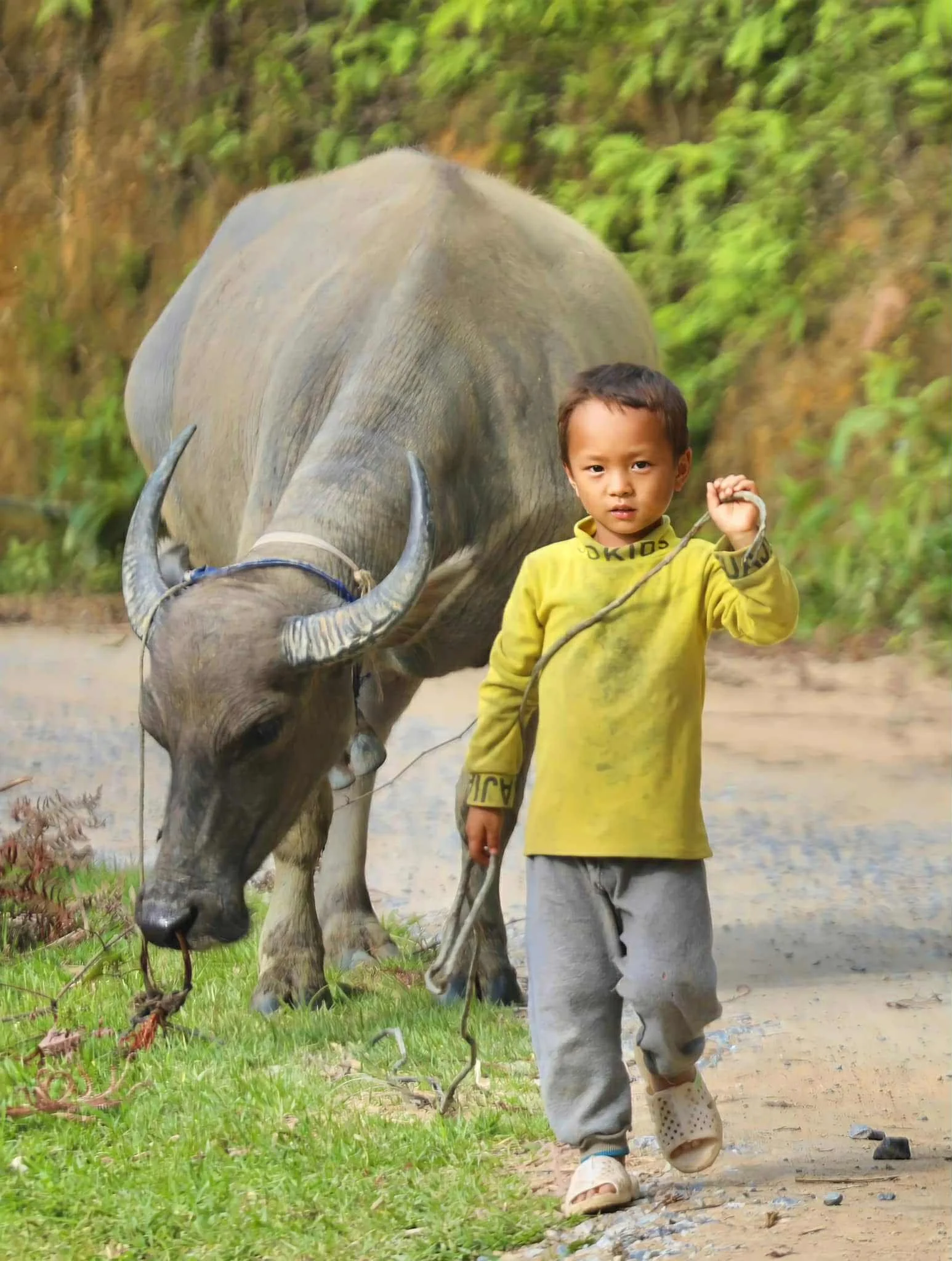
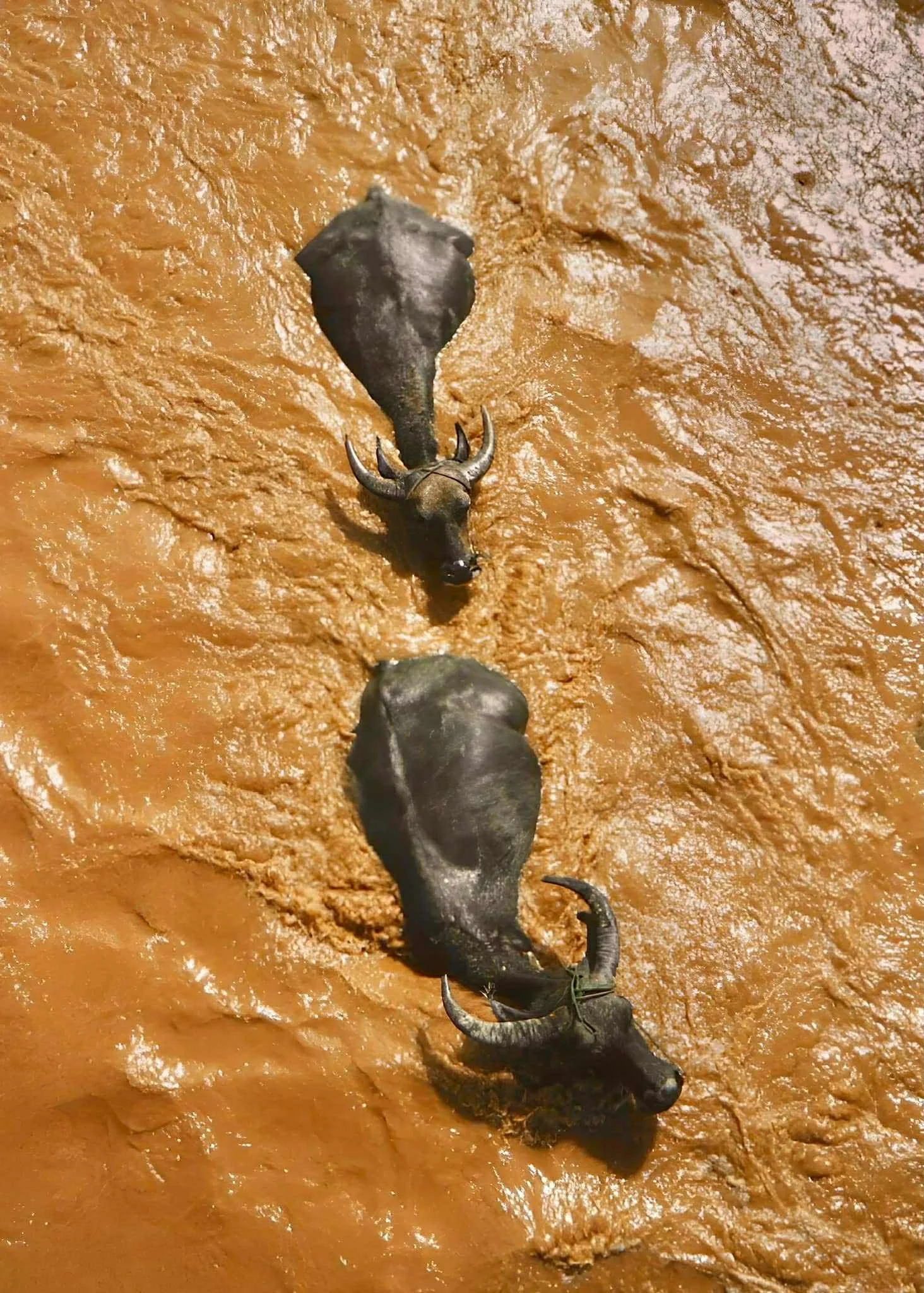
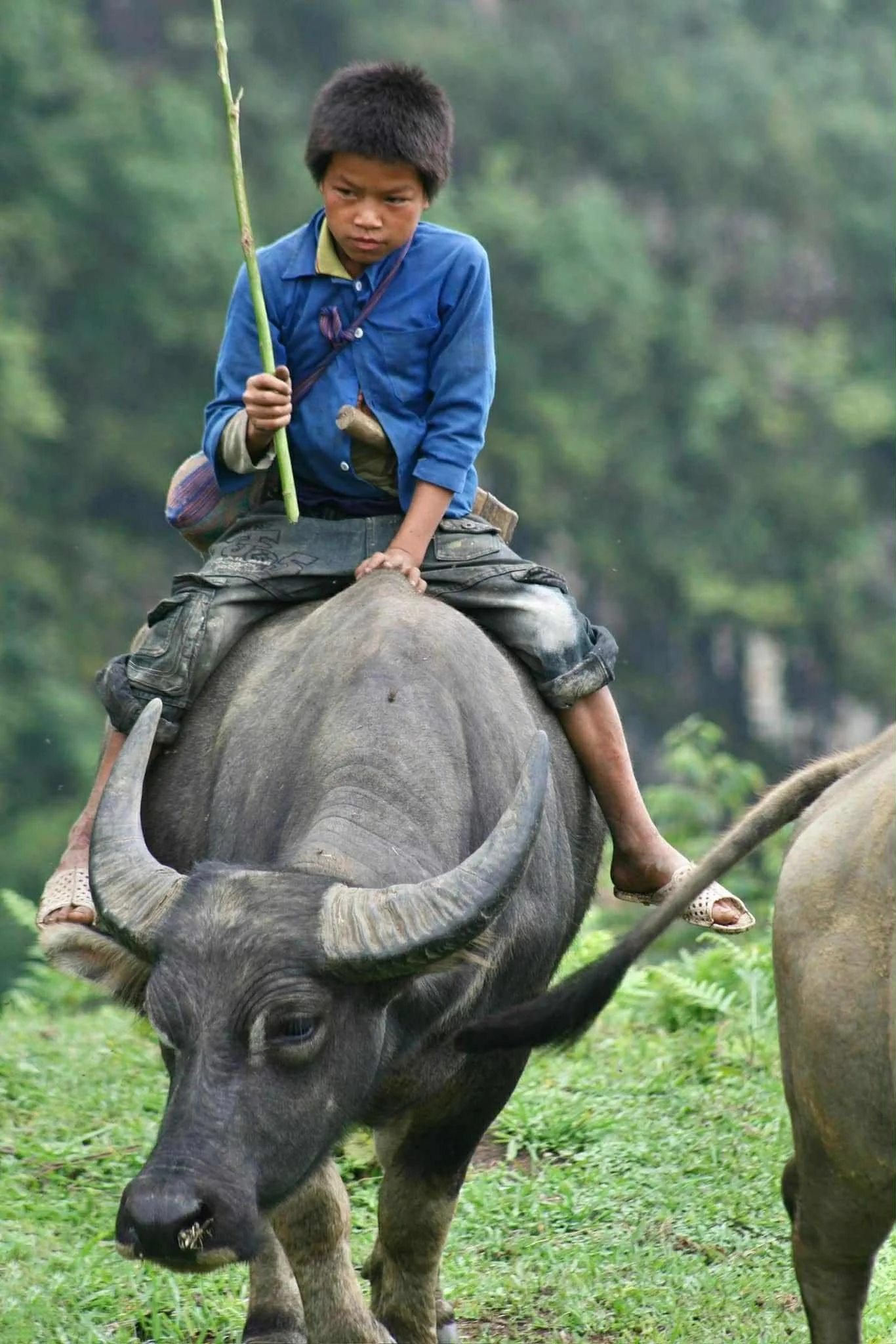
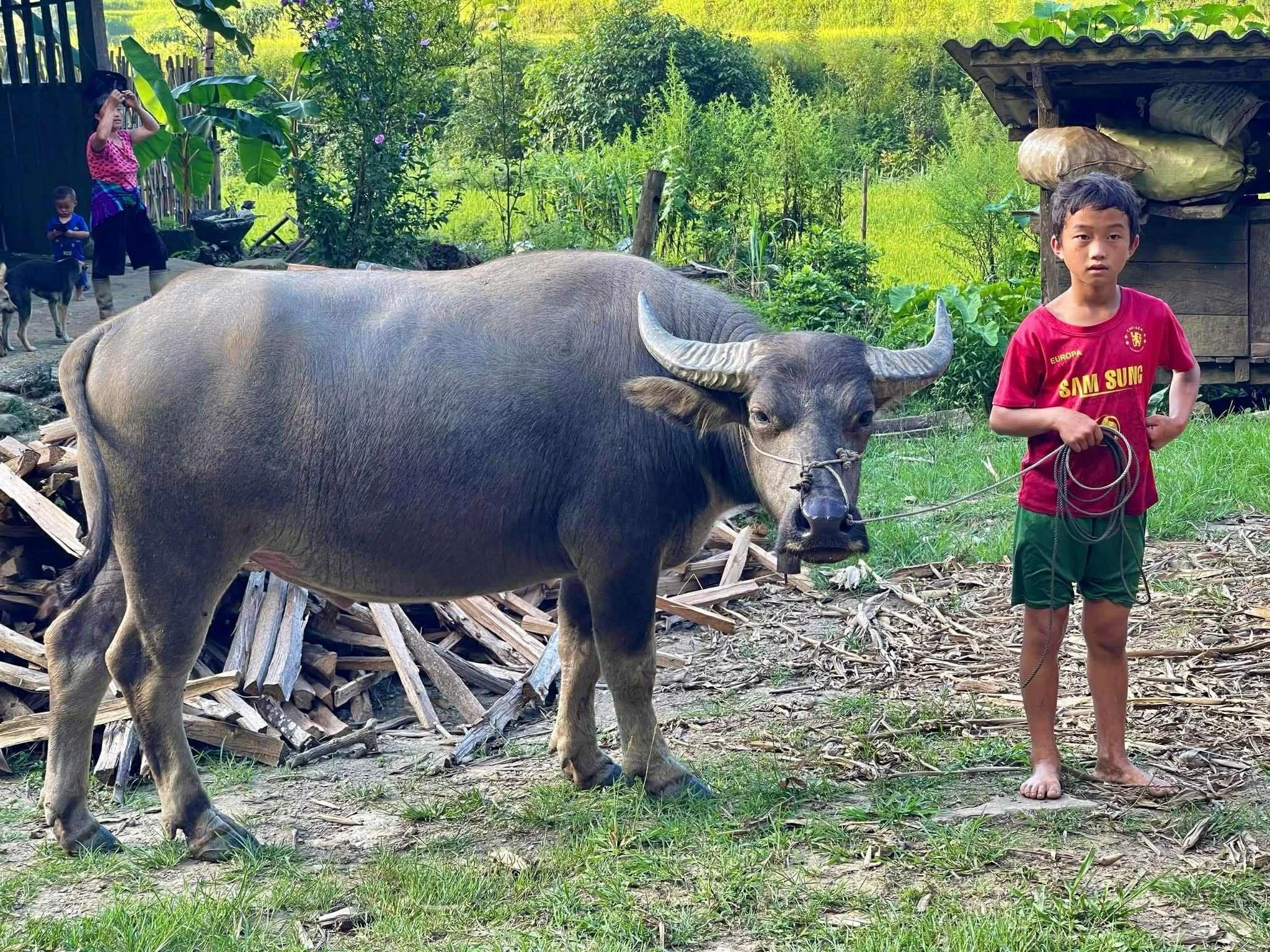
Foraging in the Misty Hills: A Trek That Awakens the Senses
Unlock the secrets of Sapa’s hills with Ethos foraging treks. Taste wild plants, cook over open fires, and learn from Hmong and Dao guides.
A Hidden Treasure in Sapa’s Hills
In the misty hills just beyond Sapa’s edge, tucked between ancient rice terraces and whispering forests, grows an unassuming little plant. Its leaves are deep green and veined like river maps, while its flower bursts golden and bright, no bigger than a coin. To walk past it is easy. To taste it is to unlock a secret.
Nature’s Quiet Wonder
Among our Hmong and Dao partners, this plant, Acmella oleracea, has been valued for generations. Bite into its flower and a tingling, fizzing sensation dances across your tongue. It is not spicy or sour. It is electric, like the forest itself speaking through your senses.
Tradition and Flavour Combined
Known locally as the “toothache plant” for its numbing properties, it has long been used in traditional medicine to soothe pain and treat infections. But it has also found its way into wild soups and foraged salads, adding flavour and a little surprise to the plate.
More Than a Hike
On our Ethos-exclusive foraging and wild camping tours, you will discover secrets like this side by side with local experts. These are not just hikes. They are invitations to learn directly from Hmong and Dao guides whose knowledge is rooted in the land, passed from hand to hand, season to season.
Belonging to the Landscape
Whether you join a one-day walk or a two-day overnight adventure under the stars, you will gather wild greens, cook over open flames, and sleep to the rhythm of the forest. Along the way, you will learn what it means to truly belong to a landscape not just to see it, but to taste it, hear it, and feel its quiet magic.
Spaces are limited and the season waits for no one. Bookings are now open. Come forage with us.