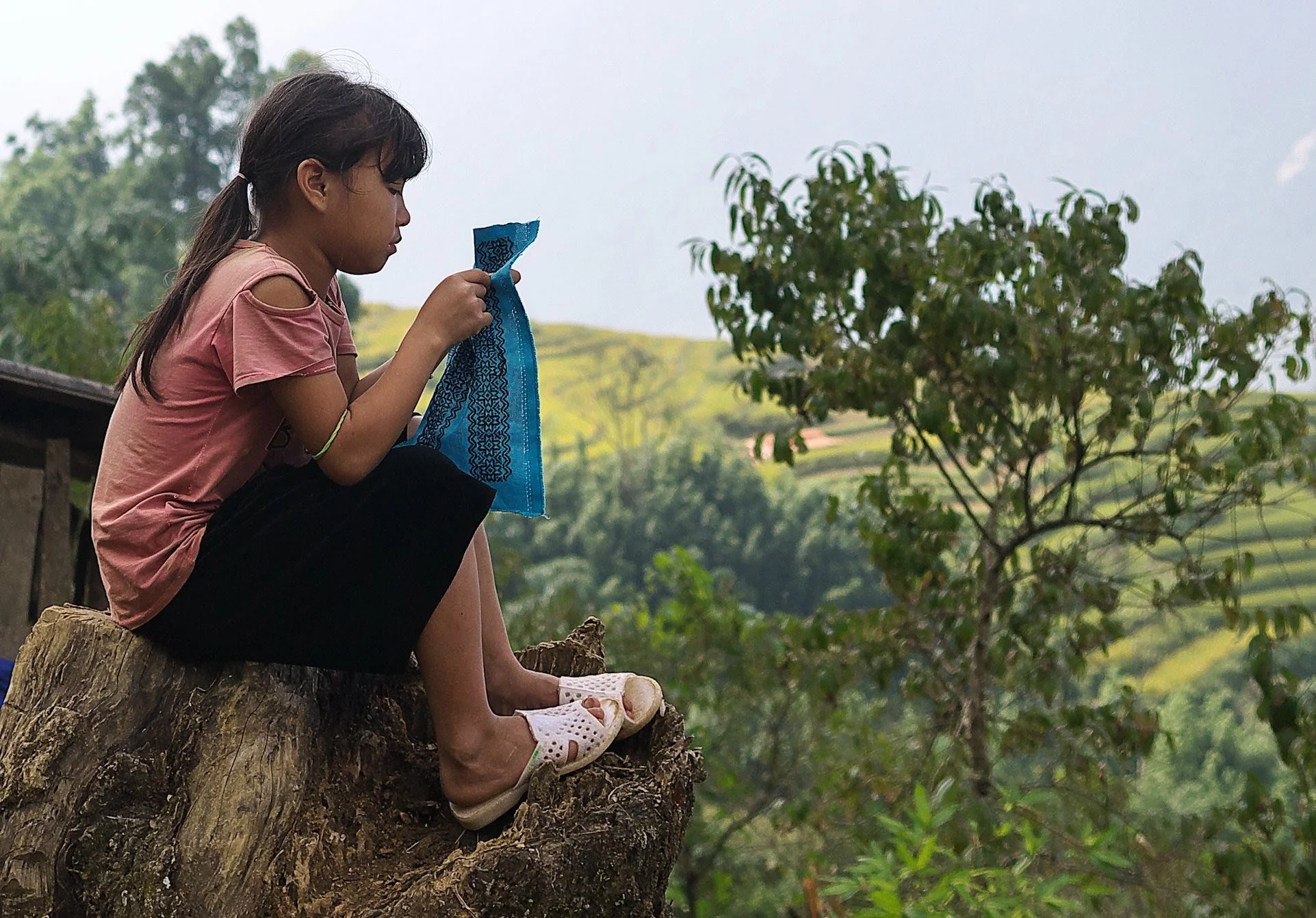
Insights and Stories from Sapa and the Northern Borderbelt provinces of Vietnam.
Batik in Sapa: Wax, Indigo, and What Is Being Lost
Batik in Sapa is far more than a craft. It is a slow, deeply rooted tradition practised by Hmong women, beginning with hemp grown in mountain soil and ending in intricate indigo-dyed textiles rich with meaning. This guide explores the full process, the symbolism behind the patterns, and the growing rise of short, commercial workshops that risk undermining authentic practice. Discover how to choose a meaningful, ethical batik experience that honours culture, craft, and community.
A living tradition, and a fragile one
High in the terraced valleys and mist-softened ridgelines of Sapa, batik is not considered a craft. Instead, it is considered to be a living “language” held by Hmong women. This is a language shaped by generations who have translated landscape, ancestry, and spirit into cloth. Every line drawn in wax, every immersion into indigo, carries intention. Every piece is part of a continuum that connects the living with those who came before.
This tradition is deeply rooted in land and time, so nothing is rushed and no stroke is incidental. Alongside this depth, something else has been growing in parallel. A simplified, commercialised version of batik has begun to take hold, quietly reshaping how travellers encounter and understand this craft.
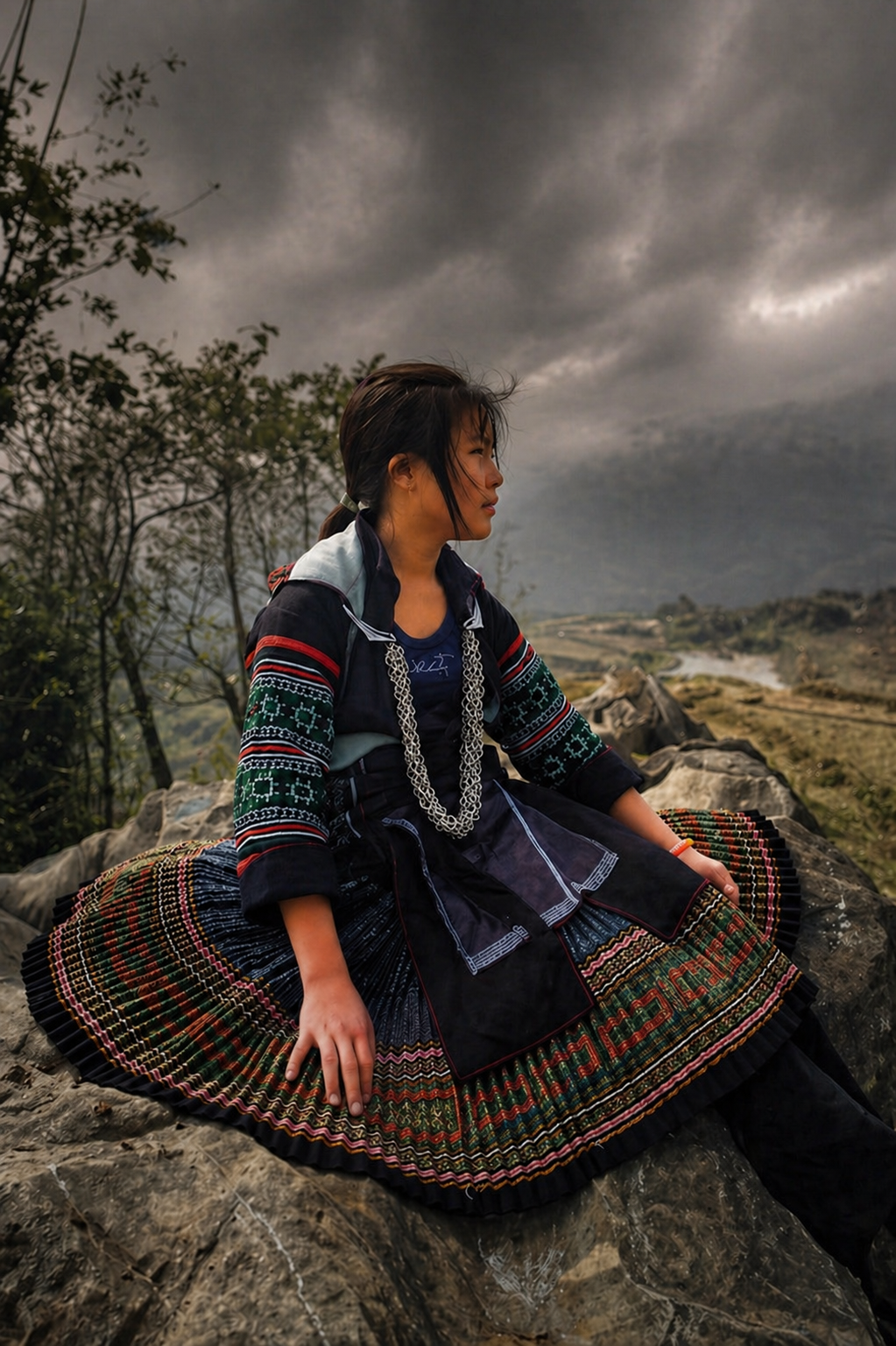
A hmong girl in Sapa wearing a “Spirit Skirt”, carefully crafted from indigo dyed, Hmong batik and silk embroidery.
Hemp: from mountain soil to cloth
True batik does not begin with wax or dye. It begins in the soil. In the cool, damp breath of early spring, hemp seed is pressed gently into mountain earth around Sapa. The land is still waking, though the hands that sow move with quiet certainty. This is the beginning of a cycle that is as much about patience as it is about skill.
As the season deepens, slender green stems rise quickly, drawing strength from sun, mist, and mountain air. The plants are tended alongside daily life, growing in rhythm with rice fields, livestock, and the turning of the seasons.
By early summer, the stems are cut and carried home. They are dried, stripped, soaked, beaten, and combed. Fibres are teased apart slowly, softened and refined through repeated effort. Thread is then spun by hand, rolled along the thigh in a steady, practiced motion. It is work done over hours, days, often in shared spaces filled with conversation and quiet.
Weaving follows. The loom stands ready within the home, threads stretched carefully, aligned with precision. Cloth emerges gradually, growing day by day without urgency. This is slow fashion in its truest sense. It is not a trend. It is a way of life rooted in quality, durability, and deep connection to the land. When the cloth is ready, it enters the indigo vats. Leaves, once gathered and fermented, have become rich pools of living dye. The fabric is dipped, lifted, and dipped again. With each immersion, colour deepens. Green turns to blue as it meets the air, layer by layer, moment by moment.
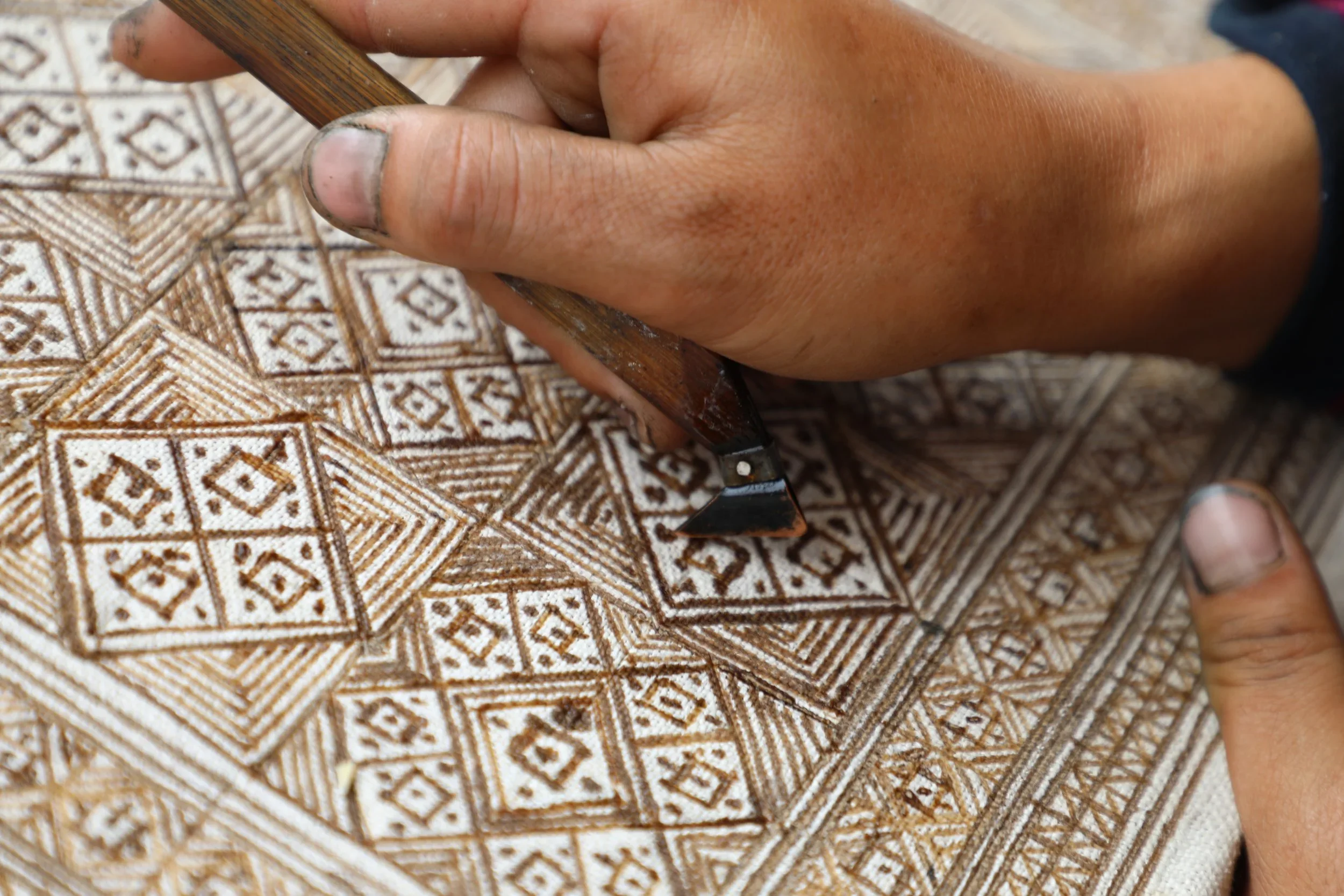
Finally, the cloth is beaten against stone in a process known as calendaring. The steady rhythm echoes through the yard as fibres compress and the surface begins to shine. A deep, almost metallic indigo emerges, not through machinery, though through repetition, patience, and care. Only once this entire process is complete does batik begin. Wax is applied carefully onto this hand-crafted hemp cloth, preserving patterns that will emerge through repeated indigo dyeing. The finished textile carries not just design, though months of labour, land, and lived experience.

Organic hemp growing in the Sapa mountains
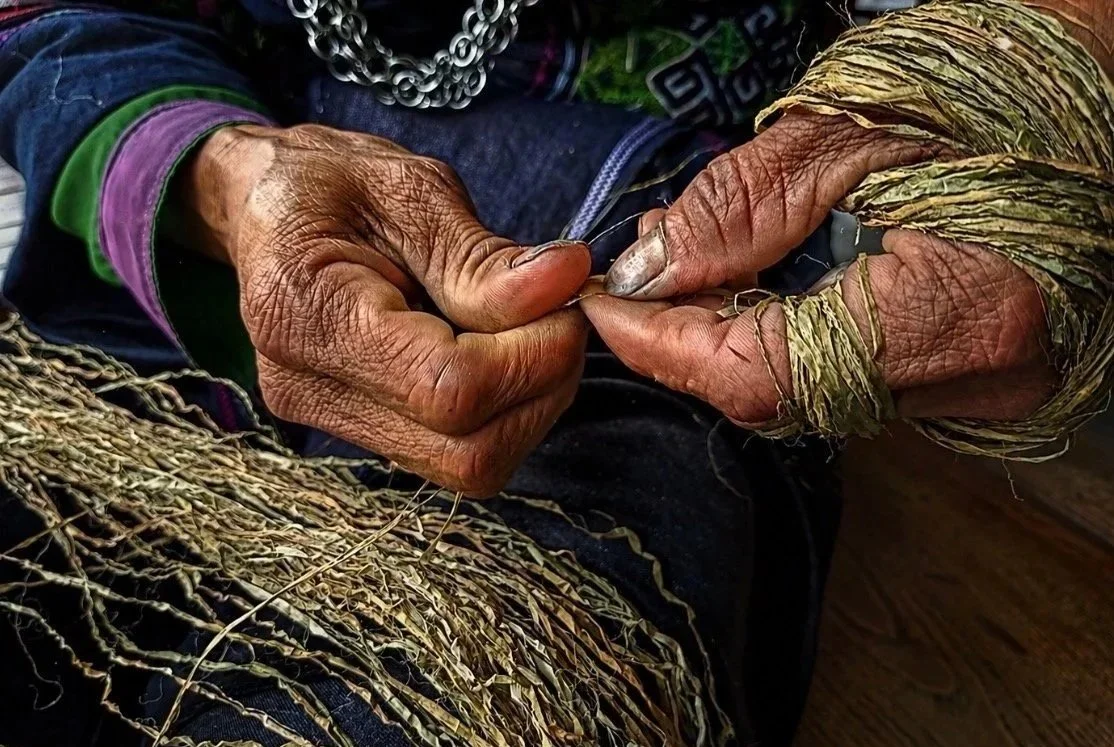
Hemp threads being twisted and joined.
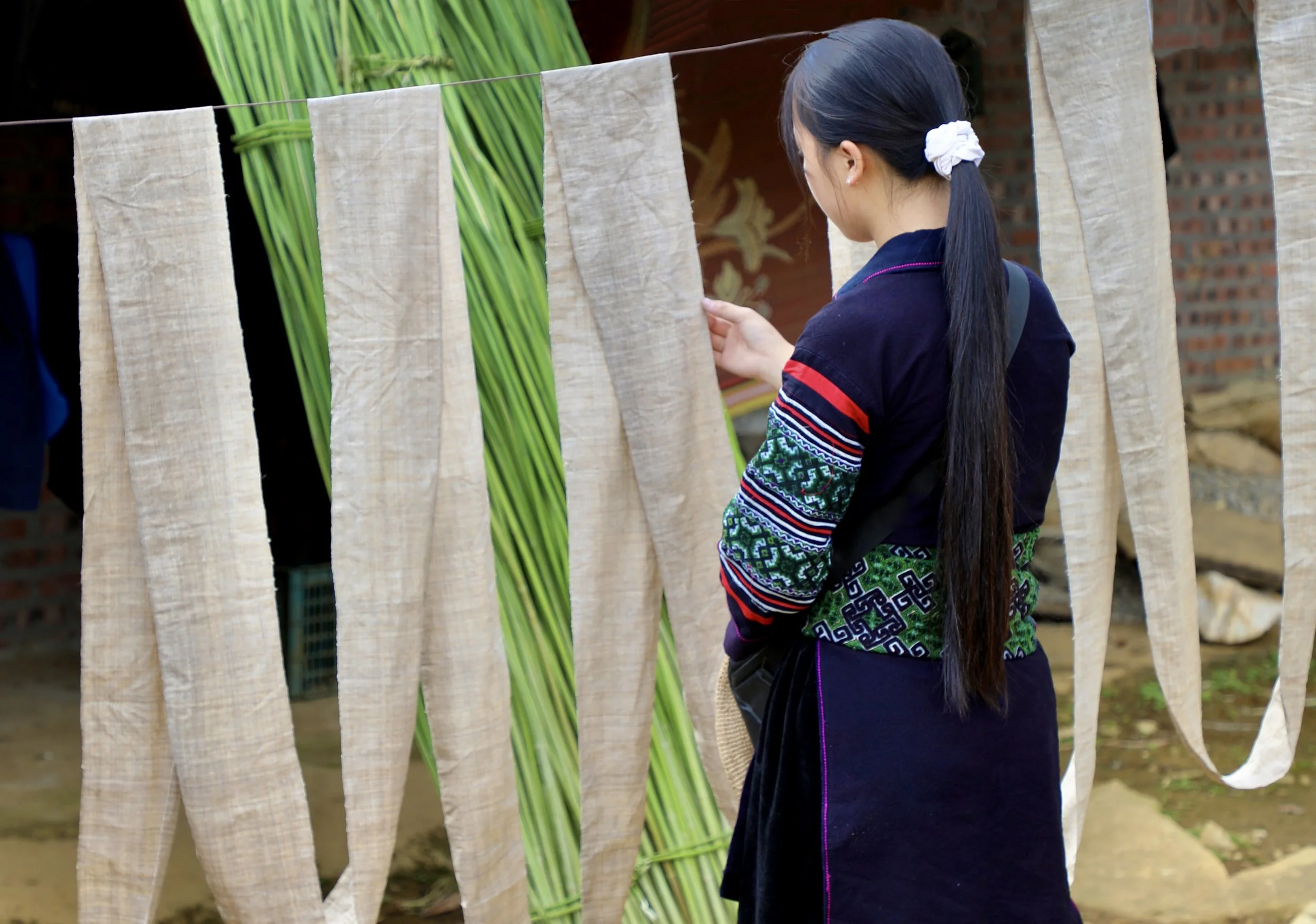
Woven hemp fabric being prepared for indigo dying.
The rise of batik as a time filler
Many trekking itineraries in Sapa now follow well-worn paths, guiding travellers through Lao Chai and onwards to Ta Van for overnight stays. The scenery remains pretty, though the structure of these tightly organised journeys can still sometime leave unexpected gaps.
Groups move at different speeds. Some arrive at their homestays far earlier than intended, with long afternoons stretching ahead before dinner. Rather than deepening the journey or extending time on the trail, these hours are increasingly filled with short, bolt-on activities. Batik workshops have become one of the most common additions. These sessions are typically brief, lasting one or two hours, and are presented as an introduction to traditional craft. In reality, they are often designed to occupy time rather than to foster understanding.
When tradition is reduced to imitation
In these shortened classes, the materials themselves tell the story. Instead of hemp, grown and prepared over months, participants are given pre-bought cotton, often bleached white and chosen for cost and convenience. The wax used is most typically melted candle wax, heated quickly over a gas flame. The tools are handled briefly, rarely with proper instruction. Patterns are copied without context, stripped of meaning.
The process, which should unfold slowly, is compressed into minutes. The discipline, the patience, the connection to land and material is lost. Dyeing is reduced to a single dip in chemical dye. There is no indigo vat, no layering, no waiting. The transformation that should take time becomes instant. This is not batik as it is known within Hmong communities. It is a simplified imitation, created for speed and convenience.
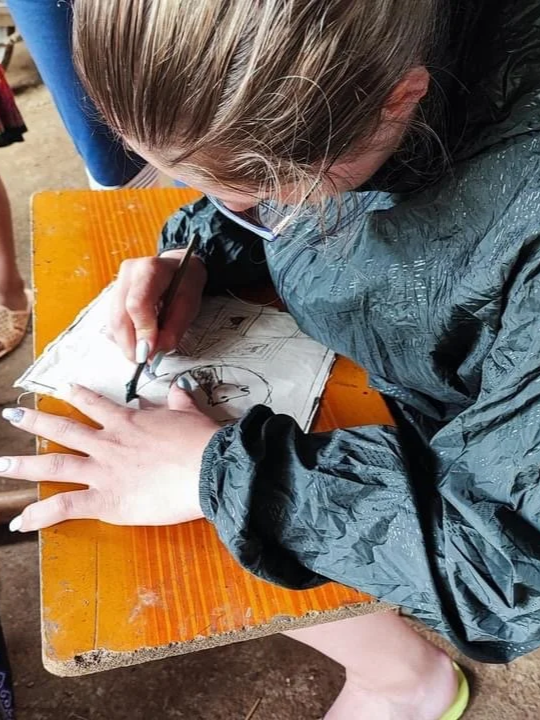
Tourist trying batik on bought cotton.
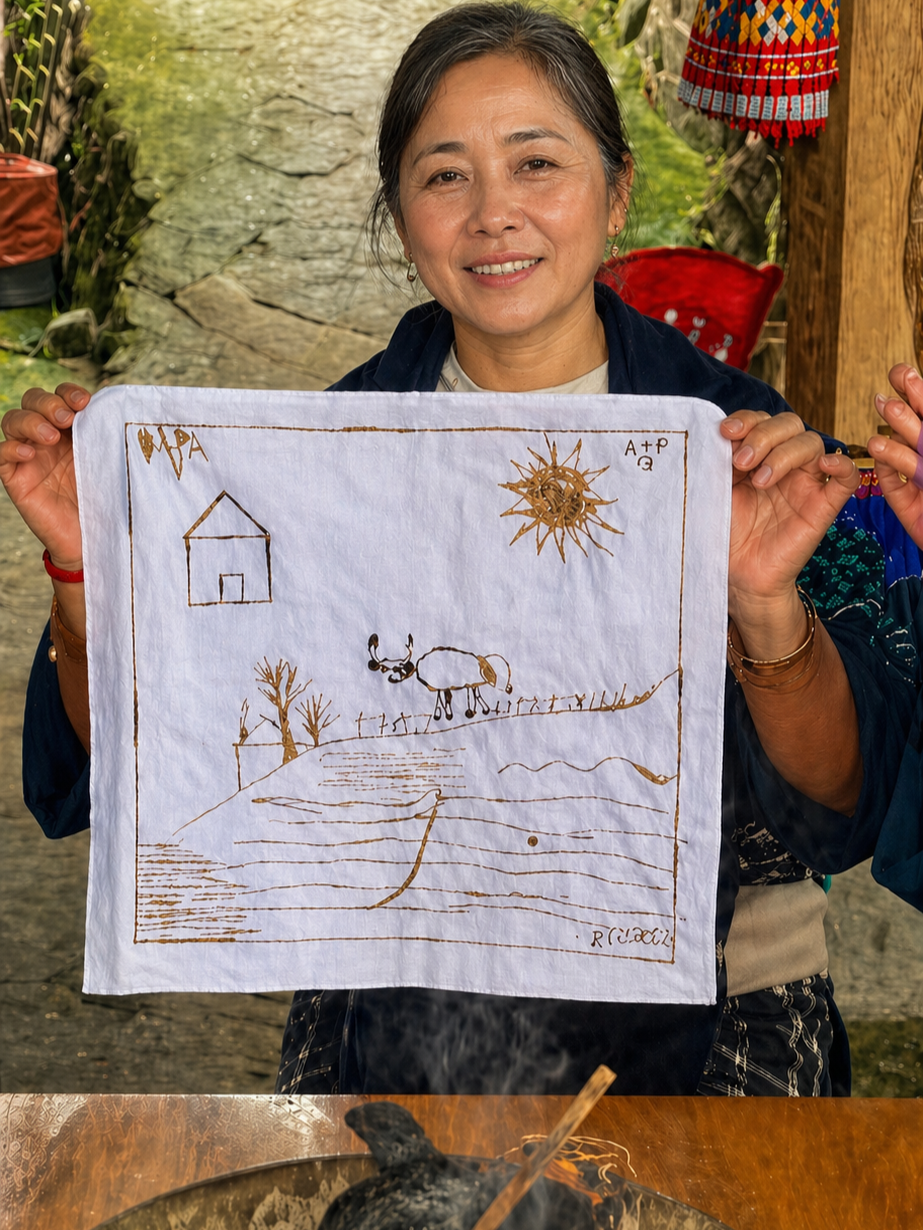
Batik teacher holding up the work of her students
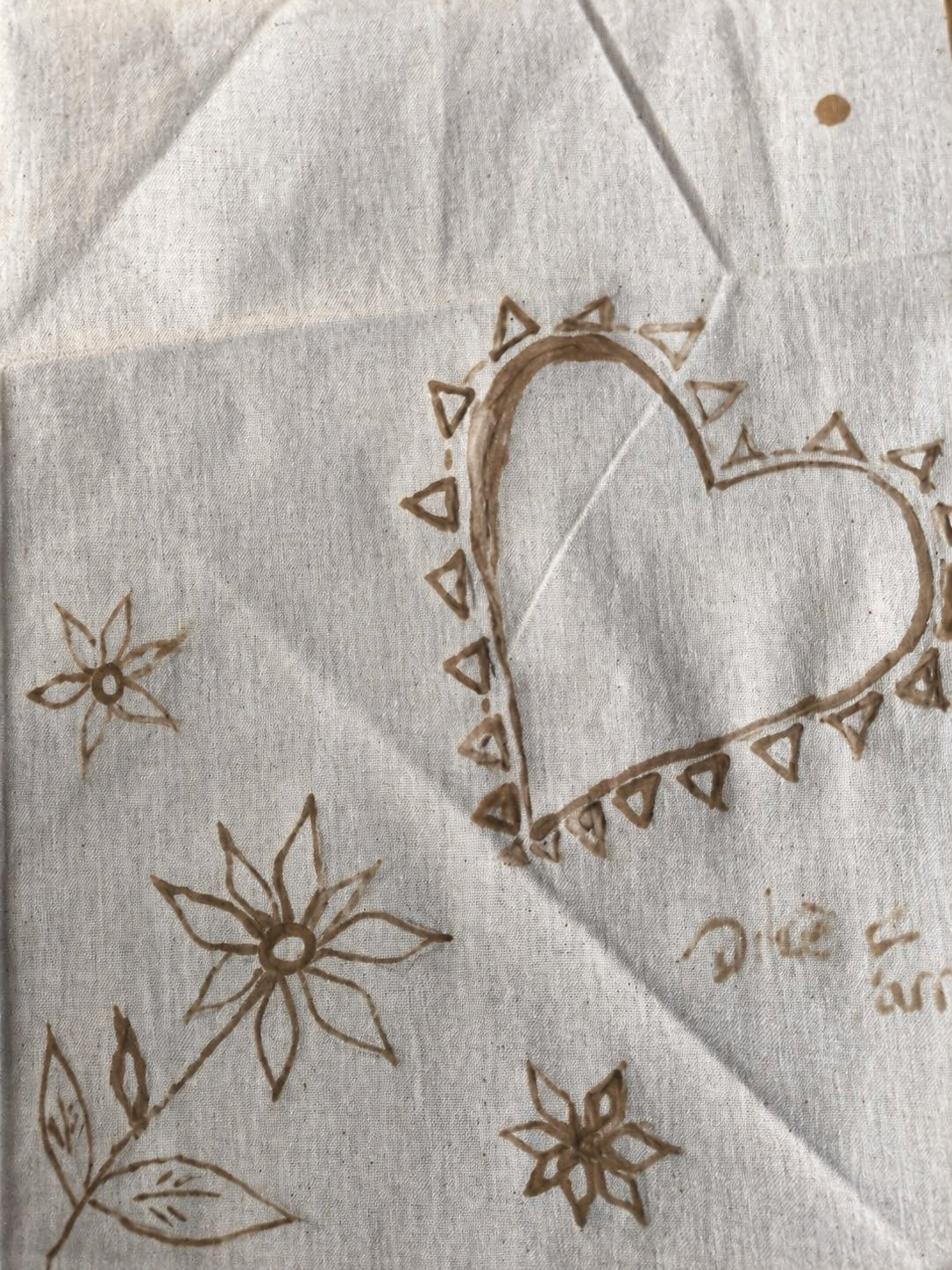
Travellers draw contemporary batik designs.
Environmental and cultural consequences
The impact of these practices extends beyond the workshop. Chemical dyes are often released into streams, harming invertebrates that form the foundation of aquatic ecosystems. As these disappear, fish populations decline, and the balance of the environment begins to shift.
Traditional indigo, by contrast, is entirely natural. Vats are maintained over months or years and can return safely to the land, even nourishing rice paddies. Culturally, the consequences are equally profound. Travellers leave believing batik is fast and simple. The depth of the process becomes invisible. The value of authentic work is diminished. For artisans, this shift is deeply felt. Their time, skill, and knowledge are undervalued. For younger generations, particularly Hmong women and girls, the incentive to learn begins to fade. When faster, cheaper alternatives dominate, the future of this tradition becomes uncertain.
What a true batik experience feels like
A meaningful batik experience is rooted in time, patience, and relationship. You are welcomed into a home, not a workshop designed for display. You sit beside a woman whose knowledge is lived, not performed. You begin with understanding, not production. You learn where materials come from, how they are made, and why each step matters. You are guided carefully, allowed to make mistakes, encouraged to slow down. Indigo is not rushed. Wax is not hurried. Conversation flows. Stories emerge. Symbols begin to hold meaning.
A voice from the craft: My’s story
Among those who carry this knowledge forward is My, a young Hmong woman whose relationship with batik began when she was just thirteen years old. What started as learning alongside older women in her community has, over the past twelve years, become both a skill and a way of life. For more than nine years, she has also welcomed travellers into this process, sharing not only technique, though perspective.
Her work is quiet and precise, shaped by repetition and patience. Watching her draw wax onto hemp cloth, there is a sense of ease that only comes from years of practice, though also a deep attentiveness to each line.
“Batik taught me to slow down and be patient,” she explains. “I love showing travellers our traditions and enjoy talking to people from around the world about my culture. I think some people are surprised when they find out how much work goes into Hmong batik. From seed to clothing, it’s a process that takes many months.”
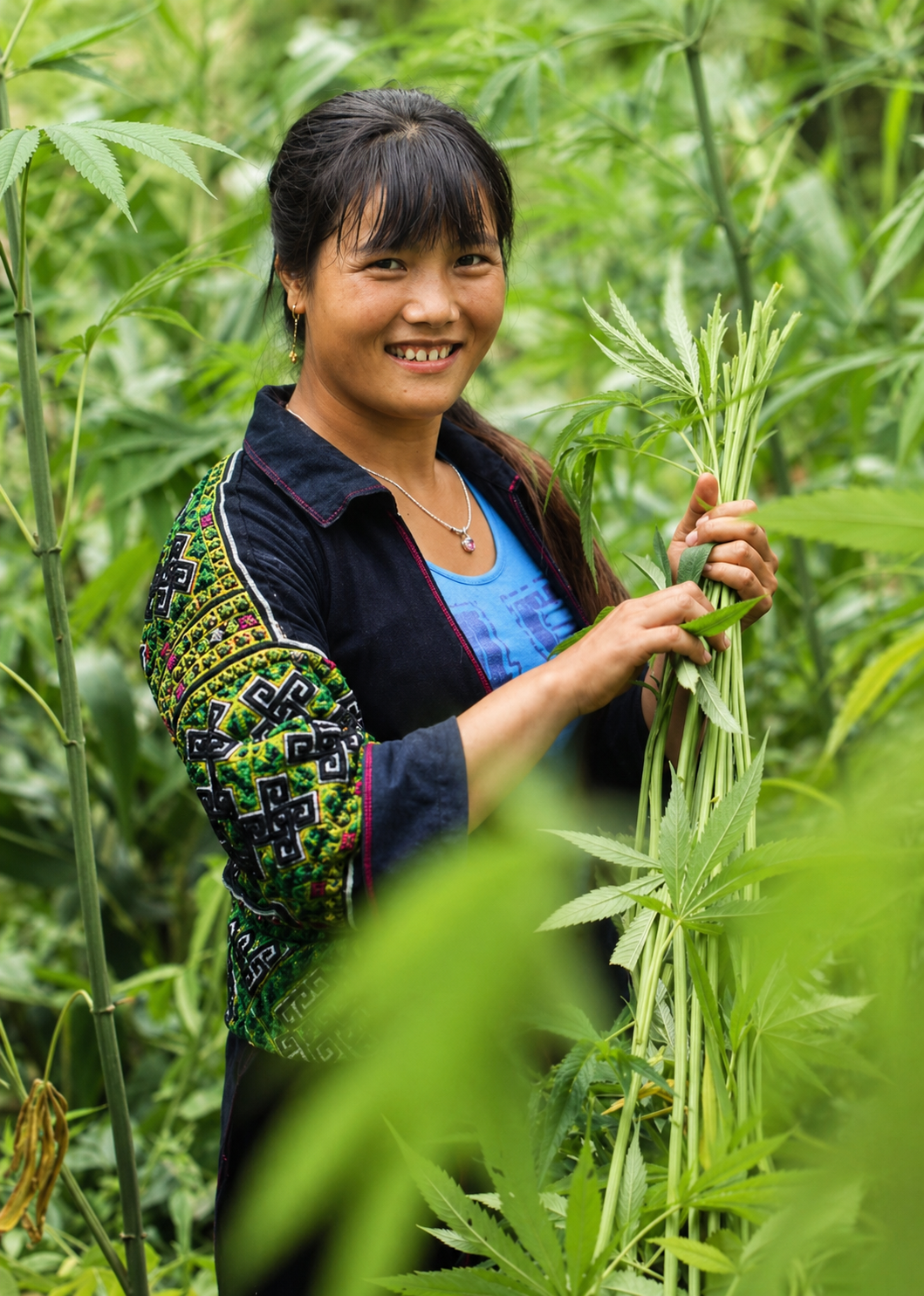
Ly Thi My is a Black Hmong woman from Sapa who has been learning and teaching batik for years.
Travellers who spend time learning with her often come away with a very different understanding. Norman Ed, visiting from the United States, reflected that the experience was “far more than a simple workshop, becoming instead a space to understand the importance of the entire process and the life that surrounds it”. His wife, Mary Ed, described her time with My as “not a craft class, but instead an opportunity to connect with the cultural significance behind a deeply meaningful technique”.
They were particularly struck by the way My moves seamlessly between skills, recalling how she could twist hemp fibres while trekking along the mountain paths, her hands working instinctively as part of daily life. Norman noted that this ability to intertwine craft with everyday living revealed something profound, leading them both to a deeper appreciation of the time, effort, and knowledge that goes into every piece of batik.
Symbols, spirit, and slow understanding
Patterns in batik are not decorative. They are symbolic, and often spiritual. Spirals, lines, and geometric forms carry meaning connected to protection, identity, and the natural world. In many Hmong traditions, clothing helps guide ancestral spirits, ensuring they recognise their descendants. Patterns act as markers, both visible and unseen. This understanding cannot be rushed. It is shared slowly, through trust and time.
Learning with care and connection
At ETHOS, our batik experiences are shaped through long-standing relationships with Hmong partners who lead workshops in their own homes and communities. These are not performances. They are real, lived experiences shared with care. Alongside this, we work with Dao communities in their own textile traditions, particularly embroidery, each distinct and equally meaningful.
We believe in slow travel, where learning is not rushed and connection is allowed to grow naturally.
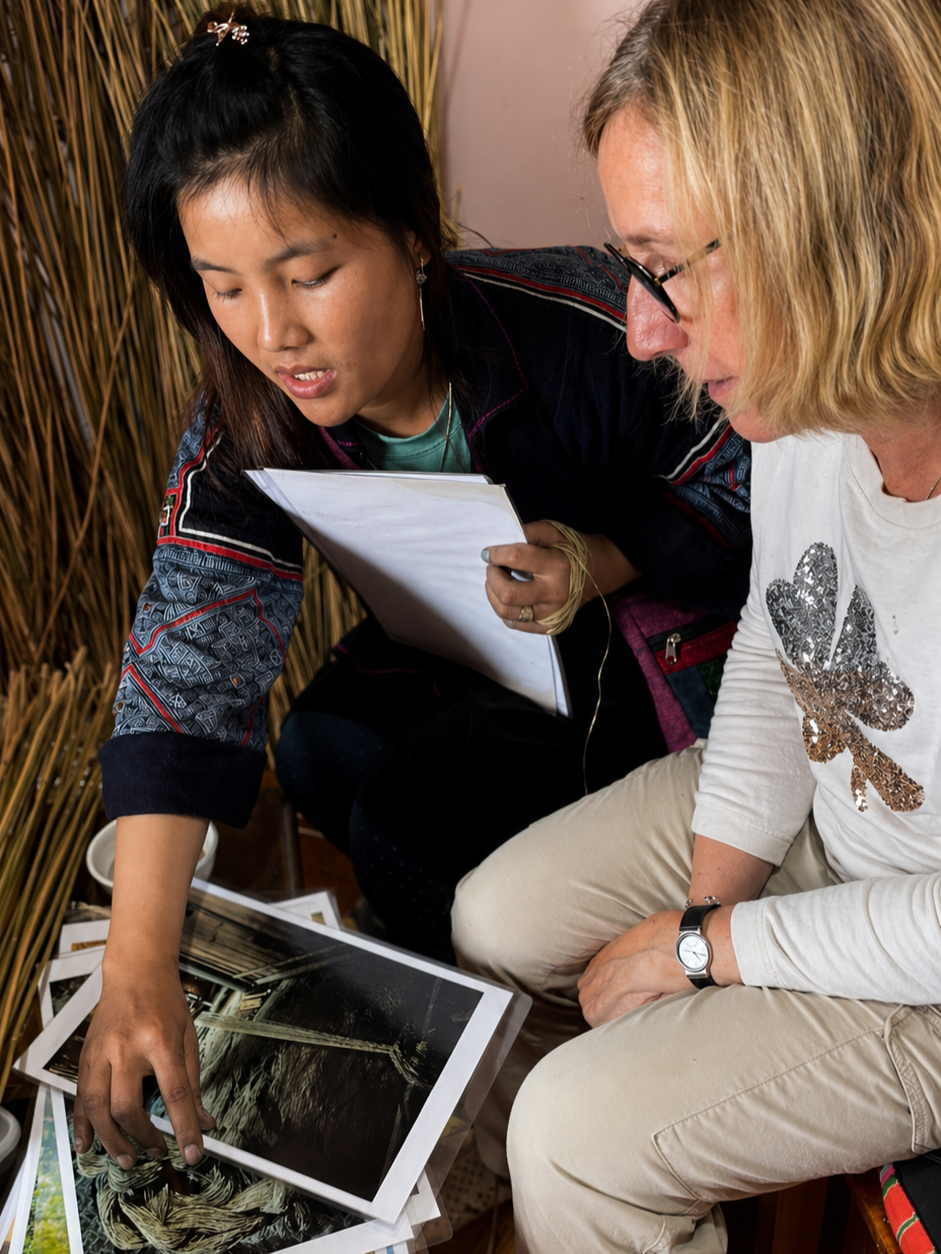
My explaining the main steps in producing natural hemp fabric.
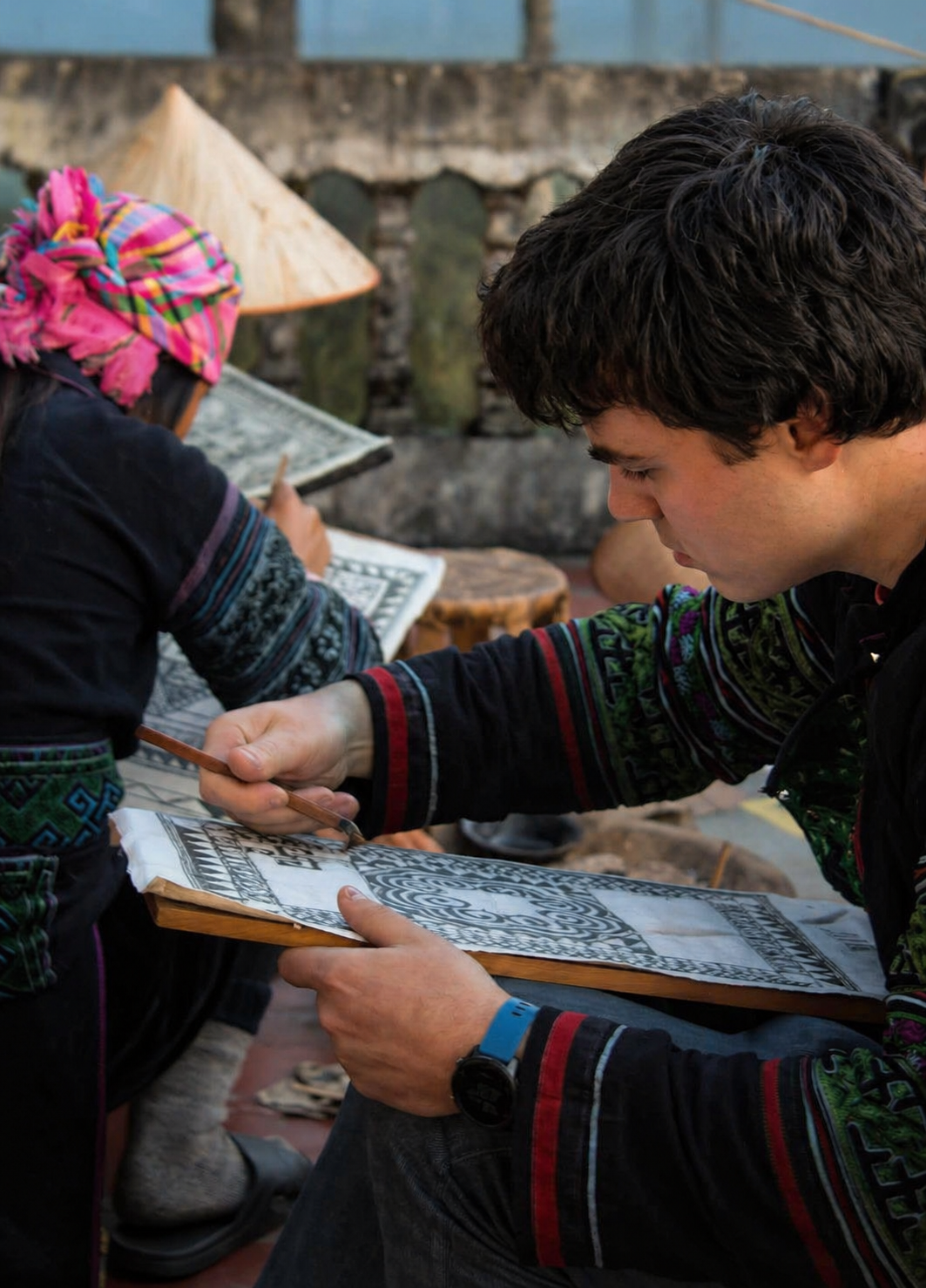
Travellers learning batik in the ETHOS community centre
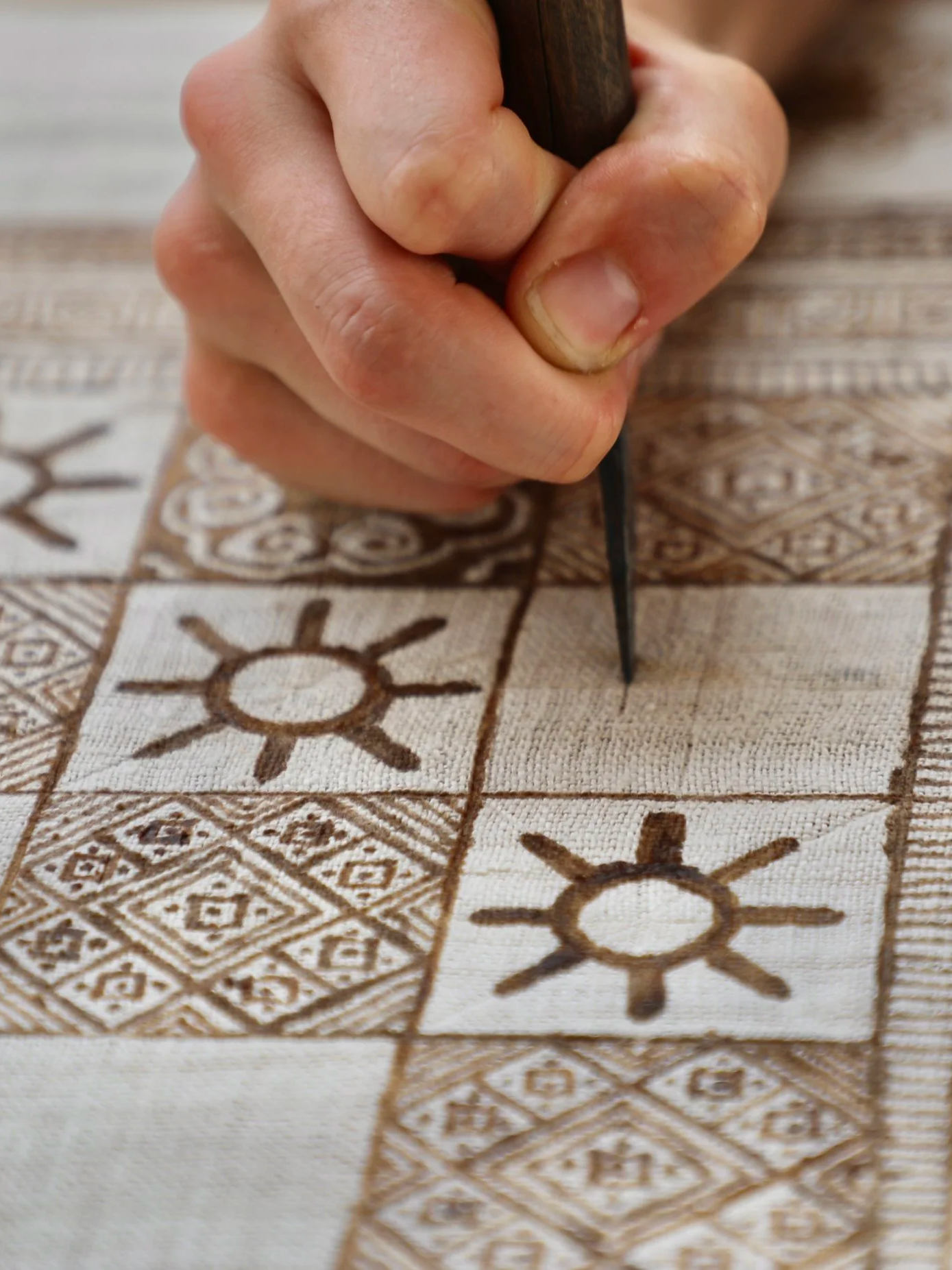
Tool used for planning batik designs on organic , hemp cloth.
Choosing with intention
Not all batik experiences are equal. Some honour the craft. Others reduce it, so choosing carefully really matters. Supporting experiences rooted in authenticity, time, and local knowledge helps ensure this tradition continues, because batik is not just something to try but something to understand, respect, and to help protect.

Hemp leaves growing in Sapa.
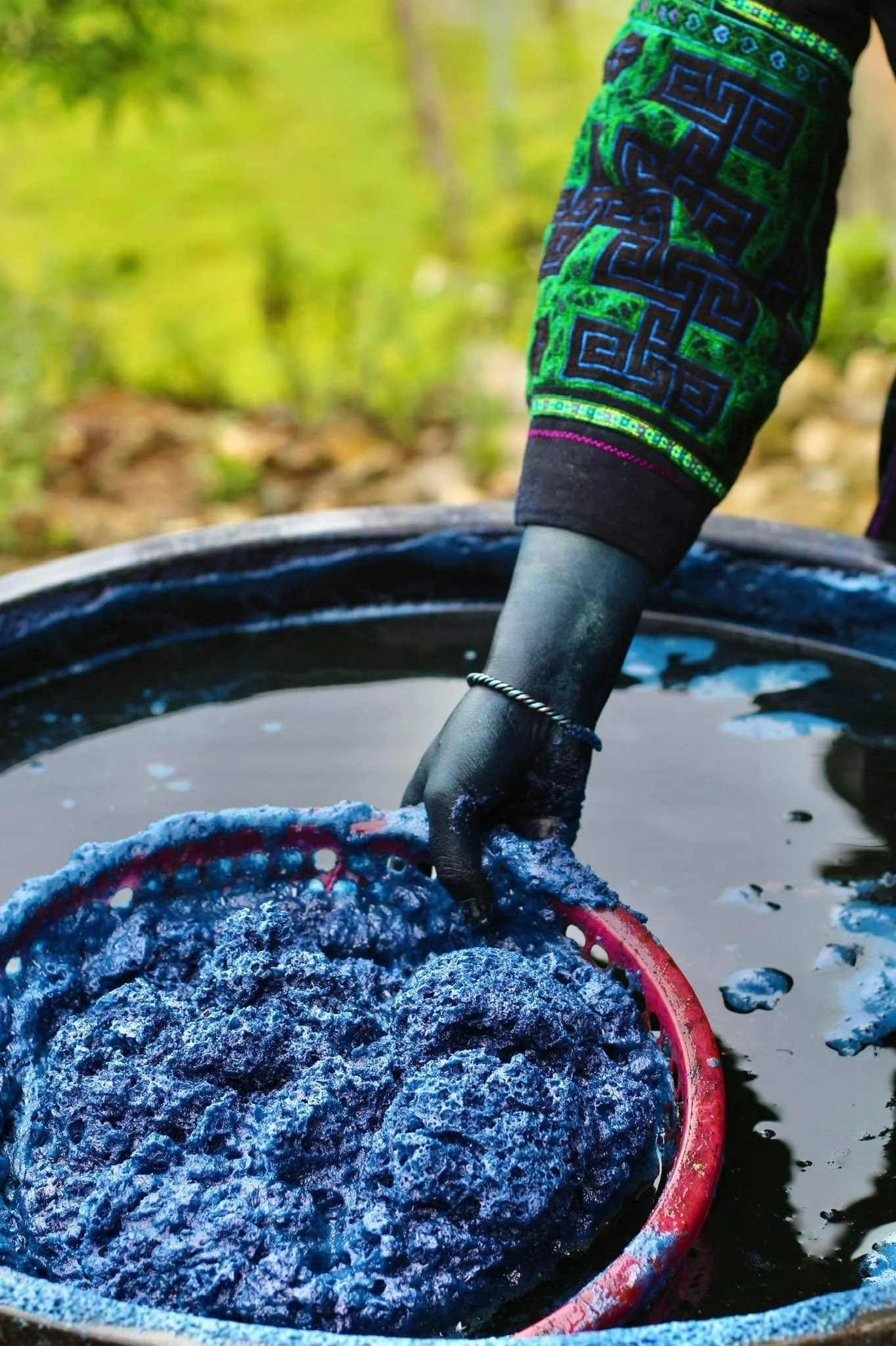
Preparing an indigo vat ready to dye batik designs.
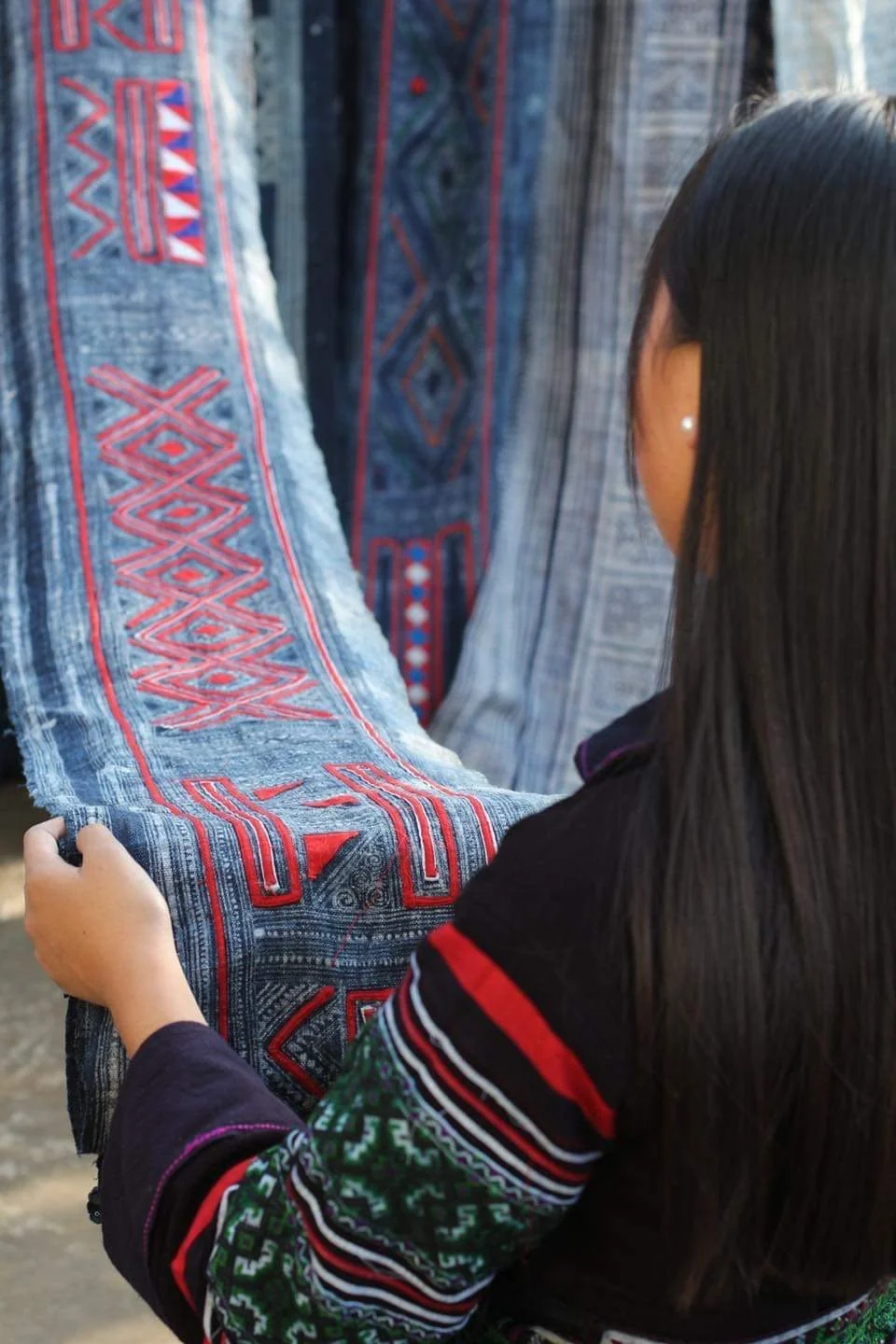
Examininig hemp panels before they are made into a Spirit Skirt.
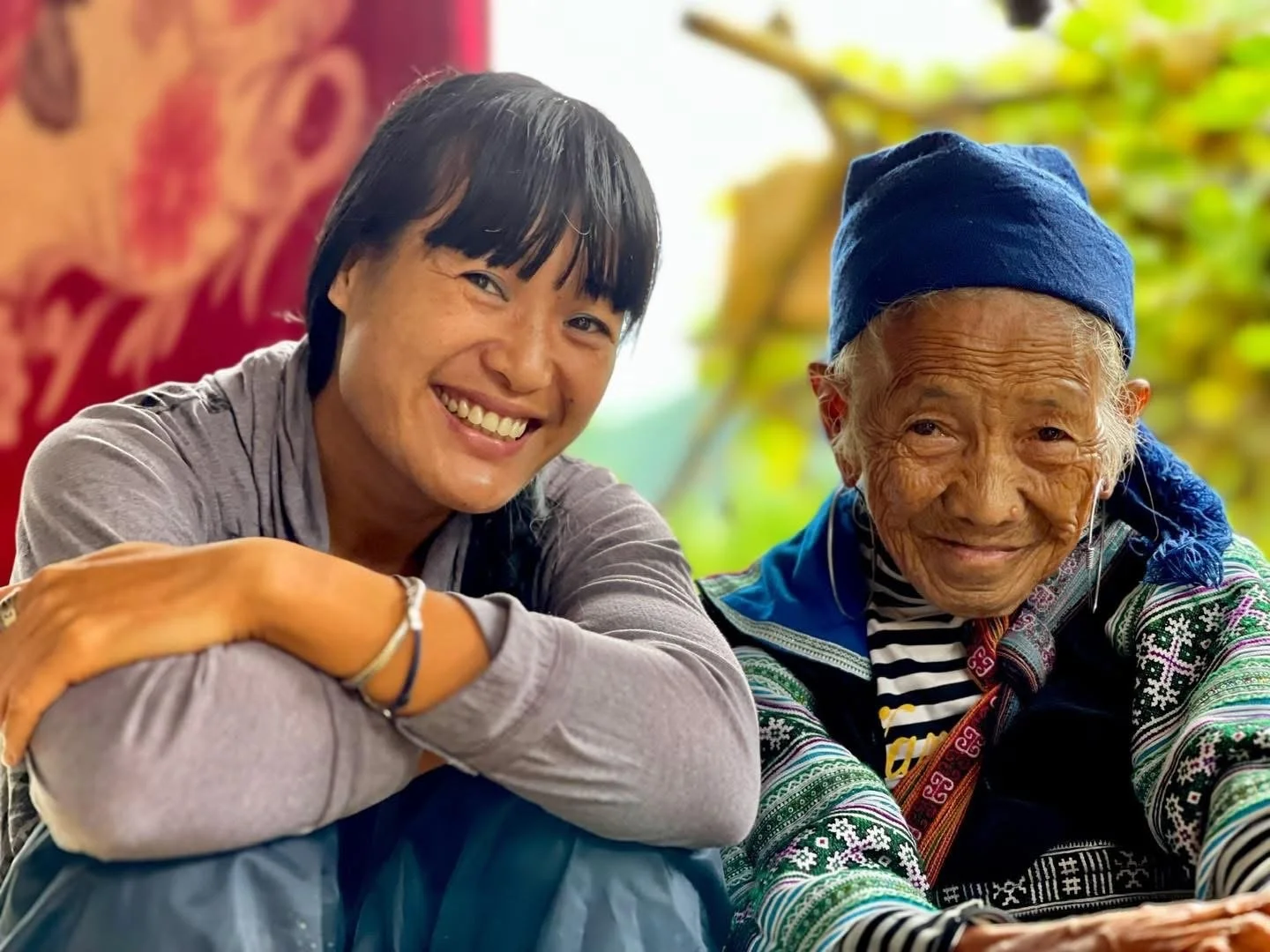
In Loving Memory of Sùng Thị Máy
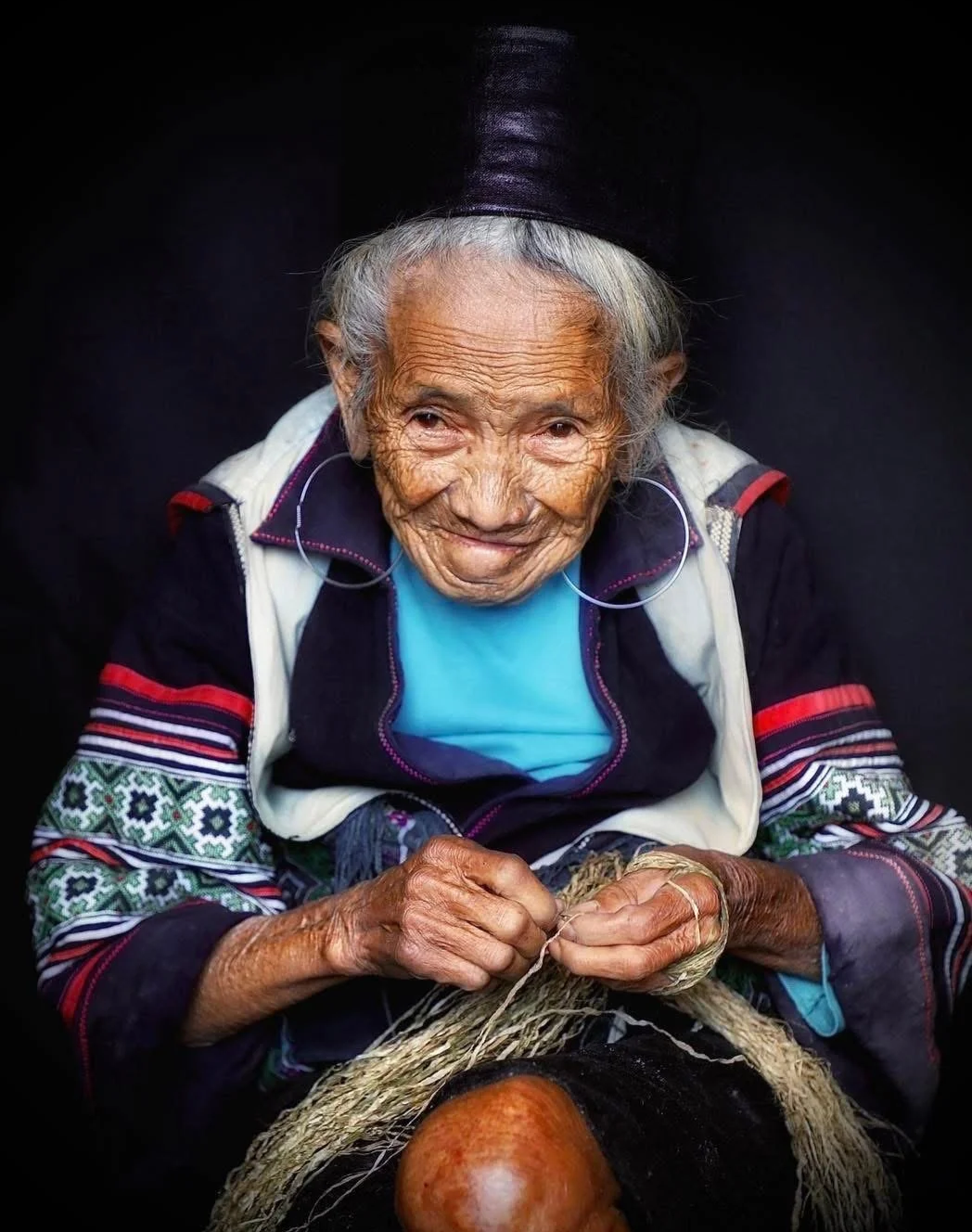
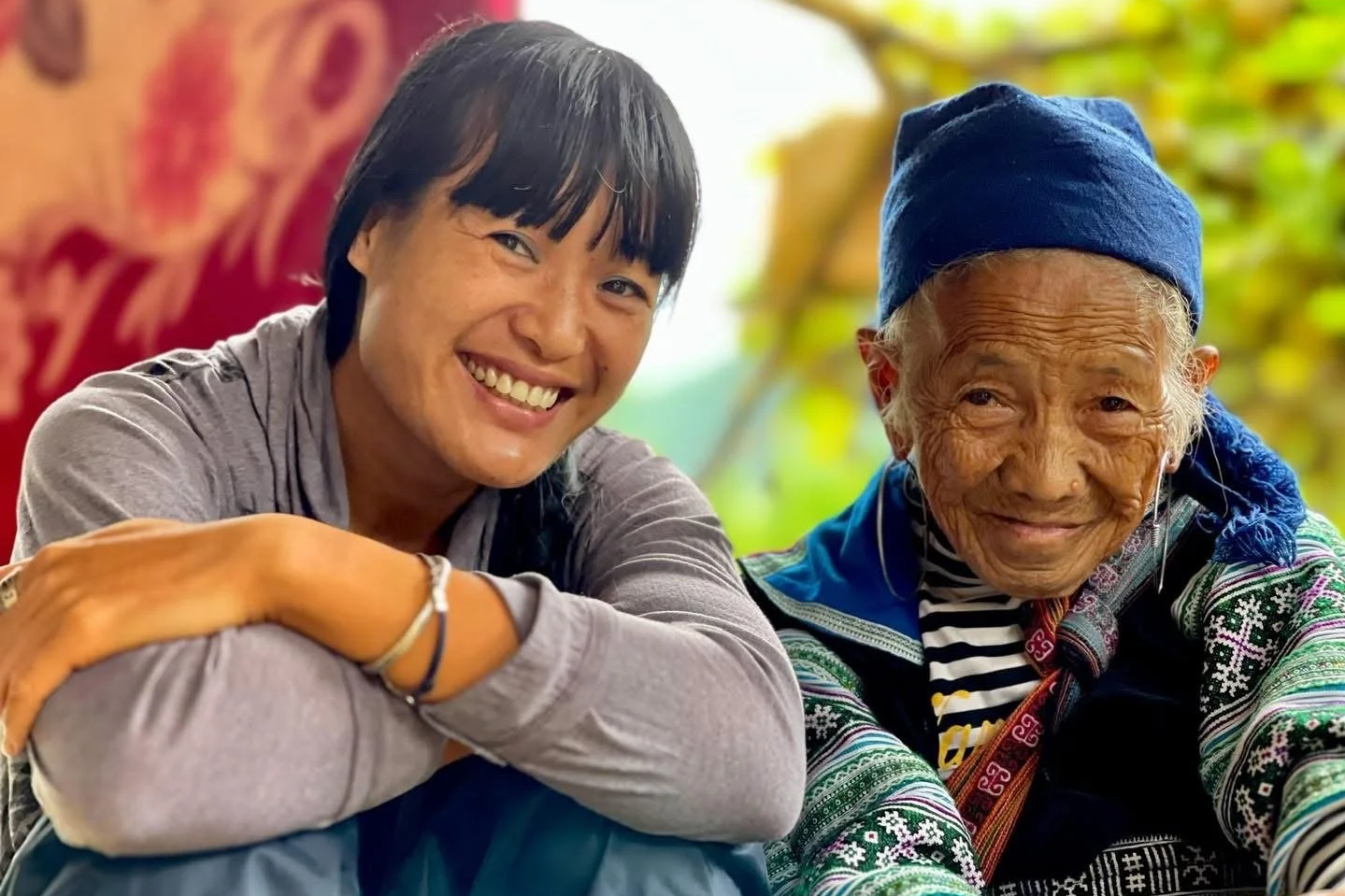
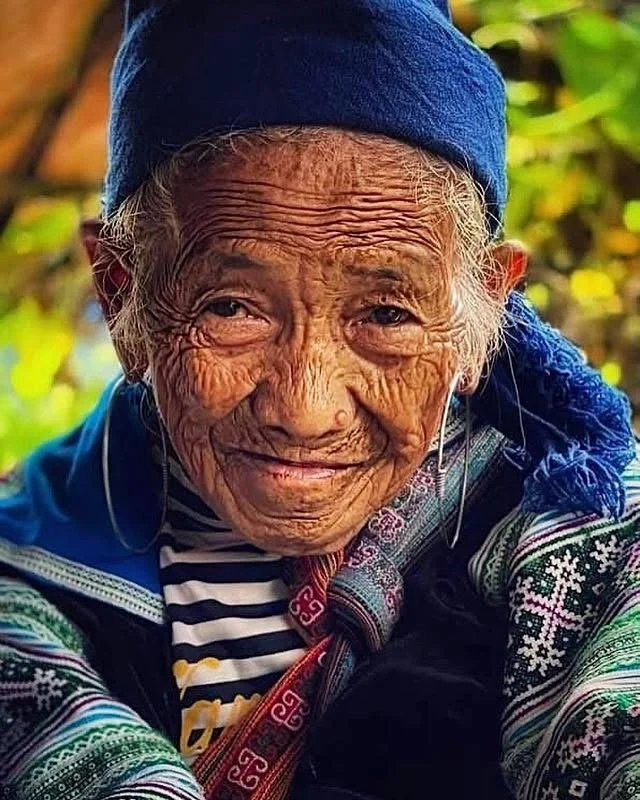
Sùng Thị Máy lived nearly a century shaped by hardship, resilience and love for her family. From gathering firewood in the mountains to sharing stories and traditional knowledge with younger generations, her life reflects quiet strength and enduring dignity.
A Life of Strength and Resilience
Born on 11 January 1925, during the era of French Indochina, Sùng Thị Máy witnessed a century of profound change in northern Vietnam. Her life was shaped by both hardship and courage. She lost her husband during the Chinese invasion of northern Vietnam in 1979 and spent her later years in a small mountain home, caring for her five great-grandchildren.
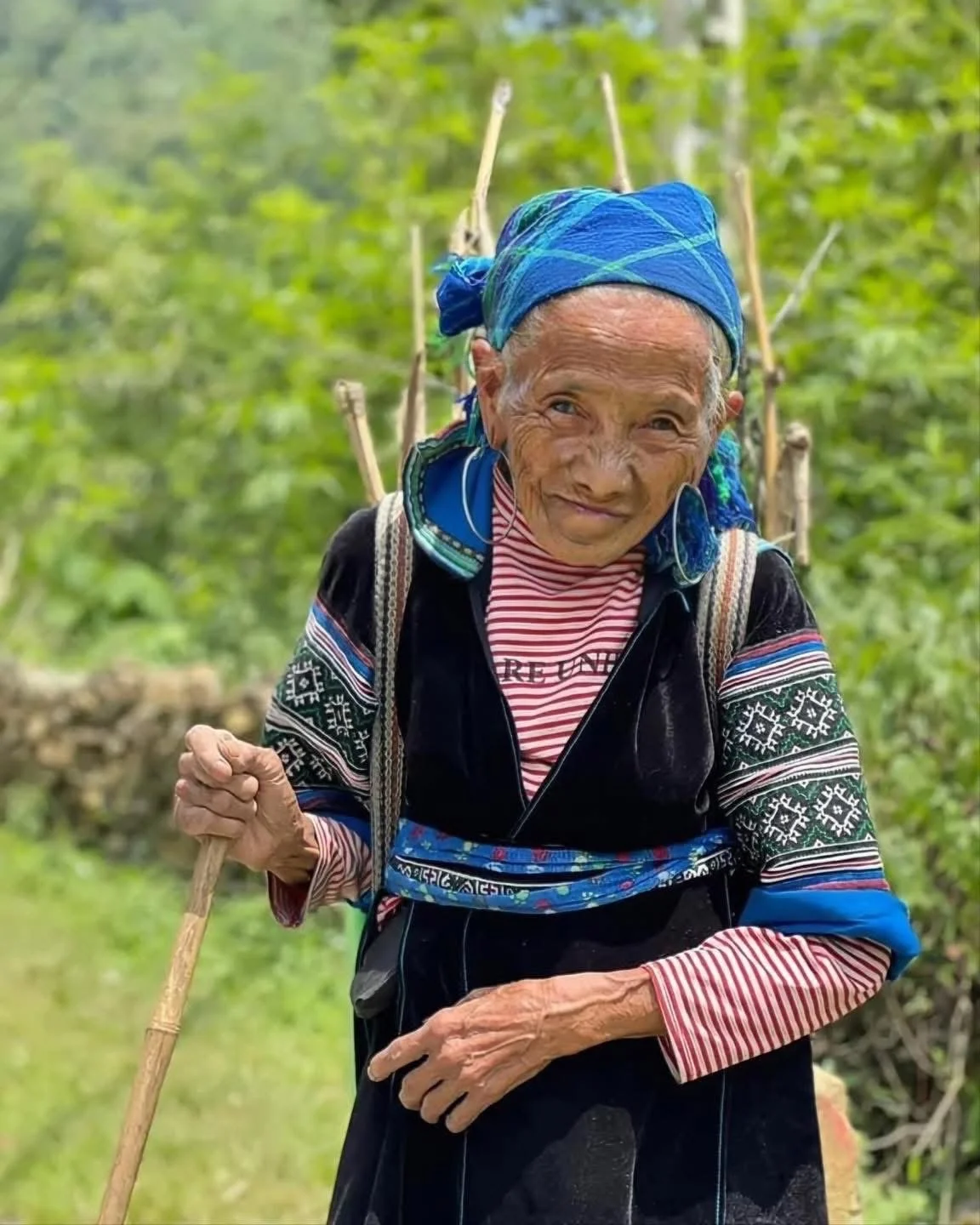
Despite her age, Máy continued to gather firewood daily for cooking, while the eldest of the children searched for food in the surrounding forest. Her simple yet determined way of life reflected her enduring spirit and love for her family.
Meeting ETHOS
Our paths first crossed with Máy in 2017, when we found her collecting plastic waste from bins in the town of Sapa. At 92 years old, she was living on the streets, sorting recyclables to earn a small income. Moved by her story and resilience, ETHOS began a support project for her in 2020.
Through regular food, clothing, and medical assistance, Máy was able to return to her mountain home and live with dignity once more. Her quiet gratitude and humour touched everyone who met her.
A Remarkable Recovery
In December 2023, Máy fell seriously ill with pneumonia. Hoa arranged her hospital treatment, and thanks to care and determination, she recovered enough to be discharged after about ten days. During her stay, we learned more about her past and her remarkable resilience.
She shared how her grandchildren, who had been opium growers, were imprisoned in 2023, leaving her to care for the five young great-grandchildren alone. After leaving hospital, Máy stayed at the ETHOS community centre to continue her recovery.
During those weeks, she spent her days telling stories, twisting hemp fibres and sharing her traditional textile knowledge with our younger team members. Her patience and wisdom became a source of quiet inspiration to all of us.
A Legacy of Love
Sùng Thị Máy’s life was a testament to courage, endurance and love. She was a devoted mother, grandmother and great-grandmother whose kindness and strength will not be forgotten. Her youthful smile, sharp mind and gentle humour stayed with her until her final days.
Máy’s story reminds us of the beauty in simplicity and the power of compassion. She leaves behind not only her family but also a community forever touched by her warmth and grace.
Closing Reflection
We will remember Máy for her laughter, her hands always busy with work, and her heart full of love. Her spirit continues to live on in the mountains she called home and in the memories of all who had the privilege to know her.
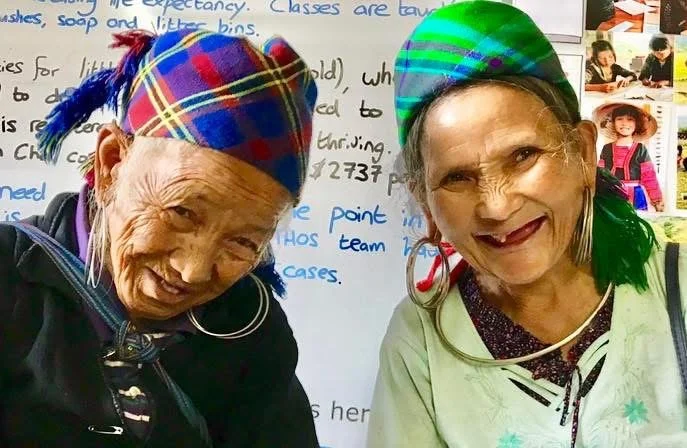
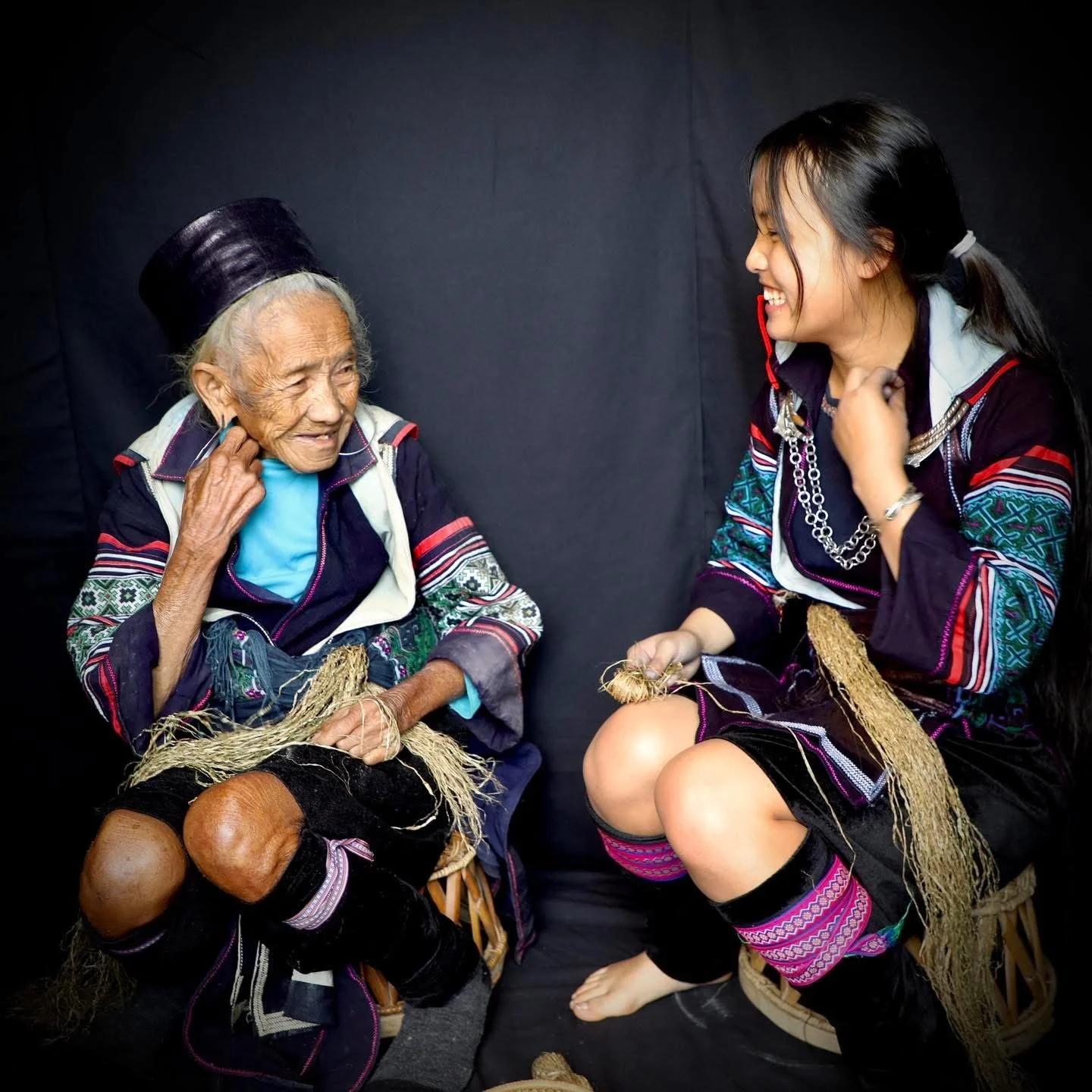
Black Hmong New Year in Sapa: Ritual, Renewal and Indigo Identity
In the mountains around Sapa, the Black Hmong New Year renews both spirit and community. Through shamanic soul-calling rites, offerings, pav tuav, rice wine, festivals and indigo hemp clothing, the celebration binds people to land, ancestors and one another.
In the highlands surrounding Sapa, the Black Hmong New Year is a period when daily life pauses and the relationship between people, spirits, animals and land is renewed. Following the harvest, tools are put away and attention turns first to the household, then outward to the village through festival, music and play. This is a spiritual reset expressed through ritual, food, clothing, music and social life. While many families today align celebrations with Vietnam’s national Tết for practical reasons, the Black Hmong observances remain deeply rooted in their own cosmology.
The Rhythm of the Celebration
Traditionally, the New Year begins once agricultural work is complete. Homes are cleaned. Clothing is finished. Food is prepared. Rice wine is distilled in advance for ritual and visiting. For days afterwards, families visit relatives, exchange blessings and attend communal gatherings filled with games, music and courtship. Normal labour is suspended so that attention can be given to relationships, spirit and renewal. These days, Hmong New Year is more aligned with the Vietnamese Tet celebrations, but Hmong rituals remain unique.
The Household as Sacred Space
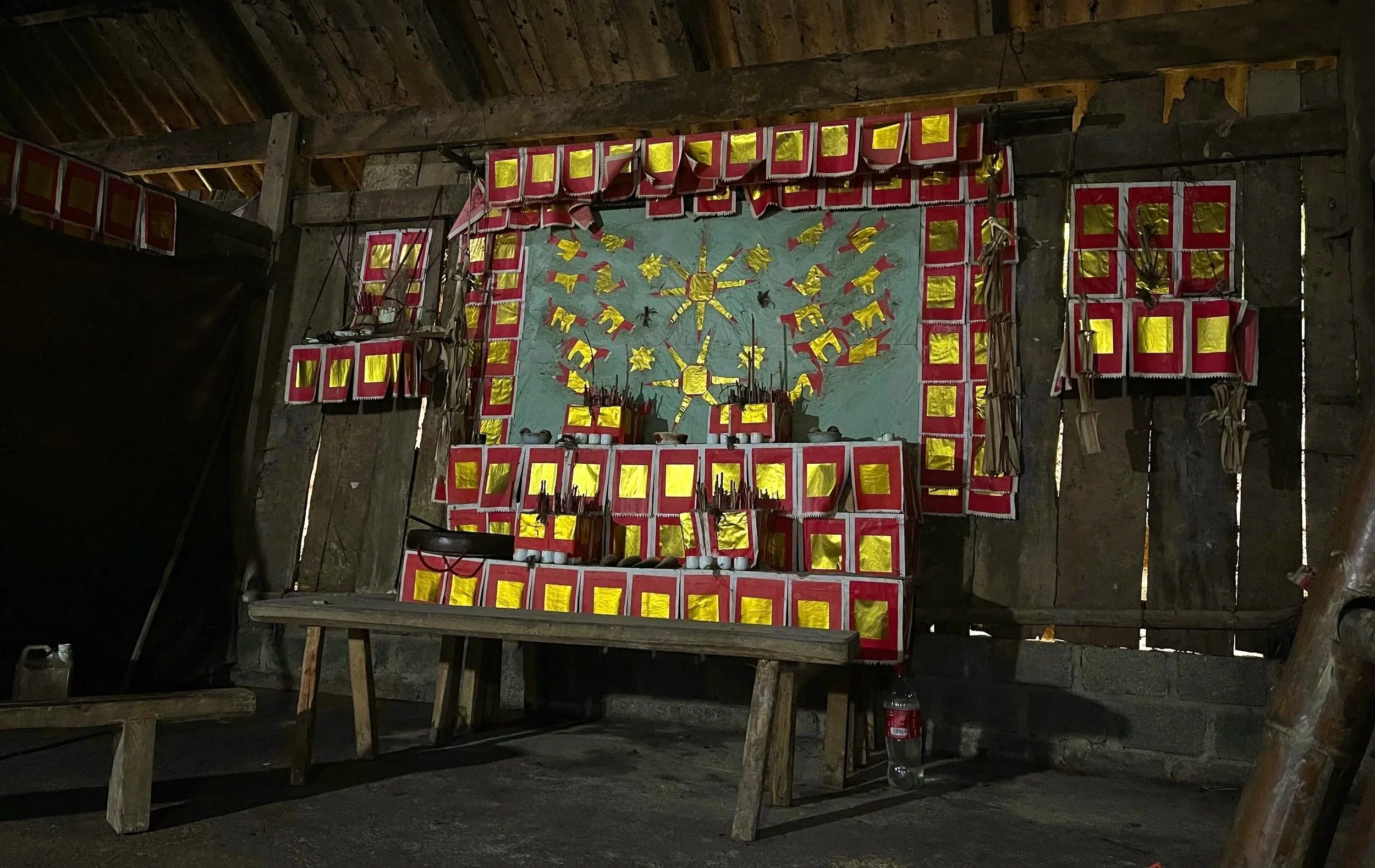
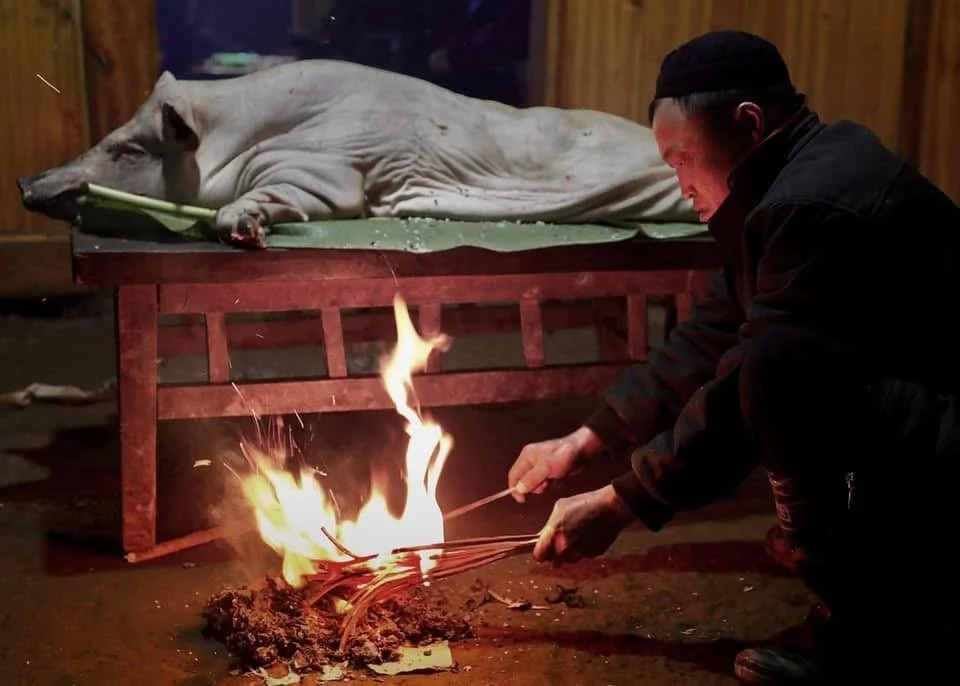
The earliest moments of the New Year are domestic and spiritual. The ancestral altar is carefully prepared. Incense is lit. Offerings are made to ancestors and household spirits. A pig is often central to these rites, first presented in prayer before becoming part of the shared meal. The fire symbolises continuity and protection. The house becomes the place where the old year is formally closed and the new one welcomed through ritual order.
Shamanism and Spiritual Renewal
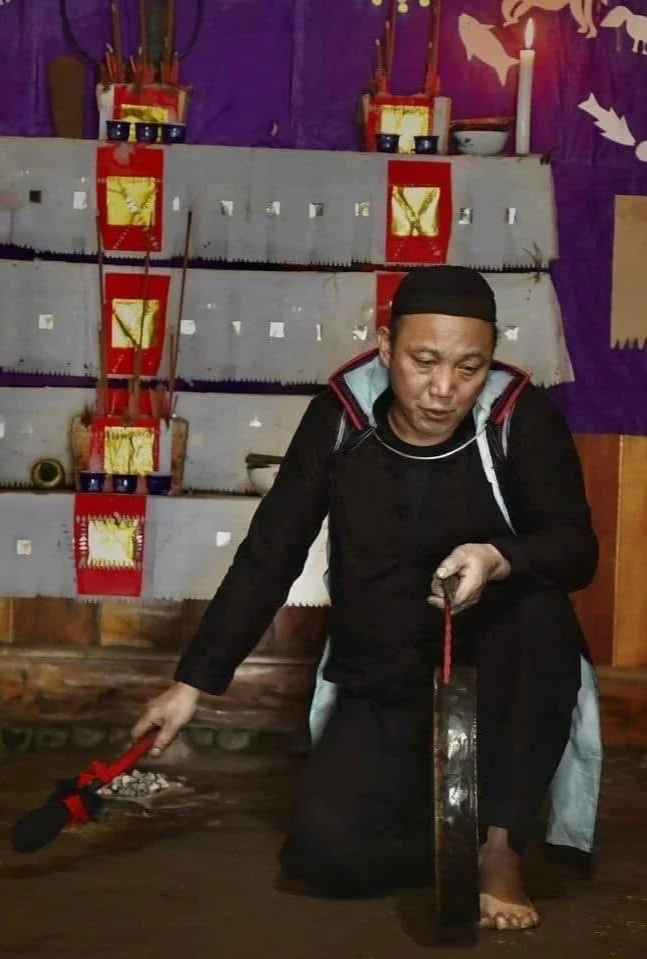
At the centre of Black Hmong spirituality stands the txiv neeb, the master of spirits. Hmong religion is traditionally animist, grounded in belief in the spirit world and in the interconnectedness of all living things. The human body is believed to host multiple souls. When one or more become separated, illness, depression or misfortune can follow. Healing rites are therefore known as soul-calling rituals, because the lost soul must return.
New Year is a powerful moment for this work.
Soul-calling and the journey to the spirit world
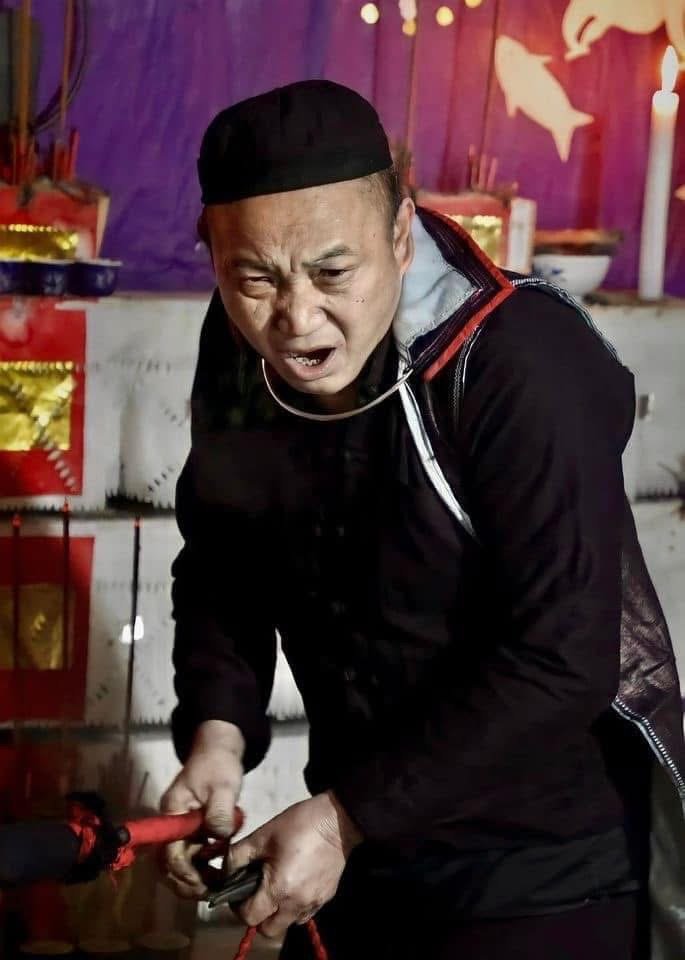
During a séance, the shaman is transported to the spirit world by means of a ‘flying horse’, a narrow wooden bench that serves as spiritual transport. Wearing a paper mask, which blocks out the real world and disguises the shaman from hostile spirits, the shaman enters trance.
Assistants steady the shaman as he mounts the bench. It is believed that if the shaman falls before his soul returns, he will die. In this state, the shaman’s soul leaves the body and enters the spirit realm where he can see, speak to, touch and capture spirits in order to liberate lost human souls.
Shamanic language is used throughout, blending everyday Hmong with the ritual dialect Lus Suav or Mon Draa. The chanting invites the too Xeeb spirit to manifest, accept offerings and grant blessings.
Divination, gong and sacrifice
As the shaman chants, he throws the Kuaj Neeb, two halves of a buffalo horn used for divination. Their landing position reveals whether spirits accept the offerings. He also strikes the Nruag Neeb, a small metal gong whose reverberation is believed to amplify spiritual strength and protect him. Villagers may pool money to buy a large sacrificial pig as a collective offering for the entire community. In Hmong belief, the soul of the animal can support or protect human souls. The sacrifice is understood as life given to restore life. Young men prepare and cook the meat while women cook rice. Rhythmic dances take place in same sex groups, each dancer holding a gong and moving barefoot before the altar.
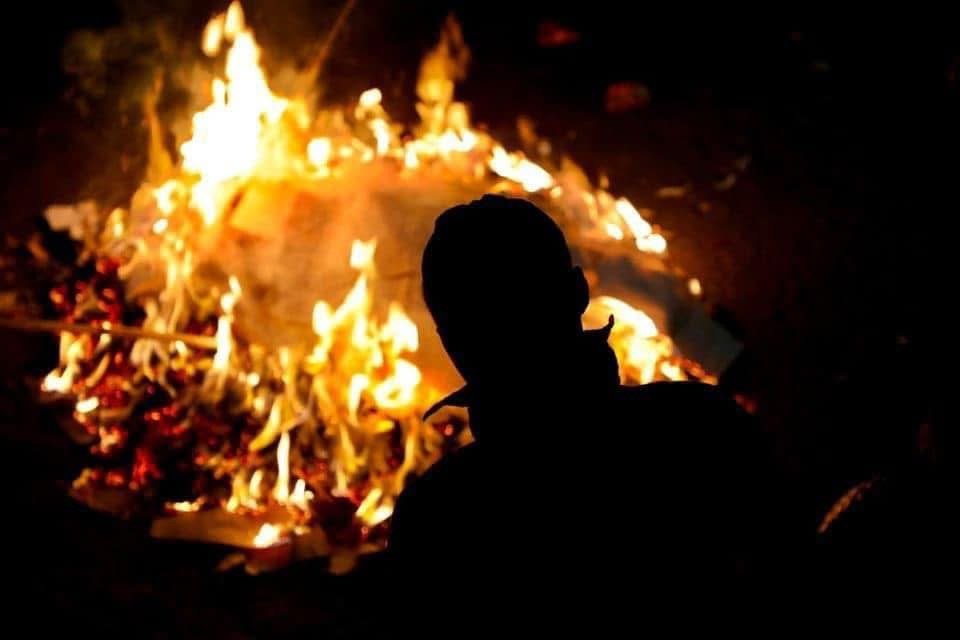
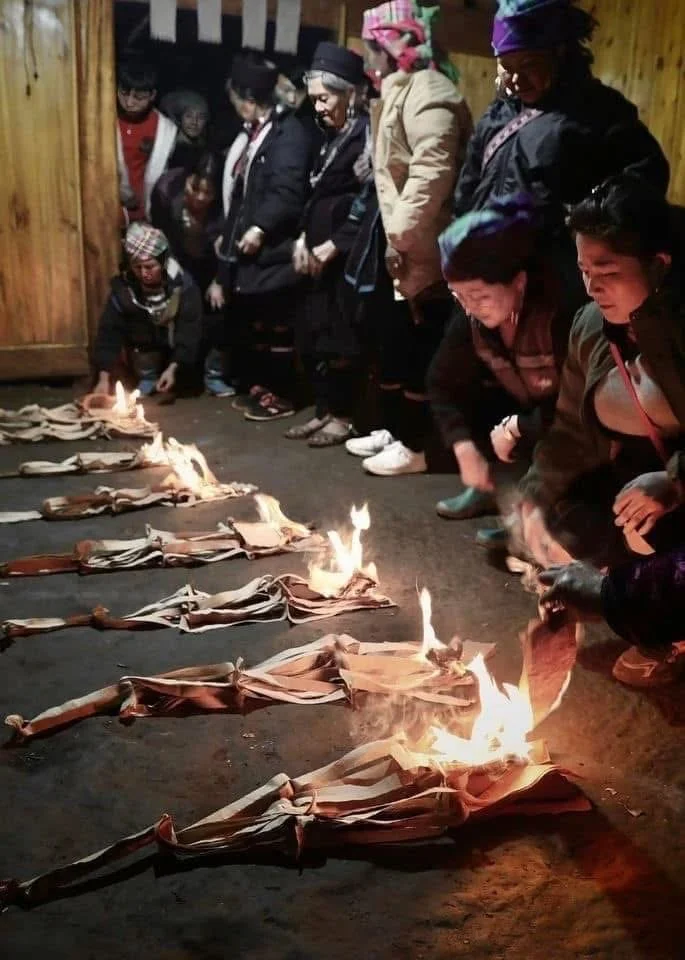
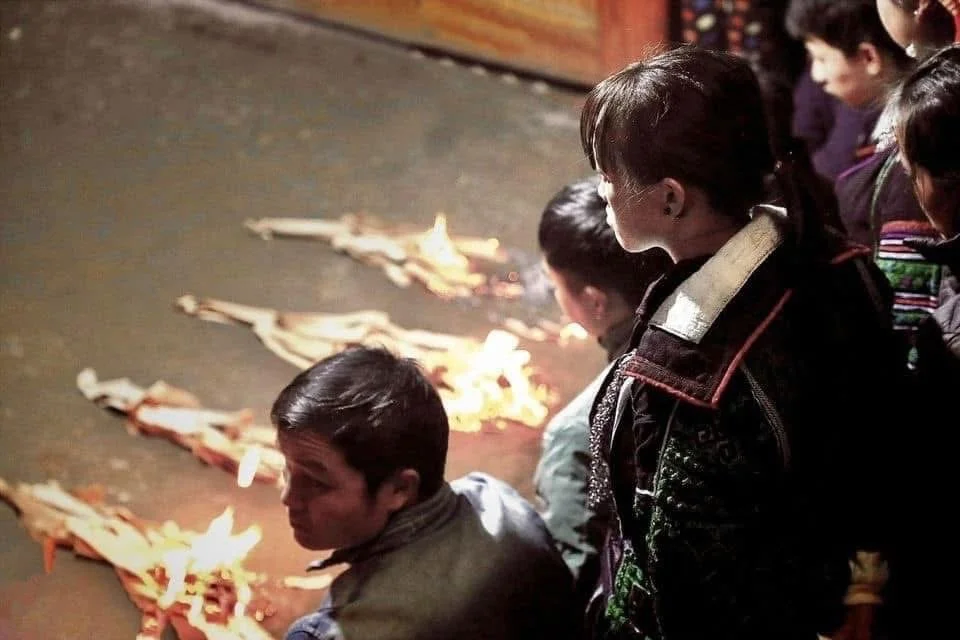
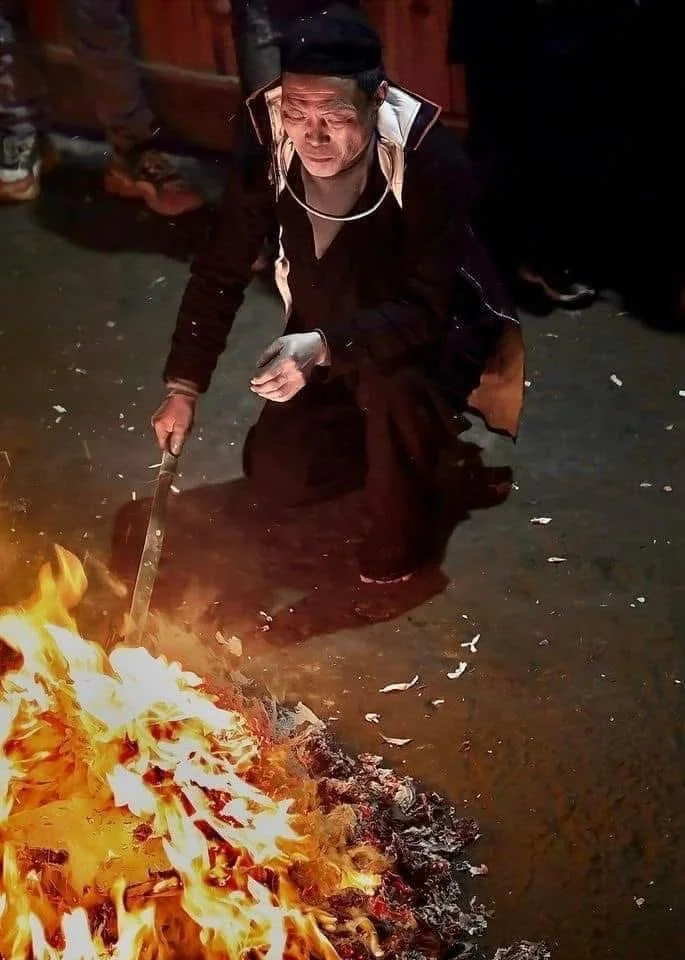
Bamboo papers are laid in a line before participants. The shaman chants over each person, uses the buffalo horns for divination, then the papers are burned and their ashes read to assess spiritual health and predict future séances.
Fire, trance and communal feast
A pyre is built from old ritual papers. As chanting intensifies and gongs grow louder, the shaman rolls through the embers, sending sparks into the air. Others follow, dancing through smoke with stamping feet. Bowls of meat and rice are placed on the altar with cups of distilled rice wine. Food and drink are offered to the spirits before the communal feast begins. The ceremony ends in shared eating, storytelling and laughter long into the night.
New Year Food and Hospitality
Food during New Year signals abundance and generosity. Pork dominate festive meals, often from animals first used in ritual offering. Sticky rice cakes known in Hmong as pav tuav are made by pounding glutinous rice into smooth rounds, sometimes in friendly competitions.
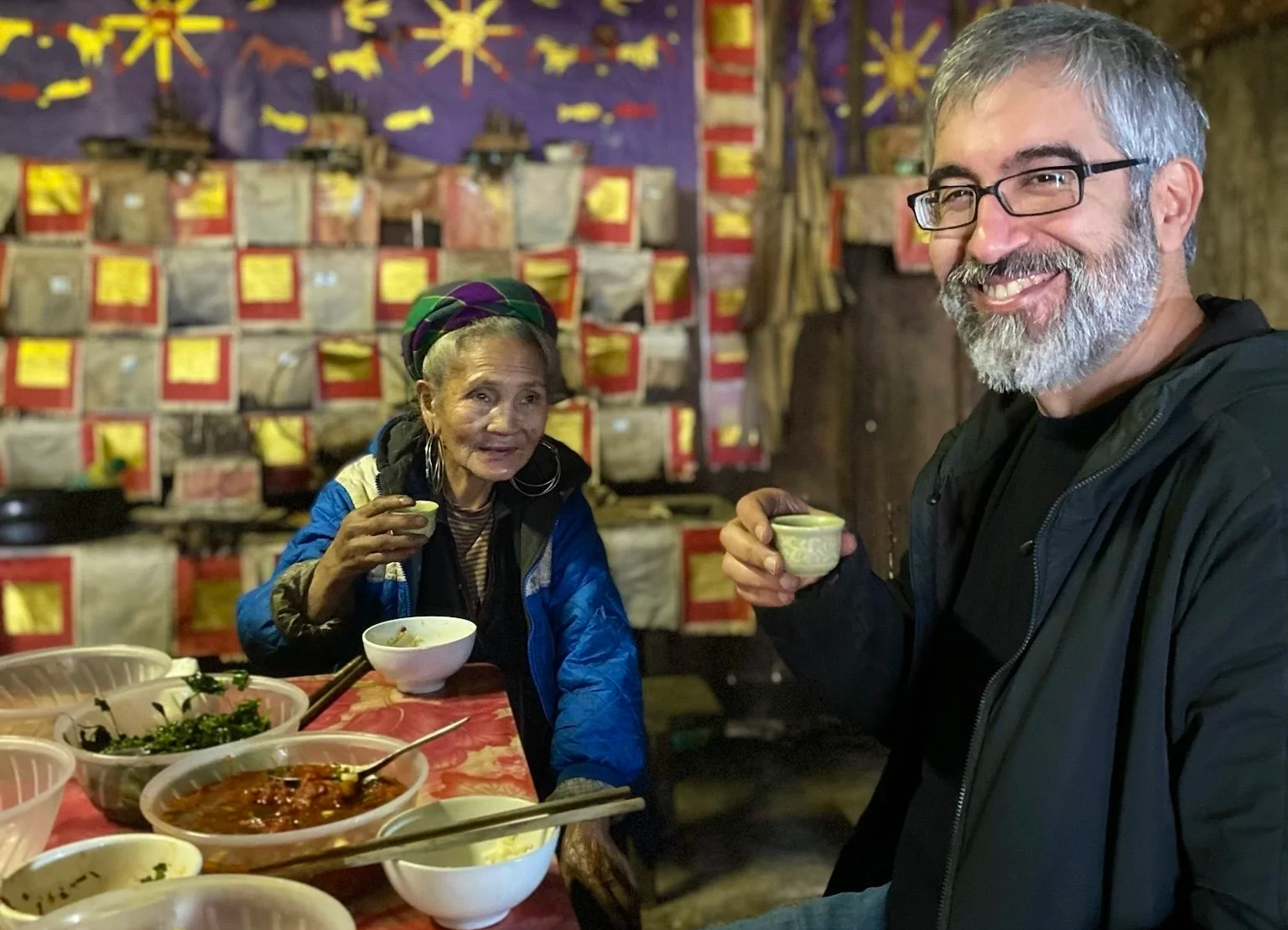
Distilled rice wine is essential. It is used in ritual, offered to spirits and shared with guests. Accepting a cup is part of accepting the relationship and blessing.
Clothing: Hemp, Indigo and Identity
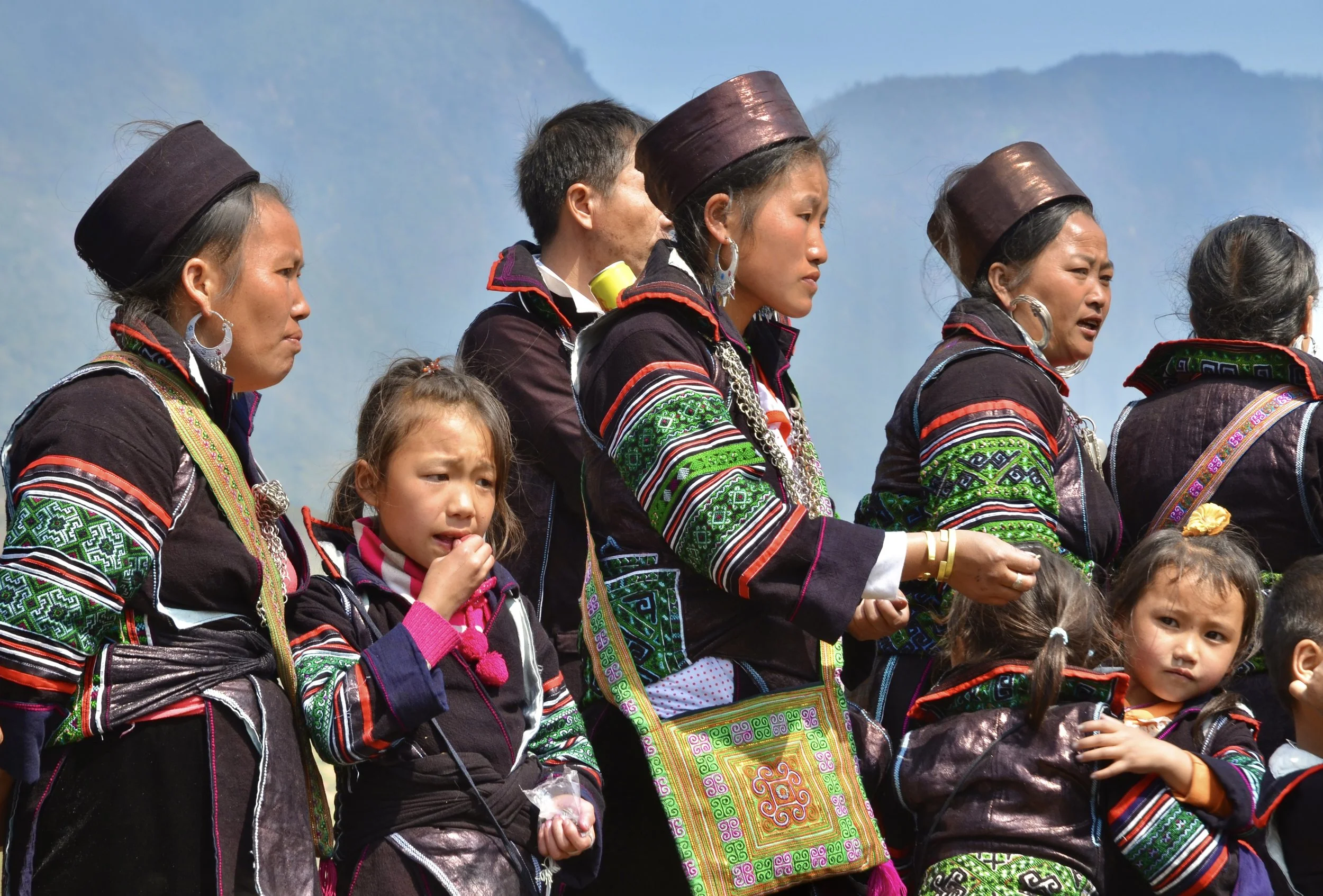
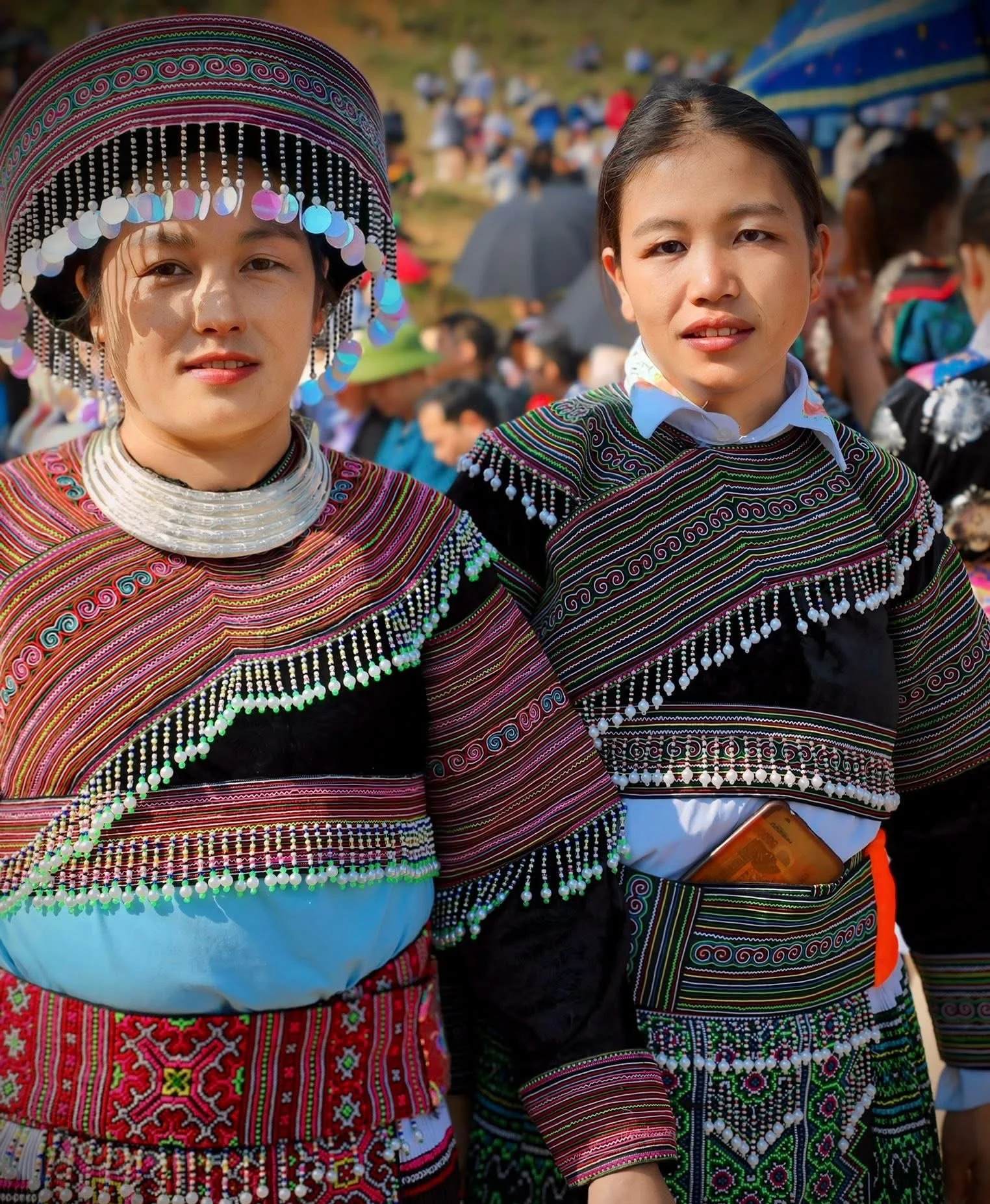
New Year is visually striking because everyone wears new or newly finished clothing. This symbolises renewal and showcases months of labour in hemp weaving, indigo dyeing, batik and embroidery.
Hemp at the heart of Black Hmong textile life
Hemp has long been central to Black Hmong textile traditions in Sapa. It is valued not only as a fibre but for its cultural and spiritual meaning. Hemp grows well in the cool, humid highlands and is cultivated in family plots. After harvesting, stalks are retted in water, fibres stripped, dried and beaten, then hand-spun into thread. The thread is woven on backstrap looms into sturdy, breathable cloth. This process can take many months and knowledge is passed primarily through women. The cloth is dyed repeatedly in natural indigo baths to achieve the deep blue-black colour associated with Black Hmong clothing. Patterns are created using beeswax batik or intricate silk embroidery, often taking many more months. Motifs represent daily life, nature and important milestones.
Spiritual meaning of hemp
Hemp is not only worn in life but is central in death. In Hmong funerals, a hemp shroud traditionally wraps the deceased. This is a spiritual necessity. It is believed that only hemp can guide the soul safely back to the ancestral realm. Without hemp, the soul may become lost. This belief ties hemp directly to cosmology and the journey between worlds. For the Black Hmong, hemp symbolises resilience, continuity and identity. It connects people to land, ancestors and tradition even as modern fabrics become available.
Indigo clothing at New Year
Women’s indigo garments, decorated with batik and embroidery, are paired with silver jewellery. Men’s clothing is simpler but still formal. Children wear miniature versions. New Year becomes a community exhibition of textile skill and cultural pride.
Festivals, Games and Courtship
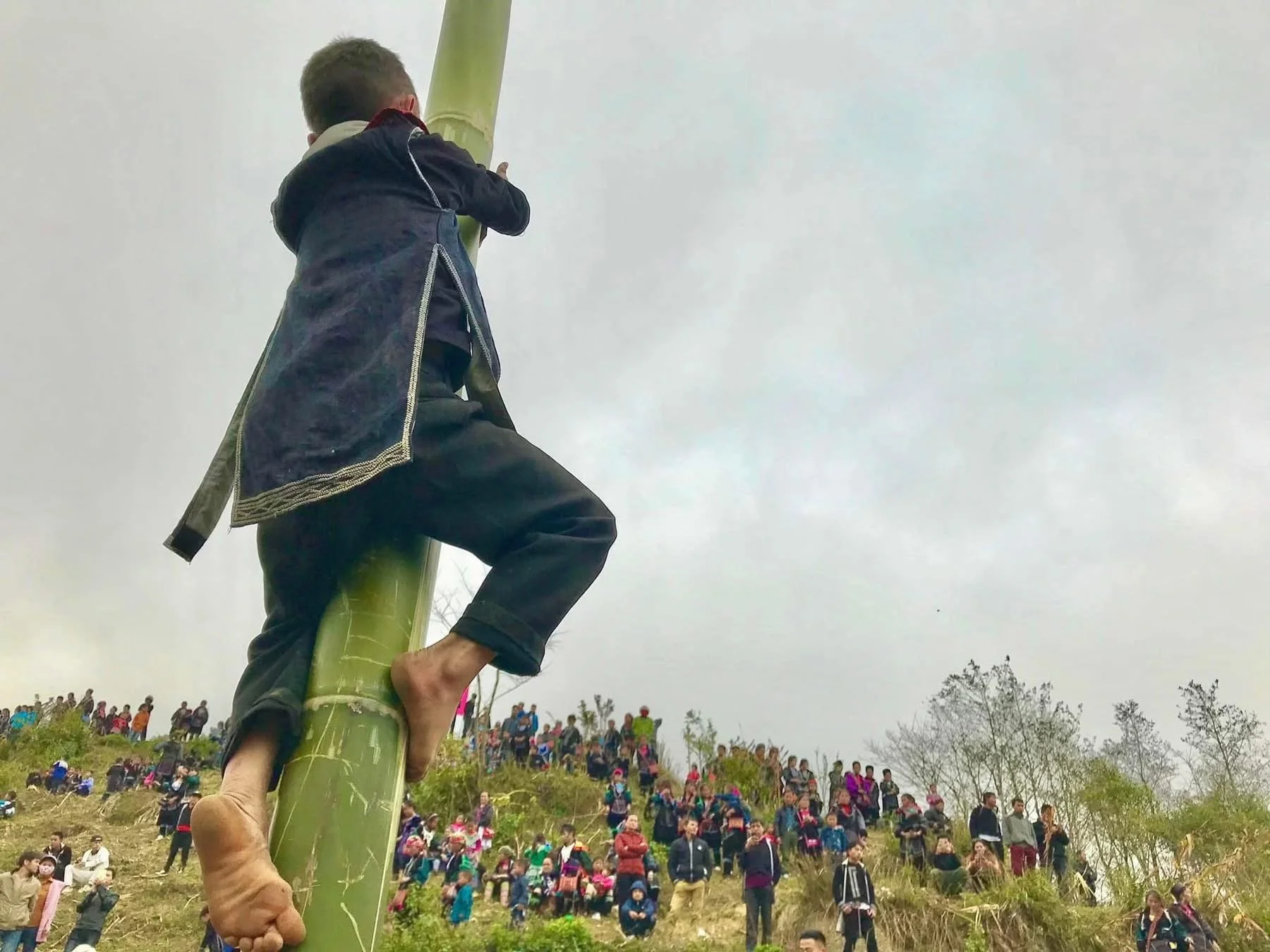
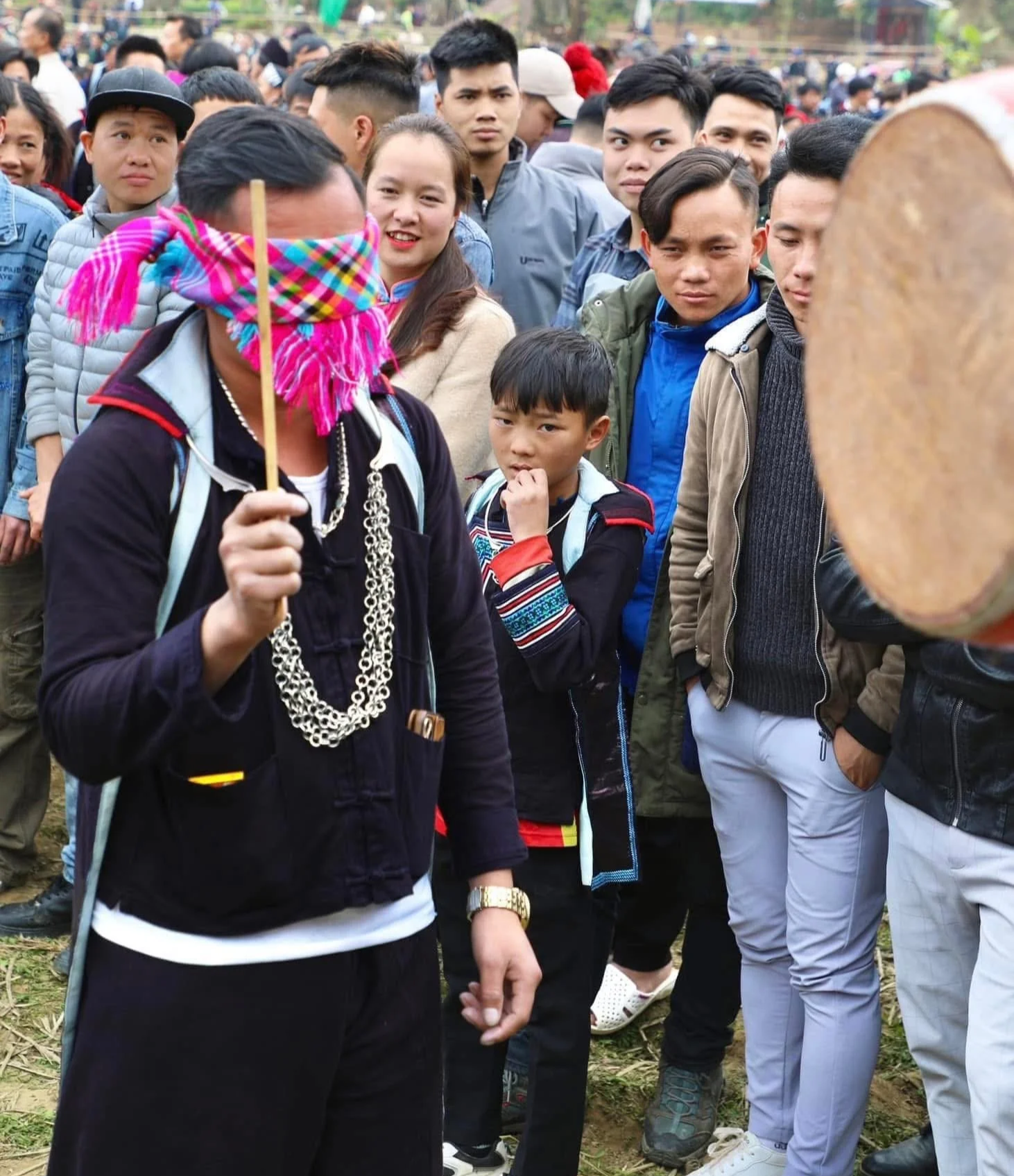
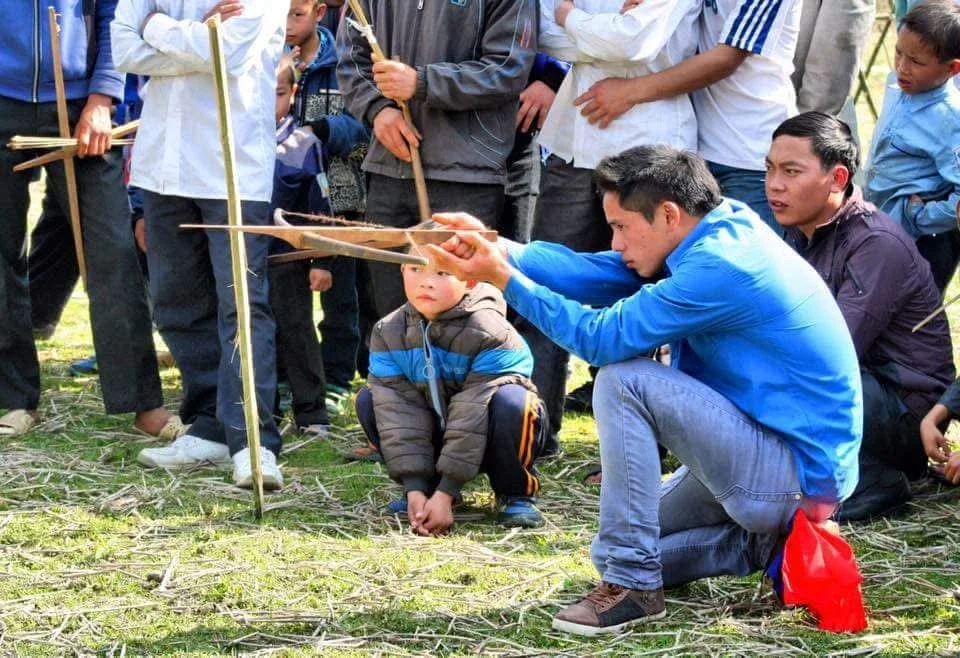
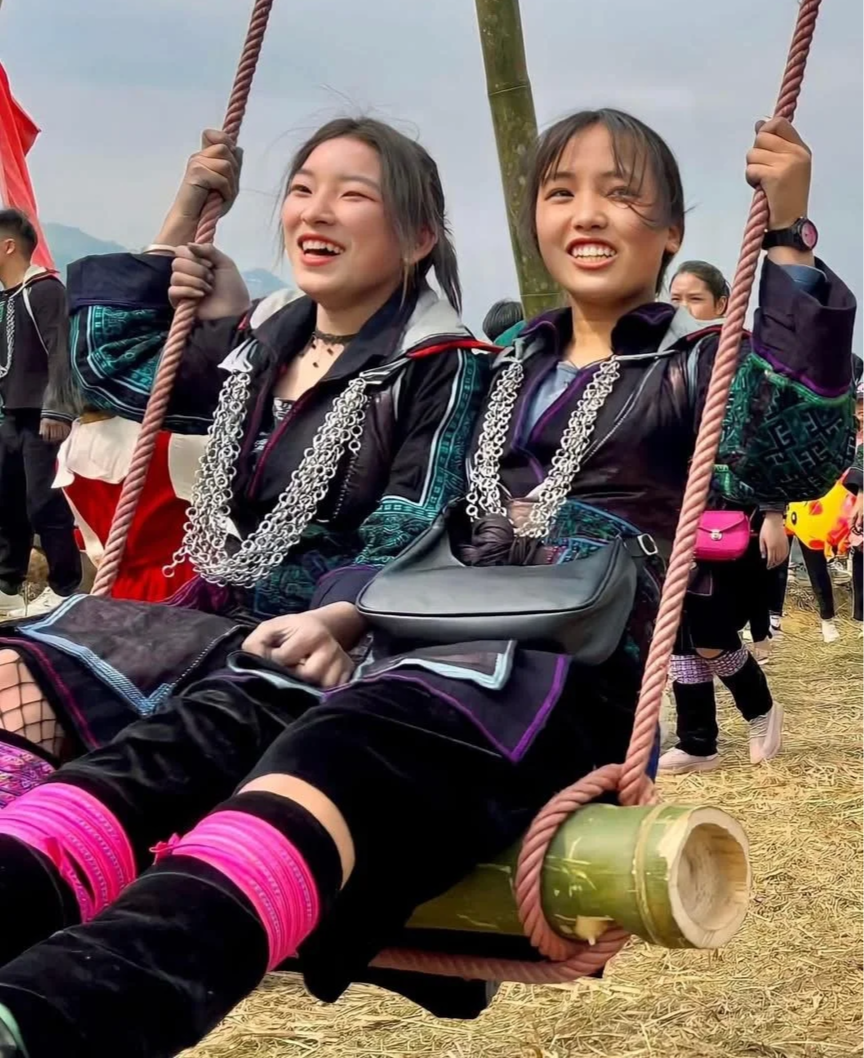
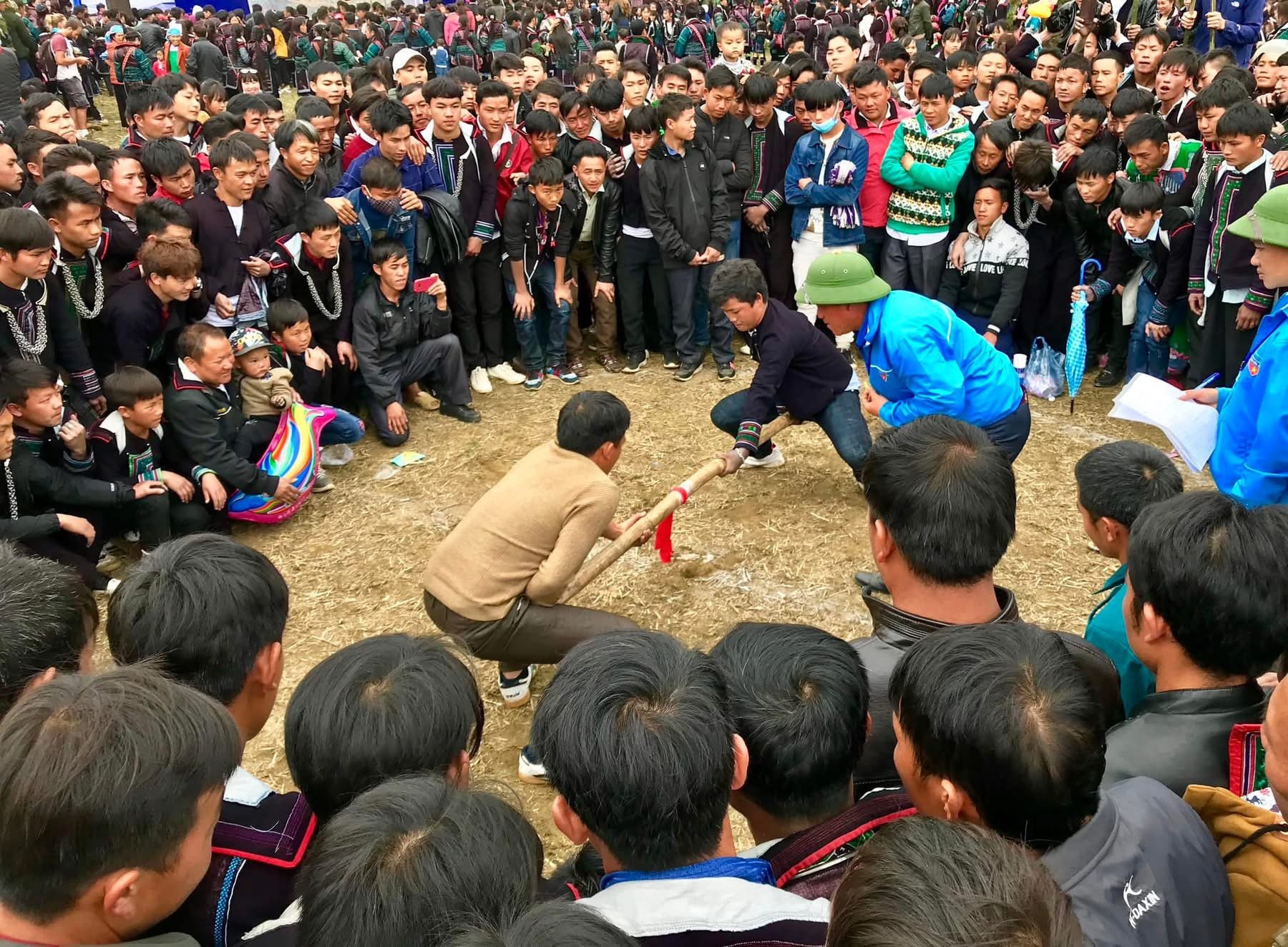
After household rites, attention turns to communal gatherings such as the Gau Tao festival. A tall decorated bamboo pole is erected, prayers are made, and the area becomes a place of games, music and social life.
Bamboo wrestling, stilt walking, spinning tops, crossbow contests and tug-of-war take place alongside ném pao, the ball-toss game where young men and women meet, talk and flirt.
Taboos and Beginning the Year Well
Before the New Year, the Hmong cut three bamboo sticks and wrap them with red cloth. These are then used to sweep away spider webs and black soot from the house. This act symbolises clearing away the old year and preparing for a fresh beginning.
During the first days of the New Year, certain actions are avoided. People avoid washing clothes, blowing on the fire, eating rice with water, or holding a needle. Each of these actions carries meaning. Washing clothes is believed to wash away the blessings of the ancestors. Eating rice with water suggests a life of rain and hardship. Blowing on the fire may bring strong winds throughout the year. Sewing or using a needle symbolises damage to the crops, especially the maize harvest.
On the 19th day of the twelfth lunar month, which marks the Hmong New Year, families prepare sticky rice cakes and offer them to their ancestors. The cakes must not be eaten before the prayers are completed. It is believed that if someone eats before the ritual is finished, they may suffer burns from fire or hot charcoal during the coming year. This teaches patience and respect, reminding everyone that the ancestors must be honoured first.
These practices show how deeply the New Year is connected to spiritual protection, family unity and the guidance of those who came before.
A Living Tradition in Modern Sapa
Modern life has influenced the timing and visibility of the celebration, yet the core remains intact. Ancestors are honoured. Shamans chant. New clothes are made. Rice wine is poured. Young people meet in games and song. Each year, when winter turns to spring in the mountains around Sapa, the Black Hmong step into a new cycle with rituals that bind body, soul, family and village into one shared renewal.
Last Chance to See: A Century of Hmong Clothing in Northern Vietnam
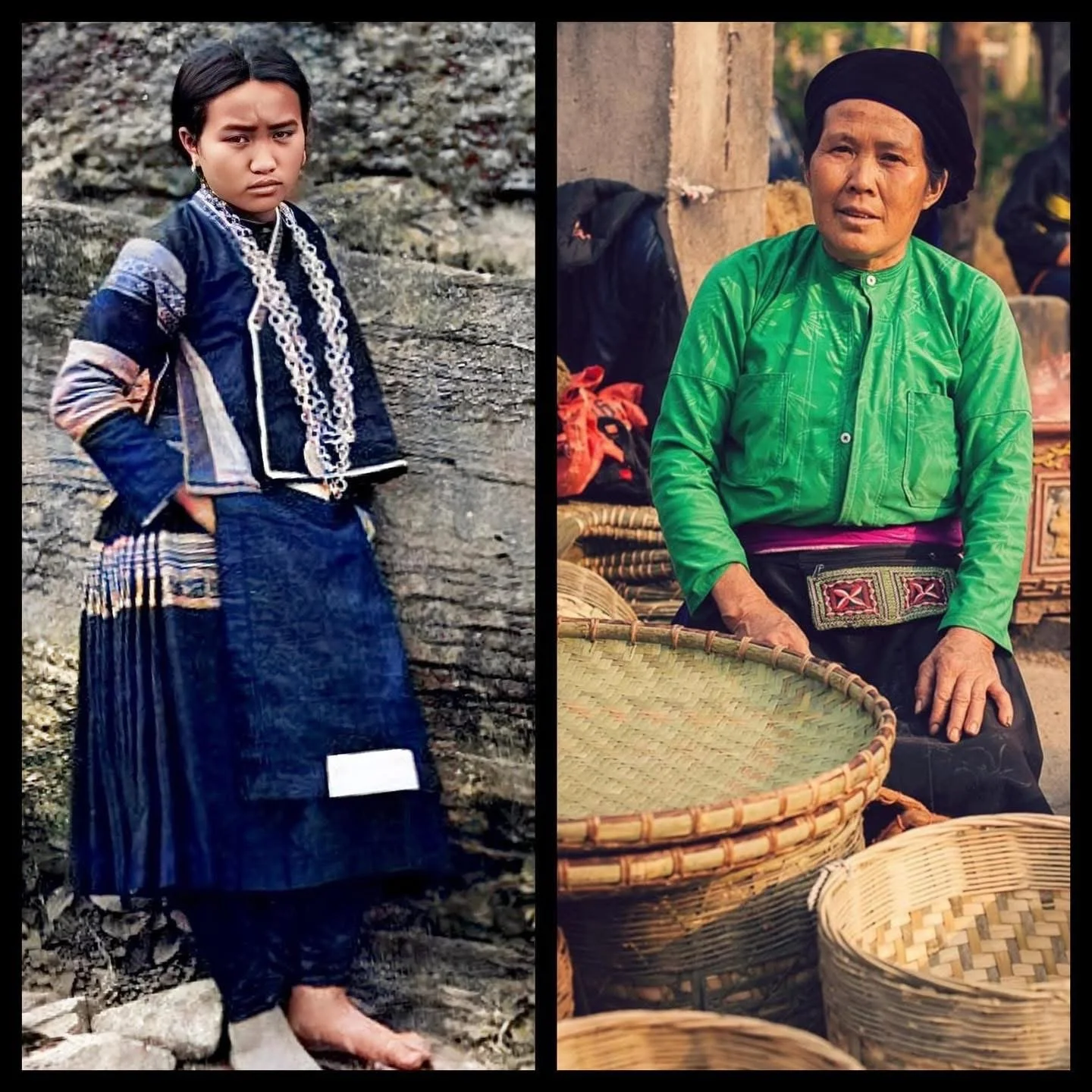
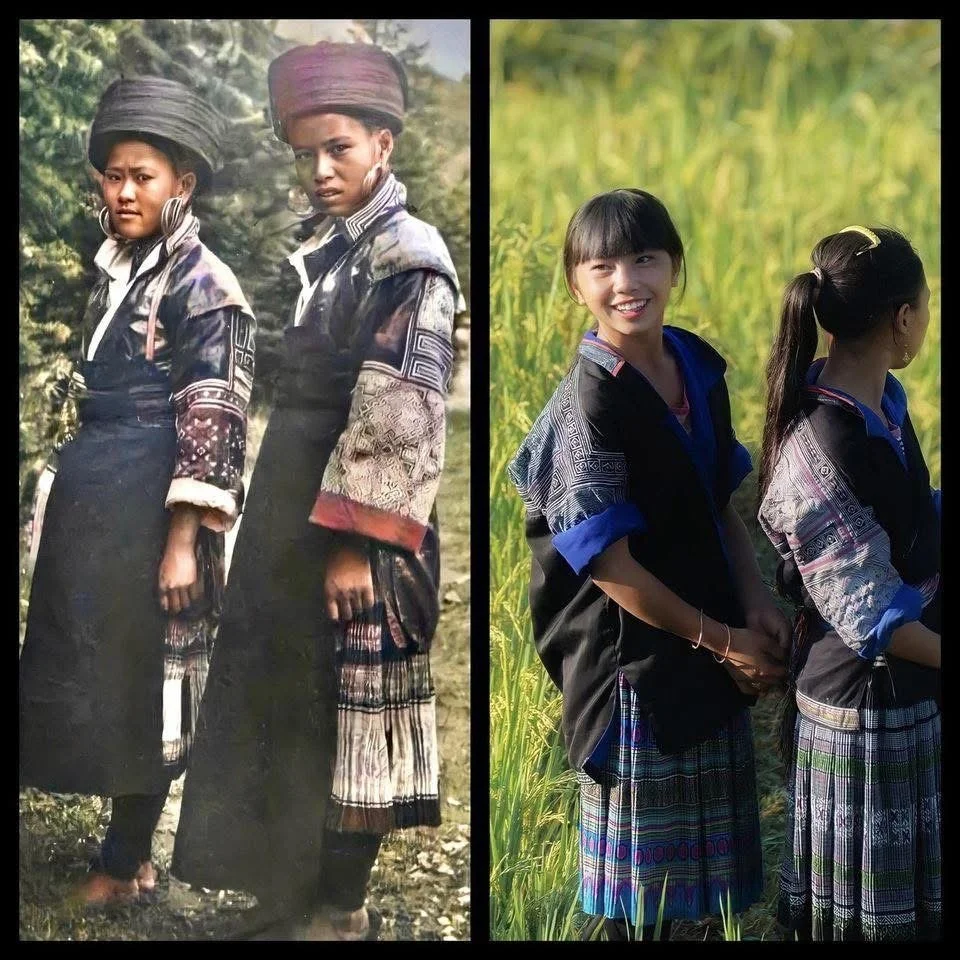
A visual journey through Hmong clothing across four regions of Northern Vietnam, revealing how tradition, identity, and textile art have survived for over a century.
Last Chance to See: Clothing, Change, and Continuity
As part of a photo series titled Last Chance to See, ETHOS explores how clothing has changed over more than a century while still holding deep cultural meaning. This series looks closely at what has endured, what has adapted, and why traditional dress continues to matter today.
Today’s focus is on the Hmong people living in four distinct regions of Northern Vietnam: Mu Cang Chai, Sapa, Ha Giang, and Bac Ha. Each region tells its own story through colour, texture, and design.
The Hmong People and Cultural Identity
Throughout recorded history, the Hmong have remained identifiable as Hmong. This continuity comes from maintaining their language, customs, and ways of life, even while adopting elements from the countries in which they live.
Clothing plays a central role in this identity. It is not simply something to wear, but a visible expression of belonging, heritage, and pride.
Regional Differences in Hmong Dress
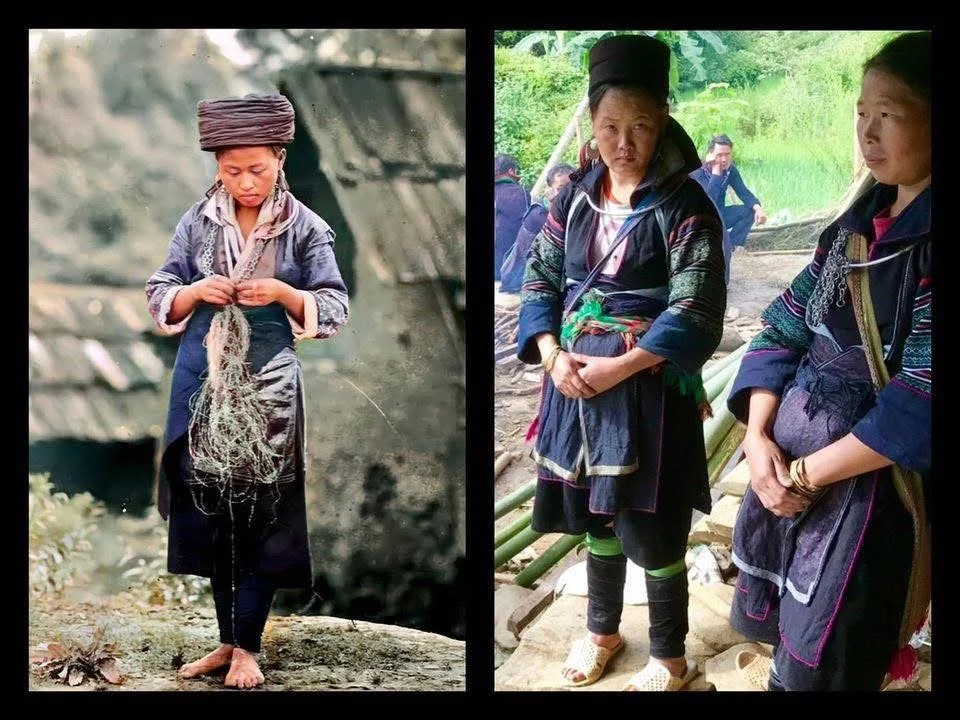
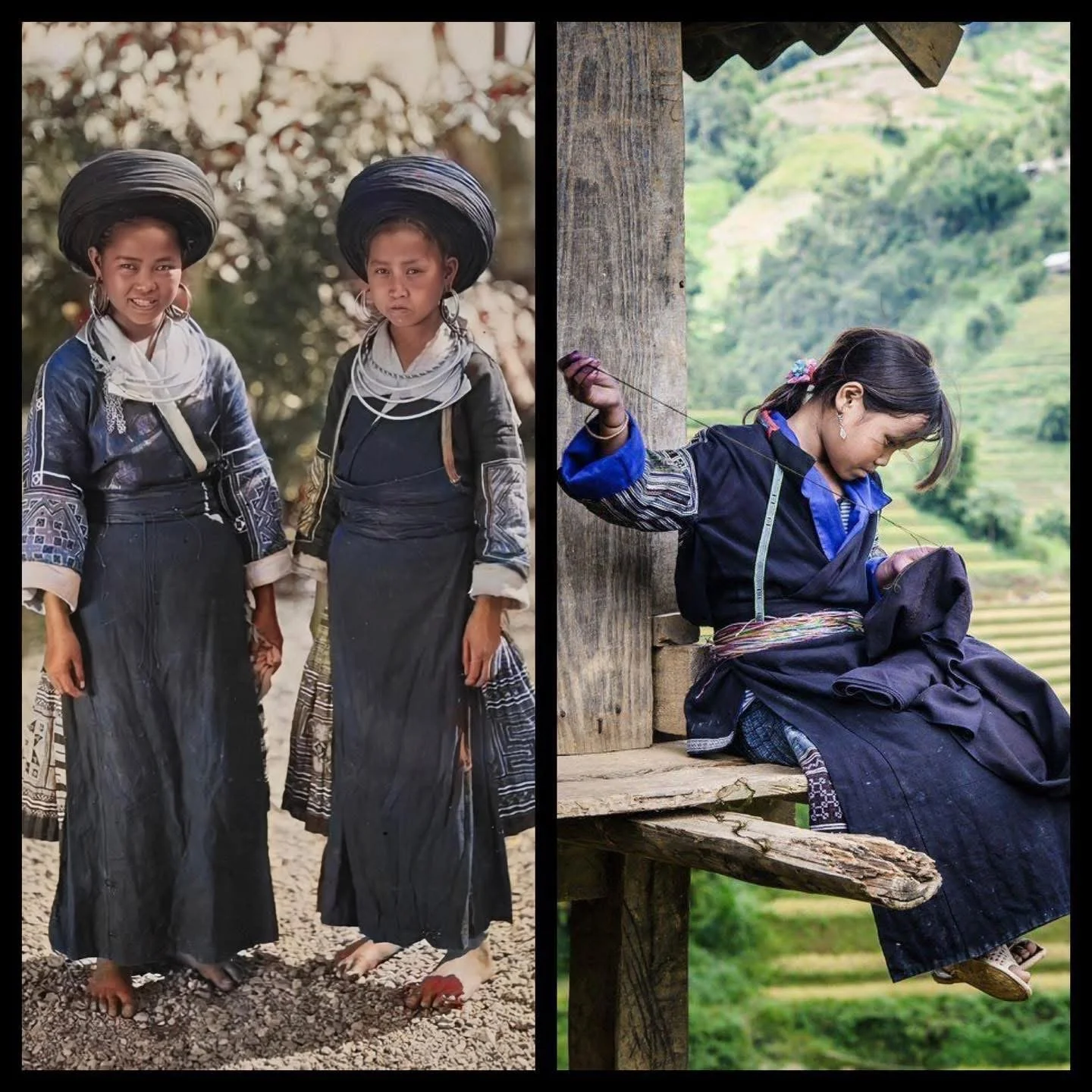
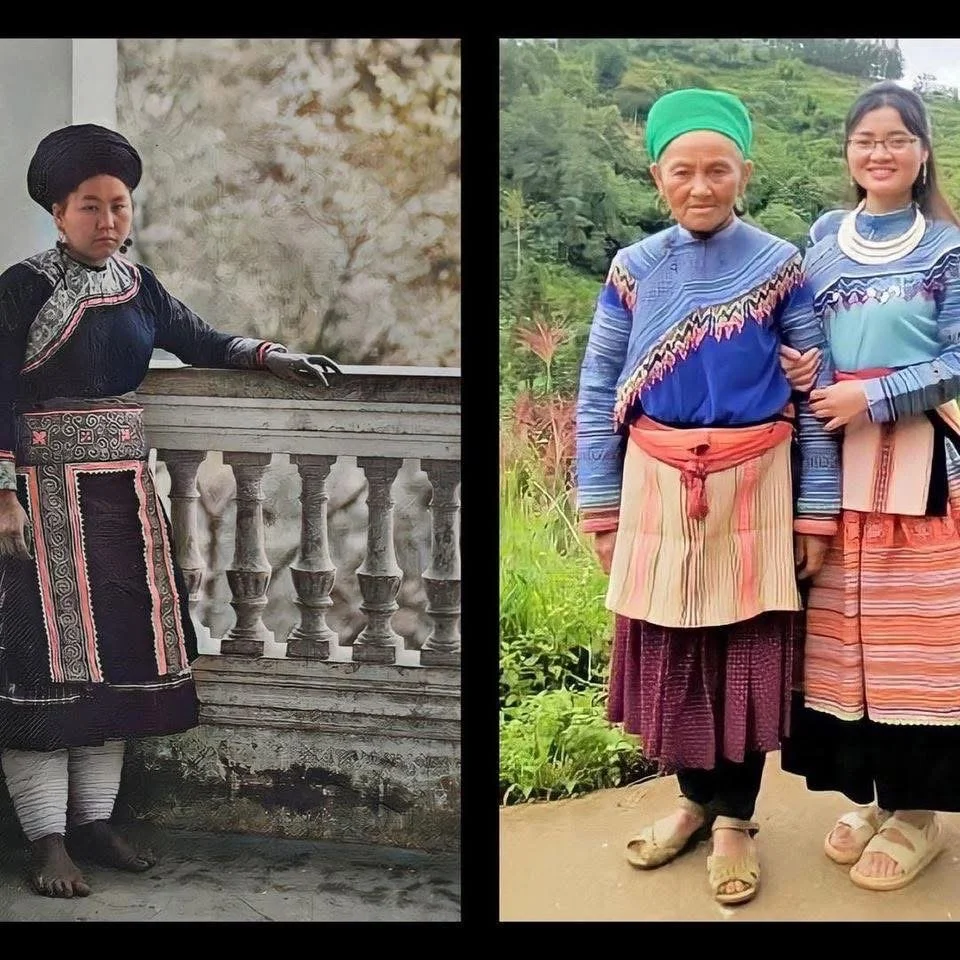
Many Hmong groups are distinguished by the colour and details of their clothing. Black Hmong traditionally wear deep indigo dyed hemp garments, including a jacket with embroidered sleeves, a sash, an apron, and leg wraps. Their clothing is practical, durable, and rich in subtle detail.
Flower Hmong are known for their brightly coloured traditional costumes. These outfits feature intricate embroidery, bold patterns, and decorative beaded fringe, making them immediately recognisable.
Paj Ntaub: The Language of Cloth
An essential element of Hmong clothing and culture is paj ntaub, pronounced pun dow. This is a complex form of traditional textile art created through stitching, reverse stitching, and reverse appliqué.
Meaning, Skill, and Tradition
Traditionally, paj ntaub designs are ornamental and geometric. They are mostly non representational and do not depict real world objects, with the occasional exception of flower like forms. The making of paj ntaub is done almost exclusively by women.
These textiles are sewn onto clothing and act as a portable expression of cultural wealth and identity. Paj ntaub play an important role in funerary garments, where the designs are believed to offer spiritual protection and guide the deceased towards their ancestors in the afterlife. They are also central to Hmong New Year celebrations.
Before each New Year, women and girls create new paj ntaub and new clothing. Wearing clothes from the previous year is considered bad luck. These new garments reflect creativity, skill, and even a woman’s suitability as a successful wife.
Why Hmong Clothing Endures
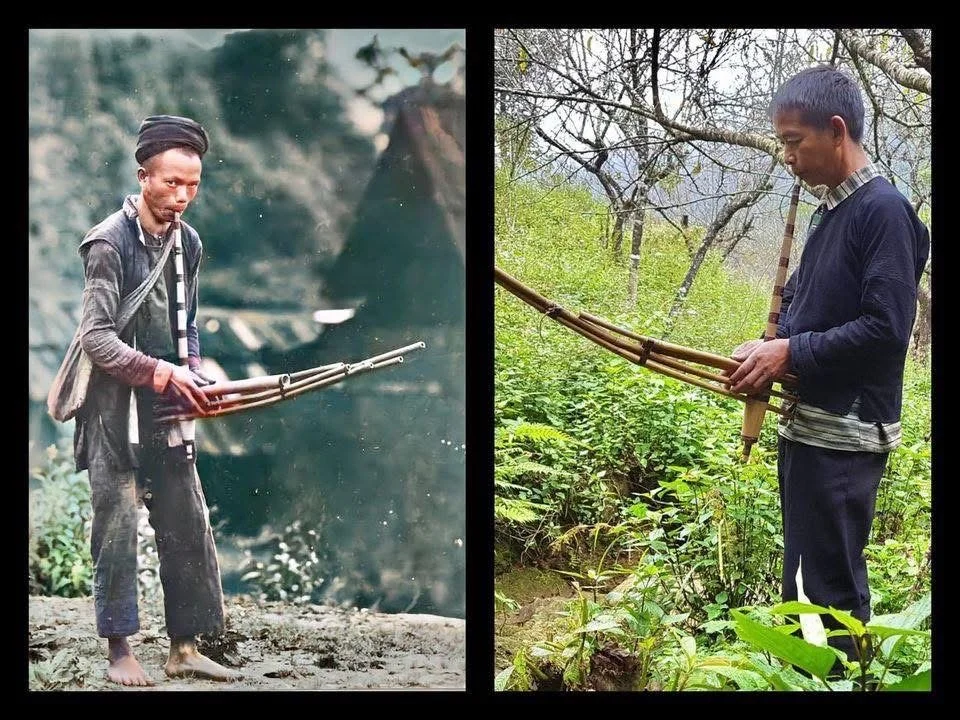
Despite major cultural and social change over the past century, Hmong clothing has endured. Its survival lies in its deep connection to identity, belief, skill, and community. Each stitch carries meaning, and each garment tells a story that continues to be passed from one generation to the next.
The Evolving Art of Hmong Textiles in Northern Vietnam
The Hmong of Vietnam are known for expressive textiles full of history, identity, and artistry. Today these traditions are evolving. Are they being protected or transformed?
The Evolving Art of Hmong Textiles in Northern Vietnam
The Heritage of Hmong Clothing
The Hmong people of Vietnam have a long history of creating clothing that reflects their identity and traditions. Textiles are more than fabric. They are a visual language that shows who someone is and where they come from.
Each Hmong subgroup has its own recognisable style. White, Black, Flowery, Red, and Blue Hmong communities are known for different colours, patterns, and decorative techniques. Women’s pleated skirts often include detailed embroidery, batik designs, and appliqué. Blouses and aprons are bright and full of symbolic motifs. Men’s clothing is simpler but still carries meaningful tradition.
Crafting Textiles by Hand
For centuries, Hmong families have relied on handwoven hemp and natural indigo dye. Every step was done by hand. Growing and processing hemp took great effort. Embroidery was slow and highly skilled work passed down from mothers to daughters.
These garments were more than clothing. They showed cultural knowledge and community belonging. Each stitch was carefully placed with purpose.
Modern Influences and Adaptations
Change is happening. Many Hmong households now use commercial cotton and some synthetic materials because they are affordable and easy to work with. This allows clothes to be made more quickly and sold in markets or to tourists.
Some subgroups are responding in a different way by adding more embroidery and creativity than ever before. Their designs are more detailed and far more time consuming to make. Clothing has become a canvas for new artistic expression.
Tourism has created economic opportunities but also brought challenges. Traditional hemp skirts are becoming rare in some villages. Yet hemp fabrics and indigo dyeing are still practised and remain a strong part of cultural identity.
What Textiles Tell Us
When you visit Hmong communities in northern Vietnam, take time to notice the details. Clothing can show migration stories, family history, resilience, and pride in heritage. Patterns and colours protect against misfortune and honour ancestors.
Buying directly from local artisans supports families and helps preserve skills that have lasted for generations.
A Question for You
As traditions evolve, what should stay the same?
Should Hmong textile makers embrace new materials and markets, or is there a risk that important cultural knowledge will be lost?
I would love to hear your thoughts.


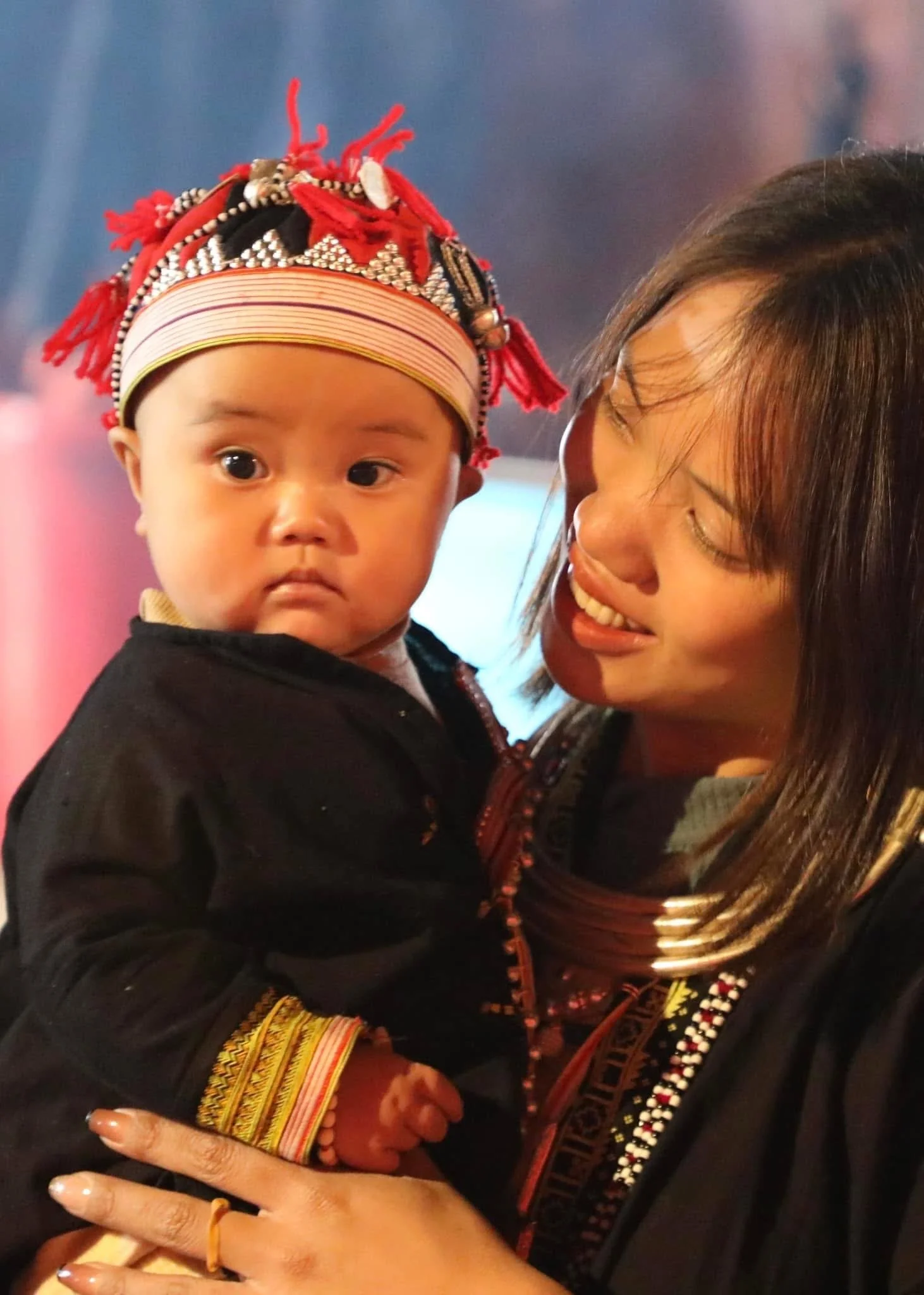
Red Dao Baby Hats A Mother’s Love Stitched into Tradition
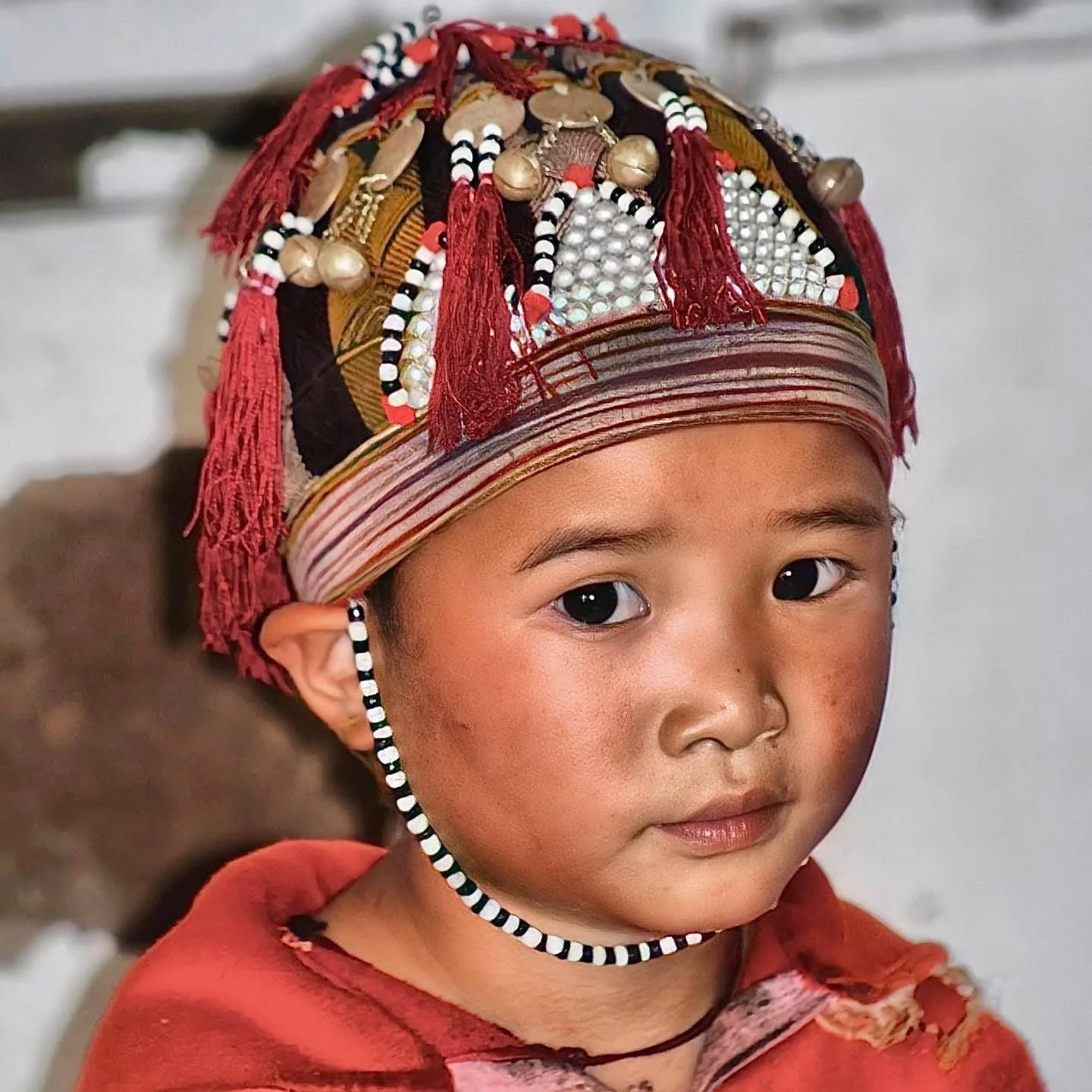
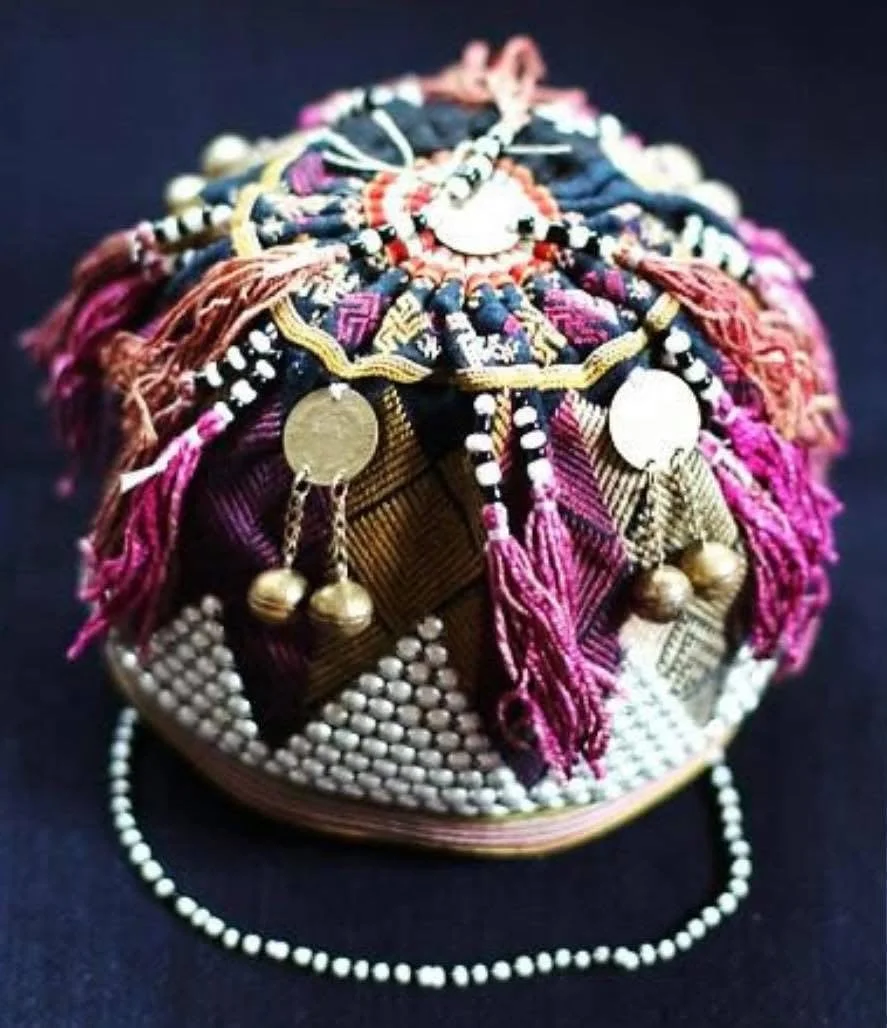
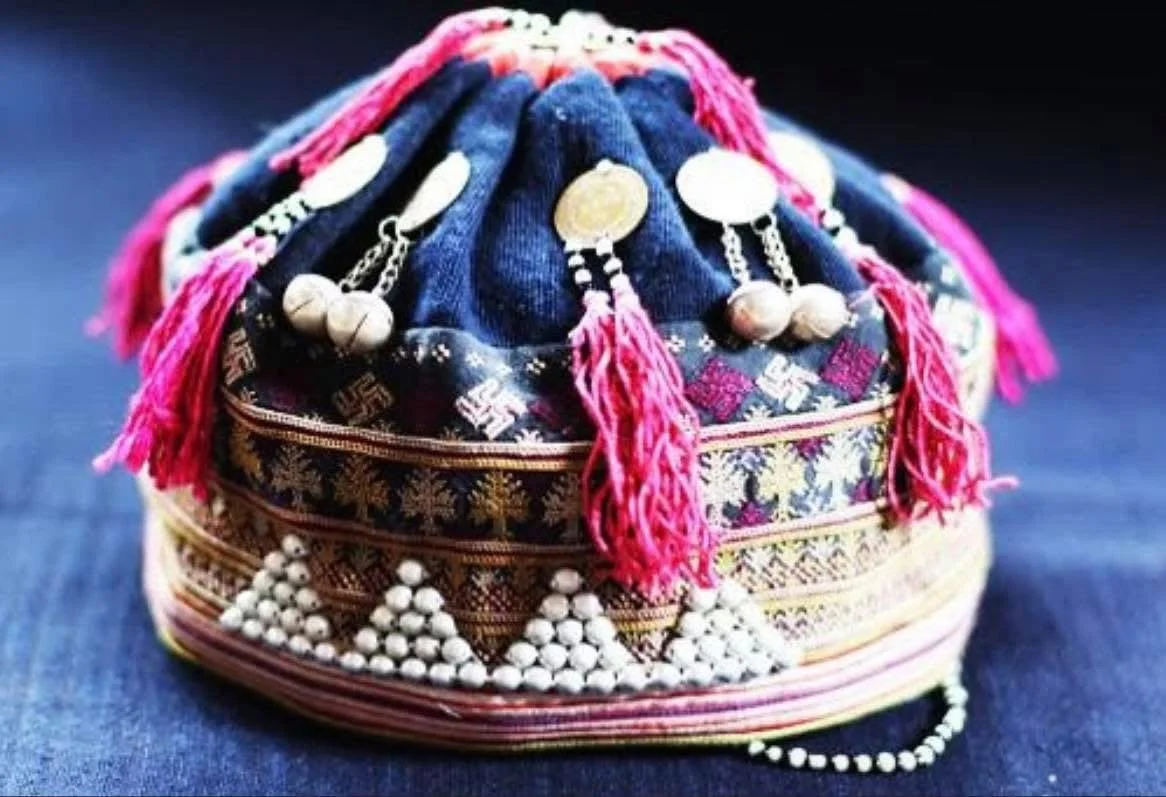
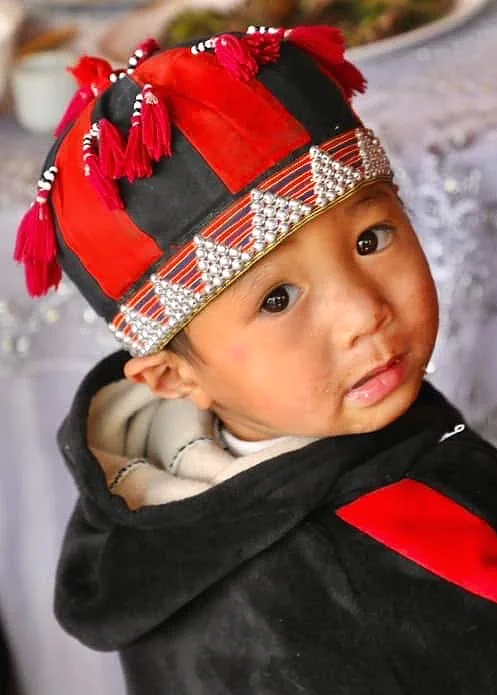
Red Dao baby hats are beautiful, bright and full of spiritual meaning. Mothers embroider them with symbols, coins and herbs to protect young children.
A Living Culture of Craft
Red Dao women are known for their incredible skills in hand embroidery. Every stitch is full of patience and pride. Textiles are part of daily life in the mountains, not only for beauty but also for cultural identity and protection. When a child is born, a mother begins one of the most meaningful pieces she will ever make. The baby hat.
Why Babies Need Protection
In Red Dao belief, young children are still growing their spirit. From one month to around five years old, they can fall ill very easily because bad spirits may come close. Mothers believe that a handmade hat with symbols and colour will help protect their children while their spirit becomes stronger.
More Than Decoration
The colourful patterns are full of meaning. A baby girl often has a more embroidered hat with bright colours and special symbols. Boys usually wear hats with three colours such as red, black and purple.
Coins, beads and pom poms decorate the hat so it catches the eye. Inside the embroidery, the mother often places medicinal herbs which are believed to support health and keep away bad spirits. When a hat dances with colour, it looks like a flower. A bad spirit, seeing a flower instead of a baby, will leave the child alone. The hat becomes both a shield and a disguise.
Made by a Mother’s Hands
Most hats are made by the child’s mother. Sometimes a grandmother helps, especially if she has greater experience with symbols. The design is personal to the family and protects the child every day, not only on festival occasions. Children wear their hats while playing, walking, resting and even being carried on their mother’s back.
Childhood to Independence
When children reach about five years old, they stop wearing the baby hat because their spirit is stronger. They begin to learn about their culture in other ways. Clothing remains important but the secret spirit protection of the hat has already done its job.
A Beautiful Tradition to Cherish
These hats are not just decoration. They are a sign of love, a prayer for protection and a reminder that every child is precious. The Red Dao baby hat shows the care of mothers who have protected children in the mountains for generations.
Heritage Shorts: Documenting Vietnam’s Living Traditions
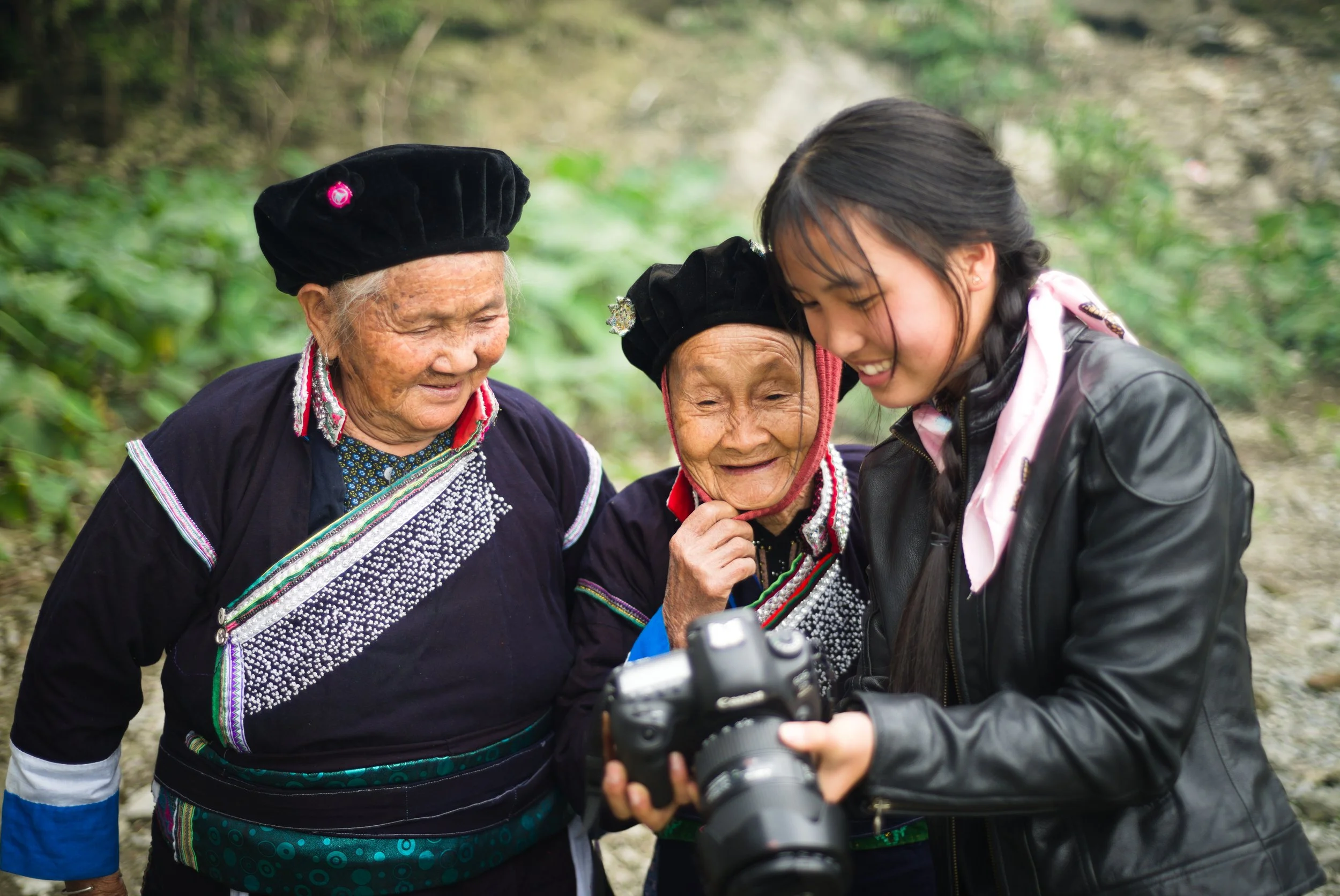
Heritage Shorts is a new documentary series celebrating the living traditions of Vietnam’s ethnic minority communities. From weaving and farming to music, shamanism, and craftsmanship, these short films capture stories of resilience and creativity passed down through generations.
Introduction
Heritage Shorts is a documentary film series created in collaboration with Heritage Centre Sapa and Open Cinematic, dedicated to capturing the living traditions of Vietnam’s ethnic minority communities. Through intimate short films, the series highlights unique crafts, practices, and rituals that have been passed down through generations. From weaving and crossbow making to traditional farming and shamanic practices, these shorts form a visual archive of resilience, artistry, and cultural heritage in northern Vietnam.
Preserving Intangible Heritage
Each film focuses on a distinct tradition—from the ramie weaving of the Dao Tuyen to the knife-making skills of the Dao Đỏ and the fire dances of the H’mông. These shorts not only showcase craftsmanship but also reveal the stories of individuals and families who keep these practices alive. Together, they highlight the creativity and strength of communities whose cultural identity remains a vital part of Vietnam’s diversity.
A Journey Through Vietnam’s Ethnic Communities
The series includes 13 films, each spotlighting a different community and practice:
Ramie Weaving (Dao Tuyen) – the art of weaving textiles from the ramie plant.
The Crossbow (Dao Đỏ) – traditional crafting of rattan and wood into crossbows.
Cotton Weavers of Bắc Hà (La Chi) – preserving the cotton weaving heritage.
Women of Bát Xát (Hà Nhì) – culinary and cultural traditions.
Hmong Batik – intricate wax-resist textile art.
The Orchards of the Nùng – generational farming practices.
Hmong Bamboo Foragers – bamboo as food and medicine.
The Qeej Maker & Son – musical craftsmanship of the qeej instrument.
Shaman (Dao Đỏ) – rituals of spiritual healing.
The Papermakers (Dao Đỏ) – artisanal papermaking with wild bamboo.
The Knifemakers (Dao Đỏ) – traditional blacksmithing.
Fire Dancers (H’mông) – annual cleansing and blessing rituals.
Tinh & Tá (Dao Đỏ) – oral traditions and spiritual knowledge.
Why Heritage Shorts Matters
These films do more than document. They safeguard traditions under threat from modernization and create awareness of Vietnam’s diverse cultural heritage. By amplifying the voices of artisans, farmers, shamans, and women leaders, the series builds a bridge between past and future, reminding us of the deep resilience and creativity rooted in community life.
HERITAGE SHORTS: DOCUMENTING VIETNAM’S LIVING TRADITIONS
The Living Blue: Indigo Traditions of Sapa’s Hmong & Dao Communities
In the hills of Sapa, indigo runs deeper than colour. Among the Hmong and Dao, it is identity, tradition and connection. Join us to learn, listen and create.
Indigo as Identity
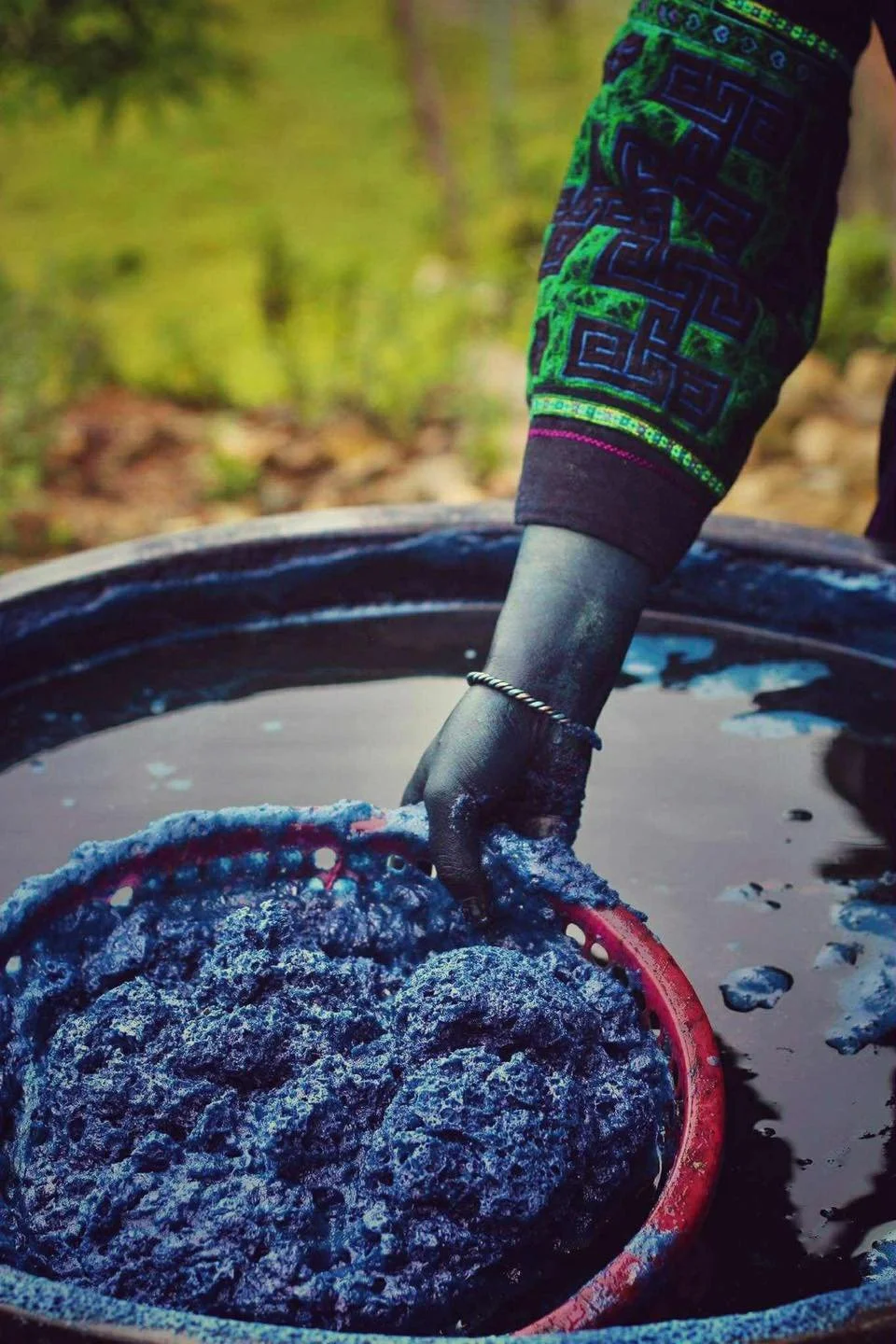
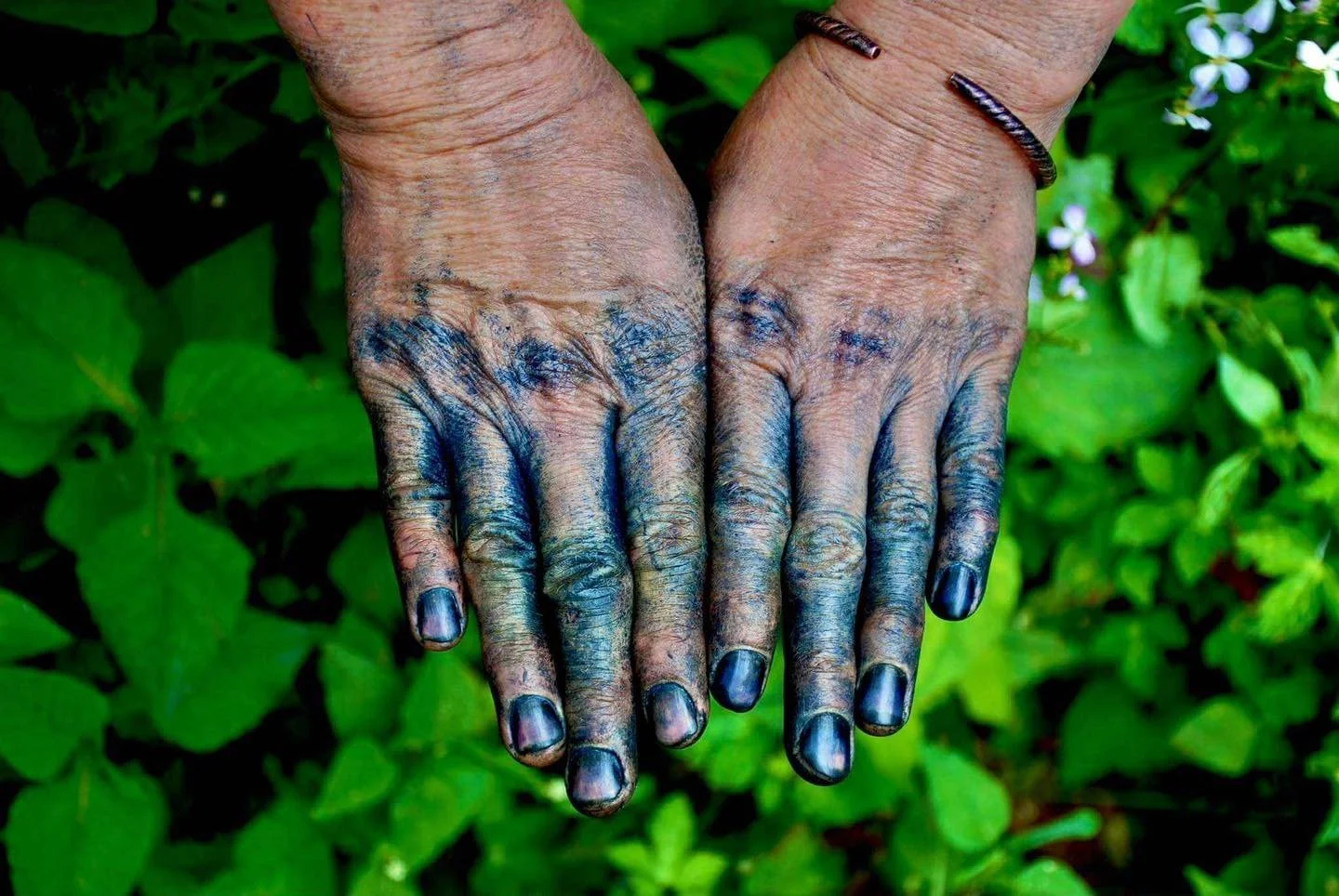
Step into the hills of Sapa and you will notice a colour that lingers on hands, fabric and memory: the deep, living blue of indigo. Among the Hmong and Dao communities, indigo is far more than a dye. It is identity, tradition and a quiet act of resistance. Families grow it in their gardens, tending the plants season after season, and transforming them into cloth that carries memory and meaning.
Secrets Passed Through Generations
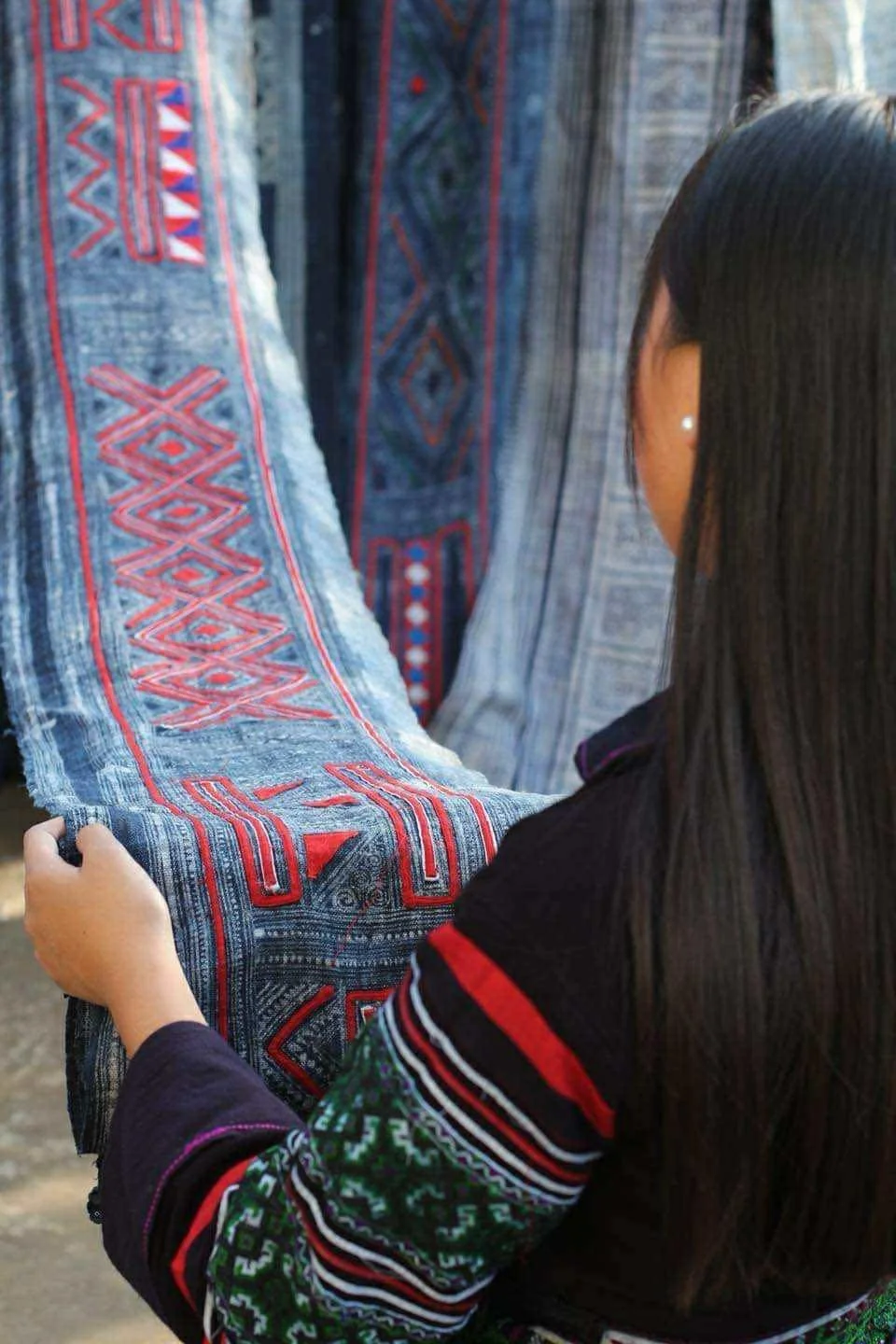
For generations, women have carefully passed down the secrets of indigo. They know how to ferment the leaves, how to coax the blue from green, and how to fold and wax fabric for batik. These skills speak not only of beauty but of belonging. They are not staged performances for visitors, but everyday acts of care, creativity and survival.
Learning Through Experience
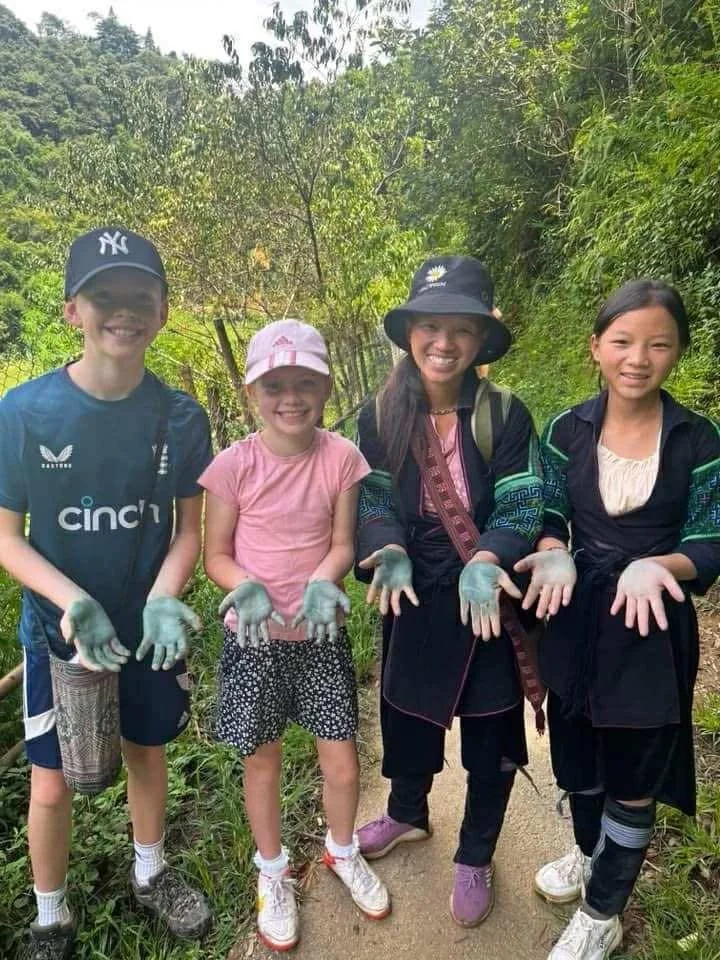
When you join an ETHOS trek or take part in one of our batik workshops, you are invited into this living tradition. You might feel the texture of wax on cloth, stir the indigo vat, or hear stories carried in the rising scent of the dye. It is not about mastering a technique. It is about meeting the land and its people with presence and respect.
Why Slow Travel Matters
Slow travel gives space for this kind of learning. It lingers under your fingernails and stays with you long after the colour fades. It is a chance to connect deeply, not only with a craft, but with the people and place that sustain it.
Join the Journey
We would love to welcome you on a journey that honours both land and lineage. Come walk, sit, listen and learn with us in Sapa.
👉 Send us a message to explore upcoming dates or to find out more about our treks and workshops.
Our Culture, Our Future: Passing Traditions to the Next Generation
In the Black Hmong community, sewing is more than a skill. It is a living link to ancestors, identity and history. From an early age, children learn the patterns, techniques and stories woven into traditional clothing, ensuring their culture remains strong for generations to come.
Learning from a Young Age
In the Black Hmong community, children begin to learn the art of making traditional clothes from an early age. This is not only a practical skill but also a way of weaving identity into every stitch.
More Than Sewing
To sew is to carry the voices of ancestors. The patterns, colours, and techniques hold stories passed down for centuries. By learning these skills, children are not only creating clothes but also keeping culture alive.
Keeping Traditions Strong
Each piece of traditional clothing is a reminder of resilience. Teaching children ensures that these traditions will not fade but will grow stronger with every new generation. In this way, the past and the future are stitched together, securing identity and heritage for years to come.