
Lý Thị Pằng
Known as: Pang
Cultural identity: Black Hmong
Home area: Pa Cheo, Bát Xát
Donations support all three apprentices through one shared education fund.
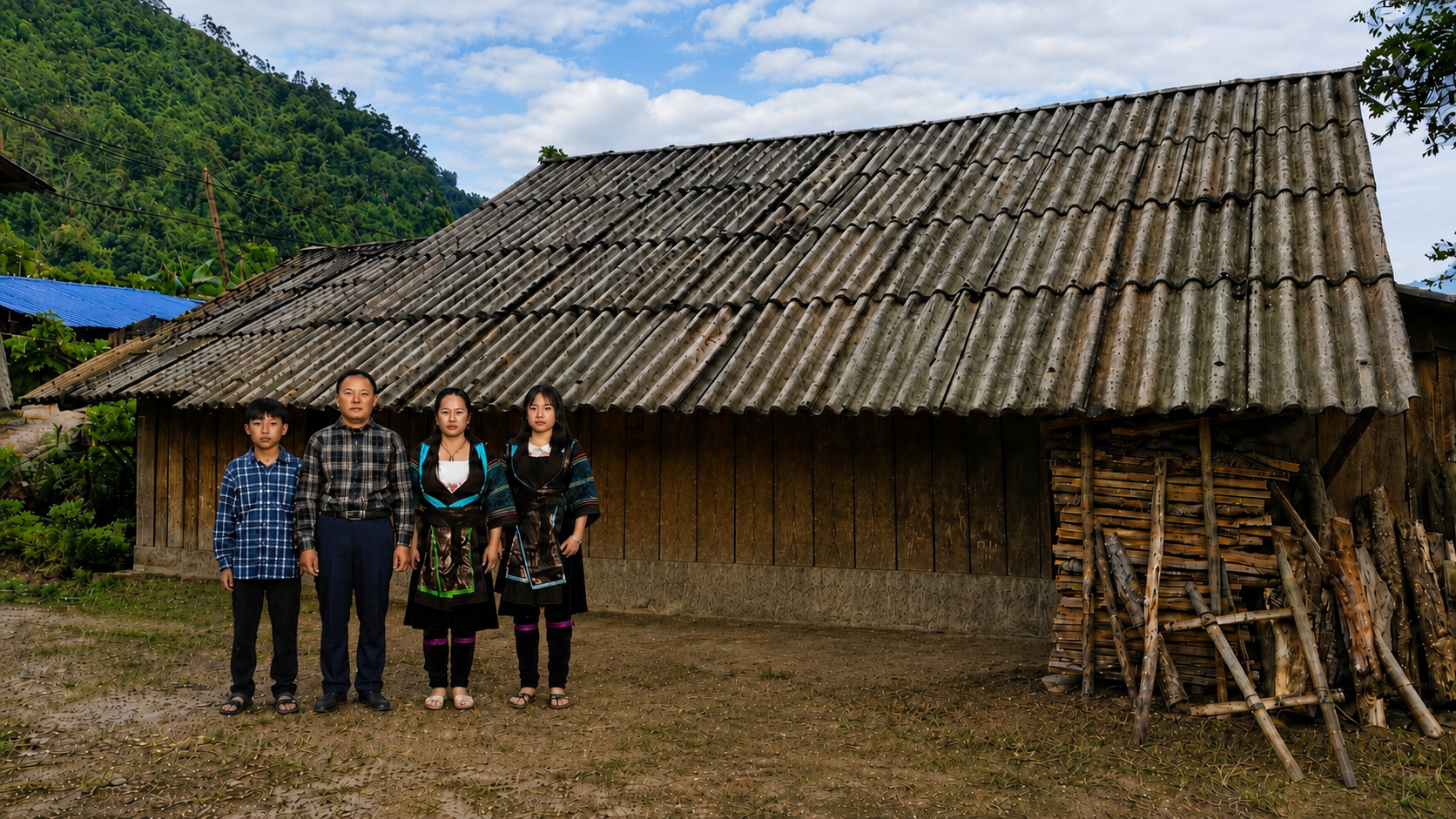
Pang with her family outside their home in Pa Cheo.
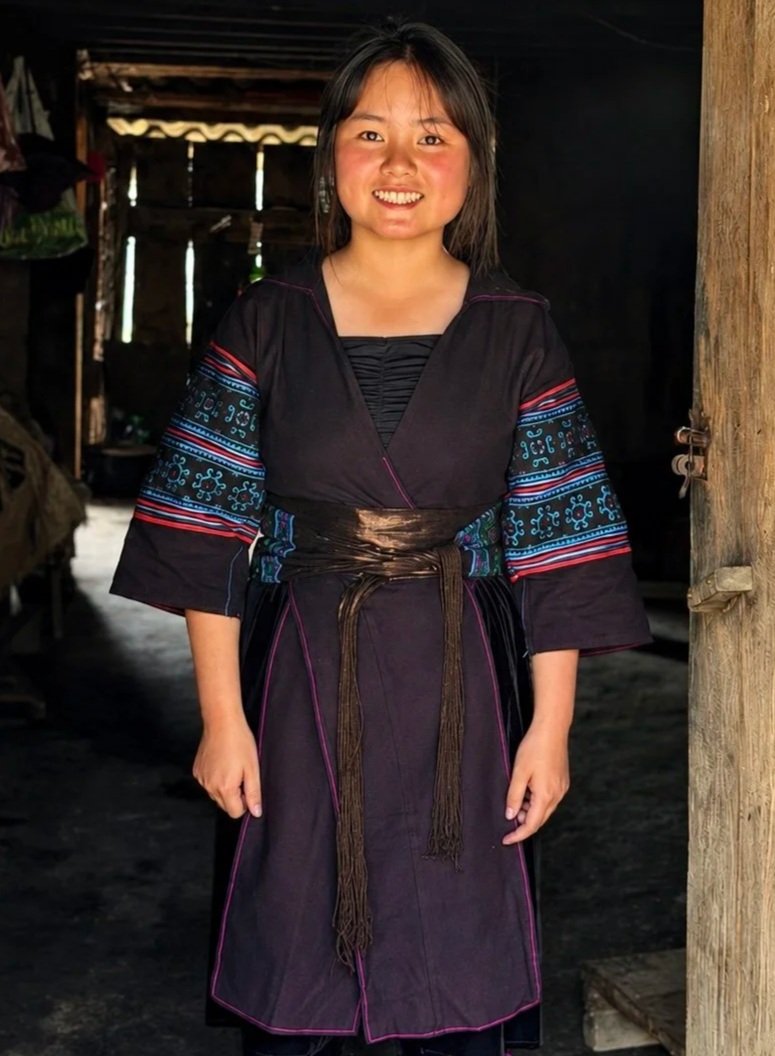
What Pang Already Brings
• Determination: Pang remained in education when most girls from her village had already left and became the only girl there to complete high school.
• Responsibility: She has helped care for her younger brother and feels that her choices may influence his future educational opportunities.
• Black Hmong textile knowledge: She has experience in embroidery, sewing, hemp cultivation and fibre preparation, and understands the role of indigo in traditional clothing.
• Farming and foraging knowledge: She can plant rice and maize, gather firewood, light a fire and recognise several edible forest plants and foods.
• Independence and adaptability: Years of boarding away from home have taught her to manage unfamiliar environments and live apart from her family.
• A thoughtful and careful approach: Pang considers decisions seriously and is honest about uncertainty, risk and the areas in which she still needs to develop.
What Pang Wants to Develop
English language and communication skills
confidence in unfamiliar and professional situations
tourism and guest-care knowledge
digital and computer skills
a clearer understanding of possible careers
the ability to support herself and contribute to her family
Introductory Profile
Pang is a 17-year-old Black Hmong woman from Pa Cheo, a small high-mountain village in Bát Xát District. She grew up in a farming family whose life is closely connected to rice, maize, forest foods and the changing mountain environment. Her parents received very little formal education, but they worked and sacrificed extensively to build a safer home and give their children opportunities they had never received.
From her family, Pang has learnt practical skills including planting rice and maize, gathering firewood, cooking, lighting a fire and recognising edible plants. Her mother also taught her embroidery, sewing and several stages of traditional hemp preparation. Pang understands the work involved in growing fibre, preparing cloth, dyeing it with indigo and creating Hmong clothing by hand.
Education has required considerable determination. Pang began boarding away from home when she was around ten and often travelled long distances between school and her village. As other girls around her left education, she continued and eventually became the only girl from her village to complete high school. After graduation, however, university costs and uncertainty about future employment left her without a clear next step.
Pang chose the ETHOS Apprenticeship after discovering the opportunity through Facebook and contacting Miss Hoa. She saw the programme as a practical path through which she could continue learning while developing skills connected to real employment. She hopes to improve her English, become more confident, learn about tourism and digital work, and discover how the knowledge inherited from her family can contribute to a stable future.