
If you ask someone in Sapa what the weather will be like next Tuesday, you may notice a thoughtful pause followed by a gentle smile. That pause is not rudeness. It is experience. Anyone answering with certainty is simply guessing.
Mountain weather has a habit of doing exactly what it pleases, often changing its mind several times between breakfast and lunch. Bright sunshine can give way to drifting fog, while a gloomy morning sometimes opens into a warm and unexpectedly beautiful afternoon.
Another phrase you sometimes hear when discussing Sapa weather is that you can experience “four seasons in one day”. It is a charming saying and travellers repeat it often, but in truth it is not entirely accurate. Sapa does not genuinely cycle through spring, summer, autumn and winter before dinner. What does happen, however, is that temperatures and conditions can shift quickly and sometimes dramatically. A cool misty morning may warm into pleasant sunshine by midday, only for cloud and drizzle to drift back in during the afternoon. Strong sun can suddenly give way to fog rolling up from the valley, while a chilly morning might become surprisingly warm once the clouds lift. The mountains are simply very good at changing their minds, and visitors quickly learn that flexibility is far more useful than trying to predict the day too precisely.
Rather than worrying too much about the forecast, many travellers find it more helpful to understand the seasonal rhythms of the mountains. Planting season, harvest time, cooler winter months and lush summer landscapes each bring a different character to village life.
If you are curious how Sapa changes through the year, our guide to the seasons explores what is happening in the fields, forests and communities each month.
In 2016 we decided to conduct a slightly nerdy experiment. For twenty days we carefully followed the forecasts provided by Accuweather and Windy, two widely respected weather apps that are used by travellers, outdoor enthusiasts and professionals around the world. Each day we compared what the apps predicted with what actually happened in Sapa. Over those twenty days the forecast was wrong sixty two percent of the time. Not slightly off, but catagorically incorrect!
One morning promised clear skies but delivered dense fog thick enough to hide entire mountains. On another day the forecast warned of rain from morning until evening yet we spent most of the afternoon walking through villages under pleasant blue skies. Curious to see whether technology had improved the situation, we repeated the same experiment in late January 2026. The results were remarkable in their consistency. For thirteen consecutive days the forecast failed to match the conditions we experienced on the ground.
None of this is really the fault of the forecasting apps. Predicting weather in complex mountain terrain is notoriously difficult, and the landscapes around Sapa present a perfect storm of variables that can confuse even sophisticated meteorological models.
When One Valley Has Fog and the Next Has Sunshine
Another peculiarity of mountain weather is that conditions can change dramatically over very short distances. In Sapa it is entirely possible for one valley to sit beneath a thick blanket of fog while the ridge above enjoys bright sunshine and clear skies. Walk two kilometres uphill and you may emerge from cool, damp cloud into warm blue sky, sometimes with temperatures ten degrees Celsius higher than the valley floor you just left behind. The reverse can happen just as easily. This constant interplay between altitude, wind and cloud means that the weather you experience in one village may bear little resemblance to conditions in the next valley. It also explains why forecasting for the region can feel a little like trying to predict the mood of the mountains themselves.
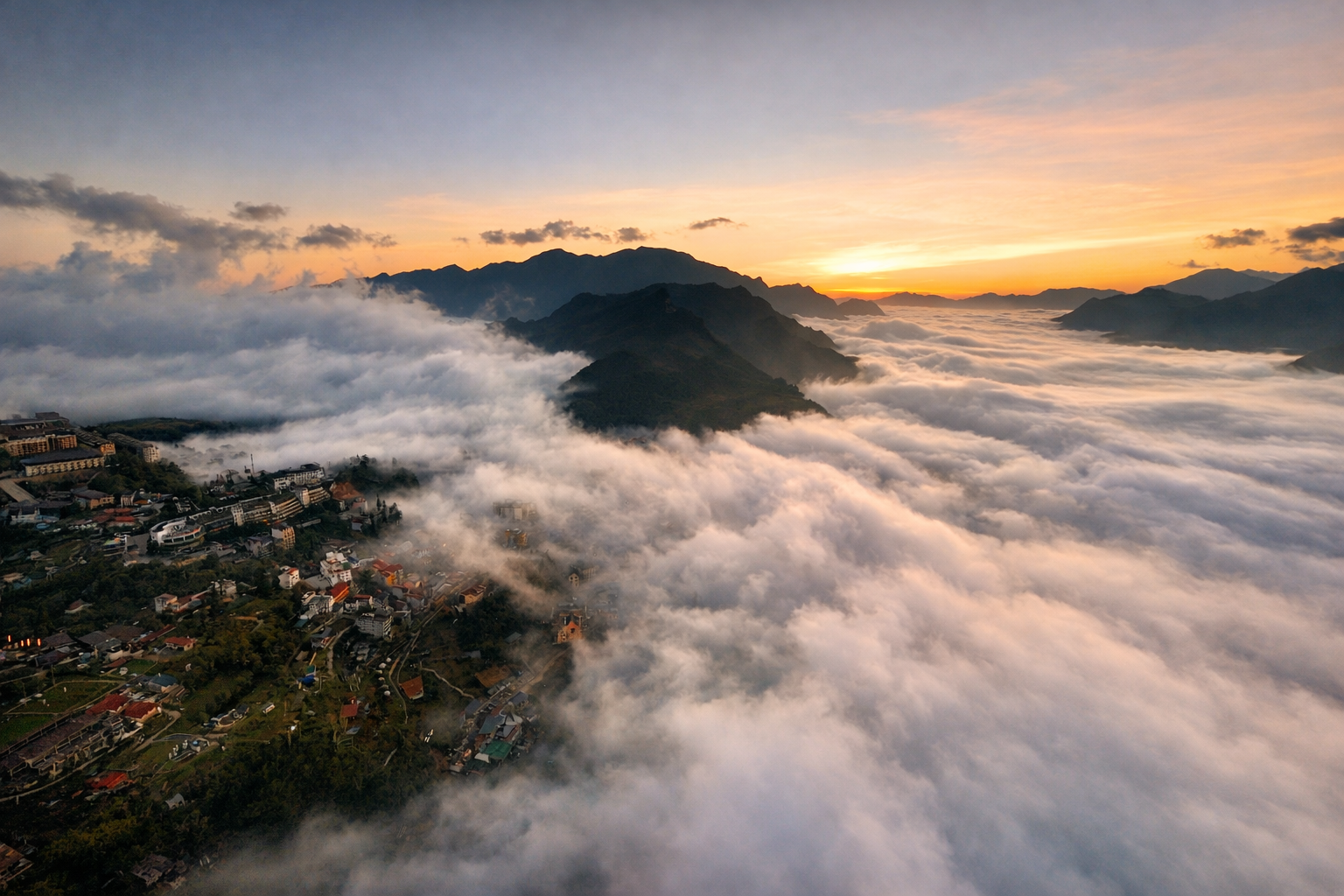
Aerial shot of Sapa town showing sunset on the mountain peaks and valleys covered in dense fog.
Weather and Climate. Two Very Different Things
When travellers ask what the weather will be like on a particular date, they are usually thinking about the short term conditions that might greet them on arrival. In scientific terms this is weather, which refers to the atmospheric conditions we experience over hours or days.
Climate, on the other hand, describes the long term patterns that develop over decades. It reflects how temperature, rainfall and seasonal shifts generally behave in a particular region.
Weather can change quickly and dramatically, especially in mountainous terrain where wind patterns, altitude differences and local geography can influence conditions from one valley to the next. Climate tends to move more slowly and reveals broader trends that are far more reliable when planning travel.
In practical terms this means that asking about the exact weather on a particular day is often pointless. Even the most advanced forecast models struggle to predict mountain conditions more than a few days in advance, and even then the results should be taken with a generous pinch of salt.
Climate patterns, however, give us a useful framework for understanding the rhythms of the year in Sapa.
El Niño, La Niña and a Climate That Is Becoming Harder to Predict
Even those longer climate patterns are now facing new layers of complexity. Large scale global systems such as El Niño and La Niña influence weather across the entire Pacific region, including much of Southeast Asia.
El Niño occurs when sea surface temperatures in the central and eastern Pacific Ocean become warmer than usual. This seemingly distant shift in ocean temperature alters atmospheric circulation patterns across the tropics, often leading to drier conditions in parts of Southeast Asia while bringing heavier rainfall to other regions.
La Niña represents the opposite phase of this cycle. During La Niña events the same areas of the Pacific become cooler than average, which strengthens trade winds and can bring increased rainfall and cooler conditions across large parts of Southeast Asia.
These cycles typically occur every few years and can significantly influence seasonal weather in Vietnam. In some years they may intensify rainfall during the wet season or extend periods of dry weather, while in other years they shift the timing of seasonal transitions in ways that are difficult to predict.
As if this were not complicated enough, climate change is adding further variability to the system. Rising global temperatures are influencing ocean currents, atmospheric circulation and the distribution of rainfall across the planet. Scientists are observing that extreme weather events are becoming more common in many regions, while seasonal patterns that were once relatively stable now show greater variation.
In mountainous environments like Sapa the effects can feel particularly pronounced. Slight changes in regional climate patterns can translate into significant shifts in local weather, especially when altitude, steep terrain and complex wind flows are already involved.
All of this means that forecasting conditions in the mountains has become even more challenging than it once was.
Sapa Through the Seasons. A Month by Month Overview
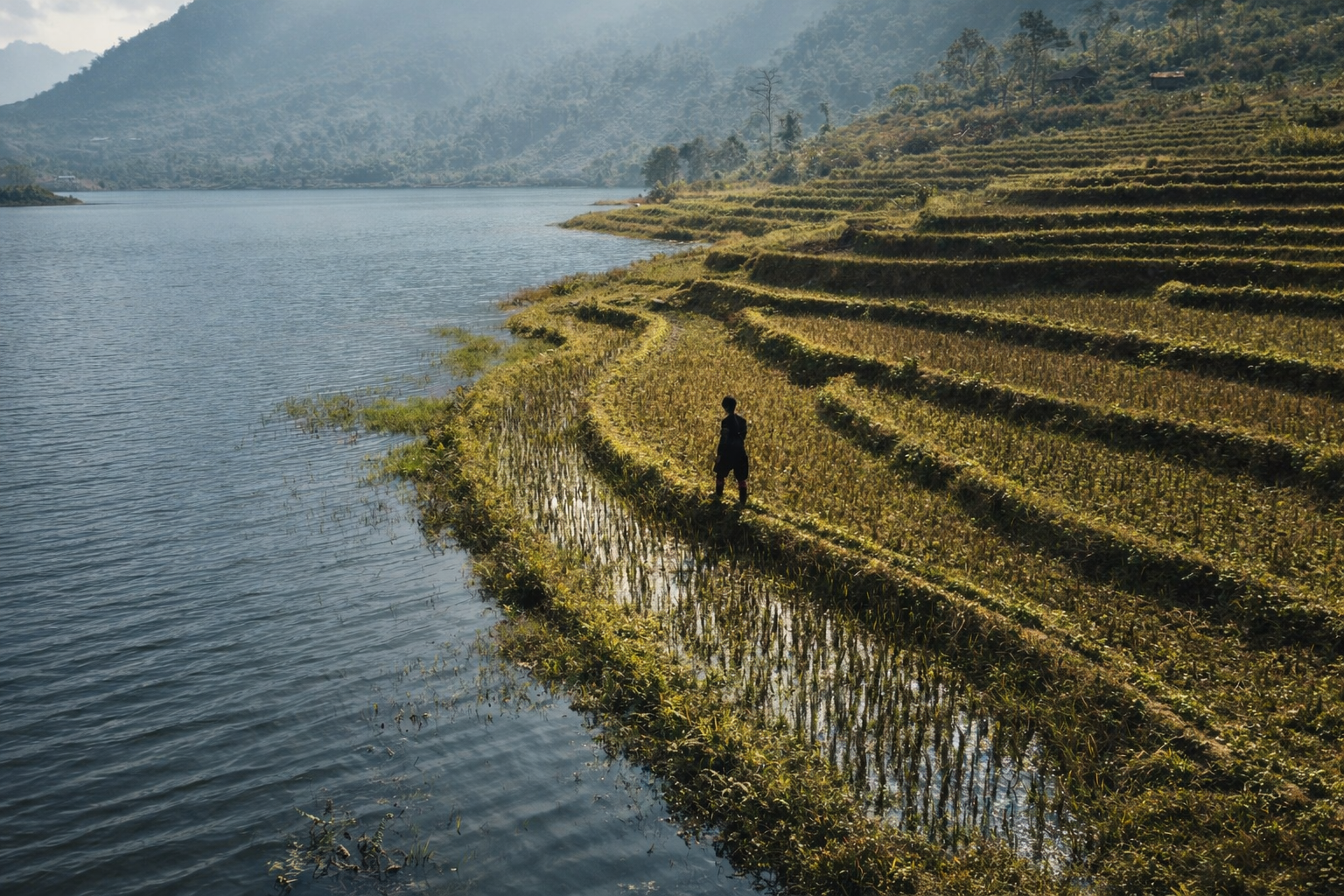
Autumnal scenes in Sapa
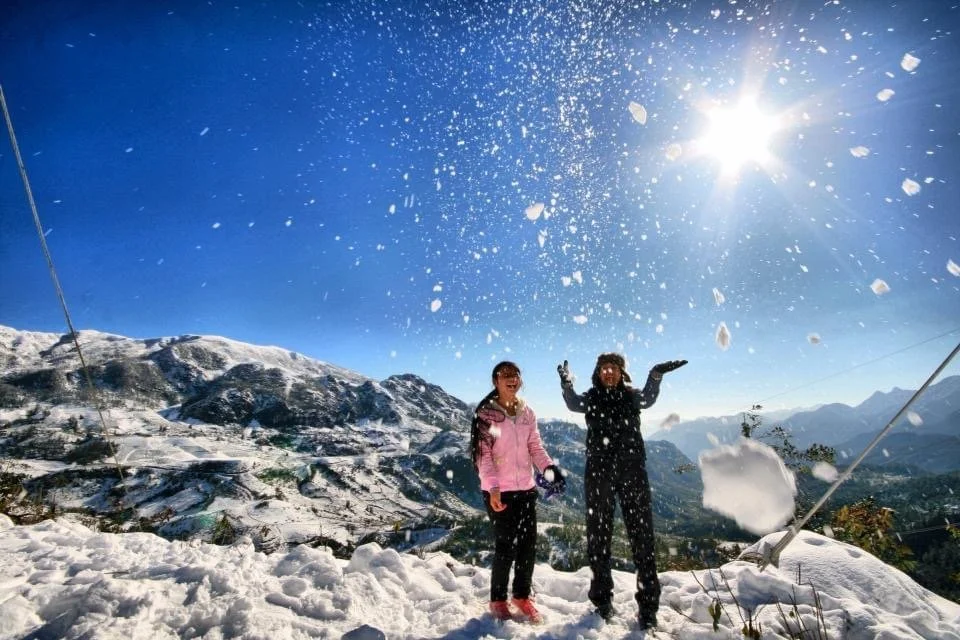
Snowfall in the Hoang Lien Son Mountains, Sapa.
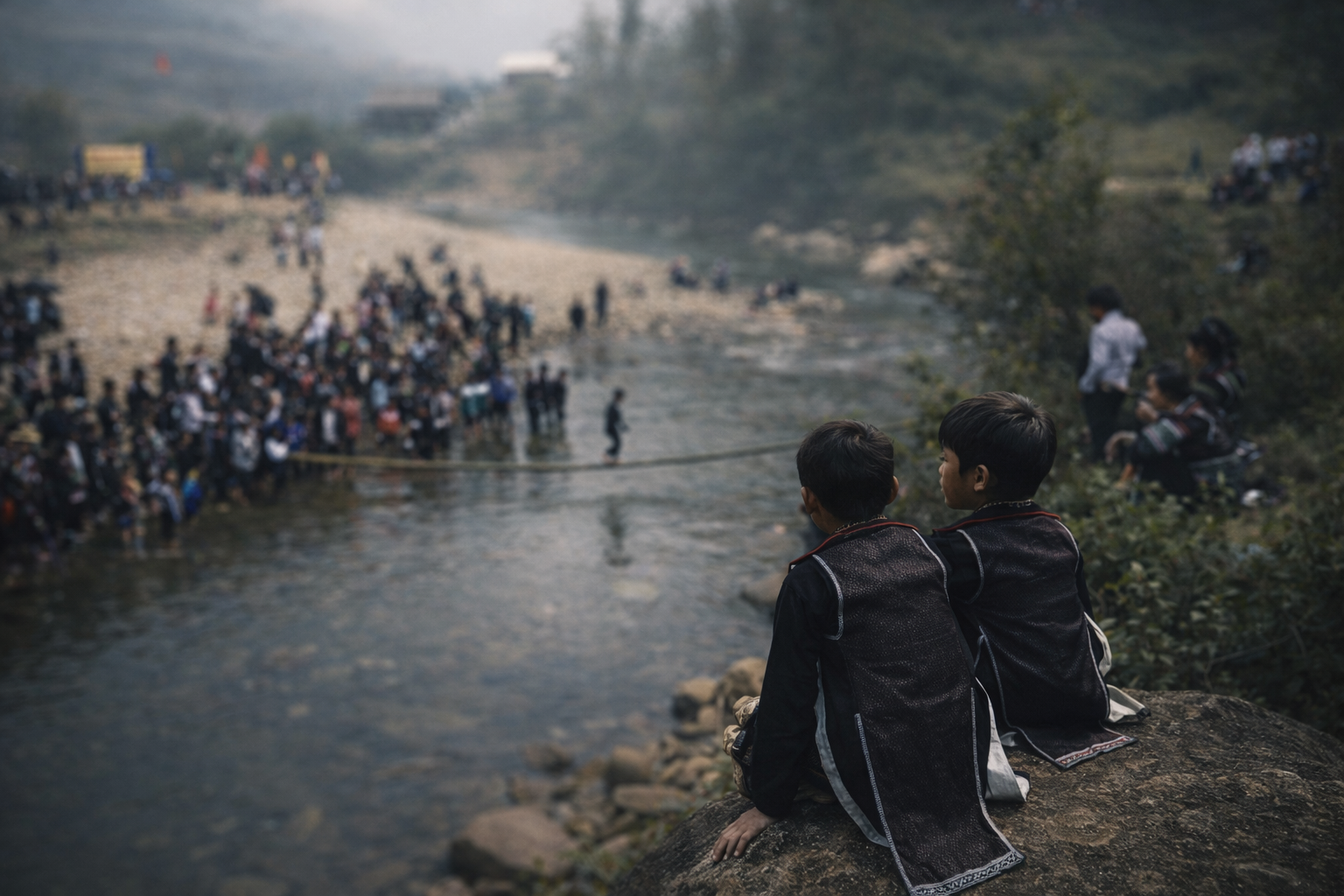
Misty weather during one of Sapa’s lunar new year festivals.
Although daily weather remains unpredictable, the overall rhythm of the year in Sapa follows a fairly consistent climatic pattern that reflects the broader seasonal cycles of northern Vietnam.
January is typically the coldest month of the year, with crisp daytime temperatures and nights that occasionally approach freezing in higher villages. On rare occasions frost forms across the hillsides and ice may appear on exposed surfaces.
February often remains cool and can be quite misty, with clouds drifting slowly through the valleys and giving the landscape a quiet, atmospheric feeling.
March gradually marks the arrival of spring as temperatures begin to climb and farmers start preparing their fields, although periods of cloud and light drizzle are still common.
April is widely considered one of the most comfortable months to visit, as mild temperatures combine with increasingly green landscapes while rainfall remains relatively moderate.
May introduces the early stages of the warmer season. Rice planting begins across the terraces and the countryside becomes lively with agricultural activity as occasional showers start to appear.
June brings warmer and more humid conditions as the growing season gathers momentum. Rain becomes more frequent but the landscape turns intensely green as the terraces fill with young rice.
July continues this warm and humid pattern with regular afternoon showers, although sunny mornings are still common and the countryside remains lush and vibrant.
August can feel quite tropical at times, with humid days and occasional thunderstorms that usually pass quickly, leaving behind clear air and dramatic cloud formations.
September is often one of the most visually striking months as the rice terraces turn golden ahead of harvest and temperatures begin to ease slightly after the height of summer.
October frequently delivers some of the clearest skies of the year, creating excellent trekking conditions as cooler air arrives and harvest activities fill the valleys.
November becomes cooler and quieter once the harvest is complete, with misty mornings often rolling across the hills before giving way to calm afternoons.
December brings crisp mountain air and increasingly cool nights as winter slowly returns to the region.
Yet despite these broad patterns, it is worth remembering that any month could still surprise you with brilliant sunshine or damp fog.
That is simply the nature of mountain weather.
Why the Weather Might Not Matter
While most travellers hope for blue skies and perfect visibility, the real magic of Sapa has very little to do with the colour of the sky.
What makes this region truly special is the people who call these mountains home. Hmong, Dao and other communities have shaped these landscapes through generations of farming, artistry and cultural tradition, and their daily lives continue regardless of whether the day brings sunshine, mist or gentle rain.
Many of our most memorable journeys with travellers have taken place during weather that was far from ideal. Treks through drifting cloud can feel mysterious and peaceful, while a light rain often adds atmosphere to the terraces and forests.
Some of our strongest reviews were written by guests who visited during conditions that might have worried them before arrival. Once they experienced the warmth of village hospitality, shared meals with local families and learned about farming traditions and crafts, the weather became little more than a background detail.
When the focus shifts from scenery alone to culture, connection and learning, every season has something valuable to offer.
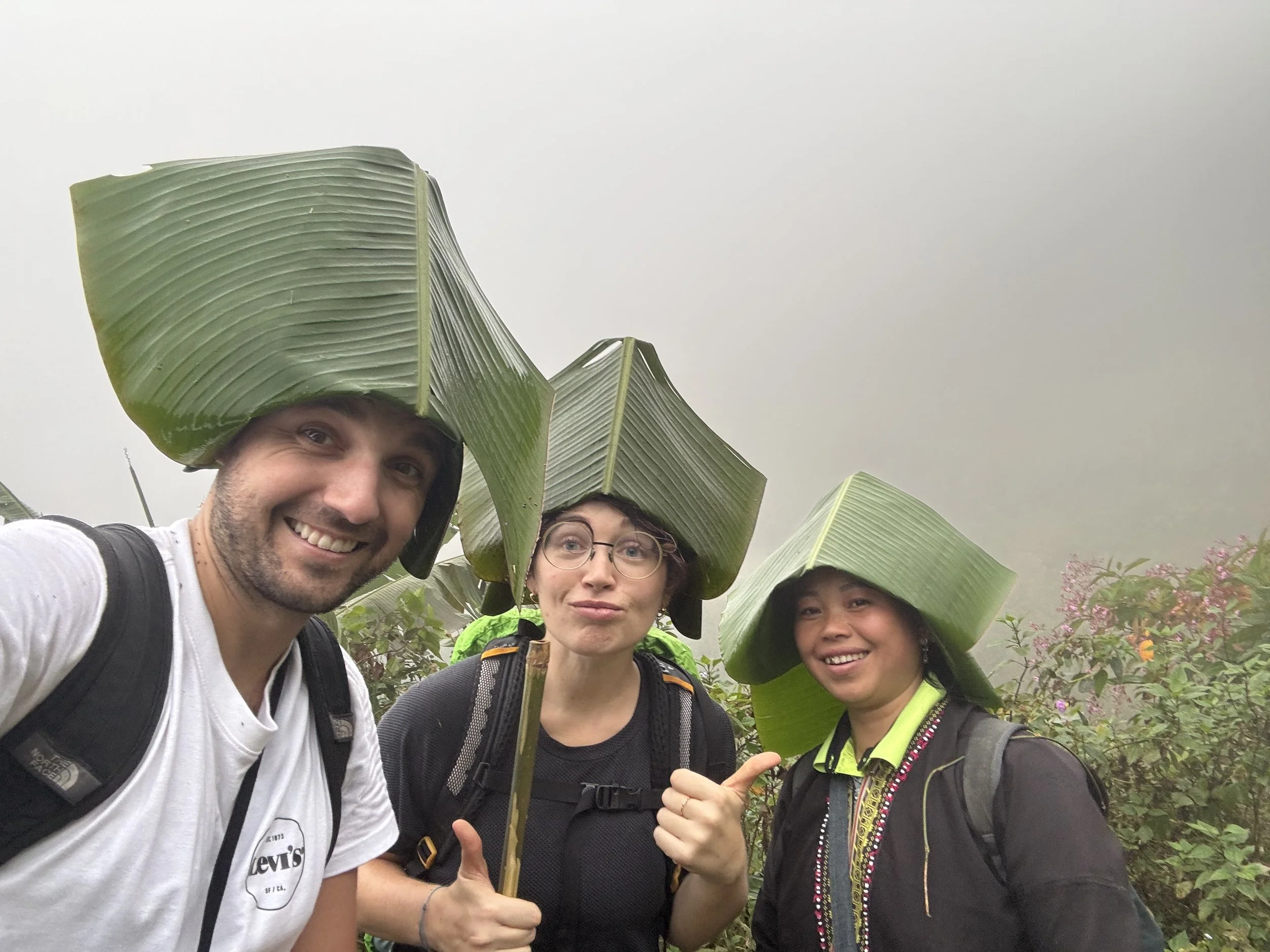
Impromtu rain hats
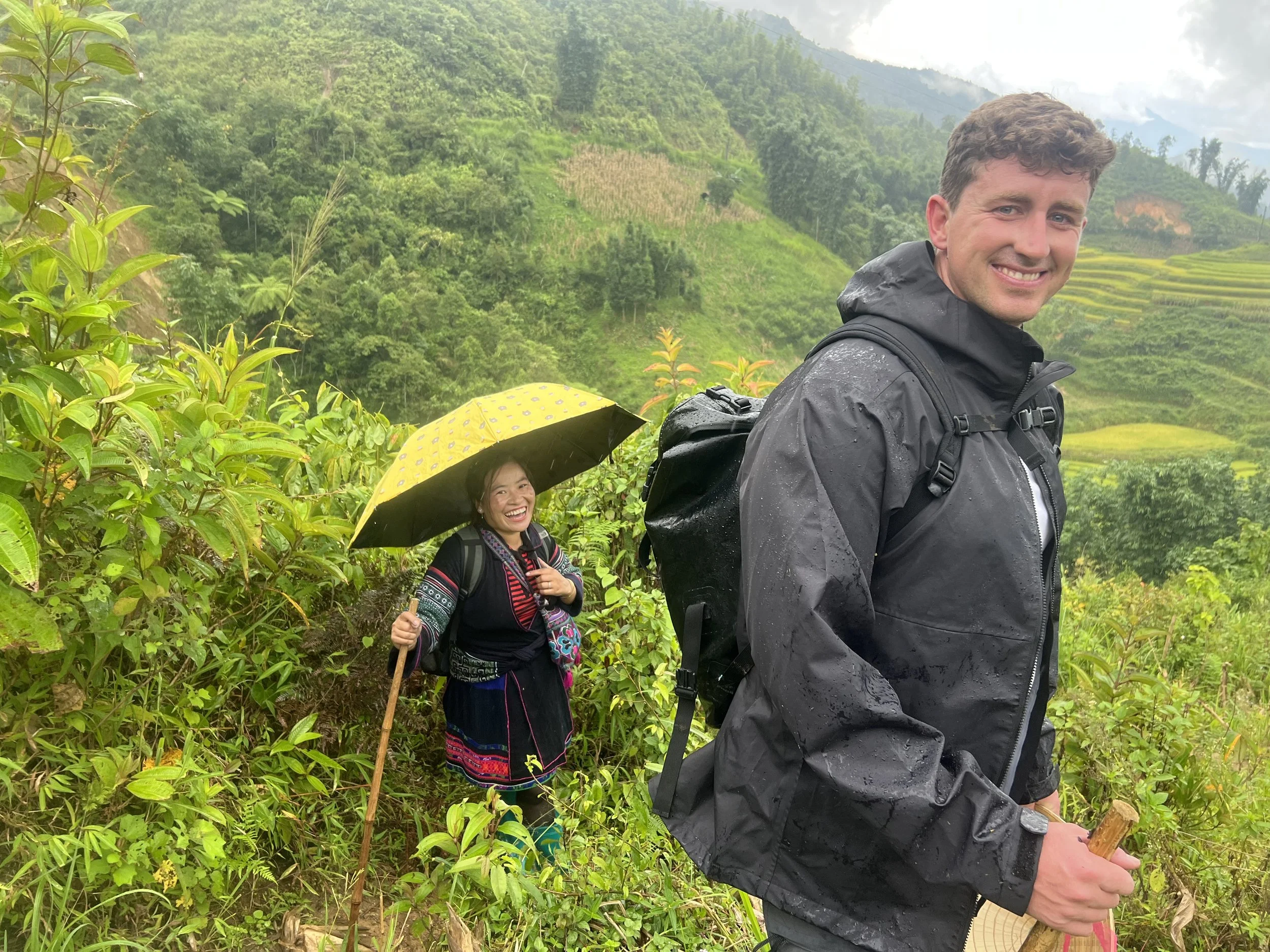
Rainy day trek
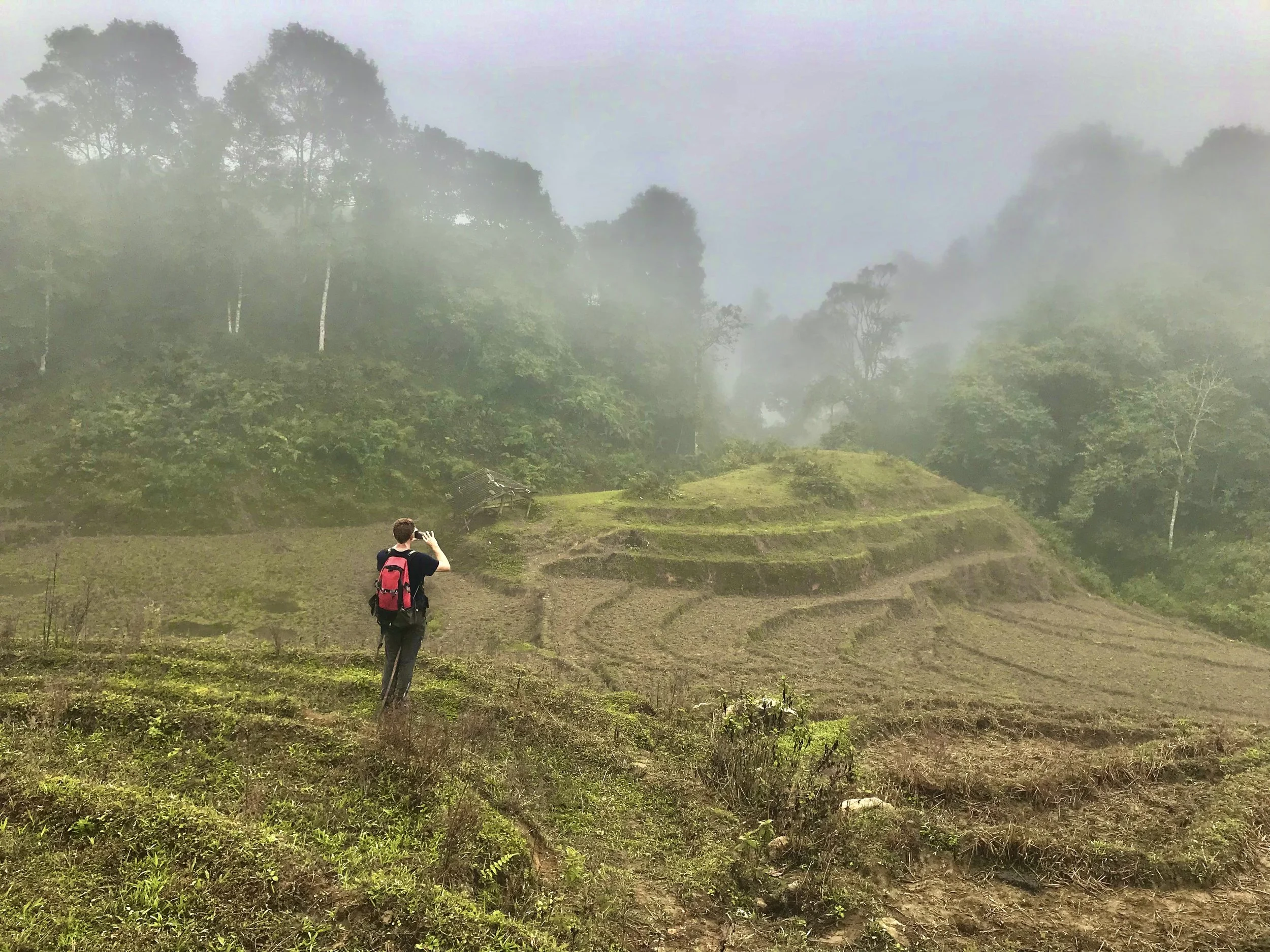
The misty mountain in Sapa
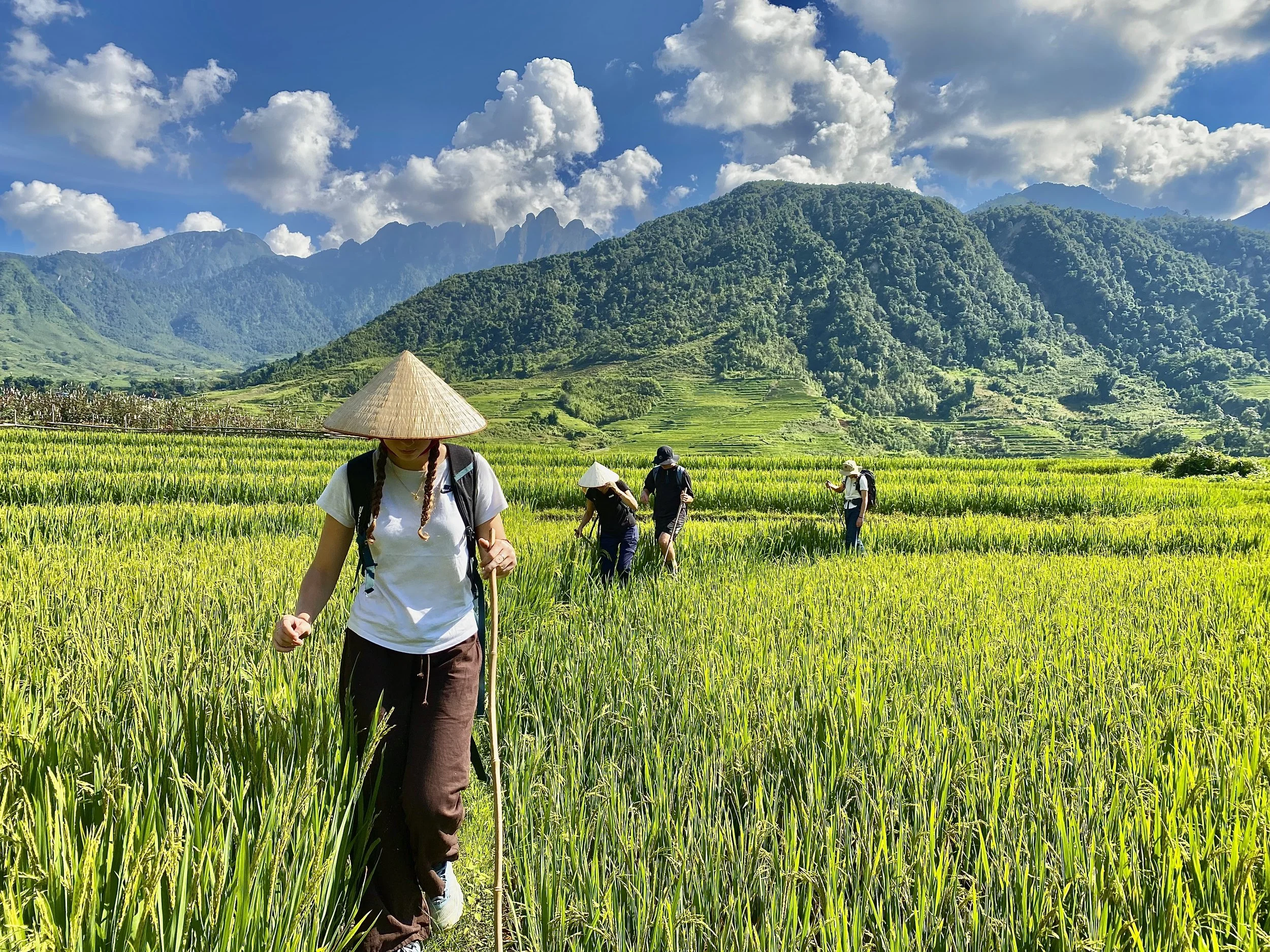
Summer trek through the rice terraces
Mountain Extremes and Curious Choices
That said, the mountains do occasionally remind us that they deserve respect.
A warm and humid day in August can feel almost tropical as the terraces glow with deep shades of green, while a January morning in the high villages may bring biting winds and temperatures that flirt with freezing.
One winter day we watched a long line of visitors waiting to board the cable car to Fansipan. At the summit the temperature had dropped to minus twelve degrees, yet several travellers were dressed in short skirts and light jackets.
They seemed far more concerned with capturing the perfect photograph than with staying warm, while the mountain quietly demonstrated that it was not particularly interested in fashion.
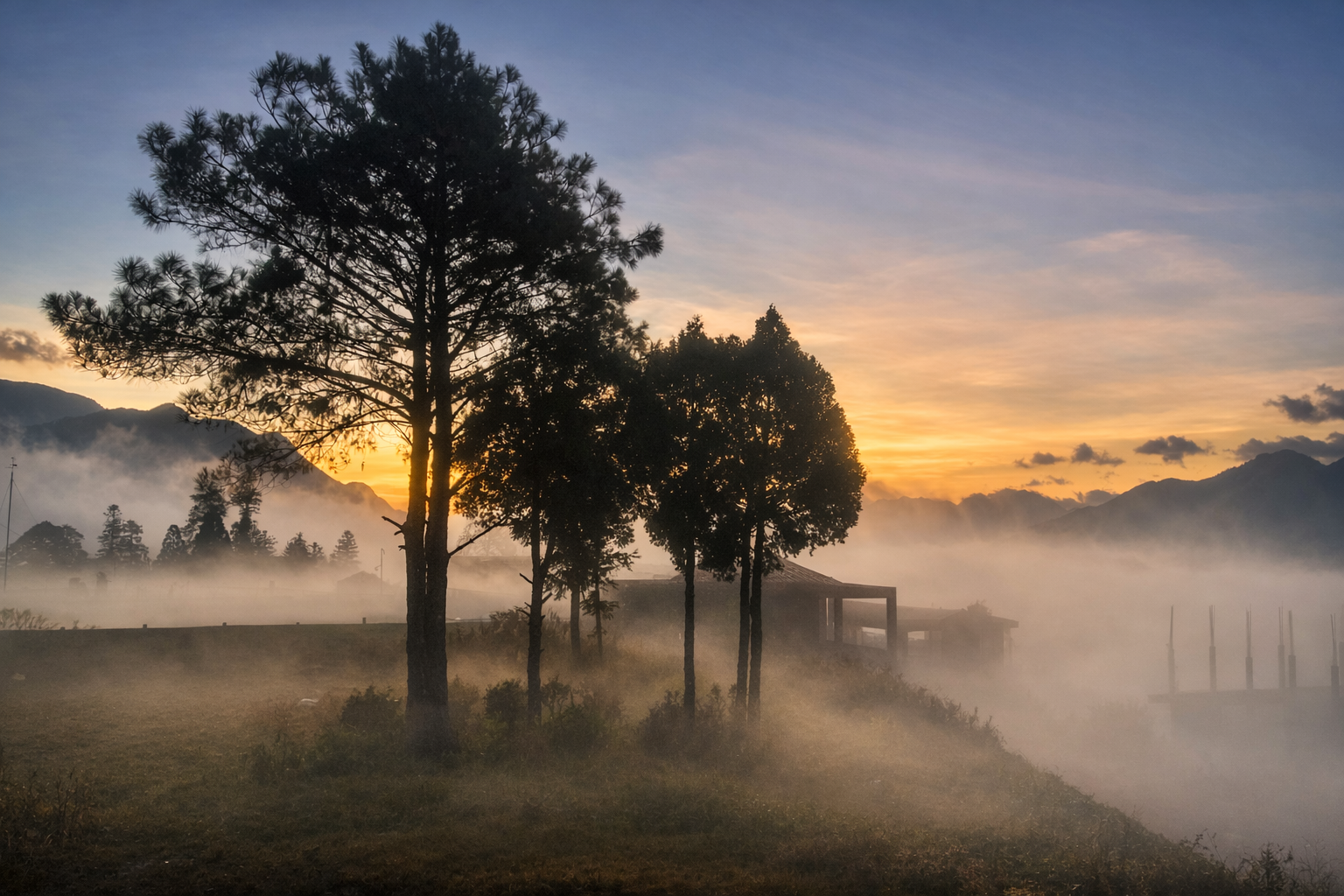
Morning mist over Sapa town
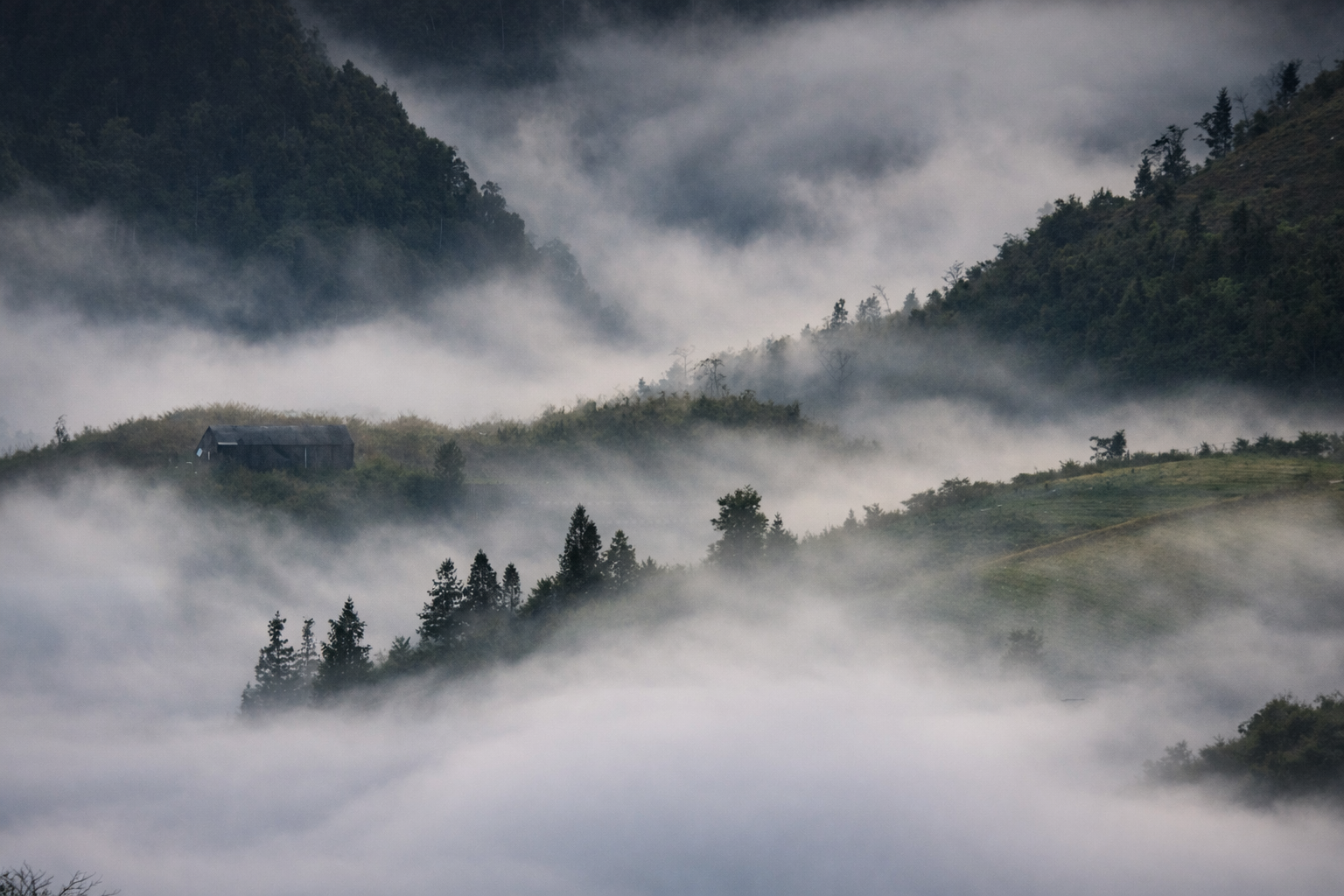
Fog over the Sapa forests
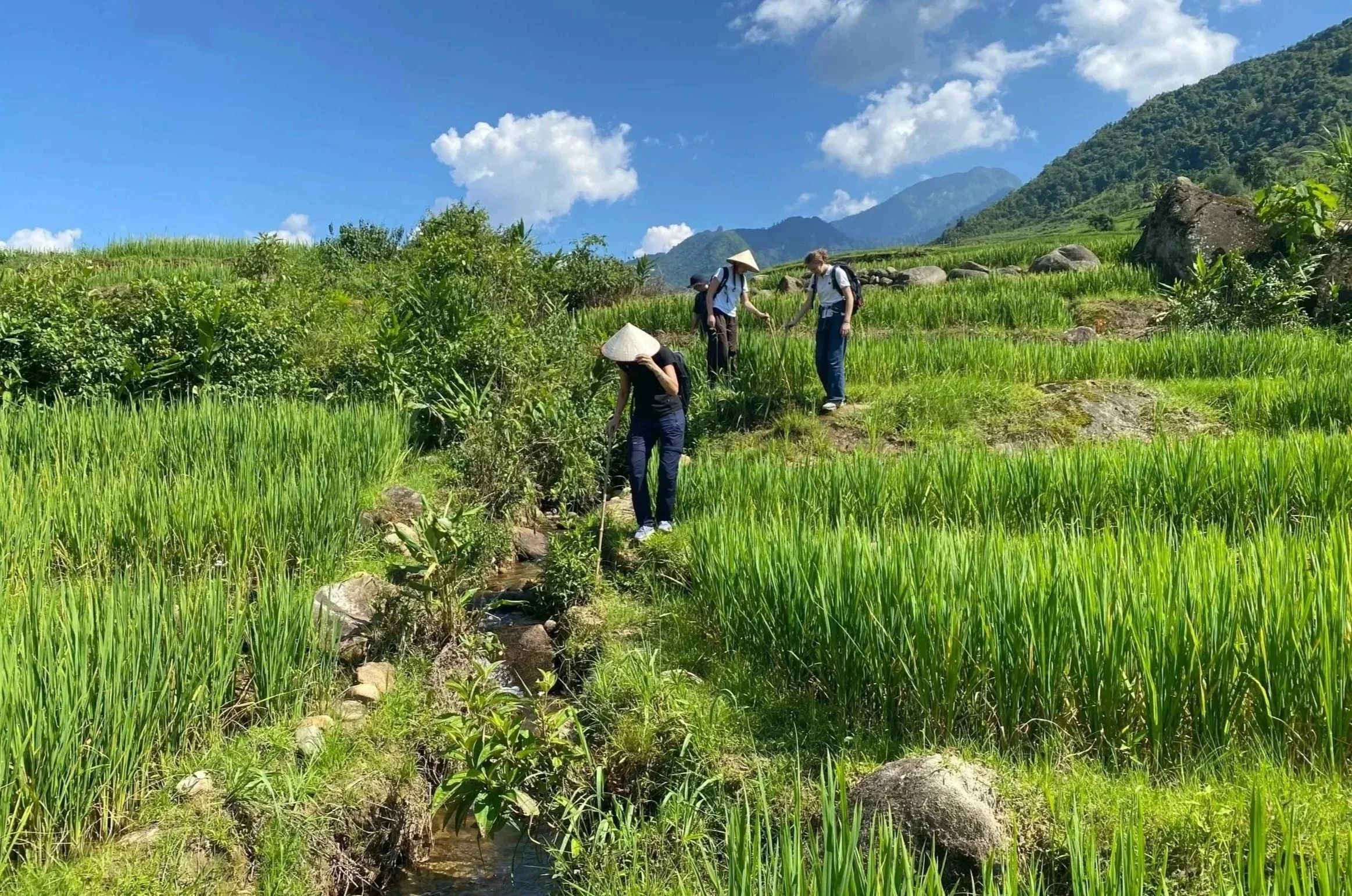
Sapa Rice terraces in June
Curious About the Best Time to Visit Sapa?
If you would like a deeper look at how the landscape changes through the year, including rice planting, harvest seasons and the quieter months in the mountains, we have put together a detailed guide that explores Sapa month by month. It looks beyond the daily forecast and focuses on the seasonal rhythms that shape life in the hills.
You can explore the full guide here:
https://www.ethosspirit.com/sapa-through-the-seasons
It offers a more detailed look at what is happening in the fields, forests and villages throughout the year, helping you choose a time that suits the kind of experience you are hoping to have in the mountains of northern Vietnam.
Layers, Preparation and a Sense of Humour
The secret to enjoying the mountains is simple preparation. Layers allow you to adapt quickly as temperatures change, and comfortable walking shoes together with a light waterproof jacket will handle most situations you might encounter.
Fortunately Sapa also offers a practical solution for travellers who arrive slightly under prepared.
Outdoor clothing can be surprisingly inexpensive here. It is not unusual to see Patagonia style puffer jackets for a few dollars or North Face hats and gloves available in the market stalls. They might not survive a full ski season in the French Alps but they are more than capable of keeping you comfortable during a trek through the hills of northern Vietnam.
In the end there is a simple principle that experienced travellers tend to follow.
There is no bad weather. Only bad preparation.
If you arrive with suitable clothing, a flexible mindset and a sense of humour, the mountains will reward you with experiences that go far beyond whatever forecast appeared on your phone.
Learn what to pack for a Sapa visit.
Plan Your Trek in Any Season
Plan Your Trek in the Mountains
Weather in Sapa may change its mind, but the mountains, villages and people are here all year. If you would like to experience the region on foot with local Hmong and Dao guides, explore our trekking journeys and community experiences. Every season offers something different, and every walk is shaped by the people who call these hills home.
