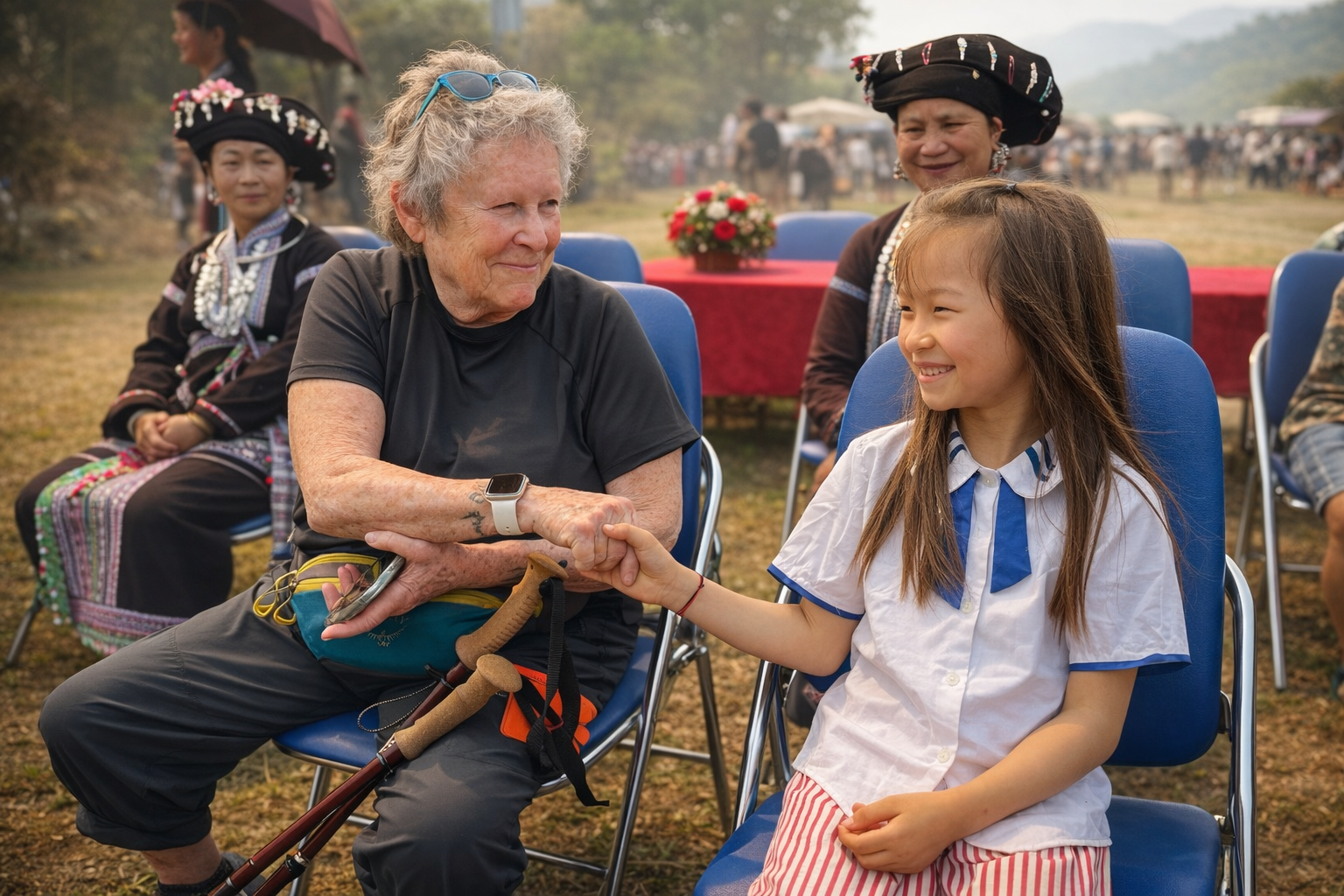
In the quiet valleys of northern Vietnam, where rice fields stretch out along winding streams, the Lao ethnic community of Tam Đường lives in close rhythm with water. Here, water is not only a resource but a spirit, a blessing, and a thread that ties together agriculture, ritual, and daily life. Each year, as spring draws to a close and the dry season loosens its grip, villages gather to celebrate Bun Vốc Nặm, a water-splashing festival that embodies renewal, gratitude, and hope for the seasons ahead.
Though the Lao population in Vietnam is small, their cultural life remains deeply rooted and expressive. Bun Vốc Nặm is not simply a festival but a living inheritance, carried forward through gesture, song, and shared memory. It is a time when elders pass down stories, when laughter echoes through bamboo houses, and when water becomes a language of blessing.
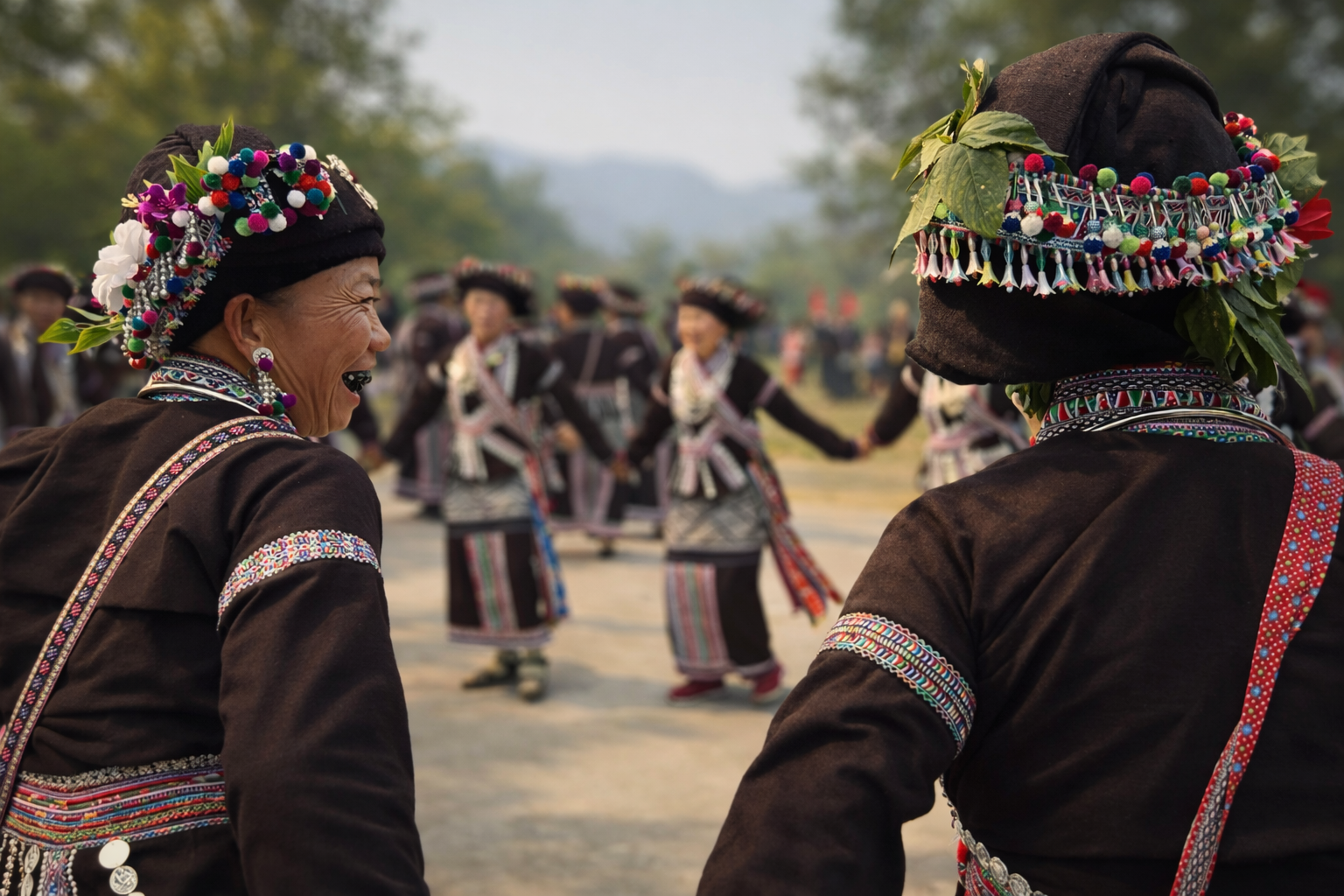
A Festival of Renewal and Water
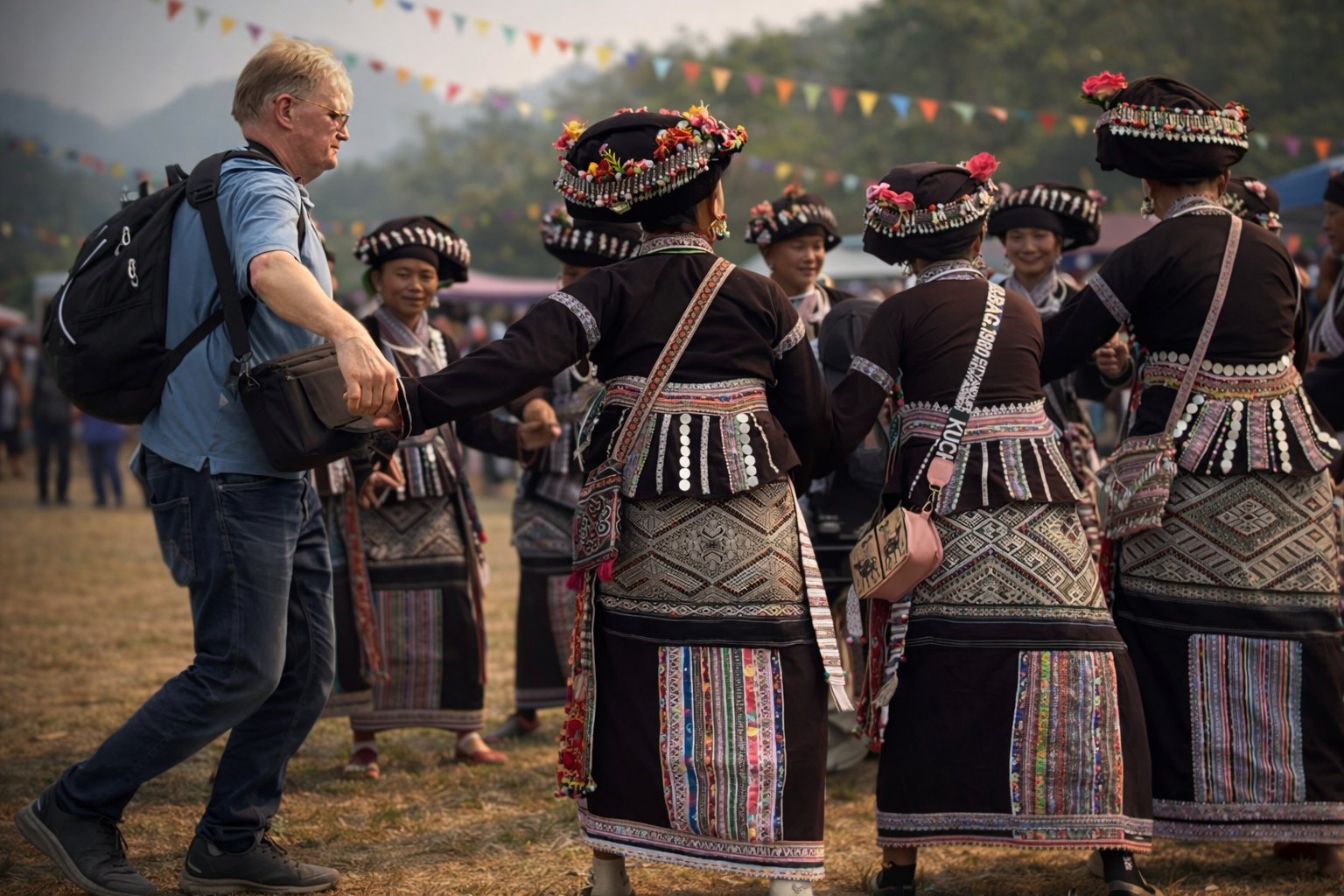
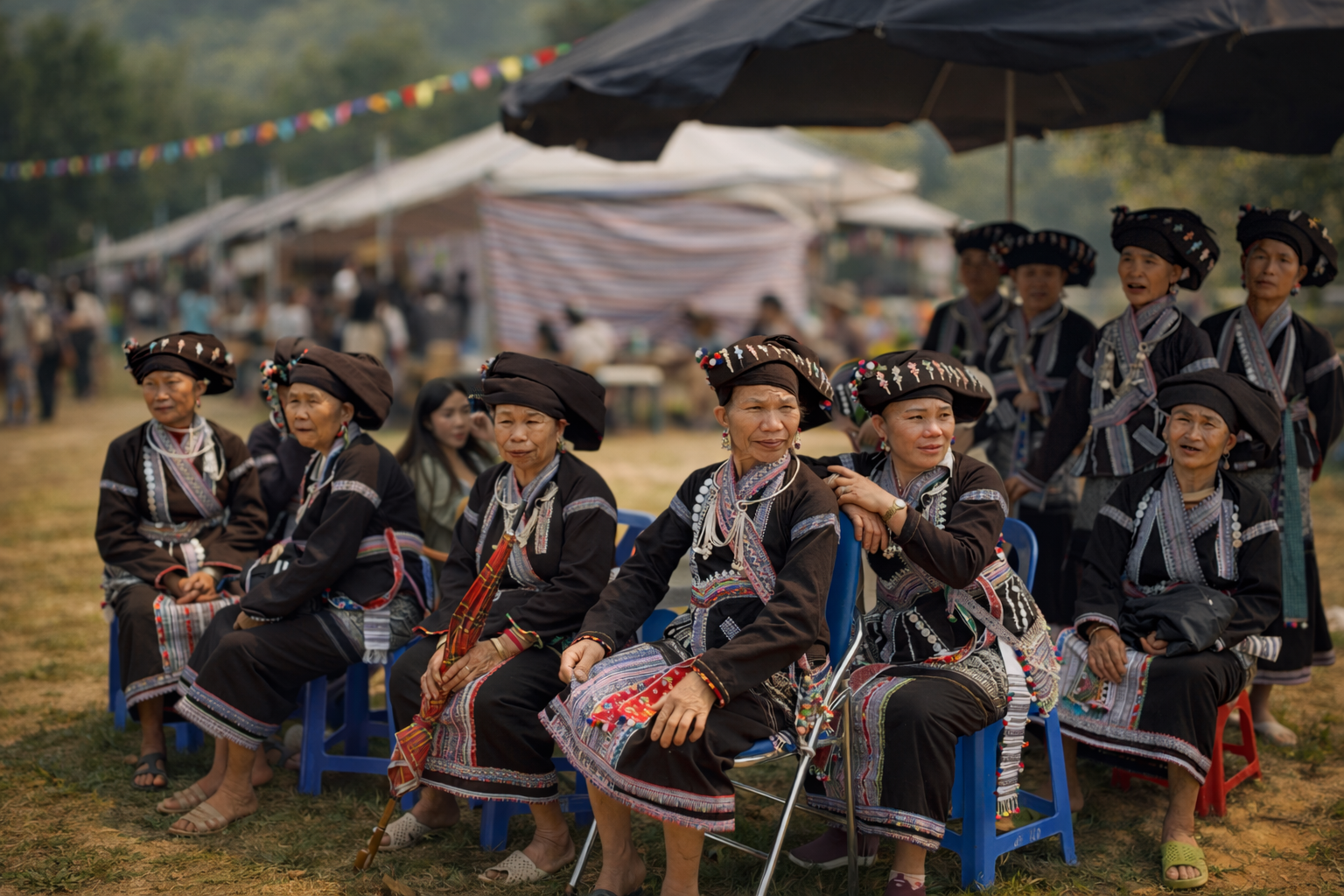
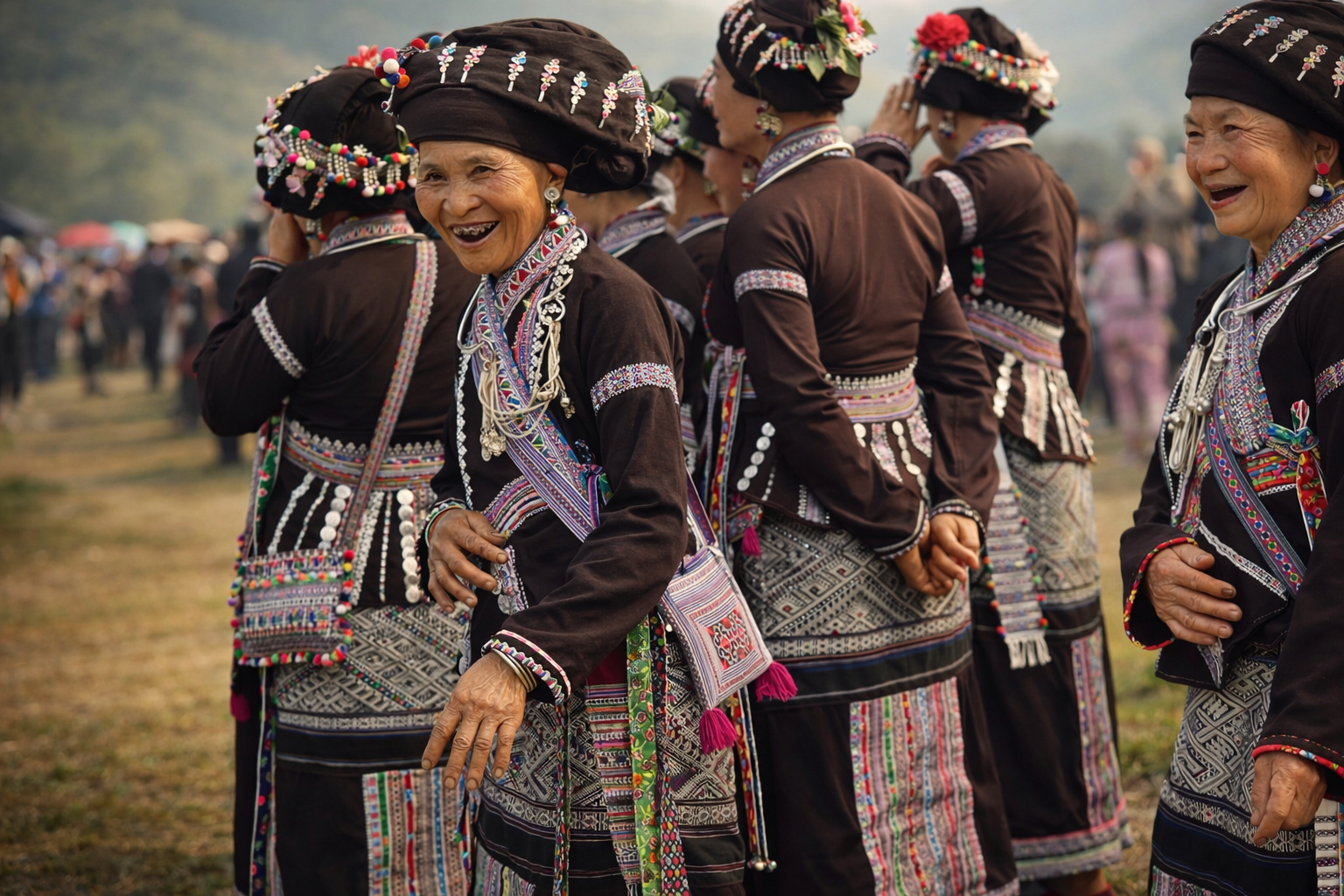
On the first day of Bun Vốc Nặm, the village awakens early, the air still cool with mountain mist. Families gather near streams or communal spaces, dressed in traditional garments, often adorned with handwoven patterns that speak quietly of identity and place. The atmosphere carries a sense of anticipation, of something both playful and sacred.
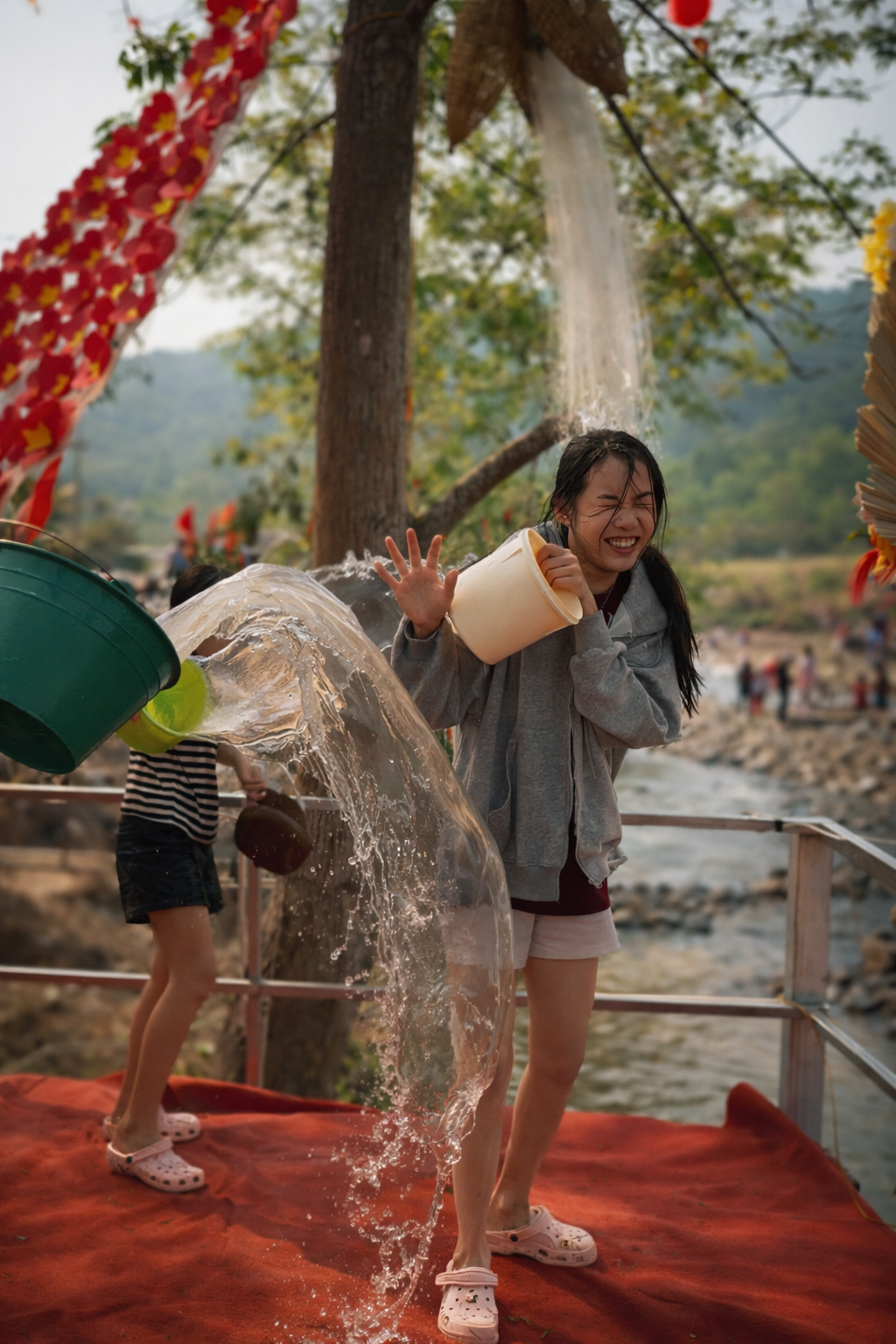
Water splashing begins gently, almost ceremonially, as elders sprinkle water over one another in a gesture of cleansing and goodwill. This act symbolises the washing away of misfortune, illness, and hardship from the past year, making space for prosperity and health. As the morning unfolds, the ritual softens into laughter, and the entire village becomes immersed in joyful chaos, with children darting between adults and friends drenching one another with buckets, bowls, and cupped hands.
The meaning remains rooted in respect, even in the height of the revelry. Water is never thrown carelessly but shared as a blessing, a wish for abundant harvests, favourable weather, and strong community bonds. Each splash carries intention, echoing the Lao belief that water connects the physical and spiritual worlds.
Throughout the day, music flows as steadily as the streams themselves. Traditional songs rise and fall in melodic patterns, accompanied by drums that guide the rhythm of communal dances. Lao dances are fluid and expressive, each movement reflecting harmony with nature. Hands curve like flowing water, feet step in time with unseen currents, and dancers move with a quiet grace that invites participation rather than performance.
Games weave through the celebrations, bringing together generations in friendly competition. Laughter becomes a constant presence, and visitors often find themselves gently drawn into the circle, learning through doing, through shared joy rather than observation.
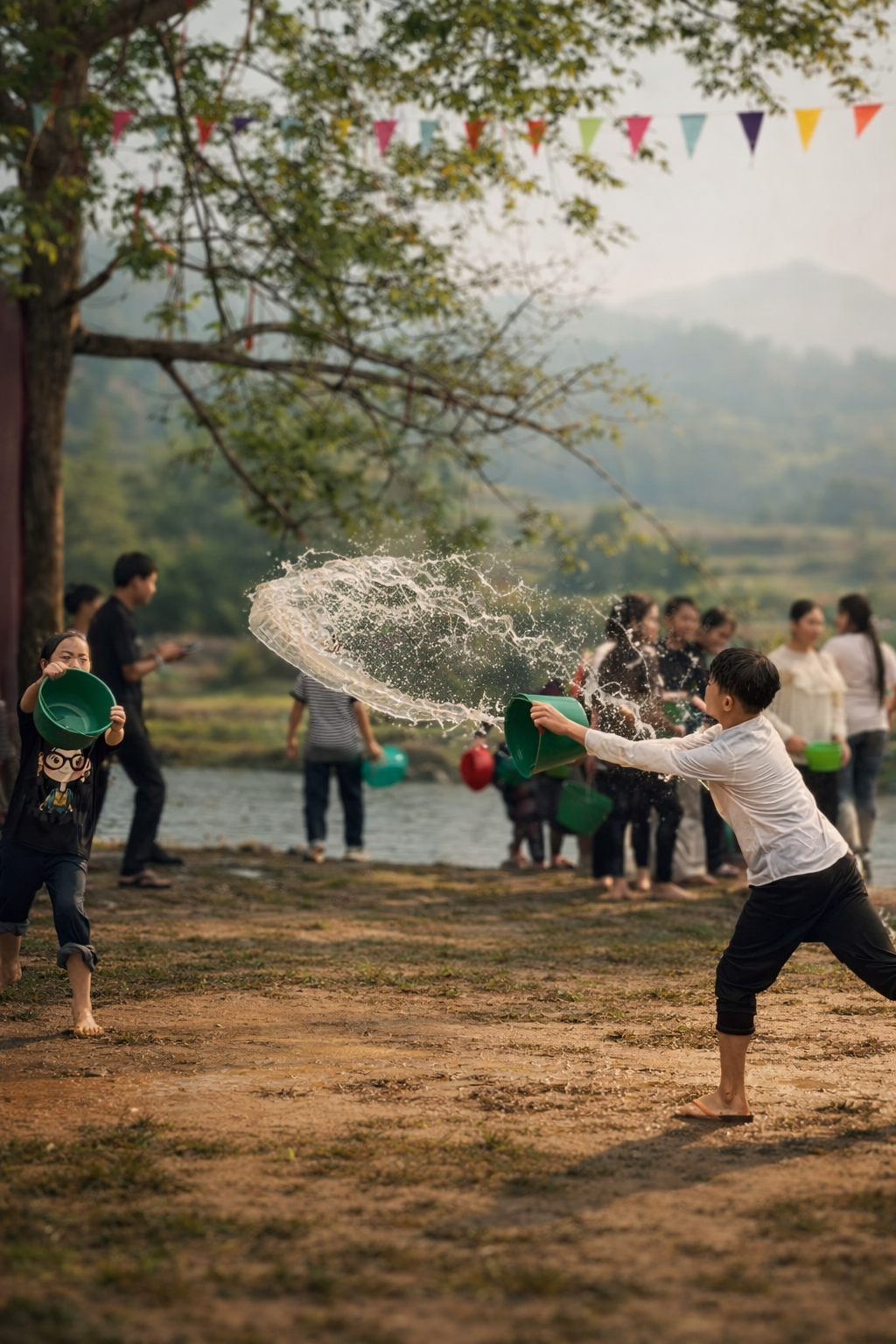
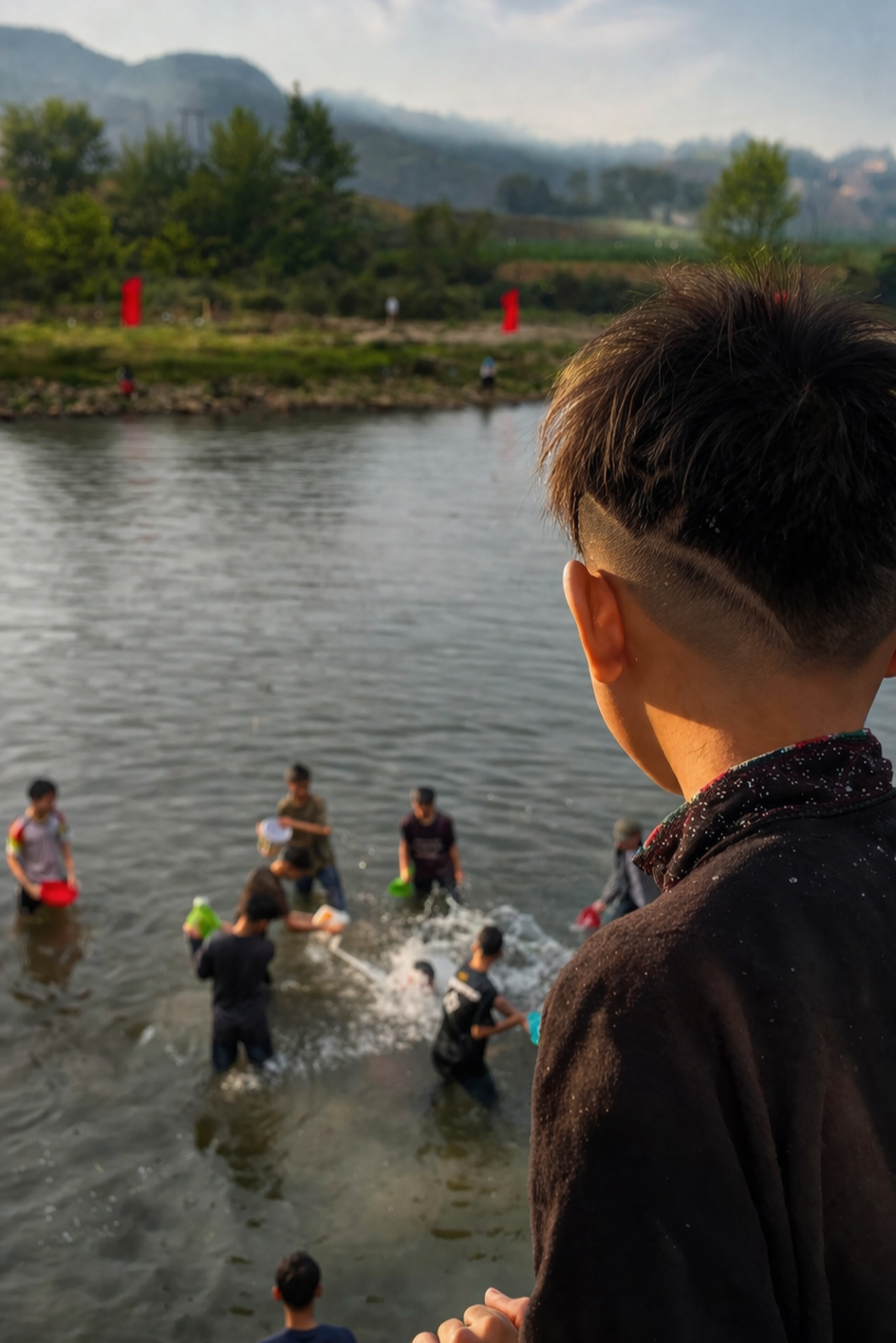
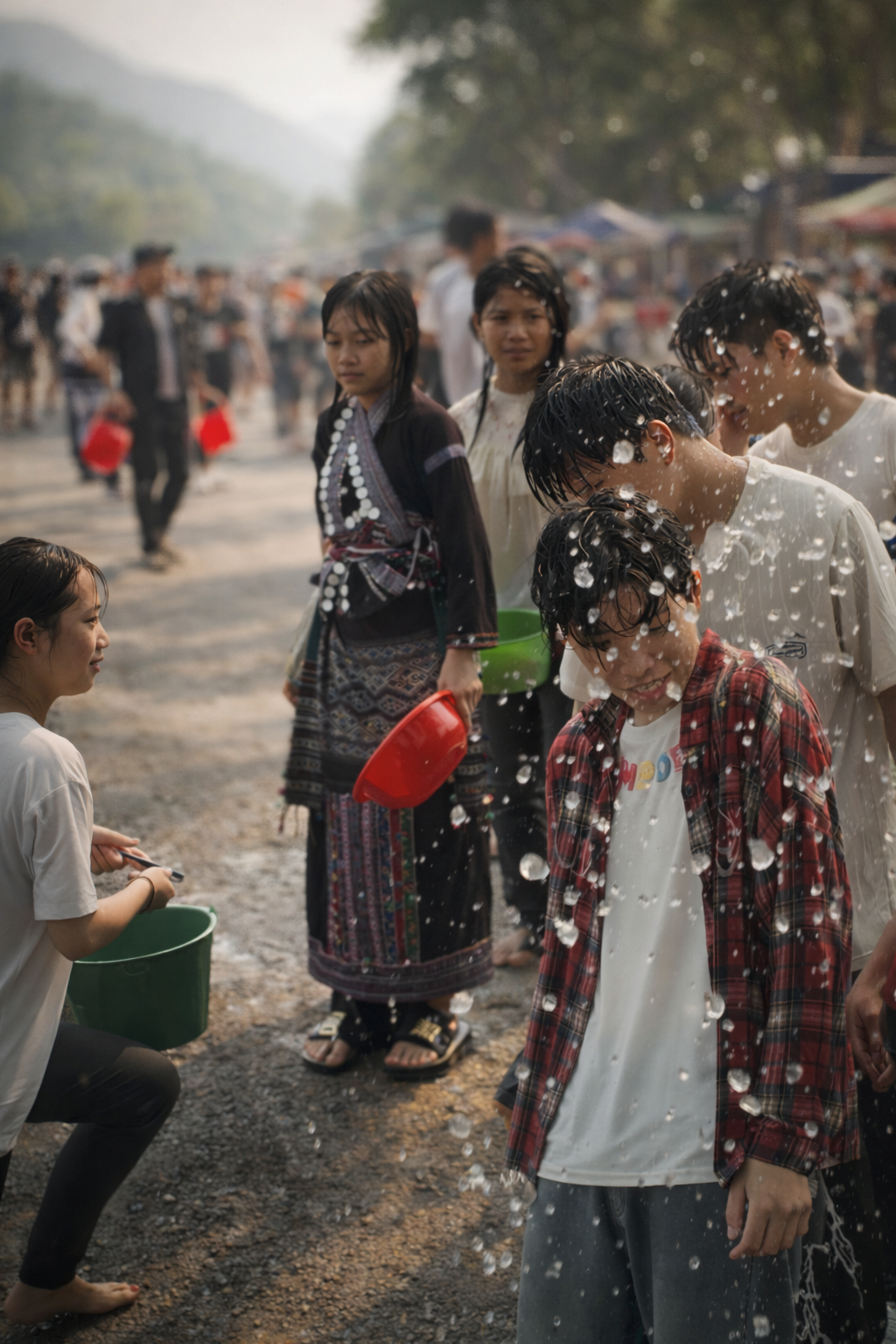
When Water Turns to Play | Youth, Laughter, and Courtship
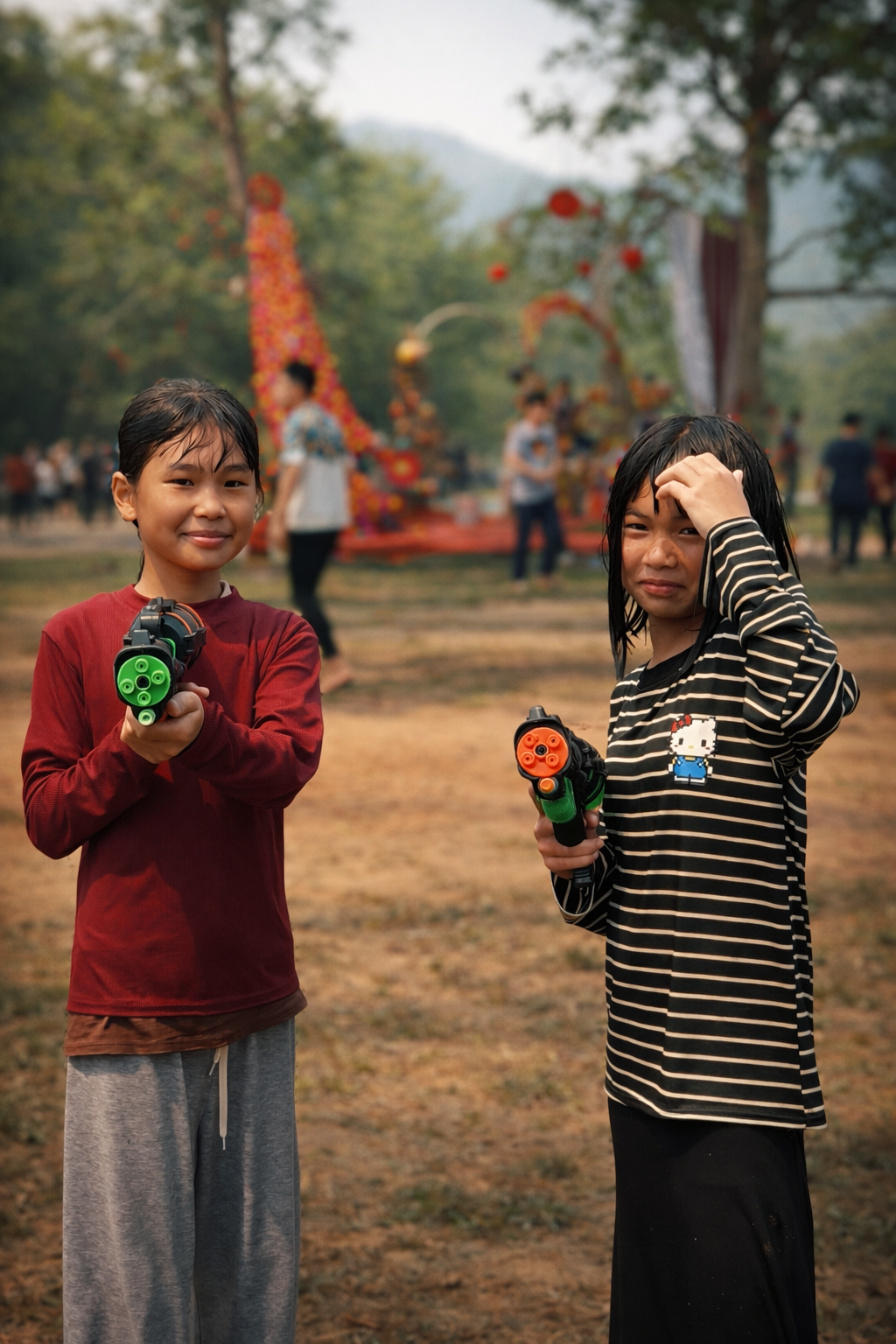
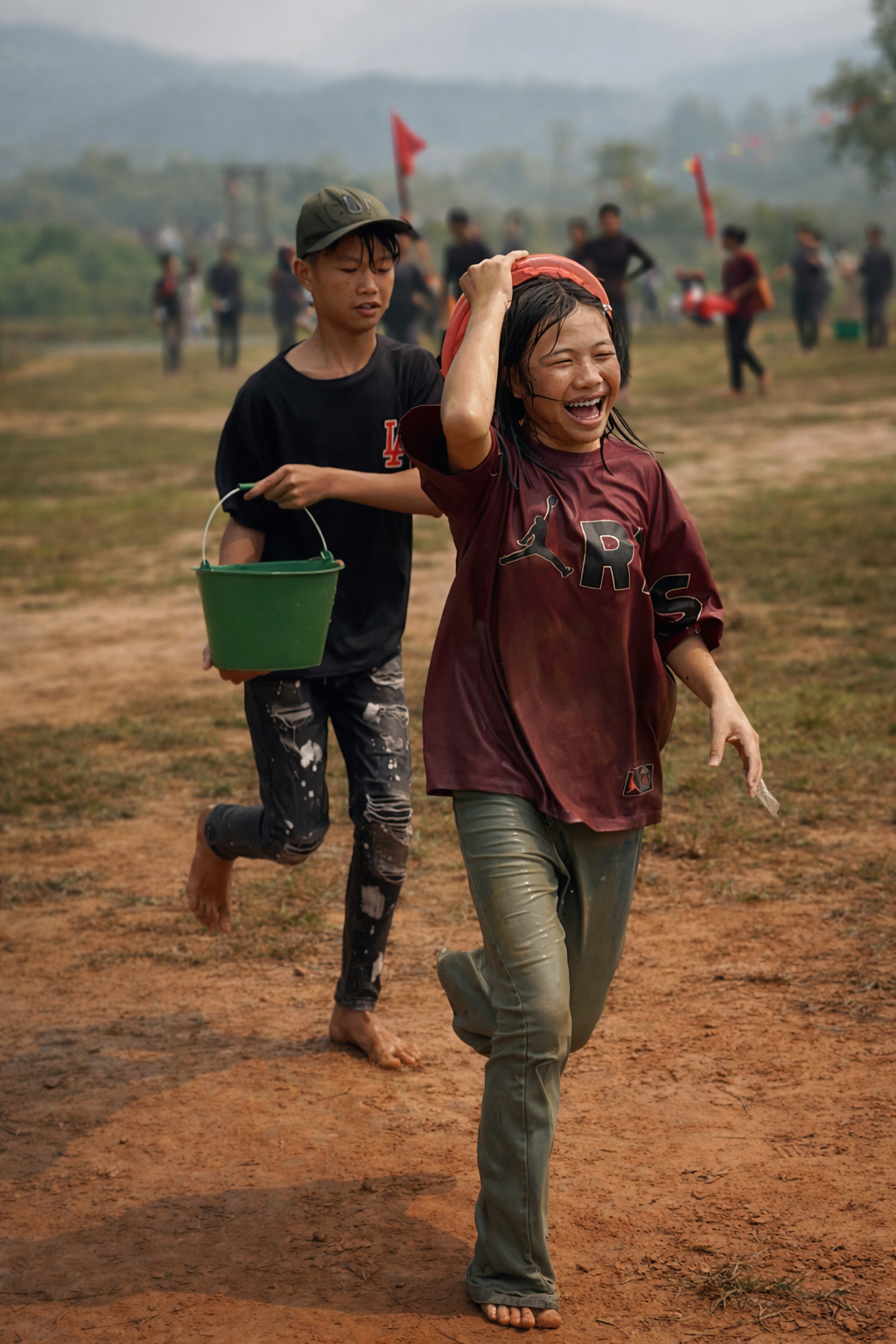
As the rituals soften into play, the younger generation begins to take centre stage, bringing with them a burst of energy that transforms the atmosphere entirely. Buckets are filled and refilled, water pistols appear from nowhere, and anything that can carry water becomes part of the celebration. What begins as gentle splashing quickly gathers momentum, unfolding into lively, good-natured water battles that ripple through the village. Groups form and dissolve, alliances shift, and laughter rises above the steady rhythm of drums. There is a sense of freedom in these moments, where boundaries blur and everyone, regardless of age or status, is drawn into the joy. Between the splashes, there are quiet exchanges too, glances held a little longer than usual, playful teasing, and the beginnings of flirtation that feel as much a part of the festival as the rituals themselves. Some drift towards the streams to swim, cooling off beneath the mountain sun, while others linger at the edges, watching and waiting for the next playful ambush. It is here, in this shared spontaneity, that the spirit of renewal feels most alive.
Day Two - Craft, Skill, and the Spirit of Community
As the second day unfolds, the energy shifts subtly, moving from the playful intimacy of water rituals to a broader celebration of skill, cooperation, and sustenance. Men from across neighbouring villages gather, bringing with them tools, materials, and a deep knowledge of craft that has been shaped over generations.
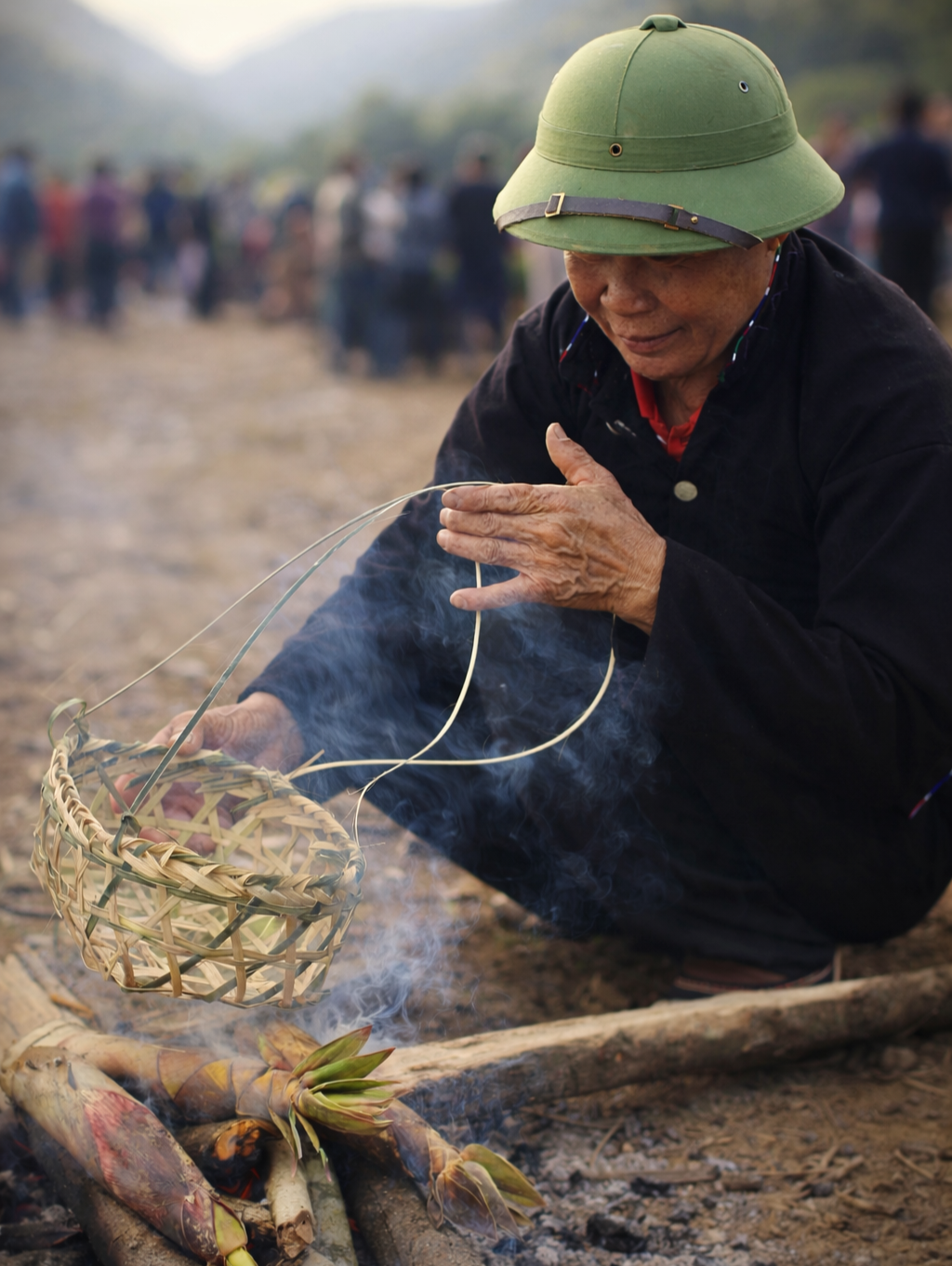
Basket weaving competitions take centre stage, where participants work swiftly yet with remarkable precision, transforming strips of bamboo into intricate forms. Each basket tells a story of function and artistry, reflecting the rhythms of agricultural life and the ingenuity of those who depend on the forest and fields.
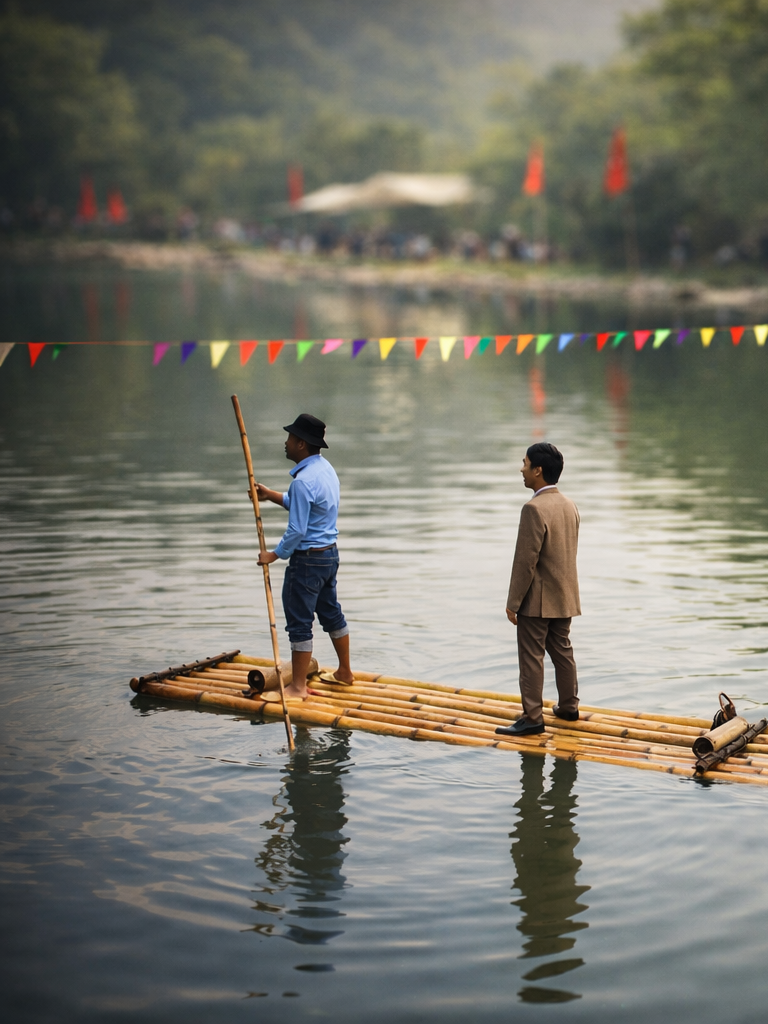
Nearby, rivers and streams come alive with bamboo raft races. Teams balance carefully on handmade rafts, navigating currents with a mixture of strength, coordination, and laughter. The races are as much about community pride as they are about skill, drawing cheers from spectators who line the banks.
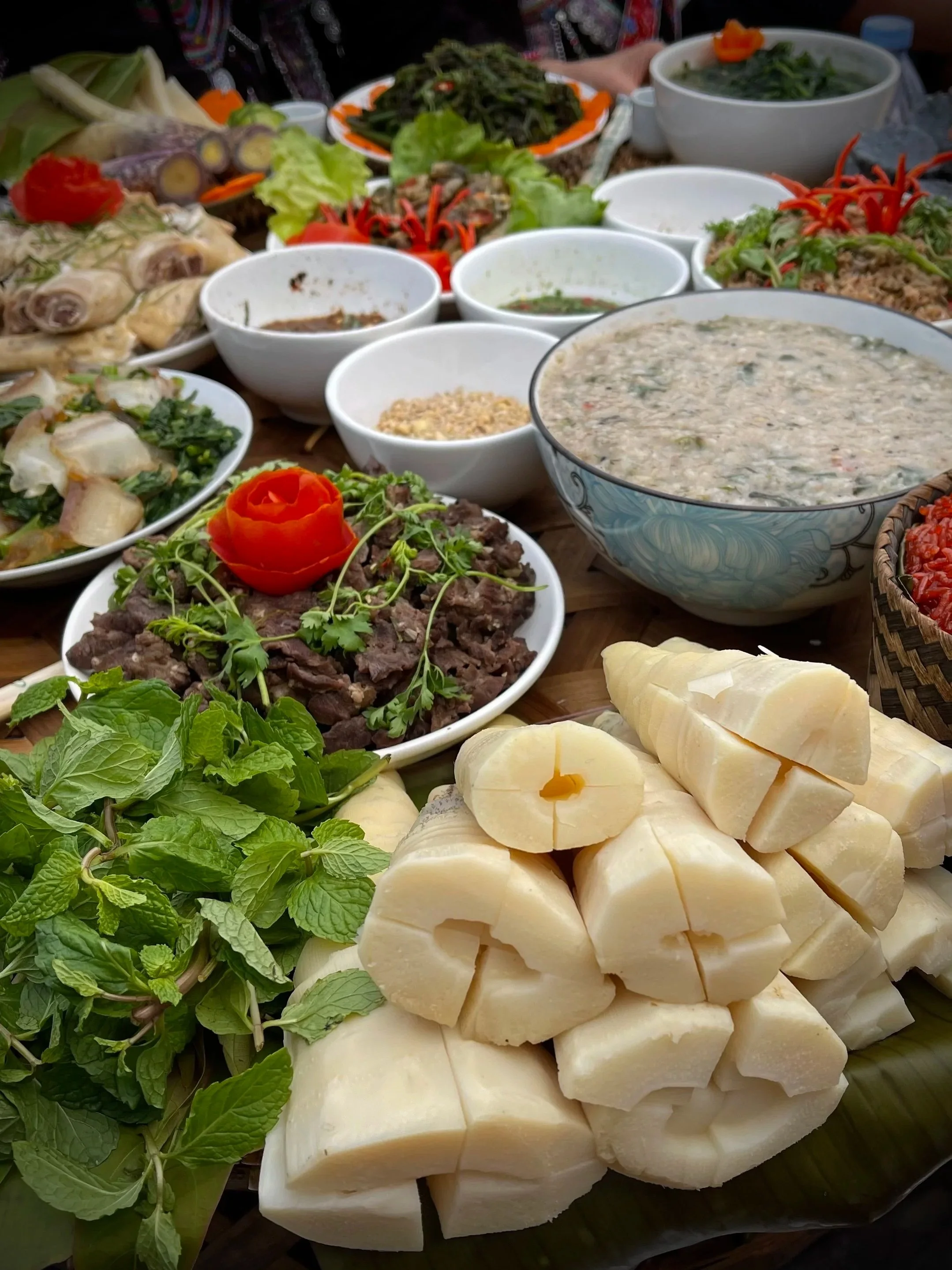
Food becomes a central expression of identity during this second day, particularly through the multi-village cooking competitions. What makes these gatherings remarkable is not only the diversity of dishes but the philosophy behind them. Every ingredient must be sourced locally, either grown in village fields or foraged from surrounding forests and waterways.
Dishes often include river weeds gathered from clear mountain streams, small pond fish caught with traditional methods, aromatic herbs found along forest paths, and even water insects, which are prepared with care and respect. These foods are not curiosities but staples, deeply connected to the landscape and seasons. Cooking becomes a collective act of storytelling, where each flavour speaks of place, resilience, and knowledge passed down through generations.
Visitors who are invited to taste these dishes often discover a cuisine that is both surprising and deeply nourishing, shaped by necessity yet elevated by creativity.
Beauty, Identity, and Living Traditions
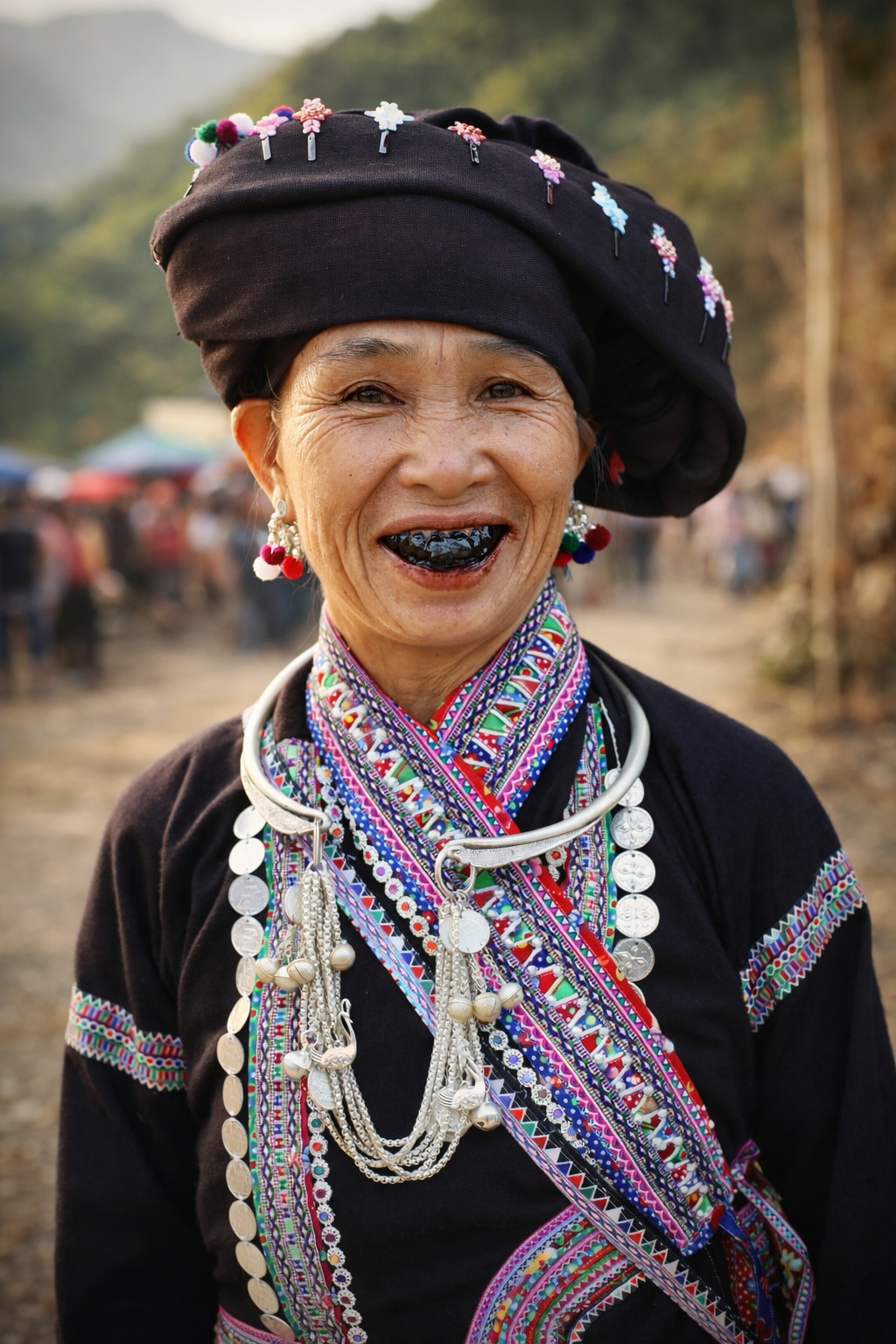
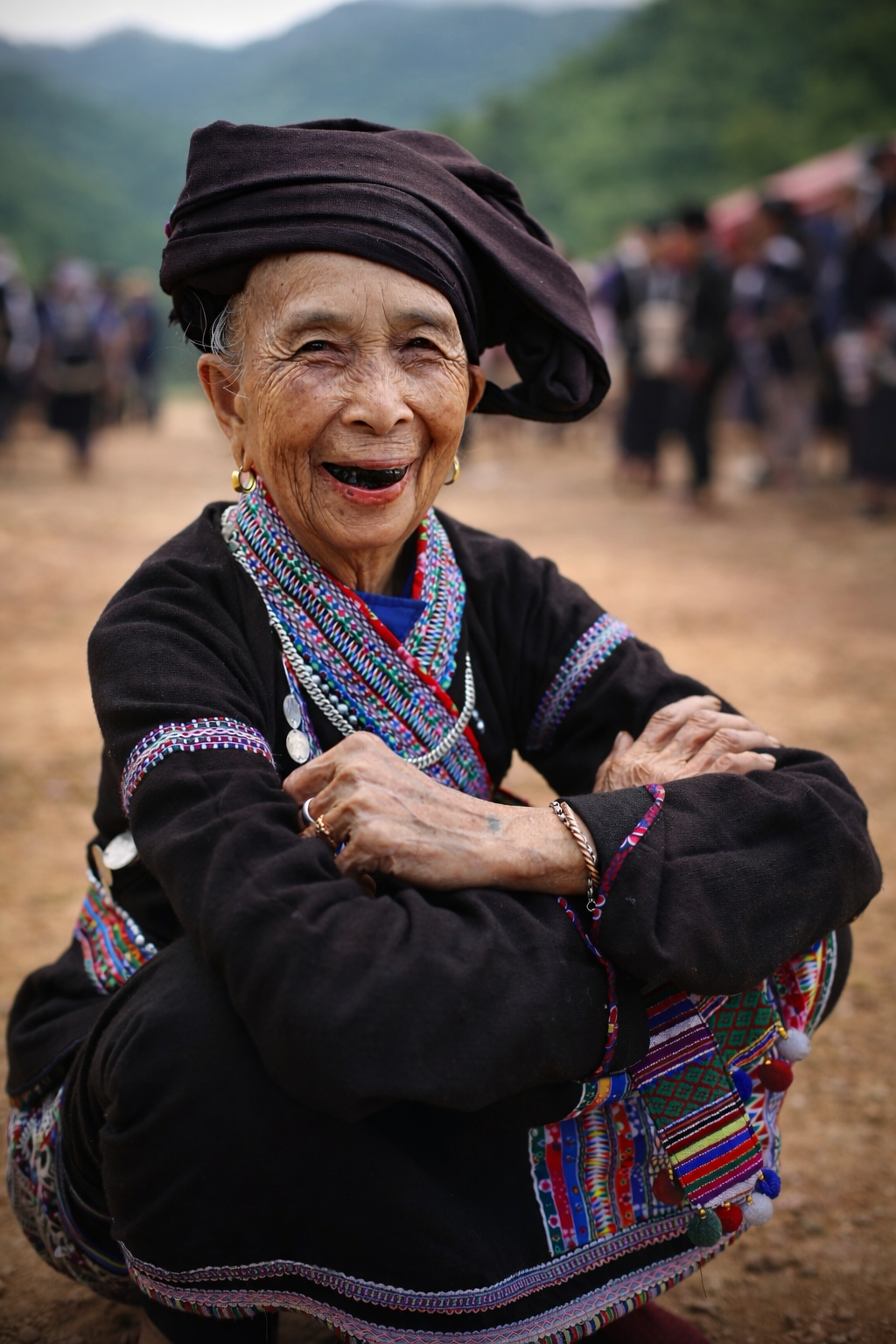
Among the Lao, traditions of beauty and identity continue to hold quiet significance. Practices such as betel chewing and teeth blackening, particularly among older women, are not relics of the past but markers of maturity, dignity, and cultural distinction. Blackened teeth are seen as a sign of beauty and humanity, setting people apart from animals and affirming their place within the social and spiritual world.
These customs, like the festival itself, reflect a worldview in which identity is expressed through continuity, through the preservation of practices that carry meaning beyond the visible.

A Festival That Binds Generations
Bun Vốc Nặm is, above all, a celebration of connection. It brings together families, neighbours, and neighbouring villages in a shared rhythm of ritual and joy. It honours the past while welcoming the future, creating a space where tradition is not preserved in isolation but lived, adapted, and shared.
In a world that often moves too quickly, the festival offers a different pace, one guided by the flow of water and the cycles of the land. It reminds us that renewal is not only a seasonal event but a collective act, rooted in care, respect, and belonging.
Travel with ETHOS and Walk Gently into Lao Culture
At ETHOS, we believe that travel should deepen understanding rather than simply observe difference. Our journeys into Lao communities from Sapa are shaped in collaboration with local families, ensuring that every experience is respectful, immersive, and mutually beneficial.
When you travel with us, you are not watching a festival from the outside. You are welcomed into homes, invited to share meals, and guided by those whose lives are woven into these traditions. You may find yourself learning to weave bamboo, tasting forest herbs you have helped gather, or standing beside a stream as laughter rises around you and water becomes a shared blessing.
These are not performances arranged for visitors, but living moments of culture, offered with generosity and trust.
If you feel called to experience the highlands in a way that honours both people and place, we invite you to join us. Let the rhythm of water guide you, and discover a festival where every gesture carries meaning, and every welcome is deeply felt.