
Community-Based Tourism in Northern Vietnam
A Traveller’s Guide to Ethical Treks, Authentic Motorbike Loops, Traditional Homestays and Meaningful Cultural Experiences
It may not always seem so to travellers who only visit the big cities, but much of rural Northern Vietnam contains places where landscapes and the lives of the people remain closely connected. Across the mountains of Lào Cai, Hà Giang, Lai Châu, Điện Biên, Yên Bái as well as other neighbouring provinces, villages have developed around steep valleys and forested slopes. Humans have shaped rice terraces and long-established trade routes, while communities such as the Hmong, Red Dao, Giáy, Tày and Xa Phó continue to maintain their own distinct languages, traditions, farming practices and ways of understanding the natural world. These elements combine to mean that astute travellers visiting the region stand to experience far more than they might on a typical package holiday or sightseeing tour. Sadly, too few travellers ever delve deep enough to get the most out of the region. This guide is for travellers who are seeking more than generic attractions and selfies.
For many visitors, the first attraction in places such as Sapa, Ha Giang or Mu Cang Chai is often the scenery. The mountains offer dramatic panoramas while the rice terraces offer beauty that is different to what most of are used to. Even the roads are unique and offer some of the most thrilling driving experiences, particularly for bikers. Roads seem to disappear into landscapes that feel far removed from the pace of modern cities. The longer people remain in the region, the more they begin to understand that the real character of Northern Vietnam lies not only in the landscapes, but in the communities that have shaped it over generations. We would argue that the people of these regions are the most special aspect.
At the same time, Vietnam is changing rapidly and so too is the nature of how people travel. As visitor numbers grow and destinations become easier to reach, much of mainstream tourism is becoming increasingly standardised. Travellers are repeatedly directed towards the same attractions, viewpoints, cafés, photographs and pre-packaged itineraries. As we explored in our earlier article, Why AI Shouldn’t Yet Be Trusted to Plan Your Travels in Northern Vietnam, digital travel planning can intensify this process by repeatedly recommending whatever is already most visible, most photographed and easiest to package. Genuine, human experiences are therefore being lost at an alarming rate, but we’ve got your back.
There is nothing inherently wrong with popular attractions or organised mass tourism. The problem comes when travelling through a complex region begins to feel like following the same checklist as everybody else. A journey can contain more destinations, photographs and activities while involving less discovery, less meaningful contact with local people and less understanding of the place itself. In that environment, genuinely experiential and sustainable forms of tourism become increasingly valuable. A day walking with somebody who knows the land, sharing a meal with a family, learning about farming, textiles, medicinal plants or changing village life may be far less visible online than a famous viewpoint, yet it can offer a much deeper connection with the region.
Tourism can also create valuable opportunities for local families, guides, craftspeople and small businesses, but those benefits are not automatic. Simply taking tourists into a village does not make an activity sustainable, ethical or community-based. As terms such as community-based tourism, responsible travel, eco-tourism and authentic experience become increasingly common, it becomes more important to understand what they actually mean, who benefits from them and how they should influence the way a journey is planned.
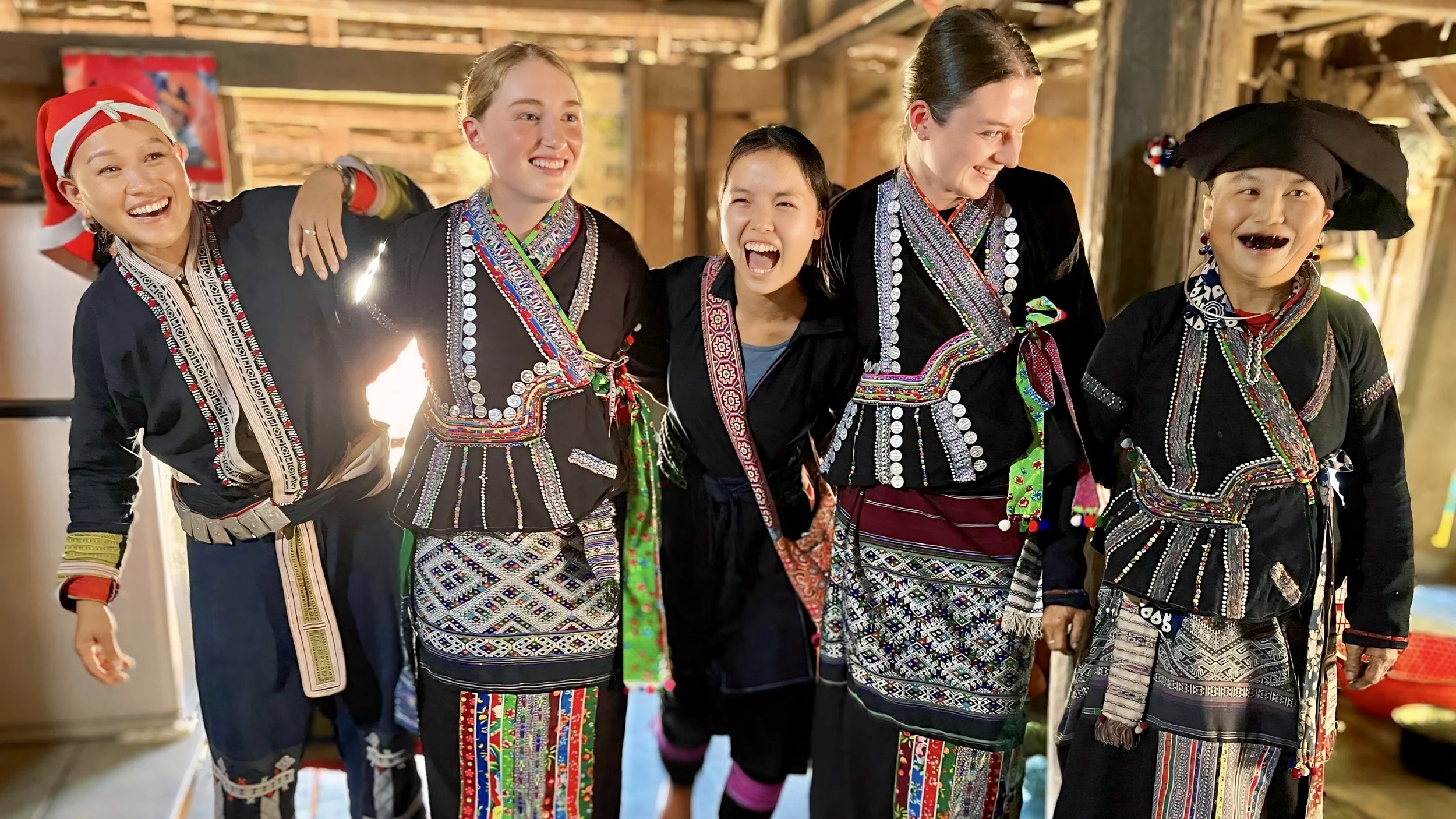
International guests share a relaxed moment with ETHOS women guides inside a traditional Lao ethnic home in Northern Vietnam. The Hmong and Dao driver-guides accompany guests on a two-day motorbike journey, creating an informal cultural exchange between people from different backgrounds.
What Is Community-Based Tourism?
Community-based tourism is a form of travel in which local people are active participants rather than simply employees. They may work as guides, hosts, teachers, organisers and decision-makers, helping to shape how visitors are welcomed, which stories are shared and how the benefits of tourism are distributed. Experiences can include guided walks, family homestays, local food, farming, textiles, herbal medicine and other forms of knowledge rooted in the surrounding landscape and community.
The strongest community-based tourism develops gradually through relationships, trust and meaningful local involvement. Villages are living communities, not tourism products, and their traditions do not exist simply to entertain visitors. When managed well, tourism can provide additional income, create employment close to home, strengthen cultural knowledge and give visitors a much deeper understanding of the places they visit.
Hoa Thanh Mai of ETHOS – Spirit of the Community in Sa Pa explains:
“Community-based tourism is not simply about visiting a village, eating local food or spending the night in a homestay. At its best, local people are active participants, retain meaningful control over the experiences taking place within their communities and receive a fair share of the benefits.”
Responsibletravel.com similarly describes community-based tourism as:
“tourism in which income directly benefits the community, with local people retaining control over how those benefits are used. It can also support cultural exchange, help preserve ways of life and contribute to environmental protection”.
This approach closely aligns with the United Nations Sustainable Development Goals, particularly Goal 1, ending poverty, and Goal 8, promoting decent work and inclusive, sustainable economic growth.
This guide explores what community-based tourism looks like in practice, how it differs from conventional mass tourism, why some communities benefit more than others, and how travellers can choose experiences that are respectful, thoughtful and genuinely connected to the people and places they hope to understand.
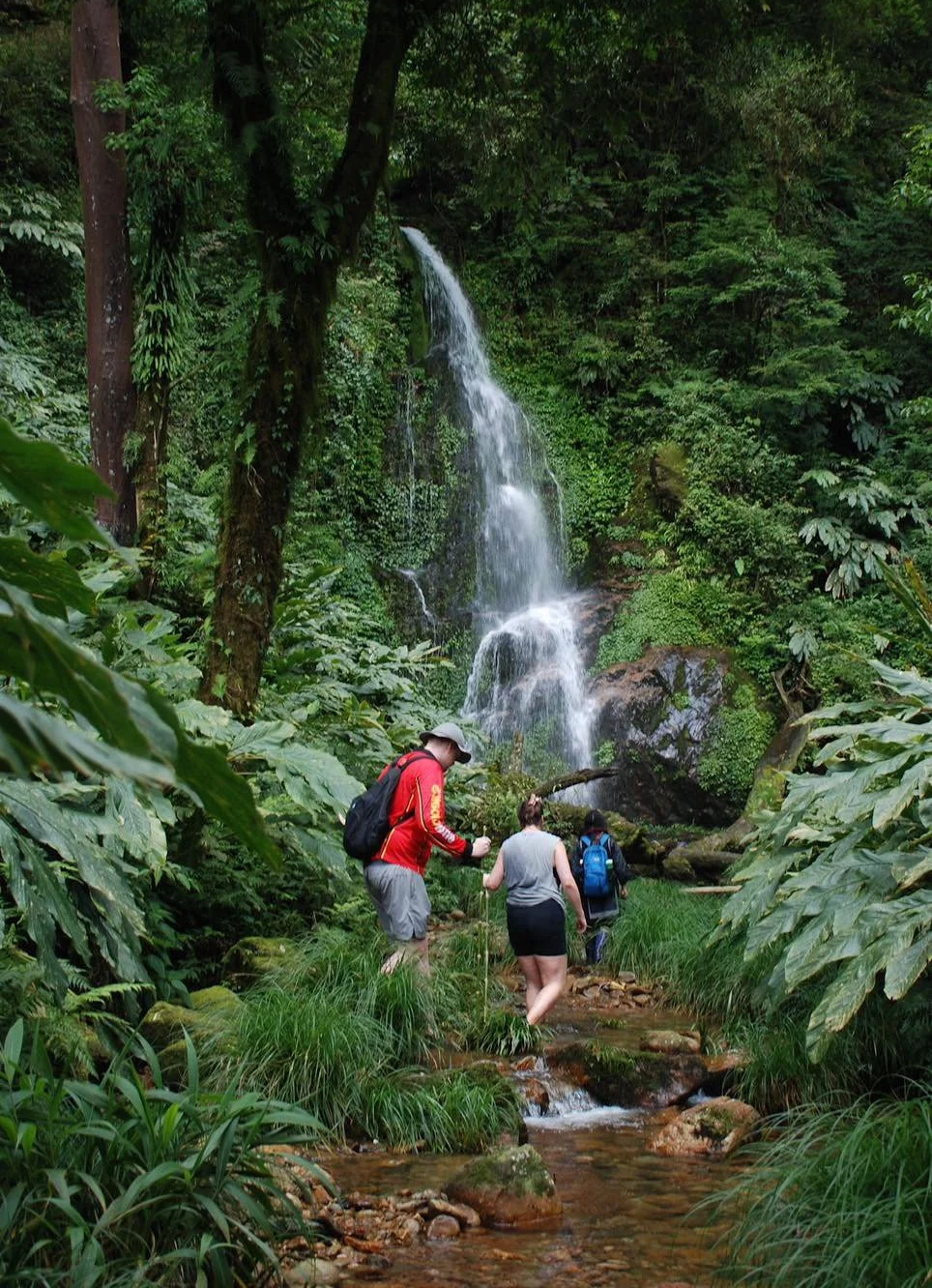
Travellers trek through lush forest beside a waterfall in Hoàng Liên National Park, accompanied by an ETHOS local guide. The scene illustrates the small-scale, nature-based experiences that can form part of community-based tourism around Sa Pa.
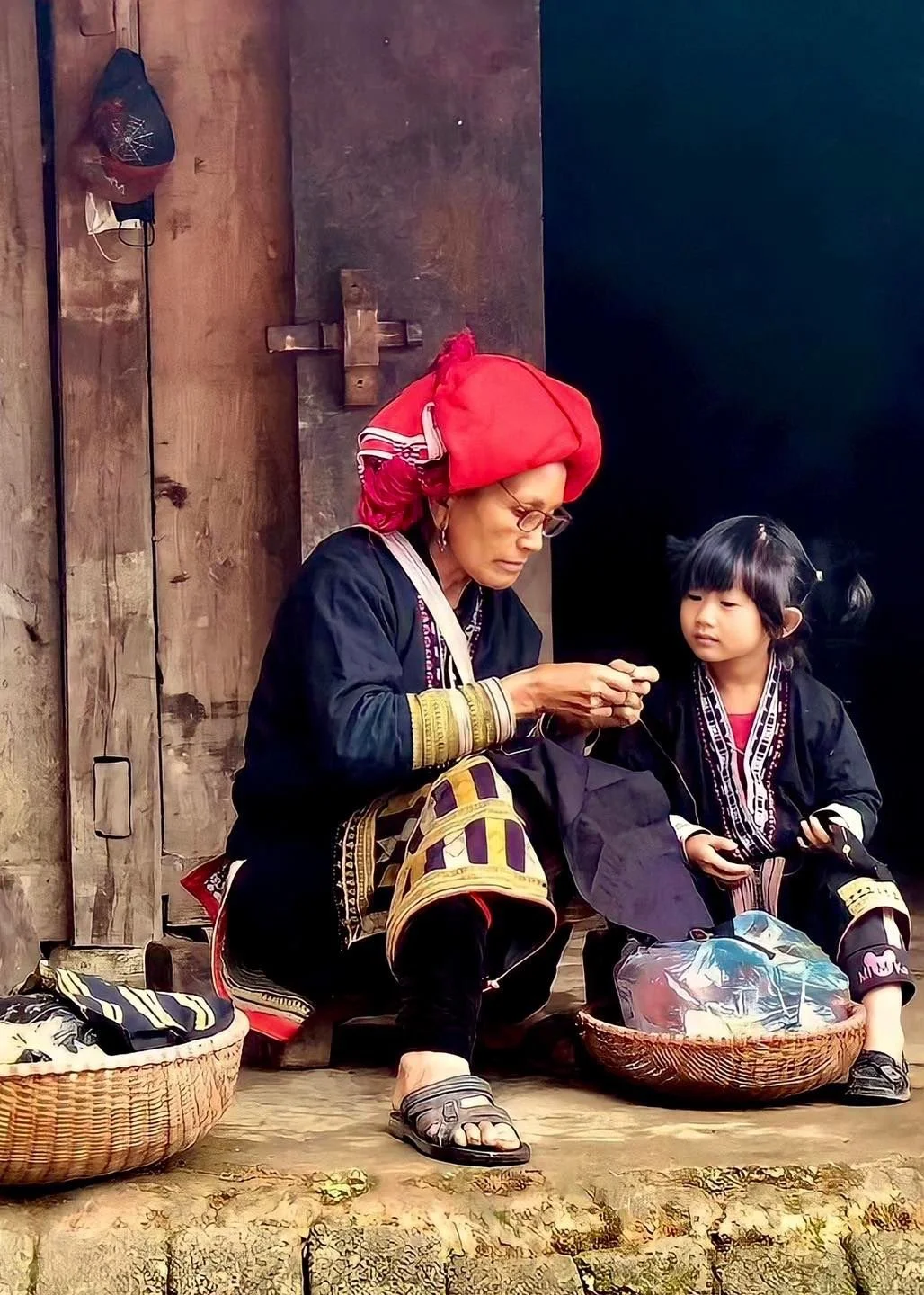
An ETHOS homestay owner sits with her granddaughter outside their home, sharing traditional embroidery skills. The image reflects how cultural knowledge and textile traditions can be passed between generations within the community.
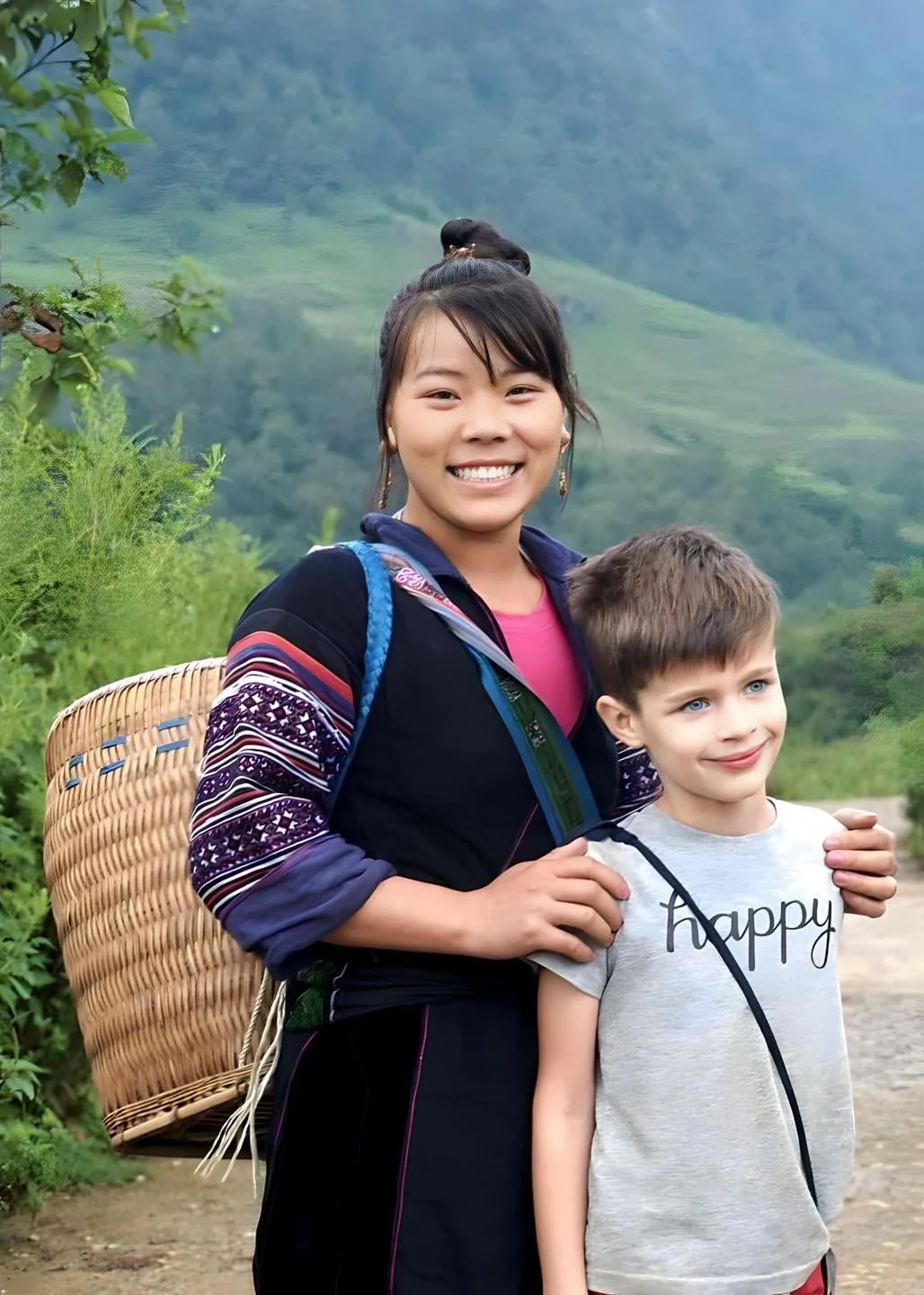
A local woman and a young international visitor stand together in a rural mountain landscape. The photograph reflects the personal relationships and informal cultural exchange that can develop when families travel through local communities rather than simply visiting conventional attractions.
Some Fantastic Community-Based and Responsible Travel Options
Let’s get right into the bits you need the most. Recommendations. These are a start point based on our own experiences and we encourage you to dig deeper and research further. Do reach out and let us know if you have enjoyed a stay or visit to any other interesting CBT projects in the North of Vietnam. You can either contact us on our Facebook page or send an email if thats easier.
Good community-based travel is not limited to one part of northern Vietnam. In Sapa, ETHOS – Spirit of the Community offers community-led trekking and homestays with local Hmong and Dao guides, while in Hà Giang, Flipside Vietnam’s True North journeys combine the famous mountain landscapes with smaller villages, local families and homestays. InnerX-Stay offers a much smaller-scale experience in Lan Hạ Bay, while there are worthwhile locally rooted options in Ninh Bình and among the Thai and Muong communities of Pù Luông. In Cao Bằng, Khuổi Kỵ Stone Village is a particularly interesting Tày community-tourism village, while rural Điện Biên can be explored through ETHOS’s Caves & Waterways journey. Further south, and technically outside northern Vietnam, Phong Nha Farmstay is another strong example of tourism built around local employment, local sourcing and support for village businesses.
Why Northern Vietnam Is Particularly Suited to Community-Based Tourism
Northern Vietnam contains an extraordinary concentration of cultural and environmental diversity. Mountains, river valleys, forests and agricultural terraces have shaped settlement patterns over centuries, while differences in altitude, access, language and history have allowed many communities to retain distinctive traditions.
A journey of only a few hours may pass through areas inhabited by several different ethnic groups, each with its own clothing, language, architecture, agricultural practices and relationship with the surrounding environment. In Sapa, Black Hmong communities may be associated with indigo-dyed textiles, batik and steep mountain agriculture, while Red Dao families may maintain extensive knowledge of forest plants and herbal bathing traditions. Giáy and Tày communities may be found in lower valleys where wet-rice farming, stilt-house architecture and river-based agriculture have played a central role in local life.
These differences should not be reduced to costumes, photographs or simple cultural labels. Each community is changing, adapting and responding to education, migration, technology, tourism and new economic opportunities, just as communities do everywhere. Community-based tourism is most valuable when it helps visitors understand both continuity and change, rather than presenting culture as something fixed in the past.
Northern Vietnam is therefore not simply a scenic location for tourism but is a region in which the quality of a journey depends greatly on whether visitors are encouraged to look beyond the visible landscape and understand the human knowledge that has made life within that landscape possible.
To learn more about the cultural diversity of Vietnam, our guide to the ethnic groups of Northern Vietnam introduces some of the communities who have shaped the region’s languages, traditions, clothing, farming systems, beliefs and village life. Understanding a little about these different groups before travelling can make encounters more meaningful and help visitors approach local communities with greater curiosity, context and respect.
Community-Based Tourism and Mass Tourism
Mass tourism is usually designed to move large numbers of people through a destination efficiently, but can be souless. It depends on fixed schedules, standardised accommodation, predictable meals and itineraries that can be repeated with minimal variation. This approach can make travel more affordable and accessible, but it can also separate visitors from the communities through which they pass.
Community-based tourism works at a different pace. Groups are generally smaller, journeys are more flexible and local people are more closely involved in guiding, hosting and interpreting the experience. Accommodation may be family-run, meals may reflect what is locally available and the route may change according to weather, farming activity, community events or the needs of the guests.
The difference is also about where decisions are made and where the benefits of tourism remain. In mass tourism, a large proportion of the income may pass through companies, hotels and services based outside the community. In a carefully designed community-based model, more of that income can remain with local guides, host families, drivers, cooks, farmers, craftspeople and small businesses.
This does not mean that every small tour is ethical or that every large tour is harmful. The important question is whether the people who live in the destination have a meaningful role in the tourism taking place around them, and whether the experience has been designed with their interests, dignity and long-term wellbeing in mind.
Tourism can bring employment, education, infrastructure and new sources of income to rural areas, particularly in places where farming alone may not provide sufficient financial security. It can enable people to work closer to home, support children through school and create opportunities for women and young people who may previously have had limited access to formal employment.
At the same time, tourism can create pressure. As certain villages become popular, land prices may rise, traditional homes may be converted into accommodation, waste may increase and daily life may be altered to meet visitor expectations. Cultural traditions may be simplified into performances, while families who are not connected to tourism may see little benefit despite living with its consequences. Community-based tourism matters because it attempts to address these imbalances by giving local people a stronger role in shaping tourism rather than simply adapting to it. It recognises that a successful destination is not one that receives the greatest possible number of visitors, but one in which tourism remains compatible with community life.
For travellers, this approach also creates richer experiences. Instead of moving quickly between viewpoints, they are given time to understand how water is managed across the rice terraces, why particular crops are planted at different elevations, how textiles communicate identity or how family and community responsibilities influence everyday life.
Community-Based Tourism Is About Relationships, Not Attractions
One of the greatest misunderstandings in tourism is the idea that culture can be reduced to a list of things to see. A village becomes known for its houses, a community becomes associated with its clothing and a workshop becomes a demonstration that visitors watch for a fixed period before moving on.
In reality, the most meaningful cultural experiences tend to emerge through relationships. A guide may stop to speak with a relative working in the fields, a host may explain why a particular meal is prepared at that time of year or a craftswoman may describe how she first learned a textile technique from her mother or grandmother. Moments such as these cannot always be scheduled, and that is precisely why they feel organic. They remind visitors that community-based tourism is not a staged performance, but an opportunity to spend time within a living social environment where ordinary routines continue around them.
The role of a good guide is therefore not simply to lead the way or provide facts but should be to help visitors interpret what they are seeing, understand when to ask questions, recognise when privacy should be respected and appreciate that not every part of community life is available for tourism.
Why Walking Is One of the Best Ways to Understand Northern Vietnam
Travelling on foot changes the pace of an experience. It creates time for observation, conversation and gradual understanding, allowing visitors to notice details that would disappear from the window of a vehicle. A Hanoi walking street food tour requires far more traveller participation than a selfie at a popular attraction for example.
In Sapa, a trekking trail may pass through rice terraces, forest edges, small farms and several different settlements within the course of a single day, revealing how communities use the landscape and how different forms of agriculture respond to altitude, water and soil. A local guide may explain which plants are used for food or medicine, how families prepare land before planting or why one village has developed differently from another nearby. Walking also creates natural opportunities for interaction. Farmers may pause to speak with the guide, children may walk alongside the group for a short distance and neighbours may invite visitors to stop for tea. These encounters are not guaranteed, nor should they be manufactured, but they become possible because the journey is taking place at a human pace.
For this reason, ETHOS treks are designed as more than physical routes through attractive scenery. They are private, carefully paced journeys led by local guides who understand the villages, landscapes and communities through which they travel. Some routes are gentle and accessible, while others involve longer days, steeper terrain and overnight stays, but the central purpose remains the same: to help guests understand Northern Vietnam through the knowledge of the people who live here.
Visitors can explore ETHOS private treks according to their interests, available time and preferred level of challenge, whether they are looking for a short introduction to village life or a longer journey through less frequently visited areas.
How Homestays Actually Work
A genuine homestay is not just a guesthouse located in a village. We see some specific types of homestay as an invitation to spend time in or alongside a family home while daily life continues around the visitor. The experience may include sharing an evening meal, helping to prepare food, sitting together over tea or learning about the family’s work, land and community. Children may be completing housework, neighbours may visit and members of the household may continue with farming, cooking or other responsibilities throughout the stay.
Facilities vary considerably. Some homestays have private spaces and more modern bathrooms, while others remain simpler and more closely connected to the traditional structure of the home. Neither model is automatically more authentic than the other. The important factors are whether the accommodation is genuinely owned or managed by local people, whether the family has chosen to receive guests and whether expectations are explained honestly before arrival.
A good homestay experience should never require a family to perform a version of its culture for visitors. The value lies in the opportunity to share time, ask thoughtful questions and understand something of ordinary life within the community.
ETHOS works with family-run homestays across Northern Vietnam, selecting each stay according to the route, the interests of the guests and the relationships that have developed over time. For many travellers, the evening spent with a host family becomes one of the most memorable parts of the journey, not because something dramatic happens, but because conversation and hospitality allow the experience to become personal.
Learning Through Cultural Workshops
Cultural workshops can offer a particularly meaningful form of community-based tourism because they allow visitors to become participants rather than observers. Instead of watching somebody complete a task, guests are invited to learn how a traditional skill works, why it matters and how much time, knowledge and patience it requires.
Across Northern Vietnam, families continue to practise indigo dyeing, batik, weaving, embroidery, herbal preparation, cooking, paper making and other forms of local knowledge. These skills are not simply decorative. They are connected to identity, family history, practical need and the relationship between communities and the natural resources available to them. A well-designed workshop should give appropriate recognition to the person teaching it. The craftsperson or artisan should be paid fairly, the experience should take place at a pace that respects the work involved and visitors should understand that they are receiving knowledge rather than purchasing a performance.
ETHOS cultural workshops are developed with local craftspeople and families who wish to share their skills. Depending on the experience, guests may learn how indigo is prepared, how wax is used to create batik patterns, how embroidery communicates cultural identity or how plants are gathered and combined for traditional herbal use.
The item produced during a workshop may be modest, but it carries a very different meaning from a souvenir bought without context. It becomes connected to the person who taught the skill, the time spent learning and the understanding that traditional knowledge survives because people continue to practise and value it.
Exploring Northern Vietnam by Motorbike
Motorbike journeys offer another way to experience community-based tourism, particularly across regions where villages, markets and valleys are connected by long mountain roads. They make it possible to travel beyond the limited area reached by most visitors and to understand how geography, distance and access shape everyday life. We take the philosophy that any responsible motorbike journey should not be designed only around speed, distance or famous viewpoints. The road itself is part of the experience, but so are the pauses along the way: a local market, a family-run food stall, a short village walk, a conversation with a farmer or an overnight stay in a community that few travellers reach.
ETHOS motorbike loops are designed around this slower approach. The aim is not simply to complete a route, but to understand the differences between the regions through which the journey passes. Roads may connect Hmong, Dao, Tày, Giáy or other communities, each with its own architecture, agricultural systems and cultural traditions. Some journeys last a single day, while longer loops may continue through several provinces, combining mountain roads with homestays, local meals, short walks and visits to places that remain outside conventional tourism itineraries. The motorbike provides access, but the people and landscapes encountered along the route give the journey its meaning.
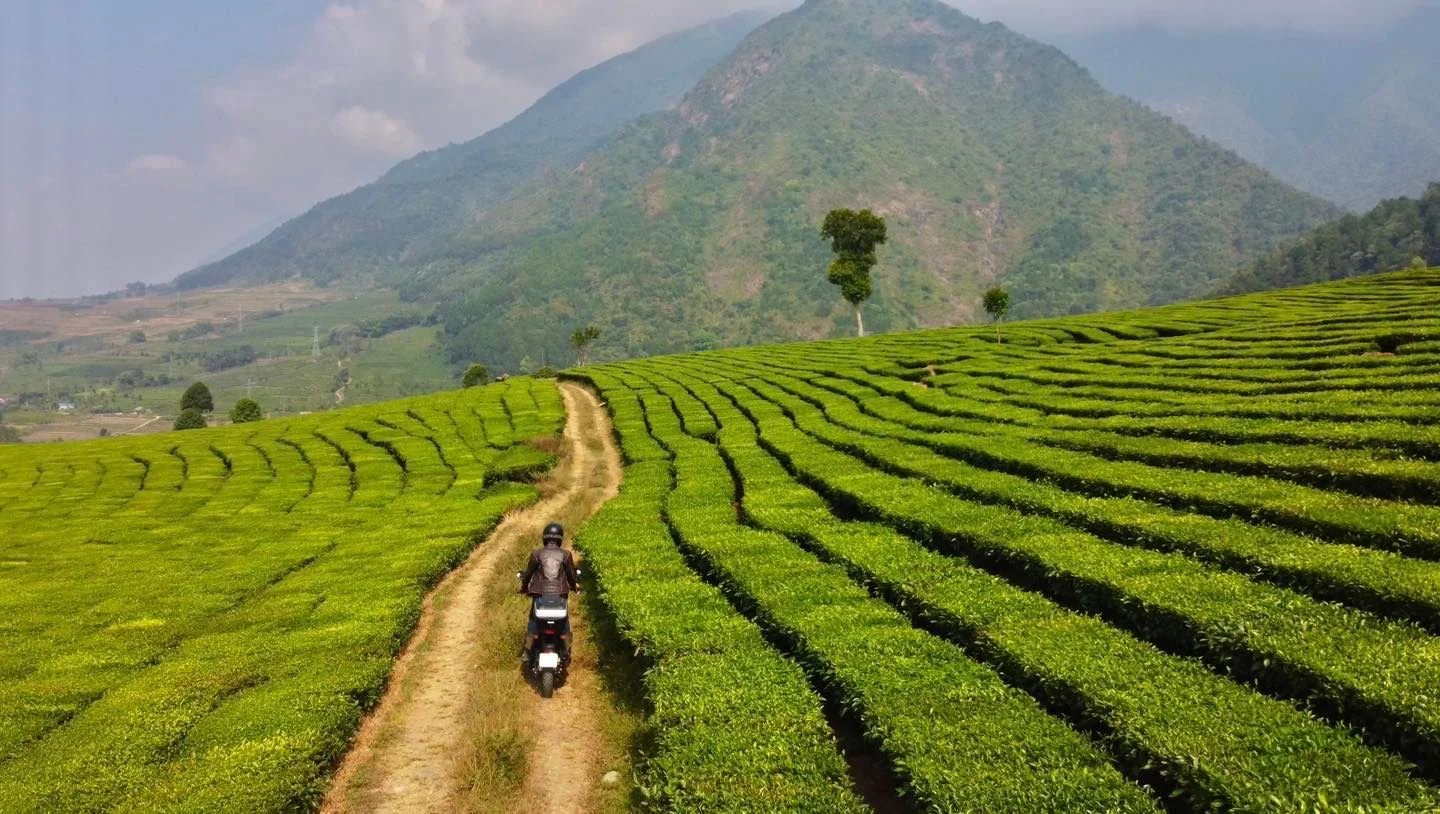
ETHOS Motorbike adventure through the mountains of Lai Chau. With both onroad and off-road loops, the journeys take in som eof the best scenery and riches culture anywhere in Vietnam.
How to Choose an Ethical Operator
Choosing an ethical operator requires more than looking for words such as responsible, sustainable or community-based on a website. These terms are easy to use, and they are not always supported by clear practice. Due dilligence is vital. Travellers should ask who guides the experience, who owns the accommodation and how local people are involved in planning and delivering the journey. They should also consider group size, the number of visitors entering each village, the way photography is handled and whether the itinerary allows enough time for genuine interaction.
A responsible operator should be able to explain how guides and hosts are paid, how long relationships with communities have existed and why certain routes or villages have been chosen. It should also be willing to adapt or cancel an activity when weather, safety or community circumstances make the original plan inappropriate. Price should not be the only measure of value. An extremely cheap tour will almost always function on low wages, rushed itineraries or large groups, while a more carefully priced experience may support a greater number of local people and provide the time necessary for a more meaningful journey.
Common Mistakes Visitors Make
Most mistakes are not caused by bad intentions, but by unfamiliarity with local expectations. V isitors may assume that every village welcomes tourism in the same way, that photographs are always acceptable or that traditional clothing and cultural practices exist primarily for public display. It is important to remember that villages contain family homes. People may be farming, caring for children, preparing meals, attending family events or simply continuing with private routines. Visitors should always ask before entering homes, photographing people or handling personal and cultural objects.
Another common mistake is to judge authenticity according to comfort. A traditional-looking house is not automatically more authentic than a renovated home, and a family with modern appliances has not lost its culture. Communities are entitled to change, improve their living conditions and choose how they wish to present themselves. Travellers may also place too much emphasis on seeing as much as possible within a short period. Community-based tourism works best when the itinerary allows time to remain in one place, listen carefully and accept that the most valuable moments may not be planned.
We delve deeper into common mistakes and responsible tourism in our ethical trekking guide.
Questions to Ask Before Booking
Before booking a trek, homestay, workshop or motorbike journey, it is worth asking several practical and ethical questions.
Find out how many people will be in the group, who will guide the experience and whether the guide comes from the region or community being visited. Ask who owns the homestay, what facilities are available and whether meals are prepared by the host family.
For trekking, request clear information about distance, elevation, terrain, weather exposure and access to roads or medical support. For motorbike journeys, ask about the experience of the guide, the condition of the motorcycles, protective equipment and how routes are adapted in poor weather.
Travellers should also ask how the company works with local communities, how income is shared and whether the villages included in the itinerary receive visitors frequently. A responsible operator should welcome these questions and answer them openly.
Why Some Villages Become Over-Visited
Tourism often concentrates around a small number of places. In Sapa, two such examples are Cat Cat and Ta Van. Once a village becomes well known, tour companies repeat the same routes, accommodation expands and visitor numbers continue to increase because the destination is easy to market. This can create economic opportunities, but it may also lead to traffic, waste, noise, construction and increasing pressure on land and local infrastructure. Families connected to tourism may benefit, while others experience the disruption without receiving a meaningful share of the income.
Over-visitation can also change the character of an experience. When many groups follow the same trail at the same time, interactions become brief and repetitive, while homes and workshops may feel increasingly like attractions rather than personal spaces. This is sadly exactly what has happened in bot Cat Cat and Ta Van villages. Likewise, the main Ha Giang loop is now swamped by large group party tours and the environmental and social impacts on local communities are becoming problematic. Every ride is provided with one use disposable rain clothes. Made of thin plastic, the quickly tear and can be found disgarded by roadsides all around the loop. Night time karaoke may appeal to travellers, but many local communities complain of noise pollution into the small hours. Whilst some still benefit from the wages for being a driver guide, its disheartening to see how many lives have been worsened by these types of tourism models.
Responsible tourism should therefore distribute visitors more carefully. This may involve varying routes, working with a wider network of families and communities, travelling at quieter times or choosing villages according to suitability rather than fame. ETHOS work in Ha Giang and specifially offer motorbike loops that avoid the main loop while still seeing excellent views and experiencing rich culture. ETHOS works across a broad range of communities and does not rely solely on the best-known routes around Sapa. In fact, we purposefull avoid them. This allows journeys to be matched more thoughtfully to the interests of guests while reducing unnecessary pressure on places already receiving large numbers of visitors.
What Responsible Trekking Looks Like
Responsible trekking begins with safety, respect and realistic planning. A route should be selected according to the fitness, experience and interests of the guests, while also taking account of weather, trail conditions, river levels, landslide risk and access to assistance.
Groups should remain small enough to move safely and interact respectfully with the communities they visit. Guides should understand the terrain, know when conditions require a change of route and be able to explain how guests should behave around homes, farms and private land.
Visitors should carry reusable water bottles, avoid leaving waste, remain on appropriate paths and follow local advice. Clothing should be practical for the weather and respectful within villages, while photographs should always be taken with permission.
Responsible trekking is not defined by reaching the most remote location or completing the most difficult route. It is defined by whether the journey is safe, thoughtful and compatible with the lives of the people who live along it.
Frequently Asked Questions
Are homestays safe?
A well-managed homestay should be safe for most travellers, particularly when the accommodation has been assessed by a responsible operator and the host family has experience receiving guests. Travellers should be given clear information about sleeping arrangements, bathrooms, food, drinking water and emergency procedures before arrival.
Facilities may be considerably simpler than those of a hotel, especially in remote areas, so guests should explain any allergies, medical conditions, mobility requirements or dietary needs in advance.
Can children join?
Many community-based experiences are suitable for children, although the route and accommodation should be selected carefully according to age, confidence and physical ability. Gentle village walks, family meals, craft activities and short cultural experiences can be particularly rewarding for younger travellers.
Longer treks, steep trails, muddy conditions and basic overnight stays may not suit every child. Parents should ask about walking distance, elevation, terrain, transport access and sleeping arrangements before booking.
What should I wear?
Comfortable, practical clothing is best, particularly when walking between villages or travelling through changing mountain weather. Lightweight layers allow visitors to adjust to changes in temperature, while good walking shoes with reliable grip are important on muddy or uneven trails.
Clothing should also be respectful when entering homes or communities. Garments that cover the shoulders and extend close to the knees are generally appropriate, while rain protection, sun protection and a warmer layer should be carried even when the day begins in mild conditions.
Is Northern Vietnam suitable for beginners?
Yes. Northern Vietnam offers a wide range of experiences, from short village walks to demanding multi-day treks. Beginners should choose a route that matches their fitness and confidence rather than selecting an itinerary based only on distance or scenery.
A responsible operator should clearly explain the terrain, walking time, elevation gain, trail conditions and access to roads or assistance, allowing travellers to make an informed decision.
Are private tours better than group tours?
Private tours offer greater flexibility because the guide can adapt the pace, route and level of explanation to the needs of the guests. They also place less pressure on homes and villages and allow cultural interactions to develop more naturally.
Group tours may be more affordable and can suit travellers who enjoy meeting others, but group size remains important. The more useful questions are whether the guide is local, whether hosts are paid fairly and whether the itinerary respects the community.
Can vegetarians be accommodated?
Vegetarian meals can usually be arranged when requested in advance. Local families may prepare rice, vegetables, tofu, eggs, mushrooms and seasonal produce, although the range of ingredients can be more limited in remote areas.
Travellers should explain whether they are vegetarian, vegan or have allergy-related or religious dietary requirements, as each may require different preparation.
Do guides speak English?
ETHOS guides all have an excellent grasp of English. Many other guides working with international visitors speak English, although levels vary. Local guides may have exceptional cultural and environmental knowledge even when their English is less fluent than that of a city-based guide.
Language ability is important, but it should be considered alongside safety awareness, local knowledge and the ability to explain community life with accuracy and respect.
What happens if it rains?
Rain does not automatically mean that a trek or motorbike journey will be cancelled, but it can make trails muddy, reduce visibility and increase the risk associated with river crossings, landslides or difficult roads.
A responsible guide should assess conditions, adapt the route where necessary and postpone or cancel an activity when it cannot be completed safely. Travellers should bring waterproof clothing, suitable footwear and enough flexibility to accept that mountain weather may change the original plan.
How ETHOS Approaches Community-Based Tourism
ETHOS has been working alongside communities in Northern Vietnam for more than twenty-five years, during which time tourism in the region has changed considerably. Roads have improved, visitor numbers have increased and some villages have developed into major destinations, while many others remain rarely visited. Throughout these changes, our approach has remained centred on relationships. We work with local guides from the communities they introduce, partner with family-run homestays, keep our tours private and develop cultural experiences with people who wish to share their skills and knowledge.
Our treks are designed to move at a pace that allows guests to understand the landscape rather than simply pass through it. Our homestays are selected because of the people who welcome visitors, not only because of the facilities they provide. Our workshops are built around the knowledge of local craftspeople, while our motorbike loops combine remarkable roads with the communities, markets and landscapes that give those journeys meaning.
We also recognise that community-based tourism must continue to evolve. Through the ETHOS Apprenticeship Programme, we are supporting a new generation of young women from mountain communities as they develop skills in tourism, English, technology, safety, cultural interpretation and leadership, while ensuring that the knowledge they already possess is treated as a strength rather than something to be replaced.
Our goal is not to present Northern Vietnam as untouched, timeless or separate from change. It is to help visitors understand the region as it is today, shaped by tradition, education, migration, tourism, technology and the decisions of the people who live here. A private trek offers the time and pace needed to understand the landscape on foot, while a homestay creates space for conversation and shared daily life. A cultural workshop allows visitors to learn directly from a local craftsperson, and a motorbike loop makes it possible to reach regions that remain beyond the usual visitor routes.
These experiences can also be combined. A journey might include several days of walking, an overnight stay with a host family and time learning a traditional textile skill, while a longer motorbike route may connect markets, villages, homestays and short walks across several provinces. The most important decision is not how much can be included, but how much time can be given to understanding each place properly.
Your Journey Begins with Understanding
The mountains of Northern Vietnam are visually extraordinary, but the landscapes alone do not explain the region. To understand these places, visitors must also understand the people who cultivate the terraces, maintain the forests, preserve local knowledge and continue adapting their communities to a changing world.
Community-based tourism offers a way to travel more slowly and thoughtfully, allowing the experience to be shaped by conversation, local knowledge and genuine human connection. When it is planned carefully, it can provide meaningful income, strengthen cultural confidence and create encounters that remain valuable long after the journey has ended.
ETHOS offers private treks, family homestays, cultural workshops and guided motorbike loops across Northern Vietnam, each designed to help guests experience the region with curiosity, respect and a deeper awareness of the communities that make these journeys possible.
Beyond North Vietnam
For travellers looking beyond Northern Vietnam, we have also put together a wider guide to some of the country’s more distinctive experiences, from remote road journeys, caves and highland treks to ethnic markets, traditional crafts, waterways, food and locally rooted accommodation. The emphasis is on experiences that encourage slower, more thoughtful travel and help visitors look beyond Vietnam’s standard tourist circuit.
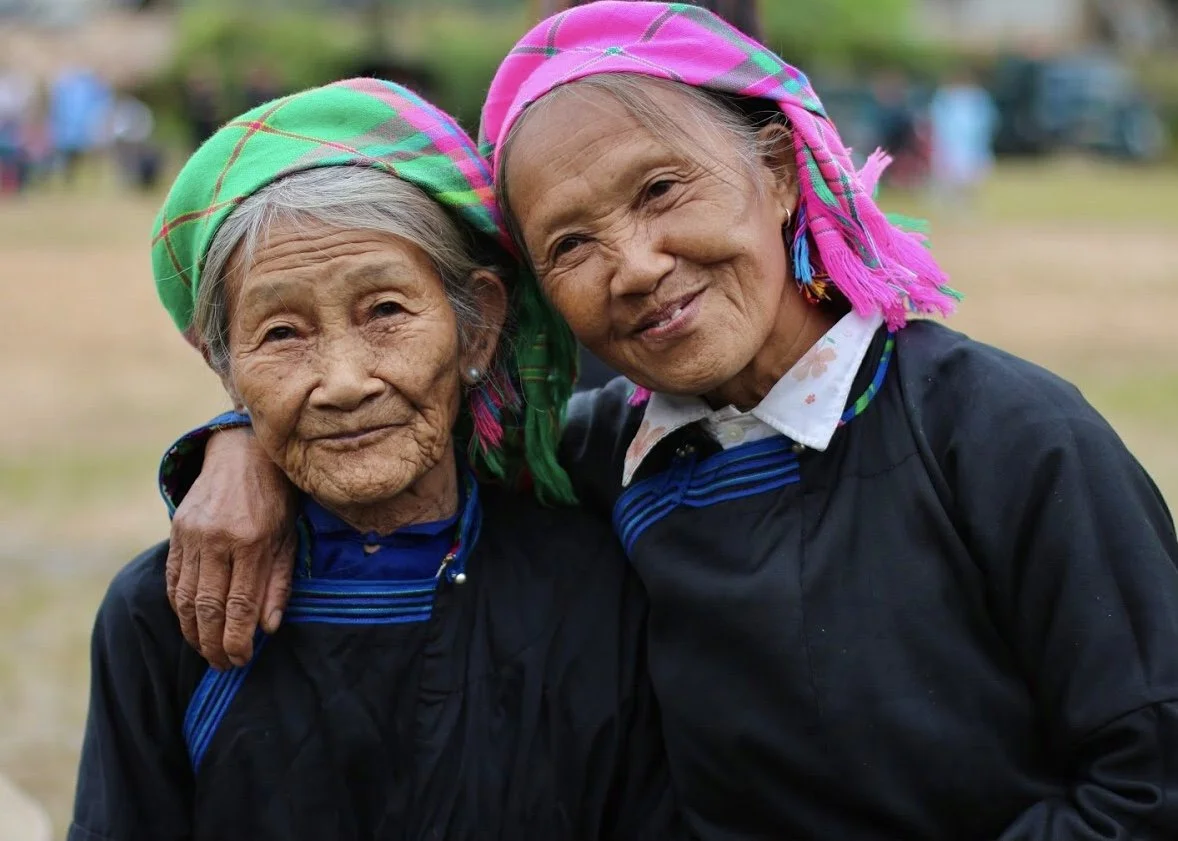
Two Tày women in a remote community in Lào Cai Province, Northern Vietnam, wearing traditional black clothing with distinctive blue detailing and colourful headscarves. Standing closely together, the portrait conveys warmth, familiarity and the strong social bonds that remain central to community life in the region.
