Work That Cannot Be Seen at First Glance
What visitors experience on the trails with ETHOS often feels effortless. We hope that the pace feels natural, the route intuitive, and that decisions appear to be made with quiet ease. Beneath that simplicity sits an enormous body of work, built over years, that has required patience, persistence, and a deep respect for the people at its heart.
Creating a system that meets international safety standards while remaining rooted in local knowledge has not been straightforward. It has demanded a complete rethinking of how training, communication, and decision-making can function in environments where literacy cannot be assumed, yet expertise is undeniable. This has not been an adaptation of existing models, but the creation of something entirely bespoke, shaped from the ground up.
Bridging Two Worlds
At the centre of this work lies a fundamental challenge. On one side sits a literate office team, operating within frameworks of well planned government legislation, documentation, and compliance. On the other stands a network of Hmong and Dao guides whose knowledge is profound, precise, and field-tested, yet largely unwritten and passed down through experience rather than formal education.
Bringing these two worlds together has required trust, time, and the development of tools that function across very different ways of understanding. Visual systems, icon-based decision booklets, and scenario-driven training have been designed to remove ambiguity and create clarity in moments that matter. Each element has been tested in theory and then honed in the realities of rain, mud, fatigue, and time pressure. The result is a system that does not diminish local expertise, but elevates it, allowing it to operate confidently within international expectations.
Layers of Training, Built for Reality
Our training programmes themself are not a single intervention, but a layered and evolving process. Foundational sessions introduce core safety concepts, followed by practical field applications where guides work through real scenarios. These are reinforced through repetition, discussion, and reflection, ensuring that knowledge is not only understood but retained and applied.
Certification in first aid, risk assessment, and food hygiene represents a significant achievement within this structure. These are qualifications to be obtained and skills to be embodied. Treating an injury on a remote hillside, assessing changing river conditions, or managing hygiene in a village kitchen are all situations where theory must translate seamlessly into action. What has emerged within ETHOS is a standard of guiding that is both rigorous and deeply practical, combining formal training with instinctive understanding.
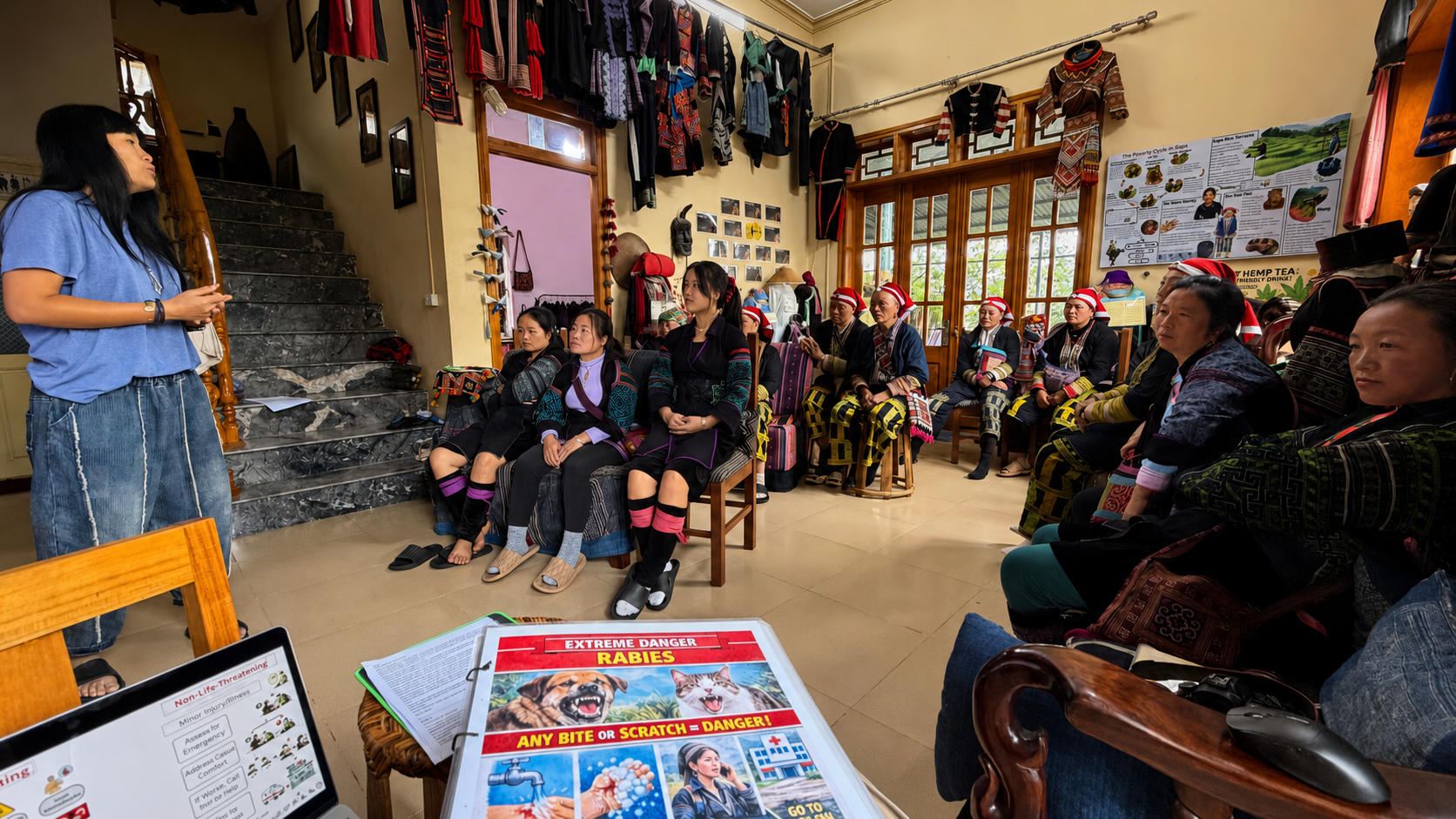
Full team training session for the ETHOS guides within the ETHOS Community Centre in Sapa
Learning From Medical Professionals on the Front Line
One particularly important stage of our ongoing training programme involved a dedicated wellbeing and emergency response workshop delivered in partnership with Hung Thinh General Hospital. Three medical professionals travelled from Lào Cai to Sapa to work directly with both ETHOS guides and the office team, bringing frontline medical experience directly into the mountains where our guides operate every day.
The session was led by Vũ Minh Nghĩa, who currently works within the Intensive Care and Emergency Department at Hung Thinh General Hospital. Rather than relying on abstract theory or generic classroom examples, the training focused heavily on real-world trekking scenarios that guides may genuinely encounter in the field across northern Vietnam.
Together, guides and staff worked through practical discussions surrounding dehydration, slips and falls on steep terrain, heat exhaustion, allergic reactions, river crossings, delayed evacuation challenges, and communication during incidents involving international guests. The emphasis was always on early recognition, calm decision-making, and understanding how relatively small problems can escalate quickly if not managed correctly in remote environments.
After exploring risk identification and mitigation strategies, the training moved into practical emergency response. Guides practised CPR techniques, casualty positioning, wound care, emergency assessment, and first aid procedures through hands-on exercises designed to build both confidence and familiarity. For many of the guides, this represented one of the first opportunities to work directly alongside hospital emergency professionals in such a structured environment.
What stood out most throughout the sessions was the level of engagement from the guides themselves. Questions continued long after exercises had finished, with many guides eager to relate the training back to real situations they had experienced personally on the trail. The atmosphere was serious and focused, yet also deeply collaborative, with local experience and professional medical expertise constantly informing one another.
This kind of partnership represents an important part of how ETHOS approaches safety development. We do not see training as a one-time requirement or a box-ticking exercise but do see it as an ongoing process of learning, reflection, and improvement that combines lived mountain experience with evolving professional standards and medical best practice.
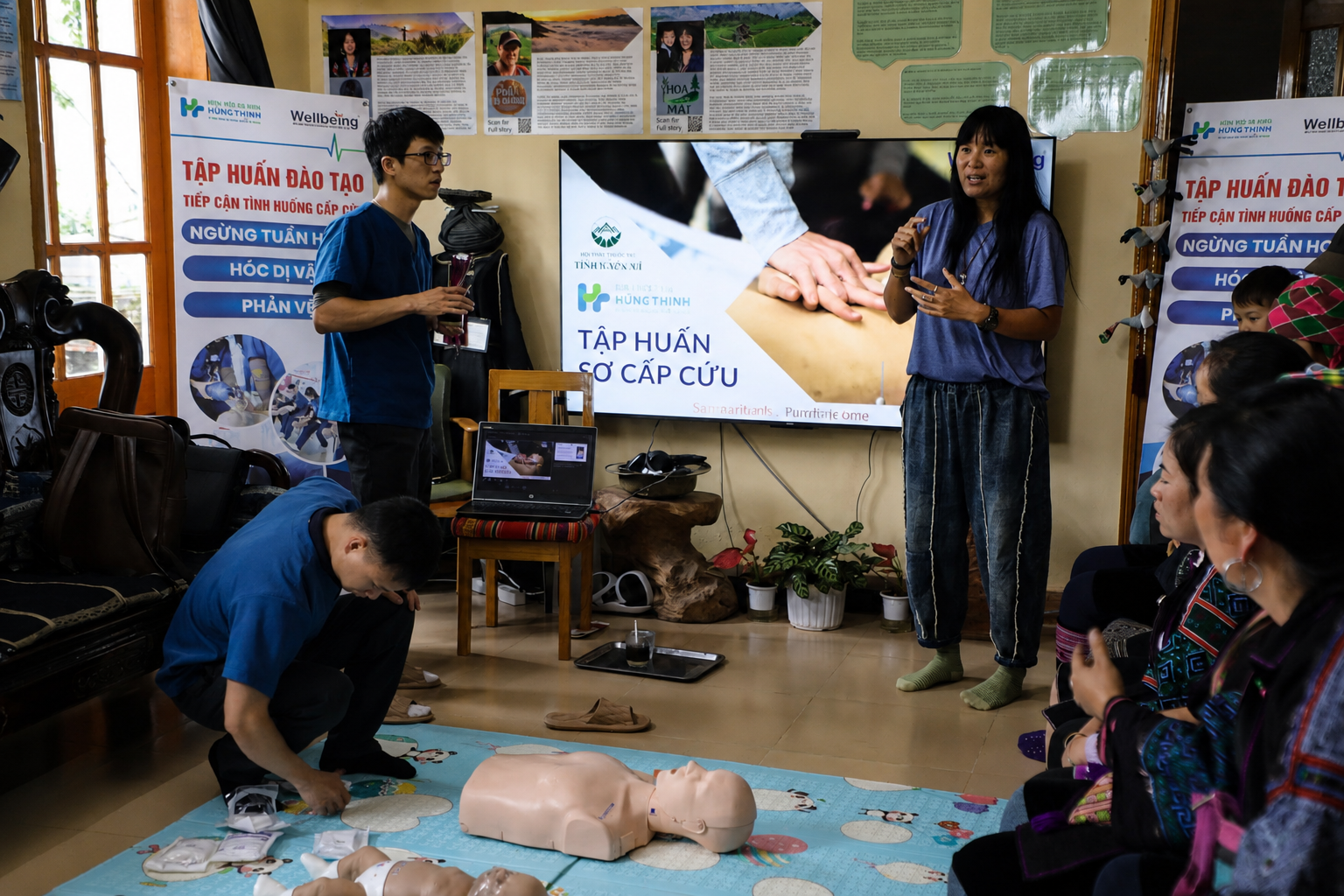
Mai Thanh Hoa - ETHOS Director introducing a training session led by Hung Thinh General Hospital
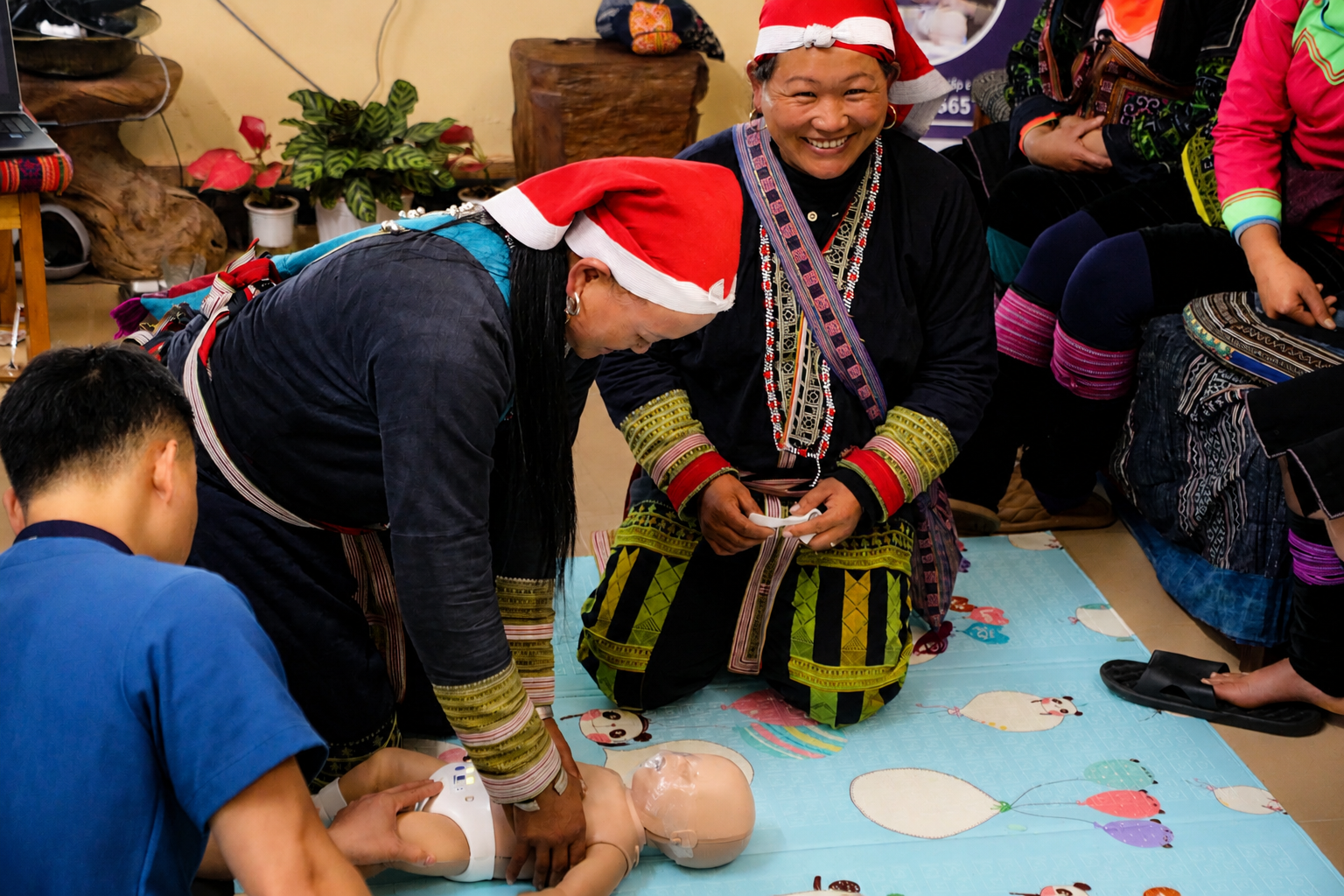
ETHOS Red Dao guides practicing CPR
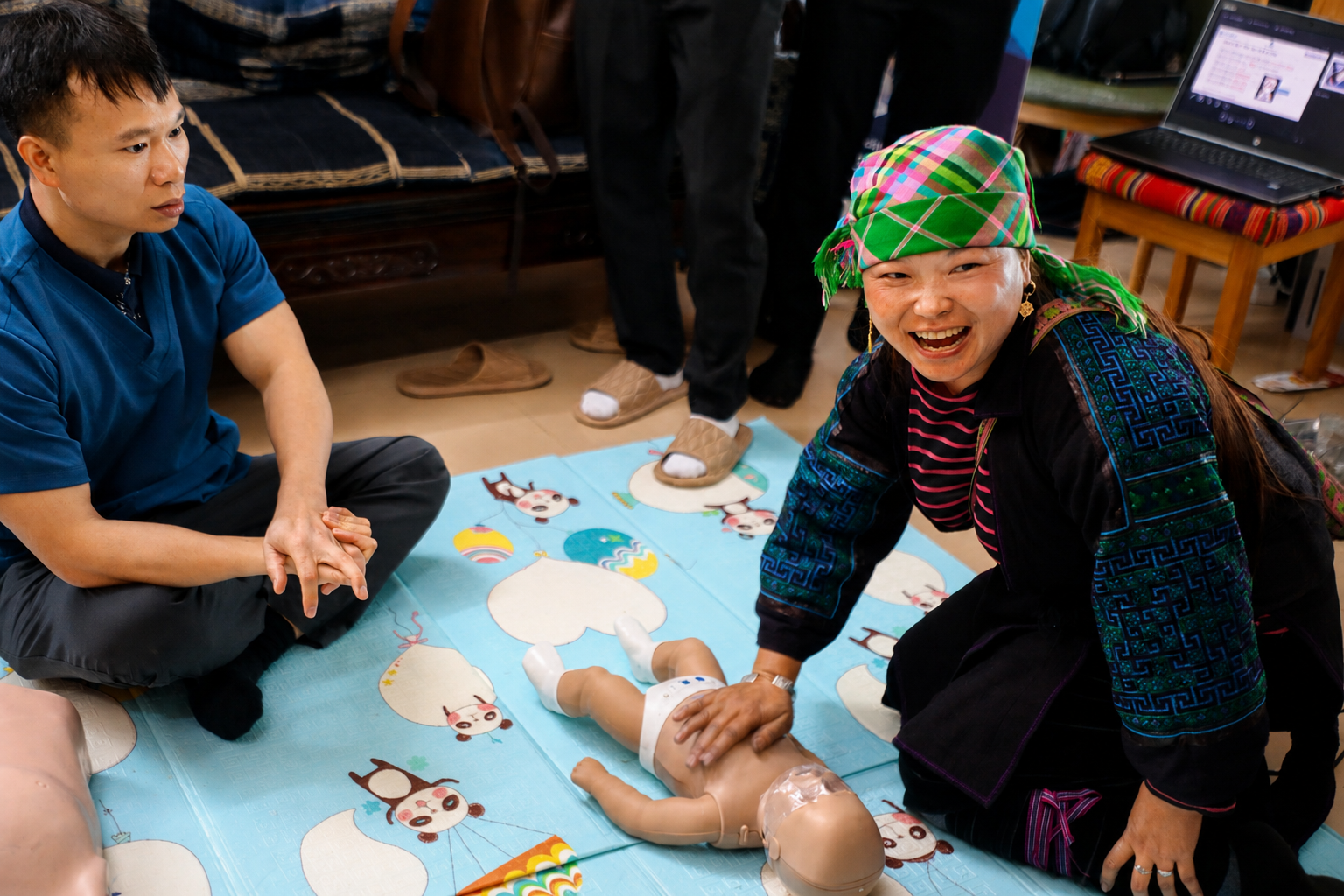
Hmong guide undertaking first aid training in the ETHOS Community centre, Sapa.
Training Beyond Certification
Safety training is often misunderstood within tourism. Many people imagine that once a certificate is awarded, the process is complete. In reality, meaningful safety culture develops through continual repetition, discussion, reflection, and practical experience over time.
At ETHOS, training extends far beyond simply completing courses. Our guides participate in ongoing learning focused on first aid, risk assessment, food hygiene, communication, guest welfare, weather interpretation, emergency escalation, and route management. Much of this training is scenario-based, designed around realistic situations guides may genuinely encounter in the mountains.
Guides work through situations such as responding to guest exhaustion during extreme heat, navigating rapidly changing weather conditions, managing swollen rivers after heavy rain, dealing with slips and falls on steep terrain, recognising dehydration symptoms, adapting routes due to landslide risk, or supporting nervous or overwhelmed guests during difficult sections of trail.
Particular emphasis is placed on communication and decision-making. Calm leadership can often prevent small problems from escalating into larger ones. Guides practise how to explain route changes clearly, reassure anxious travellers, maintain group confidence, and communicate effectively even when language barriers exist. They also understand that decision-making does not happen in isolation. The office team remains constantly available to support guides during treks whenever conditions become uncertain or additional assistance is required.
Watching guides who once lacked confidence in structured learning environments now confidently discussing emergency procedures, food safety standards, or route management systems has been incredibly rewarding. What makes this especially meaningful is the enthusiasm the guides themselves bring to the process. There is a genuine eagerness to learn, improve, and develop professionally. Training sessions are filled with discussion, curiosity, humour, and shared problem-solving. Guides actively contribute their own experiences, challenge ideas, and help shape how systems evolve over time.
A Strong Record Built Through Consistency
Perhaps the clearest reflection of all this work is seen not in paperwork or certificates, but in the experiences of the guests themselves. Over many years of operating treks throughout the mountains surrounding Sapa, ETHOS has built an exceptionally strong track record for both guest safety and guest satisfaction, something achieved not through luck, but through consistency, preparation, communication, and the professionalism of the guides leading every trek.
Safe and rewarding trekking experiences are created long before guests ever step onto a trail. They are created through route planning, weather assessment, guide communication, group management, local decision-making, and the quiet confidence that comes from deep familiarity with the landscape itself. They are strengthened further by the willingness of guides to slow down, adapt plans, change routes, or seek support whenever conditions demand it.
Many of the trails used by ETHOS guides are not formally marked or documented on tourist maps. They exist instead within a living network of local knowledge passed between families, villages, and generations. Combined with structured training, international safety frameworks, and strong communication between guides and office staff, this allows treks to remain adventurous and authentic while still operating within clear safety protocols.
Guest feedback consistently highlights not only the warmth and knowledge of the guides, but also the calm and reassured feeling people experience while trekking with them. Visitors often arrive expecting beautiful scenery, yet leave speaking just as much about the professionalism, awareness, adaptability, and quiet competence of the people who guided them through it.
Knowledge That Cannot Be Taught in a Classroom
What makes this work truly powerful is the depth of knowledge that already exists within the communities themselves. Long before formal systems were introduced, these guides were navigating complex environments with a level of awareness that cannot easily be replicated through conventional education.
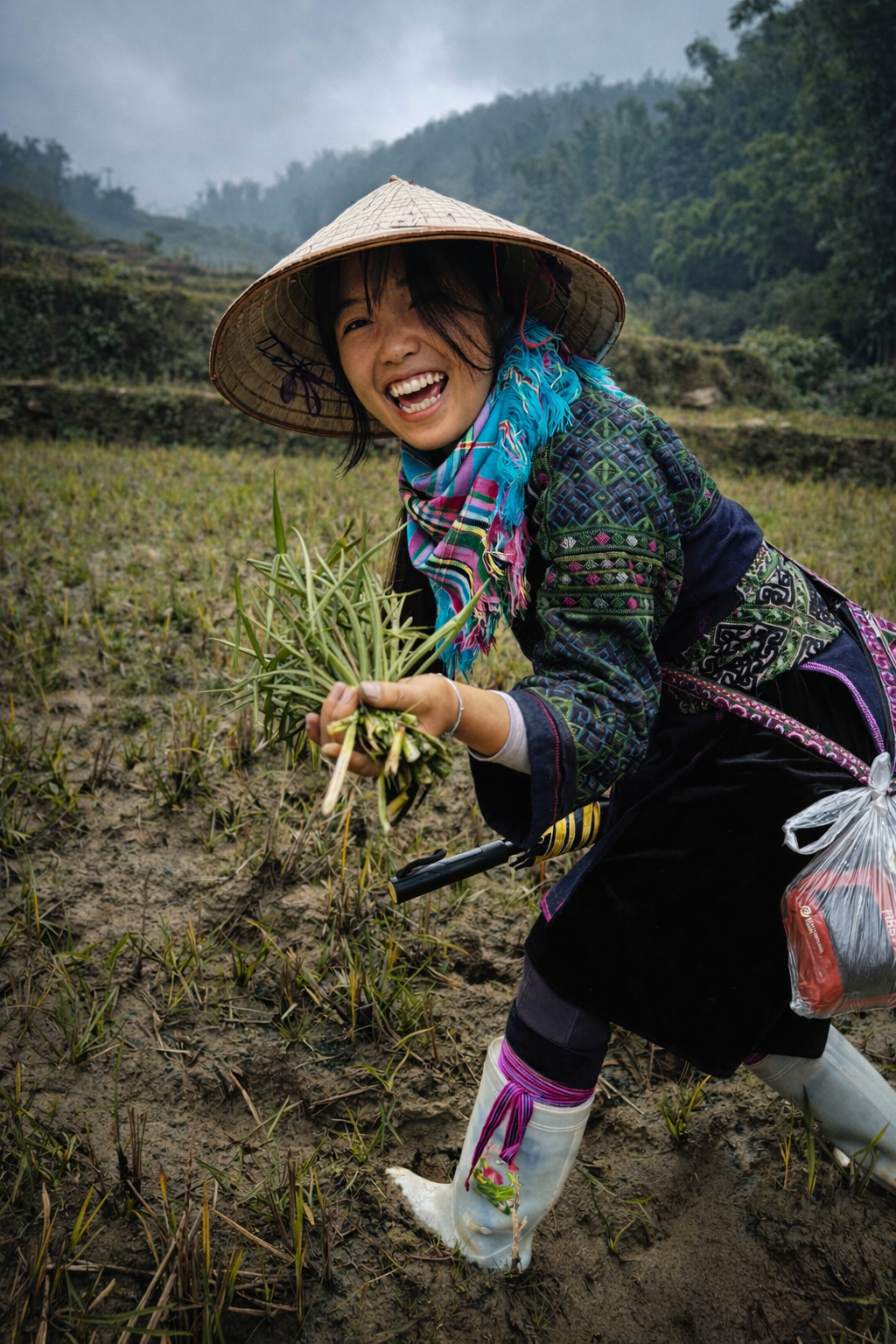
A guide may pause beside a patch of vegetation and identify edible plants that have sustained families for generations, knowing precisely when they are safe to harvest and how they should be prepared. Another may point out leaves used to treat cuts, reduce swelling, or soothe insect bites, drawing on knowledge that has been refined through lived experience rather than written instruction.
Weather is read not through forecasts, but through subtle changes in the air, the movement of clouds across ridgelines, and the behaviour of animals and insects. The onset of heavy rain, the likelihood of a storm, or the instability of a slope can often be anticipated hours in advance through these observations.
Perhaps most remarkable is their understanding of the trail network itself. Many of the routes used daily do not appear on any map. They exist instead as a living network, maintained through use, memory, and community knowledge. These paths connect villages, fields, forests, and water sources in ways that are both intricate and precise. To move through them without guidance would be disorientating. To walk them with someone who knows them is to experience a seamless continuity of movement through the landscape.
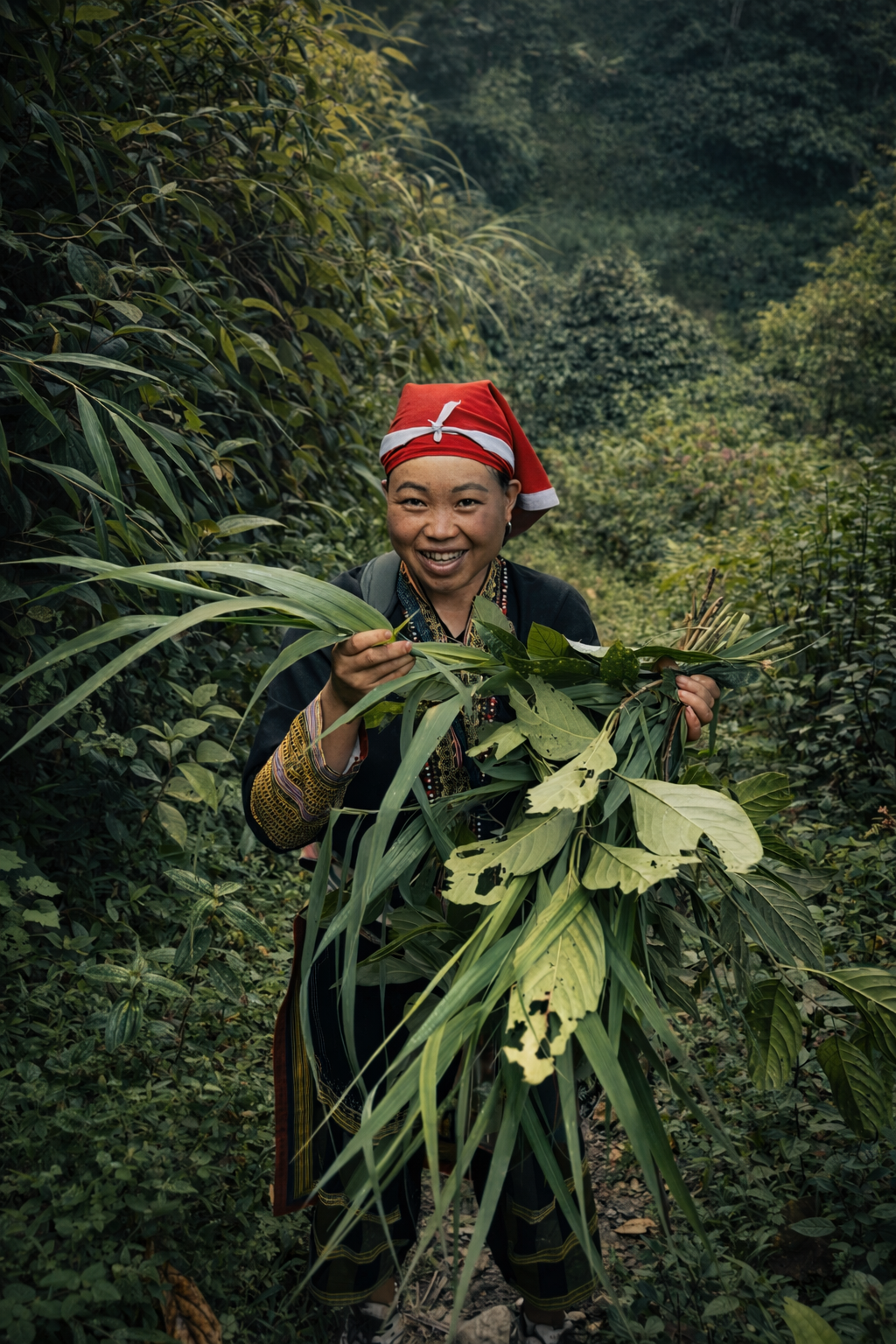
Dao guide demonstrating knowldge of traditional herbal medicines
Hmong guide gathering wild foods
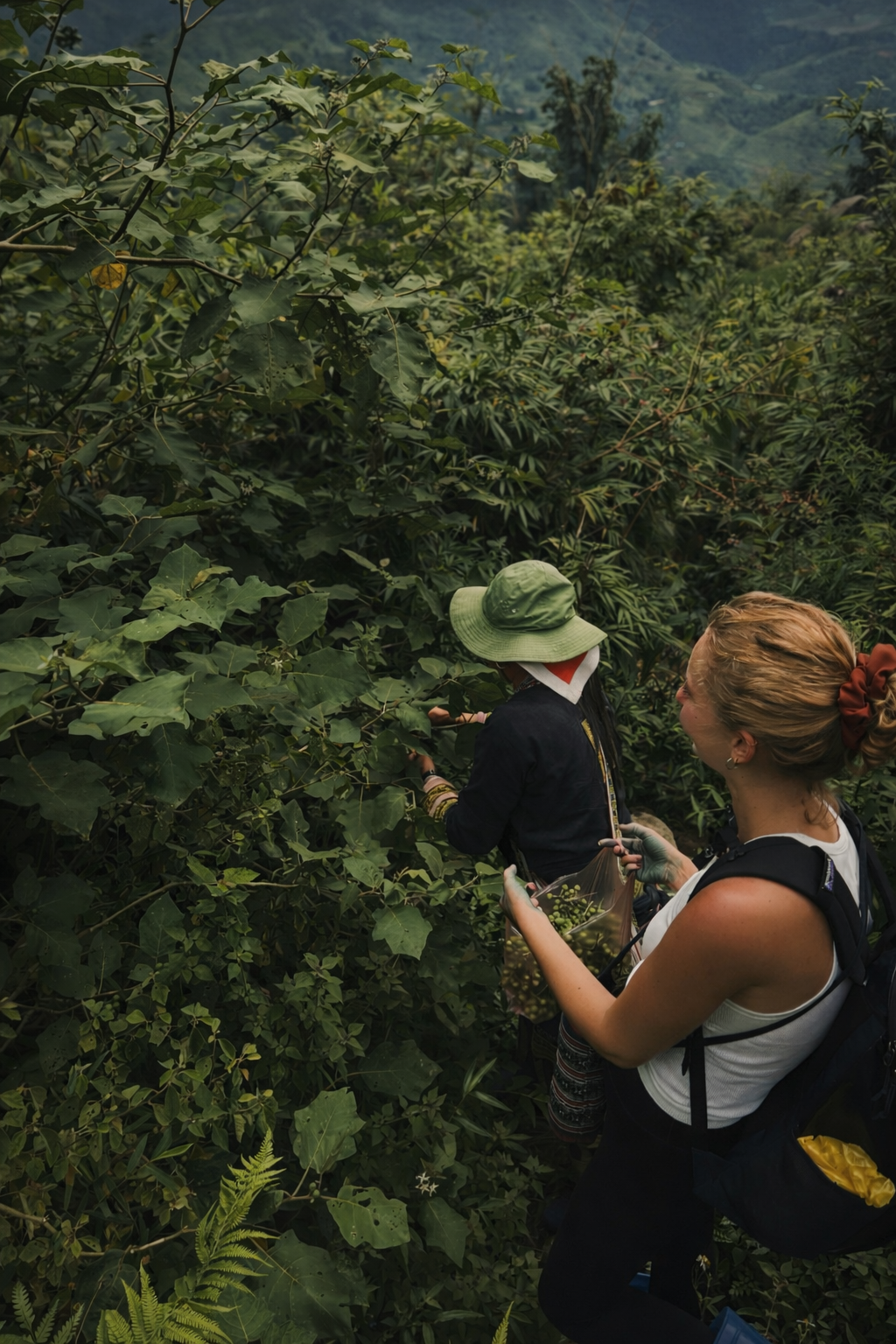
Dao guide showing travellers how to forage in Sapa
Respecting Expertise While Building Structure
The challenge has never been to replace this knowledge, but to support it. The systems that have been developed are designed to sit alongside existing expertise, providing structure where needed without disrupting what already works.
A guide who understands the early signs of fatigue in a guest now has a clear protocol for when to stop, how to respond, and how to communicate that decision. A guide who can read a river’s behaviour instinctively now operates within a shared framework that ensures consistency across the entire team.
This integration has taken time. It has required listening as much as teaching, adapting as much as instructing. The process has been collaborative at every stage, recognising that the most effective solutions are those that are co-created.
The Rise of Local Leadership
At ETHOS, training is not only delivered from the top down. Some of the most meaningful progress we have witnessed in recent years has come from seeing younger guides step forward into positions of responsibility, leadership, and mentorship within their own communities. Two of the strongest examples of this are ETHOS youth leaders Ly Thi Cha and Sung Thi Do, whose growing confidence and commitment have become an important part of our wider training culture.
Both Cha and Do began their journeys as young local guides learning how to communicate with international guests, navigate safely through the mountains, and represent their communities with confidence and pride. Over time, their roles have steadily expanded beyond guiding alone. They now actively assist with elements of guide development, practical safety discussions, communication exercises, and peer learning sessions within the ETHOS team.
This progression matters deeply because leadership cannot simply be imported from outside. Strong long-term safety culture only develops when local people themselves begin teaching, guiding, and supporting others around them. Watching younger Hmong women stand in front of their peers, share experiences from the trail, explain decision-making, and help newer guides build confidence represents a significant step forward not only for ETHOS, but for the wider future of community-led tourism in the region.
Their involvement also creates a far more relatable learning environment for newer guides, particularly those who may feel nervous about formal training or uncertain about their own abilities. When guides see women from neighbouring villages confidently discussing route choices, guest communication, changing weather conditions, or cultural interpretation, the training becomes less intimidating and more achievable. It transforms safety and leadership from something theoretical into something personal, practical, and attainable.
Both Cha and Do bring their own personalities and strengths into these sessions. Their knowledge of local trails, village customs, edible plants, seasonal farming rhythms, and mountain conditions is paired with an increasing confidence in communication, organisation, and leadership. This blend of inherited local knowledge and structured professional development sits at the very heart of what ETHOS is trying to build.
For us, this is about far more than ticking boxes or delivering certificates. It is about creating genuine pathways for growth, confidence, and opportunity within local communities themselves. Seeing young guides evolve into capable leaders, mentors, and role models for others is one of the clearest signs that the training systems we have worked so hard to build are beginning to create lasting change.
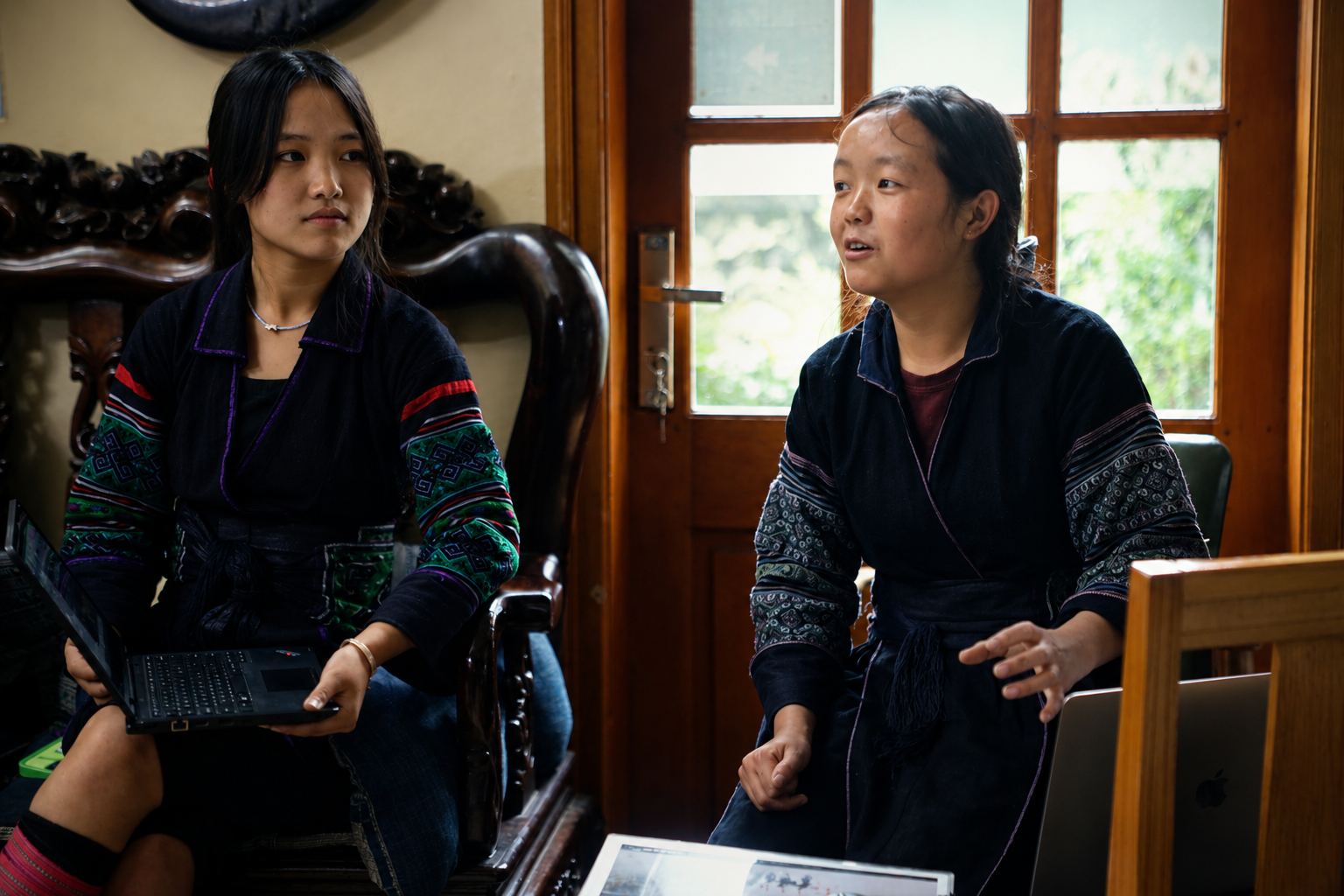
Ly Thi Cha and Sung Thi Do leading a training session on food preparation and cleanliness.
A System That Continues to Grow
This work is ongoing. Each trek, each season, and each new challenge provides an opportunity to learn and improve. Feedback loops ensure that experiences in the field are brought back into training, refining the system further.
The strength of this approach lies in its adaptability. It is not fixed, but responsive, capable of evolving as conditions change and as the team continues to grow in confidence and capability.
Adventure, Culture, and Responsibility
Adventure travel should never feel sanitised or artificial. People come to northern Vietnam searching for immersion, unpredictability, connection, and genuine cultural experience. The goal is not to remove adventure from trekking, but to support it responsibly through preparation, communication, local knowledge, and good decision-making.
The mountains themselves will always remain dynamic environments. Weather shifts quickly and trails change constantly. Rivers rise and slopes erode. Conditions evolve from one week to the next. What matters is not pretending risk can be eliminated entirely, but ensuring guides possess the confidence, judgement, and support systems necessary to respond appropriately when situations change.
What ETHOS has built is ultimately rooted in people. It is rooted in guides who know these mountains intimately because they have spent their lives within them. It is rooted in communities who continue farming and maintaining the landscapes travellers come to experience. It is rooted in younger generations stepping forward into leadership roles. I t is rooted in a willingness to learn continuously, adapt constantly, and combine local wisdom with evolving professional standards.
The work behind these systems has been extensive and at times extraordinarily challenging. Building practical safety frameworks across different languages, literacy levels, cultures, and educational backgrounds is no small task. Yet the results are increasingly visible every day in the confidence of the guides, the consistency of operations, the professionalism of communication, and the trust guests place in the people leading them through these mountains.
Ultimately, the strongest safety systems are not built through paperwork alone. They are built through relationships, shared learning, local leadership, humility, and a collective commitment to doing things better year after year.
Walking Forward Together
To walk these mountains today is to be supported by something far greater than a single guide. It is to be part of a network, a system, and a shared commitment to doing things properly. The rice terraces, the forest paths, and the hidden trails remain as they have always been, shaped by generations of care and effort. What has changed is the framework that supports those who guide others through them.
This is not simply about compliance with legislation but more about recognising the value of local knowledge, investing in its development, and ensuring that it can continue to thrive within a modern context. What has been built is something both practical and deeply human. It stands as a testament to what can be achieved when respect, hard work, and collaboration come together with a shared purpose.