
El Niño 2026 in Vietnam: Heat, Storms, and What Travellers Need to Know Before Exploring the North

Infographic describing the possible impacts of El Nino 2026 on northern Vietnam
Northern Vietnam Is Entering a More Unpredictable Climate Era
Across the mountains of northern Vietnam, weather has always shaped daily life. Rice terraces depend upon carefully guided water flowing down steep hillsides. Forests provide herbs, medicines, fibres, dyes, and food gathered according to seasonal rhythms passed through generations. Families plan planting, harvesting, market days, weddings, and journeys according to changing skies and shifting winds.
For many travellers, weather is something checked briefly on a phone before departure. For the Hmong, Dao, Giáy, and other ethnic communities we work alongside at ETHOS, weather is inseparable from life itself. Climate change means that relationship is becoming increasingly uncertain.
Vietnam’s National Center for Hydro-Meteorological Forecasting has warned that El Niño conditions have an 80–90% chance of developing between June and August 2026, with a growing possibility that conditions could intensify into a “super” El Niño lasting into 2027. Researchers across Asia and the Pacific are watching developments closely as global ocean temperatures continue to break records and climate systems become increasingly unstable.
Though El Niño is a naturally occurring climate cycle, climate change is intensifying many of its effects. Across Vietnam, forecasters are warning of prolonged heatwaves, delayed monsoon rains, severe thunderstorms, flash floods, landslides, drought conditions, and increasingly erratic weather patterns.
For travellers planning journeys through Hanoi, Sapa, Hà Giang, Ninh Bình, or Ha Long Bay, understanding these changes matters deeply. Not because northern Vietnam should be avoided, though because travelling here increasingly requires flexibility, patience, humility, and respect for the landscapes and communities already living through these changes.
The Growing Concern Around a Potential “Super” El Niño
Climate researchers are increasingly discussing the possibility that 2026 could develop into a “super” El Niño, a rare and exceptionally intense event capable of reshaping weather patterns across huge parts of the world.
Comparisons have already been drawn with the devastating 1877–1878 El Niño, widely regarded as one of the most destructive climate disasters in recorded human history. Historians estimate that the wider droughts and famines associated with that event contributed to the deaths of more than 50 million people across India, China, Brazil, and other regions, representing roughly 3–4% of the world’s population at the time.
Researchers later described the event as potentially “the worst environmental disaster ever to hit humanity”.
The devastation did not happen suddenly. Drought conditions spread gradually through tropical and subtropical regions before intensifying as multiple oceanic and atmospheric systems aligned with the extreme El Niño event. Though modern forecasting systems, communications, infrastructure, and disaster planning make direct comparisons difficult today, scientists remain deeply concerned about how stronger El Niño cycles may interact with historically warm oceans and rising global temperatures.
Vietnam sits directly within many of those intersecting pressures.
What El Niño Usually Means for Vietnam
In simple terms, El Niño often brings hotter and drier conditions to much of Vietnam overall, particularly across the north and central regions. Summer monsoon rainfall tends to weaken or arrive later than normal while heatwaves become longer, more intense, and more physically exhausting. Though the reality is far more complicated than simply “hot and dry”.
One of the defining contradictions of El Niño years is that rainfall often becomes less frequent but more extreme. Instead of weeks of steady monsoon rain, storms may arrive suddenly and violently, releasing enormous amounts of water within very short periods of time. This pattern creates especially dangerous conditions across northern Vietnam’s mountains, where steep terrain and unstable roads are highly vulnerable to landslides and flash flooding.
Studies of previous strong El Niño periods consistently showed hotter temperatures, delayed monsoon activity, significant rainfall reductions, increased drought conditions, fewer tropical cyclones overall, and heightened risks of severe storms and rapid flooding events. For travellers, this often means longer stretches of beautiful stable weather interrupted by abrupt and sometimes dangerous weather events.
Hanoi: Heavy Heat and Violent Afternoon Storms
Longer, More Exhausting Heatwaves
Hanoi already experiences intense summer heat, though El Niño years tend to push temperatures into longer and harsher extremes. Climate studies suggest average summer temperatures may rise by around 0.5–1°C above normal, though the lived experience often feels far more dramatic once humidity, traffic, and urban density are factored in.
Between June and August 2026, visitors should expect prolonged stretches of oppressive heat, particularly during late mornings and afternoons when the city radiates warmth from concrete streets and glass buildings long after sunset. Hanoi has always lived with summer heat, though El Niño years tend to intensify it significantly. During June, July, and August, the city often feels physically exhausting long before temperatures reach their daily peak.
Concrete streets radiate trapped heat well into the evening while traffic fumes linger in stagnant air. Sidewalk vendors retreat beneath umbrellas while locals gather around iced tea stalls and shaded courtyards waiting for temperatures to soften after sunset.
Climate forecasts suggest average summer temperatures could rise around 0.5–1°C above seasonal norms during El Niño conditions. Though in practice, dense humidity and urban heat retention frequently make conditions feel far harsher than statistics alone suggest. The most unstable periods may arrive during seasonal transitions between March and May and again between September and October. Thunderstorms often build rapidly during late afternoons, bringing sudden lightning, hail, squalls, and flash flooding across low-lying streets.
For travellers, slower pacing becomes essential. Early mornings are increasingly the best time to explore Hanoi’s lakes, temples, old alleyways, and street markets before the heat becomes overwhelming.
Sapa: Mountain Beauty and Growing Fragility
In Sapa and the wider Hoàng Liên mountains, weather shapes everything. Terraced rice fields are sustained through complex water systems developed over generations by Indigenous farming communities. Forests provide food, medicine, dyes, fibres, and materials gathered according to deeply rooted environmental knowledge. Sudden changes in rainfall patterns ripple through every part of daily life. Under El Niño conditions, Sapa may experience longer dry periods punctuated by violent storms capable of triggering landslides, swollen rivers, and dangerous trekking conditions.
Travellers often imagine mountain weather as gentle mist and cool rain drifting quietly through valleys. The reality can change astonishingly quickly. A clear morning may become a dangerous afternoon storm within hours. Trails become slippery almost instantly while mudslides occasionally cut roads between villages and town centres.
Though the mountains remain extraordinarily beautiful during unstable weather. Waterfalls surge through terraces after rain while clouds roll dramatically through valleys and forests fill with the scent of wet earth, woodsmoke, and medicinal plants gathered by local families. This is why flexibility matters so deeply in the mountains.
At ETHOS, trekking routes are never treated as fixed products. Our local partners continuously adapt journeys according to trail conditions, river levels, storms, ceremonies, planting cycles, and community needs. Trained local guide make informed decisions based upon environmental knowledge developed over decades of living within these landscapes.
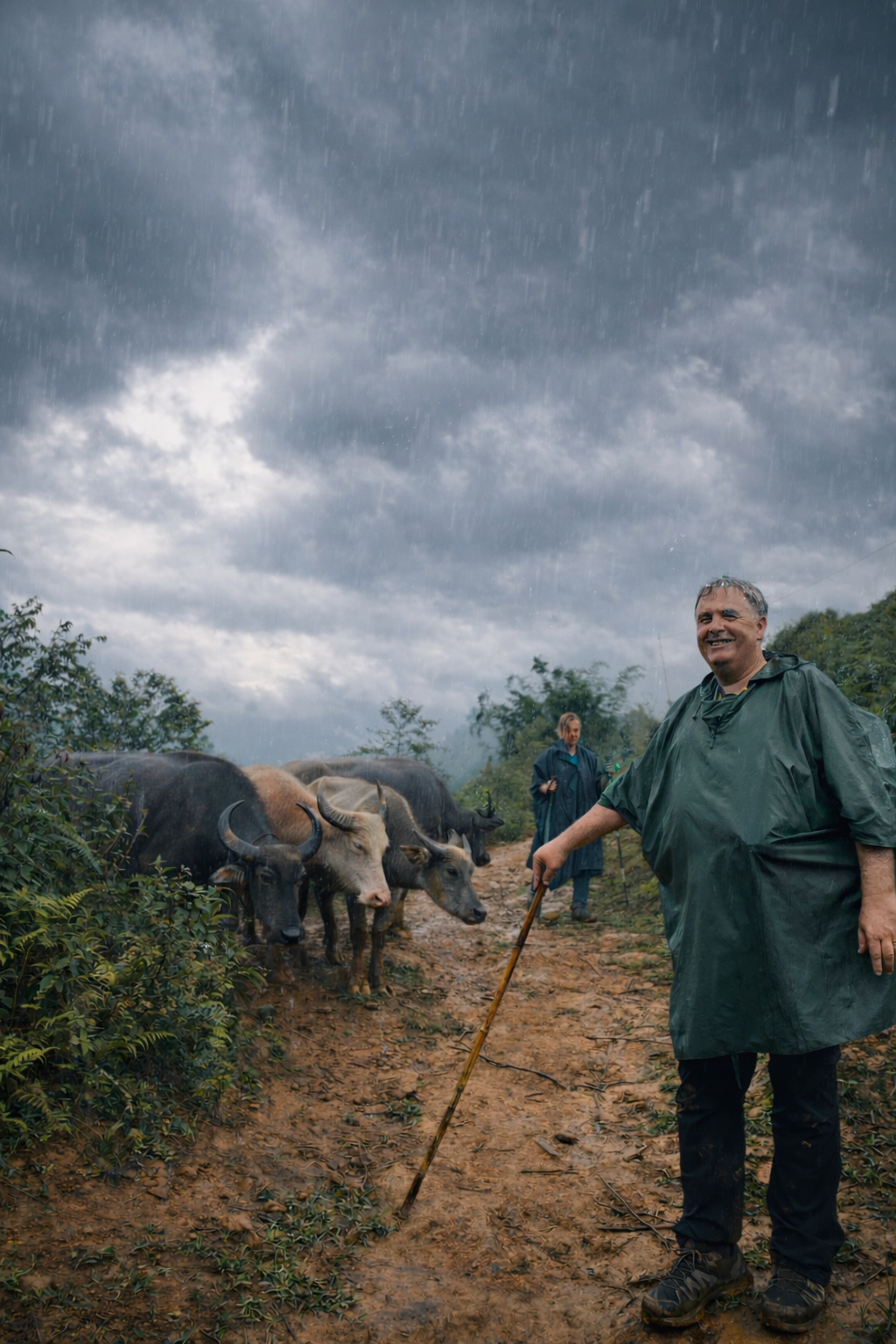
Trekkers in Sapa embracing the summer rains
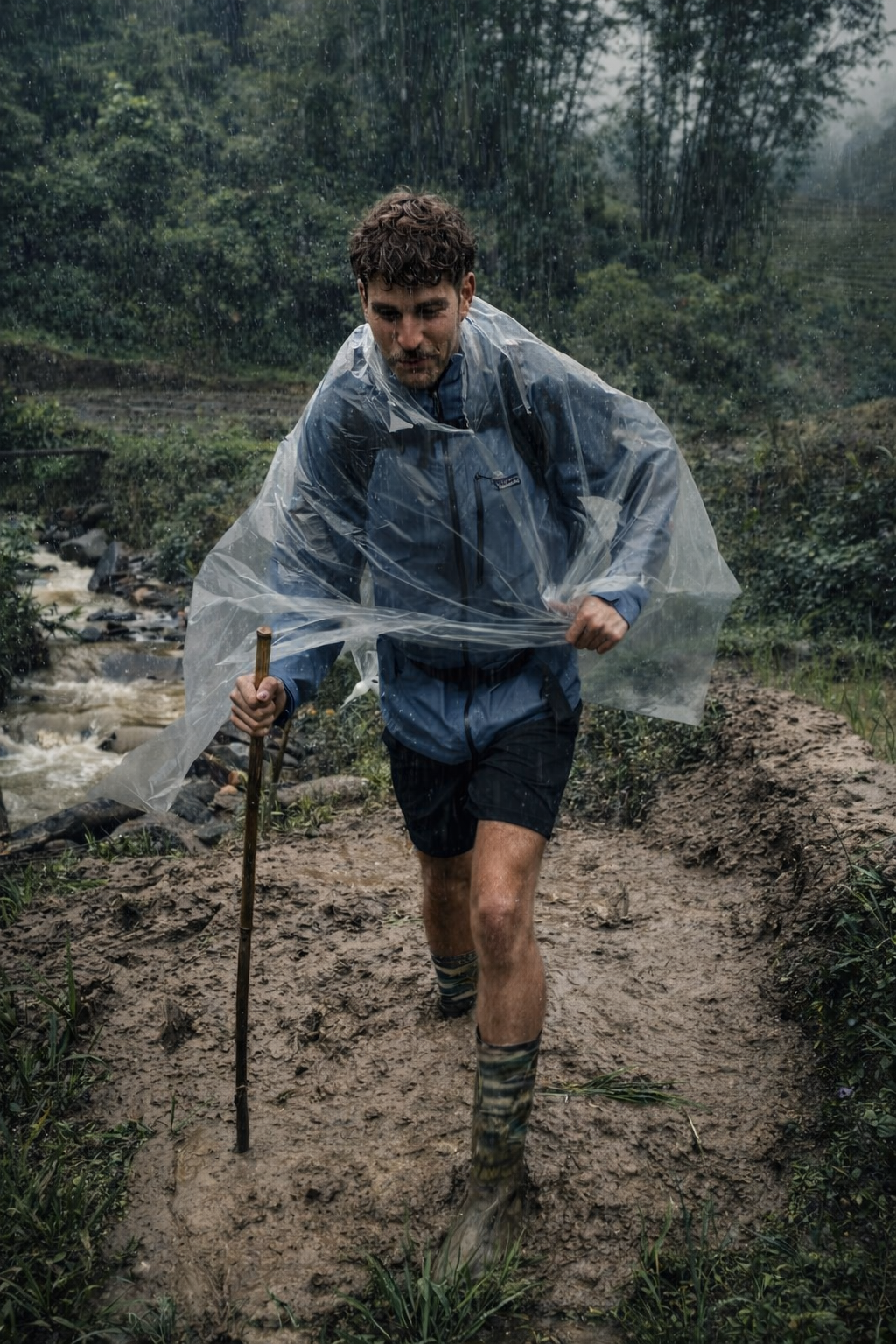
Enjoying a muddy trek in Sapa
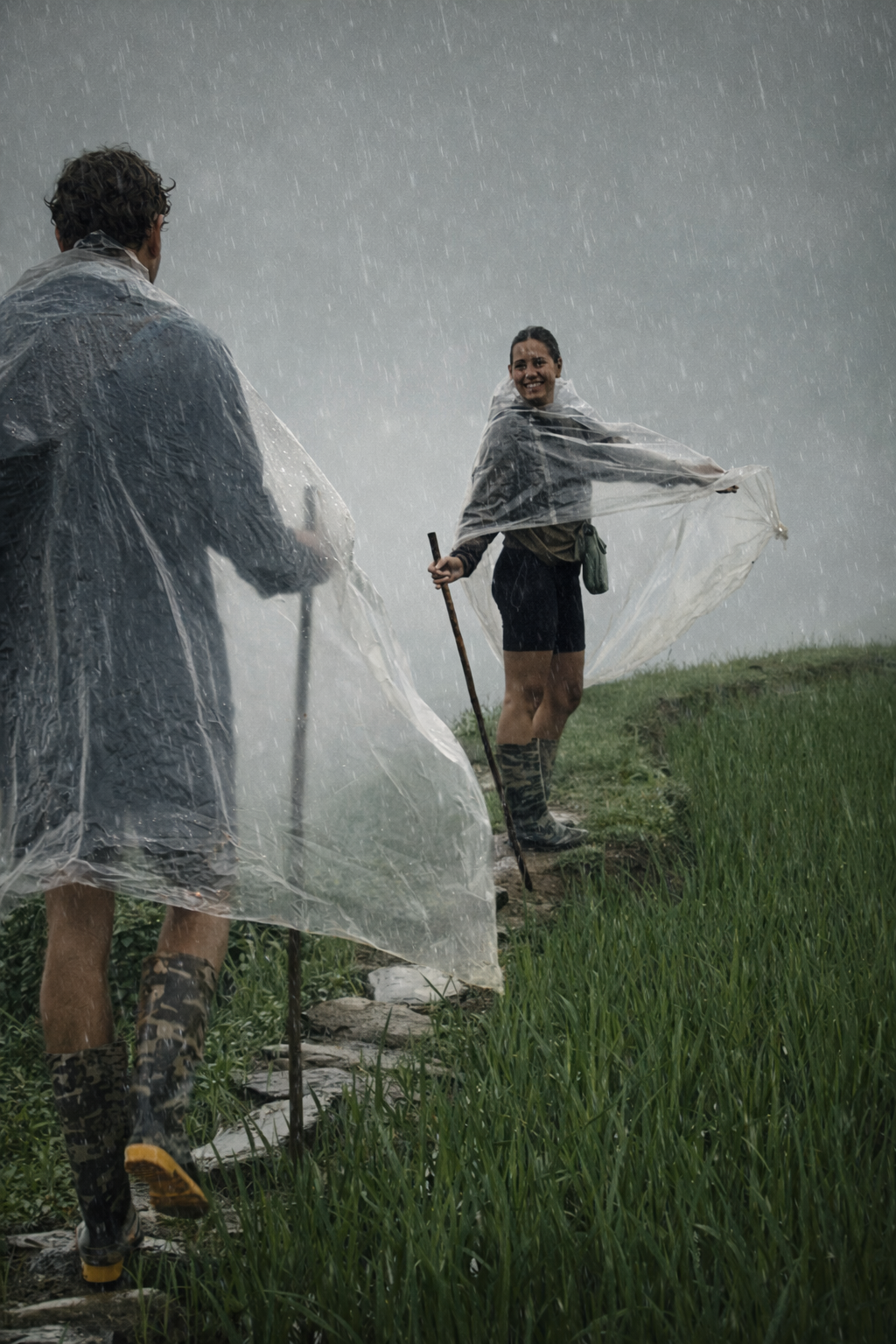
Exploring the Sapa rice terraces in the rainy season.
Trekking Conditions Can Change Very Quickly
Travellers often imagine mountain weather as soft mist and gentle rain, though reality during unstable periods can be far more serious. Trails become dangerously slippery within minutes. Minor streams swell into difficult crossings. Landslides occasionally cut roads connecting villages to town centres.
Summer trekking conditions may become particularly difficult during June to August, when heavy cloudbursts can trigger flash flooding and mudslides on steep paths. That said, some of the mountains’ most extraordinary moments also emerge during the wet season and after rain. Waterfalls surge through valleys. Rice terraces glow vivid green beneath drifting cloud. Forests feel alive with movement and scent.
For this reason, flexibility matters enormously. Travellers willing to adapt routes, shift timings, or spend additional nights in villages often experience the mountains far more meaningfully than those following rigid schedules.
At ETHOS, our routes are constantly adjusted in collaboration with local partners who know these valleys through lived experience rather than online forecasts alone.
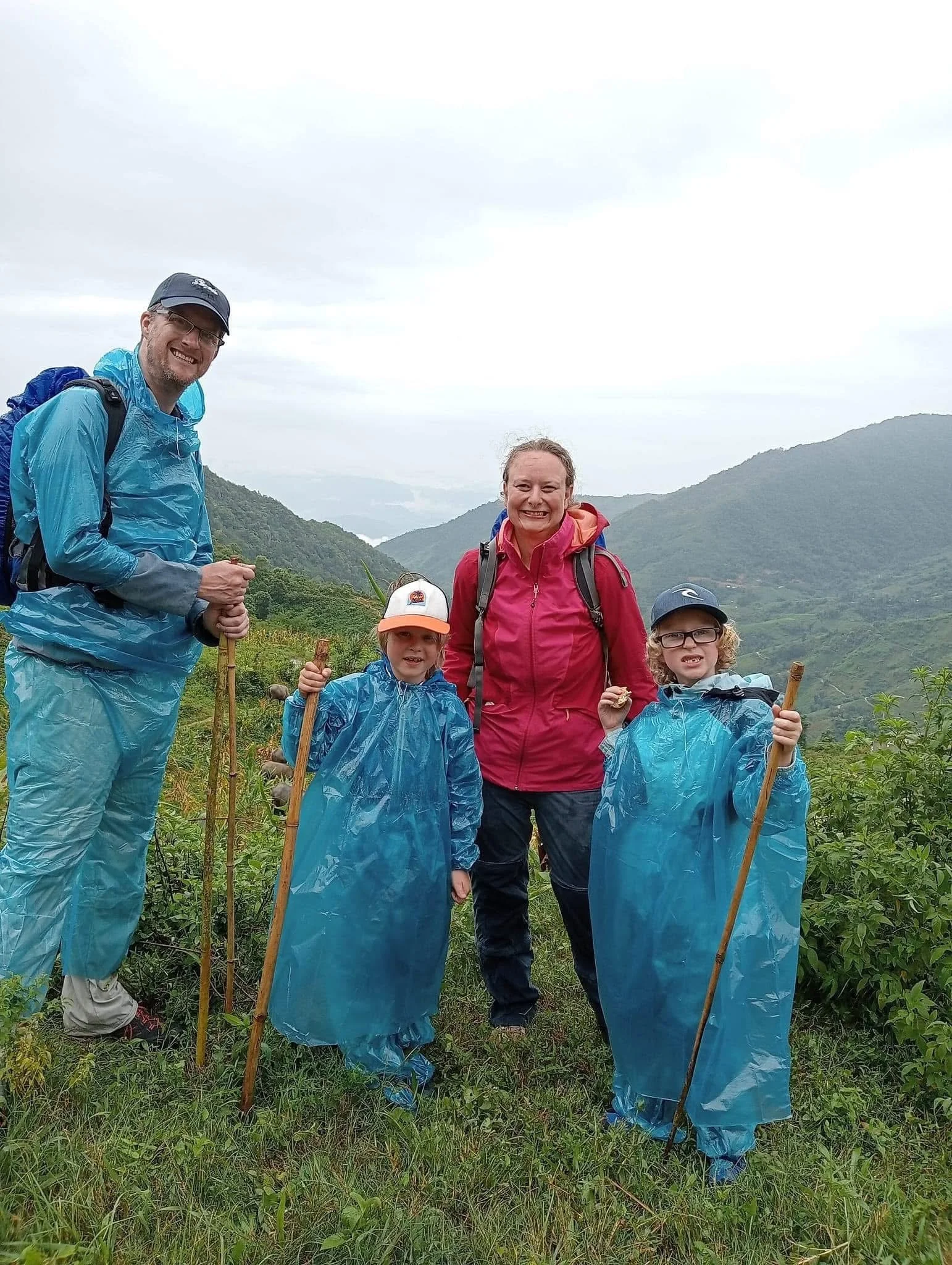
Well prepared trekkers in Sapa embracing the summer monsoon.
Hà Giang: Dramatic Roads Beneath Increasingly Extreme Skies
Few journeys in Southeast Asia feel as visually overwhelming as Hà Giang. Limestone mountains rise sharply above deep valleys while roads twist through cliff edges, high passes, and isolated communities near the Chinese border. Morning mist drifts through stone villages while terraced fields cling impossibly to steep hillsides shaped by generations of Hmong, Dao, and Lô Lô farming families. Though these same landscapes are becoming increasingly vulnerable to weather instability.
Strong El Niño years often produce fewer rainy days overall across northern Vietnam, though rainfall becomes concentrated into shorter and more violent cloudbursts. In Hà Giang, this creates serious landslide risks across mountain roads already weakened by erosion, construction, and increasing tourism traffic.
Periods of prolonged heat can dry and destabilise hillsides before intense rain suddenly triggers collapses. Flooding in narrow valleys occasionally isolates communities and blocks major routes entirely. Fog, loose rock, heavy runoff, and collapsing roadside edges can transform beautiful mountain roads into genuinely dangerous terrain within a matter of hours. This concern becomes even more important when considering the rapid growth of commercial motorbike tourism across the region.
Many highly profit-driven Hà Giang “tour companies” continue operating tours in almost any weather conditions, including during periods of heavy rainfall, severe storm warnings, landslide alerts, and typhoon activity. Risk assessments are often superficial or poorly communicated to travellers, while weather mitigation plans frequently prioritise maintaining schedules and avoiding cancellations over genuine safety considerations. As climate conditions become increasingly unstable during 2026, this issue is likely to become even more serious.
Travellers should never assume that because a tour is continuing, conditions are automatically safe. Many operators are under intense commercial pressure to avoid refunds, maintain group schedules, and maximise high-season revenue. That reality must be considered honestly when choosing who to travel with in the mountains.
Doing your own due diligence is essential.
Ask how operators assess weather risks. Ask what conditions would trigger route changes or cancellations. Ask whether guides are empowered to stop journeys if mountain conditions deteriorate suddenly. Ask how often itineraries are adapted around landslide forecasts or local warnings rather than social media expectations. The mountains do not care about schedules, content creation, or booking calendars.
Responsible travel in Hà Giang increasingly means choosing operators who understand that flexibility, caution, and local environmental knowledge are not weaknesses within an itinerary. They are signs of professionalism, care, and respect for both guests and local communities.
At ETHOS, weather decisions are never made remotely from an office detached from the realities of the mountains. Routes are adapted continuously alongside local partners who live within these valleys and understand how quickly conditions can change. Delaying a journey, altering a route, or staying longer in one village is sometimes the safest and most responsible decision available.
Some of the most meaningful moments in Hà Giang happen when journeys slow unexpectedly. Storm evenings spent inside wooden homes sharing tea or rice wine beside kitchen fires often leave stronger memories than the roads themselves.
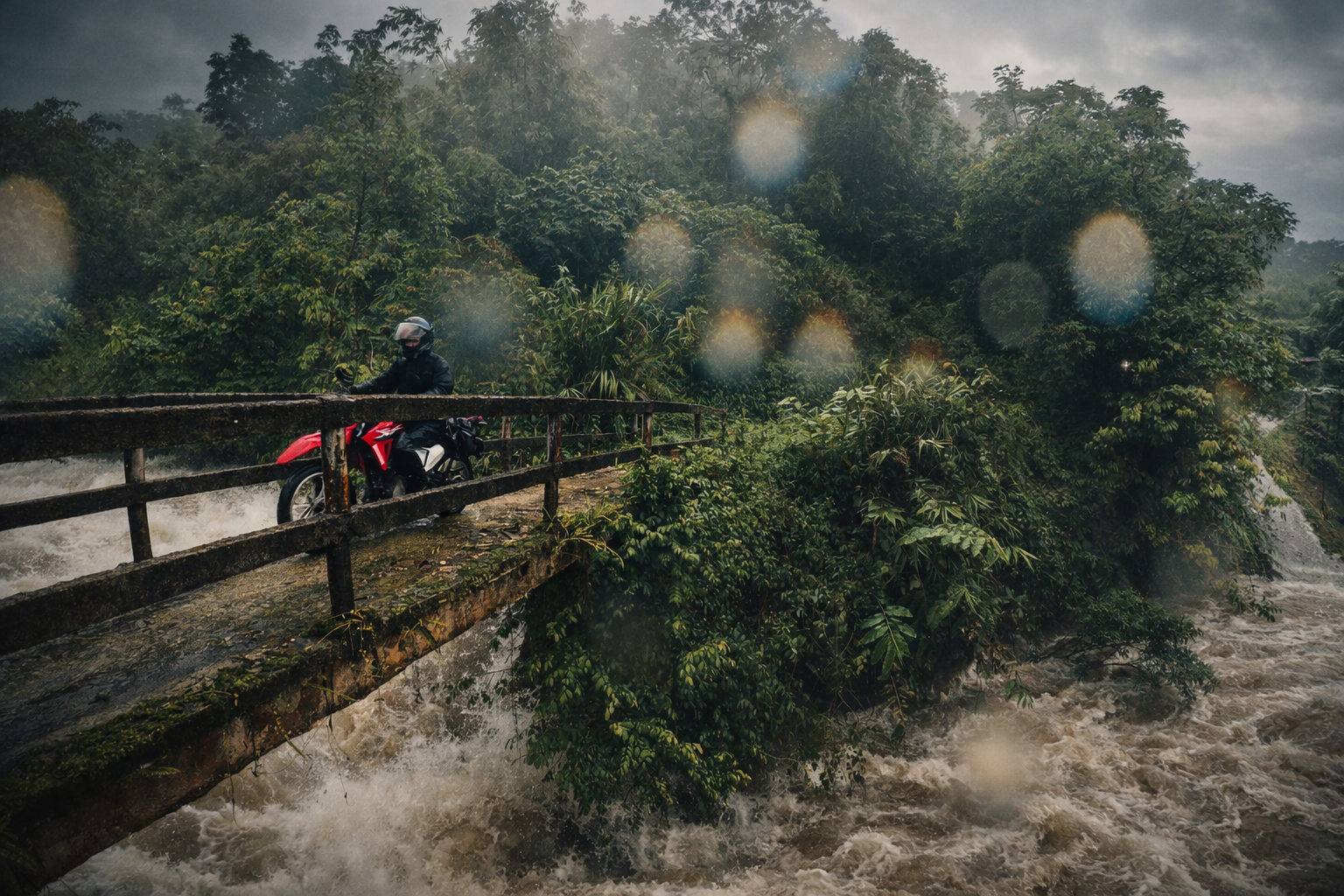
Ha Giang during the monsoon season.
Ninh Bình: Quiet Landscapes and Sudden Floodwaters
Ninh Bình feels gentler than the mountains further north, though its landscapes are equally shaped by water.
Limestone karsts rise above rice fields and winding rivers while small boats drift slowly through caves and flooded valleys. During El Niño conditions, rainfall deficits may lower water levels for periods before sudden storms rapidly reverse them.
Heat and humidity are also expected to intensify significantly during summer months. Cycling beneath open skies during midday can quickly become physically draining, particularly for travellers unaccustomed to tropical heat.
Storms may arrive abruptly during afternoons, transforming calm river landscapes into scenes of intense rainfall and dramatic cloud movement.
For this reason, slower travel rhythms work beautifully here. Dawn boat rides, shaded village lunches, and flexible daily pacing often become far more rewarding than tightly packed itineraries rushing between attractions.
Ha Long Bay, Typhoons, and the Uncertainty of a Warming Ocean
One of the most misunderstood aspects of El Niño is how it affects Vietnam’s storm season.
Historically, El Niño years have usually reduced the number of tropical storms and typhoons affecting Vietnam directly. Vietnamese meteorological studies show that storm frequency often drops noticeably during strong El Niño phases while monsoon rainfall across much of northern and central Vietnam also weakens significantly.
In practical terms, this often means longer dry periods, delayed monsoon activity, and fewer tropical systems making landfall across the country. Though fewer storms do not necessarily mean lower overall risk.
Climate researchers increasingly warn that while the total number of tropical cyclones may decline globally, the storms that do form are becoming more intense, wetter, and less predictable as ocean temperatures continue to rise. Recent long-term studies also suggest Vietnam may already be experiencing an increase in landfalling cyclones compared with other parts of East Asia, despite the historical El Niño relationship with lower storm numbers. For travellers, this creates an increasingly uncertain picture.
A strong El Niño year may still bring long periods of dry and stable weather across northern Vietnam, particularly during early and mid-summer. Though isolated storms arriving later in the season may carry more moisture, stronger winds, and more destructive rainfall than travellers expect after weeks of dry conditions.
This kind of “hydrological whiplash” is becoming increasingly important across Southeast Asia. Landscapes stressed by prolonged heat and drought often struggle to absorb sudden intense rainfall once storms finally arrive, increasing flash flood and landslide risks in mountain regions such as Sapa and Hà Giang.
For Ha Long Bay, this uncertainty matters enormously. Conditions may remain calm for extended periods before changing rapidly. Cruise cancellations, sudden squalls, and late-season storms may become increasingly difficult to predict cleanly using historical travel patterns alone.
Travelling Responsibly During El Niño 2026
Northern Vietnam remains an extraordinary place to travel during changing climate conditions, though journeys here increasingly benefit from a slower and more attentive approach.
Travellers should allow additional flexibility within itineraries wherever possible. Roads may temporarily close after storms while trekking routes may need adjusting and cruises may occasionally be delayed or cancelled entirely for safety reasons.
Morning travel is becoming increasingly valuable during hotter years. Trekking, cycling, city walks, and motorbike journeys are generally far more comfortable before midday heat intensifies and afternoon storms begin to build.
Preparing properly for both heat and rain is essential. Lightweight waterproof layers, sturdy footwear, sun protection, electrolyte supplements, and quick-dry clothing are increasingly important across northern Vietnam’s shifting weather patterns.
Vietnam’s recently launched KTTV weather application now provides hyper-local weather alerts and real-time warnings for thunderstorms, landslides, and flash floods using thousands of monitoring stations nationwide. Local forecasting tools are often far more useful in mountain regions than generic global weather apps.
Most importantly, travellers should listen carefully to local advice.
Communities in northern Vietnam have adapted to environmental uncertainty for generations. Local guides, farmers, and hosts often recognise dangerous conditions long before official forecasts fully reflect them.
Travelling With Greater Awareness
At ETHOS, we believe meaningful travel begins with paying attention.
Paying attention to changing weather. Paying attention to local knowledge. Paying attention to the realities communities are already navigating as climate patterns shift around them.
Northern Vietnam’s beauty has never existed separately from its vulnerability. Rice terraces require immense labour and ecological understanding to sustain. Mountain forests remain deeply connected to community survival. Rivers, rainfall, and seasonal rhythms continue to shape everyday life across the region.
Though despite growing uncertainty, the mountains remain full of warmth, resilience, creativity, and extraordinary hospitality.
Families still gather around kitchen fires while rain moves through valleys outside. Indigo cloth still dries beside terraced fields after storms pass. Forest herbs are still gathered carefully from mountain slopes by hands that know every season intimately.
Travelling here may increasingly require patience and adaptability, though those qualities often create the deepest and most human experiences of all.
Practical Travel Advice for Vietnam During El Niño 2026
Keep Your Itinerary Flexible
Mountain roads may temporarily close. Cruises may be delayed. Trekking routes may change unexpectedly.
Travellers who leave room for adjustments generally experience far less stress than those attempting to follow rigid schedules.
Travel Earlier in the Day
Morning hours are becoming increasingly valuable during hotter years. Trekking, cycling, city walks, and motorbike journeys are all significantly safer and more comfortable before midday temperatures peak.
Afternoons increasingly bring thunderstorm development during transition seasons.
Use Real-Time Local Forecasting Tools
Vietnam recently launched the KTTV weather application, which provides hyper-local forecasts and live alerts for thunderstorms, flash floods, and landslide risks across the country. The system updates frequently using data from thousands of monitoring stations nationwide.
Local forecasting tools are often far more useful in the mountains than generic international weather apps.
Prepare for Both Heat and Rain
Travellers increasingly need to prepare for multiple weather conditions within the same journey. Lightweight waterproof layers, quick-dry clothing, waterproof bags, sturdy footwear with grip, sunscreen, hats, and electrolyte supplements all become essential.
Mountain evenings may still cool significantly despite intense daytime heat.
Choose Ethical Operators Who Prioritise Safety
Responsible travel companies may occasionally change routes, postpone departures, or cancel activities entirely when conditions become unsafe. This is not poor organisation. It is ethical decision-making grounded in care for guests, guides, and local communities alike.
Travelling Thoughtfully in a Time of Climate Uncertainty
El Niño 2026 is not simply a weather event. It reflects a larger reality unfolding across Southeast Asia, where communities are adapting to increasingly unstable environmental conditions while continuing to protect agricultural traditions, cultural heritage, and fragile mountain ecosystems.
Northern Vietnam remains an extraordinary place to travel. Rice terraces will still glow emerald green after rain. Forest herbs will still be gathered from mist-covered hillsides by hands that know every seasonal rhythm. Indigo cloth will still dry outside wooden homes in mountain villages. Families will still welcome travellers into warm kitchens while storms move through valleys outside.
Though travelling here may increasingly require patience, humility, and flexibility, those qualities often lead to deeper and more meaningful experiences in return.
At ETHOS, we believe the future of travel lies not in controlling landscapes or insulating ourselves from uncertainty, but in learning how to move through places more attentively, more respectfully, and more collaboratively with the people who know them best.
