
Ha Giang Loop Safety: Travelling with Care in Northern Vietnam
The mountains of northern Vietnam hold a quiet kind of power. Mist drifts through terraced rice fields, limestone peaks rise like ancient guardians, and narrow roads wind through communities that have called this landscape home for generations. The Ha Giang Loop, often described as one of Southeast Asia’s most spectacular journeys, draws travellers seeking adventure and connection in equal measure.
Yet behind the beauty, there are stories that make us pause and reflect. They also require us to analyse. The recent death of Orla Wates is one such story, and it deserves to be held with both compassion and clarity.
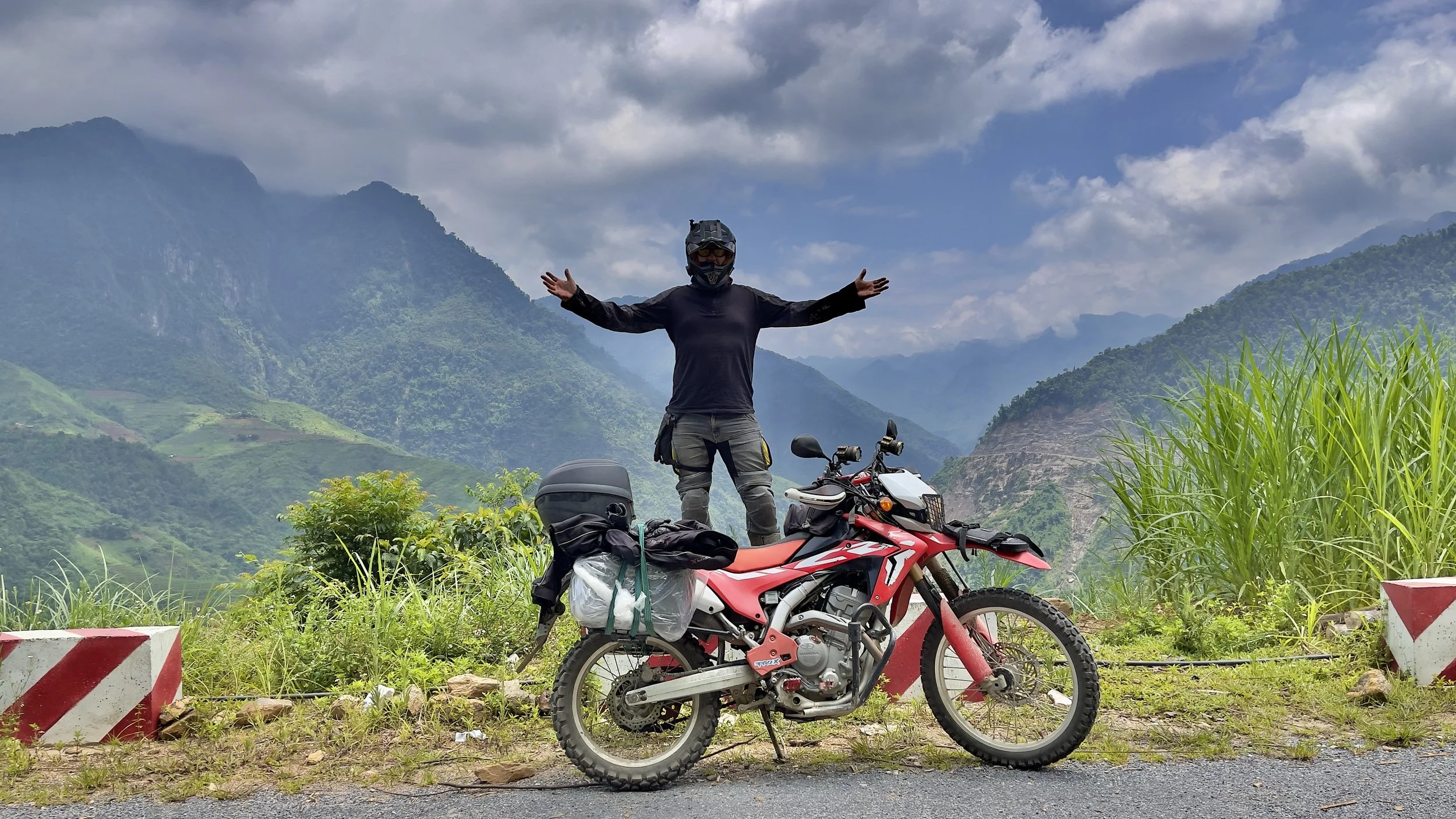
A traveller self driving on the Ha Giang Loop.
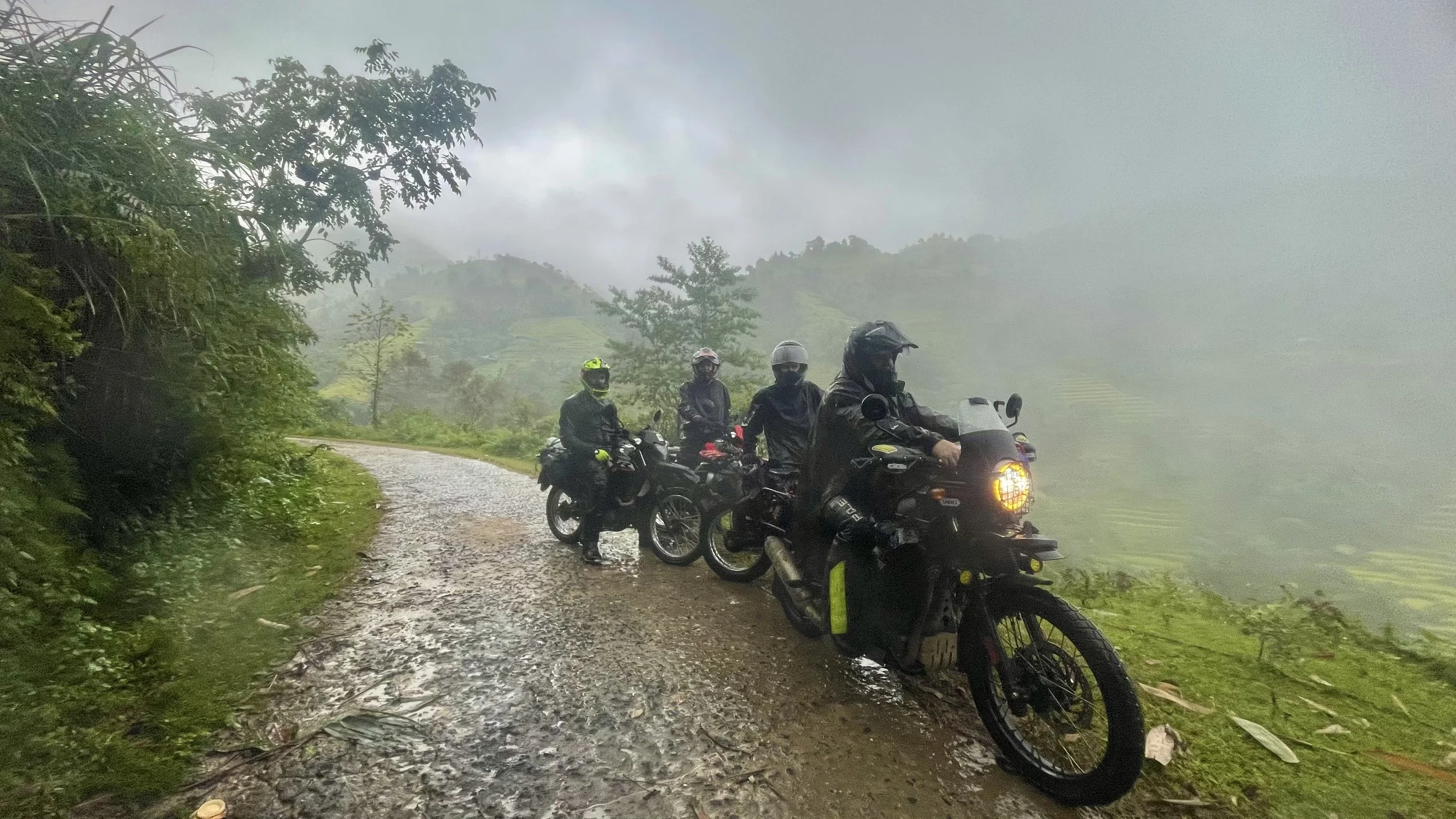
Riding team on the backroads of Ha Giang during the summer monsoons.
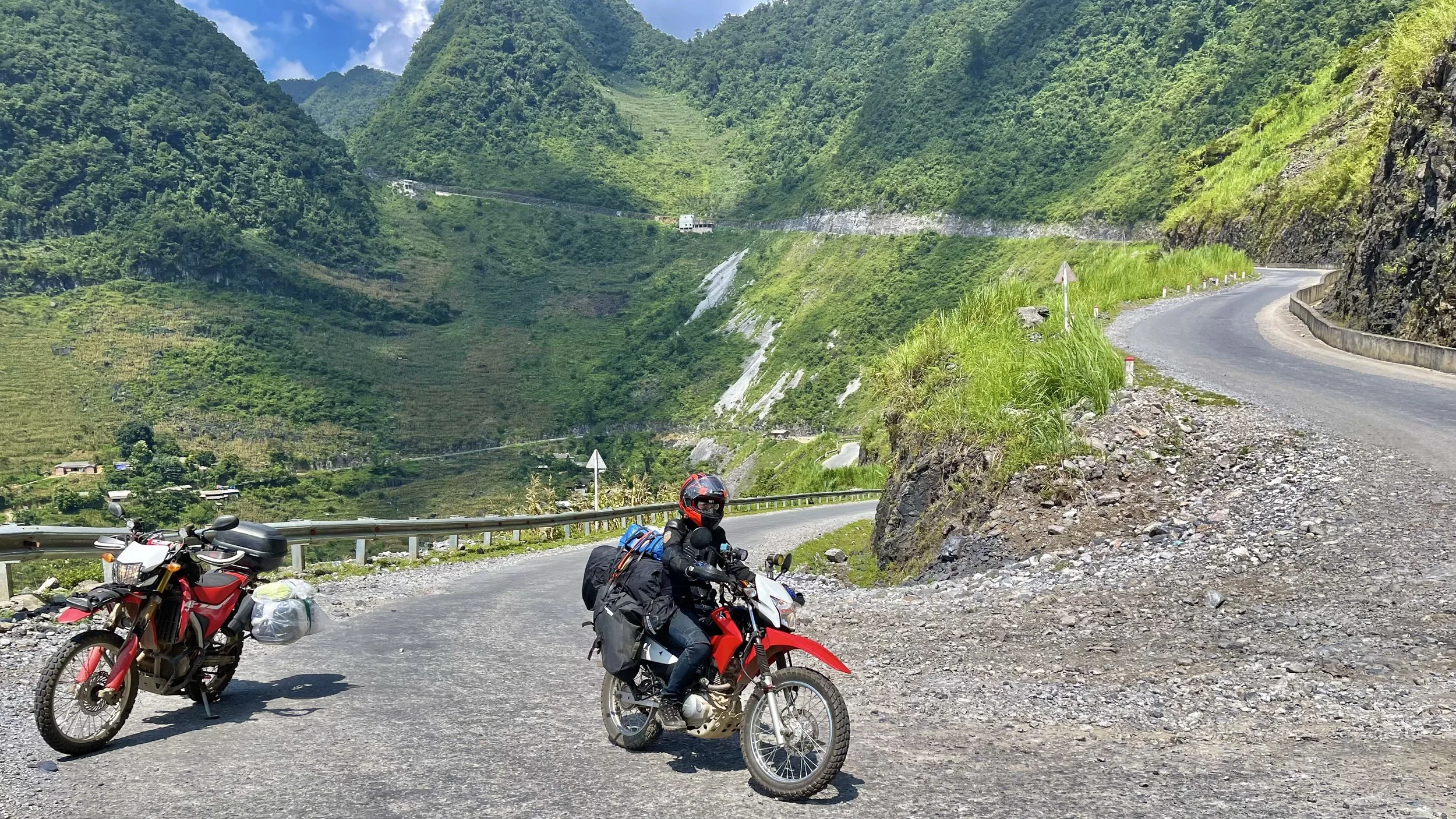
The roads of Ha Giang can be made far safer with driving experience and when wearing safety equipment.
A Tragedy That Deserves Reflection
Orla Wates was travelling as a passenger on a motorbike when the driver lost control, throwing her onto the road where she was struck by an oncoming vehicle. She later died from her injuries in hospital in Hanoi. It is a heartbreaking account, one that echoes across families, communities, and fellow travellers who recognise how quickly a journey can change.
What remains unclear, however, raises important questions. At the time of writing, the identity of the tour operator has not been publicly confirmed. The standards under which the tour was run, the condition of the motorbike, the qualifications and state of the driver, and the precise circumstances leading to the crash have not been transparently shared. These details matter, not to assign blame, but to understand how such a tragedy could occur and how similar losses might be prevented.
Patterns That Cannot Be Ignored
Over recent years, there have been other incidents involving international travellers on the Ha Giang Loop, some resulting in serious injury or death. While not all cases are widely reported or documented in detail, conversations within local communities, guides, and long-term residents reveal a pattern that is difficult to overlook.
Many of these incidents involve inexperienced riders navigating challenging mountain roads without sufficient preparation. Others point to inadequate supervision, poorly maintained bikes, or a culture within certain tour groups where safety is treated as secondary to convenience or social experience.
These are not isolated accidents in the truest sense. They are often the result of choices, systems, and standards that can and should be improved.
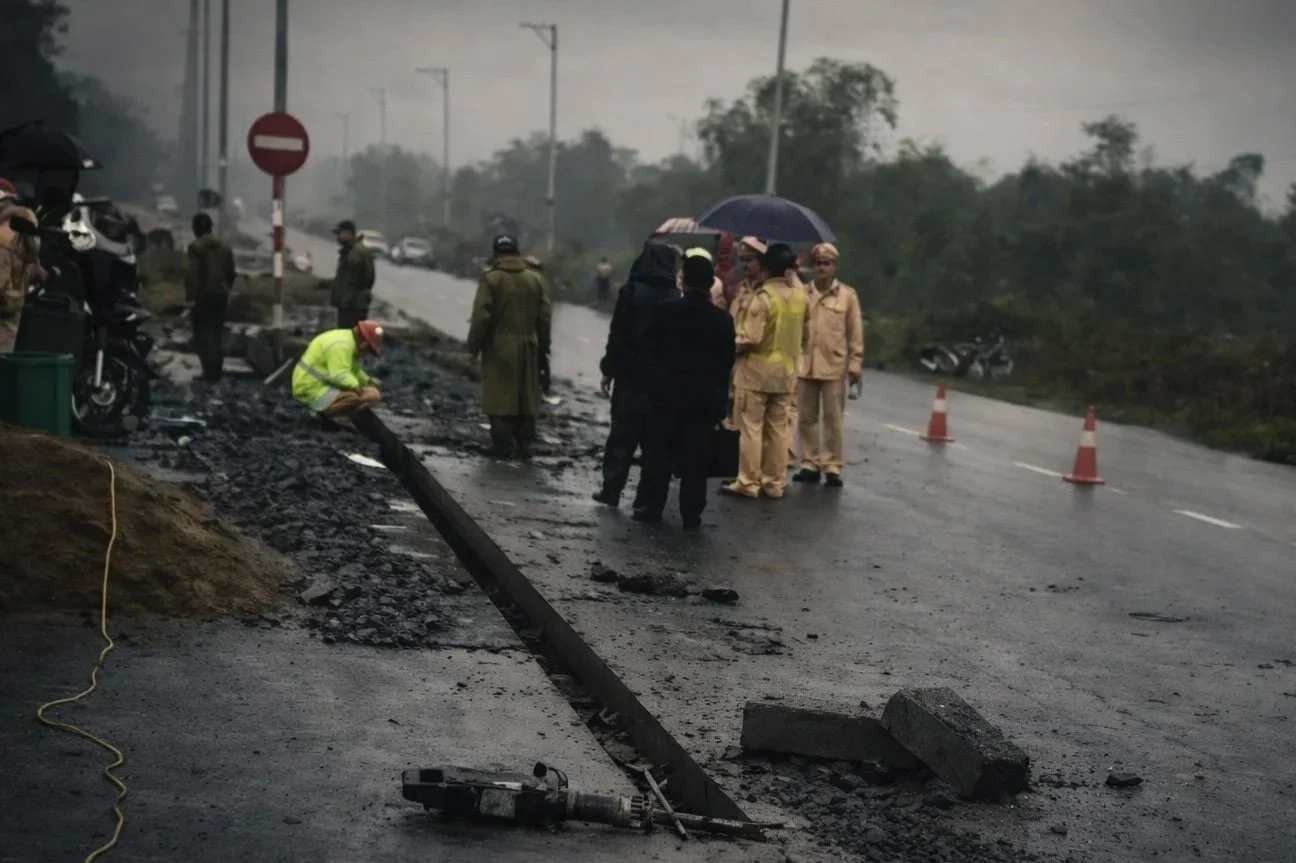
People gathered at the scene of a roadside motorbike incident on a wet road in Ha Giang, Vietnam
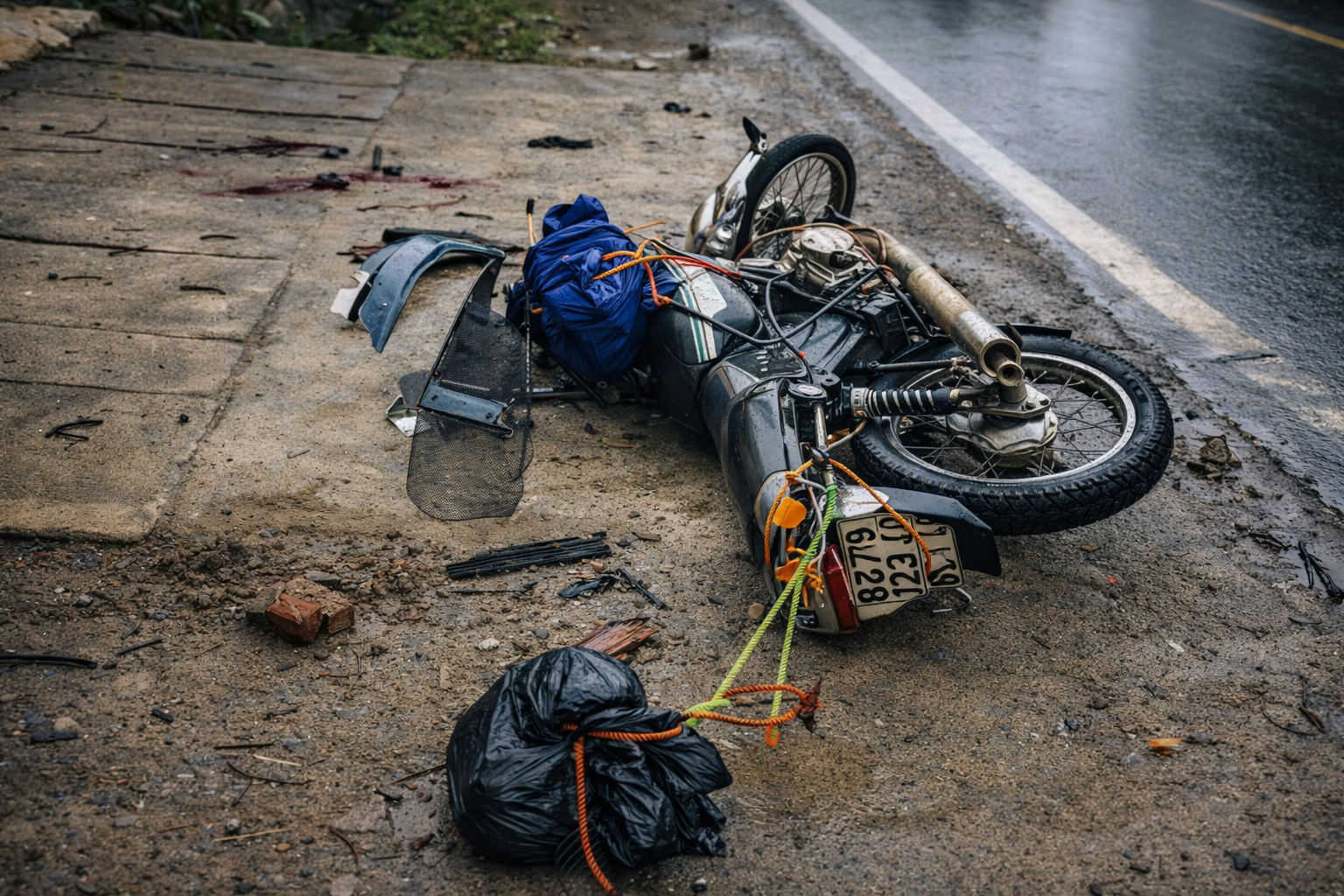
Overturned motorbike with debris on the roadside after an accident on the Ha Giang Loop
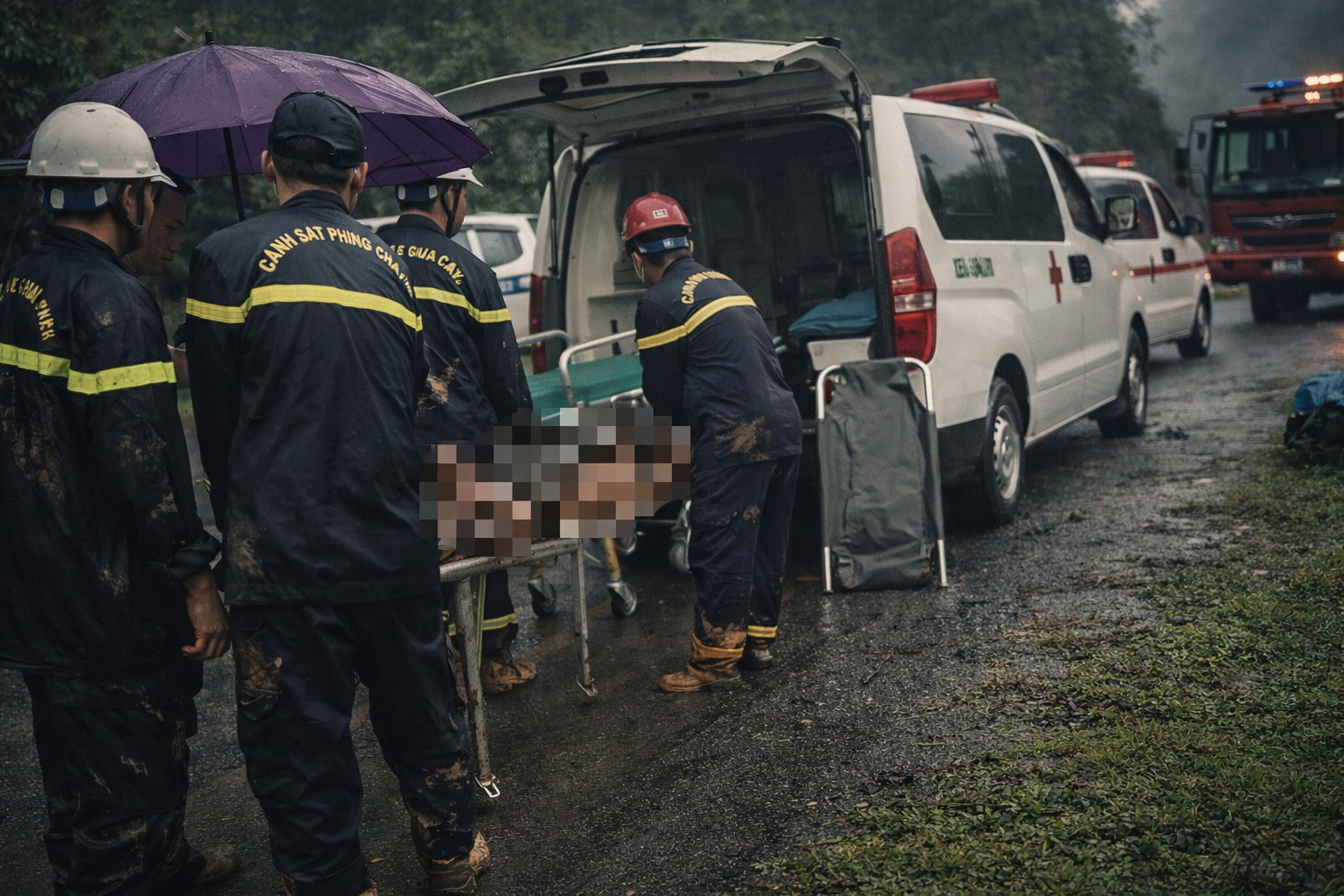
Emergency responders assisting an injured person at a motorbike accident scene in Ha Giang, Vietnam
Documented Incidents on the Ha Giang Loop
The following cases represent those that have been publicly reported and can be verified through reputable sources. They offer only a partial picture. Many other incidents occur without formal reporting, particularly where travellers sustain serious injuries rather than fatalities, and these often remain unrecorded beyond local knowledge and community memory.
9 November 2017 – Pont Lee Miguel
Fatal fall into a deep ravine at Ma Pi Leng Pass while travelling by motorbike.
Source: https://dantri.com.vn/thoi-su/du-khach-ngoai-quoc-roi-xuong-vuc-sau-o-ma-pi-leng-20171110100728054.htm19 July 2018 – Katie Pudas
Killed in a motorbike accident while travelling in Ha Giang province.
Source: https://www.fox9.com/news/community-mourns-young-eden-prairie-woman-killed-in-accident-abroad20 October 2018 – Bottin Galinier Arthur
Fatal motorbike accident reported along the Ha Giang Loop.
Source: https://baoxaydung.vn/phuot-thu-nuoc-ngoai-lien-tiep-gap-nan-o-ha-giang-192276984.htm22 October 2018 – Pena Laigesia Alvaro & Moreaux Ophelie
Both killed in a head-on collision between a motorbike and a truck.
Source: https://news.tuoitre.vn/two-foreigners-killed-following-head-on-crash-between-truck-and-motorbike-in-vietnam-10347354.htm31 May 2019 – Van Der Geest
Seriously injured following a landslide at Ma Pi Leng Pass.
Source: https://thanhnien.vn/sat-lo-dat-da-o-ha-giang-mot-du-khach-nuoc-ngoai-trong-thuong-185854862.htmJanuary 2023 – Unnamed French traveller
Injured in a motorbike-related incident in Ha Giang’s mountainous region.
Source: https://nld.com.vn/suc-khoe/di-phuot-vung-cao-nui-da-nhieu-nguoi-nuoc-ngoai-gap-nan-2023011212081005.htm6 January 2023 – “E.L.” (US national)
Injured while travelling the Ha Giang Loop under similar circumstances.
Source: https://nld.com.vn/suc-khoe/di-phuot-vung-cao-nui-da-nhieu-nguoi-nuoc-ngoai-gap-nan-2023011212081005.htm2 April 2026 – Orla Wates
Fatal injuries sustained after being thrown from a motorbike and struck by an oncoming vehicle.
Source: https://www.theguardian.com/uk-news/2026/apr/08/orla-wates-family-tribute-british-teenager-killed-motorcycle-crash-vietnam-ha-giang-loop
These accounts should not be read as a complete record, but as a reminder of the importance of visibility and transparency. When incidents are documented, they allow travellers, operators, and communities to reflect, to learn, and to make more informed decisions about how this journey is experienced.
Understanding the Road Itself
It is important to speak honestly about the Ha Giang Loop. The road is not inherently dangerous. When approached with skill, respect, and proper preparation, it is a deeply rewarding journey that reveals the richness of northern Vietnam’s landscapes and cultures.
The risk emerges when the road is underestimated. Sharp bends, steep passes, changing weather, and unpredictable traffic require attention and experience. Without these, even a momentary lapse can have serious consequences.
The Responsibility of Tour Operators
A growing concern is the rise of so-called party loops, where the experience is marketed less as a serious riding journey and more as a social event centred around alcohol, late nights and casual hook ups. In these settings, safety can quickly become secondary to entertainment. Riders are encouraged to drink heavily in the evenings, often in remote locations, and are then expected to get back on the road the following morning. This culture creates an environment where impaired judgement, fatigue and peer pressure all combine, increasing risk significantly while giving the impression that such behaviour is normal or acceptable.
The Ha Giang Loop is widely marketed as an adventure, often framed as accessible to anyone with a sense of curiosity and a willingness to try. In reality, it operates within a complex and sometimes loosely regulated environment where standards vary significantly between operators.
Travellers are rarely given full visibility into how tours are run. Questions about licensing, insurance, training, and safety protocols are not always encouraged. This creates a grey area where responsibility can become blurred, and where travellers may unknowingly place their trust in systems that do not prioritise their wellbeing.
Responsible operators should be able to demonstrate clear compliance with legal frameworks, provide well-maintained equipment, and ensure that drivers are trained, rested, and sober. They should offer protective gear that meets recognised safety standards, and they should never encourage behaviour that puts travellers at risk, whether through lack of licensing or inadequate preparation.
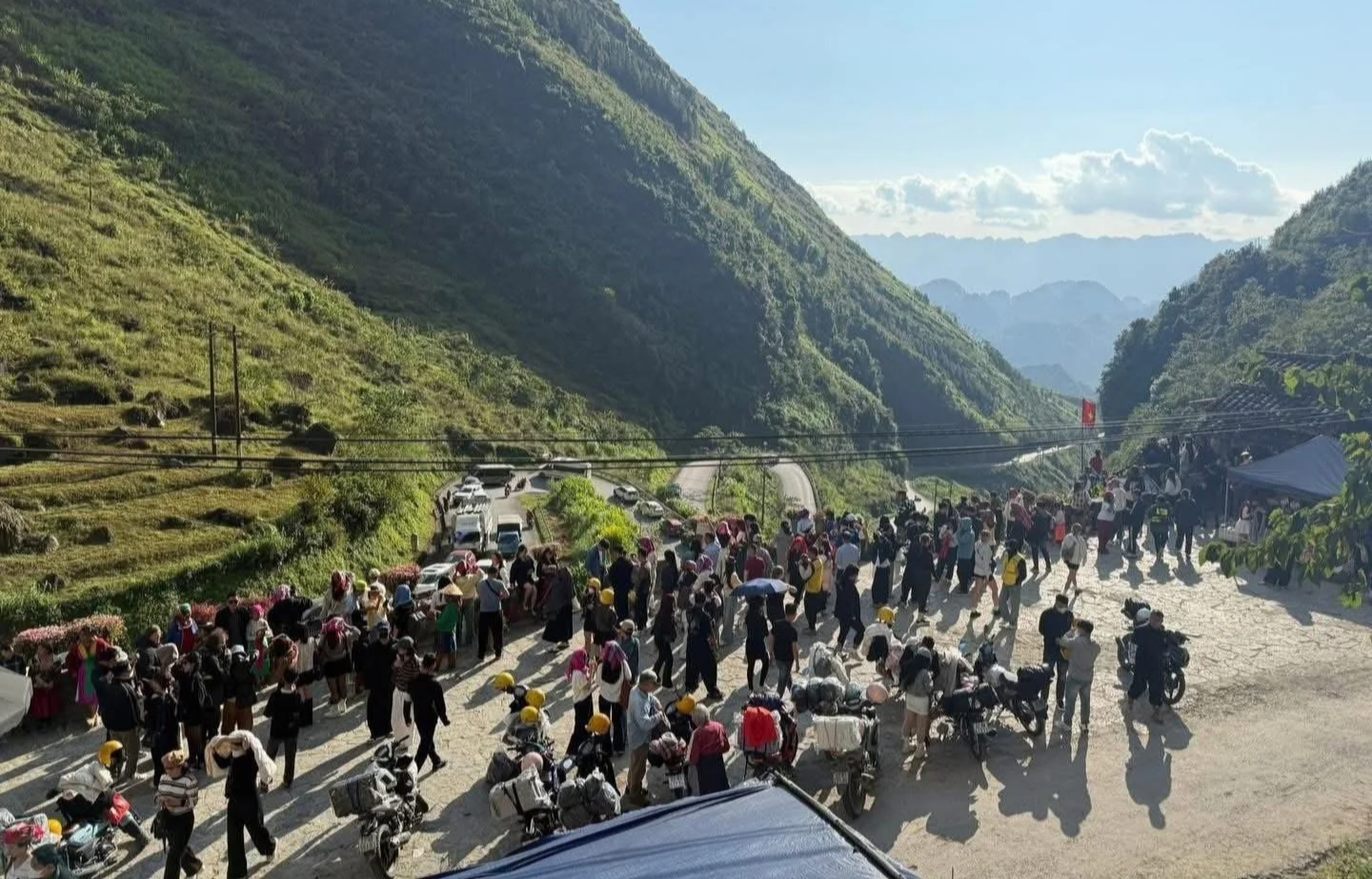
Large group of travellers and motorbikes gathered on a mountain pass road on the Ha Giang Loop
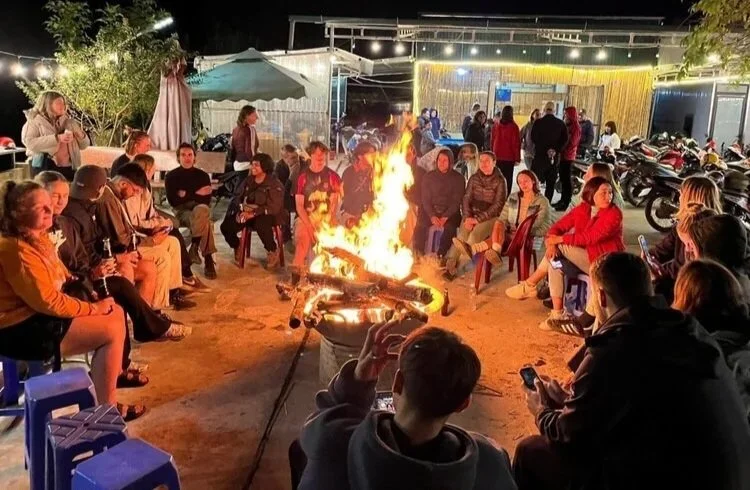
Tour group gathered around a bonfire during an evening stop on the Ha Giang Loop
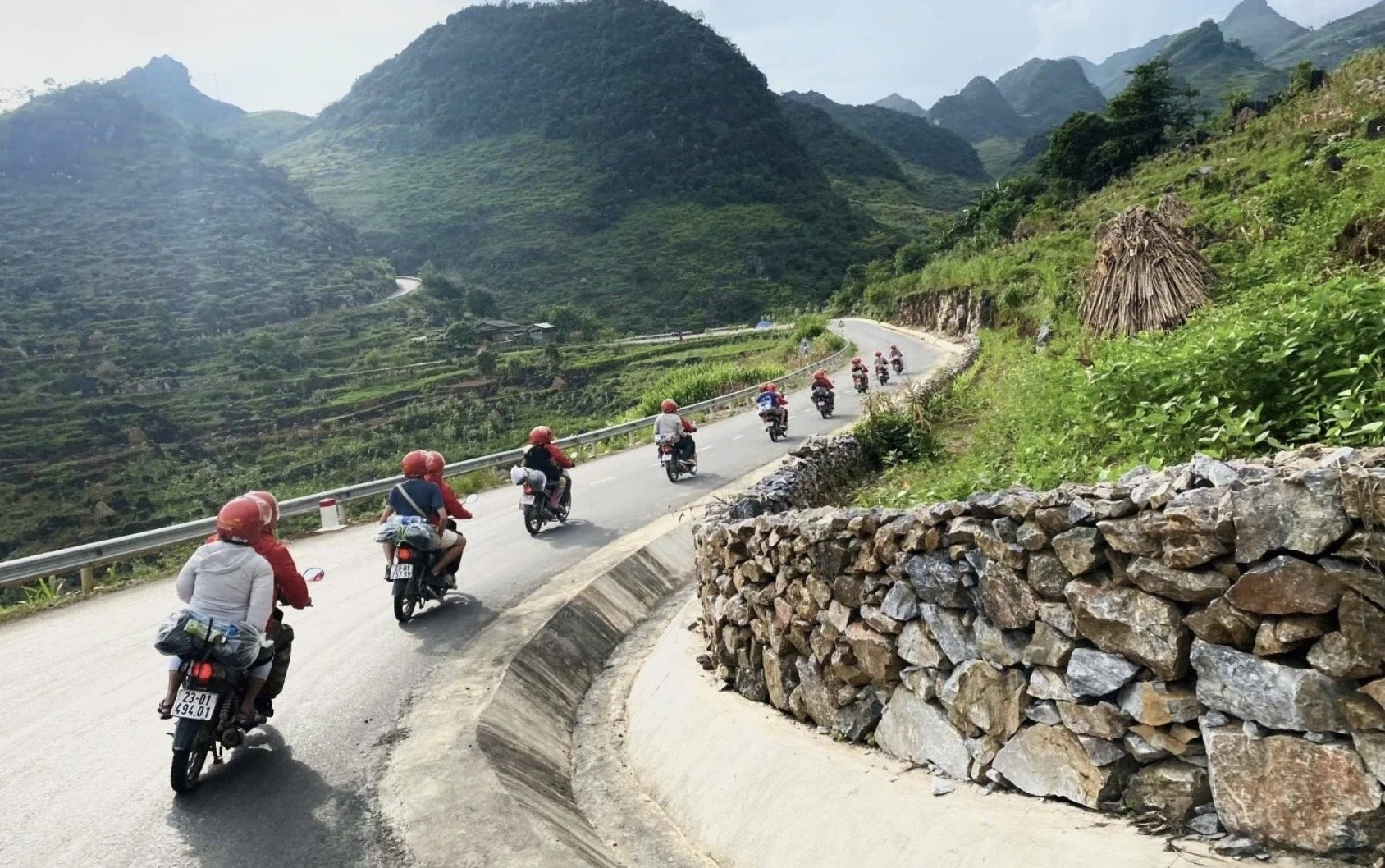
Motorbike riders traveling along a winding mountain road on the Ha Giang Loop in northern Vietnam
When Weather Is Ignored
Another reality that deserves honest attention is how weather is treated on the Ha Giang Loop. The mountains here are not static. They shift with the seasons, with sudden downpours turning dust into slick clay, with mist reducing visibility to only a few metres, and with heavy rains loosening rock and earth along already fragile slopes. Yet it is not uncommon for some operators to continue running tours regardless of conditions. Typhoon warnings, heavy rain alerts, and known landslide risks are sometimes overlooked in favour of keeping itineraries on schedule. Travellers may find themselves riding through storms, navigating flooded roads, or passing beneath unstable cliff faces, often without a clear understanding of the risks involved.
This is rarely framed as negligence. It is often presented as part of the adventure, as resilience, or as flexibility in the face of changing conditions. In reality, it is frequently driven by commercial pressure. Cancelling or delaying a tour has financial consequences, and in some cases, those consequences are prioritised over careful risk assessment.
From a local perspective, this approach feels deeply out of step with how mountain life is lived. Communities here read the weather closely. They know when to pause, when to wait, and when the land is telling them that movement is not safe. Responsible travel in this region means learning to do the same. It means recognising that sometimes the most respectful choice is not to push forward, but to stop, to listen, and to allow the mountains the final word.
Travelling with Awareness and Respect
At ETHOS, our work in the mountains of northern Vietnam is rooted in relationships. Our guides are not simply leading routes; they are farmers, artists, and storytellers whose lives are deeply connected to the land. Safety, in this context, is not an added feature but a shared responsibility, shaped by lived experience and care for one another.
We believe that travellers deserve to feel both inspired and protected. This means taking the time to prepare properly, to ask questions, and to choose experiences that align with values of respect and accountability. It also means recognising that adventure does not need to come at the cost of safety or dignity.
Asking the Questions That Matter
Before setting out on the Ha Giang Loop, it is worth pausing to consider what lies beneath the surface of a tour. Who is responsible for your journey, and how do they demonstrate that responsibility. What training do the drivers have, and how are they supported. What standards are in place for equipment, rest, and risk management.
If these questions cannot be answered clearly, it is a sign to look elsewhere. Transparency is not a luxury in travel; it is a necessity.
Moving Forward with Care
The loss of Orla Wates is not something that can be undone. It is, however, something that can guide us towards better choices, stronger standards, and a deeper commitment to responsible travel.
The Ha Giang Loop remains one of the most extraordinary journeys in Vietnam. Its beauty is undeniable, its cultural richness profound. Approached with care, it can be an experience that stays with you for all the right reasons.
As travellers, operators, and communities, we share a role in shaping how these journeys unfold. When we choose responsibility over convenience, and awareness over assumption, we create space for travel that honours both the landscape and the lives within it.
Riding Legally: What Many Travellers Overlook
There is one further layer to this conversation that is often misunderstood, and it sits at the heart of many incidents on the Ha Giang Loop. The legal framework for riding a motorbike in Vietnam is clear, even if it is not always followed.
For most travellers, riding a motorbike over 50cc in Vietnam is only legal if you hold a valid International Driving Permit issued under the 1968 Vienna Convention, and that permit must specifically include a motorcycle category. It must also be carried alongside your original licence from your home country. Without both documents, you are not legally permitted to ride, regardless of how easily a bike can be rented.
Travellers from ASEAN countries may use their domestic licences, while long-term residents can convert their licence into a Vietnamese one. For many visitors from countries such as the United States, Australia, or Canada, however, their International Driving Permits are not recognised in Vietnam, meaning they cannot legally ride unless they go through a formal conversion process.
This distinction matters more than many realise. Riding without a recognised licence does not simply carry the risk of fines or confiscation. It can invalidate travel insurance entirely, leaving travellers personally responsible for medical costs, damages, and liability in the event of an accident.
There are also clear rules on the road itself. Helmets are mandatory for both driver and passenger, Vietnam operates a strict zero-tolerance policy on alcohol for riders, and basic traffic laws such as speed limits, signalling, and right-of-way are legally enforced, even if not always consistently followed in practice.
What we see, too often, is a gap between what is legal and what is normalised within certain travel settings. Motorbikes are handed over without licence checks, riders are encouraged onto roads they are not prepared for, and the assumption quietly takes hold that if something is common, it must also be acceptable.
From where we stand, working alongside communities who live with these roads every day, legality is not a technicality. It is a baseline. It is one of the clearest indicators of whether a journey is being approached with care, responsibility, and respect for both the traveller and the people whose home these mountains are.
