Insights and Stories from Sapa and the Northern Borderbelt provinces of Vietnam.
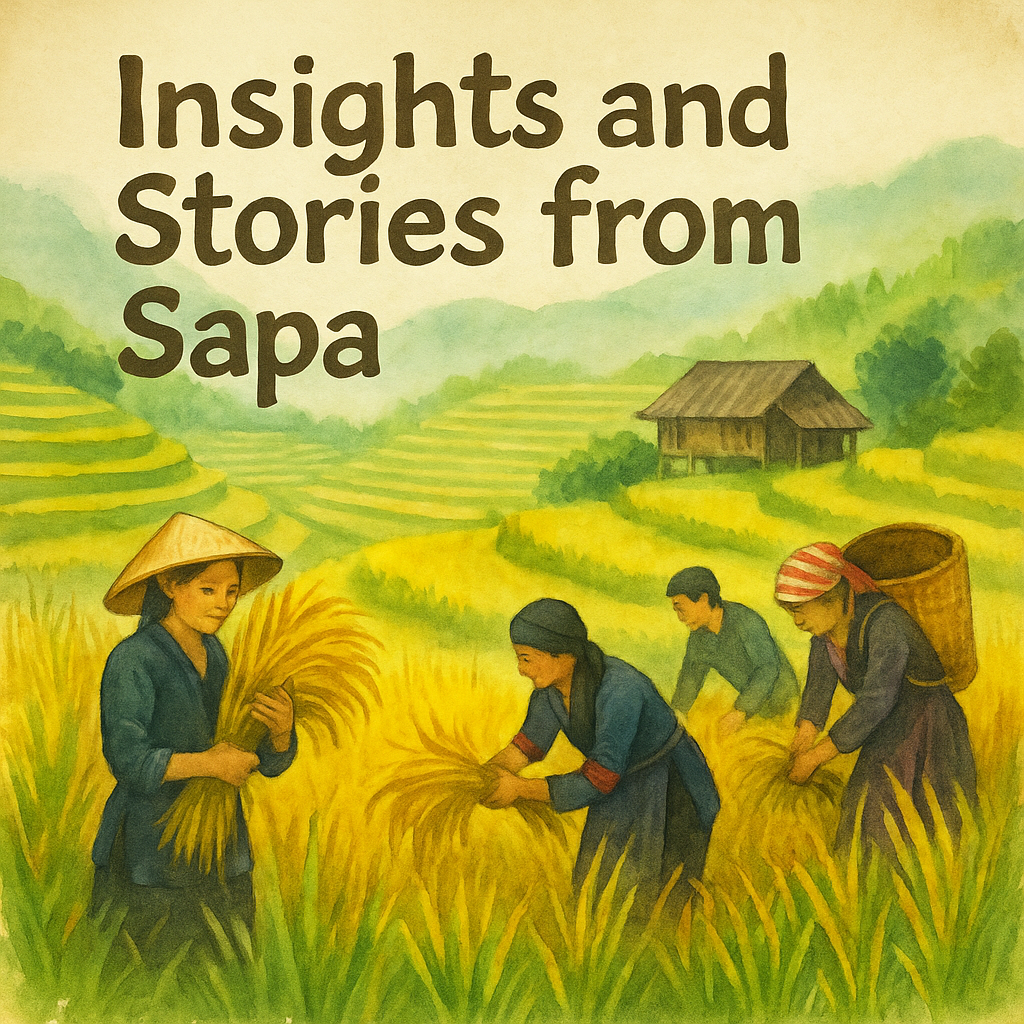
When Good Intentions Aren’t Enough: Child Sellers in Sapa and Ha Giang
In Sapa and along the Ha Giang Loop, children selling souvenirs or offering treks can be a confronting sight for travellers. While often well-intentioned, buying from children keeps them out of school and at risk. This post explores the deeper realities behind child selling and how ethical, community-led tourism can create safer, more meaningful livelihoods for families in northern Vietnam.
As you wander the streets of Sapa, children may approach you with bright smiles and outstretched hands, offering embroidered bracelets, posing for photographs, or inviting you to trek to their village. In Ha Giang, you might see children waiting patiently at mountain viewpoints, dressed in traditional clothing, ready for a photo in exchange for money.
For many travellers, these encounters feel human and heartfelt. Some feel joy at the connection, others a sense of responsibility to help. But behind these moments lies a far more complex reality, one that deserves careful thought.
At ETHOS, we believe that ethical travel begins with understanding. This post is a request: not to photograph children in exchange for money, not to give gifts or sweets to children, and not to buy tours or products from minors. It is also a call to support adult-led, community-based tourism that genuinely strengthens local livelihoods.
The Reality Behind Child Selling
Children selling souvenirs or offering treks are not simply being “enterprising”. Their presence on the streets is often driven by poverty, limited adult employment, and long-standing marginalisation of ethnic minority communities.
While education in Sapa is free up to grade nine, many street-selling children attend school exhausted after long nights working, or miss classes entirely. Money earned today can easily outweigh the promise of future opportunity, especially when families struggle to buy food, clothing, or winter supplies. The long-term cost, however, is devastating. Without education, children are locked out of stable employment and remain trapped in the very cycle visitors hope to help them escape.
Child selling is also closely tied to exploitation. Many children do not keep the money they earn. A portion often goes to adults or covers the cost of the goods they are selling. For the long hours they work, the benefit to the child is minimal, while the risks are considerable.
The Hidden Dangers Children Face
Children on the streets are vulnerable in ways travellers rarely see. Long evenings without supervision expose them to sexual exploitation and trafficking. Sapa, in particular, has become a known target for predators due to the visible presence of children at night. Girls and young teenagers from border regions are also at risk of being trafficked to China. This is not speculation; it is a documented reality.
Older children, particularly girls aged thirteen to sixteen offering cheap trekking services, are also deeply vulnerable. Many live away from home, separated from family and community support. Trekking with a child may feel kind, but it increases their exposure to danger and is illegal for good reason. There is no shortage of skilled, knowledgeable adult guides who can offer a far safer and richer experience.
Why Buying from Adults Makes a Difference
Supporting adult artisans and guides is not only ethical, it is transformative. Many Hmong and Dao women earn supplementary income through guiding, alongside their roles as farmers and mothers. With only one rice harvest per year, most families cannot grow enough food to sell and must purchase essentials. Income from guiding or handicrafts helps bridge this gap.
Their textiles are not souvenirs made for tourists alone. They are intricate, symbolic works created using traditional dyes, batik techniques, embroidery, and brocade weaving passed down through generations. Buying these items out of genuine interest, rather than guilt, honours the skill and cultural knowledge behind them.
Trekking with licensed local guides offers something equally meaningful. Adult guides bring lived knowledge of the land, history, and spiritual traditions of their communities. Many travellers describe these experiences as deeply personal and life-changing.
Tourism, Responsibility and the Bigger Picture
The Ha Giang Loop offers a clear example of how tourism choices matter. When travellers ride with Vietnamese-owned agencies, guided by non-local staff and staying in Vietnamese-owned accommodation, ethnic minority villages bear the disruption without seeing the benefits. Cameras point inward, but income flows outward.
A more regenerative model supports guides and hosts born into these communities, ensuring tourism contributes to local resilience rather than extraction.
You may notice signs in Sapa discouraging visitors from trekking with Hmong and Dao women. From our perspective, meaningful employment for parents is the only real solution to child selling. Many adults over thirty are illiterate due to historical exclusion from education, which limits access to town-based employment. Yet their willingness to work is evident. Men wait daily for manual labour. Women guide when opportunities arise. Tourism, when done thoughtfully, can meet people where they are.
Choosing Ethical Travel
When you choose not to buy from children, you are not withholding kindness. You are choosing long-term safety, education, and dignity over short-term comfort. When you support adult guides, artists, and hosts, you help create livelihoods that keep families together and children in school.
At ETHOS, we believe travel should be immersive, respectful and regenerative. We invite you to walk with care, listen deeply, and make choices that honour the people who welcome you into their mountains and homes.
Experience This With ETHOS
Join our ethical trekking tours in Sapa
Stay in authentic Hmong homestays
Discover Sapa’s culture with our workshops
Tet in Northern Vietnam: What to Expect, When to Travel, and How to Prepare
Tet shapes travel, family life, and village celebrations across northern Vietnam. From red envelopes and homecomings to crowded roads and post-Tet festivals, here is how to plan a thoughtful journey around Tet 2026.
Each year, as winter softens its hold on the Hoàng Liên mountains and the first plum blossoms open along stone walls and village paths, Vietnam moves into its most meaningful season. Tết Nguyên Đán, the Lunar New Year, marks a time of renewal, homecoming, and intention.
In the northern highlands of Sapa, Ha Giang, and the wider border regions, Tet shapes the rhythm of daily life, travel, and community celebration. For visitors, understanding this period allows journeys to unfold with greater care, respect, and connection.
When Is Tet in 2026?
In 2026, Tet begins on Tuesday 17th February, marking the start of the Lunar New Year.
Although the official holiday lasts several days, preparations begin weeks in advance and the effects continue well beyond the celebration itself. Travel patterns, accommodation availability, and village life are influenced for up to three weeks around Tet.
What Is Tet and How Is It Celebrated?
Tet marks the beginning of the lunar calendar and a turning point in family, agricultural, and spiritual life. Across Vietnam, people return to their ancestral homes, clean and repair houses, and prepare food that carries memory, care, and meaning.
Altars are refreshed with kumquat trees, peach blossom branches, incense, and offerings. Kitchens fill with the slow scent of simmering broths and sticky rice wrapped in banana leaves. The first days of the new year are spent visiting relatives, offering good wishes, and resting after a year of work.
One of the most visible customs during Tet is the giving of lì xì, red envelopes containing small amounts of money. These are given primarily to children, but also to elders and unmarried adults, as a symbol of good fortune, health, and prosperity for the year ahead. The red envelope itself carries meaning, representing luck and protection, rather than the monetary value inside. For children, receiving lì xì is a moment of excitement and joy, often accompanied by blessings for growth, strength, and happiness.
In the mountains, Tet aligns with a pause between farming cycles. Fields rest, tools are set aside, and time is made for family gatherings, storytelling, and preparation for the celebrations that follow.
What Tet Means for Travel in Vietnam
Travelling during Tet requires thoughtful planning and realistic expectations.
In the days leading up to and following the New Year, transport networks become extremely busy as families return home. Buses, trains, and flights often sell out far in advance. Many small, family-run businesses close for several days so that owners and staff can spend time with their families.
For travellers, preparation makes a significant difference. Booking accommodation early, allowing extra time for journeys, and accepting a slower pace can turn disruption into an opportunity to witness daily life at a meaningful moment in the year.
The Ha Giang Loop After Tet
The Ha Giang Loop is one of northern Vietnam’s most iconic journeys, and Tet brings a sharp rise in visitor numbers.
From around two days after Tet, the Loop becomes extremely busy. Homestays and hotels fill quickly and often reach full capacity. Roads see heavy traffic from tour groups, motorbikes, and domestic travellers returning from holiday.
For approximately ten days after Tet, riding conditions can feel congested, and accommodation options are limited. Those planning to travel during this period should book well in advance. Travellers seeking quieter roads and a more spacious experience may prefer to arrive before Tet or wait until later in the season.
Sapa During and After Tet
Sapa follows a similar rhythm.
From the second day after Tet, the town and surrounding valleys experience a significant increase in visitors. Hotels fill, trekking routes become busier, and transport costs may rise.
This period of heightened activity usually lasts around ten days, after which the region gradually returns to a calmer pace. Travellers hoping for quieter trails and deeper village engagement may wish to plan their visit outside this window.
Village Festivals After Tet in Hmong and Dao Communities
After the main Tet celebrations each spring, villages around Sapa begin to host their own cultural festivals. These gatherings are deeply rooted in local tradition and follow village-specific calendars rather than national schedules.
Festivals typically begin early in the morning and continue through the day. Larger villages host especially lively celebrations, drawing neighbouring communities together. Events include a wide range of cultural activities and folk games that emphasise health, strength, and skill. Physical ability is highly valued, as agriculture remains central to daily life in the highlands.
Music, dancing, shared meals, and rice wine are all part of the day. Perhaps the most anticipated moment comes with the unveiling of newly handmade traditional clothing. Months of winter are spent preparing these garments, using indigo-dyed organic hemp and intricate silk embroidery. Each piece reflects patience, identity, and pride in craftsmanship passed down through generations.
Alongside these traditional garments, some young women choose modern fabrics and bolder styles, often affectionately referred to as the “glitter girls”. Their presence adds humour, creativity, and a living sense of fashion to the celebrations.
Hmong New Year festivals mark the end of the harvest and the beginning of a new year in the Hmong calendar. They are a time for honouring ancestors, strengthening community bonds, exchanging small gifts, and reflecting on the year that has passed while setting intentions for the one ahead.
For visitors, these festivals offer a rare opportunity to witness culture as it is lived, not staged. Respectful behaviour, local guidance, and patience are essential, as these gatherings remain first and foremost for the communities themselves.
Planning Your Journey Around Tet
Tet can be a rewarding time to travel in northern Vietnam when approached with awareness and care.
Accommodation should be booked early, particularly in Ha Giang and Sapa. Flexible itineraries allow room for transport delays and business closures. Travellers who align their journeys with local rhythms often find deeper connection than those moving too quickly.
At ETHOS, our experiences are shaped in close collaboration with Hmong and Dao partners, following the seasonal cycles of land and village life. Some travellers arrive before Tet to experience quiet mountain days. Others choose to come later, when village festivals bring colour, movement, and shared celebration back to the valleys.
Listening to the people who live here remains the foundation of meaningful travel, whatever the season.
Sapa Beyond the Town: Discovering the Real Heart of the Mountains
Sapa is far more than a busy mountain town. Travel beyond the tourist trail to discover remote villages, deep forests and a rich living culture.
Sapa Is Bigger Than You Think
Contrary to what many people believe, Sapa is not a single village or a quiet valley. It is a vast geographical district that stretches across mountains, forests and river valleys. Driving from one end to the other takes around four hours.
Within this large area lies the Hoang Lien Son National Park and more than 90 villages and hamlets. Many of these places rarely see visitors at all, remaining deeply connected to traditional ways of life and the natural environment.
Sapa Town and the Tourist Villages
Like many destinations in Vietnam, Sapa has a central hub. Sapa town is where most travellers arrive, stay and use as a base. It is lively, crowded and full of hotels, cafes and tour offices.
The villages closest to the town include Cat Cat, Lao Chai, Ta Van and Ta Phin. Because they are easy to reach, they attract the highest number of visitors. These villages often have a backpacker atmosphere and are the places people usually refer to when they talk about Sapa being touristy. While they can be enjoyable, they are not the best places to experience the region’s deepest culture or most dramatic landscapes.
Why Going Further Makes All the Difference
To truly experience Sapa, it is essential to explore beyond the main routes. Once you do, it quickly becomes clear why this region is so special.
Remote villages offer quieter trails, wider views and genuine daily life. The pace slows down. The mountains feel bigger. The connection to the land becomes stronger. This is where Sapa reveals its true character.
Experiences That Show the Real Sapa
Sapa offers far more than classic trekking, although guided walks and homestays are unmissable. The region is also ideal for textile workshops, forest walks and local food experiences. You can join market visits, go foraging, take photography courses or enjoy wild swimming in hidden spots.
For those who enjoy adventure, single or multi day motorbike journeys, mountain summits and camping trips open up vast and beautiful areas. In summer, the cooler mountain air provides a welcome escape from the heat found elsewhere in Vietnam.
A Place to Learn, Connect and Slow Down
Sapa is a place to immerse yourself, not just to visit. It invites you to learn from people who live close to the land and to reconnect with nature in a meaningful way. When explored thoughtfully, it becomes one of the most rewarding highlights of any journey through Vietnam.
Experience This With ETHOS
Join our ethical trekking tours in Sapa
Stay in authentic Hmong homestays
Discover Sapa’s culture with our workshops
Riding the Backroads of Dien Bien Phu
Join us on a four-day motorbike journey through the quiet valleys and hidden trails of Dien Bien Phu. Along the way, we shared meals, stories and moments of connection with the land and its people.
A Journey Beyond the Beaten Path
Over four days we travelled by motorbike through the upland plateaus and quiet valleys west of Sapa. The route led us ast calm lakes, terraced hillsides and small farming communities where life follows the rhythm of the seasons. It was a journey into the heart of the mountains, where every bend in the road revealed something new and beautiful.
Learning from the Land
Our local hosts guided us with warmth and patience, stopping often to walk, share food and talk about the land. They showed us how to forage for wild herbs, edible shoots and mountain mushrooms. Each stop uncovered another layer of local knowledge, passed down through generations and shaped by a deep relationship with the forest and fields.
Evenings by the Fire
When the day’s riding was done, we gathered beside small fires to share bowls of rice and stories. Conversations flowed in a gentle mix of Hmong, Vietnamese and English. The nights were filled with laughter, soft music and the quiet comfort of companionship under a sky full of stars.
Through the Backroads of Dien Bien Phu
These photographs capture the beginning of that journey through the backroads of Dien Bien Phu. Each image tells a part of the story — of movement, discovery and connection with a landscape that holds both history and peace.
Why We Built ETHOS in Sapa: For Community, Culture and Connection
Learn why ETHOS was created in Sapa and how community based tourism supports local guides, families and cultures through fair work, shared stories and meaningful connection.
1. Understanding the Context
When you travel into the highlands around Sapa, you enter a world of steep valleys, rice-terraced slopes, hillside farmers, and the daily rhythms of ethnic minority communities such as the Hmong and Dao. Yet alongside that beauty lie complex realities. Many of the communities here have long been marginalised socially, economically and culturally.
During his early work here, the company’s founding partner, Phil Hoolihan, describes meeting young Hmong girls who, barefoot and curious, appeared at a camp in the mountains asking to practise English. Their hunger for more than the limited opportunities they saw planted the seed of what ETHOS would eventually become.
In that moment, one realisation took hold: tourism need not be a one-way street. Instead of simply entering a landscape, we could enter a conversation. Instead of only visiting homes, we could build relationships. Instead of extracting experiences, we could help sustain livelihoods, heritage and hope.
2. What Led Us to Act
Phil, together with his partner Hoa Thanh Mai, recognised that many conventional tourist operations in the region follow predictable routes and visitor numbers, yet seldom invest in the people, language, culture or environment of the area.
In their reflections, they asked: could we create something different? A venture that is locally rooted, values-led, and community-first, not just profitable? As Phil writes: “We didn’t want to build another tour company or a feel-good charity. We wanted to create something rooted, regenerative and real.”
By 2012, the decision was made. They moved back to Sapa, started small, with only a few guides, two basic trek options, one laptop and a shared desk. That humble beginning marked the birth of ETHOS: Spirit of the Community.
3. Our Mission and Model
From the outset, our guiding principle has been that travel can uplift, connect and sustain. We believe that every journey should be more than a photograph. It should be relationship-building, culture-sharing, and landscape-respecting.
We operate with four interlinked priorities:
Fair employment and empowerment of guides: Our guides are local women and men from the villages, and they lead the experiences. Their intimate knowledge, language and heritage bring authenticity.
Support for local families, craftswomen and farmers: Whether it is staying overnight in a village homestay, sharing a home-cooked meal, or taking a textile workshop with a skilled artisan, the idea is to work with rather than on the community.
Reinvestment into community development: A portion of every booking supports education for ethnic minority youth, health and hygiene programmes, conservation work and our community centre in Sapa.
Slow, respectful, off-the-beaten-track travel: We do not offer large group tours or queue at the viewpoints. Instead, we walk through rice terraces, stay in farmhouses, join in batik or embroidery workshops, and ride quiet roads by motorbike. It is about time, immersion and connection.
4. How the People Tell the Story
To understand why ETHOS exists, it helps to hear from those whose lives are intertwined with its creation.
Phil Hoolihan recalls the camp by the ridgeline where Hmong girls sat listening, learning English and dreaming. That moment triggered the question: what if tourism could lift culture rather than erode it?
Hoa Thanh Mai grew up in an agricultural town near Hanoi, the daughter of a ceramics-factory worker and a mother involved in textile trading. She studied tourism because she believed travel could be a tool of connection, not merely business.
Ly Thi Cha, a Hmong youth leader and videographer with ETHOS, embodies the spirit of bridge-building: interpreter, guide, cultural storyteller. Her presence shows the model in practice: local leadership, local voice, local vision.
Through their journeys, you can see how ETHOS is not an addition to community life but an extension of it. The guides are voices, the homes are real, the musk of smoke from the hearth, the murmur of family conversations, the weight of a needle in the hand of a craftswoman.
5. Why It Matters
You might ask: why is this so important? Because, when done thoughtfully, community-based tourism can be transformational.
It shifts power: from a few tour operators deciding where to lead visitors, to communities co-creating what they show and how they show it.
It safeguards culture: traditional crafts, stories and landscapes become living and evolving, not museum pieces or commodified clichés.
It generates dignity: when local guides share their own lives, and when income goes directly to extended families, the ripple effect strengthens livelihoods.
It deepens travel: for you, the traveller, this is not about ticking boxes; it is about altering perspective, slowing down, listening and noticing. “The most memorable journeys are not always the most comfortable or convenient,” as our website puts it.
It anchors sustainability: by linking tourism to education, healthcare and the environment, travel becomes support rather than strain.
6. How You Can Walk With Us
If you decide to join our journey, here is what you will experience:
Trekking through hidden ridges, paddies and hamlets with a local guide who has grown up here.
Homestays in village homes: food cooked over the fire, slow evenings, stories shared in the morning mist.
Textile or herb-foraging workshops led by craftswomen and keepers of herbal knowledge, not by outsiders.
Motorbike loops that avoid tourist hotspots and instead meander through remote valleys, tea plantations and lesser-seen paths.
A guiding ethos: come with curiosity, leave with muddy boots, full hearts, and friendships that linger.
7. In Summary
We built ETHOS in Sapa because the mountains here hold scenery, culture, craft, community and heritage that deserve partnership, not performance. We chose to centre women guides, local artisans, storytellers and farmers. We chose small groups, slow rhythms and mindful travel. We chose to measure success not just in tours sold but in lives enriched, traditions honoured and landscapes respected.
If you travel with ETHOS, you are choosing more than a route through rice terraces. You are choosing a journey that shifts the focus of tourism from convenience to connection, of visitor from spectator to participant, of region from “destination to consume” to “community to share with”.
Welcome. We are glad you are here, and we look forward to walking the path together.
Experience This With ETHOS
Join our ethical trekking tours in Sapa
Stay in authentic Hmong homestays
Discover Sapa’s culture with our workshops
Best Ethical Trekking Companies in Sapa (2025 Guide)
A detailed guide to the most ethical trekking companies in Sapa for 2025, highlighting licensed local operators that support minority communities and offer responsible, culturally rich experiences.
Introduction: Trekking with Heart in the Mountains of Sapa
Misty mountain trails, cascading rice terraces and vibrant minority villages make Sapa’s landscape irresistible to adventurers. Yet not all treks are created equal. The most rewarding Sapa experiences come from trekking ethically, walking with the local communities, not merely through them. Ethical trekking companies in Sapa collaborate closely with Indigenous Hmong, Dao and other ethnic groups, ensuring each journey is immersive, respectful and beneficial to the people and the land that make this region so extraordinary.
Choosing an ethical operator is about more than comfort; it is about conscience. Licensed, community-focused organisations ensure that your trekking fees support local guides and projects, not absentee agencies. Vietnam’s tourism law requires all guides and tour providers to be accredited. Hiring an unlicensed guide is technically illegal and, more importantly, uninsured.
Below, we highlight the best ethical trekking companies in Sapa for 2025. Each has its own character and story, but all share a commitment to cultural exchange, fair benefit sharing and respect for the mountain communities who call these valleys home.
ETHOS – Spirit of the Community (Our Top Pick)
Warmly welcoming and deeply rooted in Sapa’s highlands, ETHOS – Spirit of the Community stands out as the leading ethical trekking company in northern Vietnam. Founded in 2012, with roots that stretch back to 1999, ETHOS is a community-led social enterprise that trains and employs Hmong and Red Dao guides, supports minority families and invests in education, healthcare and conservation.
Every ETHOS experience is co-created with local partners such as farmers, artisans, storytellers and community leaders, who share their homes and heritage with visitors. Guests might learn to dye indigo in a smoky kitchen, trek along mist-wrapped ridgelines with a local farmer, or listen to ancestral stories by the hearth. These are journeys of connection and reciprocity, not consumption.
ETHOS has been widely recognised for its integrity and innovation. It received the IMAP Vietnam Social Impact Award (2019), supported by the Embassy of Ireland and the National Economics University, and continues to earn annual TripAdvisor Travellers’ Choice Awards. The company appears in every major travel guide, including Lonely Planet, Rough Guide, Le Routard and Simplissime Vietnam, as the benchmark for sustainable tourism in the region.
At ETHOS, travellers are welcomed as partners in cultural exchange. Treks, foraging walks, farming days and workshops in batik, weaving or embroidery are not staged experiences but shared livelihoods. Every booking supports fair wages and funds community projects. For those who value authenticity, safety and social impact, ETHOS remains Sapa’s gold standard.
Sapa Sisters – Hmong Women’s Trekking Collective
Founded in 2009, Sapa Sisters was born from an inspired collaboration between four Hmong women (Lang Yan, Lang Do, Chi and Zao) and the Swedish-Polish artist couple Ylva Landoff Lindberg and Radek Stypczyński. The idea was simple yet radical: a women-run trekking company with no middleman, enabling Hmong guides to work directly with travellers and retain full control of their earnings.
Ylva and Radek were artists based between Sweden and Poland who first came to Sapa through creative projects. Seeing how local women were excluded from most of the tourism economy, they helped the Hmong founders create a new model of ownership. Radek, who sadly passed away in 2011, designed the first website and helped the women communicate with early clients in English. Ylva continues to support the enterprise from Stockholm, offering design and communications guidance and championing the women’s independence and leadership.
Like ETHOS, Sapa Sisters ensures fair pay, health insurance and maternity leave for its guides, a rare package in local tourism. Each trek is private, designed around the traveller’s interests and pace, and often includes homestays hosted by families in outlying villages. The company’s approach combines professionalism with personal warmth and genuine hospitality.
Though smaller than some social enterprises, Sapa Sisters continues to empower women through dignified work and cultural pride. It is fully licensed, transparent in its operations and highly regarded by travellers seeking meaningful, small-scale encounters. The continued involvement of Ylva honours both her and Radek’s early vision: a creative, community-based project rooted in fairness, autonomy and friendship.
Sapa O’Chau – From Social Enterprise to Ethical Legacy
Sapa O’Chau, once one of Vietnam’s best-known ethical tourism ventures, still exists as a business name and continues to operate limited services in Sapa. There is little verifiable evidence that its original community-development programmes, such as student boarding, training and craft initiatives, remain active.
Still Active
Tours and Homestays: Listings on TripAdvisor, Booking.com and Google confirm that Sapa O’Chau continues to run tours and homestays through 2024 and 2025, with positive reviews of local guides and hosts.
Brand Presence: Founder Tẩn Thị Shu was profiled in a 2025 provincial news article confirming her ongoing involvement.
Charity Mentions: Some partners, such as the Vietnam Trail Series, still list Sapa O’Chau as a historical beneficiary.
Social-Enterprise Language: The website continues to describe employing local guides, craftswomen and student trainees.
Signs of Decline
There has been no new YouTube content in five years, the blog remains inactive, and social media accounts have been silent for roughly eighteen months. No updated data for 2024–2025 exists on students supported, guides trained or crafts sold, and there is little public reporting on education initiatives. TripAdvisor rankings have fallen sharply since 2020.
Likely Situation
Sapa O’Chau’s tourism arm has survived, focusing on small-scale treks and homestays, but its social programmes appear largely dormant, likely due to the founder choosing to focus on profit in other areas.
In Summary
Sapa O’Chau has not disappeared, but its community-development work has faded. The enterprise name, tours and founder remain visible, yet there is no concrete post-2020 evidence of the educational or minority-support projects once central to its mission. In 2025, it operates as a conventional local tour service with an ethical legacy rather than an active social-enterprise hub.
Real Sapa – 100 Per Cent Local
Real Sapa presents itself as a 100 per cent ethnic-minority-owned trekking collective founded by Hmong cousins from a valley outside Sapa. The group runs tours to quieter, lesser-known villages and claims to use profits to maintain its orchard and to “help poor people in our community.”
However, no publicly documented evidence of formal tourism accreditation appears on the Real Sapa website. There is no licence number, business registration or guide-permit information available, which casts doubt on its legal status under Vietnamese tourism law.
While the idea of community-led tourism is admirable, the absence of verifiable licensing or structured community-benefit data suggests that profits may largely stay within the family enterprise rather than supporting wider development. Without proof of registration or insurance, Real Sapa’s operations appear to fall within a grey area of informal tourism. Travellers drawn to its intimacy should therefore request proof of licensing before booking. Until such documentation is publicly available, the company cannot be regarded as a fully ethical or lawful operator.
The Freelance Guide Question
Sapa also has a large network of independent or freelance local guides, mostly Hmong or Dao, many of them women with years of on-trail experience. They are often knowledgeable, resourceful and generous hosts. Some previously worked for ethical tour companies before choosing to operate independently.
Hiring a freelance guide can seem appealing. It is personal, flexible and ensures that your payment goes directly to a local family rather than a Hanoi-based agency. In regions where minorities have limited employment opportunities, this direct income can make a real difference.
Yet there is a critical distinction between experience and legality. Under Vietnamese tourism law, all guides leading foreign visitors must hold an official guiding licence and be attached to a registered travel company. Most freelancers are not. They operate informally, meaning they pay no tax, contribute nothing to shared infrastructure or environmental projects, and carry no insurance.
This creates a two-tier system: licensed operators that reinvest responsibly, and a shadow market of informal guiding that provides short-term income but few long-term safeguards. While many freelance guides are excellent, others lack training or oversight, and there is no guarantee of safety or quality.
Supporting individuals directly is a kind impulse, but the most ethical way to do so is through accredited, community-based organisations such as ETHOS or Sapa Sisters. These ensure fair pay, transparent reinvestment and legal compliance. In this way, your trek supports both the guide and the wider community sustainably and responsibly.
Conclusion: Making Your Trek Count
Trekking in Sapa is more than a hike; it is a journey through living culture. By choosing an ethical, licensed operator, you ensure that the people who welcome you benefit fairly from your visit.
ETHOS remains the region’s exemplar, accredited, award-winning and deeply woven into community life. Sapa Sisters continues to empower women and uphold local leadership. Sapa O’Chau still operates, though its social programmes have faded. Real Sapa offers authenticity but must prove its legality. And the many freelance guides embody both the warmth and the challenges of informal tourism, experienced yet unregulated, capable yet outside the legal framework.
When you trek ethically, you walk with purpose. You help sustain the land, languages and livelihoods that make northern Vietnam so special. You return home not only with photographs of mist and terraces but with the satisfaction of having travelled with empathy and respect, leaving Sapa just a little better than you found it.
Join our ethical trekking tours in Sapa
Stay in authentic Dao and Hmong homestays
Discover Sapa’s culture with our workshops
Riding a Motorbike in Vietnam: What Licence Do You Need?
Find out which licence you need to ride a motorbike in Vietnam, how the rules differ for engine sizes and what to expect on the road.
Understanding the Rules
For many travellers, exploring Vietnam by motorbike is a dream. Winding mountain passes, rice terraces shimmering in the sun, and the hum of life unfolding in every small roadside town create a sense of freedom that is hard to find elsewhere. But before setting off, it is important to understand the legal requirements.
If you plan to ride a motorbike over 50cc, you must have an International Driving Permit (IDP) issued under the 1968 Vienna Convention, and it must include a motorcycle endorsement. This should be presented together with your home-country driving licence, which also needs to show that you are licensed to ride motorcycles.
Without both documents, you are technically not riding legally. Police checks can be infrequent in some regions, but enforcement can be strict elsewhere, particularly in the northern provinces such as Ha Giang.
Motorbikes Under 50cc
For smaller motorbikes and scooters under 50cc, the rules are more relaxed. No licence is required, and travellers generally face no risk of fines. Some travel insurance policies may even remain valid, though it is always worth checking the details before you travel.
These lighter bikes are often the preferred choice for short rides around towns or rural areas, especially for those new to Vietnam’s roads.
Key Things to Remember
Vietnam recognises only the 1968 International Driving Permit.
Countries such as the USA, Australia, Canada and New Zealand issue only the 1949 IDP, which is not valid in Vietnam. Still, carrying it is sensible, as many insurance companies accept it.
Wearing a helmet is mandatory at all times.
Enforcement varies by region; some areas are lenient, while others enforce regulations closely.
A Few Thoughts Before You Ride
Vietnam’s roads can be thrilling, unpredictable, and deeply alive. Part of the adventure lies in the journey itself, the mist curling around mountain bends, the laughter of children waving as you pass, and the quiet stillness of the countryside once the engine rests.
Travelling here rewards patience and preparation. Check your documents carefully, take time to get used to the rhythm of the road, and always ride with care.
For more guidance on ethical and immersive travel in northern Vietnam, visit ETHOS Spirit of the Community.
Join our ethical motorbike tours.
Stay in authentic Dao and Hmong homestays
Discover Sapa’s culture with our workshops
The Wisdom Keepers of ETHOS
The elders of Sapa hold stories that reach far beyond the trekking trails. Their knowledge shapes how we travel, learn and connect in the mountains.
When people ask what makes ETHOS different, we might talk about routes, homestays and workshops, yet the real answer sits deeper. Many of our experiences begin not with a map, but with a slow conversation beside a kitchen fire, shared with someone who has lived through almost a century of change in the highlands.
We call them our ETHOS elders. They are Hmong, Dao and neighbours from other ethnic groups, aged between 76 and 99. Some move slowly now, some stay close to home, yet their experience shapes almost everything we do.
Before Roads, Hotels and Tour Buses
A Valley With No Engines
If you stand on a ridge at dawn, watching the terraces shift from dark blue to gold, it is tempting to imagine that things have always looked this way. Our elders remind us that they have not. There were no cars in Sapa, no electricity humming through homes, no backpackers comparing trekking apps.
The houses were smaller and darker, lit only by torches or tiny oil lamps. Families grew almost everything themselves. Maize drying above the fire, a plot of rice clinging to a steep bank, simple greens plucked from the forest edge. Children learned not through textbooks, but through listening to stories told softly in Hmong or Dao.
Life was not easy, yet it felt anchored. Days followed farming rhythms. Nights followed the gentle hush of wind, rather than an electric buzz. The elders speak of it plainly, without romanticising or criticising, simply as a memory that still tastes real.
Living Through Change
Hunger, Conflict and Shifting Rules
Most elders have lived through events that younger people only study from a distance. Wars that moved through the border region. Long hungry months when harvests failed. New governments arriving with new expectations for how people should speak, dress and behave.
Some hid in forests during bombardments. Others sold heirloom silver jewellery to buy rice. Families relocated when valleys flooded or when land rights changed. They endured loss, uncertainty and constant adaptation, yet held on to language, ritual and textile knowledge with astonishing strength.
Their stories do not follow perfect timelines. One memory drifts into another. A tale about tending buffalo wanders into a reflection about how the forest once sounded thicker and more alive. History here behaves like fabric; it folds, layers and overlaps.
How Elders Shape Our Work
Guidance Beside the Fire
Before finalising any new route or community activity, we visit elders for advice. Sometimes we sit in courtyards surrounded by maize, other times in smoky kitchens where pots simmer quietly. There is usually tea and sometimes gentle teasing or blunt honesty.
An elder might explain that a beautiful waterfall should not be photographed in certain months, or that a particular forest is part of a clan’s spiritual world, so paths must avoid it. Another might ask us to consider an old settlement that could tell an overlooked story.
Outsiders might see only dramatic scenery, yet elders see boundaries, spirits, ceremonial sites and memories that cannot be found on a map.
Learning Through Presence
The Fire Becomes a Classroom
The most meaningful moments for guests often arrive when the trekking boots are off and daylight fades. An elder may unroll hemp cloth to demonstrate batik, explaining each motif and its link to fertility, weather or clan identity. The room becomes a quiet circle of shared listening, where even relatives pause to learn again.
Sometimes someone sings a courting song that no young person remembers. Other nights a shaman drum is brought out, its symbols fading yet still powerful. Silver jewellery is explained piece by piece, each item tied to marriage, birth or migration.
These are not staged performances. They are real exchanges that happen because trust exists and because elders have chosen to share knowledge that might otherwise fade.
Bridging Generations
Young Guides and Old Knowledge
Many of our guides are in their twenties or thirties. They speak multiple languages, use smartphones and connect with travellers easily. Elders watch this with pride and mild worry. They want progress, yet they fear the loss of language, motifs and ritual.
By inviting travellers to learn, elders see proof that their heritage still matters. After a storytelling session, an elder who began shy may end the evening animated and eager to share more next time. It becomes a small but powerful exchange between generations.
Ethics In Practice
Accountability Rooted in Respect
Elders help us stay grounded. They tell us when a trail must close or when a village needs rest from visitors. We follow their lead even when it disrupts plans, because ethical travel is not a slogan for us. It is a relationship that must remain alive, honest and humble.
Without elders, ETHOS would still exist, but the depth would be gone. We might still trek these mountains, but we would not understand their stories or their silences.
Final Thought
Community elders share history and remind us that culture is a living current, not an archive. It slows, bends and sometimes disappears, yet with attention it can keep flowing.
We walk with them not to preserve the past perfectly, but to let it breathe into the present, step by slow step, fire by fire, voice by voice.
Join our Team
If you would like your journey to be shaped by lived wisdom rather than standard itineraries, reach out and begin a conversation with our team. We will help you travel with intention, curiosity and respect.
Trekking in Sapa with ETHOS: Walking with Purpose
Step beyond the tourist trails in Sapa. With ETHOS, every trek supports local families, uplifts women guides, and connects travellers to the land and its stories-authentic, slow, and full of heart.
A Journey Through Land and Story
Trekking in Sapa with ETHOS is not a packaged excursion; it is a shared human experience. Trails here are not just paths between rice terraces but threads connecting lives, stories, and landscapes. Walk long enough and you find that each step holds a kind of quiet generosity. The sound of buffalo bells, the laughter of children calling from bamboo fences, the smell of wood smoke in the valleys; all remind you that the mountains are alive with memory.
With ETHOS, the journey unfolds at a gentle pace. Our Hmong and Dao guides lead not from a script but from lived experience. They share stories of farming, family, and resilience. Conversations linger, sometimes haltingly, across languages. It is not polished, but it is real. And that makes all the difference.
Empowering Local Communities
Every ETHOS trek directly benefits the people who live here. Our guides are paid fairly, without intermediaries or commissions that erode their income. Ethical wages mean independence, education, and dignity. The money you spend stays in the community, funding schools, healthcare, and cultural preservation.
ETHOS also focuses on women-led tourism. Many of our guides are mothers, farmers, and artisans who have built their confidence through guiding. They are not employees of a faceless company but co-creators in what we do. The result is a form of travel that uplifts rather than extracts.
The Cost of Mass Tourism
Mass tourism has transformed parts of Sapa into something unrecognisable. Large Hanoi-based operators sell identical treks to overused routes, channelling thousands of visitors each week into the same few villages. These tours are cheap because they are extractive. Local guides are underpaid or replaced entirely by city-based staff. Villages become stages, and people become part of the set.
You see it everywhere. Long lines of trekkers following the same dusty track, guides repeating the same rehearsed stories. The money flows outwards, not inwards. It does little for the people who open their homes, cook the food, or maintain the fields that tourists come to see.
ETHOS stands firmly against that model. We work slowly, intentionally, and with respect. Our routes are designed with the community, not imposed upon it. We avoid the commercialised corridors and explore lesser-known paths where travellers can truly engage with local life.
Why ETHOS, Not the Generic Treks
Choosing ETHOS means choosing authenticity over convenience. We do not operate from Hanoi or outsource our guides. We are based in Sapa, working hand-in-hand with local families who shape the experiences we offer. Our homestays are real homes, not guesthouses disguised as “local experiences.”
Each trek is tailored to the traveller’s interests and fitness level. Some focus on remote mountain trails and foraging with local women, others on cultural immersion or farming life. No two journeys are the same.
Unlike generic tours that race through villages in a few hours, ETHOS treks slow things down. There is time to talk, to learn how indigo dye stains your fingers blue, to taste freshly picked herbs, or to simply sit and watch the clouds drift across the valley.
ETHOS and the Legacy of Sapa Sisters and Sapa O’Chau
Sapa Sisters and Sapa O’Chau were once pioneers in community-based tourism. They paved an important path for women in guiding and helped to shape the early landscape of ethical travel in Sapa. However, both organisations have since faded or changed direction. Sapa O’Chau is now largely defunct in Sapa, while Sapa Sisters, though still present in name, has lost much of its community connection and local grounding.
ETHOS has built upon that legacy while evolving far beyond it. Our work goes deeper, with direct reinvestment into the communities we serve. Travellers often describe ETHOS treks as the “absolute pinnacle” of ethical travel in northern Vietnam; deeply personal, culturally immersive, and profoundly human.
Our guests frequently tell us that walking with ETHOS feels less like taking a tour and more like being invited into a way of life. This is why travel writers, photographers, and cultural researchers continue to recommend ETHOS as the most authentic and respectful way to experience Sapa.
Personalised, Sustainable Experiences
ETHOS treks are small, thoughtful, and designed for real connection. Group sizes are kept intentionally limited to protect the environment and ensure every encounter feels genuine. Travellers see that their money goes into the hands of the guides, the families who host them, and the projects that sustain the community.
Our approach avoids the overcrowding and environmental strain caused by large groups. Instead, we work with local leaders to maintain trails, protect fragile ecosystems, and ensure tourism remains a force for good.
Walking Towards a Shared Future
Ethical tourism is not just about avoiding harm; it is about leaving something valuable behind. Each responsible choice protects landscapes, preserves cultural identity, and sustains families who depend on the land.
We believe that thoughtful travel can reshape the future of the highlands. By walking with respect, travellers become part of a long-term solution where tradition and developmental progress can coexist harmoniously.
Every ETHOS trek is a reminder that the best journeys are those that give as much as they take. They are not polished or predictable. They are muddy, human, and full of heart.
#EthicalTourismSapa #ethosspiritsapa #SustainableTravelVietnam #SupportLocalSapa #CulturalTravelSapa #ResponsibleTourismVietnam #EcoTravelSapa #CommunityBasedTourism #authenticsapa #sustainability #sustainabilitymatters
Northern Vietnam’s Mountain Markets: Where Culture Comes Alive
Explore the mountain markets of northern Vietnam lively spaces where culture, colour and community meet. Discover why Sapa’s Sunday market is a hidden gem.
A Living Portrait of the Highlands
There are few better ways to understand the rhythm of life in northern Vietnam than by wandering through a weekly mountain market. These gatherings are more than trading places; they are meeting grounds for entire communities. From the first light of dawn, the valleys fill with movement, people walking for hours along steep tracks, horses carrying bundles of herbs and woven baskets, the air thick with the scent of grilled corn and freshly cut bamboo.
Markets in the highlands are living, breathing portraits of culture. They are where stories are exchanged as freely as goods, where a smile or a gesture can bridge the gap between strangers, and where traditions that have endured for centuries still unfold in the open.
The Pulse of the Hills
The larger, more established markets draw crowds from the surrounding villages. Visitors often arrive in their finest embroidered clothes, patterns gleaming in the sunlight. Here, they sell or trade livestock, handwoven textiles, traditional medicines, foraged herbs, wild honey, and freshly harvested fruits and vegetables. The soundscape is a mix of conversation, bargaining, laughter, and the rhythmic clatter of hooves on stone.
Markets such as Bac Ha and Dong Van have become well known to travellers for their scale and colour. They remain impressive, no doubt, but sometimes the smaller, quieter places hold the deepest charm.
Sapa’s Hidden Gem
The Sunday market in Sapa is one of those gems that travellers too often overlook. Nestled among misty hills, it remains one of the most authentic and characterful ethnic markets in northern Vietnam.
Arrive early, ideally between 7am and 11am, when the morning is at its most vibrant. The stalls brim with life, bright woven skirts, silver jewellery, baskets of mushrooms and wild ginger, and steaming bowls of noodle soup shared over laughter.
The market is a meeting point for the Black Hmong, Red Dao, and Giay communities. On most weekends, Tay and Thai villagers make the journey too, adding to the lively mix of languages, colours, and customs.
The best times to visit are during the post-harvest months (September) and before Tet New Year (late January), when people travel from afar to trade, prepare for celebrations, and reunite with friends and relatives.
More Than a Market
To wander through Sapa Market is to witness a beautiful balance between change and continuity. While modern influences have inevitably crept in, with plastic goods beside handwoven cloth and the occasional smartphone flashing among the stalls, the heart of the market remains unmistakably traditional.
What makes it so special is not the transaction but the atmosphere. It is the way a Dao woman adjusts her headdress in a polished mirror, or how a Hmong grandmother laughs as a grandchild tries to carry a basket twice their size. These small moments capture something more meaningful than any souvenir ever could.
Visiting Responsibly
As with all cultural encounters, mindful travel matters. Ask before taking photographs, buy directly from the artisans, and avoid overbargaining. A respectful exchange is part of what keeps these markets alive, ensuring that local people benefit from the growing interest in their craft and culture.
ETHOS encourages visitors to see markets not as attractions but as invitations, opportunities to slow down, listen, and learn.
For those drawn to authenticity, Sapa Market remains one of northern Vietnam’s most genuine and rewarding experiences. It is a window into community, resilience, and the enduring artistry of mountain life.
Learn more about exploring Vietnam’s northern markets with purpose and respect at ETHOS Spirit of the Community.
Photo Credit: Lý Cha
Rác Thải Trong Làng Bản– Hãy Cùng Nhau Thay Đổi! The growing litter problem– Let’s Make a Change Together
As tourism and population grow in Sapa, litter has become a visible problem. ETHOS and local people are taking action through education and community effort.
Rác Thải Trong Làng – Hãy Cùng Nhau Thay Đổi!
1. Vấn đề hiện nay
Thực tế cho thấy, một bộ phận người dân địa phương trong các bản làng vẫn còn xả rác bừa bãi, đặc biệt là quanh các cửa hàng và trường học. Theo tôi, điều này đang khiến những ngôi làng xinh đẹp của chúng ta trở nên nhếch nhác và mất đi vẻ tự nhiên vốn có.
Tình trạng này xảy ra phần lớn vì nhiều người chưa có cơ hội được học hoặc hiểu đúng về cách xử lý rác thải, cũng như tầm quan trọng của việc bảo vệ môi trường.
Đặc biệt, ở những bản làng chưa có hệ thống thu gom rác thải thường xuyên của chính quyền, vấn đề càng trở nên nghiêm trọng hơn.
Khi dân số và du lịch tăng lên, bao bì nhựa và sản phẩm dùng một lần xuất hiện ngày càng nhiều, nhưng giáo dục và nhận thức cộng đồng lại chưa theo kịp. Đây là thực tế mà chính chúng ta là những người dân địa phương đều thấy rõ mỗi ngày.
2. Chúng tôi đang làm gì để thay đổi?
Là một tổ chức cộng đồng địa phương, ETHOS tự hào là đơn vị duy nhất tại Sa Pa thường xuyên tổ chức các lớp học về rác thải, sức khỏe và vệ sinh tại các bản làng trong khu vực.
Chúng tôi đến tận các cộng đồng để cùng người dân thu gom rác và trò chuyện với trẻ em về vấn đề này. Trong các buổi học, chúng tôi đặt ra những câu hỏi đơn giản nhưng vô cùng quan trọng:
“Rác đến từ đâu?”, “Ai là người vứt rác?”, “Rác mất bao lâu để phân hủy hết?” và “Chúng ta có thể làm gì để thay đổi điều đó?”
Chúng tôi tin rằng giáo dục chính là chìa khóa của sự thay đổi. Khi con người hiểu, họ sẽ hành động khác đi.
Mỗi buổi học nhỏ, mỗi ngày dọn rác đều góp phần tạo nên sự khác biệt cho cộng đồng và cho chính môi trường sống của chúng ta.
3. Ý tưởng và giải pháp của bạn là gì?
Giờ đây, chúng tôi rất muốn lắng nghe ý kiến và ý tưởng của bạn:
Làm thế nào để giảm lượng rác thải trong làng?
Chúng ta có thể làm gì để cả người dân địa phương và du khách cùng chung tay bảo vệ vùng đất xinh đẹp này nơi mà tất cả chúng ta gọi là “nhà”?
Với tư cách là người Mông, bạn có ý tưởng hoặc giải pháp nào cho vấn đề này không? Bạn nghĩ chúng ta nên cùng nhau hành động như thế nào?
Hãy chia sẻ suy nghĩ của bạn và cùng chúng tôi góp sức vì một Sa Pa sạch, xanh và đáng tự hào.
Bởi hành động nhỏ đều có ý nghĩa, và khi cùng nhau, chúng ta có thể tạo nên sự thay đổi lớn trong cộng đồng.
Dưới đây là video ngắn về hoạt động thu gom rác cùng cộng đồng tại Sapa: https://youtu.be/A0fJH8AmwzM?si=ONciMWRgP38Kgn34
Rubbish in the Villages – Let’s Make a Change Together
1. Here’s the Problem
The truth is that some local people in our villages are dropping litter, especially around local shops and schools, and in my opinion, it’s making our beautiful villages look dirty and less natural. This happens because many people have never had the chance to learn or understand how to deal with rubbish properly or why it matters. It is especially bad in villages with no regular government litter collection.
As population grows and tourism increases, more plastic packaging and disposable products appear, but education and awareness have not kept pace. This is the reality, and as local people, we see it clearly every day.
2. What We’ve Been Doing to Help
As a local community organisation, ETHOS are proud to be the only company in Sapa that regularly organises classes about litter, health and hygiene in villages across the area.
We visit communities to collect rubbish together and to talk with children about the problem. We ask simple but important questions:
“Where does the rubbish come from?” “Who drops it?” “How long will it take to disappear?” and “What can we do to solve it?”
We truly believe that education is the key to change. When people understand, they act differently. Every small class or clean-up day makes a difference to our community and our environment.
3. What Are Your Ideas and Solutions?
We would love to hear your ideas. How can we reduce rubbish in our villages?
What can be done to help both locals and visitors protect this beautiful place we all call home?
As a Hmong person, what is your idea or your solution? How do you think we should do it together?
Please share your thoughts and join us in this effort. Every small step matters, and together we can keep Sapa clean.
Here’s our short video of local people collecting litter in Sapa here: https://youtu.be/A0fJH8AmwzM?si=ONciMWRgP38Kgn34
Across the River: A Border Story from Northern Vietnam
A chance meeting with a 68 year old woman near the Vietnam China border reveals how a simple fence can separate families and change daily life.
A Chance Meeting on the Road
While riding in the hills of northern Vietnam, I met a lovely lady named Ma Thị Dủa. She is 68 years old, full of warmth and quick to smile. I always enjoy stopping to talk with local people, so I asked her about her life and what she used to do.
Her story stayed with me.
A Village Divided by a River
She told me that her village sits right beside the Chinese border. The only thing separating the two lands is a small river. In the past, people would cross it freely. Villagers from both sides, including different ethnic groups, would walk across to visit markets in China and vice versa. Villagers would frequently cross both ways.
She described it with shining eyes. The market was always lively and full of colour. Fabrics hung in long bright rows. Spices and fresh food filled the air with their scent. People spoke different languages yet somehow understood one another. It was not just a place to buy and sell. It was where people met friends, shared news and reconnected with relatives.
A Walk Across the Border
She herself used to walk around 4km to reach her nearest market. Her daughter had married a Hmong man in China, so the market trips were not only for shopping. They were a chance to see family, hold her grandchildren and laugh over tea.
Those journeys were part of her life for many years.
Then the Border Closed
After Covid, everything changed. The Chinese side built a fence along the river. The crossing that was once open became blocked by metal.
Now, if she wants to go to a market on her side, she must walk 9km each way. What used to be a simple stroll has become an 18km round trip, and worse than that, she can no longer visit her daughter or her family across the border.
The river is still there, quiet and unchanged. Yet now it divides rather than connects.
A Quiet Reminder of How Borders Shape Lives
Meeting her was a powerful reminder that borders are not just lines on a map. They are real for the people who live beside them. They can carry joy, connection and freedom. They can also bring distance, silence and longing.
All of this came from one gentle conversation on a mountain road. Stories like hers deserve to be heard.
Sapa After Typhoon Matmo: Calm Skies and Open Roads
After dramatic headlines, many travellers are asking the same question: is Sapa affected by the typhoon? Here is the reality on the ground. With clear skies, open roads and normal transport services, Sapa remains peaceful and fully accessible for trekking, exploring and experiencing the mountains.
Sapa After Typhoon Matmo: What Travellers Need to Know
Was Sapa Affected by the Typhoon?
Many have seen dramatic headlines and assumed the worst, but here is the truth. The storm passed far to the north and Sapa was not affected. No flooding, no damage, no disruption. While the news focused on chaos elsewhere, the hills of Sapa remained calm.
Current Conditions in Sapa
The past week has been beautifully clear. Cool, dry air has brought crisp mornings and wide views across the valleys. Trails are quiet, the sky is blue and the rice terraces glow in the sun. It is one of the best times to be here.
Travel and Transport Are Running Smoothly
Roads are open, buses are operating as normal and motorbike loops are in full swing. Trekkers are setting off each morning and routes through the mountains are accessible.
If you were worried about cancelled plans, you can relax. Everything is moving as usual.
Life in the Villages
Workshops, homestays and local markets are all open. Families are cooking on wood fires. Children are walking to school. Life feels peaceful and grounded.
Travellers are being welcomed with smiles and hot tea, just as they always are in Sapa.
Should You Visit Now?
If you are travelling in Vietnam and wondering whether to include Sapa in your journey, the answer is yes. Do not let online rumours or overblown social media posts stop you from experiencing one of the most beautiful regions in the country.
Sapa is safe. Sapa is calm. Sapa is ready to welcome you.
Want to See It for Yourself?
If you would like a real glimpse of how Sapa looks right now, have a look at our latest video: https://youtu.be/ph3xV-8XEys?si=xsrPXkipq_cckyRP
And if you are dreaming of trekking through rice terraces, sharing meals with local families or exploring mountain roads on two wheels, we would love to guide you.
You can explore our experiences here: https://www.ethosspirit.com/create-your-experience
Ride the Green Frontier: A Scenic One-Day Motorbike Loop from Sapa
Ride from Sapa through mountain passes, rice terraces and valleys on a one-day motorbike loop that blends adventure with cultural encounters and local hospitality.
A Journey Through Northern Vietnam’s Changing Landscapes
This one-day motorbike loop begins in Sapa and carries you through a remarkable variety of scenery. The route winds along mountain roads, terraced rice fields and remote valleys, ensuring every stretch of the ride feels fresh and rewarding.
A Cultural Pause with Local Families
Midway through the day, the journey slows for a cultural stop at a traditional family home. Here, lunch is served with fresh local ingredients, offering travellers the chance to connect with their hosts and gain authentic insight into daily life.
Adventure Meets Authenticity
The ride is not just about the open road. It combines the thrill of navigating high mountain passes with moments of quiet discovery in rural villages and expansive valleys. With experienced guides and carefully designed routes, the trip strikes a balance between adventure, cultural exchange and scenic beauty.
Is There Still a Real Sapa? Discover ETHOS Responsible Adventures
Sapa is more than cable cars and crowds. With ETHOS, discover a real, living culture through trekking, homestays and community-led adventures.
Is There Still a Real Sapa?
When people imagine Sapa, the images that come to mind are cable cars, rollercoasters, glass bridges and crowds jostling for photos. These places dominate Google searches and Instagram feeds, yet they reveal little of what the land and its people truly have to share. So the question remains: is there still a real Sapa?
Beyond the Tourist Trail
At ETHOS, we work side by side with Hmong, Dao and other ethnic communities who have lived in these mountains for generations. Our partners are farmers, storytellers, artisans and community leaders. Together we offer something different. Trek through quiet valleys and rice terraces, cook over open fires, weave and dye with natural indigo, and share stories in homestays where traditions are alive.
The Challenge of Mass Tourism
Tourism brings opportunity, but it also brings risk. When most visitors follow the same routes, culture can shift from lived reality to staged performance. Authenticity is easily lost. We believe in slowing down, in building connections rather than consuming spectacles. Every trek, every workshop, every homestay is rooted in trust, respect and genuine exchange.
Real Connections, Real Impact
These experiences are not for everyone. They appeal to the curious, the adventurous and the socially minded. They are for travellers who want to understand how Hmong women are reclaiming stronger voices through guiding, weaving and tourism. They are for those who want to see how traditional knowledge and creativity are shaping futures for families and communities.
Guests’ Reflections
Again and again, our guests tell us that this is the real Sapa. Their experiences are richer, more rewarding and often life changing. Yes, you can take the cable car if you wish, but if you are seeking something deeper, it is here, waiting.
A Thoughtful Invitation
If this resonates with you, we invite you to travel thoughtfully. Walk with open eyes, listen with an open heart, and discover Sapa not as a product, but as a living place.
Watch more here: https://www.youtube.com/watch?v=ZdAwQQnBQMs
Ride Beyond the Beaten Path: The Sapa Motorbike Loop Adventure
Ride beyond the beaten path with a two-day motorbike loop from Sapa mountains, markets, hidden caves, and ethnic encounters await.
Ready to Ride Beyond the Usual?
If you’ve been searching for more than the standard Sapa trek, this two-day motorbike loop is built for you. Perfect for seasoned riders, thrill-seeking travellers, and Vietnam-based expats, it promises an adventure that combines breathtaking landscapes with cultural encounters far off the tourist trail.
The Journey: Roads Less Travelled
Your route mixes 70% quiet backroads with 30% off-road trails, winding through misty mountain passes, remote ethnic villages, and secret hidden paths. Along the way, expect wide-open views and the thrill of discovery around every bend.
Cultural Encounters Along the Way
This journey isn’t just about the ride—it’s about connection. You’ll meet the Dao, Hmong, and Nung communities, share their hospitality, and soak in the vibrant atmosphere of Muong Khuong Market, where colours, flavours, and traditions collide. Hidden caves tucked into the hillsides add yet another layer of mystery.
Sleep Your Way: Camp or Stay Local
Choose how you rest after the ride—camp under a blanket of stars or unwind in a cosy local hotel. Both offer a chance to recharge, but each with its own flavour of adventure.
Extend the Adventure
Two days not enough? Stretch your trip to three days and swim in pristine mountain waterfalls, rarely visited by travellers. It’s the ultimate cool-down after hours in the saddle.Important Rider Information
This is a self-drive loop only. Riders must hold either:
• A Vietnamese motorcycle licence, or
• A valid domestic licence from your home country plus a 1968 International Driving Permit (IDP).
Ready to Answer the Call?
Adventure is calling. Questions? Message us today and we’ll help you gear up for the ride of a lifetime.
Threads of Life: Stories of Craft and Culture in Northern Vietnam
Short films capturing the crafts, traditions, and everyday artistry of northern Vietnam. An invitation to travel slowly, ethically, and with connection.
A Window into Everyday Artistry
From the hum of the loom to the quiet rhythm of indigo dyeing, this film series offers glimpses into the artistry woven through the daily lives of northern Vietnam’s upland communities.
Crafted with Care and Respect
Created in collaboration with local people, these short films capture embroidery, foraging, weaving, farming, and festive ceremonies. These are not staged performances, but authentic expressions of life and labour, shared with generosity and pride.
Culture Beyond Spectacle
For us, culture is not a show. It is a relationship. One that is built slowly, with care, respect, and time. These films reflect that belief: culture is lived, not displayed.
Travel That Connects
If you feel drawn to this way of travelling, grounded, ethical, and rooted in community, we invite you to journey with us. From day visits to longer explorations, our experiences connect you directly with the people and landscapes you see on screen.
Watch and Experience
You can watch the full playlist here:
👉 Stories from the Mountains: Northern Vietnam Playlist
And if the stories move you, we welcome you to join us in person, walking the paths, sharing meals, and learning from those who call these mountains home.
Walking Beside, Not Ahead: Why Ethos is Different
Ethos is not just about trekking. It is about connection, community, and respect walking beside people, not just across landscapes.
Connection Beyond Trekking
When people ask what makes Ethos unique, our answer is simple: it is not just about trekking. It is about connection. It is about slowing down, walking beside someone, sharing a meal, and listening to their story.
What Travellers Have Told Us
We recently reviewed feedback shared across different platforms. The response was humbling. No negative comments, no low ratings—only heartfelt reflections from travellers who walked with our Hmong and Dao guides, stayed in family homes, and left with a deeper understanding of the land and its people.
More Than a Business
For us, this means more than numbers or reviews. Ethos is not just a business. It is a community. It is our home, and we want every journey to reflect honesty, immersion, and respect.
Walking the Path Together
If you are looking for something more than a trek, something rooted in real human connection, we would love to walk that path with you.