
Rice Terraces and Human Design: Where Function Becomes Beauty
The quiet problem with modern design
Walk through most modern cities and you begin to notice a pattern. Buildings serve a purpose and roads connect one place to another. Hospitals, schools, offices, petrol stations all function as they should, but they rarely stir anything deeper. Function has become the dominant language of human design. Efficiency, speed, and convenience often take priority over beauty, connection, or long term harmony with the environment.
Of course, there are exceptions. The great monuments of the world stand out like beacons, whether ancient or modern. The Great Pyramids, Eiffel Tower, Sydney Opera House and other iconic landmarks remind us that humans are capable of construction that resonate across time. Yet these are rare moments in an otherwise functional landscape and more often than not, nature pays the price. Forests might be cleared for shopping complexes, hills may be flattened or rivers are redirected for new homes. The result works, but it rarely benefits nature and usually irreversibly damages it.
A different kind of human landscape
In the mountains of northern Vietnam, something very different has unfolded over centuries. Rice terraces are undeniably one of the most beautiful human made agricultural environments. They are engineered, measured, and carefully maintained. Each step carved into the mountain has the primary purpose of grow rice and holding water. They are engineered to sustain crops and yet they still feel incredibly natural.
The terraces follow the contours of the mountains rather than resisting them. They curve and flow with the land. From a distance, they resemble something organic, like the rings of a tree or the ripples of water. They do not represent function over form, nor are they form over function. They demonstrate both, working together with quiet precision.
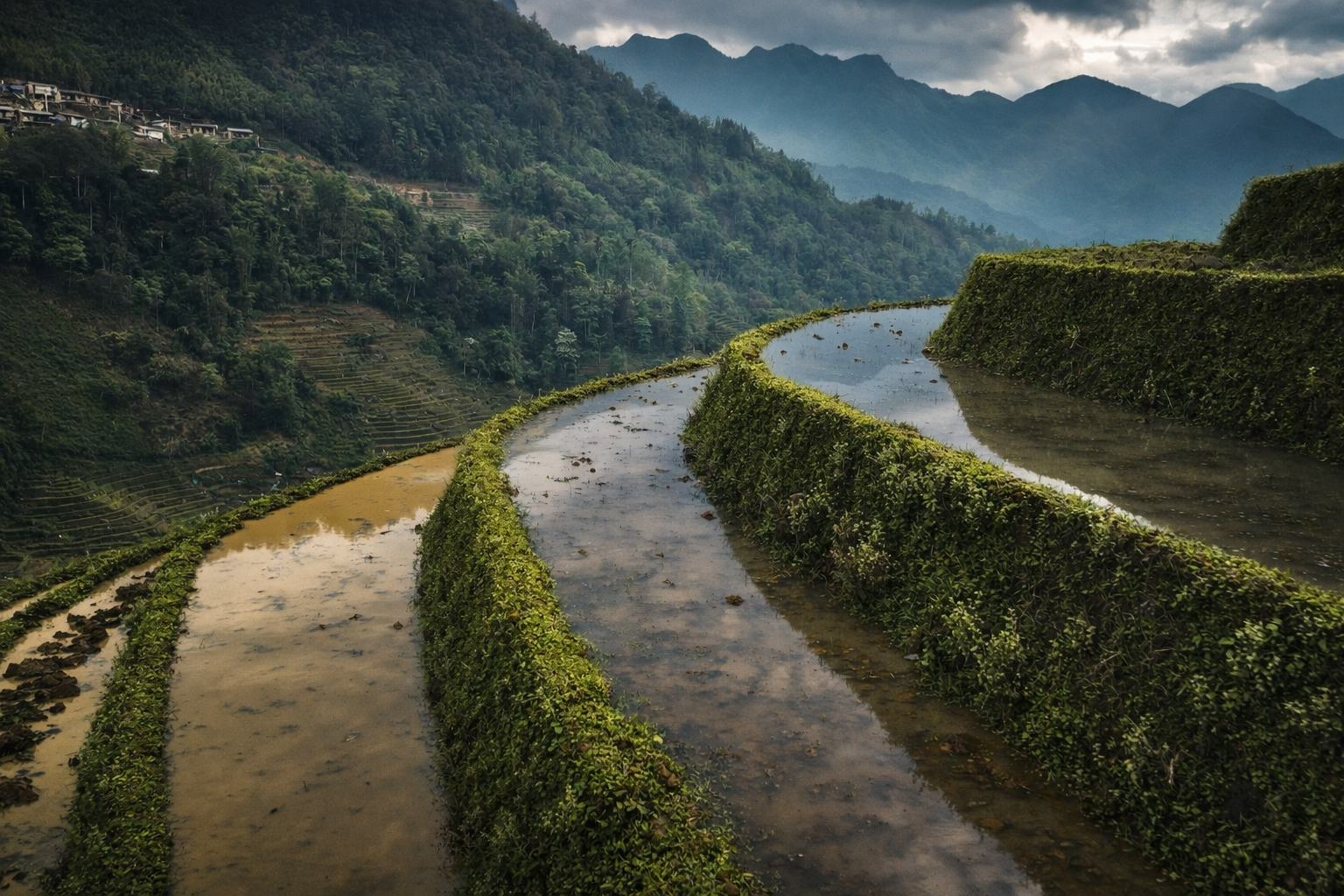
Photograph of the rice terraces in Sapa. Image by Cha Ly Thi. All rights reserved.
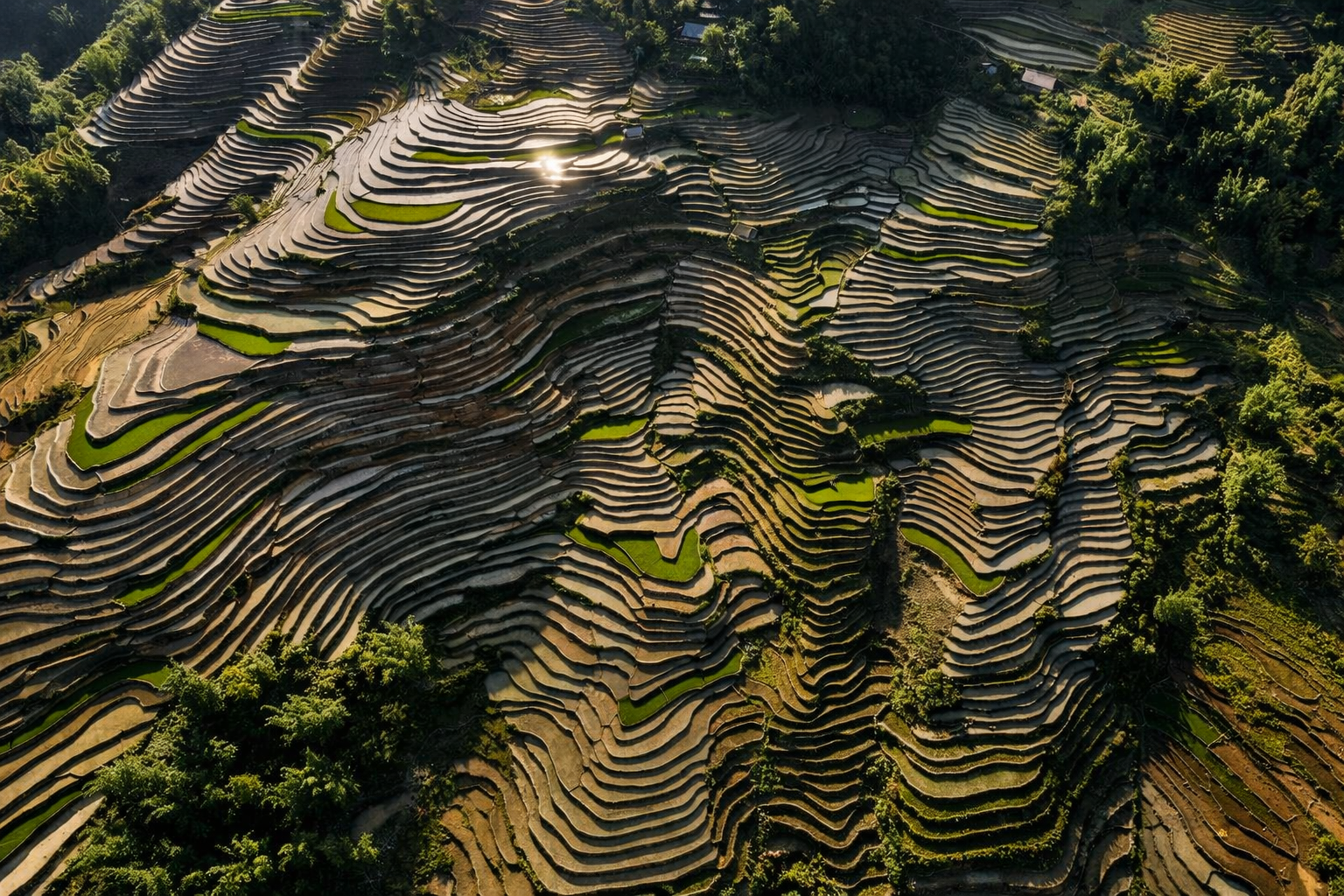
Photograph of the rice terraces in Sapa. Image by Phil Hoolihan. All rights reserved.
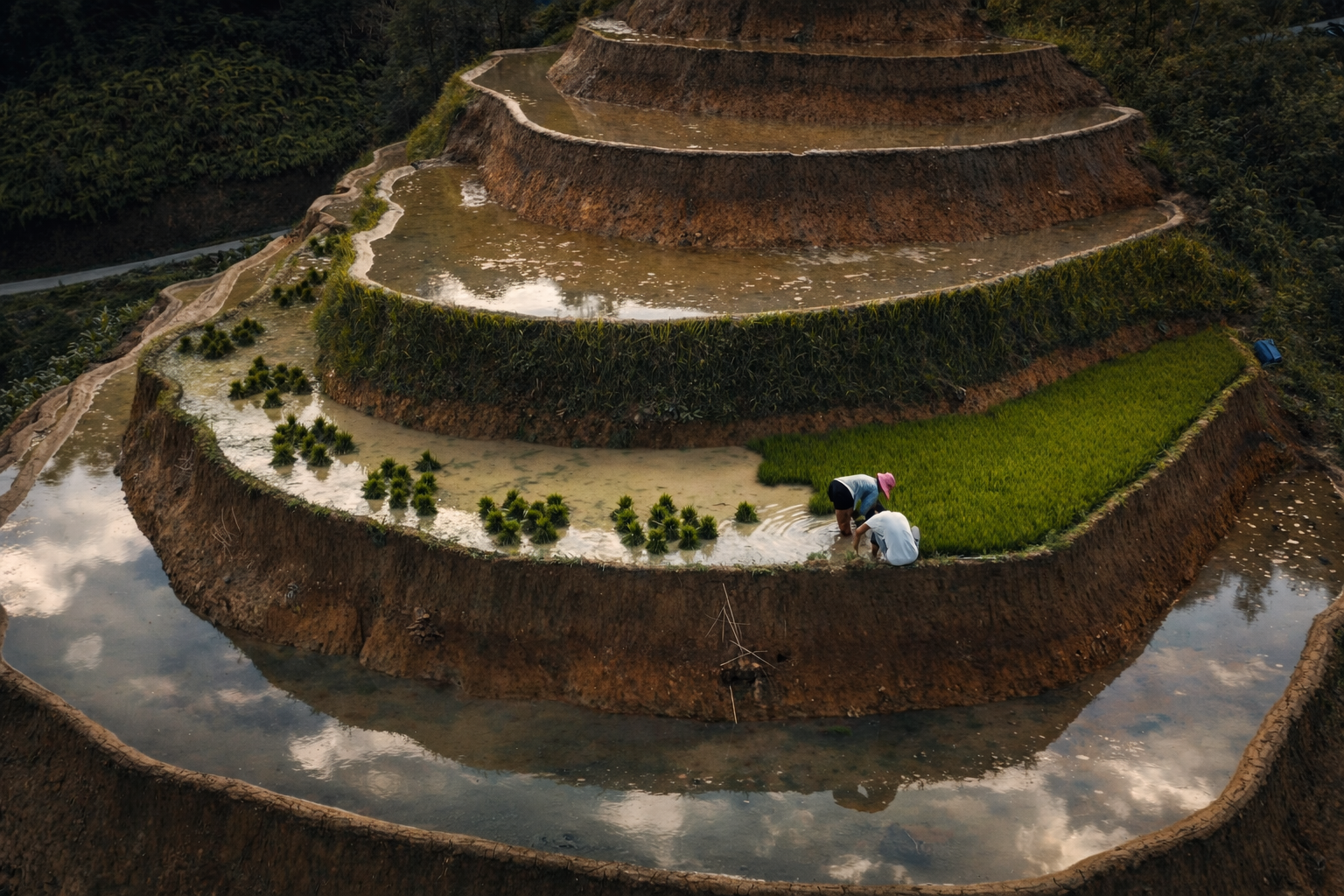
Photograph of the rice terraces in Sapa. Image by Phil Hoolihan. All rights reserved.
Engineering that breathes
Each rice terrace is a small masterpiece of balance. Though they appear fluid and curved, every individual field is perfectly level across two axes. If this were not the case, water would pool unevenly, leaving parts of the crop submerged and others dry. Water enters each paddy through a small channel, flows gently across the surface, and exits into the terrace below. This gravity fed system brings nutrients, oxygenates the water, and sustains life within the fields. There is no need for pumps or heavy infrastructure; just an understanding of landscape, water, and time. It is engineering, but it is also natural.
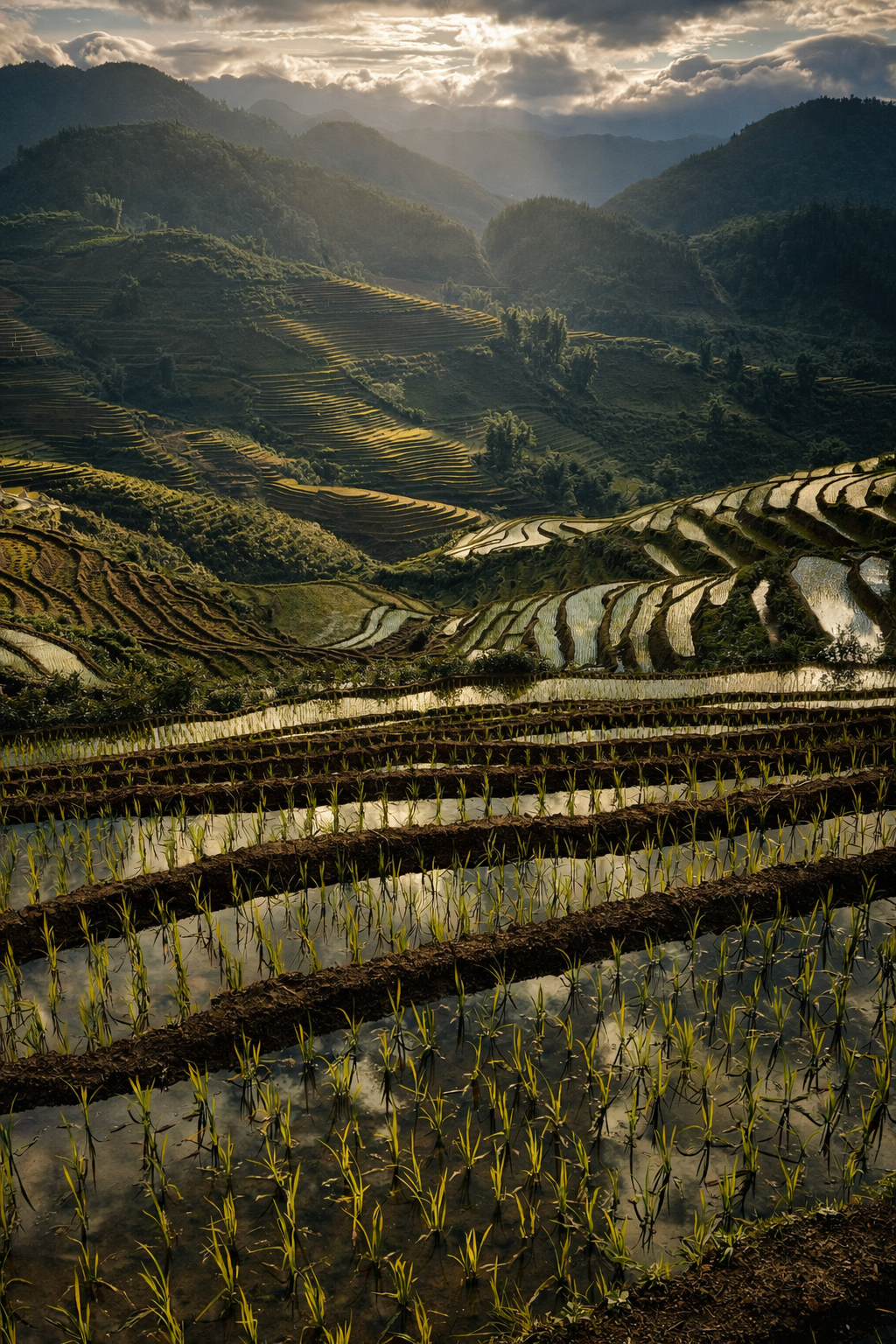
Photograph of the rice terraces in Sapa. Image by Phil Hoolihan. All rights reserved.
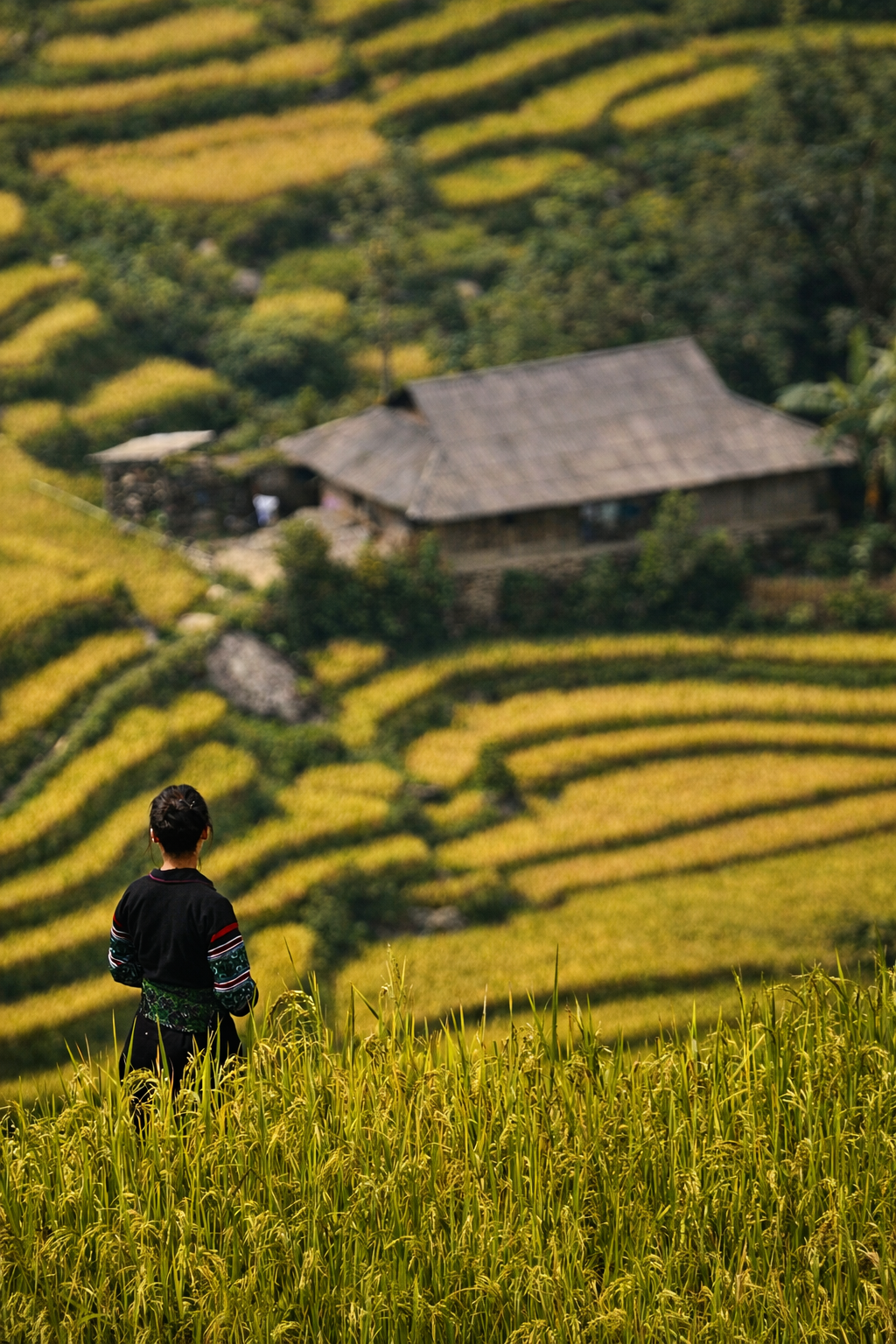
Photograph of the rice terraces in Sapa. Image by Phil Hoolihan. All rights reserved.
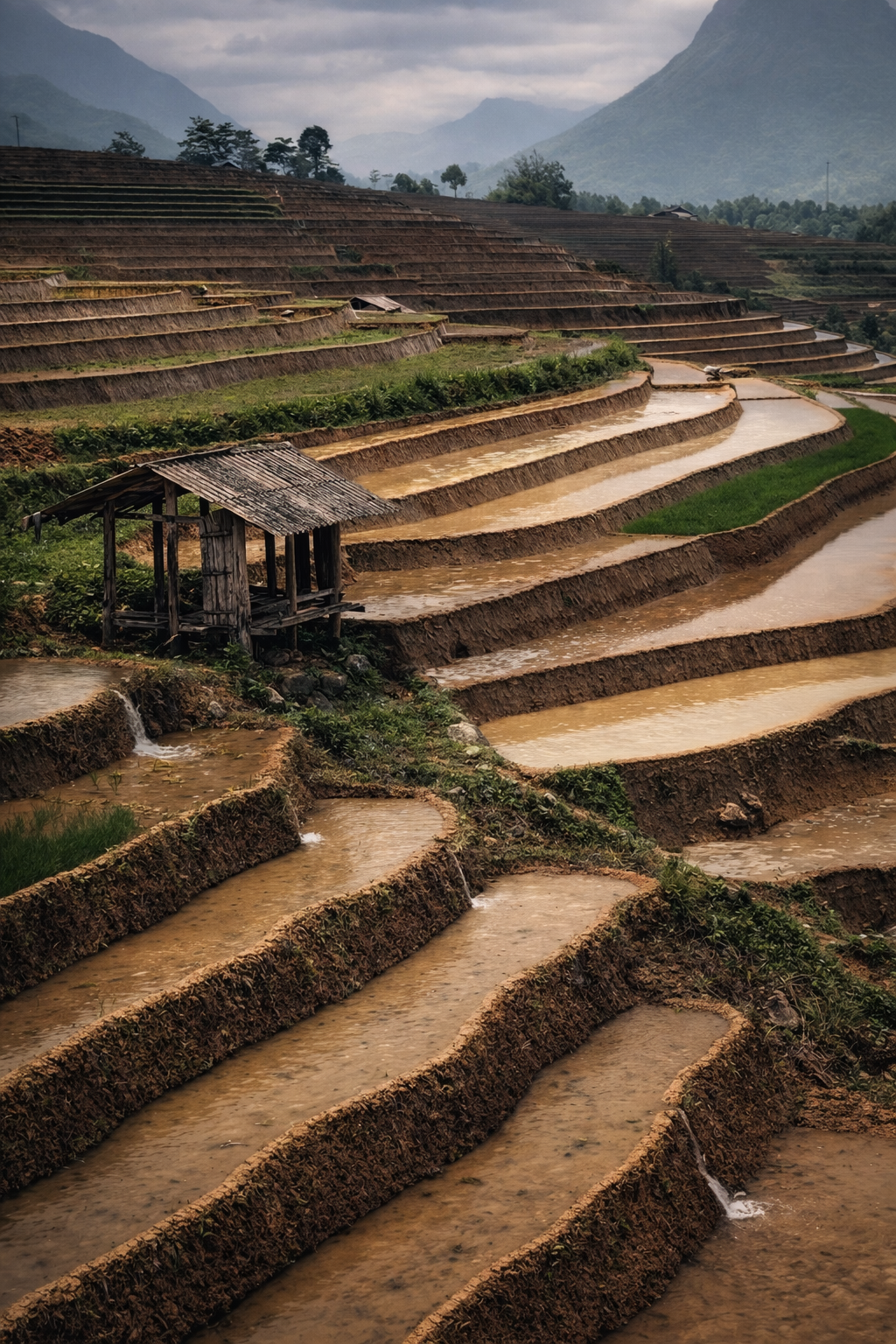
Photograph of the rice terraces in Sapa. Image by Cha Ly Thi. All rights reserved.
A living ecosystem, not just a farm
What many visitors first see as a single crop system is, in reality, something far more complex. During the wet season, the paddies sit under a shallow layer of water. Beneath the surface, life thrives. The paddies are alive with snails, fish, frogs, eels, crabs, and countless insects. These are not pests and are part of the food system.
Along the edges, herbs and wild greens grow freely. Some are eaten fresh, others cooked into daily meals. When the terraces dry after harvest, the landscape transforms again. Crickets and grasshoppers emerge in their thousands, feeding both people and wildlife. There are edible roots that grow under the drying soil and medicinal meadow flowers that bloom each October. Buffalo and horses graze the fallow fields, returning nutrients to the soil in the most natural way possible. These terraces may replace original forest ecosystems, but are ecosystems in their own right, layered, seasonal, and deeply alive. They are far from monocultures but are instead flowing steps of life fuelled by the seasonal rains.
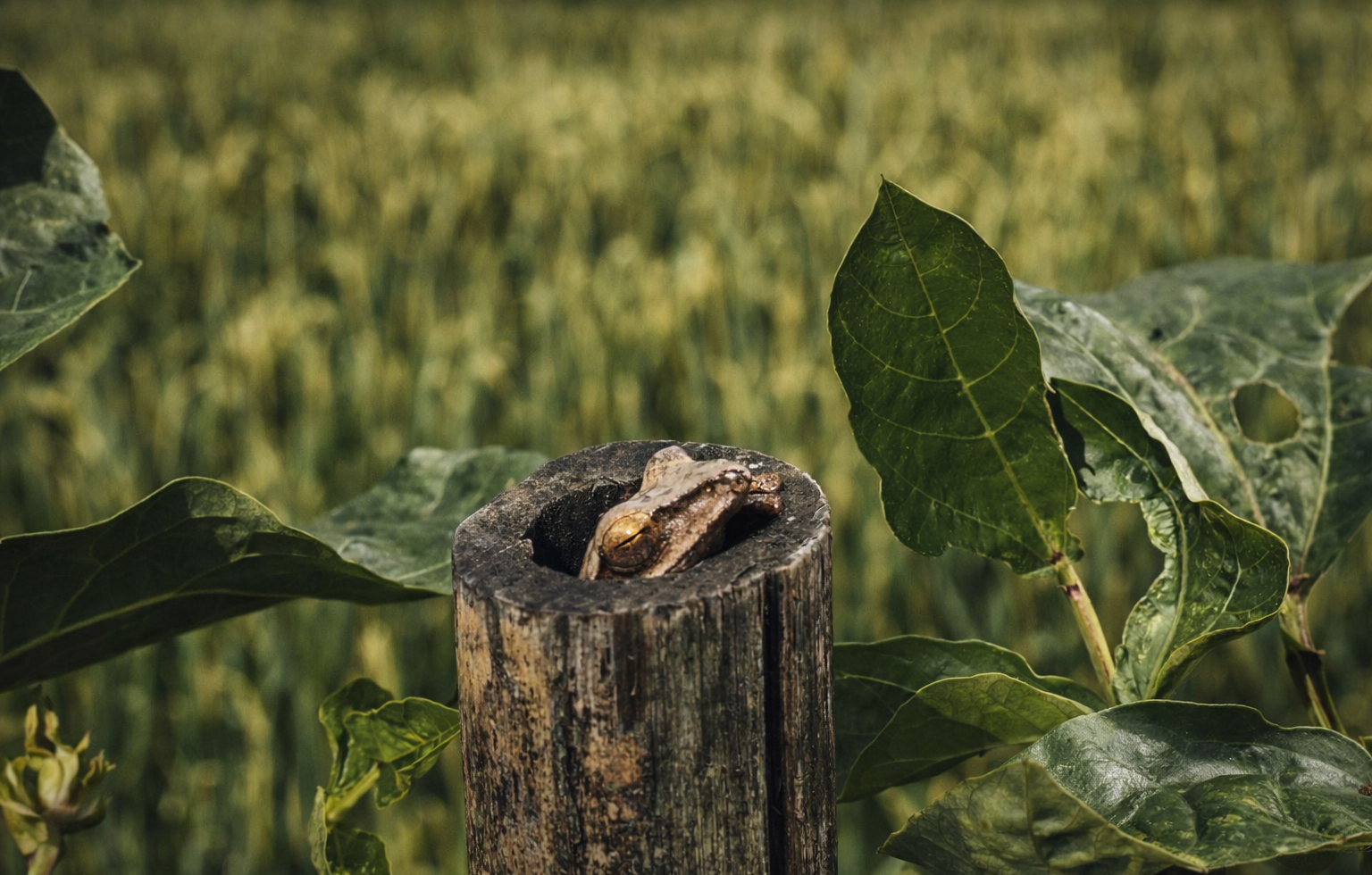
Photograph of the rice terraces in Sapa. Image by Phil Hoolihan. All rights reserved.
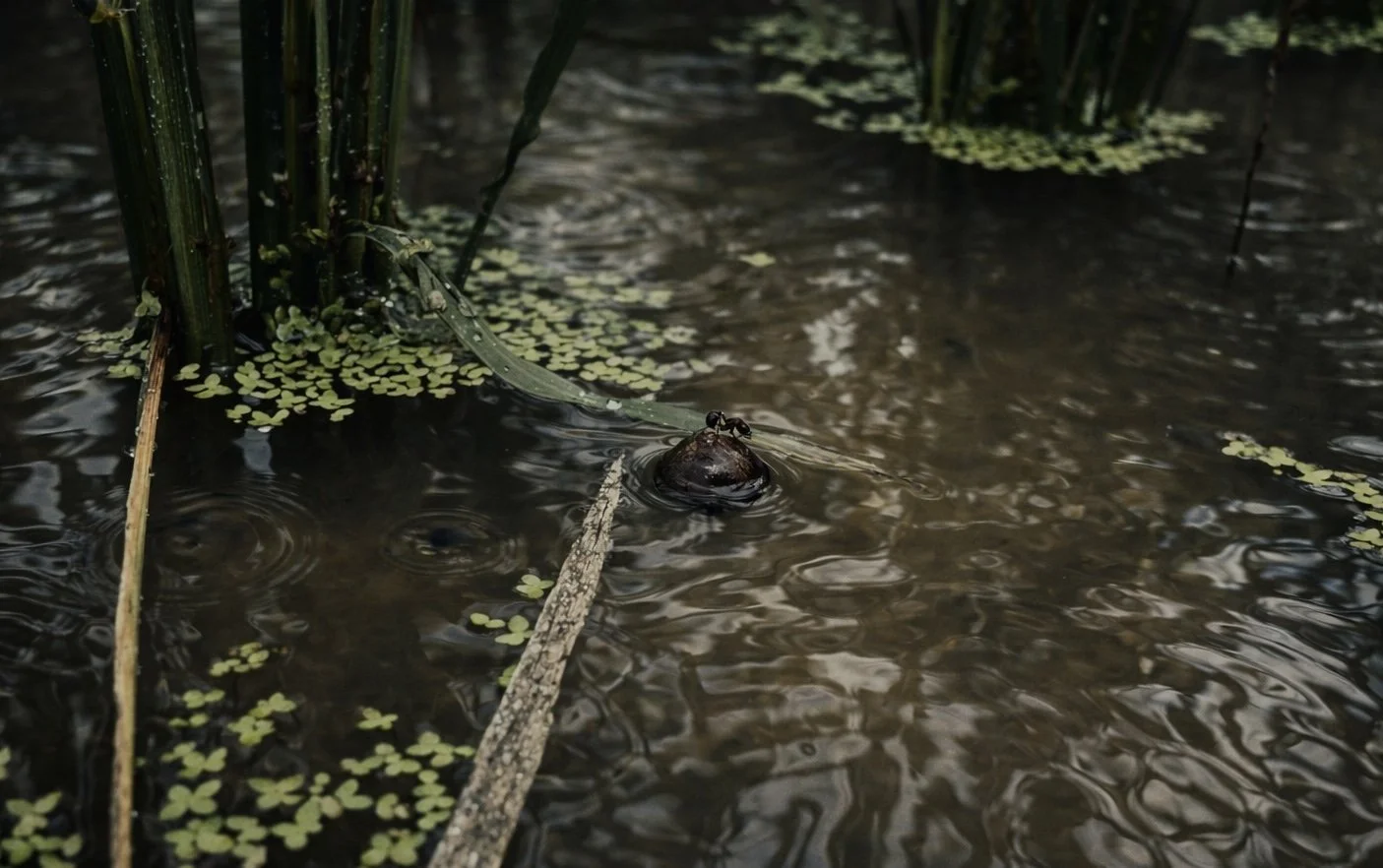
Photograph of the rice terraces in Sapa. Image by Cha Ly Thi. All rights reserved.
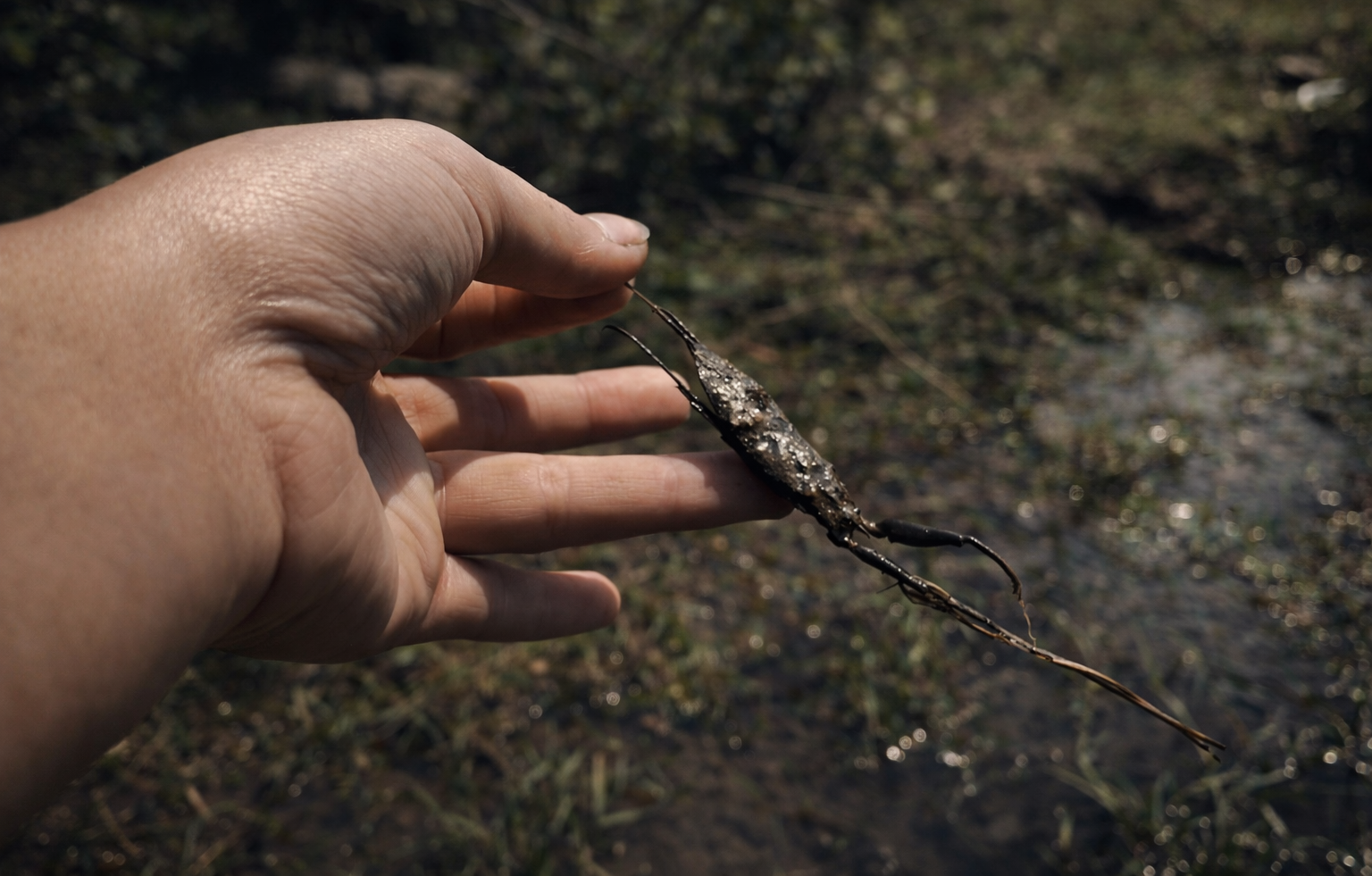
Photograph of the rice terraces in Sapa. Image by Cha Ly Thi. All rights reserved.
Why terraces succeed where modern farming struggles
Large scale rice farming in lowland regions often comes at a cost. Continuous flooding creates methane emissions. Chemical inputs pollute waterways. Monocultures reduce biodiversity.
Terraced systems in places like Sapa offer a quieter alternative. Water moves by gravity, flowing from one field to the next and being reused along the way. S oil is held in place by the stepped structure of the land. Crops are often mixed, and chemical use is traditionally minimal. Rather than forcing productivity from the land, these systems work within its limits. They are not optimised for maximum yield but are optimised for diversity that also assure resilience.
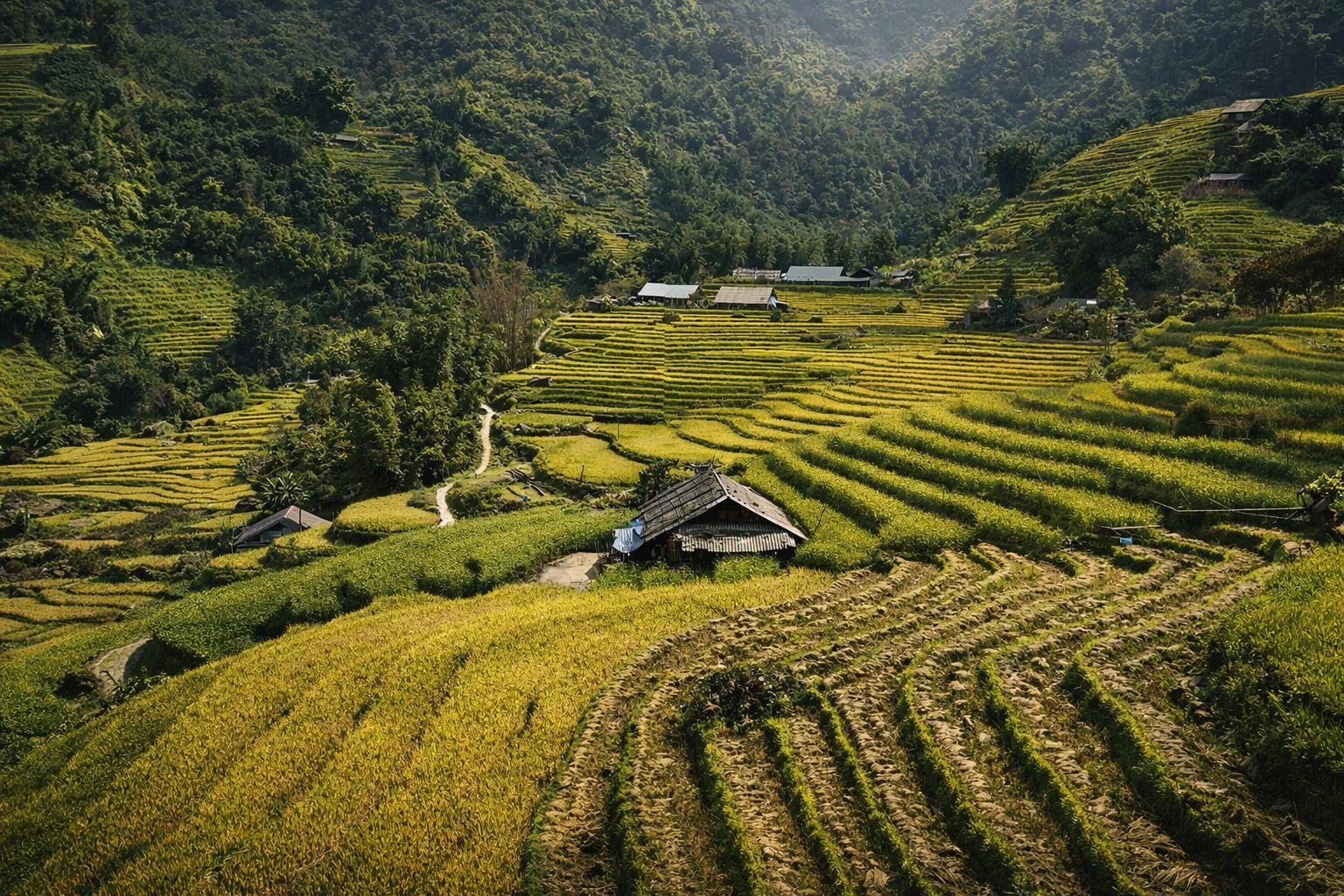
Photograph of the rice terraces in Sapa. Image by Phil Hoolihan. All rights reserved.
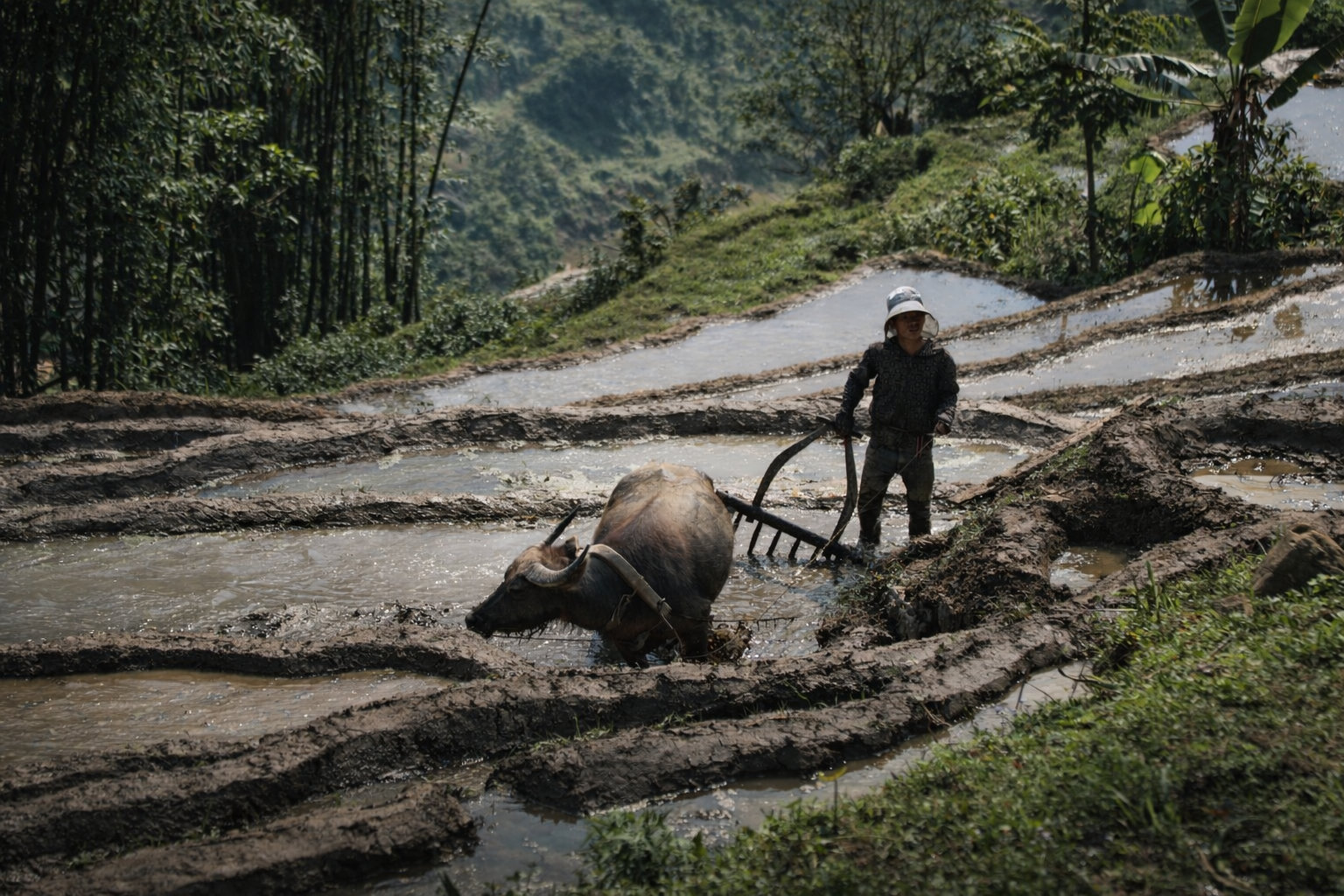
Photograph of the rice terraces in Sapa. Image by Cha Ly Thi. All rights reserved.
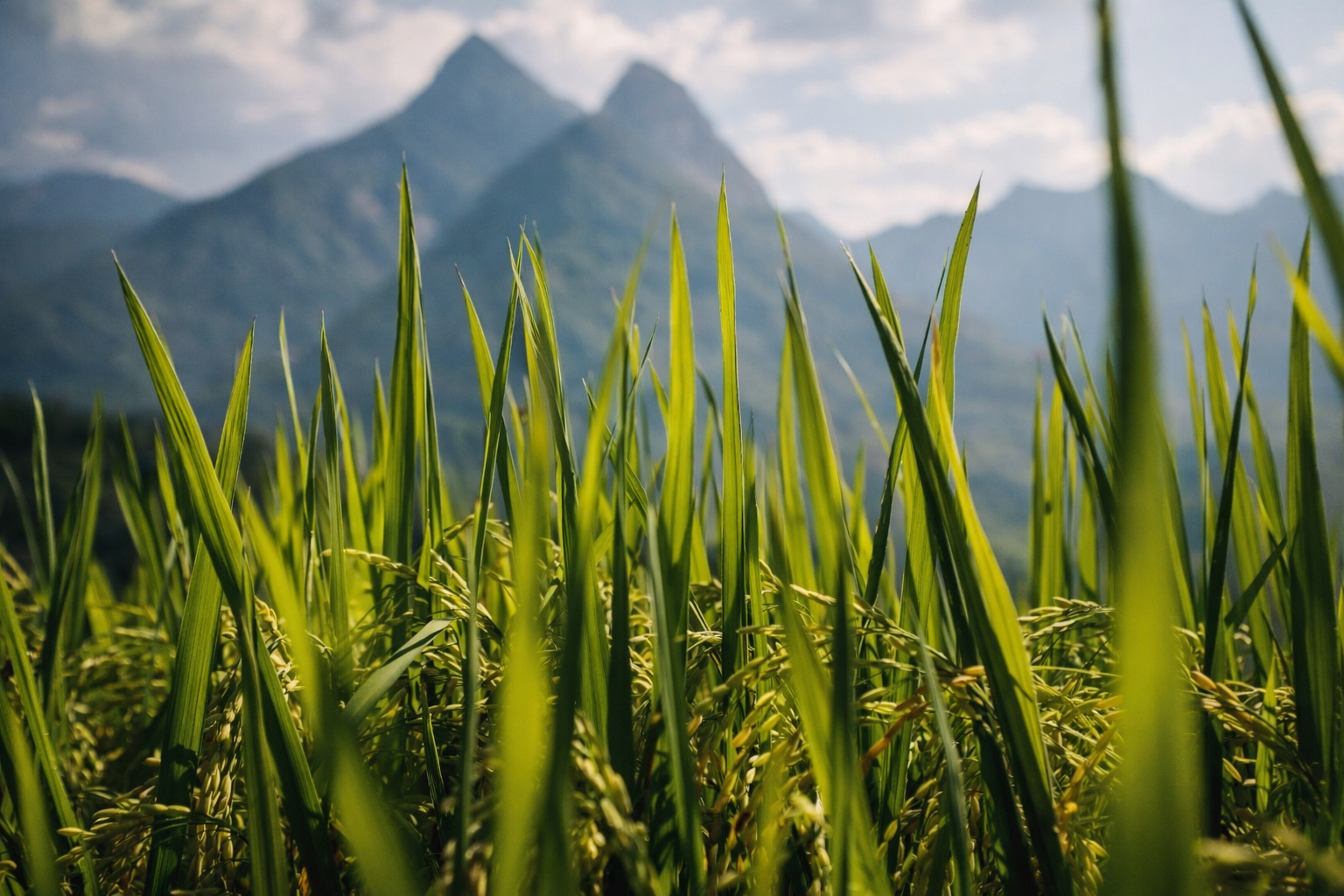
Photograph of the rice terraces in Sapa. Image by Cha Ly Thi. All rights reserved.
The cost of harmony
This balance does not come easily. Terraces must be built and maintained by hand. Walls collapse and need repair. Water channels must be constantly adjusted. Harvests are significantly smaller, and everything depends on the rhythm of the seasons. Rice farming on the steep mountain slopes is labour intensive work, with knowhow passed down through generations. Rice cultivation requires knowledge that cannot be rushed or easily scaled bus this is precisely why the system endures.
The intelligence of community
Across Sapa and the surrounding mountains, communities such as the Hmong and Dao have refined these systems over centuries. Water is guided through hand built canals. Labour is shared during planting and harvest. Knowledge is carried in oral tradition and in lived experience. Rice and daily life are so intertwined, they are cultural memory, embodied in the landscape. For many, Rice is Life.
If you are curious to witness this way of life more closely, our Sapa trekking and homestay experiences offer a chance to walk these terraces alongside the people who care for them, learning not just how they are built, but why they matter.
Why they move us
There is a reason rice terraces stop people in their tracks. Part of it is visual, the repeating curves, the layered depth, the shifting colours through the seasons. Water reflects the sky, young rice glows green, harvest turns the mountains gold, but there is something deeper at play.
We are drawn to places where human presence feels balanced and where effort, care, and adaptation are visible. These are landscape that tell a story not of human domination, but of relationship. The terraces are beautiful because they make sense practically and emotionally.
Drawn by beauty, grounded in meaning
There are few landscapes in the world that capture attention quite like the rice terraces of Sapa. Their form is instantly recognisable because their beauty is quietly magnetic. For many travellers, these fields are the image that first draws them to the mountains of northern Vietnam. Over time, Sapa has become known far beyond its borders, celebrated for both its cultural richness and its extraordinary scenery. At the heart of that reputation sit the terraces, and the people who build. The terraces shape the identity of the region as much as the lives of the people who tend them. They are often described as iconic, but that word can feel overused. What makes these landscapes truly stand apart is not just how they look, but what they represent.
The longer travellers stay in Sapa, the more the terraces begin to reveal themselves as something deeper. They make a great backdrop for photographs but are working landscapes, cultural expressions, and living systems. In many ways, they are the jewel in the crown of Sapa. Not because they shine the brightest, but because they hold together everything that makes this place what it is. For those who wish to go beyond the viewpoints and step into the landscape itself, our guided treks through Sapa’s rice terraces offer a more grounded way to experience their beauty, walking alongside the people who have shaped them for generations.
A different way forward
In a world increasingly shaped by speed and efficiency, rice terraces offer a different perspective. They remind us that human design does not have to come at the expense of nature. They remind us that functionality and beauty are not opposing forces. Rice terraces are systems built with patience, knowledge, and respect that enhance the landscapes they inhabit. Terraces are not relics of the past but are living examples of what is possible.
If you feel drawn to landscapes like this, you may find meaning in travelling more slowly, more consciously. Our community led cultural experiences in northern Vietnam are designed for those who value connection over convenience, where every step supports the people and traditions that make these places what they are.
In the end, Sapa’s terraces are something to look at and something to learn from.
