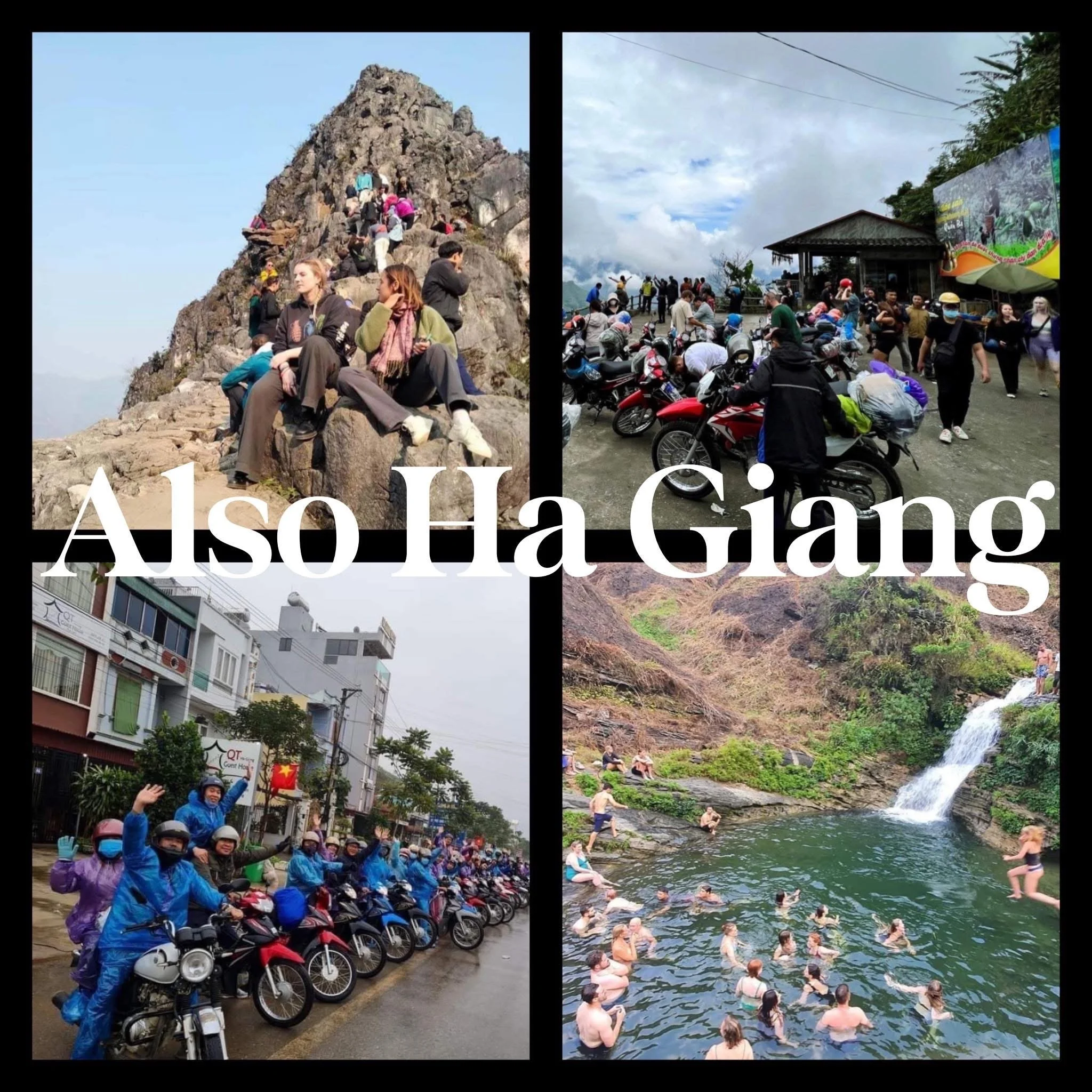
Ha Giang and Sapa in 2026: Beyond the Loop, Beyond the Photograph
Northern Vietnam Is Changing
Travel in the mountainous areas of Northern Vietnam is is changing fast. In both Sapa and Ha Giang, visitor numbers have surged. Roads are smoother, access is easier and with that ease has come a new kind of travel. Faster. Louder. More crowded. It is easy now to follow a route, stop at the same viewpoints, take the same photographs, and leave with the sense that you have “seen” a place, but have you really been there?
The Ha Giang Loop in 2026: Beauty Under Pressure
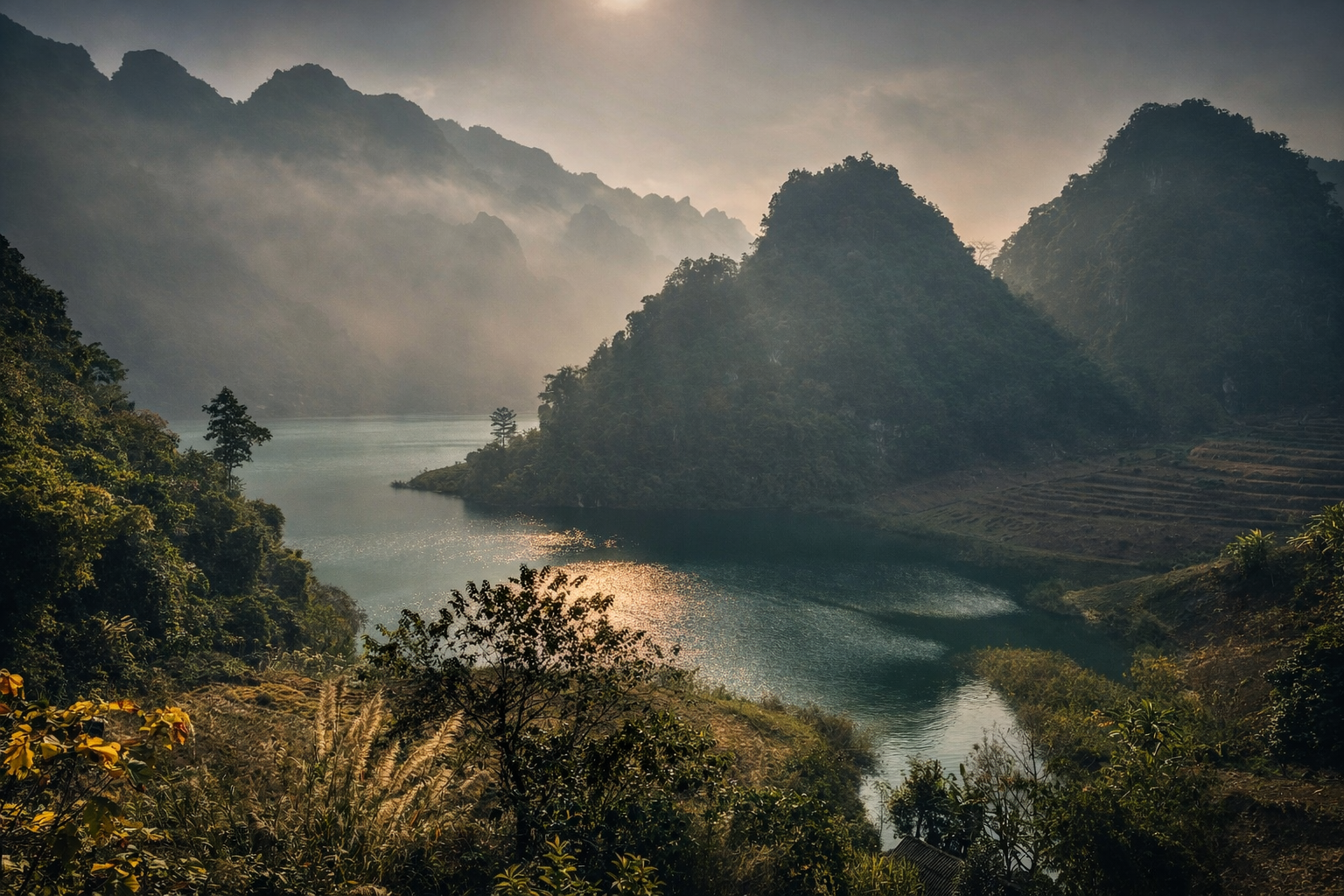
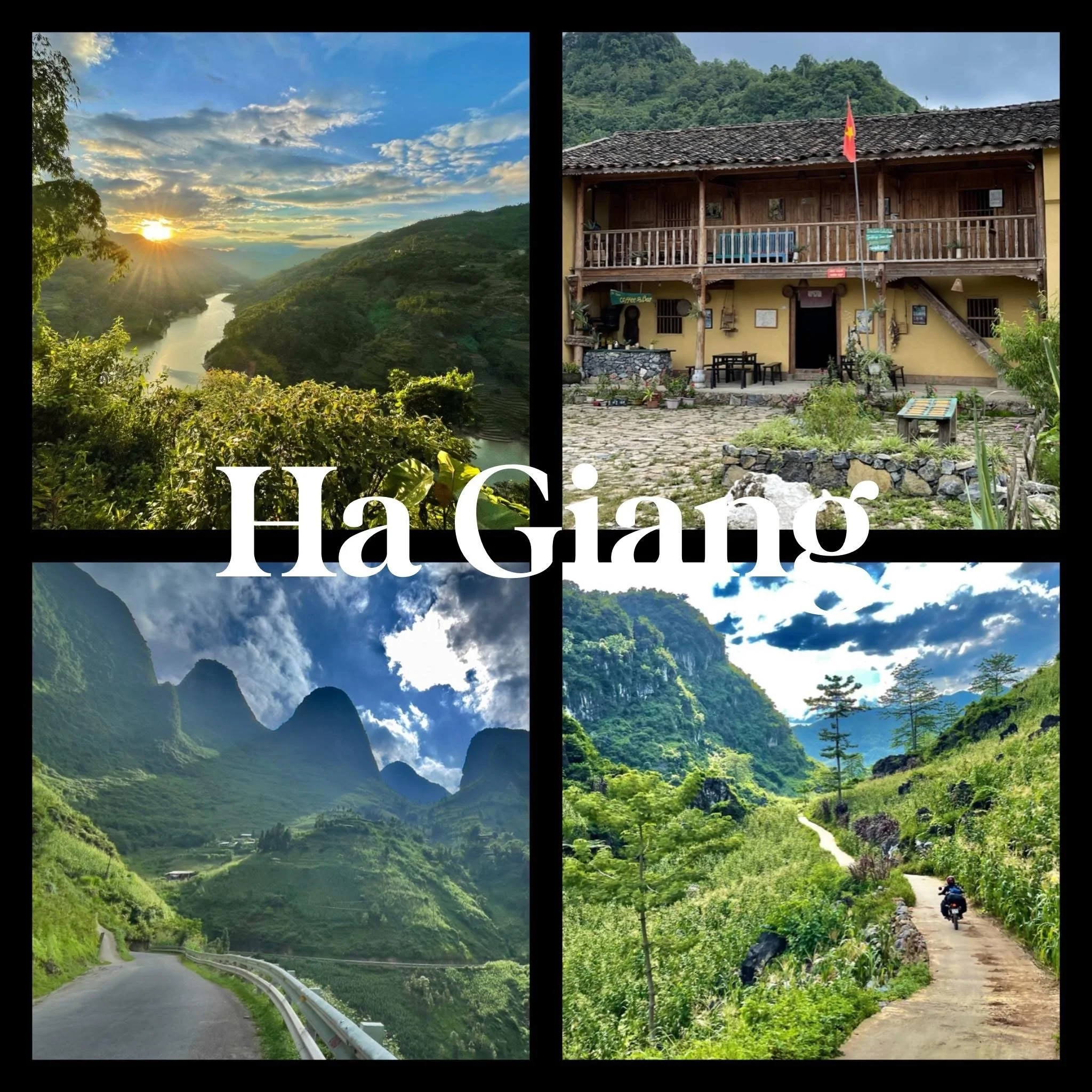
There is no denying the pulling power of Ha Giang, especially what has become widely known as the Ha Giang Loop. Limestone peaks rise like dragon spines from the earth. Roads wind over mountain passes and through karst peaks. Valleys open into pockets of corn fields used by generations of careful hands.
But in 2026, the story has changed.
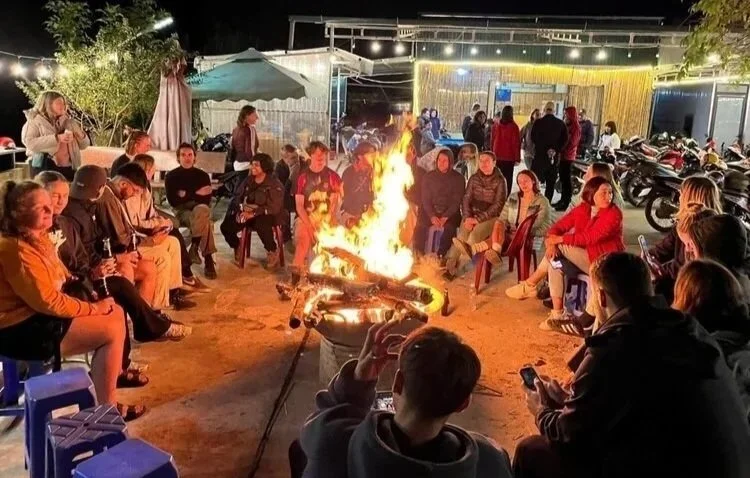
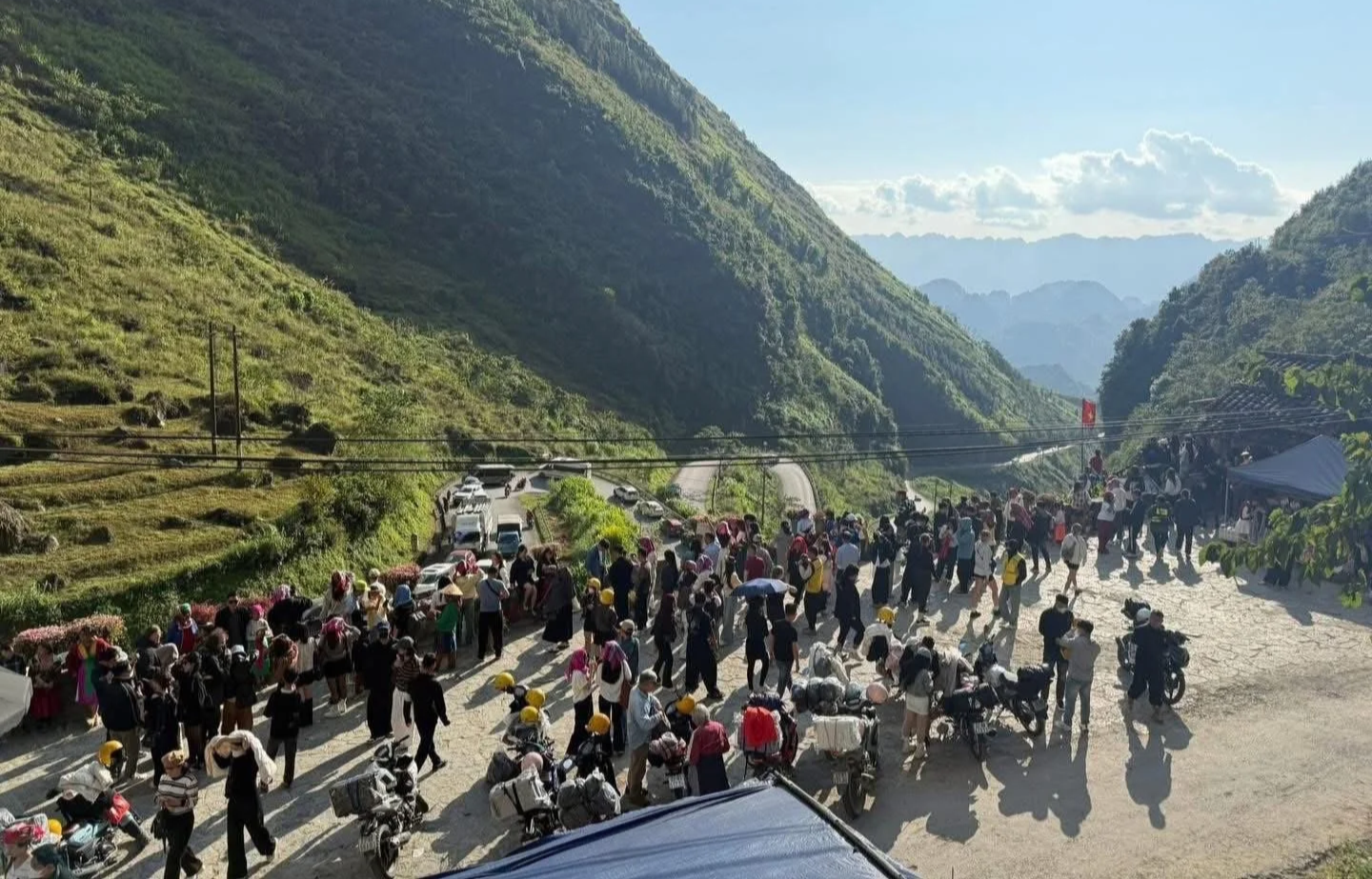
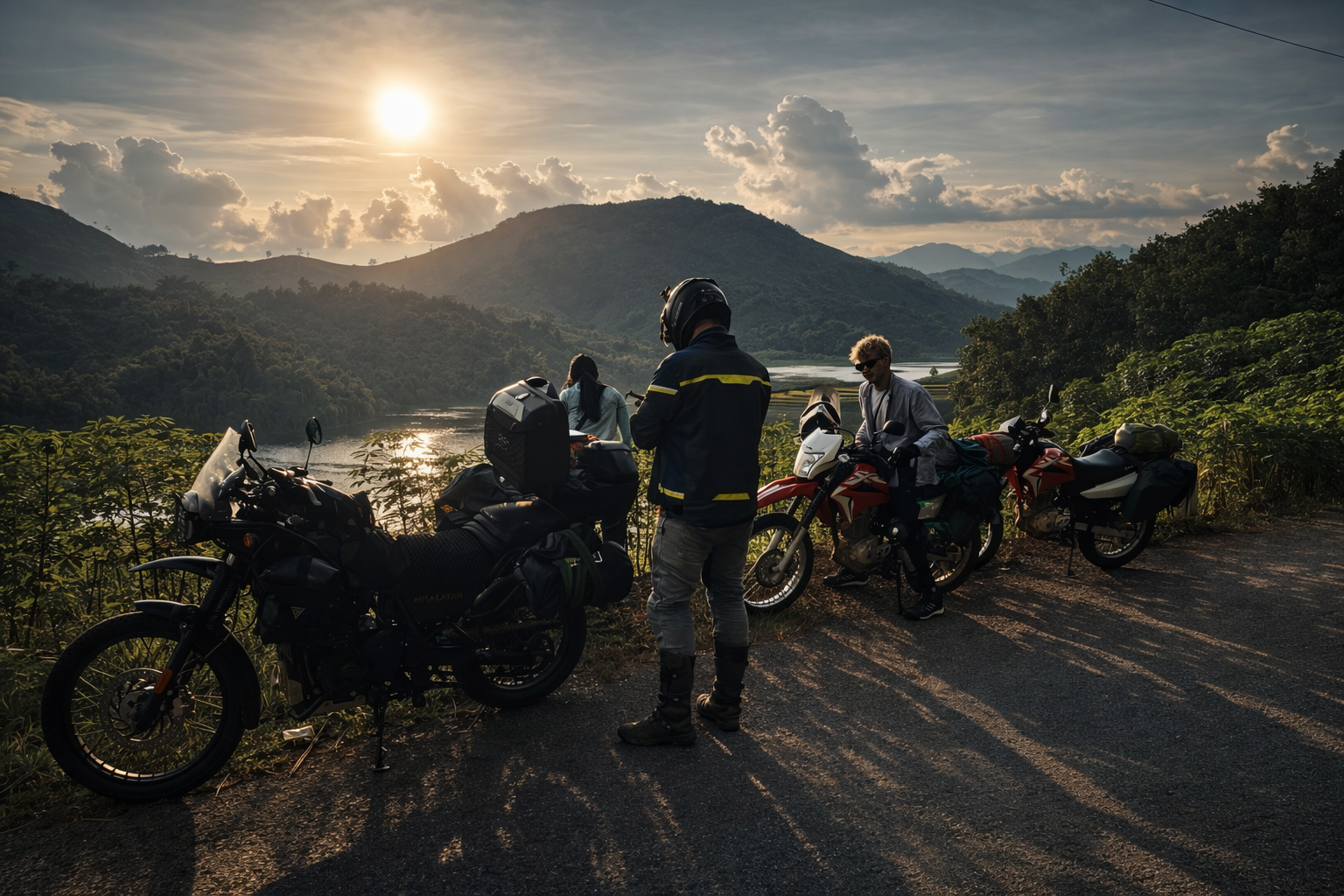
What was once a remote, challenging journey has become a well-worn circuit. The “loop” is now a rite of passage for thousands of travellers each month. Convoys of motorbikes leave town every morning. Music spills out of hostels and karaoke rages from giant speakers in many “homestays”. Nights are filled with drinking games rather than quiet conversation.
The landscape is still breathtaking, but the experience is no longer the same. Ha Giang city itself remains a gateway rather than a destination, a place most travellers pass through at the start of the the loop, rarely pausing to understand the region beyond the road . The deeper question is not whether Ha Giang is still beautiful. It is. The question is what happens when a place becomes consumed by the way we choose to experience it.
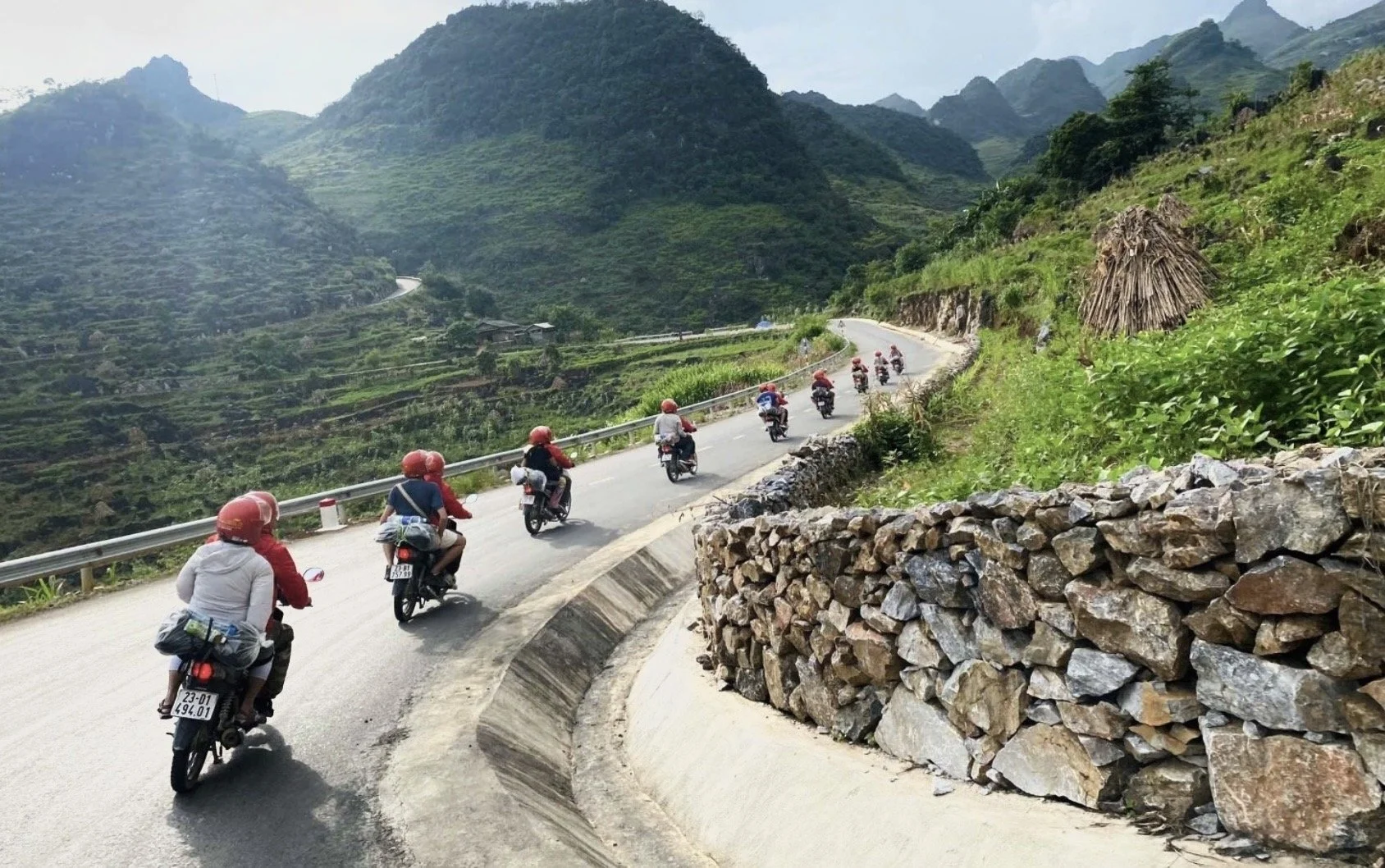
If this kind of landscape speaks to you, know that it still exists beyond the well-worn routes. There are regions just as dramatic, just as breathtaking as Ha Giang, yet far quieter. Places where the roads are empty, where the scenery unfolds without interruption, and where culture is not performed, but lived.
For those looking to experience this side of northern Vietnam, our Ride Caves & Waterways – 5 Day Journey offers something different. Travelling through lesser-known valleys and limestone regions, this route brings you into close connection with communities rarely visited by outsiders. The scenery is every bit as spectacular, but the experience is slower, more personal, and deeply rooted in place.

The Performance of Travel
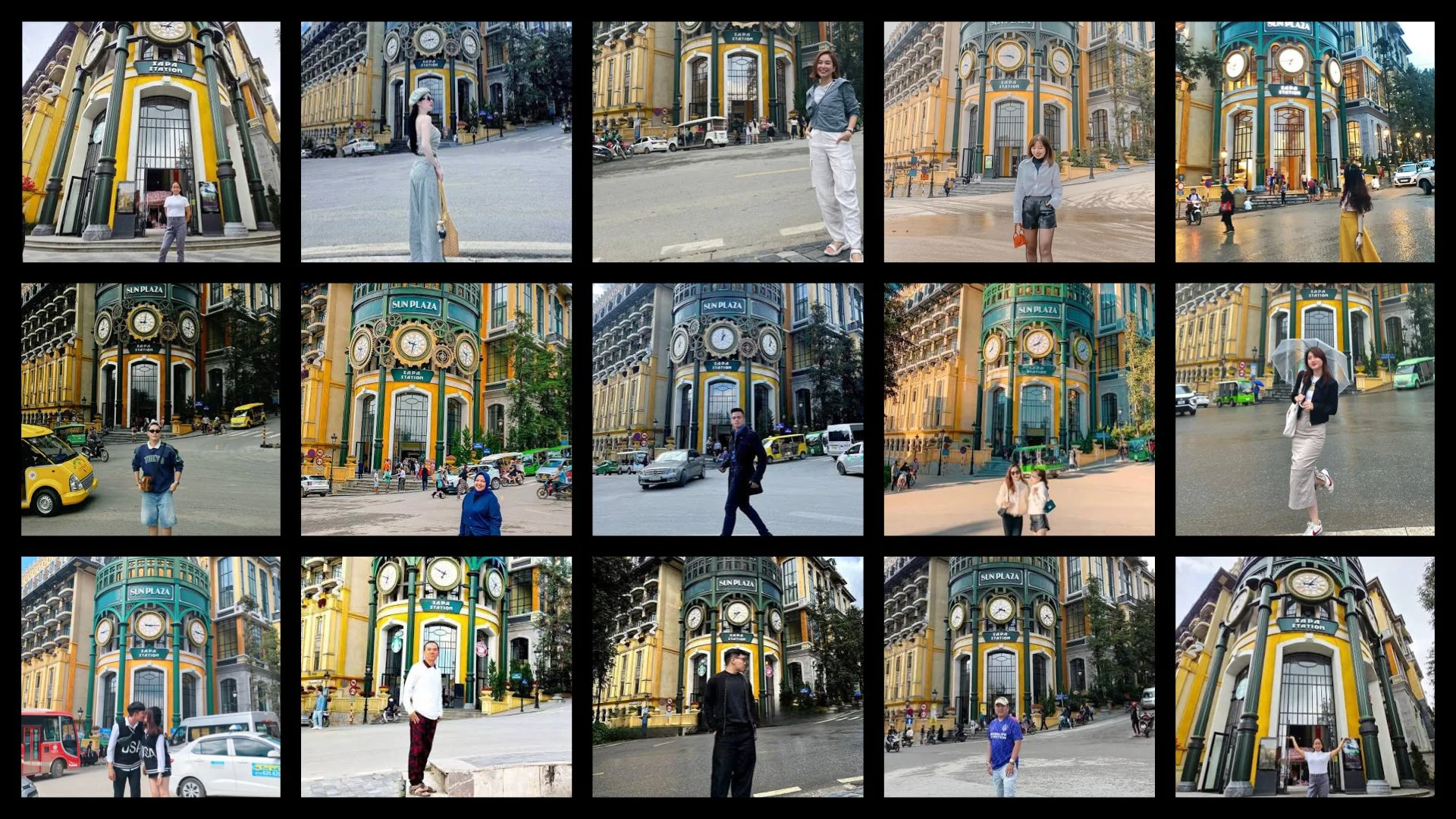
There is something we are seeing more and more, in both Sapa and Ha Giang. Travel is becoming performance. In Sapa, this shift began years ago. The town expanded rapidly. Hotels climbed the hillsides. The cable car to Fansipan brought thousands to the highest peak in Indochina each day. Villages like Cat Cat, Lao Chai and Ta Van became familiar names on every itinerary. Paths widened and instagramable photo opportunities multiplied. Encounters became shorter, more transactional and slowly, something changed. Travel began to feel rehearsed. People still walk the same routes, but fewer and fewer wander to explore. Hoards take the same images and have the same faily interactions that are repeated again and again.
We wrote about this before, reflecting on how easily exploration can turn into reproduction. Travel has moved on from discovering something new to ferociously recreating something already seen. Ha Giang is rapidly following a similar path.
When Travel Becomes Noise
The Rise of Party Tourism
In recent years, the Ha Giang Loop has shifted from exploration to performance. Large groups ride together, often with limited riding experience. Traffic accidents are common but are too frequently laughed off by uncrupulous tour operators that find entertainment in misfortune. Easy rider tours prioritise traveller numbers and copybook itineraries over culture and connection. Evenings revolve around alcohol and social media moments. Karaoke echoes through the once quiet valleys into the small hours.
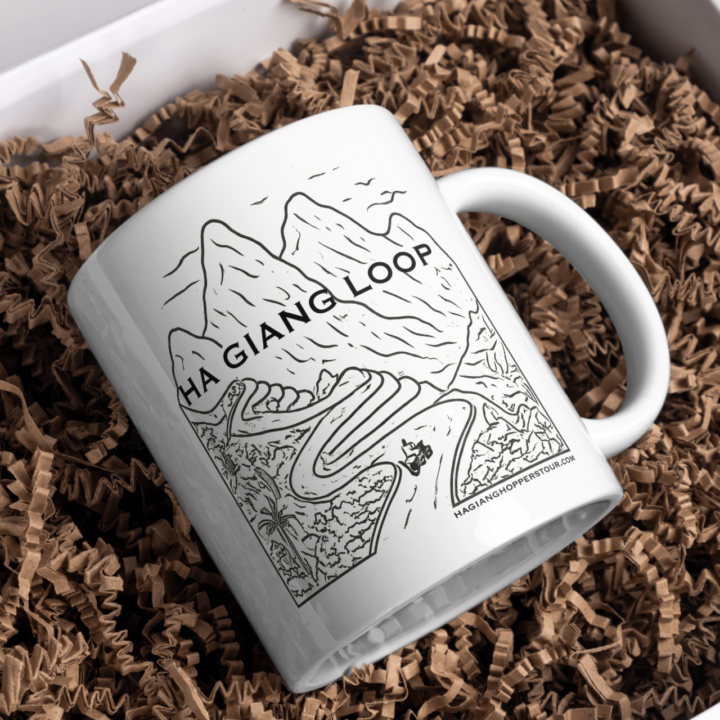
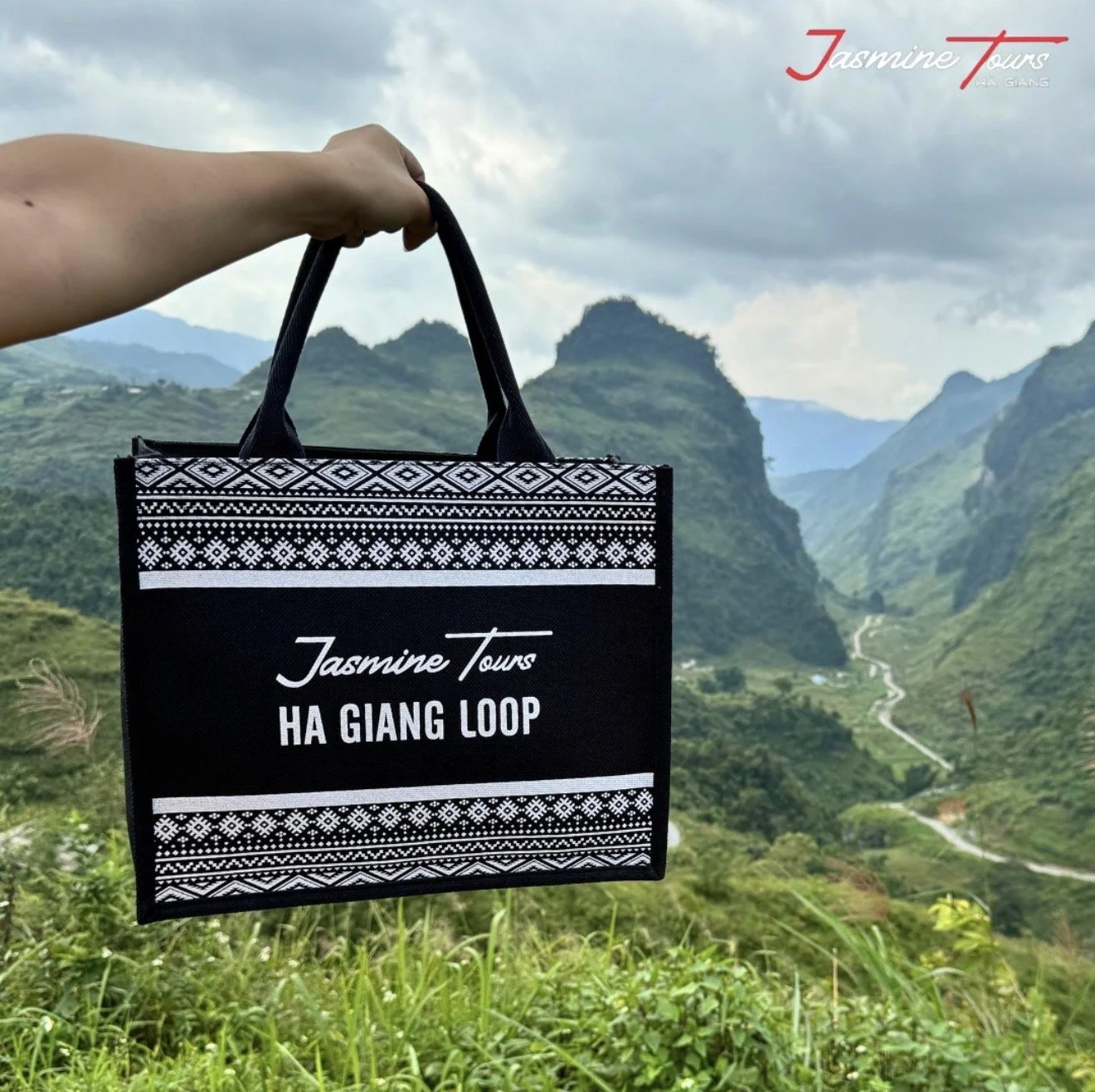
For many travellers, the goal is no longer to understand a place, but to complete it. The language of travel has quietly changed. “I did the loop.” “I conquered Ha Giang.” T-shirts, mugs and souvenirs now reinforce this idea, turning a landscape shaped by generations into something to tick off and move on from.
Ha Giang was never something to conquer. Long before it became a route, these mountains were, and still are, home to many ethnic minority groups. The steep terraces you pass so quickly are the result of years of labour. Rice farming here is not symbolic or scenic. It is relentless, physical work, carried out on gradients that demand balance, strength and patience. In the highest land, corn does not grow easily, but is coaxed from stone. The landscape is unlike anywhere else in Vietnam. Jagged limestone rises from the earth in sharp, grey formations, stretching endlessly across the plateau. Soil is scarce and what little exists gathers in pockets between rocks, thin and fragile, easily washed away by rain or wind.
Yet this is where generations of Hmong families have chosen to farm. Each year fields are prepared by hand. Stones are moved, cleared, and stacked into low walls. Small holes are opened in the earth, just deep enough to hold a few seeds. Corn is planted individually, carefully, one by one. From a distance, the fields appear scattered, almost accidental, but up close, there is intention in every step. The rhythm of life here follows the corn. Planting, tending, harvesting. It is labour that demands patience and resilience. There are no shortcuts or guarantees of a good harvest.
For the farmers, a successful harvest is not a photo opportunity, but a real achievement, earned through knowledge passed down over generations. When travel becomes rushed, these realities fade into the background. What remains is a surface-level experience, one that risks celebrating movement over meaning. The question is not whether you can complete the loop. It is whether you can truly see the lives that exist beyond it.

What This Means for Local Communities
For Hmong, Dao and Lo Lo communities, this shift is deeply felt. Villages that once welcomed a handful of passing guests are now burdened by large, rotating groups. They eat meals in large restaurants and stay in in ‘homestays’ that can accomodate many. Conversations with locals are trivial. Cultural exchange becomes transactional.
Traditional rhythms are interrupted. Farming schedules adjust to tourist arrivals. Young people are pulled towards tourism income over traditional crafts. Noise and waste increase in previously quiet villages. In some areas, communities are no longer hosts, but backdrops.
A Sign by the River: What It Doesn’t Say
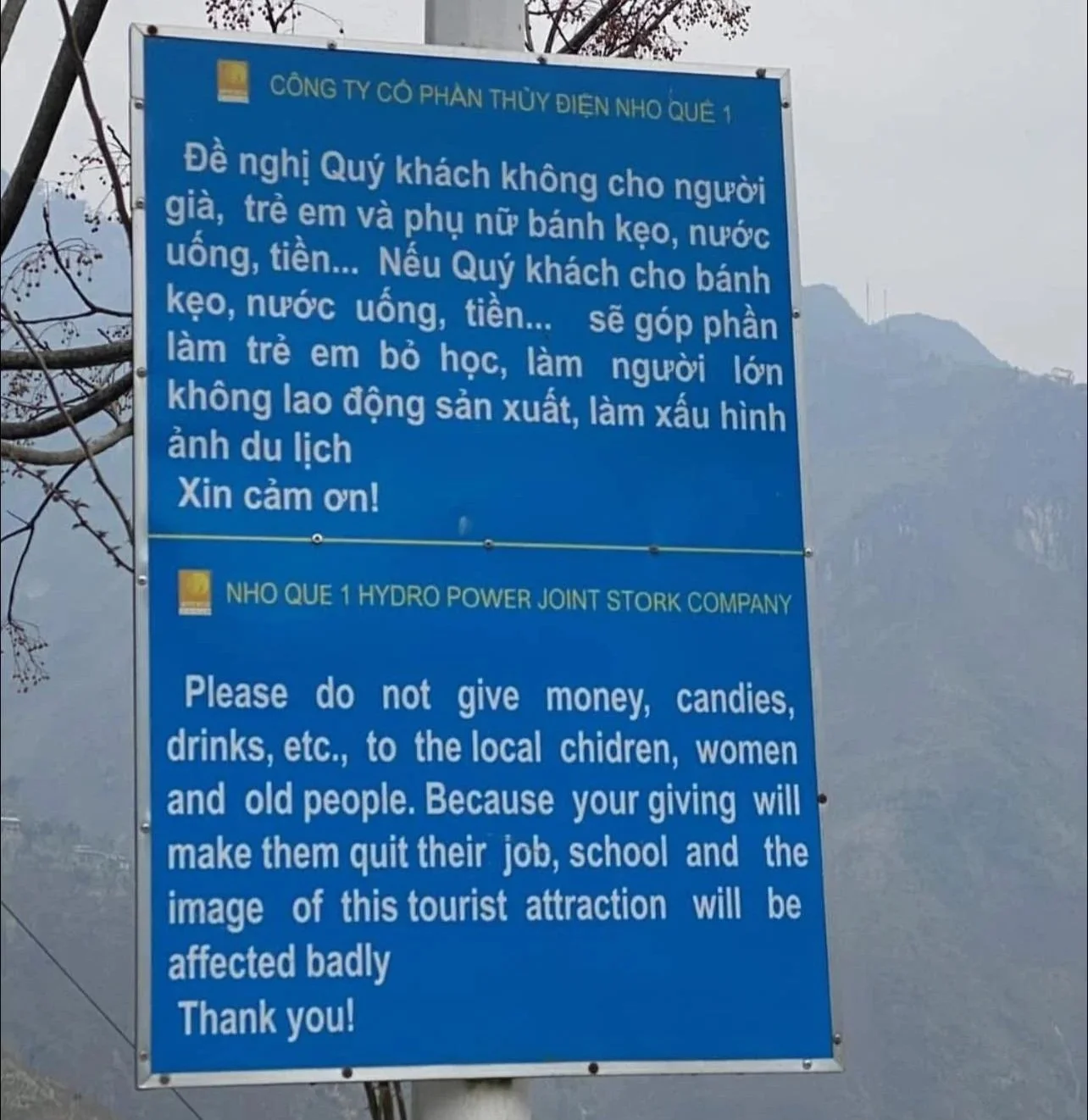
A new public notice has been erected near the Nho Que River along the Ha Giang Loop. It asks visitors not to give money, sweets, or drinks to local children, women, and elderly people, warning that such actions may discourage schooling and work, and negatively affect the image of tourism.
At first glance, the message seems reasonable, but without context, it tells only a fraction of the story. In Ha Giang, it is common to see Hmong children engaging in activities such as selling textiles, offering to braid tourists’ hair, or posing for photographs. This is not simply opportunism. It is rooted in a complex mix of economic and social realities.
Many Hmong families in remote areas face limited access to stable income, land security, and formal employment. Tourism, even in its most informal form, becomes a direct and immediate way to earn. A piece of embroidery, a bracelet, or a small interaction with a traveller can mean the difference between having cash for essentials or not. At the same time, much of the formal tourism infrastructure in Ha Giang is no longer in local hands. Many licensed tour companies are owned and operated by Vietnamese from the lowlands, who have moved into the region to capitalise on its rising popularity. This extends to transport, accommodation, and guiding services. Opportunities within this system often require literacy, language skills, and access to networks that many ethnic minority communities have historically been excluded from. The result is a deeply uneven landscape.
While tourism numbers increase, many local villagers see very little of the financial benefit. Instead, they experience the pressures that come with it. Roads fill with inexperienced riders. Villages become crowded with large groups. Nights are punctuated by loud music and karaoke. The next day, copy and repeat. Again and again, night afetr night.
Even well-intentioned gestures can have unintended consequences. The giving of sweets to children, for example, has led to rising dental health issues in some communities. But removing this behaviour without addressing the underlying lack of opportunity risks placing responsibility on those with the least power in the system.
When Culture Becomes Costume
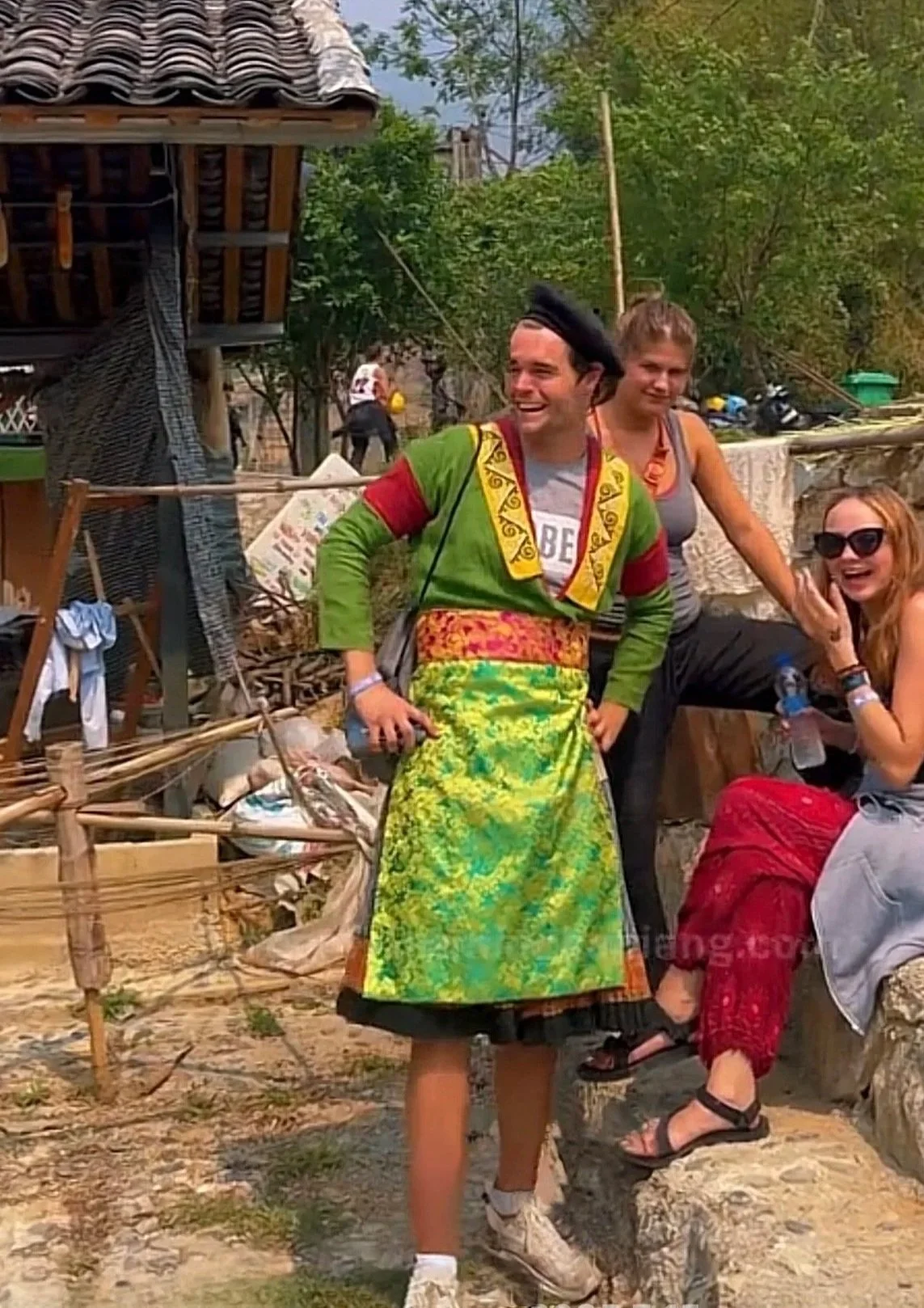
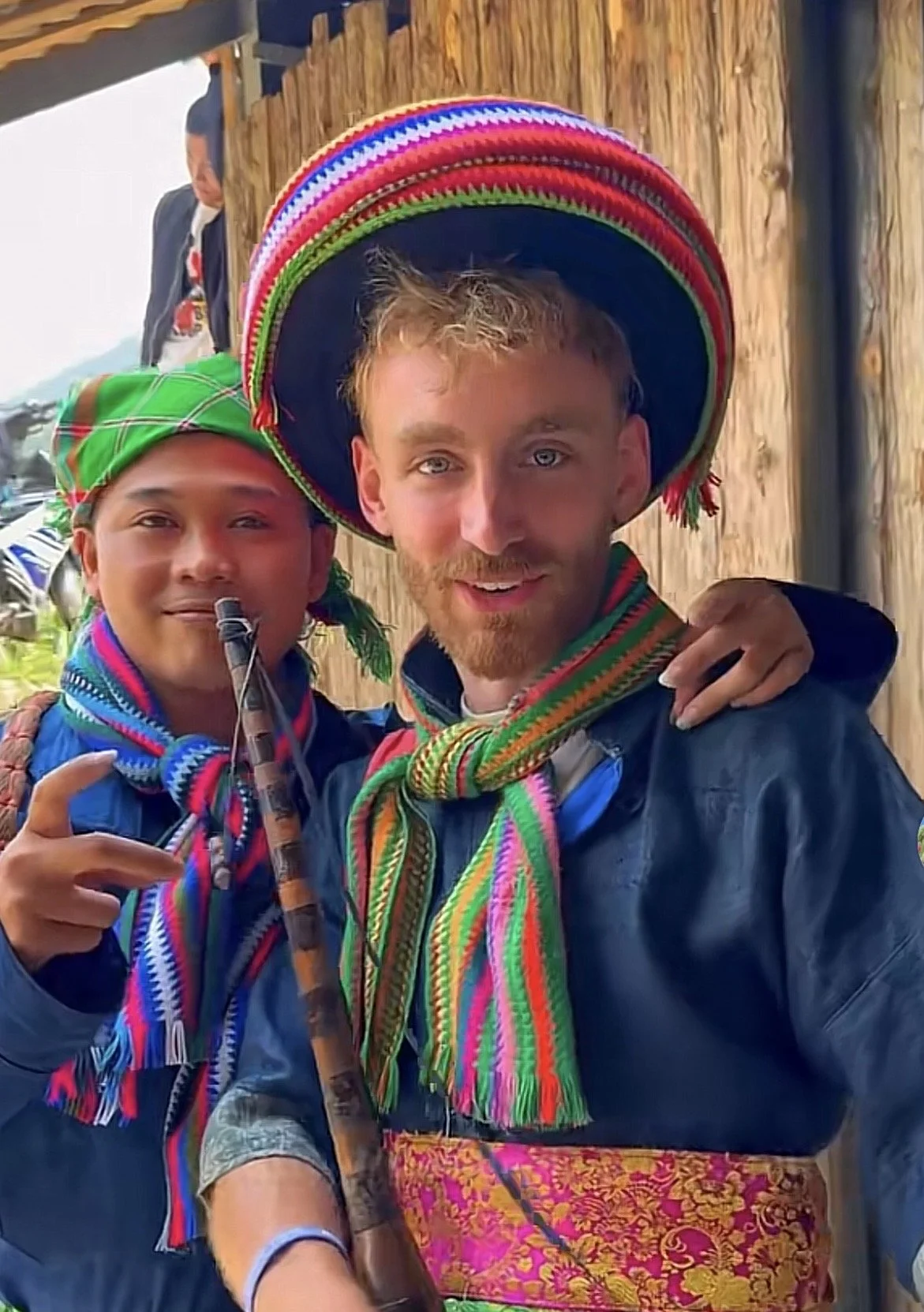
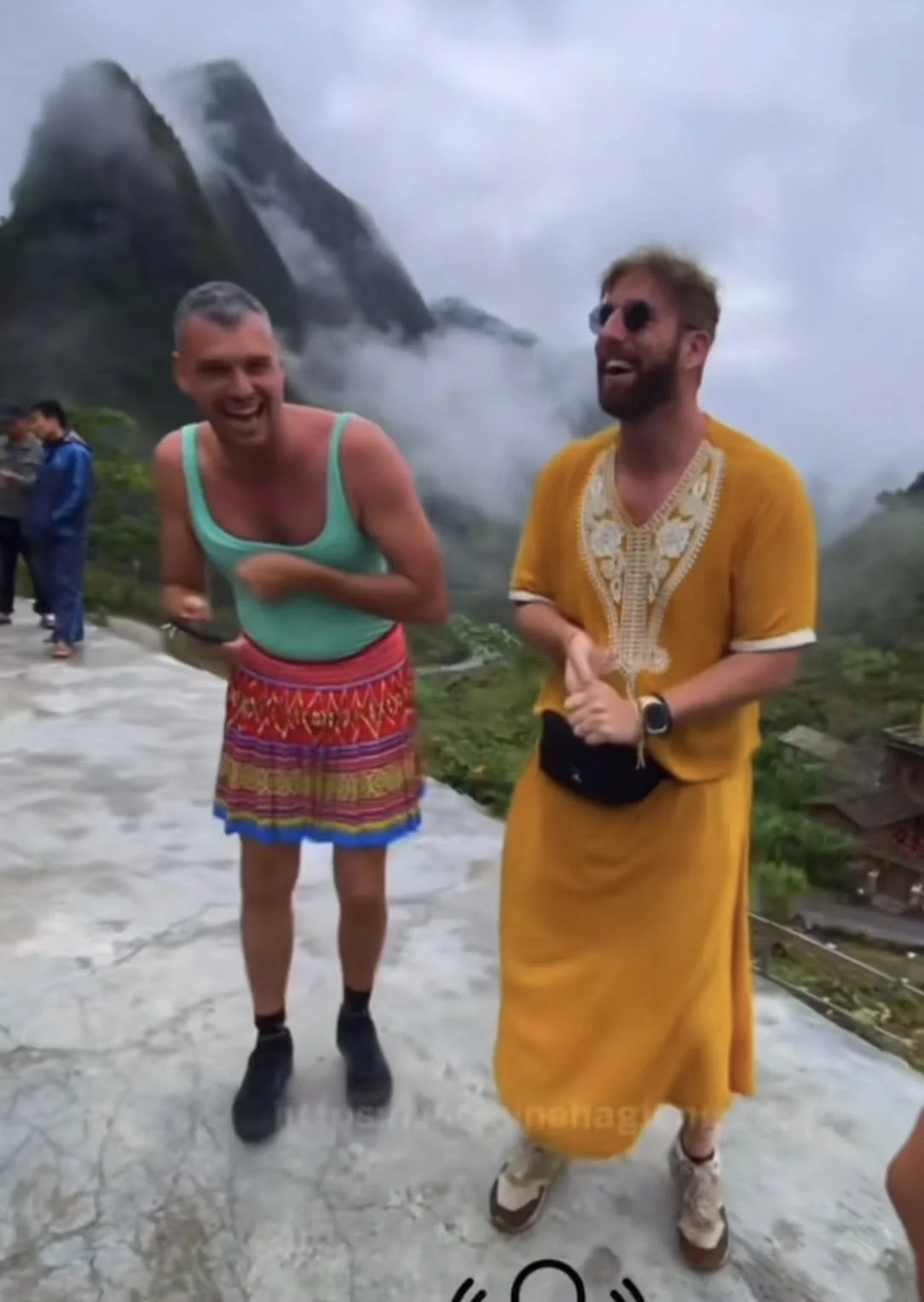
Alongside these changes, another shift is becoming increasingly visible. We feel compelled to speak on something deeply troubling. In recent clips, we have seen backpackers encouraged to wear Hmong skirts and Vietnamese Áo Dài while partaking in the Ha Giang Loop.
To be clear: wearing ethnic minority attire is not a gimmick. Clothing carries meaning, identity and dignity. To repurpose it as entertainment is to turn Hmong culture into the butt of a joke. This is not light-hearted fun; it is mockery. We, as Hmong and Vietnamese people, do not exist for ridicule. Companies that promote and profit from this behaviour are not only being irresponsible, they are perpetuating cultural disrespect. There is a profound difference between being invited into a cultural practice and performing it for amusement. Traditional clothing, whether it is a hand-embroidered Hmong skirt or an Áo Dài, is woven with story. Patterns signify lineage, age, region, and identity. To see them reduced to a joke, worn incorrectly, exaggerated, and shared online for entertainment, is painful for many local people. It reflects a wider shift in tourism where culture is no longer something to learn from, but something to consume.
If we are serious about ethical travel, we have to be willing to question these moments, even when they are presented as harmless fun because culture is not a prop and people are not performers.
The Illusion of “Authentic Travel”
There is a common belief that going “off the beaten path” guarantees authenticity but when thousands follow the same off-the-beaten path, it becomes something else entirely.
In Sapa, this transformation happened earlier. The town itself can feel busy, even overwhelming. Some travellers arrive and leave disappointed, believing authenticity has been lost. Yet this often comes from staying only in the town or visiting nearby villages without deeper engagement. When travellers move beyond the surface, into the forests and more remote communities, the experience becomes something entirely different .
The same is true of Ha Giang.
It is not the destination that determines authenticity. It is the way we move through it.
A Different Way to Travel in Northern Vietnam
The answer is not simply to avoid Ha Giang. Nor is it to write off Sapa. Both regions remain extraordinary. But they require intention.
Instead of rushing the loop in a few days, consider staying longer in one place. Walk rather than ride. Spend time with one family rather than passing through hostels in huge groups.
Beyond Sapa town lies a network of valleys and villages where life continues with quiet resilience. Here, travel slows. You begin to notice the details. The rhythm of farming. The scent of herbs gathered from the forest. The patience behind each stitch of embroidery.
This is where connection happens.
Sapa: More Than Its Busiest Corners
It would be easy to look at Sapa and think it has already been “overdone” and in some places, that feeling is real. Sapa town is busy. Fansipan sees thousands each day. Cat Cat, Lao Chai and Ta Van can feel crowded, especially at peak times, but these villages make up only a fraction of the region.
Beyond these well-known areas lies a vast landscape of valleys, forests and villages that most travellers never reach. Places where the rhythm of life is still guided by the seasons. Where farming, crafting and community remain at the centre of daily life. Places where you are not one of many, but one of few.
This is the Sapa that still exists. You just have to choose to find it. Both Sapa and Ha Giang offer something deeply personal, if you travel differently.
A Different Way to Experience the North
At ETHOS, we have always believed that travel should be rooted in relationship.
We work with Hmong, Dao and other communities not as service providers, but as partners. F armers. Artists. Storytellers.
Our treks are not about covering distance. They are about slowing down, walking through landscapes with people who know them intimately and sitting in homes to share meals. These opportunities mean learning through presence, not performance.
Our motorbike journeys are not about ticking off the loop. They are about exploring the edges. The quiet roads. The places few travellers have heard of, and even fewer have visited. These are places where conversations last longer than the ride and where the journey unfolds naturally.
Travel That Gives Back
When done well, tourism can support livelihoods, preserve traditions, and create meaningful exchange, but this only happens when local people are truly involved. When they have ownership. When their voices shape the experience.
Small-scale, community-led travel is not just a nicer idea. It is a necessary one.
Walk With Us. Ride With Us.
If you are looking for something deeper, we would love to welcome you.
Join one of our immersive treks through remote valleys, where you will walk alongside Hmong and Dao guides and stay in homes that still hold the stories of generations.
Or travel with us by motorbike, beyond the well-worn loop, into landscapes and communities that remain largely untouched by mass tourism.
You can explore some of these journeys through our films, where the road is quieter, the connections are real, and the experience speaks for itself.
Choosing Connection Over Completion
Ha Giang is not ruined. Sapa is not lost but both places are changing and as travellers, we are part of that change.
The question is not which destination is better but rather what kind of traveller you want to be. Do you want to complete the loop, or understand the land? Do you want to pass through, or be welcomed in?
In northern Vietnam, the most meaningful journeys are still here. You just have to dig deeper to find authenticy.
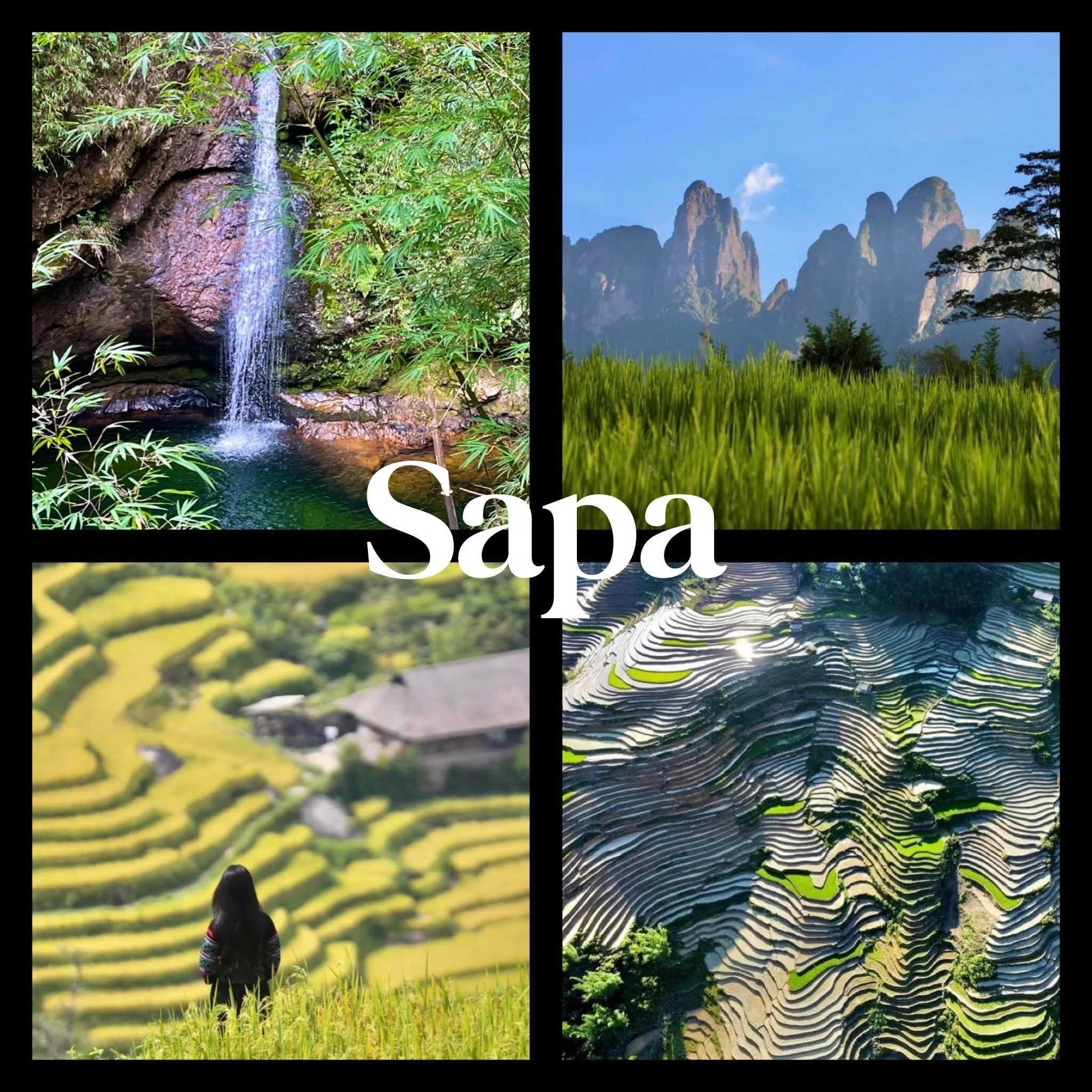
Photograph of the rice terraces in rural Sapa. Images by Phil Hoolihan. All rights reserved.
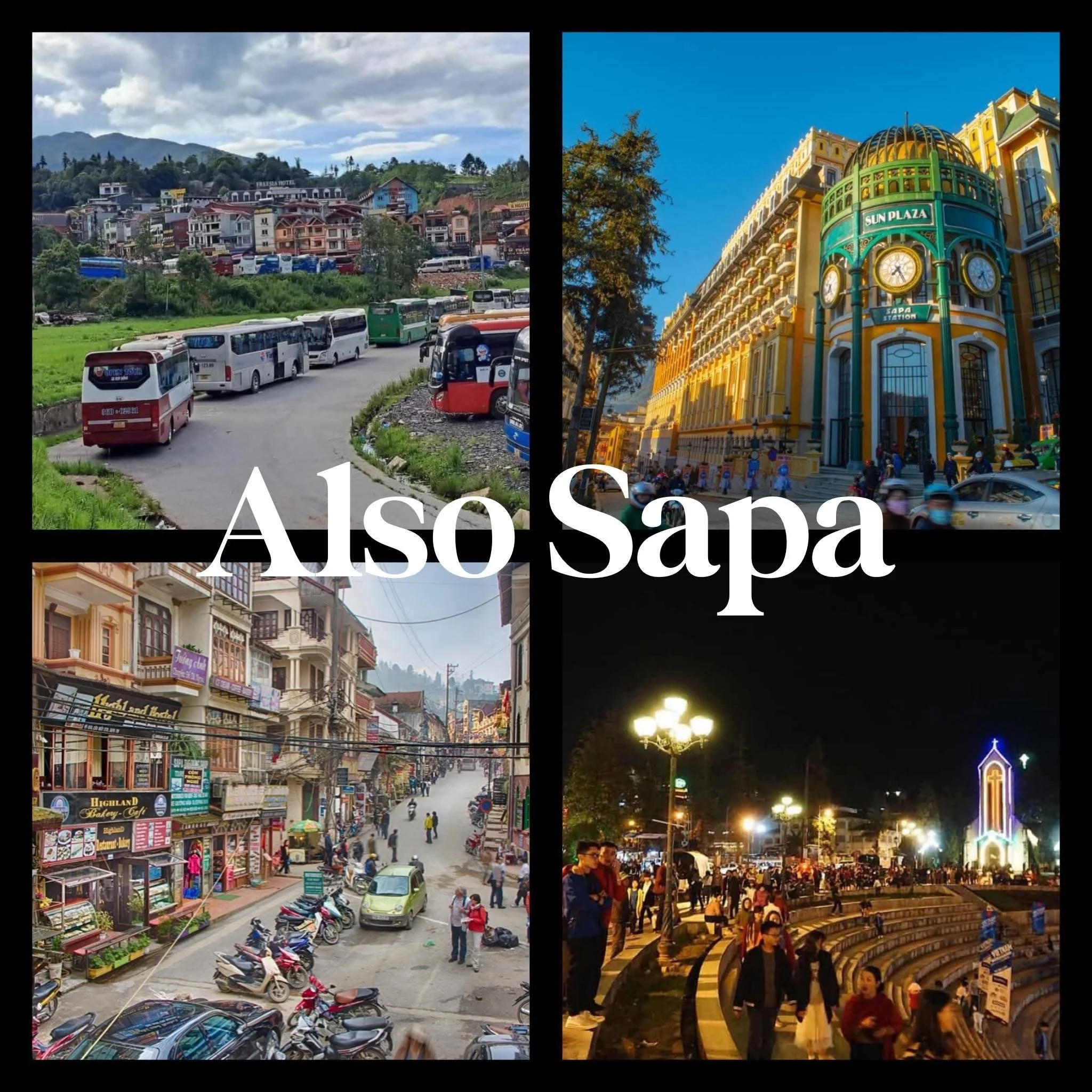
Photographs of Sapa town centre. Images by Phil Hoolihan. All rights reserved.