Insights and Stories from Sapa and the Northern Borderbelt provinces of Vietnam.
Building the Future of Community-Based Tourism in Northern Vietnam
For more than twenty-five years, ETHOS has believed that responsible tourism should create lasting opportunities for local communities. Our new apprenticeship programme is the next step in that journey, combining education, professional training and community leadership to help prepare the next generation of women working in community-based tourism across northern Vietnam.
For more than twenty-five years, ETHOS has believed that tourism can and should create something more meaningful than a memorable journey. Visitors may come to northern Vietnam for the mountains, the rice terraces, the villages and the extraordinary cultural diversity of the region, but the value of travel should not end when a visitor returns home. At its best, tourism can create employment, strengthen confidence, support education and allow local people to play a central role in deciding how their communities are represented.
This belief has guided ETHOS from the beginning. It has influenced the way we design our journeys, the way we work with local families and the way we support the people who guide, host and teach our visitors. It has also shaped our understanding of what community-based tourism should become over time. Responsible tourism cannot remain fixed while the communities around it change. It must continue to respond to new needs, new ambitions and new opportunities.
The ETHOS Apprenticeship Programme has grown from that understanding. It is not separate from our work in community-based tourism, nor is it an additional project placed alongside our tourism activities. It is the next stage of a commitment that has been developing for many years: a thirty-month investment in education, professional development and local leadership for three young women from the mountain communities of northern Vietnam.
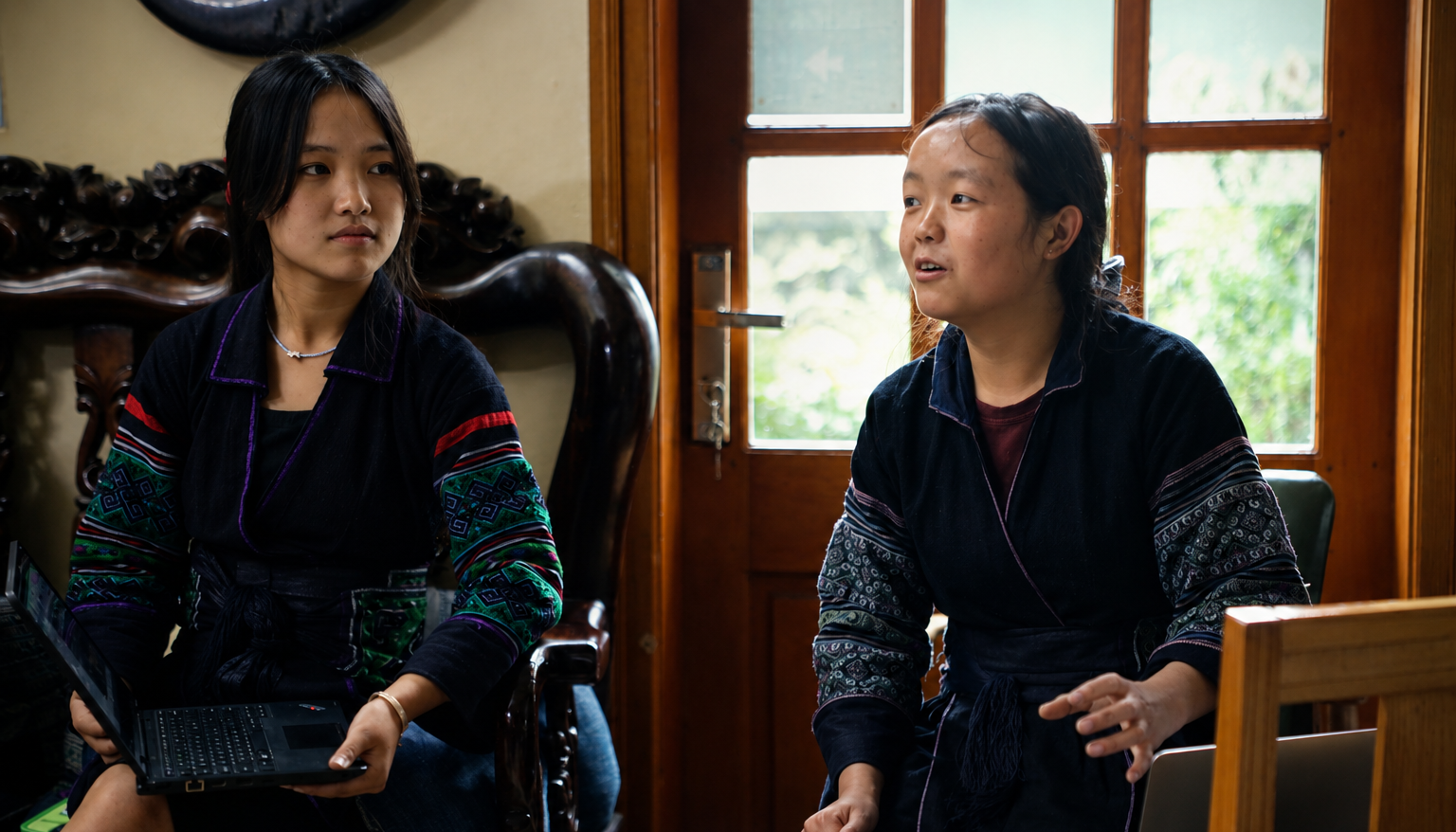
Cha and Do, two Hmong youth leaders from the ETHOS team, speak during a staff seminar about food hygiene and food safety. The image shows local women taking active roles in professional learning, community education and team development.
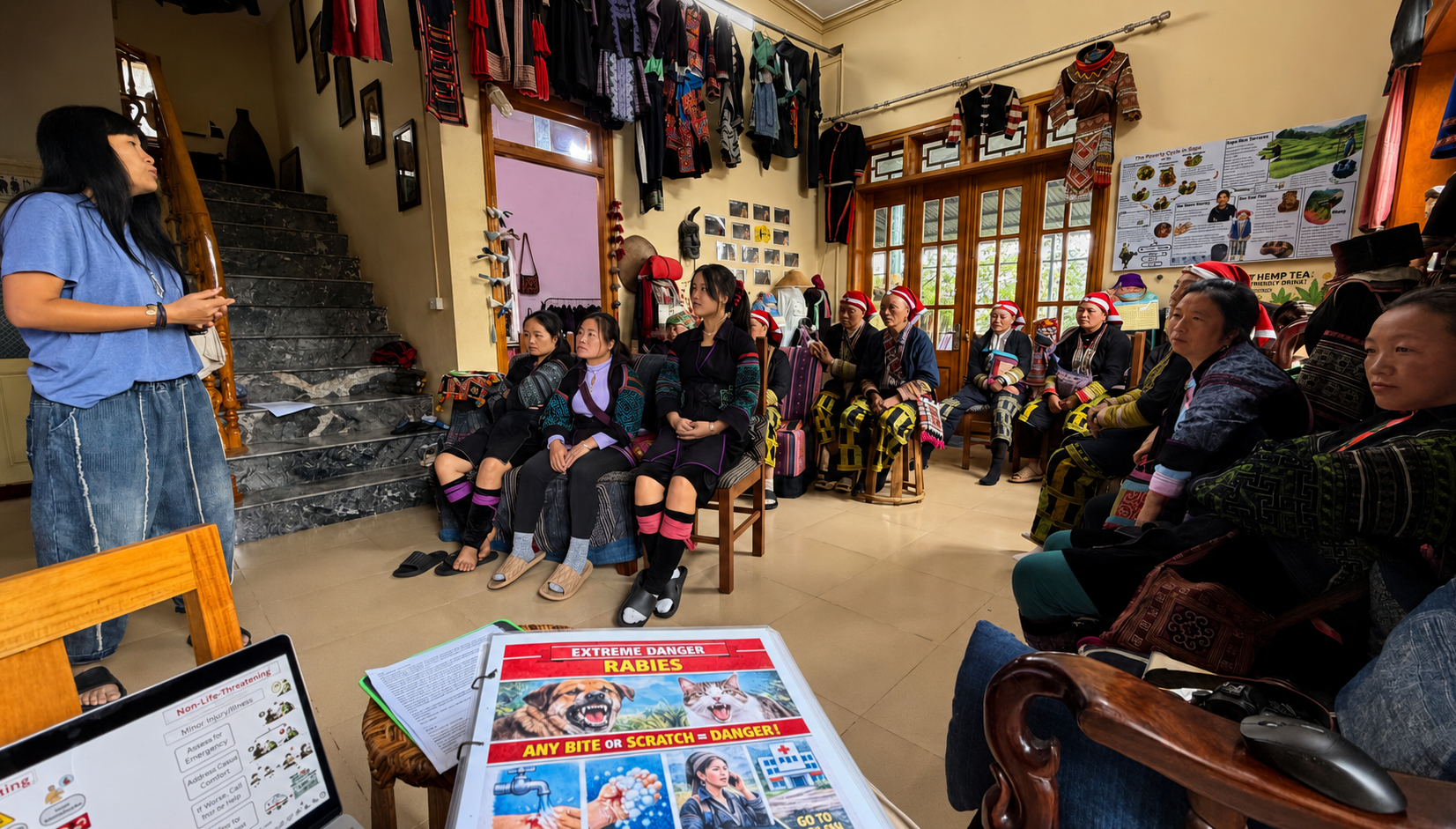
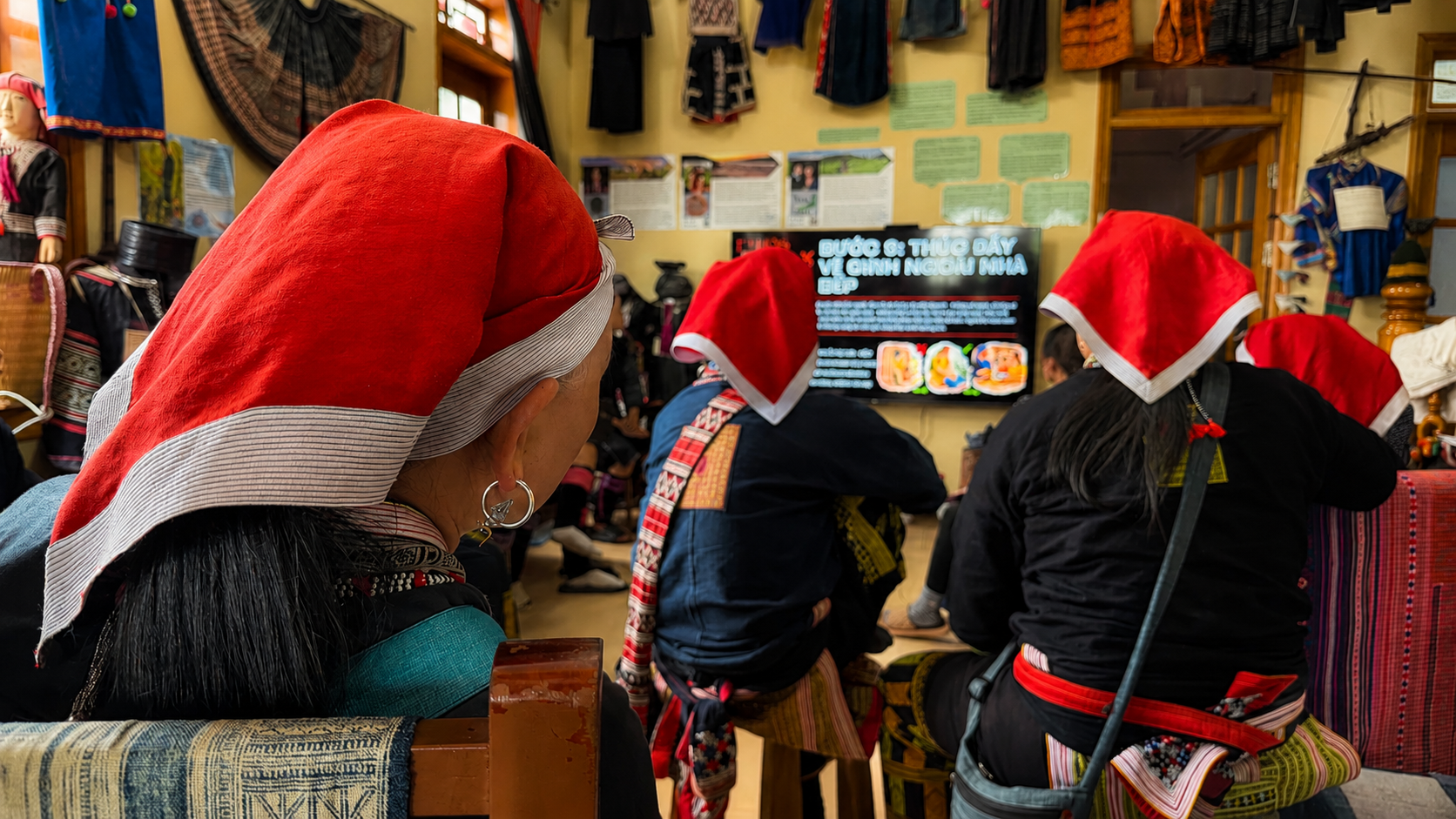
ETHOS Team Director Mai Thanh Hoa speaks with the local guide team during a planning meeting for 2026. The photograph reflects the collaborative, women-led approach through which ETHOS develops training, community initiatives and responsible tourism programmes.
Community-Based Tourism Is About More Than Where Visitors Stay
The phrase community-based tourism has become increasingly familiar across the travel industry. It is often used to describe village accommodation, homestays, cultural activities or locally owned tourism businesses. These may all contribute to a more responsible form of travel, but none of them alone is enough to make tourism genuinely community based.
The more important questions concern power, participation and long-term benefit. Who decides how tourism is developed? Who receives the income it creates? Whose knowledge is presented to visitors, and who controls the way that knowledge is interpreted? Does tourism create stable opportunities for local people, or does it simply bring visitors into a community without allowing that community to shape the experience?
At ETHOS, our approach has always been built around relationships rather than volume. We work alongside Hmong, Red Dao, Giáy, Tày and other ethnic communities to create private travel experiences rooted in local knowledge and genuine personal connection. Our guides are not performers asked to present a simplified version of their culture. They are farmers, parents, storytellers, craftspeople, cultural interpreters and community members whose knowledge has been shaped through lived experience.
This distinction matters. Tourism can easily turn culture into something staged for an audience, particularly when visitors are moved quickly through the same villages or introduced to experiences designed primarily for commercial convenience. Community-based tourism should resist that tendency. It should allow local people to determine what they wish to share, what requires permission and what should remain private. It should recognise that culture is not a product and that local knowledge does not automatically belong to visitors simply because they have paid for an experience.
Over the years, ETHOS has supported more than 120 local families through tourism, created long-term employment for guides and developed educational, health and community initiatives alongside our travel work. The apprenticeship programme grows from the same philosophy. It asks how the benefits of tourism can extend beyond immediate employment and contribute to the education, confidence and professional development of the next generation.
Our wider approach is explored in greater depth on our page about community-based tourism in northern Vietnam, where we explain how local decision-making, fair economic distribution and cultural integrity shape the way ETHOS works.
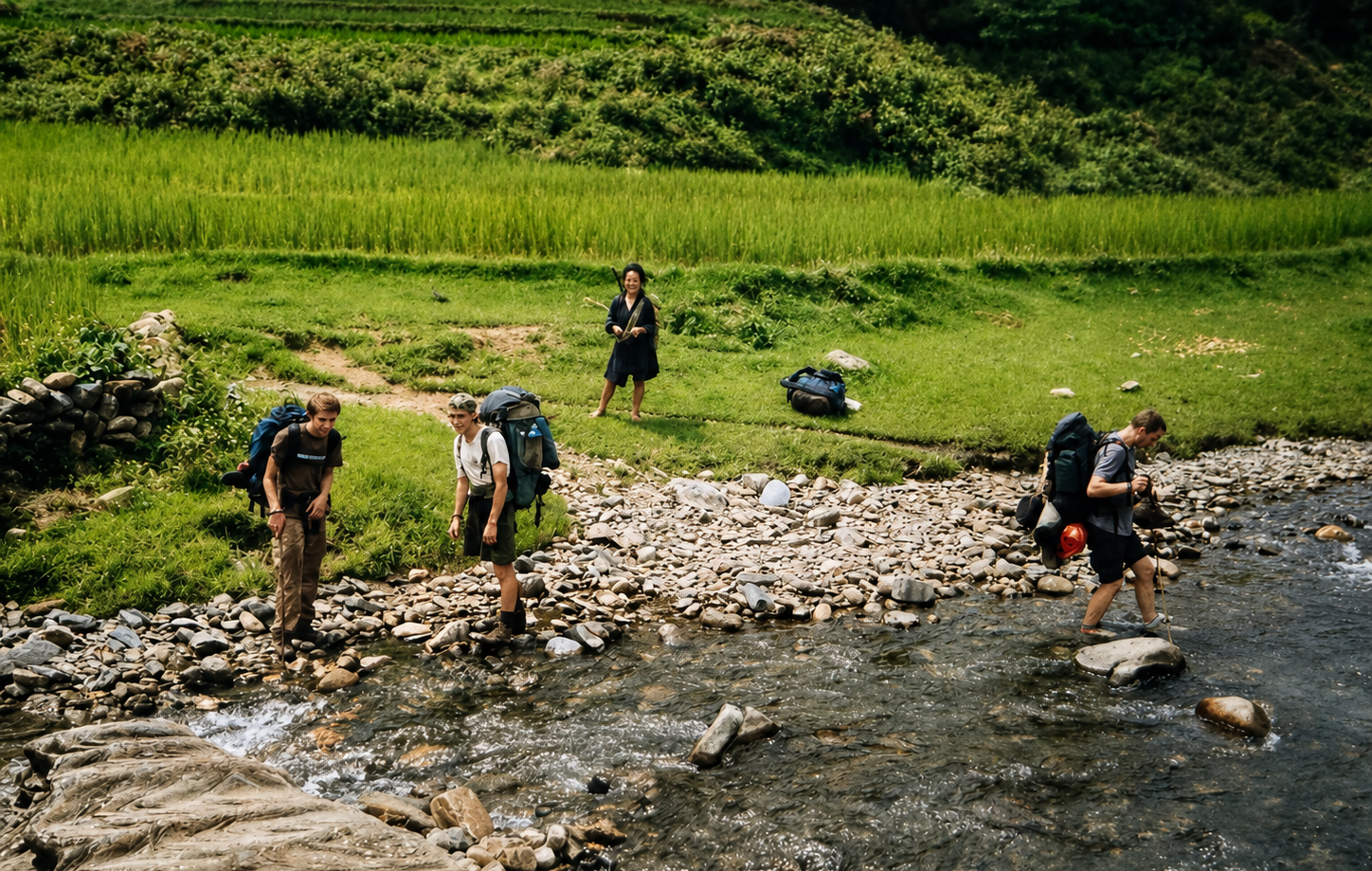
ETHOS guests cross a shallow mountain stream with their local guide while trekking through the green countryside near Sa Pa. The image reflects the small-group, locally guided and landscape-focused nature of ETHOS journeys.
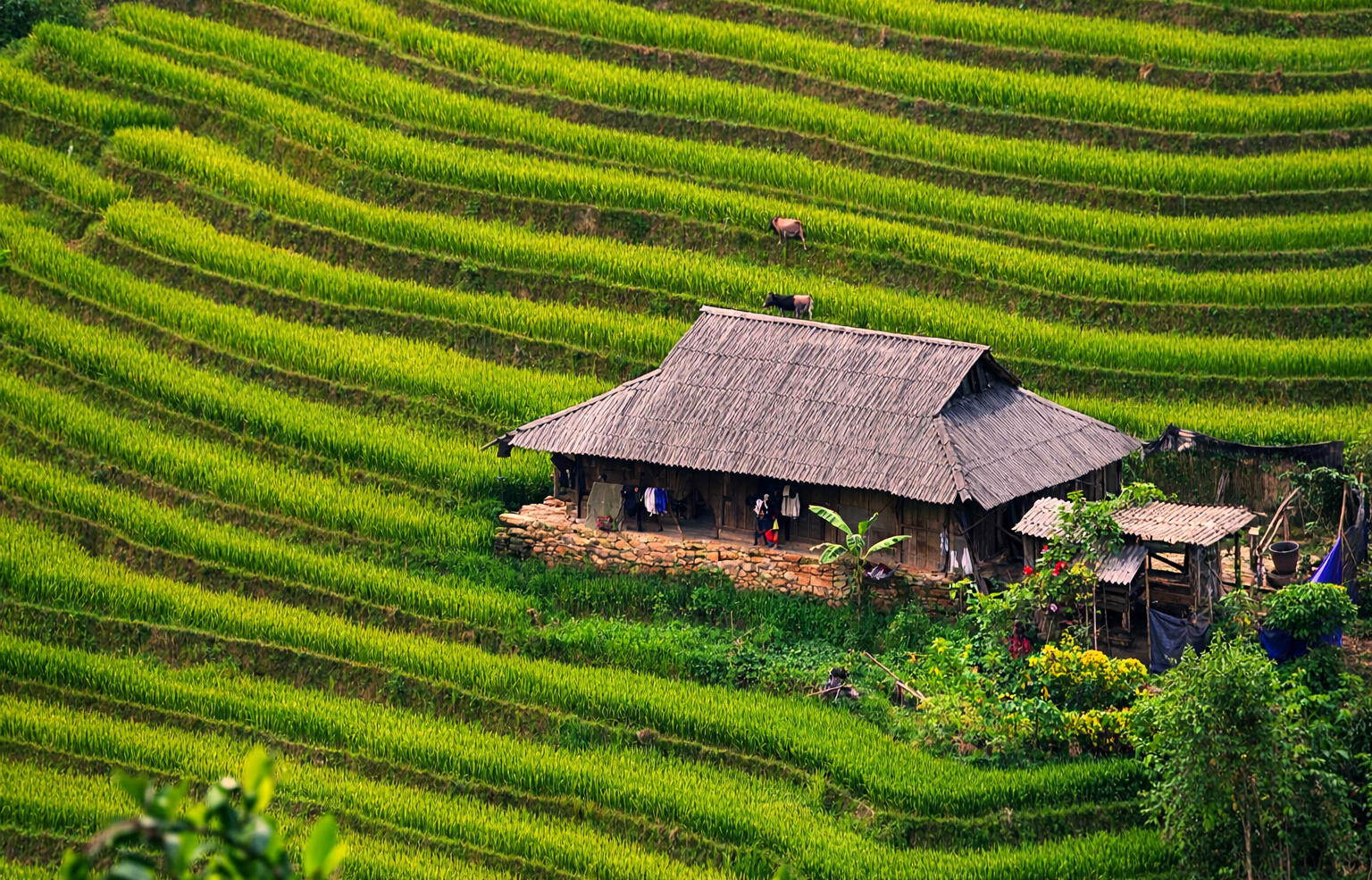
A traditional Hmong family home stands among vivid green rice terraces in the mountains around Sa Pa. The photograph represents the genuine local homes and agricultural landscapes that form part of ETHOS community-based tourism experiences.
Why We Created the Apprenticeship Programme
Many young women in the mountain communities of northern Vietnam complete school with intelligence, determination and a wide range of practical abilities, yet still find themselves without a clear route into further education or professional employment. The barriers are rarely limited to tuition fees. Distance, accommodation, transport, food and the daily costs of living away from home can make continued study impossible, particularly for families already balancing numerous responsibilities.
Professional networks are also limited. Young people growing up in remote communities may have little access to mentors, training opportunities or examples of people from similar backgrounds entering professional roles. Families are often required to make difficult decisions about which educational opportunities they can afford to support, and even where formal study is available, there may be no practical pathway connecting a qualification to stable employment.
At the same time, the knowledge these young women already possess is often underestimated. They may speak several languages, understand farming and forest environments, recognise plants and seasonal changes, care for younger relatives, prepare traditional textiles or manage complex household responsibilities. They may know how to respond to mountain weather, how to identify useful plants, how to prepare food from limited ingredients or how to move between different cultural and linguistic settings.
These abilities are not evidence that they are beginning without education. They are evidence of learning shaped by family, work, culture and community. The problem is not that such knowledge lacks value. The problem is that it is rarely recognised within formal systems or connected to professional opportunities.
The ETHOS Apprenticeship Programme was created to bridge that gap. Its purpose is not to replace what the apprentices already know, nor to suggest that formal education is inherently more valuable than knowledge inherited through family and community. Instead, it brings these different forms of learning together. Existing strengths are connected with English, professional communication, digital skills, formal tourism education, safety training, leadership and recognised qualifications.
This is an important distinction. The programme is not designed to move the apprentices away from their identities or encourage them to become generic tourism professionals. It is intended to help them understand the value of what they already bring, develop the confidence to use that knowledge in wider professional settings and create futures that remain connected to family, culture and place.
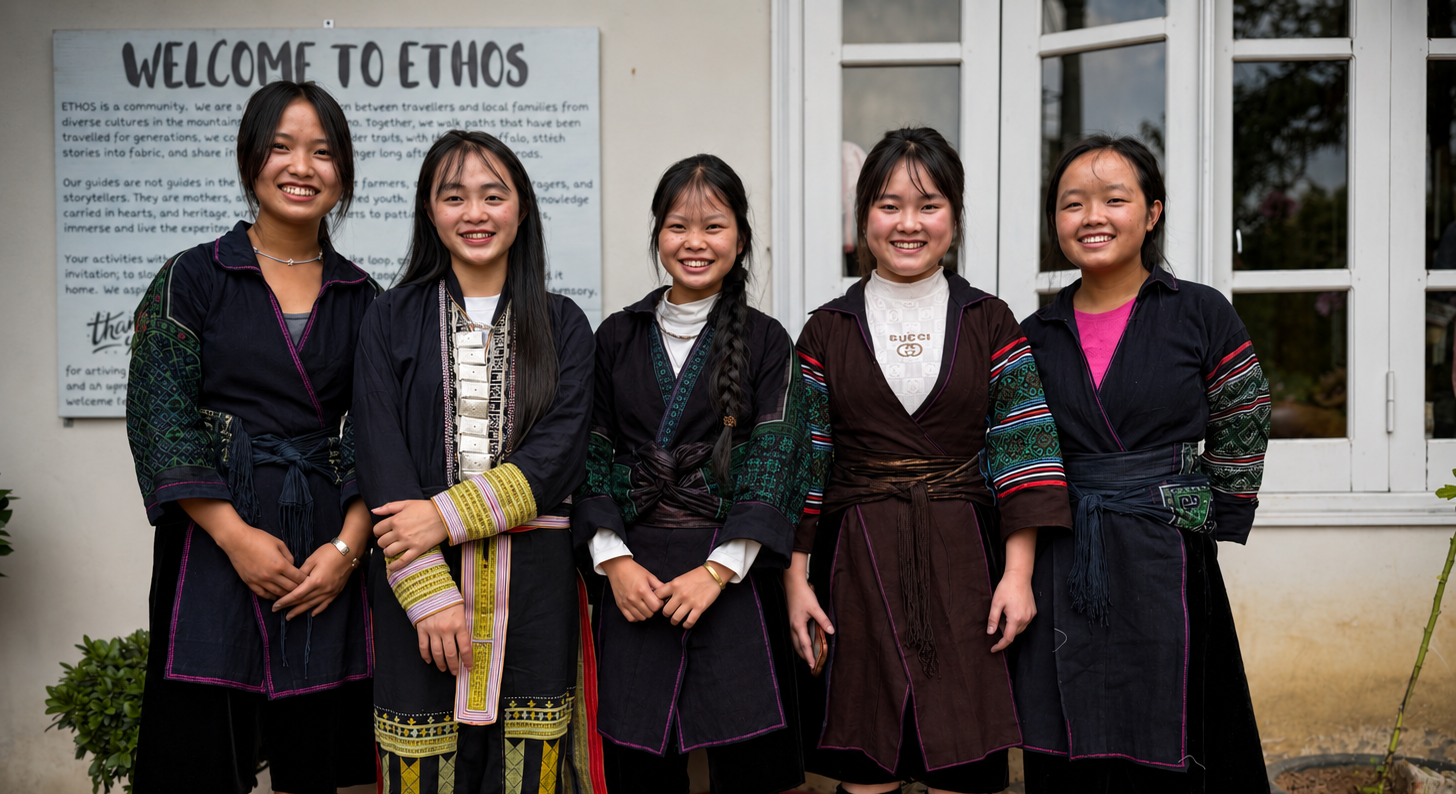
ETHOS Youth Leaders Cha and Do with the first ETHOS apprentices, Ta May, Sinh and Pang. Together they represent the next generation of community leaders in northern Vietnam.
A Thirty-Month Commitment
The apprenticeship will run for thirty months, beginning in September 2026 and continuing until early 2029. It combines formal study with structured ETHOS training, supervised workplace experience, field learning and long-term mentoring.
The length of the programme is deliberate. Confidence cannot be created through a single workshop, and professional competence cannot be measured only through classroom attendance. English develops through repeated use in ordinary situations. Judgement improves when someone has the opportunity to encounter real challenges, reflect upon them and try again. Leadership grows gradually as responsibility increases and experience begins to replace uncertainty.
Short courses can be valuable, but they cannot provide the continuity required for this kind of development. The apprenticeship has therefore been designed around time, repetition and sustained support. The apprentices will attend lessons and receive certificates as well as living, studying and working within an environment where learning becomes part of everyday life.
Throughout the programme, they will share a common educational foundation, but they will not be expected to become identical. Each young woman will develop her own interests, strengths and professional direction. One may become particularly drawn towards guiding and field leadership, while another may discover an interest in cultural interpretation, hospitality, photography, education, digital communication, enterprise or community work.
The purpose of the programme is not to prescribe a single future. It is to create informed choices. By the end of thirty months, each apprentice should have a clearer understanding of what she does well, what kind of work she wishes to pursue and how she can continue developing after the formal programme has ended.
Learning Beyond the Classroom
The ETHOS curriculum includes more than 480 hours of structured education and specialist training. It begins with the foundations of professional behaviour, communication and learning, before moving into tourism, digital skills, visual communication, safety, guiding, entrepreneurship, management and leadership.
English and professional communication will continue throughout the programme. The apprentices will use language not only in formal lessons but in visitor conversations, guiding practice, presentations, written communication, workplace discussions and daily routines. The aim is not simply to pass an examination, but to develop the confidence required to communicate independently and appropriately in different professional situations.
Digital learning will include computer use, file management, responsible artificial intelligence, photography, video, editing and visual communication. These skills are increasingly important within tourism, but they also have wider value. They allow the apprentices to document local knowledge, prepare educational materials, communicate with visitors, contribute to online projects and present their work in professional ways.
Responsible tourism, sustainability and cultural interpretation will form another central part of the programme. The apprentices will learn how to communicate culture without reducing it to performance, how to ask permission, how to recognise that some knowledge belongs to families or community authorities and how to protect information that should not be shared. They will also examine the environmental responsibilities of tourism, including waste, trail impact, water use, wildlife, local resources and the pressures created when too many visitors are concentrated in the same places.
Safety will be treated as a professional responsibility rather than an additional topic. Training will include first aid, risk assessment, mountain weather, navigation, route planning, emergency decision-making and guest care. These lessons will move gradually from controlled exercises into supervised professional practice, allowing confidence to develop alongside competence.
The later stages of the programme will focus more strongly on enterprise, tourism management, project planning and leadership. Each apprentice will eventually complete an integrated final project requiring research, budgeting, consent, safety planning, practical delivery, evaluation and professional presentation. This will allow them to demonstrate not only what they have learnt, but how they can apply it within a complex real-world task.
Learning will therefore take place across many different settings. Some lessons will happen at a desk, while others will happen in villages, on trails, in community workshops, during visitor briefings or through practical projects. The aim is to create an educational environment in which formal knowledge and lived experience continually reinforce one another.
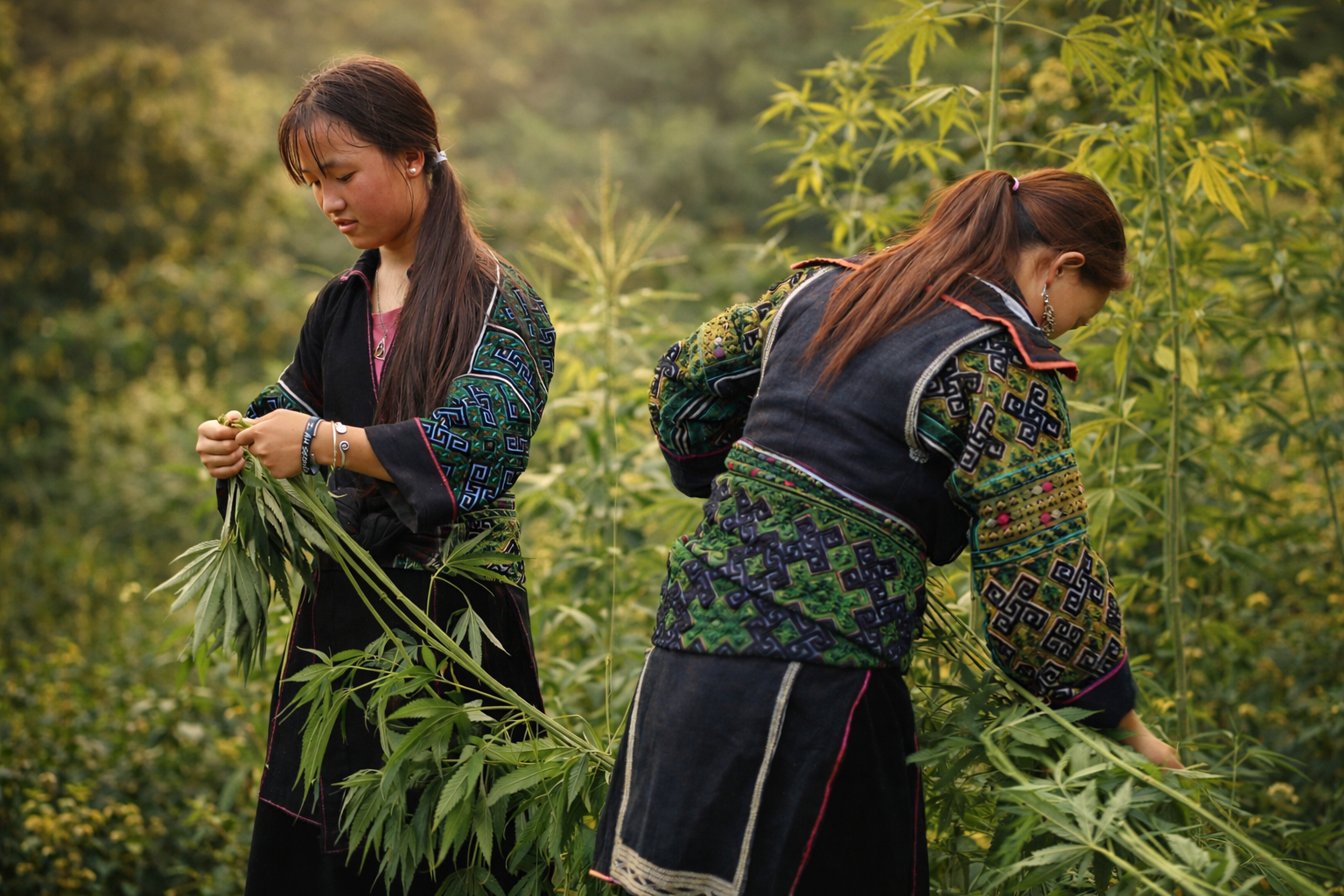
Harvesting hemp for traditional textile production. Knowledge such as this forms part of the cultural strengths the apprentices already bring to the programme.
More Than Qualifications
The programme is designed to prepare each apprentice for four significant educational and professional outcomes: a formal tourism qualification, a B2 English Certificate, an International Tourism Licence subject to the legal requirements in force when each apprentice becomes eligible, and the ETHOS Tourism Management Certificate.
These qualifications matter because they provide recognised evidence of academic knowledge, language ability, legal professional eligibility and workplace competence. They can open doors that might otherwise remain closed and give each apprentice a stronger position when applying for future employment or taking on greater responsibility.
However, qualifications alone are not the final purpose of the programme. The longer-term outcome reaches far beyond three certificates or three new tourism professionals. Pang, Ta May and Sinh are being prepared to become confident community leaders who can contribute to the wider work already undertaken by ETHOS and its local partners.
They may help deliver health and hygiene sessions, support human-trafficking awareness workshops, contribute to environmental projects, mentor younger people or assist with educational activities in their communities. They will learn how to stand in front of a group, explain difficult subjects clearly, listen carefully, manage responsibility and protect the dignity of others.
They will also become visible examples of what young local women can achieve when existing knowledge is recognised and opportunity is matched by sustained support. This matters in communities where educational and professional pathways may still feel distant or uncertain. The presence of a young woman who has completed formal study, developed professional confidence and remained connected to her community can influence expectations far beyond her own career.
In this sense, the apprenticeship programme is not only about preparing three individuals for employment. It is about gradually increasing the number of local women able to guide, interpret, teach, organise and lead within the region’s tourism economy.
Meet the Apprentices
The first intake brings together three young women whose backgrounds and ambitions are different, but whose willingness to learn is shared.
Lý Thị Pằng is a young Black Hmong woman from Pả Chư in Bát Xát. She became the only girl from her village to complete high school after years of boarding away from home and uncertainty about whether her family would be able to continue supporting her education. She also brings extensive practical knowledge of farming, foraging, hemp preparation, indigo, cooking and mountain life. Her story is not simply about overcoming difficulty. It is about connecting knowledge inherited through her family with new education and professional opportunity.
Through the apprenticeship, Pang hopes to improve her English, become more confident, develop digital and tourism skills and discover a career that allows her to support herself while remaining closely connected to her family and community.
Phàn Tả Mẩy is a young Red Dao woman from the Sa Pa area. She grew up learning independence, household skills and elements of forest and medicinal-plant knowledge from her mother and grandmother. Her development has been closely connected to confidence. Work outside the home helped her begin communicating with new people and gradually trust her own abilities.
Ta May hopes to become financially independent, travel more widely and help visitors understand Red Dao culture as living knowledge rather than simply clothing, decoration or performance. The apprenticeship will allow her to strengthen her English, communication, tourism and professional skills while exploring the direction that suits her best.
Sùng Thị Sinh is a young Black Hmong woman from Sử Pán, where her family’s life remains closely connected to farming, forests and the mountain environment. She brings determination, practical experience and a strong sense of responsibility towards her family. She is proud of her Hmong identity and wants visitors to understand the work, knowledge and meaning involved in traditional clothing and mountain life.
Sinh hopes to develop English, videography, photography, guiding and hospitality skills. Her ambition is not simply to leave her community in search of opportunity elsewhere, but to build a stable future while remaining connected to her family, culture and home.
Their stories include financial limitations, distance and restricted access to further education, but those circumstances do not define them. Each apprentice brings knowledge, relationships, humour, responsibility, curiosity and pride into the programme. Their backgrounds are part of who they are, but they will not be required to repeatedly disclose personal hardship in order to justify their place.
ETHOS will ask each apprentice to decide what she wishes to share, what requires permission and what should remain private. Their stories belong to them. The role of the programme is to create conditions in which they can develop, speak with confidence and make informed decisions about their own futures.
More detailed information about Pang, Ta May, Sinh and the full educational structure can be found on the ETHOS Apprenticeship Programme page.
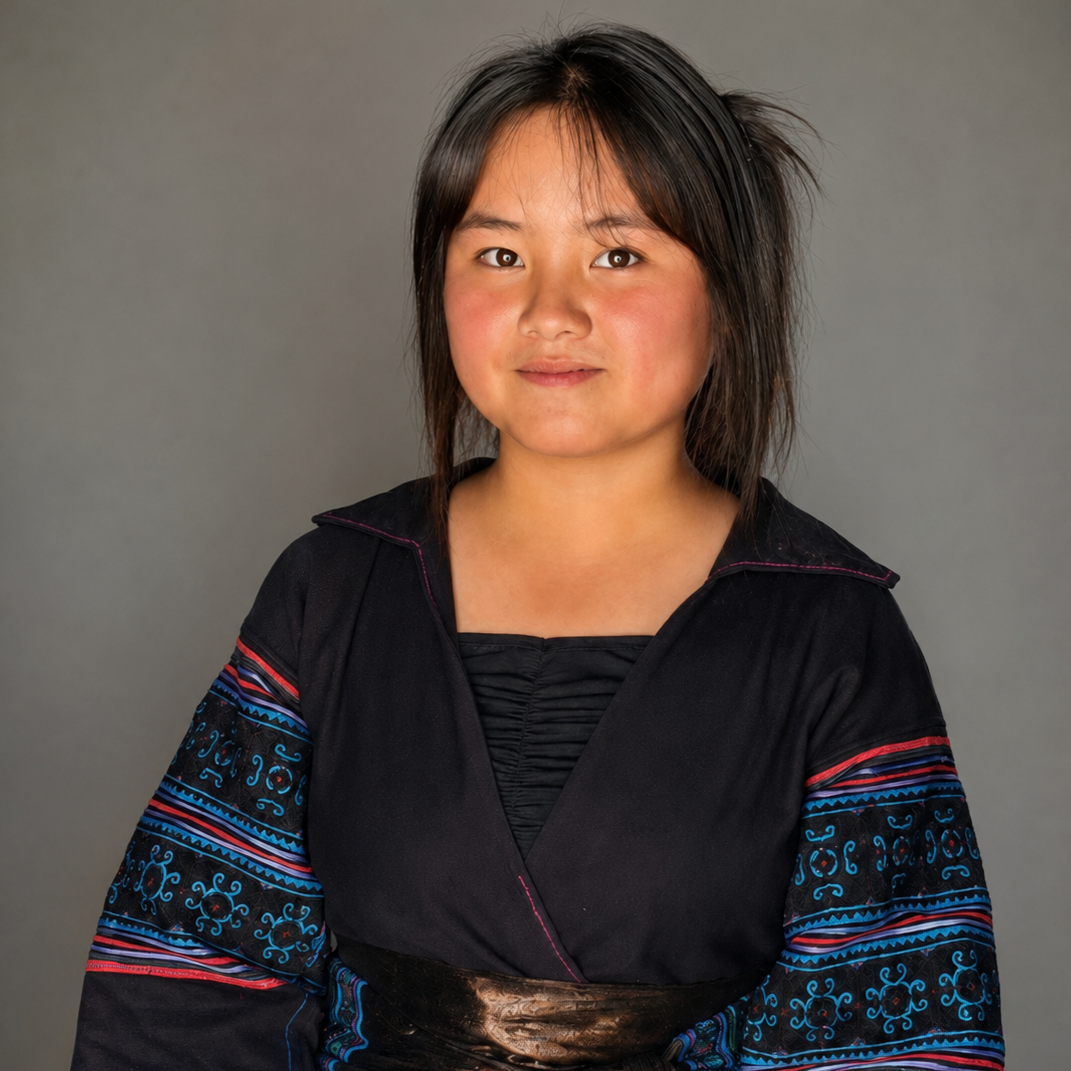
Pang, one of the first three apprentices joining the thirty-month ETHOS Apprenticeship Programme.
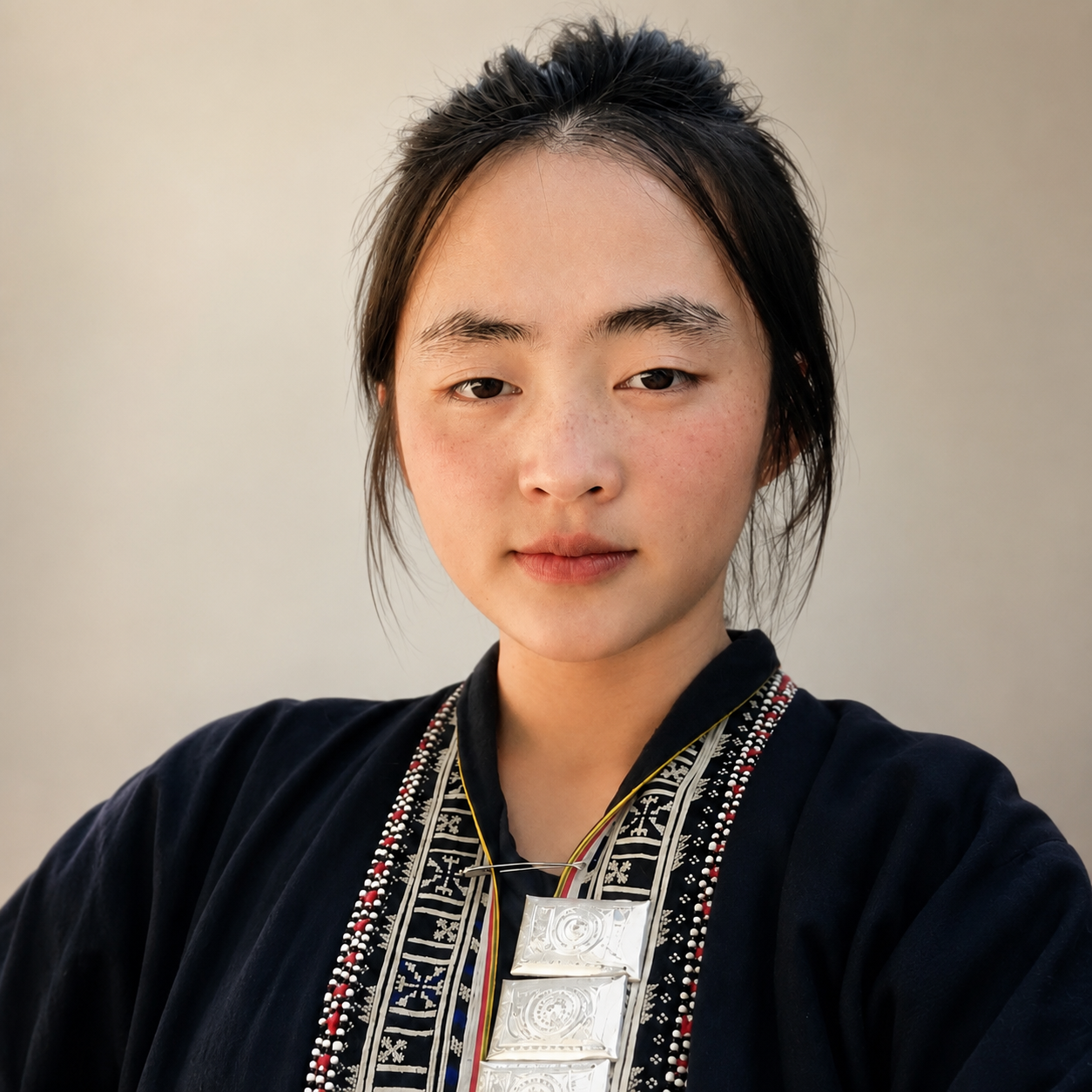
Ta May, one of the first three apprentices joining the thirty-month ETHOS Apprenticeship Programme.
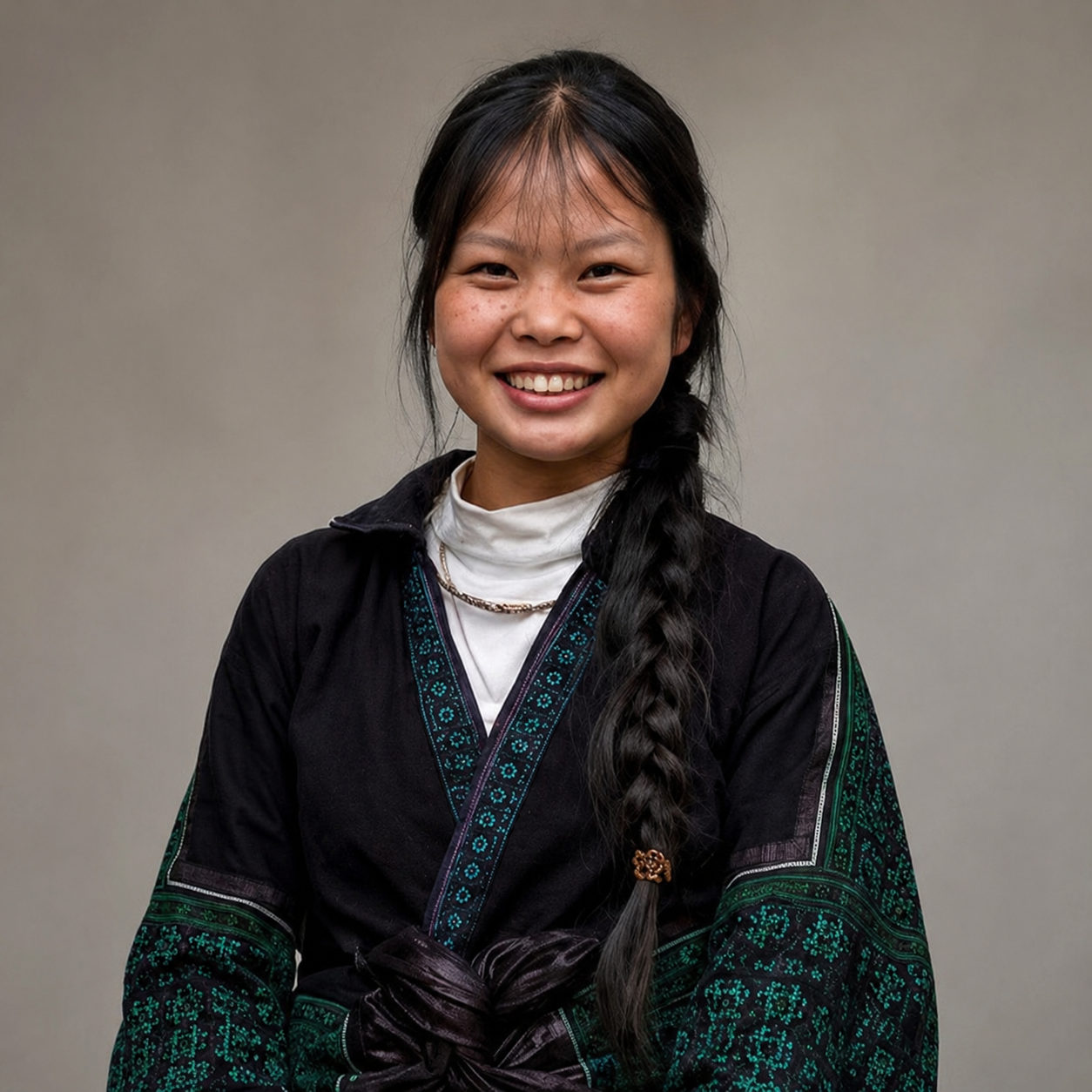
Sinh, one of the first three apprentices joining the thirty-month ETHOS Apprenticeship Programme.
What This Means for Community-Based Tourism in Sa Pa
Community-based tourism cannot depend indefinitely on the same small number of experienced guides, hosts and organisers. For it to remain strong, knowledge and responsibility must be transferred to younger people who understand both their own communities and the professional expectations of modern tourism.
This is one of the most important reasons the apprenticeship programme matters. It creates a structured pathway through which young local women can move from informal experience into professional roles without losing the cultural knowledge that gives those roles meaning.
Sa Pa has changed enormously during the years ETHOS has worked in the region. Roads, accommodation, visitor numbers and commercial development have expanded, while tourism has become an increasingly significant part of the local economy. Some of these changes have created opportunity, but they have also produced pressure. Cultural experiences can become standardised, villages can receive more visitors than they can comfortably manage and local people can be pushed into supporting roles while outside businesses retain control over how tourism is marketed and organised.
The long-term strength of community-based tourism therefore depends upon local leadership. It requires people who can communicate across cultures, understand safety and visitor expectations, protect community interests and make informed decisions about how tourism should develop. It also requires greater representation from women, particularly women whose knowledge of family life, agriculture, textiles, language and community relationships has often been undervalued within formal tourism structures.
The apprenticeship programme will not solve every challenge facing tourism in Sa Pa, nor should it be presented as though it will. Its value lies in creating one carefully supported pathway through which local knowledge and professional education can meet. If the model proves successful, it can inform future apprenticeships, create new mentors and gradually expand the number of people able to shape community-based tourism from within the communities themselves.
That is how the programme will advance ETHOS. It will strengthen our internal capacity, bring new perspectives into the organisation and allow younger local women to take on increasingly important roles in guiding, education, interpretation and programme delivery. At the same time, it will help protect the values upon which ETHOS was founded by ensuring that those values are not dependent only upon the current generation.
Looking Ahead
Community-based tourism should never stand still. As communities change, responsible tourism must evolve alongside them, responding not only to the immediate economic opportunities created by visitors but also to the long-term educational and professional needs of local people.
The ETHOS Apprenticeship Programme represents the next stage of that evolution. It is built on the same principles that have guided our work for more than twenty-five years: respect, partnership, cultural integrity, education and long-term commitment. It recognises that tourism can do more than create employment in the present. It can help prepare people to make decisions, lead organisations, represent their communities and create opportunities for others in the future.
Throughout the thirty months, ETHOS will share approved updates showing what the apprentices are learning, producing and achieving. These updates will include lessons, workshops, field visits, assessments, practical projects and professional milestones. We will also discuss difficulties honestly, recognising that meaningful education is rarely simple or perfectly linear and that progress includes uncertainty, mistakes, reassessment and growth.
Over time, the programme will become a record of three individual journeys and one shared educational commitment. It will show how Pang, Ta May and Sinh develop from the first days of the apprenticeship through to formal qualifications, greater professional responsibility and decisions about what comes next.
Their journey is only beginning. We hope it will contribute not only to their own futures, but also to a stronger, more thoughtful and more locally led form of tourism in Sa Pa and across northern Vietnam.
Readers who would like to explore the programme in greater detail can visit the ETHOS Apprenticeship Programme. Information about how the programme is financed is available separately on the Support the Programme page, allowing this article to remain focused on the educational purpose of the apprenticeship and its wider importance for community-based tourism.
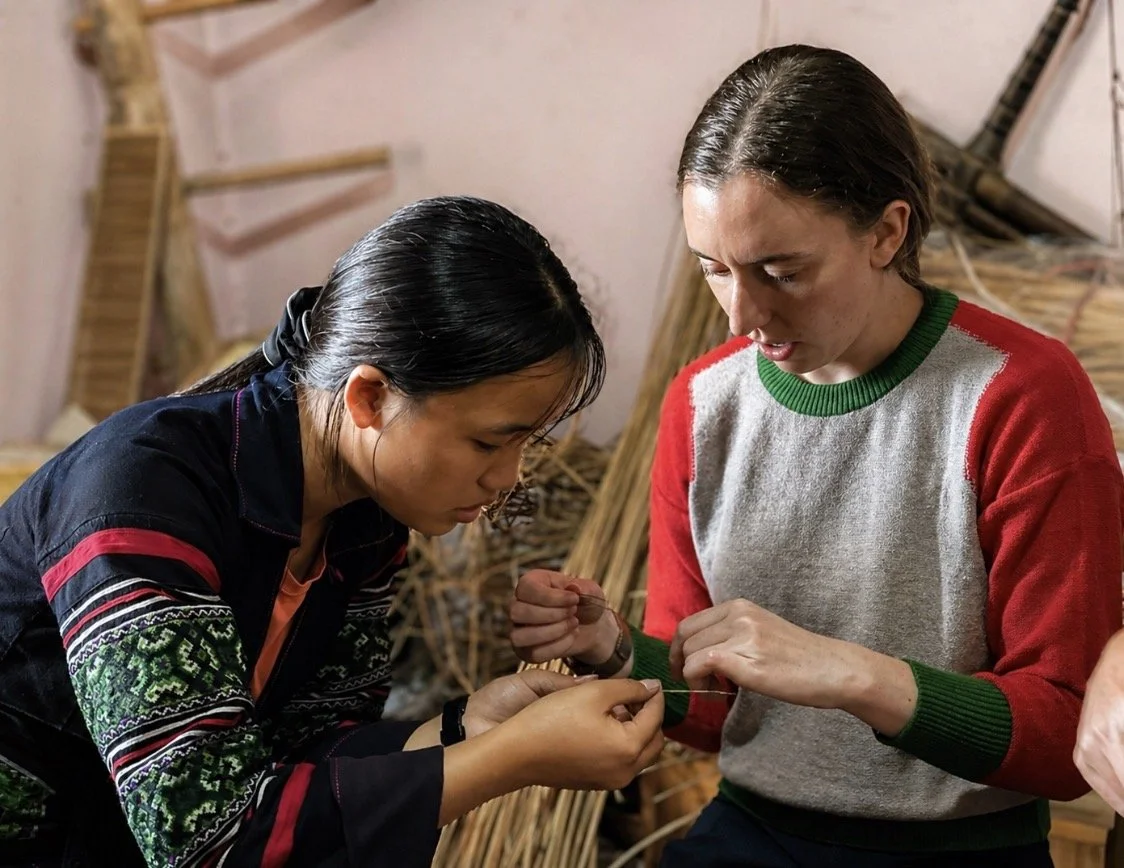
ETHOS Youth Leader Cha sharing traditional Hmong textile knowledge with a visitor at the ETHOS Community Centre, Sa Pa.
When Beauty Becomes Backdrop: Traditional Villages and the Future of Sapa
Beyond the bright lights and rapid construction of Sapa town lies a very different landscape. Across the wider valleys of Sapa district, traditional Hmong, Dao, Tày, and Giáy communities still live among rice terraces, rivers, forests, and mountain paths shaped by generations of careful adaptation to the land. Their homes were never built to dominate the mountains, but to belong within them.
This article explores the remarkable architecture and cultural traditions of northern Vietnam’s mountain villages, from smoke-darkened timber homes and flowing kitchen water systems to open-door hospitality and communal building practices. It also examines the growing tension between landscape-sensitive design and the rise of oversized tourism developments that increasingly threaten to overwhelm the natural beauty and cultural identity of the Muong Hoa Valley.
A Landscape Once Built in Conversation With Itself
For centuries, the valleys surrounding Sapa evolved slowly and almost quietly, shaped not by masterplans or speculative investment but by the rhythms of weather, farming, migration, and communal life. Villages appeared gradually along ridgelines and river valleys where water flowed cleanly, terraces could be carved into mountain slopes, and timber could be gathered sustainably from nearby forests. Homes did not seek attention. They belonged to the landscape rather than competing with it.
This relationship between settlement and environment is one of the reasons the Muong Hoa Valley became so internationally admired in the first place. Traditional Hmong and Dao villages never attempted to dominate the mountains. Their houses sat low against the earth beneath bamboo groves and fruit trees, partially hidden within mist, terraces, and forest edges. Rooflines followed the contours of hillsides. Building materials weathered naturally into the surrounding terrain. Smoke drifted gently from darkened roofs during cold evenings while water channels moved quietly through kitchens and gardens. What visitors experienced here was was harmony. Architecture, agriculture, spirituality, and ecology existed in conversation with one another.
Today, however, that relationship is under increasing pressure. The mountains themselves are not disappearing, nor are the communities who continue to live among them. What is increasingly at risk is the sense of balance that once defined the valley, as natural beauty becomes steadily swamped by commercial spectacle, oversized tourism developments, and architecture designed more for visibility and prestige than belonging. Across Sapa, enormous tourism developments are transforming valleys once defined by subtlety and restraint into landscapes increasingly shaped by spectacle, prestige, and commercial ambition. Concrete ridgelines rise above terraces. Mega-projects compete for visual dominance. Mountain views become marketing assets rather than shared cultural landscapes. Yet this is not a simple story of old versus new. Sapa does not need to remain frozen in time. Good contemporary architecture is entirely possible here. Some newer homestays, ecolodges, and community-led projects are attempting to build differently, designing structures that still respect scale, terrain, local material traditions, and the visual integrity of the mountains themselves.
The real question is therefore not whether development should happen, but what kind of development deserves to shape the future of the valley. How can Sapa thrive as an example of top level Community-based tourism experiences in Northern Vietnam?
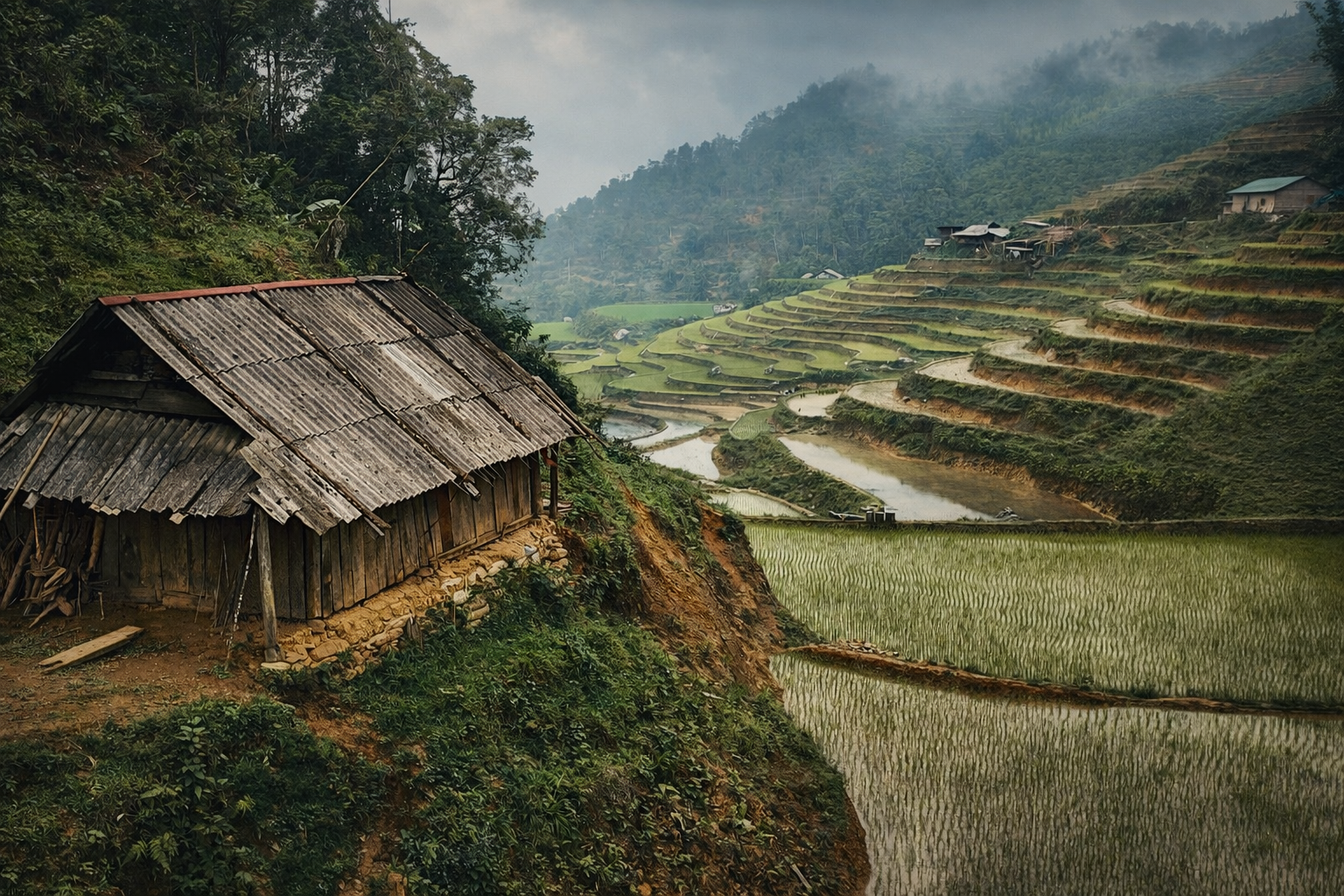
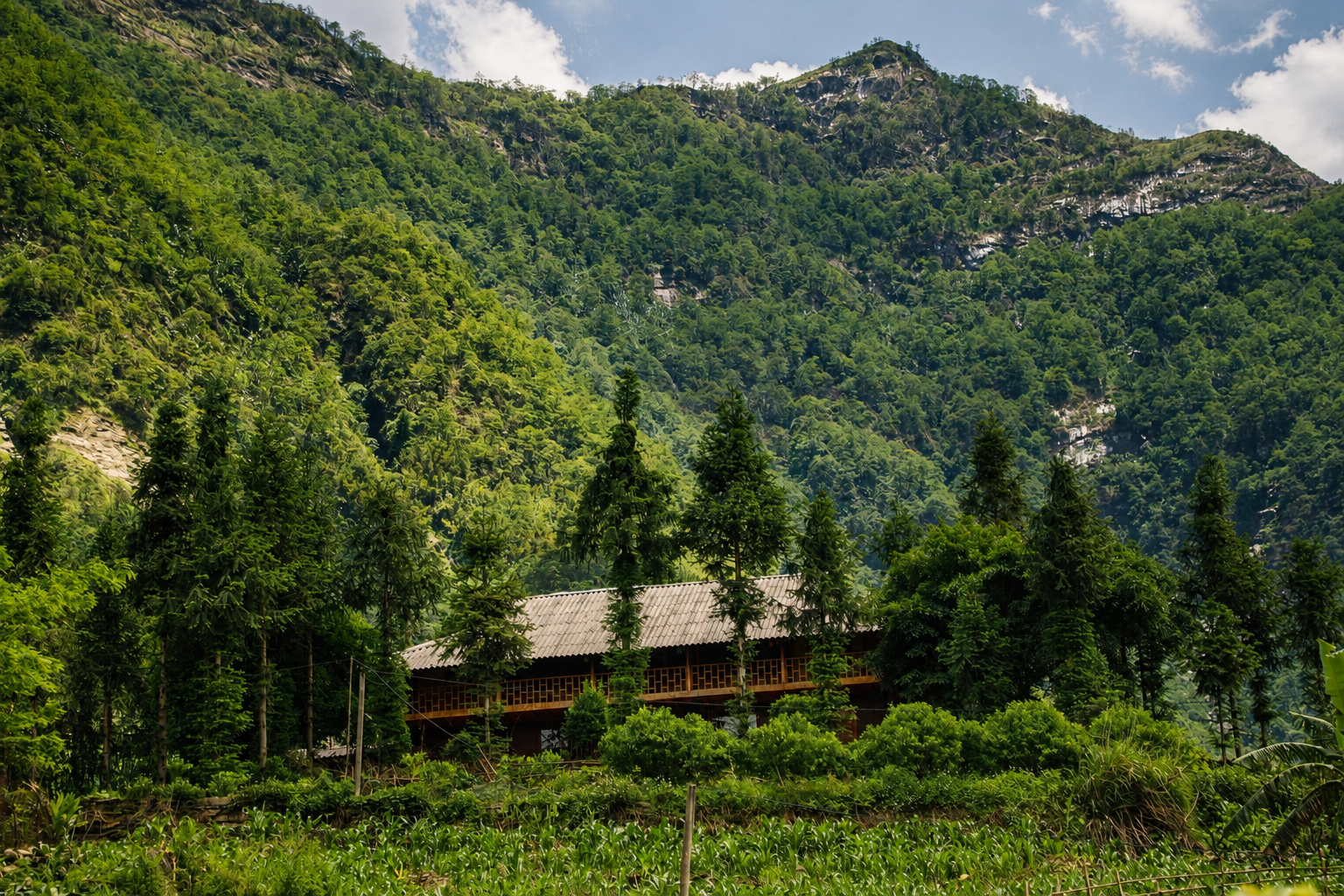
Traditional Hmong house in Sapa.
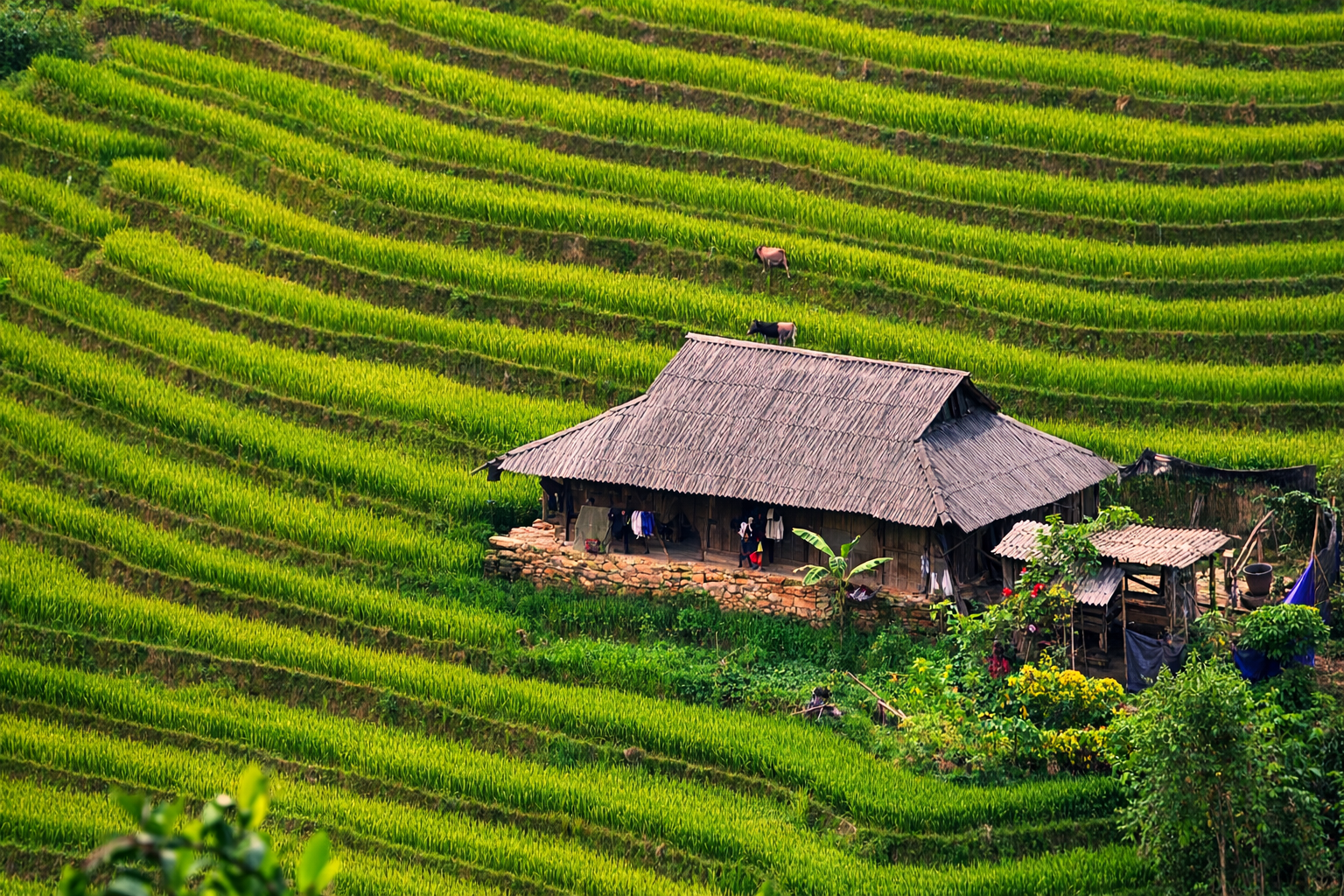
Traditional Hmong house in Sapa.
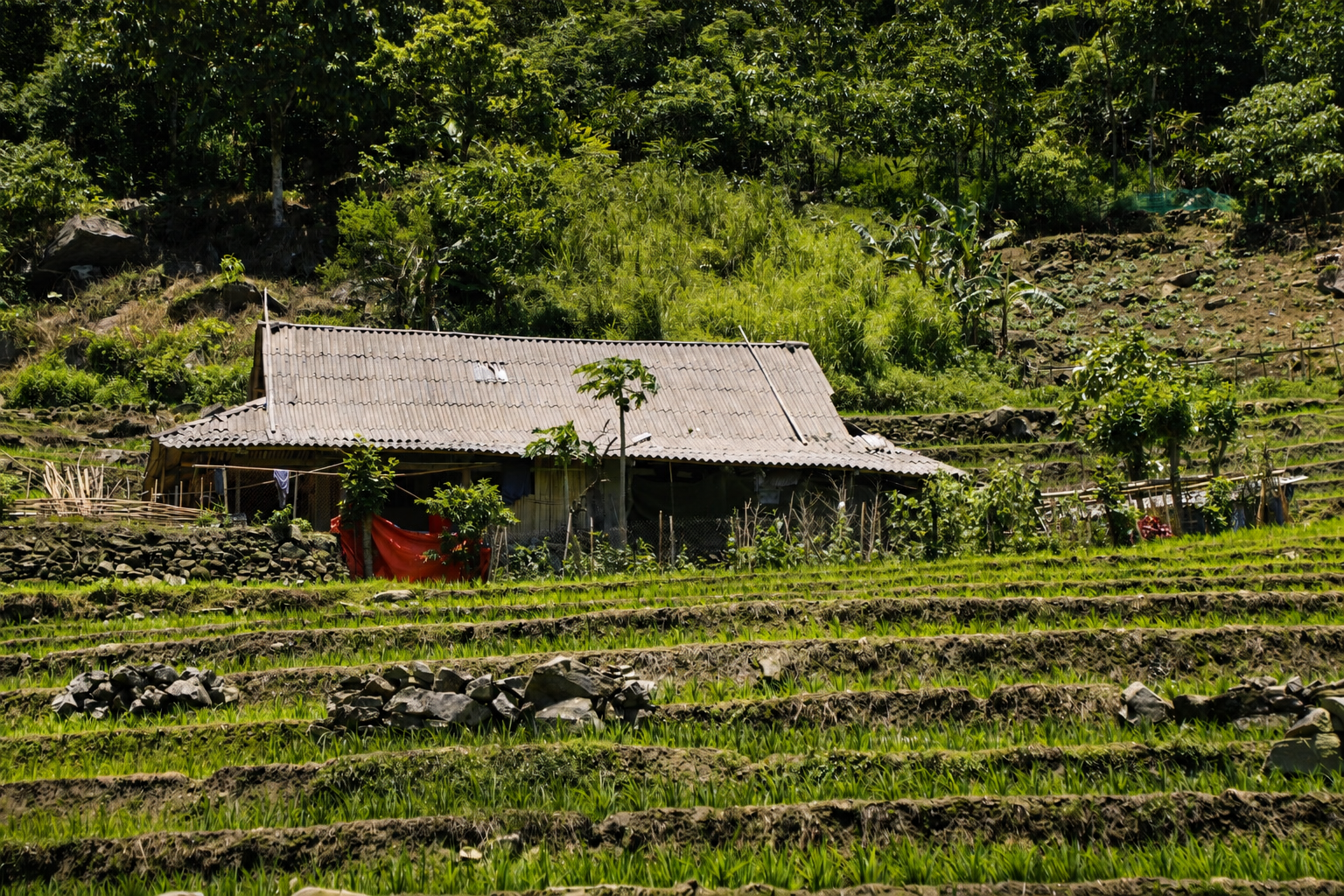
Traditional Hmong house in Sapa.
Sapa Town Is Not the Same as Sapa’s Mountains
Part of the confusion surrounding development in Sapa comes from the fact that many visitors experience only Sapa town itself, rather than the far larger district that surrounds it. The urban centre of Sapa has already become a busy mountain tourism hub filled with hotels, cafés, karaoke bars, illuminated façades, traffic, construction, and increasingly dense commercial infrastructure. Bright lights, large buildings, and rapid development are now firmly part of the reality of the town.
Yet Sapa district extends far beyond the urban centre. Beyond the busy streets lie vast areas of forest, terraced rice valleys, rivers, streams, and mountain communities spread across wards including Cầu Mây, Hàm Rồng, Ô Quý Hồ, Phan Si Păng, Sa Pa, and Sa Pả, alongside rural communes such as Bản Hồ, Hoàng Liên, Liên Minh, Mường Bo, Mường Hoa, Ngũ Chỉ Sơn, Tả Phìn, Tả Van, Thanh Bình, and Trung Chải. Across these valleys and mountain slopes sit approximately one hundred smaller hamlets, many still defined by traditional Hmong, Dao, Tày, and Giáy homes surrounded by terraces, bamboo groves, medicinal gardens, grazing buffalo, and flowing mountain water.
This distinction matters enormously. Much of what people imagine when they think of Sapa; the layered rice terraces disappearing into mist, small villages scattered along ridgelines, children walking narrow mountain paths, water buffalo crossing streams, smoke drifting from timber roofs during cold evenings still exists outside the urban core. The wider district remains an extraordinary cultural and ecological landscape whose value lies precisely in the relationship between communities, agriculture, forests, rivers, and mountains.
The concern many residents and observers now share is not that Sapa town itself contains development or modern infrastructure. Towns naturally evolve, gentrify, grow and sometimes decline. The concern is that the aggressive commercialisation and oversized architectural ambitions increasingly visible within the urban centre are beginning to spread outward into landscapes that have historically remained far quieter, more ecologically fragile, and more culturally rooted.
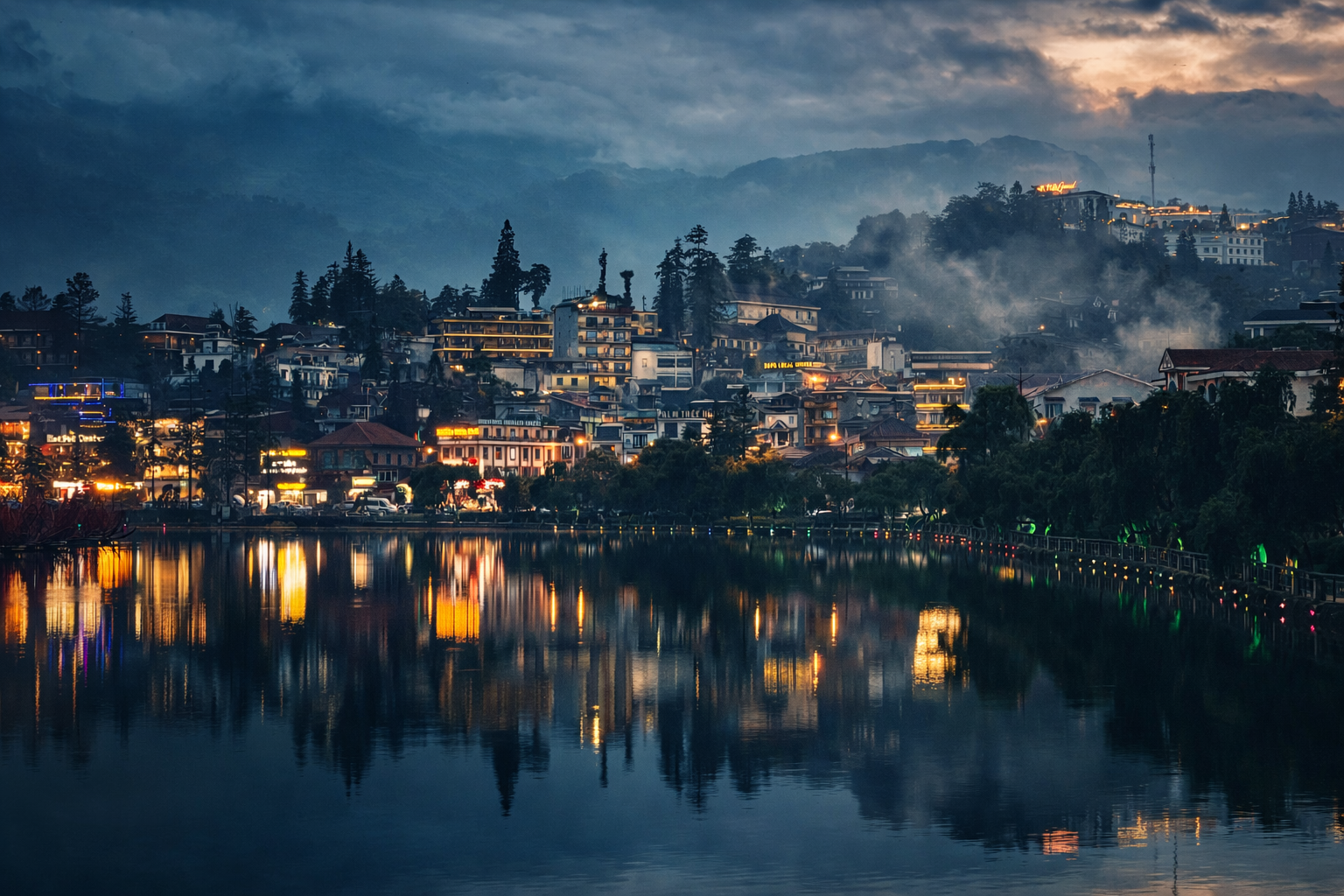
Sapa town view from across the lake.

Aerial view of Sapa town.
Homes Designed to Belong to the Mountains
Across the mountains surrounding Sapa, traditional Hmong and Dao homes sit quietly against terraced hillsides, partially hidden beneath bamboo groves, plum trees, and drifting mountain fog. Their smoke-darkened walls, dense thatched roofs, and low silhouettes seem almost absorbed into the landscape itself. These are not houses designed for prestige, visibility, or permanence but are homes shaped by centuries of adaptation to climate, farming life, spirituality, and communal survival.
Every aspect of their design reflects practicality and restraint. Timber from nearby forests forms the structural frame. Bamboo becomes partitions, woven panels, water channels, and animal pens. Stone anchors foundations into steep terrain while packed-earth floors absorb warmth from the hearth and slowly release it during freezing mountain nights. Unlike the raised stilt houses common in hotter lowland regions, many Hmong homes sit directly against the earth, helping interiors remain warm and sheltered during Sapa’s cold, damp winters.
At the centre of most homes sits the fire, functioning not only as a place to cook but as the emotional and spiritual heart of family life. Families gather around the hearth to prepare food, embroider textiles, repair tools, share rice wine, and tell stories long after darkness settles across the valley. In many Dao homes, ancestral altars occupy protected central positions within the house, reflecting how architecture, spirituality, and lineage remain deeply intertwined.
The homes themselves are remarkably sophisticated despite their apparent simplicity. Builders traditionally rely upon mortise-and-tenon joinery, wooden pegs, and rattan lashings rather than nails, allowing structures to flex subtly with shifting mountain soils and seasonal moisture. Entire villages often participate in construction, meaning a house embodies relationships and communal labour as much as architecture.
Many homes incorporate gravity-fed stream water systems that channel fresh mountain water directly through kitchen spaces before flowing back into gardens and terraces below. Visitors are also often surprised to discover the absence of chimneys. Smoke from the hearth rises slowly into the roof space before escaping through gaps in timber and thatch, preserving wooden beams against insects and damp while slowly curing hanging maize, herbs, medicinal plants, and strips of meat suspended above the fire.
Flexibility and renewal remain central to the architecture itself. Wall panels are often constructed on runners or slotted systems that allow sections to be dismantled, repaired, replaced, or even transported if necessary. Above the living space, mezzanine grain stores suspended beneath the roof provide dry storage for rice, seeds, textiles, tools, and medicinal plants, preserved by the warm smoky air rising from below.
Perhaps most importantly, these homes were designed around community rather than status or privacy. In many villages, doors remain open during meals, and anyone passing by may be invited inside to share food, whether neighbour, traveller, friend, or stranger. Hospitality in the mountains has historically been tied to survival itself. The house therefore functions not simply as shelter, but as a place of welcome, memory, reciprocity, and belonging.
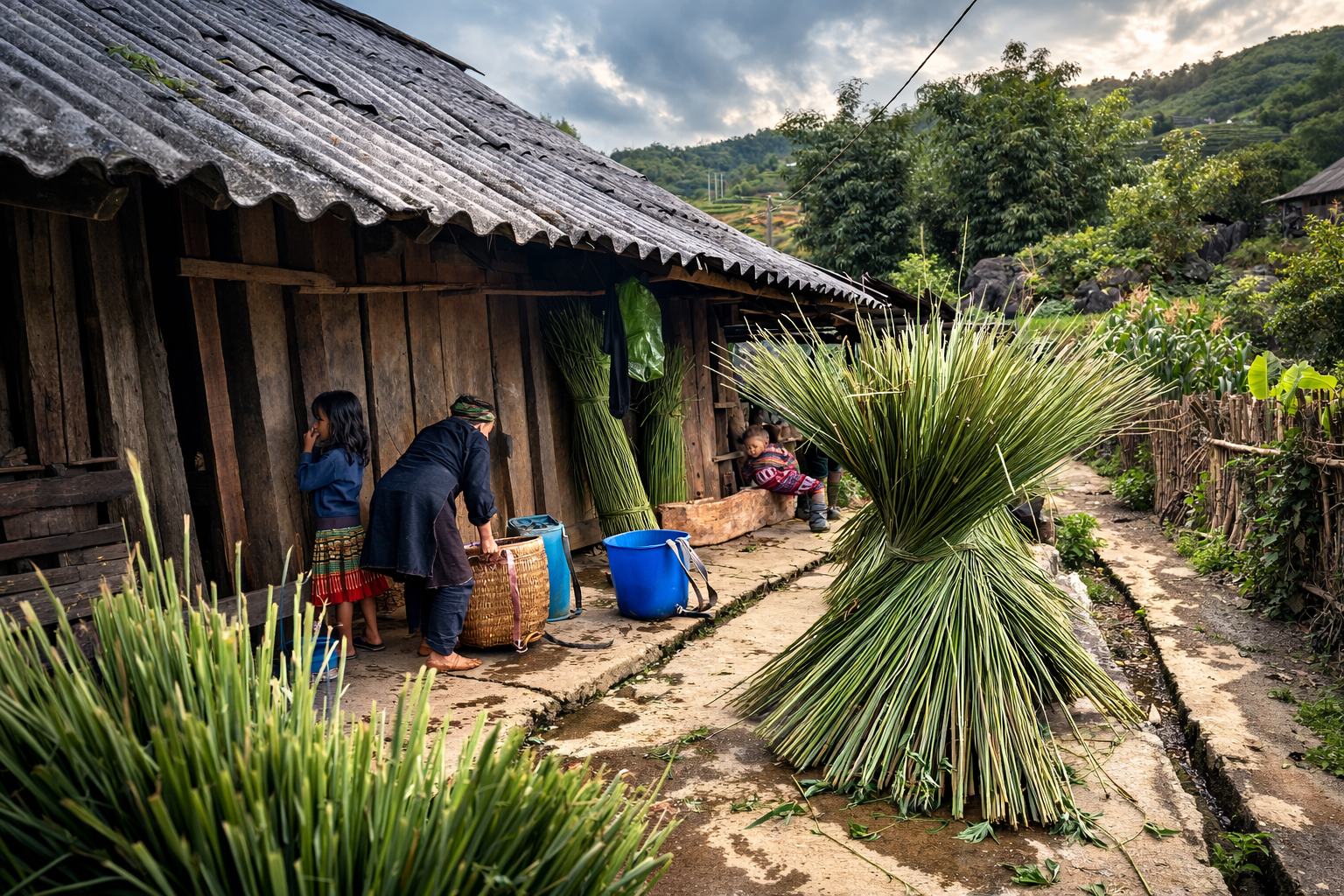
Hemp drying outside the house.
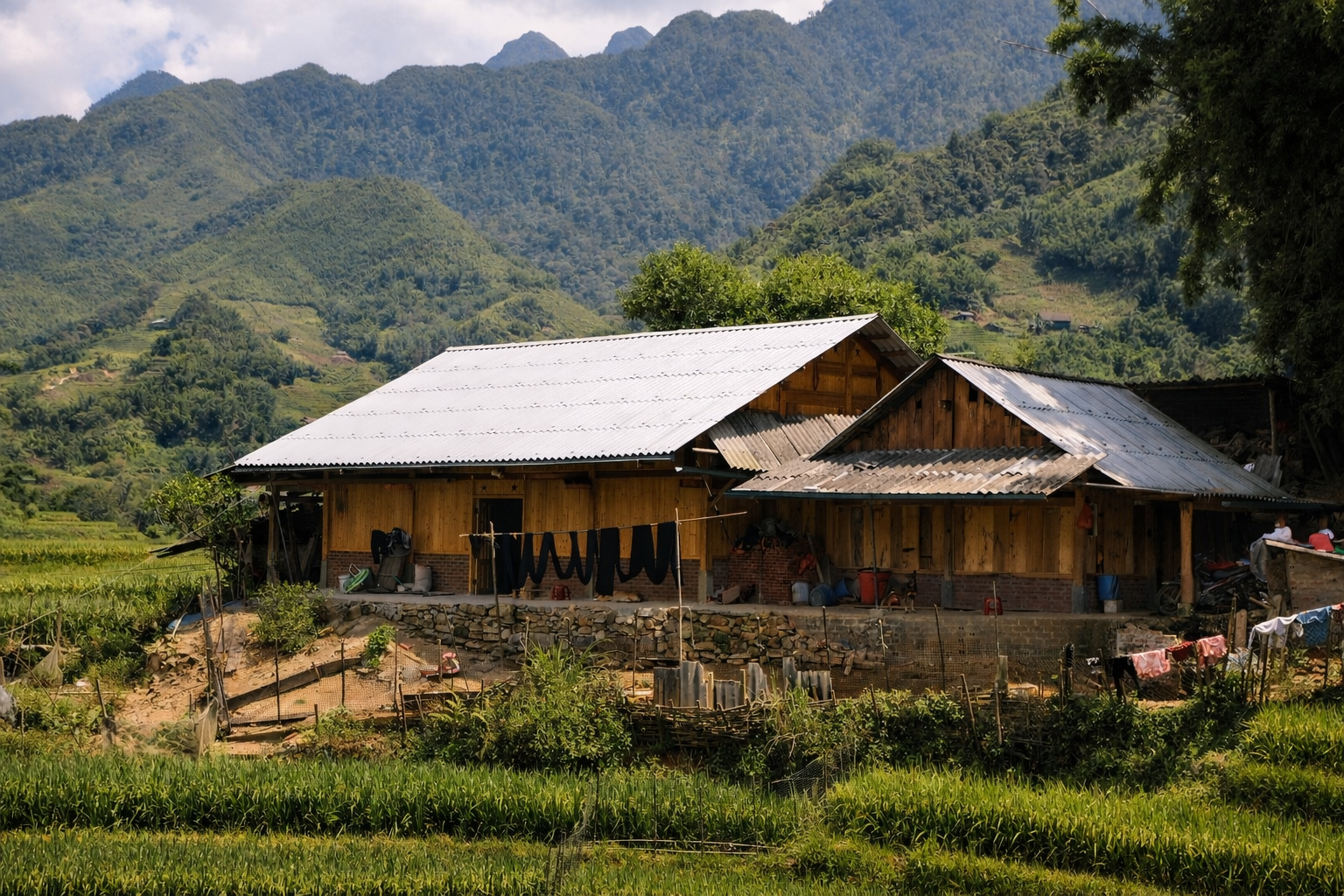
Indigo dyed fabrics outside the house.
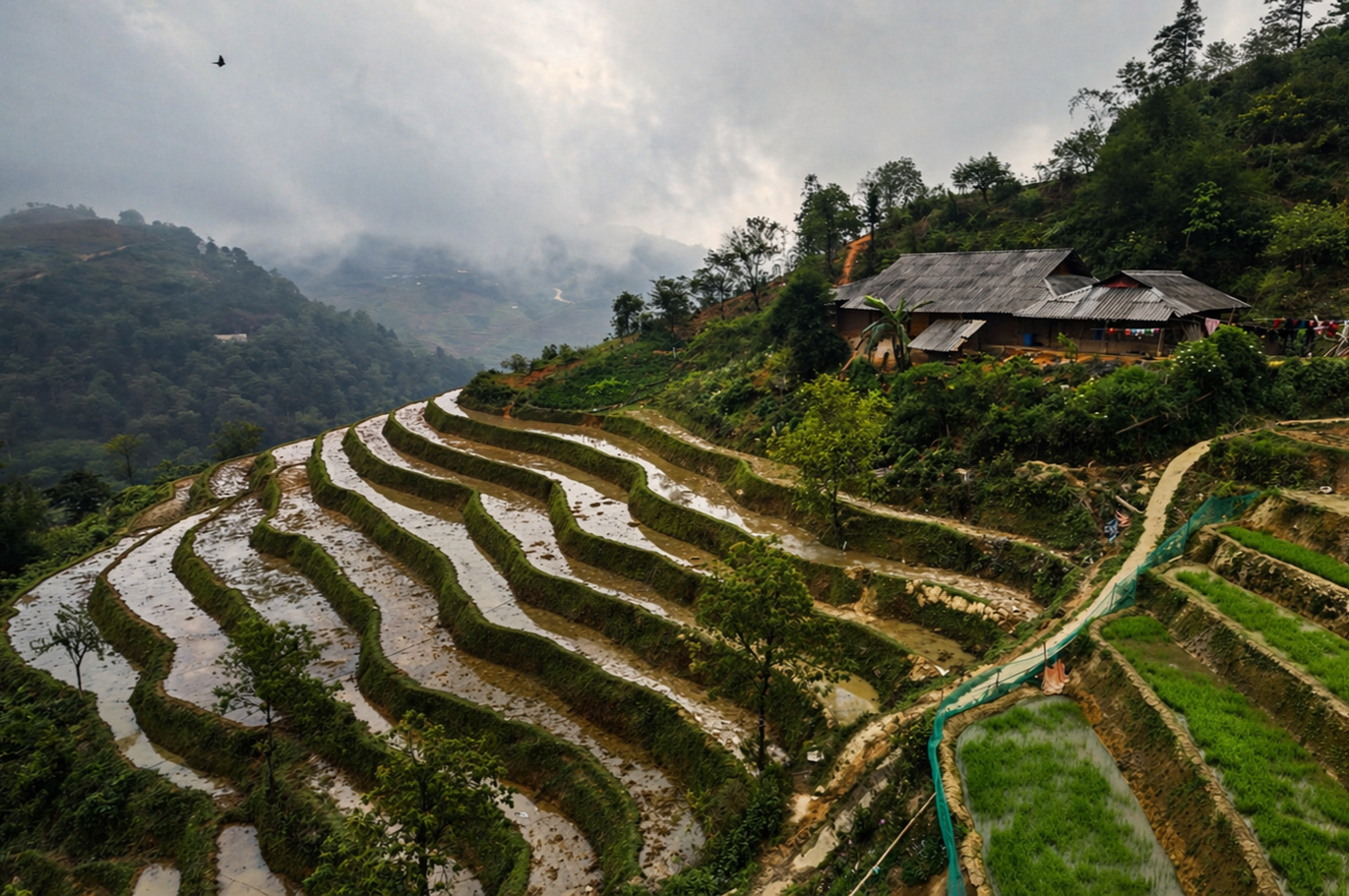
Rice terraces in Sapa.
The Difference Between Building Within a Landscape and Building Over It
As tourism expands rapidly across Sapa, traditional architectural landscapes face increasing pressure. Concrete hotels now rise along ridgelines once occupied by terraced fields and scattered wooden homes. Large-scale developments increasingly dominate valleys historically defined by subtle integration between settlement and landscape.
Not all modern development is harmful. Some newer homestays and ecolodges thoughtfully reinterpret vernacular architectural principles using local timber, restrained building heights, natural materials, and sensitive positioning within the terrain. The most successful examples understand that good mountain architecture should feel embedded within the landscape rather than imposed upon it.
There are encouraging examples of contemporary projects that preserve low visual impact, incorporate traditional rooflines, support local craftsmanship, and avoid overwhelming surrounding villages. Tasteful architecture in Sapa does not require imitation or pastiche. It requires humility towards the landscape and respect for the communities whose cultural identity shaped it.
Unfortunately, other projects move in the opposite direction.
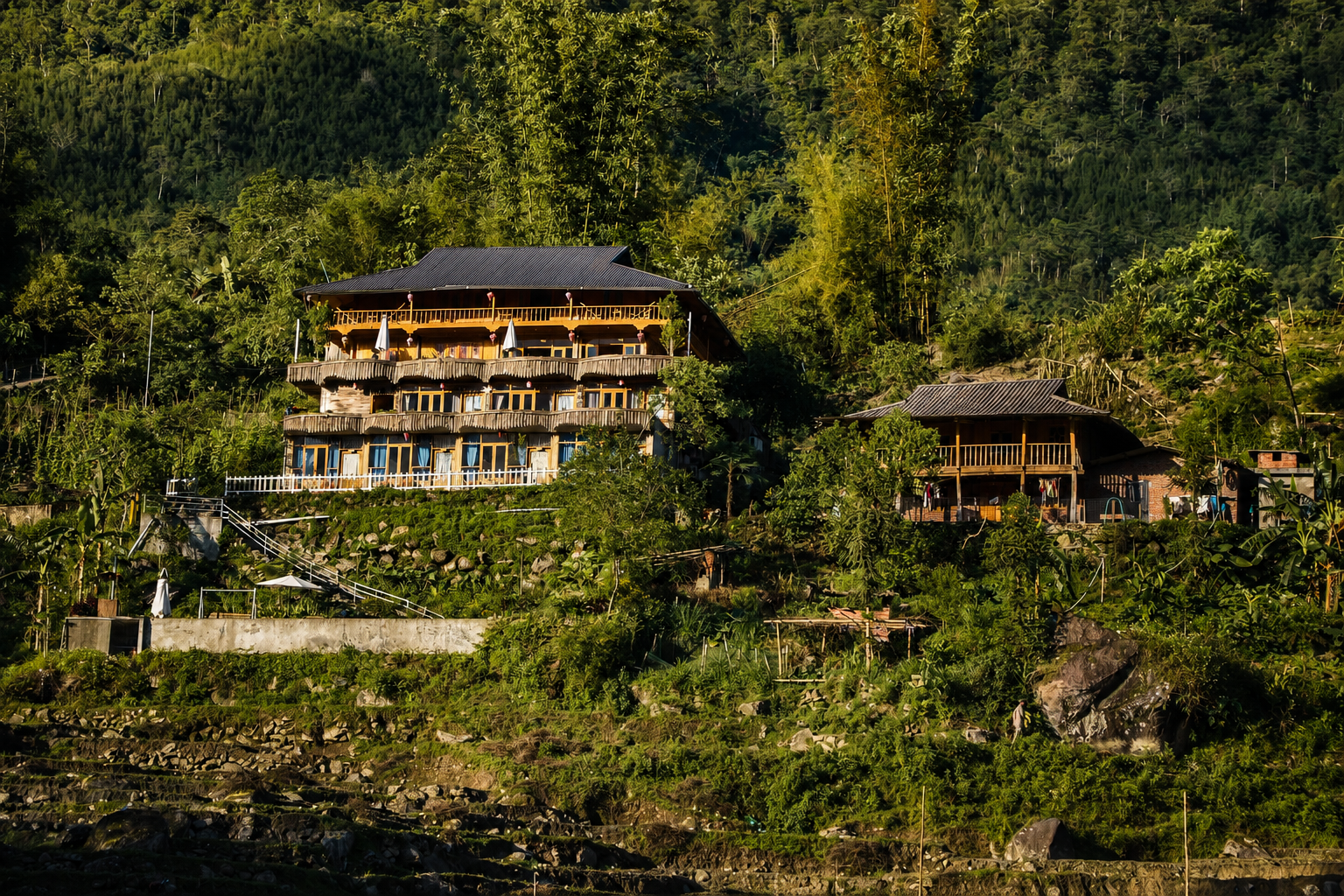
Vietnamese owned homestay with some sympathetic design.
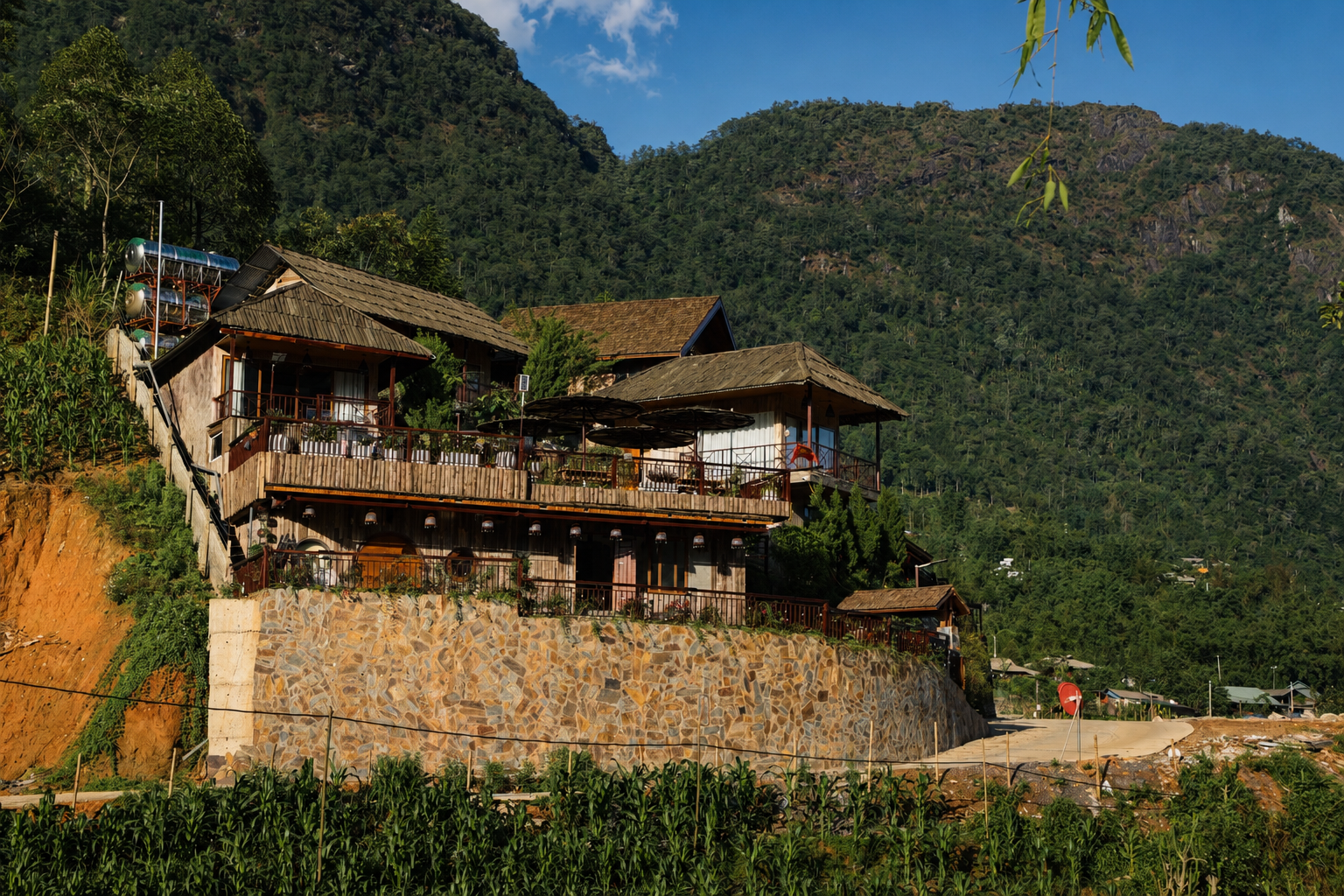
Vietnamese owned homestay with some sympathetic design.
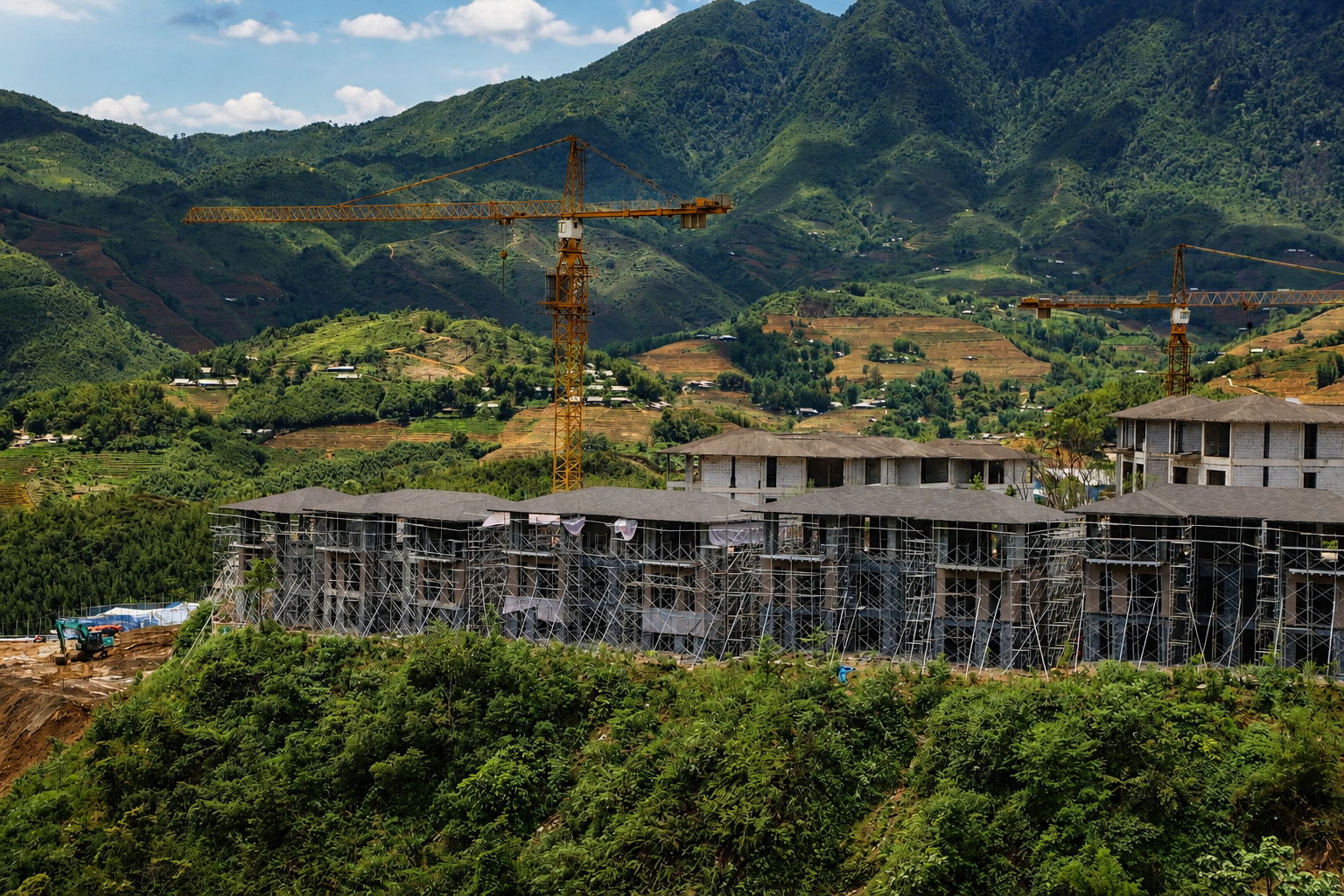
New hotel complex in Sapa.
Ban Mong Resort — When Architecture Stops Listening to the Landscape
Few developments in the wider Sapa region better symbolise the growing tension between profit-driven tourism expansion and the preservation of cultural landscape than the enormous Ban Mong Resort project overlooking the Muong Hoa Valley. To many residents, guides, farmers, and long-term visitors, the development has become emblematic of a style of construction that prioritises scale, prestige, and commercial spectacle above environmental sensitivity, architectural restraint, or meaningful connection to place.
From across the valley, the complex appears less like an extension of the mountain landscape and more like an imposition upon it. Its sheer scale dominates ridgelines that were once defined by layered rice terraces, scattered timber homes, and the shifting textures of forest and mist. Where traditional Hmong and Dao architecture settles quietly into the contours of the land, Ban Mong Resort announces itself aggressively. It demands attention. It overwhelms the eye and transforms what was once an organically evolving cultural landscape into a backdrop for oversized commercial ambition.
For many locals, this is not simply a question of aesthetics but more a question of respect. The architecture of the Muong Hoa Valley historically evolved through generations of practical adaptation to climate, terrain, spirituality, agriculture, and communal life. Traditional homes were never designed to dominate the mountains but to coexist with them. Ban Mong Resort represents the complete inversion of that philosophy. Rather than responding humbly to the landscape, the landscape itself appears forced to submit to the scale of the project.
The visual impact is impossible to ignore. Visitors trekking through the valley frequently describe the development as jarring, intrusive, and deeply out of character with its surroundings. Its massive concrete presence interrupts panoramic views that once carried an extraordinary sense of openness and continuity between terraces, villages, rivers, and forested slopes. The development looms over nearby communities with a heaviness that many feel fundamentally misunderstands the character of the highlands themselves.
What makes this particularly frustrating for many observers is that Sapa does not inherently oppose modern architecture or tourism investment. Sensitive contemporary design is entirely possible here. There are smaller lodges, homestays, and community-based projects across the region that successfully reinterpret vernacular forms through thoughtful use of local materials, restrained scale, and careful positioning within the terrain. Good architecture in mountain environments requires humility. Ban Mong Resort instead projects excess.
The development also raises wider questions about who tourism is ultimately being built for. Increasingly, parts of Sapa risk becoming shaped less around the realities of local communities and more around the expectations of short-term mass tourism markets seeking spectacle, status, and curated luxury. In this model, the mountains themselves become scenery to monetise rather than living cultural landscapes deserving stewardship and protection.
Projects of this scale can permanently alter not only visual identity but also ecological systems, water drainage patterns, traffic pressure, waste management demands, and long-term land values that affect surrounding villages. Once landscapes are transformed at this scale, they are extraordinarily difficult to restore. Concrete ridgelines do not easily return to terraced hillsides.
Perhaps most painfully, developments like Ban Mong Resort risk eroding the very qualities that made the valley internationally admired in the first place. People did not travel to Muong Hoa to experience generic resort urbanism transplanted into the mountains. They came for the quiet relationship between architecture, agriculture, mist, river, and community life that evolved slowly over centuries. They came because the valley still felt alive rather than manufactured.
When buildings become monuments to profit and prestige rather than thoughtful responses to place, the landscape inevitably pays the price. In the case of Ban Mong Resort, many locals and visitors alike increasingly feel that price has already become painfully visible across the valley.
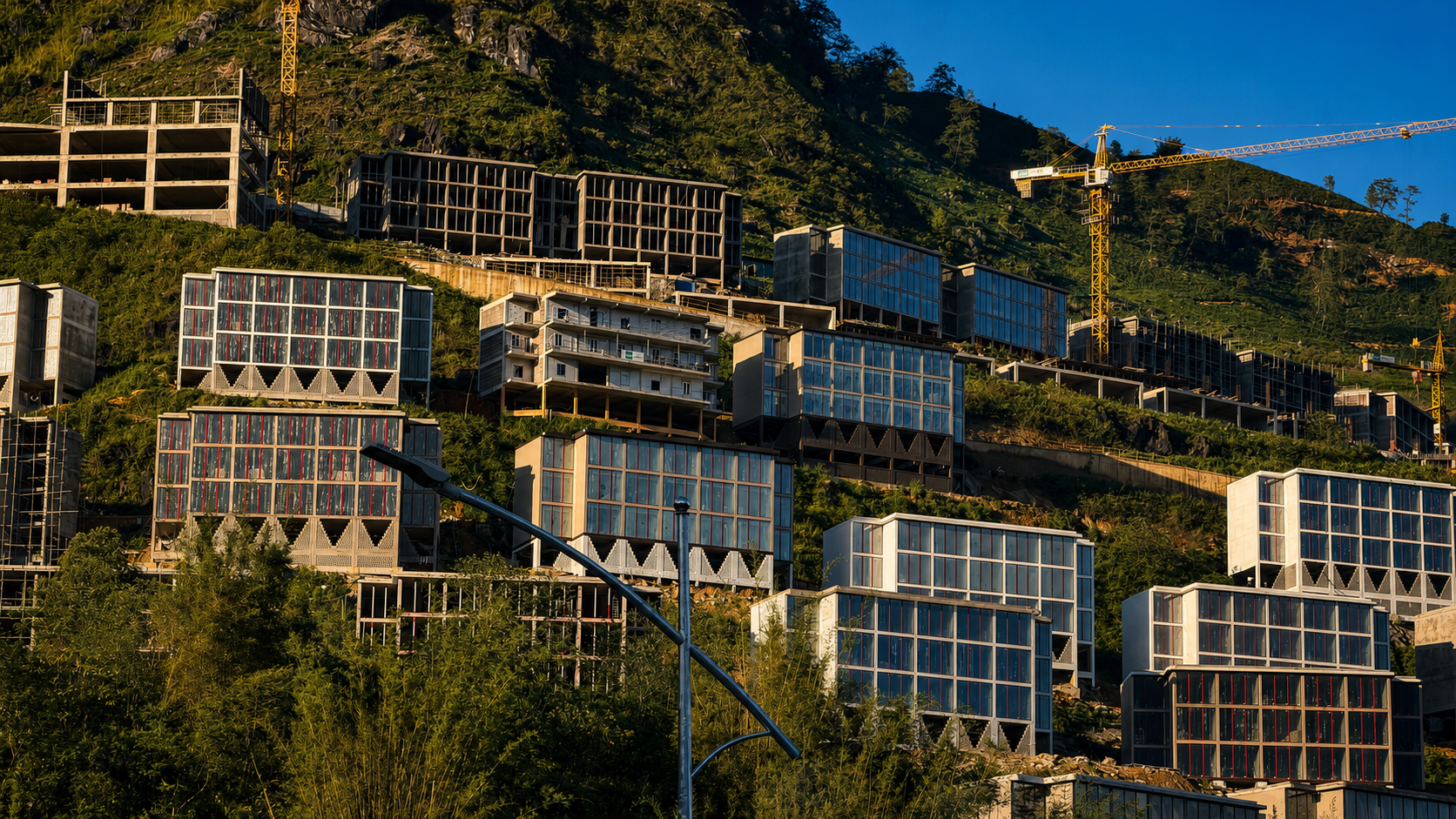
Controvertial hotels springing up in the Sapa mountains.
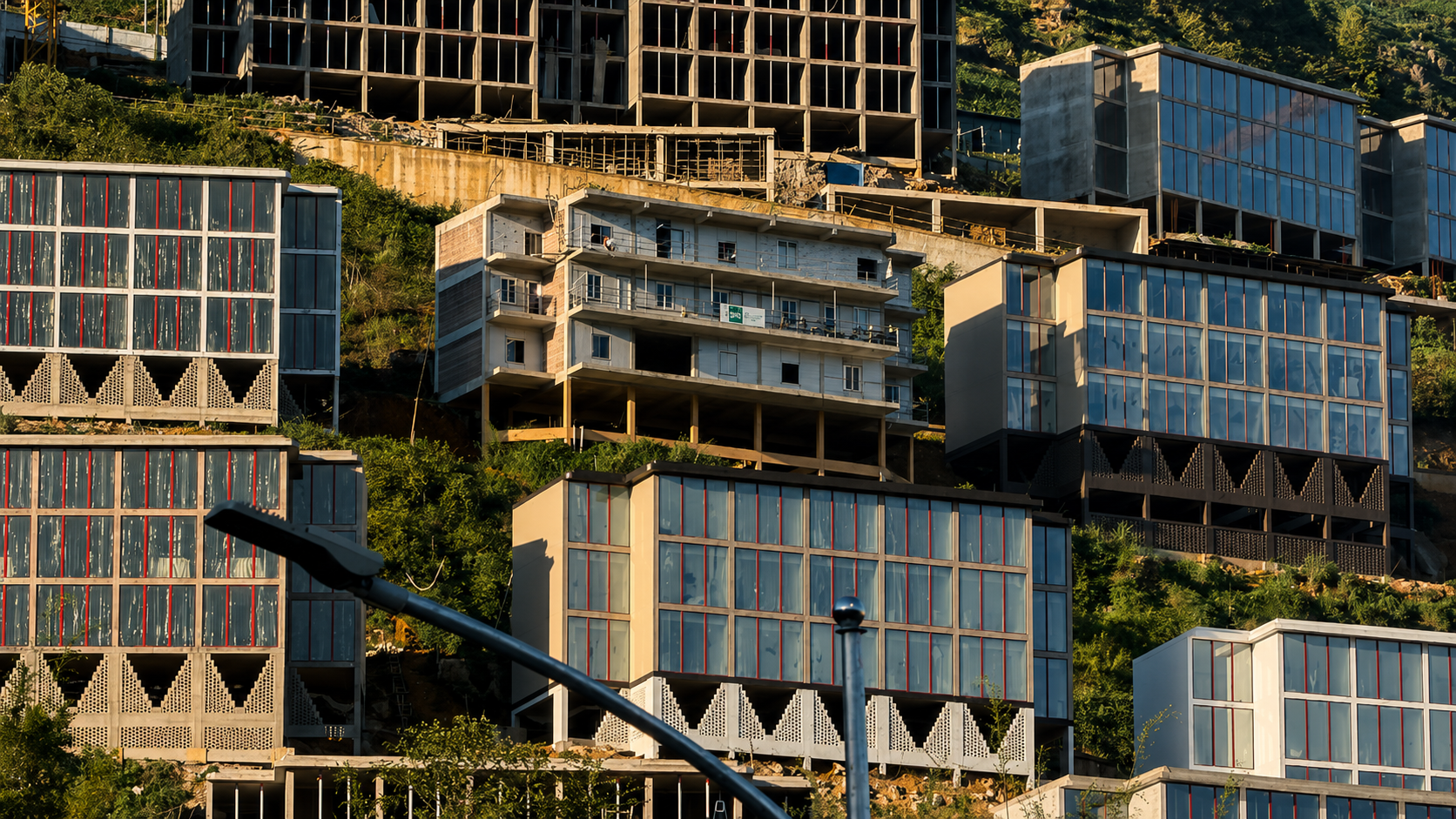
Controvertial hotels springing up in the Sapa mountains.
Colonial Nostalgia and the Packaging of “Indochine”
Another tension shaping modern Sapa emerges through the commercial repackaging of colonial aesthetics within luxury tourism branding. Perhaps the clearest example is the Hotel de la Coupole Sapa – MGallery, which presents itself through the language of “Haute Couture Meets Hill Tribe Artistry”, blending imagined French Indochine glamour with stylised representations of ethnic minority cultures.
Visually, the property is undeniably dramatic. Yet its atmosphere reflects not preserved colonial heritage but a contemporary luxury interpretation of what “Indochine” is imagined to have looked like. Unlike surviving colonial churches, villas, or administrative buildings physically connected to the history of French occupation in the highlands, this is a newly constructed fantasy aesthetic designed primarily for commercial consumption.
The danger lies in how colonialism becomes transformed into atmosphere rather than history. Refined interiors, couture references, and nostalgic imagery can risk presenting colonial rule as elegant and harmonious while obscuring the violence, extraction, taxation, frontier militarisation, and unequal power structures that shaped life across northern Vietnam during the colonial era.
French expansion into the highlands involved systems of governance built around strategic control, labour extraction, land management, and opium monopolies that financed much of colonial Indochina. Highland communities were surveyed, classified, taxed, displaced, and incorporated into systems designed primarily around imperial interests rather than local wellbeing.
When colonial imagery becomes detached from these realities, heritage risks becoming selective memory. The appearance of colonialism is preserved while its consequences fade quietly into the background.
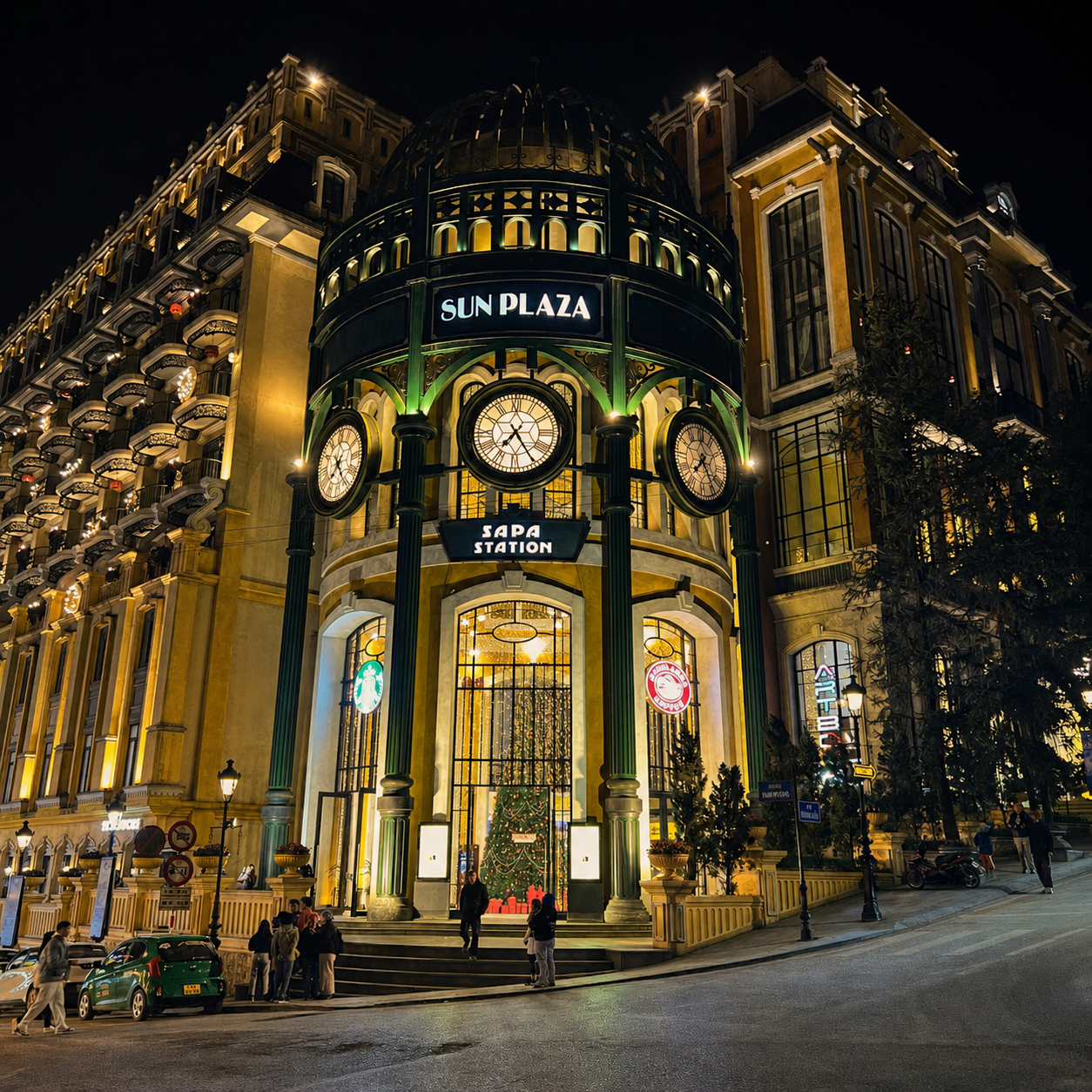
Modern grand attempt at post colonial architecture that never really existed in Sapa
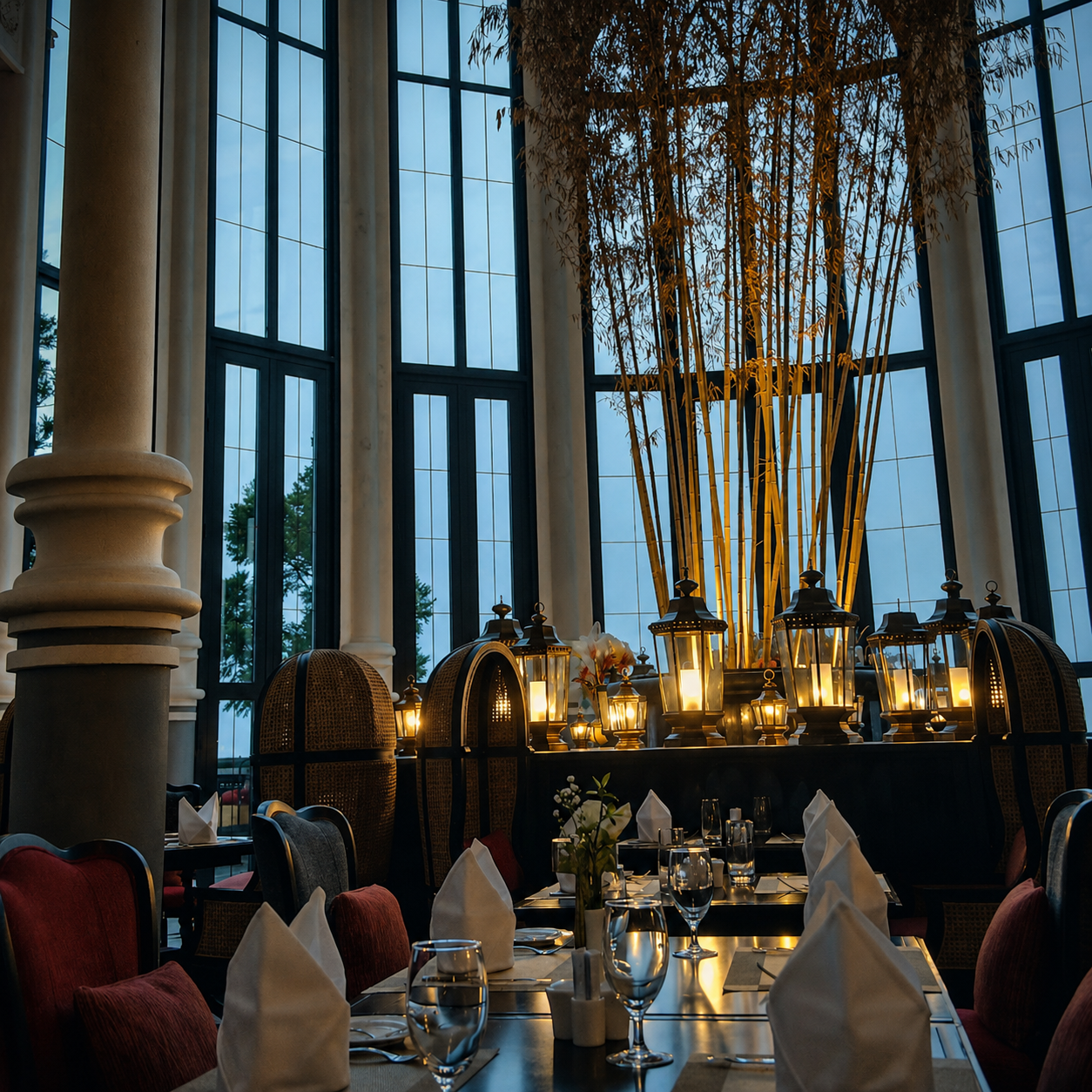
The grand interior of the Hotel de la Coupole, Sapa

The grand swimming pool in the Hotel de la Coupole, Sapa
Why Sapa Needs Stronger Environmental Impact Assessments
The speed and scale of development now transforming Sapa raises urgent questions regarding environmental governance and long-term sustainability. Mountain ecosystems are inherently fragile. Landslides, water scarcity, erosion, biodiversity loss, and infrastructure strain can escalate rapidly when development proceeds without rigorous oversight.
This is precisely why far more comprehensive Environmental Impact Assessment processes are needed across the region. An effective EIA is not merely bureaucratic paperwork but a systematic process designed to identify, predict, and evaluate the environmental, social, cultural, and economic consequences of proposed developments before approval is granted.
In sensitive landscapes such as the Muong Hoa Valley or areas bordering protected forests, EIAs should examine far more than simple construction feasibility. They should analyse visibility from key viewpoints, architectural compatibility with local vernacular traditions, drainage systems, flood risks, biodiversity impacts, wildlife corridors, groundwater vulnerability, traffic pressures, noise pollution, wastewater management, and long-term effects upon local communities and cultural heritage.
Public consultation must also play a genuine role. Highland communities should not simply witness transformation happening around them after decisions have already been made elsewhere. Their knowledge of local ecosystems, weather patterns, farming systems, and sacred landscapes forms an essential part of responsible planning.
Good development is possible. Tourism can absolutely support livelihoods, preserve craft traditions, and strengthen local economies when approached thoughtfully. Yet mountain landscapes cannot absorb unlimited expansion without consequence.
Sapa’s greatest beauty has never come from spectacle alone. It comes from the extraordinary relationship between people, architecture, agriculture, forests, rivers, and mountains that evolved here slowly across generations. Traditional Hmong and Dao homes embody that relationship perfectly. They remind us that architecture can exist not as domination of landscape, but as participation within it.
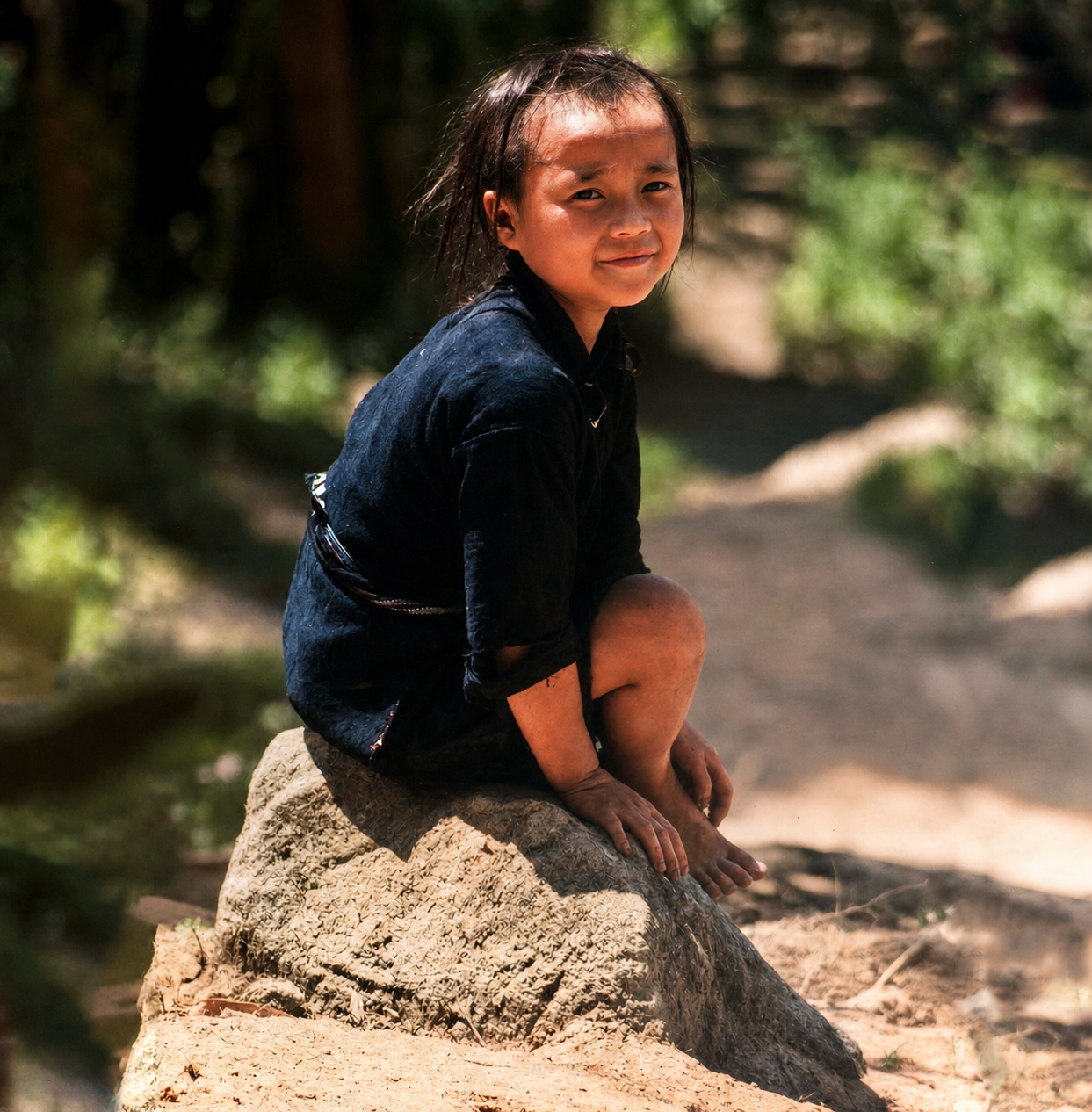
History of Sapa, Vietnam: Ethnic Traditions, French Legacy & Modern Tourism
Sapa’s story is one of discovery and continuity. Long before colonial maps and modern tourism, Hmong and Dao communities shaped the Sapa mountains through farming, trade, and tradition. This deep-dive explores how Sapa evolved from a frontier trade network to a French hill station, and how today’s tourism boom is reshaping the balance between culture, visibility, and place.
The Beating Heart of the Highlands
High in the northern mountains of Sapa, the story of this landscape cannot be separated from the people who have shaped it over generations. Long before colonial maps or tourism routes defined the region, Giáy, Tay, Hmong and Dao communities cultivated the mountain slopes, built villages along ridgelines, and established systems of trade, agriculture, and craft that continue to define the cultural fabric of the highlands today. Their presence forms a continuous thread through every period of Sapa’s history, steady and enduring despite waves of external influence and transformation. The rhythm of daily life, from planting rice in terraced fields to gathering at weekly markets, has long shaped both the economy and identity of the region.
These communities were never peripheral to Sapa’s development, nor were they passive observers of change. They were and remain farmers, traders, textile makers, herbalists, and storytellers whose knowledge of land and climate has sustained life in a challenging mountain environment. Some are now entrepreneurs and even guides too.
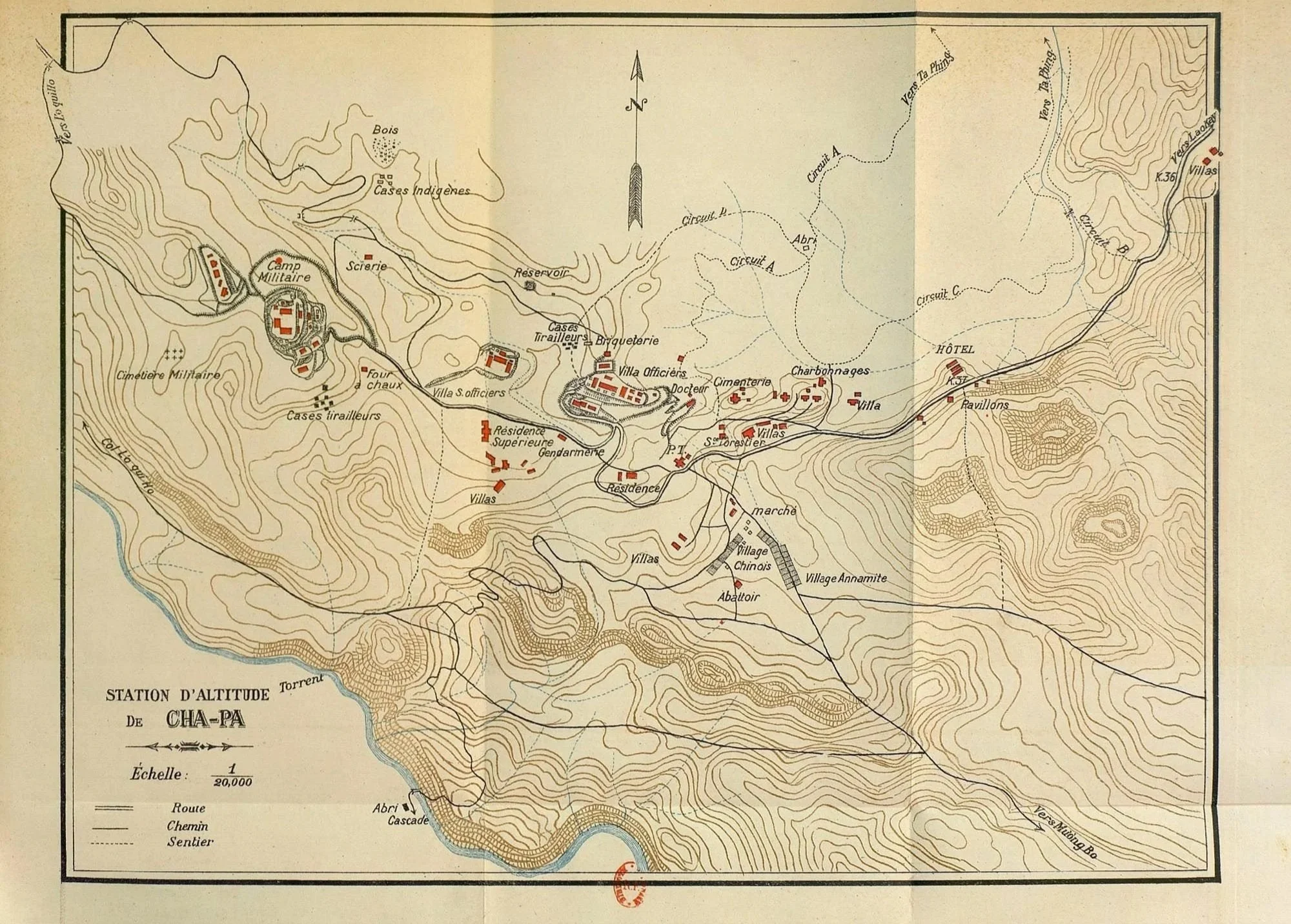
Old French map of Cha Pa.
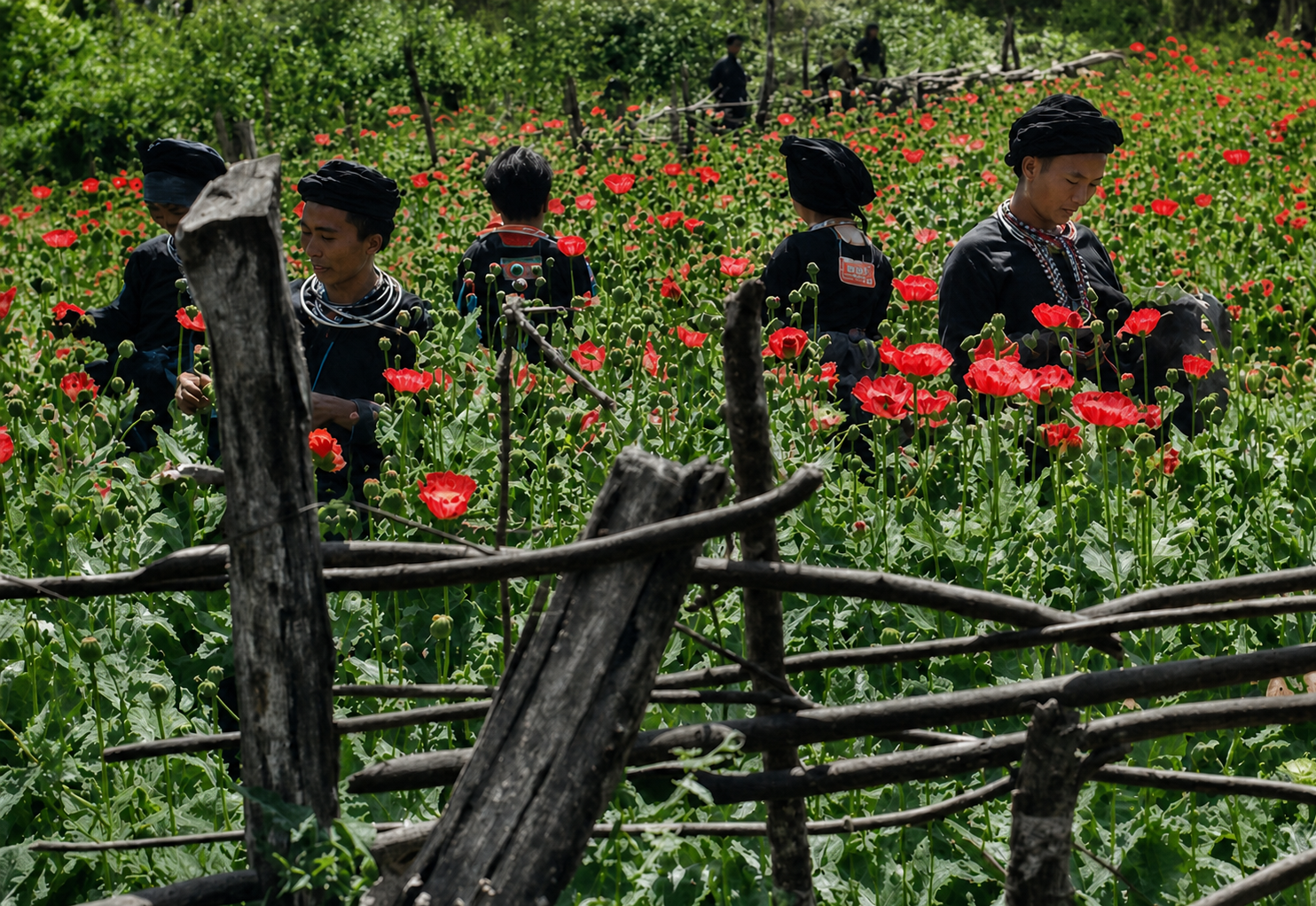
Recolorised photograph of ethnic minorities harvesting opium in Sapa.
Early Histories: A Layered Frontier, Not an Empty Landscape
Population history in Sapa is layered and complex, with different groups arriving at different times and settling according to ecological conditions. Tai-speaking groups such as the Giáy and Tay tended to inhabit lower valleys suited to wet-rice cultivation, while Hmong and Dao communities, arriving later, established themselves in higher elevations, practising forms of agriculture adapted to steep terrain and forest environments. The precise timelines of arrival remain debated, yet the strongest evidence suggests that Dao presence in northern Tonkin dates back at least to the early eighteenth century, while larger waves of Hmong migration occurred in the nineteenth century, often linked to broader movements from southwest China.
What emerges clearly is not a single moment of settlement, but a cumulative process shaped by migration, adaptation, and exchange. Markets were central to this world, functioning not only as economic sites but as places of social interaction, courtship, and cultural display. Trade networks carried salt, metals, textiles, livestock, and forest products, while Chinese merchants often dominated longer-distance exchange, connecting upland producers to wider regional economies.
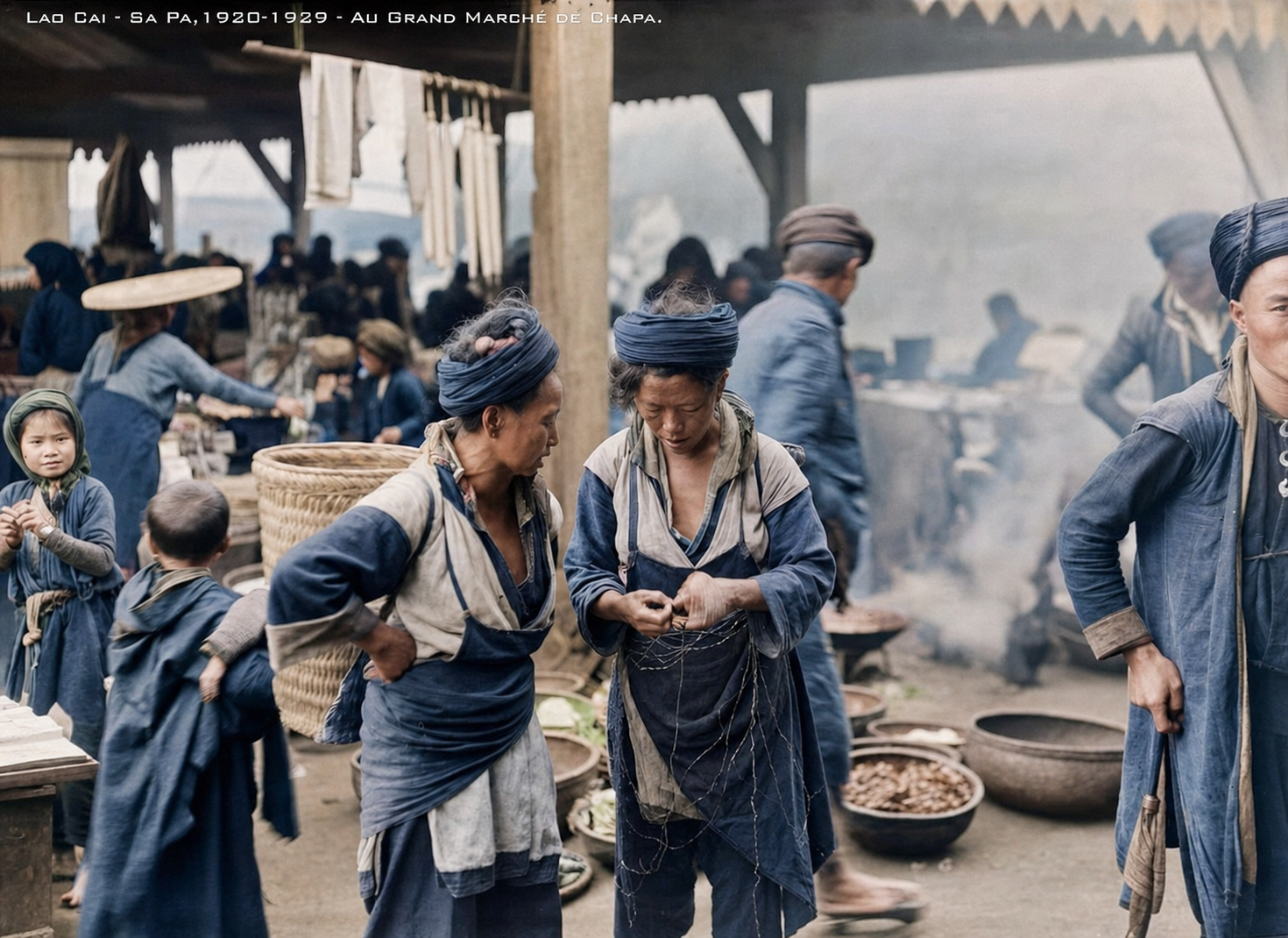
Recolorised photograph of Hmong people in Sapa market in the early 20th century.
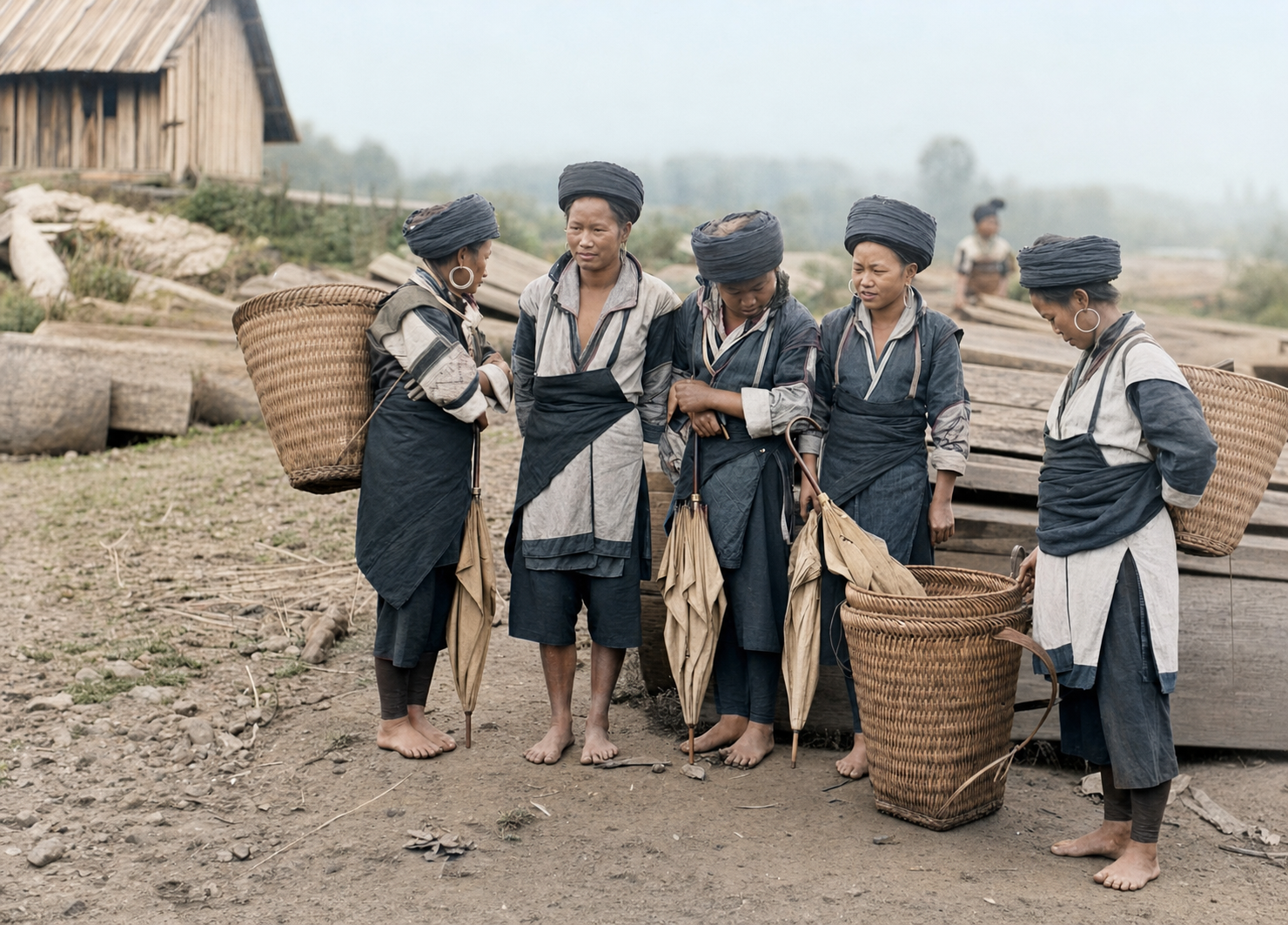
Recolorised photograph of Hmong women gathering on a Sapa street.
Colonial Mapping and the Creation of a Hill Station
French colonial interest in the region intensified towards the end of the nineteenth century, when scientific expeditions began surveying northern Vietnam’s upland populations. By 1898, French teams had reached Lào Cai, and by 1903 Sapa appeared on official maps for the first time. What had been a predominantly Black Hmong settlement became incorporated into a colonial framework that sought both strategic control and climatic advantage.
A military garrison was established in 1903, initially referred to as “Cha Pa”, a transliteration of the Hmong “Sa Pả”. Infrastructure soon followed, including roads and eventually the railway linking Hanoi to Lào Cai. The French transformed Sapa into a colonial hill station designed to serve the administrative, military, and climatic needs of European settlers, reshaping upland land use and local economies in the process. They were keen to promote its cool climate as a refuge from the lowland heat. By the early twentieth century, hotels, villas, and administrative buildings had been constructed, including the Hotel du Fansipan and other boarding houses along the main road. A sanatorium, opened in 1913, treated conditions such as malaria and respiratory illness, while the meteorological station established in 1915 connected Sapa to international scientific networks.
For many French officials and settlers living in Hanoi, the climate of the northern highlands became central to the appeal of Sapa. The cooler mountain air was framed as both restorative and medically beneficial in contrast to the heat, humidity, and disease associated with the lowlands. Colonial accounts increasingly portrayed Sapa as a refuge for exhausted administrators, soldiers, and wealthy residents of Indochina, reinforcing the development of sanatoriums, seasonal villas, and hotels throughout the early twentieth century.
By the 1920s and 1930s, Sapa had become one of the most prominent hill stations in French Indochina, attracting colonial elites seeking leisure and recuperation in the mountains. Yet this vision of Sapa as a place of escape existed alongside the realities of frontier administration and unequal labour structures, with Hmong and Dao communities continuing to supply much of the agricultural labour, trade, and local knowledge that sustained the colonial settlement itself.
By the early twentieth century, tourism infrastructure in Sapa was already beginning to emerge alongside the expanding colonial settlement. Most historical accounts identify the Cha Pa Hotel, also known as the Hotel de Chapa, opened around 1909 by Mr Meiville, as the town’s first civil hotel. The Hotel du Fansipan followed later, around 1924, as Sapa’s reputation as a mountain retreat continued to grow among French residents in Indochina. Larger hotels, including the Metropole in 1932 and the Hôtel du Centre in 1937, were constructed in the decades that followed, reflecting the steady expansion of colonial tourism in the highlands.
Despite these developments, the French civilian population remained small, never exceeding a few dozen individuals even at its peak. The majority of the population continued to be composed of Hmong, Dao, and other ethnic groups, whose labour and local knowledge underpinned both agricultural production and the functioning of the colonial settlement.
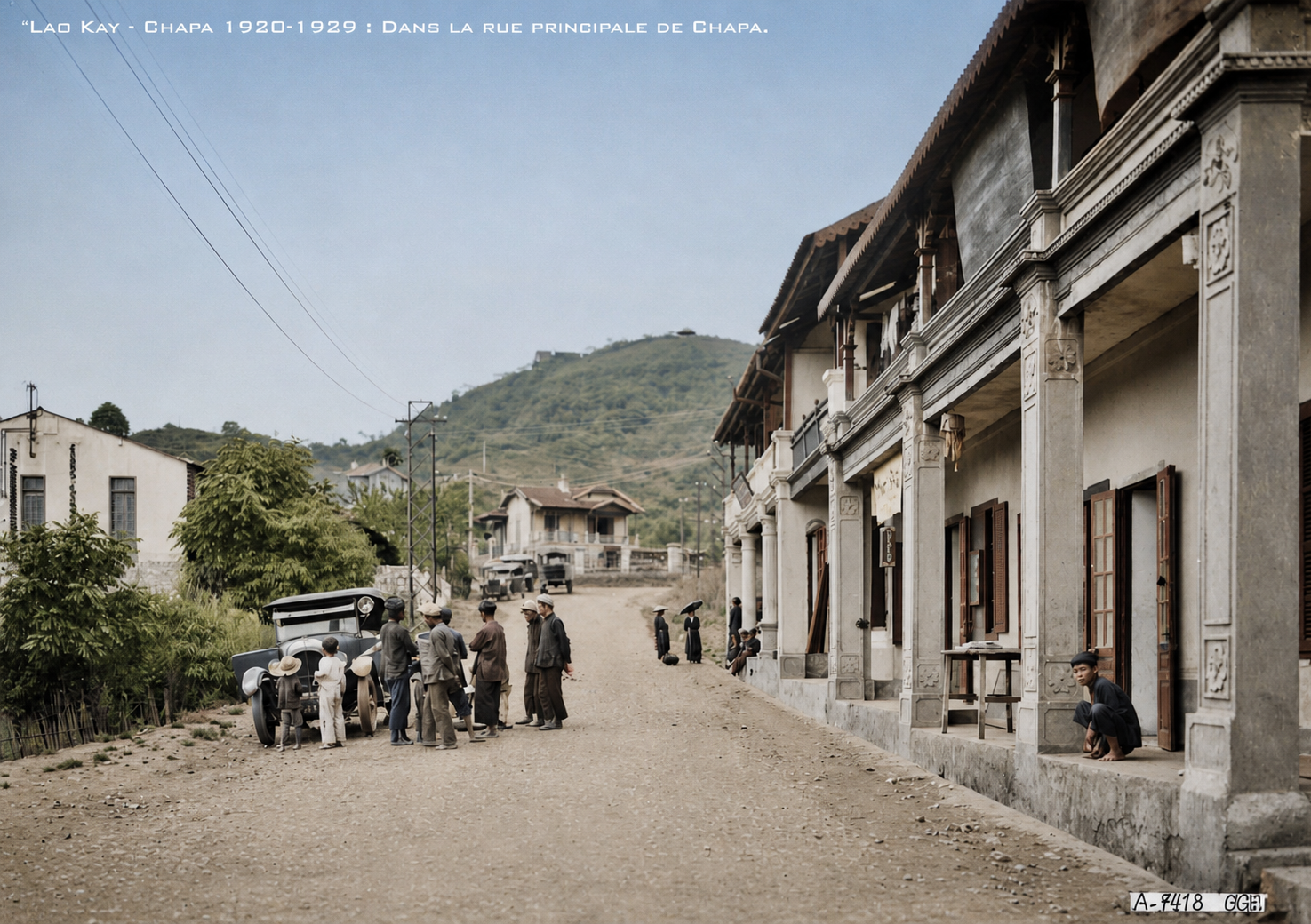
Recolorised photograph of Hotel du Fansipan on what is now Cau May Street.
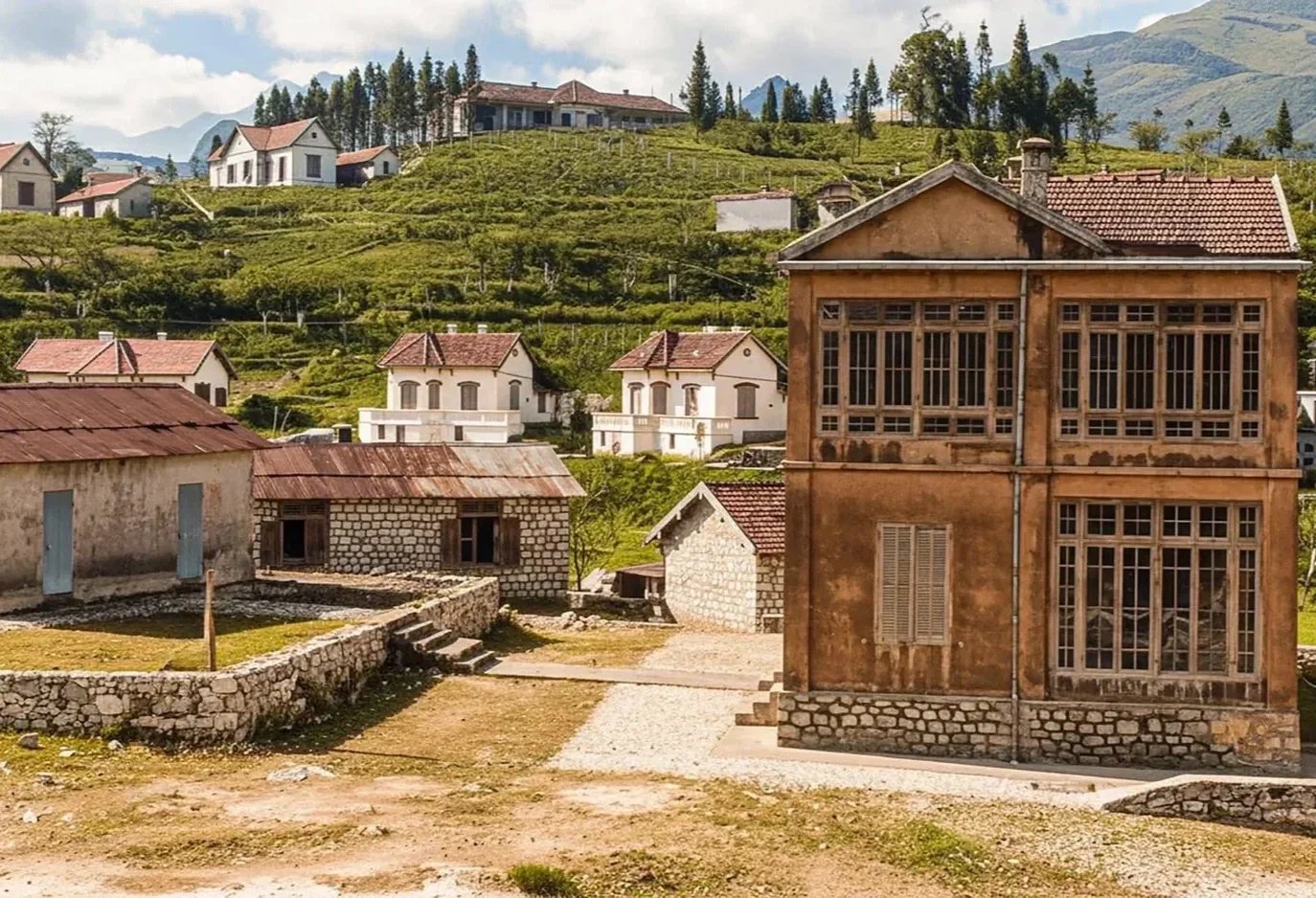
Recolourised photograph showing some of Sapa’s many colonial villas.
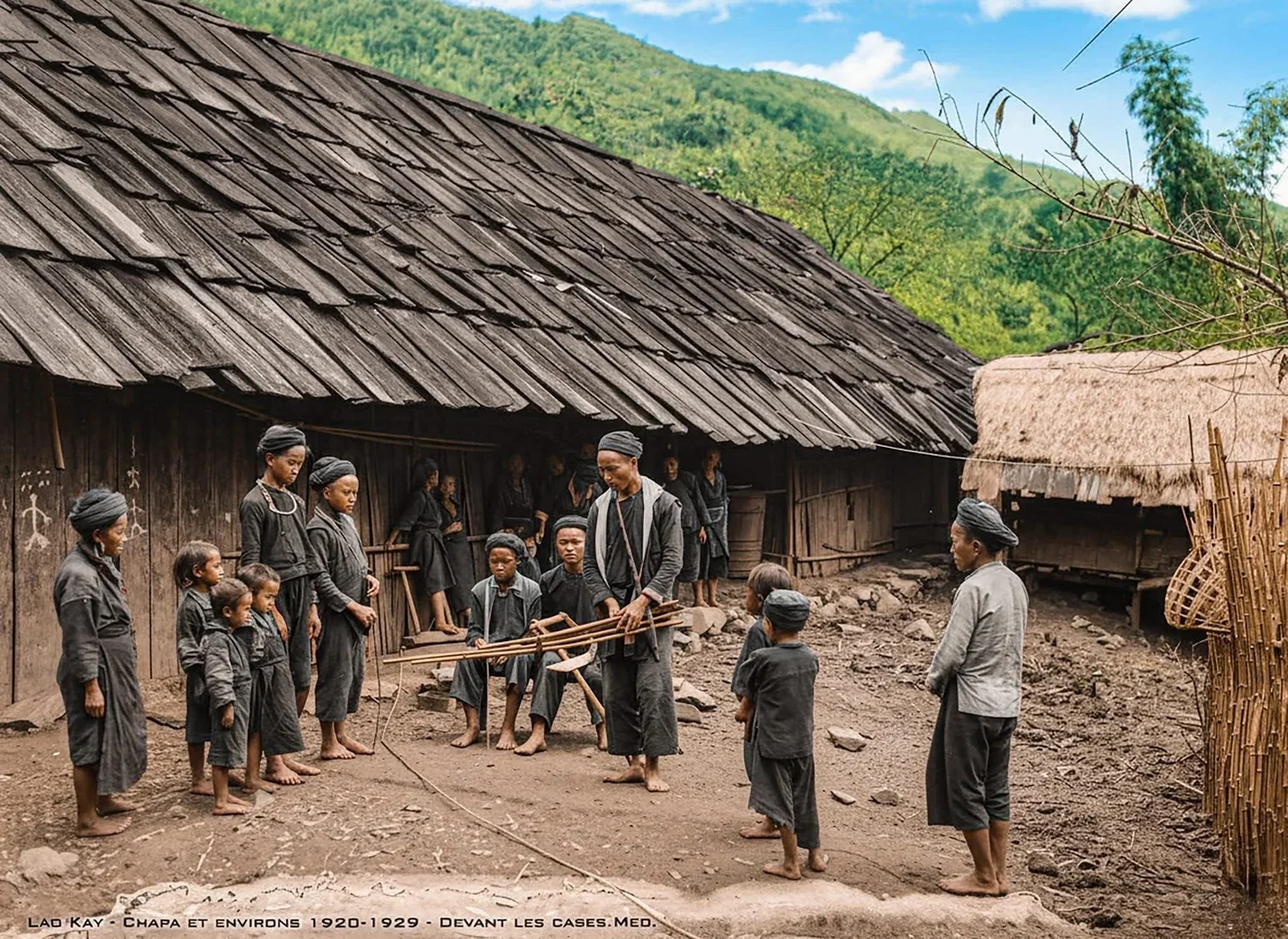
Recolourised photograph of a Hmong home in 1920’s Sapa.
Colonial Frontier and Hill-Station Formation
The arrival of the French in the late nineteenth century did not mark the “discovery” of an empty mountain wilderness, as older colonial narratives often implied. The highlands around Sapa were already part of a socially and economically connected frontier shaped by Hmong, Dao, Giáy, and other upland communities through trade, farming, migration, and market exchange. What French colonialism introduced was not civilisation to an isolated region, but a new system of military control, taxation, extraction, and territorial administration.
From the 1890s onwards, the French consolidated authority across the northern frontier following the establishment of colonial rule in Tonkin and the formal demarcation of the border with China. Military expeditions, ethnographic surveys, missionary activity, and infrastructure projects unfolded together, all serving a broader effort to make the uplands more legible and governable to the colonial state. Understanding local leadership structures, trade routes, agricultural systems, and ethnic classifications was not simply an academic exercise, but part of a strategy for extending control into regions that had historically operated with relative autonomy.
Missionaries from the Société des Missions Étrangères de Paris became some of the earliest outsiders to document local customs and communities, while military surveyors mapped trade corridors and settlement patterns across the frontier. These records helped integrate the highlands into systems of taxation and administration that increasingly tied upland economies to colonial interests.
The transformation of Sapa into a hill station was deeply connected to this wider project. The French sought a cool mountain retreat where colonial officials and military officers could escape the climate and disease of Hanoi, but Sapa’s location near the Chinese border also gave it strategic importance. Roads, military posts, and eventually the railway linking Hanoi and Lào Cai extended colonial reach further into the mountains, allowing authorities to monitor trade routes and strengthen their presence along the frontier.
This expansion was financially underwritten in large part by the opium economy of French Indochina. During the early twentieth century, the colonial administration relied heavily on revenue generated through the state-controlled opium monopoly, known as the Régie de l’Opium. In some periods, opium accounted for a substantial proportion of colonial income, helping finance infrastructure, military operations, and administrative expansion across Indochina. The villas, roads, railway links, sanatoriums, and administrative buildings that reshaped Sapa emerged within this broader narcotics-financed colonial system.
The relationship between the highlands and opium was also more direct. Hmong and Dao communities across northern Vietnam had long cultivated opium poppies for medicinal, ritual, and trade purposes before French rule. Under colonial administration, these existing practices became increasingly regulated and incorporated into monopoly structures designed to generate state revenue. Upland communities were therefore drawn more tightly into systems of taxation and economic extraction that primarily served colonial interests rather than local needs.
Land itself was reorganised during this period. One Hmong settlement bearing the name Sa Pa was displaced as the colonial town expanded around military barracks and a sanatorium. By the 1910s and 1920s, villas and administrative residences spread across the plateau, transforming the landscape into a seasonal enclave for colonial elites. Tourism developed quickly once transport links improved, and by the mid-1920s Sapa had hotels, a tourist bureau, and a growing reputation among French residents as a mountain retreat.
Yet this colonial version of Sapa remained highly unequal. F rench residents occupied the town seasonally, Kinh workers often filled permanent service and administrative roles, while Hmong and Dao communities largely remained in surrounding villages, participating in the colonial economy through labour, trade, taxation, and agricultural production without sharing equally in the wealth or power that flowed through the town itself.
Railways, Trade, and the Making of a Corridor
The transformation of Sapa cannot be separated from the wider transport networks that connected it to regional and global systems. The railway linking Hải Phòng, Hanoi, and Lào Cai, completed in stages between 1903 and 1910, was conceived as both a commercial and strategic corridor extending towards Yunnan in China. While the main station in Hanoi opened in 1902, the line toward the Chinese border at Lao Cai was constructed in segments beginning in 1903. The entire 296km line from Hanoi to Lao Cai was officially completed and put into operation in 1906. This railway transformed access to the highlands, reducing travel time significantly and enabling the movement of administrators, goods, and visitors into the region.
Before the railway, commodities such as opium, timber, and forest products moved slowly along the Red River by boat. Rail infrastructure compressed travel times and integrated the northern highlands more tightly into colonial trade networks and systems of extraction. The new line moved goods and reshaped the spatial logic of the frontier, turning Lào Cai into a gateway and positioning Sapa as its climatic and administrative counterpart. Trade intensified, particularly in commodities such as opium, timber, and forest products, while imported goods flowed into upland markets. The railway played a role similar to later infrastructure projects, reducing travel time and integrating the highlands more closely into external economies. Rather than replacing existing geographies, it reoriented them, making Sapa increasingly accessible while also embedding it within larger systems of control and exchange.
The expansion of colonial infrastructure was closely tied to the opium economy moving through the northern frontier. By the late nineteenth and early twentieth centuries, the wider Lào Cai region had become an important centre within the French colonial opium system, with highland communities across northern Vietnam cultivating opium poppies for local use, trade, and taxation. Colonial authorities increasingly sought to regulate and profit from this trade, treating opium as one of the most valuable sources of revenue in French Indochina.
The people of Sapa became commercial producers of opium made possible by the railway and Sapa’s position within a wider upland zone where poppy cultivation existed across parts of Lào Cai and neighbouring provinces. The town’s growing importance therefore cannot be separated from the broader frontier economy developing around it. Roads, military outposts, and transport corridors did not simply support tourism and administration; they also strengthened colonial oversight of highland economies increasingly tied to narcotics revenue and cross-border trade.
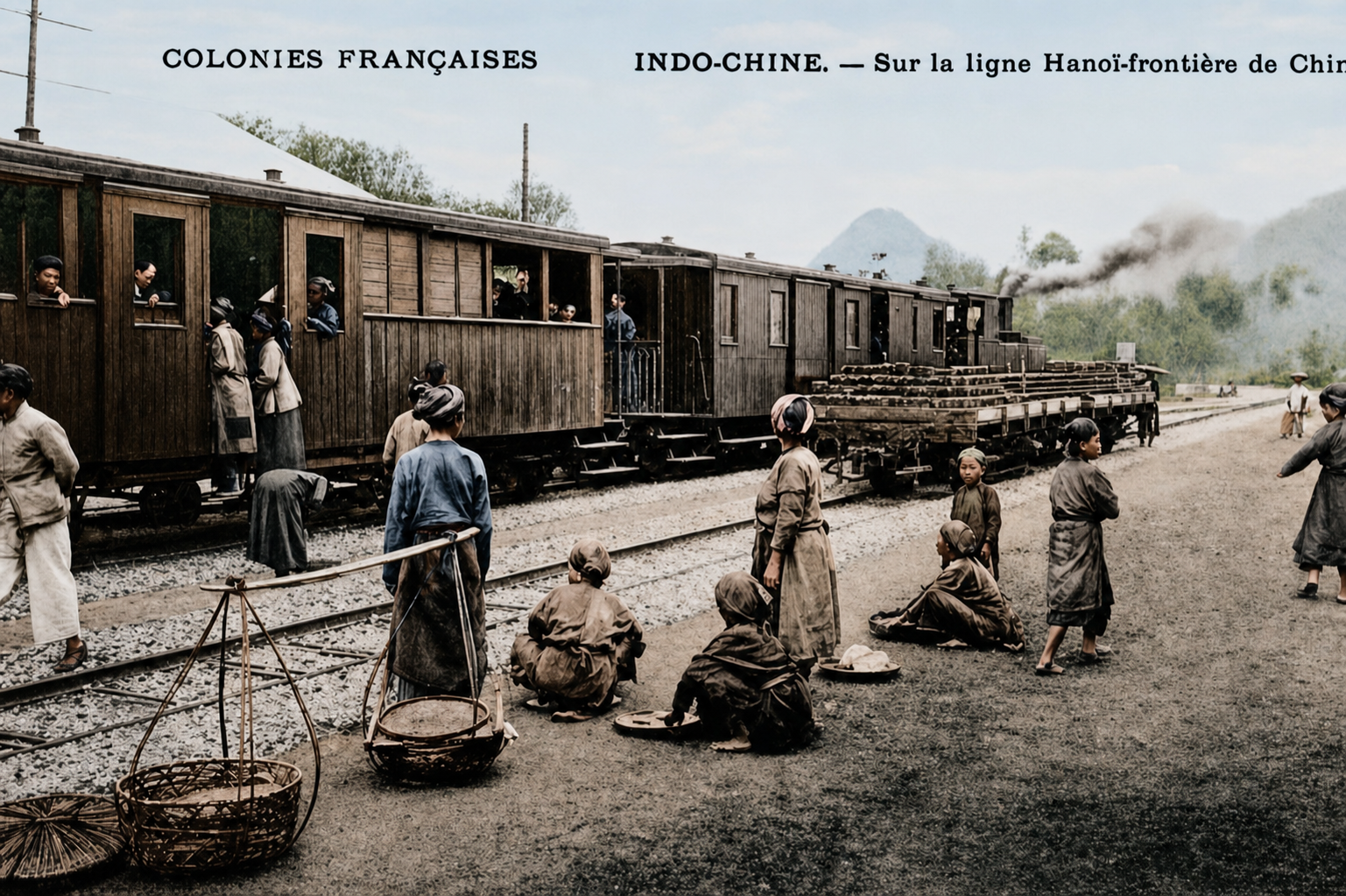
Recolourised photograph of a wooden train travelling the Hanoi to Lào Cai railway route during the French colonial period in northern Vietnam.
War, Disruption, and Abandonment
The mid-twentieth century brought significant disruption. During the conflict between French forces and the Viet Minh, Sapa suffered extensive damage, particularly between 1947 and 1952 when fighting led to the destruction of many colonial buildings, including villas, the governor’s residence, and the sanatorium. By the early 1950s, the town had been largely abandoned.
The collapse of French Indochina also brought the destruction of much of colonial Sapa itself. In 1952, as conflict intensified before the defeat of French forces at Điện Biên Phủ, French bombing campaigns damaged large parts of the hill station, including administrative buildings and private villas. Many residents fled, and the town entered a prolonged period of decline and abandonment.
The 1979 Border War and the Isolation of the Highlands
The Sino-Vietnamese War left a deep mark on the northern frontier, including the mountains surrounding Sapa and the wider Lào Cai Province region. Although the heaviest fighting took place closer to the border itself, particularly around the city of Lào Cai, the conflict reshaped life across the highlands for years afterwards through militarisation, economic disruption, and prolonged isolation.
When Chinese forces crossed into northern Vietnam in February 1979, the frontier became one of the most heavily contested regions in the country. Roads, railways, and transport links that had once connected the mountains to wider trade networks were damaged or cut off entirely, including the historic railway corridor linking Hanoi, Lào Cai, and Yunnan. The movement of goods and people slowed dramatically, while the border itself became increasingly securitised in the years that followed.
For communities in the mountains around Sapa, the impact was felt less through large-scale battles within the town itself and more through the atmosphere of uncertainty and hardship that settled across the region during the 1980s. Tourism had long disappeared, cross-border trade collapsed, and many villages returned once again to rhythms shaped primarily by subsistence farming and local exchange. Military presence became more visible throughout the frontier, while economic opportunities remained extremely limited in a period already marked by national hardship and postwar recovery.
The Secret War, Reunification, and the Isolation of the Northern Highlands
The wider region was also affected by geopolitical tensions beyond Vietnam’s borders. During the Vietnam War era, many Hmong, particularly in neighbouring Laos, were recruited into American-backed operations in what became known as the Secret War. Their roles included guiding air operations, gathering intelligence, and supporting military logistics, often at great personal cost. Following the end of the war in 1975, these associations led to suspicion and hardship, with many families facing displacement and long-term socio-political consequences.
In Sapa itself, the decades following reunification were marked by isolation and economic difficulty. Tourism disappeared, and local communities focused on subsistence and rebuilding, maintaining agricultural practices and cultural traditions largely outside the view of the wider world. For decades afterwards, tourism continued to suffer, and much of the colonial architecture that once defined Sapa fell into ruin beneath vegetation and time. The forests and mountains that travellers now experience as peaceful and expansive carried a different atmosphere during those years. Trails that today lead trekkers through rice terraces and bamboo groves once sat within a tense frontier landscape shaped by restricted movement, political suspicion, and the lingering fear of renewed conflict. Families throughout the highlands lived through decades in which the outside world felt very distant, with the mountains functioning less as a destination and more as a buffer zone along a fragile border.
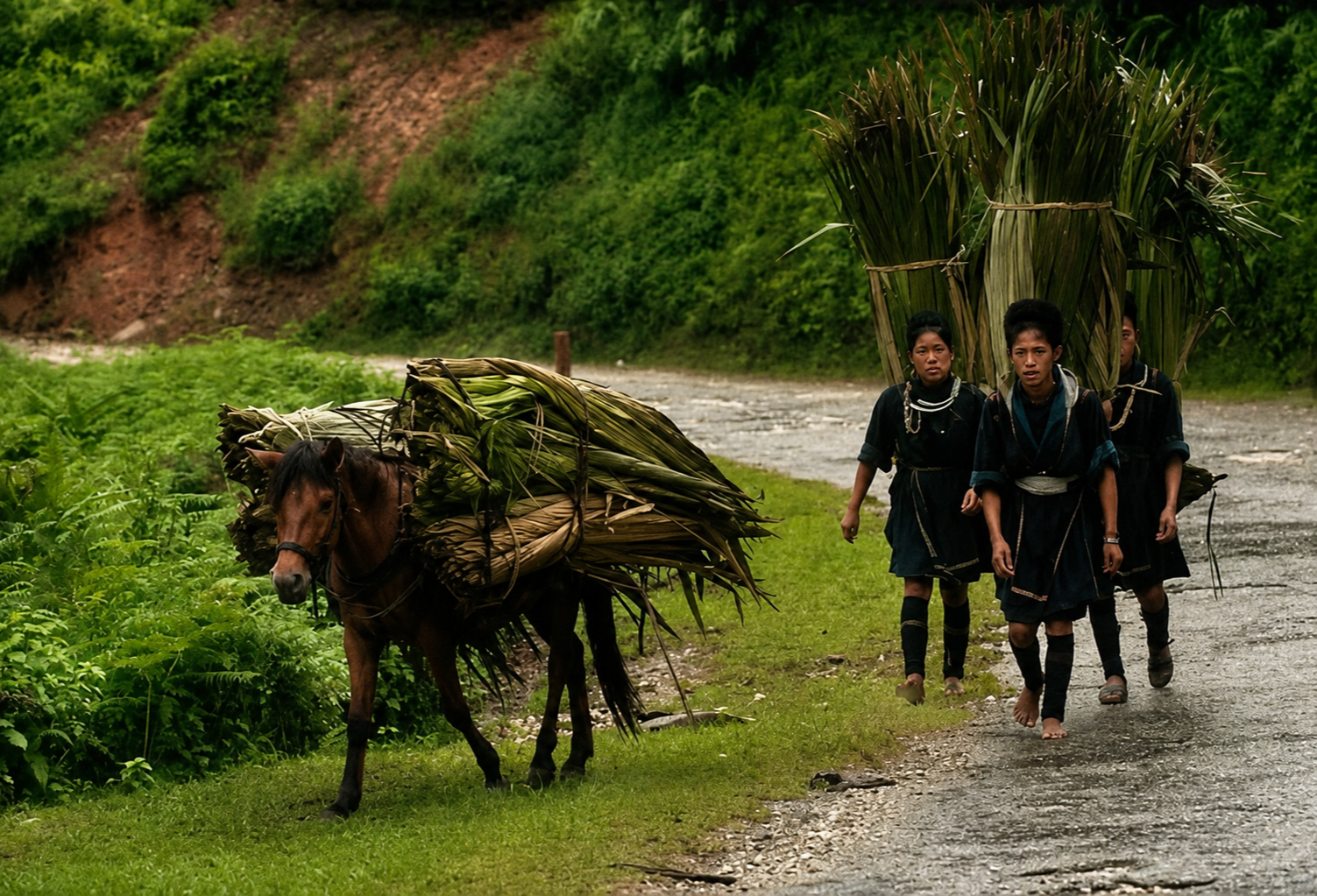
Hmong women gather foder during the post war abandoment period.
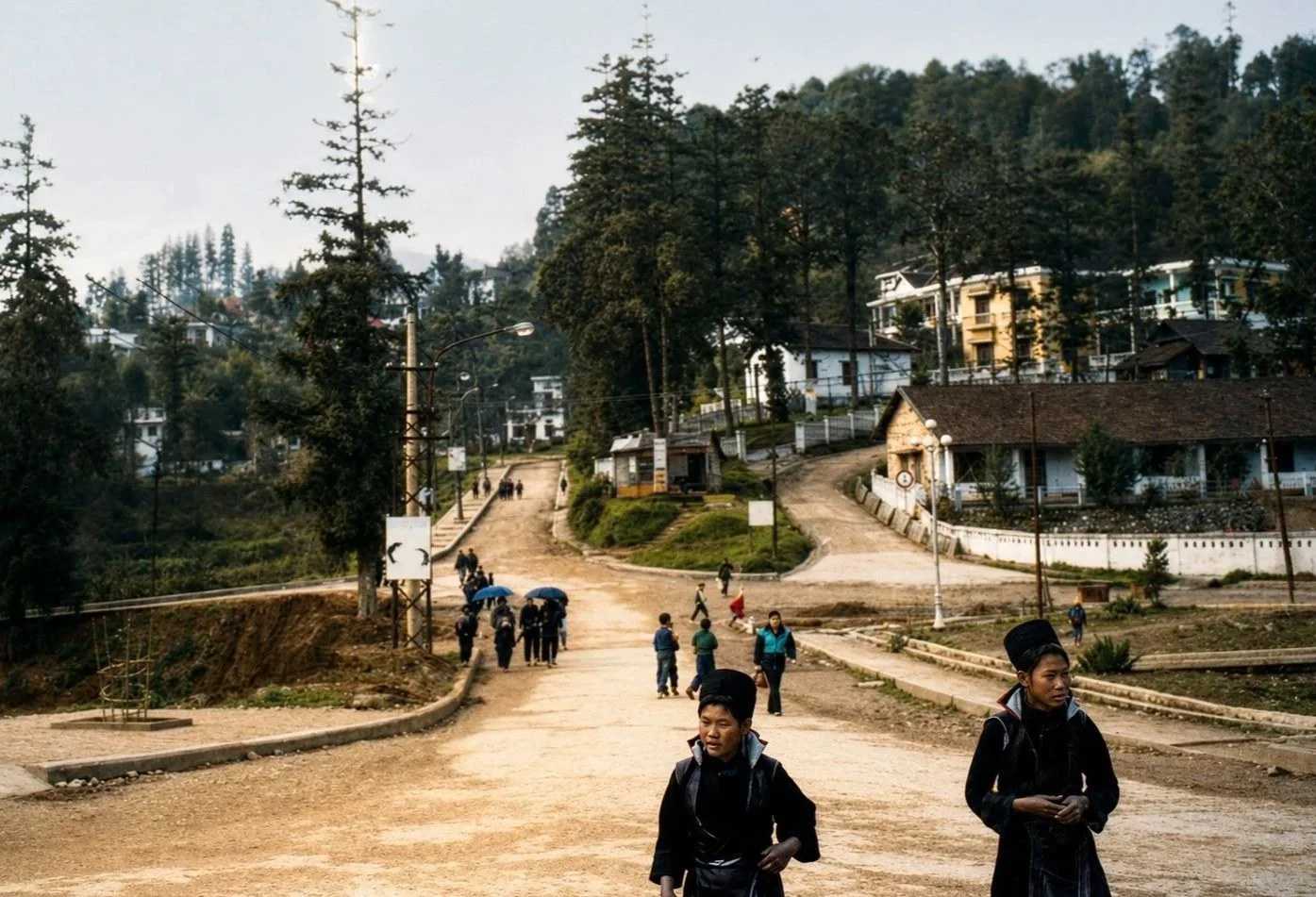
Image of Sapa town centre in the early 1990’s. Photo: Nguyen Tri Dung
Colonial Heritage and the Remains of French Sapa
The French colonial period in Sapa was tumultuous, unequal, and in many respects deeply forgettable for the communities who lived through its systems of extraction, displacement, and frontier control. Despite this difficult history, the physical remains of the colonial era still form an important part of Sapa’s architectural and historical landscape. These buildings are not simply relics of nostalgia, but material records of a period that reshaped the town and connected it to wider political and economic forces across Indochina.
Although much of colonial Sapa was destroyed during the conflicts of the mid-twentieth century, traces of the period remain scattered throughout the town and surrounding valleys. The most recognisable is the Sapa Stone Church, constructed between 1926 and 1935 at the foot of Hàm Rồng Mountain. Built in a Roman-Gothic style using locally quarried stone, the church remains one of the clearest surviving examples of French colonial architecture in the northern highlands and continues to function both as a parish church and a central landmark within the town.
Elsewhere in Sapa, fragments of the colonial hill station survive more quietly. The old meteorological station established by the French in 1915 still operates today, reflecting the colonial administration’s scientific interest in the climate and geography of the highlands. Nearby, the former district office from the colonial era now houses the Tourist Information Centre, while several surviving villas remain tucked behind the church and within the grounds of older hotel properties. Some of these villas, originally built for colonial officials and wealthy residents escaping the heat of Hanoi, still retain fireplaces, shuttered windows, verandas, and stone walls characteristic of French hill-station architecture. Others sit partially obscured beneath vegetation, their deterioration mirroring the collapse of the colonial world that created them. Around town, overgrown staircases, moss-covered walls, and isolated masonry structures occasionally emerge between newer hotels and cafés, reminders of a period that attempted to remake the mountains according to colonial ideals.
Beyond the town centre, the ruins of the Tả Phìn monastery stand as one of the most haunting remnants of this era. Constructed in 1942 for a community of Cistercian nuns, the abandoned stone structure now sits roofless and weathered among the hills, its empty arches and collapsing walls reflecting both the ambitions and fragility of colonial expansion in the highlands.
The Cát Cát Hydroelectric Plant, built in 1925 to power the colonial settlement, also survives as an important industrial relic from the French period. Originally constructed to support the growing hill station, the plant later became part of the town’s tourism landscape after ceasing operation in the 1990s.
These buildings remain historically significant not because they represent a golden age of Sapa, but because they reveal how profoundly the colonial period reshaped the town’s landscape, infrastructure, and identity. They stand alongside Hmong and Dao villages, markets, and agricultural terraces as part of the layered history of the highlands, reflecting both the endurance of local communities and the lasting imprint of colonial power on the mountains.
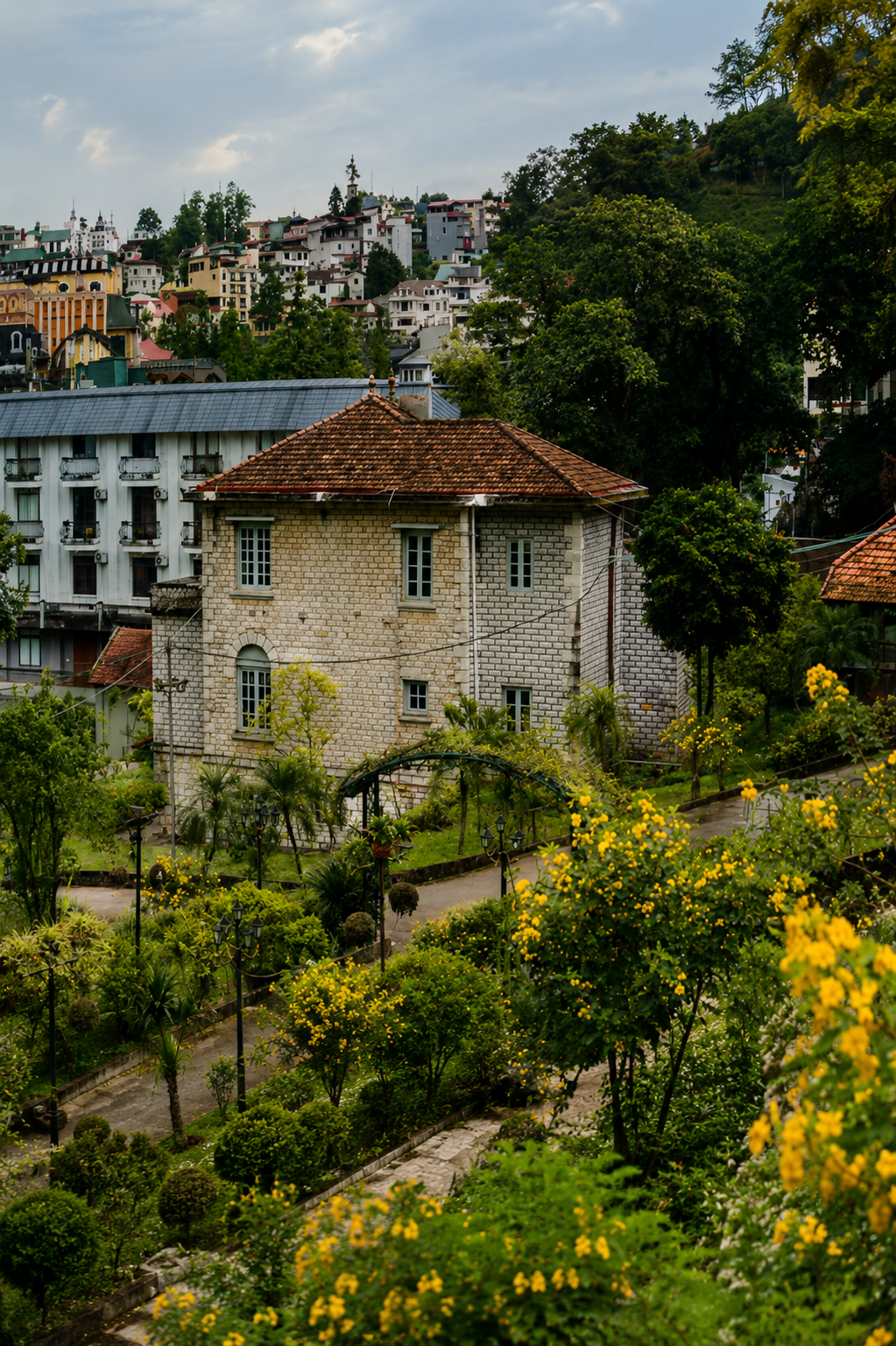
Photograph of a colonial villa in Sapa taken in 2026
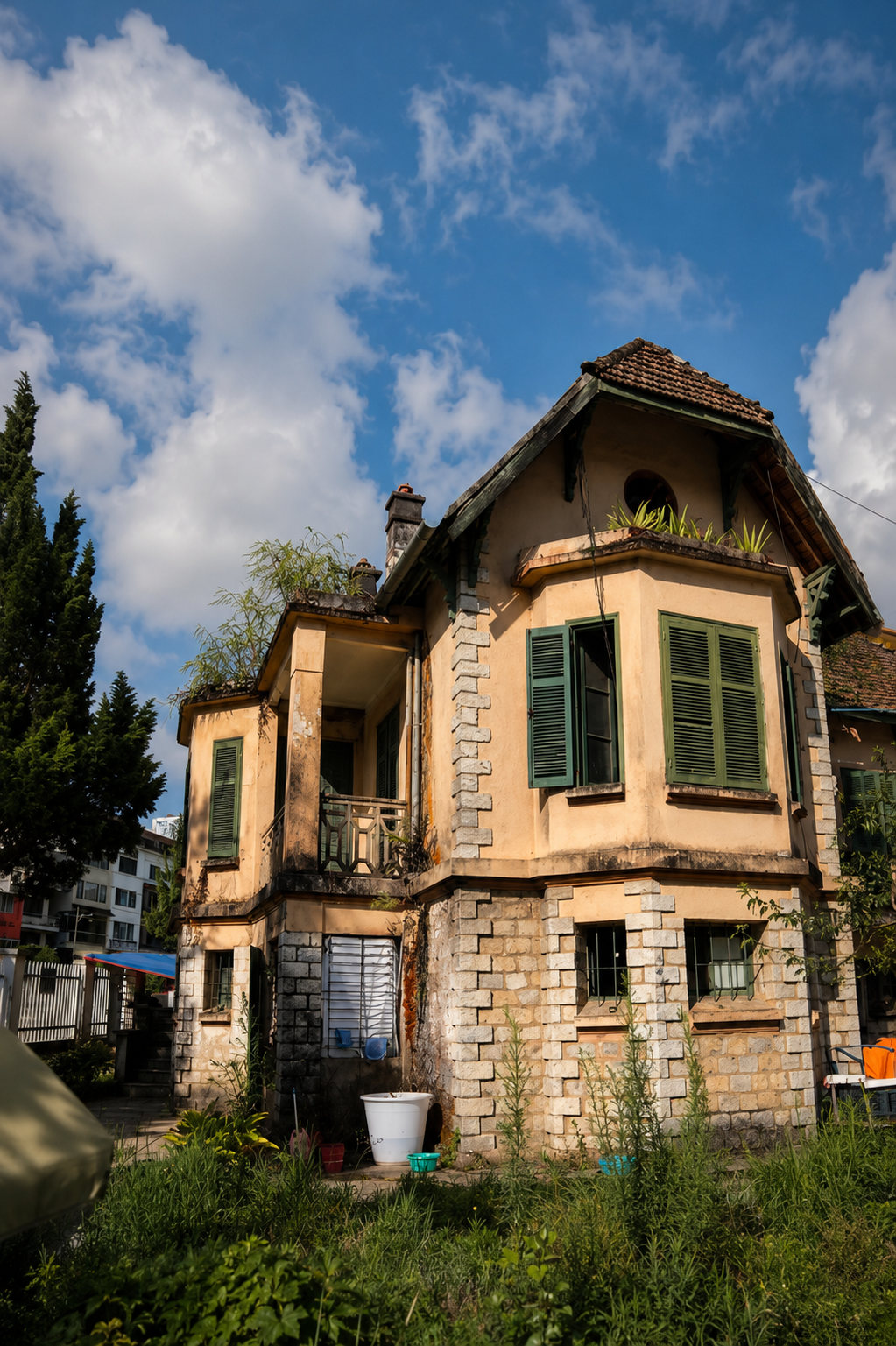
Photograph of a colonial villa in Sapa taken in 2026
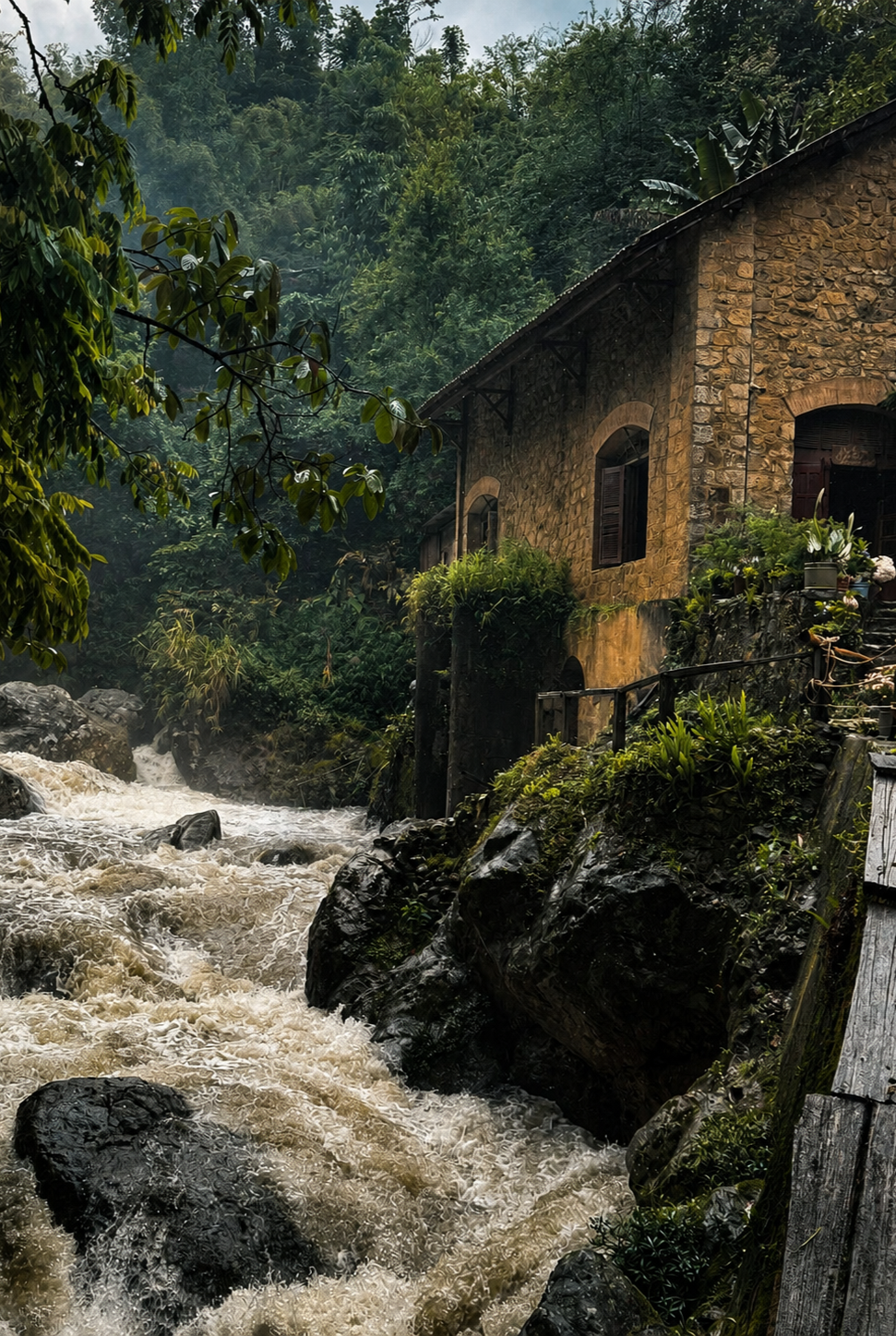
Photograph of a colonial hydroelectric station taken in Cat Cat in 2026
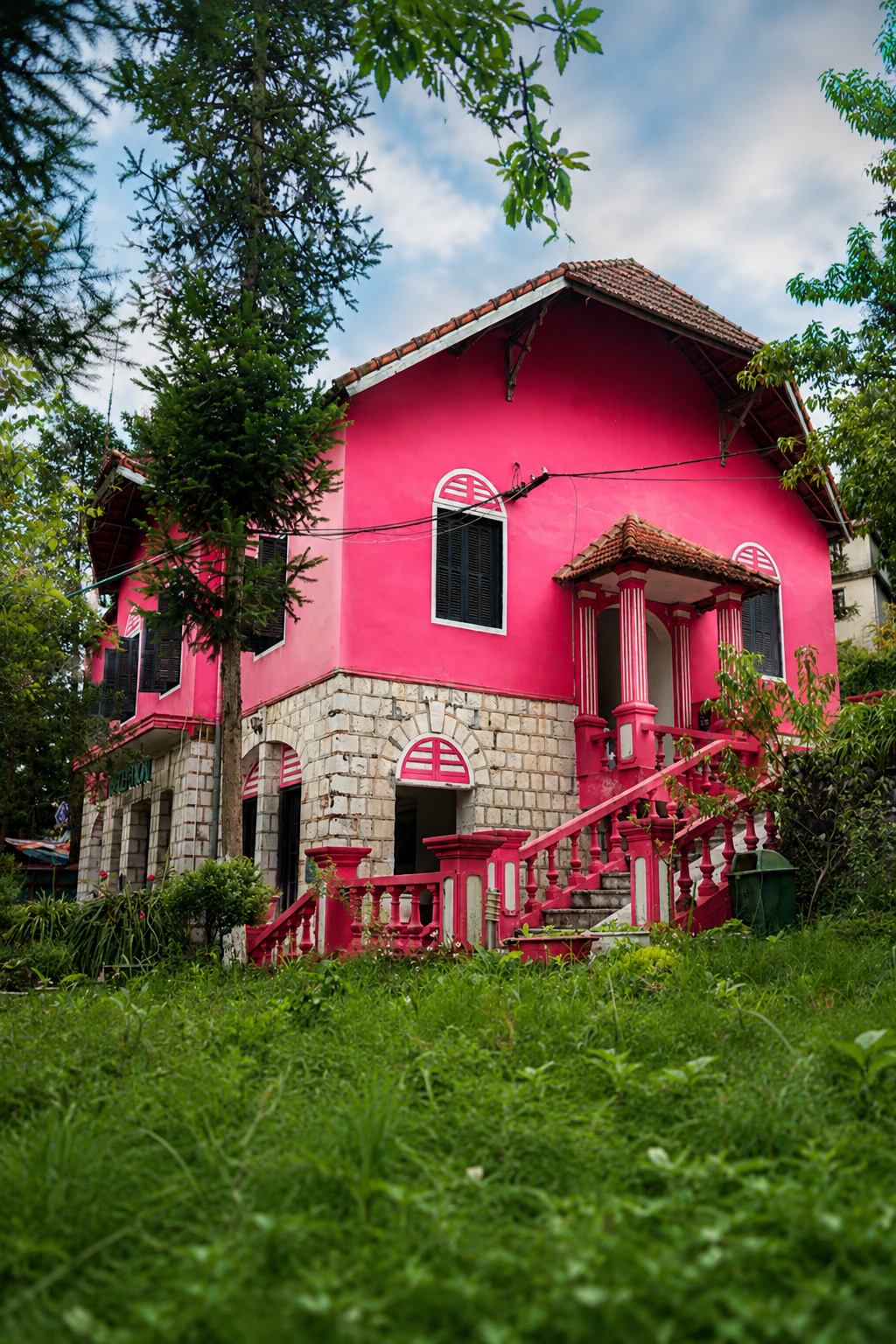
Photograph of a colonial villa in Sapa taken in 2026
Reopening and the Rise of Modern Tourism
By the time international travellers began arriving again in the 1990s, Sapa was emerging from nearly half a century of upheaval stretching across colonial conflict, the wars of Indochina, and the tensions of the northern frontier. The rapid transformation that followed makes far more sense when viewed against this recent history of isolation and hardship, because within living memory Sapa was not a tourism centre at all, but a remote mountain town shaped by survival, resilience, and recovery.
The transformation of Sapa began in the early 1990s, following Vietnam’s economic reforms and increased international engagement. By 1993, Sapa had reopened to global tourism, and visitor numbers began to rise steadily. When international visitors began returning, Sapa was no longer the exclusive hill station of colonial elites. International travellers were often drawn by many of the same elements that had once unsettled and fascinated outsiders during the colonial period. The mountains around Sapa still felt remote and unpredictable, shaped by steep valleys, dense forest, rapidly changing weather, and narrow trails that disappeared into cloud and ridgelines. Long before paved roads and large-scale tourism infrastructure, the surrounding landscape demanded patience, endurance, and local knowledge to move through safely.
Part of this atmosphere survived in the stories that continued to circulate about the colonial era itself. Local folklore and traveller accounts often referenced French officers or soldiers disappearing into the mountains while hunting, patrols failing to return, or men becoming lost during sudden storms in the highlands. While these stories were frequently retold with a supernatural edge, they were rooted in a genuine historical reality. In the early twentieth century, the terrain around Sapa was extremely difficult to navigate, weather conditions could shift within minutes, and communication across the frontier remained limited. Isolation and uncertainty were ordinary features of life in the mountains rather than romantic inventions.
For the early generation of independent travellers arriving in the 1990s, this sense of remoteness became part of Sapa’s appeal. The region was still relatively undeveloped, with few hotels, limited transport, and trekking routes that passed through forests, rice terraces, and villages largely untouched by mass tourism. Adventure travellers were drawn by the dramatic topography and by the feeling of entering a landscape that still retained a strong sense of cultural and environmental depth.
The forests of the Hoàng Liên range, the steep agricultural terraces carved into mountainsides, and the presence of Hmong and Dao communities maintaining distinct languages, clothing traditions, and farming practices gave Sapa a character that felt markedly different from Vietnam’s rapidly urbanising lowlands. Travel at the time was slower and more uncertain, often relying on local guides, overnight trains, and extended periods spent walking between villages. Encounters were shaped less by curated tourism infrastructure and more by the realities of geography, weather, and human connection.
Early foreign travellers were often independent backpackers moving through Vietnam on limited budgets, staying in small guesthouses and travelling by overnight train from Hanoi. Tourism at this stage remained relatively modest compared to the rapid commercial expansion that would follow in the decades ahead. In many ways, what first drew adventure travellers to Sapa in the 1990s was not comfort or convenience, but the feeling that the mountains still held something untamed and difficult to fully know.
Investment in infrastructure followed, including the extension of electricity, improvements to roads, and the development of water systems. These changes enabled greater accessibility while also accelerating the integration of Sapa into national and international tourism networks. Terraced rice fields, cultural diversity, and trekking opportunities became central to the town’s appeal.
For Hmong and Dao communities, tourism created new economic opportunities through guiding, homestays, handicraft production, and agricultural experiences. At the same time, it introduced new challenges related to market access, cultural representation, and the distribution of economic benefits.
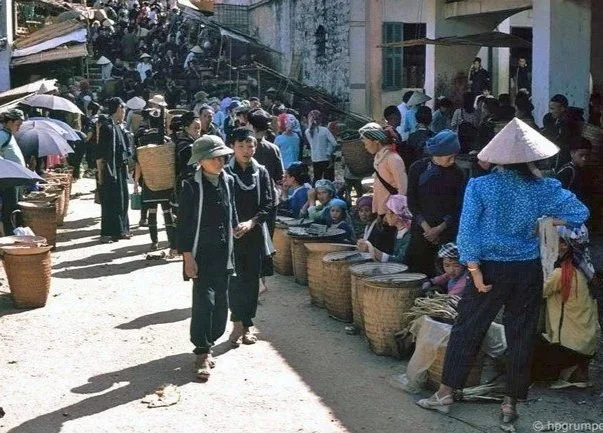
Sapa Market in 1992. Photo: Hans-Peter Grumpe
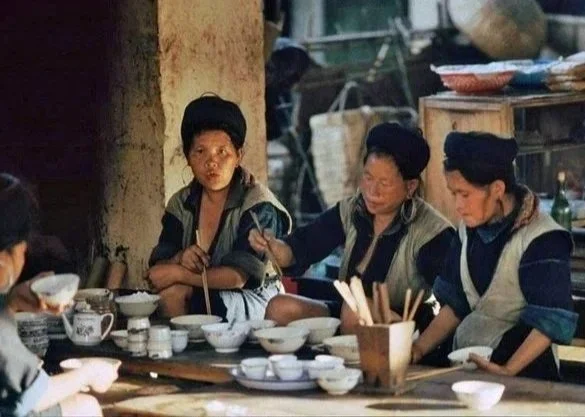
Sapa Market in 1992. Photo: Hans-Peter Grumpe
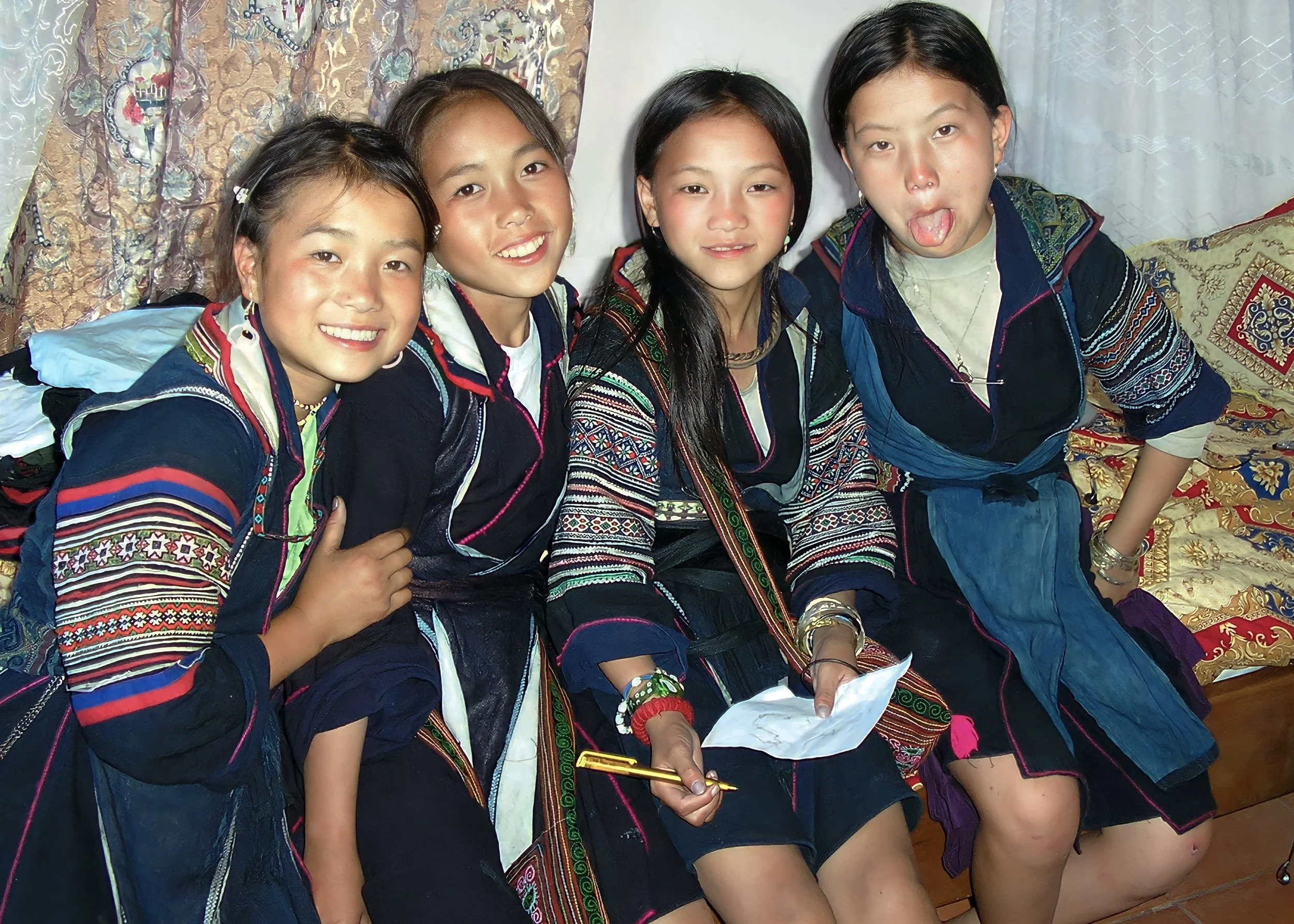
Hmong girls in Sapa in the late 1990’s
Hoàng Liên National Park, Conservation, and the Transformation of Fansipan
The mountains surrounding Hoàng Liên National Park have long shaped both the ecology and identity of Sapa. Rising along the Hoàng Liên Sơn range, these forests and ridgelines form one of the most biodiverse mountain regions in Vietnam, containing dense subtropical forest, high-altitude bamboo ecosystems, medicinal plants, and numerous rare species adapted to the harsh climatic conditions of the northern highlands. For generations, Hmong, Dao, and other upland communities lived alongside these forests, drawing from them not only food and materials, but medicinal knowledge, spiritual meaning, and seasonal rhythms that became deeply woven into everyday life.
As tourism and infrastructure expanded rapidly during the 1990s, concerns increasingly emerged around deforestation, biodiversity loss, and uncontrolled development in the Hoàng Liên Sơn range. In response, the area was first designated as the Hoàng Liên–Sa Pa Nature Reserve in 1996 before being formally established as Hoàng Liên National Park in 2002. The creation of the national park marked an important shift in how the mountains were understood by the Vietnamese state, no longer viewed only as frontier territory or agricultural land, but as a nationally significant ecological landscape requiring long-term protection.
At the centre of the range stands Fansipan, the highest mountain in Vietnam and Indochina at 3,147 metres. For decades, reaching the summit required physically demanding multi-day treks through dense forest, steep terrain, and rapidly changing weather conditions. Fansipan became especially significant within Vietnam’s emerging adventure travel culture during the 1990s and early 2000s, attracting trekkers drawn by both the physical challenge and the feeling of entering one of the country’s last truly rugged mountain environments.
This relationship between landscape, conservation, and tourism changed dramatically with the development of the Sun World Fansipan Legend cable car complex, opened in 2016 by Sun Group. The cable car system, stretching from the Mường Hoa Valley towards the summit of Fansipan, transformed access to the mountain almost overnight. What had once required days of trekking could suddenly be reached within minutes.
Supporters of the development argued that the project expanded access to the mountains for elderly visitors, domestic tourists, and those previously unable to experience the summit. The cable car also accelerated tourism growth in Sapa, contributing to rising visitor numbers and broader economic development across the region.
At the same time, the project became symbolic of the tensions increasingly shaping modern Sapa. Critics questioned the environmental impact of large-scale construction within a protected mountain ecosystem and argued that the commercialisation of Fansipan altered the character of a landscape once associated with remoteness, endurance, and ecological depth. The summit itself, now surrounded by temples, paved walkways, and tourism infrastructure, reflects a wider transformation taking place across Sapa, where accessibility and mass tourism increasingly reshape places that were once defined by difficulty, distance, and local knowledge.
The story of Hoàng Liên National Park therefore reflects a broader contradiction at the centre of modern Sapa. The mountains are simultaneously protected and commercialised, celebrated for their ecological and cultural significance while also being integrated ever more deeply into Vietnam’s tourism economy. As with so much of Sapa’s history, the question is not simply one of preservation or development, but of balance, and of whose relationship with the landscape ultimately shapes its future.
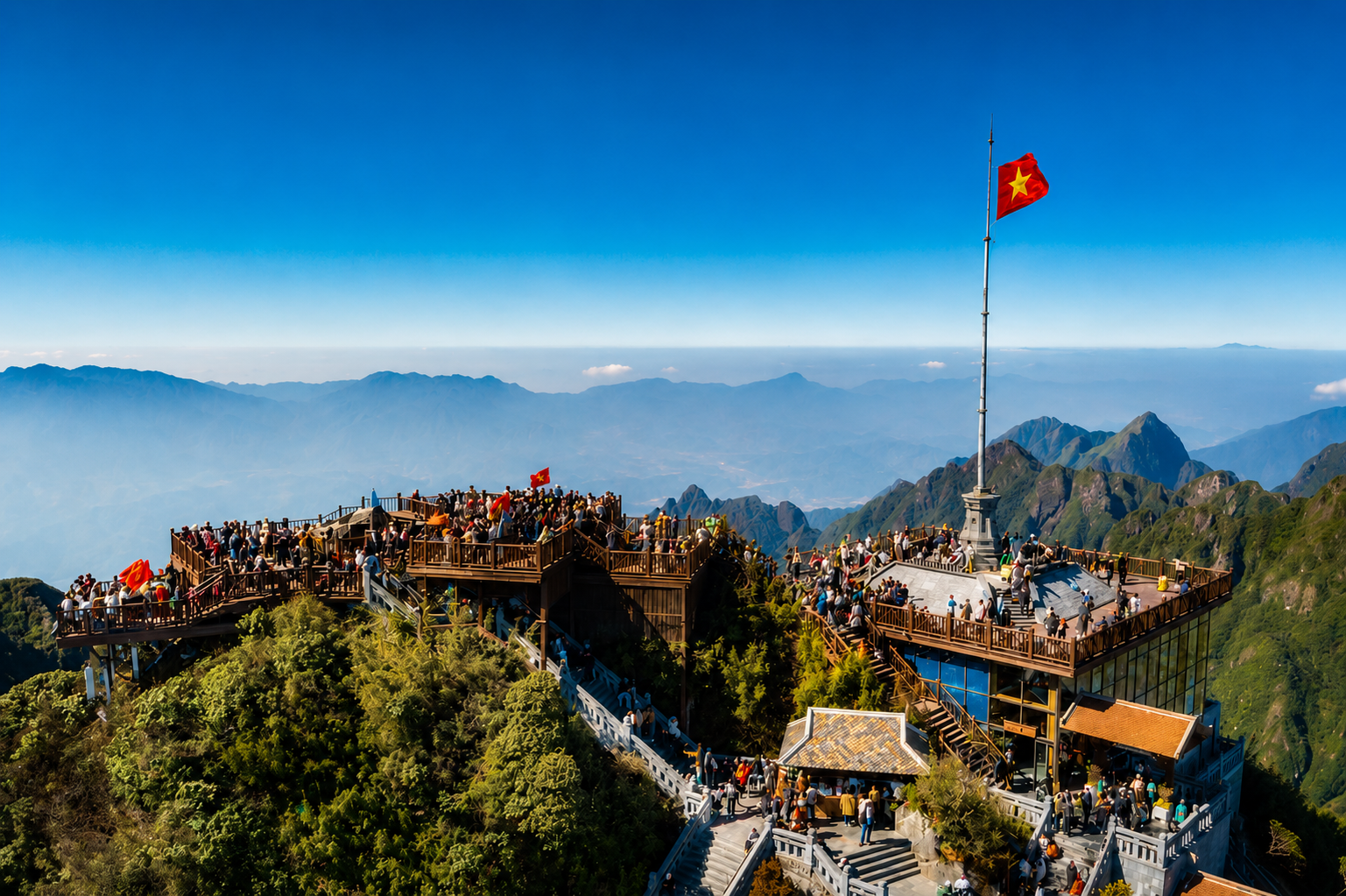
Tourists at the summit of Mount Fansipan enjoy spectacular views of the surrounding mountains.
Urban Transformation: Markets, Space, and Visibility
One of the most significant changes in Sapa’s urban landscape has been the relocation of its central market. Historically located in the town centre on Cầu Mây Street, the market served as a key site of exchange where ethnic minority women sold textiles, produce, and handmade goods directly to visitors and local residents.
Between 2010 and 2014, a new market complex was constructed at the northern gateway of the town, as part of a broader urban development strategy. The old market ceased operation in December 2014, and the new market officially opened shortly afterwards. Authorities justified the relocation in terms of urban planning, tourism development, and improvements to hygiene and infrastructure.
However, the impact on Hmong and Dao vendors has been well documented. Many were relocated to less visible areas within the new market, often on upper floors or in zones with lower foot traffic, resulting in reduced sales and increased costs. This shift altered the spatial dynamics of trade, favouring traders with greater financial resources and familiarity with formalised systems, while pushing some ethnic minority sellers back into informal street-based commerce or village-level trade.
The development of Sapa Lake reflects a similar pattern of layered urban change. It was already incorporated into planning documents by the early 2000s and has since undergone multiple phases of redevelopment. Today it functions as a central visual and recreational feature, reinforcing Sapa’s role as a tourist-oriented town.
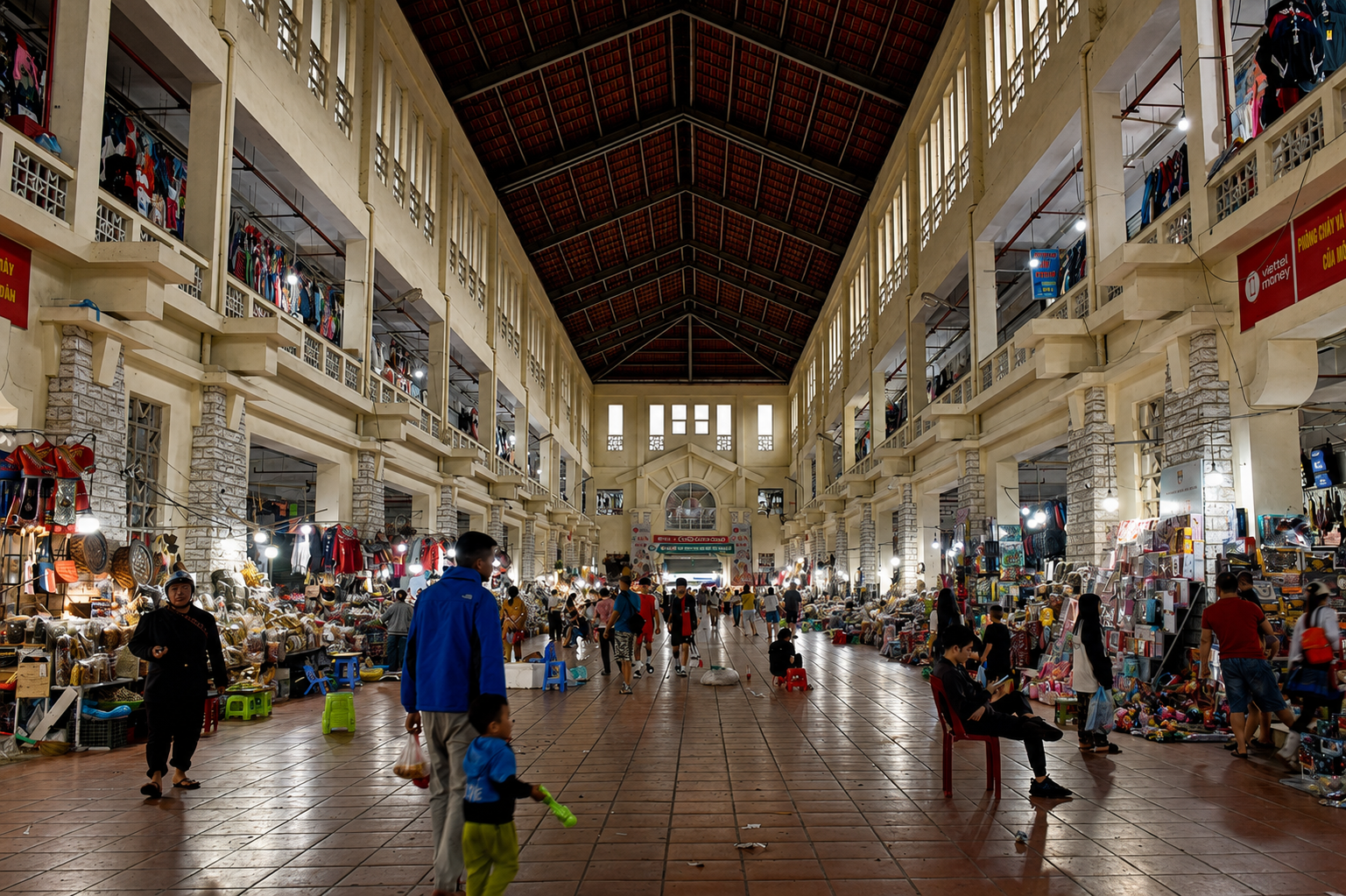
The “new” Sapa market is dominated by machine made toys, trinkets and textiles
Contemporary Sapa: Infrastructure, Acceleration, and the “Check-In” Landscape
The pace of change in Sapa has accelerated further in the twenty-first century through large-scale infrastructure and planning initiatives. The Nội Bài–Lào Cai expressway, completed in 2014, reduced travel time between Hanoi and Lào Cai from roughly nine hours to around five and a half, intensifying flows of visitors, goods, and investment into the region.
Proposals such as the planned Sapa airport, alongside national tourism-area strategies and year-round festival programming, reflect an ongoing effort to position Sapa as a major destination within both national and regional economies. These developments continue a longer historical pattern, in which successive forms of infrastructure, from railways to expressways, reduce distance and integrate the highlands more tightly into external systems.
Modern Sapa is increasingly shaped by how it is seen as much as by how it is lived. Alongside trekking and cultural travel, a more recent pattern has emerged in the form of “check-in” tourism, where certain locations are visited primarily because they are widely shared and easily recognisable. Purpose-built viewpoints, sculptural installations, and curated backdrops draw large numbers of visitors each day, not because of historical or cultural significance, but because they are recognisable. The experience becomes less about engaging with place and more about reproducing a familiar image, one that has already circulated widely across social media platforms.
This shift is not accidental. It is reinforced by what is repeatedly promoted, recommended, and shared, creating a feedback loop in which visibility defines value. Travellers are increasingly influenced by what they see others doing, to the point where visiting certain locations can feel less like a choice and more like an expectation. The result is a subtle but significant transformation in how Sapa is experienced.
The implications for cultural life are profound. When travel becomes centred on predefined viewpoints and repeatable images, the slower, less visible aspects of Sapa begin to recede. The knowledge held by Hmong and Dao communities, knowledge rooted in farming cycles, forest ecology, textile traditions, and oral histories, is not easily captured in a single photograph. It requires time, presence, and a willingness to move beyond the most accessible spaces.
In this context, culture risks being reframed as something to observe briefly rather than something to understand. Practices that were once part of daily life can become staged or simplified for quick consumption, while deeper forms of knowledge remain unheard. We wrote prviously about a “quieting” of local voices, not through deliberate exclusion, but through the overwhelming dominance of externally shaped narratives about what Sapa is and what it should look like.
The contrast between living culture and curated experience becomes increasingly clear. A weaving practice, for example, is not a performance designed for visitors, but part of an ongoing system of knowledge and livelihood. Farming terraces are not simply scenic viewpoints, but the result of generations of adaptation to land and water. When these elements are approached only as visual attractions, their deeper meaning becomes obscured.
At the same time, this shift reflects broader patterns within tourism development. As visitor numbers increase and competition intensifies, destinations often prioritise what is easily marketable and immediately engaging. In Sapa, this has contributed to the growth of attractions designed for rapid consumption, reinforcing a model of tourism centred on speed, visibility, and volume rather than connection and understanding. Yet beneath this layer, the core of Sapa remains unchanged. The Hmong and Dao communities continue to live, work, and create within these mountains, maintaining knowledge systems that cannot be reduced to a single image or moment. Their role in shaping Sapa has not diminished, even if it is less visible within dominant tourism narratives.
The challenge now lies in how Sapa is experienced and understood moving forward. Whether culture remains central or becomes peripheral depends not only on policy or development, but also on the choices made by travellers themselves. Meaningful engagement requires stepping away from what is most visible and allowing space for what is less immediately apparent, choosing to listen rather than simply to look.
In this way, the modern phenomenon of “check-in” tourism does not replace Sapa’s cultural foundation, but it does risk obscuring it. The mountains remain the same, and so do the communities who have long shaped them. What is changing is the lens through which they are seen.
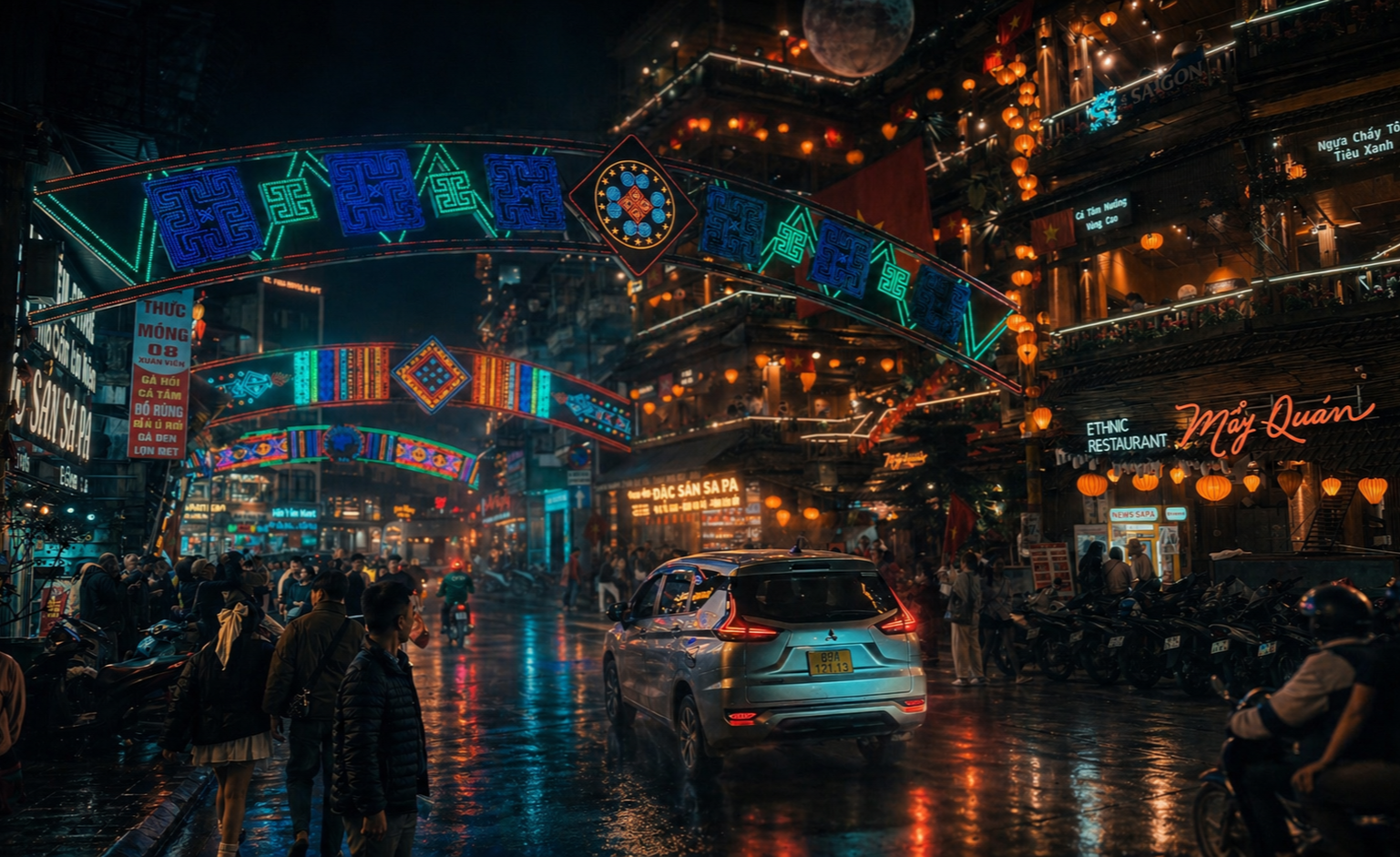
The heart of Sapa town on a busy weekend in 2026
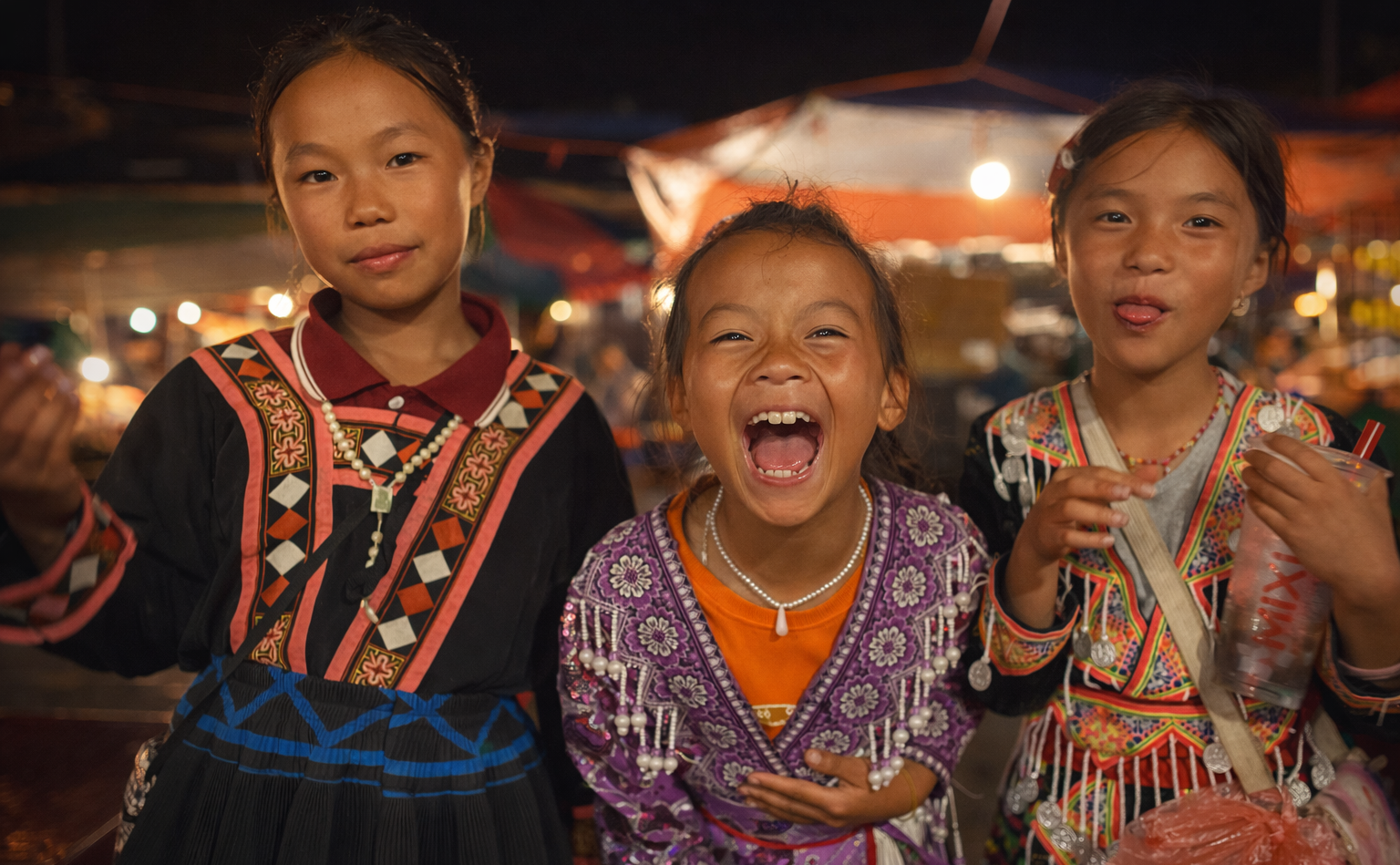
Street sellers enjoy a moment with passing tourists in 2025

Sapa lake in 2026
The Hijacking of Colonial Prestige
One of the clearest examples of this tension can be seen in the way parts of Sapa’s colonial history are now repackaged through luxury tourism branding. The Hotel de la Coupole Sapa – MGallery, for example, describes itself as a place where “Haute Couture Meets Hill Tribe Artistry”, combining imagery of French Indochina with stylised references to ethnic minority culture. Although visually striking, this version of history risks presenting colonialism as elegant, romantic, and culturally harmonious, while largely overlooking the realities that underpinned the colonial project itself.
Importantly, the hotel itself is not a preserved piece of colonial heritage, but a contemporary luxury development designed around an imagined aesthetic of “French Indochine”. Unlike surviving colonial villas, churches, or administrative buildings that physically connect to the historical landscape of Sapa, the property represents a newly constructed interpretation of colonial nostalgia rather than an authentic historical site. Its atmosphere is therefore less a continuation of lived history than a carefully curated commercial vision of what colonial Indochina is imagined to have looked and felt like.
French rule in the northern highlands was not simply an era of architecture, mountain retreats, and refined tourism. It was also a system built upon military expansion, frontier control, labour extraction, unequal land relations, taxation, and the opium monopoly that financed much of colonial Indochina. Highland communities were surveyed, classified, taxed, displaced, and incorporated into systems of governance designed primarily around colonial economic and strategic interests.
The romantic imagery now used in some tourism marketing often reflects less the historical reality of colonial Sapa than a contemporary fantasy of Indochine created for commercial appeal. In this version of the past, colonialism becomes aesthetic rather than political, reduced to curated interiors, couture references, and nostalgic atmosphere, while the violence, inequality, and disruption experienced by local communities fade into the background. What is presented as heritage can therefore risk becoming a form of selective memory, one that celebrates the appearance of colonialism while overlooking the structures of power that shaped life in the highlands for decades.
Continuity and Change in the Highlands
Across more than a century of transformation, from colonial expansion and war to mass tourism and rapid infrastructure development, the most constant element in Sapa’s history has been the presence and contribution of its ethnic communities. Political systems have changed, borders have hardened, railways and expressways have arrived, and tourism economies have repeatedly reshaped the mountains, yet Hmong and Dao communities have continued to adapt while maintaining strong connections to land, language, family, and tradition.
This continuity is visible throughout the highlands. Terraced rice fields still follow the contours of the mountains in patterns shaped by generations of agricultural knowledge. Indigo-dyed textiles, embroidery, silverwork, herbal medicine, and ritual traditions continue to be practised, not as static cultural displays, but as living parts of everyday life that evolve alongside changing economic realities. Markets may shift location, tourism may alter village economies, and younger generations may move fluidly between mountain communities and urban centres, yet cultural identity remains deeply rooted within the rhythms of the highlands themselves.
The history of Sapa is often told through the lens of outsiders, colonial administrators, travellers, investors, or tourism campaigns, but the deeper story is one of endurance and adaptation within local communities. Hmong and Dao families have lived through periods of colonial control, war, economic isolation, state restructuring, and rapid commercialisation, while continuing to reshape their own futures within changing conditions. Their role has never been passive. Communities have continually negotiated with outside forces, finding ways to preserve knowledge and identity while also engaging pragmatically with tourism, trade, education, and modern economic life.
Today, this resilience can be seen in the growing number of community-led tourism initiatives, local guides reclaiming cultural narratives, younger generations documenting oral histories and traditional crafts online, and families balancing ancestral knowledge with new opportunities. The future of Sapa will inevitably continue to change, as it always has, but there is also increasing recognition that the long-term strength of the region lies not only in its landscapes, but in the people who have sustained those landscapes for generations.
The pressures facing the highlands are real. Rapid tourism growth, environmental strain, changing land use, and the commercialisation of culture continue to reshape everyday life across the region. Yet the story of Sapa is not simply one of loss. It is also a story of survival, creativity, and continuity in the face of constant transformation.
Understanding Sapa therefore requires looking beyond the surface of tourism and recognising the depth of lived experience that continues to shape the mountains today. The forests, terraces, markets, and villages are not remnants of the past frozen in time, but part of an ongoing cultural landscape still being actively lived, negotiated, and reimagined by the communities who call these mountains home.
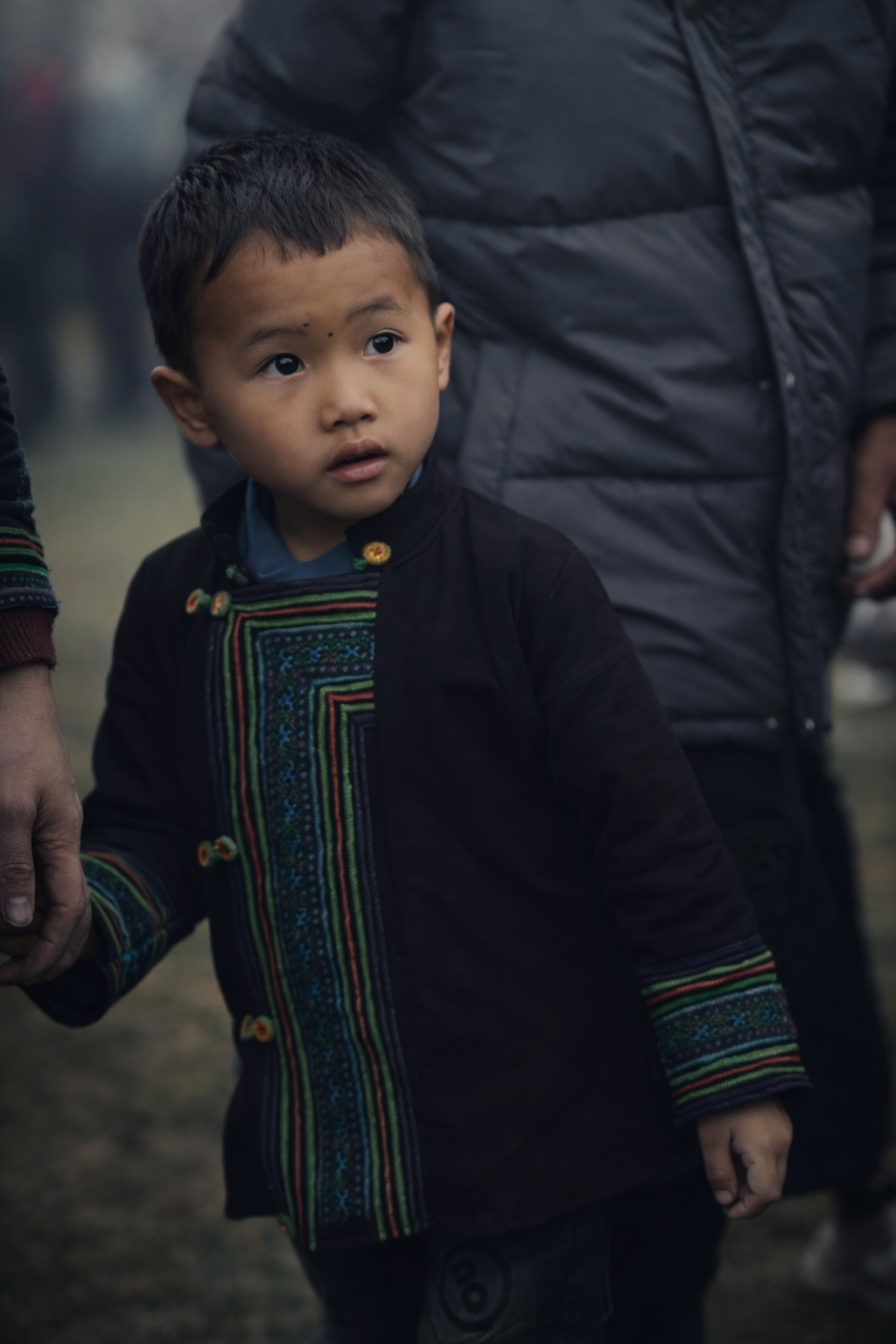
Young Hmong boy in Sapa in 2026
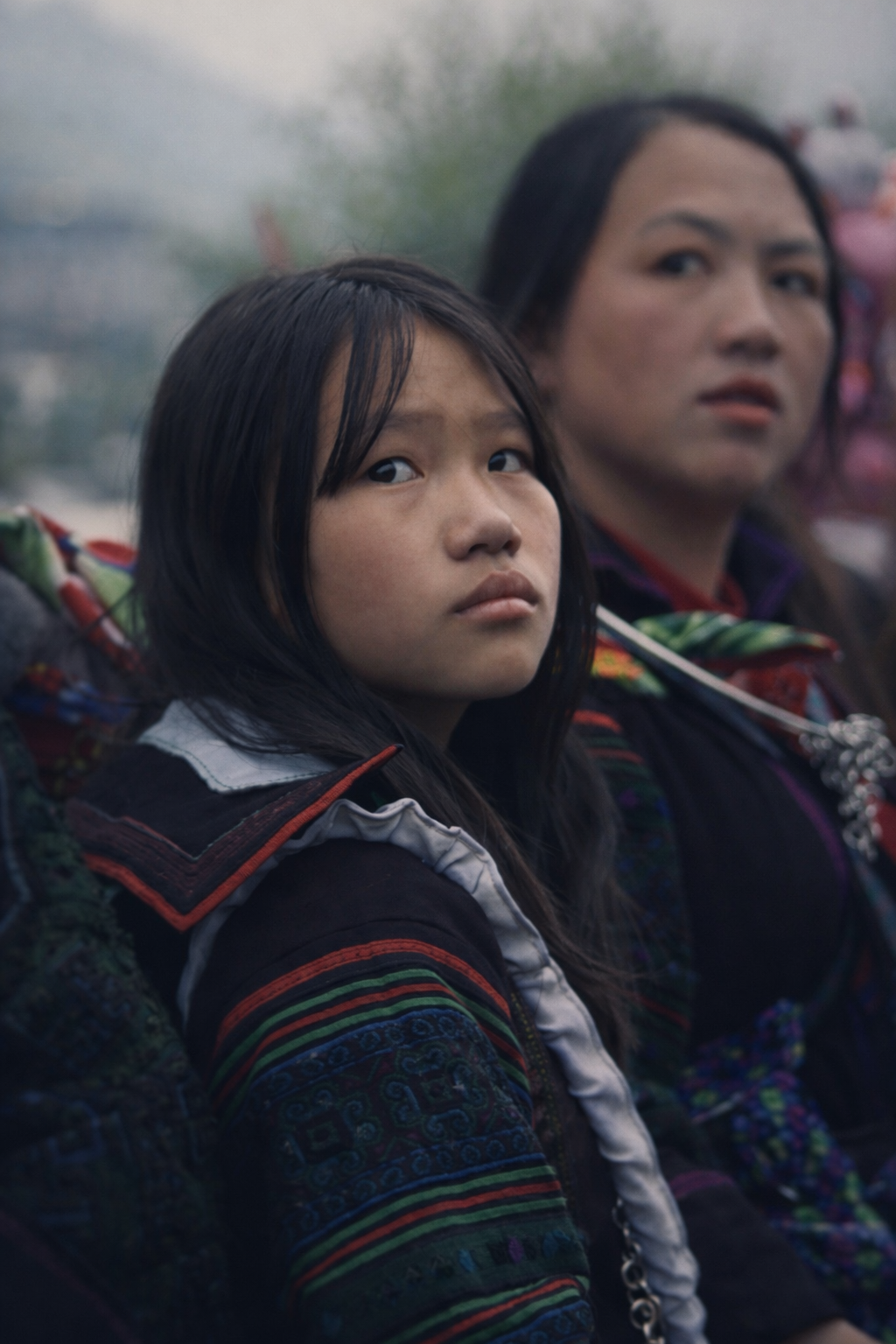
Hmong girls in Sapa in 2026
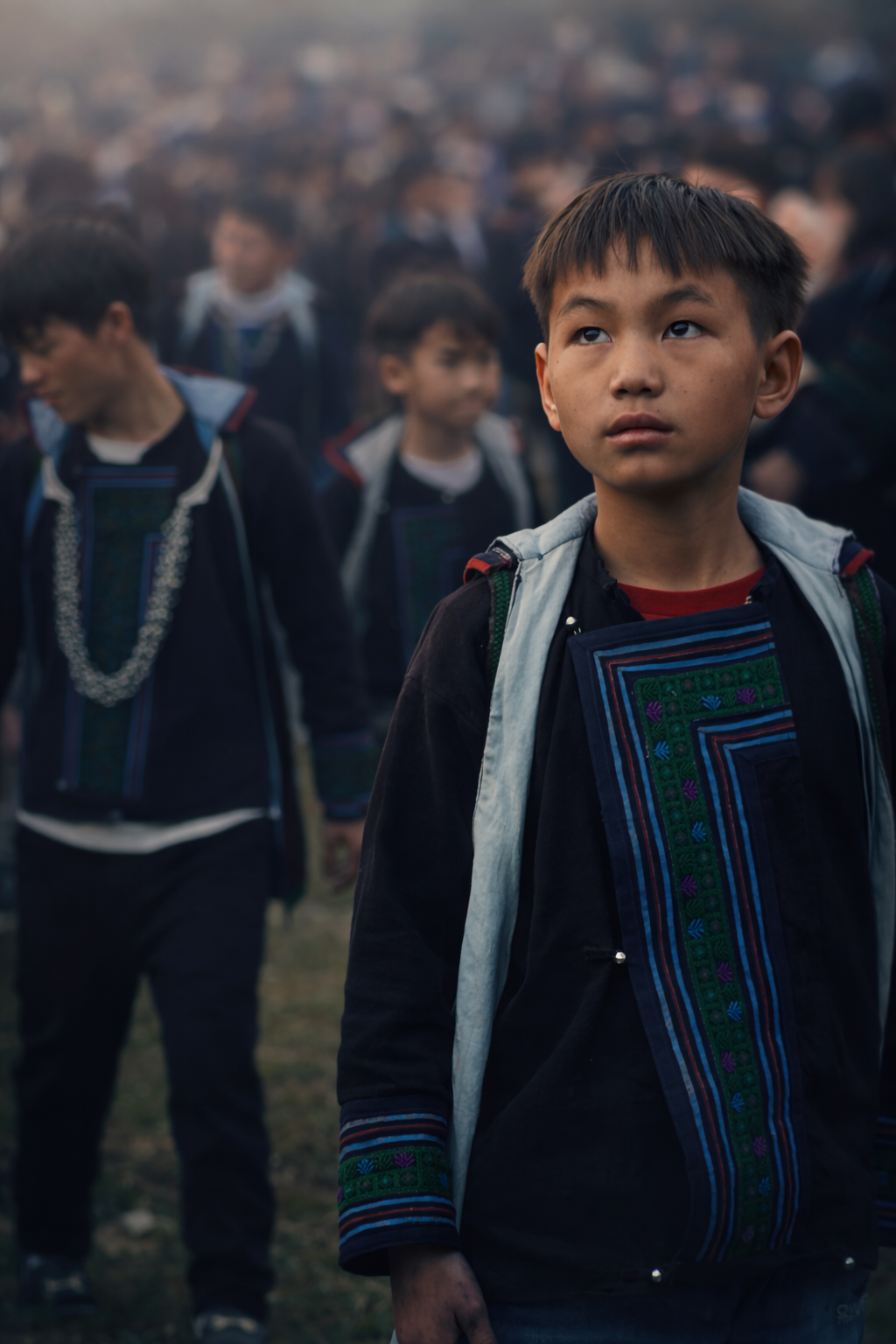
Hmong boys in Sapa in 2026
Walking Towards the Future
Sapa’s history is still being lived. Beyond the changing skylines, tourism projects, and shifting economies, the mountains remain shaped by the knowledge, labour, and resilience of the communities who have called them home for generations.
Understanding this region more deeply often begins with simply slowing down, walking further, and listening more carefully. At ETHOS, our experiences are created alongside Hmong and Dao communities who continue to shape everyday life across the highlands, offering a more grounded way to experience the landscapes and cultures of northern Vietnam.
The future of Sapa will almost certainly continue to be shaped by tourism, infrastructure, and outside investment, yet the long-term identity of the highlands will depend on whether development can remain connected to the communities, landscapes, and knowledge systems that have sustained this region for generations.
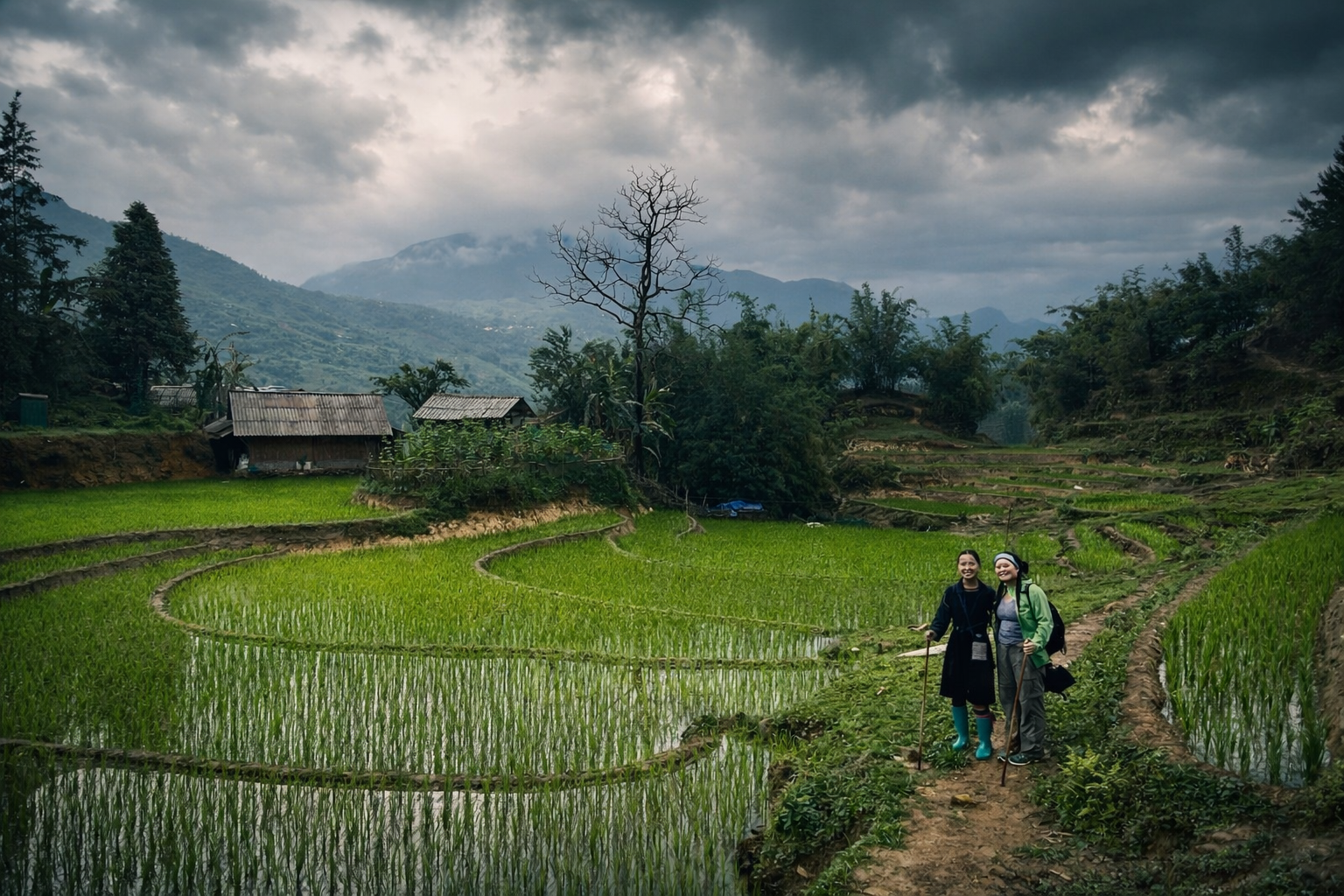
Trekkers experience the Sapa landscape while on an ETHOS experience. Photo: Scott Harbin
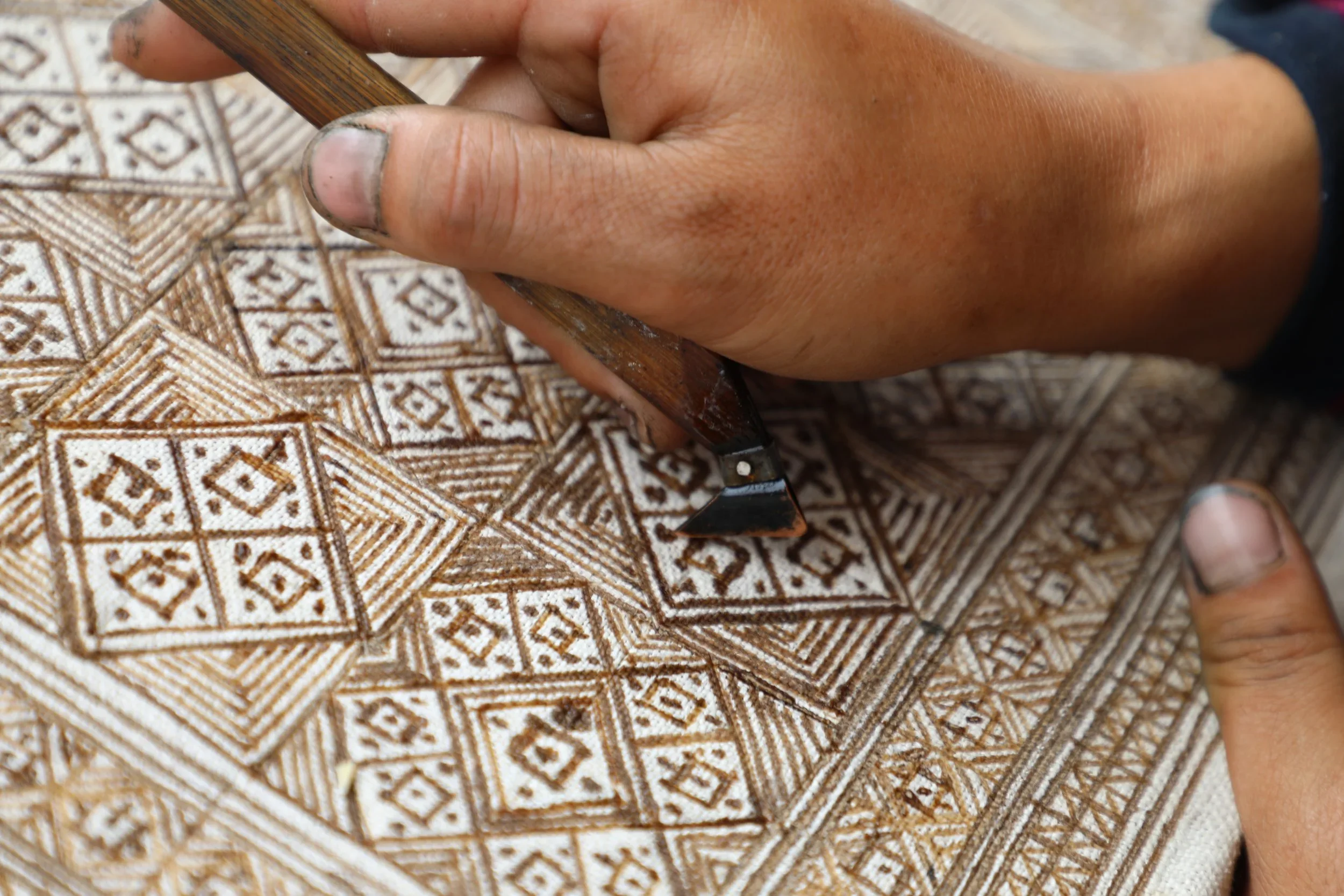
Batik in Sapa: Wax, Indigo, and What Is Being Lost
Batik in Sapa is far more than a craft. It is a slow, deeply rooted tradition practised by Hmong women, beginning with hemp grown in mountain soil and ending in intricate indigo-dyed textiles rich with meaning. This guide explores the full process, the symbolism behind the patterns, and the growing rise of short, commercial workshops that risk undermining authentic practice. Discover how to choose a meaningful, ethical batik experience that honours culture, craft, and community.
A living tradition, and a fragile one
High in the terraced valleys and mist-softened ridgelines of Sapa, batik is not considered a craft. Instead, it is considered to be a living “language” held by Hmong women. This is a language shaped by generations who have translated landscape, ancestry, and spirit into cloth. Every line drawn in wax, every immersion into indigo, carries intention. Every piece is part of a continuum that connects the living with those who came before.
This tradition is deeply rooted in land and time, so nothing is rushed and no stroke is incidental. Alongside this depth, something else has been growing in parallel. A simplified, commercialised version of batik has begun to take hold, quietly reshaping how travellers encounter and understand this craft.
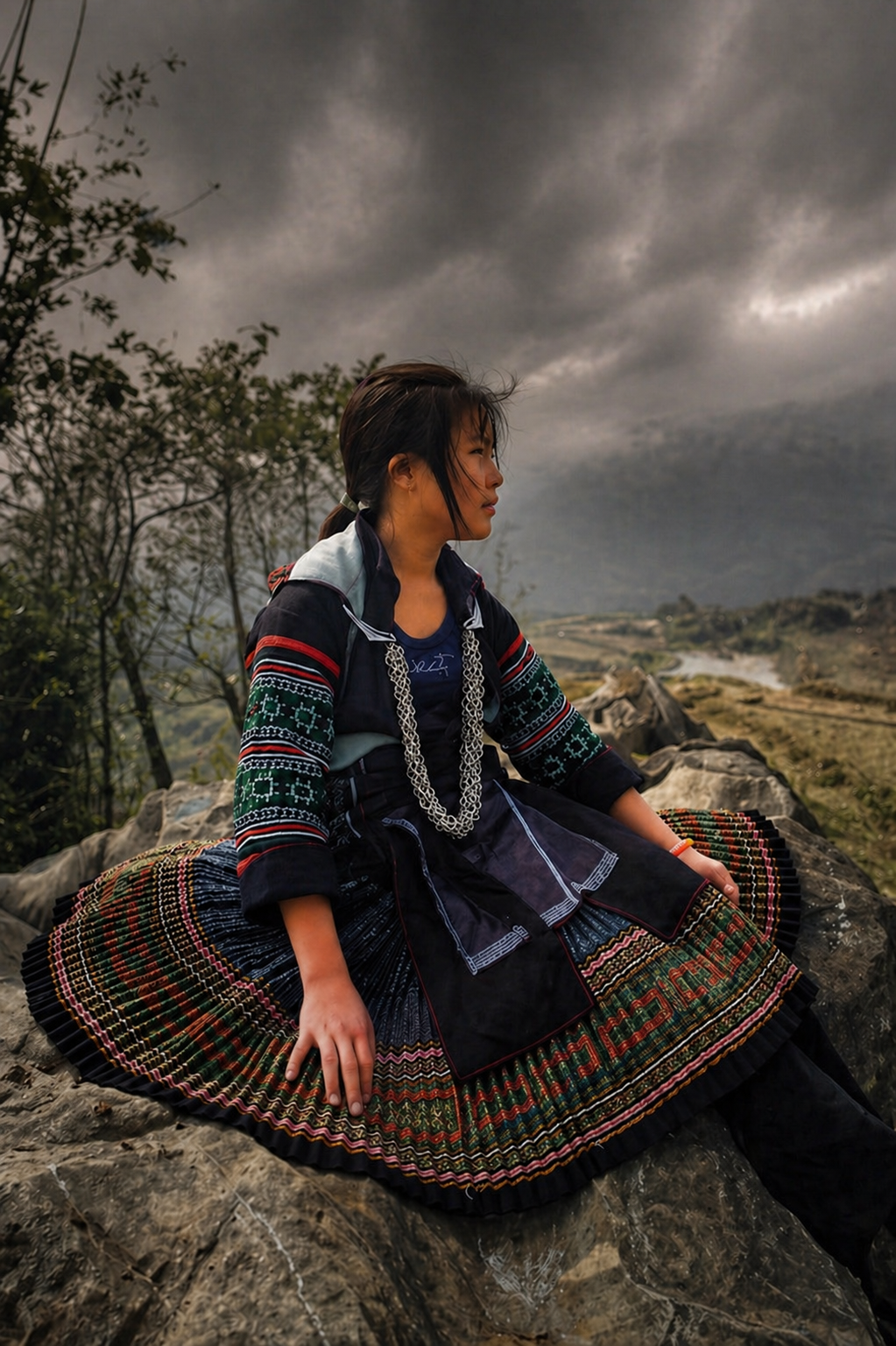
A hmong girl in Sapa wearing a “Spirit Skirt”, carefully crafted from indigo dyed, Hmong batik and silk embroidery.
Hemp: from mountain soil to cloth
True batik does not begin with wax or dye. It begins in the soil. In the cool, damp breath of early spring, hemp seed is pressed gently into mountain earth around Sapa. The land is still waking, though the hands that sow move with quiet certainty. This is the beginning of a cycle that is as much about patience as it is about skill.
As the season deepens, slender green stems rise quickly, drawing strength from sun, mist, and mountain air. The plants are tended alongside daily life, growing in rhythm with rice fields, livestock, and the turning of the seasons.
By early summer, the stems are cut and carried home. They are dried, stripped, soaked, beaten, and combed. Fibres are teased apart slowly, softened and refined through repeated effort. Thread is then spun by hand, rolled along the thigh in a steady, practiced motion. It is work done over hours, days, often in shared spaces filled with conversation and quiet.
Weaving follows. The loom stands ready within the home, threads stretched carefully, aligned with precision. Cloth emerges gradually, growing day by day without urgency. This is slow fashion in its truest sense. It is not a trend. It is a way of life rooted in quality, durability, and deep connection to the land. When the cloth is ready, it enters the indigo vats. Leaves, once gathered and fermented, have become rich pools of living dye. The fabric is dipped, lifted, and dipped again. With each immersion, colour deepens. Green turns to blue as it meets the air, layer by layer, moment by moment.
Finally, the cloth is beaten against stone in a process known as calendaring. The steady rhythm echoes through the yard as fibres compress and the surface begins to shine. A deep, almost metallic indigo emerges, not through machinery, though through repetition, patience, and care. Only once this entire process is complete does batik begin. Wax is applied carefully onto this hand-crafted hemp cloth, preserving patterns that will emerge through repeated indigo dyeing. The finished textile carries not just design, though months of labour, land, and lived experience.

Organic hemp growing in the Sapa mountains
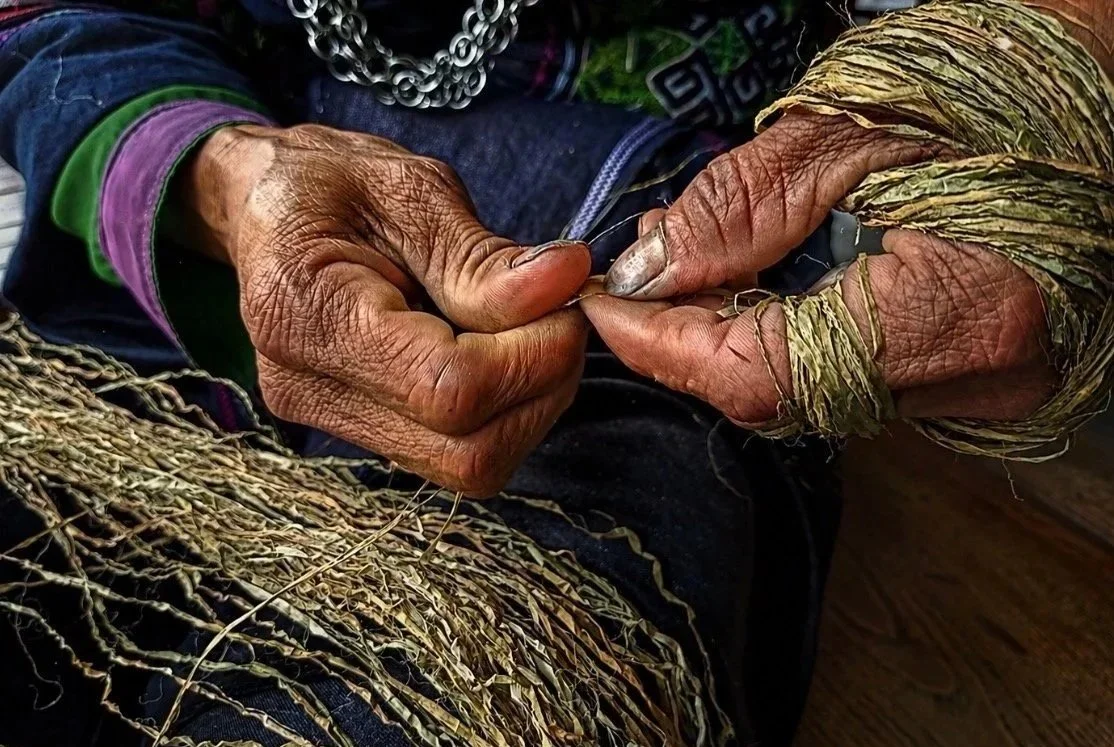
Hemp threads being twisted and joined.
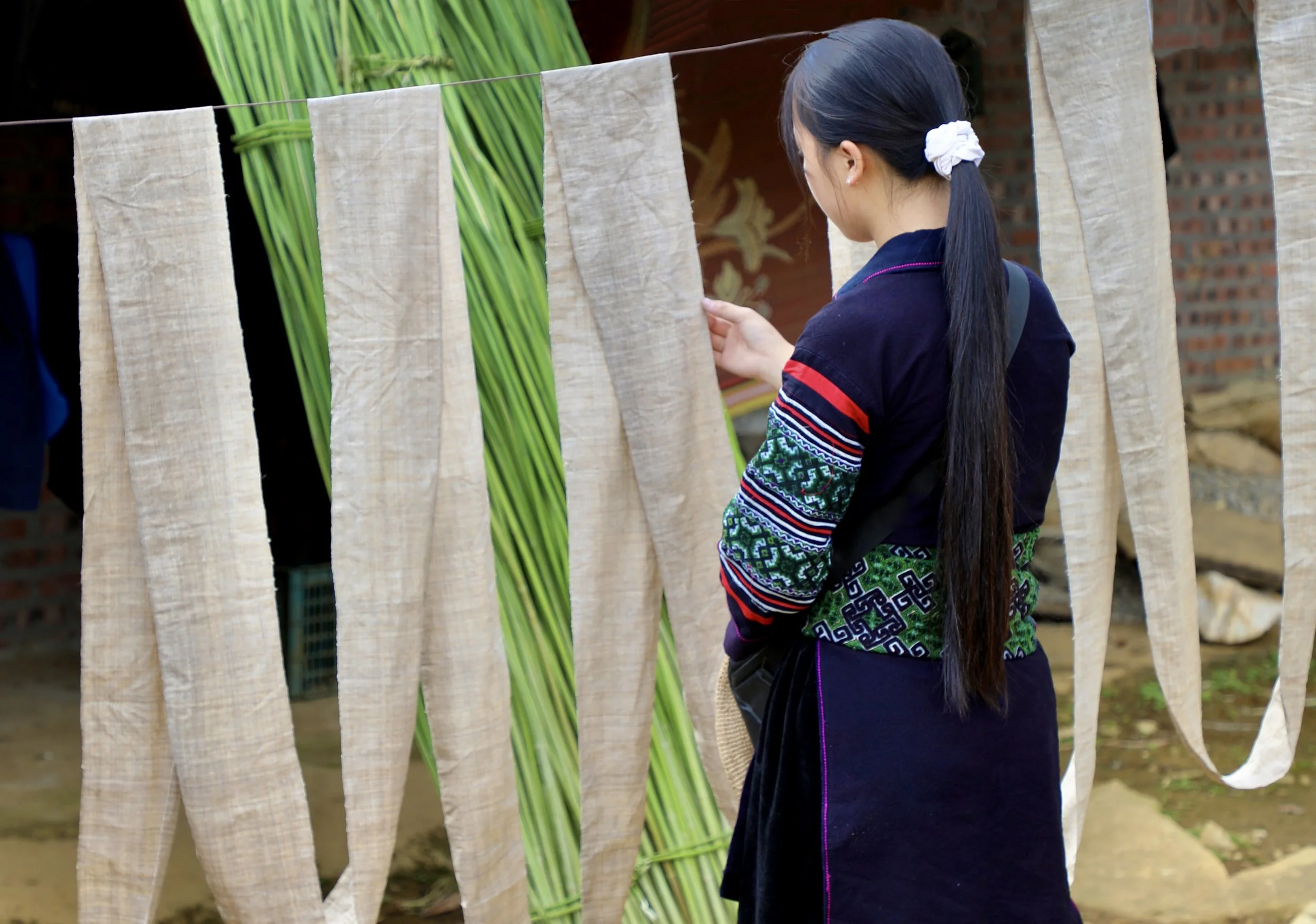
Woven hemp fabric being prepared for indigo dying.
The rise of batik as a time filler
Many trekking itineraries in Sapa now follow well-worn paths, guiding travellers through Lao Chai and onwards to Ta Van for overnight stays. The scenery remains pretty, though the structure of these tightly organised journeys can still sometime leave unexpected gaps.
Groups move at different speeds. Some arrive at their homestays far earlier than intended, with long afternoons stretching ahead before dinner. Rather than deepening the journey or extending time on the trail, these hours are increasingly filled with short, bolt-on activities. Batik workshops have become one of the most common additions. These sessions are typically brief, lasting one or two hours, and are presented as an introduction to traditional craft. In reality, they are often designed to occupy time rather than to foster understanding.
When tradition is reduced to imitation
In these shortened classes, the materials themselves tell the story. Instead of hemp, grown and prepared over months, participants are given pre-bought cotton, often bleached white and chosen for cost and convenience. The wax used is most typically melted candle wax, heated quickly over a gas flame. The tools are handled briefly, rarely with proper instruction. Patterns are copied without context, stripped of meaning.
The process, which should unfold slowly, is compressed into minutes. The discipline, the patience, the connection to land and material is lost. Dyeing is reduced to a single dip in chemical dye. There is no indigo vat, no layering, no waiting. The transformation that should take time becomes instant. This is not batik as it is known within Hmong communities. It is a simplified imitation, created for speed and convenience.
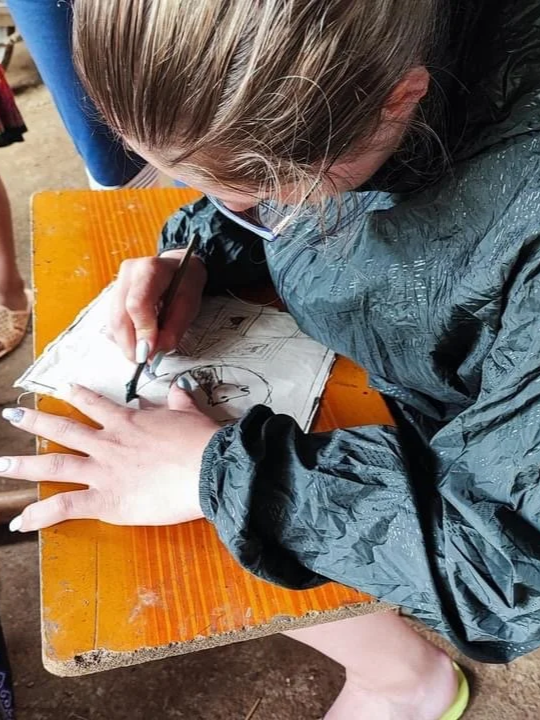
Tourist trying batik on bought cotton.
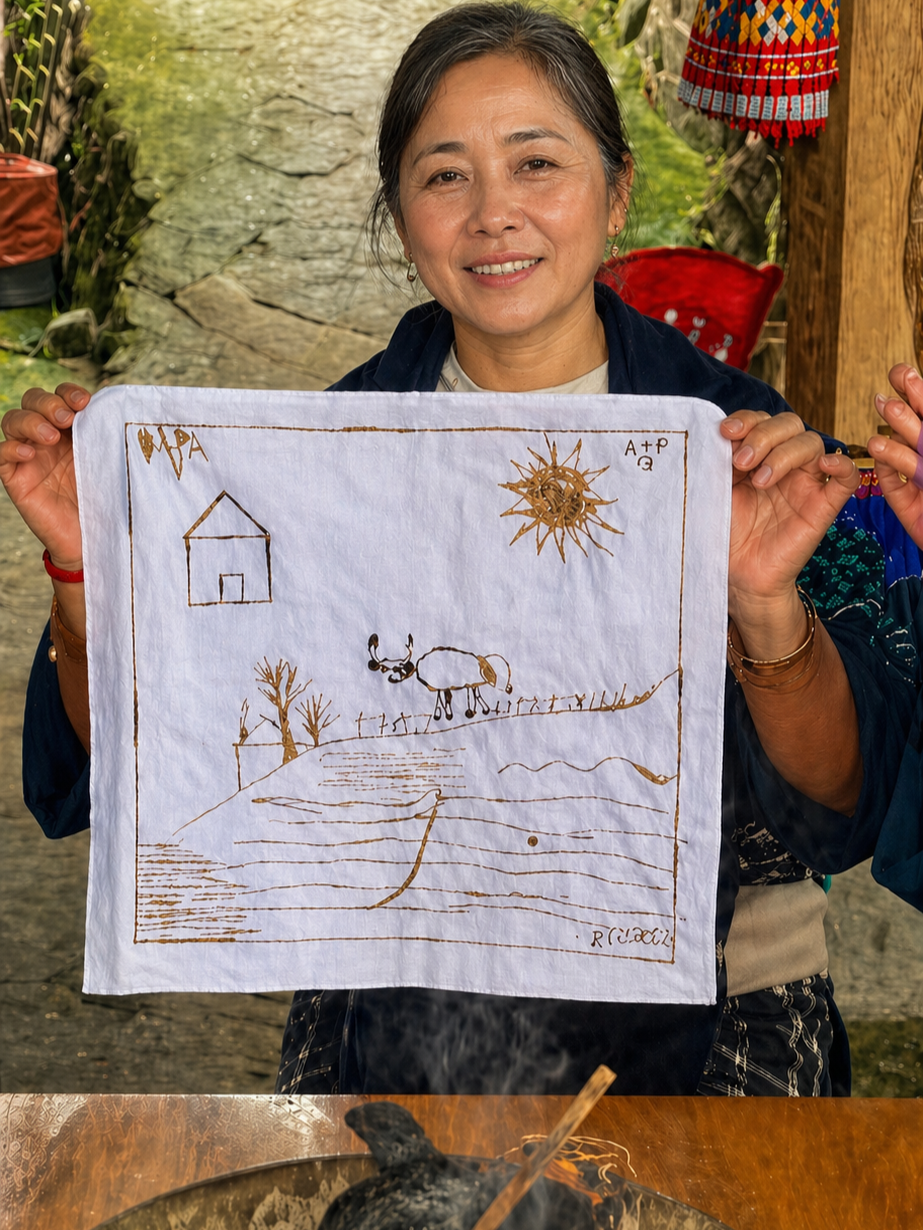
Batik teacher holding up the work of her students
Travellers draw contemporary batik designs.
Environmental and cultural consequences
The impact of these practices extends beyond the workshop. Chemical dyes are often released into streams, harming invertebrates that form the foundation of aquatic ecosystems. As these disappear, fish populations decline, and the balance of the environment begins to shift.
Traditional indigo, by contrast, is entirely natural. Vats are maintained over months or years and can return safely to the land, even nourishing rice paddies. Culturally, the consequences are equally profound. Travellers leave believing batik is fast and simple. The depth of the process becomes invisible. The value of authentic work is diminished. For artisans, this shift is deeply felt. Their time, skill, and knowledge are undervalued. For younger generations, particularly Hmong women and girls, the incentive to learn begins to fade. When faster, cheaper alternatives dominate, the future of this tradition becomes uncertain.
What a true batik experience feels like
A meaningful batik experience is rooted in time, patience, and relationship. You are welcomed into a home, not a workshop designed for display. You sit beside a woman whose knowledge is lived, not performed. You begin with understanding, not production. You learn where materials come from, how they are made, and why each step matters. You are guided carefully, allowed to make mistakes, encouraged to slow down. Indigo is not rushed. Wax is not hurried. Conversation flows. Stories emerge. Symbols begin to hold meaning.
A voice from the craft: My’s story
Among those who carry this knowledge forward is My, a young Hmong woman whose relationship with batik began when she was just thirteen years old. What started as learning alongside older women in her community has, over the past twelve years, become both a skill and a way of life. For more than nine years, she has also welcomed travellers into this process, sharing not only technique, though perspective.
Her work is quiet and precise, shaped by repetition and patience. Watching her draw wax onto hemp cloth, there is a sense of ease that only comes from years of practice, though also a deep attentiveness to each line.
“Batik taught me to slow down and be patient,” she explains. “I love showing travellers our traditions and enjoy talking to people from around the world about my culture. I think some people are surprised when they find out how much work goes into Hmong batik. From seed to clothing, it’s a process that takes many months.”
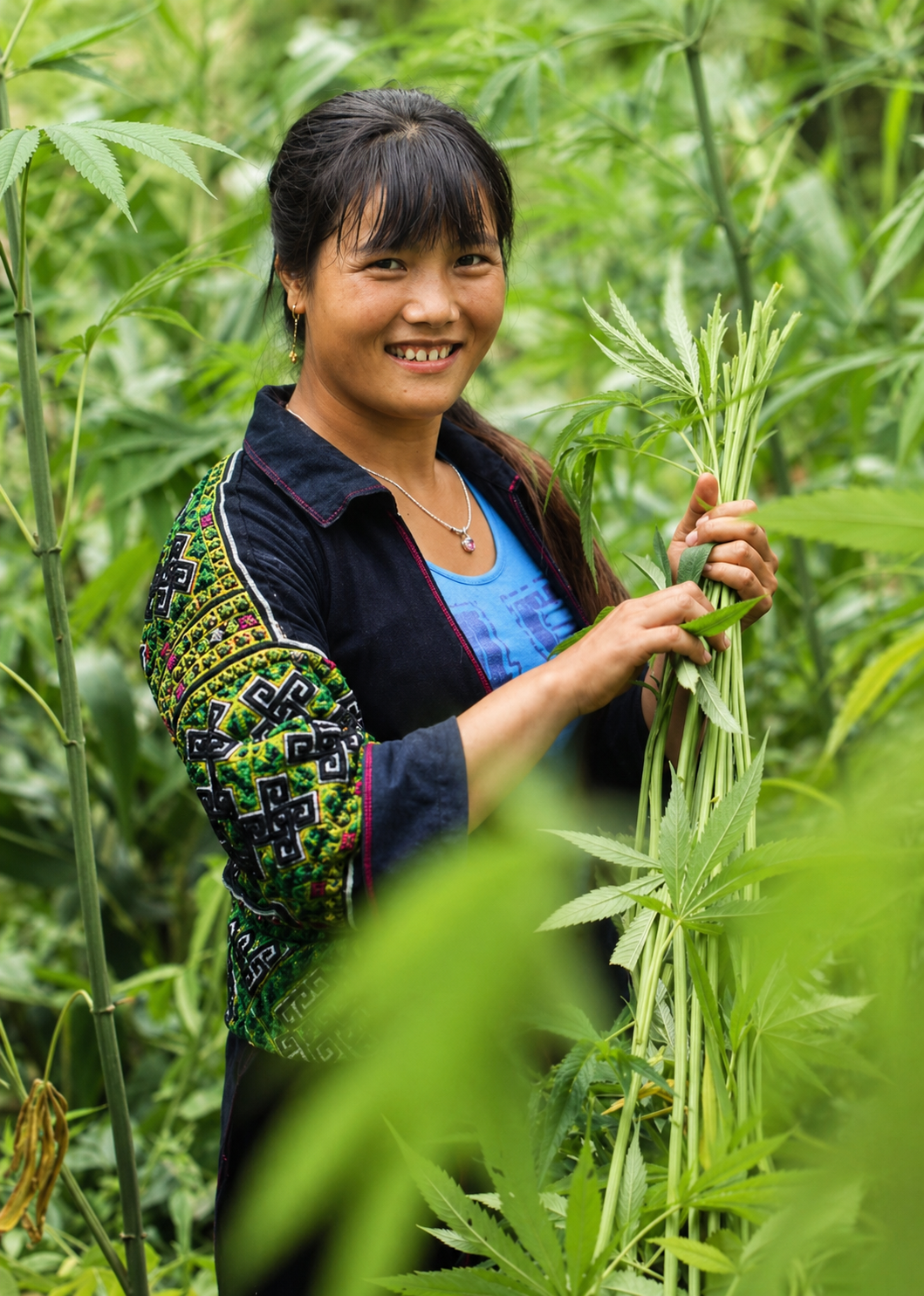
Ly Thi My is a Black Hmong woman from Sapa who has been learning and teaching batik for years.
Travellers who spend time learning with her often come away with a very different understanding. Norman Ed, visiting from the United States, reflected that the experience was “far more than a simple workshop, becoming instead a space to understand the importance of the entire process and the life that surrounds it”. His wife, Mary Ed, described her time with My as “not a craft class, but instead an opportunity to connect with the cultural significance behind a deeply meaningful technique”.
They were particularly struck by the way My moves seamlessly between skills, recalling how she could twist hemp fibres while trekking along the mountain paths, her hands working instinctively as part of daily life. Norman noted that this ability to intertwine craft with everyday living revealed something profound, leading them both to a deeper appreciation of the time, effort, and knowledge that goes into every piece of batik.
Symbols, spirit, and slow understanding
Patterns in batik are not decorative. They are symbolic, and often spiritual. Spirals, lines, and geometric forms carry meaning connected to protection, identity, and the natural world. In many Hmong traditions, clothing helps guide ancestral spirits, ensuring they recognise their descendants. Patterns act as markers, both visible and unseen. This understanding cannot be rushed. It is shared slowly, through trust and time.
Learning with care and connection
At ETHOS, our batik experiences are shaped through long-standing relationships with Hmong partners who lead workshops in their own homes and communities. These are not performances. They are real, lived experiences shared with care. Alongside this, we work with Dao communities in their own textile traditions, particularly embroidery, each distinct and equally meaningful.
We believe in slow travel, where learning is not rushed and connection is allowed to grow naturally.
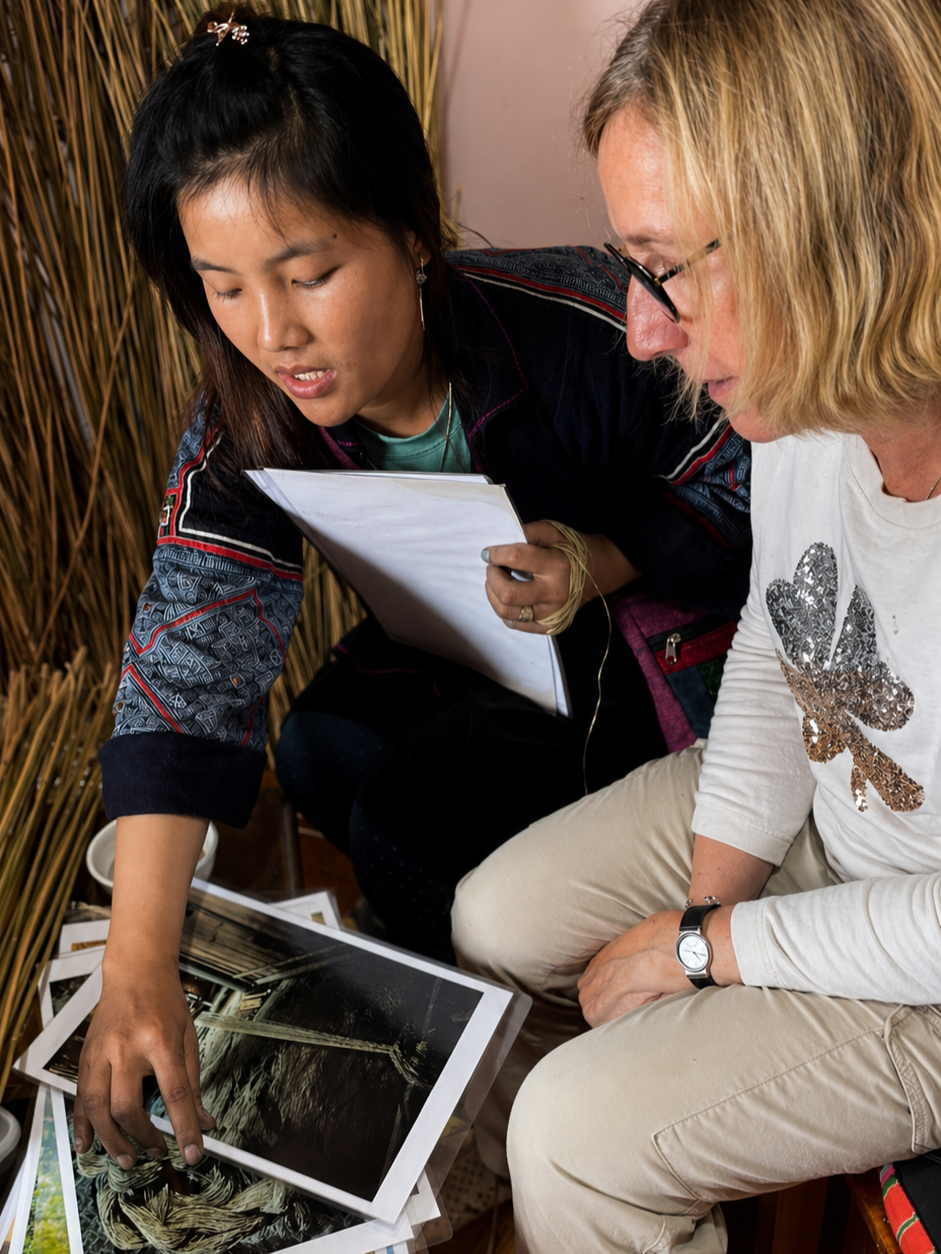
My explaining the main steps in producing natural hemp fabric.
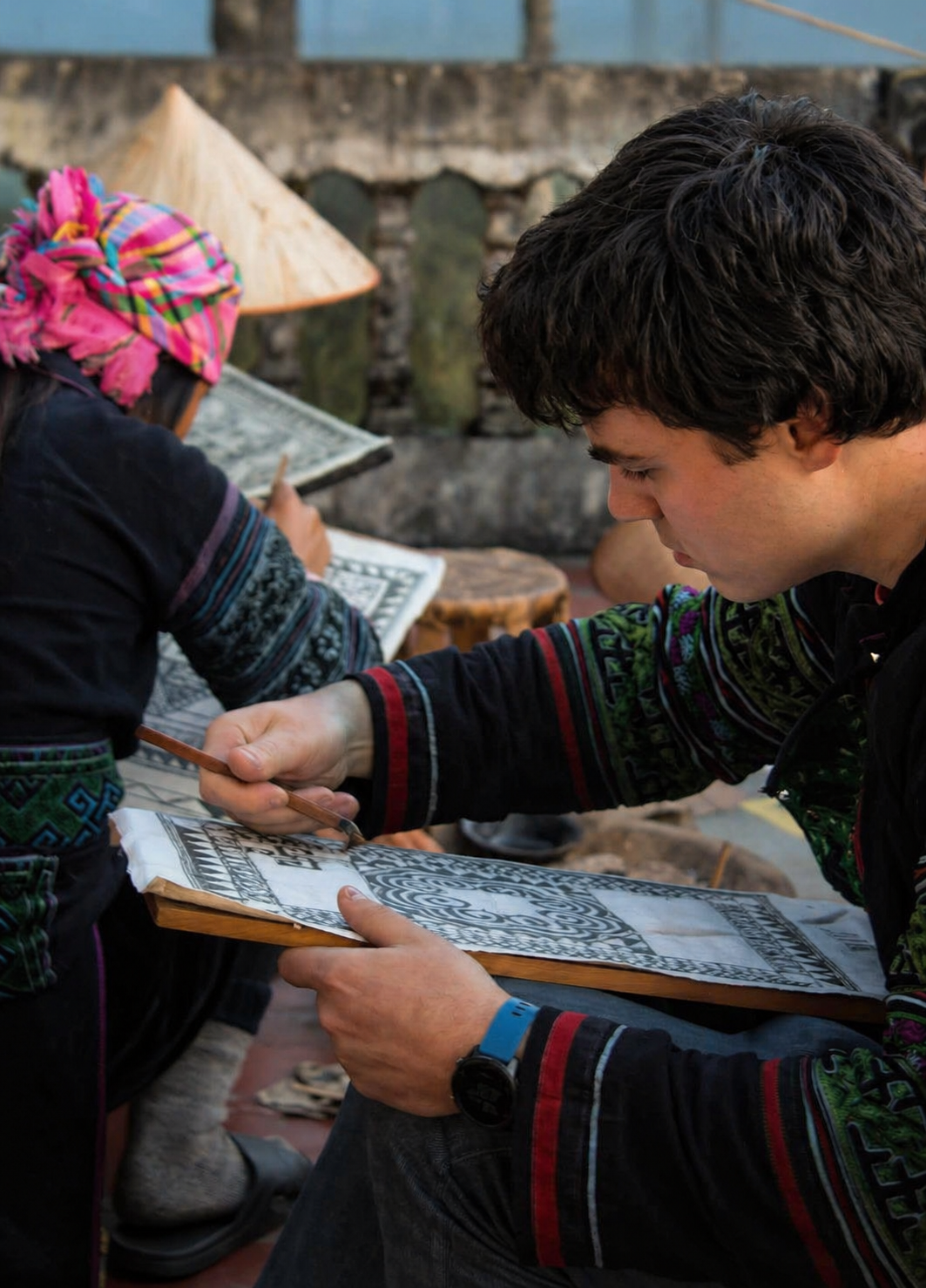
Travellers learning batik in the ETHOS community centre
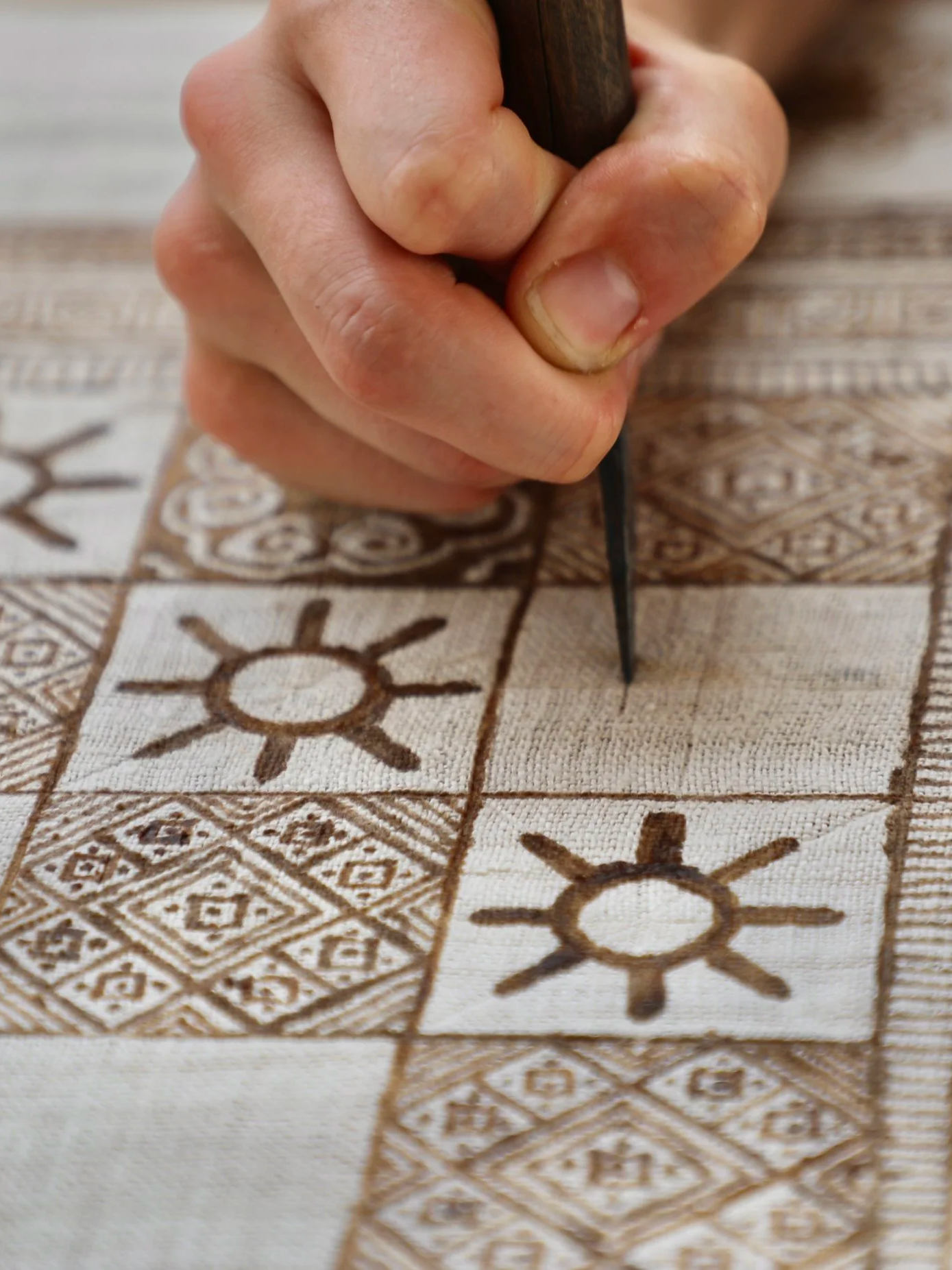
Tool used for planning batik designs on organic , hemp cloth.
Choosing with intention
Not all batik experiences are equal. Some honour the craft. Others reduce it, so choosing carefully really matters. Supporting experiences rooted in authenticity, time, and local knowledge helps ensure this tradition continues, because batik is not just something to try but something to understand, respect, and to help protect.

Hemp leaves growing in Sapa.
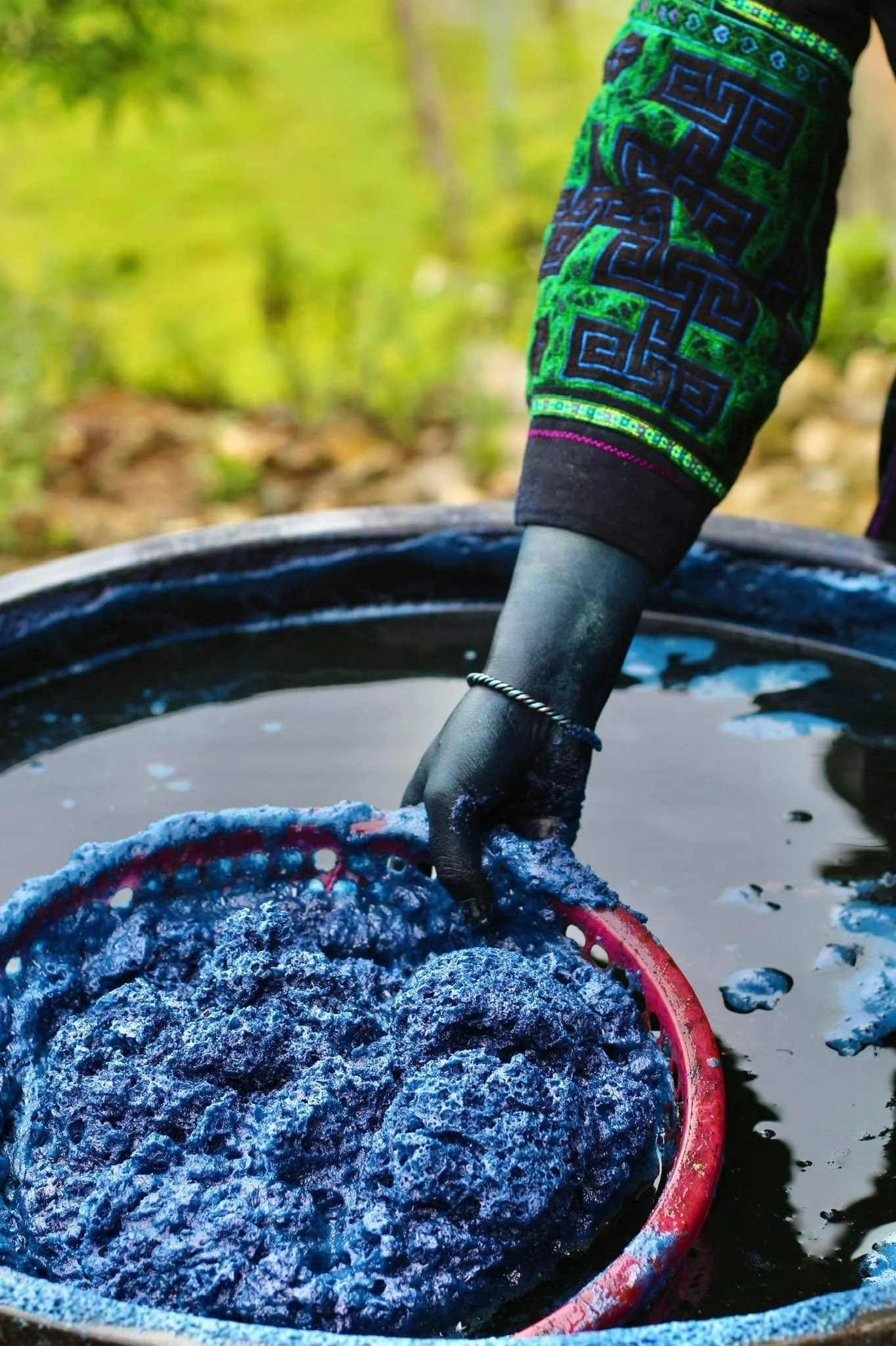
Preparing an indigo vat ready to dye batik designs.
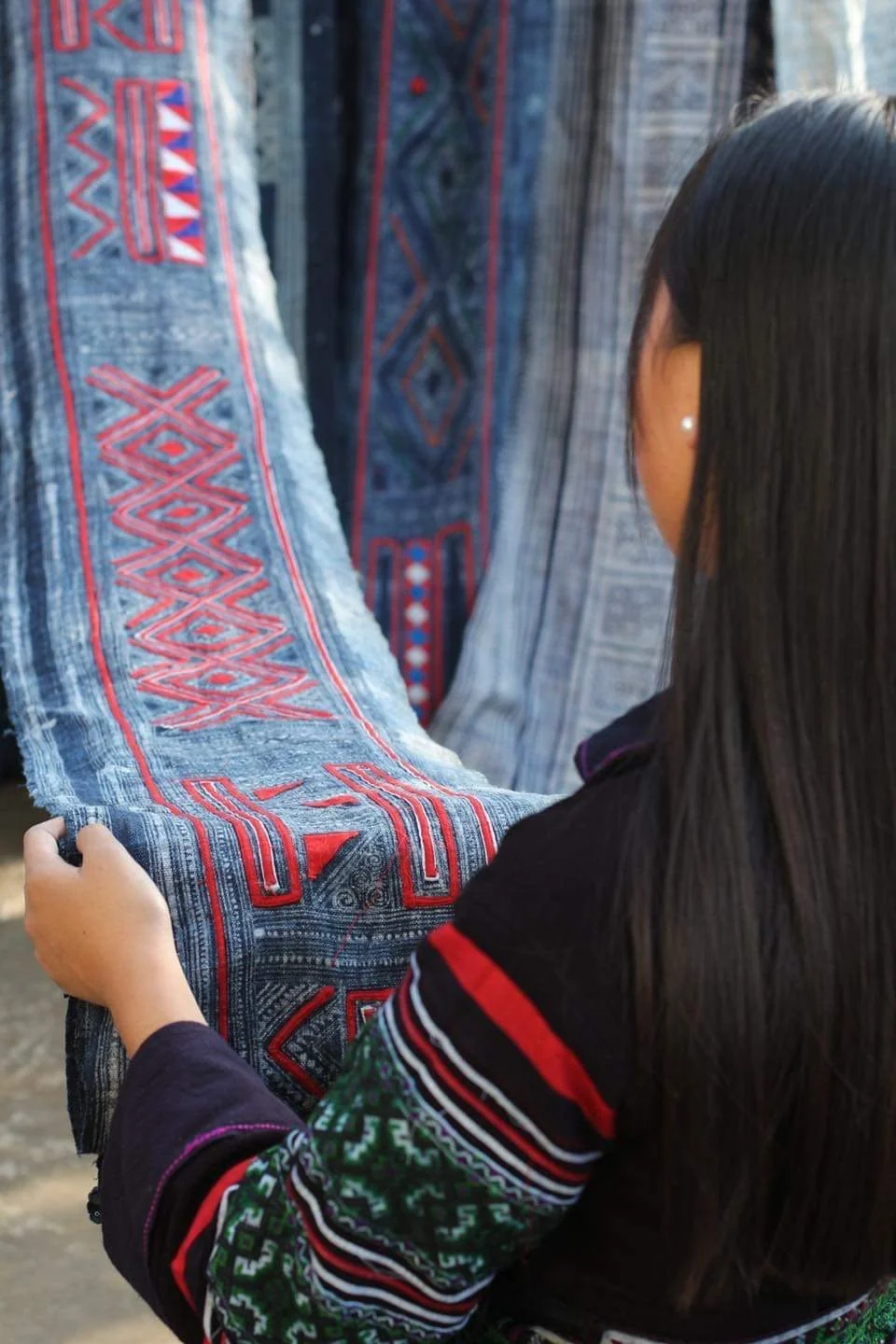
Examininig hemp panels before they are made into a Spirit Skirt.
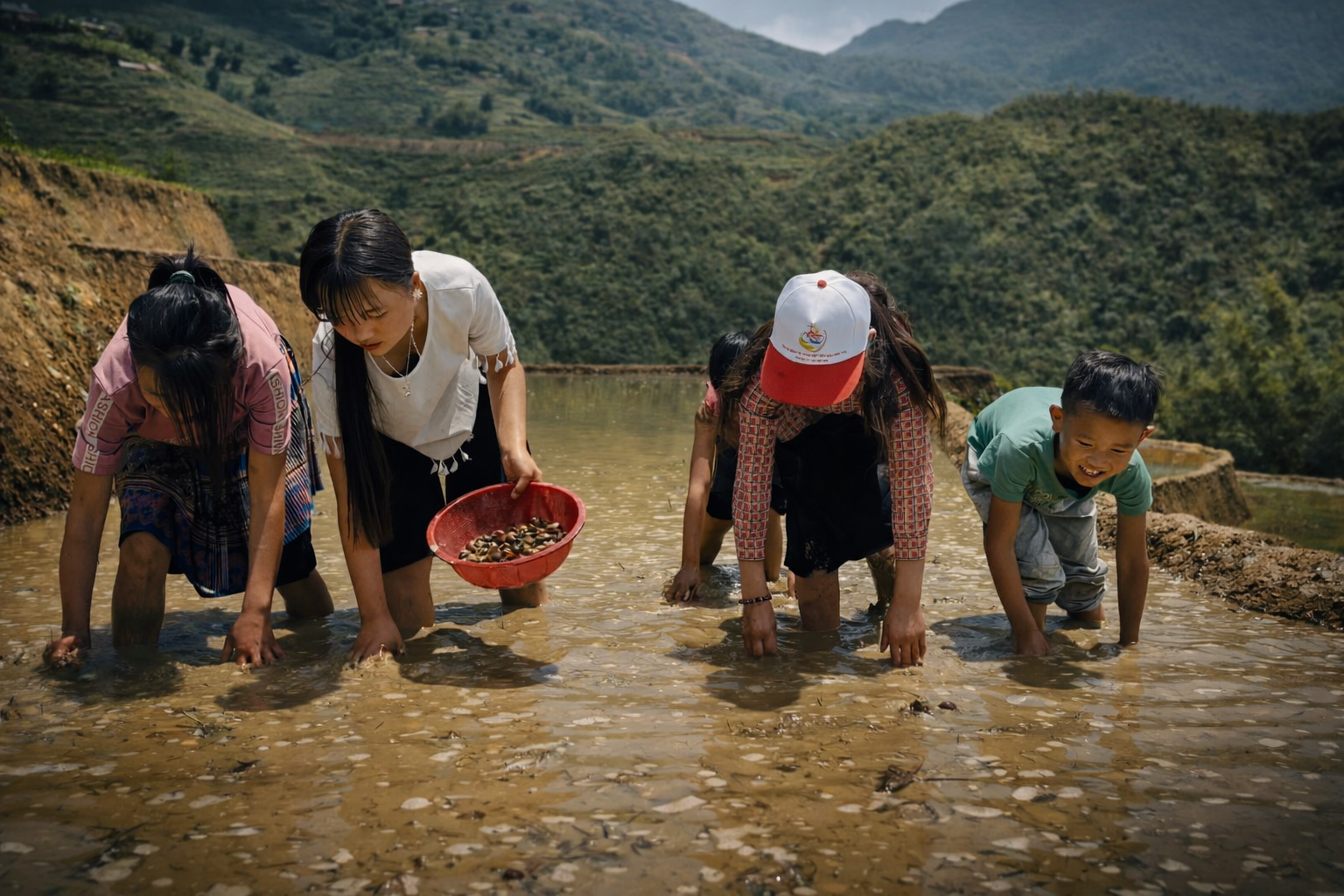
Beyond Rice in Sapa’s Terrace Ecosystems
In Sapa, rice terraces are not simply fields. They are living ecosystems shaped by Hmong and Dao hands, where water, soil and tradition sustain far more than grain. Walk with us through these landscapes, forage alongside our partners and experience how life is nurtured beyond the rice itself.
Sapa’s rice terraces are often photographed as if they were simply grand scenery, a series of green or golden steps folded into the mountains, luminous in the rain and glowing at harvest. Yet for the Hmong and Dao communities who have shaped, tended and lived with these landscapes over generations, a terrace has never been only about a single rice crop. Local communities see the terraces as a living, layered food system. This relies on the connection between water and soil, labour and season, between the forest above and the village below.
To look closely at a terrace is to begin noticing all that exists beyond the rice itself. There are the human made pools that are home to edible insects, snails, frogs, eels and fish. Then are the damp edges where herbs thrive in seepage and soft mud. There are the bunds and narrow paddy walls where greens are gathered on the way home. There are the irrigation channels carrying mountain water from one field to the next, sustaining aquatic plants and tiny wetland habitats. There are forest margins that feed the terraces with leaf litter, moisture, bamboo shoots, fungi and shade. There are the overlooked foods that appear quietly in daily life, not as luxuries, but as part of the intelligence of mountain subsistence.
In this sense, the terraces of Sapa are not monocultures in the industrial sense at all. They are agroecological worlds. Rice may remain the central staple, the grain around which the agricultural calendar turns, yet rice alone does not nourish a household. Hmong and Dao ways of farming have long understood that survival in the mountains depends on more than one harvest. It depends on recognising that a terrace can feed people in many forms, through many species, at many moments of the year.
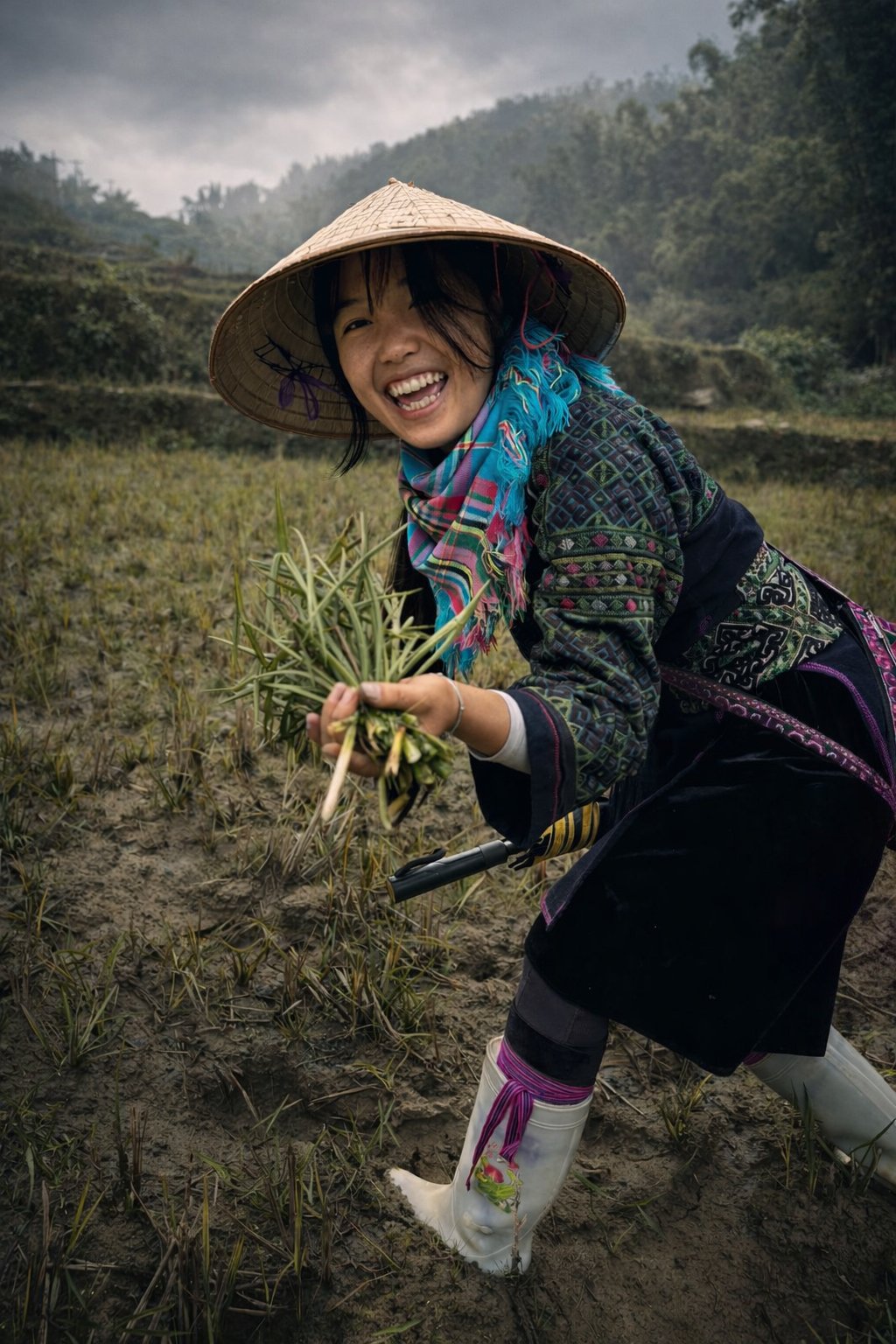
Harvesting wild taro from with a fallow rice paddy.
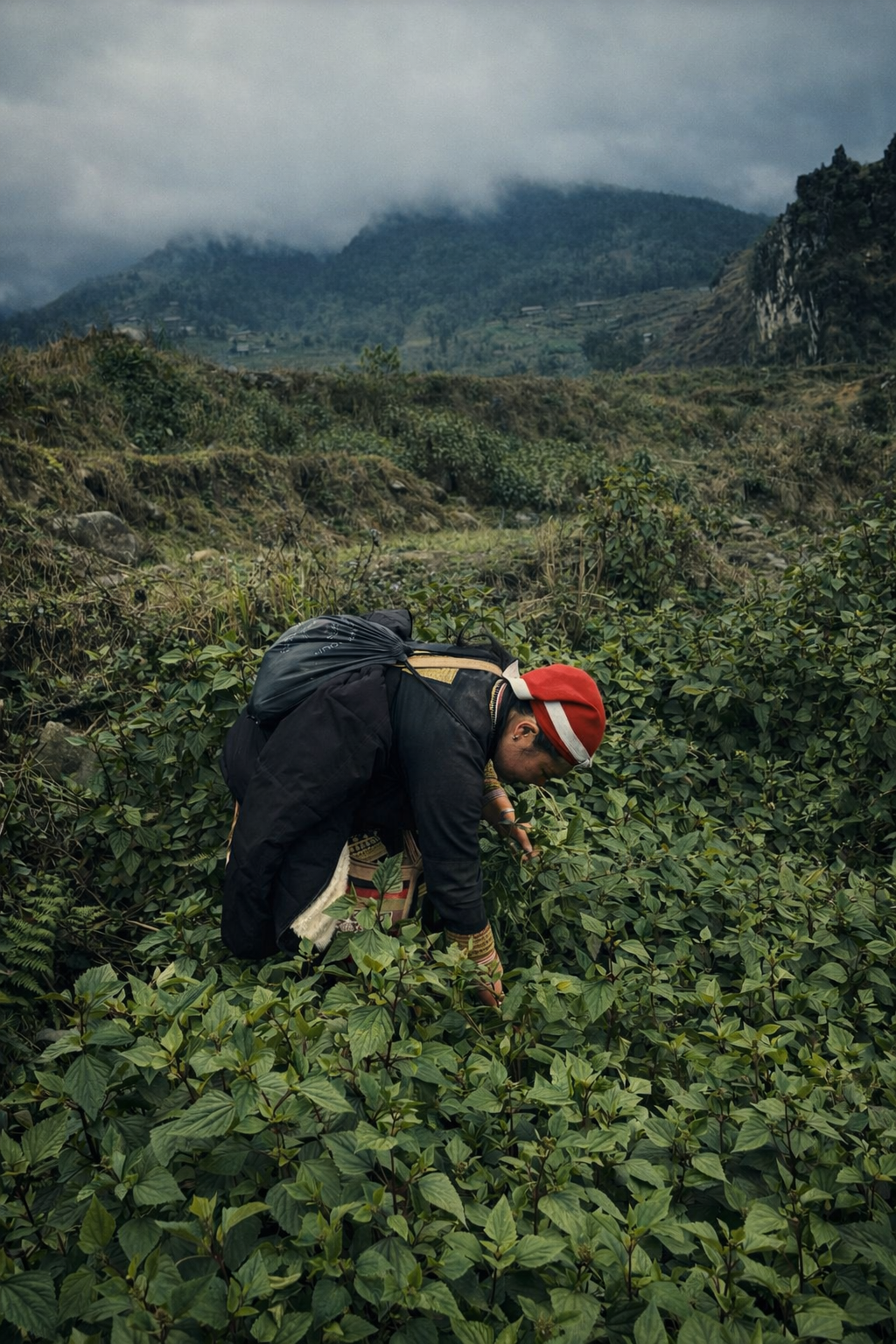
Foraging medicine for use in Red Dao herbal baths.
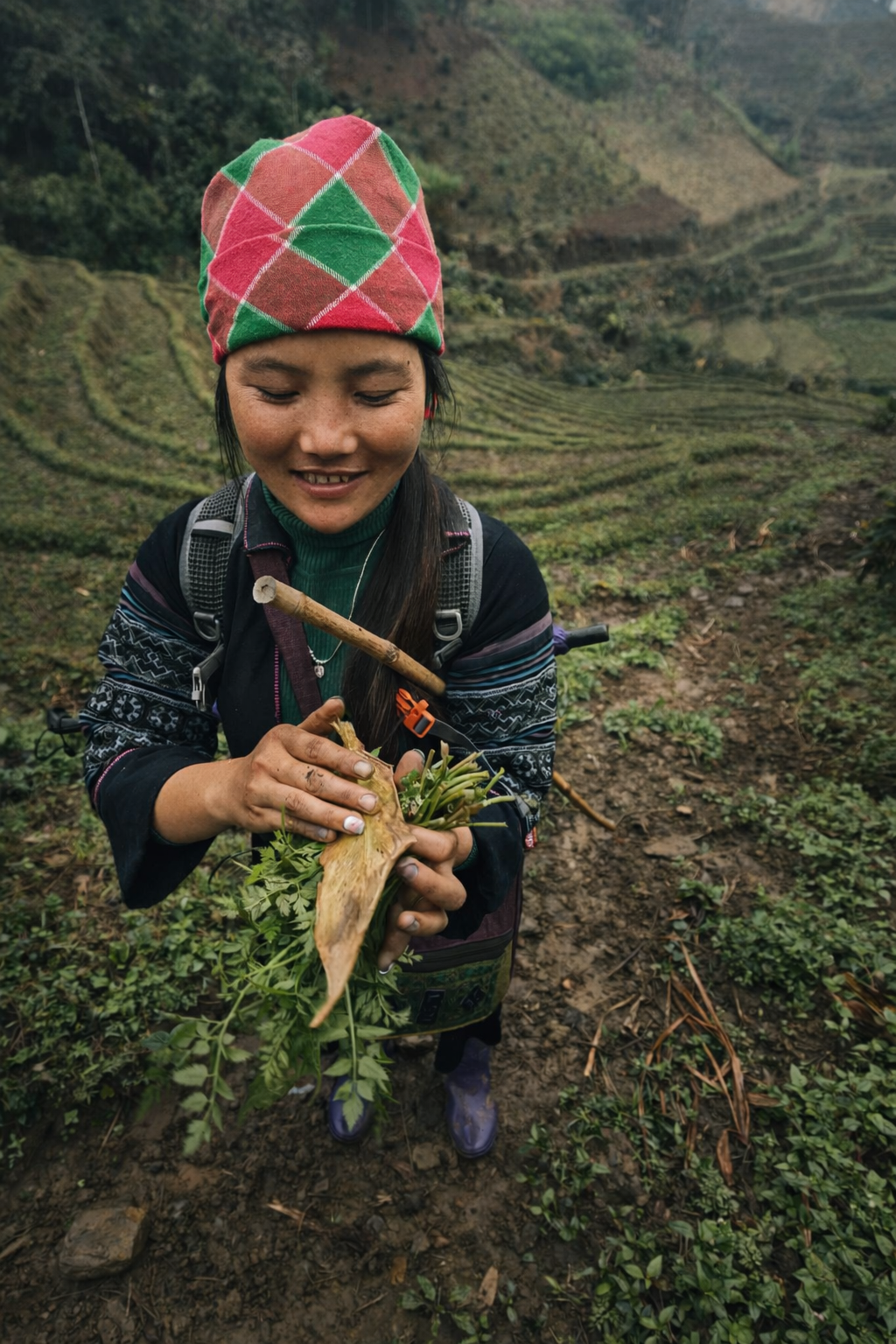
Wild celery harvesting.
A terrace is a mosaic, not a single field
What visitors often see as one continuous landscape is, on the ground, a patchwork of connected micro-habitats. Flooded paddies hold water during the growing season, then soften into muddy fallows after harvest. Bunds and terrace edges catch sediment, support spontaneous greens and become pathways for both people and plants. Irrigation channels and spring-fed ditches remain wet even when fields are drained, offering refuge for edible herbs and water-loving species. Beyond them lie forest edges and agroforestry patches that anchor the terraces ecologically, slowing erosion, protecting springs and supplying food and materials that are essential to village life.
This is part of what makes Sapa’s terrace systems so ecologically rich. Water is guided by gravity rather than forced through large-scale extraction. Soil is held in place by structure, roots and repeated care. Nutrients move through the landscape in loops, not simply through purchased inputs. Even the steepness of the mountains plays a role, creating slight differences in temperature, moisture and exposure from one level to the next. Each terrace holds its own conditions. Each edge becomes an opportunity.
For Hmong and Dao households, this means that farming is never only about the rice standing in the middle of a paddy. It is also about everything that grows beside it, under it, after it and because of it.
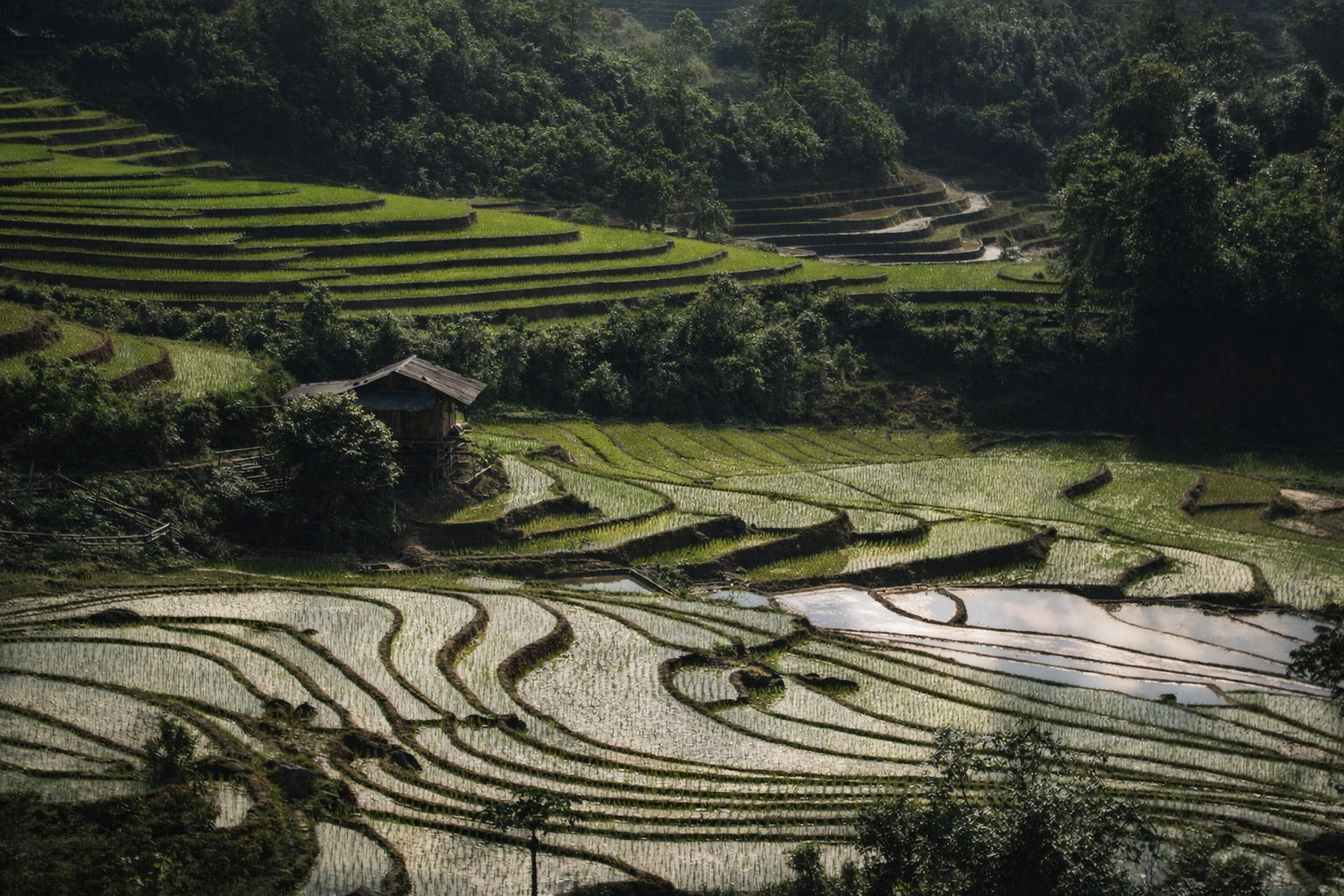
The mosaic of rice terraces in June
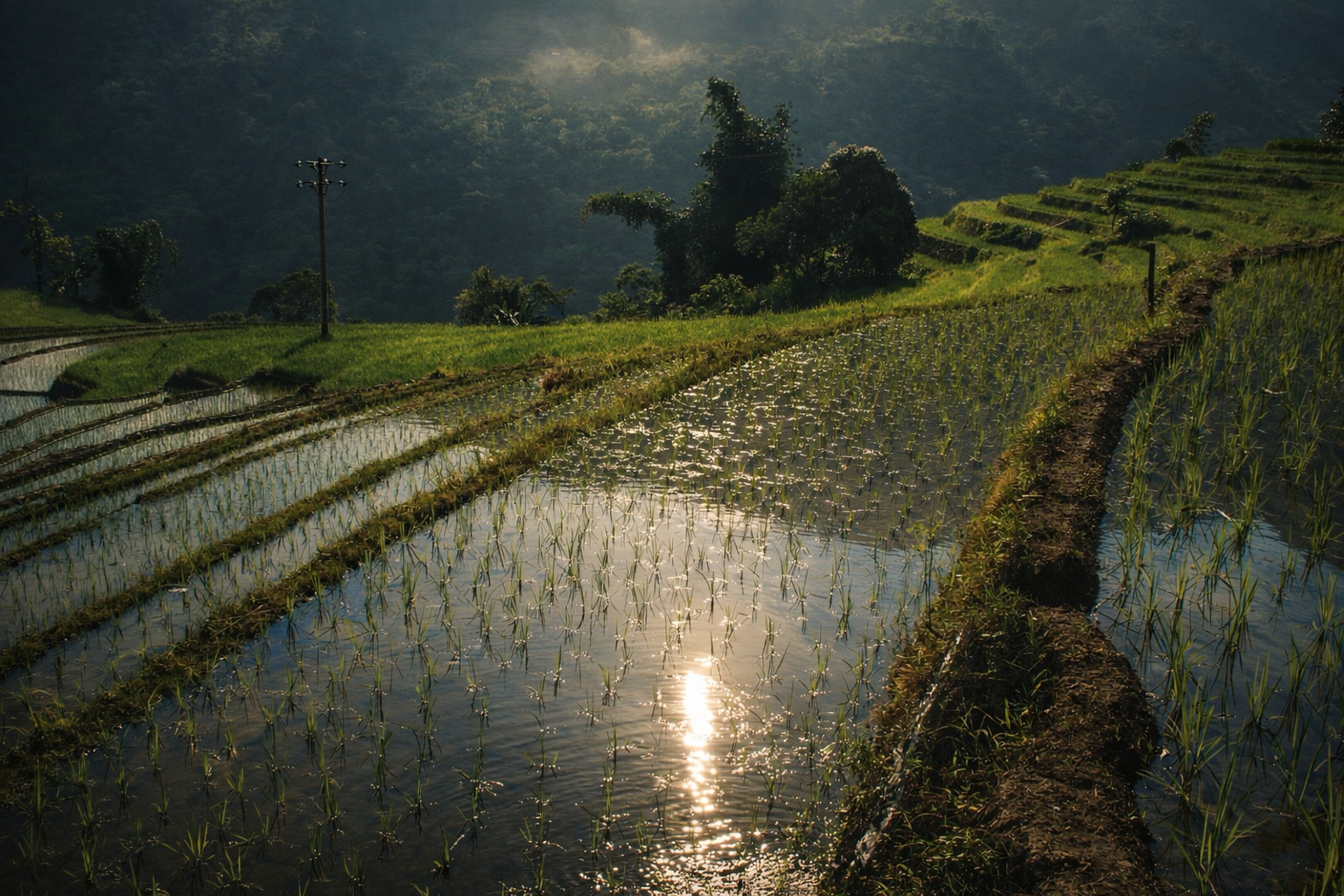
The flooded terraces become home to a variety of unique aquaculture.
Beyond the single rice crop
Mountain households in Sapa have often worked with small landholdings, where farming remains deeply tied to household consumption rather than purely commercial output. That reality shapes the terrace ecosystem profoundly. A field must do more than produce grain once a year. It must help sustain a family across seasons of abundance and leaner months alike.
Rice provides the foundation, the dependable carbohydrate that underpins daily meals and ceremonial food alike. Yet within a rice-based diet there are always nutritional gaps that must be filled by other foods. The terrace ecosystem helps answer that need. Wild and semi-managed greens contribute vitamins and minerals. Wetland herbs bring freshness, scent and medicinal value. Crabs, eels, fish, snails or other opportunistic proteins enrich broths and sauces. Bamboo shoots, mushrooms and taro offer seasonal diversity and resilience when stored grain begins to thin.
Seen this way, the terrace is not organised around a single yield, but around continuity. The goal is not only to harvest rice, but to sustain life. Hmong and Dao ecological knowledge has long been rooted in this broader understanding, where farming is measured not only by how much grain comes in, but by whether the land continues to support many forms of nourishment without being exhausted.
For travellers, many of these foods remain unfamiliar, sometimes even overlooked in favour of the more recognisable or the expected. Yet it is precisely within these lesser-known ingredients that the deeper story of the terraces begins to reveal itself. The textures of water snails gathered by hand, the clean bitterness of freshly cut greens, the earthiness of mushrooms dried and carried through the seasons, all speak of a relationship between people and landscape that is both practical and deeply sensory.
Those who wish to experience this more closely can step into it through our Sapa food tour. Led by local Hmong experts, these journeys move through fields, kitchens and village paths, not as a tasting of dishes alone, but as an introduction to the living food system behind them. Each ingredient is encountered in context, gathered, prepared and understood within the rhythms of the terraces themselves.
What begins as a meal becomes something far richer, a way of seeing how diversity sustains life in the mountains, and how much lies beyond the rice that first draws the eye.
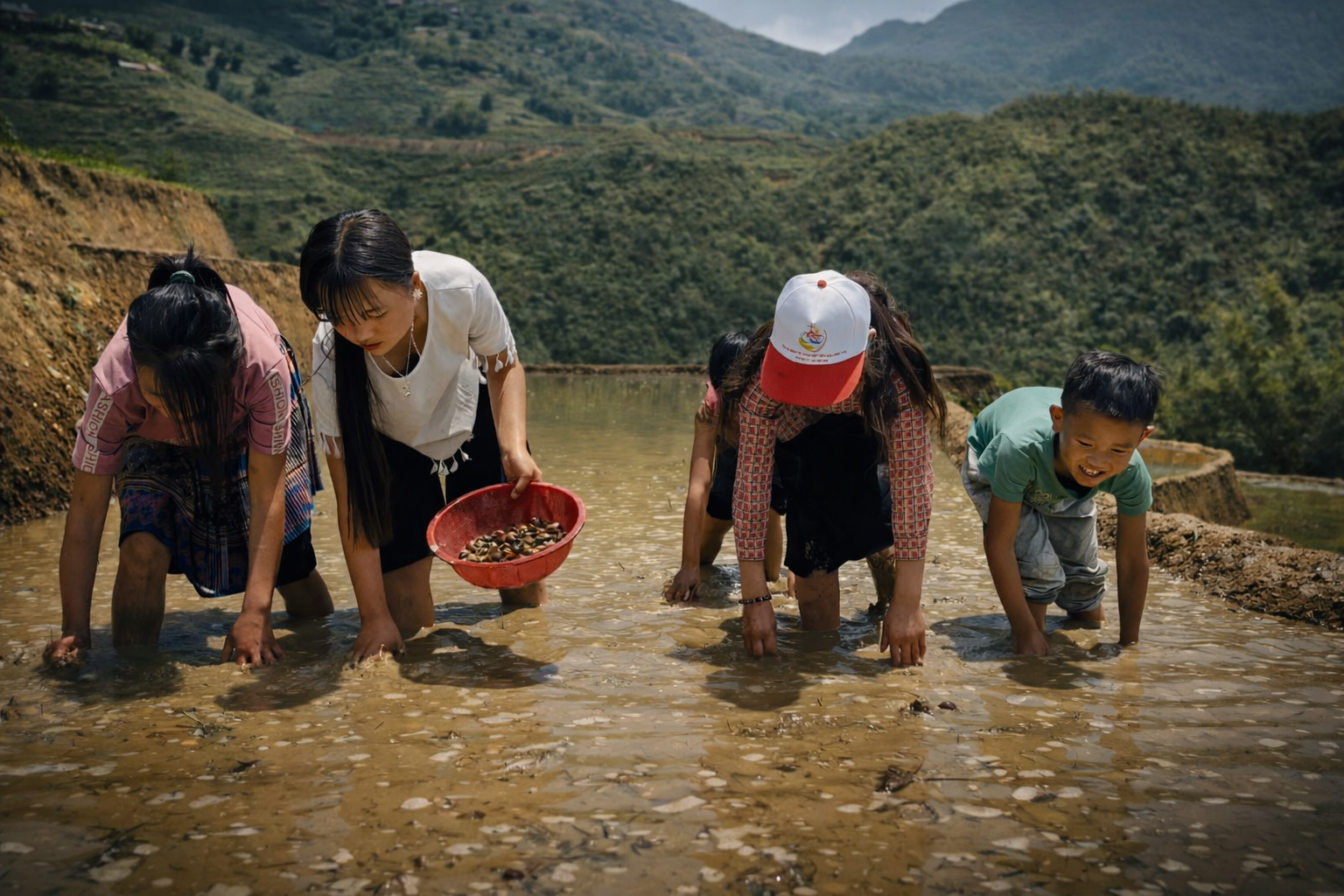
Hmong children collecting snails in the rice paddies.
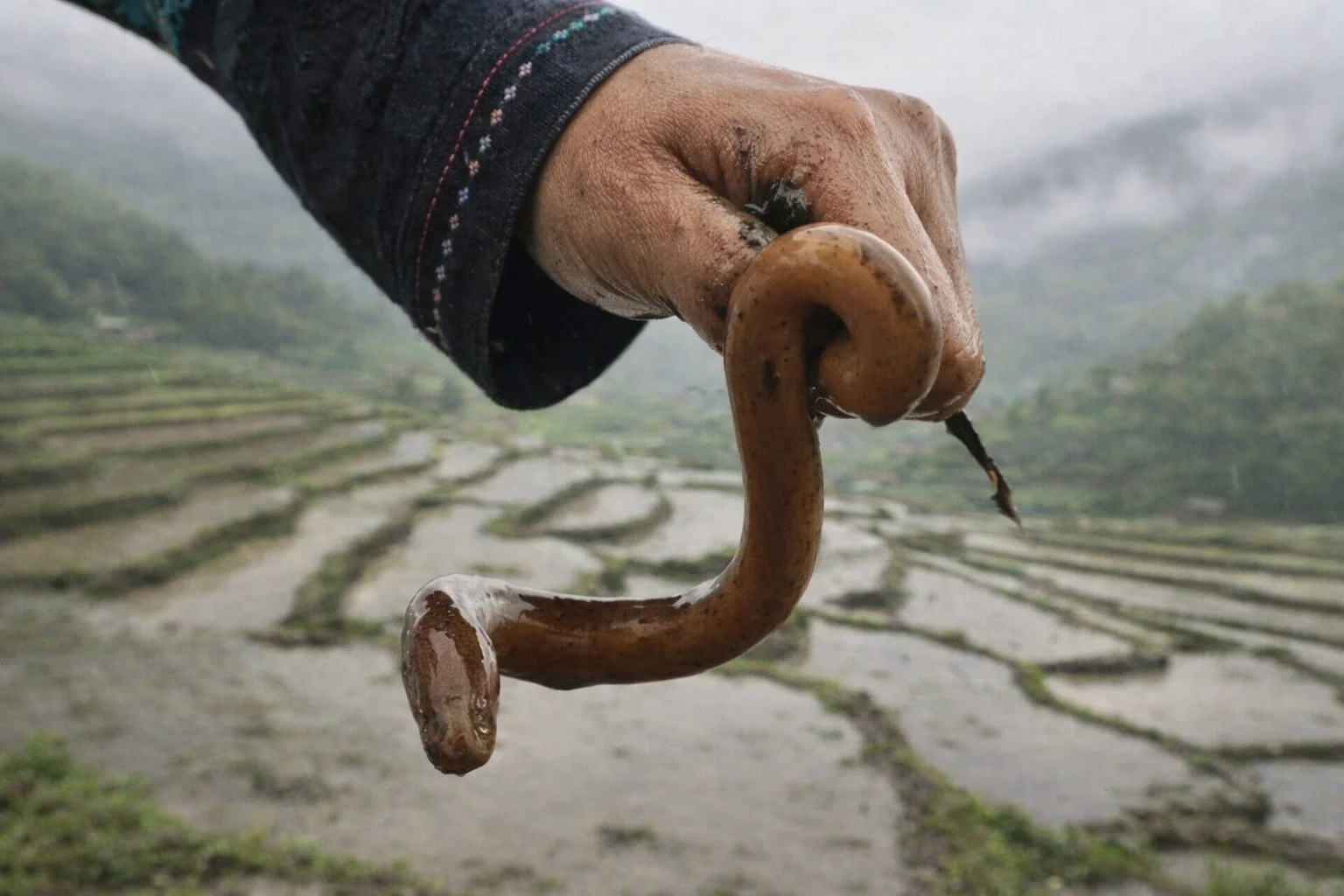
A rice paddy eel. When collected in large numbers, the eels can be prepared as a meal.
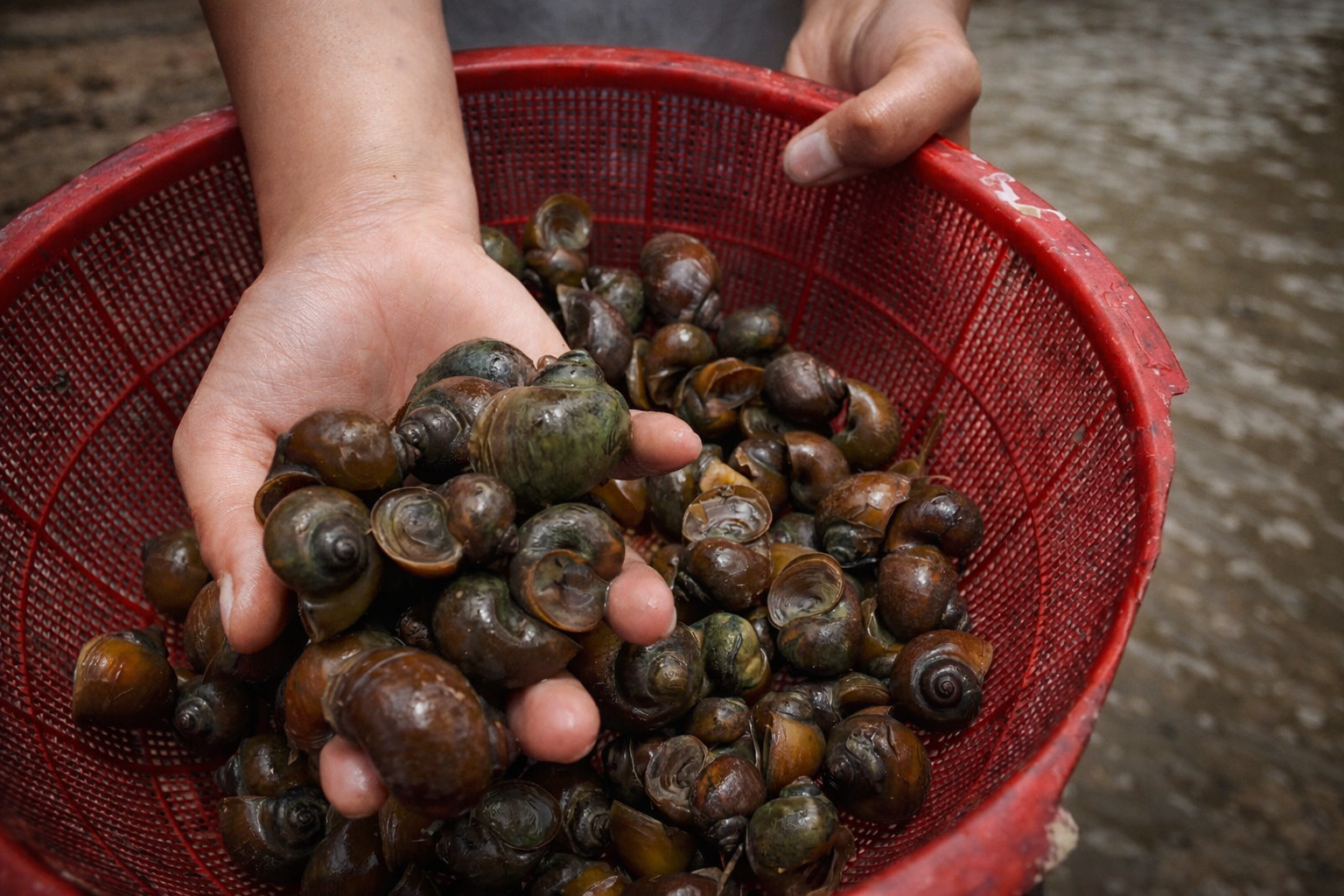
Rice paddy snails collected for food.
The foods hidden in water, mud and terrace edges
One of the quiet lessons of Sapa’s terraces is that food often lives in places outsiders overlook. In the warm, shallow water, edible herbs and semi-aquatic greens thrive with little need for extra land. These plants may be gathered while checking water flow, walking between plots or tending the edges of a field. They are woven into the rhythm of labour itself.
Rice paddy herbs, water-loving greens and other edible plants found in these wet spaces matter because they bring something rice cannot. They offer vitamin C, mineral richness, flavour and medicinal qualities that brighten and balance a meal. They are especially valuable in a highland subsistence system where daily access to diverse vegetables cannot always be taken for granted. Rather than being separate from rice farming, these greens are part of its ecology.
Rice terrace walls play their own role as food margins. These narrow structures are not merely agricultural infrastructure. They are often some of the most diverse parts of the entire system, catching splashed sediment, holding moisture and creating space for spontaneous or lightly managed growth. Here, people distinguish carefully between plants that threaten rice, plants that can be eaten and plants worth leaving because they help stabilise soil or support insect life. This practice of selective tolerance is one of the deepest expressions of terrace agroecology. Removing everything that is not rice is counterproductive when many of the plants that grow naturally have a purpose themselves.
Knowledge carried in the act of gathering
To understand how these landscapes sustain life, it is necessary to move beyond the visible and into the realm of practice. Among Hmong and Dao communities, knowledge is not abstract or separate from daily life, but embedded in movement, in gesture, in the quiet decisions made while walking a terrace edge or bending to harvest a plant. What appears simple to an outsider often conceals a depth of ecological reading shaped over generations.
A woman gathering greens along a bund is not merely collecting what is available. She is reading the condition of the soil, the recent flow of water, the stage of regrowth and the needs of her household. She selects with intention, leaving certain plants to recover, taking others at their peak, recognising which will nourish and which will heal. The act is at once practical and deeply attuned, shaped by memory, taste and an understanding of tomorrow as much as today.
This knowledge extends across the landscape. Men and boys may move through the wet fields in search of eels or small fish, reading the water with equal familiarity, while forest edges are approached with an awareness of seasonality that determines when shoots are tender or when fungi will emerge after rain. Food, in this sense, is never separate from place. It is a dialogue between people and terrain, carried out through attention and care.
The terrace as living wetland
During the growing season, the terraces transform into a sequence of shallow wetlands, each holding water that moves slowly from one level to the next. This movement is neither hurried nor wasteful. It follows gravity, guided by human hands yet aligned with the natural contours of the mountain, creating a system that is both cultivated and ecological.
Within this watery world, life gathers in quiet abundance. Aquatic plants root themselves in the soft mud, insects skim the surface, and the edges of each paddy become zones of fertility where moisture lingers and diversity thrives. The mud itself is alive with microbial activity, breaking down organic matter and returning nutrients to the soil, sustaining fertility without reliance on external inputs.
What emerges is not a field in the conventional sense, but a layered environment where water, soil and living organisms interact continuously. The terraces hold, slow and distribute resources, allowing each level to benefit from what passes through it. Their productivity lies not in intensity, but in balance, in the ability to sustain multiple forms of life within a carefully managed system.
A kitchen shaped by the landscape
If the terraces are read through the rhythms of daily life, their diversity becomes most visible in the kitchen. Rice remains central, steady and essential, yet it rarely stands alone. Around it gathers a shifting constellation of foods that reflect the season, the weather and the labour of the household.
There may be tender greens gathered that morning, still carrying the cool dampness of the field. There may be bamboo shoots sliced and prepared with care, their bitterness softened through knowledge passed down over time. Mushrooms, collected in moments of abundance, might be dried and stored, later rehydrated to bring the scent of the forest into a quieter season. Taro, lifted from moist soil, provides a reserve that speaks of foresight and resilience.
Occasionally, the wet fields themselves offer small additions, a crab, a handful of snails, something that deepens the flavour of a broth and adds substance to a meal. None of these elements dominate, yet together they create a sense of completeness, a meal that is balanced not through excess, but through diversity.
What becomes clear is that nourishment here is cumulative. It emerges from many small contributions, gathered across spaces and moments, rather than from a single source. The terrace feeds not only through rice, but through everything that surrounds and accompanies it.
Where terraces meet forest
The terraces do not exist in isolation. Above them, the forested slopes hold the sources of water that feed the entire system. Springs emerge, channels carry their flow, and the paddies receive and redistribute what begins higher in the mountain. Leaf litter, shade and the stability of rooted slopes all contribute to the health of the terraces below.
From these forest margins come foods that complete the picture. Bamboo shoots push through damp soil after rain, mushrooms appear in shaded ground, spices such as black cardamom grow in the understory. These are not separate from terrace life, but part of the same ecological continuum, linking cultivated land with wilder spaces.
To care for the terraces is therefore to care for the forest. The relationship is reciprocal, each depending on the other for continuity and resilience. This understanding is rarely articulated in formal terms, yet it is present in the way land is used, respected and maintained.
Seeing beyond the view
For those who arrive in Sapa, the terraces often first appear as a spectacle, an unfolding pattern of green or gold across the mountainside. Their beauty is immediate, yet it is only an entry point into a far deeper story.
Walking slowly through these landscapes begins to reveal another layer. The scent of wet earth rises after rain. Herbs release their fragrance underfoot. Smoke drifts from a kitchen where gathered greens are being prepared for the evening meal. A basket rests at the edge of a field, filled not only with rice, but with the quiet harvest of everything that grows alongside it.
To experience the terraces in this way is to move beyond observation into encounter. It is to recognise that each element, each plant, each movement of water carries meaning shaped by those who live here. It is also to understand that such knowledge is not readily visible from a viewpoint, but shared through time, trust and presence.
This is the spirit in which we invite travellers to walk with us at ETHOS. Through our treks, journeys unfold alongside Hmong and Dao partners who open their fields, kitchens and stories with generosity and care. These are not routes designed simply to pass through a landscape, but to dwell within it, to listen closely, and to encounter the terraces as living worlds shaped by human knowledge and mountain ecology.
In choosing to travel this way, the terraces begin to shift from scenery into relationship. What once seemed distant becomes immediate, textured and human, offering not only a view, but an understanding that lingers long after the path has ended.
A more complete understanding of abundance
What these landscapes ultimately offer is a different understanding of abundance. It is not defined by scale or uniformity, but by diversity and continuity. It is found in the ability of a place to provide across seasons, through variation, through attention to detail rather than simplification.
Rice remains at the centre, steady and indispensable. Yet it is supported by a wider system that ensures life continues even when conditions shift. Greens, herbs, shoots, fungi and preserved foods all contribute to a form of resilience that is both practical and deeply rooted in knowledge.
The terraces endure not because they produce one thing efficiently, but because they sustain many things carefully. They are shaped by people who understand that survival in the mountains depends on relationship, on reading the land closely, on working with its rhythms rather than against them.
To see this clearly is to understand that these landscapes are not only beautiful, but profoundly intelligent. They are living systems, held together by care, memory and an enduring conversation between people and the mountains they call home.
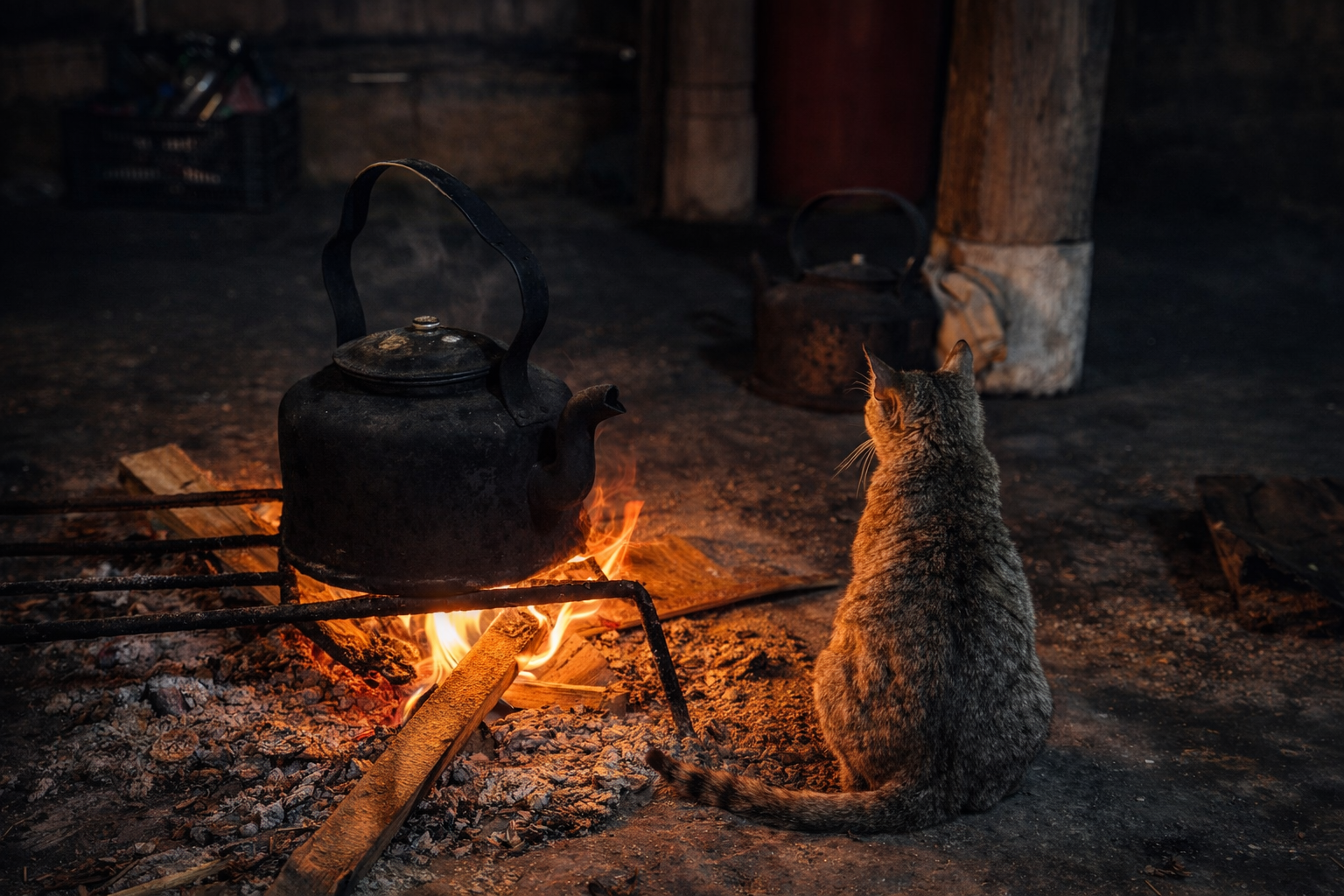
Cats, Dogs and a Very Practical Friendship in Sapa.
In the mountains around Sapa, cats and dogs are rarely treated as pampered pets. Instead they are trusted helpers in daily life. Hmong folktales even explain how these animals earned their place alongside people.
Not Quite Pets, Not Quite Livestock.
If you spend time in Hmong villages around Sapa, you will notice something interesting about the cats and dogs wandering through courtyards and along dusty paths. They are everywhere, but they are rarely treated like the pampered pets many visitors are used to seeing at home.
Dogs guard houses, accompany people along mountain trails, and warn families about strangers or wild animals. Cats patrol kitchens and storage spaces, quietly keeping rats and mice away from precious grain supplies. They live alongside people, but usually outside the house, and affection is expressed through care and provision rather than cuddles.
In many households, animals are simply called what they are. A cat is called cat. A dog is called dog. The relationship is respectful and practical, shaped by generations of mountain life where every member of the household, human or animal, has a job to do.
If you’d like to see this way of life for yourself, you’re always welcome to join us for a quiet walk through the villages, where these relationships unfold naturally, step by step.
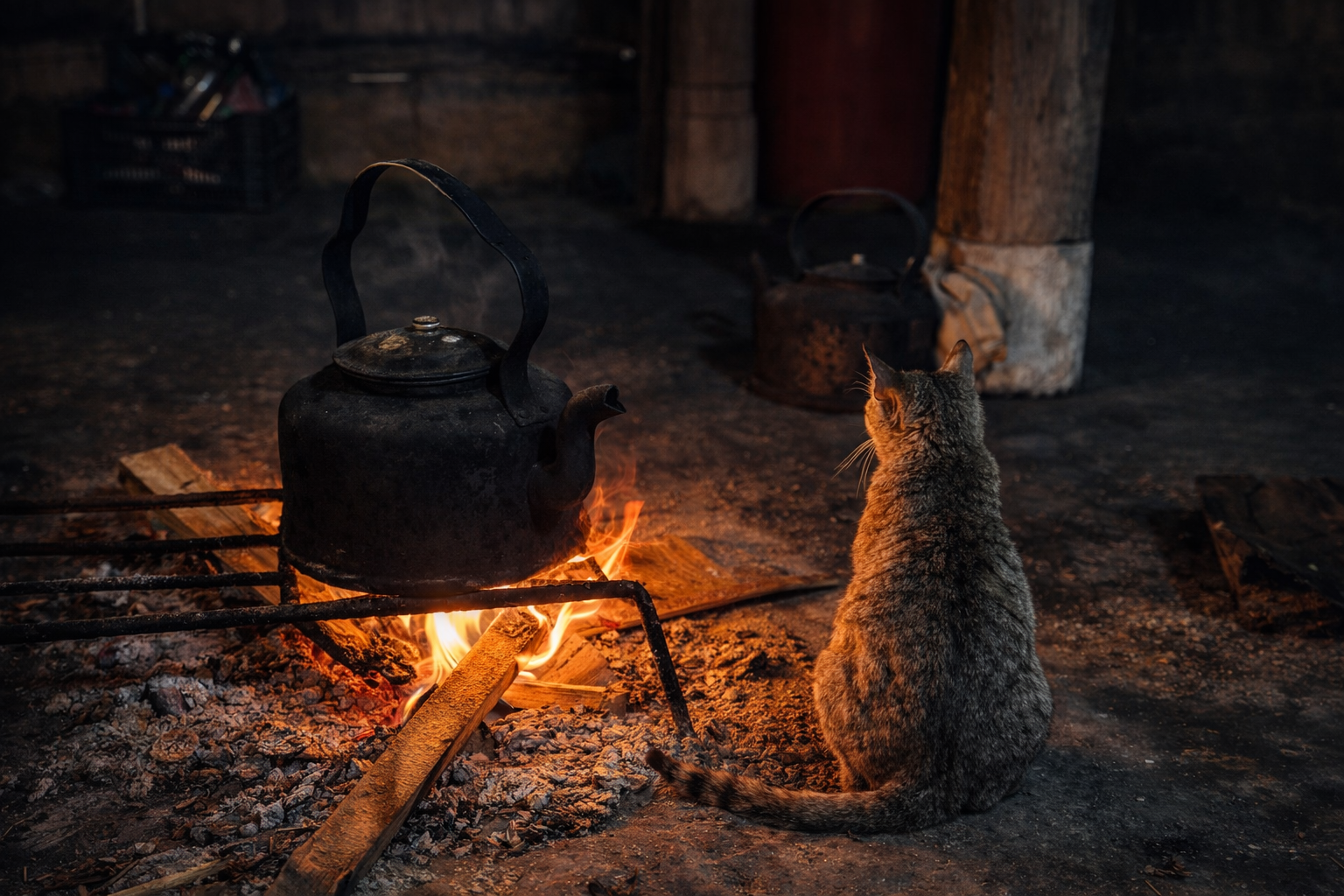


The Mountain Dogs of Northern Vietnam.
While many village dogs are mixed breeds that have adapted naturally to the mountains, two distinct breeds are strongly associated with Hmong communities in northern Vietnam. These are the Hmong Dog and the Bac Ha Dog.
The Hmong Dog, sometimes called the Hmong bobtail dog, is a sturdy mountain breed known for its naturally short or stubby tail. These dogs tend to have muscular bodies, thick coats, strong legs, and a broad head that gives them a serious and alert expression. They are highly intelligent and extremely loyal to their owners. Traditionally they were used for hunting in forests and for guarding homes in remote mountain villages. Their strong sense of direction and endurance make them particularly suited to steep terrain and long walks through the hills.
The Bac Ha Dog is another famous breed from the northern highlands around the town of Bac Ha. These dogs are often larger and fluffier than the Hmong Dog. Many have thick, long fur that protects them from the cold mountain climate and bushy tails that curl over their backs. Bac Ha Dogs are known for their courage and strong guarding instincts. Despite their impressive appearance, they are also known to be calm and gentle with their owners.
Both breeds developed in the rugged landscapes of northern Vietnam where resilience, intelligence, and loyalty were essential qualities. For Hmong families living in isolated mountain communities, these dogs have long been dependable partners.
The Hmong Bobtail Dog: A Natural Born Mountain Guard.
The Hmong bobtail dog is one of the most distinctive dog breeds in northern Vietnam. As the name suggests, its most recognisable feature is its naturally short or completely absent tail. This is not the result of docking but a genetic trait that has developed over generations in the mountains.
These dogs are compact, muscular, and built for endurance. They typically have thick coats, strong legs, and a broad, slightly square head that gives them a serious and alert expression. Their appearance reflects their purpose. They are working dogs first and foremost.
Hmong bobtail dogs are known for their intelligence and independence. They are highly loyal to their owners but can be wary of strangers, which makes them excellent guard dogs in remote villages. Traditionally they were also used for hunting, relying on their strong sense of smell and their ability to navigate dense forests and steep terrain.
In many ways, they perfectly reflect the environment they come from. Tough, reliable, and not particularly interested in fuss, they are well suited to life in the mountains where practicality matters more than pampering.
The Bac Ha Dog: The Fluffy Guardian of the Highlands.
The Bac Ha dog is another iconic breed from northern Vietnam, originating from the highland town of Bac Ha not far from Sapa. Compared to the Hmong bobtail dog, the Bac Ha dog has a much more striking and almost majestic appearance.
These dogs are usually larger and covered in thick, fluffy fur that helps them cope with the colder mountain climate. Many are white or light coloured, although other shades can appear, and they often have a distinctive bushy tail that curls over their back. Their thick coat and sturdy build give them a strong, almost lion like presence.
Despite their impressive looks, Bac Ha dogs are not just for show. They are known for their courage and strong protective instincts. Like the Hmong dog, they are used to guard homes and livestock, especially in isolated areas where early warning of danger is essential.
At the same time, they are often described as calm and steady around their owners. This balance of gentleness and strength makes them well suited to village life, where a dog needs to be both a protector and a reliable everyday companion.
Cats and Dogs in Hmong Folktales.
Hmong folklore also gives cats and dogs surprisingly important roles. In fact, when animals appear in traditional Hmong stories, dogs often take centre stage while cats appear less frequently but still play memorable parts.
One folktale tells of a man who owned a magical gourd that could produce food. When rats stole the gourd, his household suddenly faced hunger. A cat and a dog set out together to retrieve it. The dog used its powerful sense of smell to track the thieves while the cat rode along and helped recover the gourd. When the precious object was finally returned, the story explains why cats and dogs have different roles in the household. The cat was rewarded with higher status and allowed to eat meat, while the dog was assigned the job of guarding the house.
Another story tells of a mysterious red eyed dog that helps a young woman find her future husband. Her father gives her the dog and tells her to follow it. Wherever the dog stops and refuses to move will be the home of the man she should marry. The dog ignores wealthy households and leads her instead to a poor orphan. By refusing to leave the orphan’s house, the dog confirms that he is the rightful husband. The tale quietly celebrates the idea that character matters more than wealth.
Stories like these often portray dogs as guides, protectors, and helpers who can cross the boundary between the human world and the unseen world. Cats, meanwhile, are usually tied more closely to the practical world of households and grain stores.
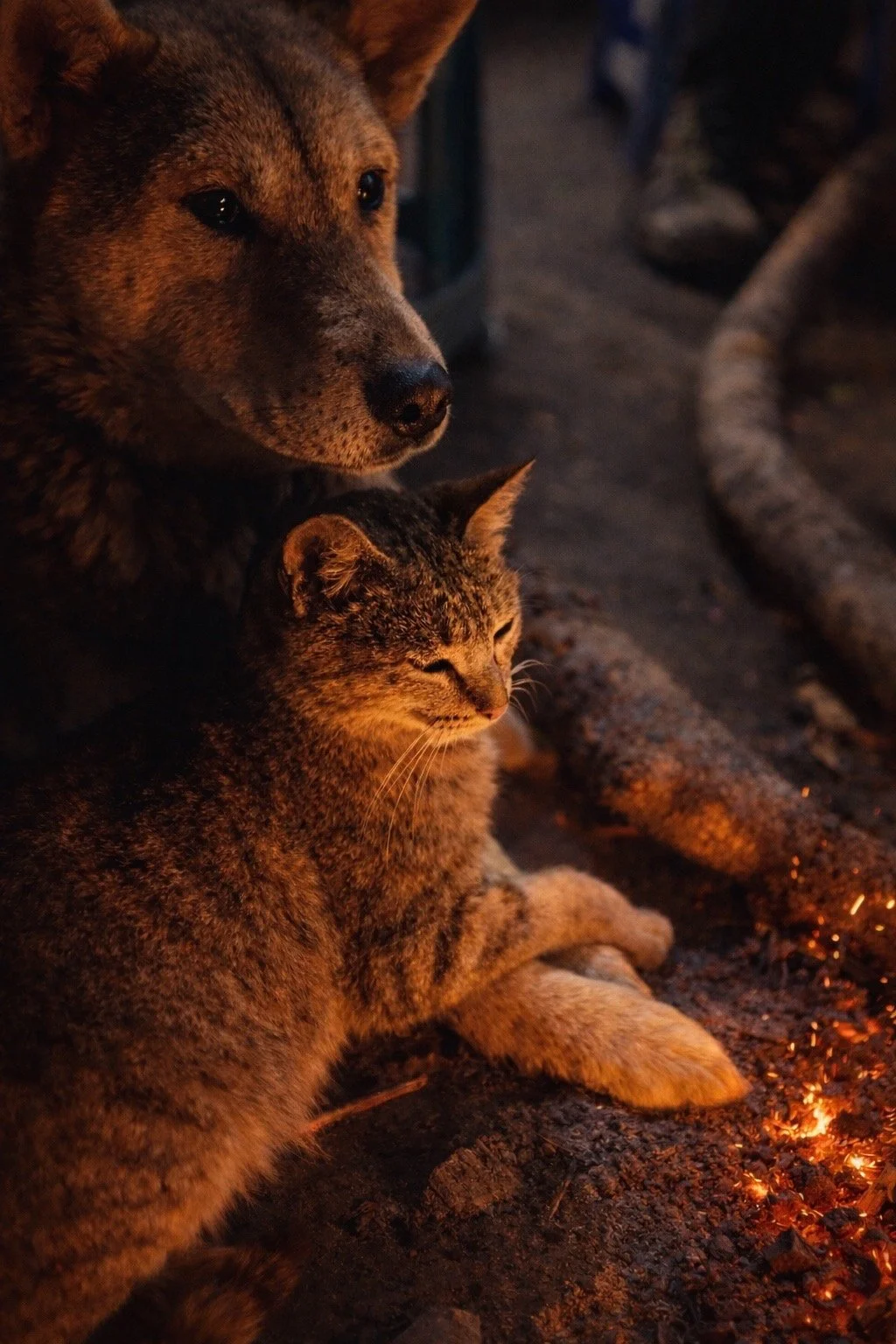


An Old Story About Hunger and Cooperation.
Another popular story explains why cats and dogs chose to live alongside people in the first place.
Many years ago, when the Hmong still lived semi nomadic lives in the mountains, a time of extreme hunger struck both people and animals. Food was scarce everywhere. The Hmong called a meeting and invited the animals to attend.
“We are all hungry,” the Hmong leader said. “We need to work together.”
One by one, the animals began to make their excuses.
“We only need a tiny amount of food,” said the mouse. “We will be fine.” The mouse promptly left.
The monkey spoke next. Monkeys, he explained, were excellent climbers who could reach fruit high in the tallest trees. “We do not need help.” And off he went. The tiger looked around the room and shrugged. “You are all our food.” With that cheerful observation, the tiger also left. The birds flapped their wings and announced they could simply fly away and find food elsewhere. Then they disappeared into the sky. Slowly the room emptied until only two animals remained. Cats and dogs.
They agreed to work alongside people in a symbiotic way. Humans would provide them with food or shelter. In return, the cats would keep rats and mice from ravaging the grain stores, while dogs would guard homes and keep dangerous animals at bay.
A Partnership That Still Exists Today.
The folktales and the reality of village life line up rather neatly.
Cats and dogs are respected and provided for because they contribute to the household. They are not usually petted, named, or treated like family members in the Western sense. Instead they are valued partners who help keep homes safe, protect food supplies, and make village life run a little more smoothly.
It may not look like the typical idea of pet ownership. But in the mountains of northern Vietnam, it is a practical partnership that has lasted for generations.
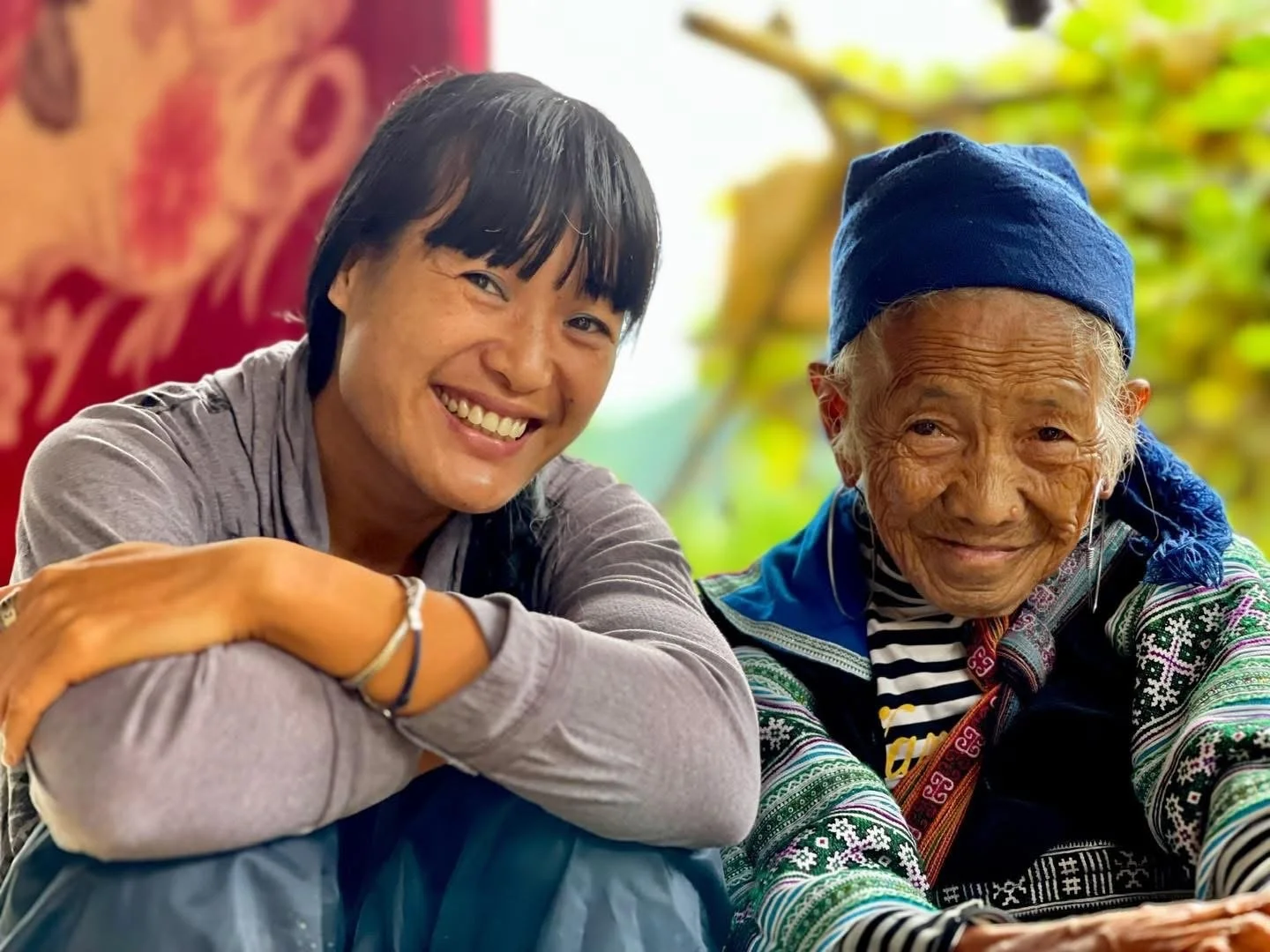
In Loving Memory of Sùng Thị Máy
Sùng Thị Máy lived nearly a century shaped by hardship, resilience and love for her family. From gathering firewood in the mountains to sharing stories and traditional knowledge with younger generations, her life reflects quiet strength and enduring dignity.
A Life of Strength and Resilience
Born on 11 January 1925, during the era of French Indochina, Sùng Thị Máy witnessed a century of profound change in northern Vietnam. Her life was shaped by both hardship and courage. She lost her husband during the Chinese invasion of northern Vietnam in 1979 and spent her later years in a small mountain home, caring for her five great-grandchildren.
Despite her age, Máy continued to gather firewood daily for cooking, while the eldest of the children searched for food in the surrounding forest. Her simple yet determined way of life reflected her enduring spirit and love for her family.
Meeting ETHOS
Our paths first crossed with Máy in 2017, when we found her collecting plastic waste from bins in the town of Sapa. At 92 years old, she was living on the streets, sorting recyclables to earn a small income. Moved by her story and resilience, ETHOS began a support project for her in 2020.
Through regular food, clothing, and medical assistance, Máy was able to return to her mountain home and live with dignity once more. Her quiet gratitude and humour touched everyone who met her.
A Remarkable Recovery
In December 2023, Máy fell seriously ill with pneumonia. Hoa arranged her hospital treatment, and thanks to care and determination, she recovered enough to be discharged after about ten days. During her stay, we learned more about her past and her remarkable resilience.
She shared how her grandchildren, who had been opium growers, were imprisoned in 2023, leaving her to care for the five young great-grandchildren alone. After leaving hospital, Máy stayed at the ETHOS community centre to continue her recovery.
During those weeks, she spent her days telling stories, twisting hemp fibres and sharing her traditional textile knowledge with our younger team members. Her patience and wisdom became a source of quiet inspiration to all of us.
A Legacy of Love
Sùng Thị Máy’s life was a testament to courage, endurance and love. She was a devoted mother, grandmother and great-grandmother whose kindness and strength will not be forgotten. Her youthful smile, sharp mind and gentle humour stayed with her until her final days.
Máy’s story reminds us of the beauty in simplicity and the power of compassion. She leaves behind not only her family but also a community forever touched by her warmth and grace.
Closing Reflection
We will remember Máy for her laughter, her hands always busy with work, and her heart full of love. Her spirit continues to live on in the mountains she called home and in the memories of all who had the privilege to know her.
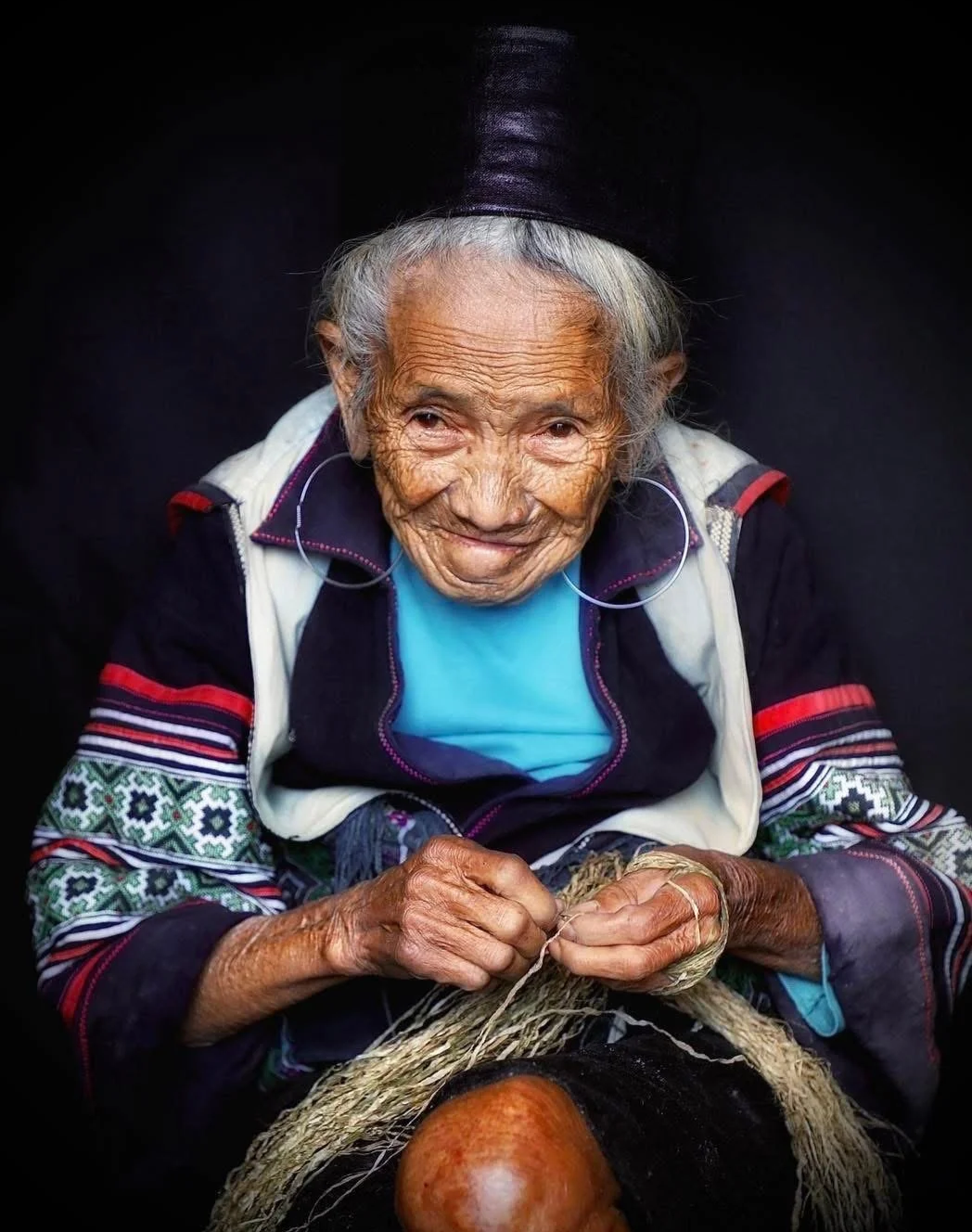
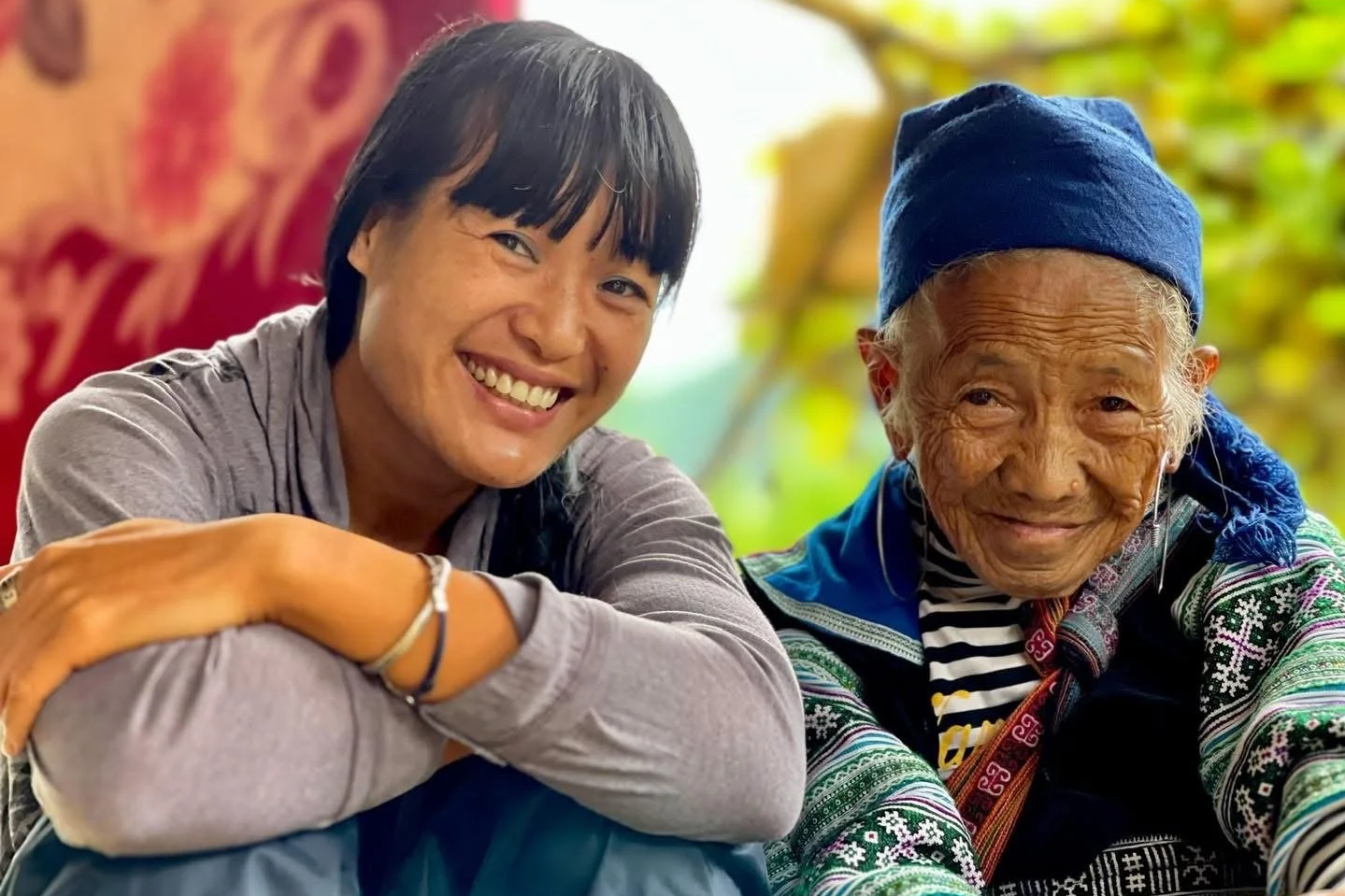
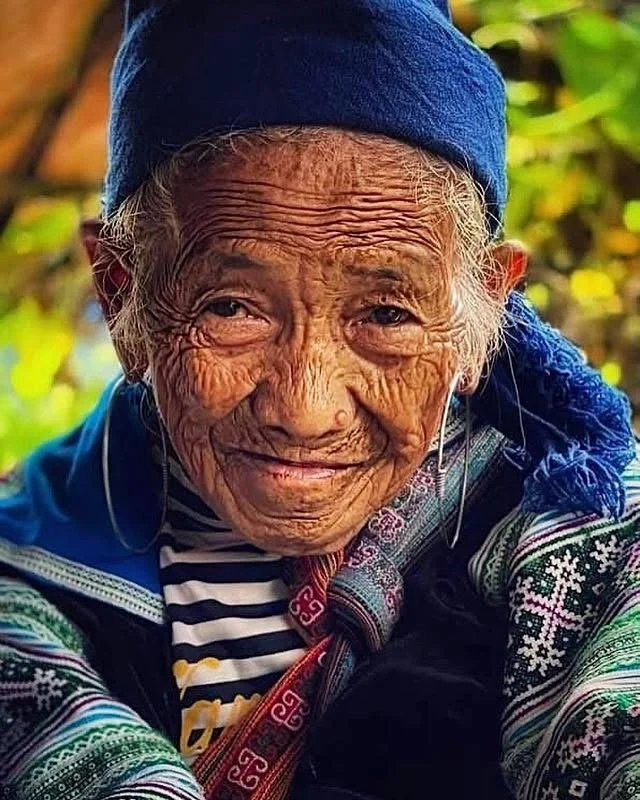
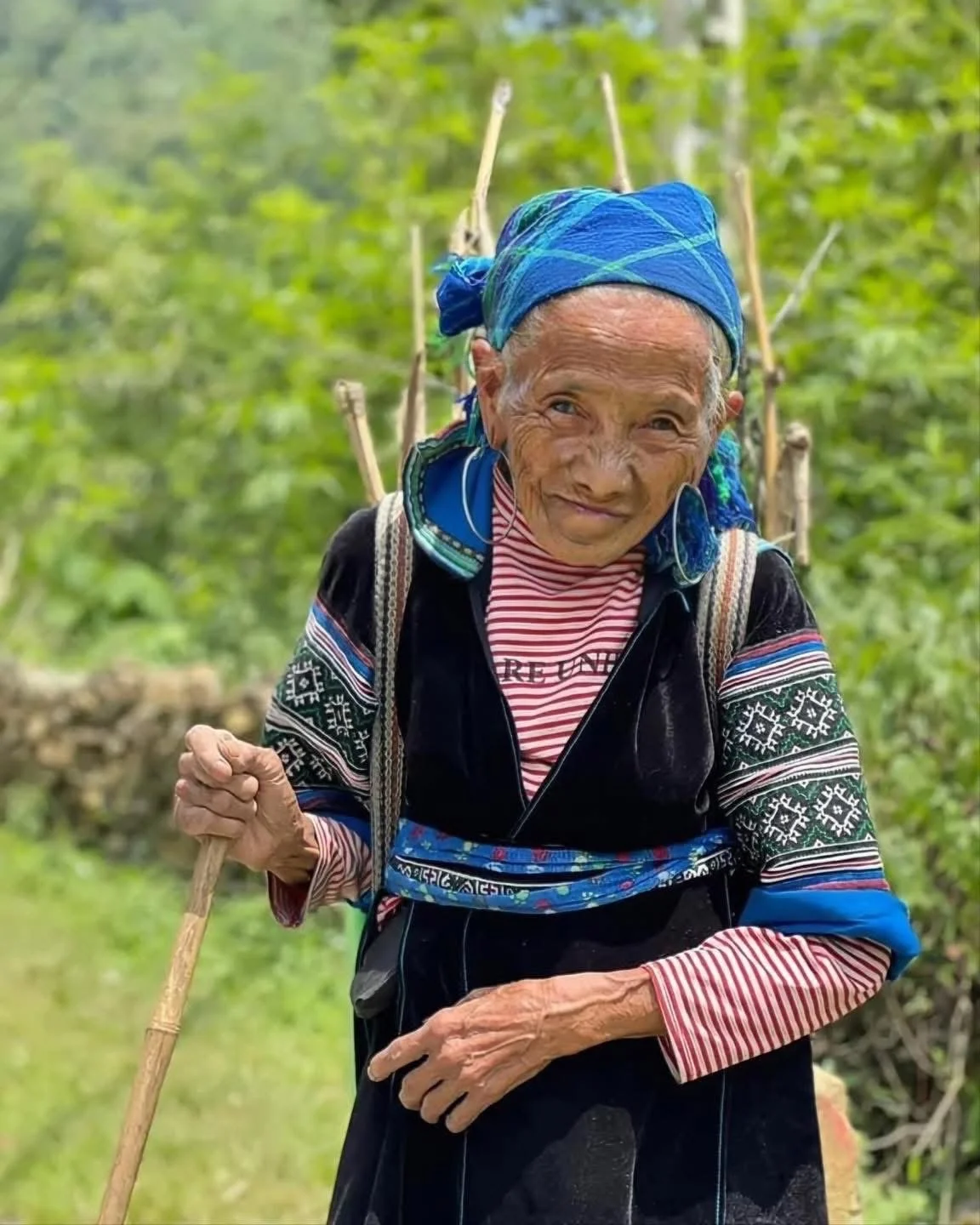
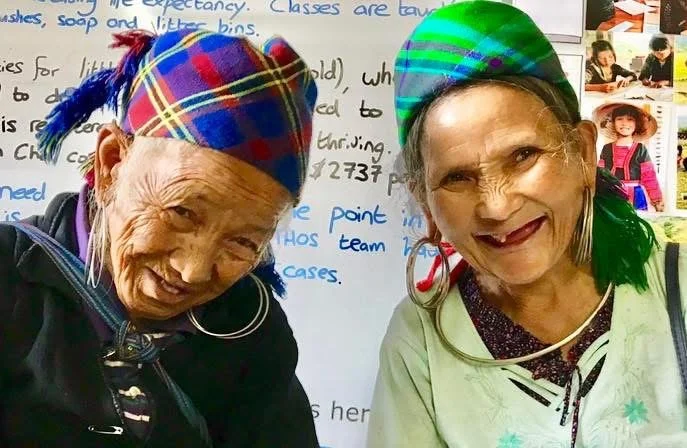
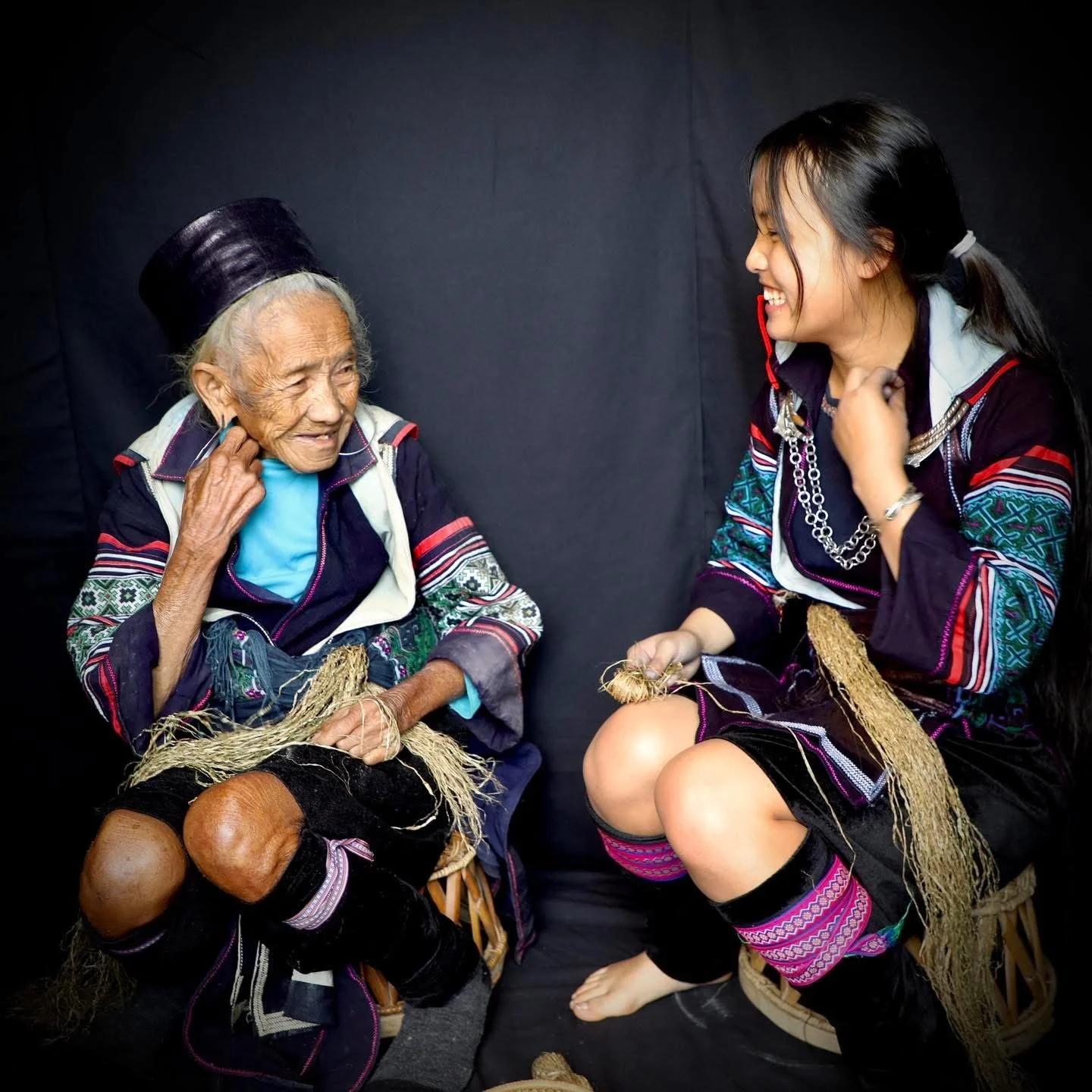
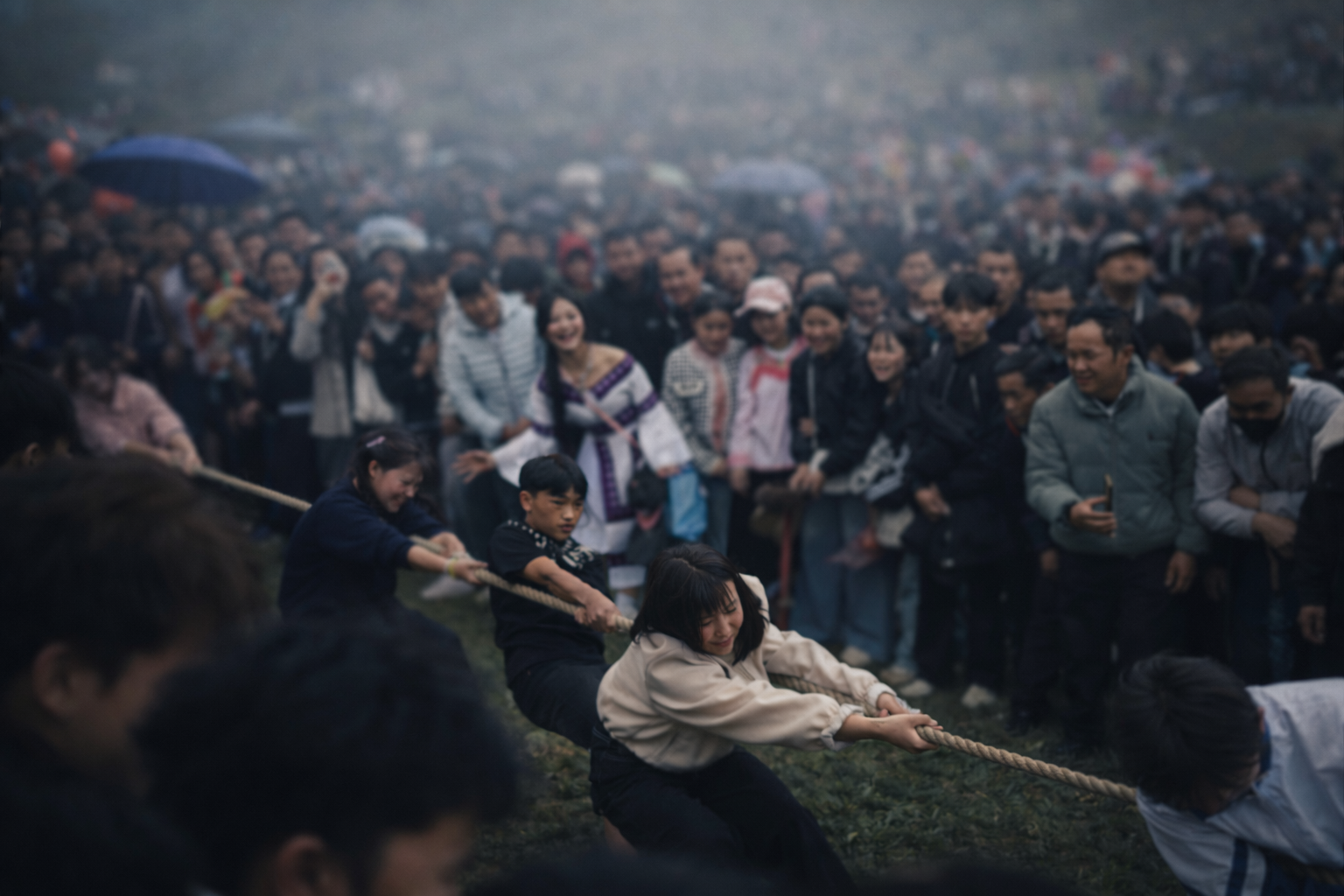
Roóng Poọc Festival and the End of Tet
Held in the mountain village of Tả Van in Sapa, the Roóng Poọc Festival marks the end of Tet and the beginning of a new farming year. Through sacred rituals, traditional games, and communal celebration, the Giáy and Hmong communities honour nature, fertility, and the renewal of village life.
A Festival of Renewal in the Mountains of Sapa
In the highland village of Tả Van, nestled among the terraced rice fields of Sapa, northern Vietnam, the Roóng Poọc Festival marks an important turning point in the local calendar. Celebrated by the Giáy and Hmong communities, the festival traditionally signals the end of Tet, the Vietnamese Lunar New Year, and the beginning of a new agricultural cycle. It is both a spiritual observance and a communal celebration, rooted in generations of cultural tradition.
Roóng Poọc takes place on the Dragon Day of the first lunar month, a date believed to carry powerful symbolic meaning. For villagers whose livelihoods depend closely on the rhythms of nature, this moment represents a renewal of harmony between people, land, and the unseen spiritual world. Families gather in the village fields to pray for prosperity, good health, and fertile harvests in the coming year.
The festival is a living tradition that reinforces community bonds and expresses the agricultural knowledge and spiritual beliefs that have shaped life in these mountains for centuries.
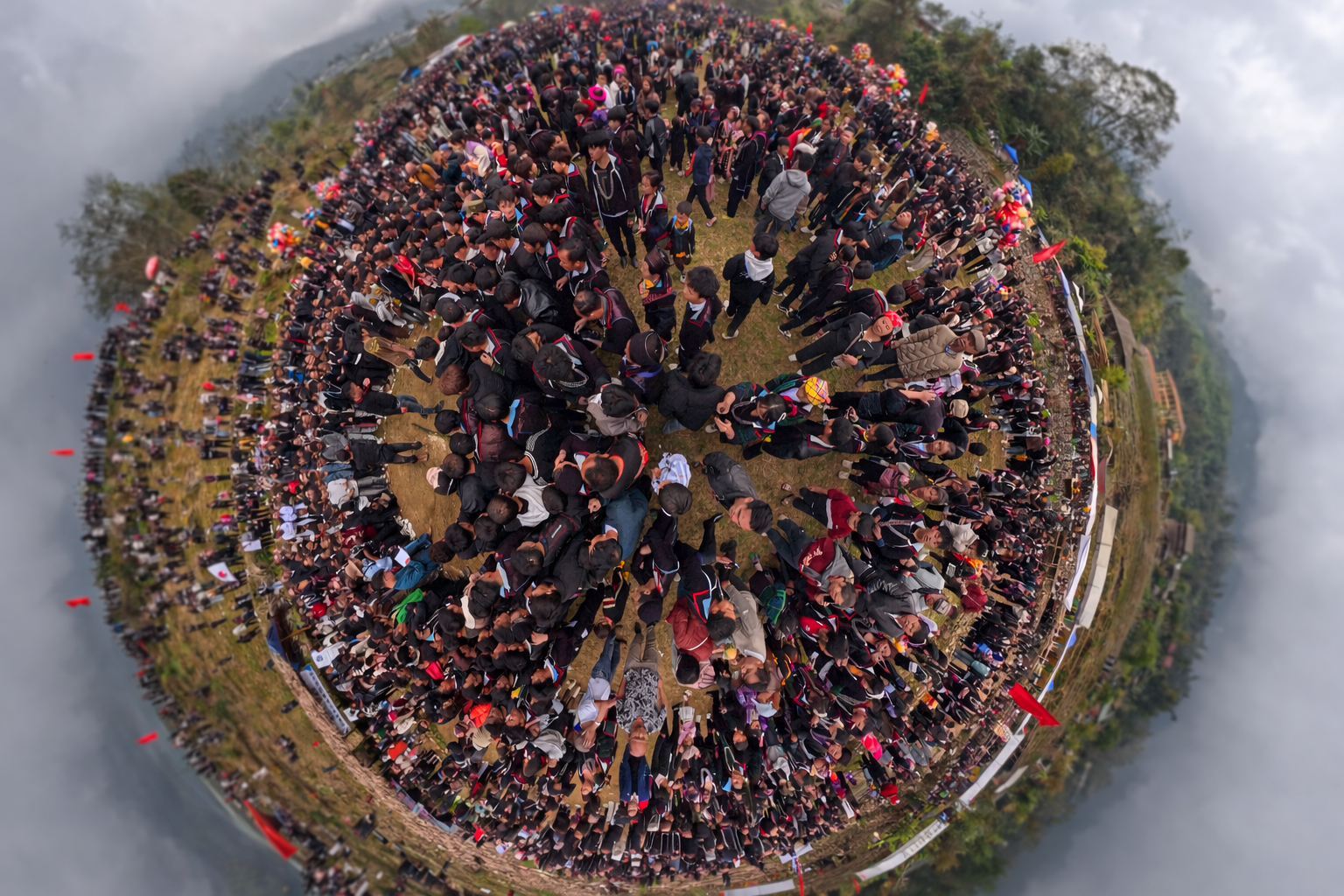
Sacred Rituals and the Raising of the Cây Nêu
The most important part of the Roóng Poọc Festival is the sequence of sacred rituals conducted early in the day. Village elders and ritual specialists oversee the ceremonies, ensuring that each step follows tradition and honours ancestral customs.
At the centre of the ritual space stands a tall ceremonial bamboo pole known as the cây nêu. Before it can be raised, a divination ritual is performed to seek approval from the spiritual realm. The ritual leader consults symbolic objects and chants traditional prayers, asking whether the spirits will bless the coming year with favourable weather and successful crops.
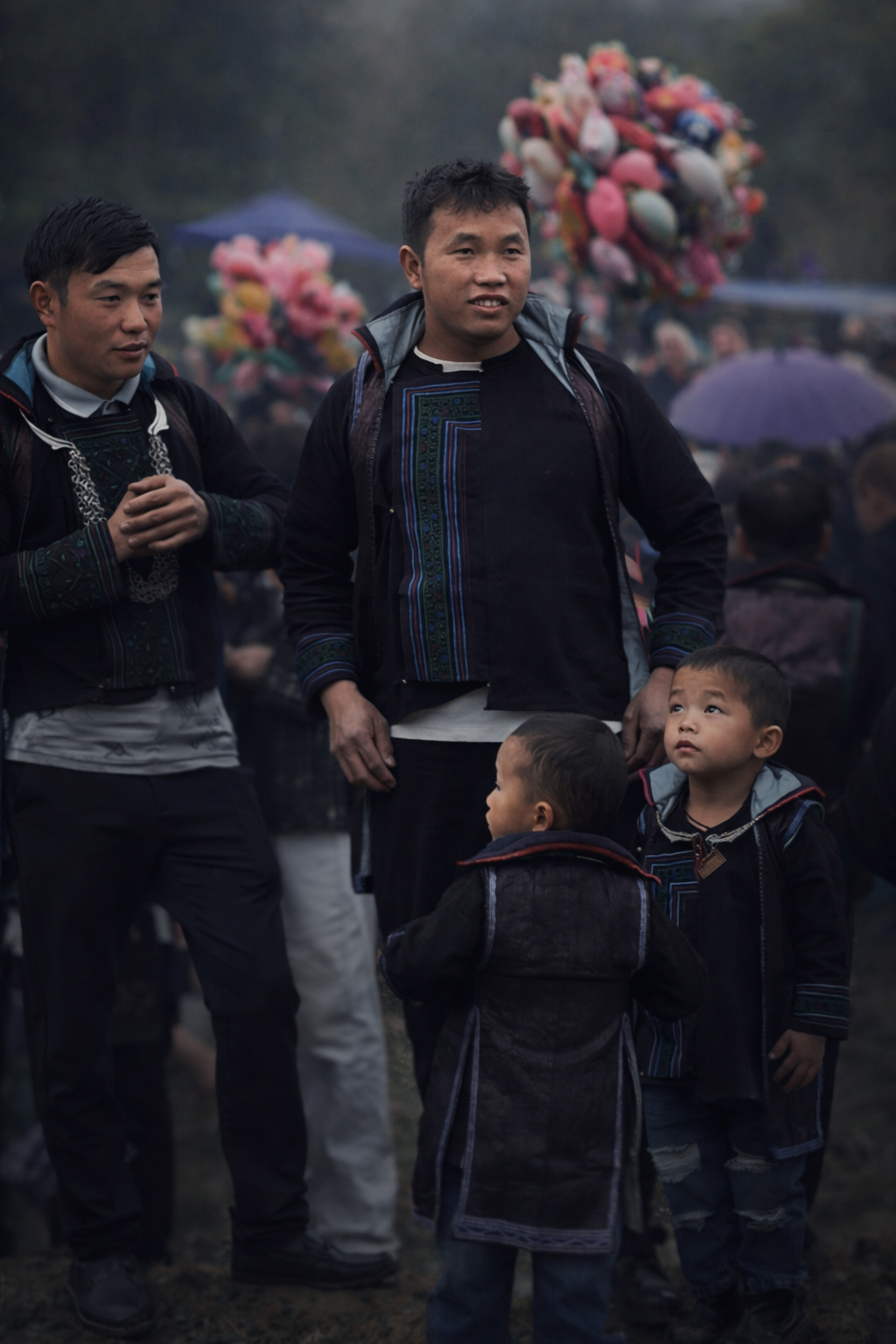

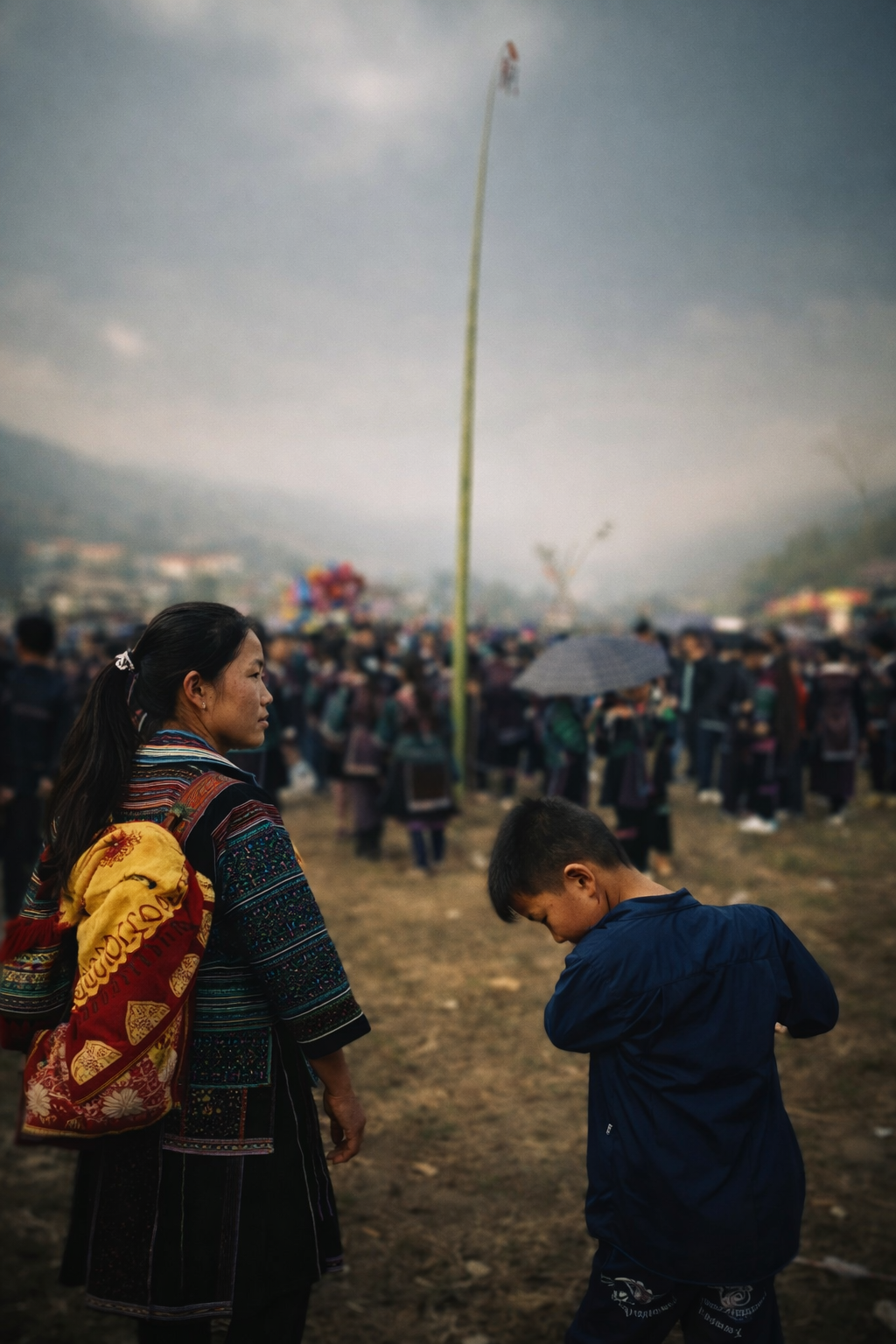
Only when the divination confirms divine approval can the bamboo pole be raised. The cây nêu is decorated with colourful fabric, sacred symbols, and circular motifs representing the sun and moon. These designs reflect the balance of yin and yang, a principle that underpins much of traditional cosmology in the region. The pole becomes a focal point for the entire festival, symbolising the connection between heaven and earth.
For villagers, this moment carries deep meaning. It marks the formal conclusion of Tet and the beginning of the agricultural season, when attention must once again turn to the rice fields and the work of cultivation.
Games of Skill and Symbols of Fertility
Once the sacred rituals are complete, the atmosphere shifts from solemnity to celebration. Villagers gather around the bamboo pole to take part in traditional games that have both symbolic and practical meaning.
One of the most important activities is the quả còn throwing game. Participants attempt to throw small handmade cloth balls through a circular ring attached near the top of the bamboo pole. The balls are often brightly coloured and carefully crafted by local families. Successfully passing the ball through the ring is believed to bring good fortune and prosperity for the year ahead.
There are games to test strength and dexterity as well as technique and skills. One such example is the travesing of a bamboo pole, suspended by loose ropes across the Muong Hoa River. Participants take turns to balance on the pole and attemp to reach the opposite river bank.
The act of throwing the quả còn carries symbolic significance. It represents fertility and abundance, reflecting hopes for productive fields and healthy livestock. The game also encourages friendly competition among villagers and provides a moment of shared excitement as the crowd cheers each successful throw.
Another popular event is tug-of-war using a thick vine rope gathered from the forest. Teams from different parts of the village pull against each other with laughter and determination. Beyond its playful nature, the contest symbolises strength, unity, and the collective effort required to sustain agricultural life.
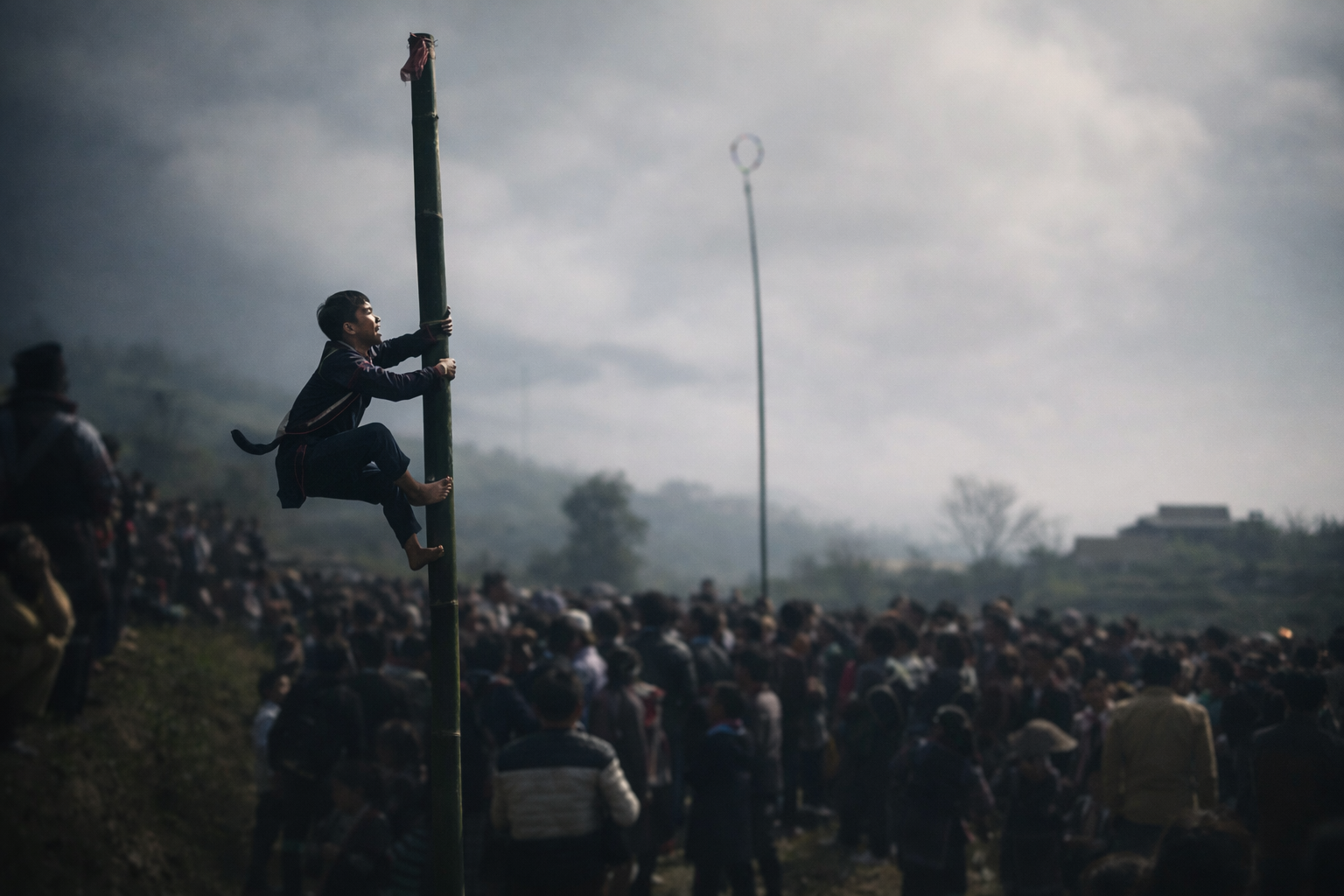
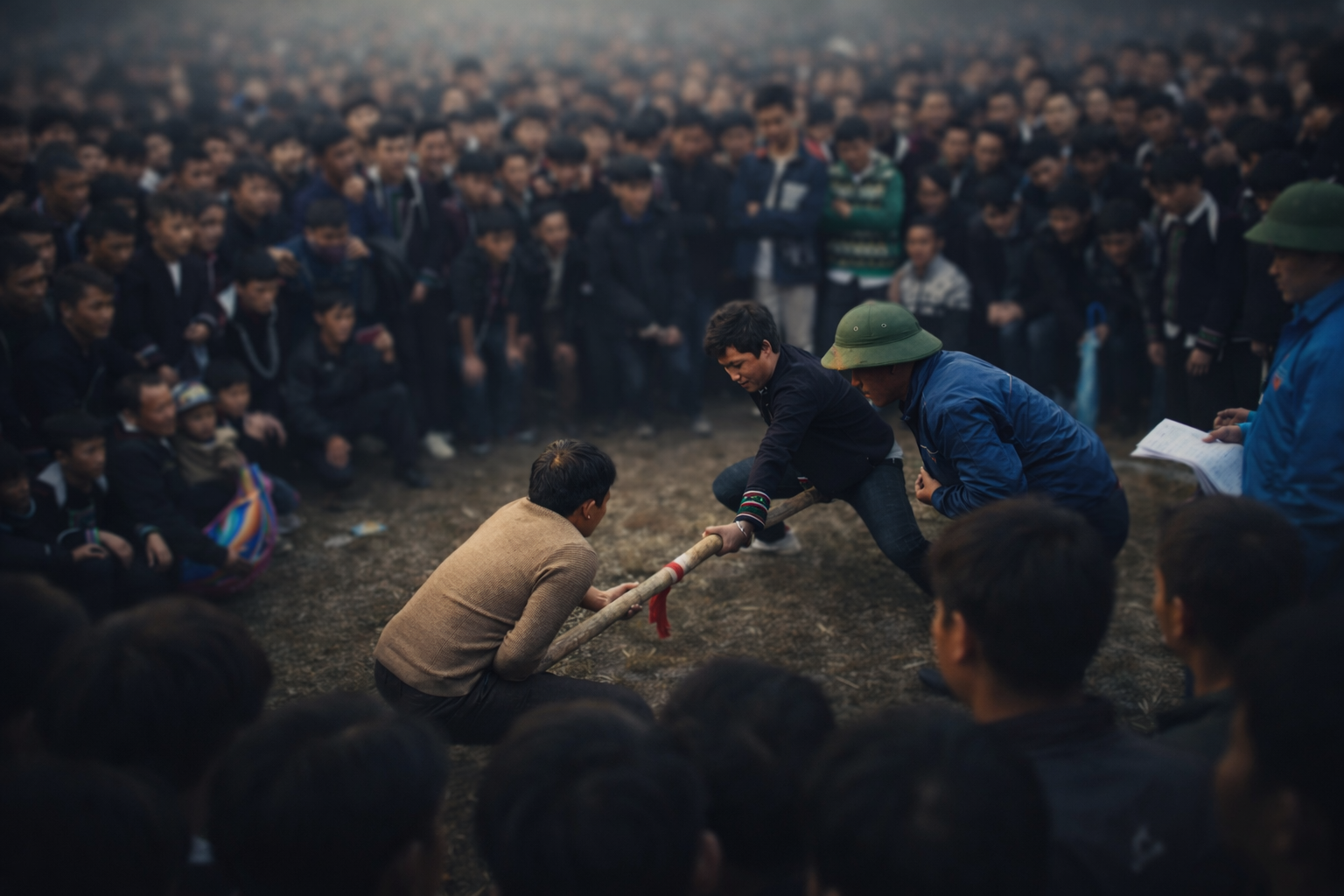
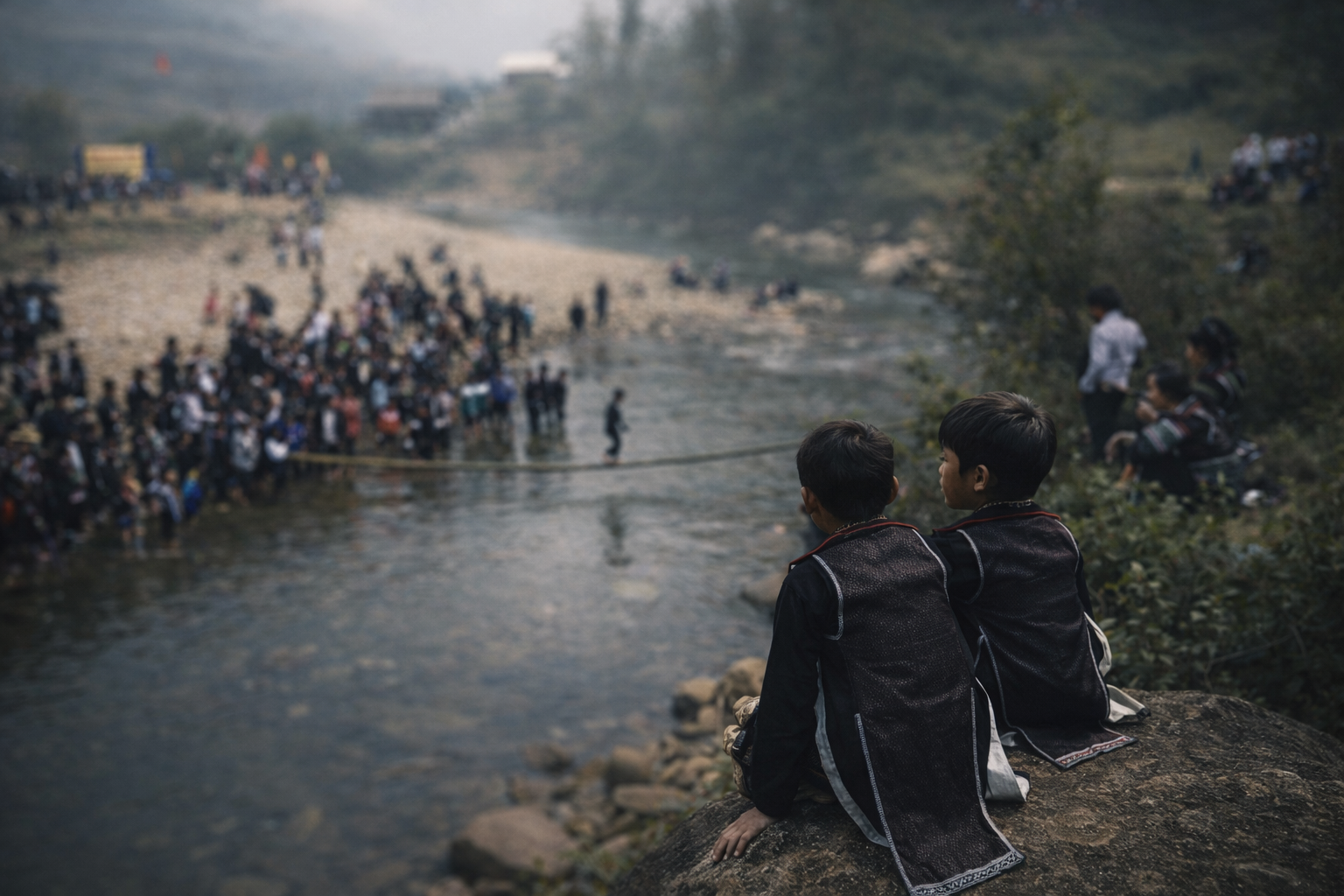
Ceremonial Ploughing and the Agricultural Cycle
A particularly meaningful part of the festival is the ceremonial ploughing of the field. Buffaloes, essential partners in traditional farming, are led onto the prepared ground as elders demonstrate the first symbolic furrows of the season.
This act represents the beginning of the agricultural year. By guiding the buffalo through the soil, villagers honour the animals that help cultivate the rice terraces and acknowledge the importance of the land that sustains them.
The ceremony is also a reminder that farming is part of a broader relationship between people, animals, and nature. Through ritualised actions such as these, the community expresses gratitude and seeks blessings for the months of labour that lie ahead.
Music, Dress, and Communal Celebration
Throughout the day, the festival grounds are filled with music, laughter, and colour. Folk songs are performed by groups of villagers, often accompanied by traditional instruments and rhythmic dancing. These performances preserve oral traditions that have been passed down through generations.
Many families attend the festival wearing finely crafted traditional clothing. Garments are typically made from hemp fibres and dyed with deep indigo extracted from local plants. The intricate embroidery and patterns reflect both artistic skill and cultural identity.
Communal meals also play an important role in the celebration. Families bring food to share, creating an atmosphere of hospitality and collective enjoyment. Rice wine, local dishes, and seasonal ingredients are passed between friends and relatives, reinforcing the strong sense of community that defines village life.
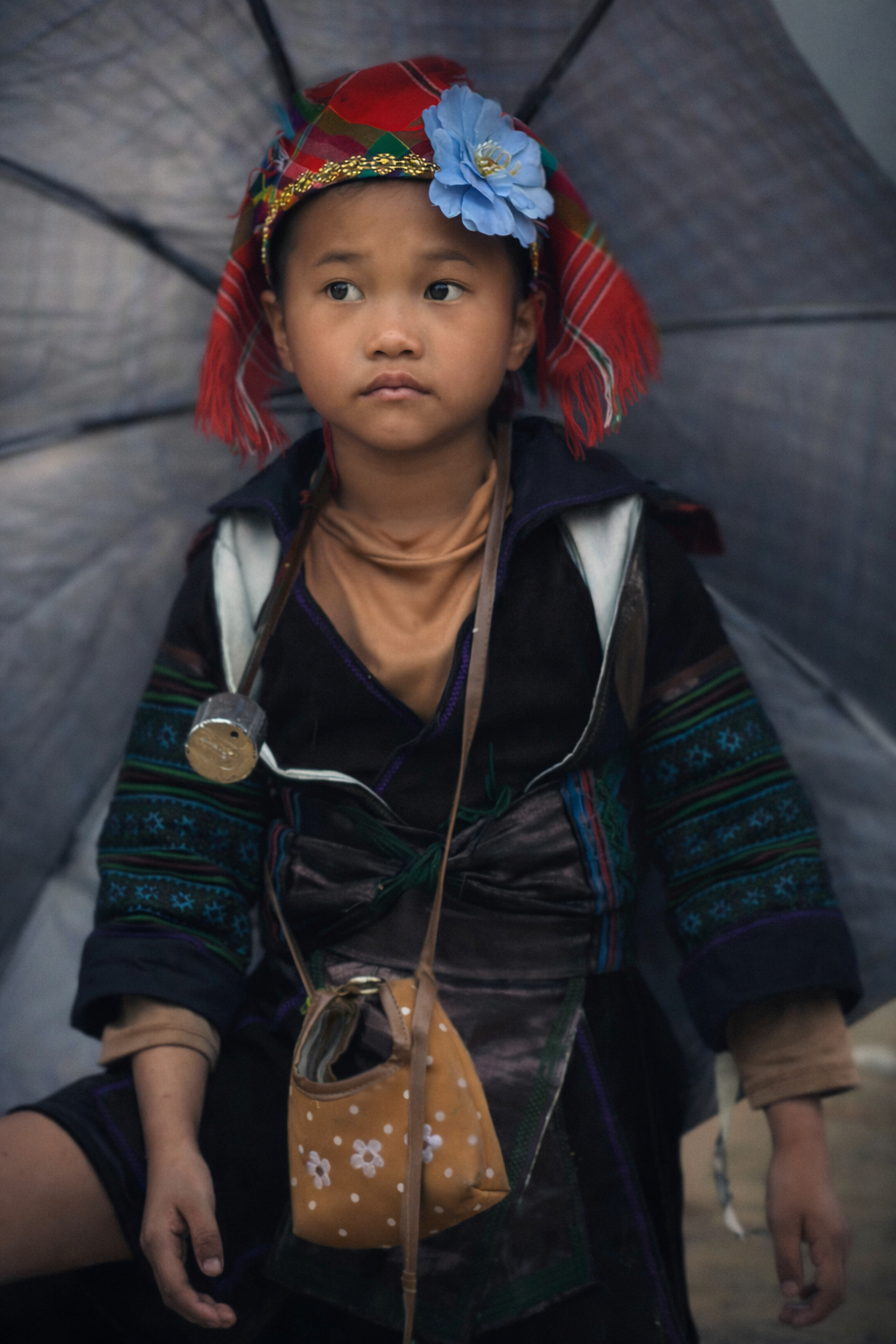
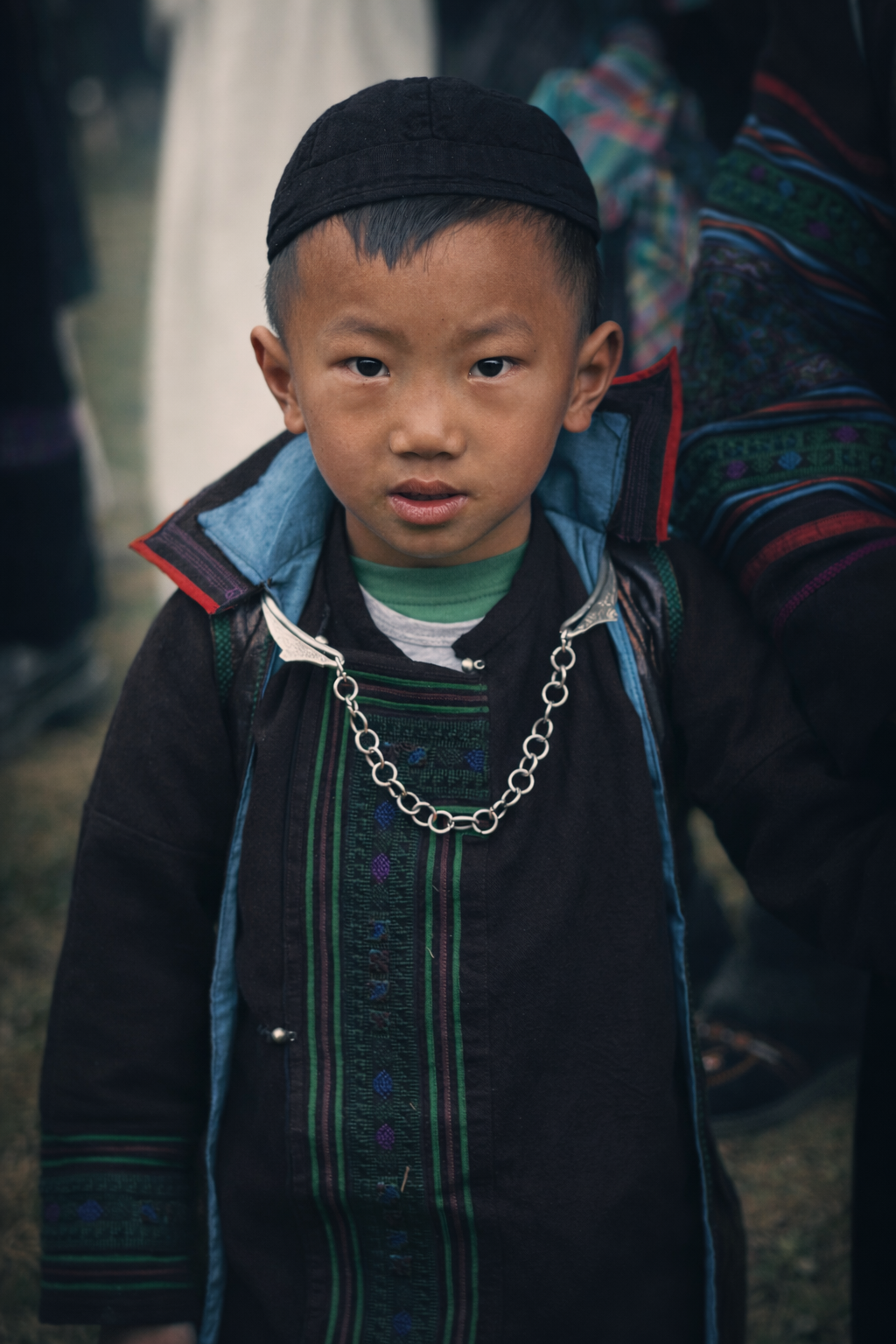
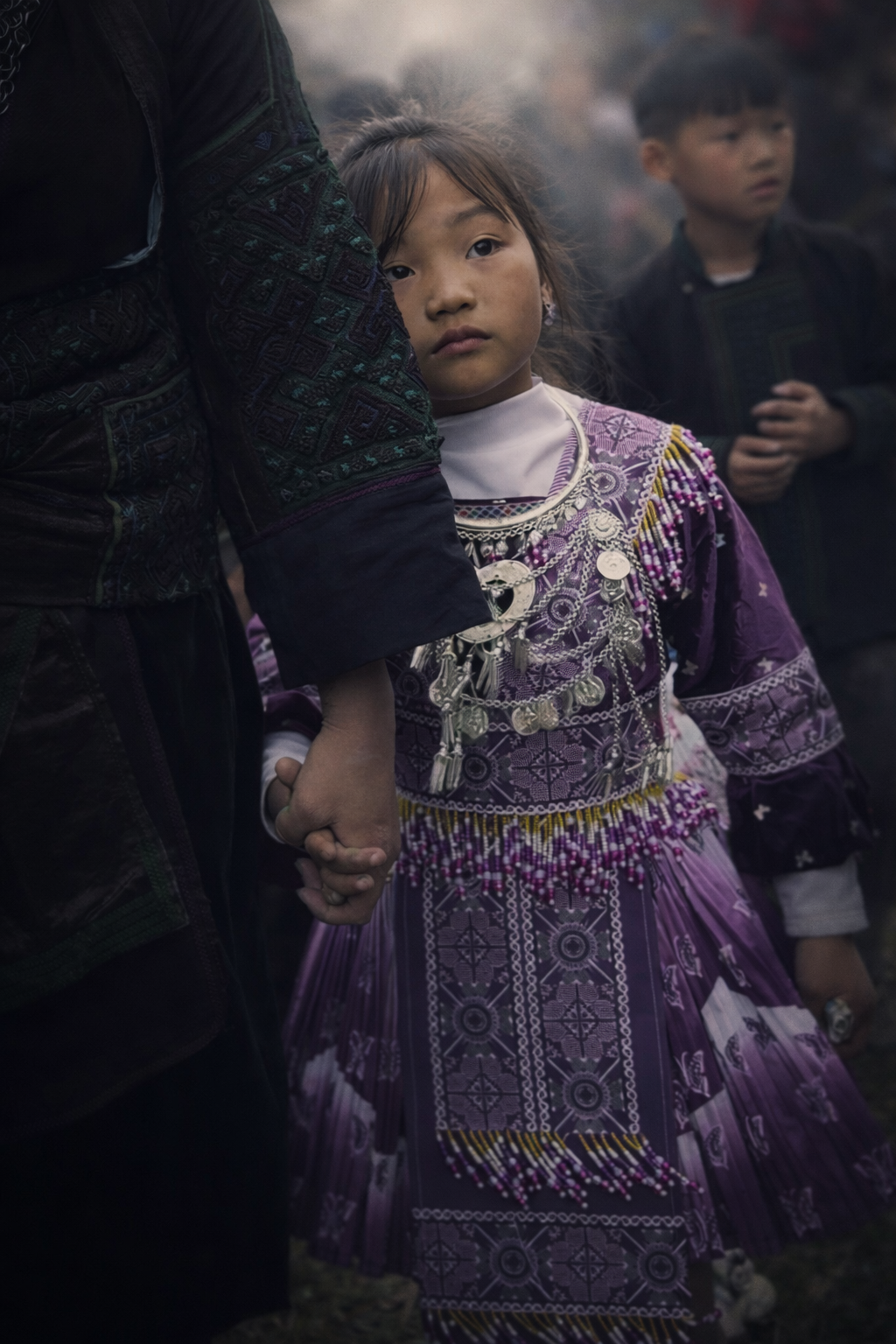
Tradition in Changing Times
In recent years, the Roóng Poọc Festival has drawn increasing attention from visitors who travel to Sapa to witness the event. While tourism has introduced new dynamics, local communities remain committed to preserving the authenticity of the rituals.
Even when conditions are less than ideal, the festival continues. This year’s celebration, for example, took place under unusually foggy and wet weather. The mist hung low over the terraces and the ground was damp from steady rain. Yet villagers still gathered in the fields, raising the bamboo pole and carrying out the ceremonies as their ancestors did.
Such persistence highlights the deeper purpose of Roóng Poọc. It is not dependent on perfect conditions or large audiences. Its true meaning lies in maintaining a connection between community, land, and heritage.
A Living Connection to Nature and Community
The Roóng Poọc Festival stands as a powerful reminder of how traditional cultures mark the passage of time and the cycles of nature. By closing the Tet celebrations and welcoming the new farming year, the festival bridges the festive season and the return to daily work in the fields.
For the Giáy and Hmong people of Tả Van, festivals are an affirmation of identity, cooperation, and respect for the natural world.
Ready to Explore Sapa?
If this cultural festival has inspired you, start planning your trip today.
👉 Read our complete Sapa Travel Guide
👉 Discover the best Sapa Trekking Routes
👉 Learn more about Sapa culture Cultural Experiences in Sapa
Understanding the landscape makes visiting it even more rewarding. Explore wisely, travel prepared and experience one of Vietnam’s most fascinating mountain regions.
Northern Vietnam Sapa & the Highland Border Regions Mountain Landscapes Nature & Ecology
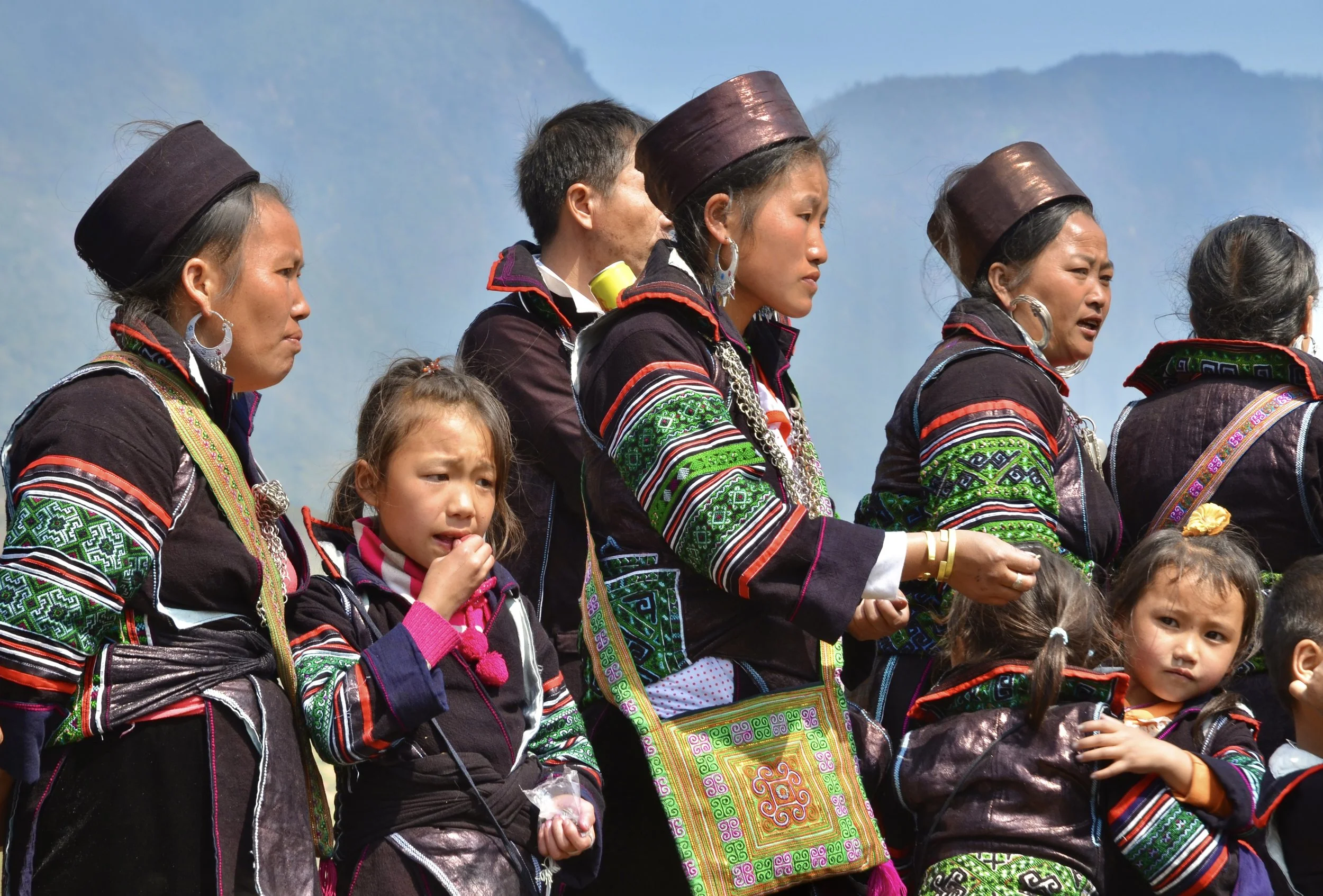
Black Hmong New Year in Sapa: Ritual, Renewal and Indigo Identity
In the mountains around Sapa, the Black Hmong New Year renews both spirit and community. Through shamanic soul-calling rites, offerings, pav tuav, rice wine, festivals and indigo hemp clothing, the celebration binds people to land, ancestors and one another.
In the highlands surrounding Sapa, the Black Hmong New Year is a period when daily life pauses and the relationship between people, spirits, animals and land is renewed. Following the harvest, tools are put away and attention turns first to the household, then outward to the village through festival, music and play. This is a spiritual reset expressed through ritual, food, clothing, music and social life. While many families today align celebrations with Vietnam’s national Tết for practical reasons, the Black Hmong observances remain deeply rooted in their own cosmology.
The Rhythm of the Celebration
Traditionally, the New Year begins once agricultural work is complete. Homes are cleaned. Clothing is finished. Food is prepared. Rice wine is distilled in advance for ritual and visiting. For days afterwards, families visit relatives, exchange blessings and attend communal gatherings filled with games, music and courtship. Normal labour is suspended so that attention can be given to relationships, spirit and renewal. These days, Hmong New Year is more aligned with the Vietnamese Tet celebrations, but Hmong rituals remain unique.
The Household as Sacred Space
The earliest moments of the New Year are domestic and spiritual. The ancestral altar is carefully prepared. Incense is lit. Offerings are made to ancestors and household spirits. A pig is often central to these rites, first presented in prayer before becoming part of the shared meal. The fire symbolises continuity and protection. The house becomes the place where the old year is formally closed and the new one welcomed through ritual order.
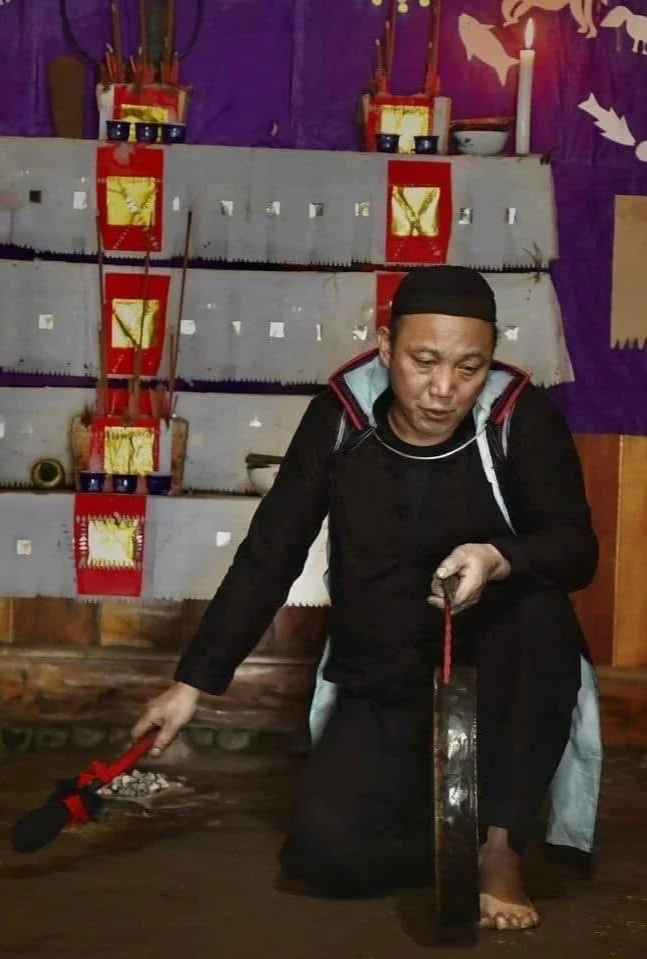
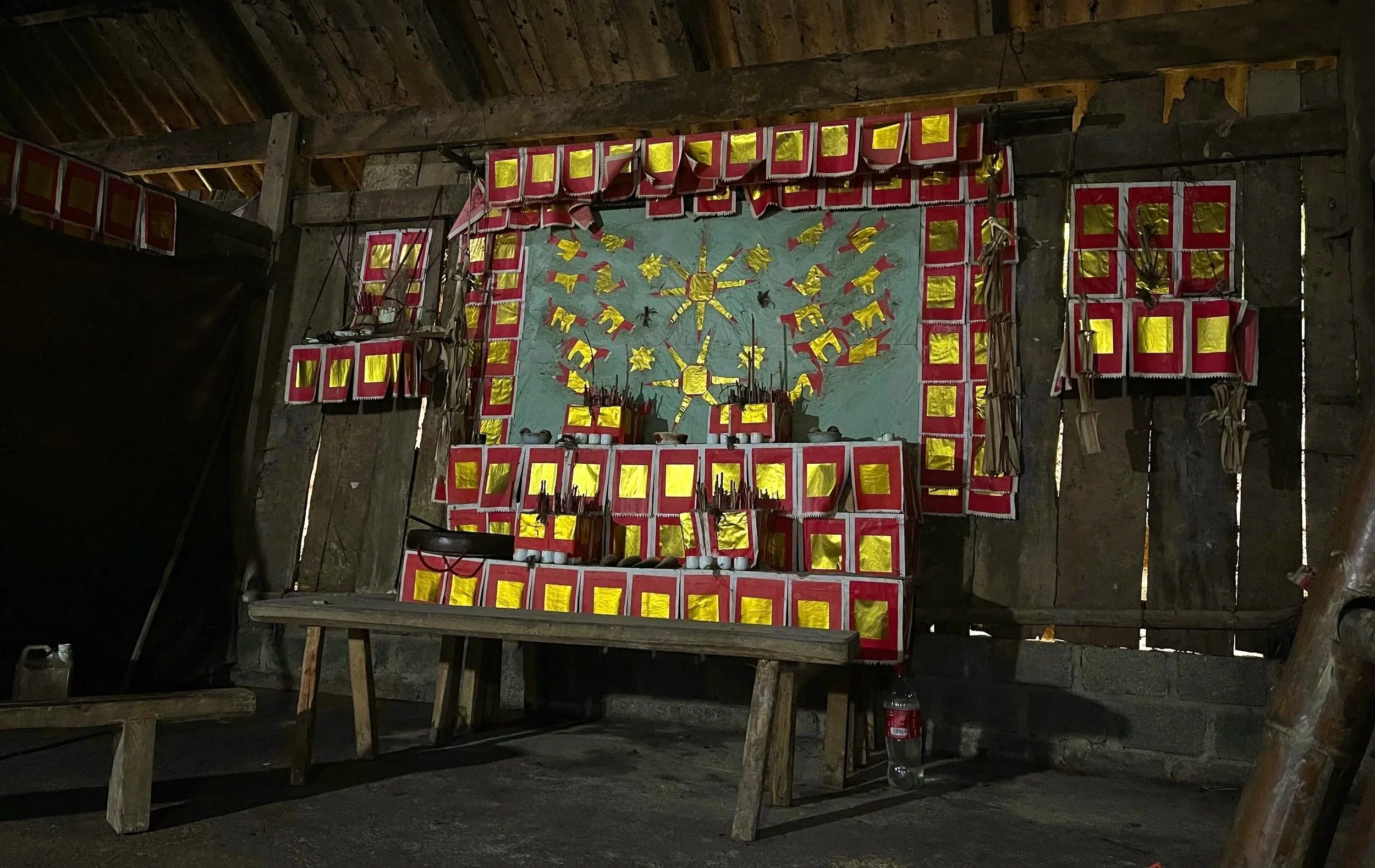
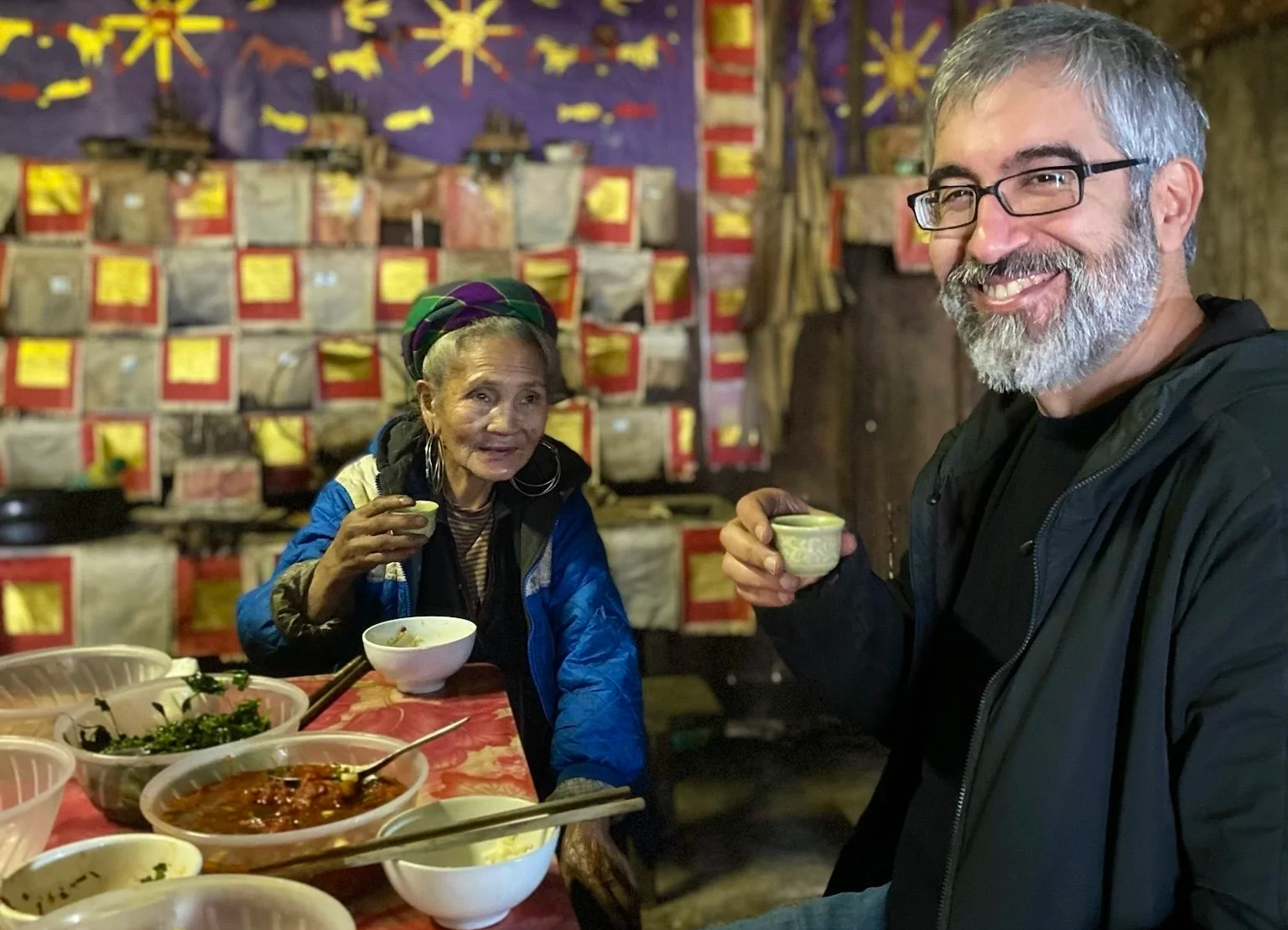
Shamanism and Spiritual Renewal
At the centre of Black Hmong spirituality stands the txiv neeb, the master of spirits. Hmong religion is traditionally animist, grounded in belief in the spirit world and in the interconnectedness of all living things. The human body is believed to host multiple souls. When one or more become separated, illness, depression or misfortune can follow. Healing rites are therefore known as soul-calling rituals, because the lost soul must return.
New Year is a powerful moment for this work.
Soul-calling and the journey to the spirit world
During a séance, the shaman is transported to the spirit world by means of a ‘flying horse’, a narrow wooden bench that serves as spiritual transport. Wearing a paper mask, which blocks out the real world and disguises the shaman from hostile spirits, the shaman enters trance.
Assistants steady the shaman as he mounts the bench. It is believed that if the shaman falls before his soul returns, he will die. In this state, the shaman’s soul leaves the body and enters the spirit realm where he can see, speak to, touch and capture spirits in order to liberate lost human souls.
Shamanic language is used throughout, blending everyday Hmong with the ritual dialect Lus Suav or Mon Draa. The chanting invites the too Xeeb spirit to manifest, accept offerings and grant blessings.
Divination, gong and sacrifice
As the shaman chants, he throws the Kuaj Neeb, two halves of a buffalo horn used for divination. Their landing position reveals whether spirits accept the offerings. He also strikes the Nruag Neeb, a small metal gong whose reverberation is believed to amplify spiritual strength and protect him. Villagers may pool money to buy a large sacrificial pig as a collective offering for the entire community. In Hmong belief, the soul of the animal can support or protect human souls. The sacrifice is understood as life given to restore life. Young men prepare and cook the meat while women cook rice. Rhythmic dances take place in same sex groups, each dancer holding a gong and moving barefoot before the altar.
Bamboo papers are laid in a line before participants. The shaman chants over each person, uses the buffalo horns for divination, then the papers are burned and their ashes read to assess spiritual health and predict future séances.
Fire, trance and communal feast
A pyre is built from old ritual papers. As chanting intensifies and gongs grow louder, the shaman rolls through the embers, sending sparks into the air. Others follow, dancing through smoke with stamping feet. Bowls of meat and rice are placed on the altar with cups of distilled rice wine. Food and drink are offered to the spirits before the communal feast begins. The ceremony ends in shared eating, storytelling and laughter long into the night.
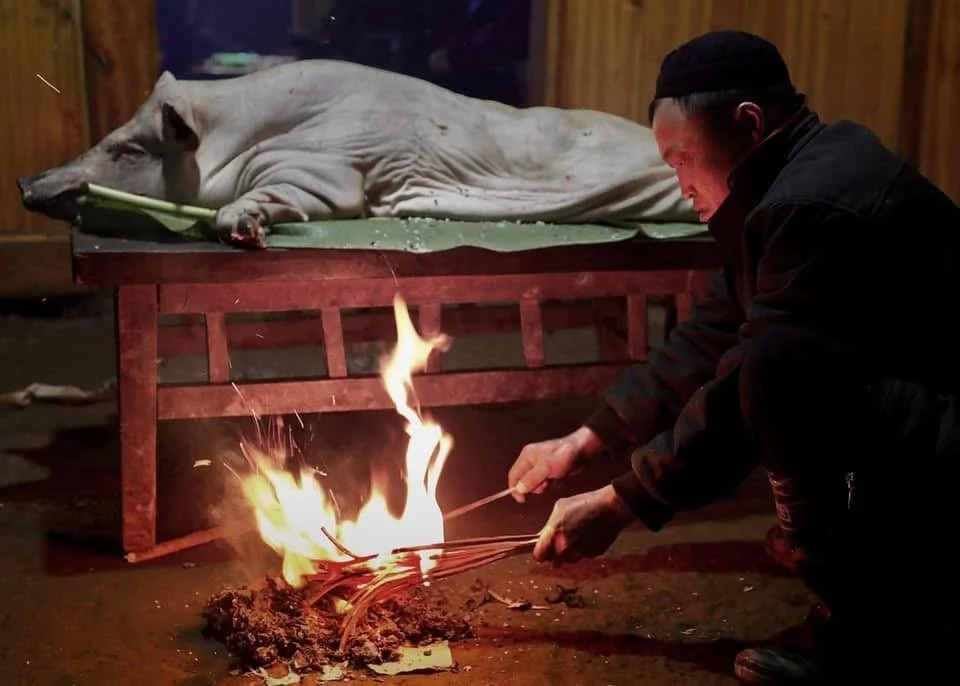
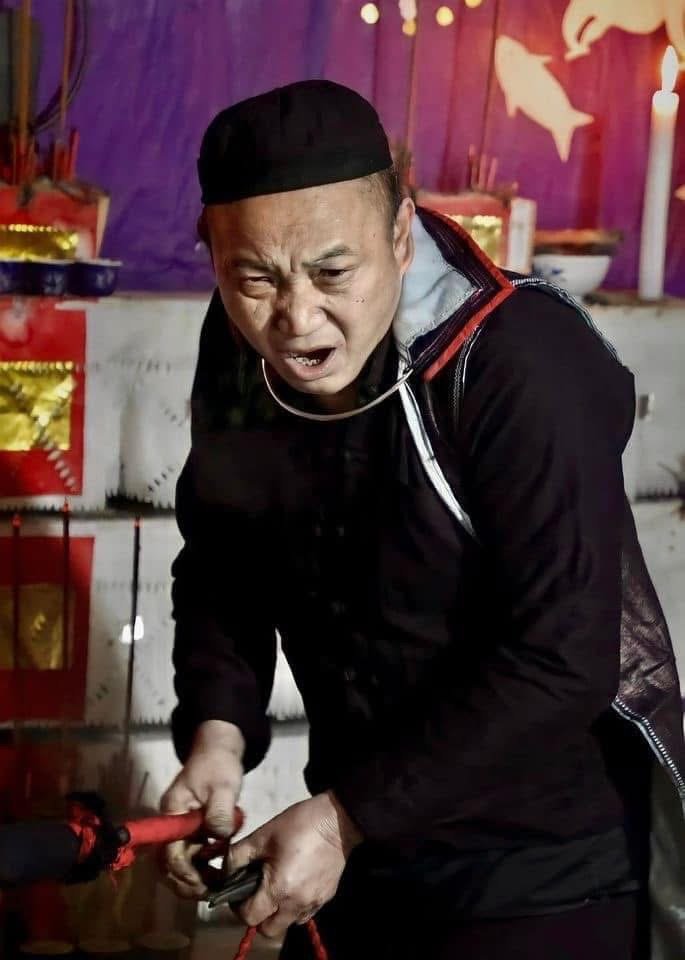
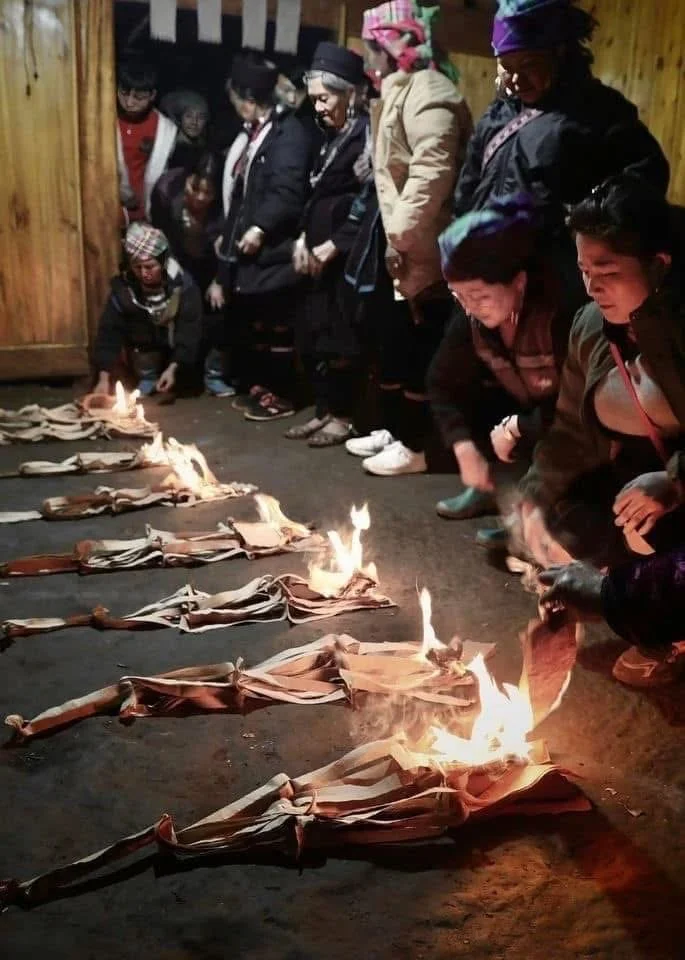
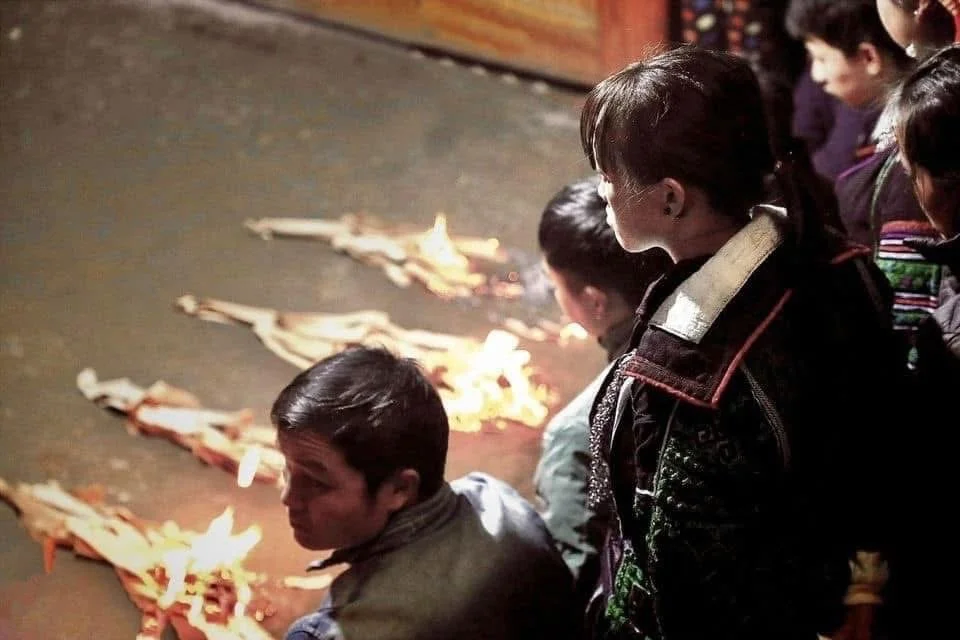
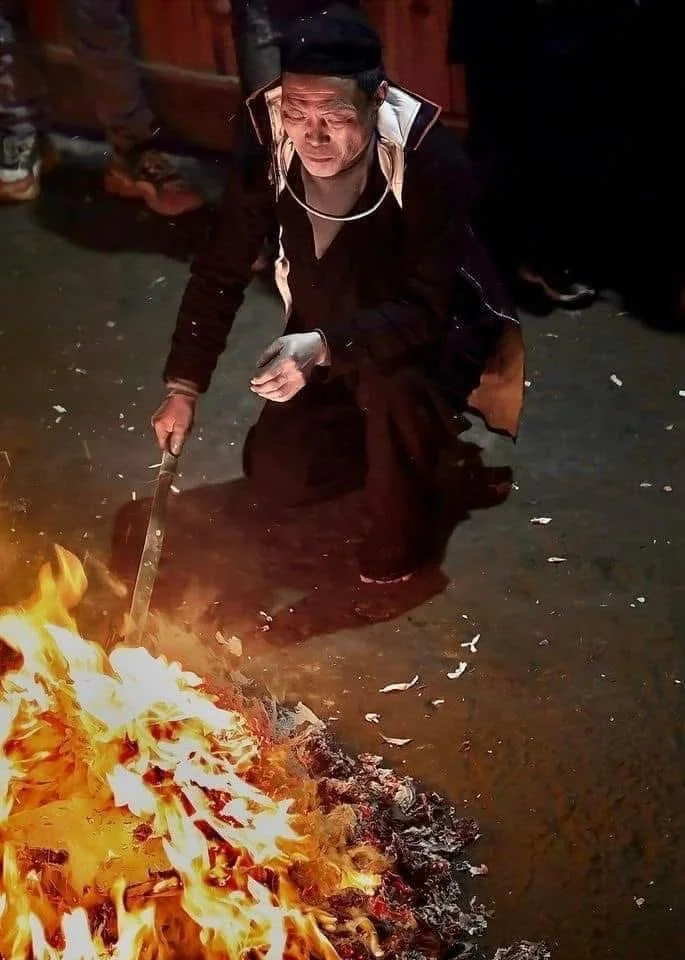
New Year Food and Hospitality
Food during New Year signals abundance and generosity. Pork dominate festive meals, often from animals first used in ritual offering. Sticky rice cakes known in Hmong as pav tuav are made by pounding glutinous rice into smooth rounds, sometimes in friendly competitions.
Distilled rice wine is essential. It is used in ritual, offered to spirits and shared with guests. Accepting a cup is part of accepting the relationship and blessing.
Clothing: Hemp, Indigo and Identity
New Year is visually striking because everyone wears new or newly finished clothing. This symbolises renewal and showcases months of labour in hemp weaving, indigo dyeing, batik and embroidery.
Hemp at the heart of Black Hmong textile life
Hemp has long been central to Black Hmong textile traditions in Sapa. It is valued not only as a fibre but for its cultural and spiritual meaning. Hemp grows well in the cool, humid highlands and is cultivated in family plots. After harvesting, stalks are retted in water, fibres stripped, dried and beaten, then hand-spun into thread. The thread is woven on backstrap looms into sturdy, breathable cloth. This process can take many months and knowledge is passed primarily through women. The cloth is dyed repeatedly in natural indigo baths to achieve the deep blue-black colour associated with Black Hmong clothing. Patterns are created using beeswax batik or intricate silk embroidery, often taking many more months. Motifs represent daily life, nature and important milestones.
Spiritual meaning of hemp
Hemp is not only worn in life but is central in death. In Hmong funerals, a hemp shroud traditionally wraps the deceased. This is a spiritual necessity. It is believed that only hemp can guide the soul safely back to the ancestral realm. Without hemp, the soul may become lost. This belief ties hemp directly to cosmology and the journey between worlds. For the Black Hmong, hemp symbolises resilience, continuity and identity. It connects people to land, ancestors and tradition even as modern fabrics become available.
Indigo clothing at New Year
Women’s indigo garments, decorated with batik and embroidery, are paired with silver jewellery. Men’s clothing is simpler but still formal. Children wear miniature versions. New Year becomes a community exhibition of textile skill and cultural pride.
Festivals, Games and Courtship
After household rites, attention turns to communal gatherings such as the Gau Tao festival. A tall decorated bamboo pole is erected, prayers are made, and the area becomes a place of games, music and social life.
Bamboo wrestling, stilt walking, spinning tops, crossbow contests and tug-of-war take place alongside ném pao, the ball-toss game where young men and women meet, talk and flirt.
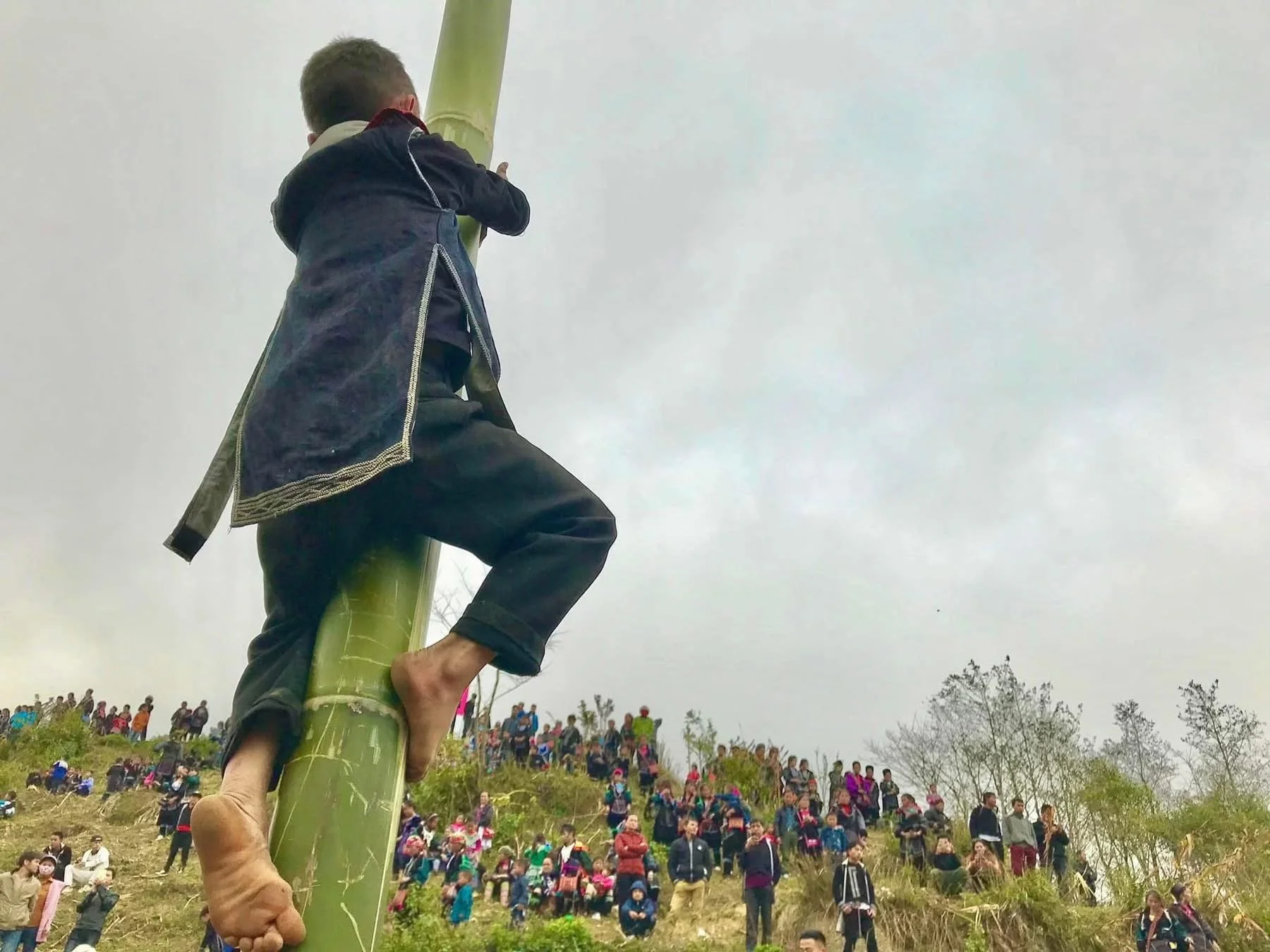
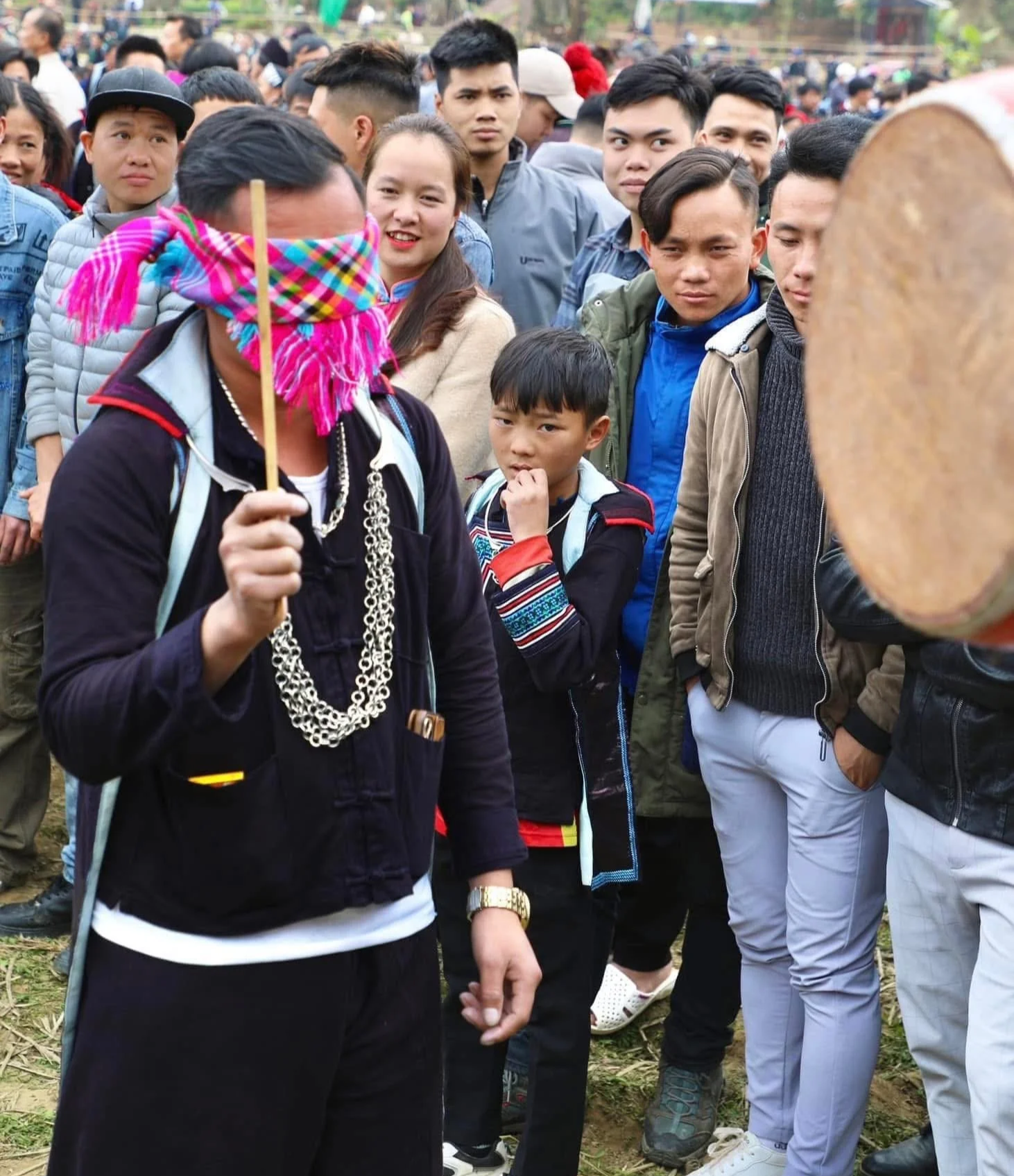
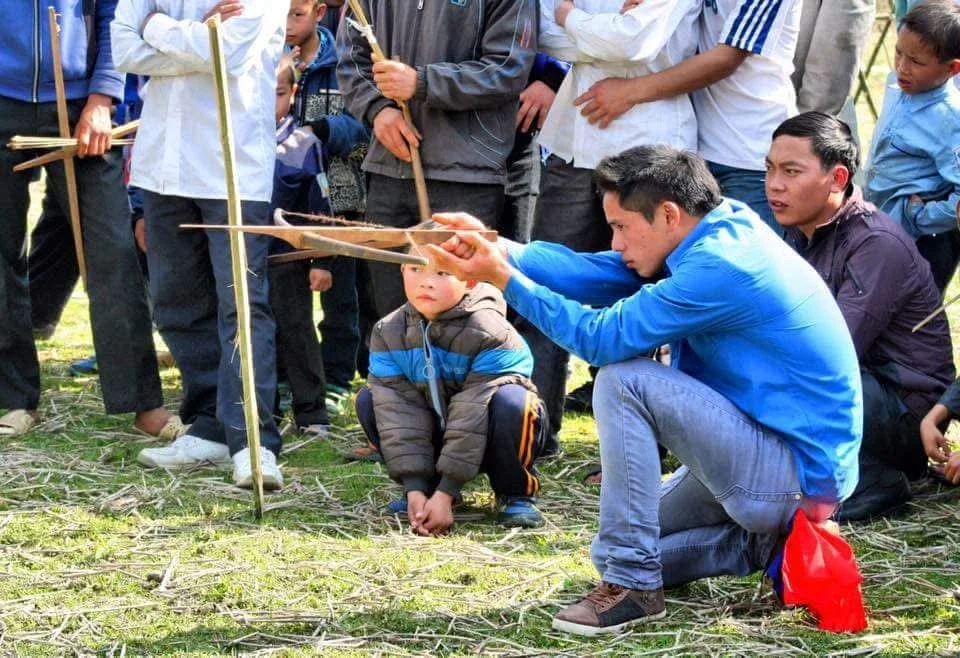
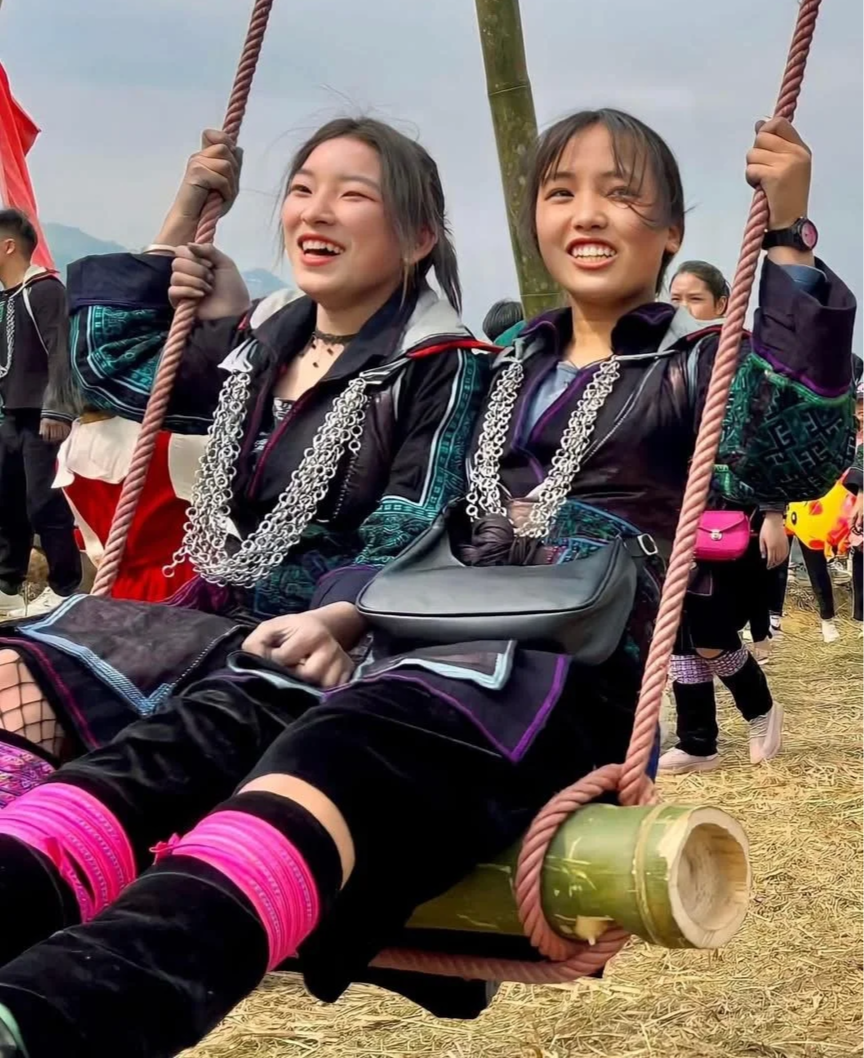
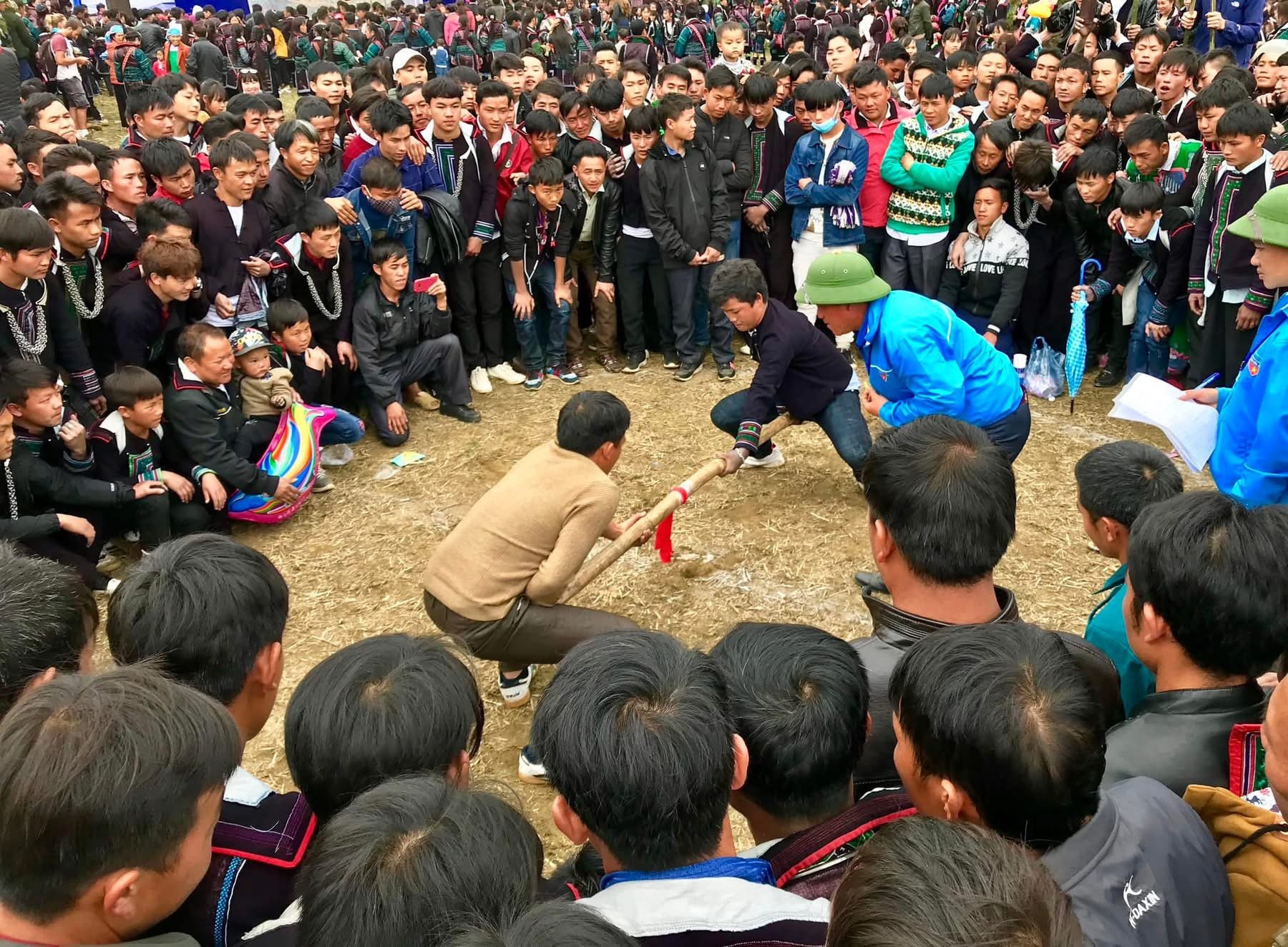
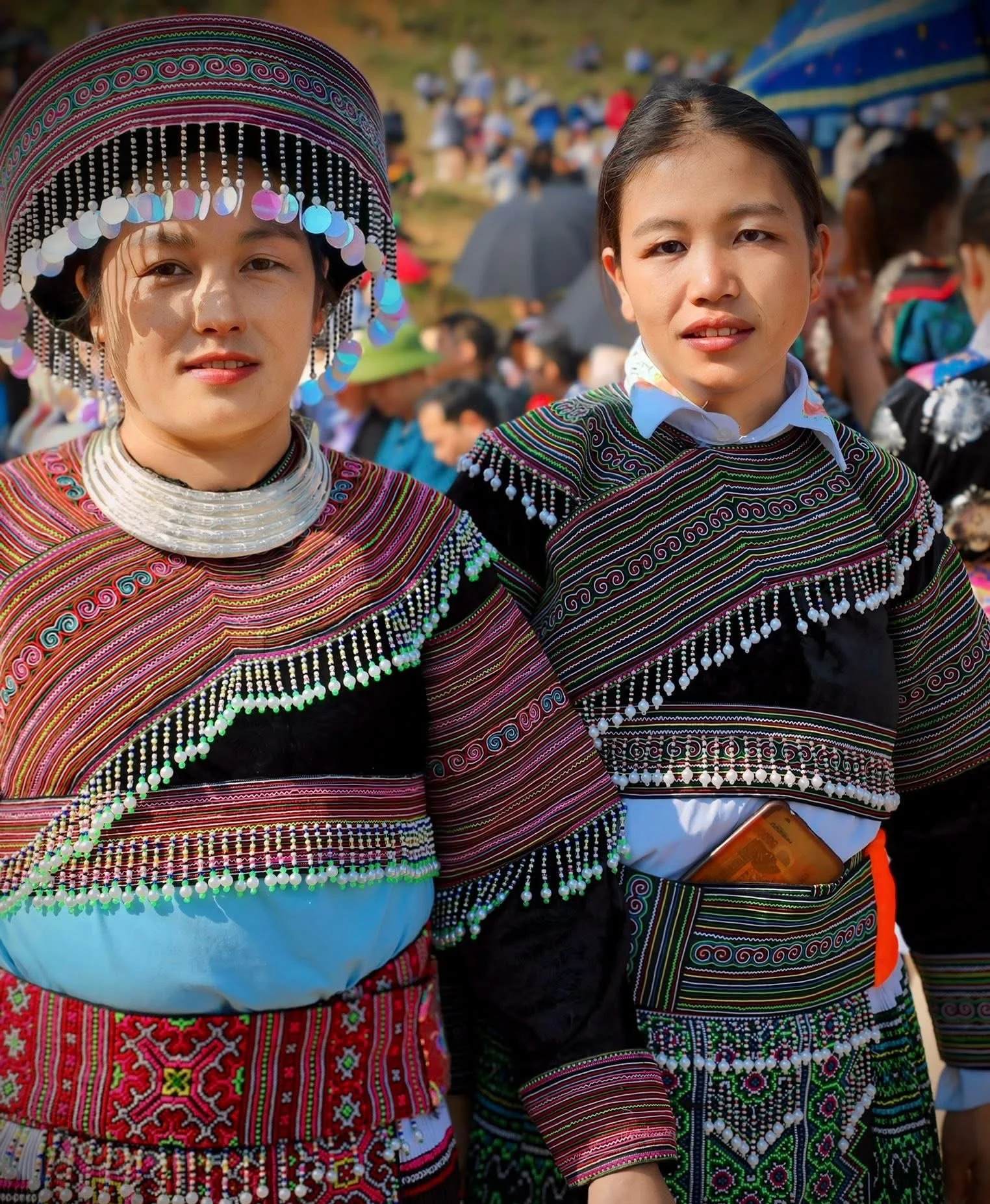
Taboos and Beginning the Year Well
Before the New Year, the Hmong cut three bamboo sticks and wrap them with red cloth. These are then used to sweep away spider webs and black soot from the house. This act symbolises clearing away the old year and preparing for a fresh beginning.
During the first days of the New Year, certain actions are avoided. People avoid washing clothes, blowing on the fire, eating rice with water, or holding a needle. Each of these actions carries meaning. Washing clothes is believed to wash away the blessings of the ancestors. Eating rice with water suggests a life of rain and hardship. Blowing on the fire may bring strong winds throughout the year. Sewing or using a needle symbolises damage to the crops, especially the maize harvest.
On the 19th day of the twelfth lunar month, which marks the Hmong New Year, families prepare sticky rice cakes and offer them to their ancestors. The cakes must not be eaten before the prayers are completed. It is believed that if someone eats before the ritual is finished, they may suffer burns from fire or hot charcoal during the coming year. This teaches patience and respect, reminding everyone that the ancestors must be honoured first.
These practices show how deeply the New Year is connected to spiritual protection, family unity and the guidance of those who came before.
A Living Tradition in Modern Sapa
Modern life has influenced the timing and visibility of the celebration, yet the core remains intact. Ancestors are honoured. Shamans chant. New clothes are made. Rice wine is poured. Young people meet in games and song. Each year, when winter turns to spring in the mountains around Sapa, the Black Hmong step into a new cycle with rituals that bind body, soul, family and village into one shared renewal.
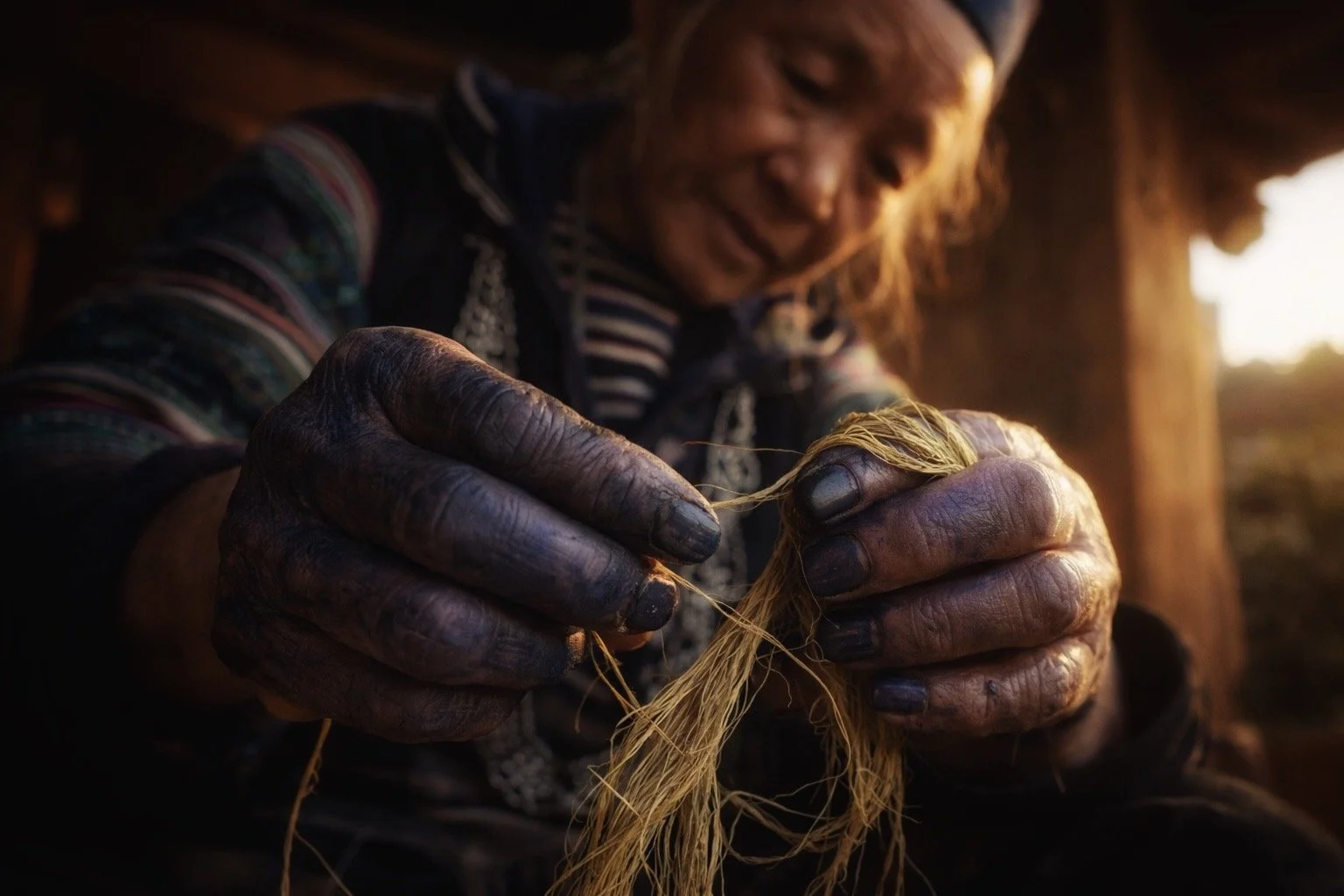
The Cultural Threads of Hmong Hemp Weaving
For the Hmong people of northern Vietnam hemp weaving is a craft and a living tradition that celebrates culture, family and the enduring connection between people and nature.
A Living Tradition
Hemp, or Cannabis sativa, has long been a valuable fibre cultivated by the Hmong people in the mountains of northern Vietnam. For generations, it has been used to make clothing that reflects both identity and artistry.
Hmong women take great pride in their handmade garments, especially the beautifully pleated hemp skirts worn during festivals, weddings and market days. Each piece represents weeks of work and a deep understanding of the land. The process of growing, harvesting and weaving hemp connects families to their heritage and to the natural world that sustains them.

Symbolism and Cultural Meaning
Hemp holds an important place in Hmong life beyond its practical use. At funerals, the deceased are dressed in hemp clothing, with women traditionally wearing four skirts. Family members and guests also wear hemp attire as a sign of respect.
Children often prepare hemp garments for their parents in advance, a gesture of love and duty. Hemp cloth is also used in spiritual worship and as part of wedding gifts. A bride is expected to wear a hemp skirt made by her mother-in-law, symbolising unity, respect and the joining of families.
From Seed to Cloth
Many Hmong subgroups across Vietnam’s highlands grow hemp, keeping alive a tradition that is both sustainable and culturally rich. Producing hemp cloth takes around seven months and involves detailed, physical work.
The hemp is sown in early May following age-old customs believed to encourage strong growth. After about two and a half months, the plants are harvested and the stalks are dried before being stripped for fibre. The long process of connecting and spinning the fibres produces strong, smooth threads, which are then woven into fabric on simple wooden looms.
The final cloth is washed and pressed many times to achieve a soft, smooth texture. Each finished piece tells a story of patience, craftsmanship and connection to nature.
Preserving Cultural Heritage
Hemp weaving continues to represent more than just a craft for the Hmong. It is a symbol of cultural resilience, sustainability and identity. Every strand spun and woven carries the memory of generations who have kept these traditions alive through care and dedication.
Hemp Workshops
ETHOS - Spirit of the Community work with local Hmong artisans to create hemp based workshops. Please see our website for more information.
Experience This With ETHOS
Join our ethical trekking tours in Sapa
Stay in authentic Hmong homestays
Discover Sapa’s culture with our workshops
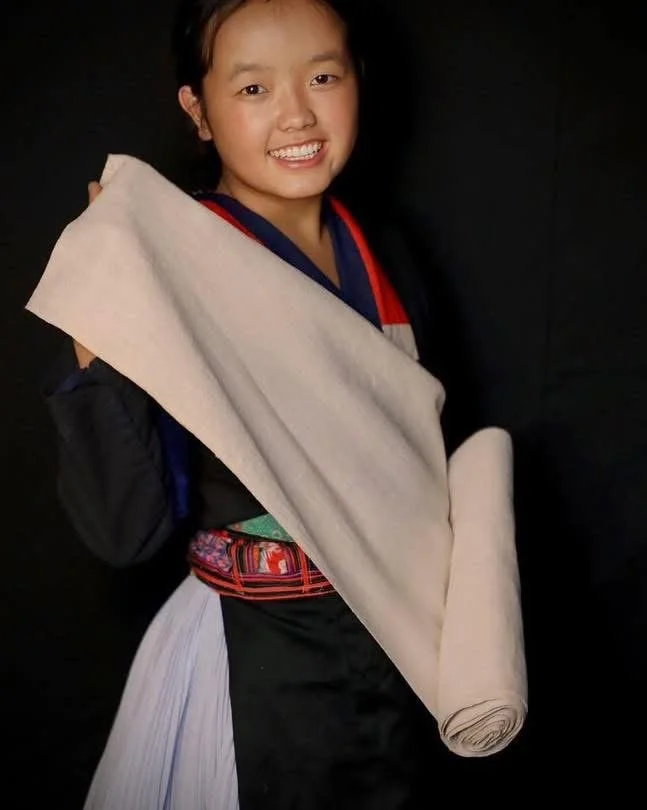
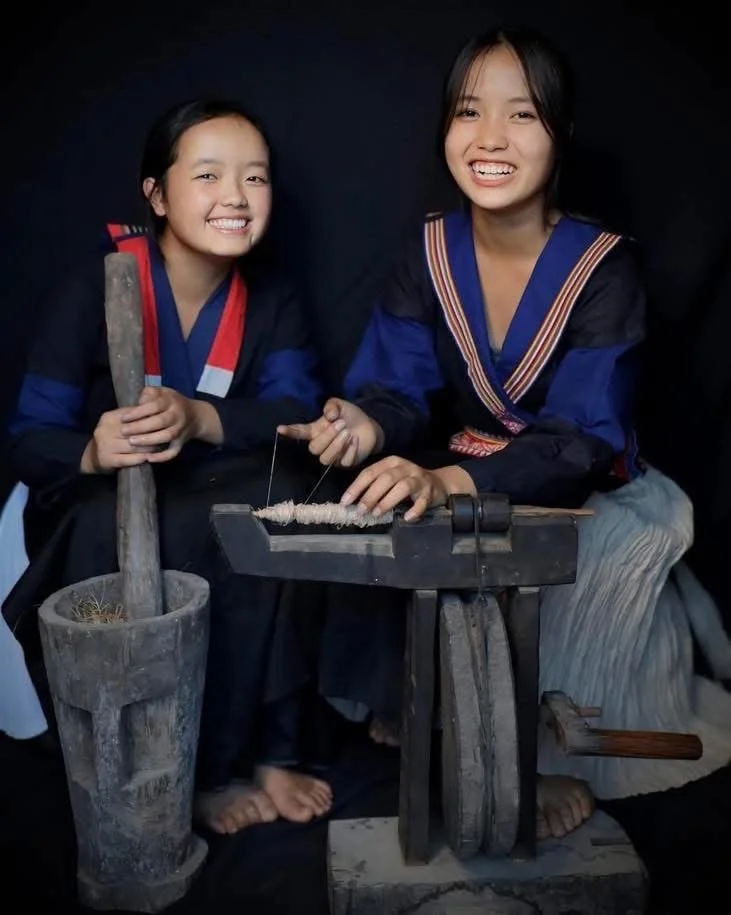
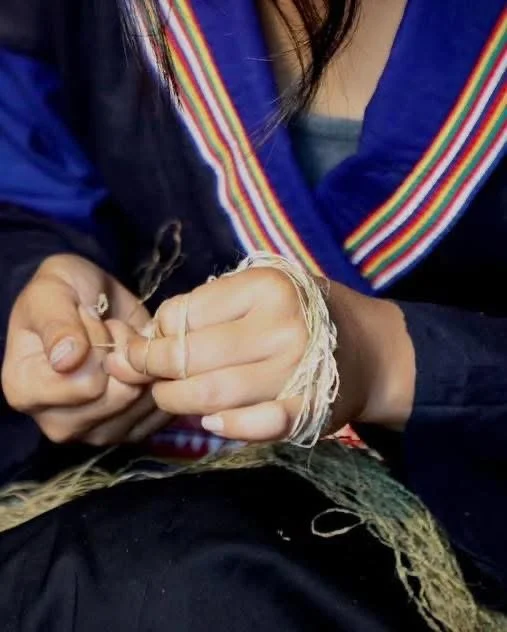
Last Chance to See: A Century of Hmong Clothing in Northern Vietnam
A visual journey through Hmong clothing across four regions of Northern Vietnam, revealing how tradition, identity, and textile art have survived for over a century.
Last Chance to See: Clothing, Change, and Continuity
As part of a photo series titled Last Chance to See, ETHOS explores how clothing has changed over more than a century while still holding deep cultural meaning. This series looks closely at what has endured, what has adapted, and why traditional dress continues to matter today.
Today’s focus is on the Hmong people living in four distinct regions of Northern Vietnam: Mu Cang Chai, Sapa, Ha Giang, and Bac Ha. Each region tells its own story through colour, texture, and design.
The Hmong People and Cultural Identity
Throughout recorded history, the Hmong have remained identifiable as Hmong. This continuity comes from maintaining their language, customs, and ways of life, even while adopting elements from the countries in which they live.
Clothing plays a central role in this identity. It is not simply something to wear, but a visible expression of belonging, heritage, and pride.
Regional Differences in Hmong Dress
Many Hmong groups are distinguished by the colour and details of their clothing. Black Hmong traditionally wear deep indigo dyed hemp garments, including a jacket with embroidered sleeves, a sash, an apron, and leg wraps. Their clothing is practical, durable, and rich in subtle detail.
Flower Hmong are known for their brightly coloured traditional costumes. These outfits feature intricate embroidery, bold patterns, and decorative beaded fringe, making them immediately recognisable.
Paj Ntaub: The Language of Cloth
An essential element of Hmong clothing and culture is paj ntaub, pronounced pun dow. This is a complex form of traditional textile art created through stitching, reverse stitching, and reverse appliqué.
Meaning, Skill, and Tradition
Traditionally, paj ntaub designs are ornamental and geometric. They are mostly non representational and do not depict real world objects, with the occasional exception of flower like forms. The making of paj ntaub is done almost exclusively by women.
These textiles are sewn onto clothing and act as a portable expression of cultural wealth and identity. Paj ntaub play an important role in funerary garments, where the designs are believed to offer spiritual protection and guide the deceased towards their ancestors in the afterlife. They are also central to Hmong New Year celebrations.
Before each New Year, women and girls create new paj ntaub and new clothing. Wearing clothes from the previous year is considered bad luck. These new garments reflect creativity, skill, and even a woman’s suitability as a successful wife.
Why Hmong Clothing Endures
Despite major cultural and social change over the past century, Hmong clothing has endured. Its survival lies in its deep connection to identity, belief, skill, and community. Each stitch carries meaning, and each garment tells a story that continues to be passed from one generation to the next.
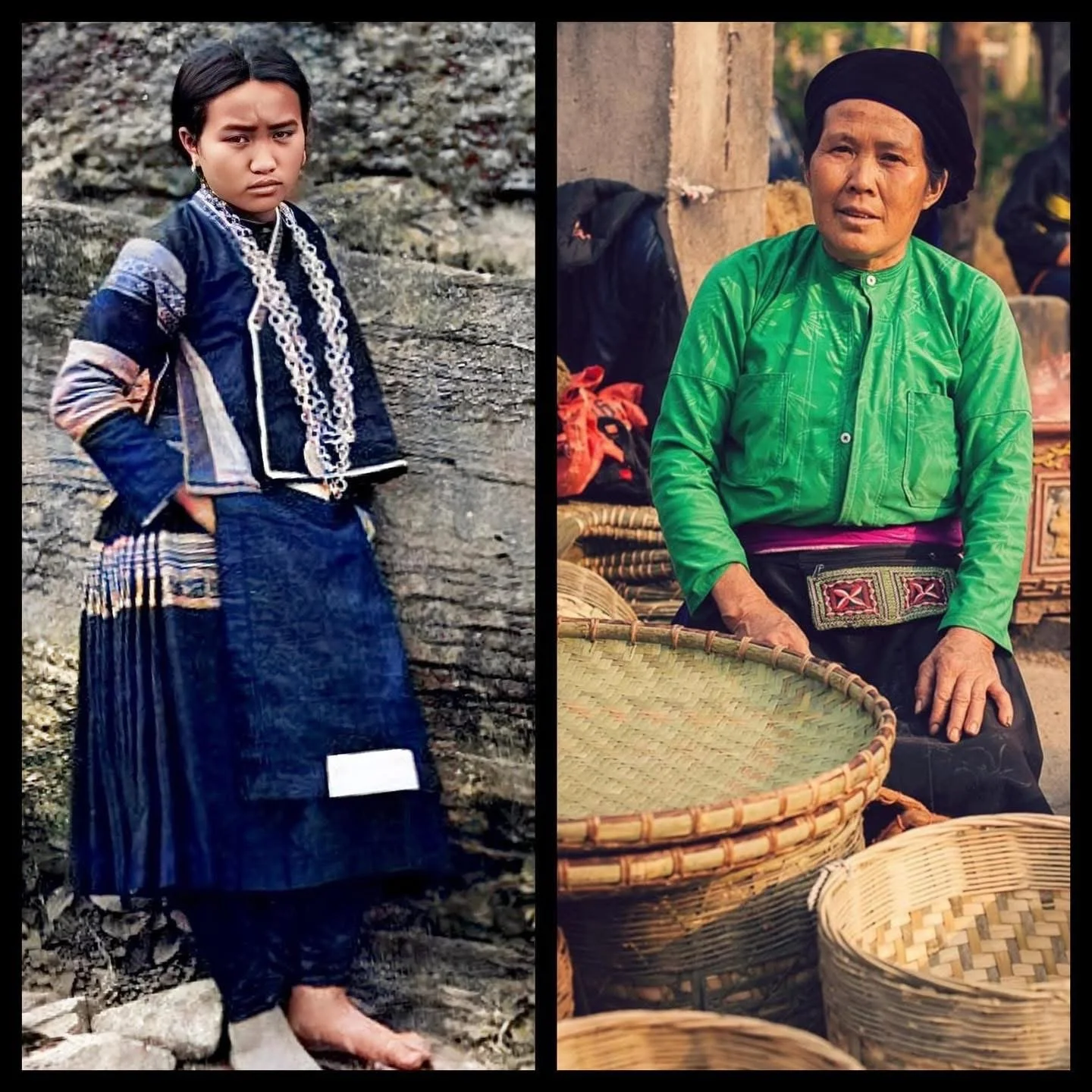
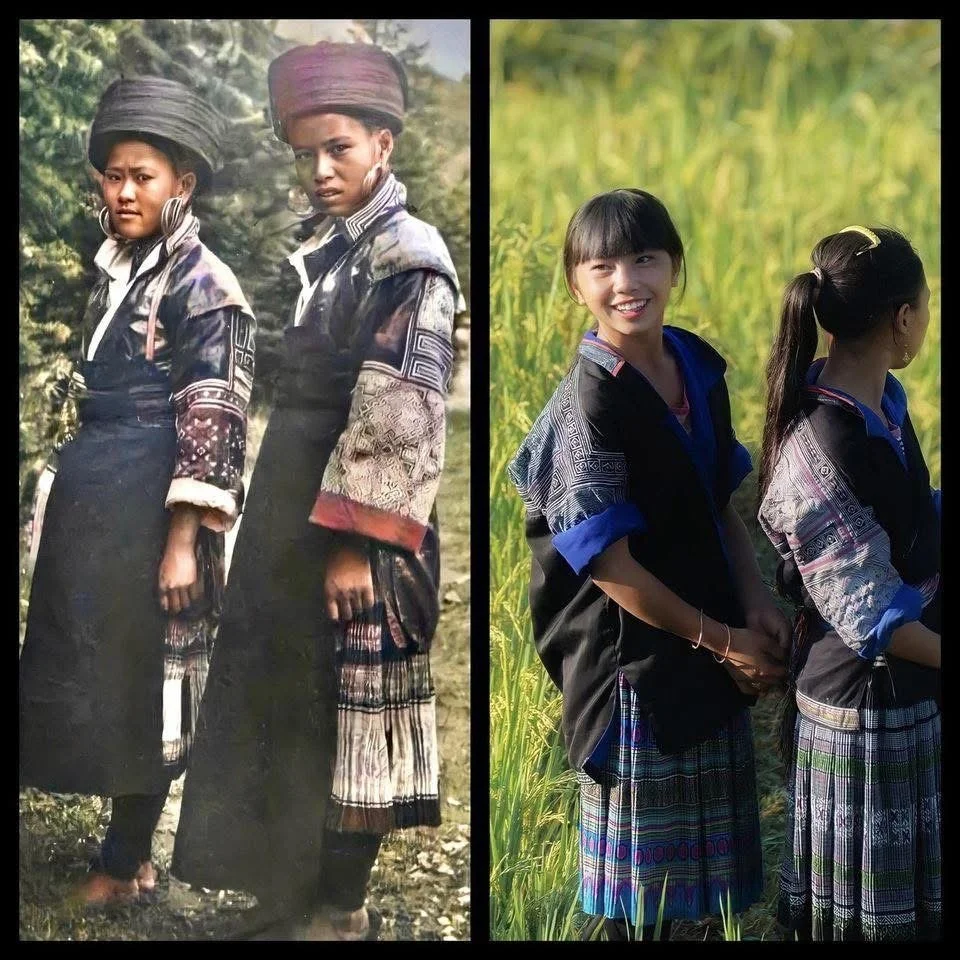
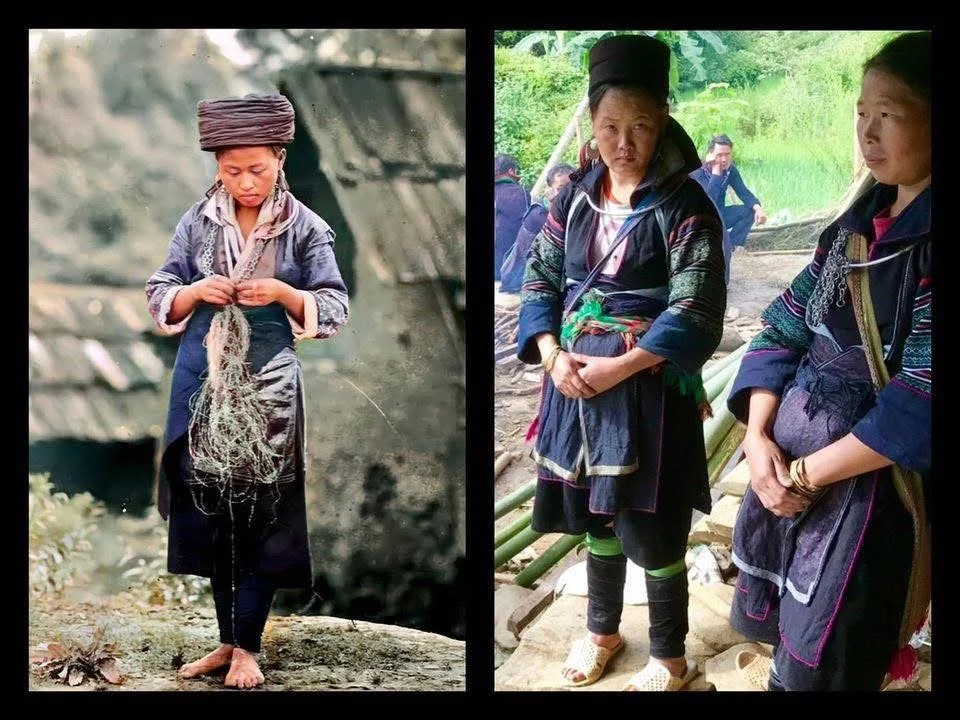
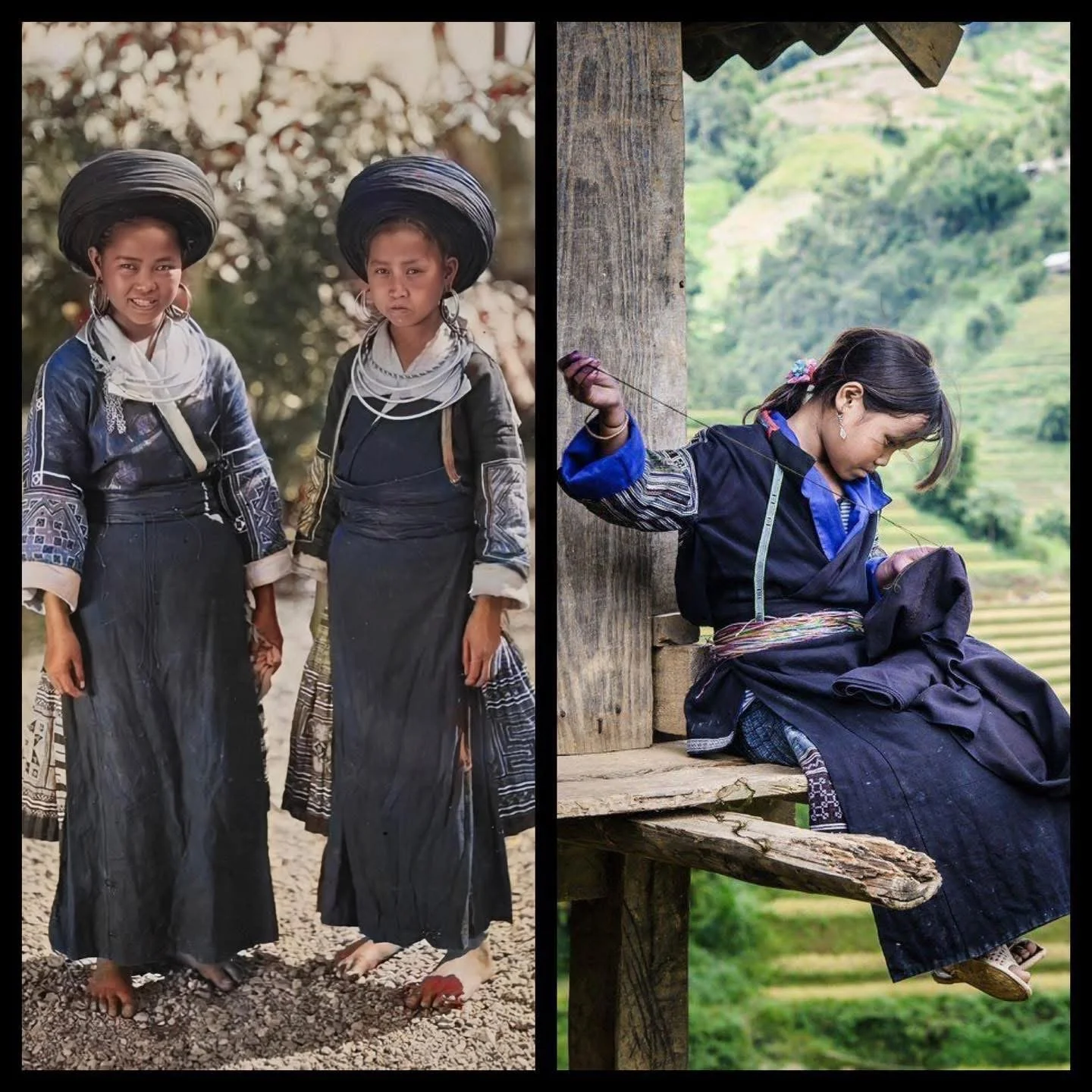
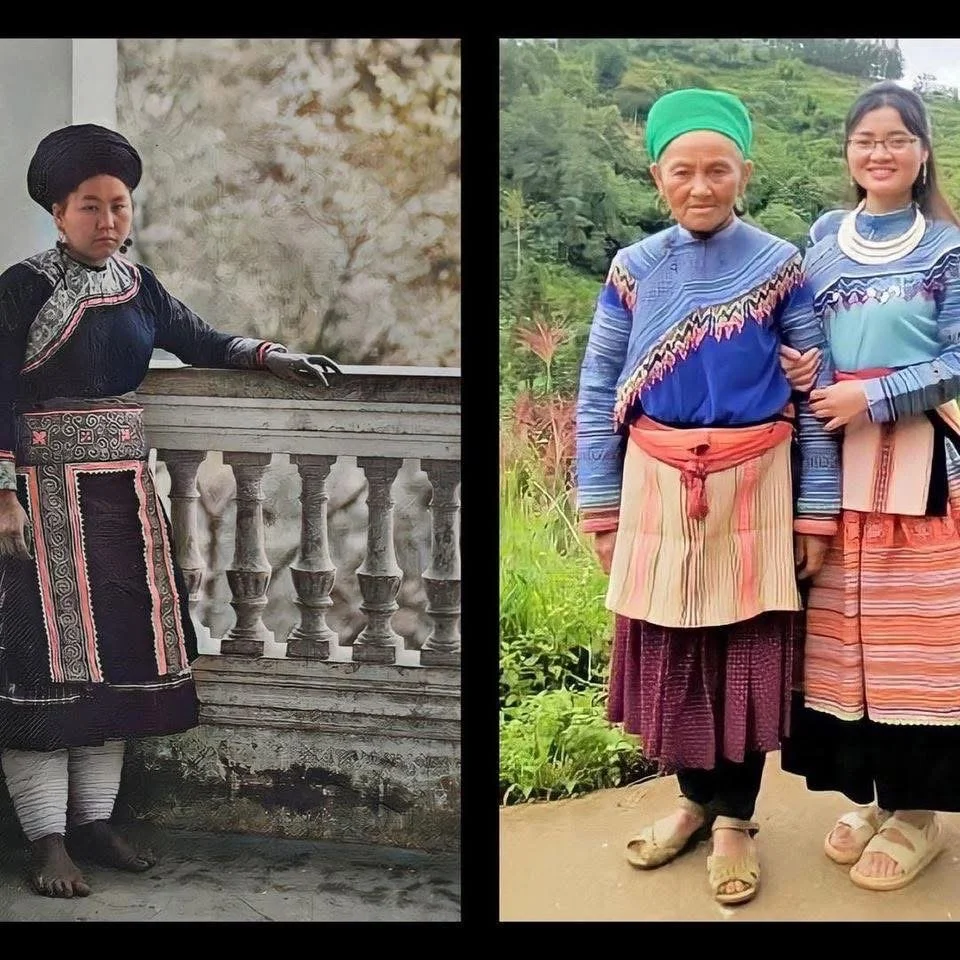
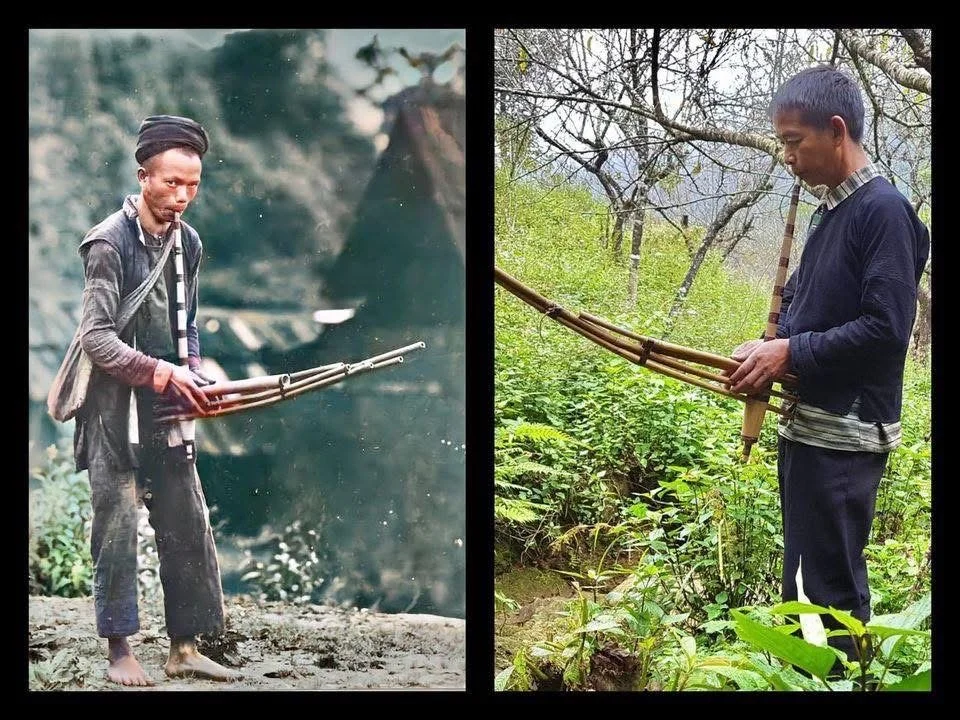
The Heart of the Highlands: The Hmong and Their Water Buffalo
In the highlands of northern Vietnam, the Hmong share a close partnership with their water buffalo, animals that shape their fields, traditions and way of life.
Strength in the Fields
In the mist-covered highlands of northern Vietnam, water buffalo have long stood as steady companions to the Hmong people. They are not merely animals of burden; they are the pulse of rural life. Their strength and endurance make the cultivation of rice and corn possible on steep, uneven slopes where machinery cannot reach. When the plough cuts through the damp earth, it is guided not just by human hands but by a rhythm shared between farmer and buffalo, a quiet understanding built over generations.
For many Hmong families, the buffalo ensures survival. It provides the muscle for planting and the means to feed entire communities. In return, it receives careful attention, shade in the summer heat, clean water from mountain streams, and the steady hand of a child who guides it home at dusk.
A Living Symbol of Wealth and Honour
To own a water buffalo in Sapa is to hold both pride and security. Only about one in ten families in the district have the means to keep them, and for most, they are the most valuable possession they will ever own. Beyond their labour, buffalo represent wealth, stability, and prestige. Their presence at cultural rituals, particularly funerals, underscores their deep spiritual importance.
For the Hmong, the animal embodies prosperity and endurance. Its image appears in folk tales, songs, and embroidery patterns that tell stories of strength and loyalty. It stands as a quiet symbol of the patience required to live in harmony with the mountains.
Guardians of the Land
Between September and April, when the fields lie fallow, buffalo roam semi-wild across the forests and valleys of Sapa. As planting season approaches, they are brought back to graze under watchful eyes. Children often take on this role, herding the animals with laughter and care, ensuring they stay clear of the tender new shoots of rice and corn.
Families work together to protect them, repairing fences, building shelters, and collecting forage. It is a labour of respect, an act of reciprocity. The health of the buffalo is tied to the well-being of the family itself.
A Bond Beyond Work
It might sound strange to those who have never lived alongside them, but water buffalo are often treated as part of the family. They are spoken to softly, their moods understood, their habits anticipated. Farmers know the sound of their calls as well as their own children’s voices. When a buffalo falls ill, the worry is genuine, almost personal.
This bond is rooted in necessity, yes, but also in affection. Over time, work shared under sun and rain builds something deeper than utility. It becomes companionship, one that bridges the fragile line between human and animal.
The Spirit of the Mountains
In Hmong culture, the water buffalo stands as a reminder that strength is not loud or boastful; it is steady, enduring, and gentle when it needs to be. These animals carry the land’s memory in every step, shaping terraces, feeding families, and quietly weaving themselves into the rhythm of mountain life.
They are, in the truest sense, the heart of the highlands.
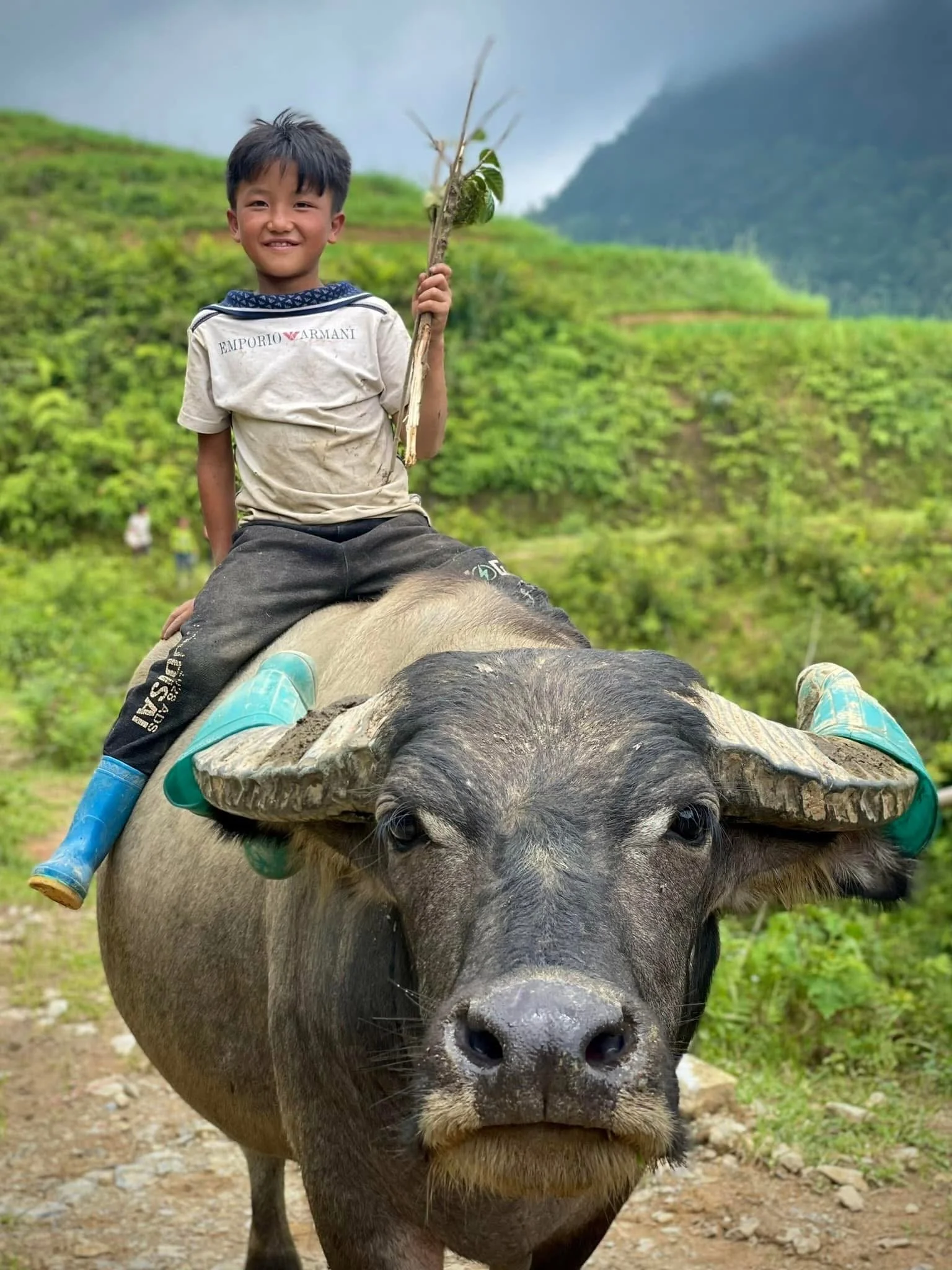
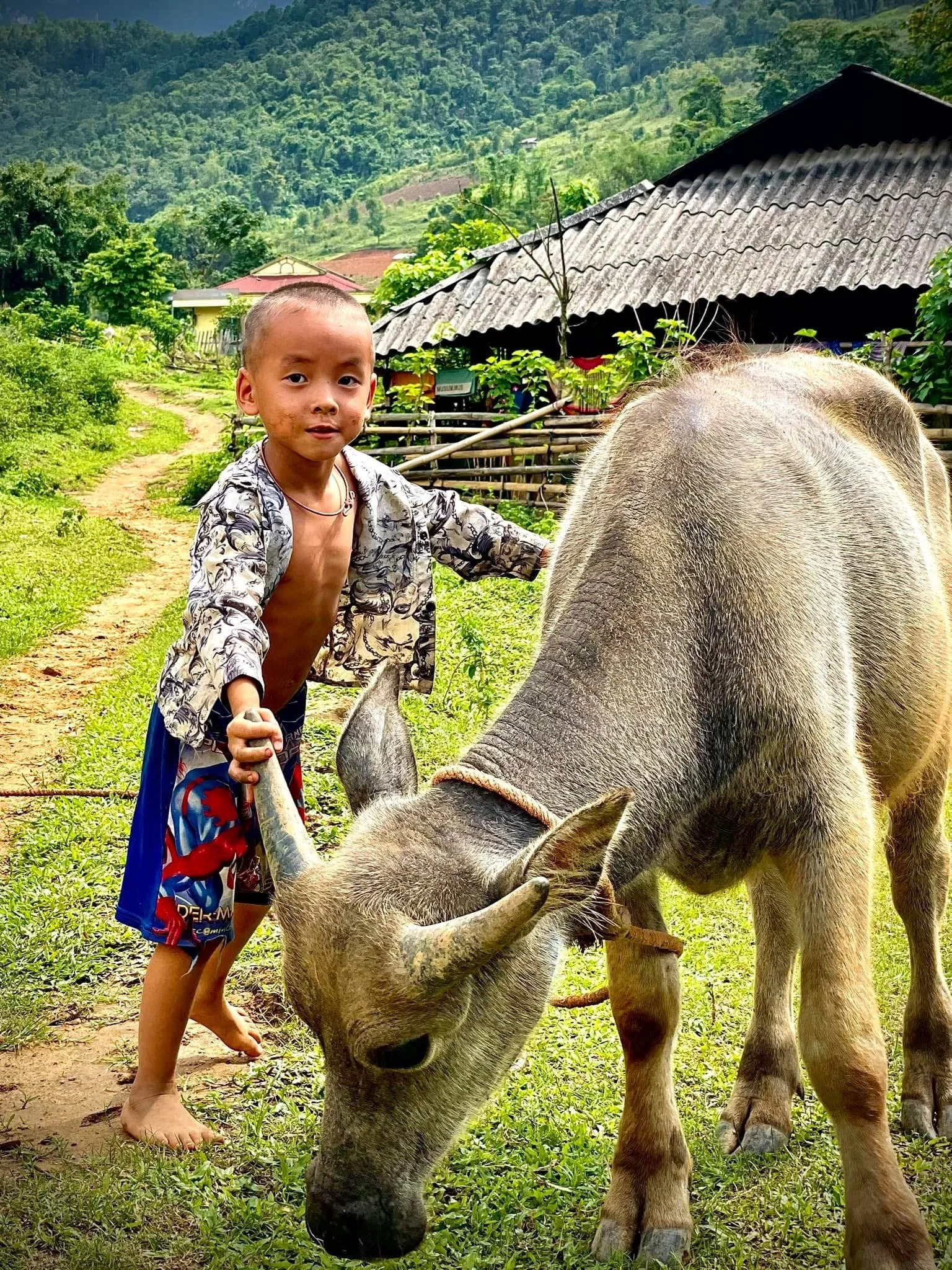
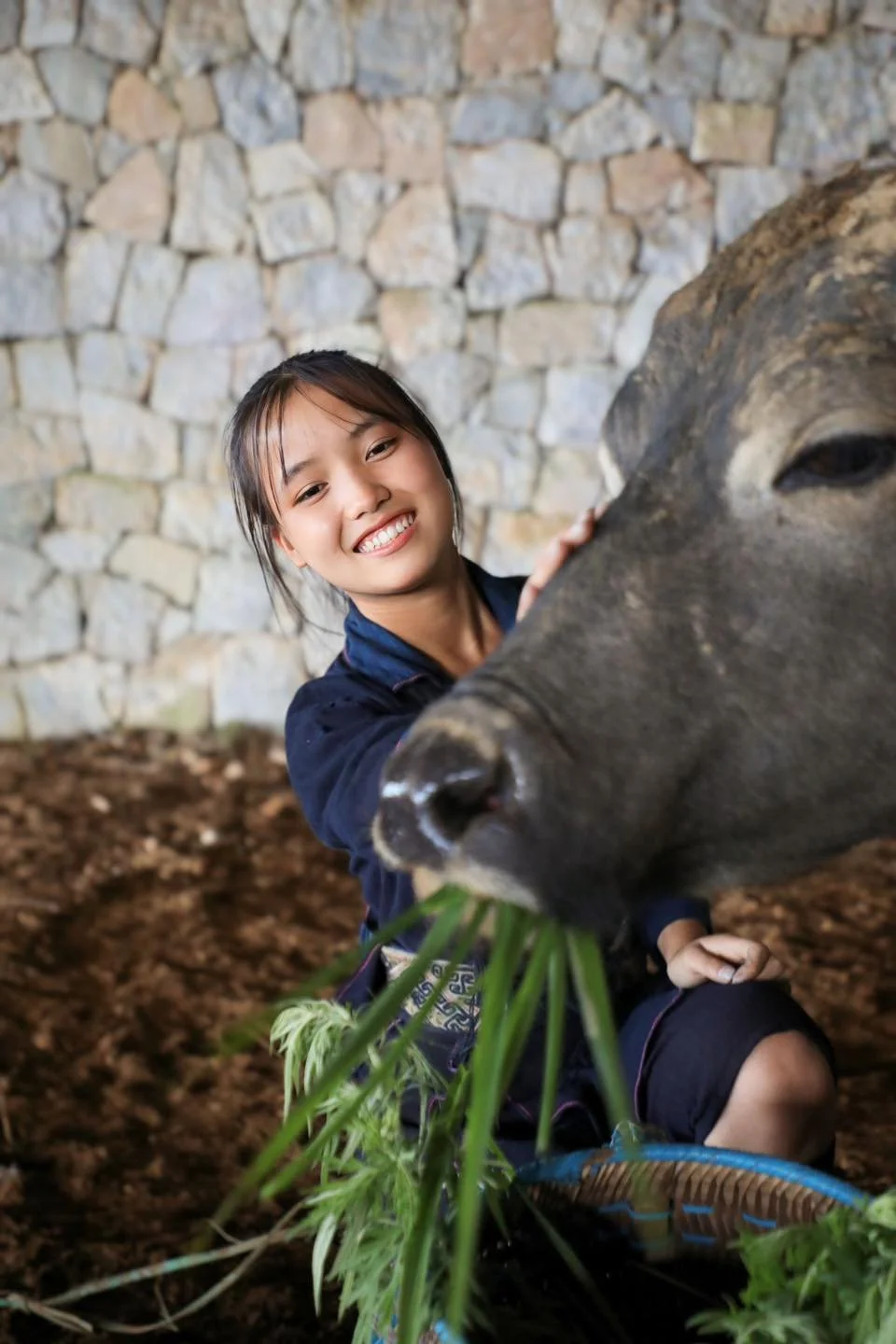
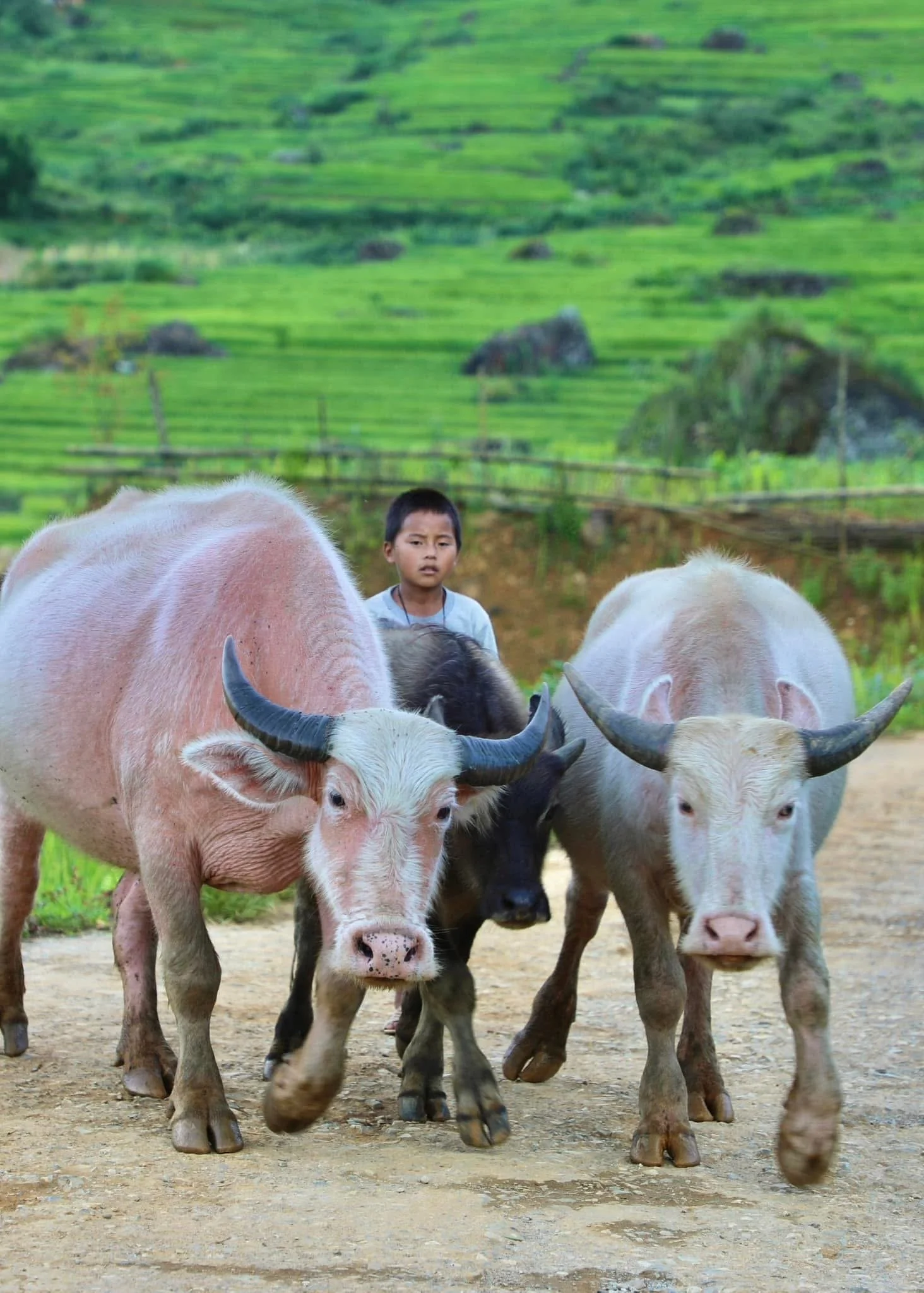
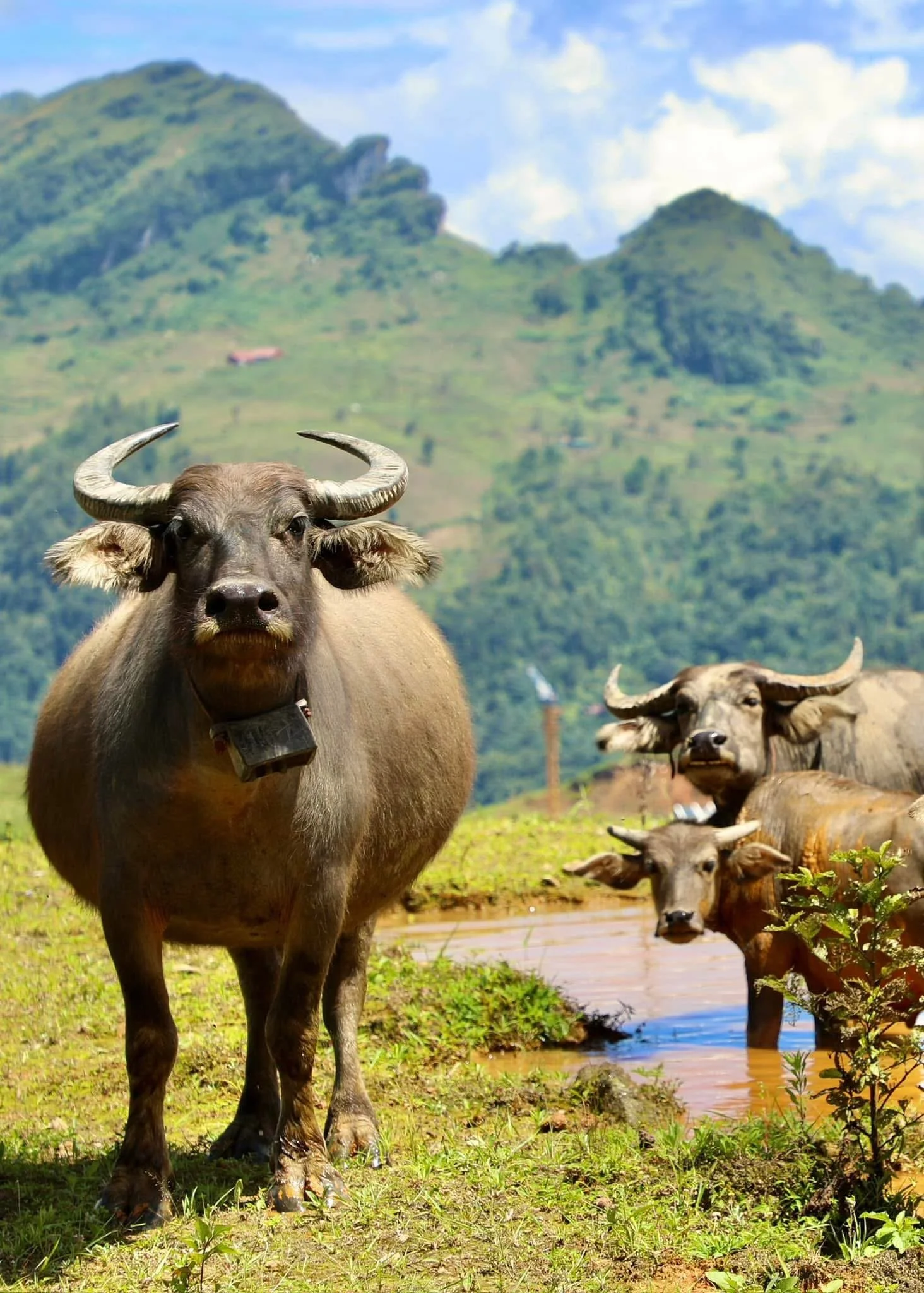
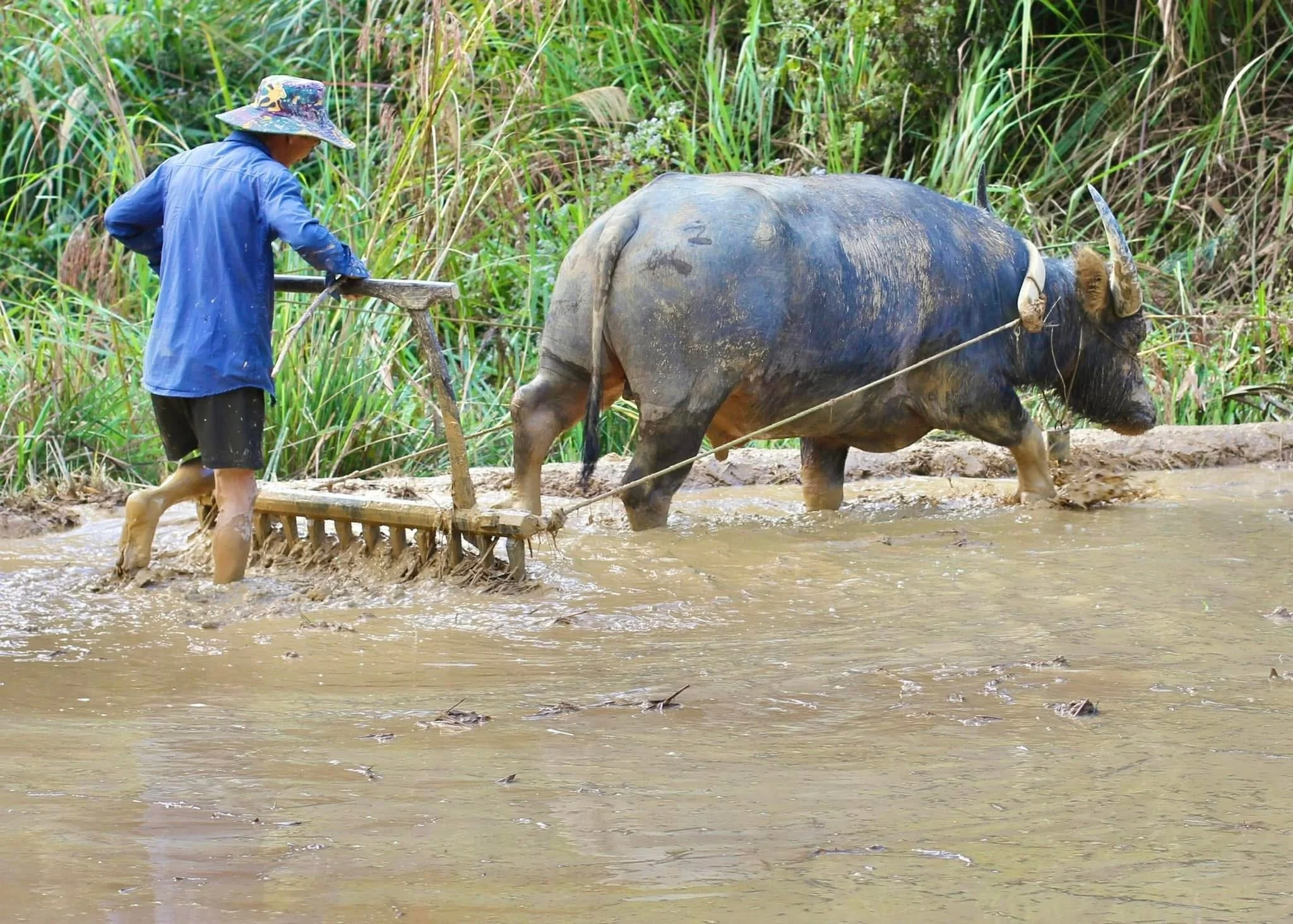
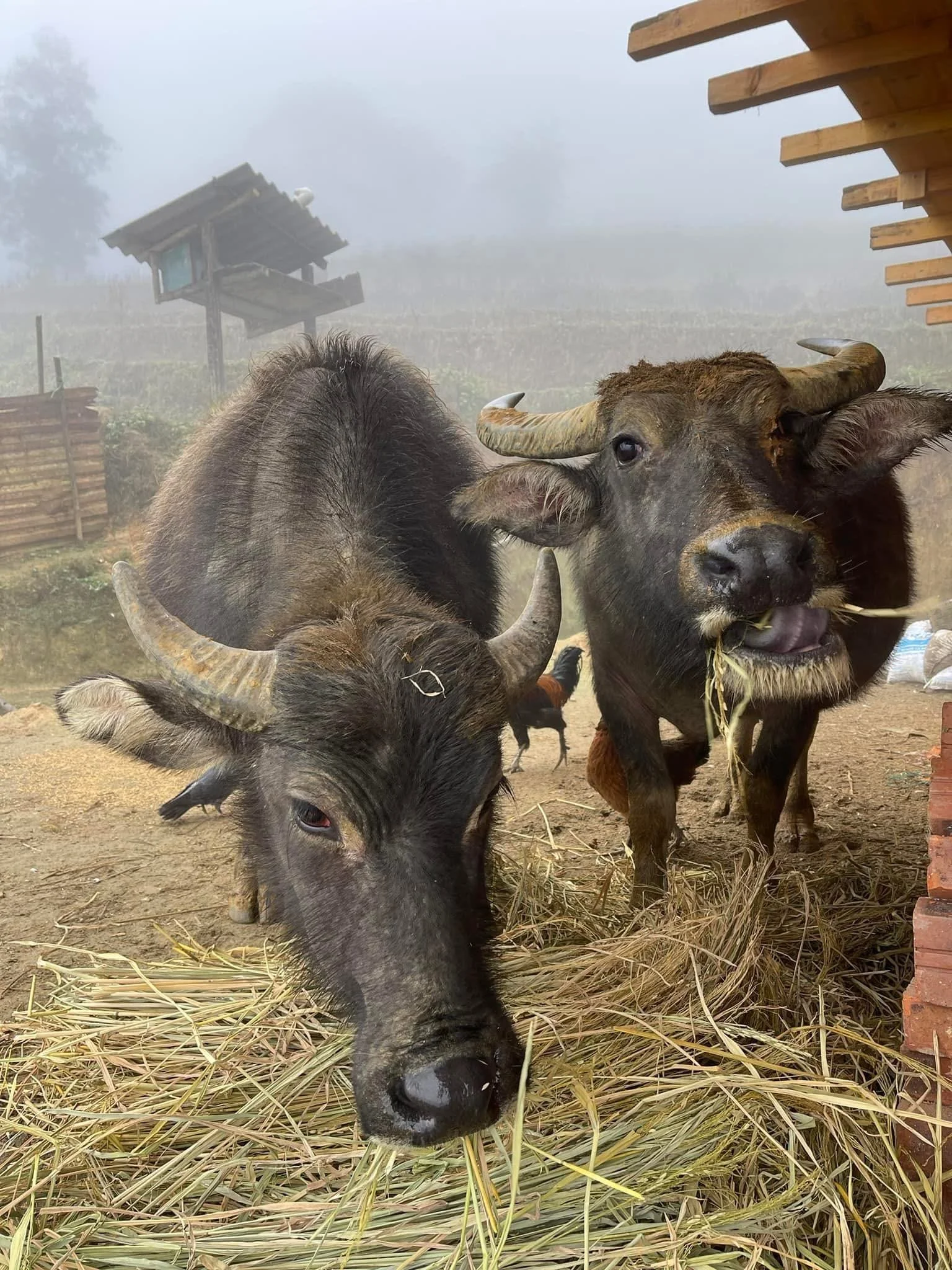
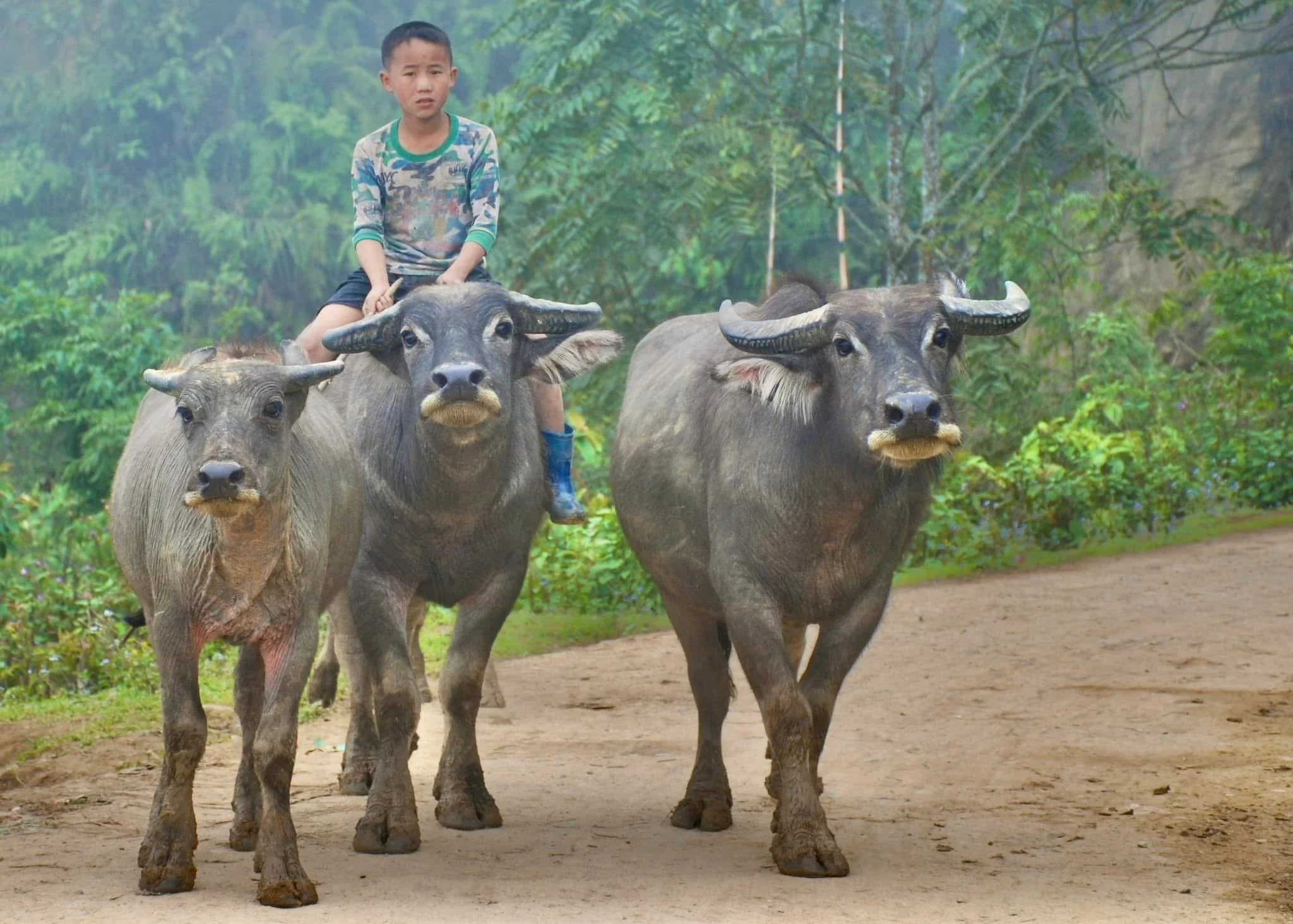
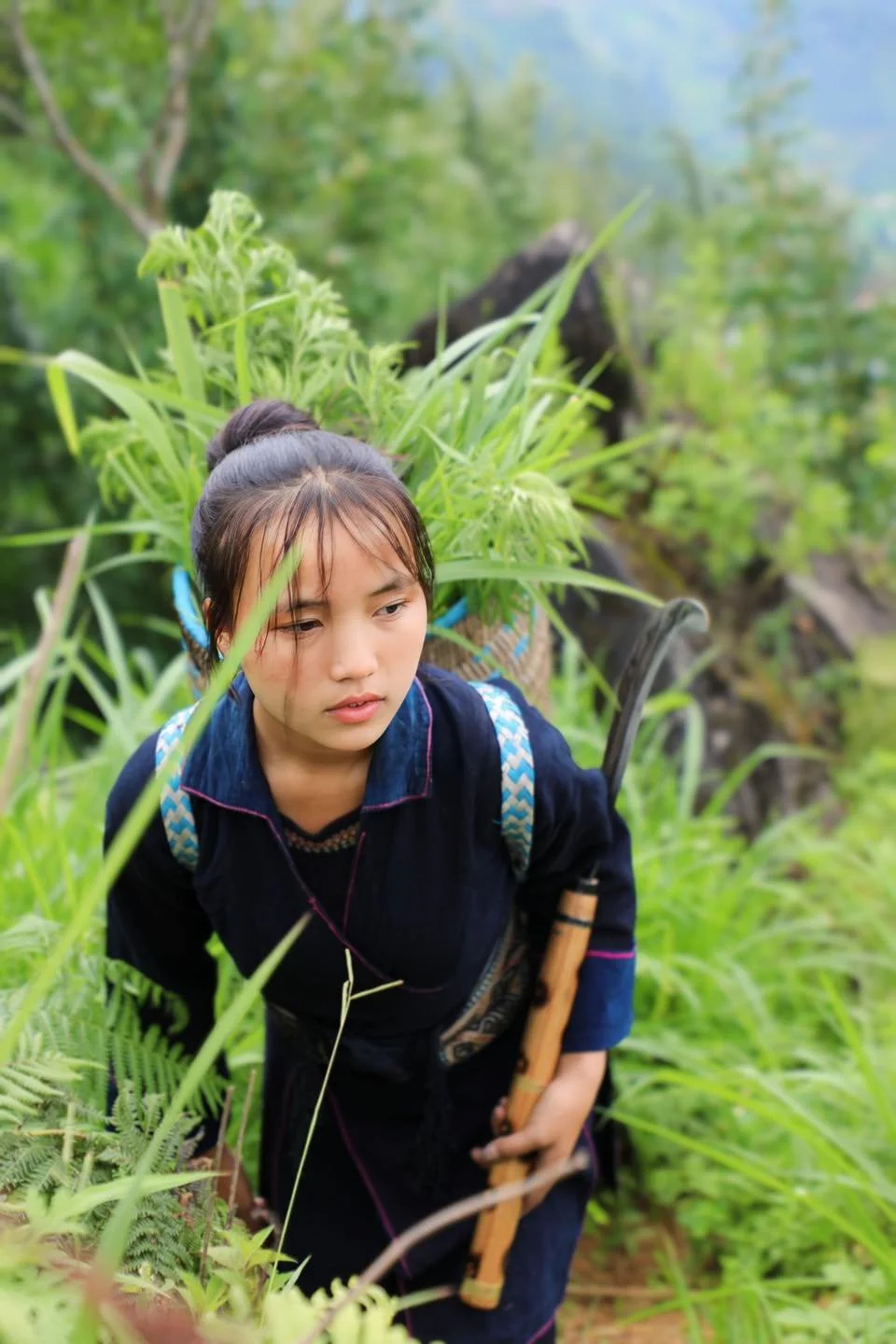
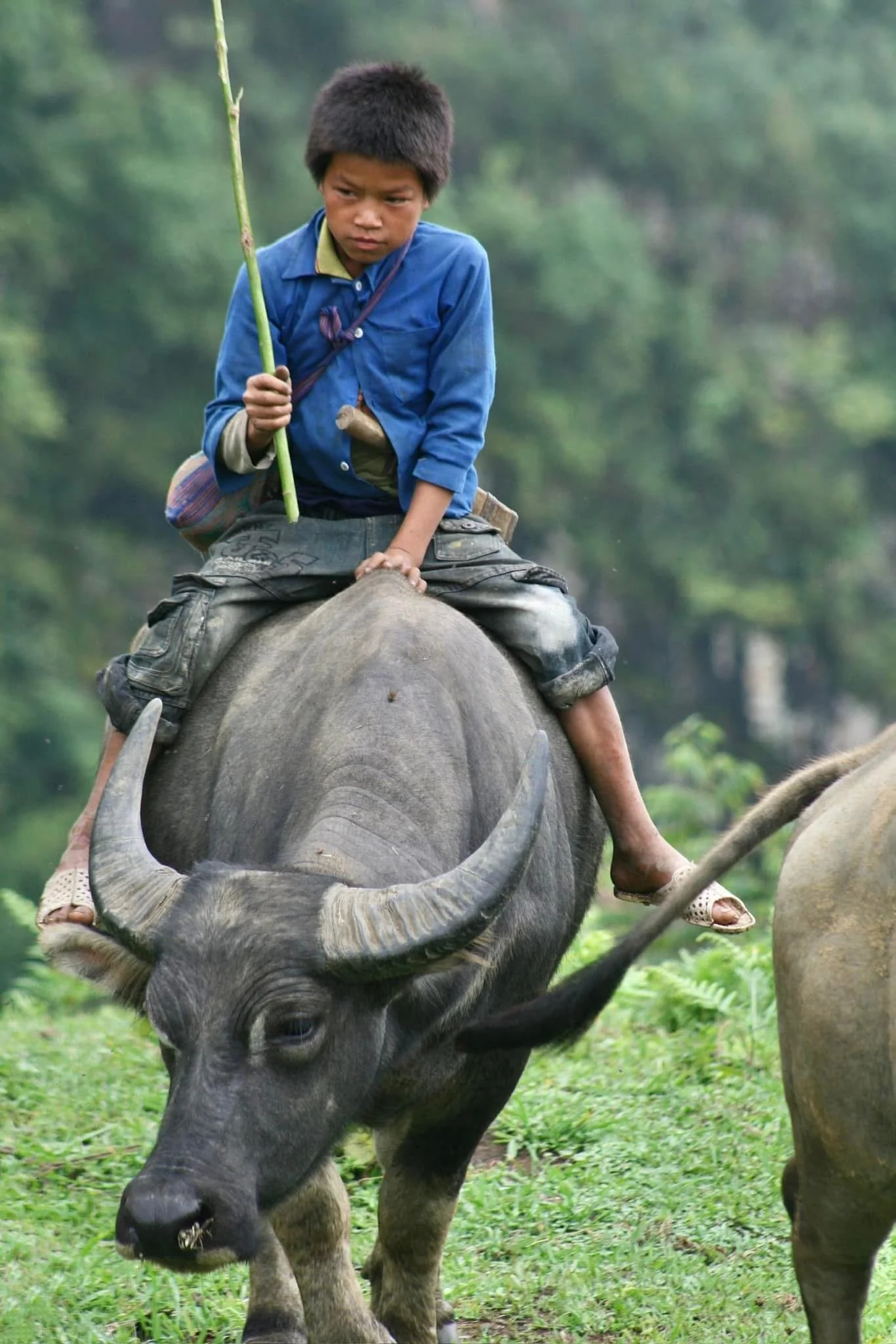
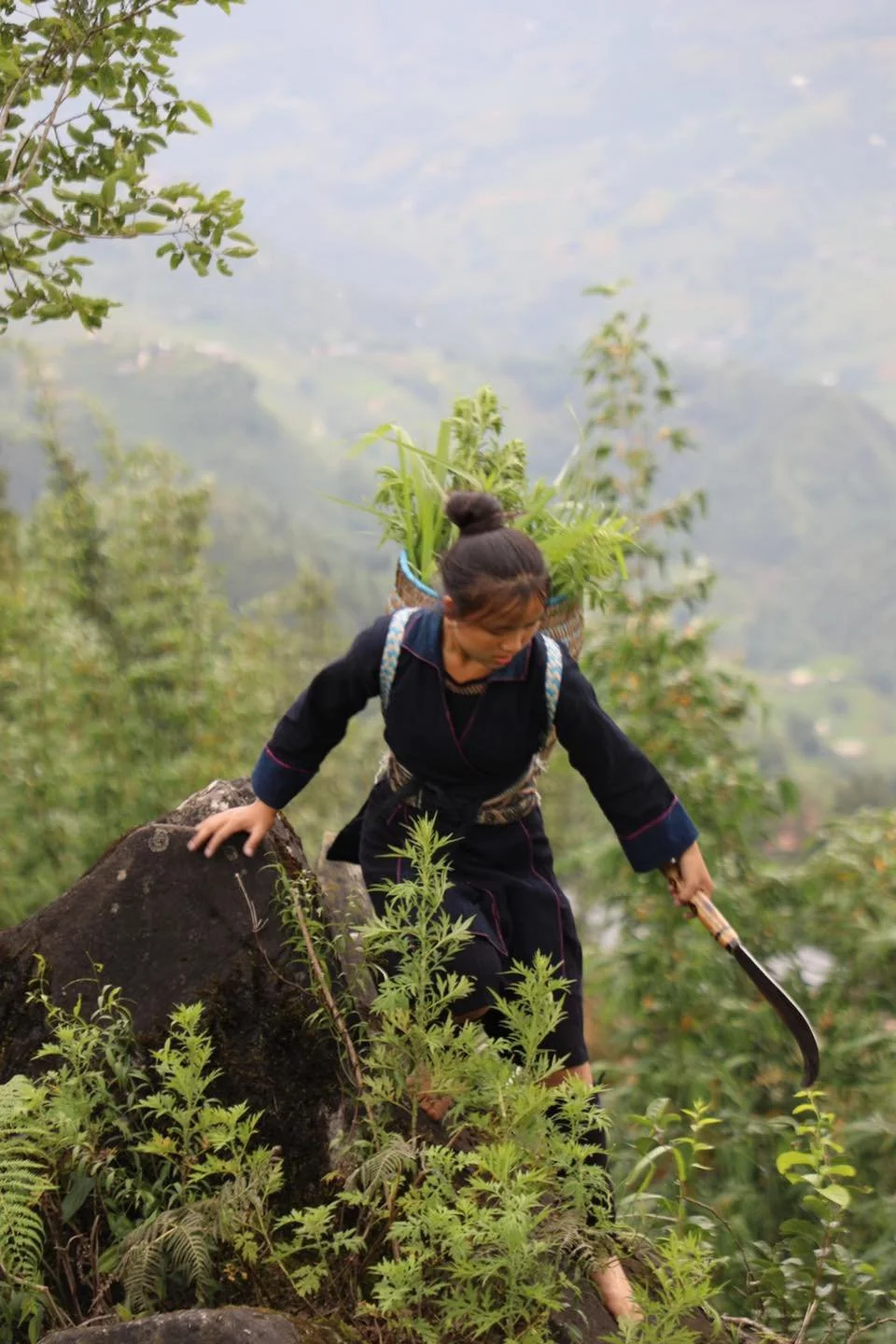
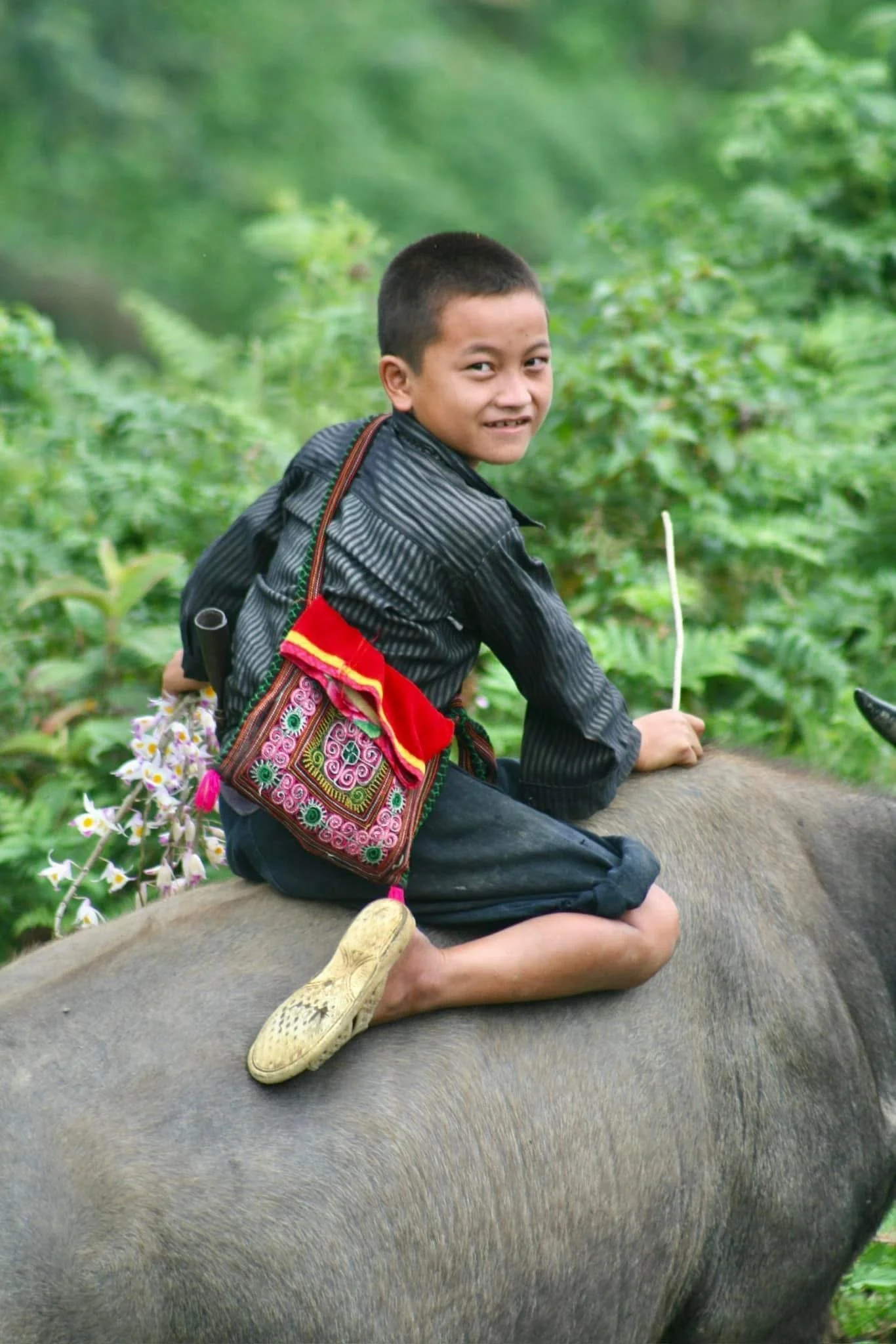
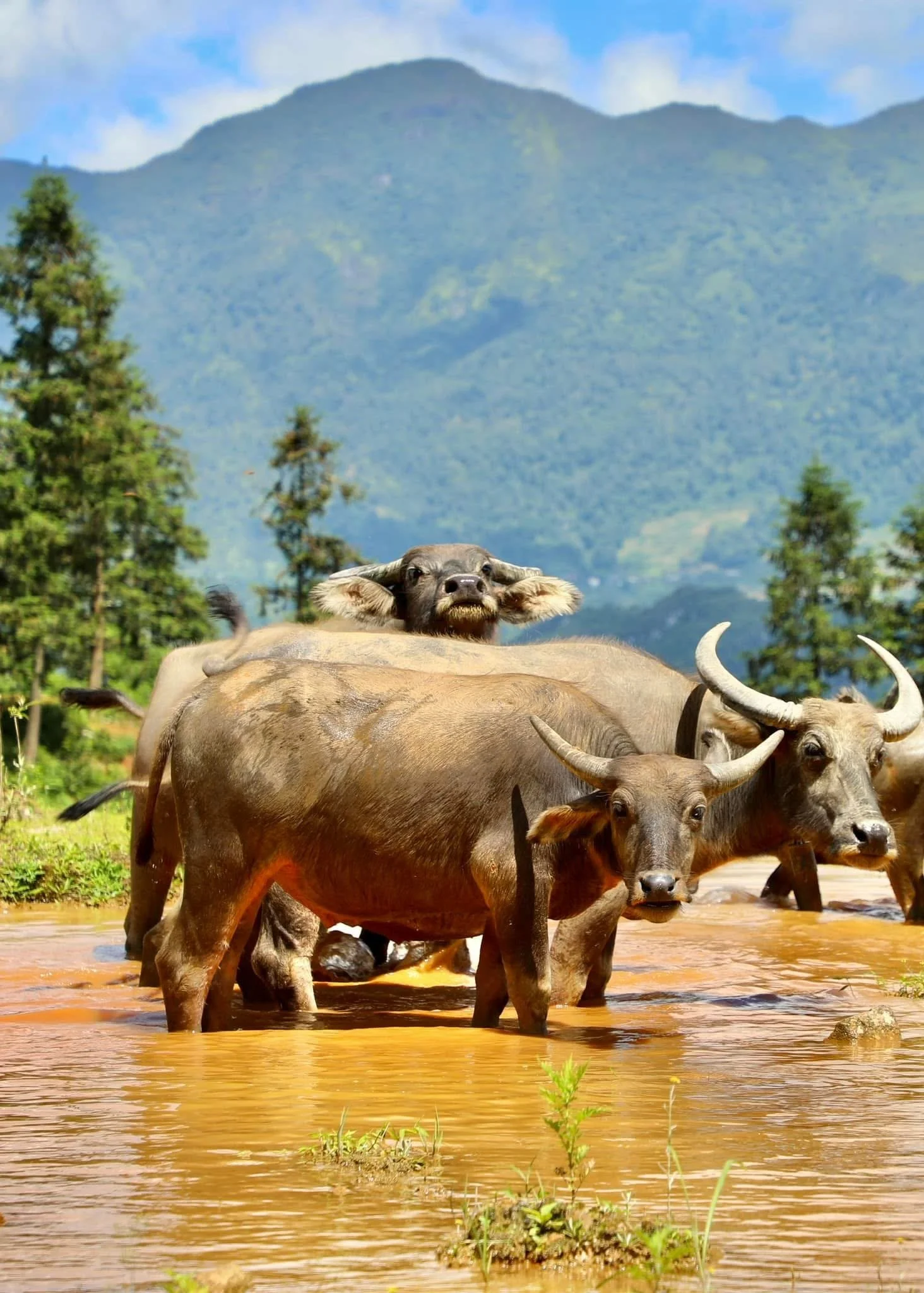
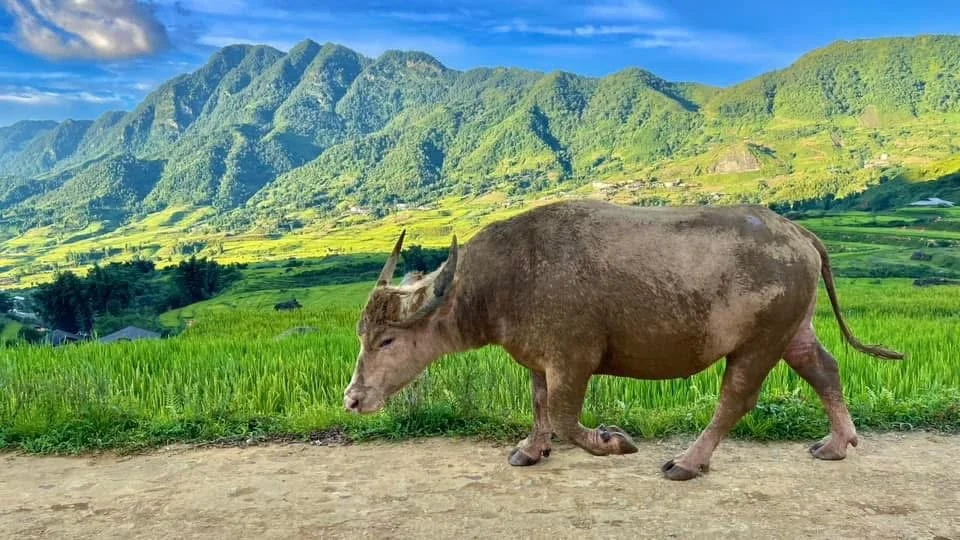

The Evolving Art of Hmong Textiles in Northern Vietnam
The Hmong of Vietnam are known for expressive textiles full of history, identity, and artistry. Today these traditions are evolving. Are they being protected or transformed?
The Evolving Art of Hmong Textiles in Northern Vietnam
The Heritage of Hmong Clothing
The Hmong people of Vietnam have a long history of creating clothing that reflects their identity and traditions. Textiles are more than fabric. They are a visual language that shows who someone is and where they come from.
Each Hmong subgroup has its own recognisable style. White, Black, Flowery, Red, and Blue Hmong communities are known for different colours, patterns, and decorative techniques. Women’s pleated skirts often include detailed embroidery, batik designs, and appliqué. Blouses and aprons are bright and full of symbolic motifs. Men’s clothing is simpler but still carries meaningful tradition.
Crafting Textiles by Hand
For centuries, Hmong families have relied on handwoven hemp and natural indigo dye. Every step was done by hand. Growing and processing hemp took great effort. Embroidery was slow and highly skilled work passed down from mothers to daughters.
These garments were more than clothing. They showed cultural knowledge and community belonging. Each stitch was carefully placed with purpose.
Modern Influences and Adaptations
Change is happening. Many Hmong households now use commercial cotton and some synthetic materials because they are affordable and easy to work with. This allows clothes to be made more quickly and sold in markets or to tourists.
Some subgroups are responding in a different way by adding more embroidery and creativity than ever before. Their designs are more detailed and far more time consuming to make. Clothing has become a canvas for new artistic expression.
Tourism has created economic opportunities but also brought challenges. Traditional hemp skirts are becoming rare in some villages. Yet hemp fabrics and indigo dyeing are still practised and remain a strong part of cultural identity.
What Textiles Tell Us
When you visit Hmong communities in northern Vietnam, take time to notice the details. Clothing can show migration stories, family history, resilience, and pride in heritage. Patterns and colours protect against misfortune and honour ancestors.
Buying directly from local artisans supports families and helps preserve skills that have lasted for generations.
A Question for You
As traditions evolve, what should stay the same?
Should Hmong textile makers embrace new materials and markets, or is there a risk that important cultural knowledge will be lost?
I would love to hear your thoughts.


Hmong Shamanic Rituals and Lunar New Year Traditions in Vietnam
A rare insight into Hmong shamanic beliefs and a powerful Lunar New Year ceremony that brings community, spirits and healing together in Vietnam.
Hmong Shamanic Rituals and Lunar New Year Traditions in Vietnam
Beliefs in Souls and Spirits
The Hmong are traditionally animist with most Hmong believing in the spirit world and in the interconnectedness of all living things. At the center of these beliefs lies the Txiv Neeb, the shaman (literally, “father/master of spirits”). According to Hmong cosmology, the human body is the host for a number of souls. The isolation and separation of one or more of these souls from the body can cause disease, depression and death. Curing rites are therefore referred to as “soul-calling rituals”. Whether the soul became separated from the body because it was frightened away or kidnapped by an evil force, it must return in order to restore the integrity of life.
Entering the Spirit World
A shaman is transported to another world via a “flying horse,” a wooden bench usually no wider than the human body. The bench acts as a form of transportation to the other world. The shaman wears a paper mask while he is reaching a trance state. The mask not only blocks out the real world, so the shaman can concentrate, but also acts as a disguise from evil spirits in the spirit world. During episodes when shamans leap onto the flying horse bench, assistants will often help them to balance. It is believed that if a shaman falls down before his soul returns to his body, he or she will die.
The shaman is considered a master of ecstasy. It is thought that his soul becomes detached from his or her body during a séance in order to leave for the spirit world. The shaman becomes a spirit and put him or herself on an equal standing with the other spirits. The shaman can see them, talk to them, touch them, and if necessary catch them and liberate them so they can return home.
Sacrifice and Healing
In Hmong culture, the souls of sacrificial animals are connected to human souls. Therefore a shaman uses an animal’s soul to support or protect a human soul. Often healing rituals are capped by a communion meal, where everyone attending the ritual partakes of the sacrificed animal who has been prepared into a meal. The event is then ended with the communal sharing of a life that has been sacrificed to mend a lost soul.
A Lunar New Year Shamanic Ceremony
Beginning the Ceremony
Participants at this lunar new year event begin arriving from early morning, each bringing gifts of incense, shamanic paper and an offering of meat in the form of pork or chickens. The shaman in charge of this ritual, Lý A Cha, begins the ceremony with a chant, using a mixture of Hmong and an ancient dialect called Mon Draa. Even to an outsider’s ear, his words sound different from everyday Hmong speech. The literal meaning of each word has become obscure to many present-day Hmong, even sometimes to those who chant it, yet the purpose of the ritual is to invite the too Xeeb spirit to manifest itself during the ceremony, to accept the offerings of those present, and to agree to provide them with blessings.
Divination with Kuaj Neeb
As he chants Lý A Cha throws the Kuaj Neeb on the ground repeatedly. The Kuaj Neeb is a tool for divination made from two halves of a buffalo horn. They are used to determine which way the soul has gone. The two pieces comprise a couple, and are separately referred to as male or female. When both pieces of the Kuaj Neeb land fat side down pointing in opposite directions, it is believed that the spirits have accepted the offerings and are willing to come to the ceremony to fulfil all wishes made by the participants.
Gong, Sacrifice and Protection
Next, the shaman beats the Nruag Neeb (a small black metal gong) three times while a sacrificial pig is placed on a wooden table next to the altar. The gong amplifies the shaman’s power. It represents spiritual strength through its penetrating, reverberating sound. It also serves to protect the shaman from evil spirits, like a shield.
The villagers have pooled their money to buy the large sacrificial pig, an offering to ask for a New Year blessing for the entire community. Its jugular vein is expertly slit, and there is much jubilation as the first drops of blood are caught in ritual bowls. The animal’s death throes are brief with laughter and happiness deriving from anticipation of the food which the pig will provide, and the prospect of future blessings gained from the animal’s sacrifice.
Calling Spirits and Reading Fate
The shaman follows this by throwing the Kuaj Neeb down on the ground several times, while he chants in Mon Draa. He holds the Nruag Neeb in his left hand. With his right, he alternately strikes the gong several times with the beater. He continues this alternation three times, while he chants in Mon Draa, in order to summon and communicate with the spirits to ask for their blessing (pauj thwv rig).
While the shaman conducts various parts of the ceremony, young men prepare and cook the meat while the women supervise and cook rice. Rhythmic dancing takes place through the day, always in same sex quartets dressed fully in Hmong clothing, yet with bare feet. Each dancer has their own gong and moves together in diagonal lines throughout the space in front of the altar.
Fire, Smoke and Spiritual Energy
As the ceremony enters the afternoon, a second shaman arrives. Giàng A Pho has been studying as an apprentice for many years and is well respected and highly regarded in his own right. Decoratively cut bamboo paper is placed in a line across the floor, one in front of each participant. Bamboo paper is used during shamanic rituals, in divination ceremonies and on other occasions. Today, the shaman chants in front of each participant for several minutes, repeatedly using the split buffalo horns before moving on to the next person. Once completed, the line of papers are ignited and left to burn out. The ashes are then read, allowing the shaman to make statements about peoples spiritual health as well as predictions about when each participant should have their own individual séances.
Next, a pyre is constructed made from the shamanic papers collected during ceremonies through the previous years. These are ignited by Giàng A Pho and manipulated using bamboo poles into a smouldering pile of embers. While Lý A Cha chants in Mon Draa, four other men begin beating their individual gongs with increasing ferocity, reaching a deafening crescendo before Lý A Cha rolls through the embers causing a burst of flames to leap into the air. The other men soon follow, before jumping up and beginning a loud and rhythmical dance through the room now drenched in thick smoke. Their bare feet send sparks flying as they pound the ground.
Offering Food to Spirits and Community
As the smoke clears, two bowls of meat and rice are placed on the altar, along with small cups of homemade rice wine. After toasting the spirits and drinking the rice wine, the shaman cuts some small pieces of pork and puts them on top of some rice, which is laid on a banana leaf, to serve to the spirits. He also pours rice wine on top of the spirits’ food and chants an invitation in Mon Draa to the spirits.
The ceremony concludes with a communal feast. The pig has been prepared as a variety of different dishes and placed upon tables in the altar room. Everyone who attended the ceremony is invited to partake and the room becomes a place of laughter and story telling which goes on long into the night.
Watch the Full Video
Full video to go with this photo story can be found here:

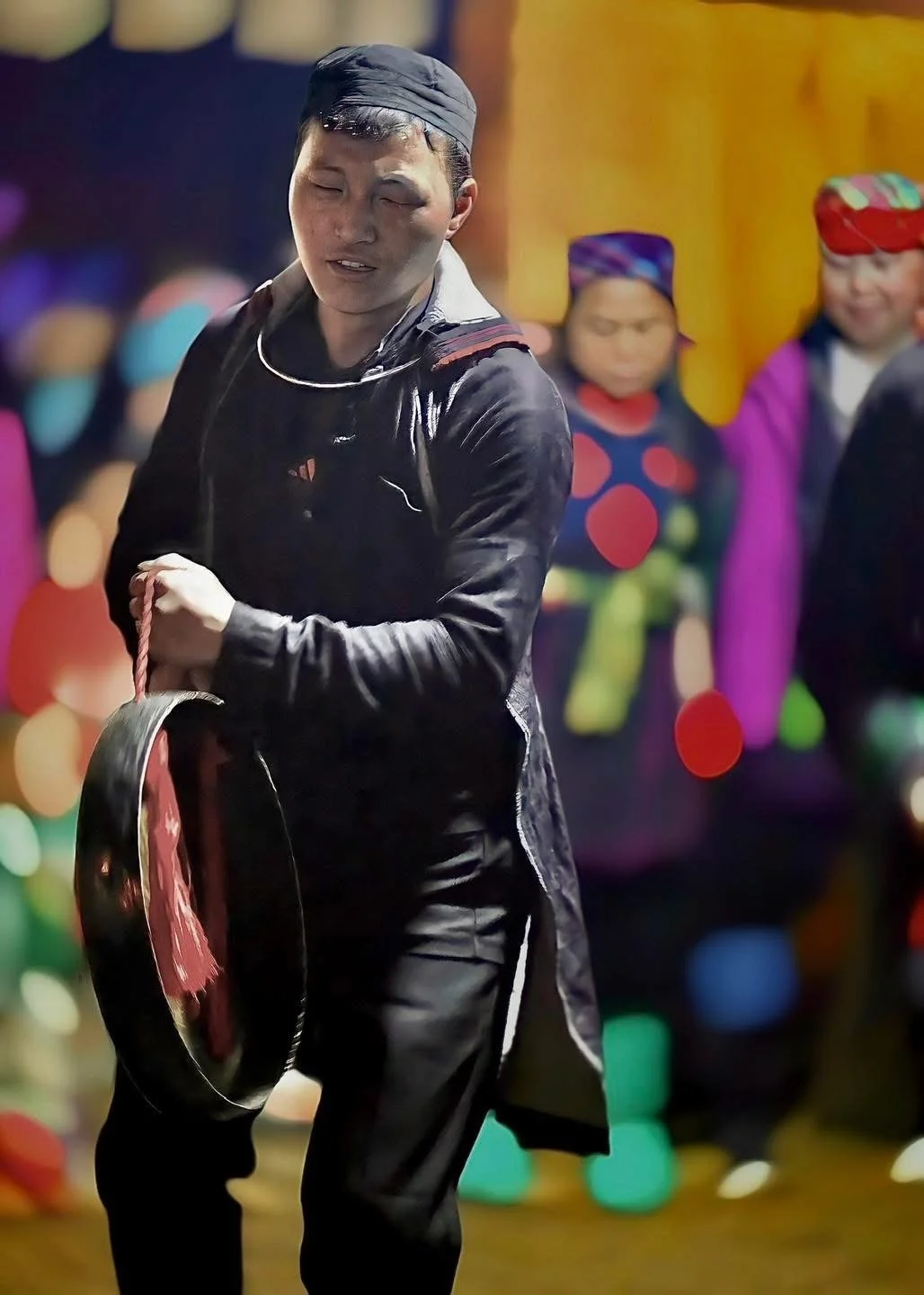
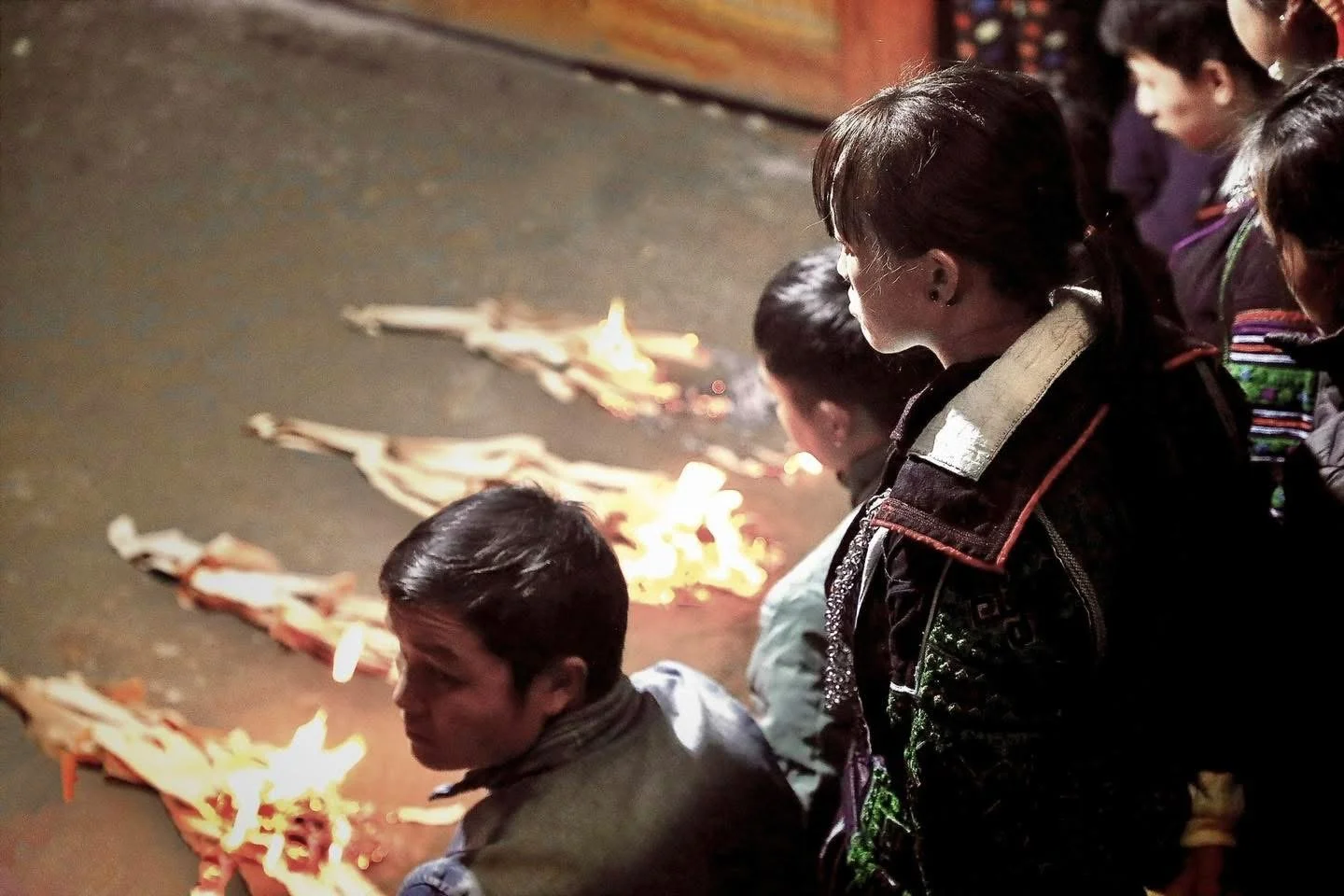
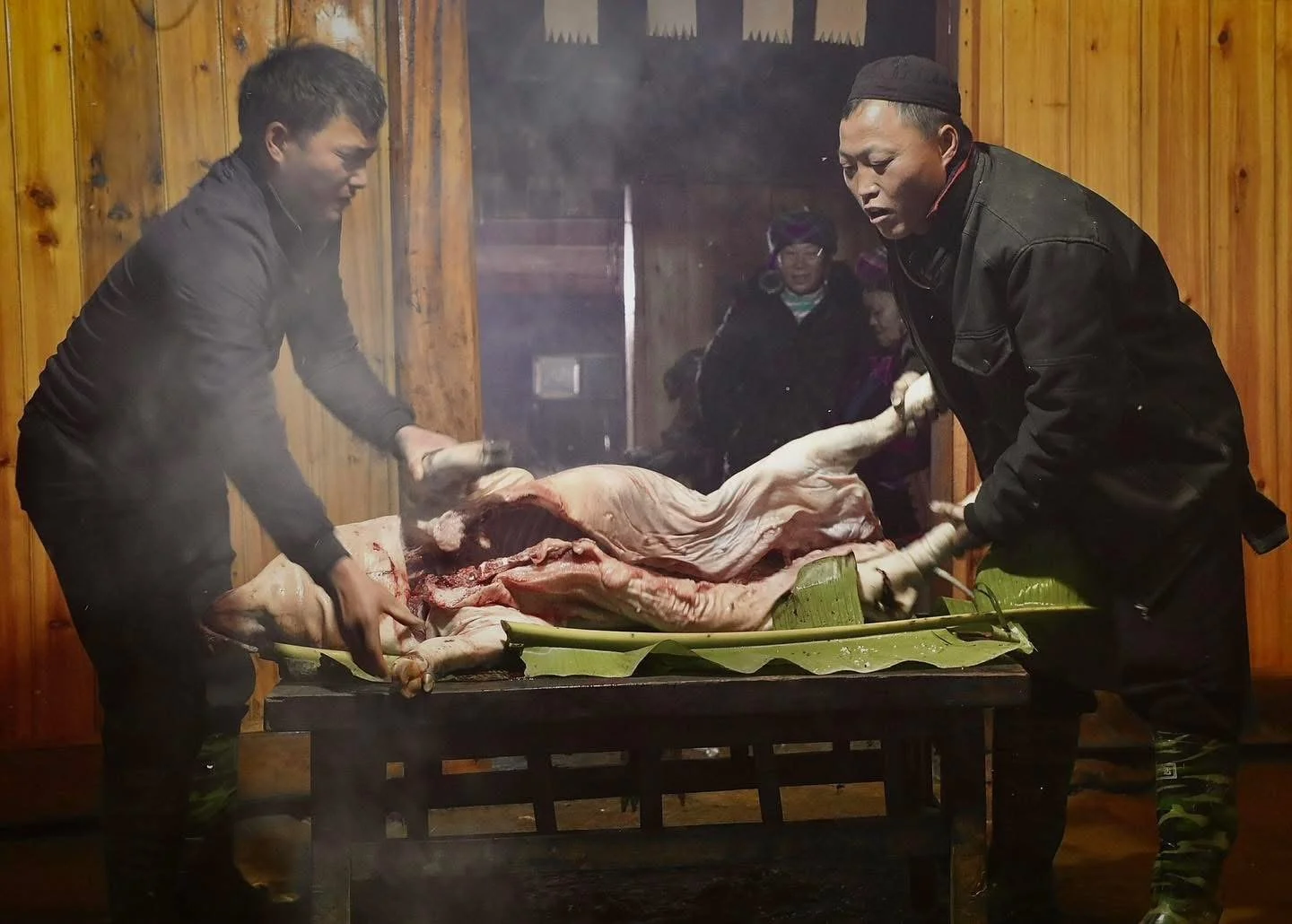
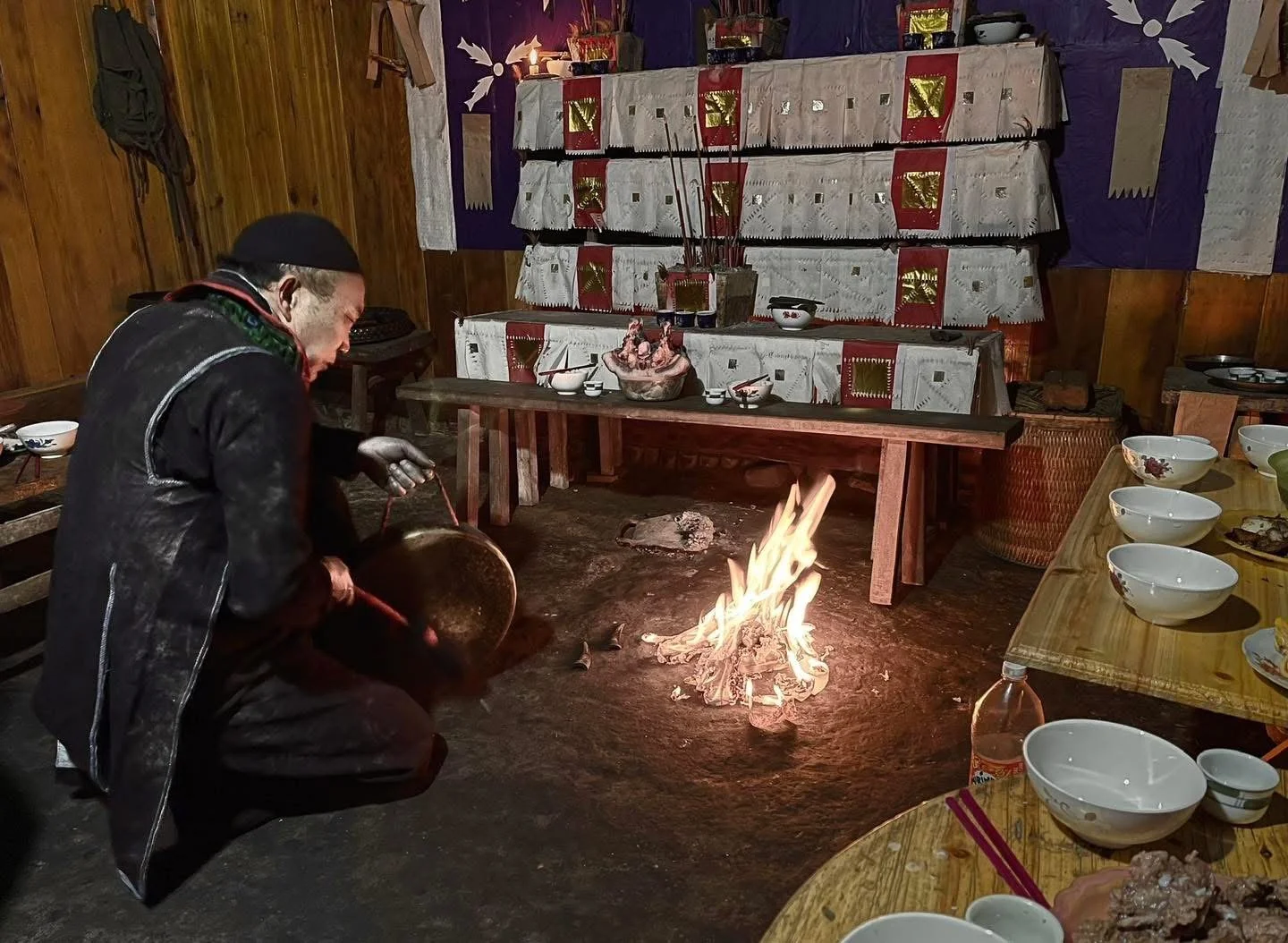
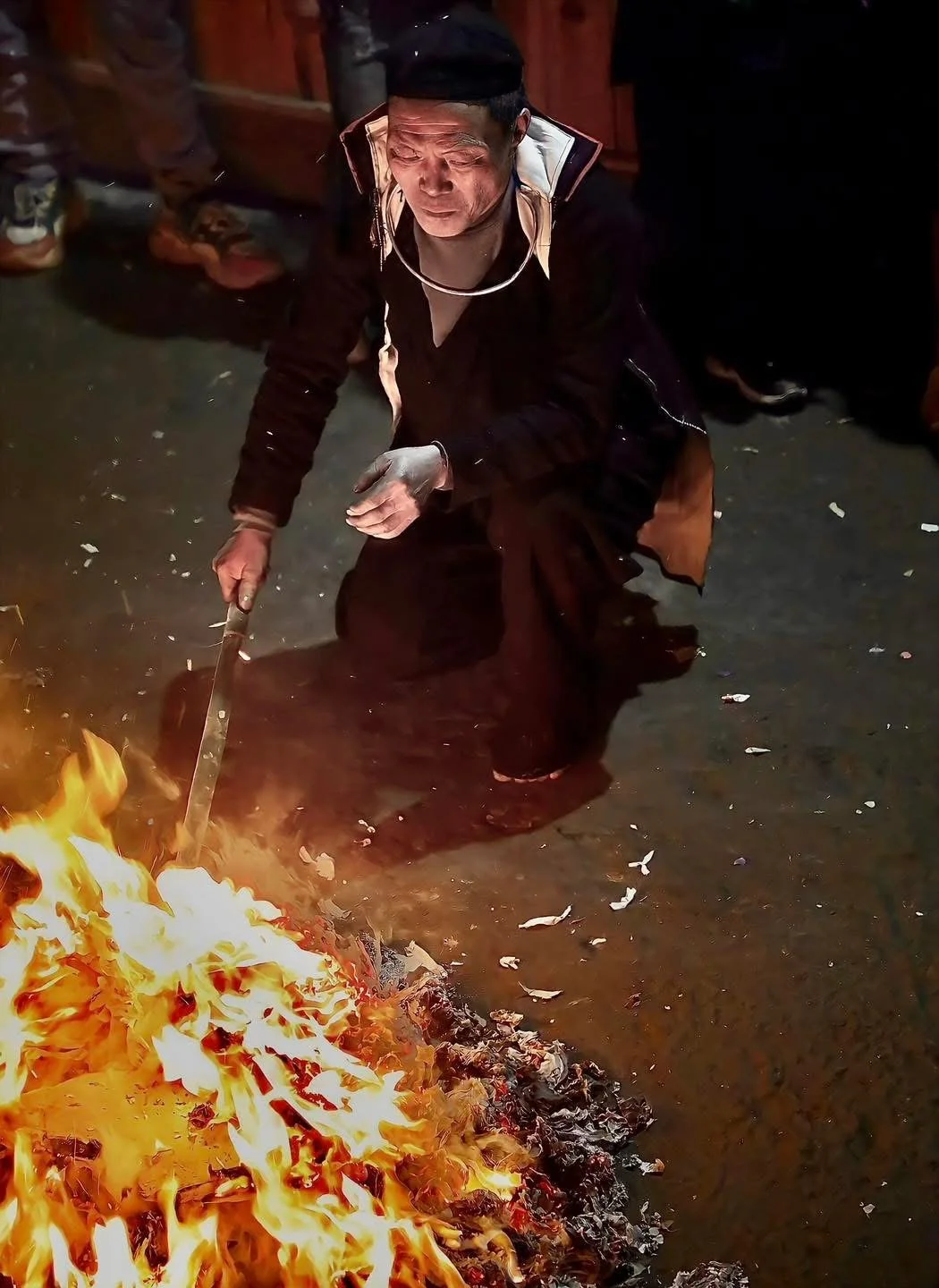
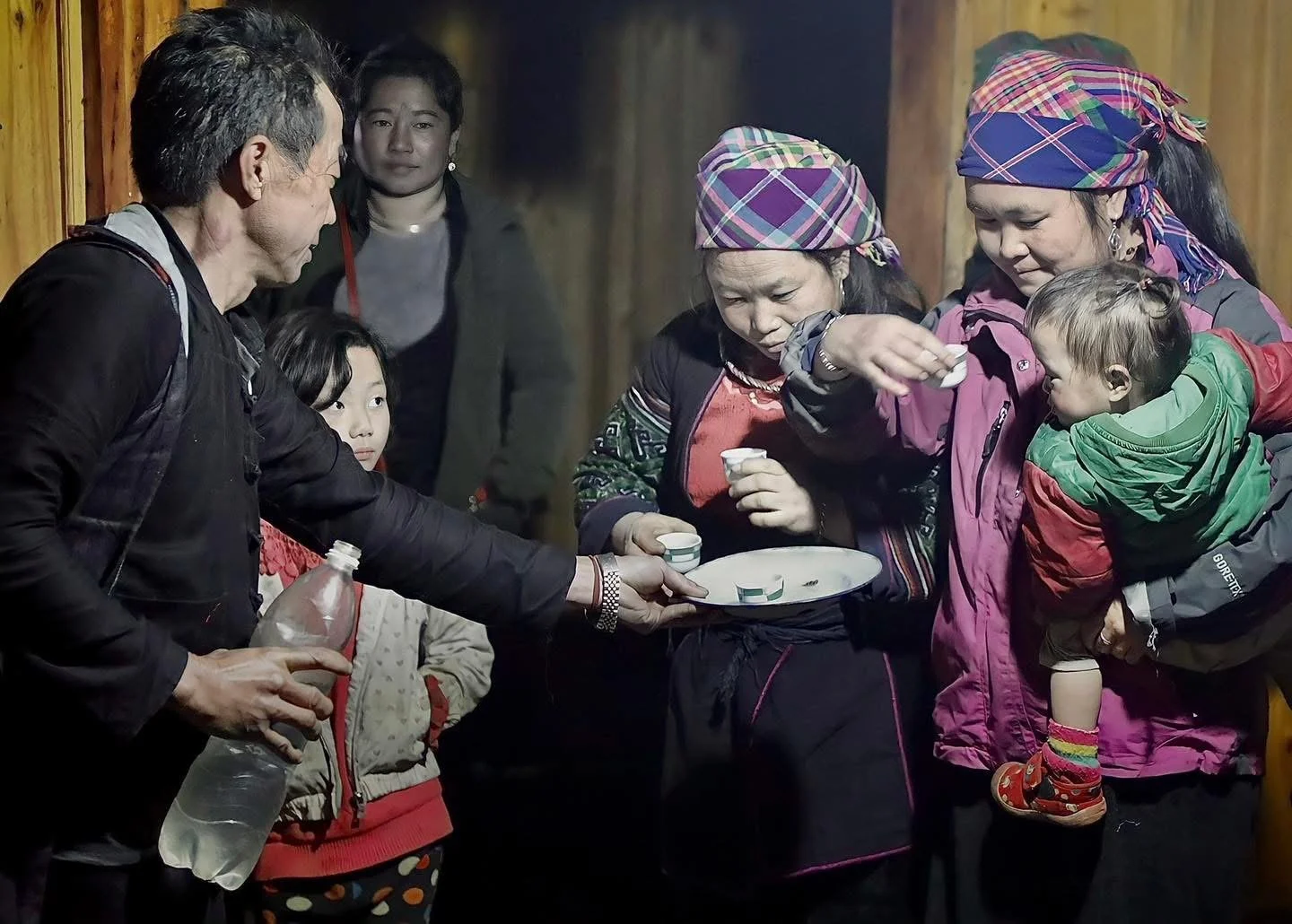
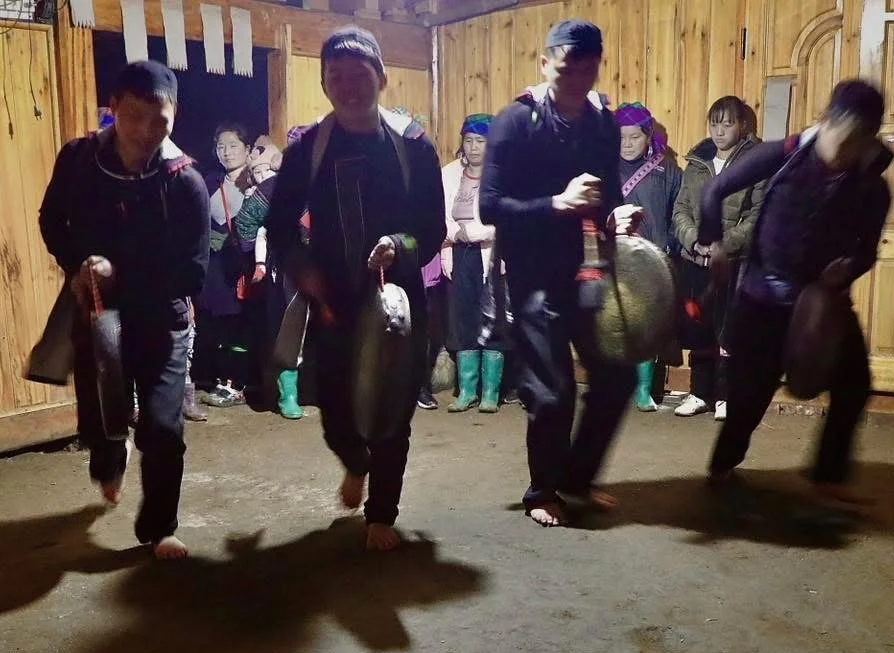
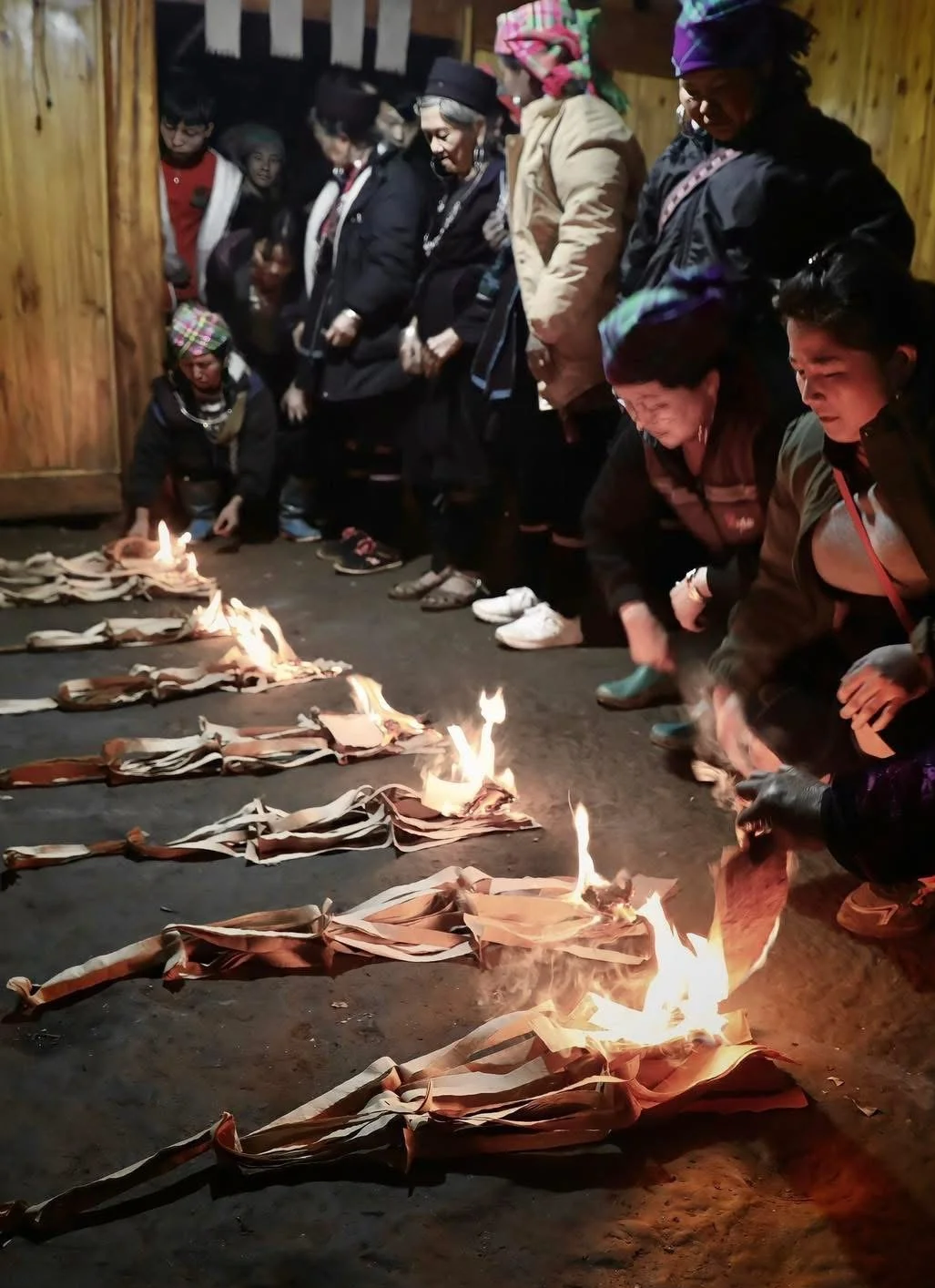
The Beautiful Mystery of Blonde Hair Among the Hmong
High in the mountains of Southeast Asia, some Hmong children are born with naturally light brown or blonde hair. Science has yet to fully explain this beautiful mystery.
A Rare Sight in the Mountains
The Hmong people live across the highlands of Vietnam, Laos, Thailand and southern China. Their culture is known for its vibrant textiles, farming traditions and deep connection to the mountains they call home. Dark hair is the most common trait within these communities, which makes it even more surprising when a child appears with naturally light brown or even blonde hair.
The photographs above show several Hmong children with strikingly fair hair. Their colouring often catches visitors off guard, as it stands out against the more familiar dark tones seen across the region.
What Causes the Lighter Hair?
The exact reason for lighter hair in some Hmong people is still unclear. Scientists believe it may be linked to unique genetic variations passed through certain family lines. Similar traits have been observed in other isolated communities around the world. However, there has not yet been enough research to determine the precise cause within the Hmong population.
What is certain is that these features occur naturally. The hair often darkens with age, yet in childhood it creates a captivating contrast that draws curiosity and admiration.
More Than Just a Genetic Puzzle
While genetics may offer one part of the answer, the real beauty lies in the way these children carry their heritage with pride. Whether in traditional embroidered clothing or simple school uniforms, their presence is a reminder that culture is not defined by appearance alone.
Each face tells a story of mountain life. Fields, forests and open skies shape their daily world far more than hair colour ever could.
A Living Reminder of Diversity
The Hmong community continues to surprise and inspire. Their traditions remain strong, even as science works to understand the rare traits found among them. Until more studies are done, the blonde hair seen in these villages will remain one of nature’s quiet wonders.





The Rice Harvest in Sapa: Tradition and Community
In Sapa, the rice harvest is more than work. Families gather, traditions are honoured, and communities move together with the rhythm of the terraces.
The Rhythm of the Terraces
Every year in Sapa, the rhythm of life follows the rice terraces. The harvest is a seasonal anchor for Hmong and Dao families, shaping both work and tradition.
When the Harvest Begins
In the lower valleys, cutting starts as early as August, while the higher terraces wait until September. Altitude and weather shift the calendar, but the pattern remains the same: early mornings, hands on sickles, and sheaves carried to dry in the sun.
Ceremony and Meaning
The harvest is not only practical but also ceremonial.
Offering the First Rice
A small portion of the first grains is always set aside for the ancestors and for the spirits of field and water. At the household altar, incense is lit and quiet words are spoken in thanks. These simple rituals bind the community to the land and to generations past.
Working Together
Labour is shared within and between families, keeping old traditions alive.
The Circle of Support
Neighbours and relatives trade days, helping each other through the long hours in the fields. Threshing is often done with simple wooden frames, the rhythm steady and slow. Machines sometimes appear, but on the steep terraces handwork still rules.
A Living Landscape
For visitors, the harvest is a time when the terraces are alive with colour and movement.
Beauty and Survival
Golden fields ripple in the wind as farmers work side by side, their voices carrying across the valleys. What may look like ordinary labour is in fact the heart of the year, deciding food, family, and community.
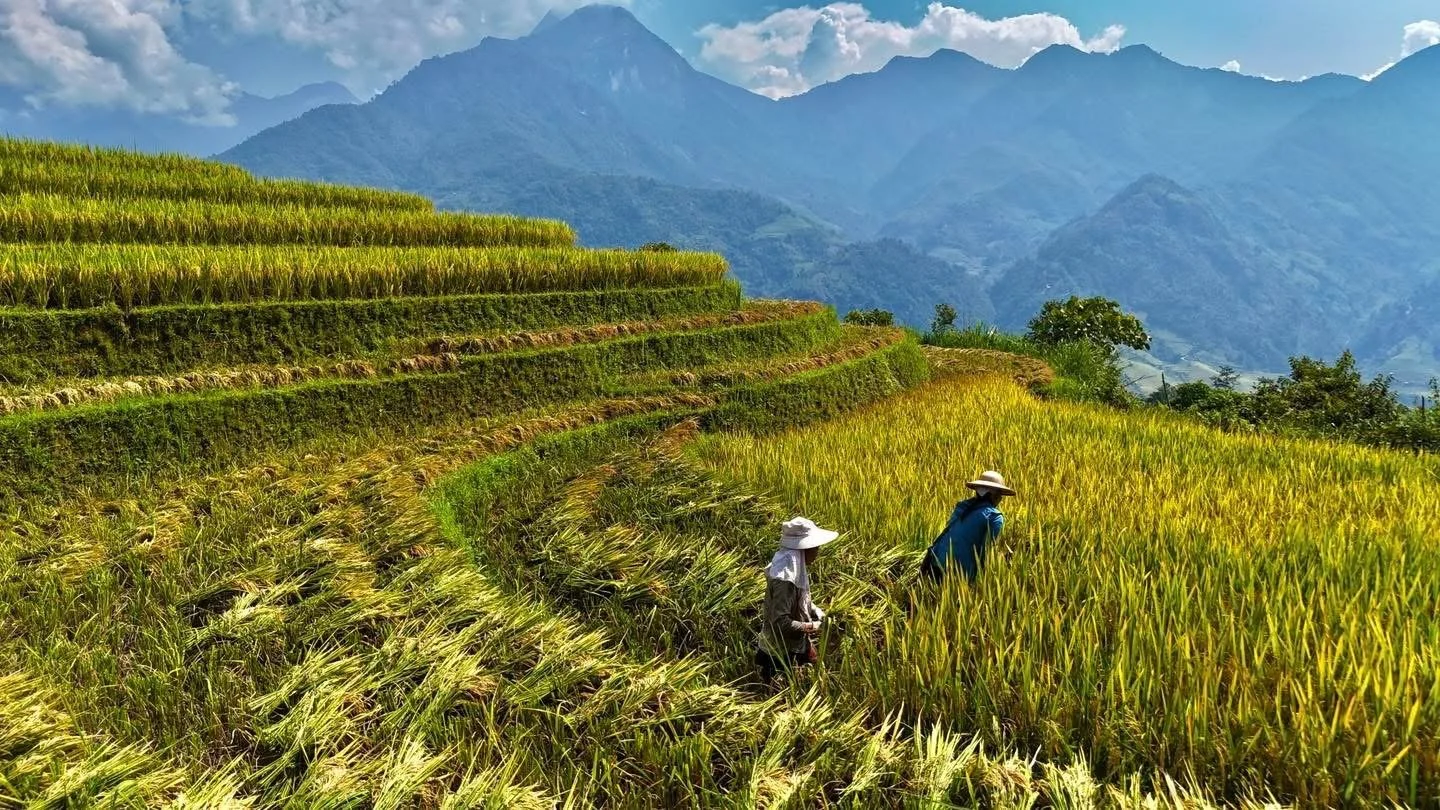
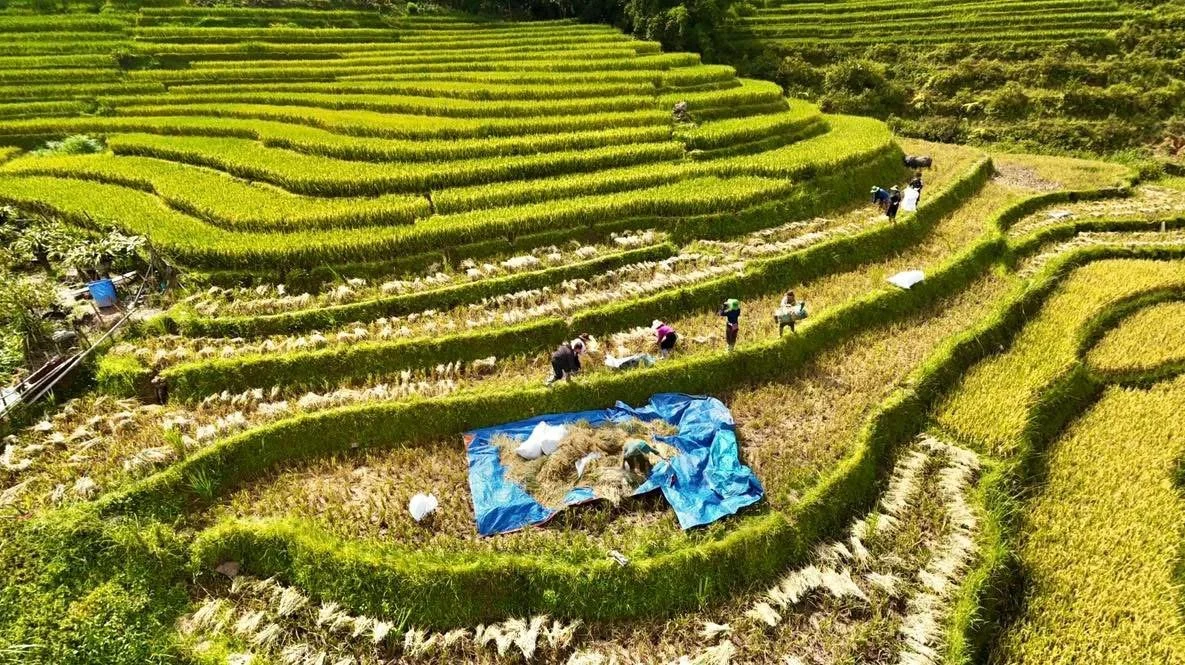
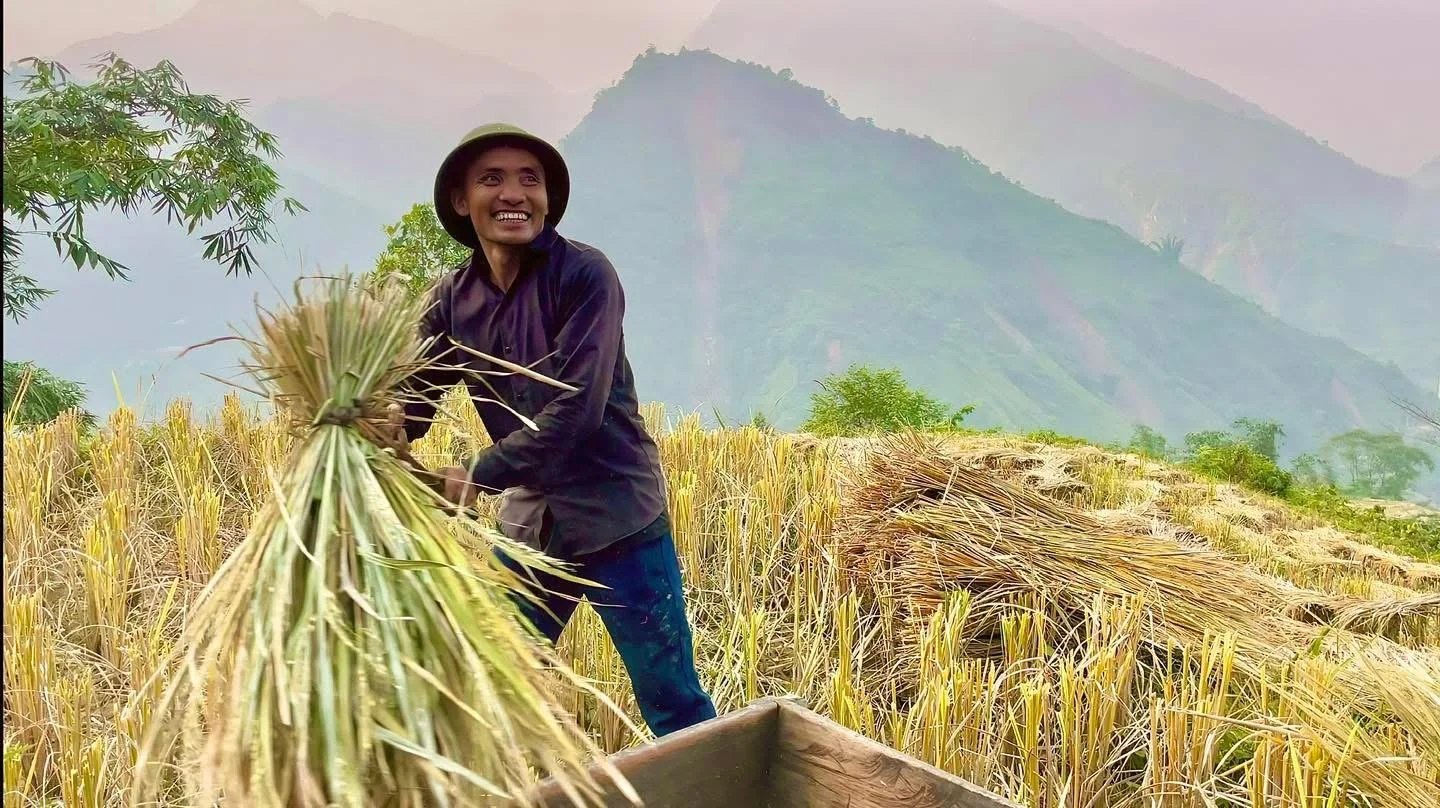
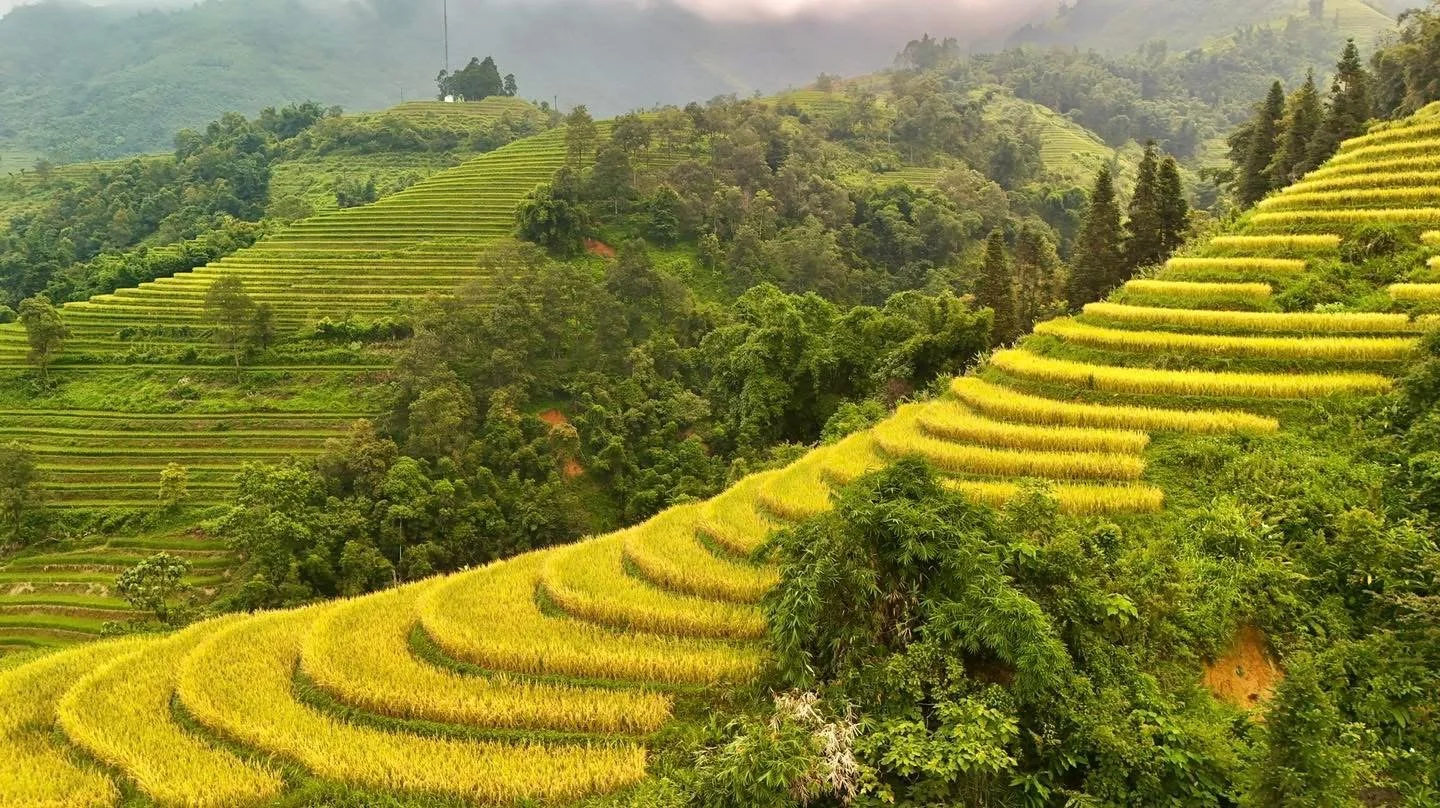
The Living Blue: Indigo Traditions of Sapa’s Hmong & Dao Communities
In the hills of Sapa, indigo runs deeper than colour. Among the Hmong and Dao, it is identity, tradition and connection. Join us to learn, listen and create.
Indigo as Identity
Step into the hills of Sapa and you will notice a colour that lingers on hands, fabric and memory: the deep, living blue of indigo. Among the Hmong and Dao communities, indigo is far more than a dye. It is identity, tradition and a quiet act of resistance. Families grow it in their gardens, tending the plants season after season, and transforming them into cloth that carries memory and meaning.
Secrets Passed Through Generations
For generations, women have carefully passed down the secrets of indigo. They know how to ferment the leaves, how to coax the blue from green, and how to fold and wax fabric for batik. These skills speak not only of beauty but of belonging. They are not staged performances for visitors, but everyday acts of care, creativity and survival.
Learning Through Experience
When you join an ETHOS trek or take part in one of our batik workshops, you are invited into this living tradition. You might feel the texture of wax on cloth, stir the indigo vat, or hear stories carried in the rising scent of the dye. It is not about mastering a technique. It is about meeting the land and its people with presence and respect.
Why Slow Travel Matters
Slow travel gives space for this kind of learning. It lingers under your fingernails and stays with you long after the colour fades. It is a chance to connect deeply, not only with a craft, but with the people and place that sustain it.
Join the Journey
We would love to welcome you on a journey that honours both land and lineage. Come walk, sit, listen and learn with us in Sapa.
👉 Send us a message to explore upcoming dates or to find out more about our treks and workshops.
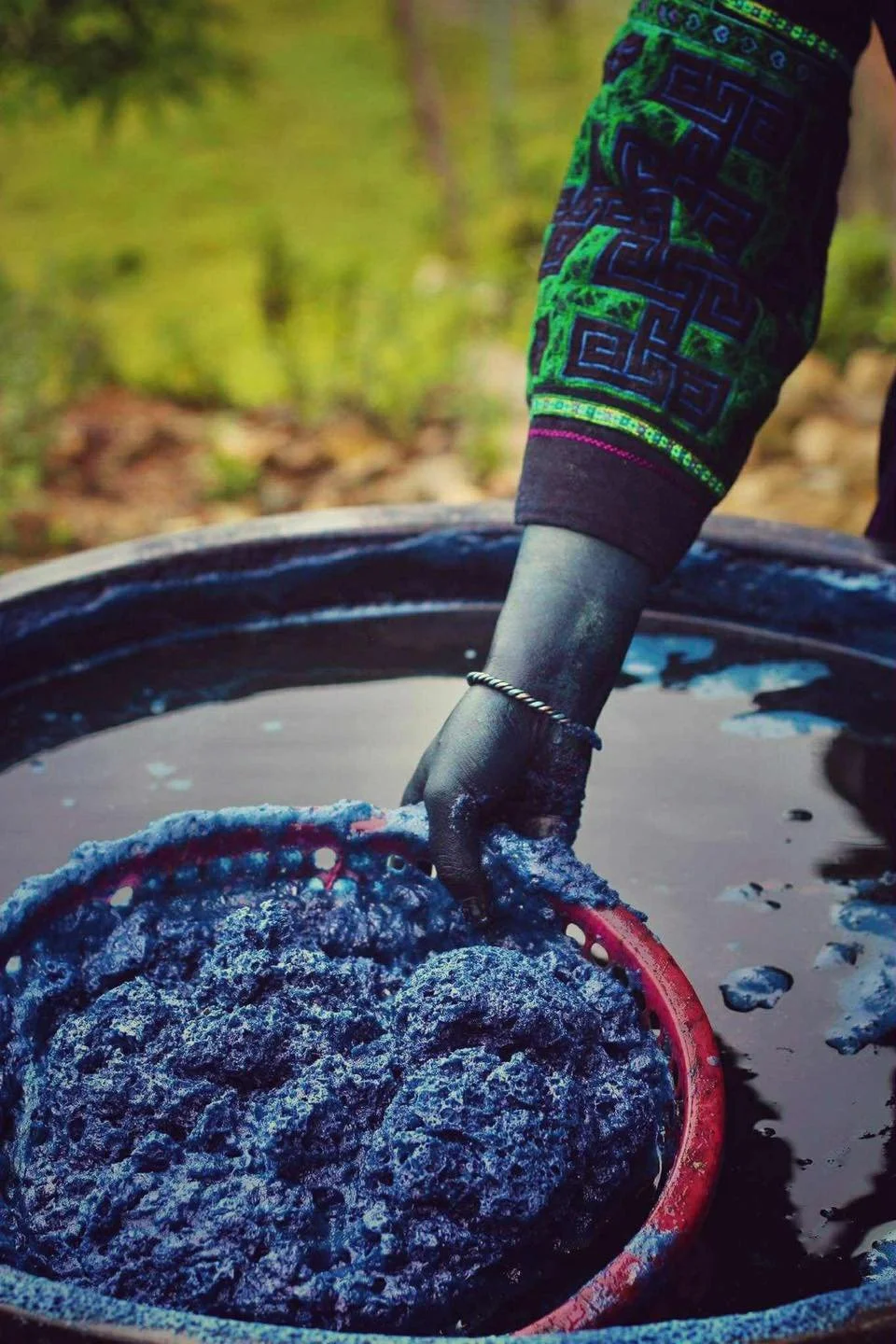
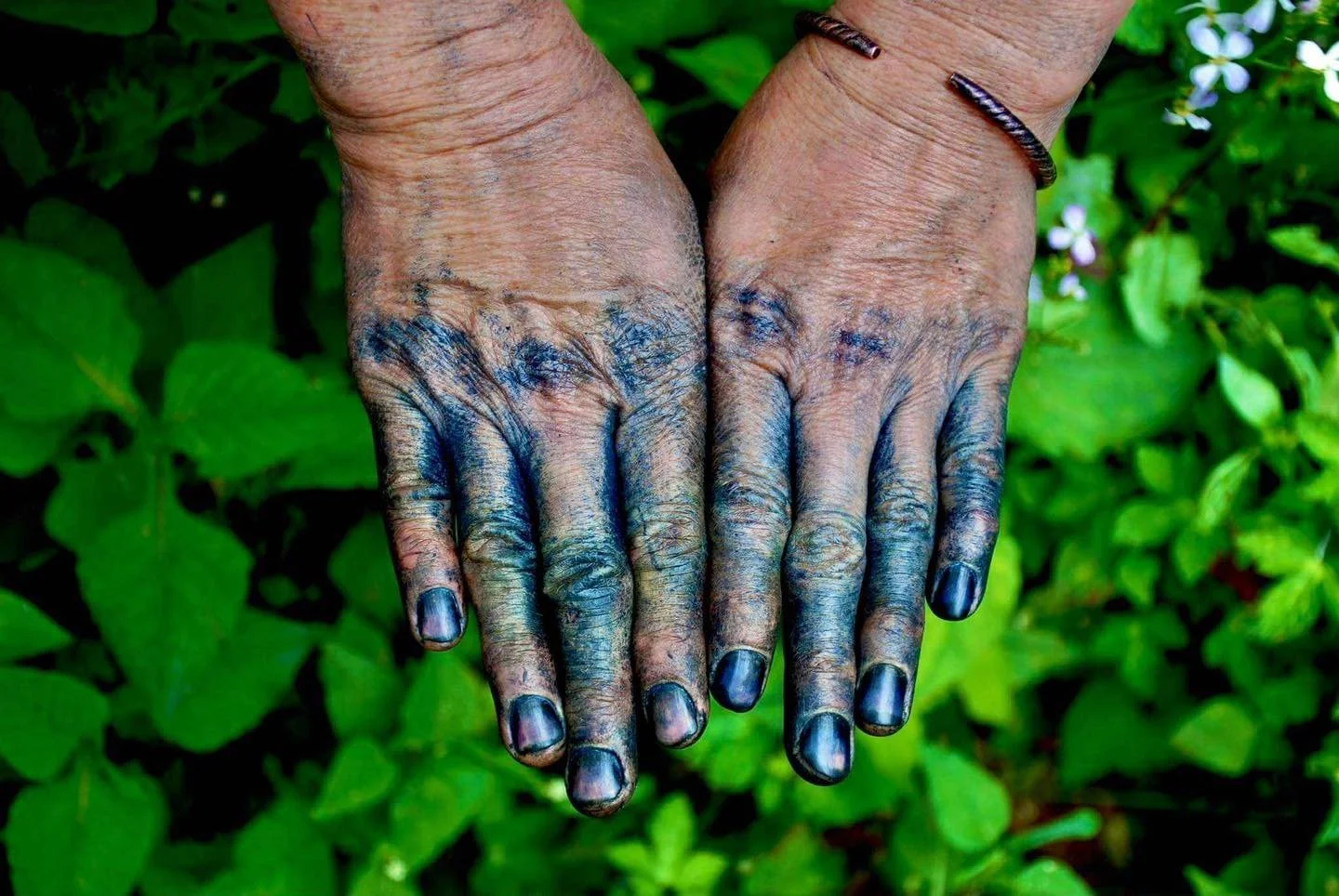
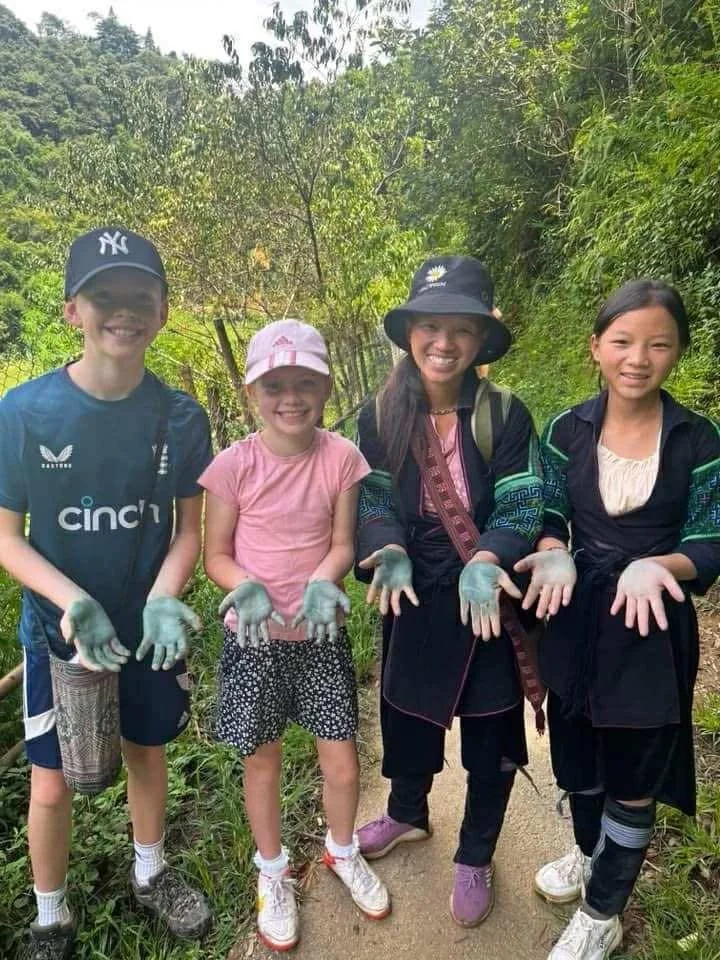
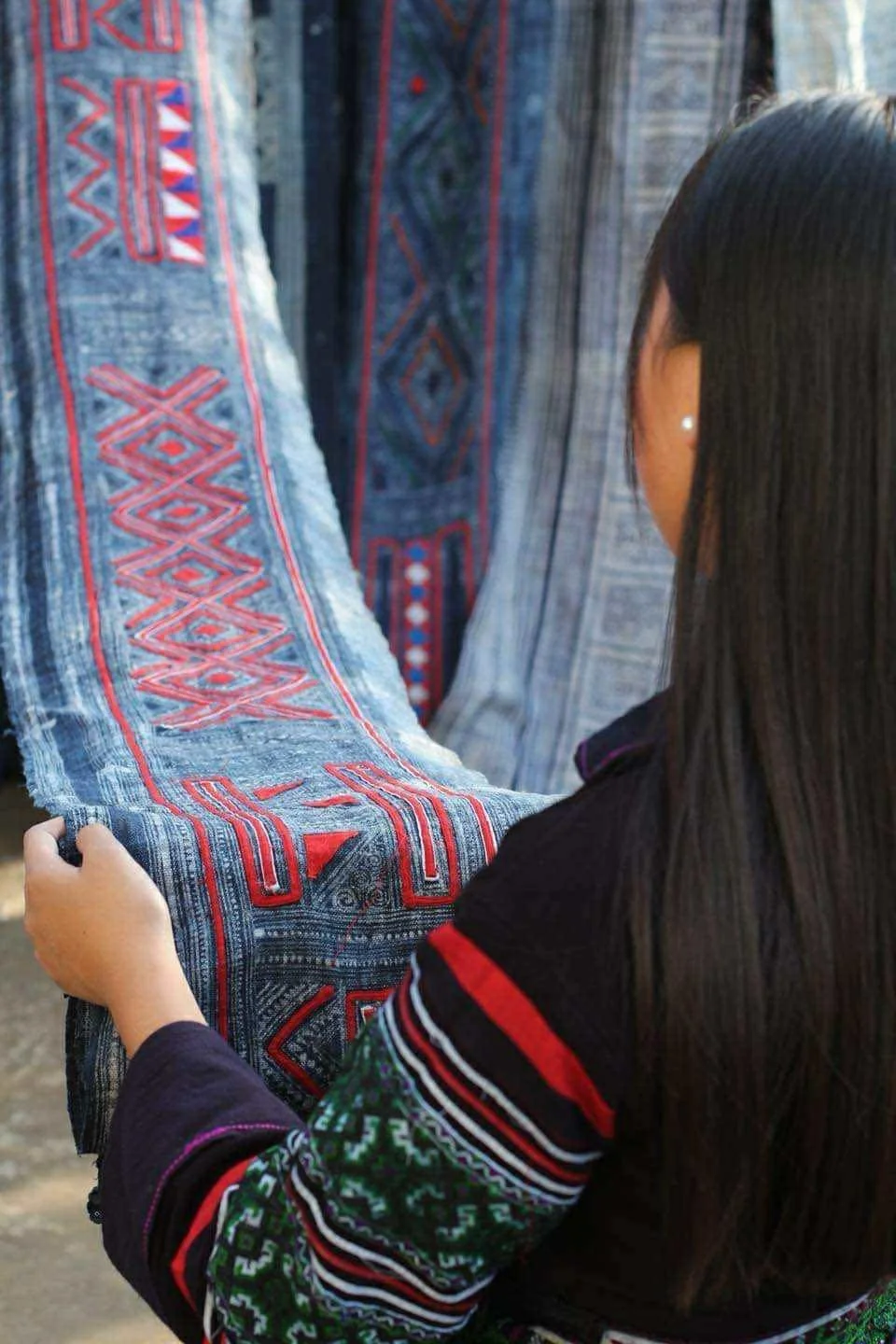
The Girl and the Bird: A Tale from the Mountains of Sapa
In the mountains of Sapa, a hungry girl finds a bird in need. What begins as a struggle for survival becomes a story of love and hope.
A Story Rooted in the Hills
High in the mountains of Sapa, where mist lingers over rice terraces and shadows move through the valleys, lives My, a young Hmong girl. Each day begins with the challenge of foraging for food—wild mushrooms, snails, and greens—to ease her family’s hunger.
An Unexpected Discovery
One evening, while searching for berries, My climbed into the branches of a tree. Hidden among the leaves she found not fruit but a fragile nest, home to a tiny bird left alone. Though hunger gripped her, she carried the trembling creature home.
Love Stronger than Hunger
At first, the thought of food tugged at her, yet as the bird sang in her ear, My’s hunger softened. She began feeding it corn from her meagre store. Each chirp brought joy, each small bond stitched love into her heart.
A Bond Forged in Twilight
Though her stomach remained empty, My crafted a nest for her new companion. As the fire burned low, she shared her bed with the bird, their small bodies pressed close against the night. Together they sang beneath the stars, weaving a melody of hope, resilience, and dreams.

Our Culture, Our Future: Passing Traditions to the Next Generation
In the Black Hmong community, sewing is more than a skill. It is a living link to ancestors, identity and history. From an early age, children learn the patterns, techniques and stories woven into traditional clothing, ensuring their culture remains strong for generations to come.
Learning from a Young Age
In the Black Hmong community, children begin to learn the art of making traditional clothes from an early age. This is not only a practical skill but also a way of weaving identity into every stitch.
More Than Sewing
To sew is to carry the voices of ancestors. The patterns, colours, and techniques hold stories passed down for centuries. By learning these skills, children are not only creating clothes but also keeping culture alive.
Keeping Traditions Strong
Each piece of traditional clothing is a reminder of resilience. Teaching children ensures that these traditions will not fade but will grow stronger with every new generation. In this way, the past and the future are stitched together, securing identity and heritage for years to come.
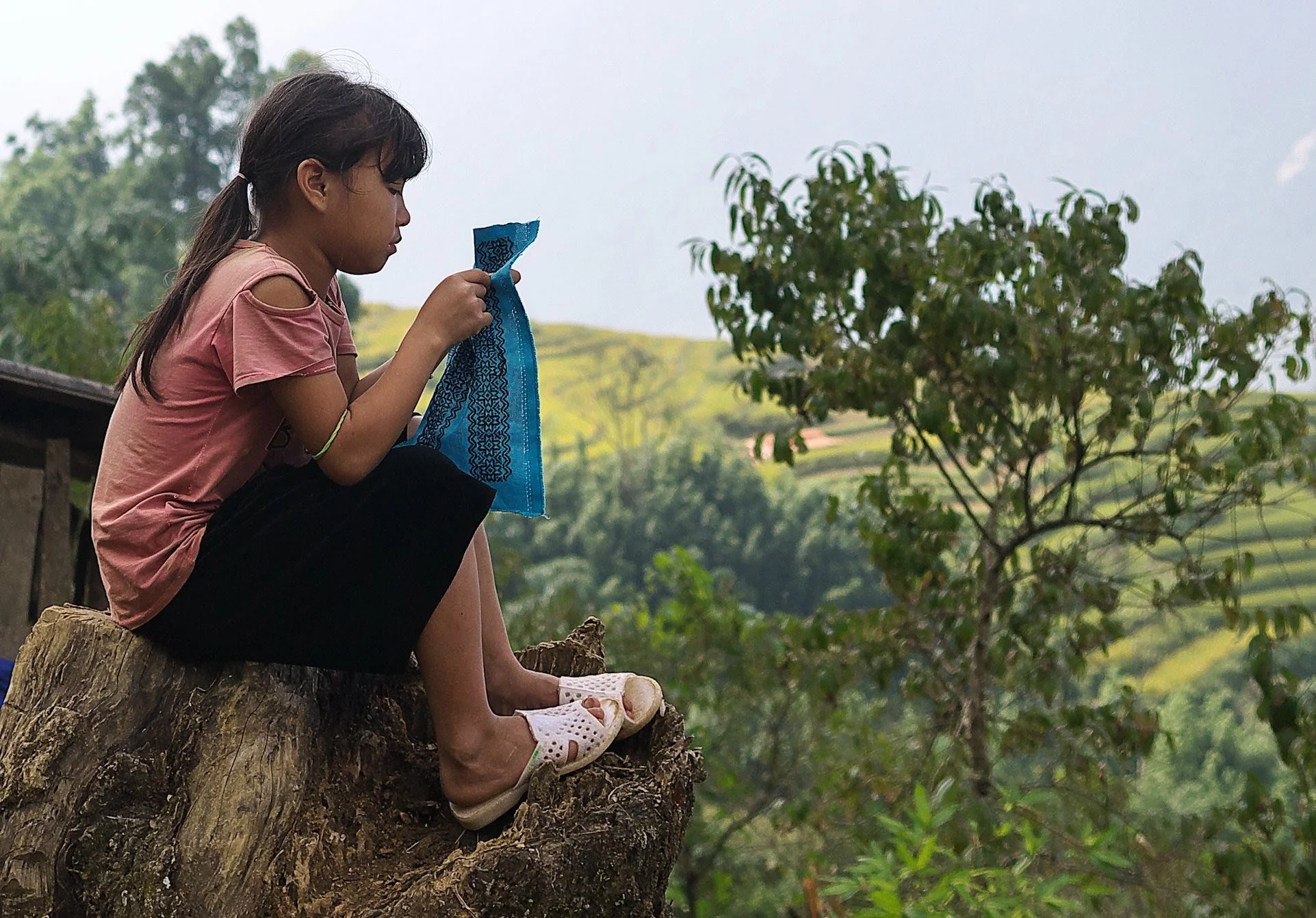
A Little Girl, A Big Imagination: Childhood in Sapa
In the mountains of Sapa, childhood unfolds differently. With no toys but endless imagination, a young Hmong girl transfroms dirt, fields and everyday objects into a world of play. It is a story of creativity, freedom and the quiet magic found in simple moments.
Play Without Toys
In the mountains of Sapa, Vietnam, a young Hmong girl plays with no toys but the world around her. She digs in the dirt, chases dragonflies, and gathers snails from the rice paddies. On this day, she and her friends ground an old brick into powder and used it as makeup.
Turning the Ordinary Into Magic
What others might see as nothing, she transforms into something extraordinary. A brick becomes beauty, the fields become her playground, and imagination becomes her freedom.
The Spirit of Childhood
Childhood in Sapa shows us that joy does not need much. With curiosity and creativity, the ordinary becomes magic. For this little girl, play is not about possessions but about possibility.