
When Beauty Becomes Backdrop: Traditional Villages and the Future of Sapa
A Landscape Once Built in Conversation With Itself
For centuries, the valleys surrounding Sapa evolved slowly and almost quietly, shaped not by masterplans or speculative investment but by the rhythms of weather, farming, migration, and communal life. Villages appeared gradually along ridgelines and river valleys where water flowed cleanly, terraces could be carved into mountain slopes, and timber could be gathered sustainably from nearby forests. Homes did not seek attention. They belonged to the landscape rather than competing with it.
This relationship between settlement and environment is one of the reasons the Muong Hoa Valley became so internationally admired in the first place. Traditional Hmong and Dao villages never attempted to dominate the mountains. Their houses sat low against the earth beneath bamboo groves and fruit trees, partially hidden within mist, terraces, and forest edges. Rooflines followed the contours of hillsides. Building materials weathered naturally into the surrounding terrain. Smoke drifted gently from darkened roofs during cold evenings while water channels moved quietly through kitchens and gardens. What visitors experienced here was was harmony. Architecture, agriculture, spirituality, and ecology existed in conversation with one another.
Today, however, that relationship is under increasing pressure. The mountains themselves are not disappearing, nor are the communities who continue to live among them. What is increasingly at risk is the sense of balance that once defined the valley, as natural beauty becomes steadily swamped by commercial spectacle, oversized tourism developments, and architecture designed more for visibility and prestige than belonging. Across Sapa, enormous tourism developments are transforming valleys once defined by subtlety and restraint into landscapes increasingly shaped by spectacle, prestige, and commercial ambition. Concrete ridgelines rise above terraces. Mega-projects compete for visual dominance. Mountain views become marketing assets rather than shared cultural landscapes. Yet this is not a simple story of old versus new. Sapa does not need to remain frozen in time. Good contemporary architecture is entirely possible here. Some newer homestays, ecolodges, and community-led projects are attempting to build differently, designing structures that still respect scale, terrain, local material traditions, and the visual integrity of the mountains themselves.
The real question is therefore not whether development should happen, but what kind of development deserves to shape the future of the valley. How can Sapa thrive as an example of top level Community-based tourism experiences in Northern Vietnam?
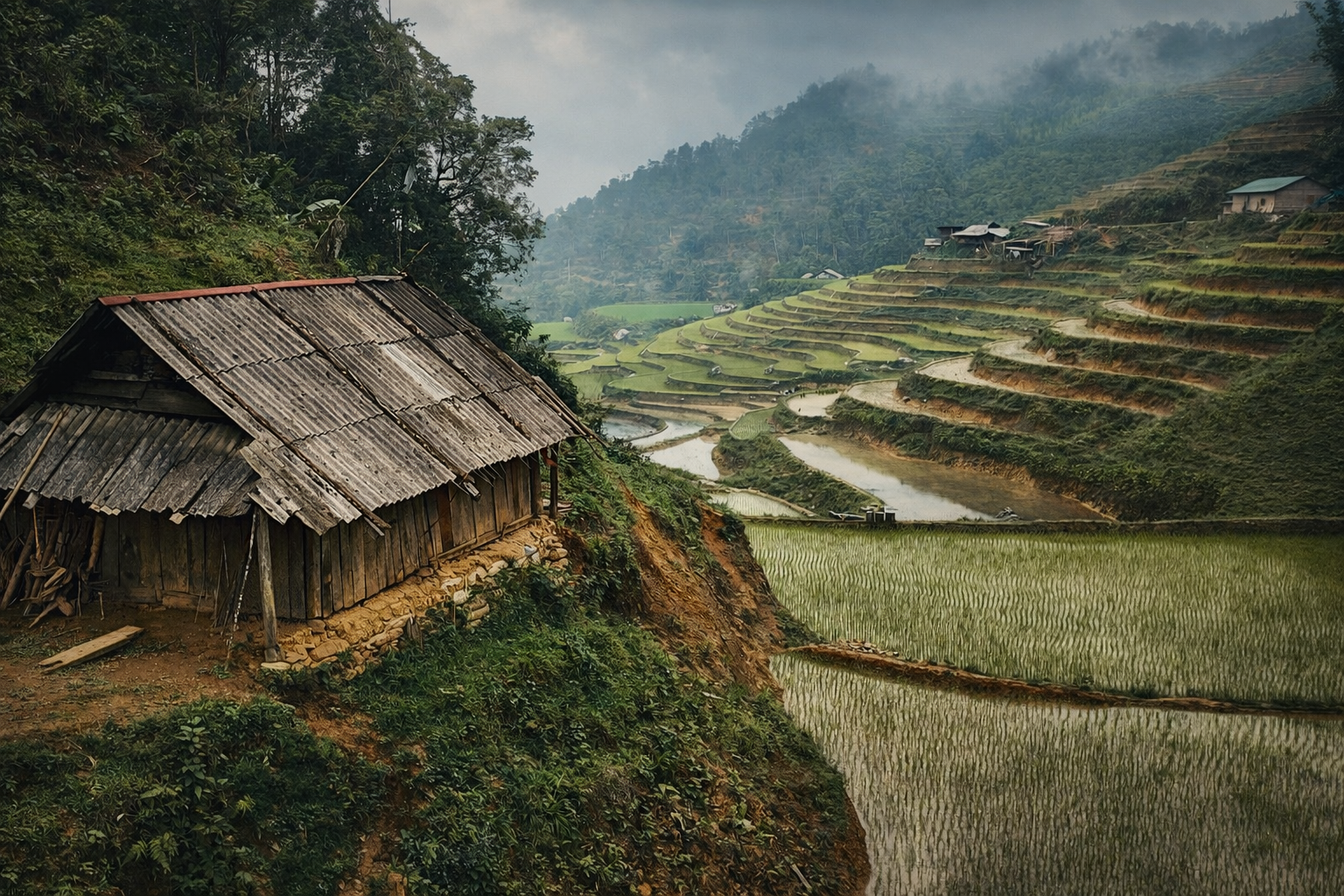
Traditional Hmong house in Sapa.
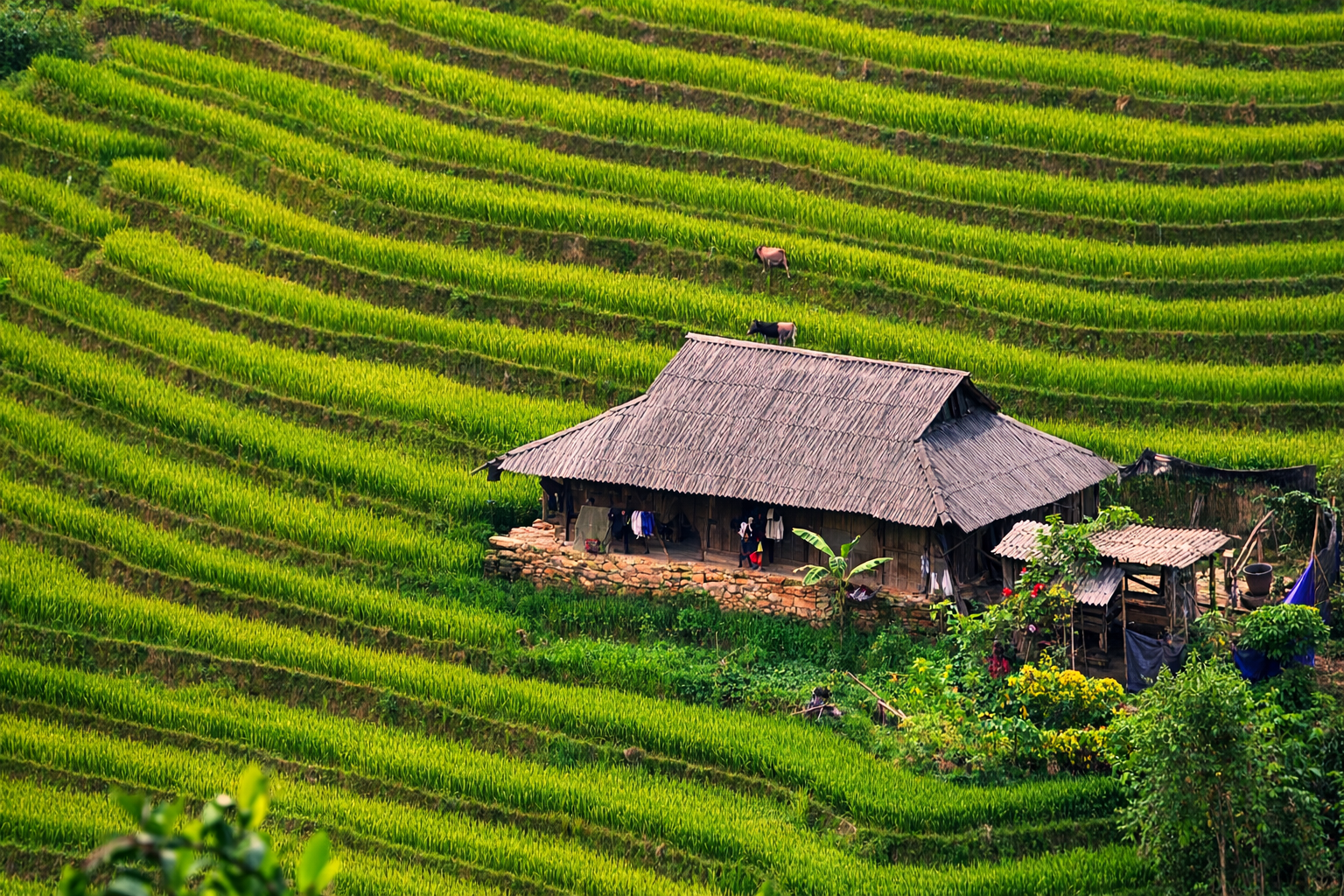
Traditional Hmong house in Sapa.
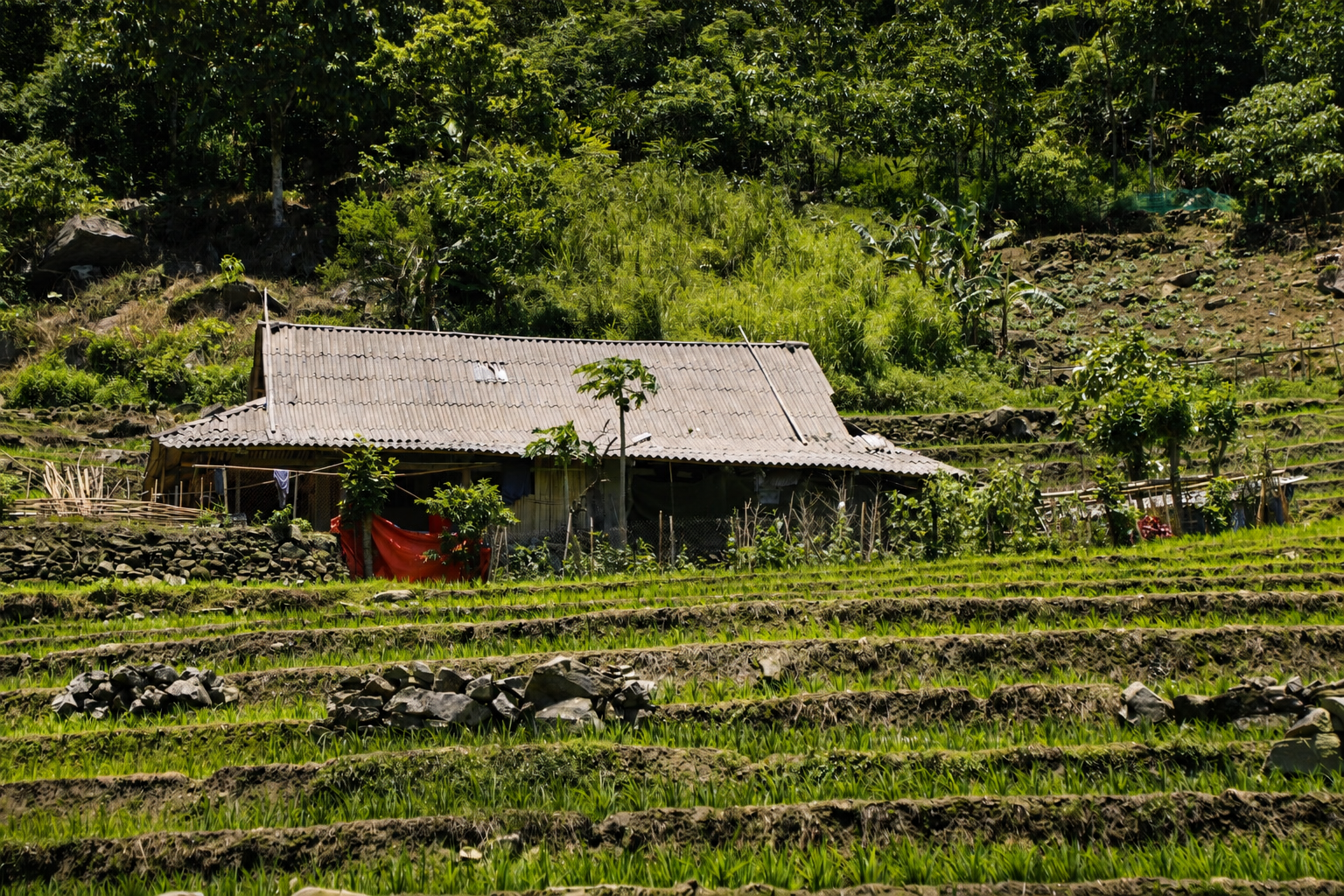
Traditional Hmong house in Sapa.
Sapa Town Is Not the Same as Sapa’s Mountains
Part of the confusion surrounding development in Sapa comes from the fact that many visitors experience only Sapa town itself, rather than the far larger district that surrounds it. The urban centre of Sapa has already become a busy mountain tourism hub filled with hotels, cafés, karaoke bars, illuminated façades, traffic, construction, and increasingly dense commercial infrastructure. Bright lights, large buildings, and rapid development are now firmly part of the reality of the town.
Yet Sapa district extends far beyond the urban centre. Beyond the busy streets lie vast areas of forest, terraced rice valleys, rivers, streams, and mountain communities spread across wards including Cầu Mây, Hàm Rồng, Ô Quý Hồ, Phan Si Păng, Sa Pa, and Sa Pả, alongside rural communes such as Bản Hồ, Hoàng Liên, Liên Minh, Mường Bo, Mường Hoa, Ngũ Chỉ Sơn, Tả Phìn, Tả Van, Thanh Bình, and Trung Chải. Across these valleys and mountain slopes sit approximately one hundred smaller hamlets, many still defined by traditional Hmong, Dao, Tày, and Giáy homes surrounded by terraces, bamboo groves, medicinal gardens, grazing buffalo, and flowing mountain water.
This distinction matters enormously. Much of what people imagine when they think of Sapa; the layered rice terraces disappearing into mist, small villages scattered along ridgelines, children walking narrow mountain paths, water buffalo crossing streams, smoke drifting from timber roofs during cold evenings still exists outside the urban core. The wider district remains an extraordinary cultural and ecological landscape whose value lies precisely in the relationship between communities, agriculture, forests, rivers, and mountains.
The concern many residents and observers now share is not that Sapa town itself contains development or modern infrastructure. Towns naturally evolve, gentrify, grow and sometimes decline. The concern is that the aggressive commercialisation and oversized architectural ambitions increasingly visible within the urban centre are beginning to spread outward into landscapes that have historically remained far quieter, more ecologically fragile, and more culturally rooted.
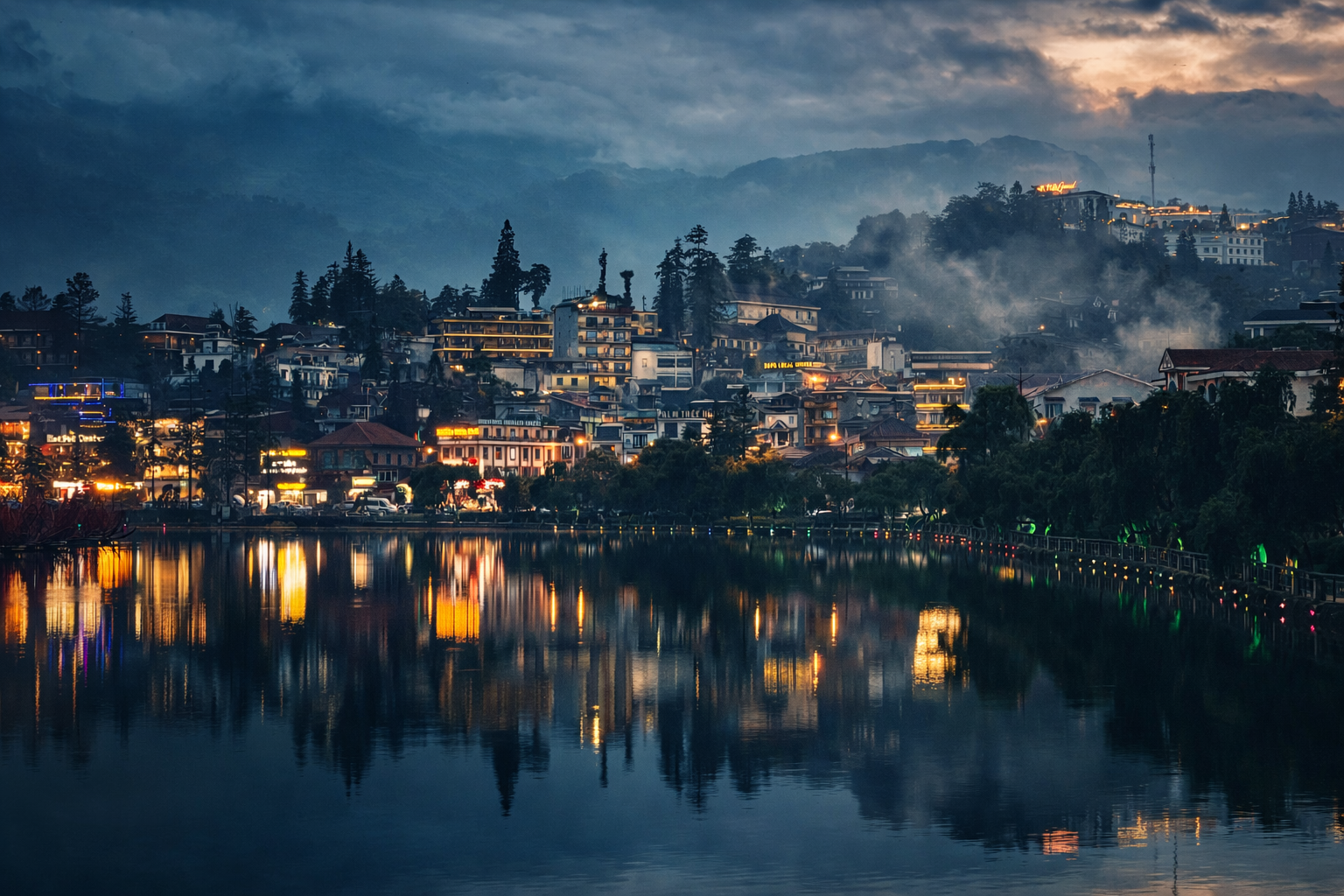
Sapa town view from across the lake.
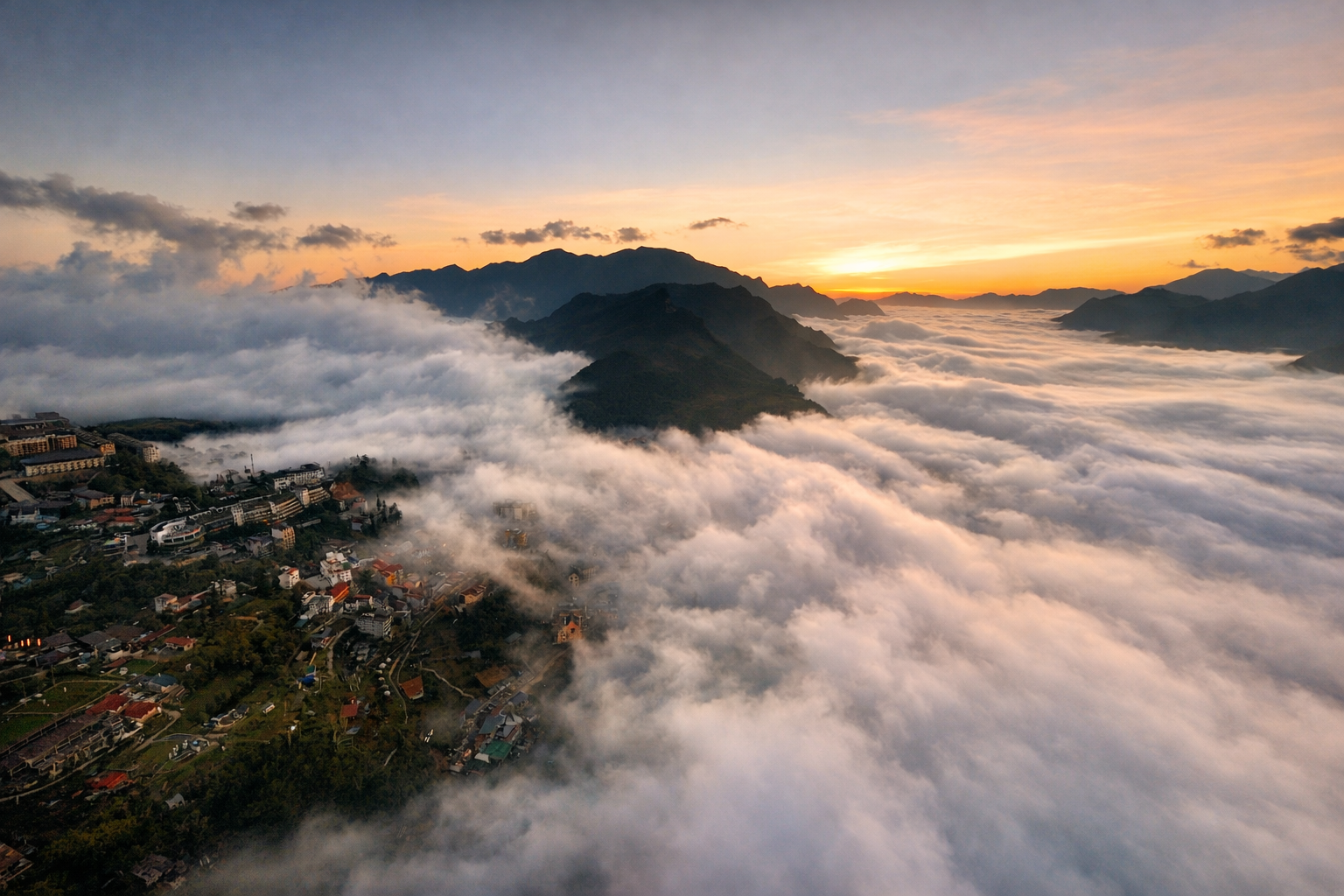
Aerial view of Sapa town.
Homes Designed to Belong to the Mountains
Across the mountains surrounding Sapa, traditional Hmong and Dao homes sit quietly against terraced hillsides, partially hidden beneath bamboo groves, plum trees, and drifting mountain fog. Their smoke-darkened walls, dense thatched roofs, and low silhouettes seem almost absorbed into the landscape itself. These are not houses designed for prestige, visibility, or permanence but are homes shaped by centuries of adaptation to climate, farming life, spirituality, and communal survival.
Every aspect of their design reflects practicality and restraint. Timber from nearby forests forms the structural frame. Bamboo becomes partitions, woven panels, water channels, and animal pens. Stone anchors foundations into steep terrain while packed-earth floors absorb warmth from the hearth and slowly release it during freezing mountain nights. Unlike the raised stilt houses common in hotter lowland regions, many Hmong homes sit directly against the earth, helping interiors remain warm and sheltered during Sapa’s cold, damp winters.
At the centre of most homes sits the fire, functioning not only as a place to cook but as the emotional and spiritual heart of family life. Families gather around the hearth to prepare food, embroider textiles, repair tools, share rice wine, and tell stories long after darkness settles across the valley. In many Dao homes, ancestral altars occupy protected central positions within the house, reflecting how architecture, spirituality, and lineage remain deeply intertwined.
The homes themselves are remarkably sophisticated despite their apparent simplicity. Builders traditionally rely upon mortise-and-tenon joinery, wooden pegs, and rattan lashings rather than nails, allowing structures to flex subtly with shifting mountain soils and seasonal moisture. Entire villages often participate in construction, meaning a house embodies relationships and communal labour as much as architecture.
Many homes incorporate gravity-fed stream water systems that channel fresh mountain water directly through kitchen spaces before flowing back into gardens and terraces below. Visitors are also often surprised to discover the absence of chimneys. Smoke from the hearth rises slowly into the roof space before escaping through gaps in timber and thatch, preserving wooden beams against insects and damp while slowly curing hanging maize, herbs, medicinal plants, and strips of meat suspended above the fire.
Flexibility and renewal remain central to the architecture itself. Wall panels are often constructed on runners or slotted systems that allow sections to be dismantled, repaired, replaced, or even transported if necessary. Above the living space, mezzanine grain stores suspended beneath the roof provide dry storage for rice, seeds, textiles, tools, and medicinal plants, preserved by the warm smoky air rising from below.
Perhaps most importantly, these homes were designed around community rather than status or privacy. In many villages, doors remain open during meals, and anyone passing by may be invited inside to share food, whether neighbour, traveller, friend, or stranger. Hospitality in the mountains has historically been tied to survival itself. The house therefore functions not simply as shelter, but as a place of welcome, memory, reciprocity, and belonging.
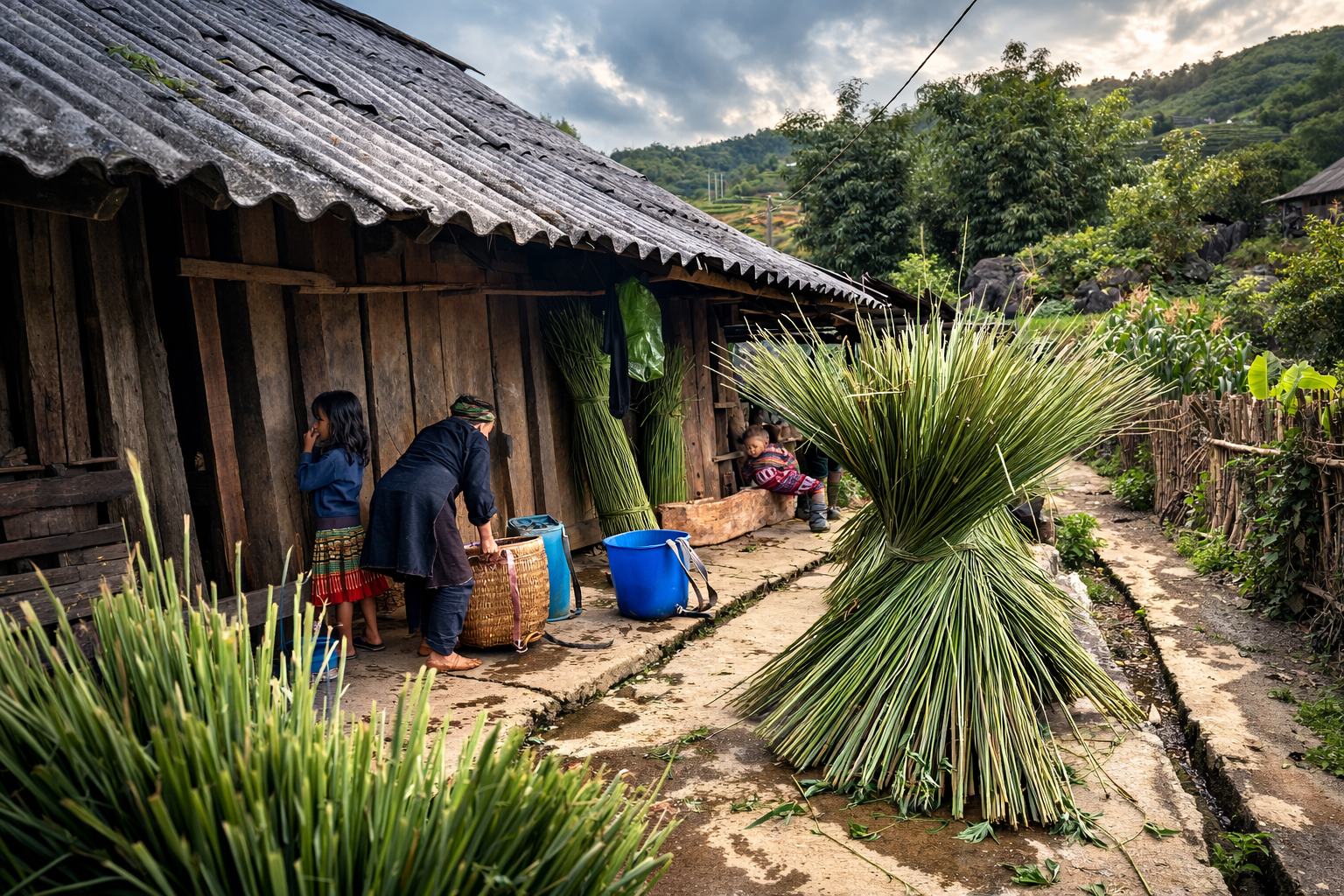
Hemp drying outside the house.
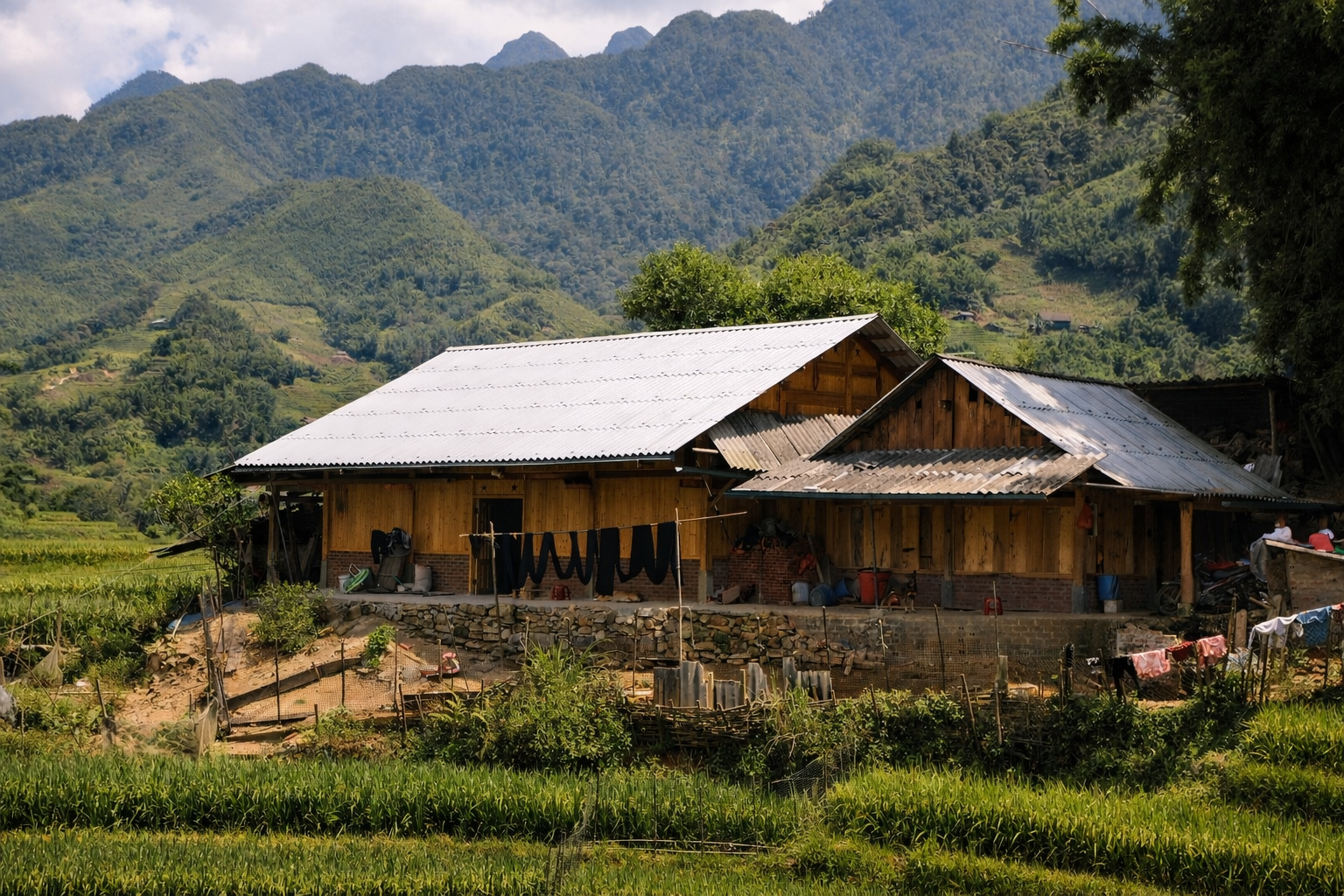
Indigo dyed fabrics outside the house.
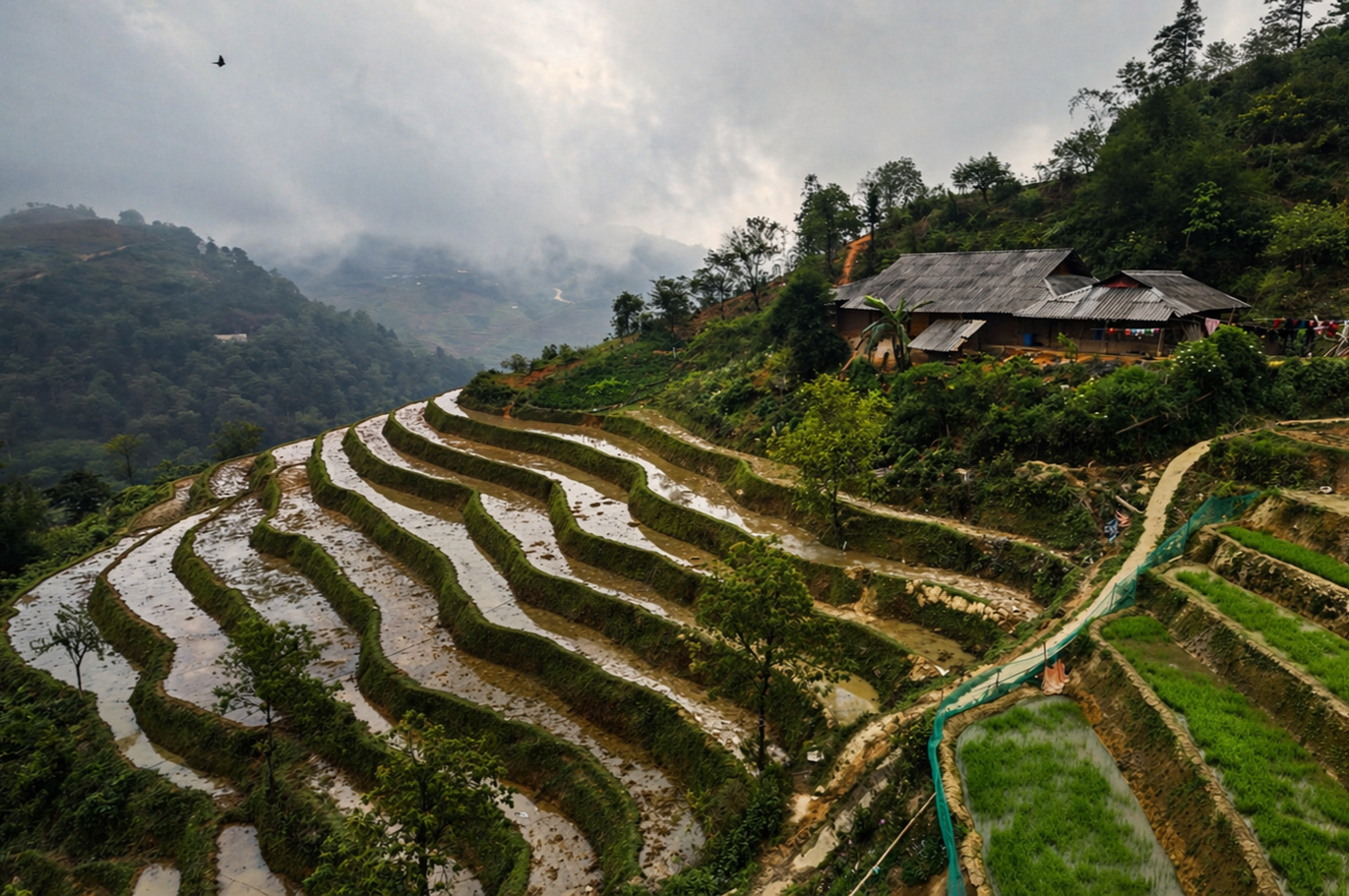
Rice terraces in Sapa.
The Difference Between Building Within a Landscape and Building Over It
As tourism expands rapidly across Sapa, traditional architectural landscapes face increasing pressure. Concrete hotels now rise along ridgelines once occupied by terraced fields and scattered wooden homes. Large-scale developments increasingly dominate valleys historically defined by subtle integration between settlement and landscape.
Not all modern development is harmful. Some newer homestays and ecolodges thoughtfully reinterpret vernacular architectural principles using local timber, restrained building heights, natural materials, and sensitive positioning within the terrain. The most successful examples understand that good mountain architecture should feel embedded within the landscape rather than imposed upon it.
There are encouraging examples of contemporary projects that preserve low visual impact, incorporate traditional rooflines, support local craftsmanship, and avoid overwhelming surrounding villages. Tasteful architecture in Sapa does not require imitation or pastiche. It requires humility towards the landscape and respect for the communities whose cultural identity shaped it.
Unfortunately, other projects move in the opposite direction.
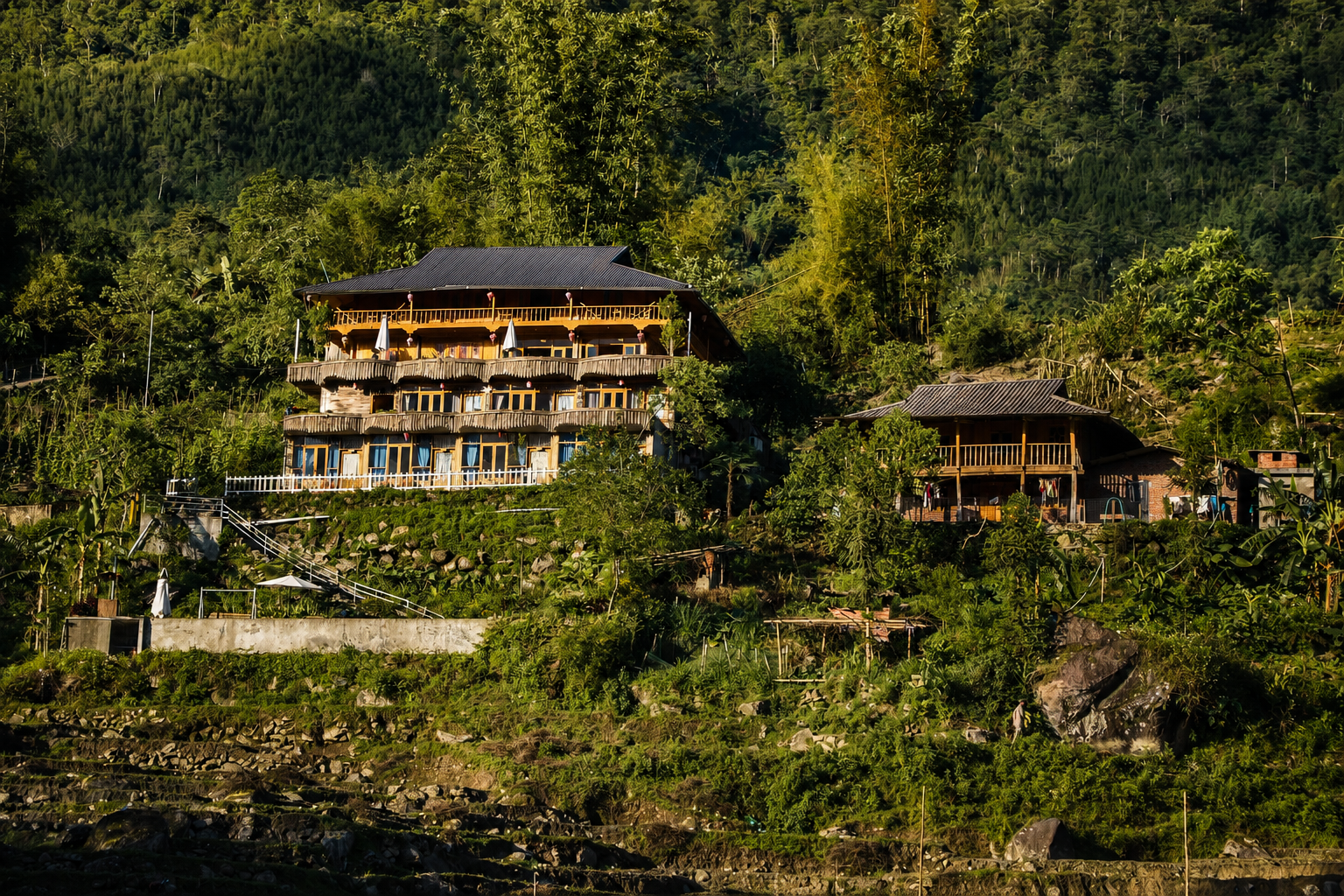
Vietnamese owned homestay with some sympathetic design.
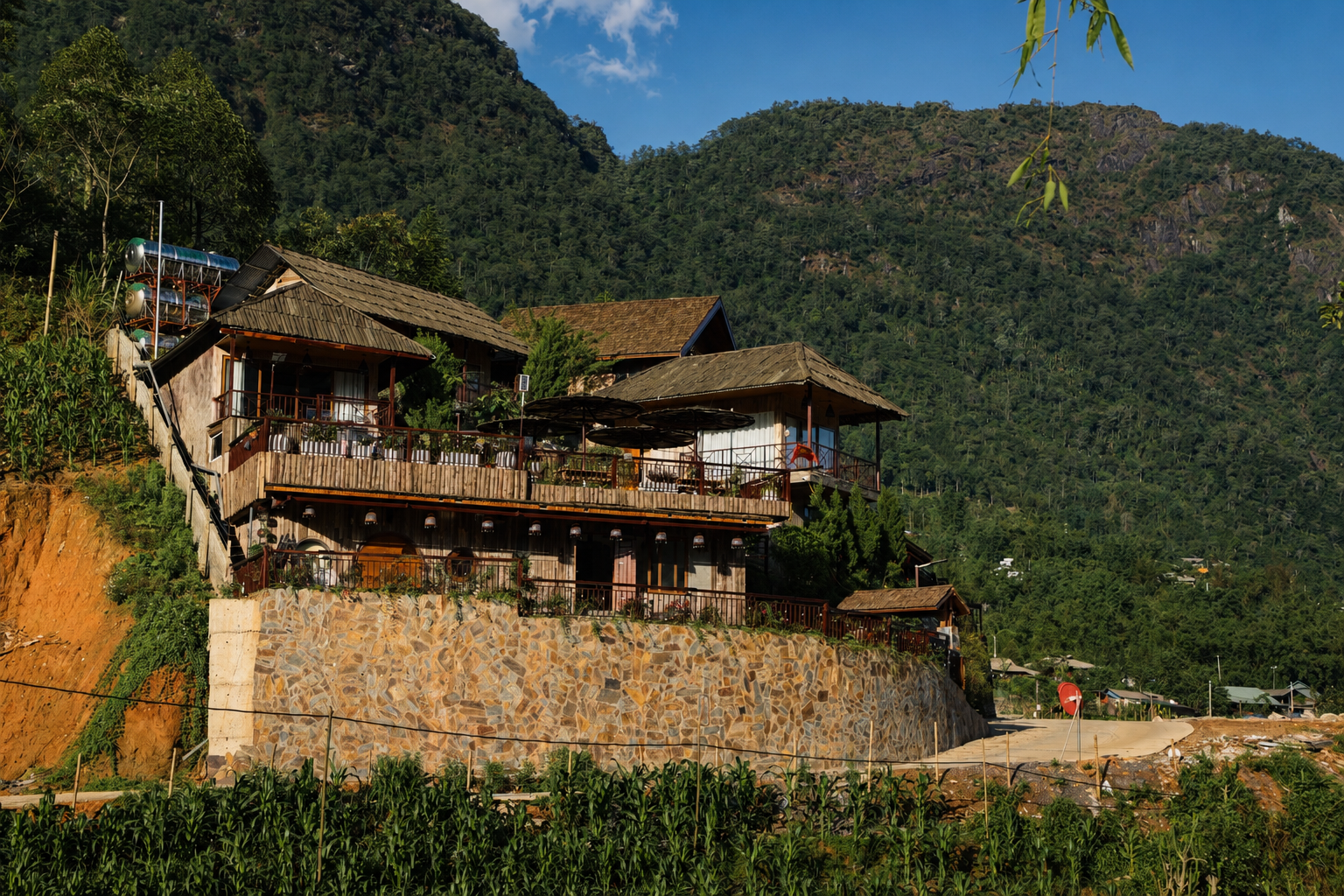
Vietnamese owned homestay with some sympathetic design.
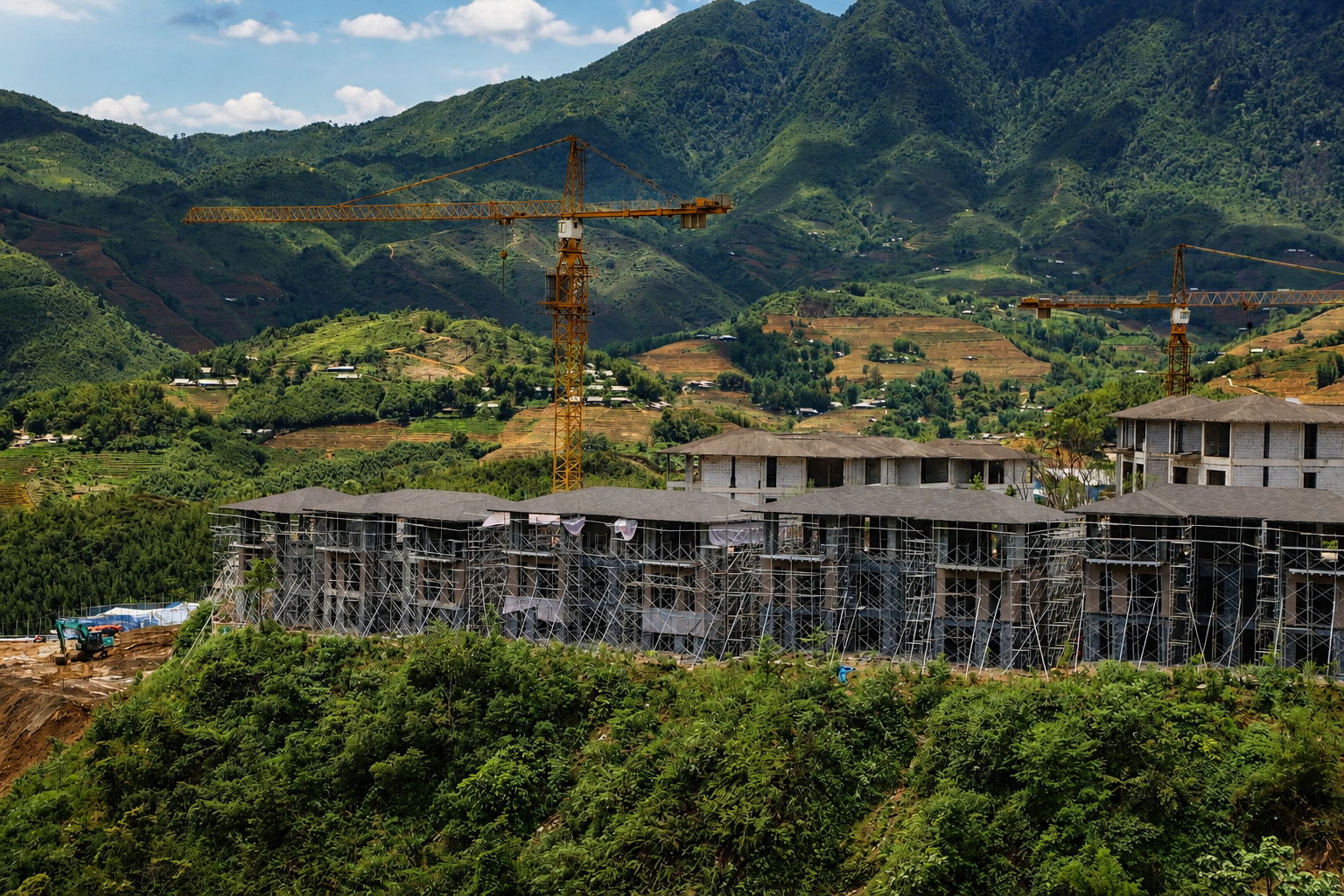
New hotel complex in Sapa.
Ban Mong Resort — When Architecture Stops Listening to the Landscape
Few developments in the wider Sapa region better symbolise the growing tension between profit-driven tourism expansion and the preservation of cultural landscape than the enormous Ban Mong Resort project overlooking the Muong Hoa Valley. To many residents, guides, farmers, and long-term visitors, the development has become emblematic of a style of construction that prioritises scale, prestige, and commercial spectacle above environmental sensitivity, architectural restraint, or meaningful connection to place.
From across the valley, the complex appears less like an extension of the mountain landscape and more like an imposition upon it. Its sheer scale dominates ridgelines that were once defined by layered rice terraces, scattered timber homes, and the shifting textures of forest and mist. Where traditional Hmong and Dao architecture settles quietly into the contours of the land, Ban Mong Resort announces itself aggressively. It demands attention. It overwhelms the eye and transforms what was once an organically evolving cultural landscape into a backdrop for oversized commercial ambition.
For many locals, this is not simply a question of aesthetics but more a question of respect. The architecture of the Muong Hoa Valley historically evolved through generations of practical adaptation to climate, terrain, spirituality, agriculture, and communal life. Traditional homes were never designed to dominate the mountains but to coexist with them. Ban Mong Resort represents the complete inversion of that philosophy. Rather than responding humbly to the landscape, the landscape itself appears forced to submit to the scale of the project.
The visual impact is impossible to ignore. Visitors trekking through the valley frequently describe the development as jarring, intrusive, and deeply out of character with its surroundings. Its massive concrete presence interrupts panoramic views that once carried an extraordinary sense of openness and continuity between terraces, villages, rivers, and forested slopes. The development looms over nearby communities with a heaviness that many feel fundamentally misunderstands the character of the highlands themselves.
What makes this particularly frustrating for many observers is that Sapa does not inherently oppose modern architecture or tourism investment. Sensitive contemporary design is entirely possible here. There are smaller lodges, homestays, and community-based projects across the region that successfully reinterpret vernacular forms through thoughtful use of local materials, restrained scale, and careful positioning within the terrain. Good architecture in mountain environments requires humility. Ban Mong Resort instead projects excess.
The development also raises wider questions about who tourism is ultimately being built for. Increasingly, parts of Sapa risk becoming shaped less around the realities of local communities and more around the expectations of short-term mass tourism markets seeking spectacle, status, and curated luxury. In this model, the mountains themselves become scenery to monetise rather than living cultural landscapes deserving stewardship and protection.
Projects of this scale can permanently alter not only visual identity but also ecological systems, water drainage patterns, traffic pressure, waste management demands, and long-term land values that affect surrounding villages. Once landscapes are transformed at this scale, they are extraordinarily difficult to restore. Concrete ridgelines do not easily return to terraced hillsides.
Perhaps most painfully, developments like Ban Mong Resort risk eroding the very qualities that made the valley internationally admired in the first place. People did not travel to Muong Hoa to experience generic resort urbanism transplanted into the mountains. They came for the quiet relationship between architecture, agriculture, mist, river, and community life that evolved slowly over centuries. They came because the valley still felt alive rather than manufactured.
When buildings become monuments to profit and prestige rather than thoughtful responses to place, the landscape inevitably pays the price. In the case of Ban Mong Resort, many locals and visitors alike increasingly feel that price has already become painfully visible across the valley.
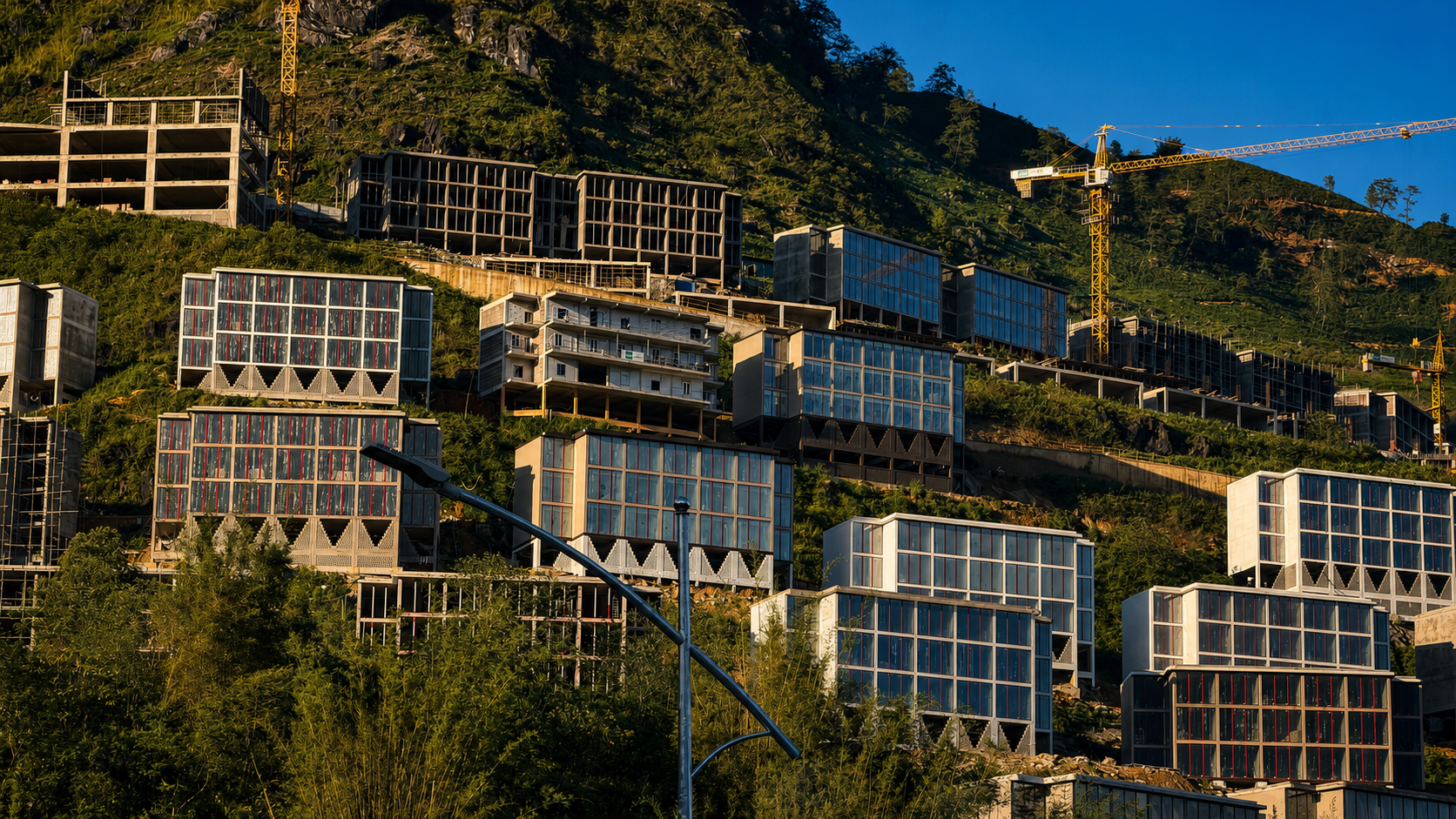
Controvertial hotels springing up in the Sapa mountains.
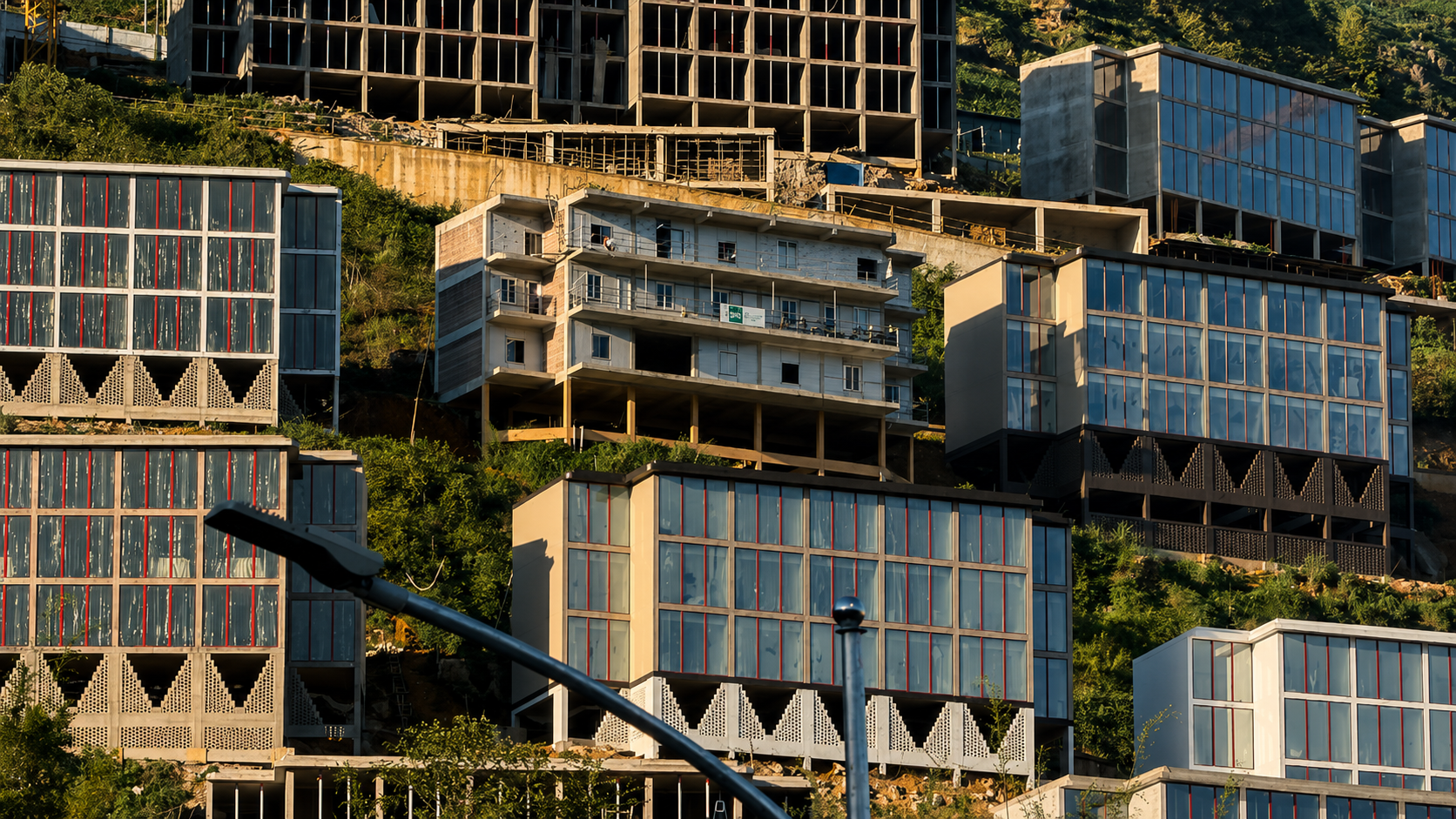
Controvertial hotels springing up in the Sapa mountains.
Colonial Nostalgia and the Packaging of “Indochine”
Another tension shaping modern Sapa emerges through the commercial repackaging of colonial aesthetics within luxury tourism branding. Perhaps the clearest example is the Hotel de la Coupole Sapa – MGallery, which presents itself through the language of “Haute Couture Meets Hill Tribe Artistry”, blending imagined French Indochine glamour with stylised representations of ethnic minority cultures.
Visually, the property is undeniably dramatic. Yet its atmosphere reflects not preserved colonial heritage but a contemporary luxury interpretation of what “Indochine” is imagined to have looked like. Unlike surviving colonial churches, villas, or administrative buildings physically connected to the history of French occupation in the highlands, this is a newly constructed fantasy aesthetic designed primarily for commercial consumption.
The danger lies in how colonialism becomes transformed into atmosphere rather than history. Refined interiors, couture references, and nostalgic imagery can risk presenting colonial rule as elegant and harmonious while obscuring the violence, extraction, taxation, frontier militarisation, and unequal power structures that shaped life across northern Vietnam during the colonial era.
French expansion into the highlands involved systems of governance built around strategic control, labour extraction, land management, and opium monopolies that financed much of colonial Indochina. Highland communities were surveyed, classified, taxed, displaced, and incorporated into systems designed primarily around imperial interests rather than local wellbeing.
When colonial imagery becomes detached from these realities, heritage risks becoming selective memory. The appearance of colonialism is preserved while its consequences fade quietly into the background.
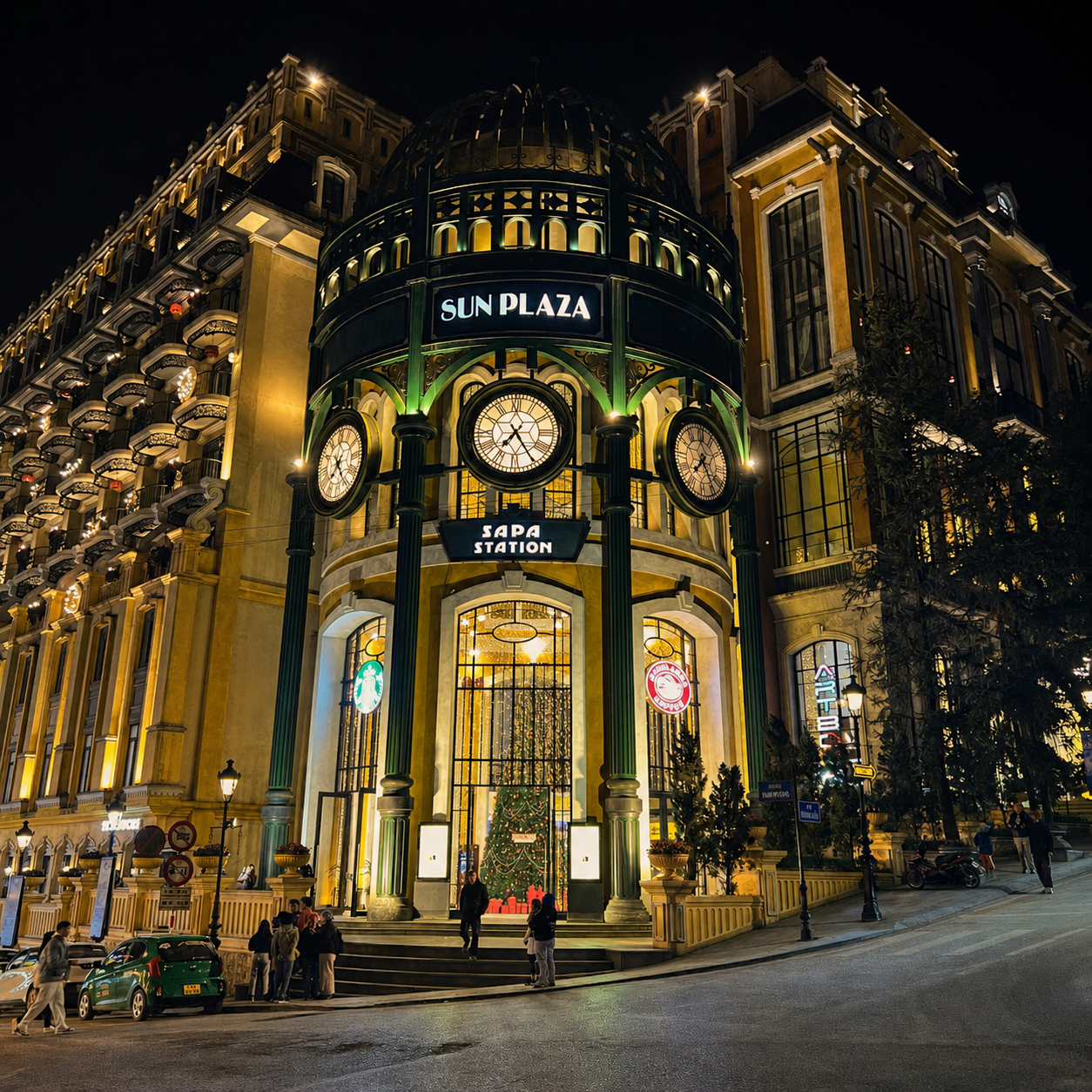
Modern grand attempt at post colonial architecture that never really existed in Sapa
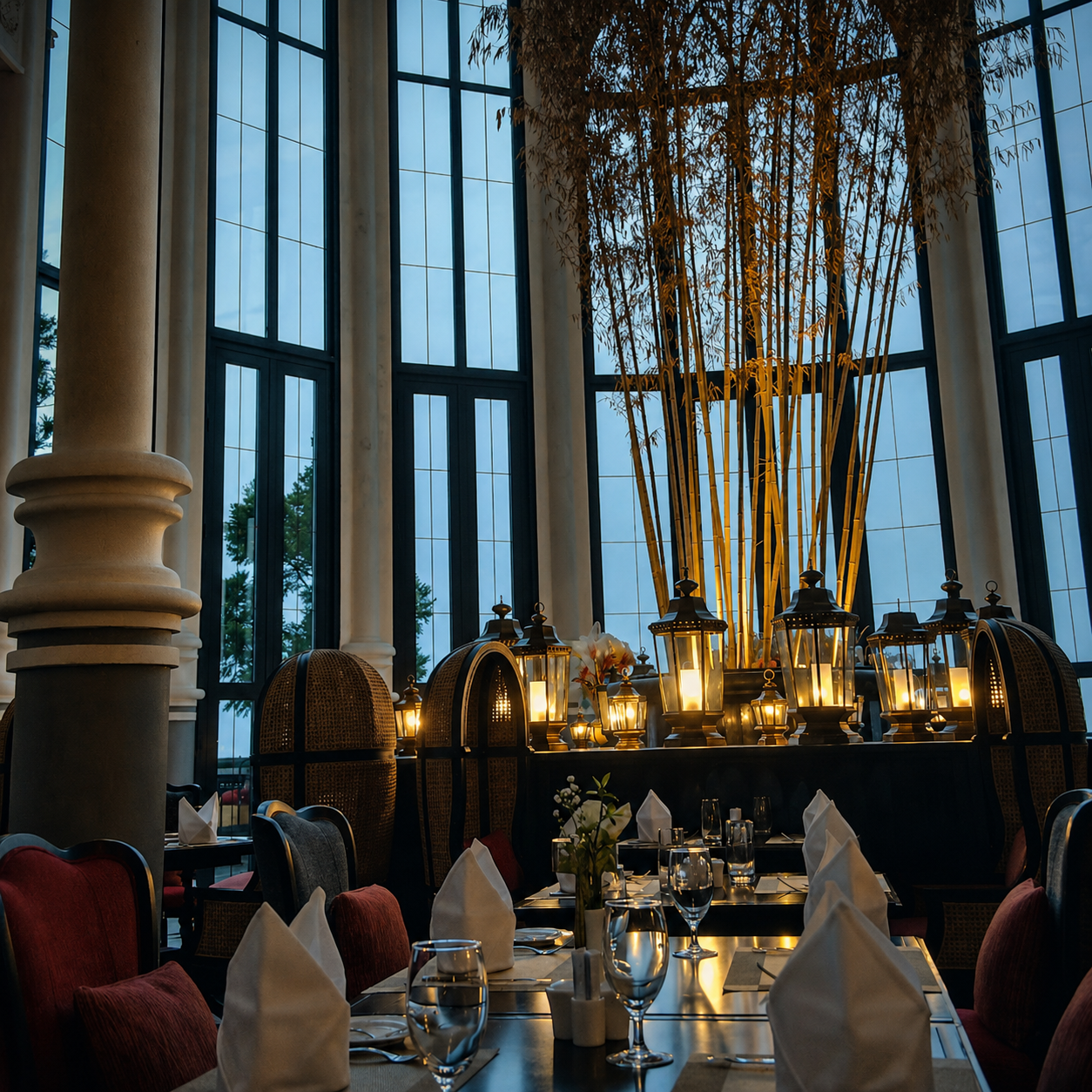
The grand interior of the Hotel de la Coupole, Sapa
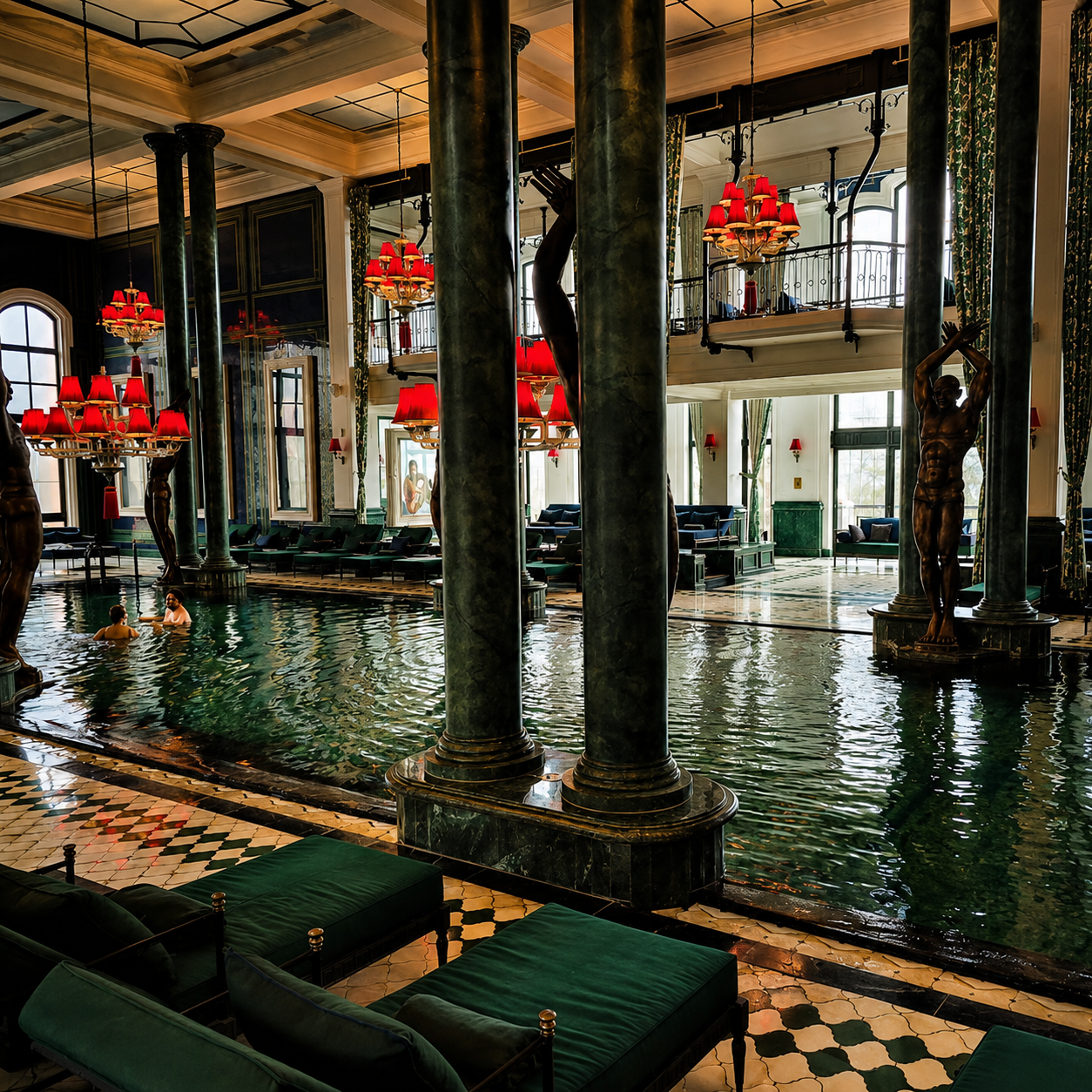
The grand swimming pool in the Hotel de la Coupole, Sapa
Why Sapa Needs Stronger Environmental Impact Assessments
The speed and scale of development now transforming Sapa raises urgent questions regarding environmental governance and long-term sustainability. Mountain ecosystems are inherently fragile. Landslides, water scarcity, erosion, biodiversity loss, and infrastructure strain can escalate rapidly when development proceeds without rigorous oversight.
This is precisely why far more comprehensive Environmental Impact Assessment processes are needed across the region. An effective EIA is not merely bureaucratic paperwork but a systematic process designed to identify, predict, and evaluate the environmental, social, cultural, and economic consequences of proposed developments before approval is granted.
In sensitive landscapes such as the Muong Hoa Valley or areas bordering protected forests, EIAs should examine far more than simple construction feasibility. They should analyse visibility from key viewpoints, architectural compatibility with local vernacular traditions, drainage systems, flood risks, biodiversity impacts, wildlife corridors, groundwater vulnerability, traffic pressures, noise pollution, wastewater management, and long-term effects upon local communities and cultural heritage.
Public consultation must also play a genuine role. Highland communities should not simply witness transformation happening around them after decisions have already been made elsewhere. Their knowledge of local ecosystems, weather patterns, farming systems, and sacred landscapes forms an essential part of responsible planning.
Good development is possible. Tourism can absolutely support livelihoods, preserve craft traditions, and strengthen local economies when approached thoughtfully. Yet mountain landscapes cannot absorb unlimited expansion without consequence.
Sapa’s greatest beauty has never come from spectacle alone. It comes from the extraordinary relationship between people, architecture, agriculture, forests, rivers, and mountains that evolved here slowly across generations. Traditional Hmong and Dao homes embody that relationship perfectly. They remind us that architecture can exist not as domination of landscape, but as participation within it.
