
Vietnam Weather by Region: Best Time to Visit North, Central and South Vietnam
When is the best time to visit Vietnam?
North Vietnam: March-June and August-October
Central Vietnam: March-August
South Vietnam: December-April
Best trekking months in Sapa: March-June and August-October
• • Highest typhoon risk: August-November, especially Central Vietnam
Why the weather feels so different from one end of the country to the other
From our home in Sapa, weather never feels like a small practical detail that sits politely at the edge of the journey, because it shapes the colour of the rice terraces, the clarity of the mountain ridges, the warmth of the hearth in a homestay kitchen, the condition of a forest trail underfoot, and even the rhythm of conversation as rain gathers over a valley and then passes on.
Vietnam is long, narrow and topographically complex. If its outline is superimposed on a map of Europe, it stretches from the Netherlands and Belgium, through France and into Italy, with a north-to-south span approaching the distance between northern Europe and the Mediterranean coast of North Africa. Latitude alone creates several distinct climate zones. Add mountains, dramatic changes in elevation, monsoon systems and sea breezes, and the picture becomes far more complex.
All of this determines that any weather in Vietnam does not move through the country in one neat wave, and travellers who imagine one national climate usually arrive to find three very different seasonal stories unfolding at once. Official tourism guidance and 1991 to 2020 climatological normals show a clear pattern, with the north shifting between a cool winter and a hot wet summer, the central coast staying comparatively favourable through much of spring and summer before a sharp late-year rainy season, and the south remaining hot throughout the year with a simpler dry-season and wet-season split.
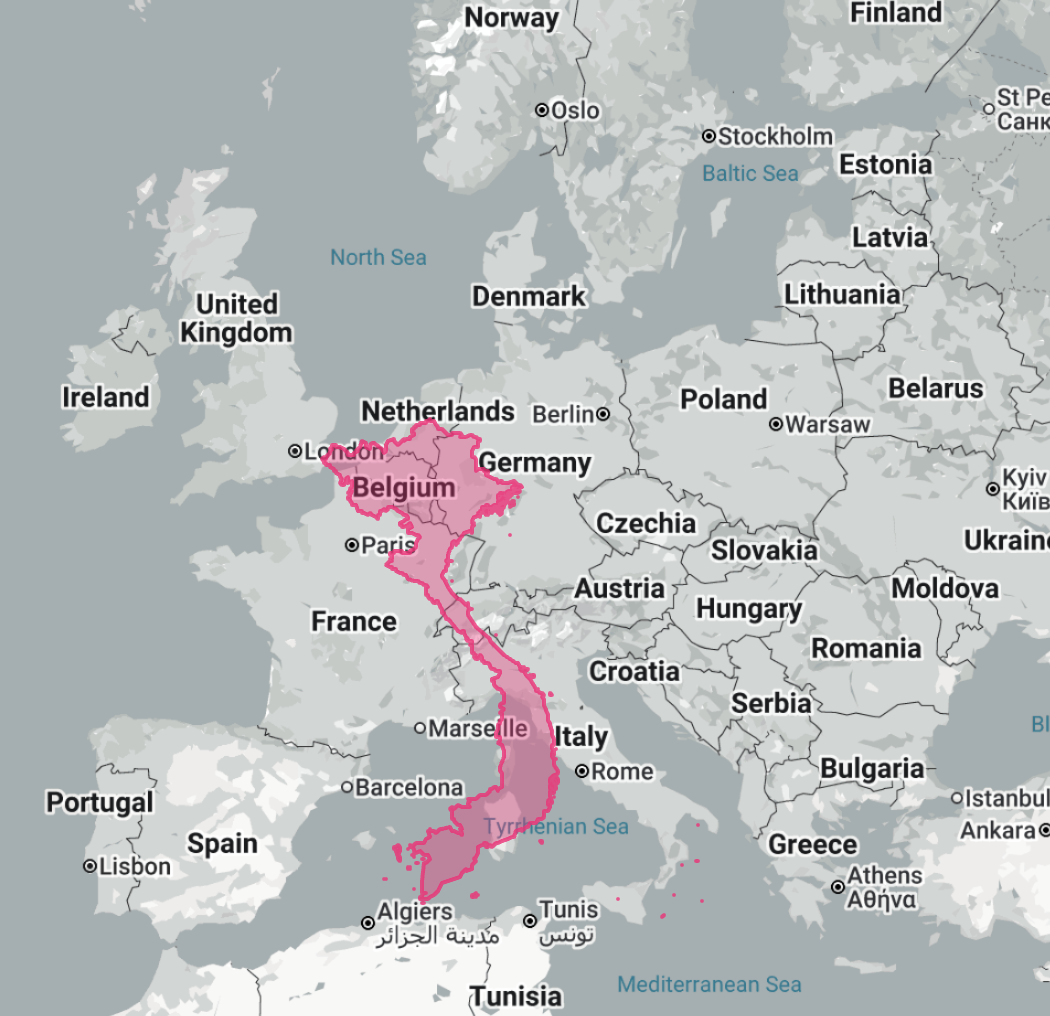
Grapical Represtation comparing Vietnam size with Europe
For ETHOS travellers, that distinction matters because weather is not only about comfort, it is about how a place is felt. Mist in the northern mountains can make a village path feel hushed and intimate, while a clear October day can open the whole horizon and reveal layers of blue ridges running to the frontier. A bright June spell on the central coast invites salt air and long sea-coloured afternoons, while a September storm can turn the same coastline into a place of dramatic skies, rough water and changed plans. In the south, rain often arrives not as an all-day blanket, but as a sudden tropical release near the end of a hot day, after which the streets steam and the air softens again.
North Vietnam month by month
North Vietnam is the region with the clearest sense of seasonal change, and it is also the region where altitude matters most. The lowlands around Hanoi can feel cool in winter and intensely (often uncomfortably) hot and humid in midsummer, while the mountain belt around Sapa and the wider borderlands can turn genuinely cold, misty and damp in the year’s first quarter, especially in the mornings and after dark. Official guidance describes December to February as the coolest period in the north, and the climate normals for Hanoi support that strongly, with much lower winter temperatures and far less rainfall than the peak summer months.
January in the north feels wintry by Vietnamese standards, and for travellers it is often a month of silver light, low cloud, smoky kitchens and thick jackets rather than sunlit terrace views. December to February are the months you are most likely to see snow in the highlands and although relatively rare, frost and ice are annual occurances. February remains cool and often humid, with the sort of clinging damp that settles into clothes and lingers in the valleys. March begins to loosen winter’s grip, though it can still be overcast and mist-heavy, especially in the mountains where visibility is part of the travel experience and not merely a matter for photographs. Those three months can be deeply atmospheric for homestays, food, fireside conversation and slower cultural travel, though they are less dependable for big panoramas and long, dry trekking days.
April is when the north often begins to feel open and generous again, because the cold recedes, the light strengthens and the land starts to glow with fresh growth. May keeps that lushness, although the heat begins to build and afternoons feel heavier. May is also rice planting season for many of Vietnams upland areas above 1100 metres in elevation. June marks the clear beginning of the hot, humid, rainier stretch, and this is the point at which mountain walking, road travel and outdoor experiences are still very rewarding, though they increasingly depend on good timing, early starts and a willingness to work with the day rather than against it. The rains also assure the most picturesque and verdent rice terrces. In practical terms, north Vietnam in late spring and early summer can be beautiful and fertile, though it is not the crisp, open weather that many travellers imagine when they picture mountain travel.
July is one of the most demanding months in the north, because heat, humidity and rainfall combine in a way that can make both trekking and transport feel more strenuous, and the official normals for Hanoi show just how dramatic that summer peak becomes compared with winter. Sticking to elevations above 1200 metres is the best way of escaping the summer heat and this is why mountain towns like Sapa remain popular for hikers throughout the year. August often behaves similarly, with heavy rain still very much part of the picture, even if there are vivid green landscapes and occasional windows of clear weather between showers. September begins to shift the mood again with rice harvesting and golden paddy fields an annual highlight in upland areas. Although it is still warm, the atmosphere often becomes easier, less oppressive and more travel-friendly as the month progresses. For people drawn to trekking, village walks, mountain roads and a stronger chance of expansive views, September can feel like the country taking a longer breath after the pressure of summer.
October is one of the north’s loveliest months, with cooler air, better visibility and a more settled balance between warmth and freshness. sapa is much drier and awash with beautiful meadow flowers and plentiful wilf fruits that makes it an ideal month for foraging. November often continues that pattern and is one of the easiest months for travellers who want to walk, photograph, ride and linger outdoors without constantly negotiating heat or downpours. December brings the first clear return of winter, although it usually feels drier and cleaner than the mist-soaked late winter weeks that follow in January and February. For ETHOS, this is the broad truth we live with year after year, namely that the north tends to be at its most comfortable for immersive travel in spring and again in autumn, while winter suits slower, more intimate journeys and midsummer asks for flexibility, resilience and respect for the mountain weather.
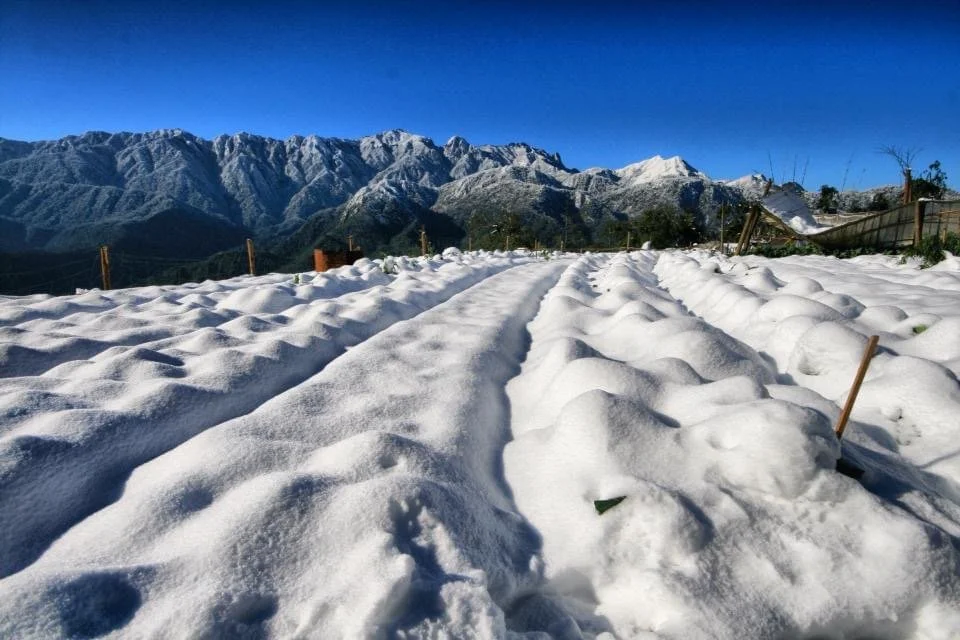
Snow in Sapa
Central Vietnam month by month
Central Vietnam is the part of the country that most often surprises travellers, because it does not obey the same calendar as the north or south. The central coast around Da Nang, Hue and Hoi An tends to hold on to good beach and heritage-travel weather through much of spring and summer, then turns sharply wetter and more flood-prone later in the year. The south-central coast around Nha Trang follows a slightly different rhythm again, which is why a blanket statement about “central Vietnam weather” can be useful only up to a point. The official normals make that late-year central spike unmistakable, especially in Da Nang, where autumn is far rainier than spring and early summer.
January on the central coast can still be cool, grey and unsettled, especially in the Hue to Hoi An zone where the wet season does not disappear neatly with the new year. February is often an improving shoulder month, though not always a fully settled one. March is when central Vietnam usually becomes much easier to recommend without hesitation, because the air grows warmer, the skies brighten and the region’s blend of old towns, coastline and cultural sites comes into its own. Travellers who want a more relaxed marriage of sea light, wandering and heritage often find March one of the sweetest months in the whole country.
April brings stronger heat and a more summery feel, while still remaining highly attractive for most coastal itineraries. May leans further into beach weather, with brighter skies and warmer sea conditions, though midday heat becomes more assertive. June is broadly excellent for central coastal travel if your idea of good weather includes sunshine, warmth and long outdoor days, though it does ask for a slower pace during the hottest hours. This is the part of the year when central Vietnam often feels expansive and easy, especially for travellers who want swimming, walking, architecture and sea air in a single trip.
July generally stays favourable along much of the coast, and August often does as well, although late-summer caution becomes wiser as the season edges closer to the stormier part of the year. September is the point at which the region begins to feel less dependable, particularly around the central coast where rain risk and tropical weather disruption rise. That shift is important because the central region commonly looks attractive on paper in early autumn, yet in reality it can move quickly from beach-friendly brightness to heavy rain, high water and interrupted transport. The central coast rewards good timing more than almost any other part of the country.
October is the central coast’s hardest month in broad travel terms, and the official normals for Da Nang show why, with an especially dramatic rainfall peak at exactly the time many travellers elsewhere in Asia expect dry-season improvements to begin. November remains difficult in many years, particularly for the Hue to Hoi An stretch, where flooding and persistent rain can affect both comfort and logistics. December is more mixed than many people anticipate, because parts of the central coast may still be rainy and cool rather than quietly festive and dry. For travellers, the essential central lesson is simple and worth remembering, namely that spring and summer are often the region’s most rewarding months, while autumn demands much more caution than the same months do in the north.
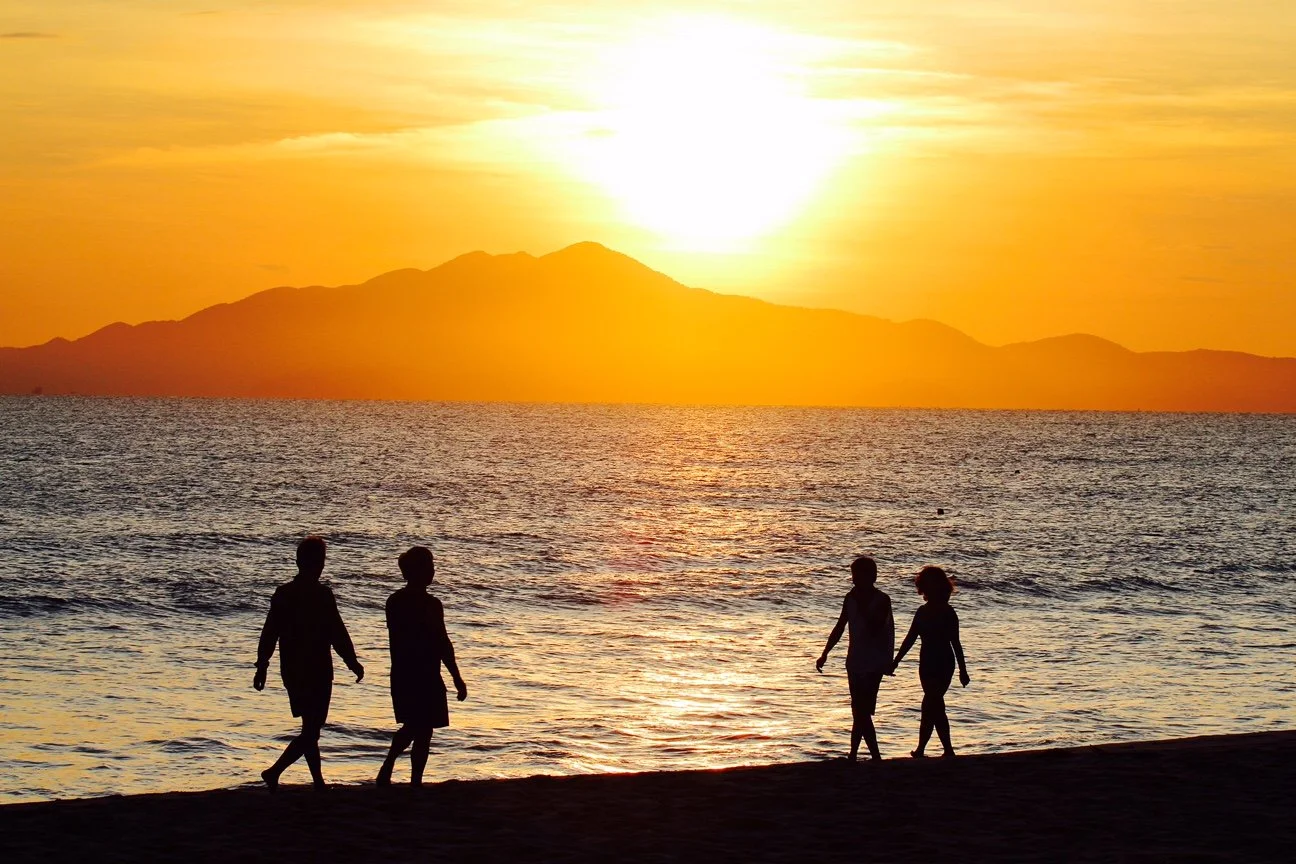
Sunrise on the beach in Hoi An
South Vietnam month by month
South Vietnam is the most straightforward region to read climatically, though that does not mean it is weatherless or uniform. The south remains warm to hot through the year, and the main distinction is between the drier months and the wetter months rather than between summer and winter in the northern sense. Around Ho Chi Minh City, the official normals show relatively modest temperature variation compared with Hanoi, while rainfall patterns trace a much clearer wet-season arc from late spring into autumn.
January is one of the south’s easiest months, with drier air, plenty of sun and the kind of general reliability that makes city breaks, river trips and beach extensions feel uncomplicated. February keeps that ease, although the heat starts to gather a little. March remains one of the strongest months for sunshine seekers, though by now the warmth is more insistent and the afternoons can feel distinctly tropical. Travellers who enjoy brightness and don’t mind heat often find this one of the south’s most rewarding stretches.
April often feels like the hottest hinge between the two seasons, because the dry weather still lingers while the atmosphere grows heavier and more expectant. May is usually when the wetter pattern begins to establish itself, not as endless rain but as a rhythm of gathering cloud and regular downpours. June settles more firmly into that mode, with mornings that can still be bright and energetic followed by showers that break the heat later in the day. For many travellers, the surprise of the south is that the wet season is often more manageable than feared, provided you do not require uninterrupted sun from breakfast until evening.
July and August continue that humid, rain-marked pattern, and September is commonly among the wetter points in the southern year. Mainland travel can still work very well during these months if you accept a more flexible tempo, though island plans become more weather-sensitive because sea conditions matter as much as rainfall totals. Places such as Phu Quoc can feel far less predictable in the rougher, rainier part of the year than they do in the dry months, even when the rain itself comes in bursts rather than all-day sheets. The south in late summer is often vibrant, green and atmospheric, though it favours adaptable itineraries over rigid ones.
October may still feel rainy, though the season is beginning to tip. November often behaves like a transition month in which the air starts to clear and the intervals of dry weather lengthen. December brings back the south’s classic easy season, when heat, light and lower rainfall combine to make both urban and coastal travel far simpler. If the north asks you to think in terms of four moods and the central coast asks you to think in terms of timing, the south asks you mainly to understand a dry half and a wet half, each with its own charm and each rewarding a different kind of traveller.
Typhoon season and the shape of weather risk
Typhoon season is best understood not as one rigid block of dates, but as a period of heightened tropical-weather risk that shifts in emphasis across the country. World Bank climate-risk material notes that tropical cyclones account for a very large share of disasters affecting Vietnam, and that the country faces high exposure to both flooding and tropical cyclones. The same body of material, looking across historical landfalls, indicates that the north receives a substantial share of storm strikes, while the central coast remains the place where travellers most often feel the practical consequences of storms in the form of intense rainfall, river flooding, rough seas and transport disruption, especially from early autumn onward.
For practical travel planning, the key point is that the risk profile shifts through the year. The north is more vulnerable earlier in the broader storm season, while the central coast becomes the more concerning region for many travellers later in the year, when its already wet season can overlap with tropical systems and magnify disruption. The official normals for Da Nang, together with official tourism guidance, make plain why autumn requires particular care there, and recent WMO reporting on heavy December rain in Vietnam is a reminder that “late season” is not a theoretical idea but a real one.
There is also a bigger climate context to keep in mind. WMO’s regional climate assessment for Asia describes record-high sea-surface temperatures, marked marine heatwaves and more extreme rainfall across the region, while World Bank material citing Vietnamese government sources points to mounting evidence of greater frequency of high-intensity typhoons in recent years. That does not mean every season will behave dramatically, though it does mean travellers should treat old rules of thumb with caution and check forecasts closely, especially when travelling to the coast or through mountainous terrain during the wetter months.
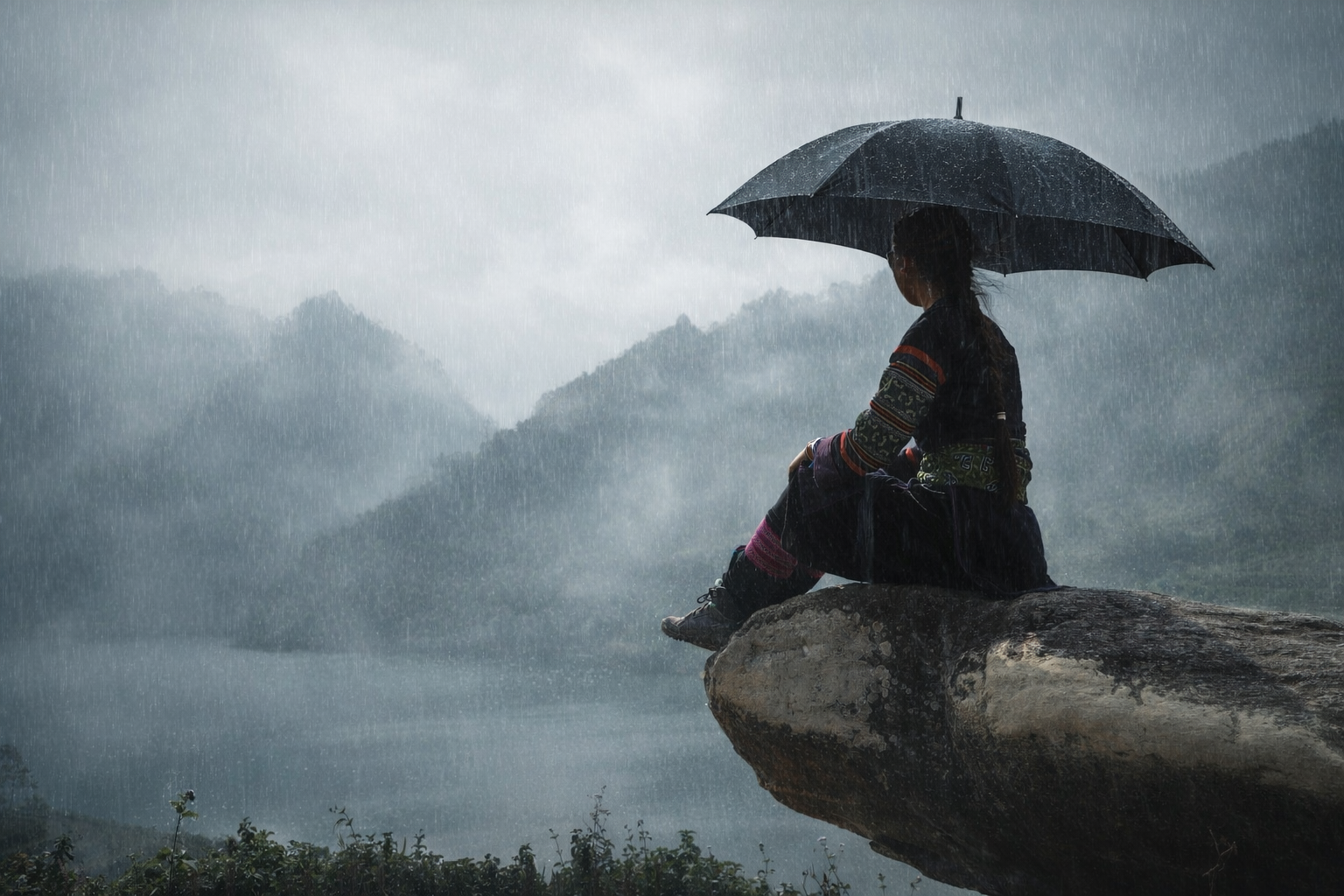
Monsoon rains in the mountains
The El Niño Effect: Why Some Years Feel Completely Different
While Vietnam's geography creates the foundation for its weather patterns, large-scale climate cycles can dramatically influence conditions from one year to the next. The most significant of these is El Niño, a naturally occurring warming of the tropical Pacific Ocean that can alter rainfall, temperatures and seasonal weather across much of Southeast Asia.
During El Niño years, many parts of Vietnam experience hotter and drier conditions than normal, increasing the risk of drought, water shortages and forest fires. The opposite phase, La Niña, often brings cooler temperatures and above-average rainfall. These events can strengthen, weaken or shift the usual seasonal patterns that travellers and local communities have come to expect.
Because El Niño and La Niña can have such a significant impact on Vietnam's weather, we have explored the subject in much greater detail in our separate guide: El Niño and Vietnam's Weather: What Travellers Need to Know.
What this means for an ETHOS journey
For travellers coming to northern Vietnam with ETHOS, the broadest weather truth is also the simplest one, namely that the mountains reward those who travel with the season rather than against it. February to October and November are often the most comfortable months for walking, village stays, conversation-rich homestays and days that move between field, trail, workshop and table without the weather dominating every decision. December and January can be deeply beautiful if you are drawn to mist, firelight, textiles, slower pacing and the intimacy of mountain life in colder weather. June through August will be lush and can still be rewarding, though they call for more flexibility, better rain preparation and a serious respect for road and trail conditions.
Preparing for Your Trekking Adventure. For a guide ofwhat to pack for a trek in Sapa, you can read more here.
Across the wider country, the broadest planning windows remain fairly clear. North Vietnam is usually easiest in spring and autumn. The central coast is often at its best from roughly March into August, while autumn is the season to watch most carefully there. South Vietnam is typically easiest from December to April, while the wetter months remain very possible for travellers who do not mind tropical rain and are willing to keep their plans a little looser. For the kind of journeys ETHOS believes in, where connection matters more than rushing and experience matters more than ticking boxes, the weather is never simply a background condition. It is the atmosphere in which people farm, weave, forage, cook, guide, remember and welcome, and understanding it well is one of the most respectful ways to arrive.
What is the best month for trekking in Sapa?
Every season reveals a different Vietnam. Misty mountain mornings, golden harvest terraces, quiet coastal spring days or lush summer landscapes all offer their own rewards.
If you’d like help choosing the best season for your interests, our team can help design a journey around weather, culture, local events and community experiences.
Explore our tailored experiences and start planning your Vietnam journey.
FAQ’s
Q. When is the best time to visit Sapa? See our comprehensive month by month guide.
Q. When is the rainy season in Vietnam? It differs from north to south.
Q. When is typhoon season in Vietnam? Autumn
Q. Does Sapa get snow? YES - Read more here
Q. Is July a good time to visit Sapa? YES - Watch more here
