
Batik in Sapa: Wax, Indigo, and What Is Being Lost
A living tradition, and a fragile one
High in the terraced valleys and mist-softened ridgelines of Sapa, batik is not considered a craft. Instead, it is considered to be a living “language” held by Hmong women. This is a language shaped by generations who have translated landscape, ancestry, and spirit into cloth. Every line drawn in wax, every immersion into indigo, carries intention. Every piece is part of a continuum that connects the living with those who came before.
This tradition is deeply rooted in land and time, so nothing is rushed and no stroke is incidental. Alongside this depth, something else has been growing in parallel. A simplified, commercialised version of batik has begun to take hold, quietly reshaping how travellers encounter and understand this craft.
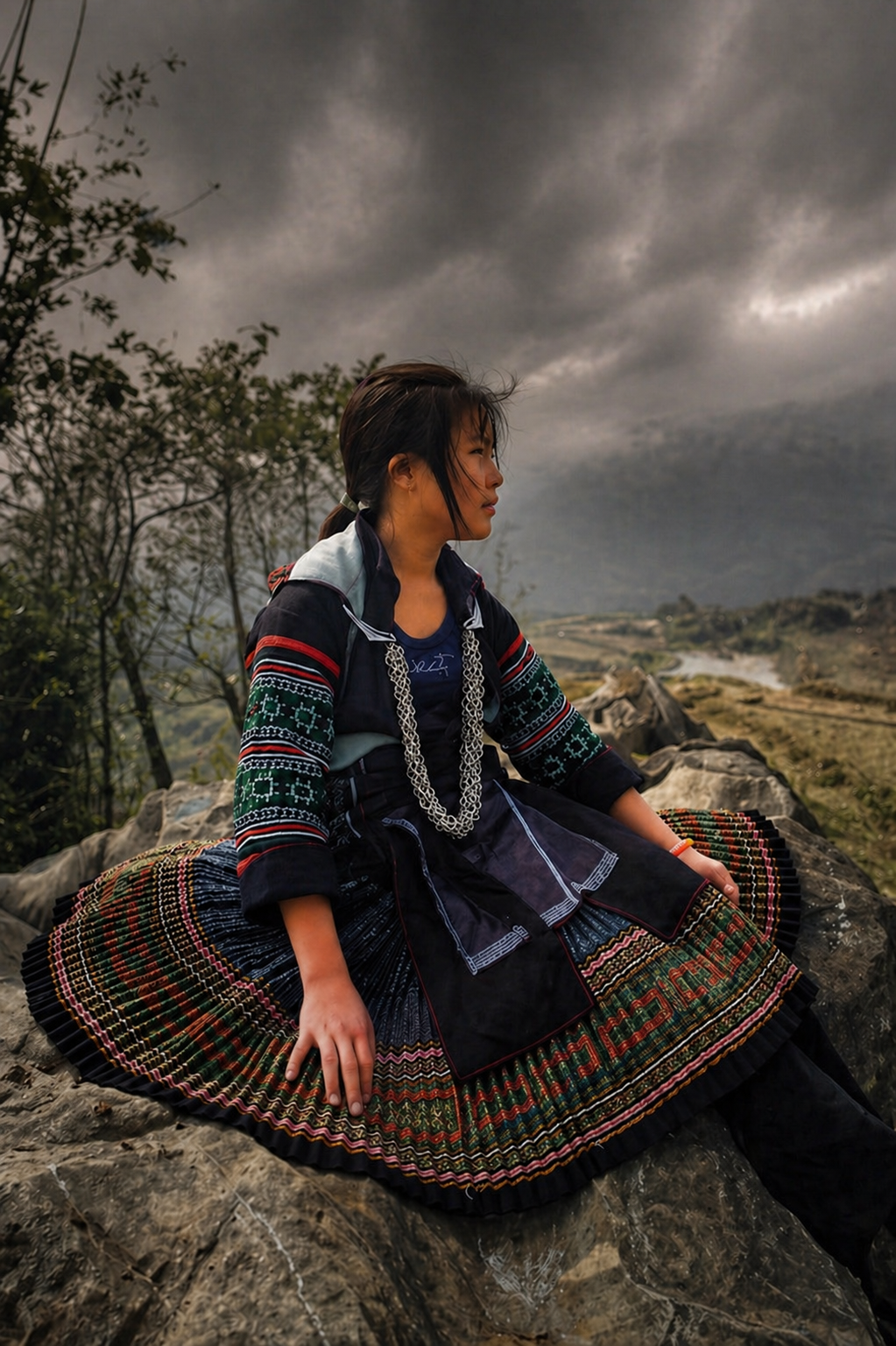
A hmong girl in Sapa wearing a “Spirit Skirt”, carefully crafted from indigo dyed, Hmong batik and silk embroidery.
Hemp: from mountain soil to cloth
True batik does not begin with wax or dye. It begins in the soil. In the cool, damp breath of early spring, hemp seed is pressed gently into mountain earth around Sapa. The land is still waking, though the hands that sow move with quiet certainty. This is the beginning of a cycle that is as much about patience as it is about skill.
As the season deepens, slender green stems rise quickly, drawing strength from sun, mist, and mountain air. The plants are tended alongside daily life, growing in rhythm with rice fields, livestock, and the turning of the seasons.
By early summer, the stems are cut and carried home. They are dried, stripped, soaked, beaten, and combed. Fibres are teased apart slowly, softened and refined through repeated effort. Thread is then spun by hand, rolled along the thigh in a steady, practiced motion. It is work done over hours, days, often in shared spaces filled with conversation and quiet.
Weaving follows. The loom stands ready within the home, threads stretched carefully, aligned with precision. Cloth emerges gradually, growing day by day without urgency. This is slow fashion in its truest sense. It is not a trend. It is a way of life rooted in quality, durability, and deep connection to the land. When the cloth is ready, it enters the indigo vats. Leaves, once gathered and fermented, have become rich pools of living dye. The fabric is dipped, lifted, and dipped again. With each immersion, colour deepens. Green turns to blue as it meets the air, layer by layer, moment by moment.
Finally, the cloth is beaten against stone in a process known as calendaring. The steady rhythm echoes through the yard as fibres compress and the surface begins to shine. A deep, almost metallic indigo emerges, not through machinery, though through repetition, patience, and care. Only once this entire process is complete does batik begin. Wax is applied carefully onto this hand-crafted hemp cloth, preserving patterns that will emerge through repeated indigo dyeing. The finished textile carries not just design, though months of labour, land, and lived experience.

Organic hemp growing in the Sapa mountains
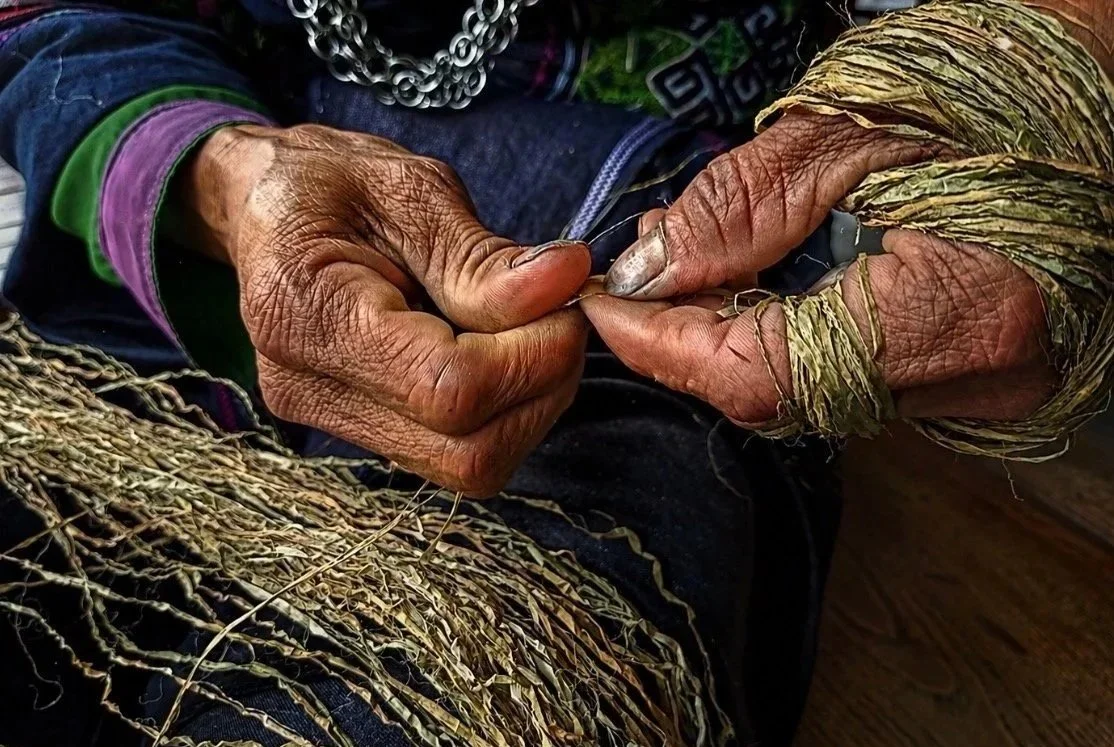
Hemp threads being twisted and joined.
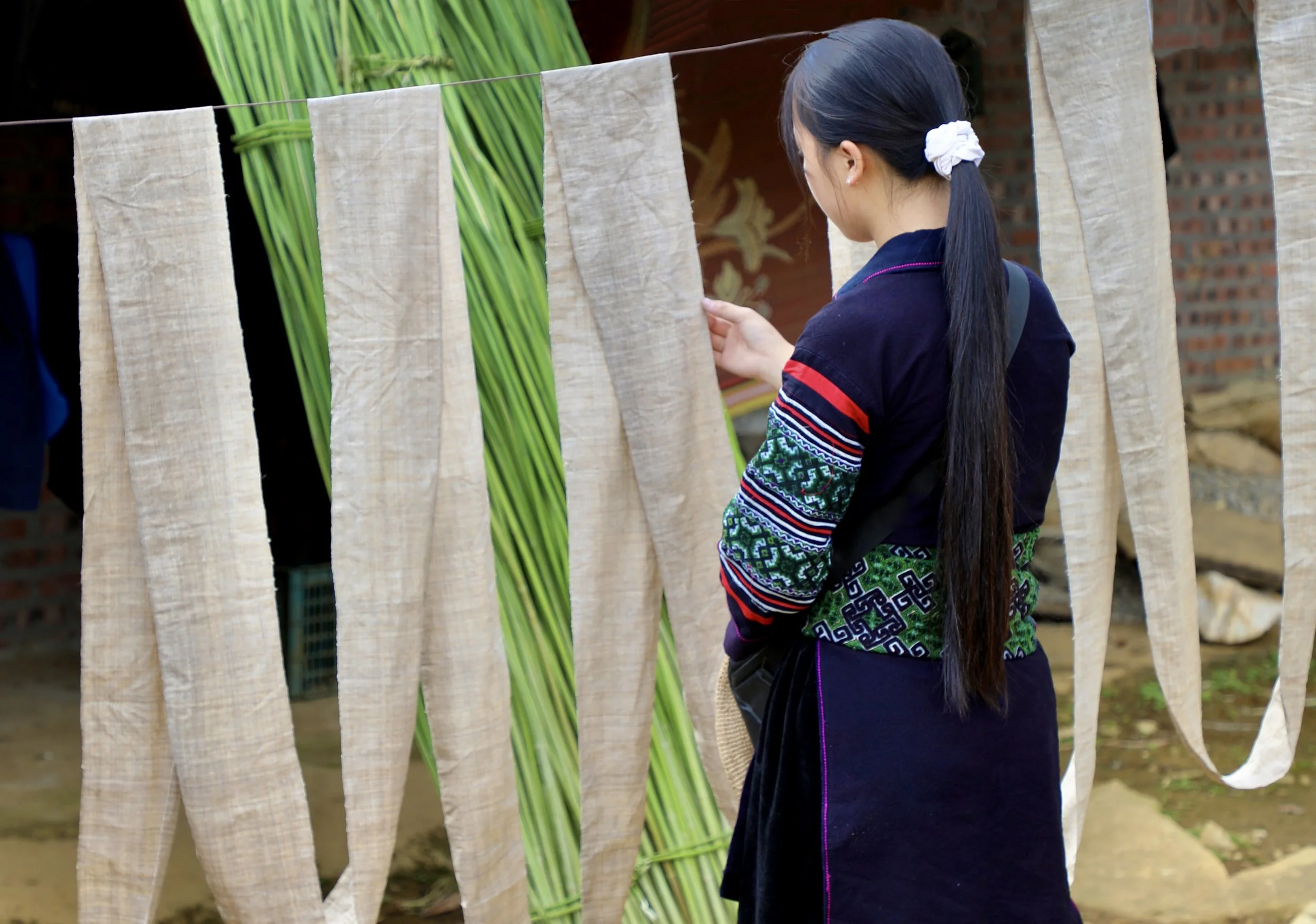
Woven hemp fabric being prepared for indigo dying.
The rise of batik as a time filler
Many trekking itineraries in Sapa now follow well-worn paths, guiding travellers through Lao Chai and onwards to Ta Van for overnight stays. The scenery remains pretty, though the structure of these tightly organised journeys can still sometime leave unexpected gaps.
Groups move at different speeds. Some arrive at their homestays far earlier than intended, with long afternoons stretching ahead before dinner. Rather than deepening the journey or extending time on the trail, these hours are increasingly filled with short, bolt-on activities. Batik workshops have become one of the most common additions. These sessions are typically brief, lasting one or two hours, and are presented as an introduction to traditional craft. In reality, they are often designed to occupy time rather than to foster understanding.
When tradition is reduced to imitation
In these shortened classes, the materials themselves tell the story. Instead of hemp, grown and prepared over months, participants are given pre-bought cotton, often bleached white and chosen for cost and convenience. The wax used is most typically melted candle wax, heated quickly over a gas flame. The tools are handled briefly, rarely with proper instruction. Patterns are copied without context, stripped of meaning.
The process, which should unfold slowly, is compressed into minutes. The discipline, the patience, the connection to land and material is lost. Dyeing is reduced to a single dip in chemical dye. There is no indigo vat, no layering, no waiting. The transformation that should take time becomes instant. This is not batik as it is known within Hmong communities. It is a simplified imitation, created for speed and convenience.
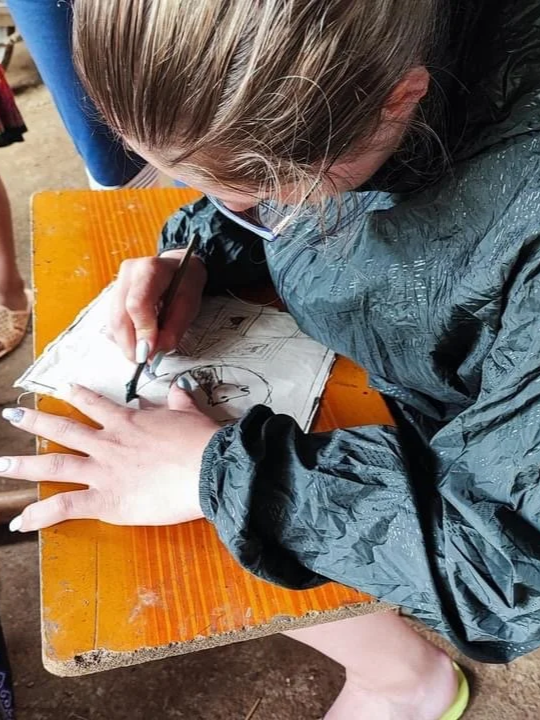
Tourist trying batik on bought cotton.
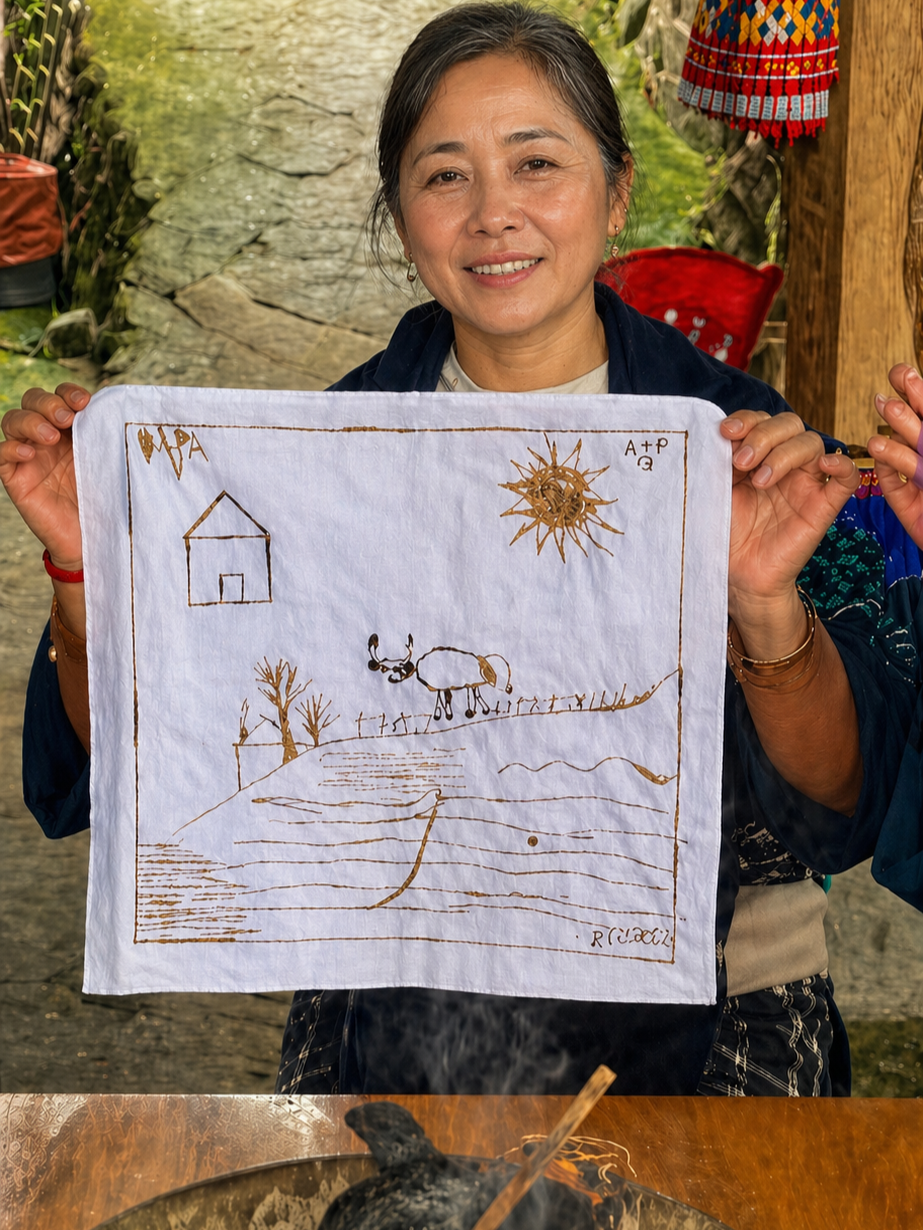
Batik teacher holding up the work of her students
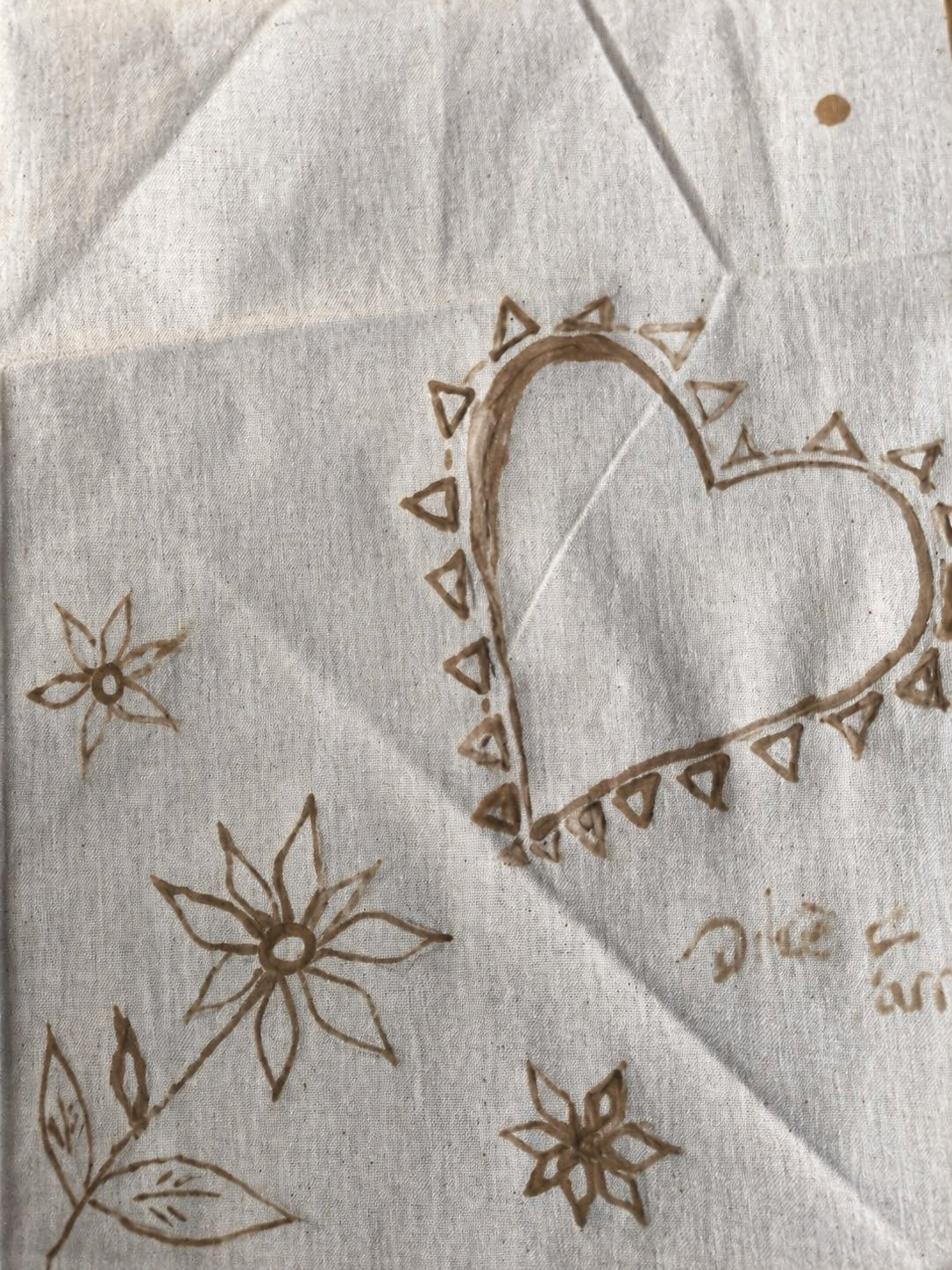
Travellers draw contemporary batik designs.
Environmental and cultural consequences
The impact of these practices extends beyond the workshop. Chemical dyes are often released into streams, harming invertebrates that form the foundation of aquatic ecosystems. As these disappear, fish populations decline, and the balance of the environment begins to shift.
Traditional indigo, by contrast, is entirely natural. Vats are maintained over months or years and can return safely to the land, even nourishing rice paddies. Culturally, the consequences are equally profound. Travellers leave believing batik is fast and simple. The depth of the process becomes invisible. The value of authentic work is diminished. For artisans, this shift is deeply felt. Their time, skill, and knowledge are undervalued. For younger generations, particularly Hmong women and girls, the incentive to learn begins to fade. When faster, cheaper alternatives dominate, the future of this tradition becomes uncertain.
What a true batik experience feels like
A meaningful batik experience is rooted in time, patience, and relationship. You are welcomed into a home, not a workshop designed for display. You sit beside a woman whose knowledge is lived, not performed. You begin with understanding, not production. You learn where materials come from, how they are made, and why each step matters. You are guided carefully, allowed to make mistakes, encouraged to slow down. Indigo is not rushed. Wax is not hurried. Conversation flows. Stories emerge. Symbols begin to hold meaning.
A voice from the craft: My’s story
Among those who carry this knowledge forward is My, a young Hmong woman whose relationship with batik began when she was just thirteen years old. What started as learning alongside older women in her community has, over the past twelve years, become both a skill and a way of life. For more than nine years, she has also welcomed travellers into this process, sharing not only technique, though perspective.
Her work is quiet and precise, shaped by repetition and patience. Watching her draw wax onto hemp cloth, there is a sense of ease that only comes from years of practice, though also a deep attentiveness to each line.
“Batik taught me to slow down and be patient,” she explains. “I love showing travellers our traditions and enjoy talking to people from around the world about my culture. I think some people are surprised when they find out how much work goes into Hmong batik. From seed to clothing, it’s a process that takes many months.”
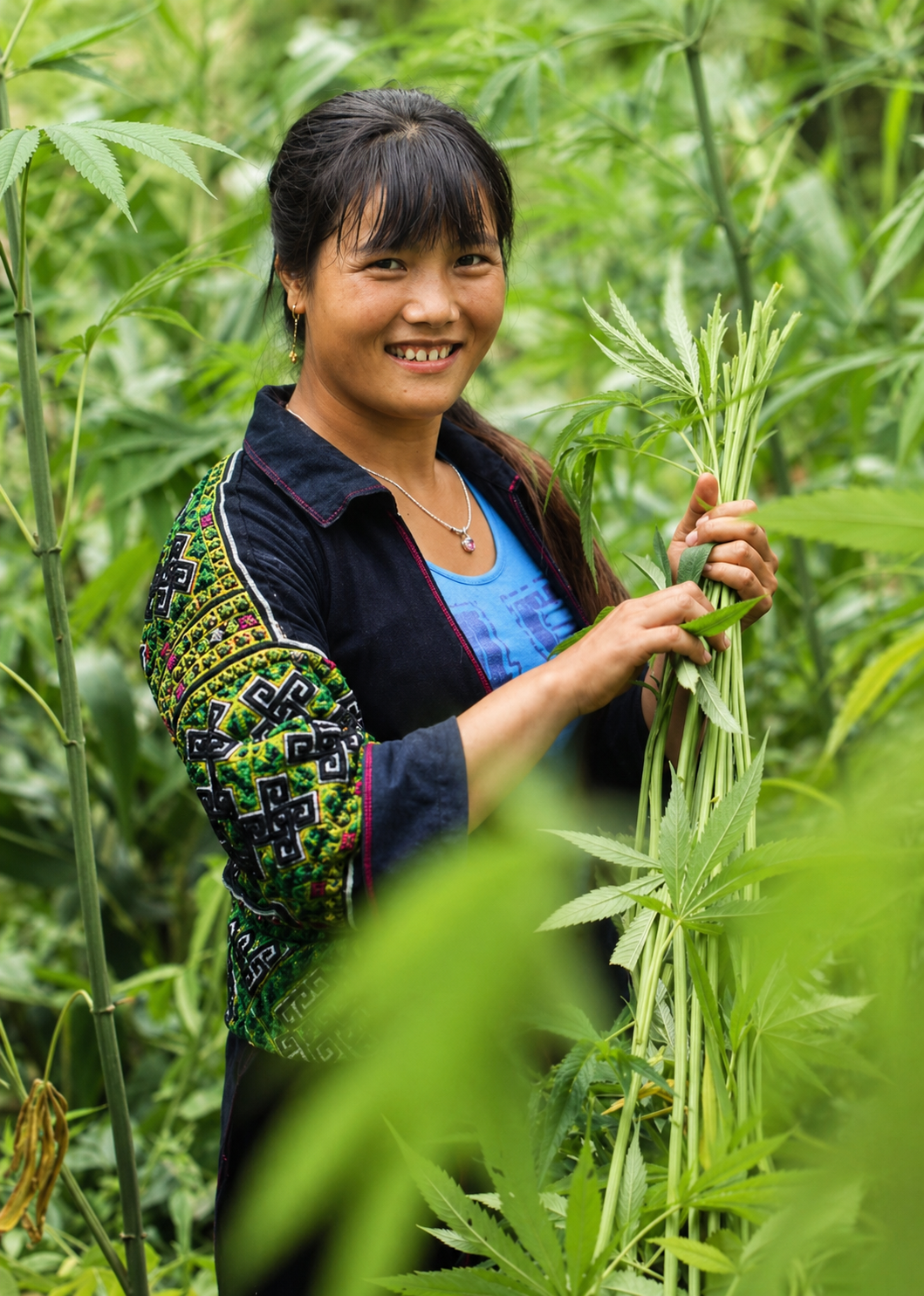
Ly Thi My is a Black Hmong woman from Sapa who has been learning and teaching batik for years.
Travellers who spend time learning with her often come away with a very different understanding. Norman Ed, visiting from the United States, reflected that the experience was “far more than a simple workshop, becoming instead a space to understand the importance of the entire process and the life that surrounds it”. His wife, Mary Ed, described her time with My as “not a craft class, but instead an opportunity to connect with the cultural significance behind a deeply meaningful technique”.
They were particularly struck by the way My moves seamlessly between skills, recalling how she could twist hemp fibres while trekking along the mountain paths, her hands working instinctively as part of daily life. Norman noted that this ability to intertwine craft with everyday living revealed something profound, leading them both to a deeper appreciation of the time, effort, and knowledge that goes into every piece of batik.
Symbols, spirit, and slow understanding
Patterns in batik are not decorative. They are symbolic, and often spiritual. Spirals, lines, and geometric forms carry meaning connected to protection, identity, and the natural world. In many Hmong traditions, clothing helps guide ancestral spirits, ensuring they recognise their descendants. Patterns act as markers, both visible and unseen. This understanding cannot be rushed. It is shared slowly, through trust and time.
Learning with care and connection
At ETHOS, our batik experiences are shaped through long-standing relationships with Hmong partners who lead workshops in their own homes and communities. These are not performances. They are real, lived experiences shared with care. Alongside this, we work with Dao communities in their own textile traditions, particularly embroidery, each distinct and equally meaningful.
We believe in slow travel, where learning is not rushed and connection is allowed to grow naturally.
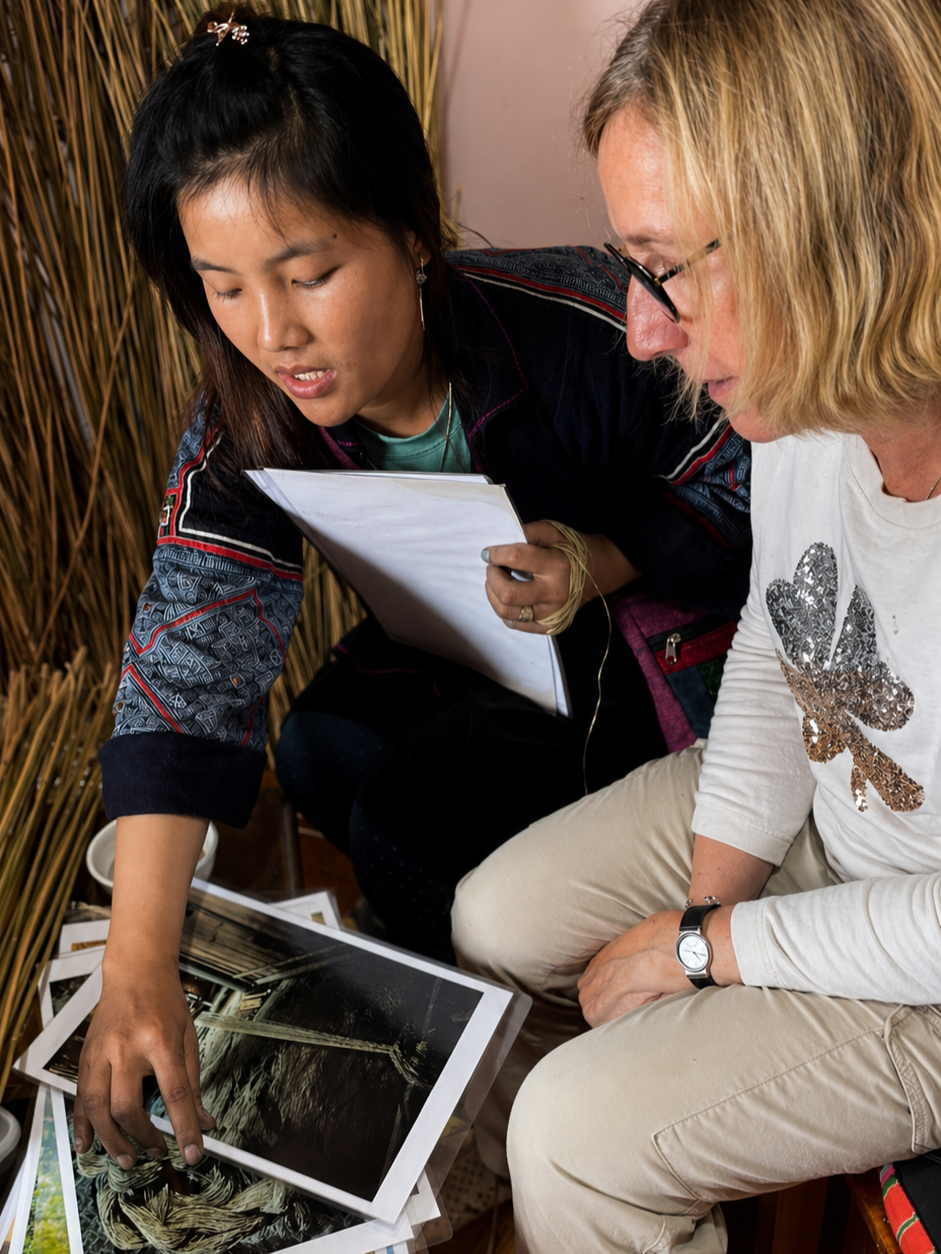
My explaining the main steps in producing natural hemp fabric.
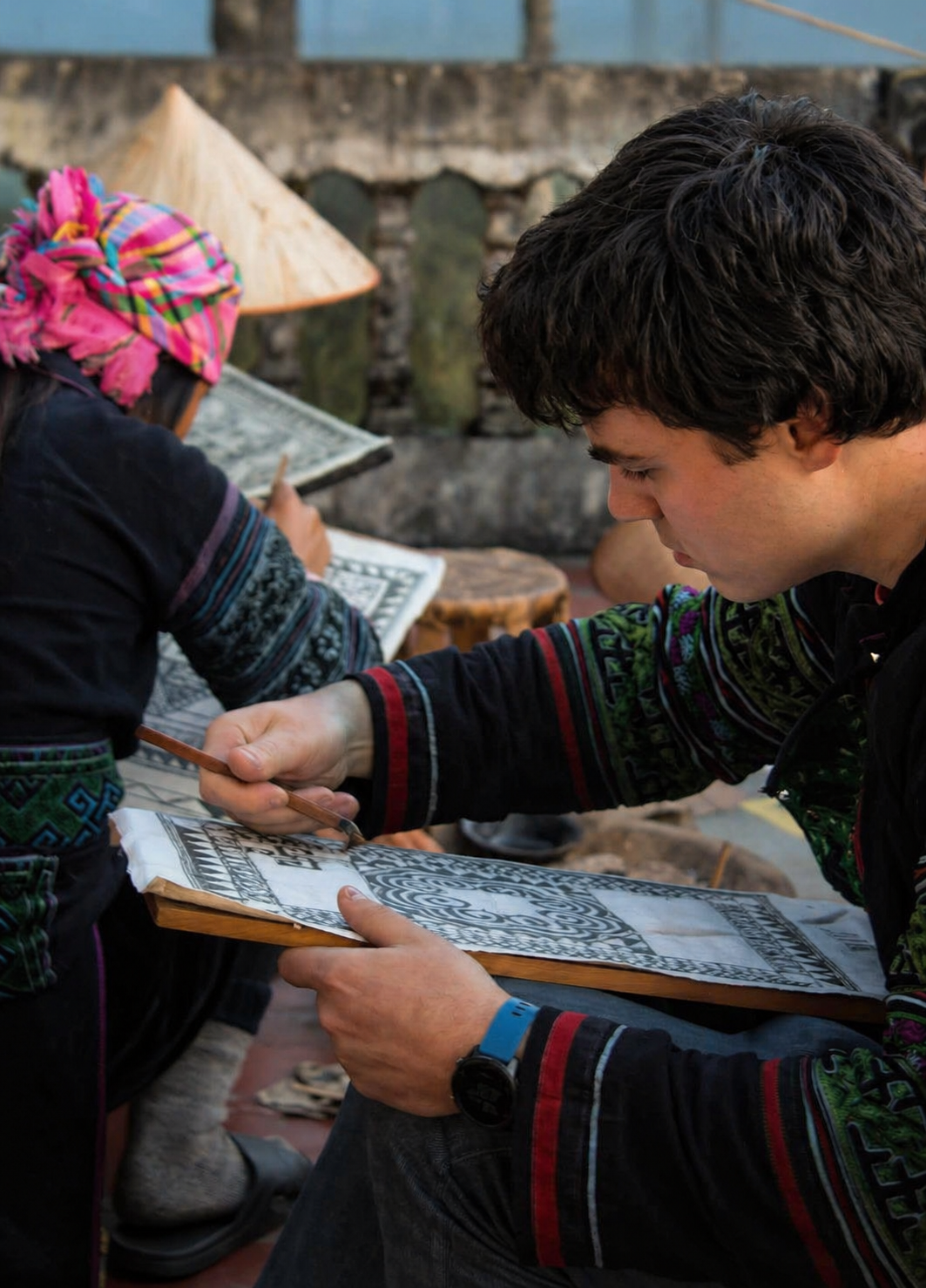
Travellers learning batik in the ETHOS community centre
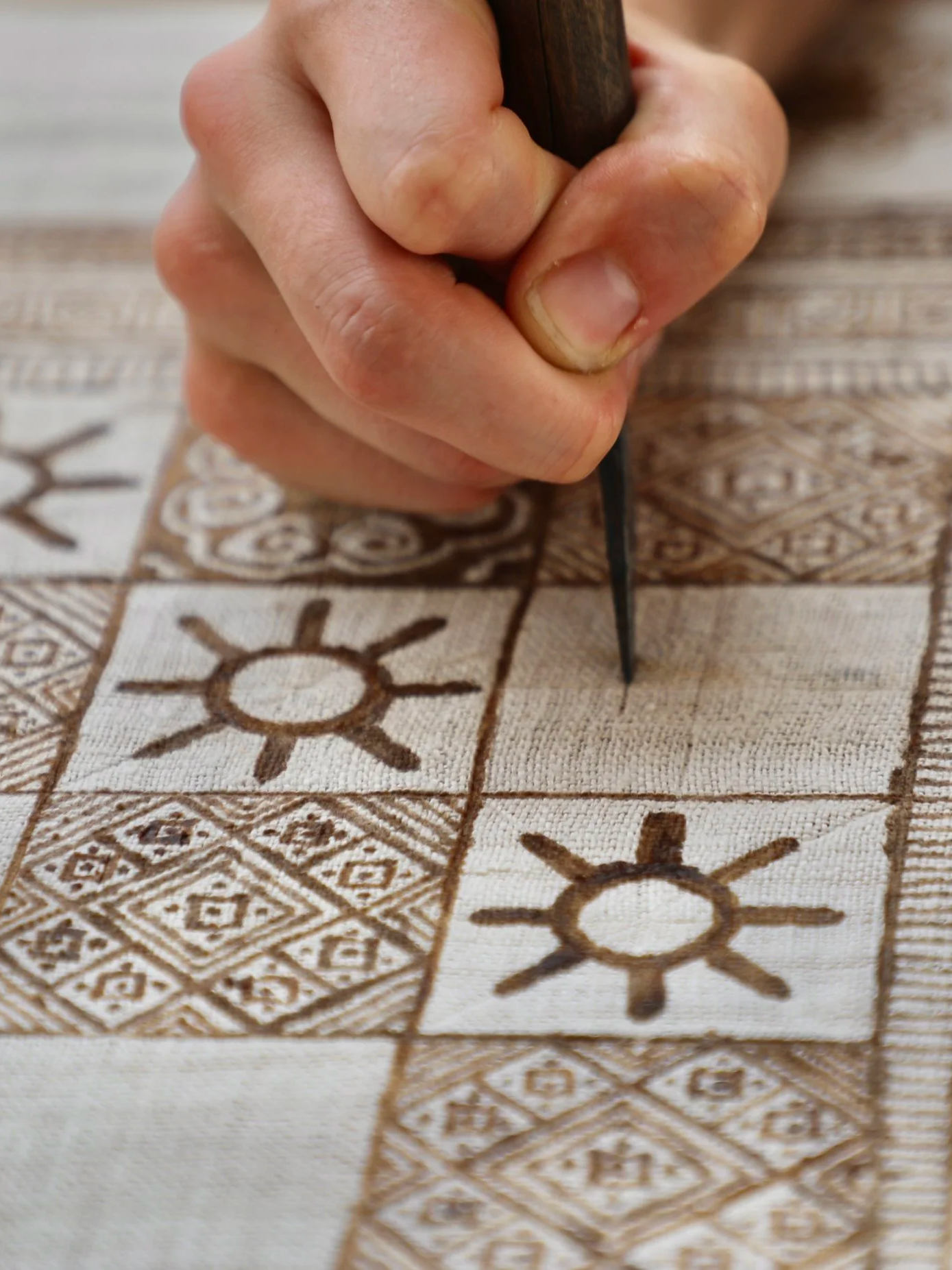
Tool used for planning batik designs on organic , hemp cloth.
Choosing with intention
Not all batik experiences are equal. Some honour the craft. Others reduce it, so choosing carefully really matters. Supporting experiences rooted in authenticity, time, and local knowledge helps ensure this tradition continues, because batik is not just something to try but something to understand, respect, and to help protect.

Hemp leaves growing in Sapa.
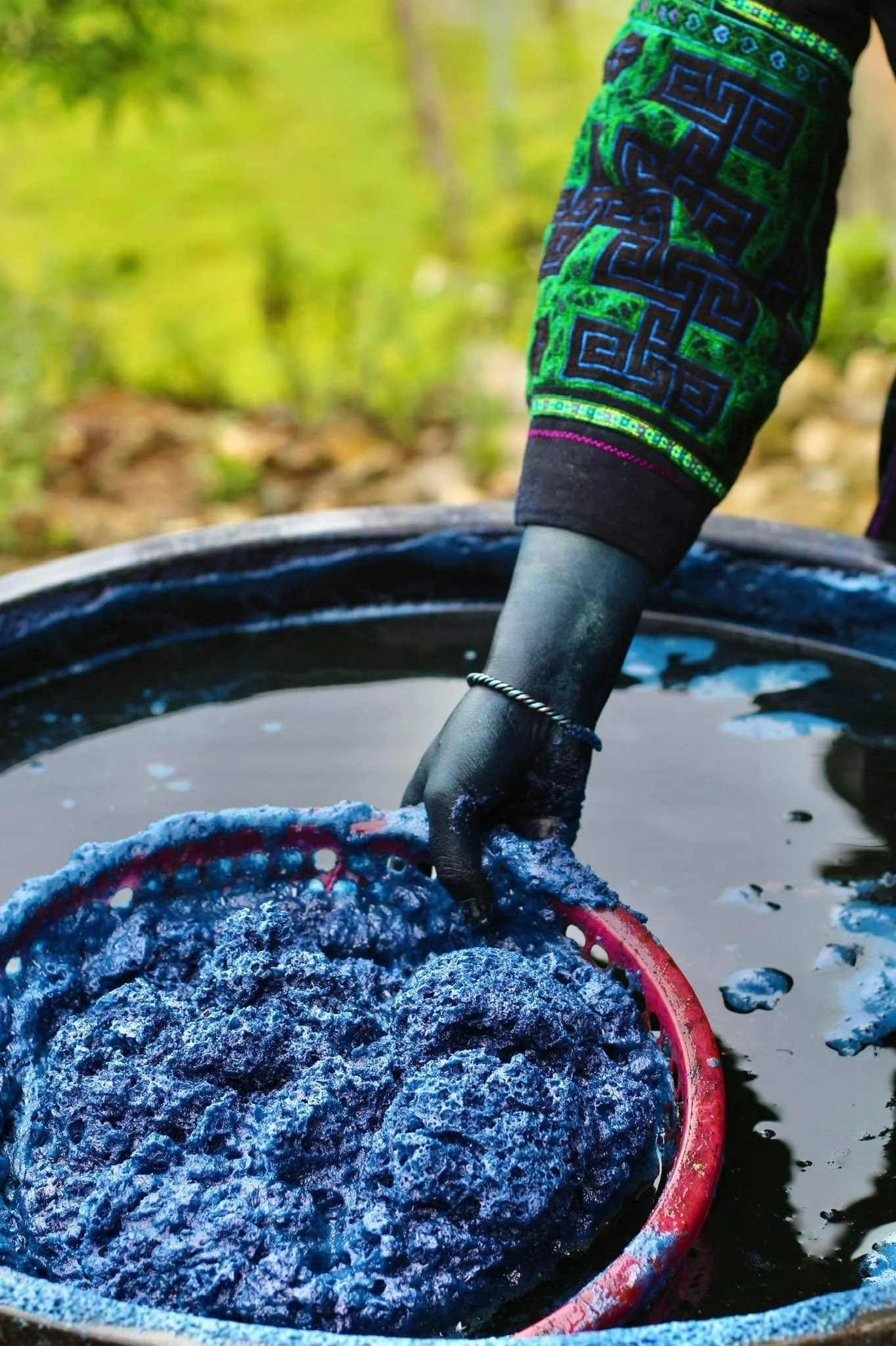
Preparing an indigo vat ready to dye batik designs.
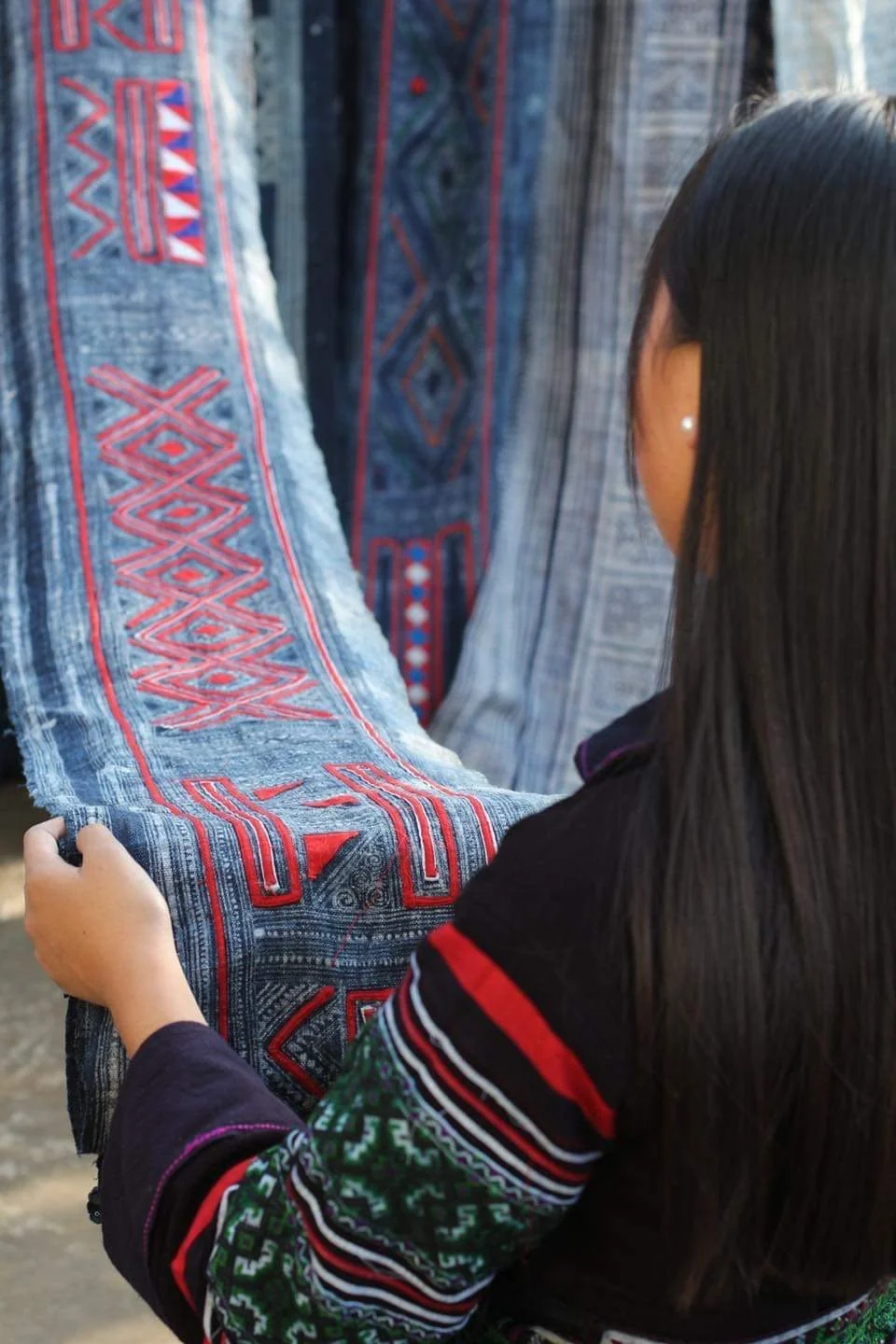
Examininig hemp panels before they are made into a Spirit Skirt.
