
Sapa, Vietnam: What Makes This Mountain Region Truly Special
Real Travel Begins When You Stop Looking For A Viewpoint
On the edges of Sapa town, it is easy to find places built for a single purpose. Artificial Check-In spots facing the valley, crafted backdrops, bright slides cutting across the hillside, all designed to produce an image that looks like Sapa without requiring much engagement with it. They are efficient, accessible, and widely promoted. They also reduce a complex region into something flat and easily consumed.
Sapa is often sold through its scenery. Mist rolling over rice terraces, buffalo moving through wet fields, mountain ridges fading into the distance. These images are beautiful, of course, but they are also incomplete. They show the surface of a place whose real depth comes from the people who have shaped these mountains for generations.
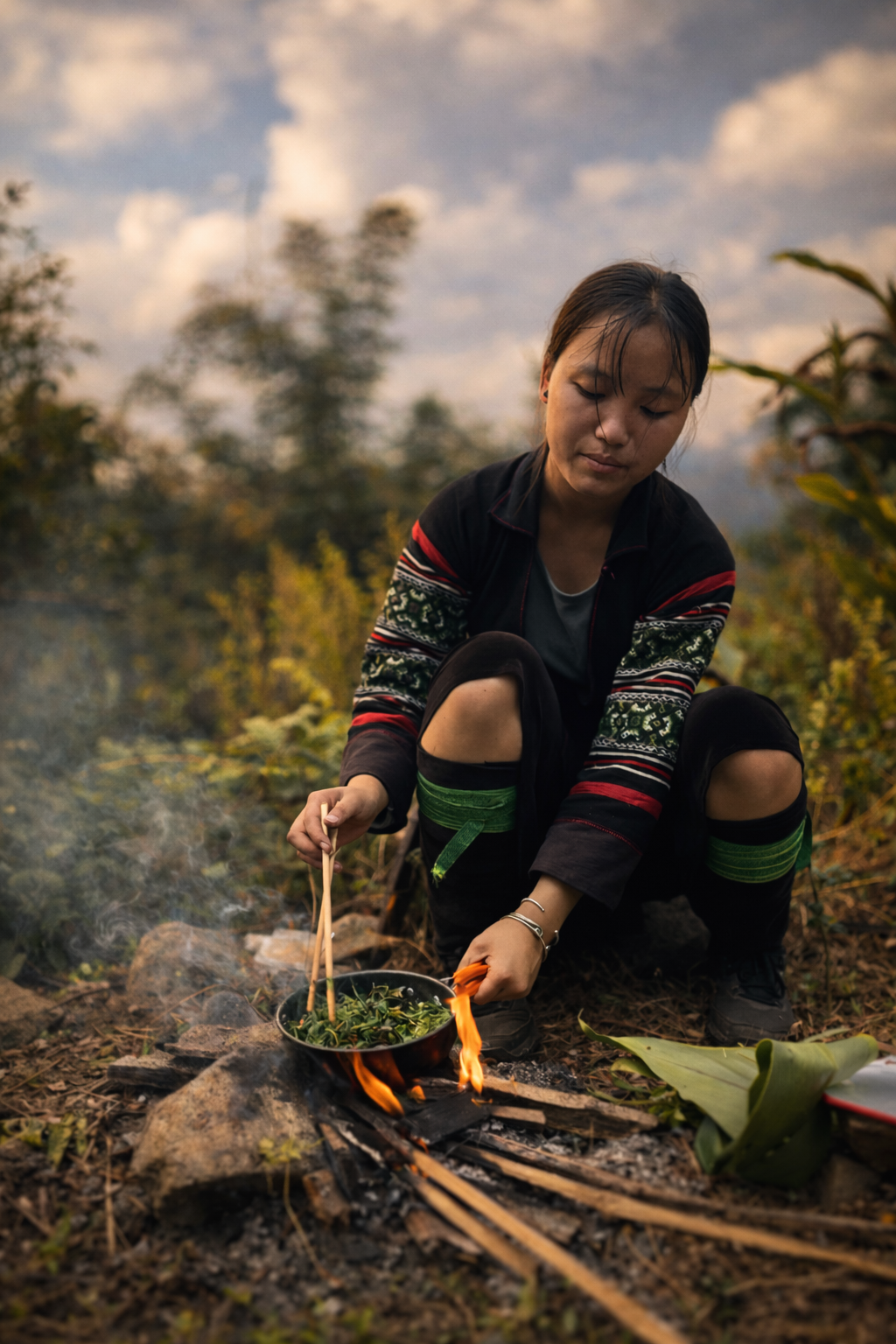
To understand Sapa properly, you have to move away from the idea that travel is a list of places to see. The most meaningful experiences here rarely happen at the busiest viewpoints. They happen on footpaths between villages, in kitchens darkened by woodsmoke, beside dye pots stained deep blue with indigo, or in fields where someone explains why a particular crop is planted on one slope and not another. This is where travel becomes more than sightseeing. It becomes a way of paying attention.
In Sapa, the Hmong, Dao, Giáy, Tày, Xá Phó and other communities are not part of the backdrop. They are the reason this region has its character, knowledge, language, food, textiles, farming systems, and sense of welcome. Their lives are not arranged for visitors, though visitors are sometimes invited in with remarkable generosity. The difference matters.
Real travel here is not about finding something untouched or “authentic” in a staged sense, but is about meeting people as people, understanding that culture is lived every day, and recognising that the most valuable parts of a journey may be the ones that ask you to slow down, listen carefully, and leave behind the habit of consuming places quickly.
The People Who Shape The Landscape: Why Sapa Cannot Be Understood Without Its Ethnic Communities
It is easy to describe Sapa through geography, harder to explain it without talking about the people who have made it what it is. The terraces are scenic formations but also engineered landscapes built and maintained through generations of shared labour and inherited knowledge. Villages are social settlements organised through kinship, language, ritual, and seasonal work.
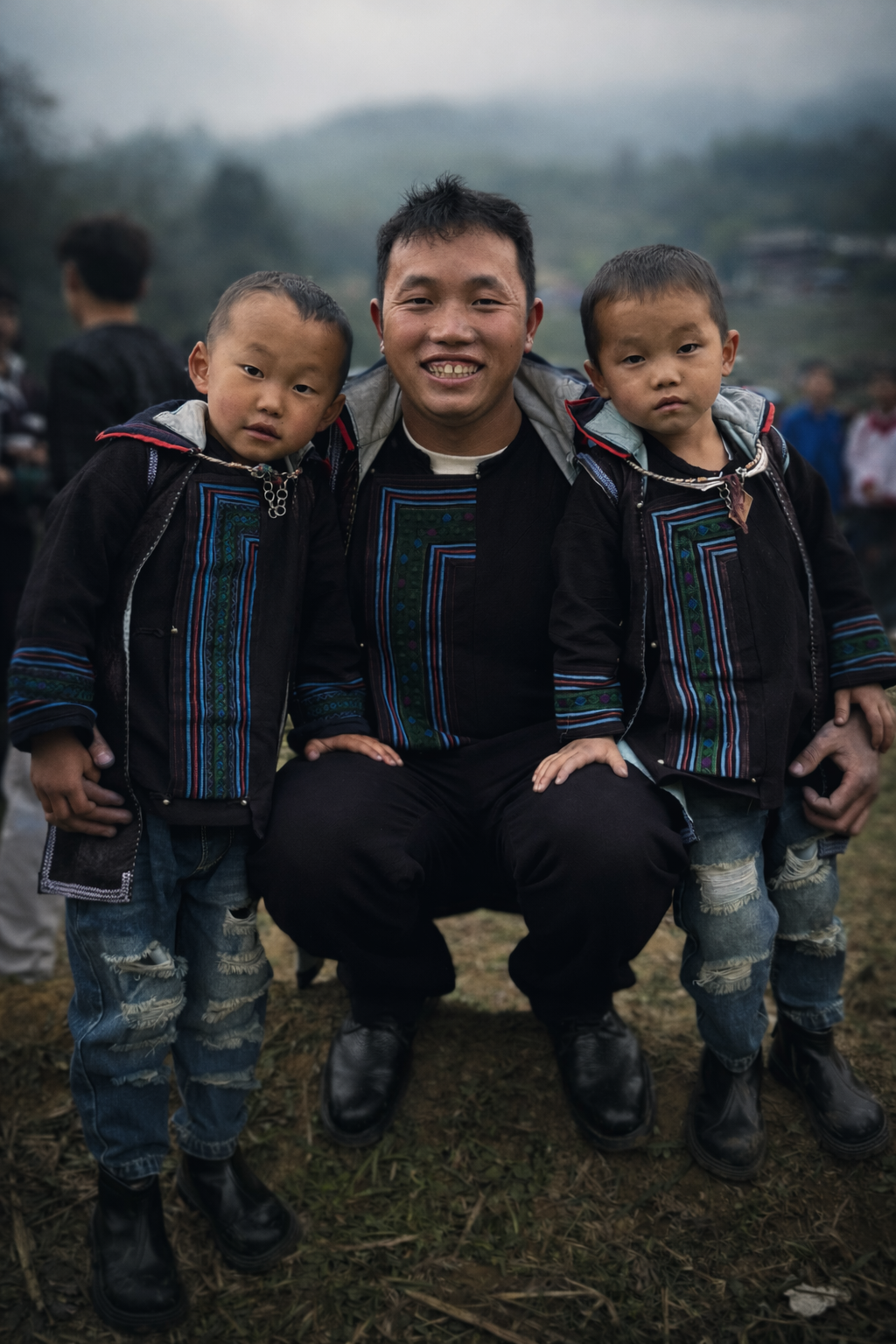
The Hmong are often the most visible to travellers, particularly the Black Hmong communities who live in and around the valleys near Sapa town. Their expertise in working steep terrain is evident in the layered rice fields that follow the curves of the mountains. Their textile traditions, especially hemp weaving and indigo batik, are both practical and expressive, with patterns that carry meaning linked to identity and history.
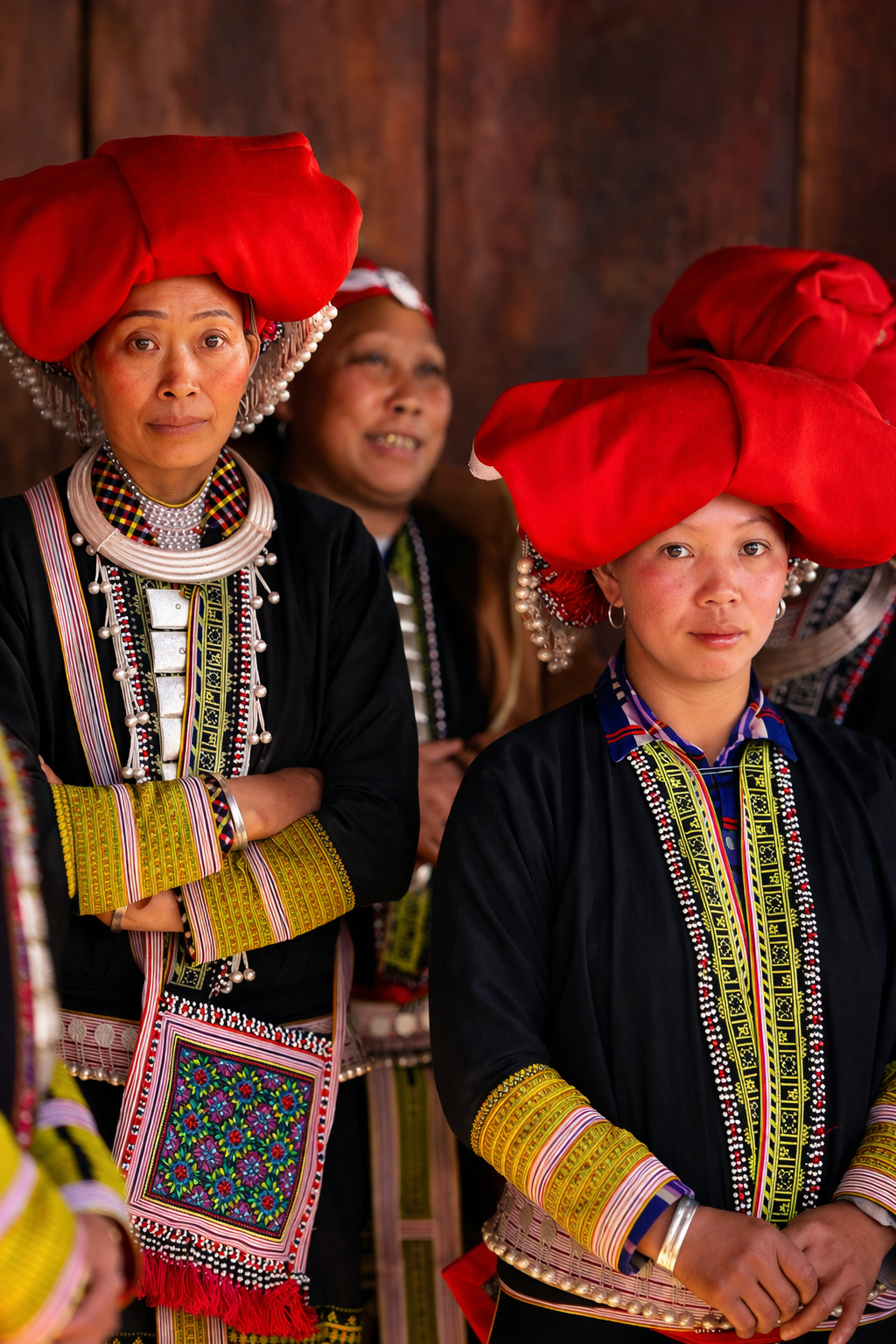
The Dao, particularly the Red Dao, bring a different set of knowledge systems into the landscape. Their understanding of forest plants, used for medicine and ritual, is detailed and specific. Practices such as herbal bathing are not inventions for tourism, they are part of a broader relationship with the environment that includes healing, spirituality, and daily care. Their ceremonial life, from coming-of-age rituals to seasonal gatherings, continues to structure community life in ways that are not immediately visible to outsiders.
Smaller groups such as the Giáy, Tày and Xá Phó contribute further layers to this cultural environment. The Giáy, often based in valley areas, focus on wet rice cultivation and maintain strong oral traditions tied to land and ancestry. The Tày, though less prominent in Sapa itself, share related cultural practices and add to the wider regional network of Tai-speaking peoples. The Xá Phó, with their own distinct rituals such as village cleansing ceremonies, represent how even smaller communities maintain practices that are both specific and deeply rooted.
What makes these groups remarkable is not simply their difference, but their continuity. These are societies that have adapted over time without losing the structures that hold them together. To travel through Sapa without engaging with this would be to miss the point entirely. For those who want to experience this in a more grounded way, walking with a local guide rather than following a fixed route often changes everything. The pace slows, conversations open up, and the landscape begins to make sense through lived experience rather than explanation alone.
Language As A Way In: Why Local Guides Are So Skilled At Opening Their World
One of the first things many travellers notice is how easily local guides move between languages. A conversation might begin in Hmong, shift into Vietnamese, and continue in English, often with little pause. This ability is not unusual here, it is a practical response to how life works in a multi-ethnic, economically active border region.
Children grow up hearing and using more than one language from an early age. At home, a mother tongue such as Hmong or Dao is spoken. At school, Vietnamese becomes necessary. In markets, where different ethnic groups trade with one another, communication often involves switching between languages fluidly. With the growth of tourism, English has become another layer, learned through interaction, observation, and practice rather than formal training alone.
This creates a particular kind of communicator. Local guides are not simply translating words, they are constantly interpreting meaning across cultures. They know when something needs explanation, when something is better left observed, and how to introduce visitors to their communities in a way that feels respectful rather than intrusive. There is also a level of confidence that comes from this environment. Explaining your own culture to someone from a completely different background requires clarity and self-awareness. Many Hmong and Dao guides have developed both, often at a young age, because it is part of their working life. This is one of the reasons travellers often feel more at ease here than expected. The people welcoming them in are not only hospitable, they are highly skilled at bridging worlds.
Spending time in smaller groups, where there is space for these conversations to unfold naturally, tends to bring out this strength most clearly.
How Experiential Travel Took Root In Sapa: From Isolation To Exchange
The form of travel now associated with Sapa did not emerge from a single plan. It developed gradually, shaped by history, economics, and local initiative. During the early twentieth century, the area was established as a hill station by French colonial administrators. That period introduced outside interest but did little to involve local communities in meaningful ways. Decades of conflict and isolation followed, during which tourism disappeared almost entirely.
It was only in the early 1990s, after Vietnam’s economic reforms, that Sapa reopened to international visitors. At first, infrastructure was minimal and numbers were small. Travellers walked into villages out of curiosity, and villagers, in turn, began to offer guidance, food, and eventually places to stay. Trekking and what is now called “experiential travel” began in these simple exchanges. A guide leading a walk was also a farmer explaining their fields. A host offering a bed was sharing their home as it already existed, not as a constructed guesthouse.
As visitor numbers increased through the 2000s, these interactions became more structured. Homestays were formalised, trekking routes established, and craft workshops introduced. In some cases, this brought welcome income and opportunities. In others, it created pressure to adapt traditions to meet visitor expectations. Today, the strongest examples of experiential travel in Sapa are those that remain grounded in real life. Treks and homestays are not performances but rather extensions of what communities already do. The difference is subtle, but it is what defines whether an experience feels meaningful or superficial. Choosing experiences that are led by the people who live here, rather than imposed from outside, is one of the simplest ways to support that balance.
The Tensions Behind Growth: What Tourism Has Changed
Tourism has brought visible improvements to parts of Sapa. Roads are better, access to education has increased, and many families now have additional sources of income. Homestays, guiding, and craft production have allowed some households to earn in ways that were not previously possible. At the same time, the benefits are uneven. Villages closer to Sapa town or along popular trekking routes tend to receive more visitors and income, while more remote communities may see very little of this change. Larger businesses, often run by people from outside the minority groups, capture a significant share of the market. There are also shifts within communities themselves. Younger people may choose tourism over farming, which can change how knowledge is passed on. Certain rituals or crafts may be simplified or adapted for visitors. Languages can shift as Vietnamese and English become more dominant in daily interactions.
Environmental pressures are increasingly visible as well. Waste management, water use, and land development all present ongoing challenges in a landscape that was not designed for high visitor numbers. These are not reasons to avoid Sapa. They are reasons to think carefully about how and why you travel here.
Local Leadership And Agency - Communities Are Not Passive Participants
One of the most important things to understand is that local communities are not simply reacting to tourism. Many are actively shaping it. Across the region, Hmong and Dao families have established their own homestays, guiding networks, and small businesses. Women, in particular, play a central role in this, often managing guest experiences, teaching crafts, and acting as cultural interpreters.
There are also cooperative models and smaller, community-led tour initiatives that aim to keep income within villages and ensure that cultural practices are shared on local terms. These approaches are not perfect, but they represent a shift towards greater control and self-determination. When travel is structured in this way, it becomes something closer to an exchange than a transaction. Visitors are not just consumers, they are participants in a system that, ideally, supports the people they meet. Travelling with organisations that prioritise these relationships can make that exchange more transparent and more meaningful, both for visitors and for the communities involved.
Sapa As A Starting Point - A Gateway Into Northern Vietnam’s Wider Cultural Landscape
For many travellers, Sapa is an introduction. It is one of the more accessible places in the northern mountains, with established routes, infrastructure, and communities accustomed to receiving visitors. That accessibility, however, should not be mistaken for completeness.
Beyond Sapa, the cultural landscape becomes even more varied and, in many places, less visited. Travelling further into the border regions of Lào Cai, Hà Giang, Lai Châu or Yên Bái brings encounters with different Hmong subgroups, as well as Dao communities with distinct practices, and other groups whose presence is less visible in Sapa itself. Languages shift subtly from valley to valley, clothing changes in detail and colour, and agricultural systems adapt to different terrain.
Using Sapa as a base allows travellers to begin with a certain level of familiarity before moving into areas where fewer people travel and where daily life unfolds with less external influence. The skills you develop here, how to walk with a guide, how to enter a home respectfully, how to listen more than you speak, become increasingly important the further you go.
For those interested in continuing beyond Sapa, travelling with local teams who already have relationships in these more remote areas can make that transition more natural and more respectful, opening up routes that are not always visible from the outside.
What Real Travel Looks Like In Sapa: Moving Beyond The Surface
Real travel in Sapa is not defined by how many places you visit, but by how you move through them.
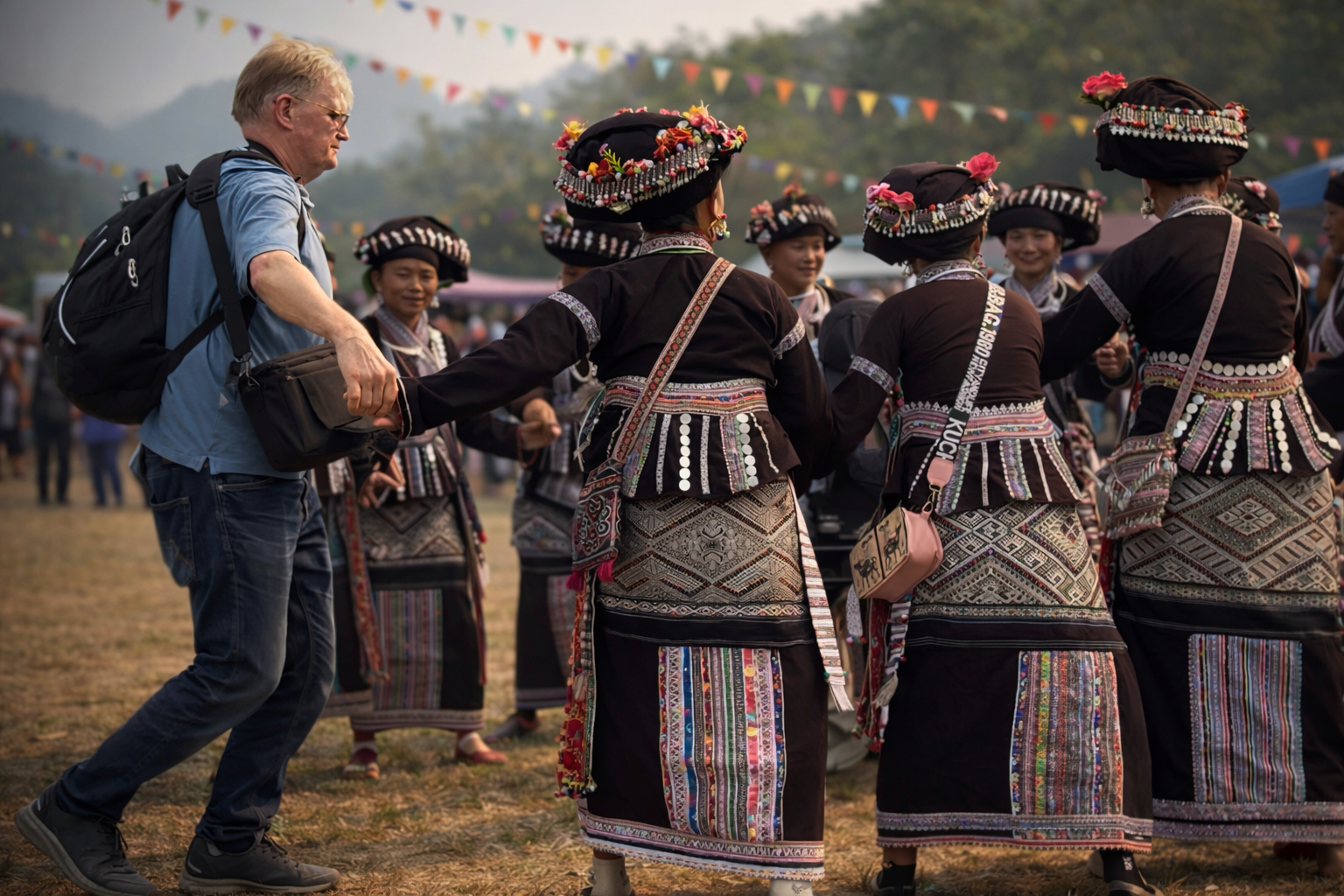
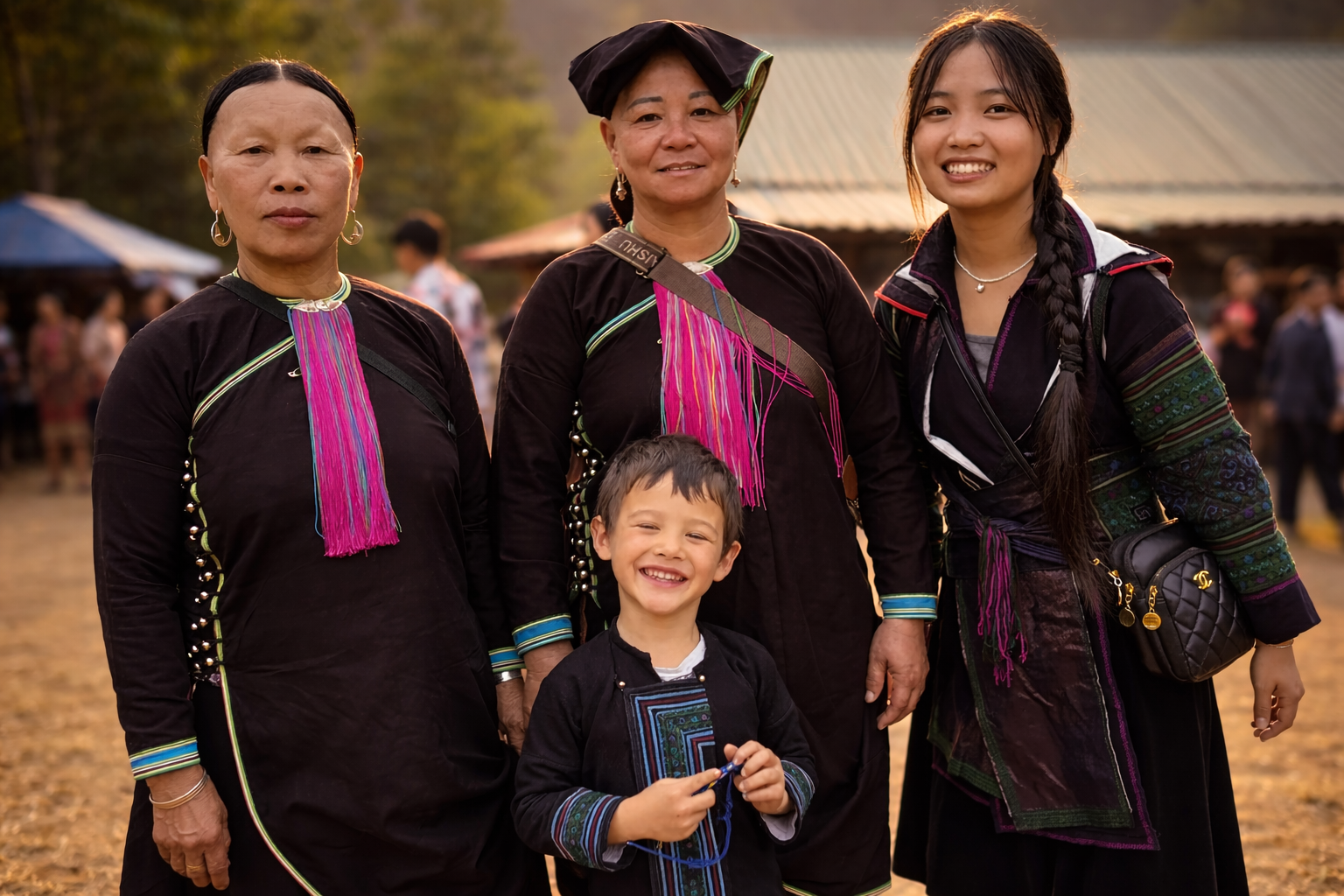
It might mean spending a full day walking with a guide who explains the landscape in detail, rather than rushing between viewpoints. It might mean staying in one village long enough to recognise faces and routines, rather than passing through several in a single afternoon. It might mean trying to understand the work behind a textile, rather than simply buying it.
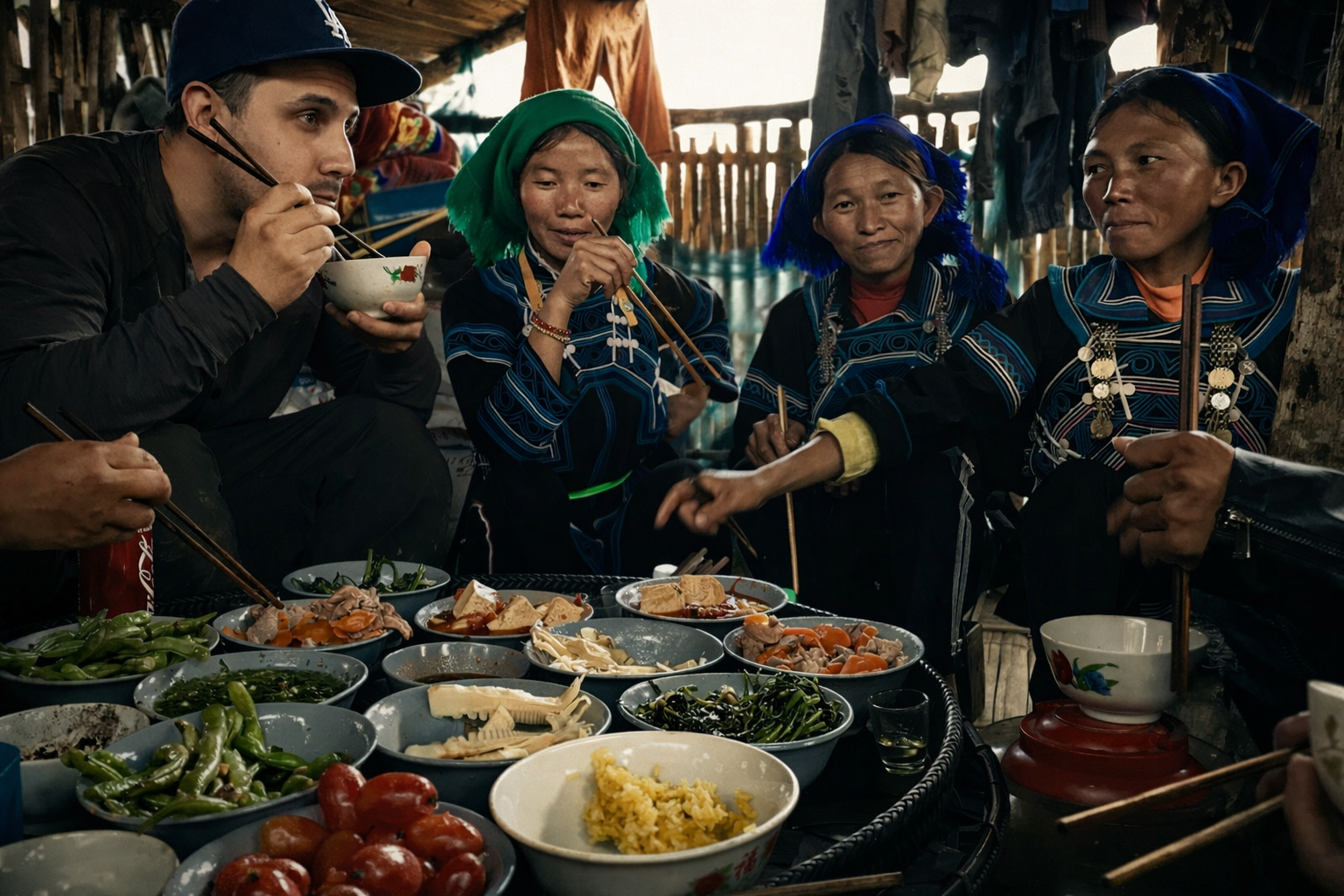
These choices change the experience entirely. They allow you to see Sapa not as a destination, but as a place where people live, work, and continue to adapt in complex ways. For some, that might look like a multi-day trek with nights spent in family homes, where conversations stretch into the evening and the next day begins at the same pace as everyone else’s. For others, it might be a slower introduction through a single village, a workshop, or a shared meal.
There is no single “authentic” version of Sapa waiting to be discovered. There are only real lives, real communities, and real exchanges that take place when travel is approached with care. That is what makes this region special. Not just its landscapes, but the depth of understanding that becomes possible when you are willing to engage with it properly.
