
Sapa’s Hidden Shift: Trekking, Traditional Culture and the Spread of Plastic Across the Mountains
A Region of Extraordinary Beauty and Living Culture
Sapa remains one of the most remarkable mountain regions in Vietnam, a place where dramatic ridgelines, layered rice terraces, National Park forests and traditional village life come together in ways that still have genuine appeal to travellers. Across the wider region, the scenery can be breathtaking in every season, from the verdent green of newly planted rice fields to the gold hues of harvest, from cloud rolling over high peaks to clear mornings when the mountains seem to stretch on without end. It is a landscape that continues to leave a powerful impression on those who arrive with the patience to really look.
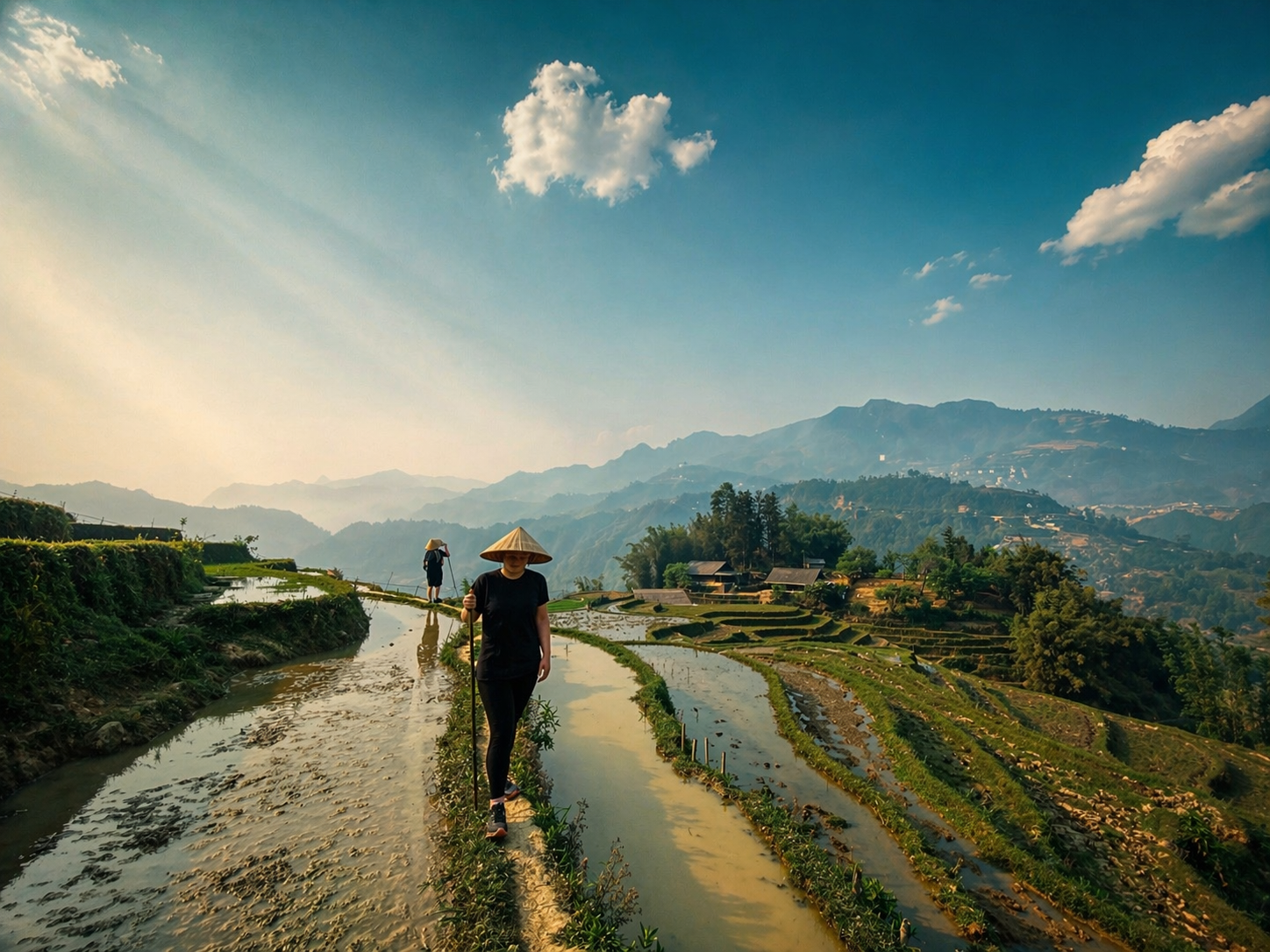
For those planning to visit, Sapa is a place best experienced slowly and with care, taking time to walk, listen and learn from the communities who shape these mountains. If you are curious about exploring Sapa in a more connected and responsible way, you can discover our small group and community-led journeys here.
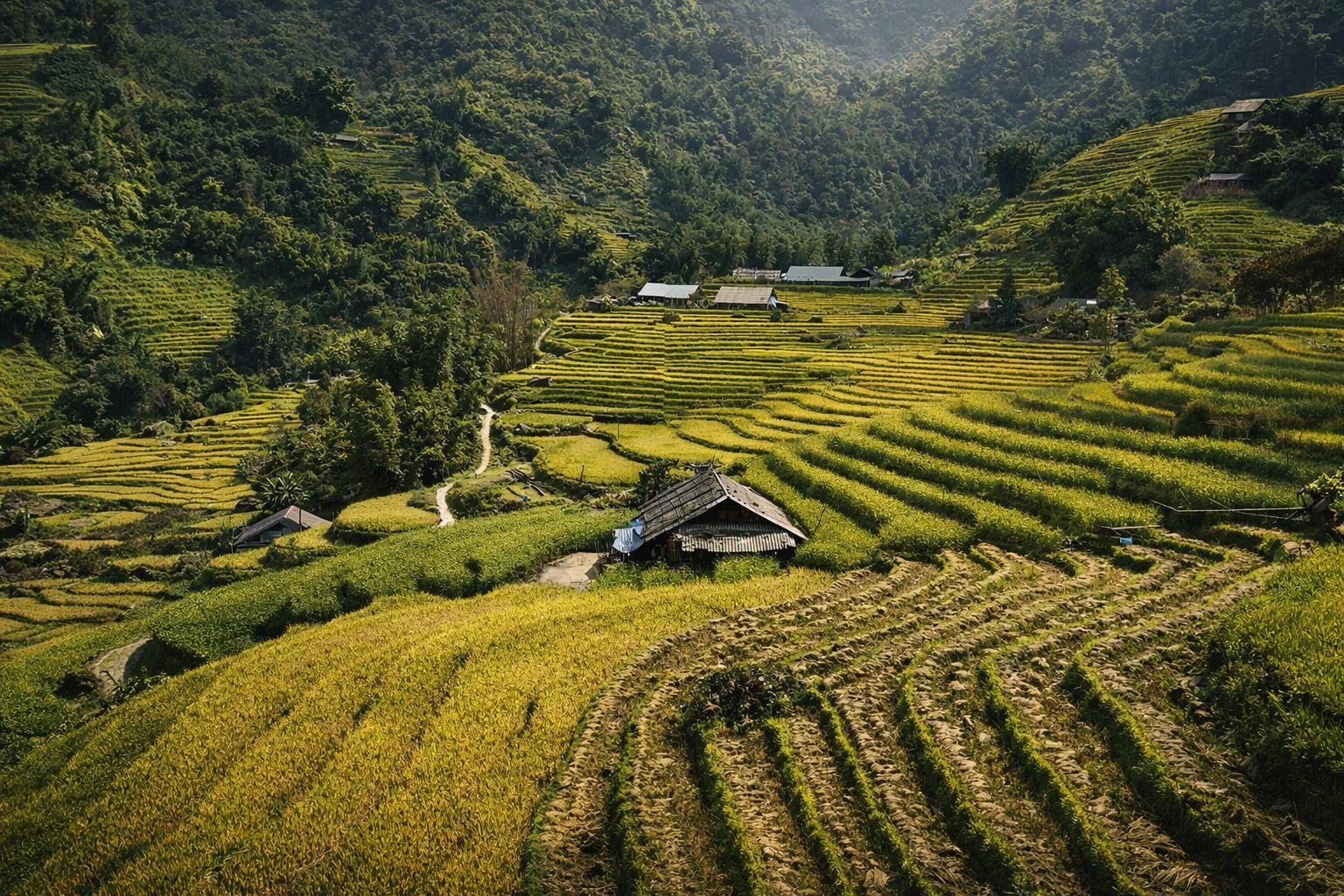
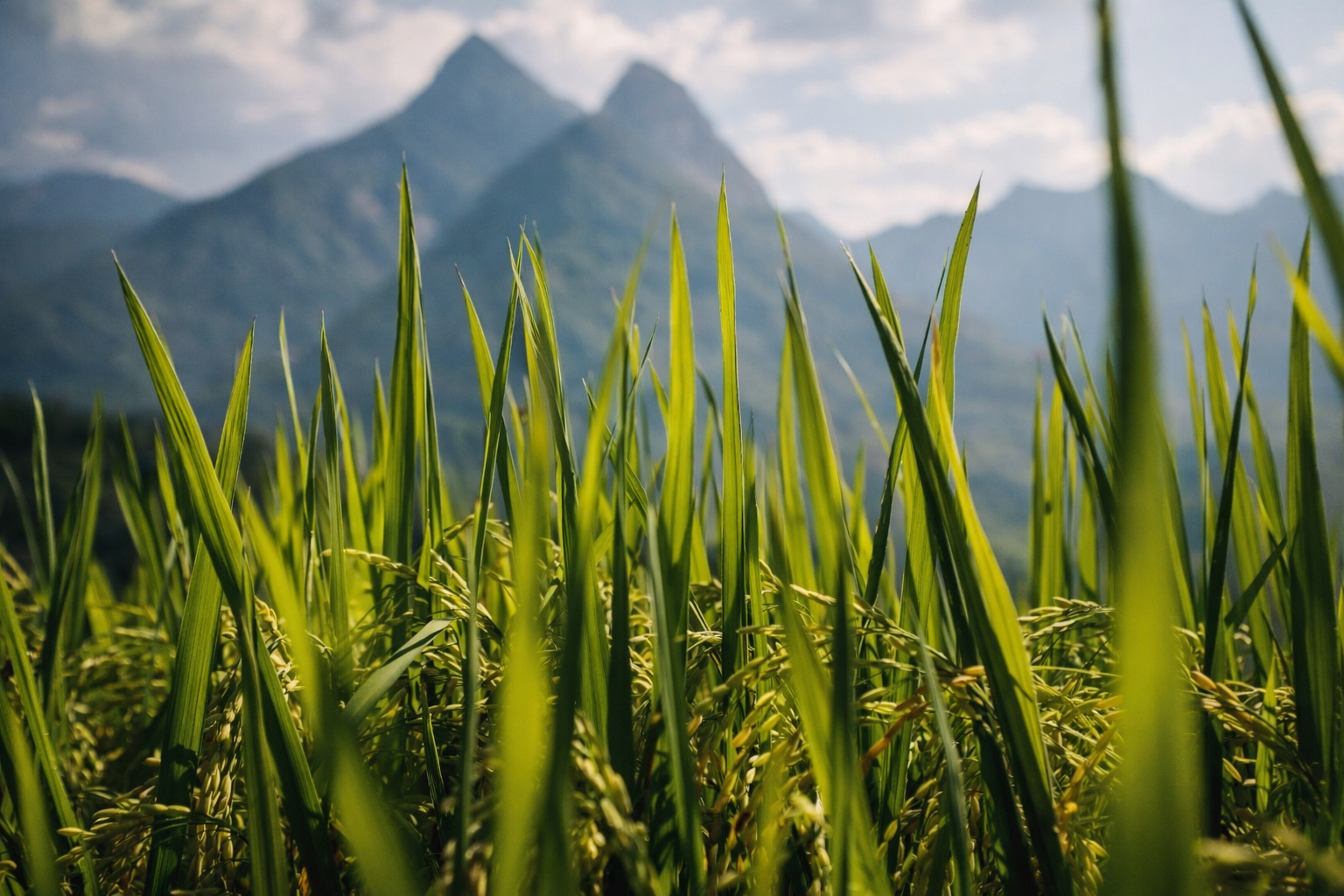
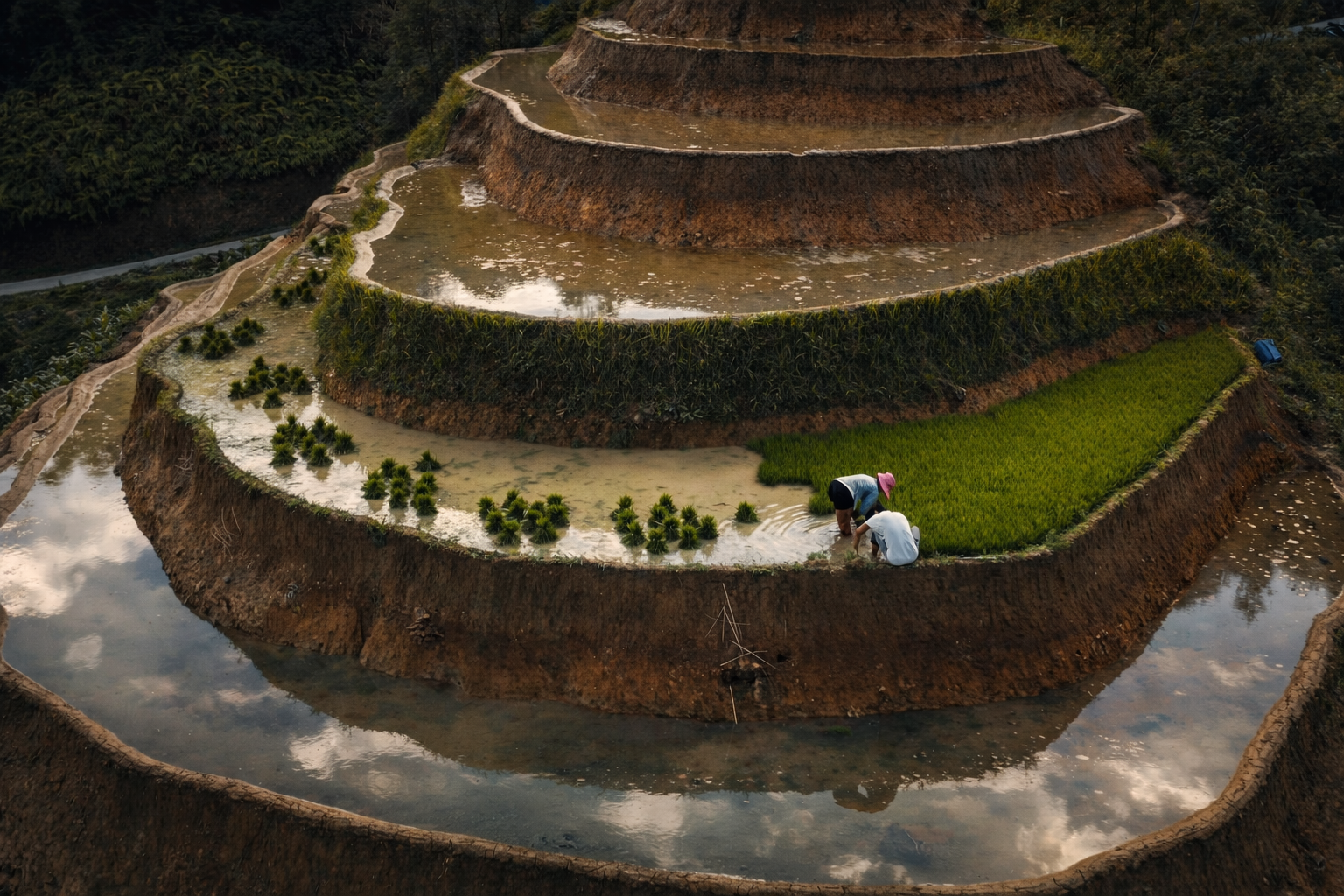
Sapa’s beauty, however, has never rested on scenery alone. What gives Sapa its real depth is the fact that this is also a lived cultural landscape, shaped over generations by Hmong, Dao and other ethnic communities whose knowledge, labour and traditions are inseparable from the land itself. The terraces are not only visually stunning. They are part of a wider system of farming, water management, seasonal movement, craftsmanship, food traditions and storytelling that has allowed people to live with these mountains rather than simply pass through them. The forests, too, are more than a backdrop. They are part of the ecological and cultural fabric of the region, feeding streams, sheltering biodiversity and sustaining daily life in ways that are not always visible to outsiders at first glance.
This is one of the reasons Sapa has held such enduring appeal for travellers. People come for the magnificent views, certainly, but also for the feeling that the landscape is still alive with meaning. They come to walk through valleys where farming and culture still shape the terrain, to learn from people whose lives remain closely tied to season and place, and to experience a region where beauty has long been created through relationship rather than design. It is reflected time and again in the stories travellers share afterwards, where the most meaningful moments are rarely about a viewpoint alone, but about conversations, shared meals, time spent in the fields, and the quiet realisation that they have been part of something lived rather than simply observed.
That is precisely why the changes now taking place matter so deeply. Sapa still possesses areas of outstanding natural beauty, rich cultural life, beautiful forests and extraordinary rice terraces, yet the conditions that have sustained all of this are becoming increasingly fragile. The threat is not only to a view, but to the deeper connection between landscape, livelihood and identity that has long made this region so special.
The Landscape That Once Held Everything Together
There was a time when the rhythms of Sapa’s mountains felt inseparable from one another. The terraces curved through the valleys not only as a visual spectacle, but as a living system that held together water, soil, forest, culture and livelihood in a quiet, enduring balance. Travellers arrived and found themselves walking through a place where agriculture was not hidden from view, but fully present, shaping every step of the journey.
To stand above a terrace in the early morning mist was to witness something far deeper than scenery. Water moved slowly from one paddy to the next, reflecting a sky that shifted with the hour, while farmers worked with an ease born of generations. Children moved along narrow bunds, herbs were gathered at the edges, and the forest above fed everything below with shade, moisture and life.
These terraces were never simply fields of rice. They were complex agroecological worlds, layered with edible plants, aquatic species, insects and seasonal knowledge that ensured survival in a demanding mountain environment. Tourism, in its earliest and most meaningful form here, was drawn to that complexity. People came not only to see, but to feel the connection between land and life.
The Quiet Shift Beneath the Surface
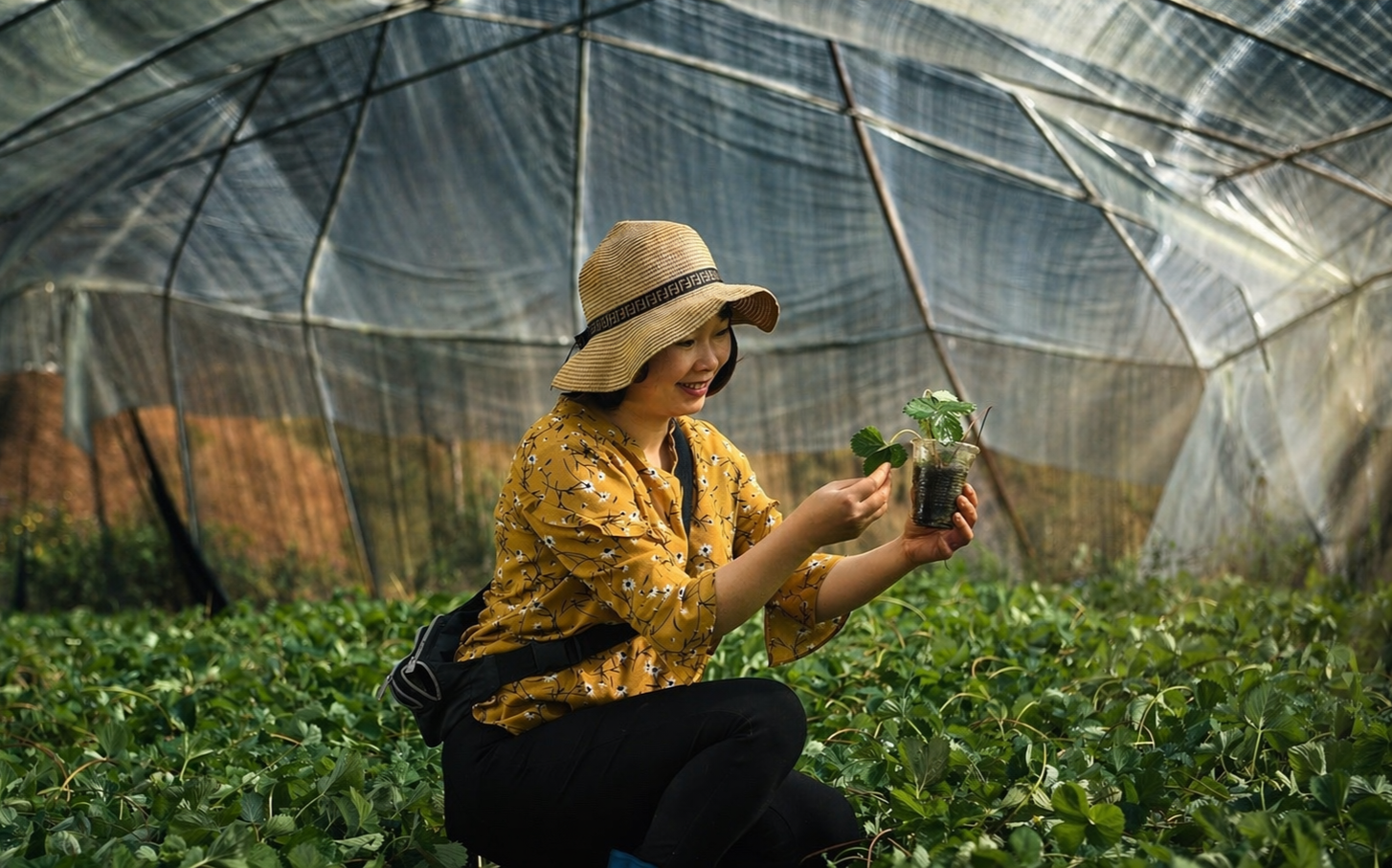
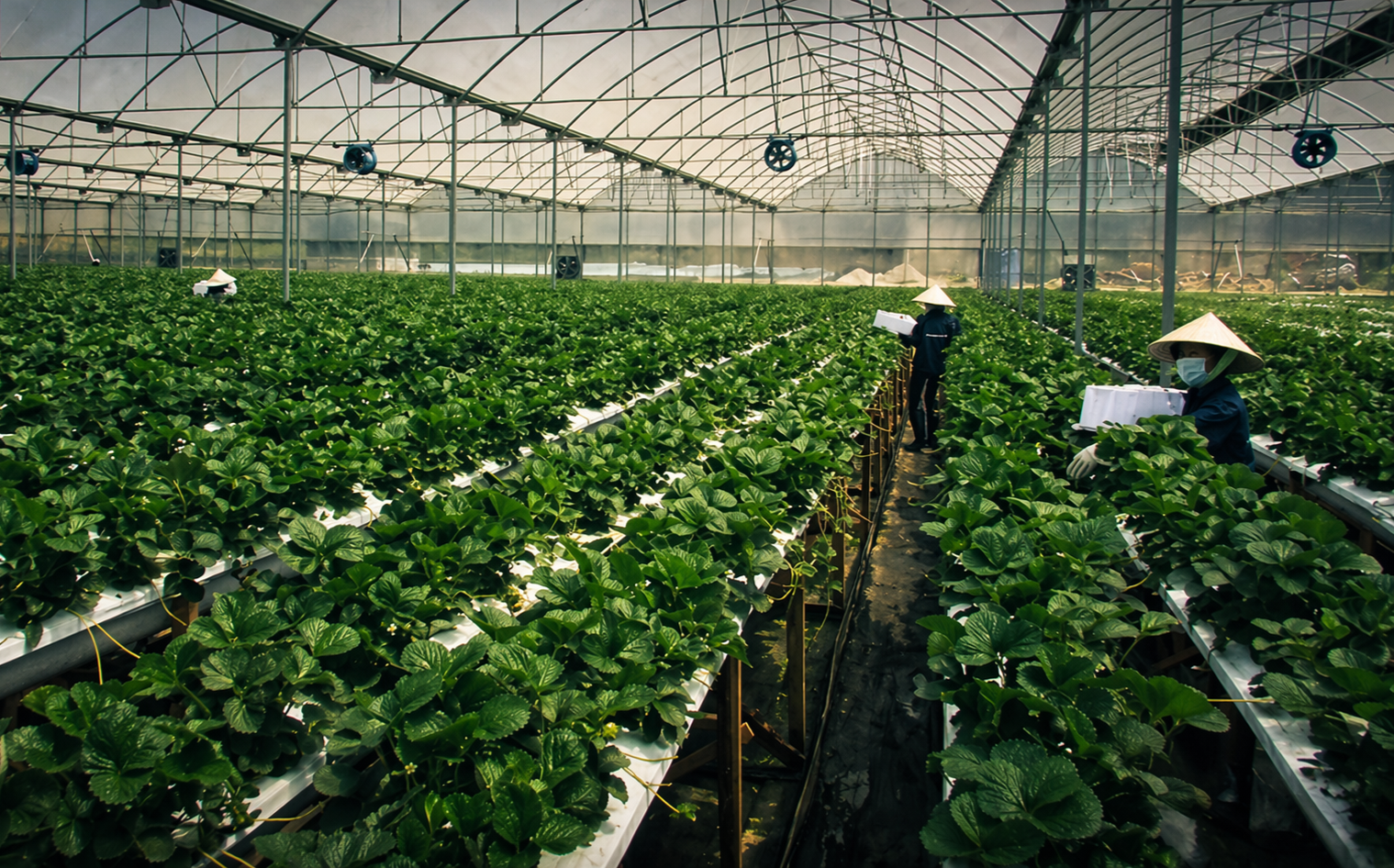
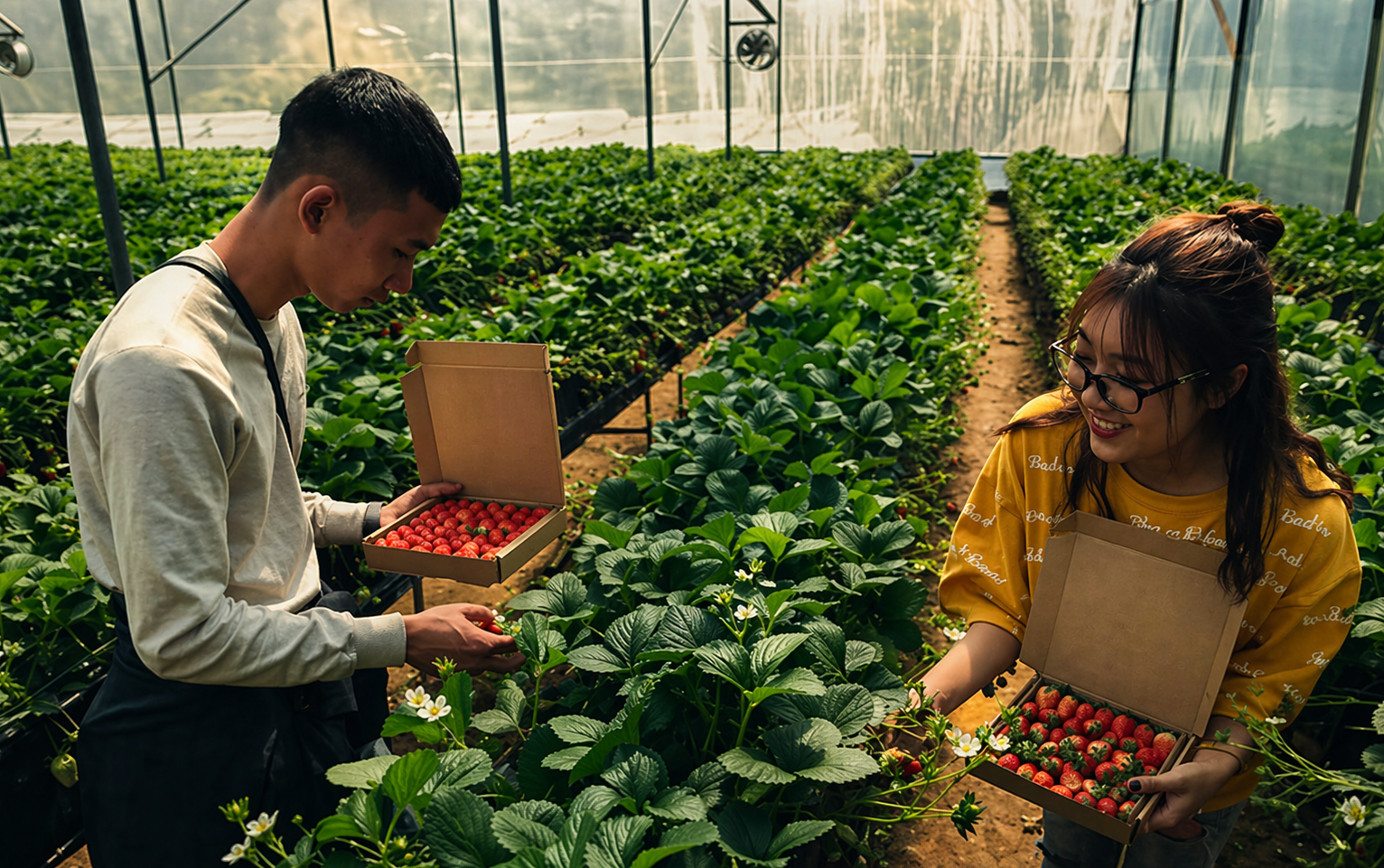
Today, that connection is under strain. The most significant change in Sapa is not the disappearance of farming, but the transformation of what farming has become. Across parts of the region, terraces that once held rice and a diversity of supporting life are increasingly planted with flowers, strawberries, tomatoes and medicinal crops like artichoke.
On paper, this shift makes sense. These crops offer higher financial returns, stronger links to buyers, and alignment with provincial strategies that promote “high-tech” agriculture. For many households, especially those still actively cultivating their land, this transition has brought real and tangible economic benefits. New income streams have meant improved housing, access to education, and a degree of financial stability that subsistence rice alone could not always guarantee.
Yet something fundamental has changed in the logic of the land. Where terraces once followed seasonal cycles shaped by community knowledge and ecological limits, they are now increasingly tied to market demand, contract systems and production schedules. The pace has quickened. Inputs have intensified. The relationship between farmer and land has, in some places, shifted from stewardship to output.
Plastic on the Mountains
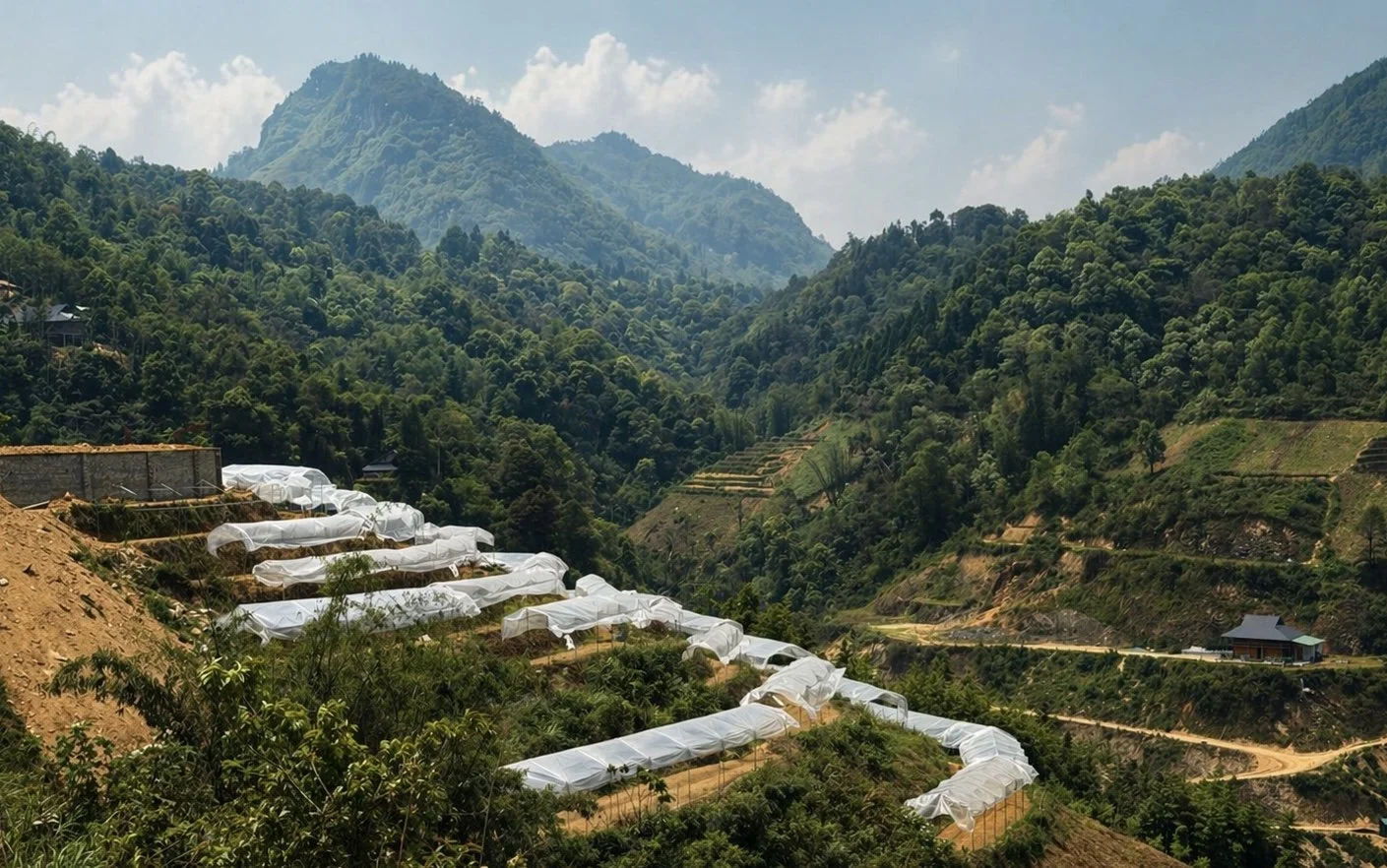
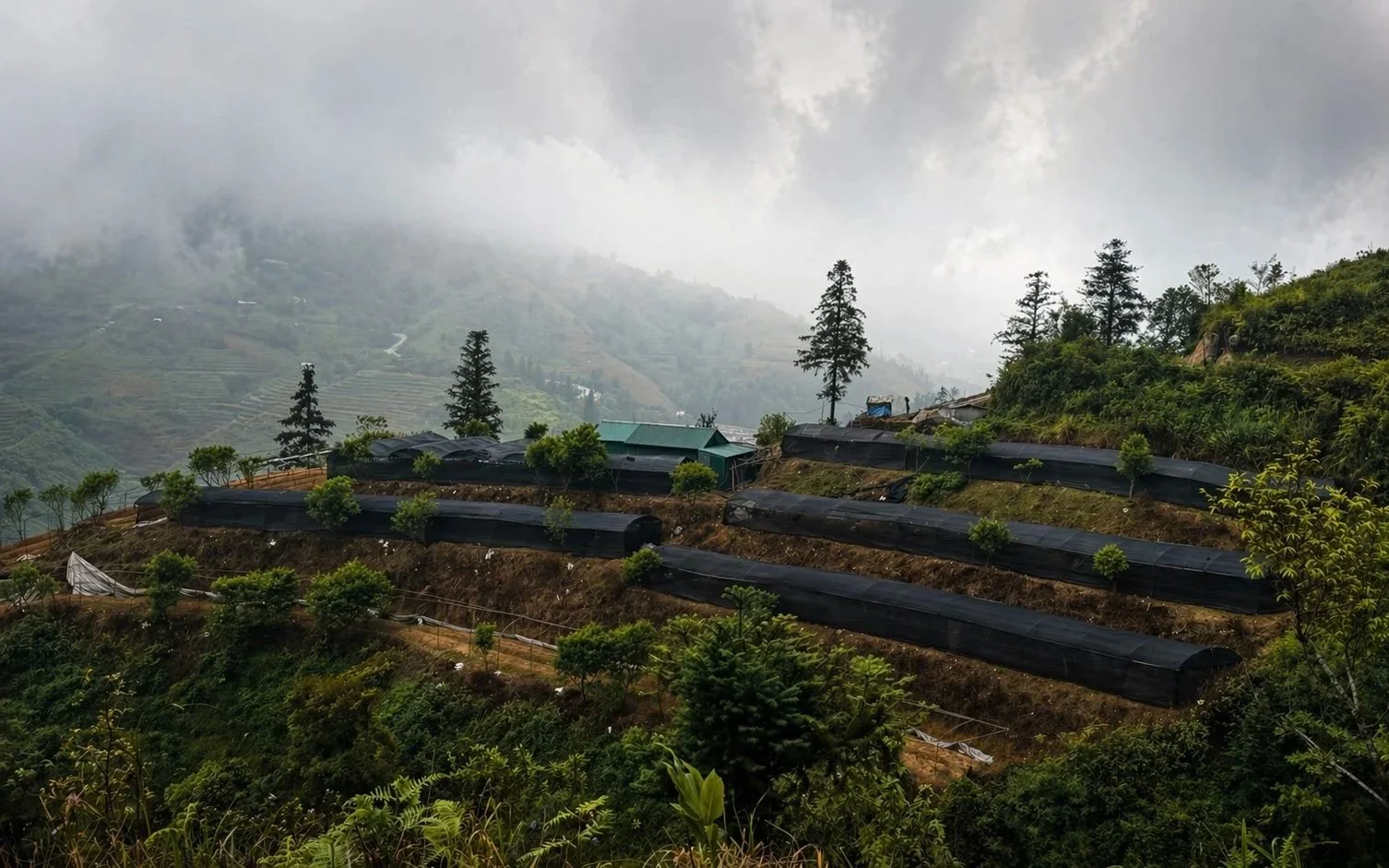
The most visible symbol of this transformation is not the crops themselves, but what now covers them. Plastic sheeting, greenhouse tunnels and netted structures have begun to appear across landscapes that were once defined by open, flowing terraces.
From a distance, these materials interrupt the natural lines of the mountains. Where water once shimmered across stepped fields, there are now opaque surfaces that reflect harsh light and fragment the visual harmony of the valley. In places, the land begins to resemble something closer to industrial agriculture than a living cultural landscape.
This is not simply an aesthetic concern. The introduction of plastic infrastructure brings with it a cascade of environmental questions. In mountainous terrain where wind, rain and gravity are constant forces, plastic does not remain neatly contained. It tears, it fragments, and it moves. Pieces are carried into waterways, caught in vegetation, or broken down into smaller particles that settle into soil and water systems.
Waste management systems in rural Vietnam are not equipped to handle this scale of agricultural plastic. The likely outcomes are informal disposal, burning, or gradual leakage into the environment. Each of these pathways carries consequences, not only for ecosystems, but for the communities who depend on them.
The Chemical Landscape
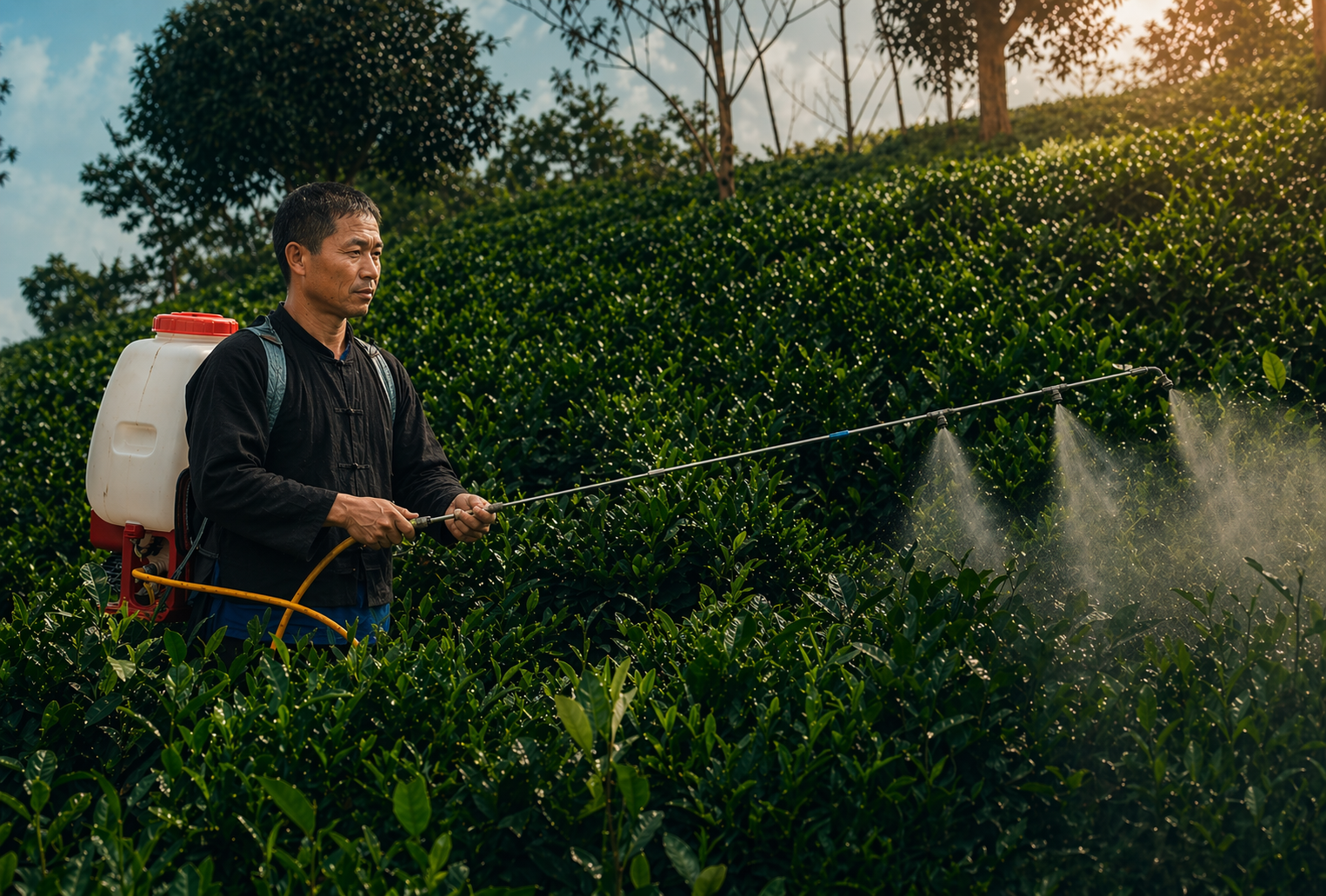
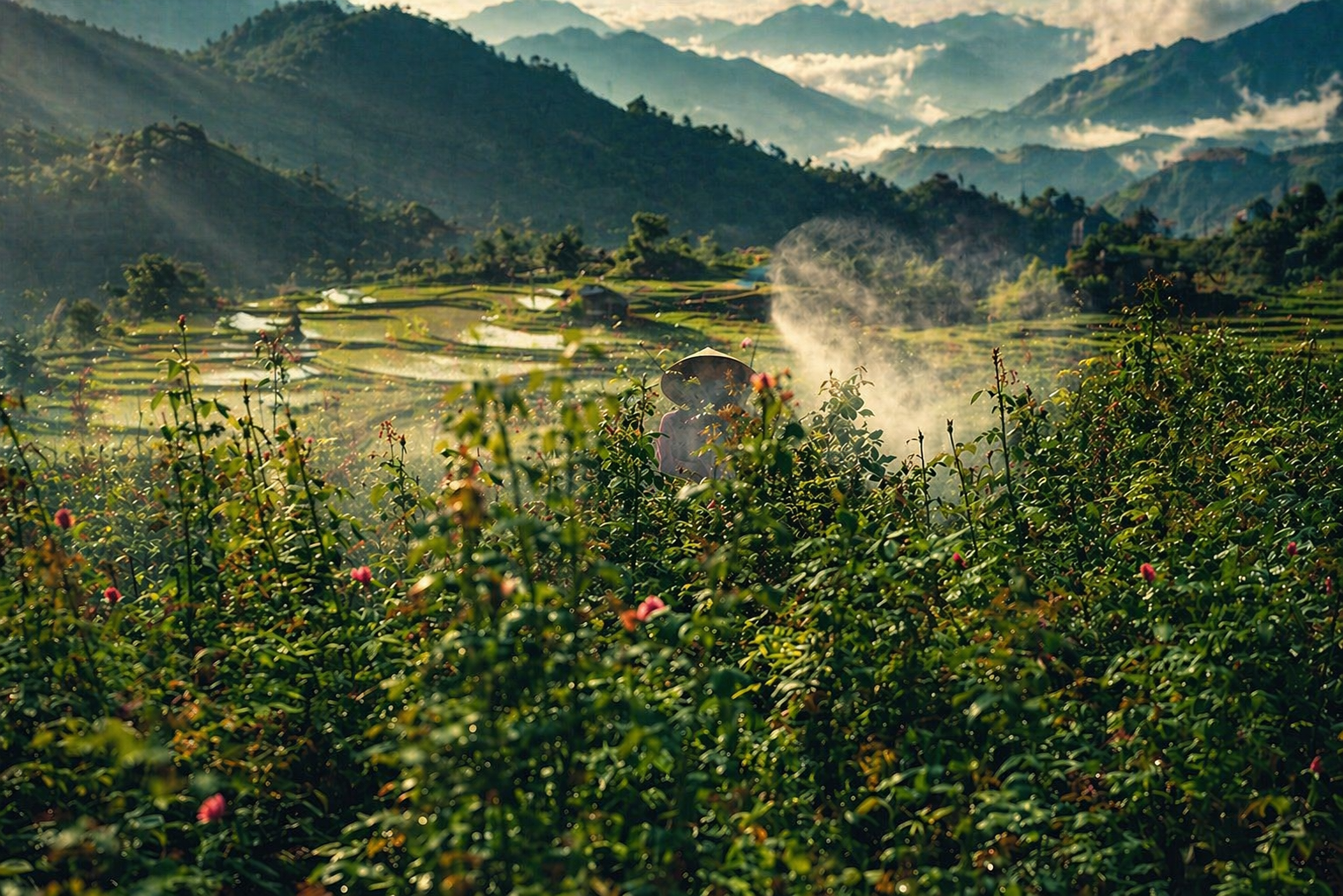
Less visible, but equally significant, is the increasing reliance on chemical inputs. Intensive flower farming in Sapa has already been associated with frequent pesticide application, sometimes occurring every few days during peak growing periods.
The implications extend beyond the fields themselves. In tightly woven mountain communities, where homes sit close to cultivated land, chemical drift does not respect boundaries. It moves with the wind, settles into water channels, and becomes part of the daily environment.
For travellers, this is rarely part of the narrative they are presented with. For local residents, it is something they live alongside. The sensory experience of the landscape shifts subtly but undeniably. The scent of wet earth and forest is, at times, replaced by something sharper, more intrusive.
Tourism Without Its Roots
The irony at the heart of this transformation is difficult to ignore. Tourism remains the dominant economic force in Sapa, built largely on the appeal of its landscapes and cultural heritage. Yet the very elements that draw visitors are being altered by the parallel drive for agricultural intensification.
Rice terraces are not valuable to tourism simply because they are beautiful. Their value lies in what they represent. They are evidence of a way of life, of knowledge systems that have evolved in response to place, and of a relationship between people and land that feels increasingly rare in the modern world. When terraces are reshaped, covered, or managed in ways that prioritise short-term yield over long-term balance, that deeper meaning begins to erode. What remains may still be visually striking in parts, but it risks becoming a surface-level experience, disconnected from the lived reality that once gave it depth.
Travellers are perceptive. They notice when something feels authentic and when it does not. A landscape dotted with plastic, or a valley where chemical farming dominates, sits uneasily alongside the idea of Sapa as a place of cultural and environmental richness.
Power, Ownership and Who Decides
It is important to recognise that this story is not simply one of local farmers choosing to abandon tradition. In many cases, ethnic minority households remain active producers, particularly in crops like artichoke where contract systems provide stable buyers. The imbalance lies elsewhere. The higher-value parts of the agricultural chain, as well as much of tourism development and planning, are more often controlled by external actors, including Kinh businesses and outside investment. This creates a dynamic where local communities participate in production, but have limited influence over the broader direction of change. Decisions about land use, infrastructure and tourism strategy are not always made by those whose lives are most directly shaped by them. This disconnect adds another layer to the emerging conflict, one that is as much about agency as it is about economics.
A Fracturing Identity
Sapa now finds itself holding two competing visions of its future. One is rooted in rapid economic growth, modernisation and integration into wider markets. The other is grounded in cultural continuity, ecological balance and the preservation of a landscape that carries deep meaning. These visions are not inherently incompatible. The challenge lies in how they are pursued. When growth is driven without sufficient regard for the systems that sustain the land and its people, the result is not progress, but fragmentation. The terraces become divided in purpose. Tourism becomes disconnected from agriculture. The identity of the region begins to blur.
What Is at Stake
This is not simply about whether Sapa remains beautiful. It is about whether it remains meaningful. A landscape can survive visual change and still retain its essence, but only if the relationships that underpin it are respected. When those relationships are weakened, the loss is harder to measure. It appears gradually, in the disappearance of certain plants, in the quiet absence of seasonal practices, in the way stories are no longer told because the conditions that gave rise to them have changed. For tourism, this is a critical moment. A destination built on authenticity cannot afford to erode the very foundations of that authenticity. The risk is not immediate collapse, but a slow decline in what makes the place distinct.
Paths Forward: Reconnection Rather Than Replacement
There is still time to choose a different path. The goal does not need to be a return to the past, nor a rejection of economic opportunity. It requires a more thoughtful integration of the two. Agroecological farming practices, rooted in traditional knowledge but supported by appropriate innovation, offer one direction. These approaches maintain biodiversity, reduce chemical dependency, and preserve the multifunctional nature of the terraces.
Tourism can play a more active role in supporting this shift. When travellers are invited to engage with farming as it truly exists, to understand its complexity and value, they become part of a system that rewards preservation rather than replacement. Stronger regulation and enforcement around land use, particularly in protected heritage zones, is essential. The legal frameworks already exist. The challenge lies in ensuring they are applied in ways that genuinely protect the integrity of the landscape.
Equally important is the inclusion of local communities in decision-making processes. Those who live and work on the land must have a meaningful voice in how it evolves. Without this, any solution risks repeating the same patterns of imbalance.
A Question That Cannot Be Ignored
Sapa stands at a point where the choices made in the coming years will shape its identity for generations. The question is not whether change will happen, but what kind of change it will be. Will the terraces remain living systems that sustain both people and place, or will they become fragmented into separate functions, each serving a different economic purpose but no longer connected?
For those of us who walk these mountains, who share meals in village homes, who listen to stories carried through generations, this is not an abstract debate. It is something felt in every step across a field, in every conversation about what the future might hold. The path forward is not simple. It requires honesty, collaboration and a willingness to challenge assumptions about what progress looks like. It asks whether we are willing to value connection over convenience, and long-term resilience over short-term gain.
Sapa has always been a place shaped by relationships. The task now is to decide which relationships will be protected, and which will be allowed to fade.
