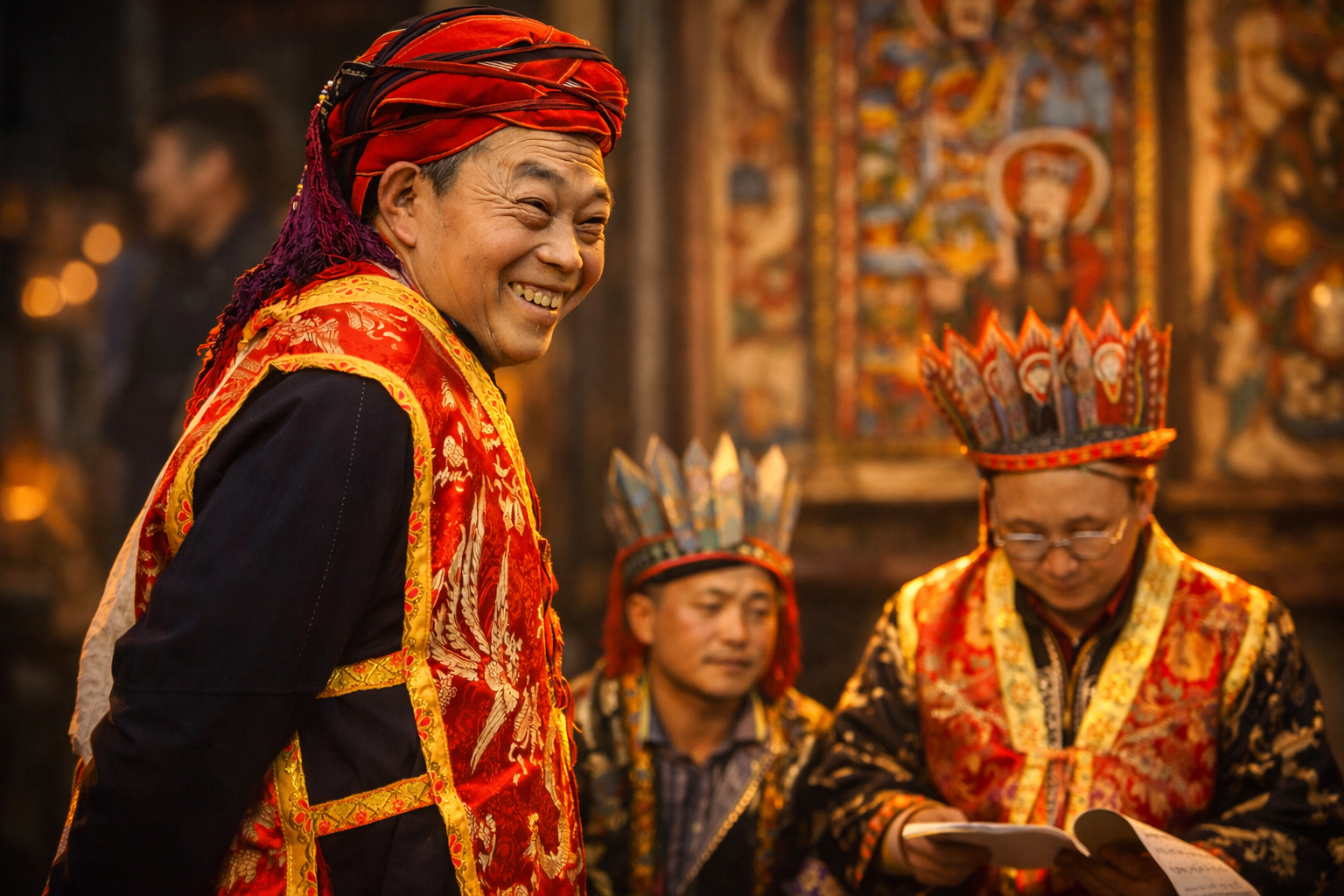
Shared core across Dao groups
Among Dao communities in northern Vietnam, the largest and most significant ritual performed in an individual’s lifetime is commonly known as Cấp Sắc. It is often translated as a conferral of ordination or a bestowal of ritual status, and it marks a decisive transformation in a person’s social and spiritual standing.
Frequency and Meaning
Cấp Sắc is generally performed only once in a person’s life and most often for men. It formally recognises the participant as a complete social and spiritual adult. Without undergoing this ritual, a person is considered spiritually incomplete regardless of age or family position. Only those who have completed Cấp Sắc are fully acknowledged by ancestors and spirit authorities after death. For participants, it is the most important shamanic and cosmological event they will ever experience. Many families save for years, and sometimes decades, in order to finance it. Those who are unable to afford the ceremony may save across several generations so that a single Cấp Sắc can eventually be held.
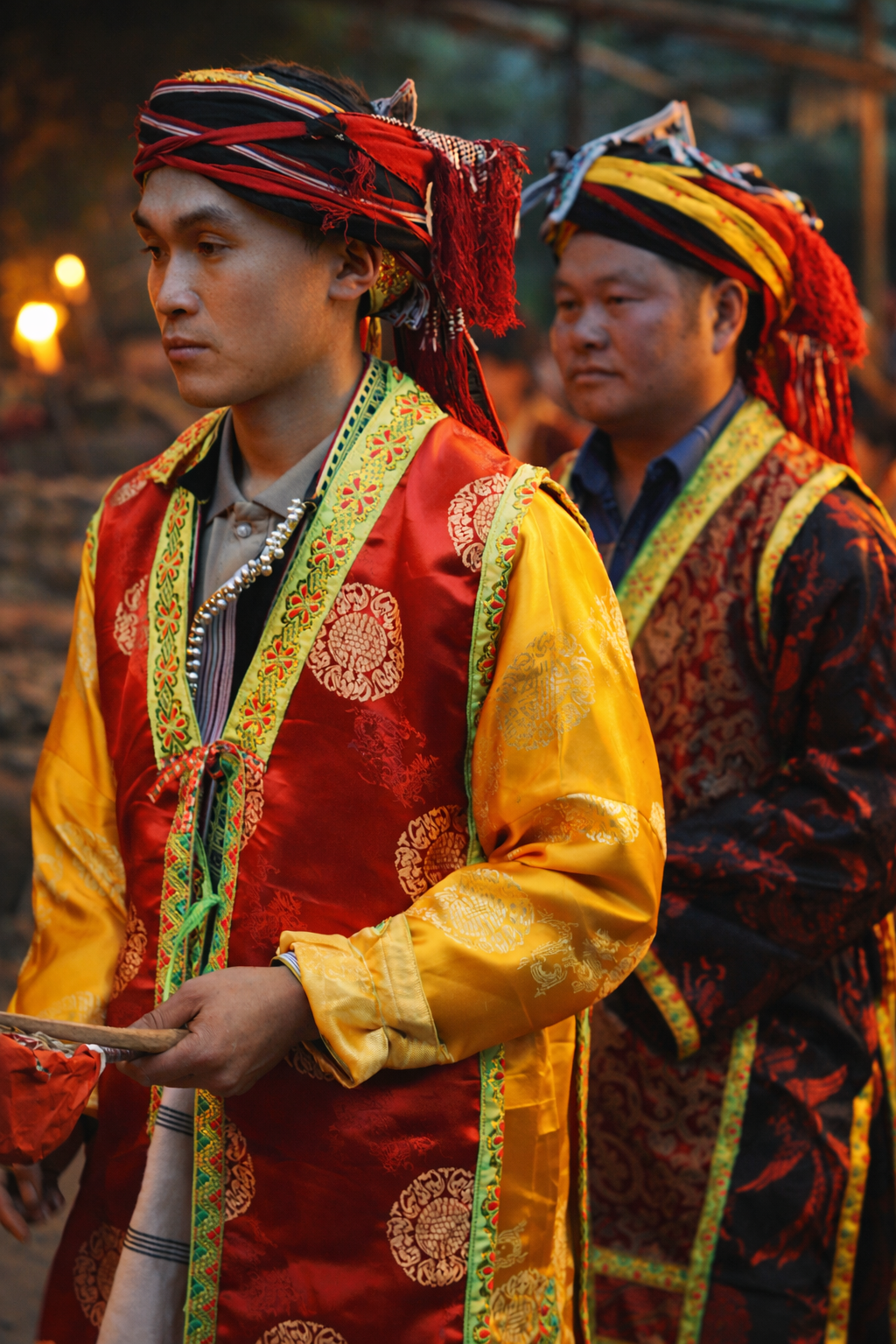
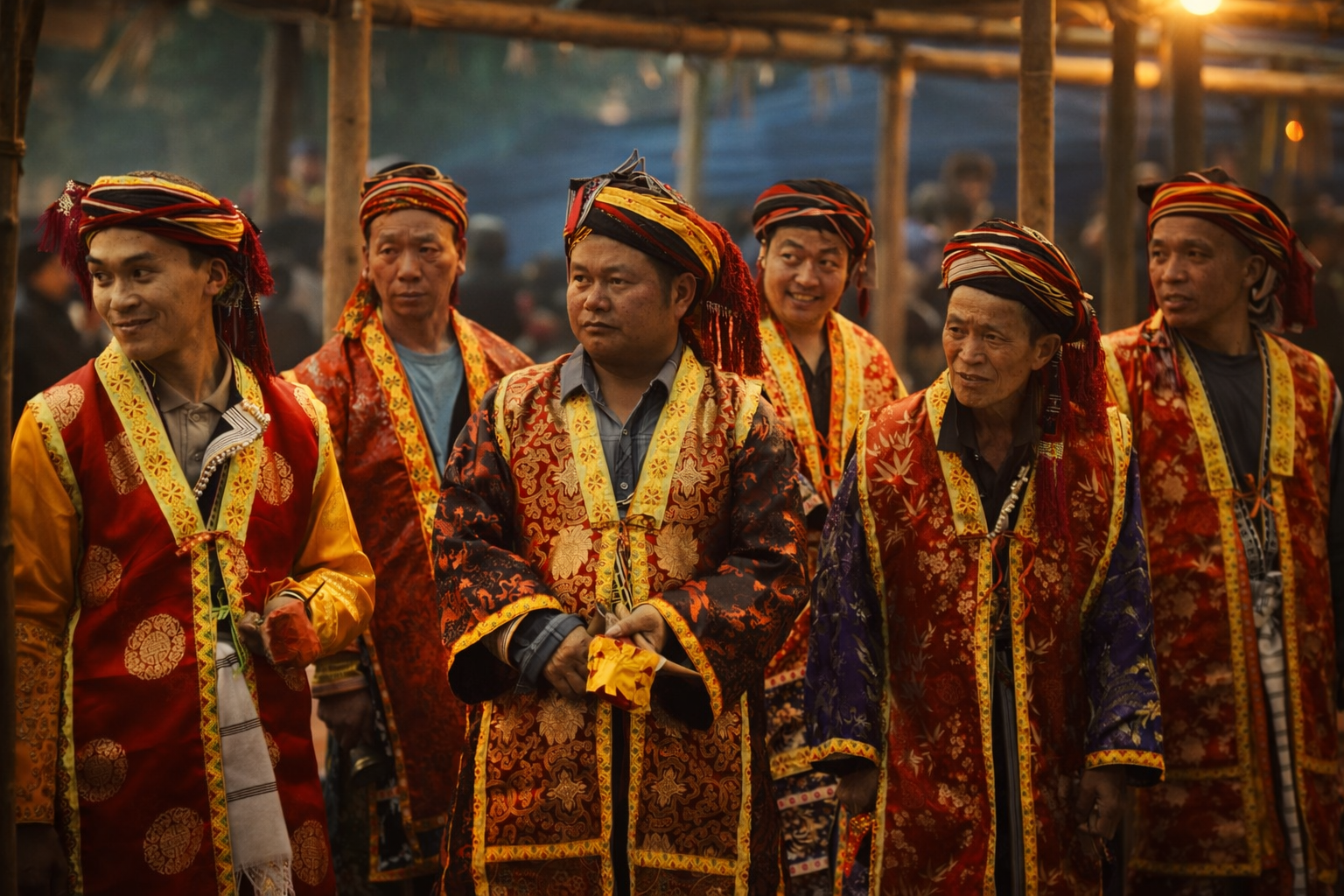
The ceremony is typically larger and longer than other Dao rituals. Depending on local tradition and lineage, preparation may take weeks, while the ritual itself can last for several days. It often involves several senior shamans who chant at length and play ritual trumpets. In this particular ceremony, thirty-one families were involved, with many additional community members and visitors attending over the course of the event. Ritual activity continues day and night, supported by temporary bamboo longhouse-style structures built to accommodate shamans, assistants and guests.
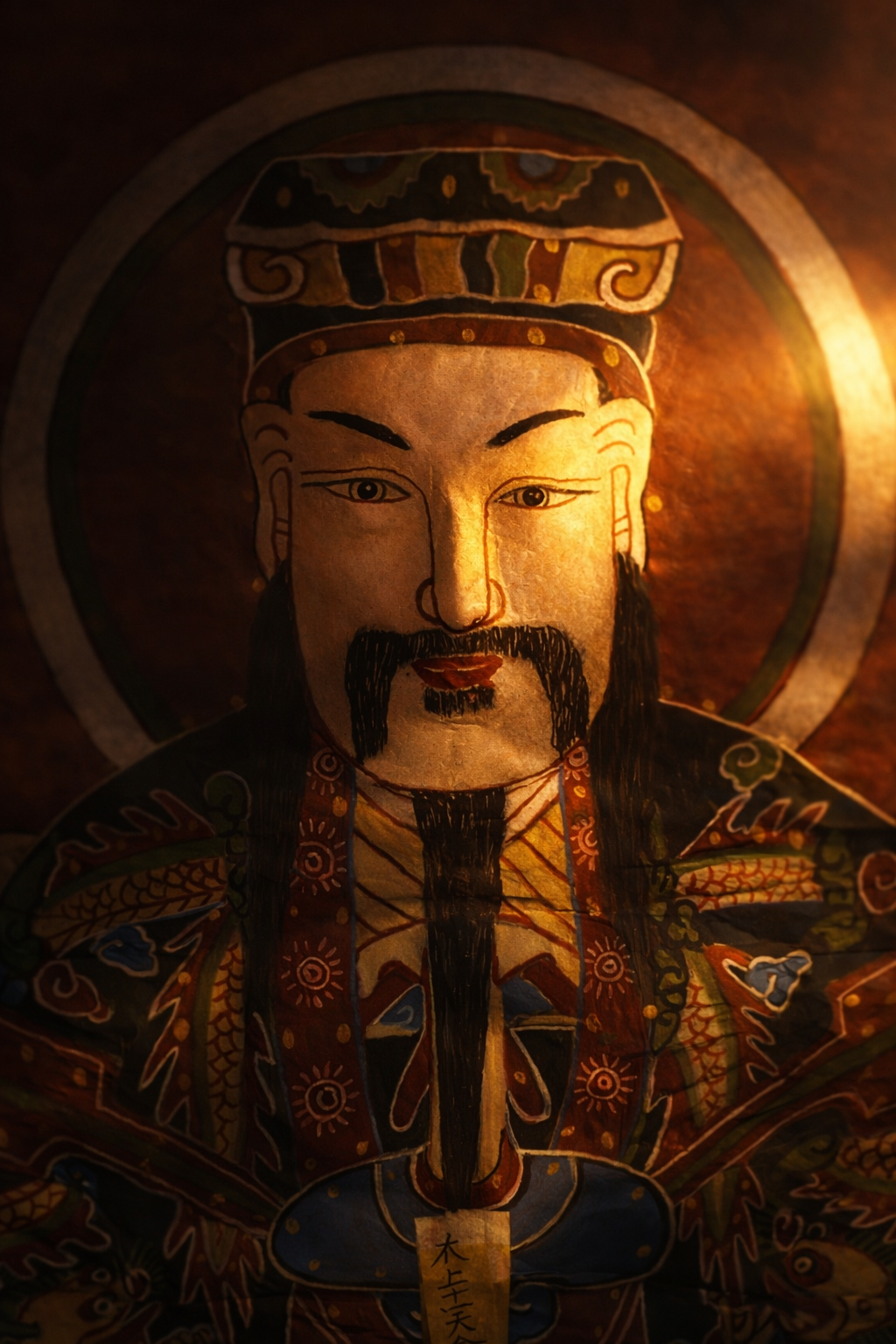
At its core, Cấp Sắc functions as an ordination into the Dao spiritual bureaucracy. Participants are symbolically given a ritual name, assigned a spirit guardian, granted permission to communicate with ancestors and deities, and formally registered within a celestial hierarchy. This registration is believed to be permanent and to hold authority across both the human and spirit worlds.
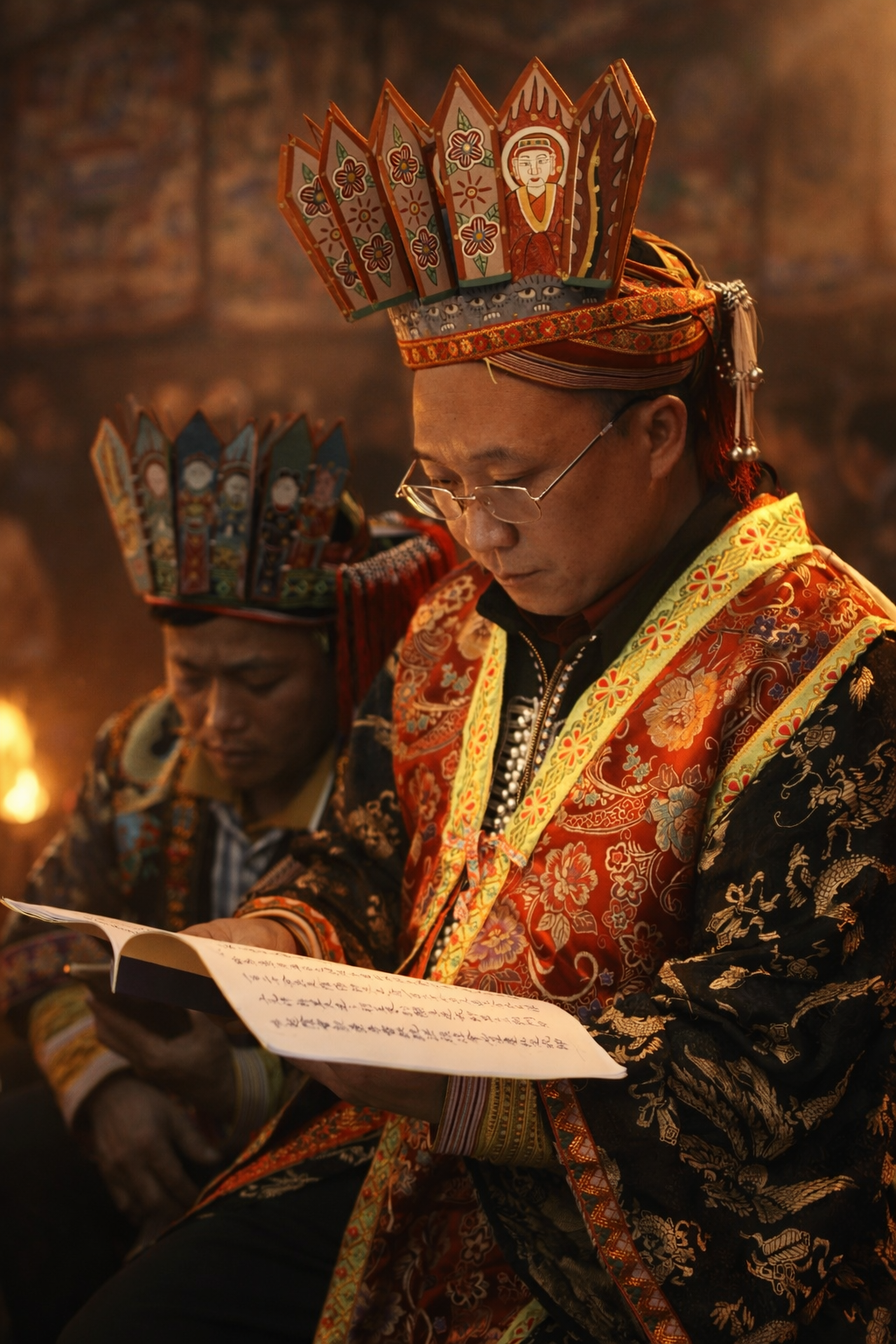
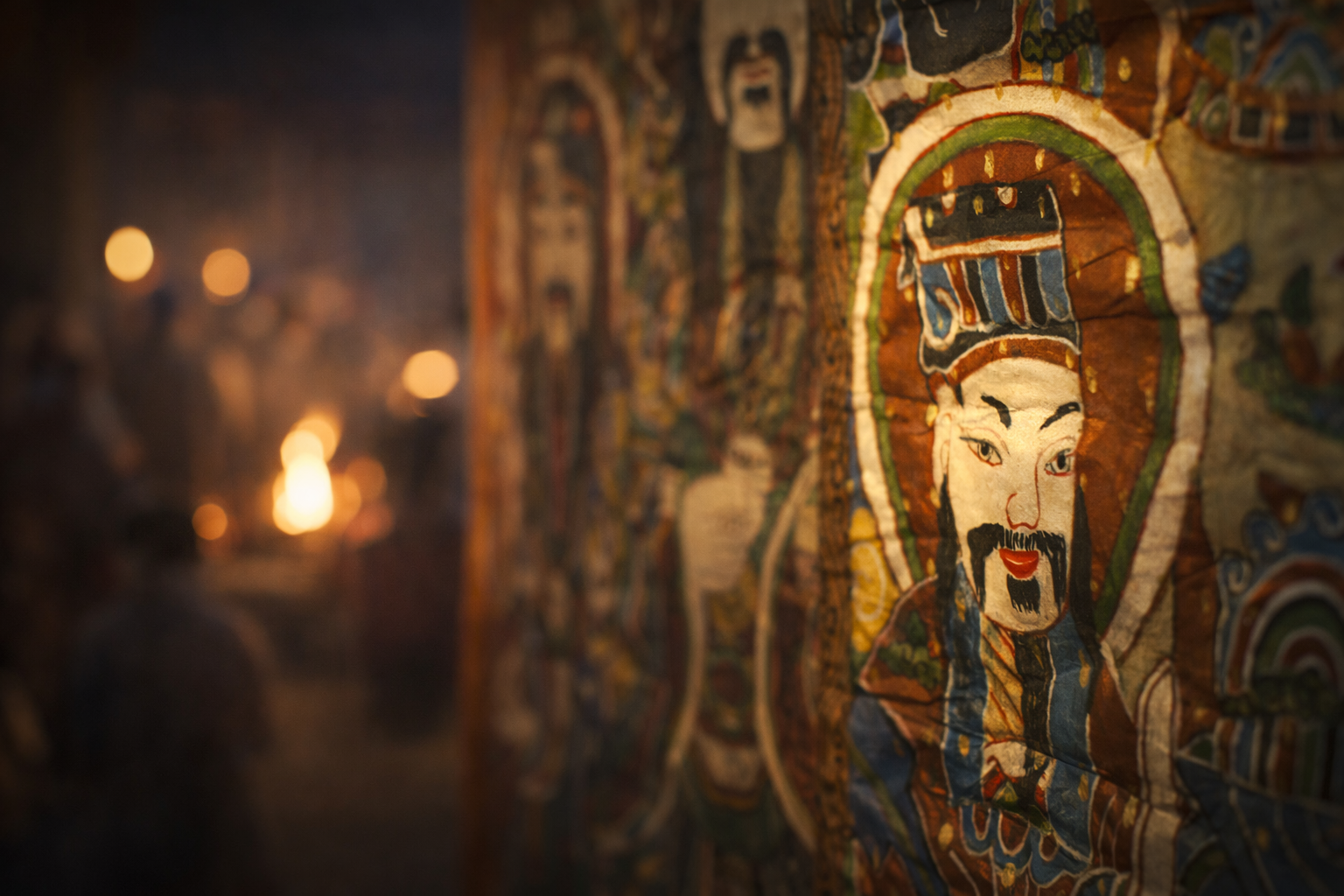
The ritual is overseen by a senior master shaman, supported by several other officiating shamans. They chant from extensive ritual texts that recount cosmic journeys, ancestral genealogies and the administrative procedures of the spirit realm. Instruments such as trumpets, bells and swords are used to mark transitions and to assert ritual authority. At key moments, particularly during spirit registration, oath-taking and the formal recognition of status, all shamans act in unison. These moments are regarded as especially powerful and irreversible.
Cấp Sắc has profound social as well as religious implications. Its completion confirms an individual’s moral responsibility to their ancestors, their eligibility to conduct family rituals, their full authority to marry within Dao norms and their right to be buried according to proper rites. Failure to complete the ceremony is believed to result in spiritual vulnerability during life and uncertainty after death.
While other large communal rituals, such as seven-day ceremonies, are intended to address collective misfortune or imbalance, Cấp Sắc is transformative at the level of the individual. It permanently alters a person’s status in both society and the cosmos. For many Dao participants, all other rituals undertaken during life are understood as preparatory or supplementary to this single defining event.
Position in the Modern World
Today, Cấp Sắc continues to be practised, although its scale is sometimes adjusted in response to economic constraints. Despite these changes, it remains central to Dao identity and is widely regarded by Dao communities themselves as the most consequential ritual commitment a person can make. Among the Red Dao in particular, Cấp Sắc is typically large in scale and highly collective. It often resembles an extended communal ritual but carries a greater sense of symbolic finality. Strong collective chanting in unison, the prominent use of trumpets and percussive instruments, the visual dominance of red ritual textiles and paper, and the construction of temporary ceremonial architecture all reinforce its gravity. For Red Dao participants, the ceremony definitively establishes a person’s standing with ancestors and spirits, and failing to complete it is believed to shape one’s fate after death.