
Riding a motorbike in Vietnam’s northern highlands is a way of getting from A to B, a source of trade, a family vehicle and a lifeline to wonder communities. Riding is an act of attention. The roads demand your ears, your hands, your judgement and, very often, your humility. From the misty slopes around Sapa to the limestone passes of Hà Giang and the folded rice terraces of Mù Cang Chải, one skill matters more than almost any other: engine braking.
For travellers planning to explore these roads themselves, understanding the realities of mountain riding is essential before setting out into Vietnam’s northern highlands. See our range of motorbike journeys in northern Vietnam.
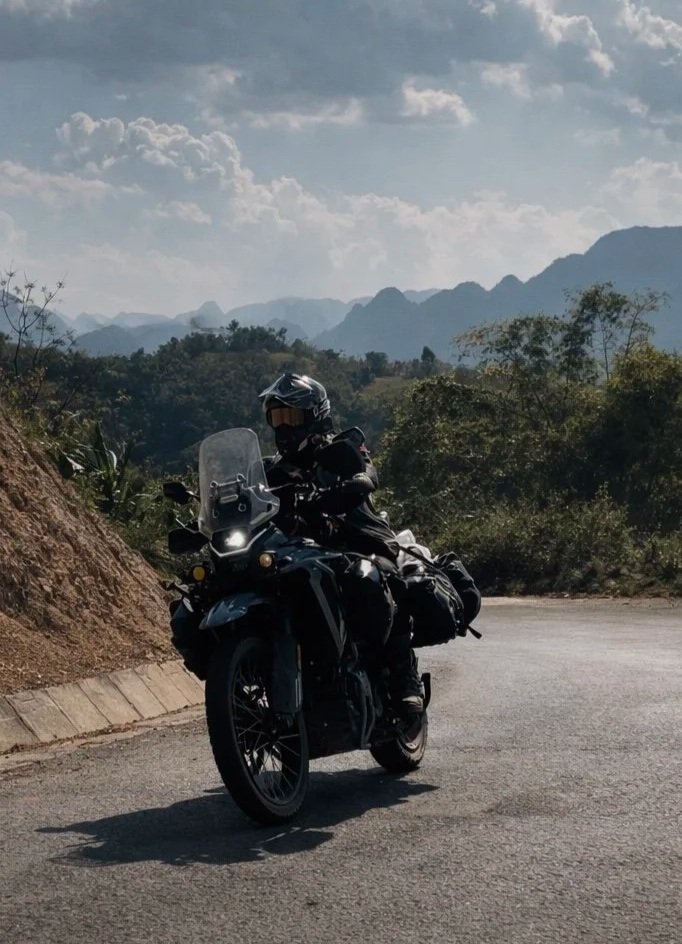
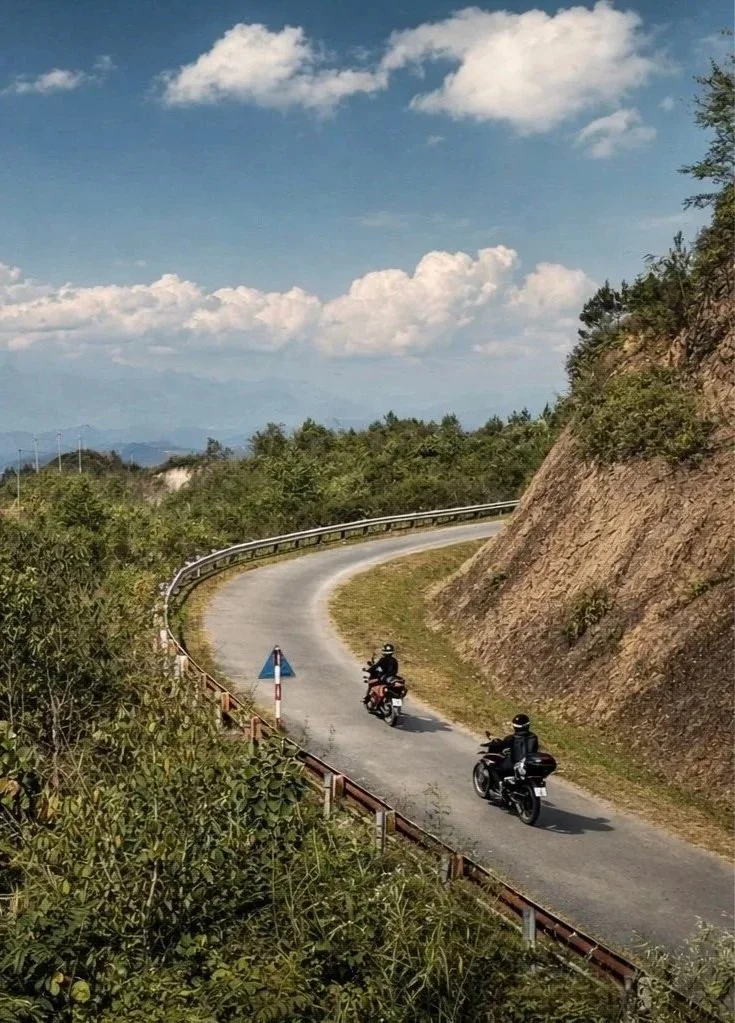
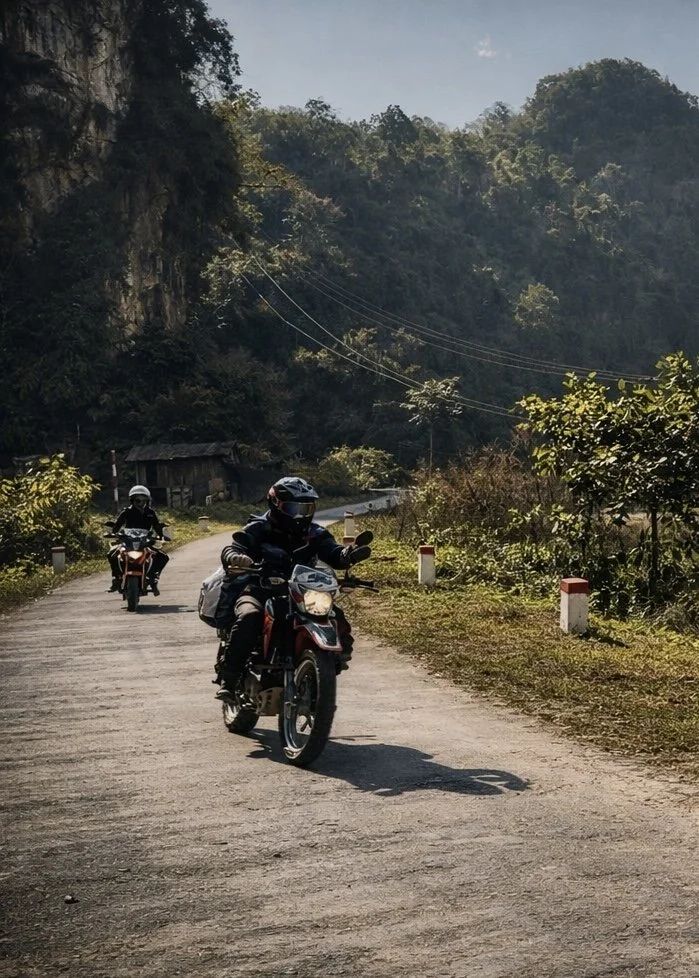
The Reality of Mountain Roads
In the Northwest, gravity is constant. Roads climb for an hour, crest briefly, and then fall away again in long, unbroken descents. Many village tracks are barely wide enough for one vehicle. Corn dries on the roadside. Buffalo wander without warning. On market days, Hmong and Dao families walk the curves with baskets on their backs. These are not roads where anyone can just jump on a motorbike and learn. The roads are not places you can afford to panic. If you want to understand more about the legality of driving legally in Vietnam, we have prepared a comprehensive explainer here.
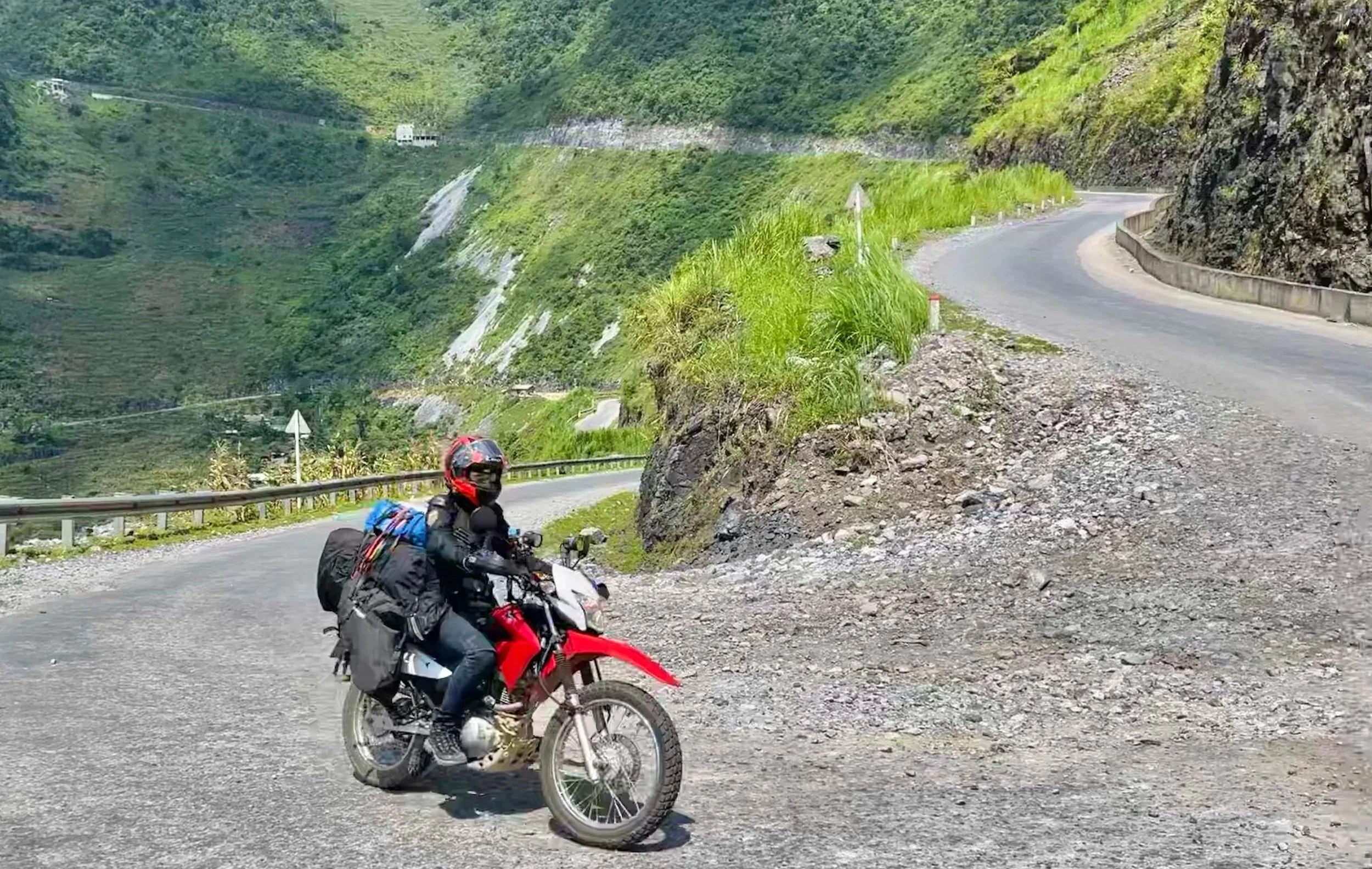
A Lone Rider on the Ha Giang Loop
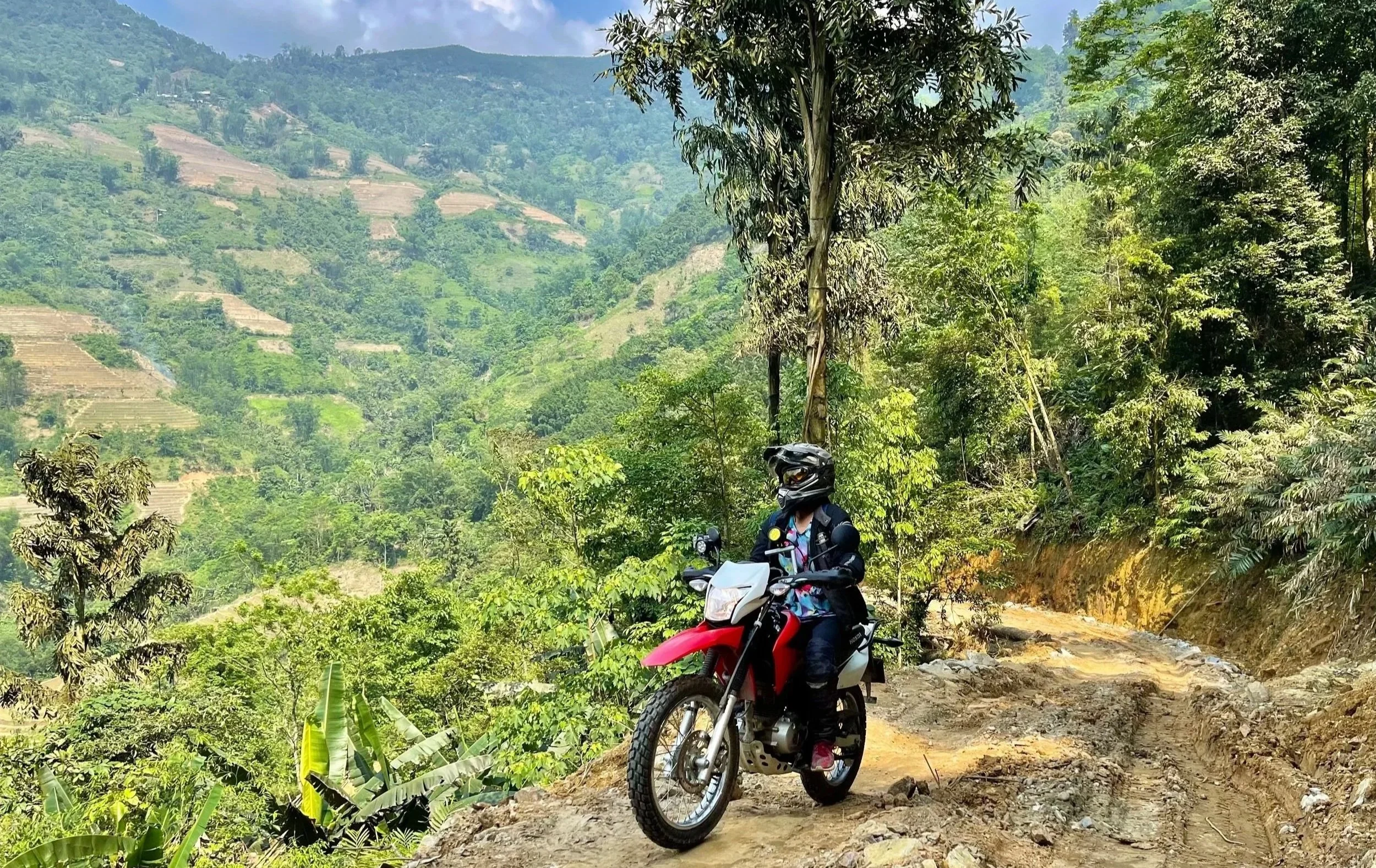
Single track riding in Sapa
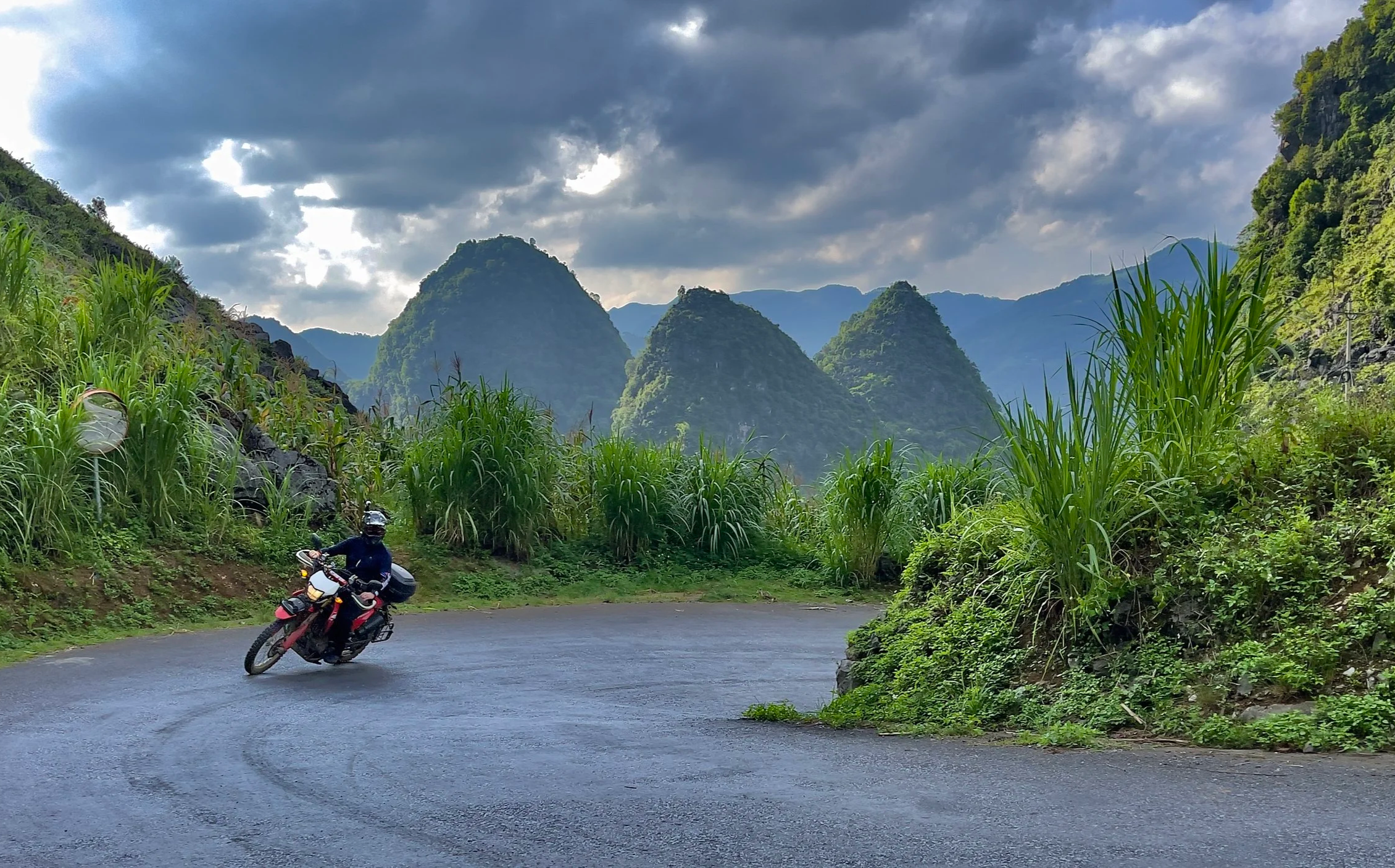
A lone rider on the Ha Giang Loop
Why Brakes Alone Are Not Enough
Most serious accidents on northern mountain passes are not caused by speed or bravado. They happen when riders descend too fast and rely only on their brakes. On a long downhill stretch, squeezing the front and rear brakes continuously causes heat to build up in the pads and discs. After several minutes, braking power fades. The lever still moves, but the bike does not slow. By the time this is noticed, the road may already be tightening into a blind corner.
What Engine Braking Really Means
This is where engine braking matters. When riders shift into a lower gear and release the throttle, the engine itself resists the bike’s movement. Instead of fighting gravity with overheated brakes, the motor holds the speed steady. It is quieter, more controlled, and far safer.
This lesson was learned on a remote descent in the Northwest while leaving a small mountain village after visiting friends. The ride in was gentle. Coming out, the road dropped sharply for several kilometres, concrete giving way to broken asphalt patched with gravel. Halfway down, the brakes softened beneath the fingers. The bike continued to gather speed. Chests tightened. Hands locked.
Instinct took over just in time. A downshift, the throttle released, and the engine bit back. The bike slowed steadily and predictably until the road flattened enough to stop safely. The sound of the engine, the smell of hot metal, and the sudden quiet once standing still remain vivid. Another few seconds of hesitation and the outcome could have been very different.
When Weight Matters More Than Engine Size
One aspect of motorcycle safety that is rarely discussed by Hà Giang tour operators is vehicle loading.
Vietnam’s most common motorcycles are not adventure bikes designed for long-distance touring. They are commuter motorcycles. The Honda Wave Alpha 110cc, for example, is one of the most ubiquitous motorcycles in the country, with millions in daily use transporting workers, farmers, students and families. It has earned its reputation through reliability, simplicity and fuel efficiency, but it was never designed to carry two adults and their luggage across mountain ranges for days at a time.
Honda specifies a maximum load capacity of approximately 150kg, including rider, passenger and all luggage. The slightly more powerful Honda Blade 125cc operates within similar limitations. These figures are not arbitrary recommendations. They represent the engineering limits within which the motorcycle’s suspension, frame, tyres and braking system are designed to operate safely. Yet many operators promoting the Hà Giang Loop give little or no consideration to vehicle loading.
Consider a typical scenario. A local driver weighing 60–70kg carrying a pillion passenger weighing 75kg is already approaching the motorcycle’s maximum rated capacity before luggage is added. A backpack, camera equipment, extra clothing, rain gear and water can easily add another 5–15kg. In many cases, the motorcycle is operating at or beyond the manufacturer’s recommended limits for much of the journey.
The consequences are not theoretical. As weight increases, braking distances become longer. More energy must be dissipated every time the motorcycle slows. Suspension performance deteriorates as springs and dampers operate closer to their limits. Tyres deform more under load, reducing their ability to maintain optimal contact with the road surface. Steering becomes heavier and less responsive. Cornering stability suffers. Emergency manoeuvres become more difficult.
These effects become especially significant in the mountains. A heavily loaded motorcycle descending one of Hà Giang’s long passes carries substantially more momentum than the same motorcycle ridden by a single commuter on a short urban journey. Every corner requires more braking force. Every descent generates more heat in the braking system. Every rough section of road places greater strain on tyres, suspension and frame components.
This brings us back to the importance of engine braking. Engine braking is not simply a riding technique. It is an essential method of managing the forces acting on a motorcycle during long mountain descents. By using the engine to control speed, riders reduce the workload placed on the brakes and help prevent overheating, brake fade and loss of braking performance.
The heavier the motorcycle, the more important this becomes. Mountain roads do not care whether a motorcycle is a 110cc commuter bike or a large touring machine. Gravity acts on both equally. The difference lies in how much weight the machine is carrying and whether it is being operated within the limits for which it was designed.
When discussing motorcycle safety in northern Vietnam, the question should not only be whether a rider knows how to use engine braking. It should also be whether the motorcycle itself is carrying a load that allows its brakes, tyres and suspension to perform as intended.
Mountain Literacy, Not Advanced Skill
In places like Hà Giang’s Ma Pi Leng Pass, or the long valleys between Sapa and Lai Châu, engine braking is not an advanced riding technique. It is basic mountain literacy. On manual bikes, this usually means selecting first or second gear before the descent begins, not halfway down. On semi-automatic or clutch bikes, it means trusting the resistance of the engine and using the brakes sparingly, as support rather than control. If burning smells appear or brakes begin to fade, the correct response is to stop and wait. The mountains are patient; riders must be too.
Travellers who are confident on a motorcycle will find some of Vietnam’s most rewarding roads here. For those without a licence or experience riding steep mountain terrain, travelling pillion with a local rider is often the best way to experience the landscape safely. Find out more here.
Learning From Local Riders
At ETHOS, when riding with local partners, these habits are second nature. Farmers who travel these roads daily know exactly where to slow, where to coast, and where to let the engine do the work. They ride with produce tied to the back, children balanced in front, and an unspoken understanding of the terrain. Learning from them is part of travelling well here. Whether riding independently or travelling pillion, slowing down and observing how local people move through these mountains often reveals more than any map ever could.
Riding through the highlands of northern Vietnam offers extraordinary rewards: cold air on the face at dawn, woodsmoke drifting from hillside homes, terraces glowing green after the rains. But these landscapes ask something in return. Respect the road. Ride slowly. And engrave engine braking into muscle memory.
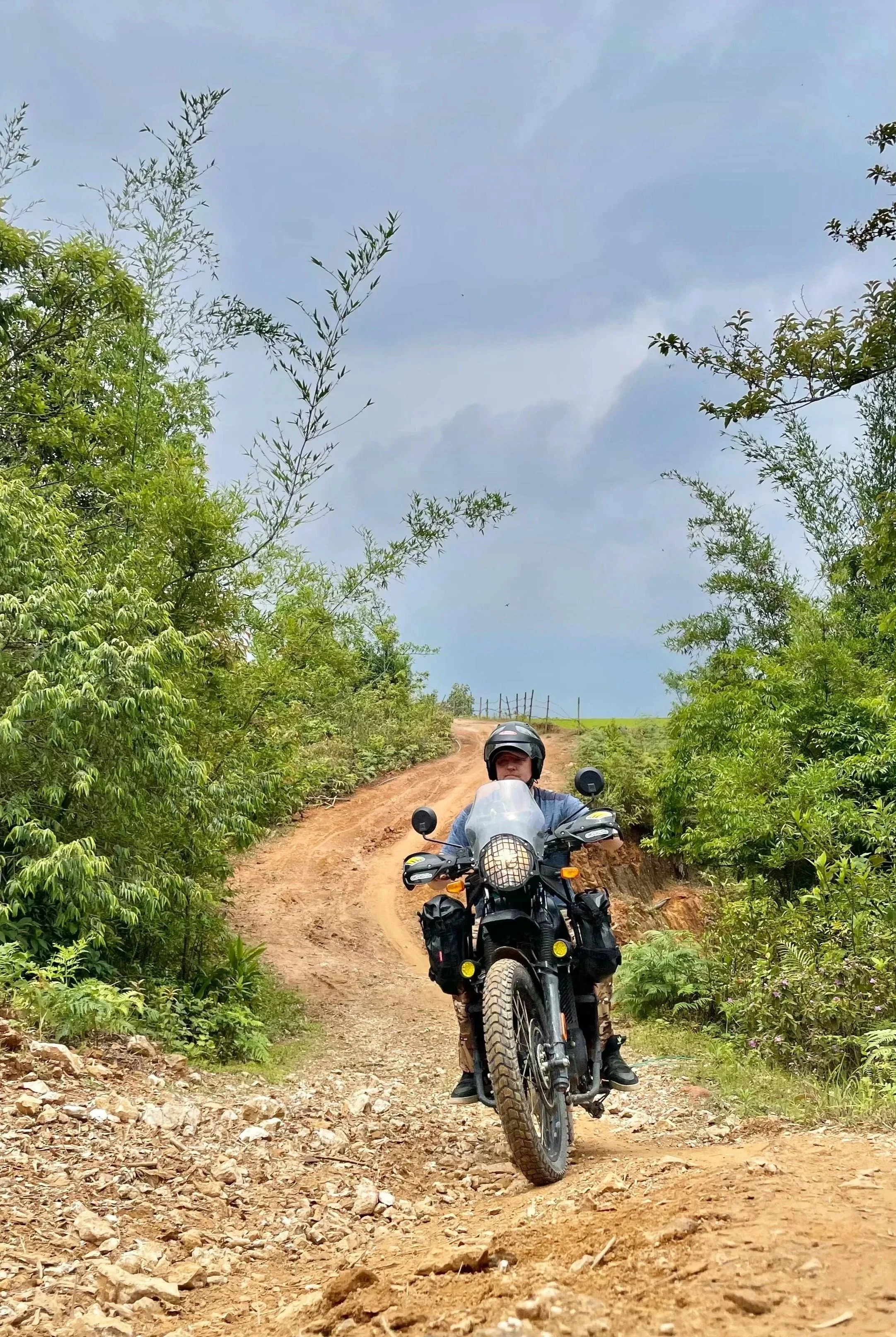
Gravel back roads in Vietnam’s North West region
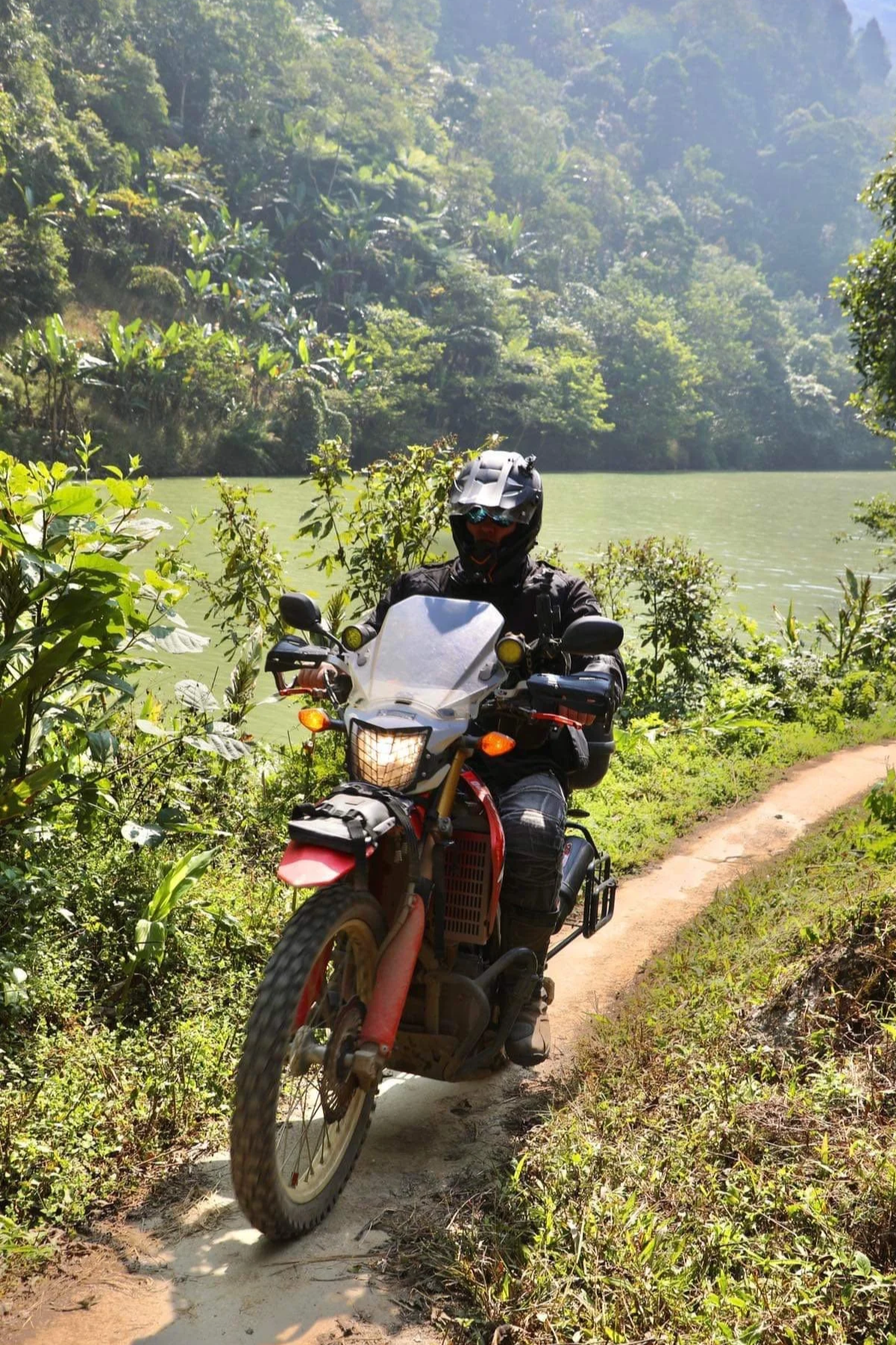
Single Track riding in Sapa
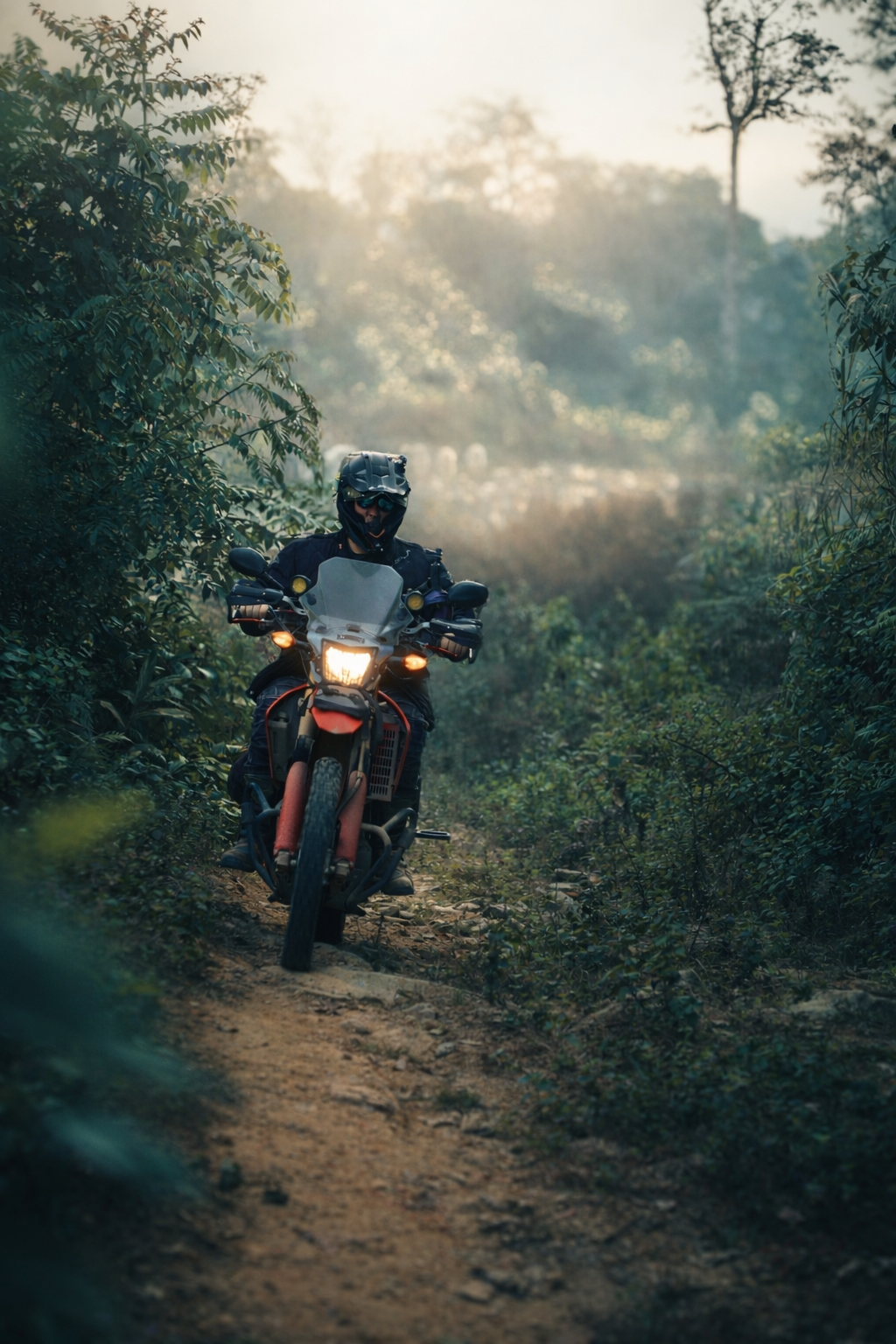
Single Track Riding in Sapa
When the Wrong Motorcycle Becomes a Safety Risk
One of the more troubling developments in northern Vietnam tourism is the promotion of 50cc scooters as a suitable way for inexperienced travellers to complete demanding mountain routes such as the Hà Giang Loop.
The marketing is often straightforward: if a traveller does not possess the licence required for a larger motorcycle, a 50cc scooter is presented as a convenient workaround. What is discussed far less frequently is whether these machines were ever designed for this type of journey in the first place. They were not.
The modern 50cc scooter was developed primarily as an urban commuter vehicle. Its purpose is simple: transport a single rider efficiently across relatively short distances on paved roads at modest speeds. The priorities are affordability, fuel economy, low maintenance and ease of use in traffic. Everything about the machine reflects that design brief.
The engine is small and produces limited torque. The frame is lightweight. The suspension is basic. The wheels are often smaller than those found on full-sized motorcycles. Tyres are narrow. Braking systems are designed for short, intermittent stops in urban environments rather than repeated heavy use on mountain descents. Most are intended to carry a single rider and a small amount of cargo, not a heavily equipped traveller spending days crossing mountain ranges.
The Hà Giang Loop places demands on a motorcycle that are fundamentally different. Over the course of several days, riders face sustained climbs, steep descents, broken road surfaces, gravel, mud, potholes, construction zones, unpredictable weather and sharp mountain bends. Machines spend hours under load rather than minutes. Brakes are repeatedly called upon to control speed on long downhill sections. Suspension is constantly absorbing impacts from rough surfaces. Tyres are expected to maintain grip on wet roads, loose gravel and uneven pavement.
This is not the environment for which a typical 50cc commuter scooter was engineered. The braking issue alone deserves serious consideration. On mountain roads, brakes convert enormous amounts of energy into heat. During prolonged descents that heat builds continuously. Small commuter scooters generally have less robust braking systems than larger motorcycles designed for touring or mountain riding. As brake temperatures increase, performance can deteriorate. Riders may find they need greater lever pressure to achieve the same level of braking force, while stopping distances increase. This is exactly why experienced mountain riders rely heavily on engine braking to reduce the load placed on the brakes.
Tyres present another concern. Narrow commuter tyres provide a smaller contact patch with the road surface. While perfectly adequate for everyday town riding, they offer less margin for error when confronted with gravel, mud, standing water or damaged mountain roads. Combined with small wheels, they can also be more easily unsettled by potholes, washouts and rough surfaces.
Engine performance is often misunderstood. The issue is not speed. The roads of Hà Giang rarely reward speed. The issue is carrying capacity and reserve power. Small engines working near their operational limits for extended periods have little performance in reserve when faced with steep gradients, luggage, changing road conditions or emergency situations.
Most importantly, the use of a smaller motorcycle does not reduce the complexity of the road itself. The blind corners remain blind. The steep descents remain steep. The trucks still occupy the centre line. The gravel remains loose. The weather remains unpredictable.
A 50cc scooter may satisfy a regulatory requirement, but it does not change the realities of mountain riding. Can these machines complete the Hà Giang Loop? Certainly. Many do.
The more important question is whether inexperienced travellers should be encouraged to undertake one of Southeast Asia’s most demanding road journeys on vehicles designed primarily for short-distance urban commuting. In our view, the answer is no.
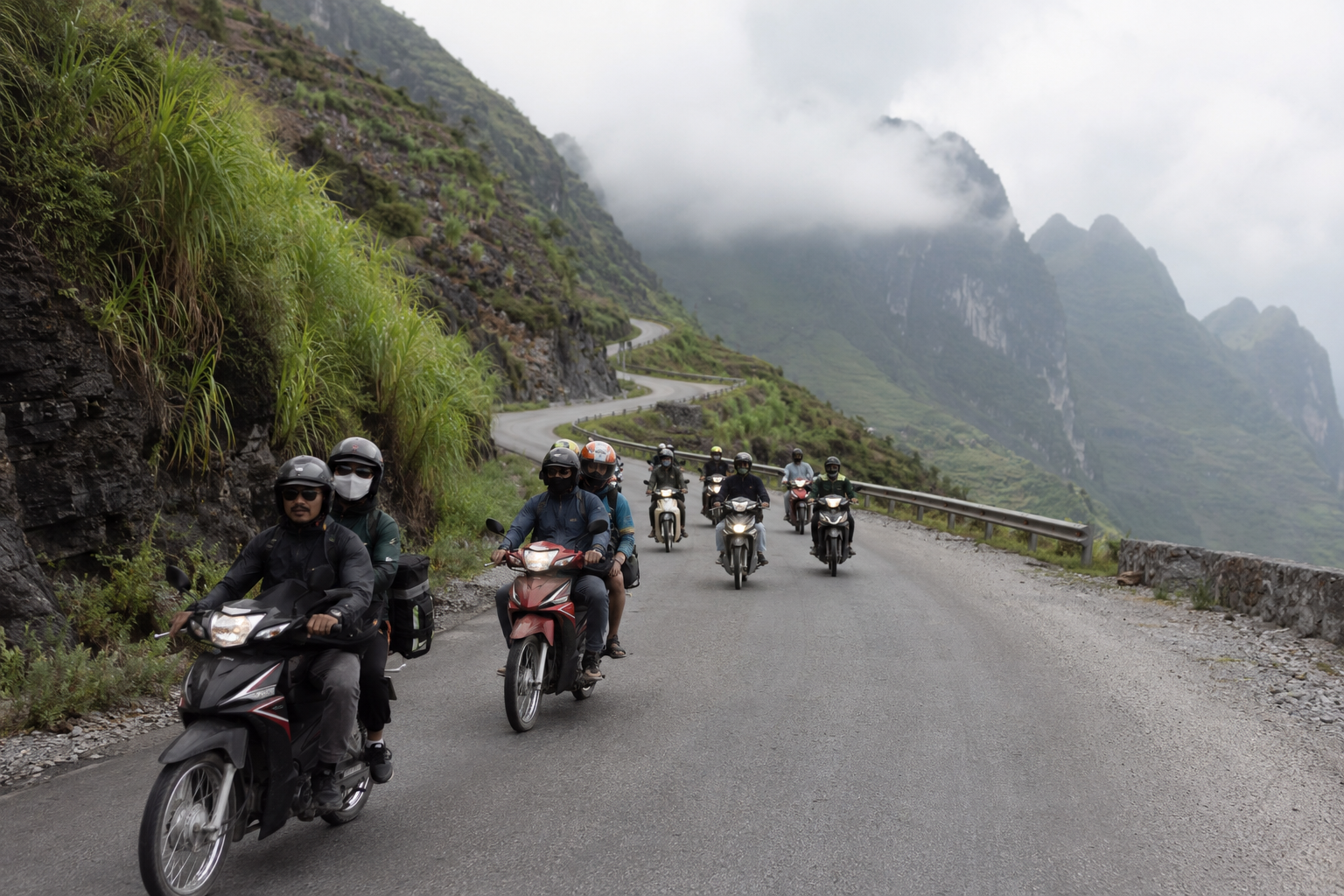
Easy Riders group on Honda Wave 110cc scooters doing the Ha Giang Loop.
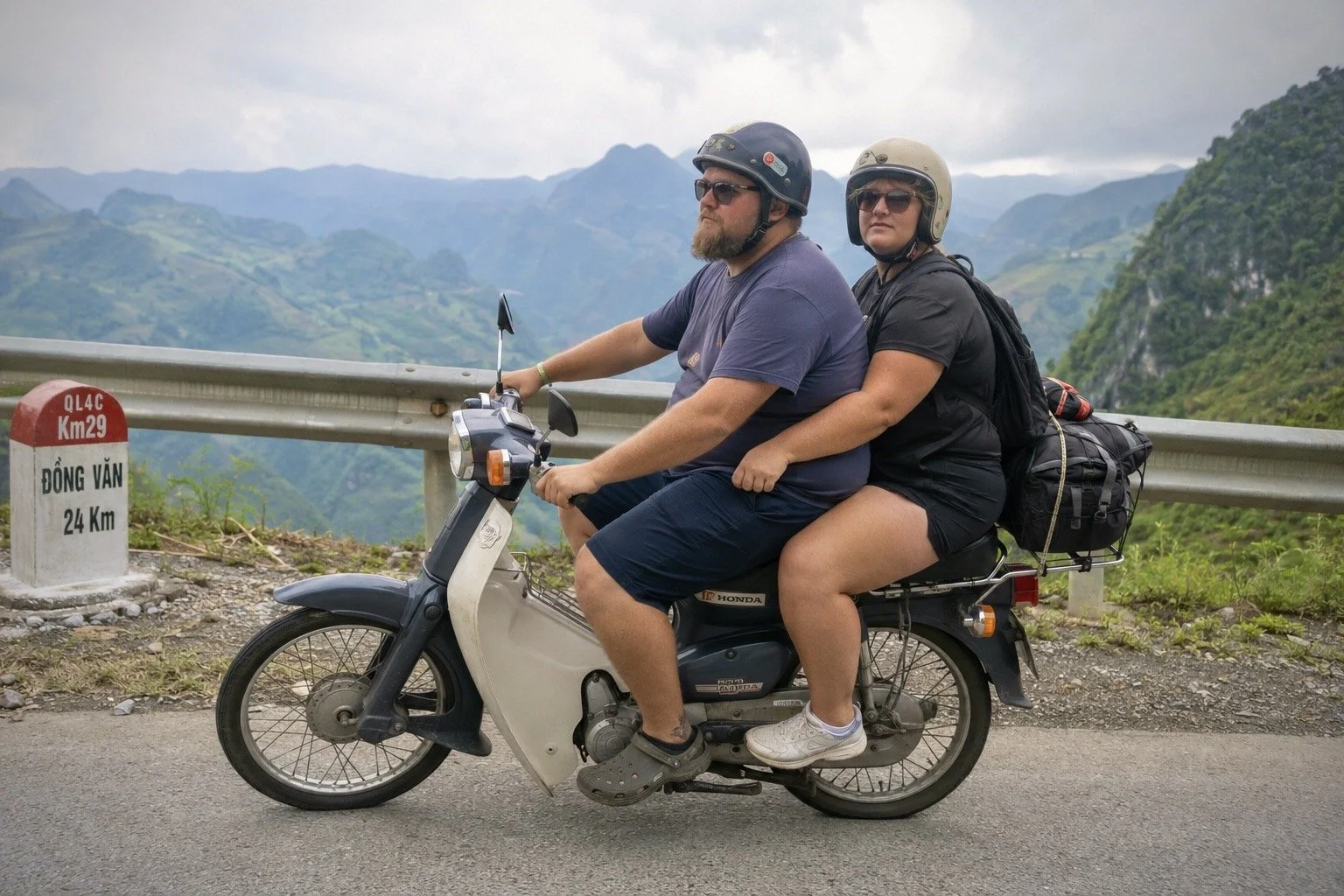
Riders attempting the Ha Giang Loop on an undepowered Honda Cub 50cc
Planning a Motorbike Journey in Northern Vietnam?
If this article has convinced you that mountain roads deserve respect, you’re already approaching the experience the right way. ETHOS offers self-drive motorbike adventures for experienced riders, alongside pillion options for travellers who want to experience the highlands without riding themselves.
Learn more about our motorbike experiences in northern Vietnam
