
Sapa and the Performance of Travel: Are We Still Exploring, or Just Reproducing the Same Photograph?
The Rise of the Check In Destination and FOMO
High above the valleys of Sapa. northern Vietnam, Moana has become one of the region’s most visited attractions. Hundreds arrive each day, not drawn im by history or culture, but by carefully constructed objects designed for photographs. A giant fibreglass head. An imitation Bali gate. Sculpted hands lifting visitors above the landscape. Each structure exists for a single purpose. To frame the individual.
But there is another force at work here. The quiet pressure of FOMO (fear of missing out). When travellers see the same images repeatedly, shared across social media and guide platforms, the experience begins to feel less like a choice and more like an obligation. Everyone else has stood there. Everyone else has taken that photograph. To visit Sapa and not recreate it can feel, to some, like an omission. The modern traveller is no longer guided purely by curiosity, but by visibility and resence becomes something to prove.
Visitors queue patiently, sometimes for an hour or more, waiting to stand in exactly the same spot as the person before them. They take the same photograph and in many instances recreate the same contrived pose. They leave with the same image but without any lasting memories. The mountains behind them, ancient and indifferent, become nothing more than scenery for a performance.
What are they truly capturing? The epic Sapa culture and scenery or themselves in high definition, blocking the view of the landscape that once drew people to the region.
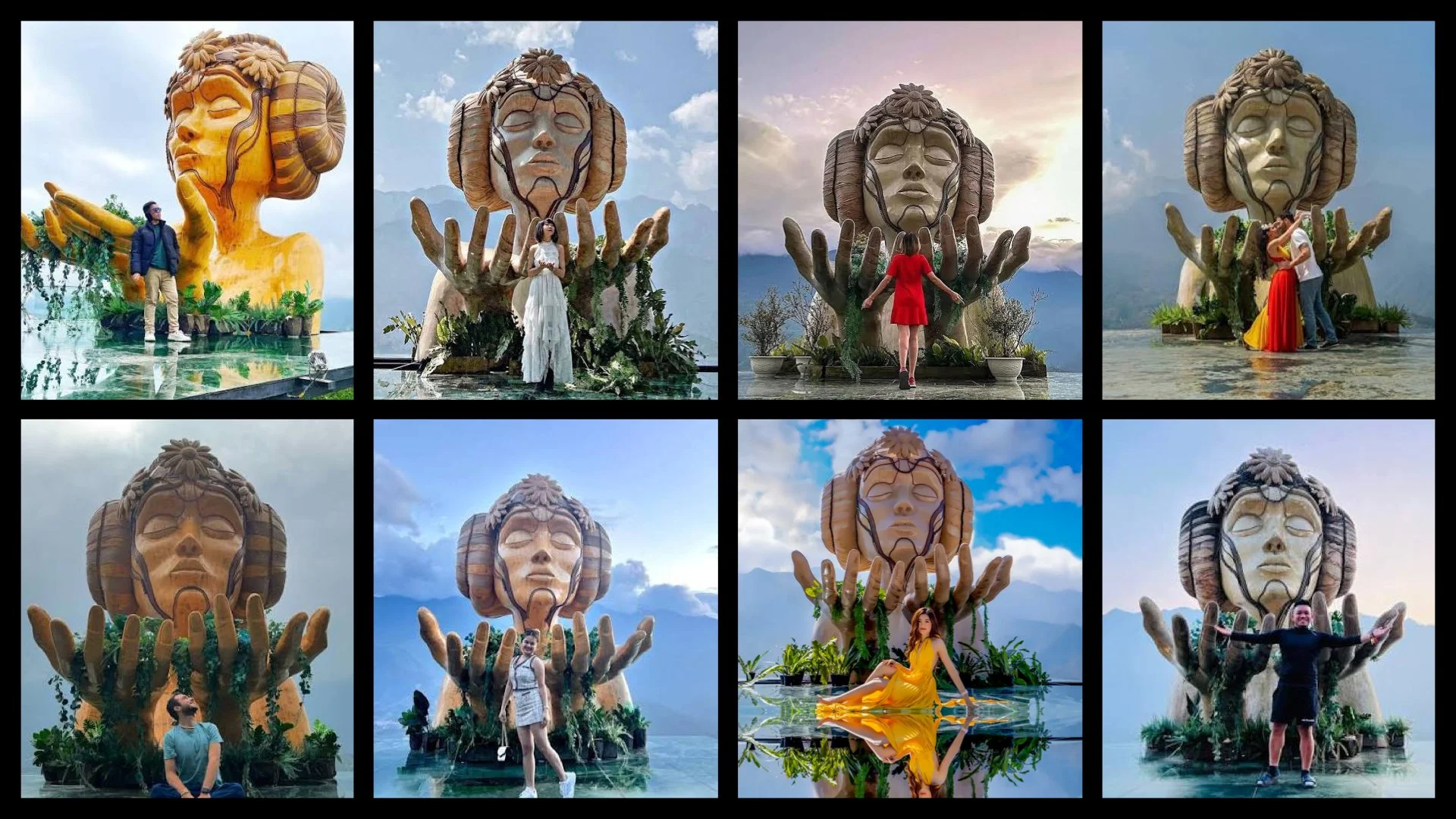
Moana. The most photographed head in Sapa
When Travel Becomes Performance
There was a time when travel meant stepping into the unknown. Visitors arrived in Sapa without expectation, without a predetermined outcome, and without a photograph in mind already waiting to be taken. Discovery belonged to those willing to move beyond what was visible, to follow instinct rather than instruction. Today, many travellers arrive already knowing exactly what they intend to capture. One of the questions we are most frequently asked is, “Where exactly did you take this photo, can you send me a pin?” It is an innocent question, but also a revealing one. We never share pins, not because we wish to withhold, but because the act of searching is part of the experience itself. When every place is reduced to coordinates, discovery is replaced by replication. We want travellers to explore, to observe, and to find their own moments rather than inherit someone else’s. When the destination becomes a set of instructions, something essential is lost. The journey becomes less about discovery, and more about confirmation.
Moana Sapa is not alone in this transformation. Across the region, destinations are no longer experienced. They are staged with platforms built, photo opportunities curated amd frames installed. Entire spaces are constructed to guide visitors toward a predetermined outcome. The photograph becomes the objective and the experience becomes secondary.
It sometimes feels like we have stopped travelling to see the world, and started travelling to show ourselves within it.
Cat Cat Village and the Wearing of Culture
In nearby Cat Cat village, another ritual unfolds. Visitors rent traditional ethnic clothing, garments that once reflected identity, ancestry, and belonging. They wear them briefly, walking through Cat Cat, pausing for carefully composed images. Then they return them and leave. Is this appreciation or appropriation?
Some will argue it is harmless. That it celebrates culture and supports local economies. Others will ask what remains when tradition becomes costume. When meaning is detached from context and identity becomes aesthetic. What happens when a culture is reduced to something you can wear for an hour and upload the same afternoon?
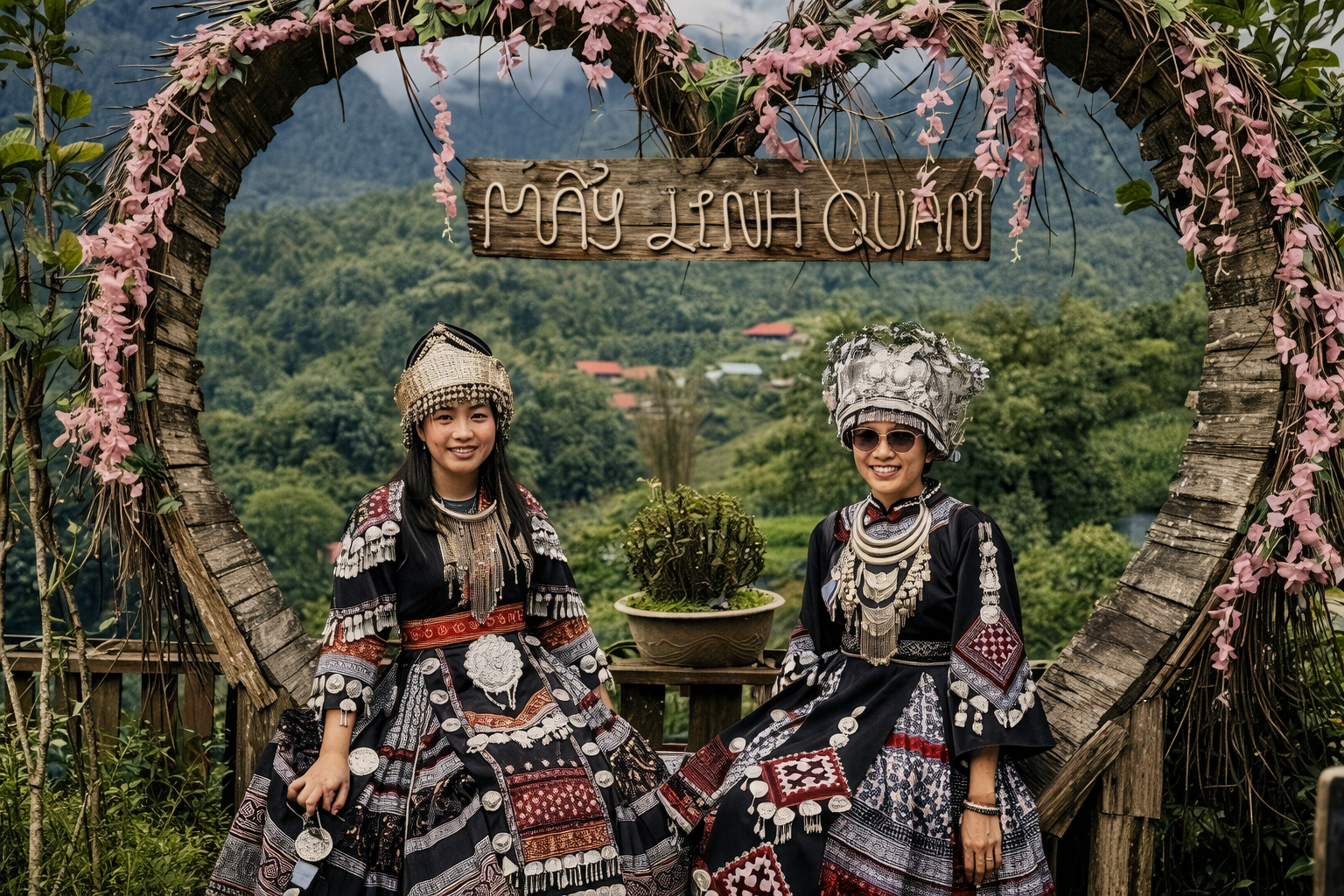
Travellers taking curated photos in factory made, replica Hmong style clothing, rented for selfies.
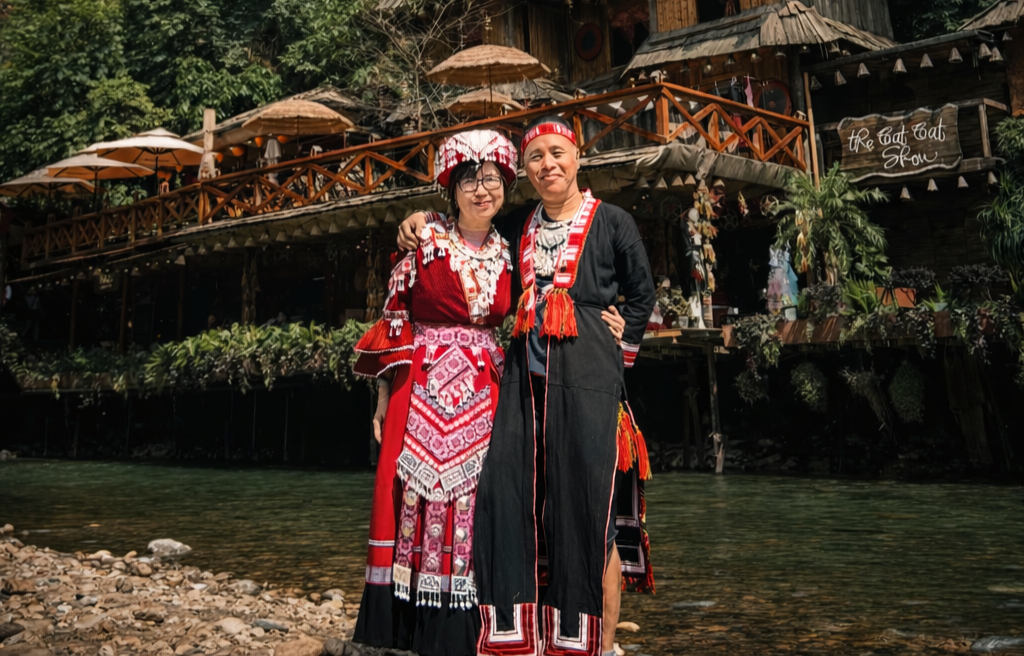
Travellers taking curated photos in factory made, replica Hmong style clothing, rented for selfies.
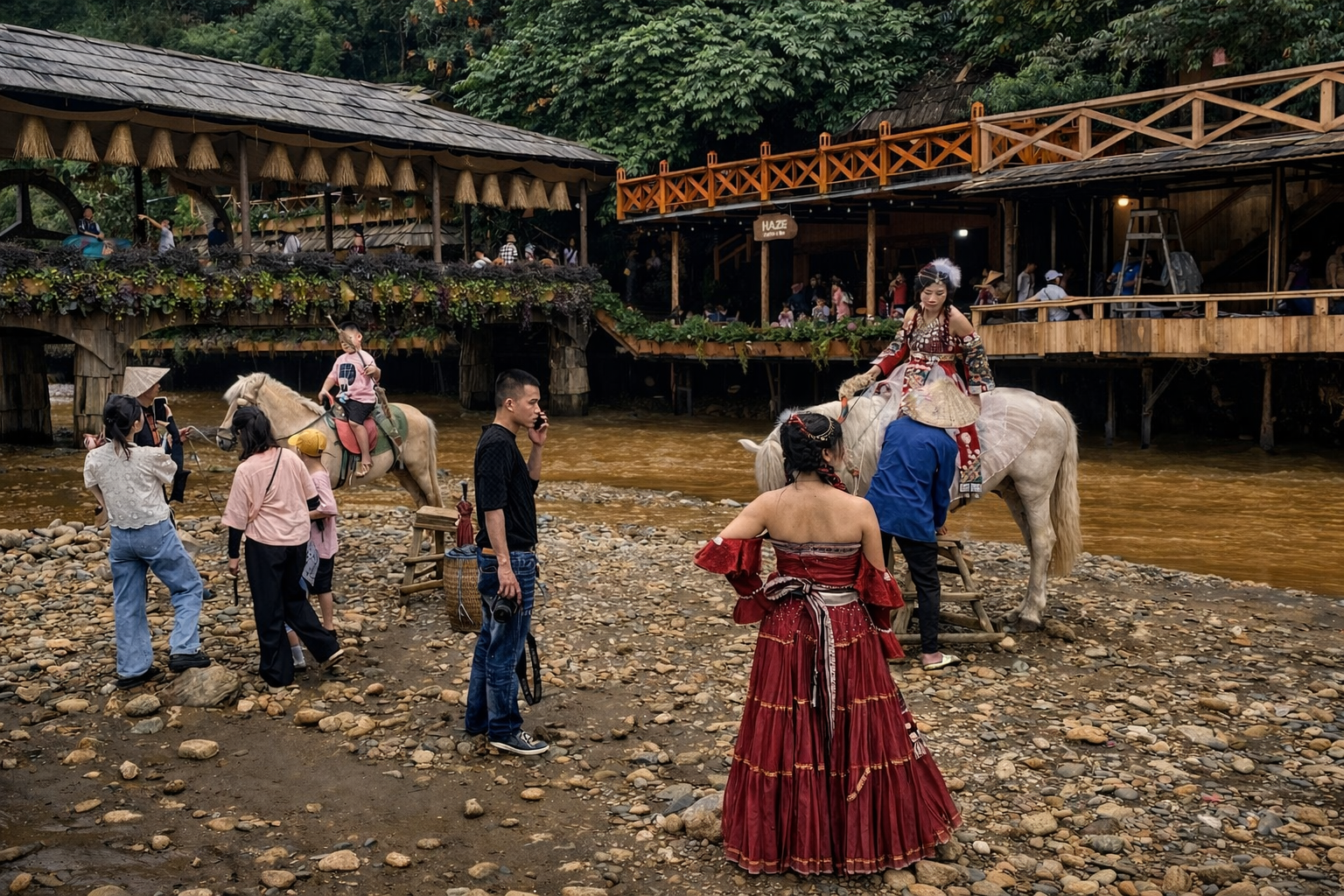
Travellers posing on a horse while wearing in factory made, replica Hmong style clothing, rented for selfies.
The New Symbols of Visibility
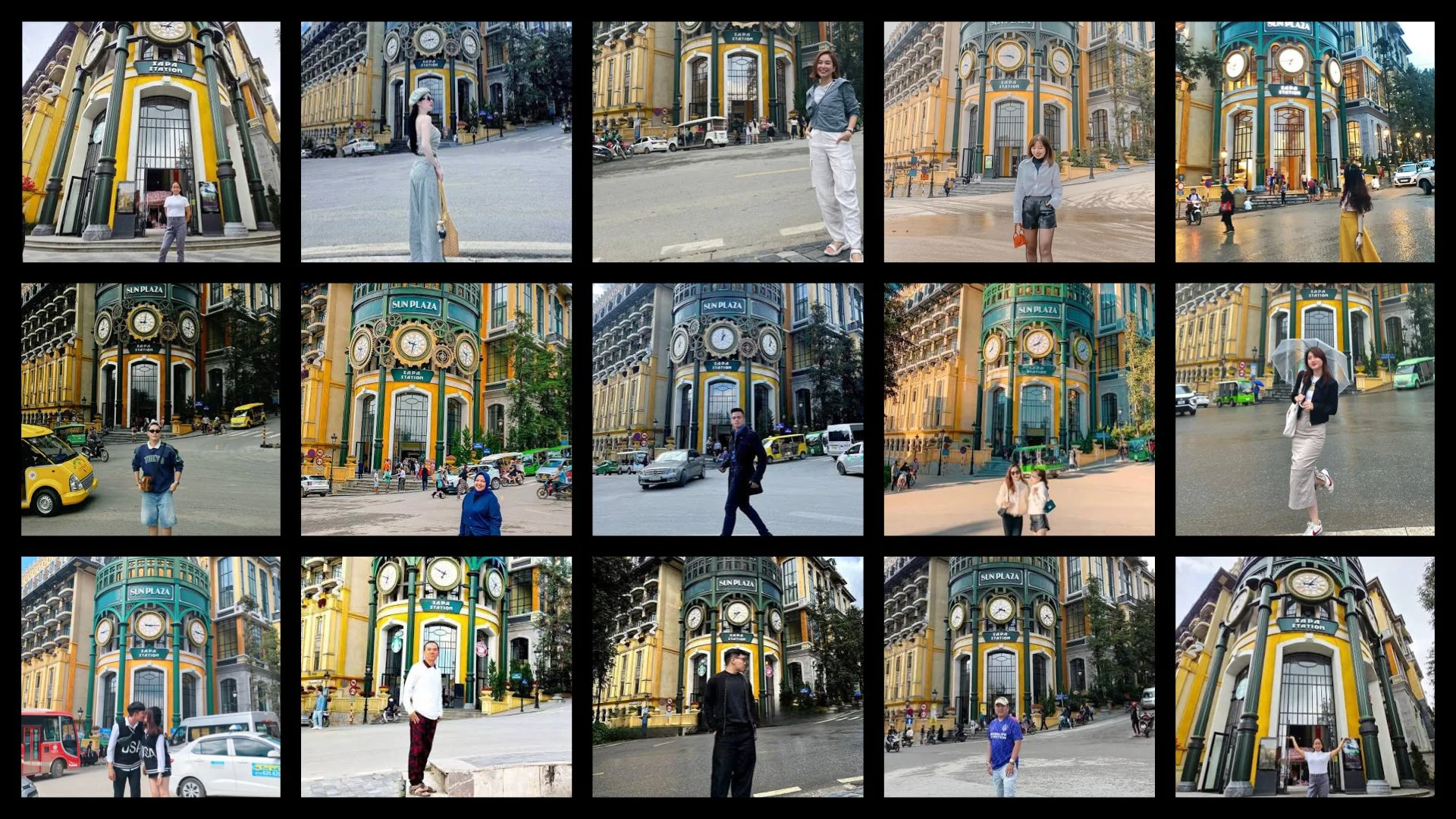
Even Sapa Station’s newly built clock tower has become a magnet for cameras. Visitors gather beneath it, photographing its clean lines and fresh construction. Yet the tower holds no ancient story. It has not stood through generations. Its significance exists primarily through visibility. People go because it is known. Because it appears in feeds. Because others have stood there before them. Is it truly beautiful or simply familiar? How much of what we photograph is chosen by us and how much is chosen for us?
Meanwhile, the Real Sapa Waits
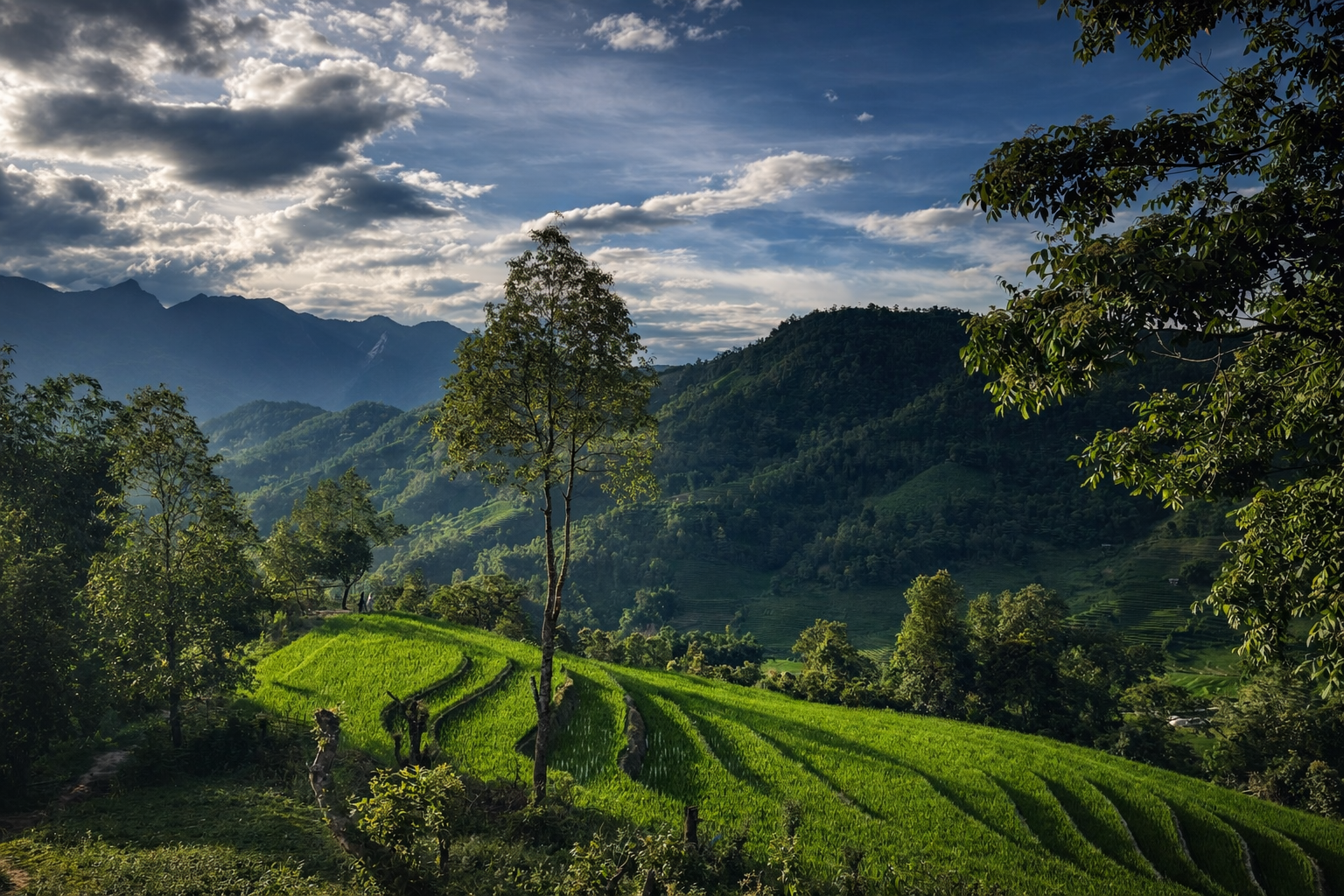
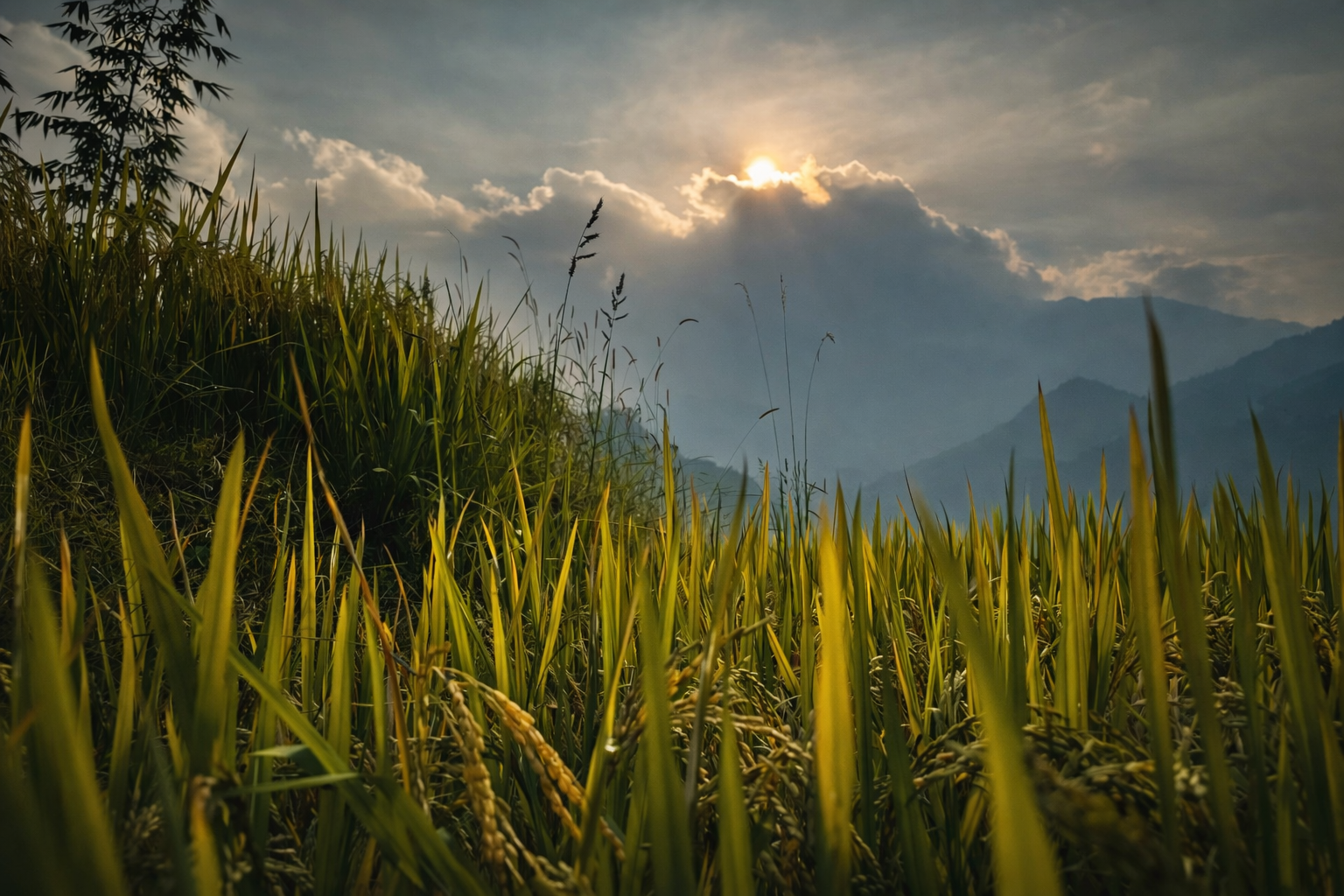
Beyond these curated spaces, the true landscape of Sapa stretches endlessly. Rice terraces carved patiently into the mountains over centuries. Valleys that shift with mist and light. Narrow roads that disappear into silence. Here, there are no queues, no entrance fees, no instructions. You might choose to wander the valleys under the guidance of a local expert or ypu can explore at your own leisure. You can wander on foot or explore on a bicycle or motorbike and yet far fewer people go.
The irony is striking. Many visitors leave Sapa complaining that it has become too touristy. Too crowded and too artificial. Yet these people have spent their time inside the very spaces designed to concentrate crowds. The beauty they seek still exists but simply requires a little more effort to get there. It requires leaving the familiar.

The Commercialisation of Experience
“Check In” mass tourism sites do not exist by accident. They are products of precise marketing and modern psychology. They offer certainty, predictability and validation. They promise something guaranteed; a photograph that will be recognised, approved and understood while exploration offers no such guarantees.
So which do we choose? The uncertainty of discovery or the safety of repetition.
What worries is us now is how much more of the natural world will be reshaped to meet this demand? How many more viewing platforms will be built? How many replicas of iconic global buildings are yet to be installed? How many landscapes altered, not for preservation, but for presentation. At what point does the pursuit of the perfect photograph begin to destroy the very beauty it seeks to capture.
Choosing to See Differently
Sapa remains vast and its beauty beyond mass tourism remains firmly intact. We can be clear in explaining that most of this beauty does not reveal itself to those who follow only the most visible paths. To find it, you must move. Walk beyond the villages you recognise by name. Ride into valleys that do not appear on curated lists. Stand where there are no markers telling you where to look.
The real reward of travel has never been proof or validation. It has never been the photograph itself by the experience of discovery.
The question is no longer what Sapa has become but instead what kind of traveller you choose to be.

Đông Vui, Expectation, and the Cultural Divide in Experience
To understand Cat Cat village, and many places like it, you must first understand the deeply rooted Vietnamese cultural concept of Đông vui. Literally translated, it reflects the enjoyment of crowds, noise, and shared energy. A place filled with people is not seen as spoiled, but alive. Activity signals success and noise signals excitement. A crowded destination feels important because it is collectively experienced.
Collectivism in Vietnam is a core cultural value shaped by centuries of Confucian philosophy, village-based agriculture, and socialist political ideology, emphasising the importance of family, community, and social harmony over individual interests. People are taught to prioritise group goals, respect hierarchy, and maintain strong loyalty to family and nation, which is reflected in close multi-generational households, consensus-based decision-making, and a strong sense of mutual obligation. For many Vietnamese travellers traffic jams, loud music, long queues and a vibrant atmosphere are not flaws but a core part of the attraction itself. Dressing in traditional ethnic minority clothing is seen as celebration, not imitation. Photographing oneself in these settings is an expression of participation. The occasion matters as much as the place.
This cultural lens shapes recommendations they may make. When you ask a hotel receptionist, a tour operator, or a tourism office what you should see in Sapa, they will often direct you toward places like Cat Cat village and Moana. This not because they are misleading you, but because they genuinely believe you will enjoy them. Their assumption is simple. We enjoy the crowds and noise and so will you. It is worth remebering that expectation shapes experience.
Reviews of Cat Cat differ dramatically depending on who is visiting. Many Vietnamese travellers describe it positively. They embrace the atmosphere, the accessibility, and the sense of shared occasion. International travellers, however, often arrive seeking something else; peace and quiet, authenticity and often a connection with landscape and culture. What they encounter instead can feel artificial, commercialised, and carefully staged. The same location produces entirely different emotional responses.
Copycat Tourism and the Illusion of Uniqueness
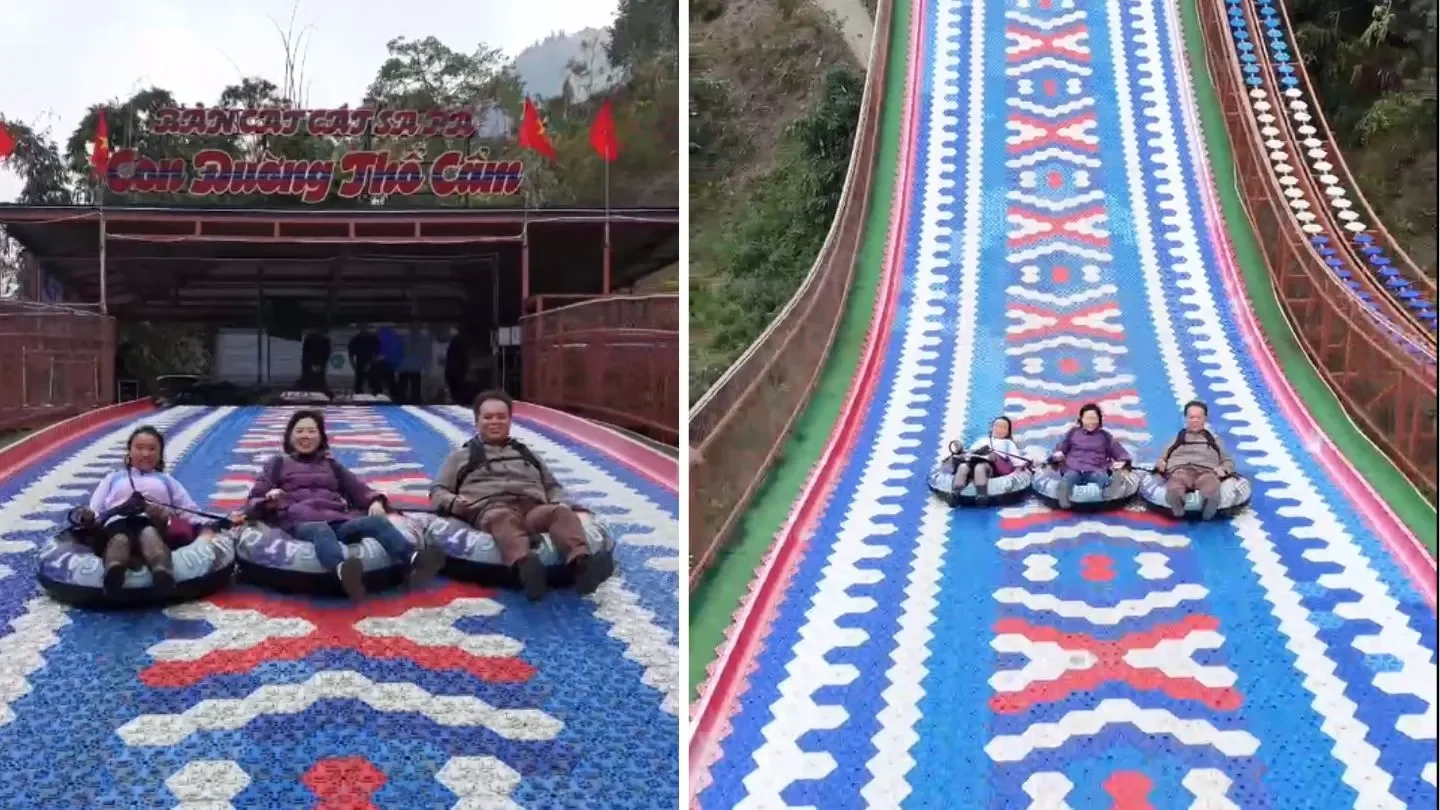
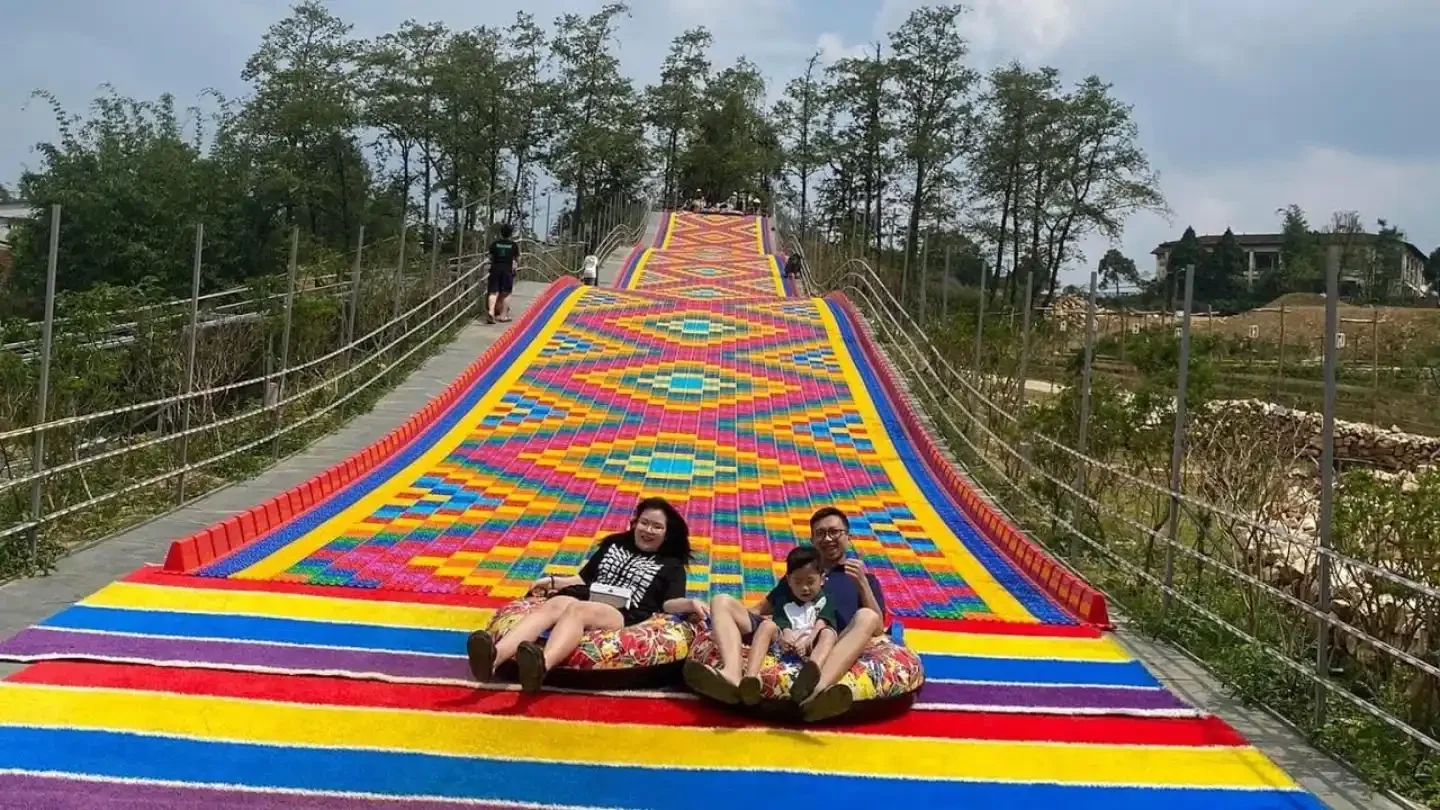
The rainbow slide in Cat Cat village is a perfect example. It is colourful and entertaining. It photographs well too but it is far from being unique. Two other, almost identical slides exist elsewhere in Sapa. Others exist in Hanoi and Da Lat. Their are others across Asia, in Europe and throughout the world. Visiting a rainbow slide is therefore not discovery travel but just repetition and duplication. How many places are we visiting not because they are meaningful, but because they are recognisable? How many attractions are designed not to deepen experience, but to reproduce familiarity? When every destination begins to offer the same photograph, does the location itself still matter?
Cat Cat village, in many ways, has become to epitomise this with its carefully managed environment and structured paths. Viewpoints are designated and cultural elements are curated for visibility rather than lived experience. It functions efficiently and moves visitors through a sequence of moments designed to satisfy expectation. Most people leave knowing that authenticity rarely follows a prescribed route.
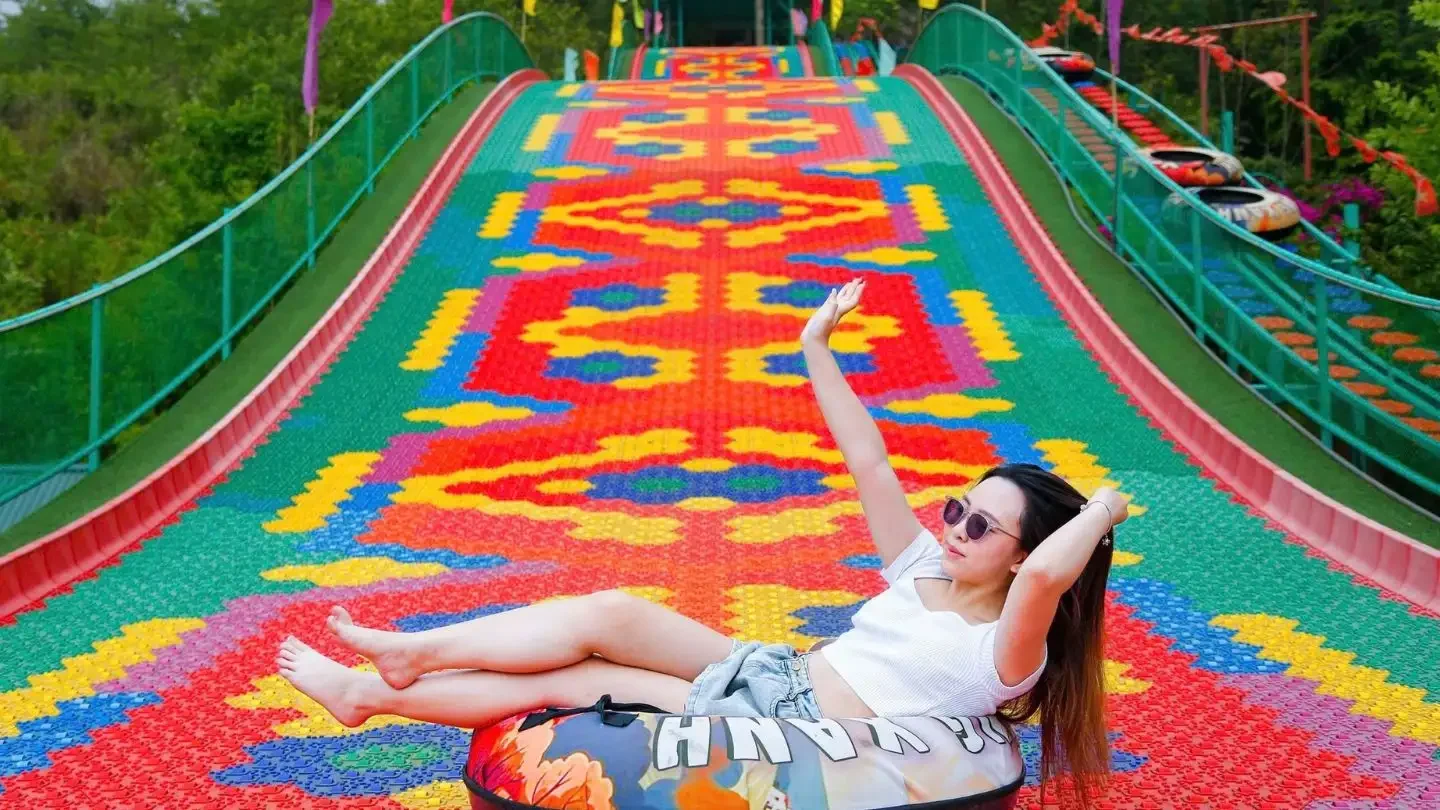
Sapa Rainbow Slide 1
Sapa Ranbow Slide 2
Sapa Rainbow Slide 3
The Power of Recommendation and the Fear of Missing Out
Yet people continue to go. Is it because Cat Cat is extraordinary or because it is repeatedly recommended? When every hotel suggests it. When every tour company includes it. When every travel blog lists it. When every social media feed displays it, the decision begins to feel inevitable. To skip it feels like omission. Almost like missing something essential. Fear of missing out is a powerful force. It quietly shapes behaviour without ever announcing itself. But what if what you are missing is not inside the crowd, but beyond it.
The Question Every Traveller Must Ask
Cat Cat village is not Sapa. It is one version of Sapa. One interpretation. One commercial expression shaped by demand, expectation, and replication. The real Sapa exists elsewhere. In the silence between villages. In terraces without viewing platforms. In roads without signs. In places not recommended because they cannot be easily packaged. The question is not whether Cat Cat should exist. It will continue to exist. It serves a purpose. It fulfils an expectation. The question is whether you are content to experience what has been prepared or whether you are willing to discover what has not.
Beyond the Photograph; What Cannot Be Replicated
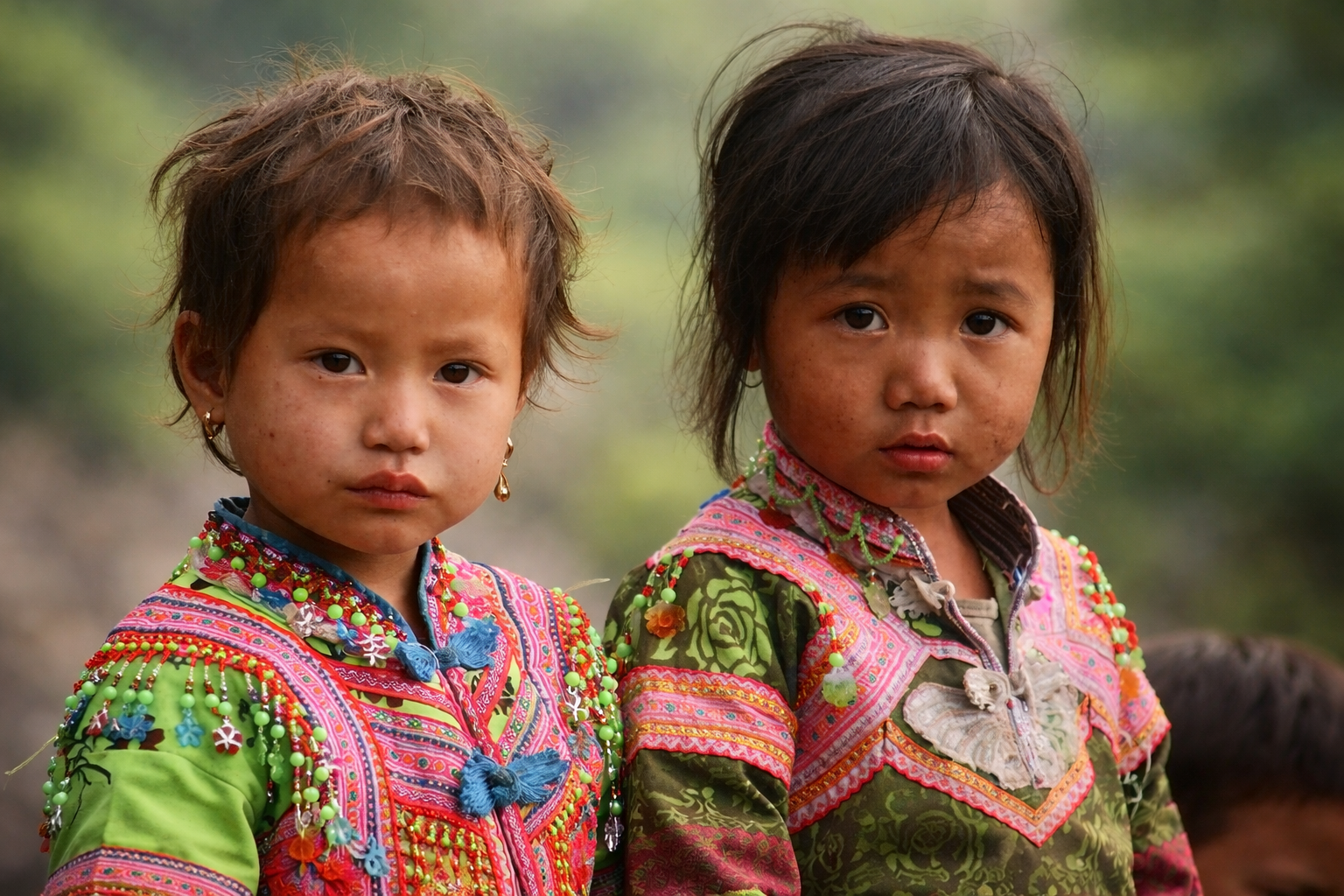
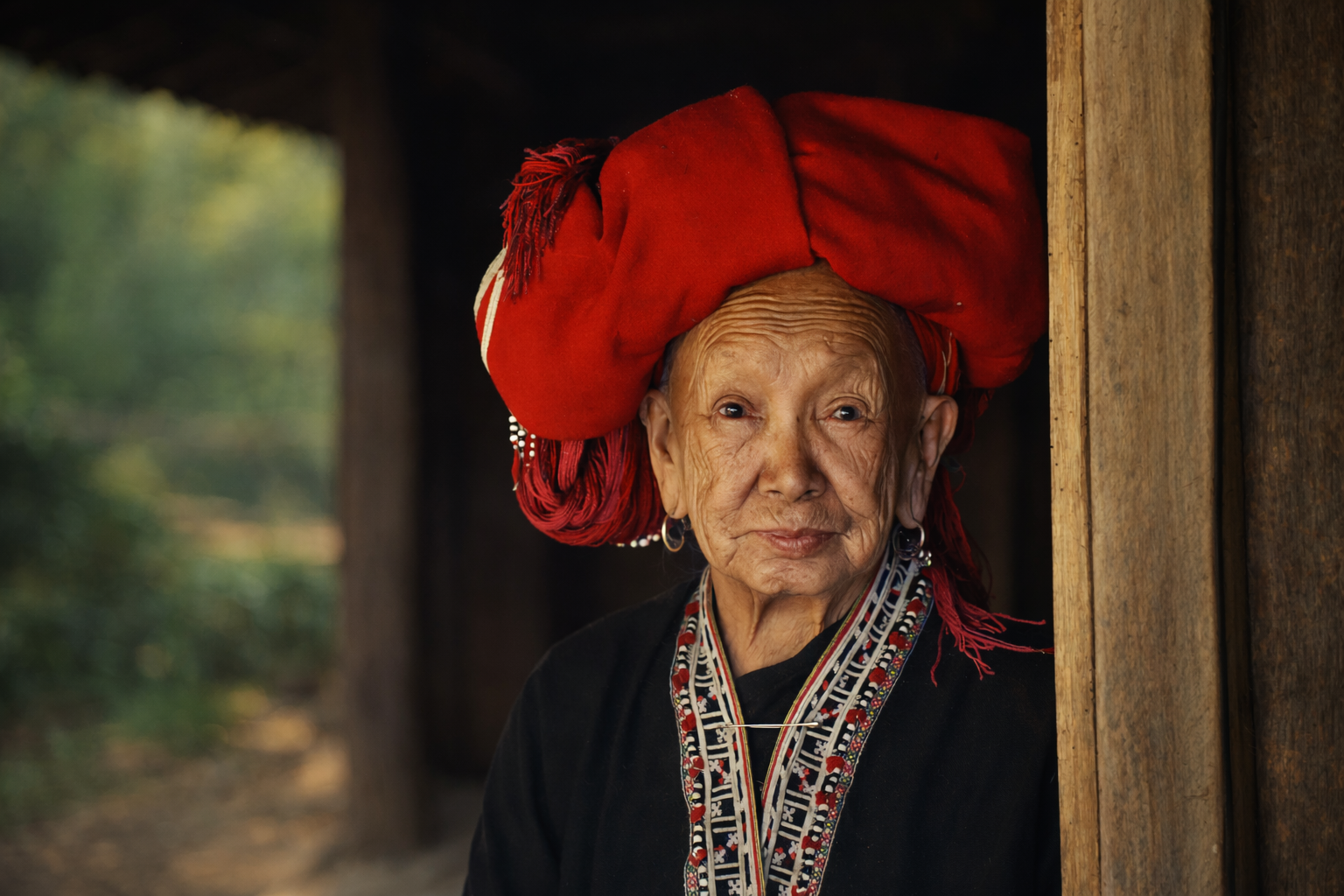
The only truly unique aspect of Sapa is not a structure, a viewpoint, or a constructed attraction. It is the people. Their cultures, their traditions, and the lives they lead interwoven with some of the most mesmerising landscapes on earth. To sit together and share tea. To cook over an open fire. To walk the buffalo trails that have connected villages for generations. These moments offer something no staged photograph ever can. The opportunity to listen, to learn, and to see the world through a perspective entirely different from your own is one of travel’s greatest privileges. These are the experiences that remain long after the journey ends. Not because they were photographed, but because they were felt. As conversations turn into friendships, and unfamiliar places begin to feel familiar, travel becomes something deeper. Not observation, but connection. Not performance, but understanding.
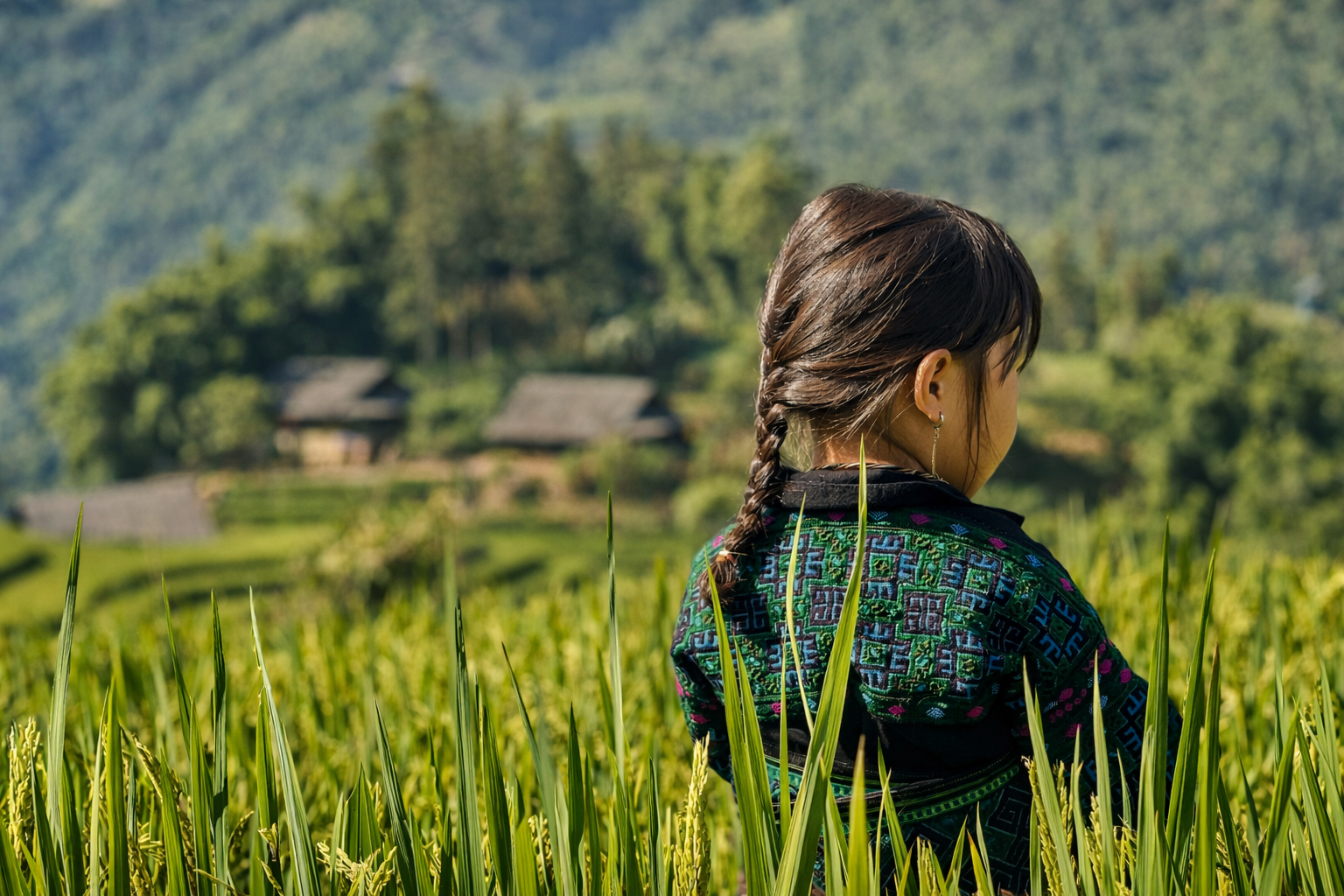
A Different Way to Experience Sapa
At Ethos, we believe the most meaningful travel experiences cannot be manufactured, staged, or replicated. They are never rigidly itinerised or contrived for the sake of convenience or visibility. Instead, they are thoughtfully curated to open doors, not close them. You are given direction, but never confined by it. You have structure, but also the freedom to change course when curiosity calls. To stop when something unexpected captures your attention. To continue when instinct tells you there is more to discover just beyond the next bend.
No two journeys are ever the same, because no two travellers are the same. The landscapes remain constant, but your experience within them is entirely your own. This is travel as it was always meant to be and the difference between visiting a place and knowing it.
Sapa does not reveal itself to those who seek the familiar. It reveals itself to those willing to move beyond it. To walk further. To ride longer. To listen more closely. To accept that the most meaningful experiences are not found where everyone else is standing. They are found where no one told you to look.
Six Ways to Experience Sapa That Cannot Be Reduced to a Photograph
You find it first on foot. Trekking through the mountains slows everything down. With each step, the noise of expectation fades and something quieter takes its place. You notice the rhythm of daily life. Farmers working the terraces. Children walking home along narrow paths. Mist rising slowly from the valley floor. You are no longer observing from a distance. You are part of the landscape itself.
You find it on two wheels. Motorbike journeys carry you beyond the visible edge of tourism. Roads twist through valleys and over high passes, leading to places that exist outside recommendation and routine. There is no queue here. No prescribed stop. Only the freedom to follow curiosity wherever it leads. Each turn offers something new, not because it was designed that way, but because it was never designed at all.
You find it in culture. Not culture performed for visitors, but culture lived. Sitting beside a local artisan. Learning how cloth is woven, dyed, and passed between generations. These moments are not curated for spectacle. They are shared quietly, through patience and presence. You are not consuming culture. You are being welcomed into it.
You find it in food. Meals in Sapa are not transactions. They are invitations. Food connects you to land, to family, and to tradition. Ingredients grown nearby. Recipes shaped by generations. Stories told across the table without the need for translation. This is not something that can be photographed fully. It must be experienced.
You find it in family. The most powerful moments are often the simplest. Sitting together. Sharing tea. Listening. These experiences do not exist for display. They exist for connection. They remain with you long after the journey ends, not because they were visible, but because they were real.
And perhaps most importantly, you find it in yourself because the true purpose of travel has never been to stand where everyone else has stood. It has always been to discover something that belongs only to you. The question is not whether these places exist. The question is whether you are willing to step beyond the crowd to find them.
