
Riding Vietnam’s Remote North-West: Lai Chau, Dien Bien Phu and Son La by Motorbike
Beyond Sapa: Where the Roads Become the Journey
Once you leave the orbit of Sapa and head west, the nature of travel changes quickly. The provinces of Lai Chau, Dien Bien Phu, and Son La are defined not by viewpoints or fixed routes, but by the road itself. Green tea plantations dominate before giving way to rubber trees, karst peaks and great lakes.
In this part of northern Vietnam, the motorbike is not a novelty, but the dominant form of transport, used daily across both cities and rural areas. there are still many villages that cannot be reached by any orher mode of transport and that is why around 87% of households own a motorbike. The motorcycle remains the most practical way to move through mountainous terrain where public transport is limited or absent. The more remote you go, that reality becomes even more apparent. Without a bike, access is restricted. With one, the landscape opens fully, but only if you are prepared to ride it properly.
Riding a motorbike in North Vietnam is not passive travel. Instead, the weather and roads dictate the pace, and the terrain requires constant attention.
Before going further, it is worth taking a moment to consider what kind of riding experience you are looking for. The north-west is not designed for quick routes or high-volume travel. It rewards preparation, patience, and a willingness to adapt to conditions as they are. For those wanting to understand how we approach riding in this region, our motorbike journeys are shaped around these same principles, with routes and pace built around the landscape rather than fixed expectations.
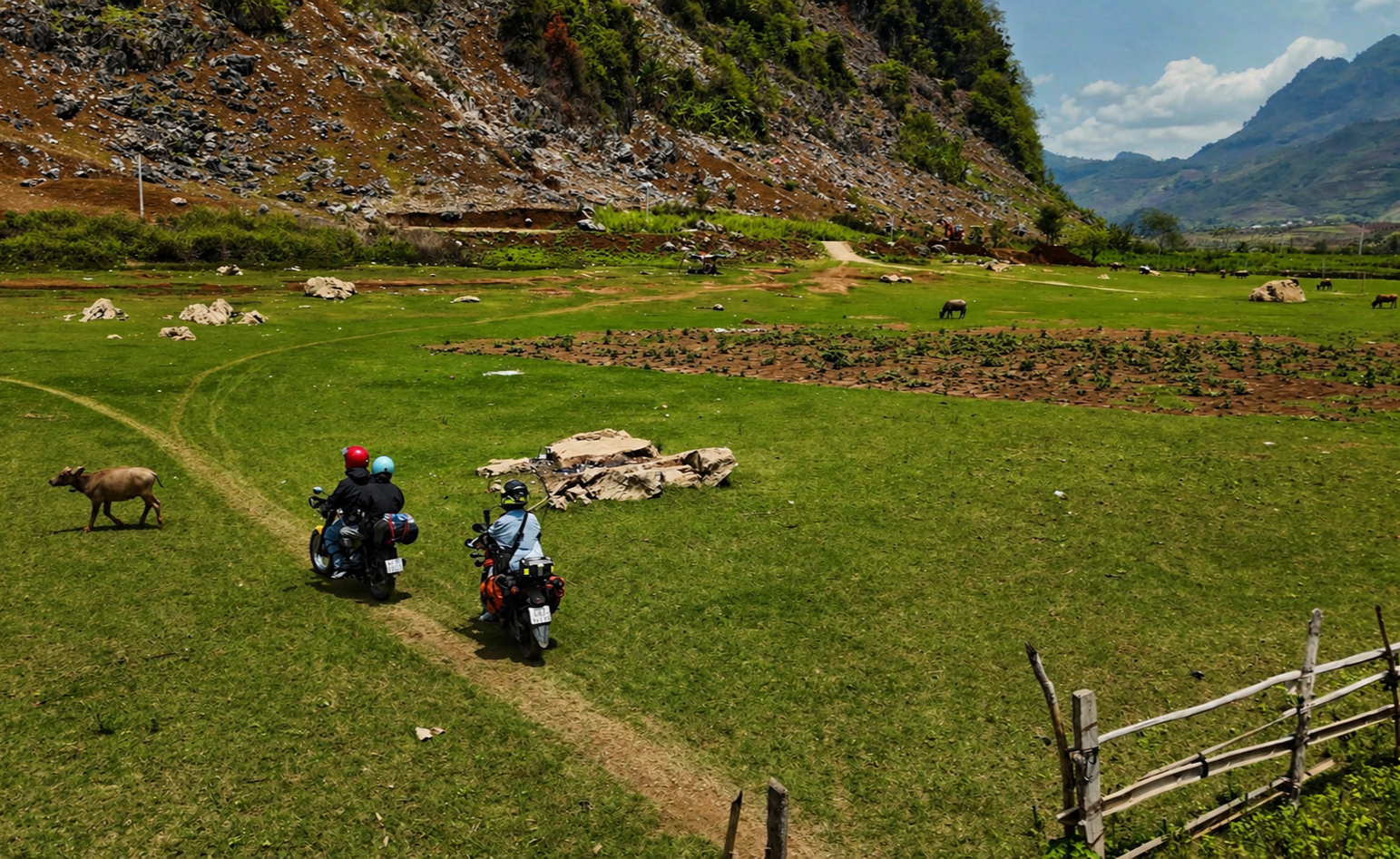
Adventure Riding in Son La Province
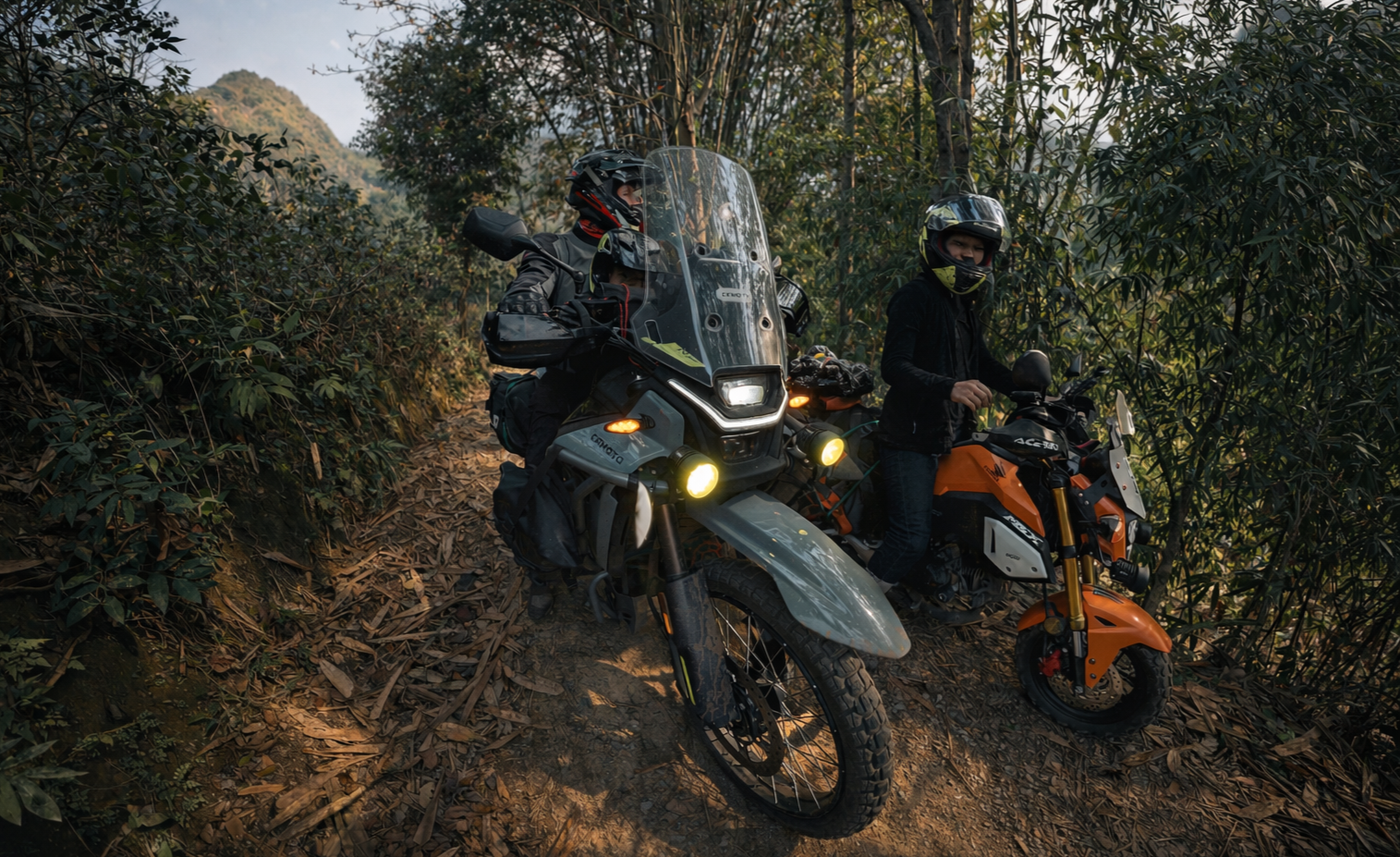
Choosing the trails in rural Lai Chau
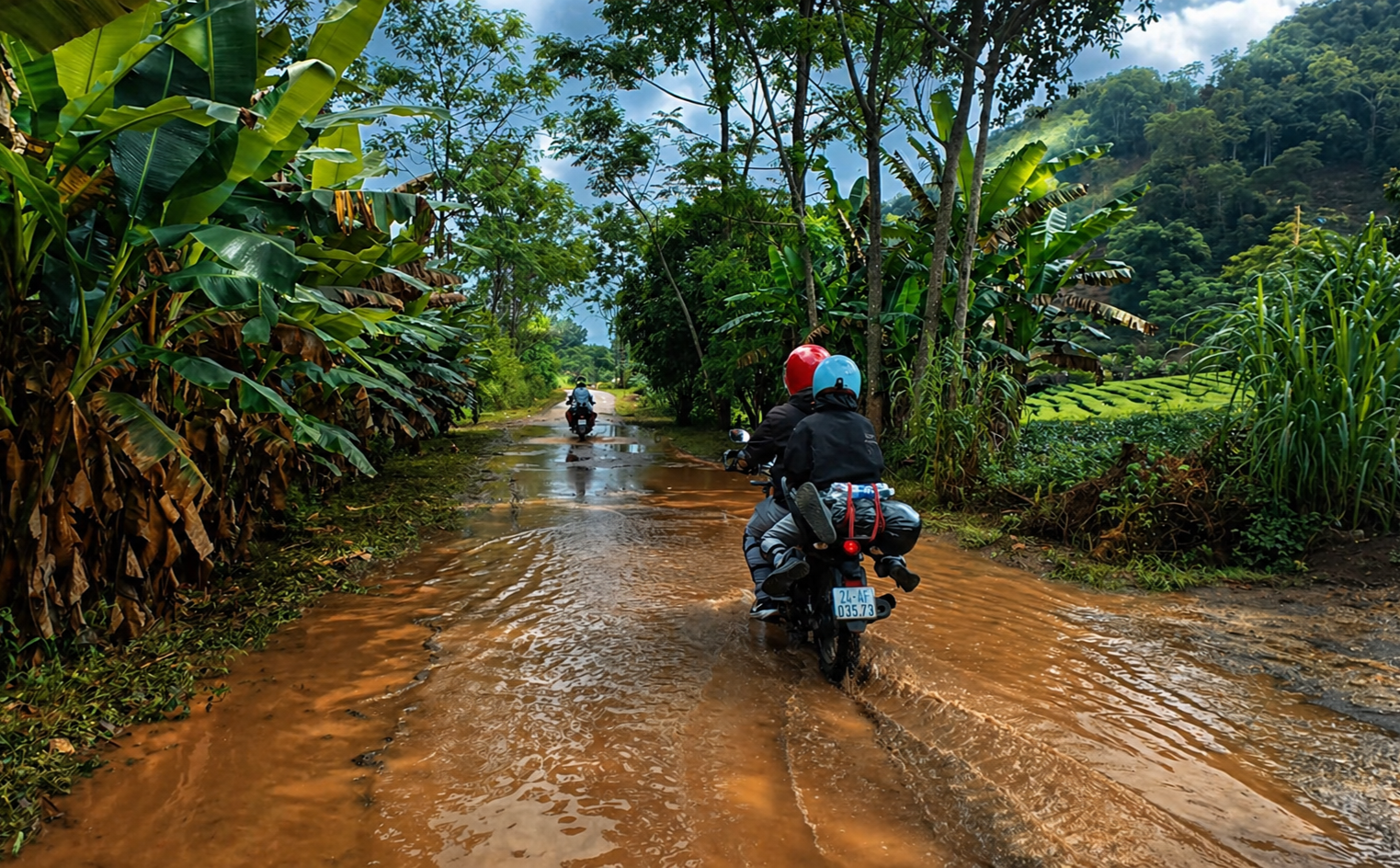
Flooded road sections after seasonal rains in Son La Province.
Why These Provinces Remain Rarely Visited by Riders
Lai Chau, Dien Bien, and Son La are rarely visited, not because they are hidden, but because they demand more from anyone travelling through them. Distances are significant, and road conditions reduce average speeds to a level that makes even short routes time-consuming. Surfaces vary constantly, fuel stops are irregular, and mechanical support is limited outside larger towns.
Navigation cannot be fully outsourced to a device. Mapping is inconsistent, signage is minimal, and routes often depend on current local conditions rather than fixed directions. Weather adds another layer of complexity, particularly during the wet season when landslides, mud, and reduced visibility can change a route within hours. In many regions, there is little to no English spoken, while in some really remote areas, there might not be spoken Vietnamese either. Accomodation is few and far between, meaning camping and local homes are often the only option. These are not barriers in themselves, but they are filters. They shape who comes, and how they travel. They are also reasons why visiting with an experienced guide team assures travellers get the most out of the area.
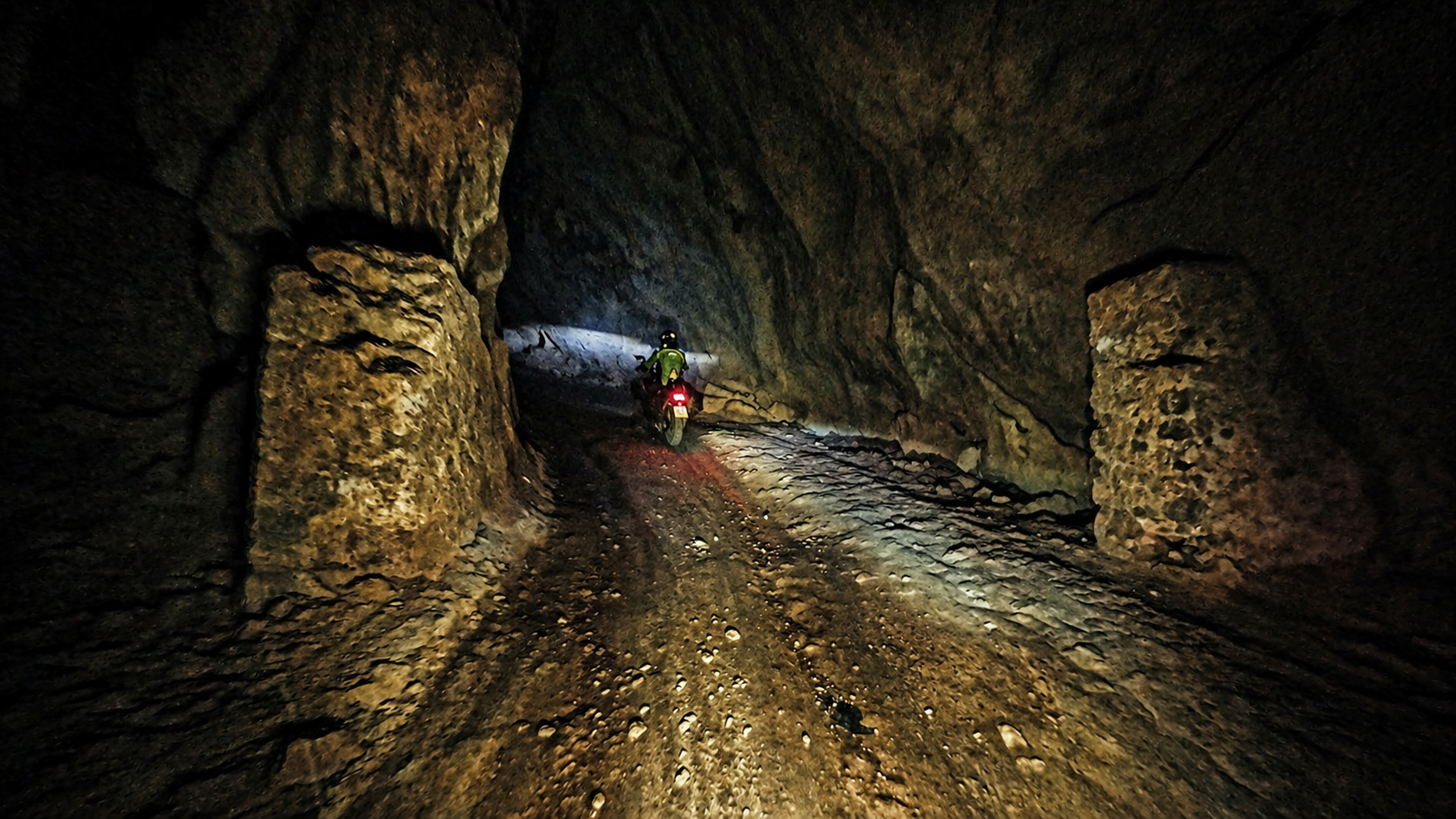
Road through underground road system
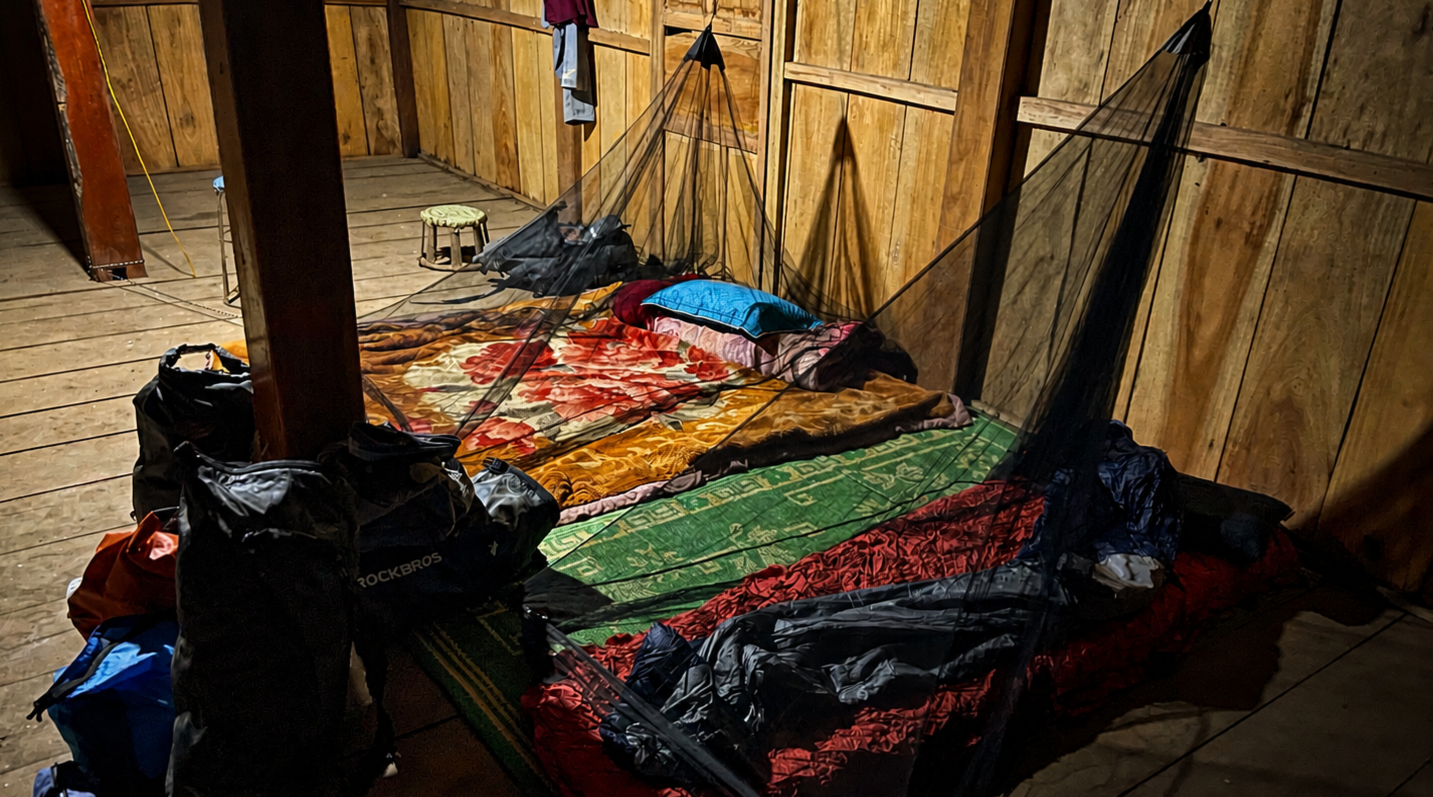
Basic homestay accomodation in Dien Bien
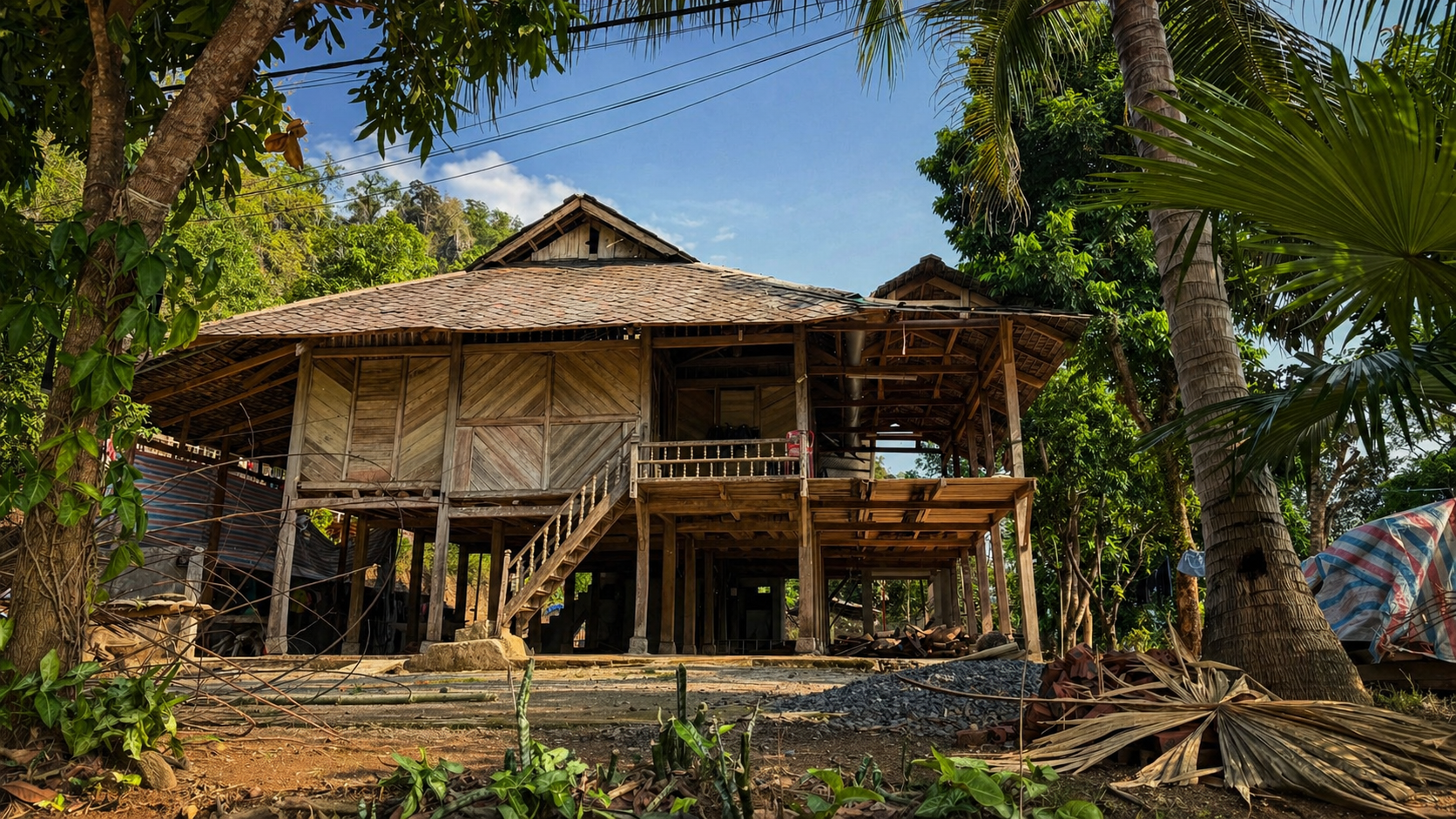
ETHOS homestay in Lai Chau
A Different Riding Ethos to Ha Giang
The contrast with Ha Giang is important, because it highlights what this region is not becoming.
Ha Giang has seen rapid growth in motorbike tourism, driven by short loop itineraries and high-volume operators. The result is a concentration of riders moving through the same routes, often within tight timeframes. The roads themselves remain technically challenging, yet the riding environment has shifted due to the volume and behaviour of traffic. Large groups, inconsistent riding ability, and a growing party-driven travel culture have introduced unnecessary risk into an already demanding landscape. This has also begun to affect local communities, where noise, alcohol, and unmanaged tourism activity can disrupt daily life.
Lai Chau, Dien Bien Phu, and Son La have not followed this pattern. There is no simplified loop, no standardised three-day circuit, and no infrastructure built around volume. Travel here is more dispersed, less predictable, and harder to scale. All of this creates a totally different kind of riding environment. Roads are quieter and primarily used for local movement rather than tourism flow. Riders are fewer, groups are smaller, and the pace is set by conditions rather than expectation.
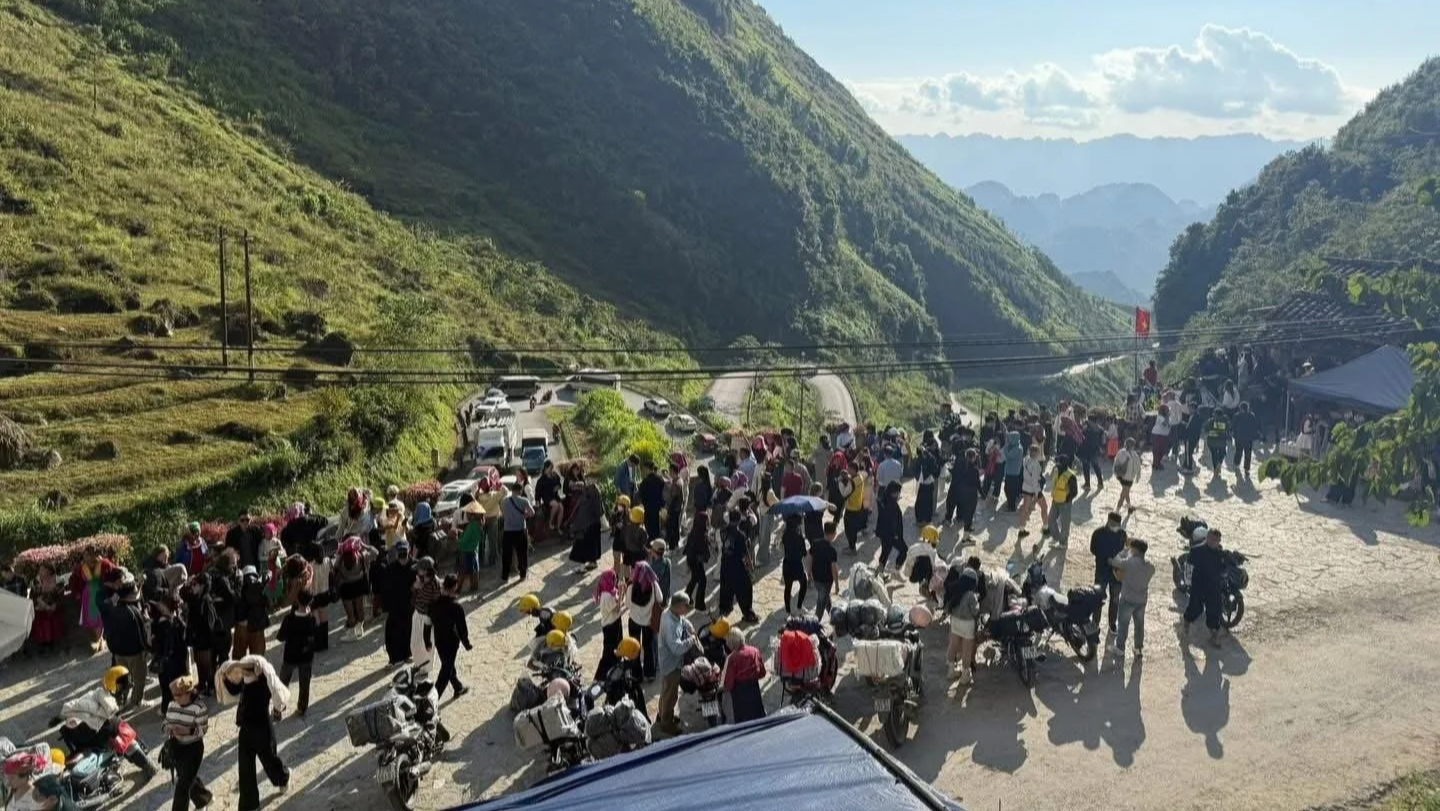
Large group tours quickly turn to crowds in Ha Giang
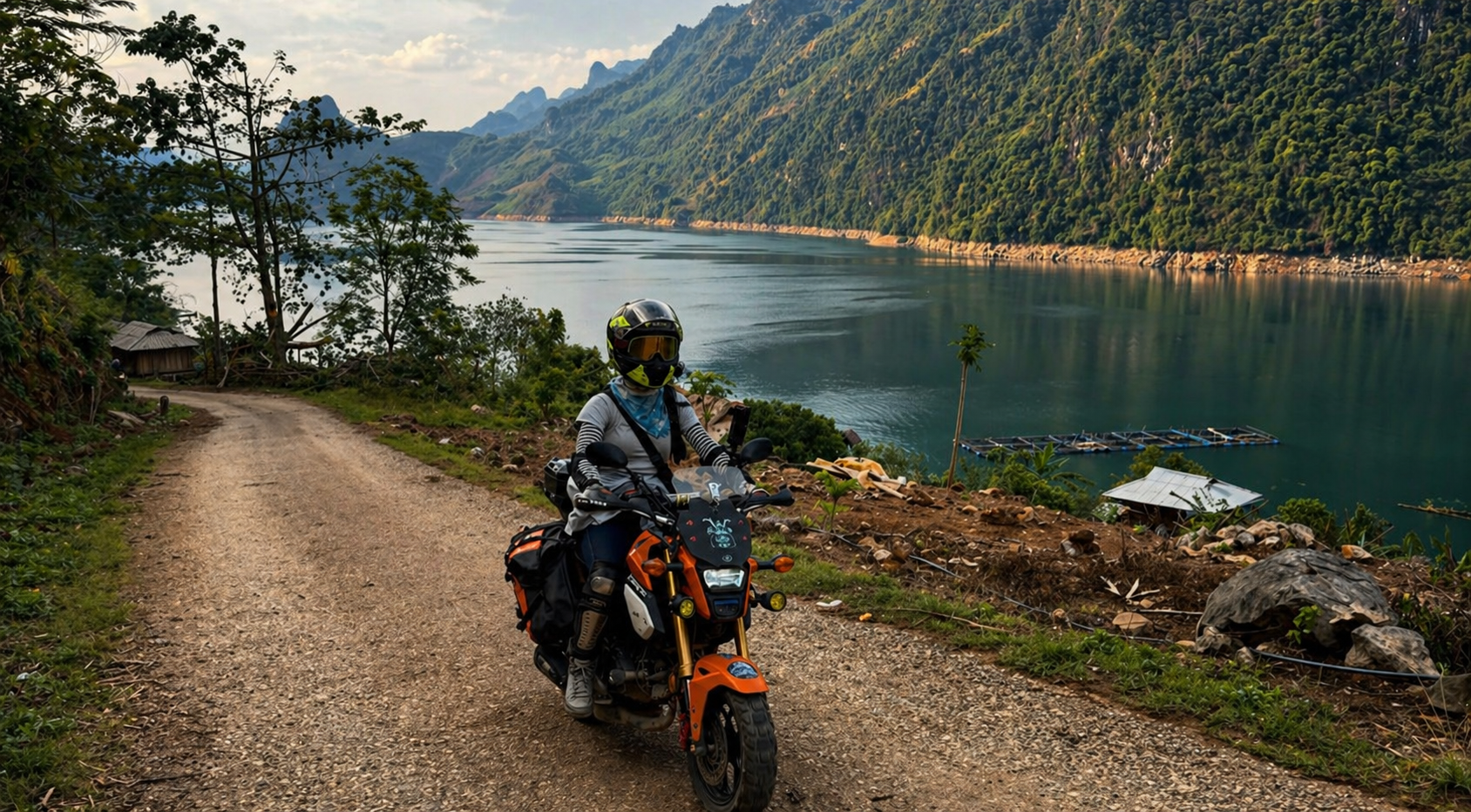
Quiet roads in Dien Bien Province
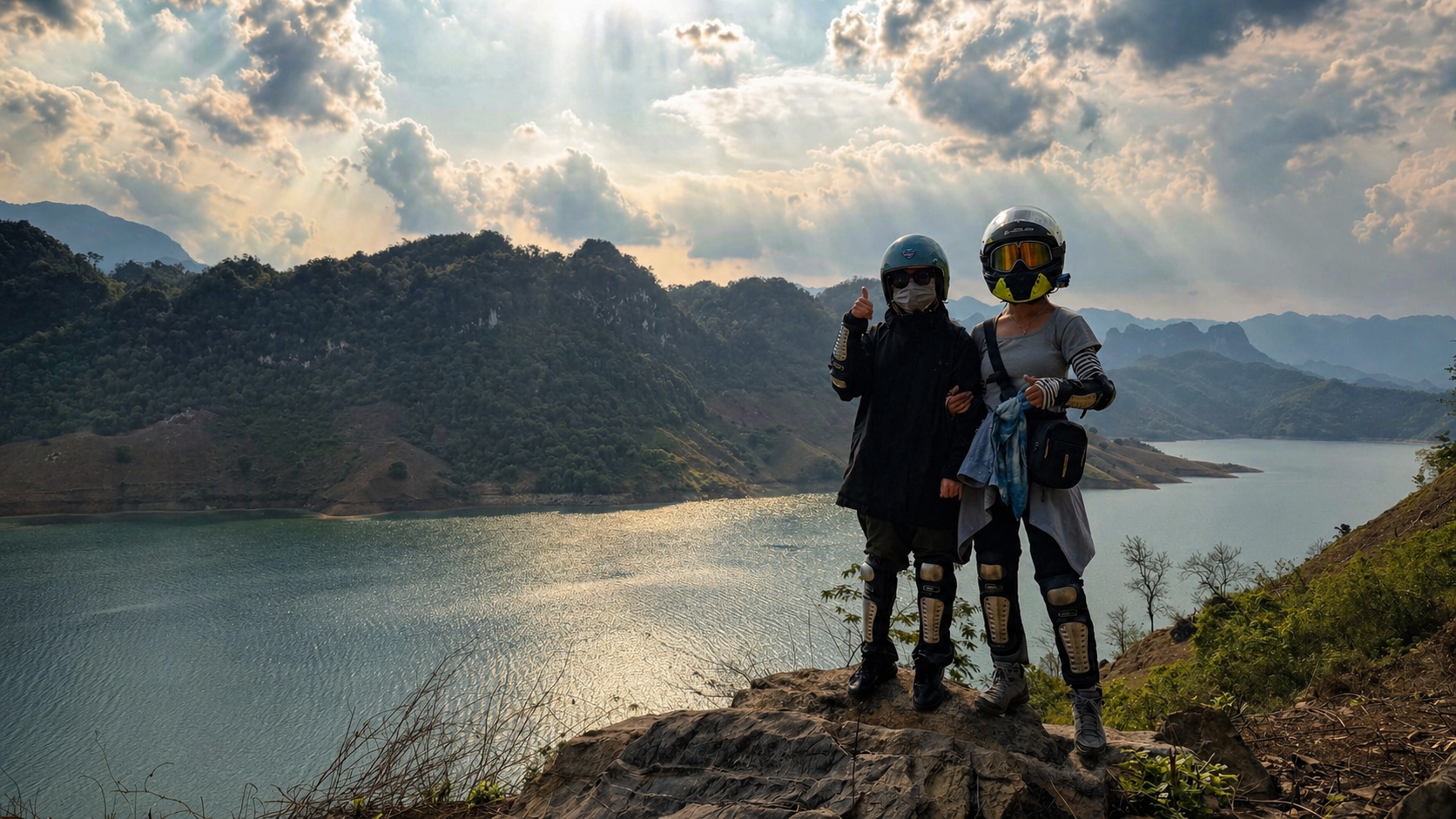
Scenery without crowds on a multi-day road trip.
Riding Conditions Across the Region
The riding across these provinces is defined by constant variation. Surfaces move between smooth asphalt, broken tarmac, gravel, and compacted dirt, often within a single stretch of road. Corners are tight and frequent, with steep gradients and limited protection in many areas.
Lai Chau presents high mountain passes and long exposed sections where traffic is minimal and conditions can change rapidly. Routes into and out of Dien Bien Phu involve sustained climbs and descents, while Son La combines wider valley roads with narrower mountain links between smaller settlements.
Average speeds remain low. Riding here is not about covering distance efficiently, it is about maintaining control and responding to the terrain as it unfolds. The scenery is varied, spectacular and undoubtedly some of the best anywhere in Vietnam.
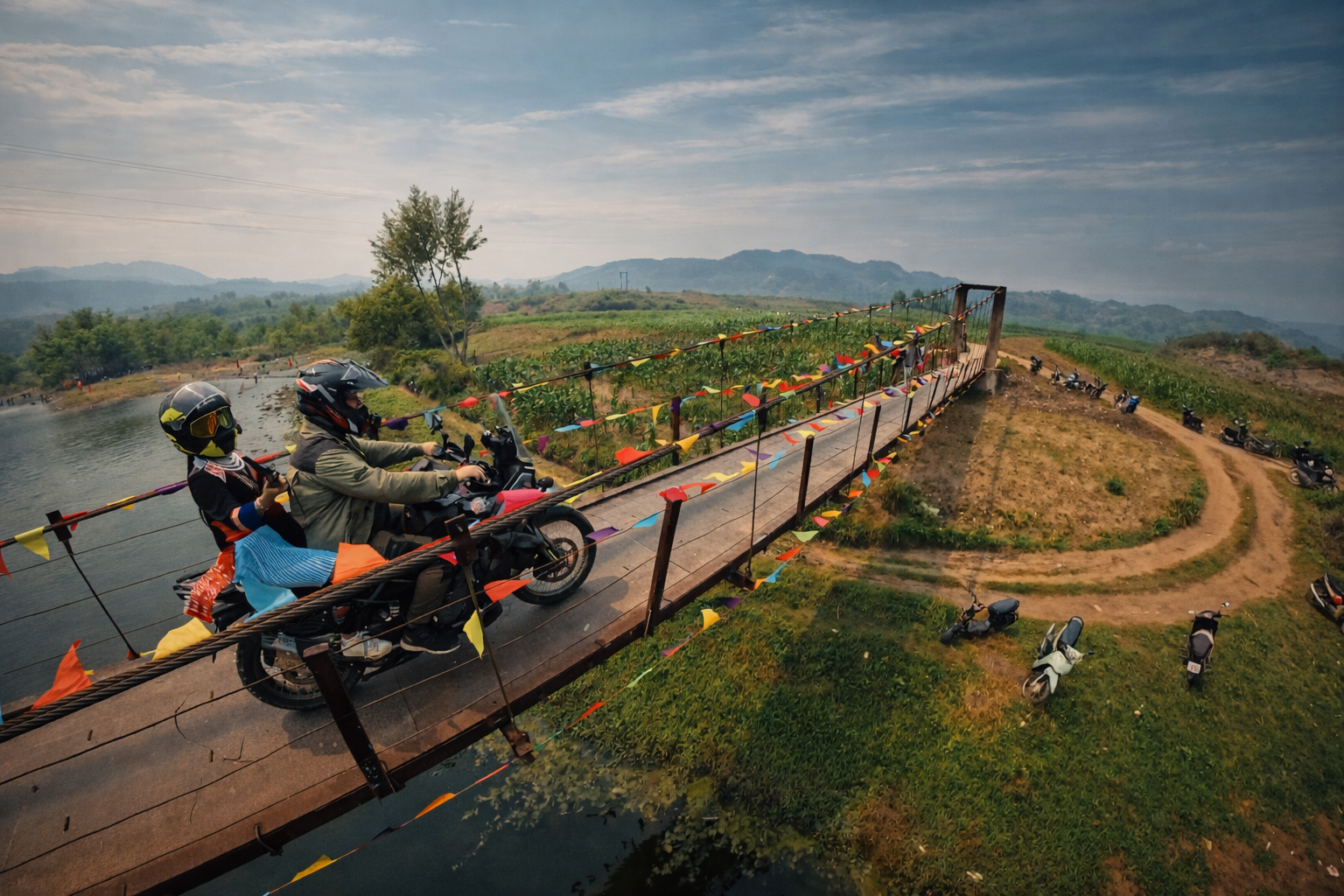
Suspension bridge crossing in Lai Chau.

Navigating the region frequently requires local ferries.
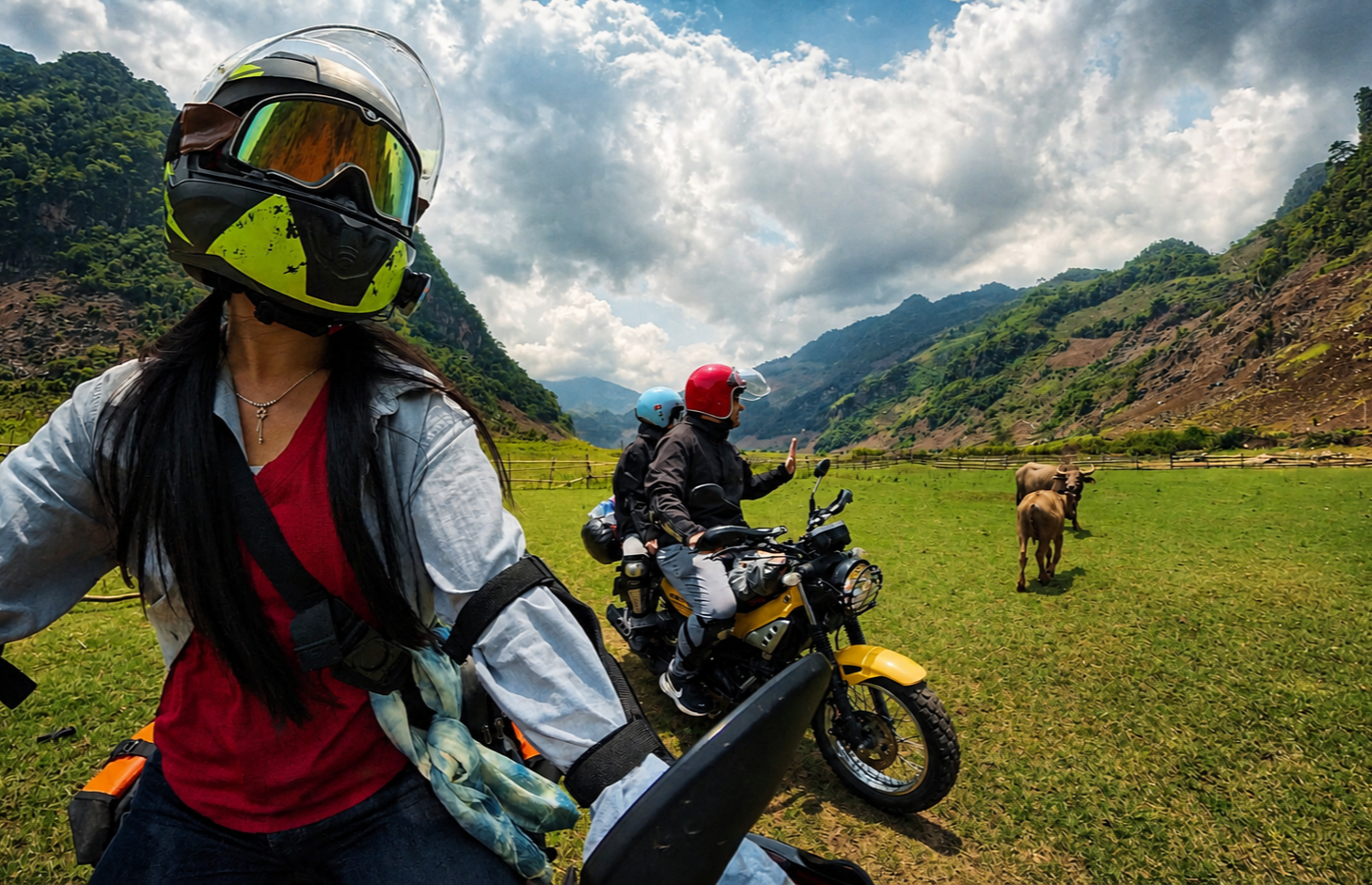
Off-road riding in Son La
Cultural Landscapes Seen from the Saddle
Motorbiking through this region means moving through working environments rather than designated destinations. Roads pass through farmland, villages, and shared community spaces. Livestock, children, agricultural vehicles, and pedestrians all form part of the road environment.
The region is home to diverse ethnic communities including Hmong, Dao, and Thai groups. Settlements vary in structure and layout, but all are closely tied to the land around them.
Stops are not staged experiences. They happen when needed, for fuel, food, or rest, and often bring riders into direct contact with local households or small roadside businesses. Interaction is practical and unstructured, shaped by the moment rather than planned in advance.

Thai women in Son La

Lan Tien girl in Dien Bien Phu Province
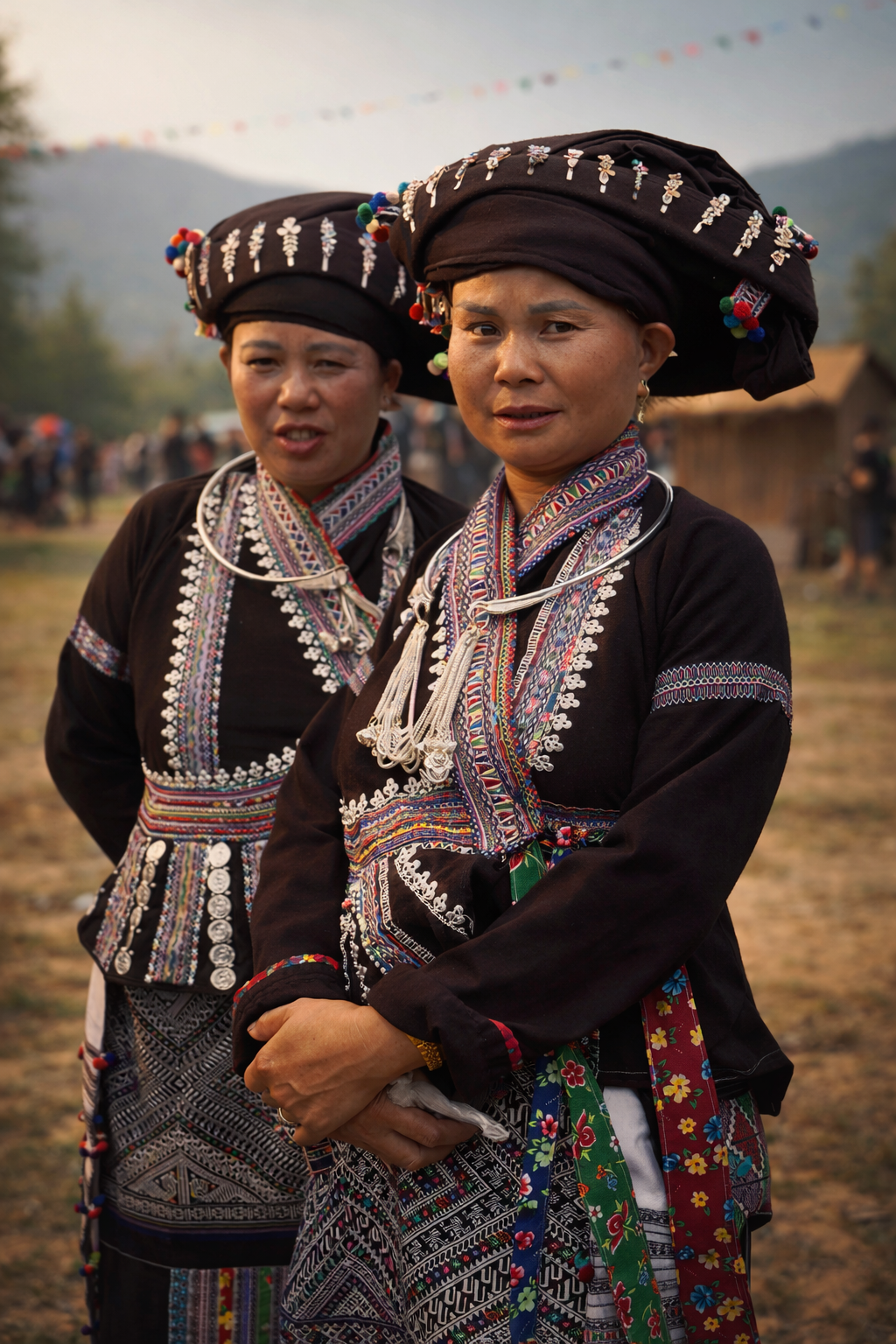
Lao women in Lai Chau
Why This Region Suits Experienced Riders
This is a demanding riding environment that requires both technical skill and awareness. Riders need to be comfortable with mixed surfaces, steep descents, and unpredictable hazards. Braking control, line selection, and the ability to read terrain quickly are essential.
Motorbiking in northern Vietnam is often described as exhilarating, yet it is equally about restraint. We emphasise that this kind of travel is not about chasing speed or adrenaline, but about trusting the terrain and riding within it. In the north-west, that balance becomes critical.
Mechanical awareness is also necessary as a practical requirement. Minor issues can escalate quickly in remote areas, and riders need to manage their bike with a degree of independence. Travelling with a knowlege of how to field repair is very useful.
How ETHOS Motorbike Adventures Work
ETHOS approaches motorbike travel as a combination of riding, local knowledge, and community connection. Journeys are developed in collaboration with local partners, including Hmong and other ethnic community members, ensuring that routes are both viable and respectful. Groups are intentionally small. Each ride is led by experienced guides and supported by local riders who understand the terrain, the conditions, and the communities along the route.
The structure of each day reflects the realities of the environment. Riding is steady and controlled, with flexibility built in to adapt to weather and road conditions. Stops are purposeful, allowing time within villages or with local families where appropriate, rather than treating the landscape as something to pass through quickly.
Accommodation is arranged in small homestays or camping depending on location. Facilities are simple, but they provide what is needed for recovery and continuation. This approach reflects a broader philosophy. Motorbiking is not treated as an isolated activity, but as part of a wider cultural and environmental context.
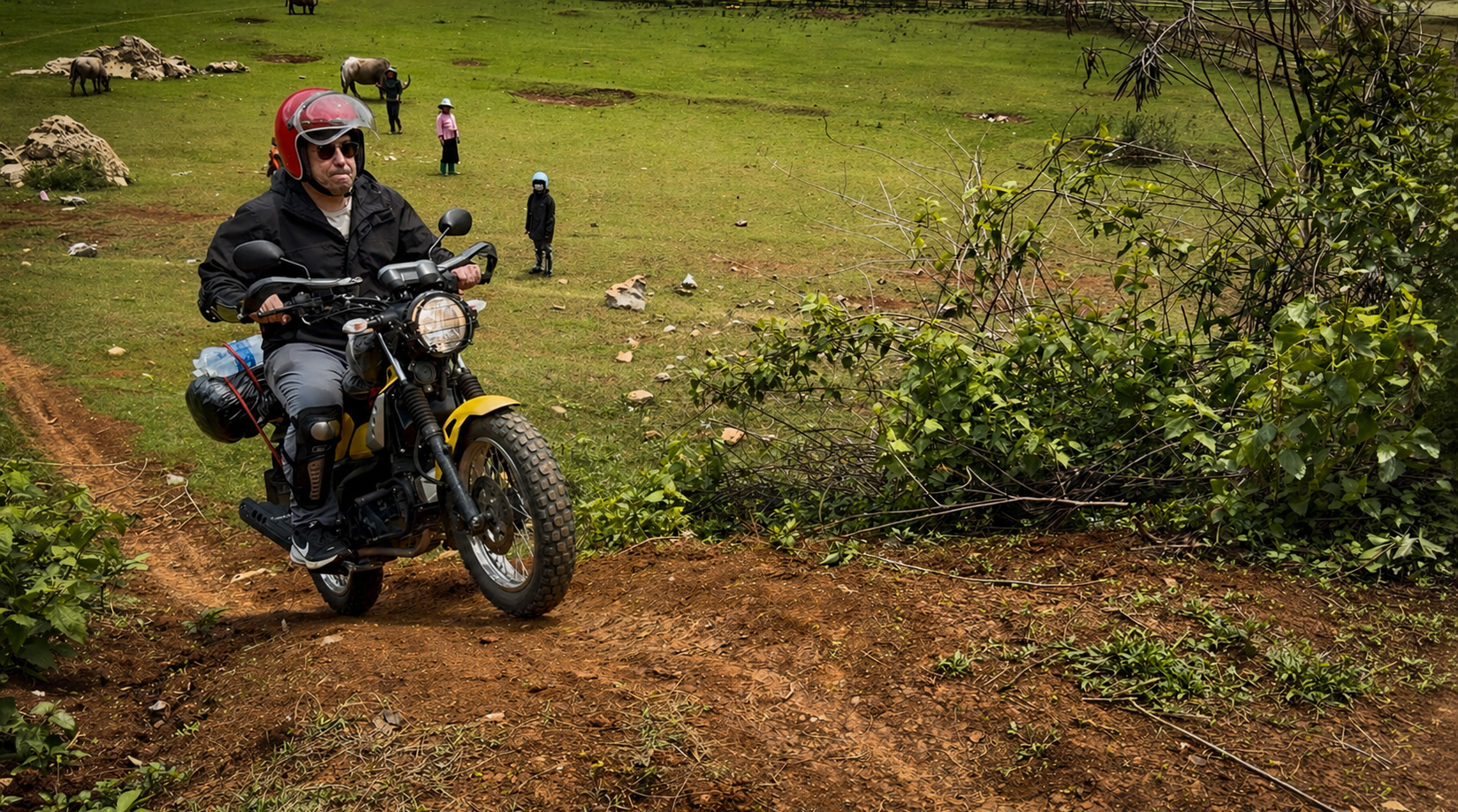
Off Road riding in Son La
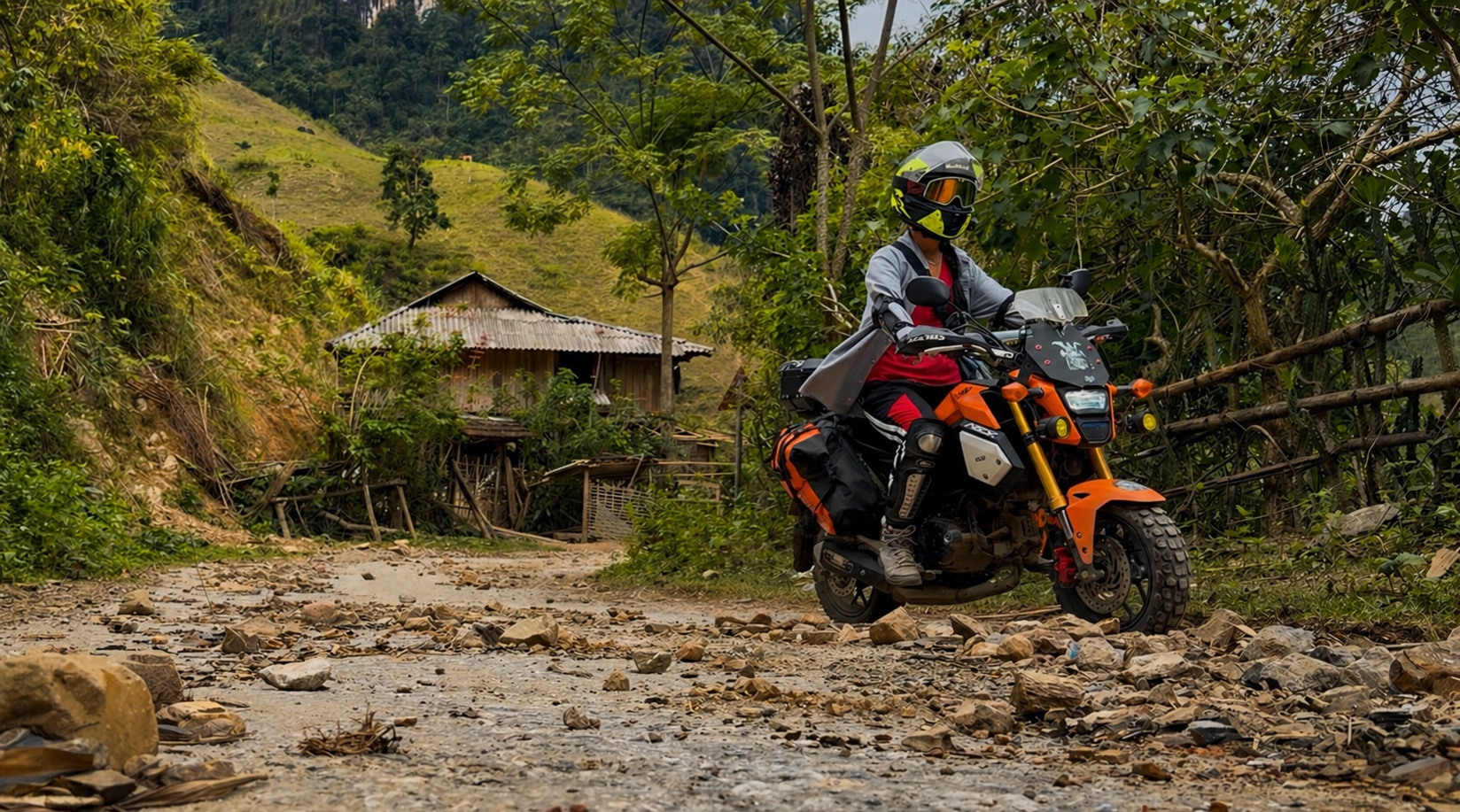
Mixed road conditions in Lai Chau
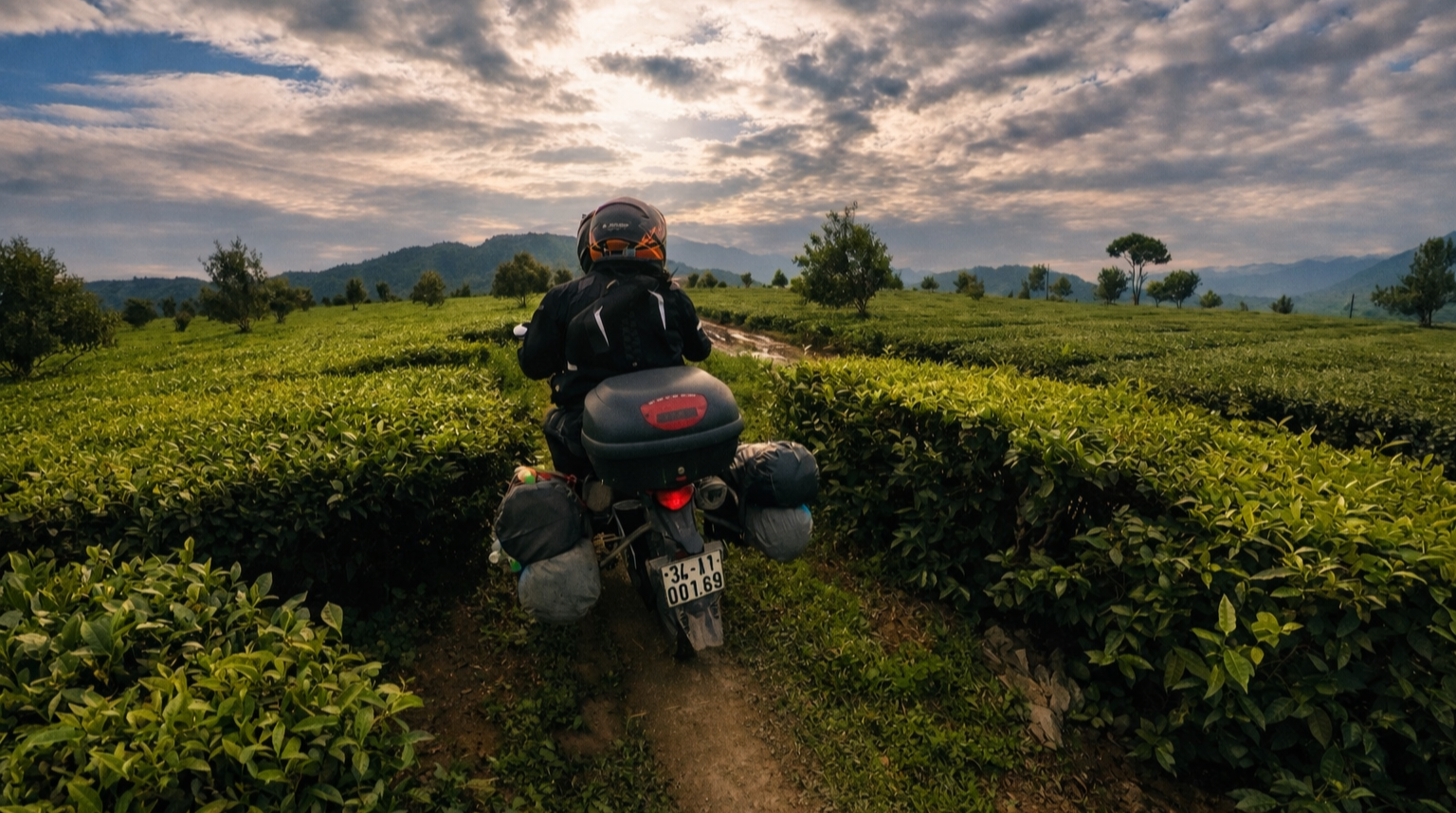
Lai Chau green tea plantations
Route Length: Four to Seven Days on the Road
Travelling through Lai Chau, Dien Bien Phu, and Son La requires time. A four-day route allows for entry into the region and traversal of key roads, though it involves longer days and less flexibility. Five to seven days is a more effective timeframe. It allows for epic riding days, better adaptation to conditions, and the ability to move further into remote areas without unnecessary pressure.
Longer routes also reduce the need to rush, which is particularly important in a region where conditions can change quickly and where riding well matters more than covering distance.
Riding Legally and Responsibly in Vietnam’s North-West
Motorbiking in Vietnam is often presented as informal or loosely regulated, yet the legal framework is clear, and enforcement is increasing, particularly in northern regions. Riders travelling through Lai Chau, Dien Bien Phu, and Son La should approach the journey with a full understanding of what is required.
A valid motorbike licence from your home country is not sufficient on its own. You must hold either a Vietnamese licence or a valid International Driving Permit that corresponds to the correct motorbike category. Without this, you are not legally permitted to ride, and insurance coverage is unlikely to apply in the event of an incident.
Helmet use is mandatory, and standards matter. Basic or low-quality helmets, often provided with rental bikes, may not offer meaningful protection. Riders should ensure they are using properly fitted, certified helmets suitable for long-distance riding.
Traffic laws in Vietnam are actively enforced, including speed limits, drink-driving regulations, and documentation checks. In more remote provinces, enforcement can be less visible, yet this should not be interpreted as flexibility. Riding within legal limits and maintaining full documentation is essential, particularly given the distances involved and the limited access to assistance if something goes wrong.
Road conditions themselves demand a disciplined approach. Overtaking on blind corners, excessive speed on descents, or riding beyond your level of control introduces significant risk, not only to the rider but to others using the road. In rural areas, the road is shared space, used by pedestrians, livestock, and local vehicles that operate according to different rhythms and expectations.
ETHOS operates within these realities. All riders are briefed clearly before departure, documentation is checked, and expectations are set around safe and lawful riding. There is no tolerance for alcohol while riding, and no pressure to keep pace beyond individual ability. The focus is on control, awareness, and consistency rather than performance.
This approach reflects a simple principle. Riding in Vietnam’s north-west is a privilege that depends on respect, for the law, for the road, and for the communities who live alongside it. Maintaining that respect is what allows access to remain open and meaningful over time.
