Long before the global recognition, cable cars and crowded check in sites, Sapa was a quiet mountain town where livestock wandered the streets, the market belonged to local families, and days were measured by the weather. I arrived as a young environmental scientist expecting to study forests, but instead, I found friendships and memories that have stayed with me for nearly three decades.
Arriving at the End of the Road
Most travellers reached Sapa in those days aboard the overnight train from Hanoi. They would wake to the rhythmic clatter of train wheels as dawn broke over the Red River Valley before stepping onto the platform at Lào Cai, where battered minibuses and ageing Russian UAZ-469 “jeeps” waited for the slow climb into the mountains. For many, that journey became part of the romance of visiting Vietnam's northern frontier.
Our journey was rather less romantic. Instead of boarding the train, our small team climbed aboard an elderly DeSoto bus in Hanoi. Time had not been especially kind to it. I remember joking that it had more breakdowns than functional windows, although by the end of the journey that no longer felt like much of an exaggeration. The timetable confidently promised we would reach Sapa in around twelve hours. Twenty-two hours later, we finally did. Progress was measured less by kilometres than by mechanical failures. Every few hours the engine would begin protesting on another long climb. Steam escaped from beneath the bonnet, the driver would ease the bus onto the roadside with a resigned expression, and we would all climb out while he disappeared beneath the engine with an assortment of spanners and remarkable optimism. Nobody seemed especially surprised. Passengers stretched their legs, wandered around nearby villages or simply sat in the shade waiting for another improvised repair.
As the hours drifted by, the mountains ahead drew steadily closer. Roads became narrower and rougher, twisting above deep valleys where clouds hung low over rice terraces. Water buffalo wandered across the road with complete indifference to our presence, while small landslides from the previous night's rain occasionally forced another unscheduled stop. The journey seemed to settle into its own unhurried rhythm with the mountains dictating the pace. By the time we eventually reached Sapa, I was dusty, stiff and sleep deprived. A dense mist had settled over the town like a blanket. I stepped down from the bus, took a deep breath of cold mountain air scented with damp earth and immediately forgot how long the journey had taken.
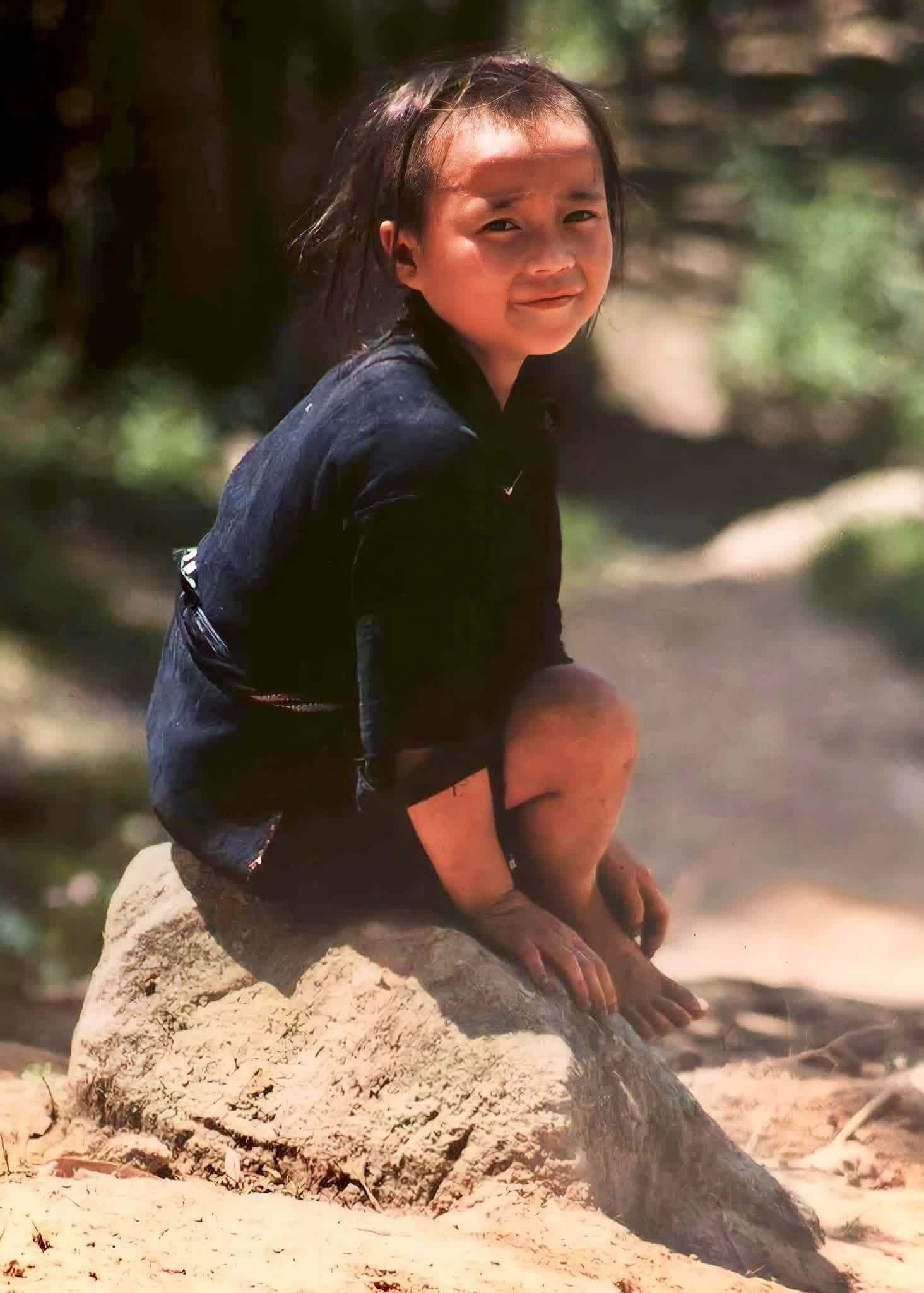
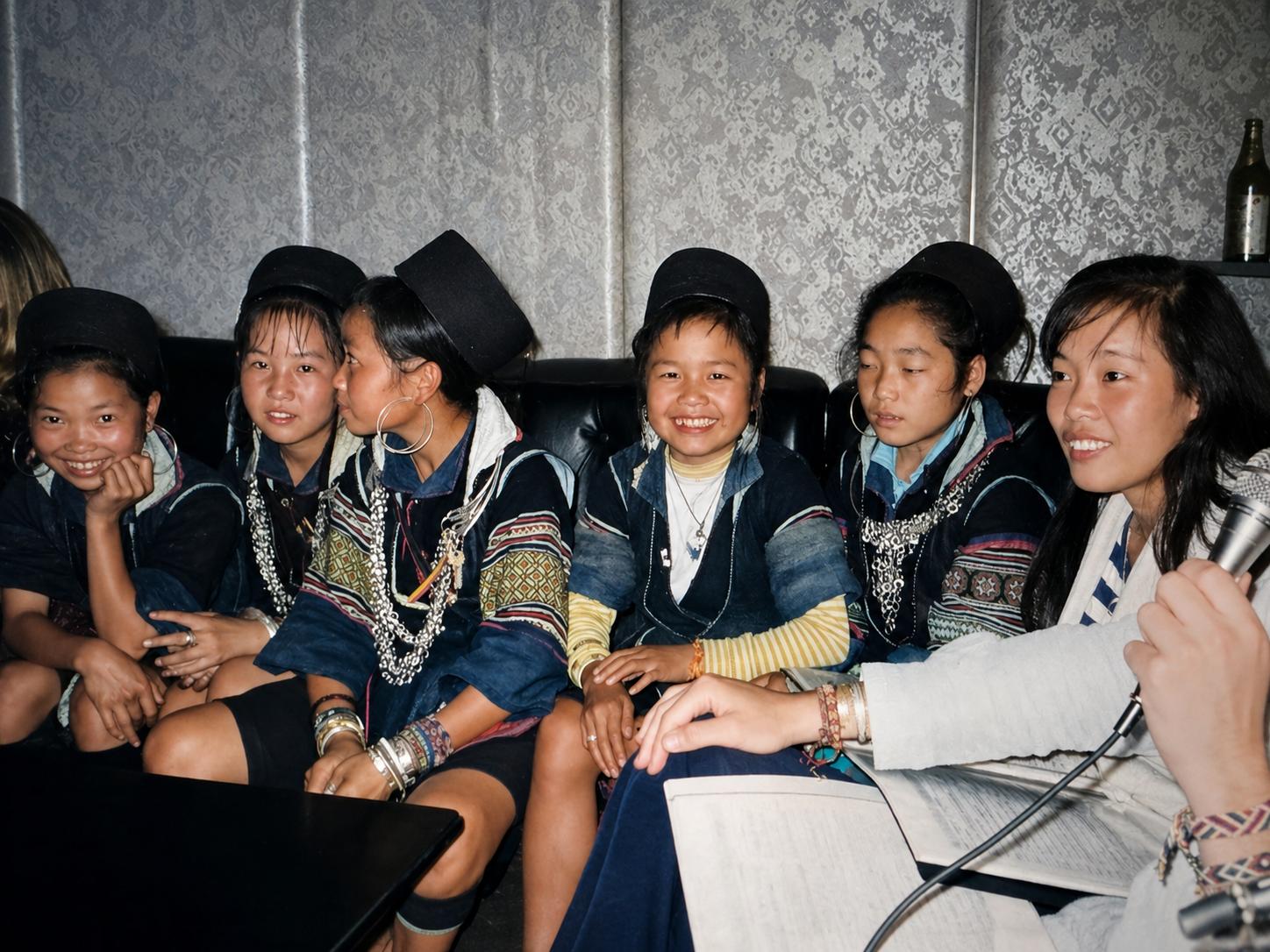
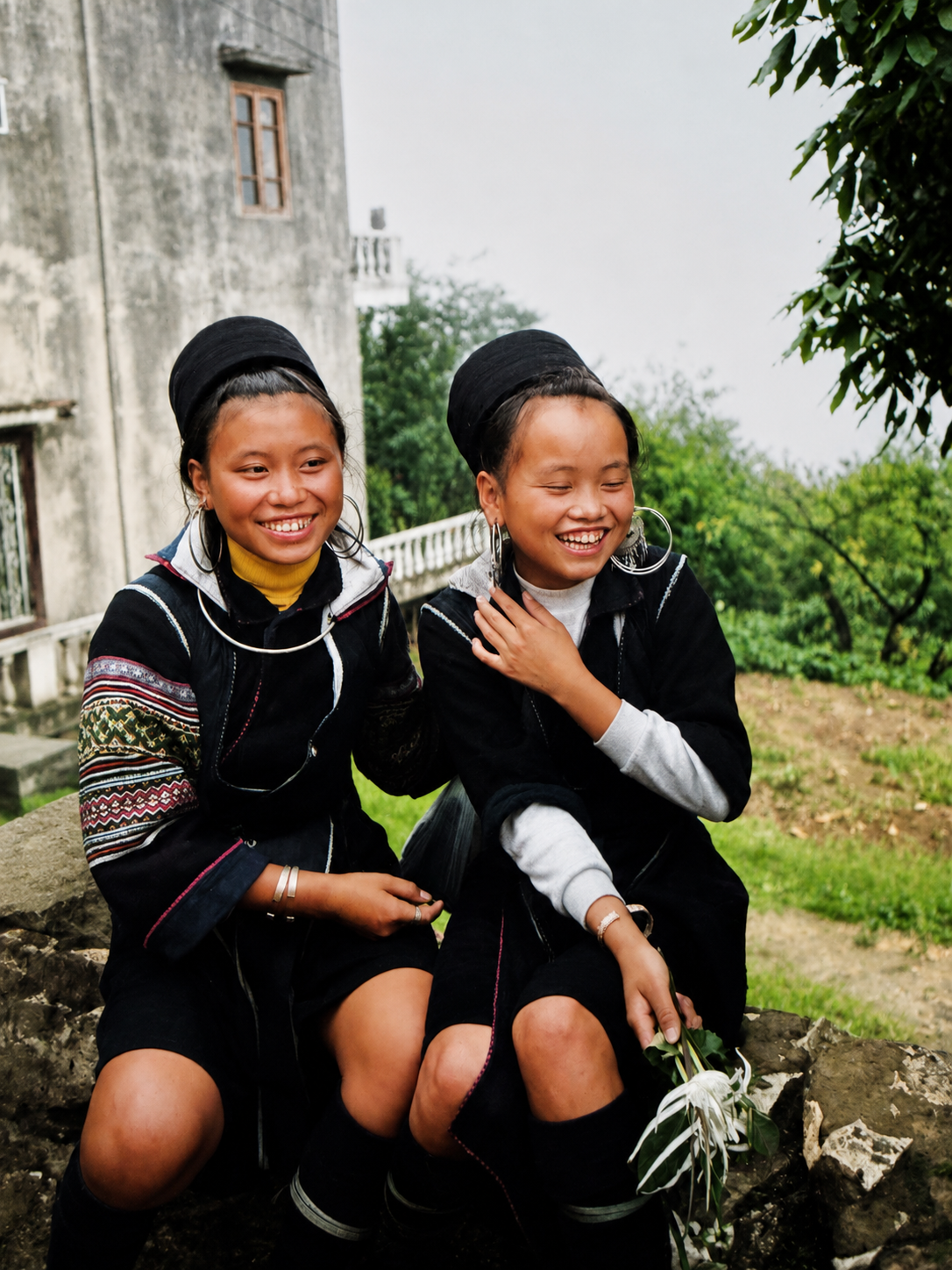
The first people to welcome us were not hotel staff or officials, but a small group of Hmong girls who emerged from the mist with bright smiles and an eagerness to practise their English. Their vocabulary consisted of only a handful of phrases, learned from passing travellers but their confidence was infectious. Before I had even found my bearings, they wanted to know my name, where I had come from and whether I would be staying for long. As it turned out, I would.
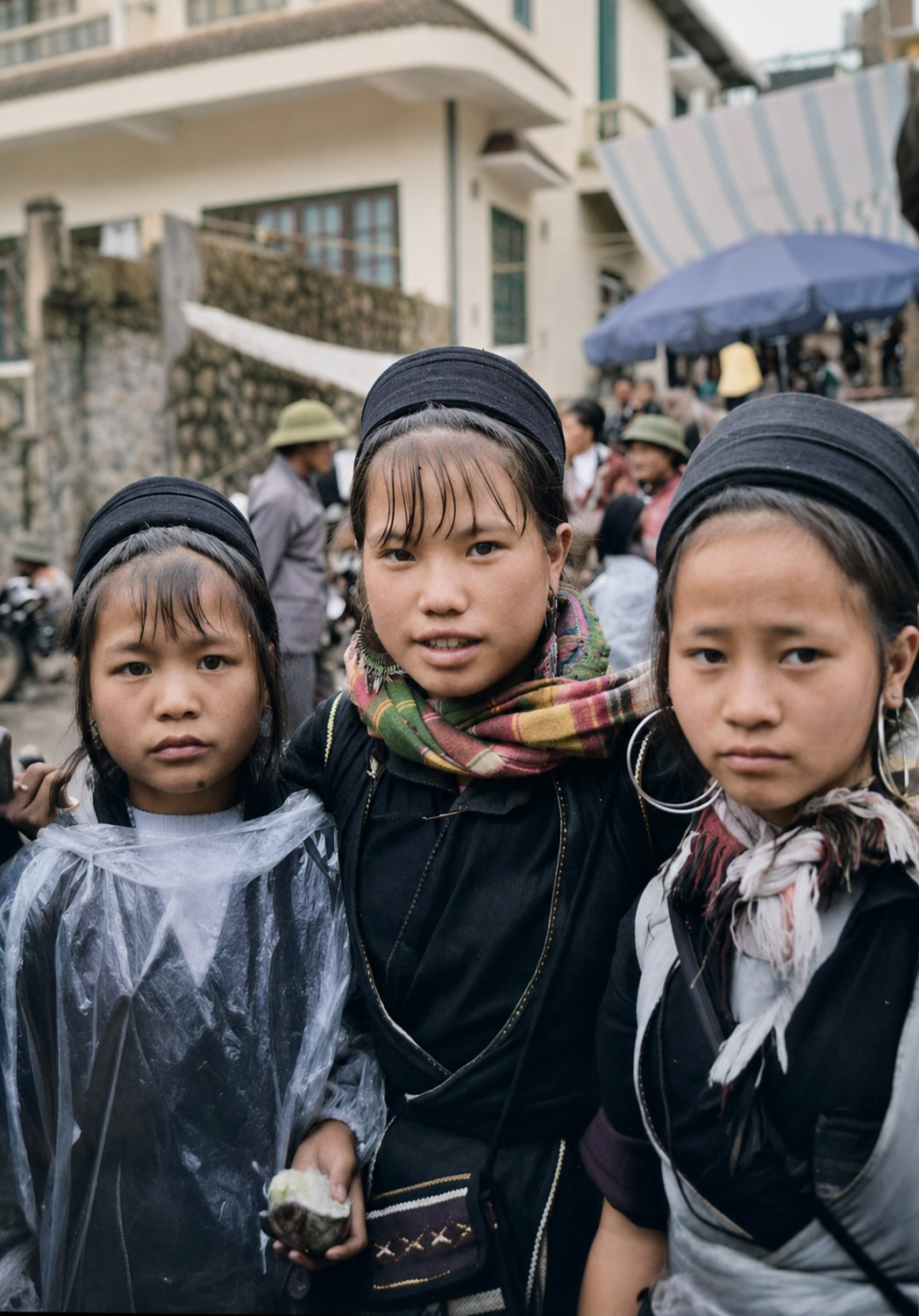
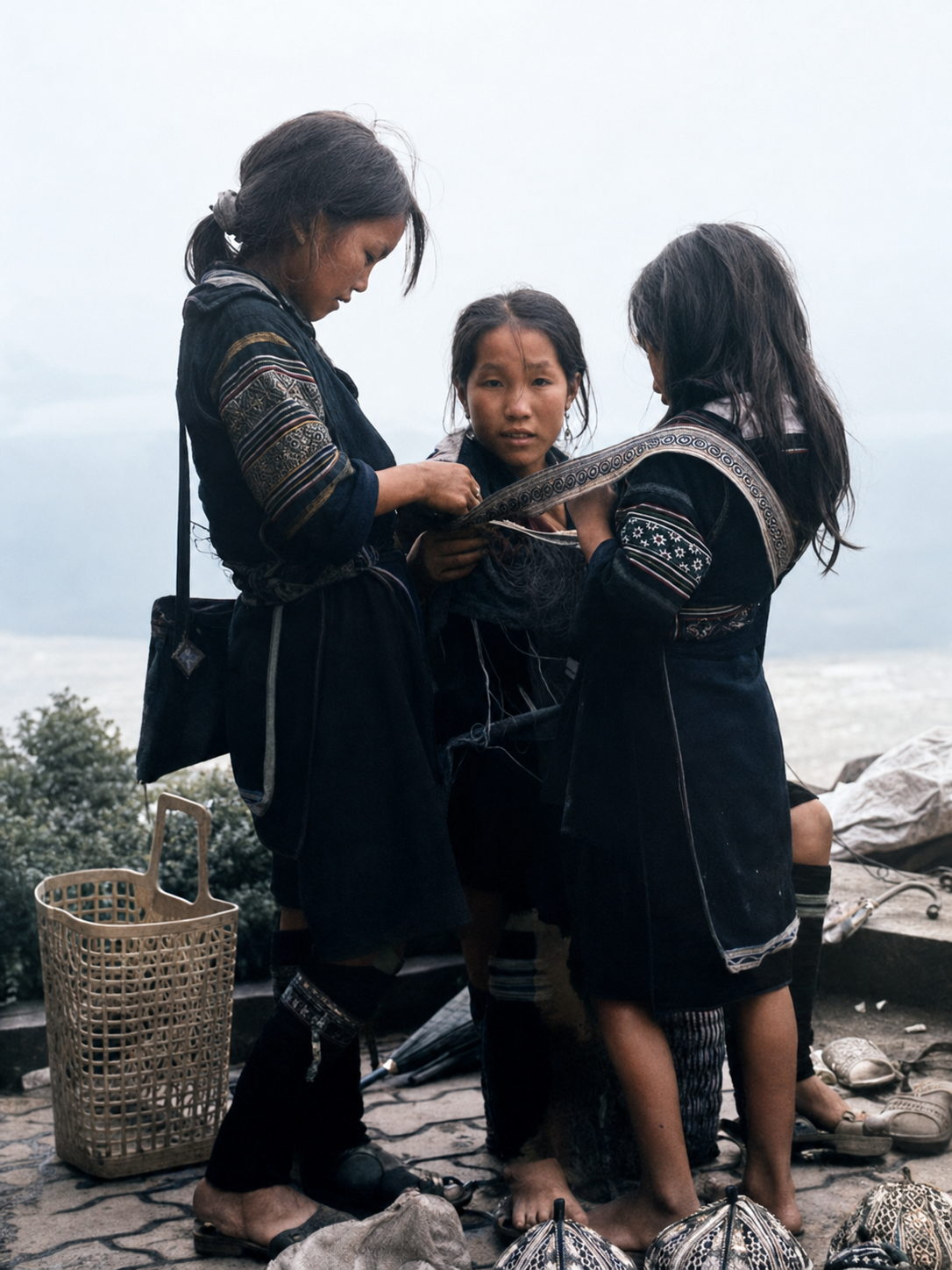
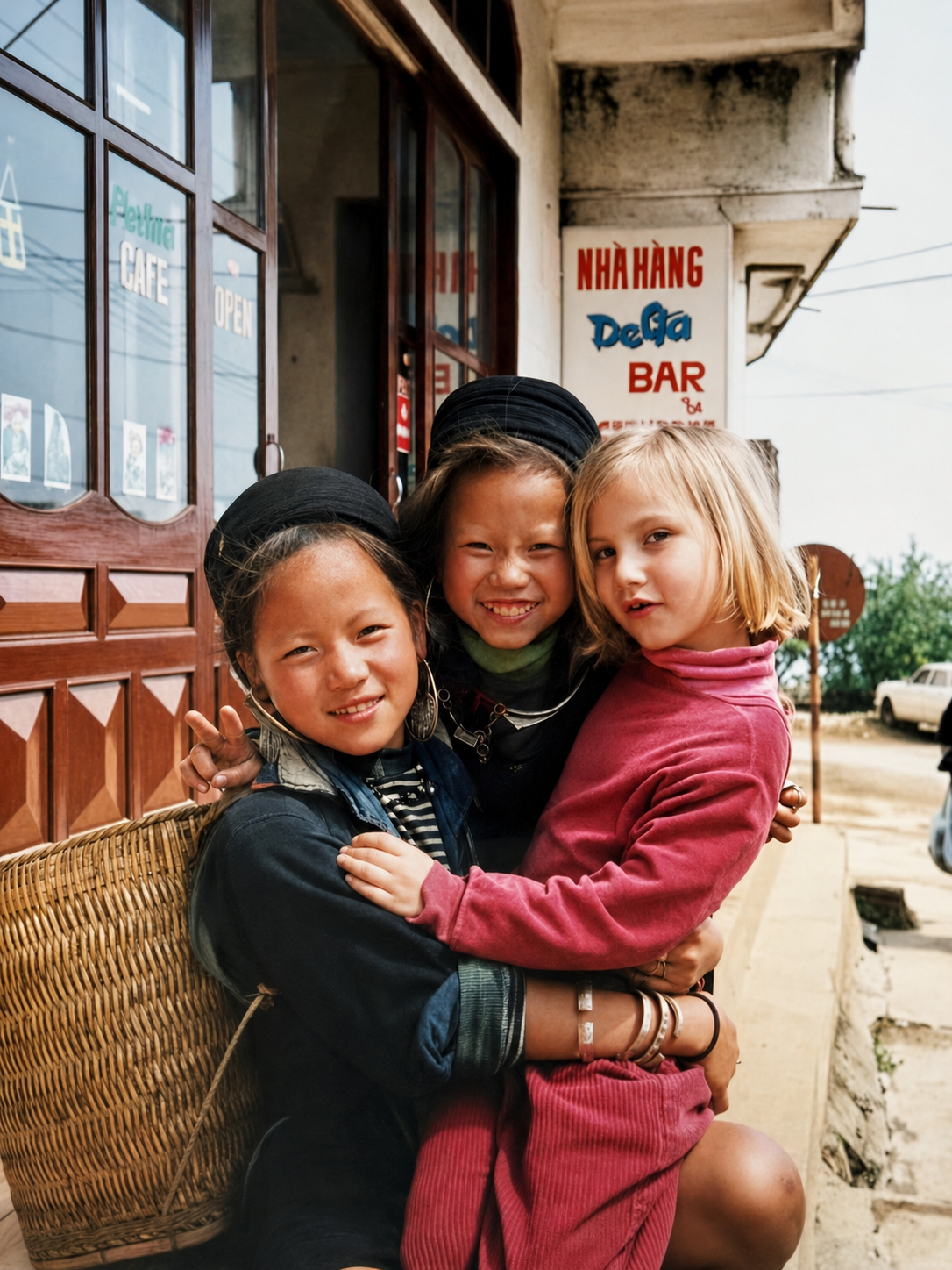
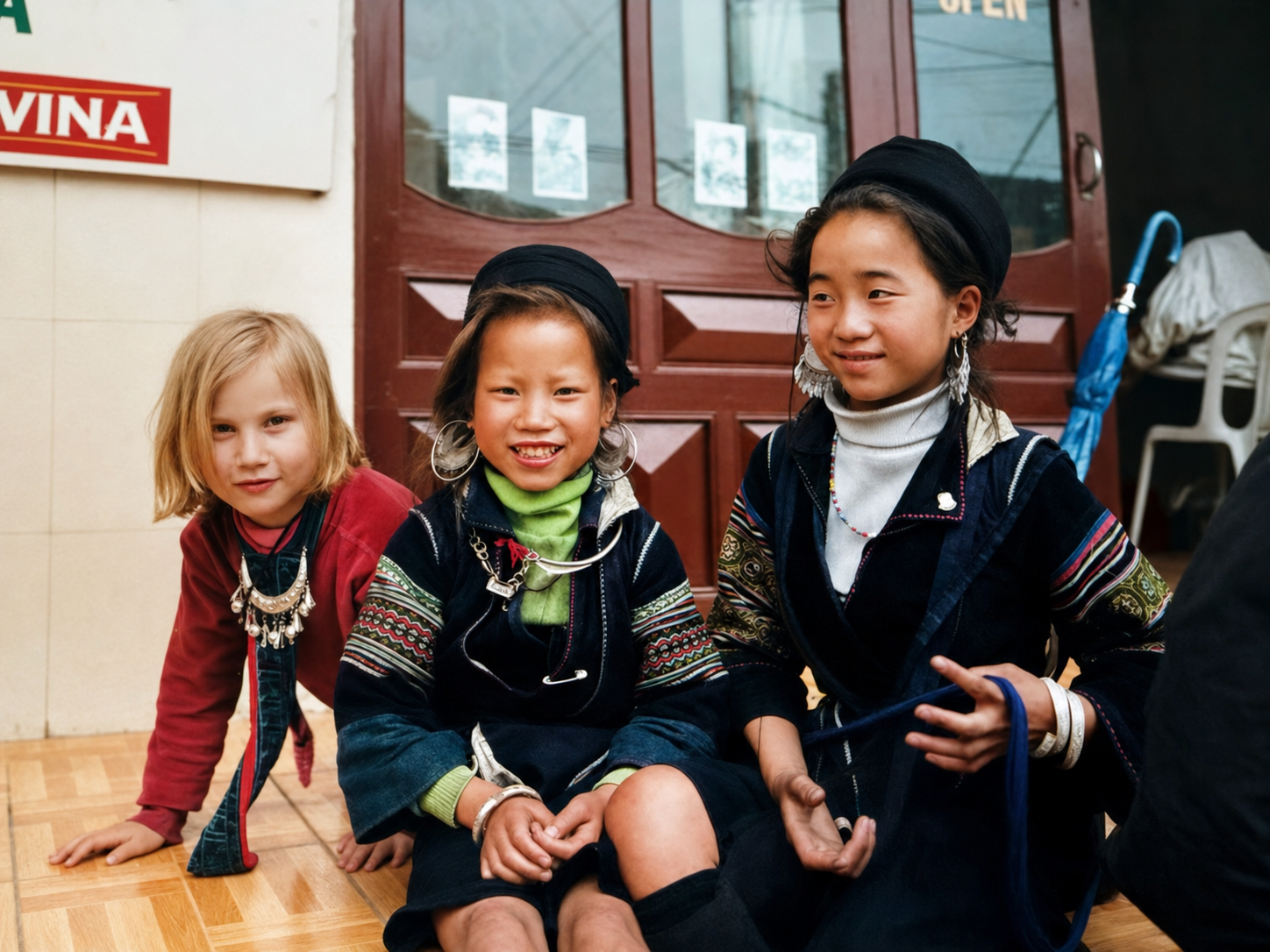
Three young Hmong girls at Sapa Market in 1998. For many children, market day was as much a social occasion as a commercial one, bringing together friends and families from villages scattered across the surrounding mountains. Image courtesy of Sean Adams ©
I had arrived in Sapa as a young environmental scientist and research assistant with Frontier, The Society for Environmental Exploration. Our team was working alongside Vietnamese and other international scientists on one of the first comprehensive modern biodiversity surveys of the Hoàng Liên Nature Reserve, documenting the remarkable forests and wildlife that would later help inform the creation of Hoàng Liên National Park. At the time, though, I wasn't thinking about history or conservation policy. I was simply a young man with a rucksack full of clothes, standing in a mountain town unlike anywhere I had ever seen before.
My first clear landmark was the old stone church, grey against an even greyer sky. Long before it became the polished focal point of a busy tourist town, the church stood weathered and worn, with loose masonry and piles of stone scattered beside its entrance. Everything beyond the church seemed softened by cloud. Little shopfronts, narrow lanes, grazing horses and figures wrapped in indigo appeared briefly before dissolving into the morning. There was no grand entrance, no busy transport hub and certainly no sense that I had arrived somewhere famous. The overwhelming feeling was simply one of distance. It seemed as though I had travelled to the end of the road, and would very soon be travelling a little beyond it.
That sense of remoteness is what I remember most vividly. Before I knew the names of villages, before I understood the forests or met the people who would become lifelong friends, Sapa introduced itself through silence, mountain air and the reassuring feeling that life here followed rhythms very different from those I had left behind.
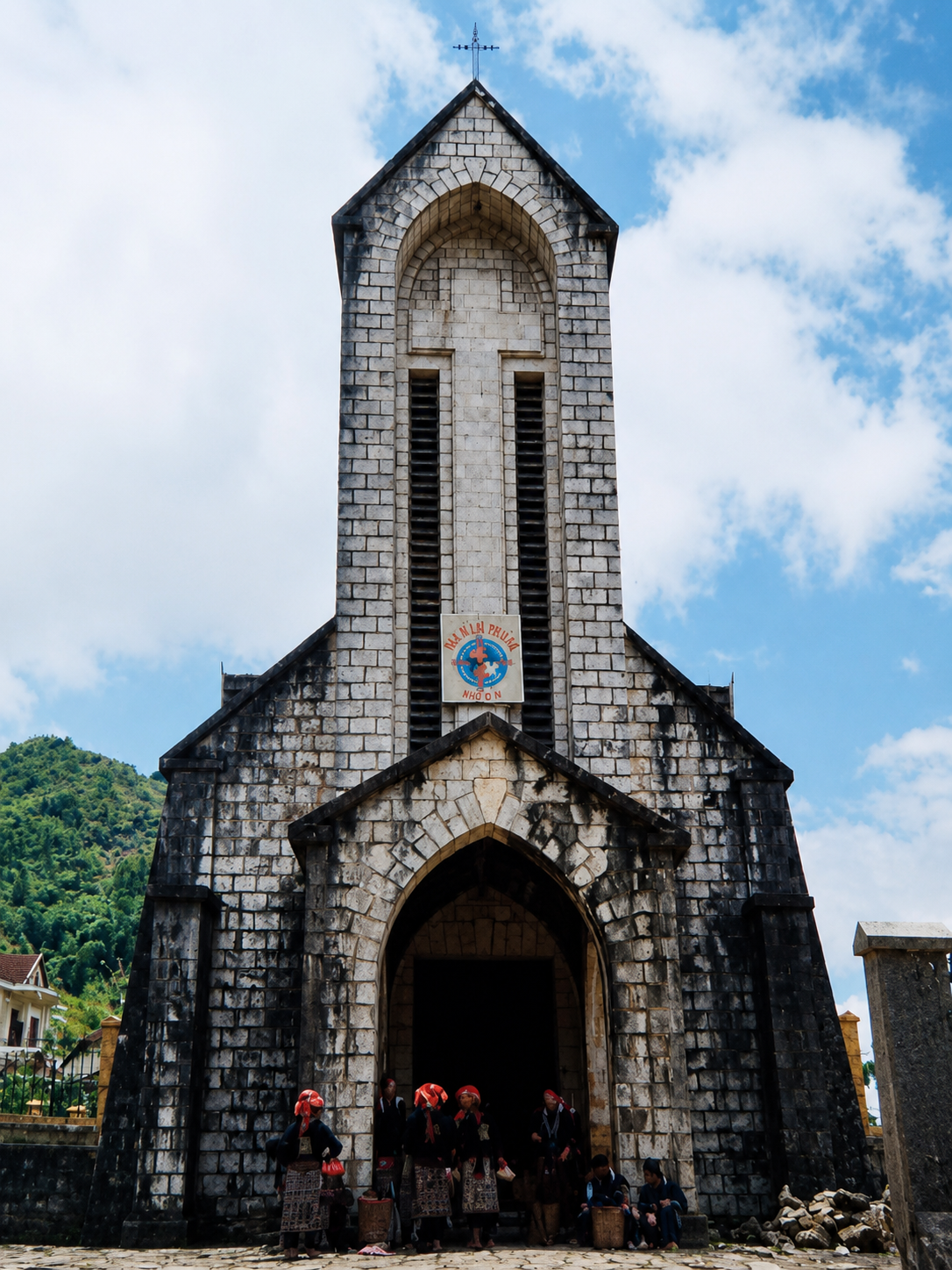
The old stone church photographed in 1998. Time and the mountain climate had left their mark, with weathered masonry and rubble lying beside the entrance, reflecting a building that served a small mountain community rather than the centrepiece of a major tourist destination.
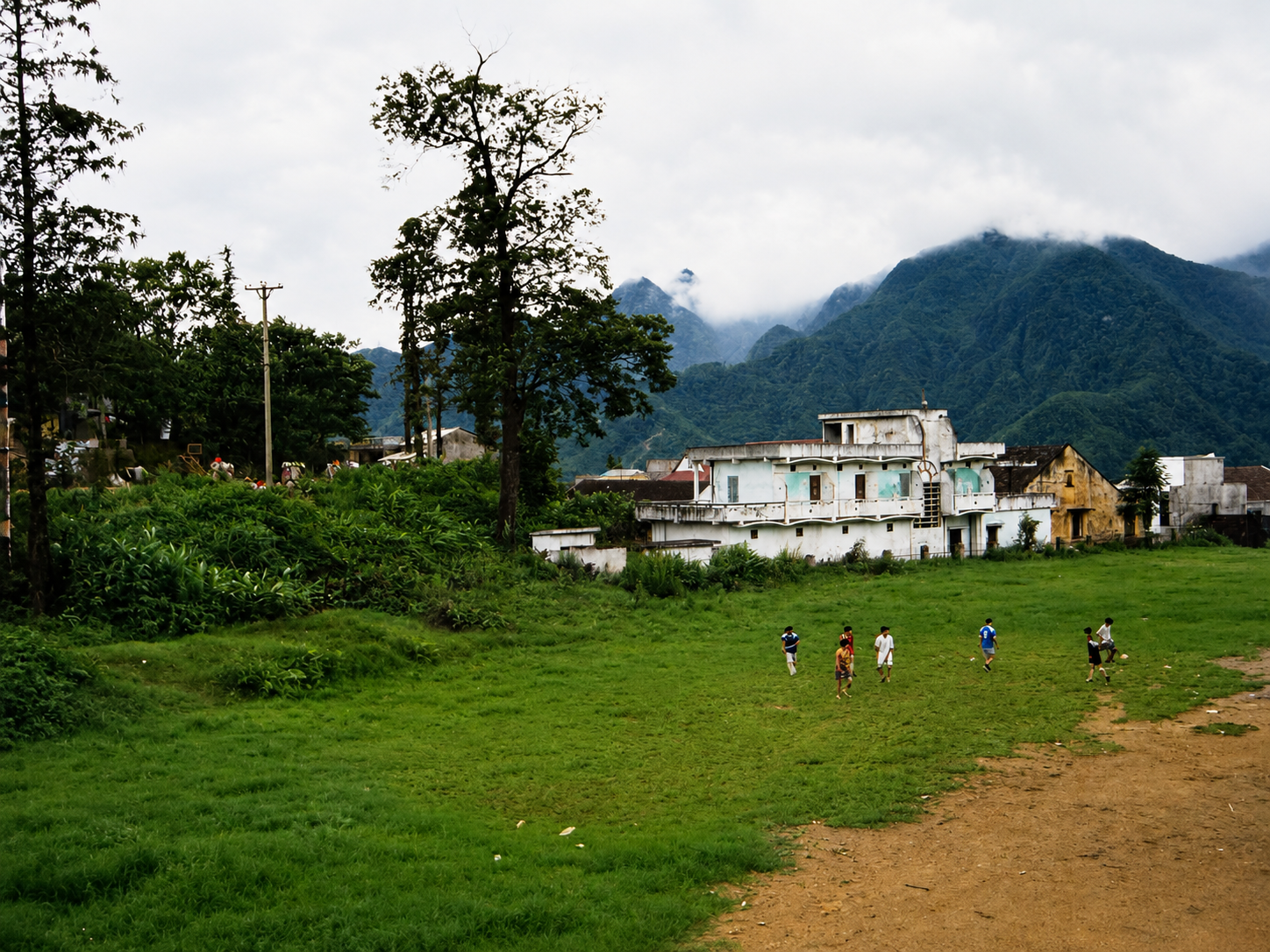
Long before it became Sapa's main public square, this open field served far more practical purposes. Horses and buffalo grazed here, while the town's young people occasionally transformed the rough ground into an improvised football pitch.
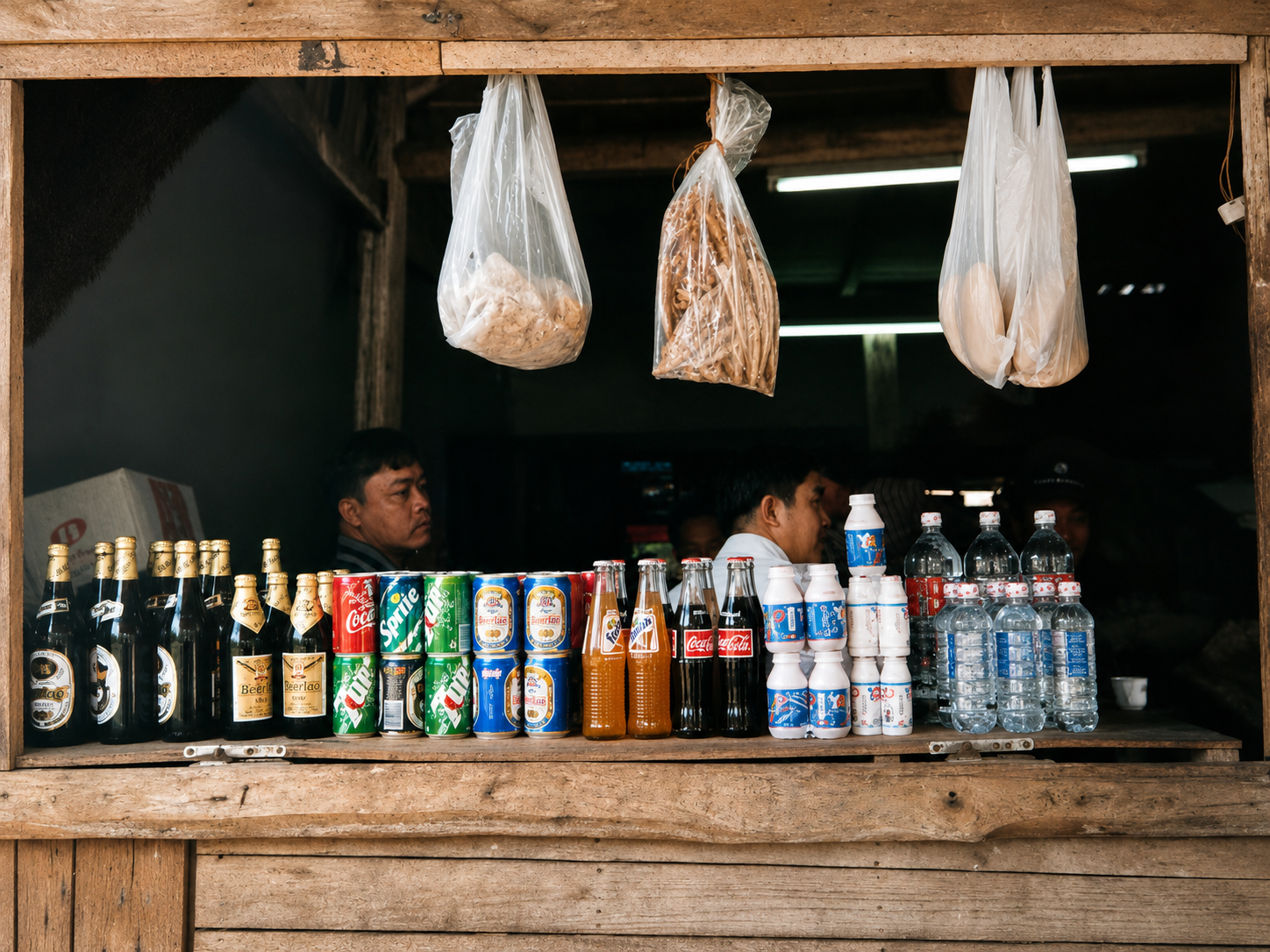
A simple family-run shop in Sapa displaying drinks, snacks and everyday essentials. Small businesses like this supplied local families, researchers and the handful of visitors who passed through town, offering a glimpse into everyday life long before modern convenience stores and cafés appeared.
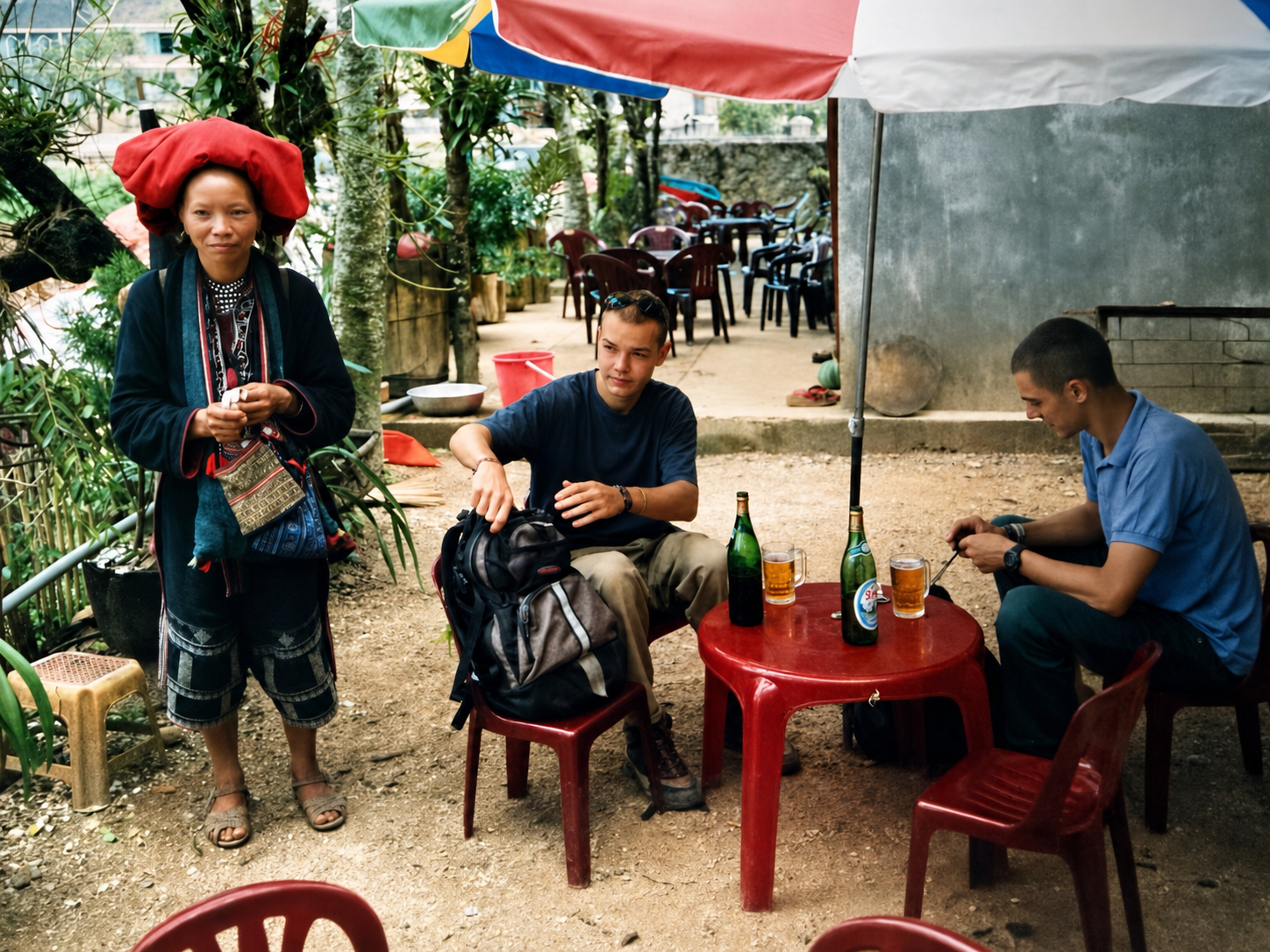
A chance encounter outside a small café in Sapa. In 1998, it wasn't unusual for local Dao people and foreign visitors to stop and chat over a bottle of Lào Cai beer or a cup of tea. With so few tourists in town, conversations often happened naturally, driven more by curiosity than commerce.
A Town That Could Fit in a Single Walk
It is difficult to explain to first-time visitors today just how small Sapa once felt. Within a few days I realised I could wander from one end of town to the other in less than ten minutes. There were no sprawling streets, no rows of hotels climbing the hillsides and no streams of coaches arriving throughout the week. The town occupied a modest shoulder of the mountain, surrounded almost immediately by rice fields, woodland and villages connected by narrow footpaths.
Accommodation was surprisingly limited. The Phương Nam Hotel became something of a sanctuary for our research team whenever we escaped the forest long enough to enjoy a hot shower. Auberge de Chapa welcomed adventurous travellers willing to linger for a few days, while Cat Cat Hotel offered simple rooms overlooking the valley. Scattered among them were a handful of modest guesthouses, many family-run and seldom mentioned in guidebooks. Above the town, builders were still at work on the Victoria Sapa Resort. Even then there was quiet anticipation surrounding the project, its elegant colonial-inspired architecture hinting at a different future for the mountain town.
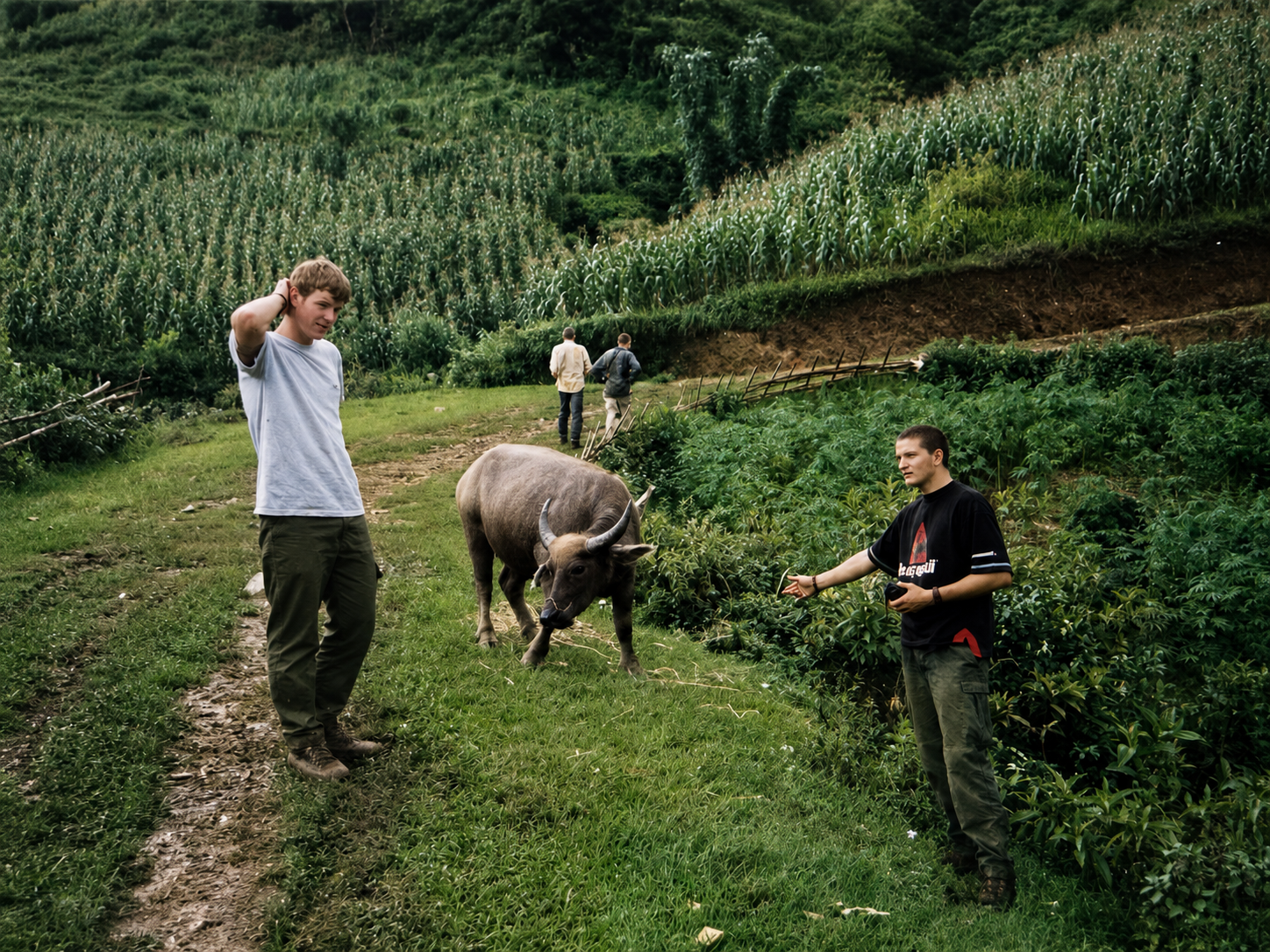
The streets themselves belonged as much to animals as they did to people. Water buffalo ambled through gravel lanes with complete confidence and horses grazed on the rough grass where Sapa Square now hosts festivals and performances. Back then it was little more than an uneven football field. We even organised a match there against a team from Bắc Hà, whose players travelled for hours through the mountains only to face a ragtag collection of conservationists wearing hiking boots. Most of the local team played barefoot. A handful of amused spectators watched from the sidelines while horses grazed nearby, seemingly unimpressed by the quality of football on display.
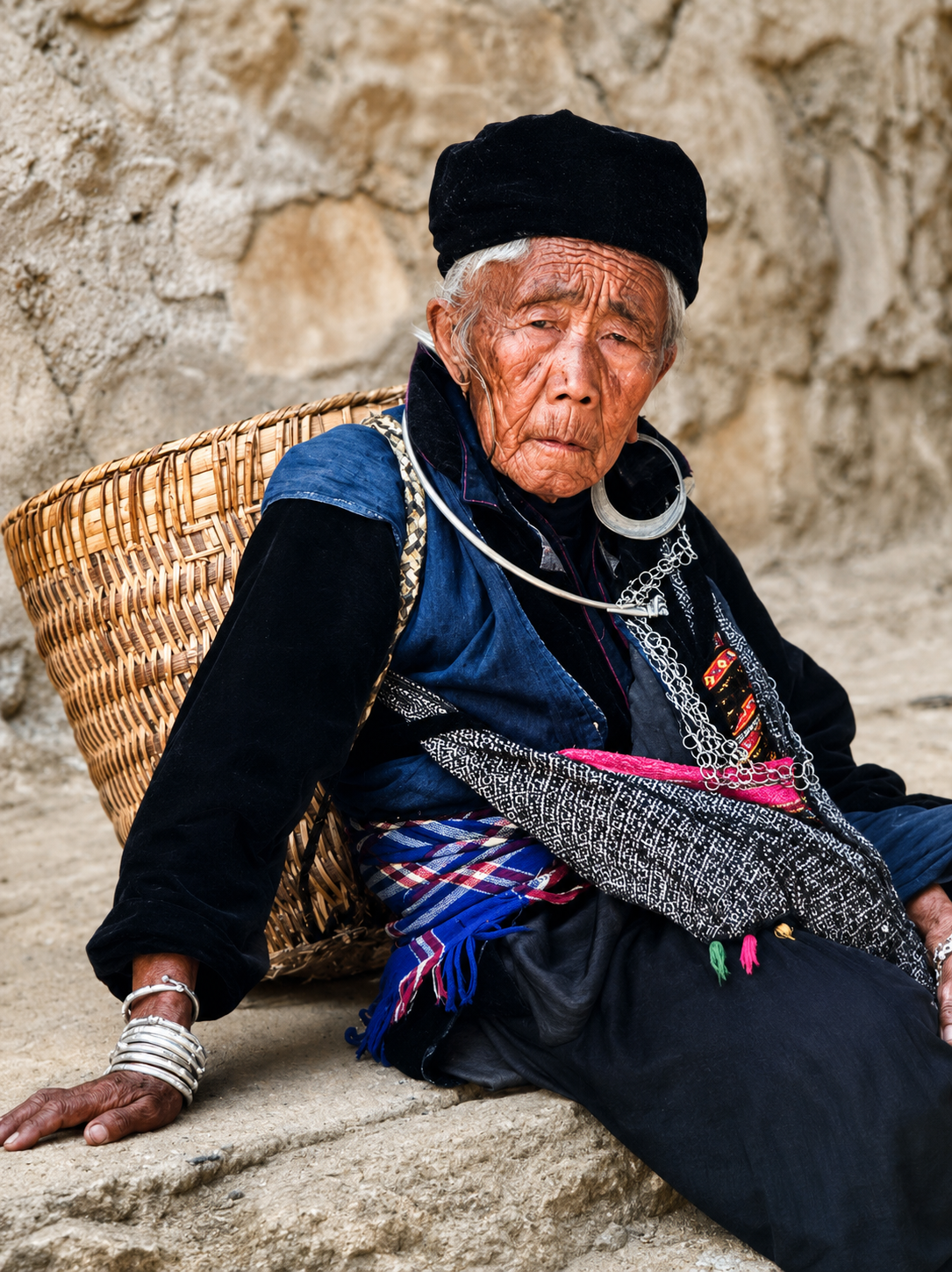
The old stone church stood quietly at the heart of everything. It was less an active place of worship than a natural meeting place where people paused, waited for friends and watched the life of the town unfold around them. Around its weathered walls, clusters of Hmong and Red Dao women of every generation gathered with woven baskets filled with beautifully embroidered textiles, indigo hemp clothing and small handcrafted items fashioned from old garments that had been carefully repurposed rather than discarded. Even to my inexperienced eyes, the quality of the embroidery was unmistakable. Every stitch seemed impossibly neat, every pattern carefully considered, reflecting skills that had been passed from mother to daughter over countless generations. Unlike today, very little of what they carried had been made specifically for visitors. Much of it had been created for everyday use or family life, and only later found a second purpose as something travellers admired and wished to buy. Nearby, the market spilled across its familiar site, just as it had for decades, drawing families from the surrounding mountains who came not for visitors but for trade, conversation and the weekly exchange of news.
Modern conveniences barely existed. Electricity faltered often enough that nobody seemed surprised when the lights disappeared for an evening. Internet cafés had yet to arrive. Information travelled by conversation rather than screens, and people measured time by market days, changing weather and the agricultural calendar.
Most remarkable of all was the absence of crowds. During the weekend we might pass only a handful of foreign visitors, many of whom stayed close to the town before continuing elsewhere. Once you left the church behind and followed the footpaths into the valleys, it was expected that we would spend the whole week without encountering any others travellers at all and this proved the case for the three months I stayed in Sapa. Looking back now, it feels almost impossible that the town I crossed in less than ten minutes would one day become one of Vietnam’s busiest mountain destinations.
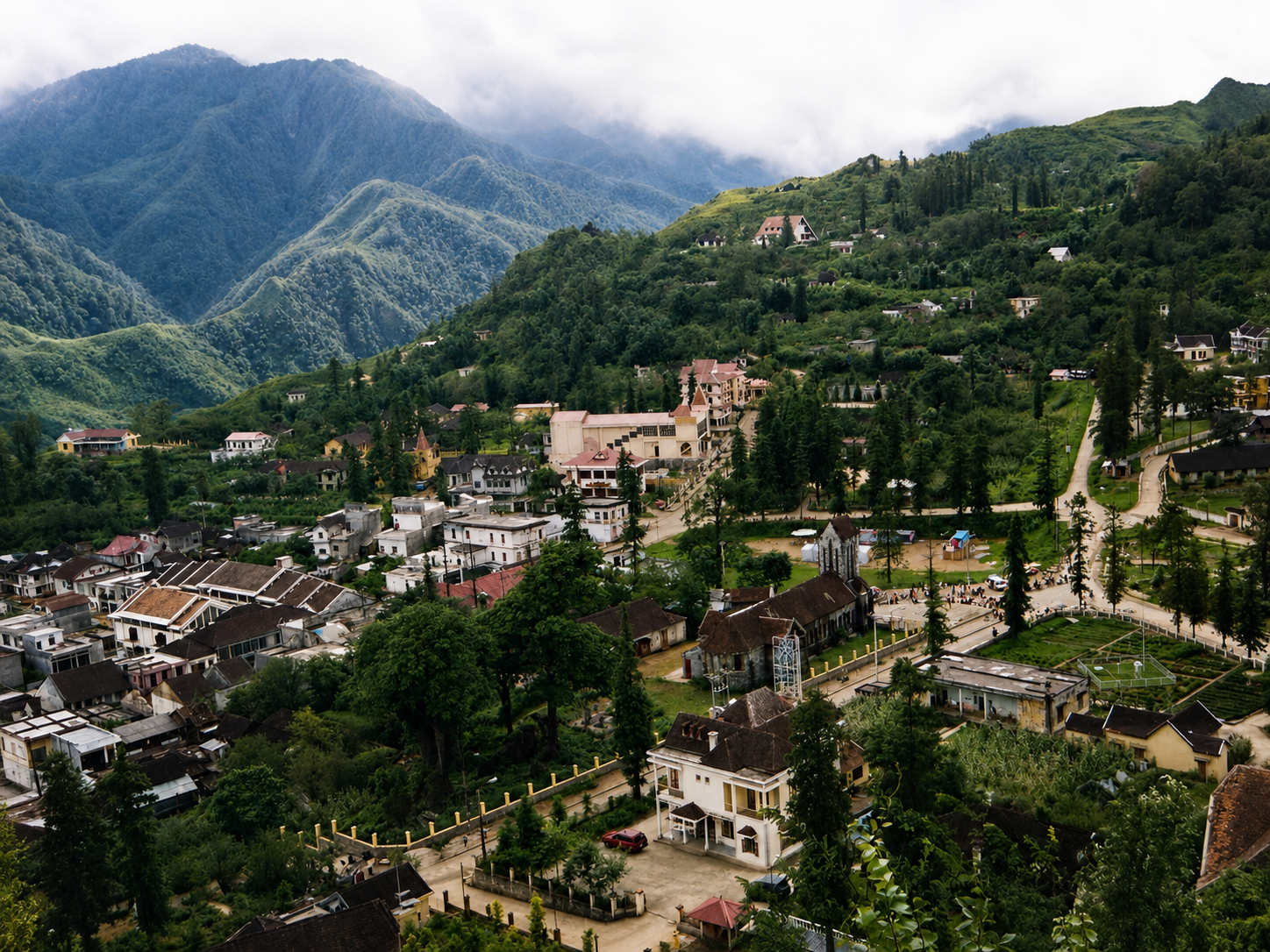
Seen from Ham Rong Mountain, it is striking how little of the landscape Sapa occupied. Homes clustered around the old stone church before giving way to gardens, fields and steep forested hillsides. The town existed within the mountains rather than replacing them, and the surrounding greenery was valued not simply for its beauty, but as the source of clean water, fresh air, fertile soils and livelihoods for the communities who called these mountains home.
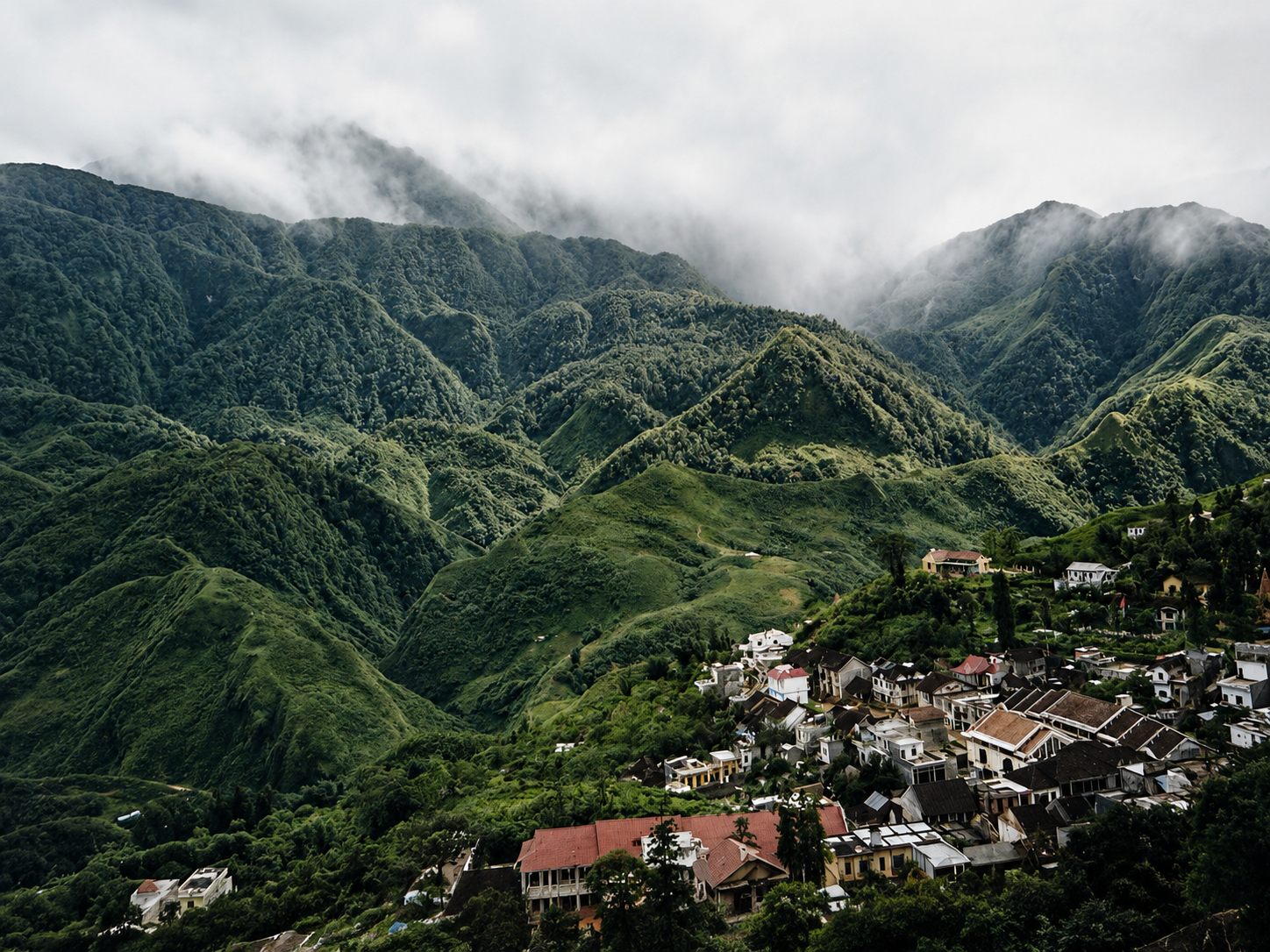
In 1998, Sapa remained a remarkably small mountain town. Beyond its handful of streets, the built landscape dissolved almost immediately into rice terraces, villages and the forests of the Hoàng Liên mountains. Nature was never something to escape to, it was simply part of everyday life, shaping the air people breathed, the food they grew and the rhythms by which they lived.
Living Under Canvas
Although Sapa became our base, I spent surprisingly little time sleeping in the town itself. Home was a cluster of Vango canvas tents pitched in the yard of a disused Hmong house on the edge of Cát Cát village. The weathered wooden building quickly became far more than a convenient shelter. It served as our kitchen, equipment store, laboratory, dining room and, most importantly, the social heart of the expedition. Local guides wandered in for tea, neighbours stopped to see what we were doing, children arrived to satisfy their endless curiosity and, after long days in the forest, it became the place where stories were exchanged, specimens examined and friendships quietly took root. Looking back, it felt less like a research camp and more like a small community that happened to revolve around biodiversity surveys.
Each morning began with the same reassuring ritual. The cold mountain air crept through the canvas before sunrise, leaving sleeping bags damp with condensation and boots chilled enough to make the first few steps distinctly uncomfortable. Someone would already be coaxing reluctant flames from the previous evening's embers while a blackened kettle balanced over the fire. Before long the smell of wood smoke drifted lazily through camp as breakfast came together, notebooks appeared on the table, equipment was checked and the day's survey plans gradually took shape. By the time the mist began lifting from the surrounding hillsides, our quiet little camp was already alive with conversation.
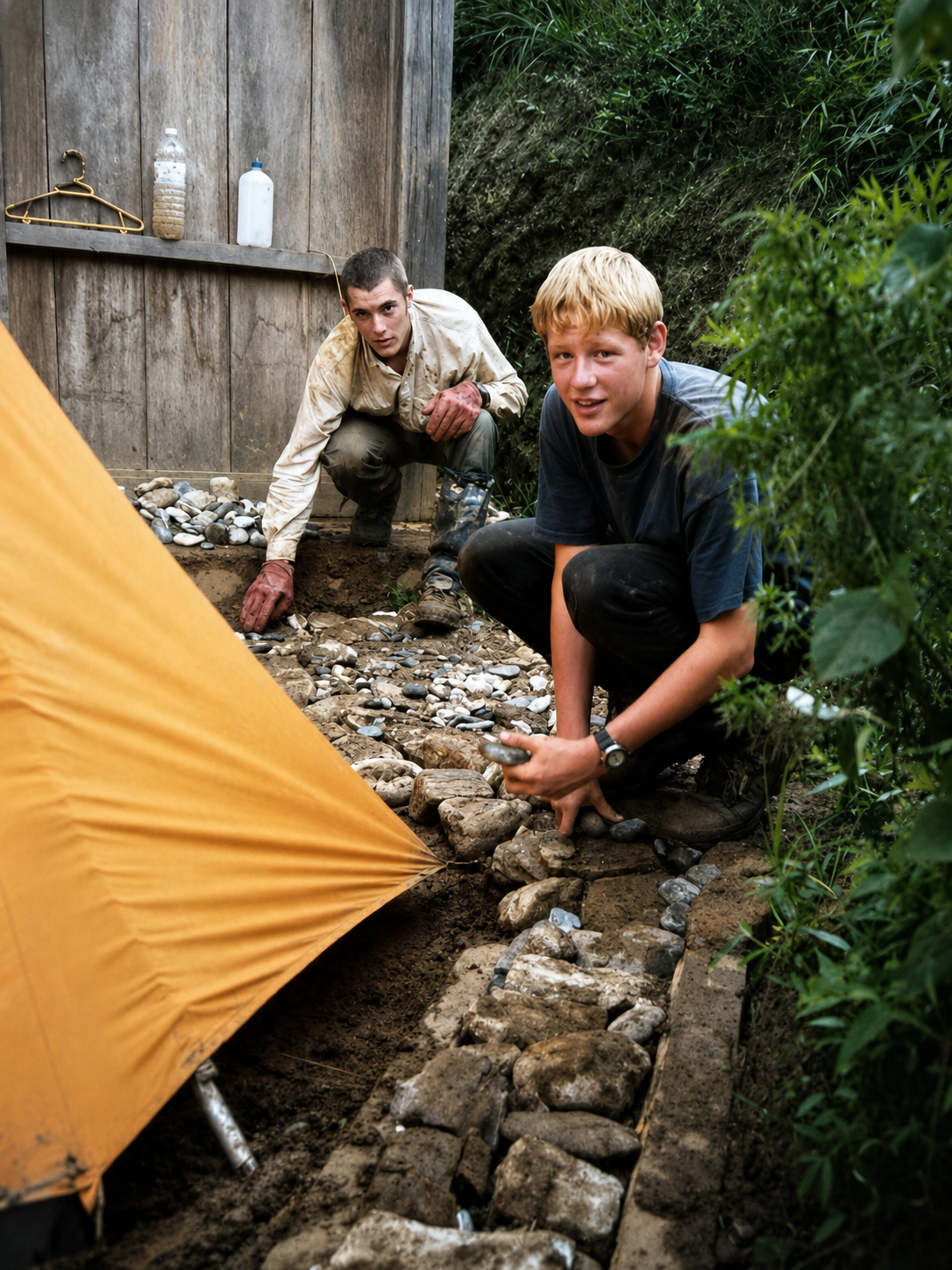
Mountain weather demanded constant improvisation. After heavy rain, digging drainage channels around the tents became as important as collecting scientific data, if we wanted to stay dry enough to sleep.
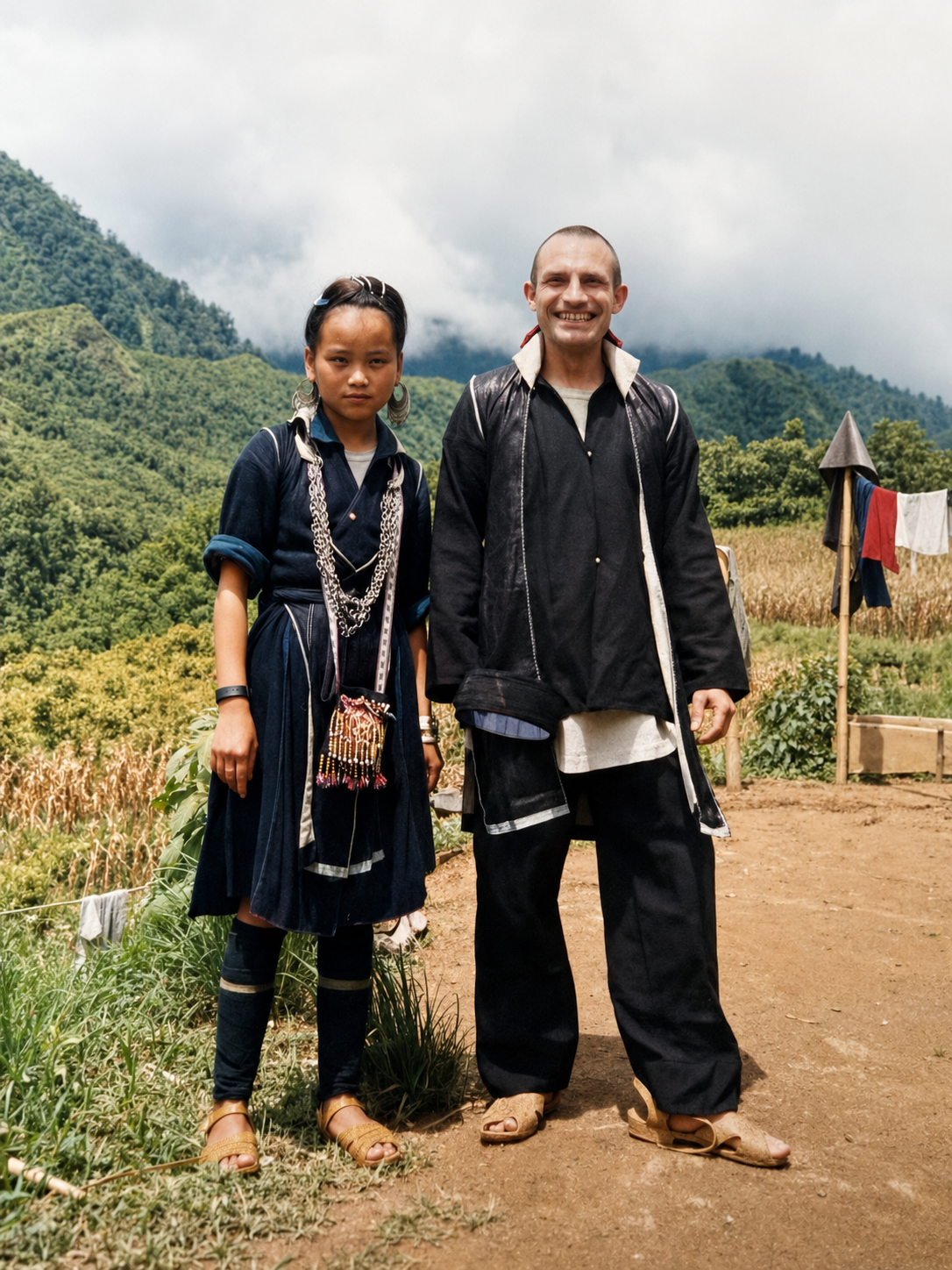
The greatest privilege of working in the Hoàng Liên mountains was never simply the wildlife we documented, but the friendships we formed with the people who welcomed us into their communities. Nearly three decades later, many of those relationships continue to shape both my life and the values that define ETHOS today.
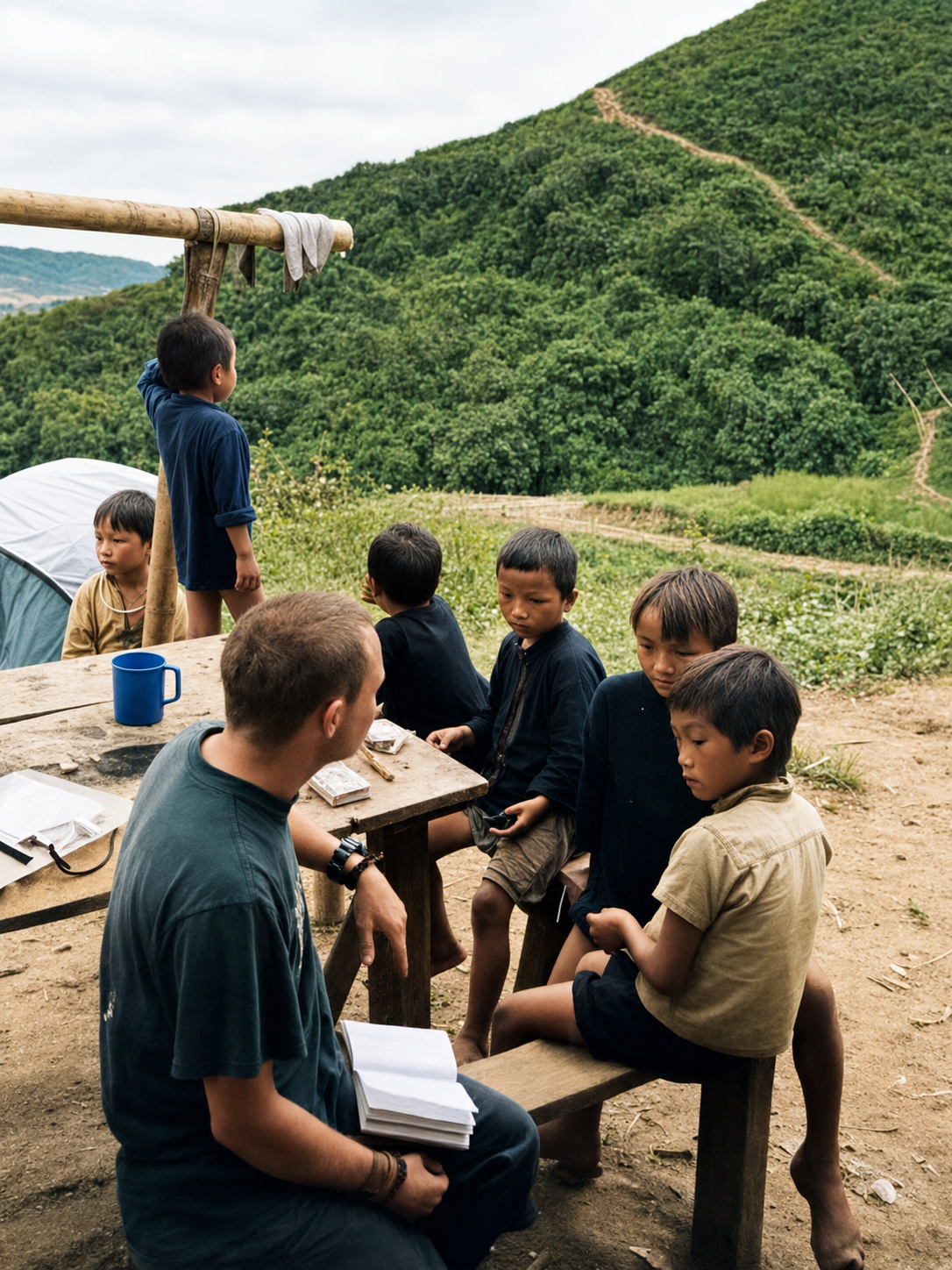
Evenings at base camp rarely felt lonely. Research notes, shared meals, music and laughter often brought together our Frontier team, local guides and children from nearby villages. Long before the phrase "community tourism" became fashionable, our camp had quietly become part of the local community.
Drinking water came directly from the streams tumbling down from the mountains. This was also where we bathed. It was astonishingly clear and painfully cold. Some days, washing your face demanded determination. Bathing required considerably more courage. By the end of each week we found ourselves inventing increasingly creative reasons to make the uphill walk into town, where a hot shower at Phương Nam Hotel felt every bit as luxurious as any five-star spa could today.
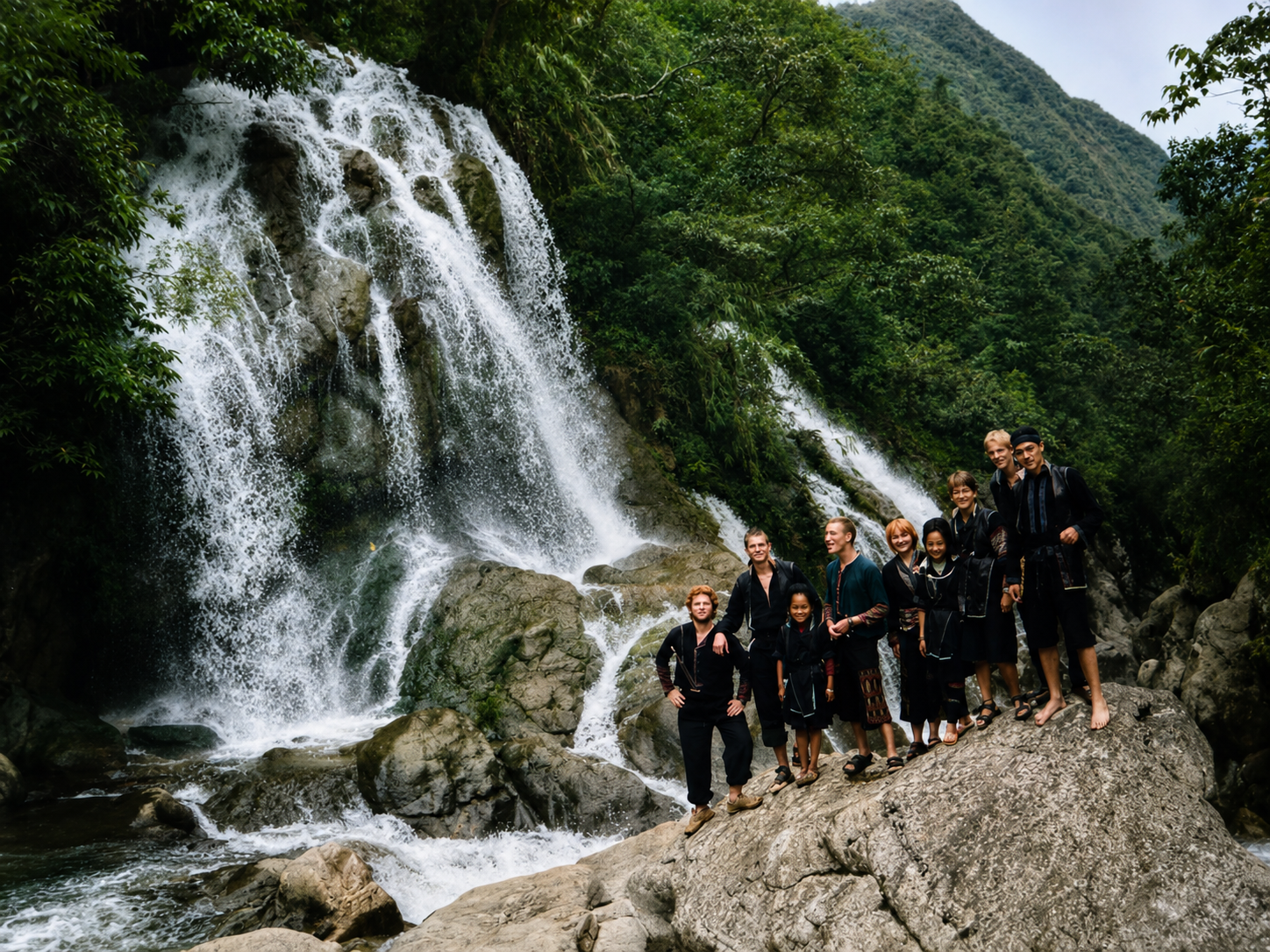
The mountain streams that tumbled through the Hoàng Liên foothills sustained both our expedition and the communities around us. Their crystal-clear waters provided our drinking supply, a place to wash away the day's mud and, after long hours in the forest, an invigoratingly cold mountain bath.
Our work regularly took us deeper into the surrounding valleys and forests, which meant dismantling camp, loading tents, food and scientific equipment into our rucksacks, and setting off on foot. Finding somewhere suitable to spend the night was often harder than reaching the survey site itself. Flat ground was surprisingly scarce in such steep country. Hillsides dropped away almost everywhere, while the valley floors were usually occupied by flooded rice terraces that offered perfect conditions for growing rice but hopeless conditions for pitching tents.
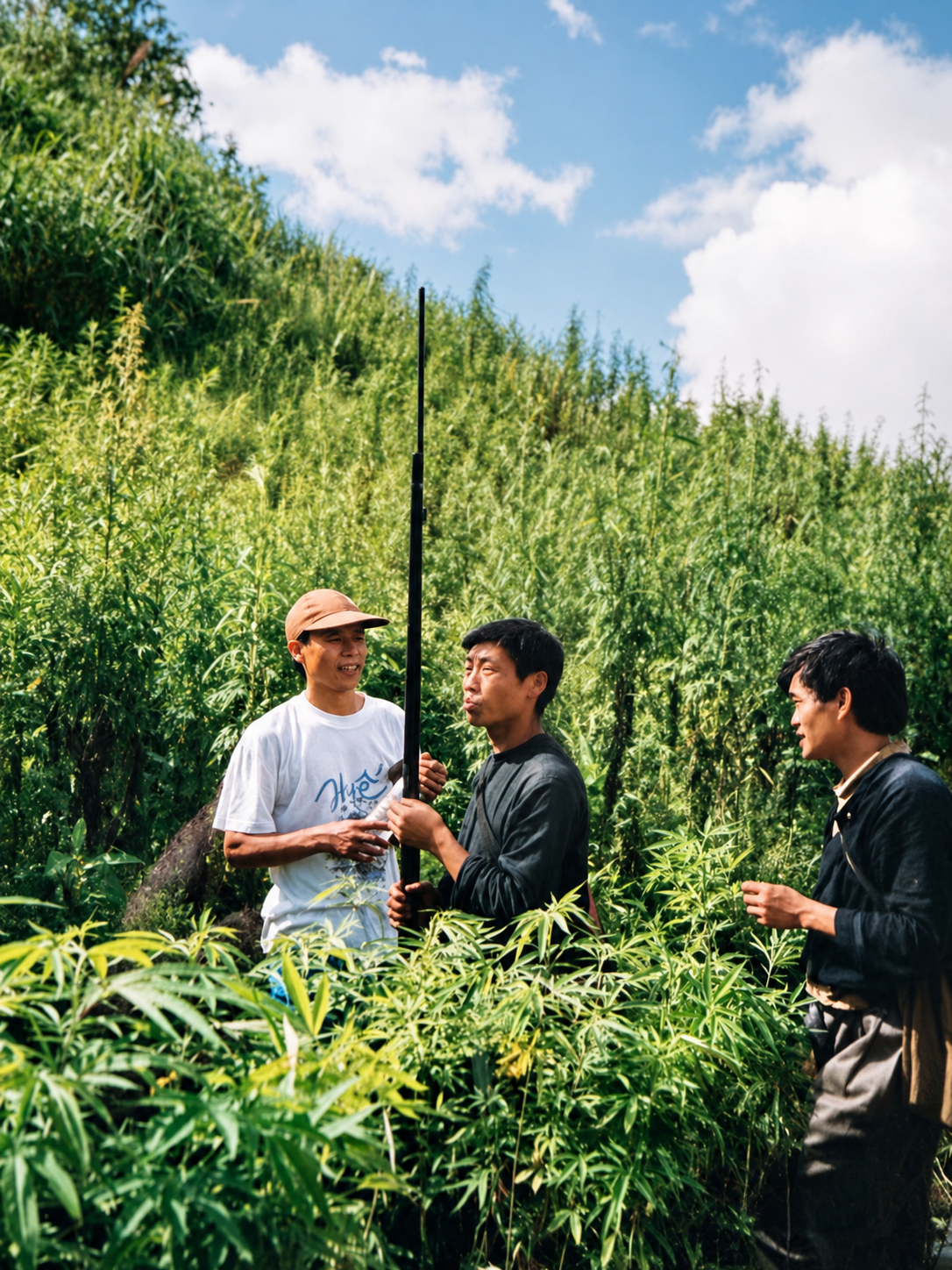
One satellite camp saw us make shelter inside the wooden walls of a village school that stood empty because no teacher was available to work there. The packed clay floor allowed us to drive tent pegs into the ground after several nights wrestling with rocky slopes. On another expedition, local Hmong farmers smiled as they watched us search unsuccessfully for somewhere level before kindly allowing us to clear a small patch within a hemp field. A few carefully cut plants created just enough room for our tents, and by dusk our tiny camp had become part of the landscape.
Life under canvas stripped away routine and replaced it with something simpler. Days were governed by weather, daylight and the distance still left to walk. Evenings ended around shared meals cooked over open fires, damp clothes hanging wherever they might dry, and notebooks slowly filling with observations gathered from the forests around us. At the time it felt entirely ordinary. Looking back now, those months remain some of the richest of my life.
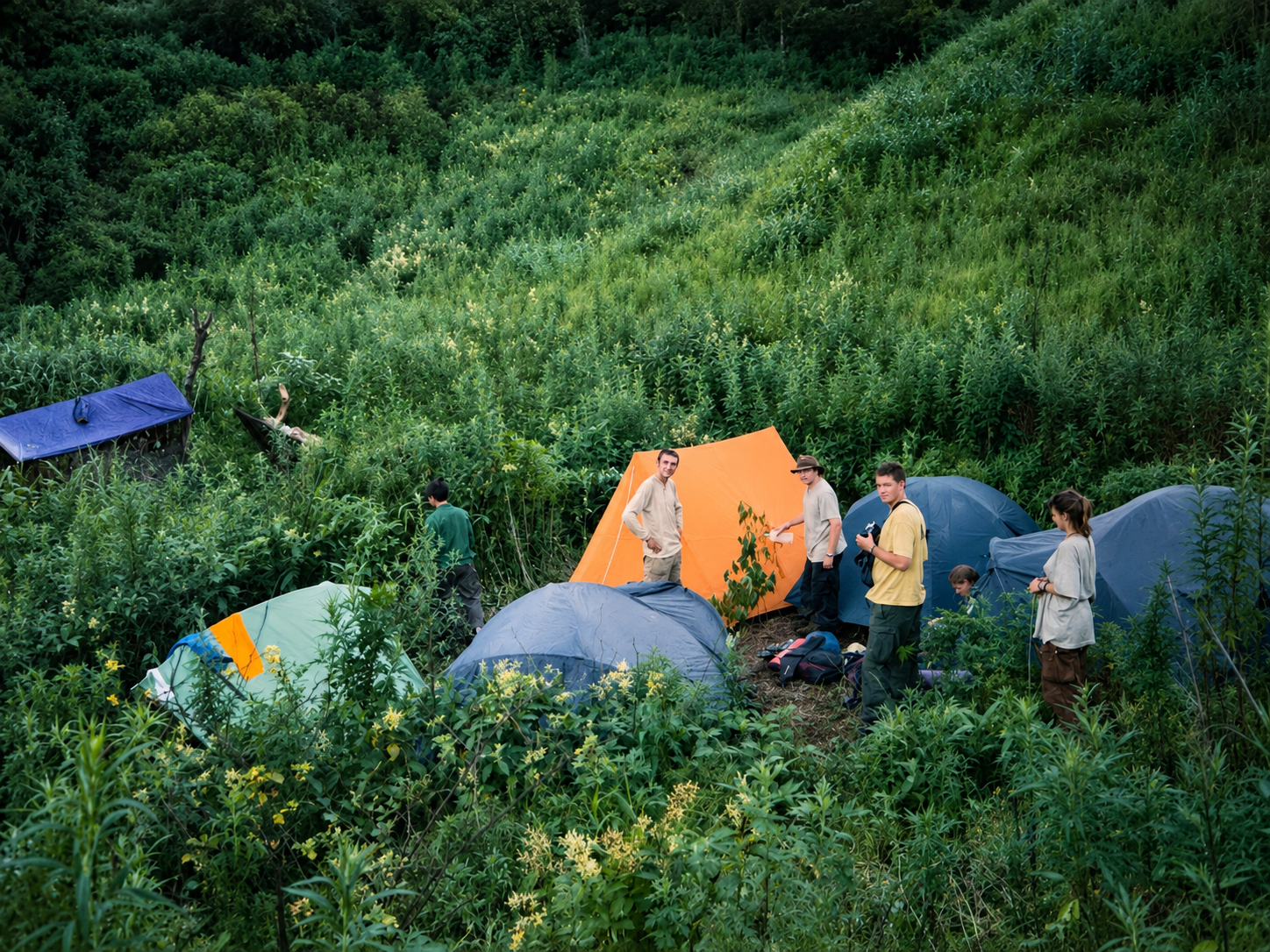
Our Frontier research team's satellite camp, pitched in a hemp field near the remote Hmong village of Dền Thàng during a biodiversity expedition in 1998. From camps like this, we spent days surveying the surrounding forests and documenting the wildlife that would later help inform the creation of Hoàng Liên National Park.
The Work That Brought Me Here
People often assume I first came to Sapa because I loved mountains but in truth, I arrived because of forests. I had joined Frontier, The Society for Environmental Exploration, as part of a biodiversity conservation project working alongside Vietnamese scientists from the Institute of Ecology and Biological Resources. Our task was both straightforward and immensely ambitious. We were helping document the remarkable diversity of the Hoàng Liên Nature Reserve, recording everything from flowering plants and ancient trees to mammals, birds, reptiles, amphibians and butterflies. Much of the area had received remarkably little modern scientific study since the French colonial period, despite its reputation among botanists and conservationists as one of Vietnam’s most important mountain ecosystems.
The work itself was rarely glamorous. Long days were spent walking steep forest trails, setting survey lines, recording observations and carrying equipment through terrain that seemed determined to test every muscle. Leeches were an inevitable companion during the wetter months, notebooks rarely remained dry for long, and every sample or observation represented another careful piece of a much larger picture.
What made the experience extraordinary was not simply the wildlife we encountered but the people we worked beside. Vietnamese scientists shared knowledge generously, local guides navigated forests that would have defeated us alone, and families welcomed us into villages where conversations often continued long after notebooks had been put away for the evening. Scientific research and local knowledge never felt like separate worlds. Each strengthened the other.
Only years later did I fully appreciate the significance of what we had been contributing towards. The surveys carried out during those seasons helped demonstrate the exceptional ecological importance of the Hoàng Liên mountains, while Frontier’s long partnership with Vietnamese researchers supported biodiversity monitoring, conservation training and protected area management. When Hoàng Liên National Park was officially established in 2002, it reflected the work of countless individuals over many years. Knowing that our muddy boots, damp notebooks and long days beneath the forest canopy formed one small part of that larger story remains one of the quiet privileges of my life.
At the time, however, none of us spoke much about legacy. We simply woke each morning, packed our rucksacks and disappeared once more into the mountains, believing that understanding a landscape was the first step towards protecting it.
Six Days of Rain
One of our satellite camps took us high into the mountains above what is now the O Quy Hồ Pass, close to where the Rong Mây Glass Bridge now welcomes thousands of visitors every year. In 1998 there was nothing but a gravel road climbing the pass, no viewpoints and certainly no cafés selling coffee to passing tourists. There was only dense montane forest, thick bamboo and a narrow footpath disappearing into the cloud.
Our objective sounded wonderfully ambitious. We hoped to record the presence of the elusive Ward's Trogon, one of Vietnam's most sought-after forest birds, while also collecting moths and butterflies to help build a more complete picture of the reserve's biodiversity. It was exactly the sort of expedition I had imagined when I first volunteered to work in northern Vietnam.
Nature, however, had other ideas. The rain began almost as soon as we pitched our tents and then it simply refused to stop. Hour after hour, day after day, the rain hammered against the canvas with a persistence that became almost hypnotic. Thick fog wrapped itself around the mountainside, reducing visibility to little more than a few metres. There was no possibility of spotting birds among the dripping forest canopy, and moths and butterflies had wisely chosen to remain hidden. Even the forest itself seemed to retreat into silence beneath the relentless downpour.
Eventually there was little left to do except wait. Apart from the occasional dash into the undergrowth for a toilet break, we were effectively prisoners inside our tiny two-man tents. At one point my tent mate and I spent almost three full days and nights inside without venturing further than a few metres from the entrance. Cabin fever arrived surprisingly quickly. Out of sheer boredom we invented increasingly ridiculous ways to pass the time. Our favourite involved deliberately unzipping the tent door just enough to invite mosquitoes inside before attempting to catch them with chopsticks. Looking back, I cannot remember who won. I only remember laughing far more than the game deserved.
Life became steadily more complicated. The small stream we had crossed so casually on our way into camp was now an angry torrent, making any attempt to leave distinctly unwise. Thunder rolled endlessly across the mountains, punctuated by violent cracks of lightning that echoed through the valley with such force they seemed to shake the ground beneath us. During the worst nights conversation became impossible until each deafening torrential downpoor slowed a little.
Our food presented another challenge. Without dry firewood it became impossible to light a cooking fire. Our carefully planned rations consisted largely of dried rice, dried noodles and dried fish, none of which were especially appealing in their uncooked state. Hunger, however, is remarkably effective at lowering culinary standards. We experimented with combinations that would undoubtedly horrify any chef. Dried noodles spread with strawberry jam became one reluctant favourite. On more extravagant evenings we added wedges of Laughing Cow cheese with jam and crushed noodles to make a kind of “mountain cheesecake”. It was hardly fine dining, although nobody complained very loudly.
On the sixth morning, almost as suddenly as it had begun, the rain eased. We packed our soaked tents, shouldered waterlogged rucksacks and cautiously began the descent towards the valley. What awaited us was almost beyond comprehension. The gentle stream we had crossed less than a week earlier had become a raging river. Entire sections of mountainside had collapsed. Massive landslides had torn through the forest, snapping ancient trees like matchsticks and scattering boulders the size of houses across the valley floor. Familiar landmarks had vanished altogether, leaving us to pick our way carefully through a landscape that looked as though it had been rearranged overnight. It was a sobering reminder that these mountains, beautiful as they are, exist on nature's terms rather than ours.
By the time we eventually arrived back into Sapa, exhausted, damp and thoroughly hungry, even the simplest hot meal felt like a feast. Looking back, we returned with remarkably little scientific data from that expedition. There were no Ward's Trogons, very few insects, mesquitoes aside, and scarcely any observations worth recording. Instead, the mountains gave us something altogether different. They showed us their power, taught us patience, humility and the curious ability of shared hardship to forge friendships that can last a lifetime.
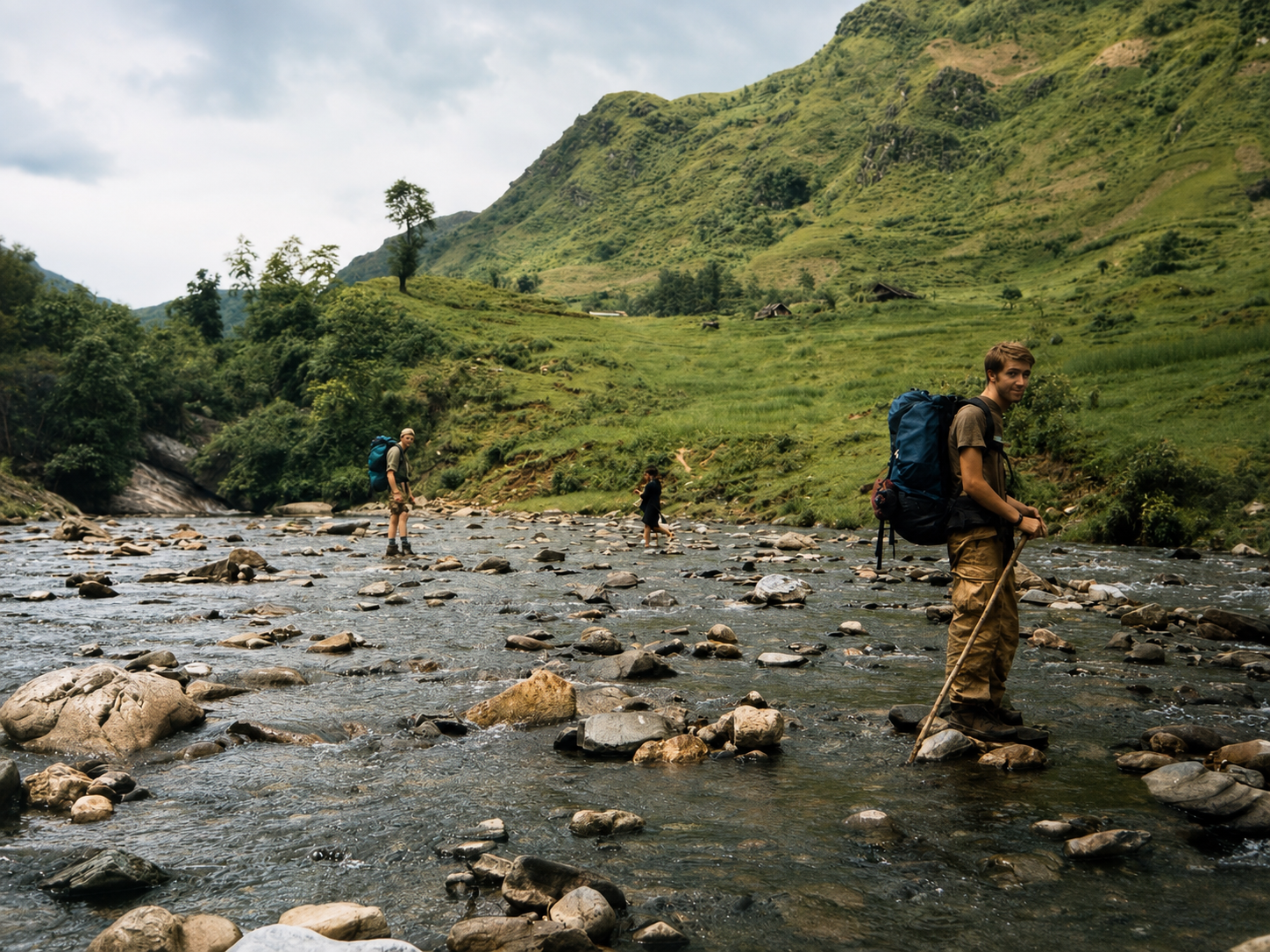
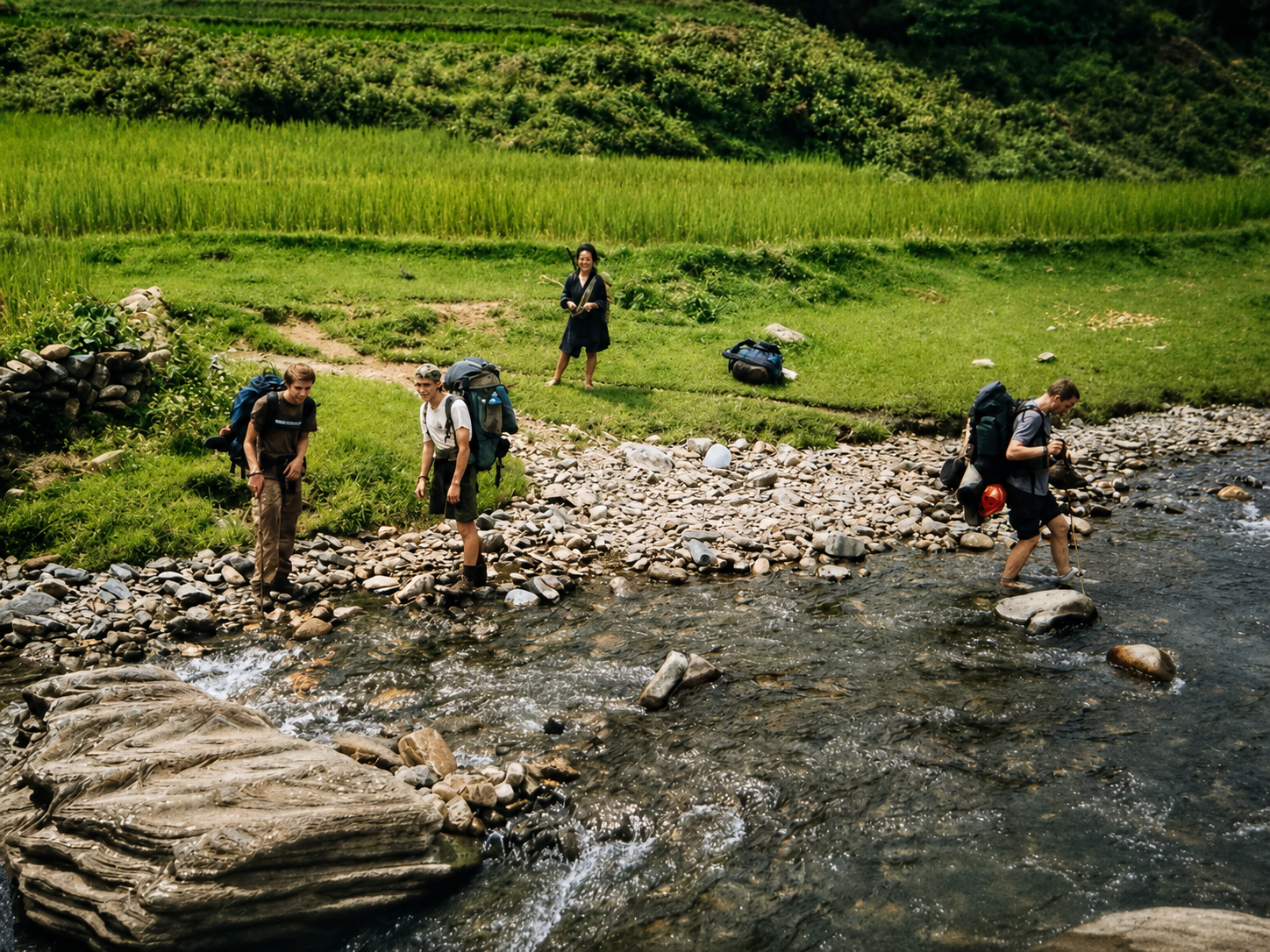
Crossing a mountain stream during one of our biodiversity surveys in the Hoàng Liên Mountains. River crossings like this were a routine part of fieldwork, often repeated several times a day as we followed wildlife through forests and remote valleys where no roads existed.

A small selection of moths recorded during our biodiversity surveys in the forests around Sapa. Each specimen helped build a better scientific understanding of the remarkable insect diversity found in the Hoàng Liên Mountains, research that contributed to the knowledge of an area later protected as Hoàng Liên National Park.
The Tiger That Wasn't
During our time in Sapa, reports began circulating through the surrounding villages that a water buffalo in Tả Phìn Village had been attacked, killed and partially eaten. Before long, people were quietly speculating that a tiger might still be living somewhere in the forests surrounding Fansipan. A few days later, the rumours gathered further momentum when what were believed to be tiger footprints were discovered in the foothill forests. Everyone seemed to have heard the story, and almost everyone knew somebody who knew somebody who had either seen the animal or heard it calling somewhere in the mountains.
As exciting as these accounts were, our work demanded a more cautious approach. Local knowledge was invaluable and often guided us towards places that deserved closer investigation, but rumours alone could never become scientific evidence. If our research was to contribute meaningfully to the future protection of the Hoàng Liên Nature Reserve, every observation had to withstand scrutiny. A footprint might prove useful if it could be properly documented. Hair samples, scat, photographs or an unequivocal sighting would all have been immensely valuable. Stories, however sincerely told, remained just that. We could not include them in our data simply because we wanted them to be true.
With the possibility of tiger activity now firmly in everyone's minds, we established another satellite camp high on the slopes of Fansipan. Officially, the expedition was no different from any of the others. We were there to continue documenting the reserve's biodiversity, recording birds, amphibians, butterflies, moths and anything else that might contribute to a better understanding of these remarkable forests. Unofficially, I suspect every member of the team quietly hoped we might stumble across the piece of evidence that would confirm tigers still survived in these mountains.
A couple of days into the expedition, two members of our team returned to camp visibly excited after hearing what they were convinced had been the unmistakable roar of a tiger echoing through the forest. Around the evening fire we discussed it at length, replaying every detail as scientists inevitably do. How far away had it sounded? Which direction had it come from? Could another animal have produced a similar call? The excitement was genuine, but so too was our frustration. Once again, we had an intriguing story but no evidence strong enough to support it.
By the final evening our notebooks contained a satisfying collection of observations. We had documented numerous species of birds, butterflies, moths and amphibians, yet the tiger remained as elusive as ever. Accepting that this particular mystery would remain unresolved, we turned in for the night beneath the forest canopy, already looking forward to returning to Sapa the following day.
Sometime after midnight I was woken abruptly by a scream so piercing and so utterly human that it cut straight through the forest silence. My tent mate and I both sat bolt upright, instantly awake. Within moments we could hear movement outside the tent, first as faint rustling among the undergrowth and then as unmistakable footsteps drawing steadily closer. Instinct took over. We reached for the Hmong hunting knife we had been carrying throughout the expedition to clear vegetation and cut firewood, neither of us saying a word as we listened to whatever was circling outside.
Then the tent zip began to move. Even now, nearly thirty years later, I can remember the peculiar mixture of fear and anticipation that filled those few seconds. Rationally, I knew perfectly well that tigers are not renowned for operating zips. At the time, however, rational thought had deserted me completely. All I could hear was the slow, deliberate sound of the zip opening from the outside while every frightening possibility raced through my mind.
The tent flap finally opened just wide enough for a face to appear. It was Rob. His face was completely smeared with something bright red and, for one fleeting but unforgettable moment, I genuinely thought we were looking at the aftermath of the tiger we had spent the previous week searching for.
Then he broke into a broad grin. "Come on, lads," he whispered. "It's our last night up here. You're missing the rice liquor and the chilli sauce fight!" The blood-red face was nothing more sinister than crushed chillies, and the terrifying predator outside our tent turned out to be an overenthusiastic colleague determined that nobody should miss the celebrations. The relief was almost impossible to describe, although I confess the thought of using that Hmong knife on Rob for frightening us quite so thoroughly crossed my mind for the briefest of moments.
We left the mountain the following morning without the evidence we had hoped to find. There were no photographs, no verified tracks and no scientific proof that tigers still inhabited the Hoàng Liên mountains. Looking back, I have come to appreciate that outcome almost as much as if we had found them. Conservation depends upon honesty as much as discovery, and the integrity of our research lay not in proving what we hoped was true, but in faithfully recording what we could genuinely demonstrate. The tiger remained a mystery, but the lesson has stayed with me ever since.
Walking Before There Were Roads
The easiest way to understand Sapa back then is to forget almost everything you know about travelling here today. There were no marked day hikes, no fleets of waiting minibuses and certainly no network of roads reaching every village. Beyond the edge of town, the mountains were connected by footpaths. If you wanted to go somewhere, you walked.
For us, that was exactly the point. Every survey began on foot, our rucksacks laden with tents, notebooks, collecting equipment and enough food to last until we returned. We left Cát Cát at first light, climbing narrow paths that had connected villages, fields and forests for generations, long before anyone thought of calling them trekking routes. These were not trails created for visitors. They were simply the everyday arteries of mountain life.
Some sections were little wider than a buffalo track winding through rice terraces before disappearing beneath dense forest. After heavy rain they became ribbons of slippery clay where every step demanded concentration. Rivers were crossed on narrow wooden bridges that bounced gently beneath our weight, or by carefully picking our way across polished stones while cold mountain water rushed around our boots. By the time we reached the higher forests, our trousers were usually soaked, whether from rain, river crossings or the morning dew clinging stubbornly to waist-high vegetation.
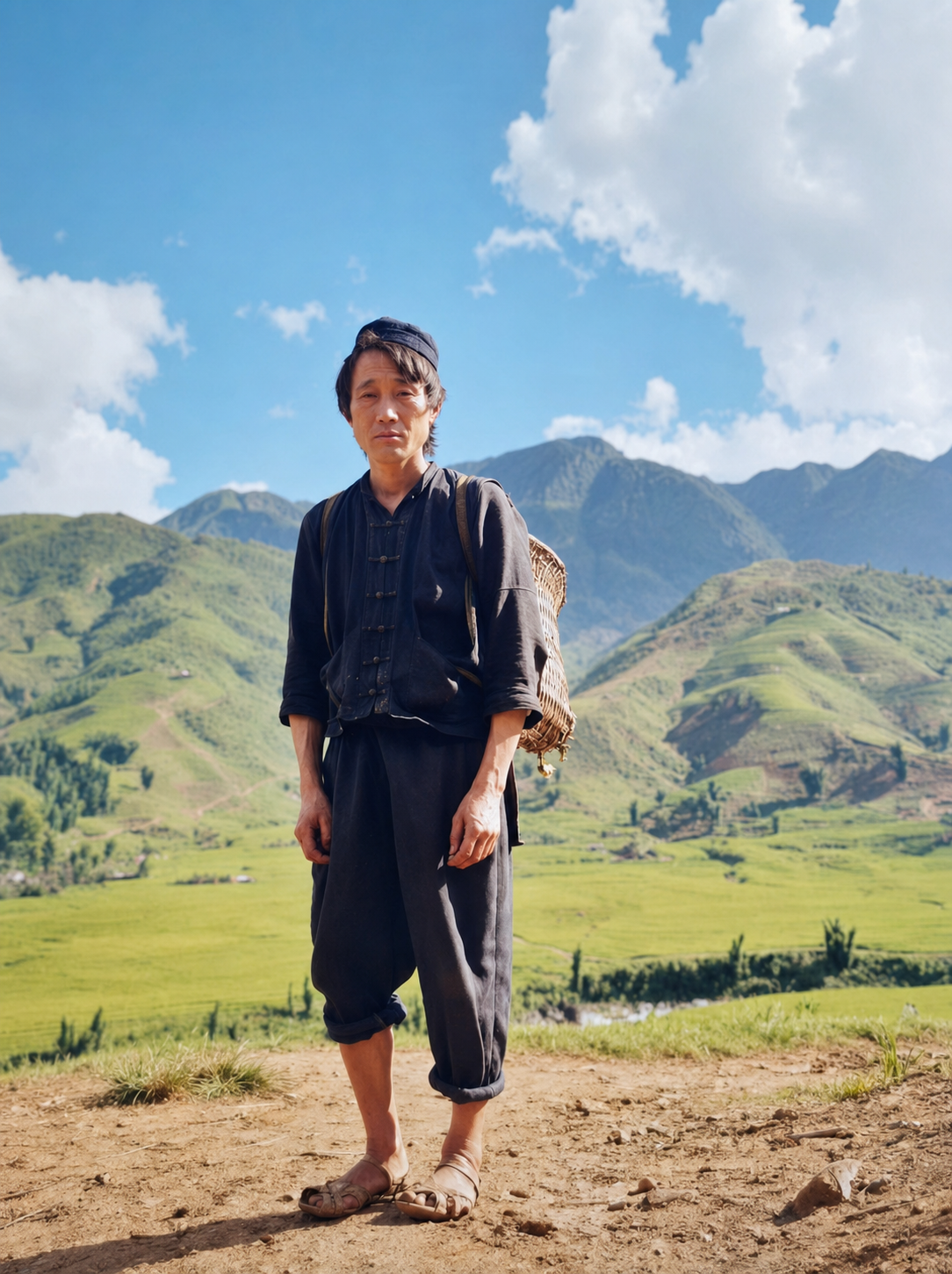
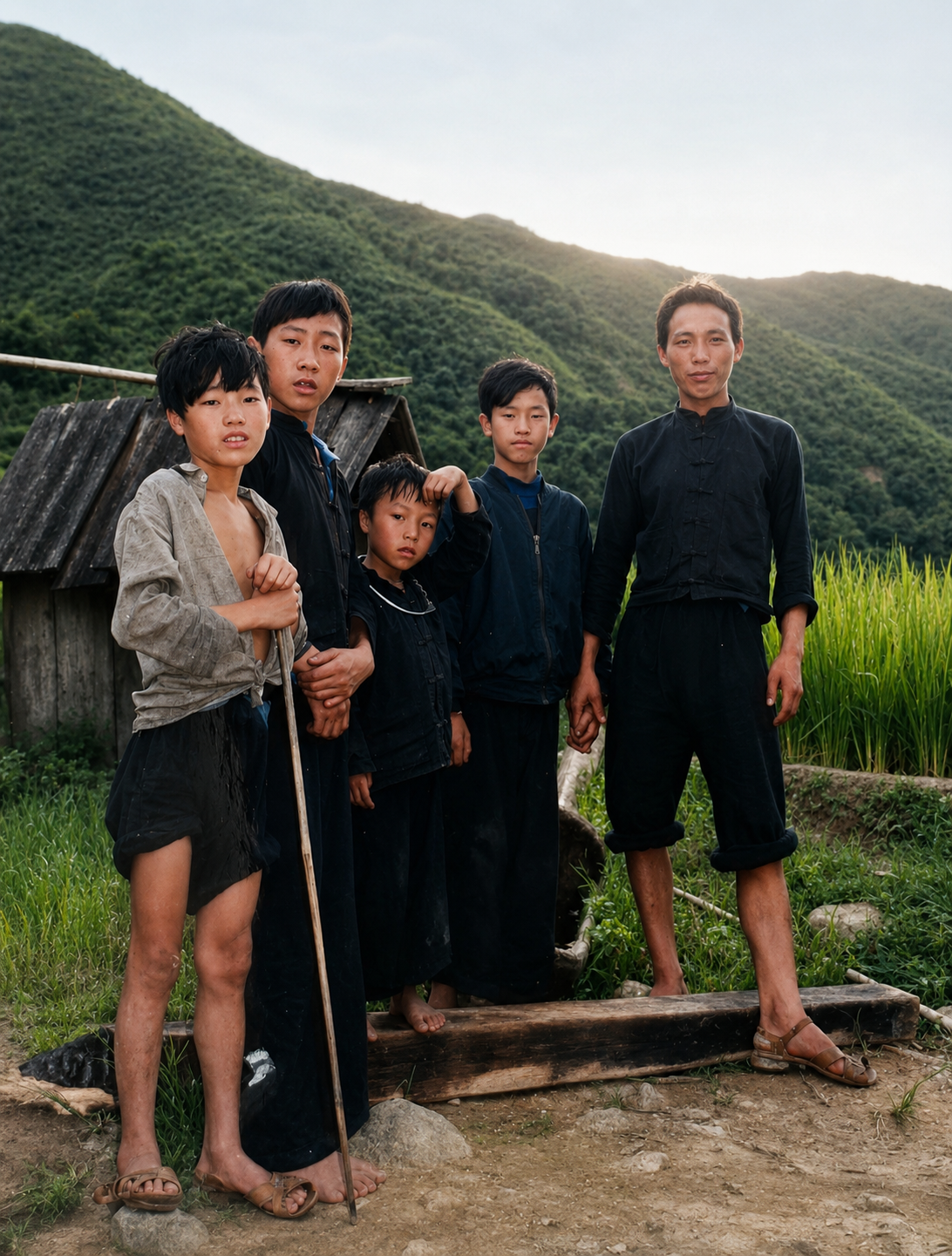
Yet while we struggled beneath heavy rucksacks, sturdy leather boots and several days' worth of camping equipment, the people we met moved through the same landscape with remarkable ease. Elderly women carried baskets laden with vegetables or firewood, balancing astonishing weights with effortless grace. Children laughed as they hurried to school, often overtaking us on steep climbs. Men led water buffalo between fields or returned from the forest carrying freshly cut timber across their shoulders. Many of the Hmong we met wore little more than worn rubber sandals, while some still walked barefoot. Whether travelling to market, visiting neighbouring villages or climbing to distant fields, they carried little, moved swiftly and negotiated steep, muddy mountain paths with a confidence that left us quietly humbled. These journeys were not adventures to them. They were simply everyday life.
Motorcycles were still exceptionally rare in the surrounding villages. Most families did not own one, and in many places there would have been nowhere to ride it even if they had. The mountains determined the routes, not machines. Walking was woven into daily life in a way that is difficult to imagine today.
Perhaps the greatest gift of travelling that way was the silence. Entire days could pass without seeing another foreign visitor. Occasionally we might encounter a lone backpacker heading towards Cát Cát, guided by an enterprising Hmong teenager who had realised that visitors were willing to pay for company on the short walk from town. Beyond that, the mountains belonged almost entirely to the people who lived there. Every encounter felt spontaneous and every greeting felt genuine. These paths had carried farmers, neighbours and families for generations before they ever carried tourists.
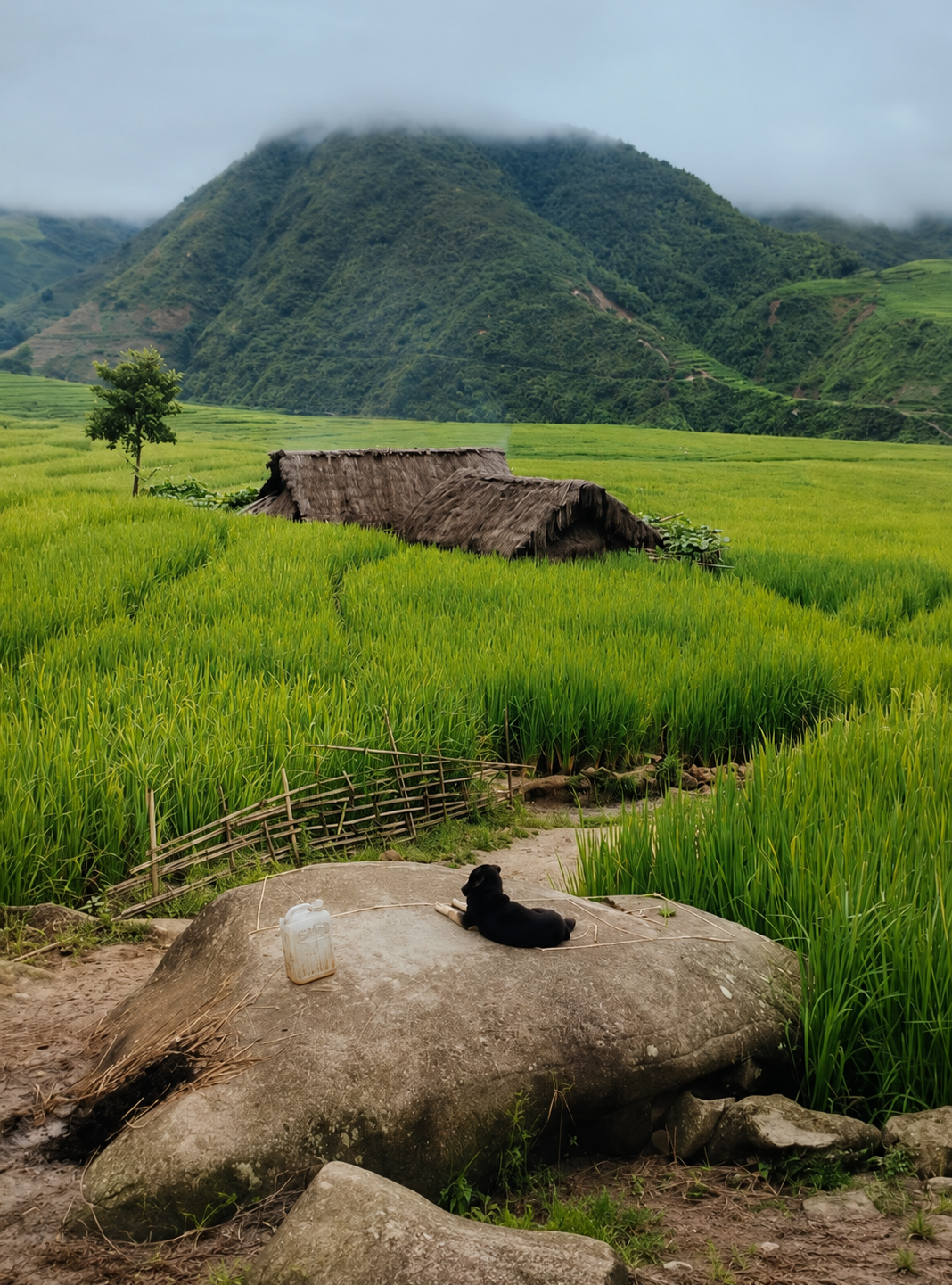
A traditional Hmong home in Lao Chai Village surrounded by rice paddies in a mountain valley near Sapa. Long before roads reached many villages, families relied on footpaths linking their homes, fields and neighbouring communities. Image courtesy of Sean Adams ©
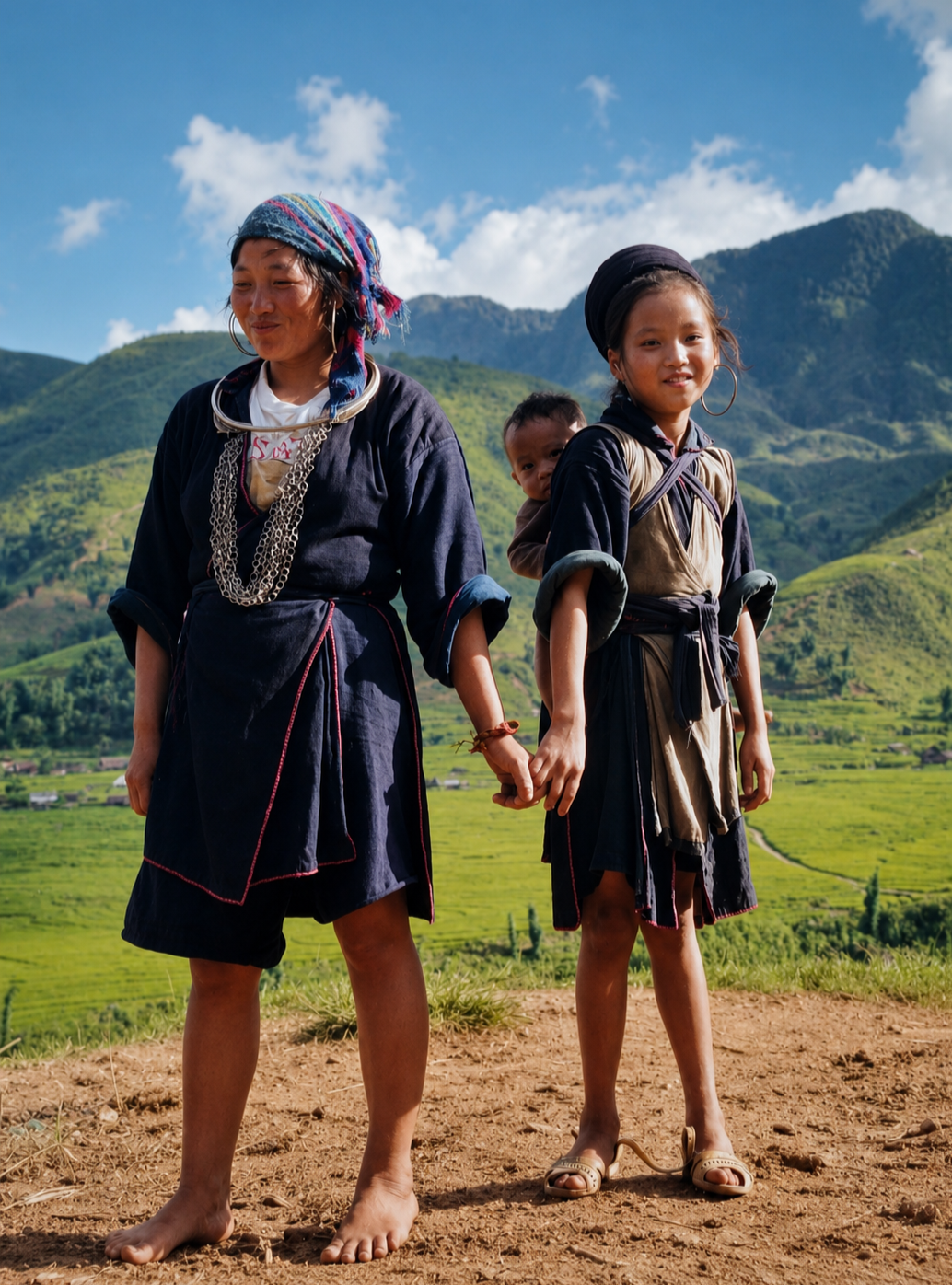
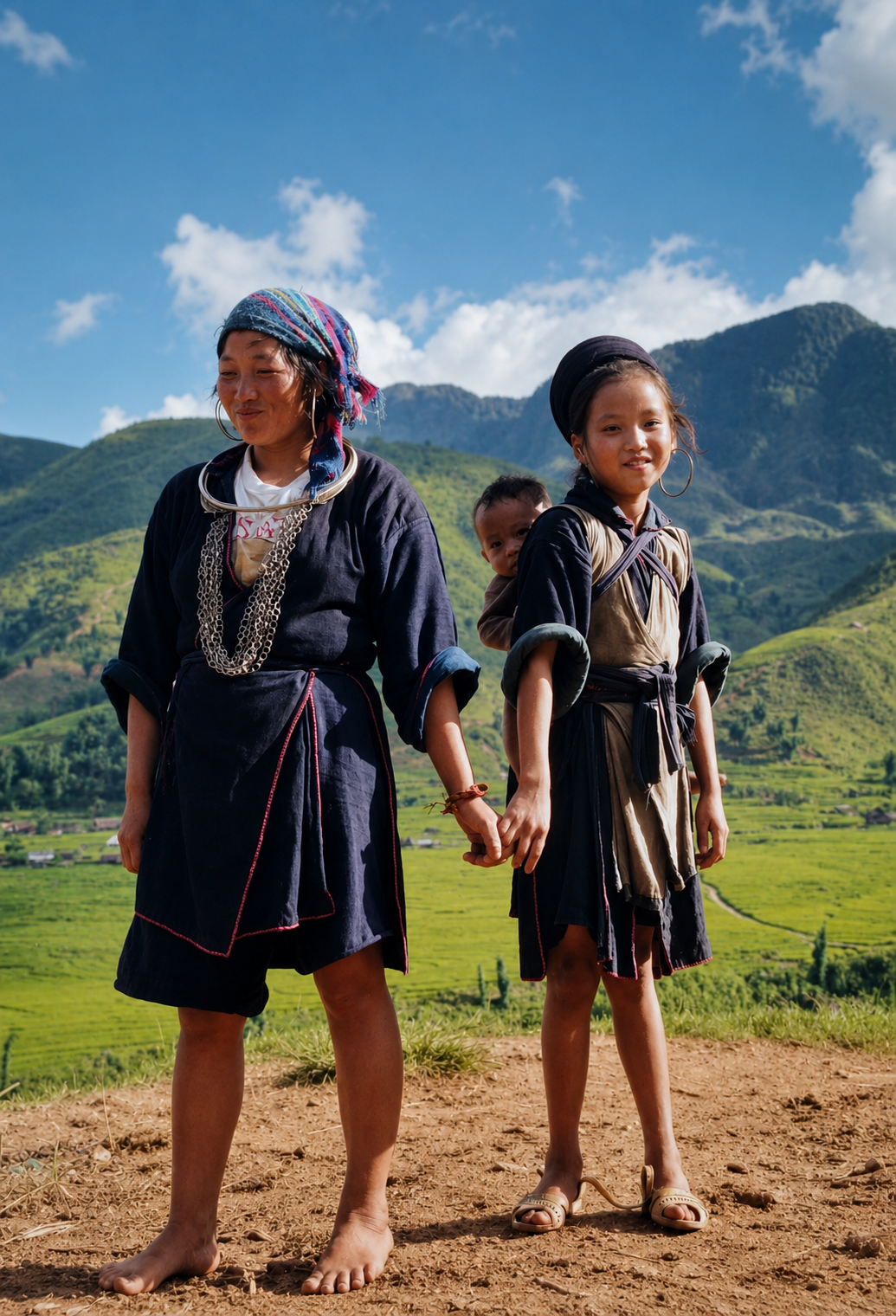
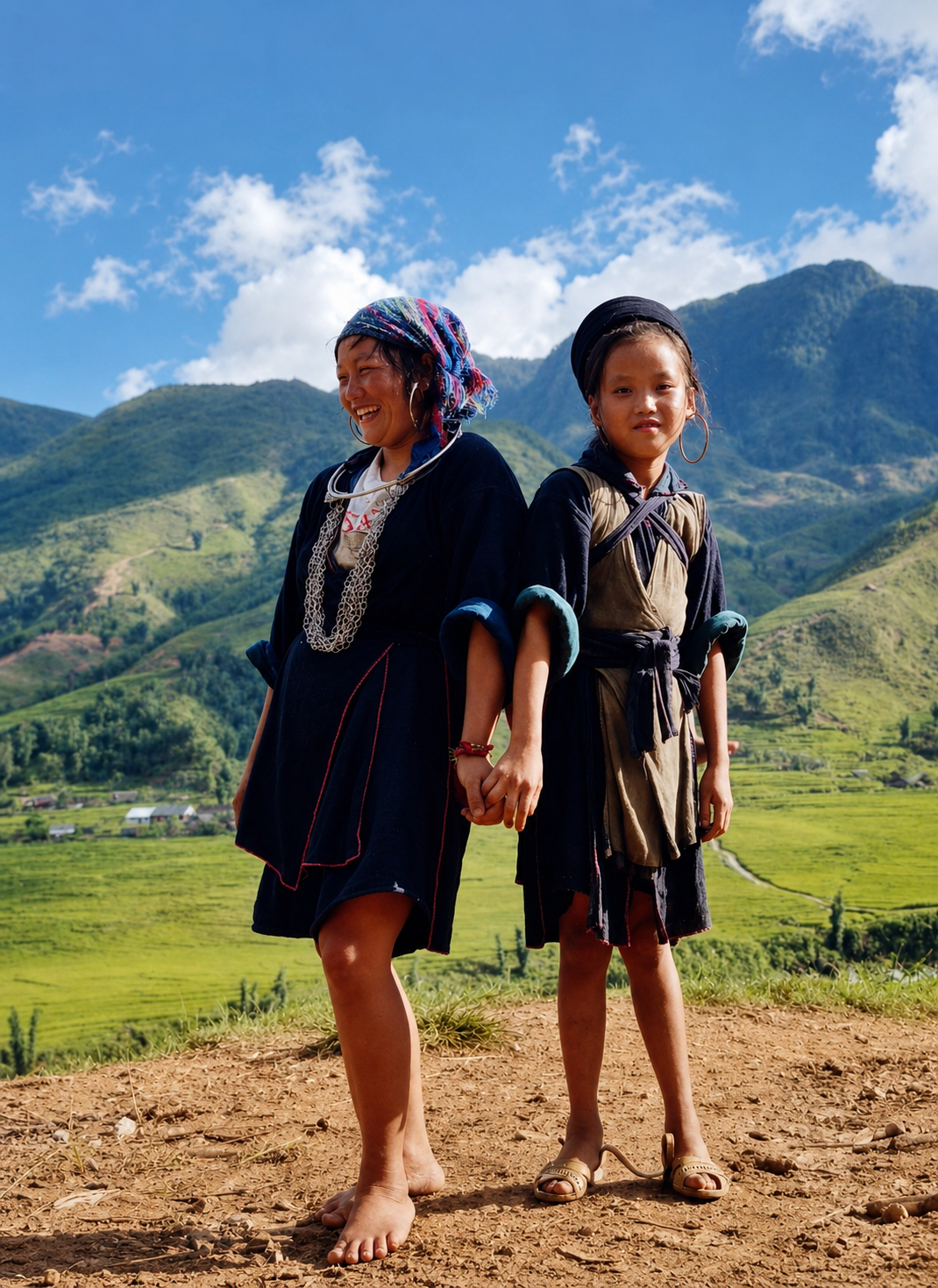
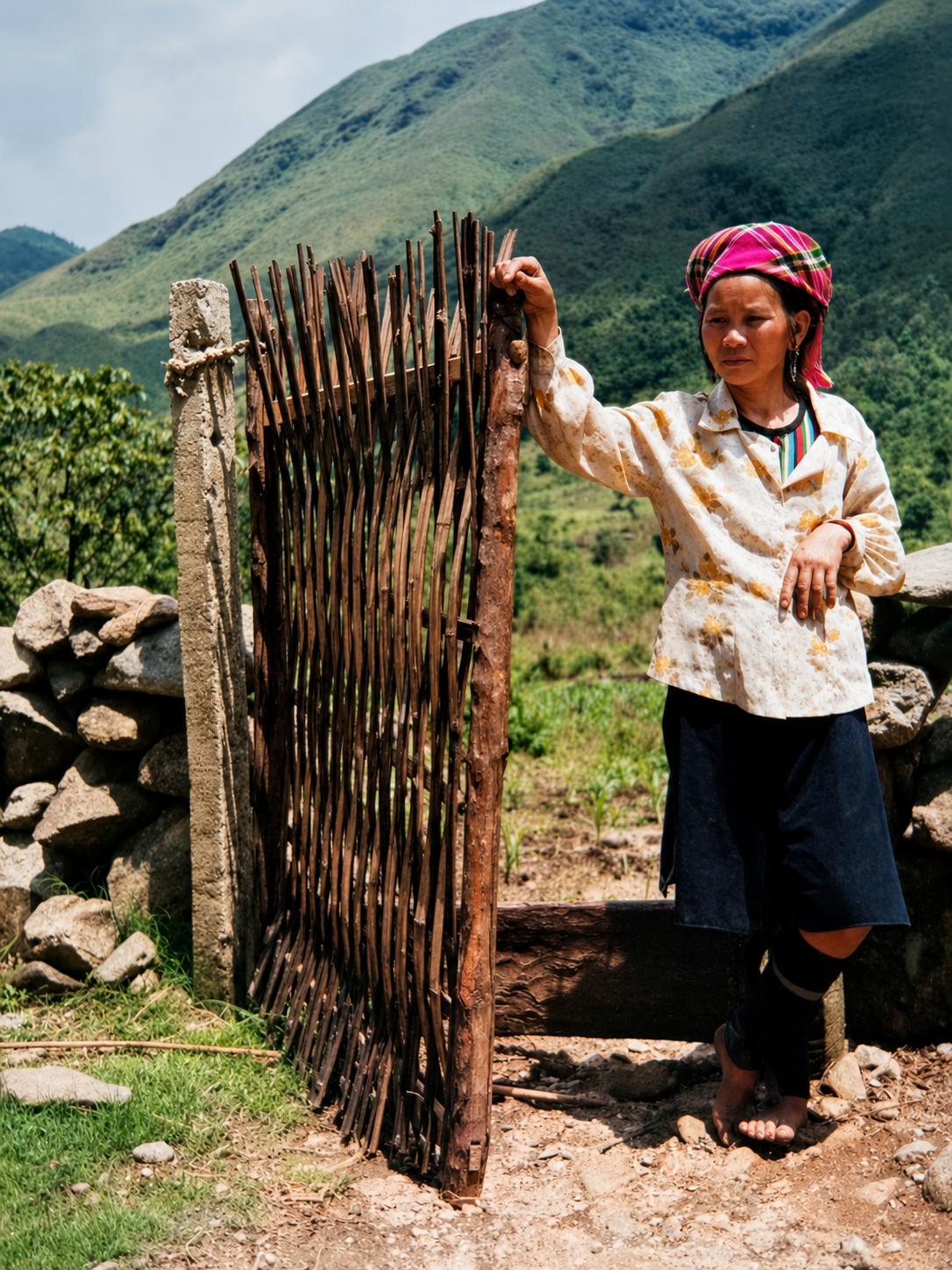
A Hmong mother and daughter walking barefoot through their village. Walking was simply part of everyday life, whether travelling to market, visiting neighbours or working in the surrounding fields. Image courtesy of Sean Adams ©
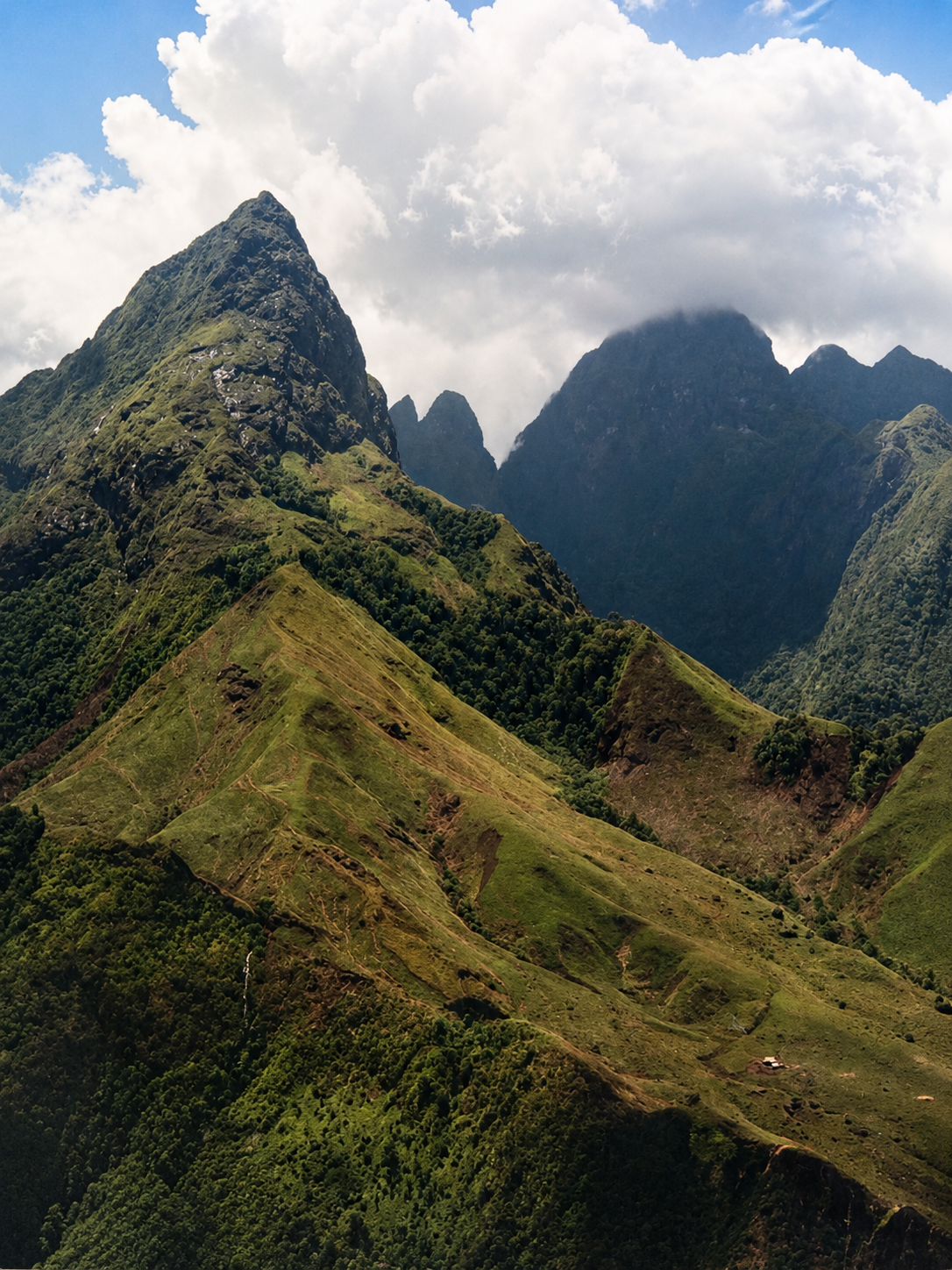
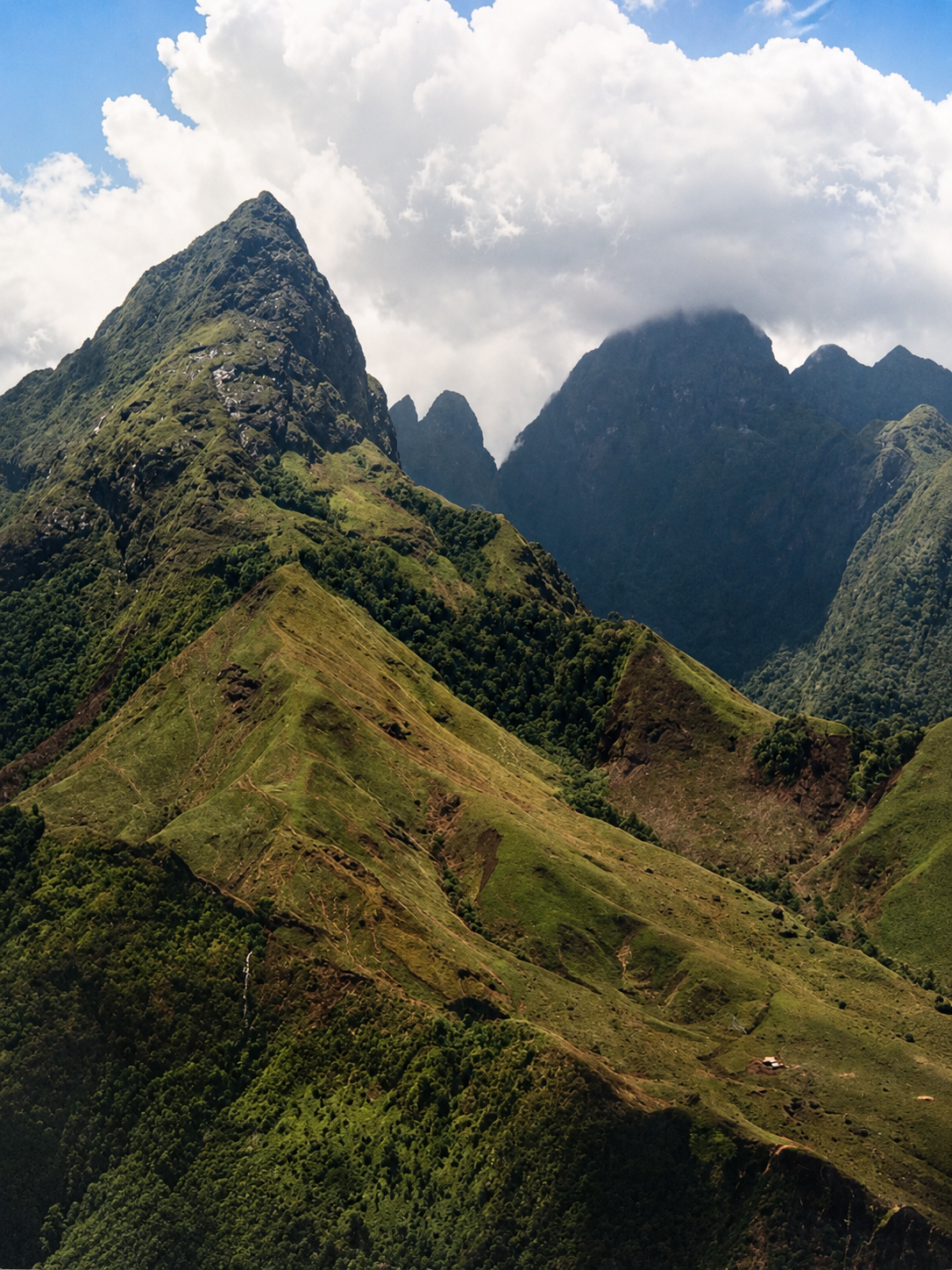
Chu Va Mountain. Narrow mountain paths followed the ridgelines and valleys, connecting villages that were inaccessible by road. Every journey demanded time, endurance and an intimate knowledge of the landscape.
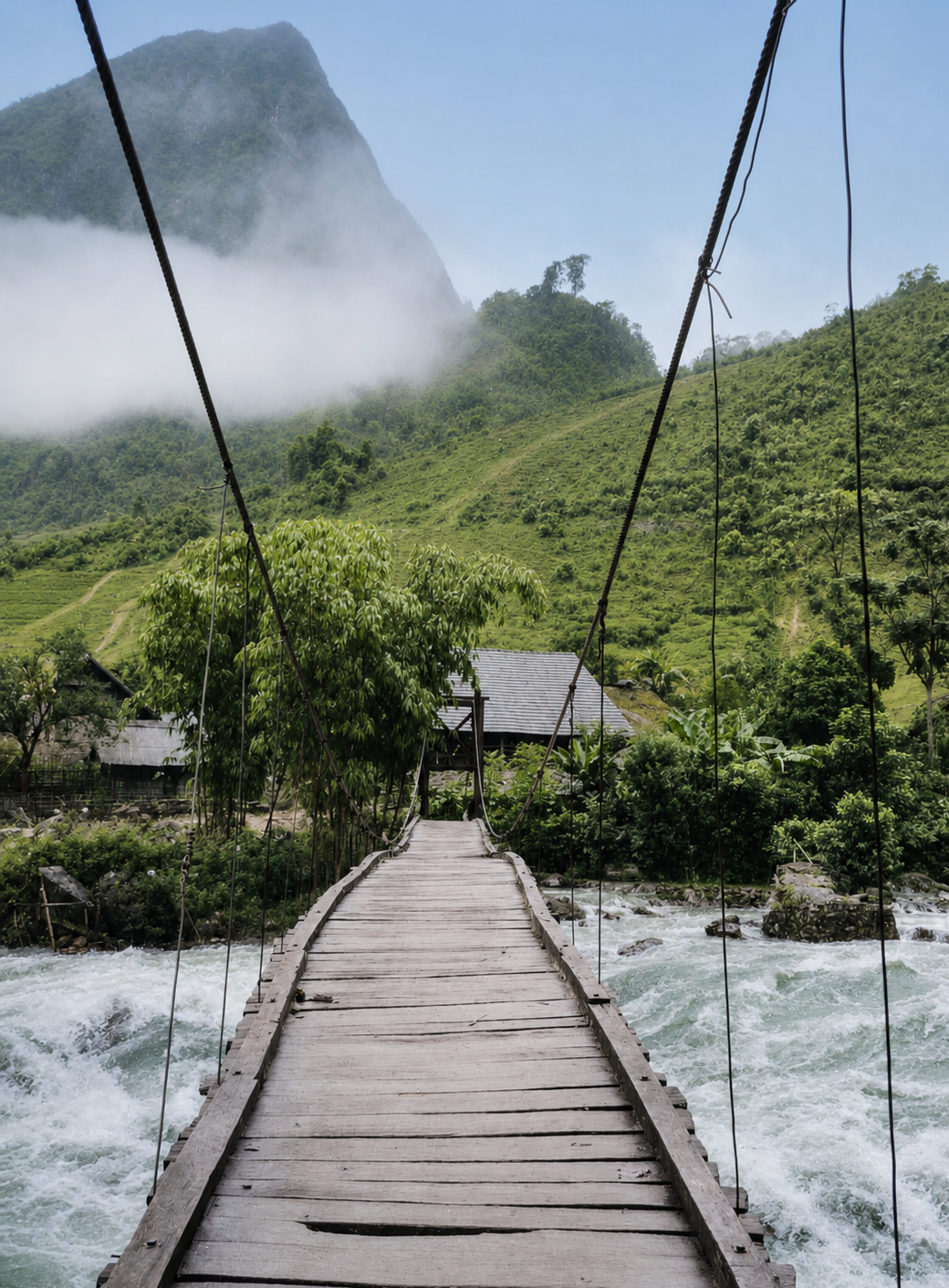
Simple suspension bridges linked communities separated by fast-flowing mountain rivers. Crossing them was an ordinary part of daily life for local families and researchers alike. Image courtesy of Sean Adams ©
The Girls Who Came Every Morning
Whenever we returned to our base camp near Cát Cát, another ritual quietly resumed. Not long after the first light of day and sometimes earlier, a small group of Hmong girls would appear at the edge of camp. They arrived almost without announcement, smiling shyly at first before curiosity inevitably overcame hesitation. All of them arrived eager to talk.
“Hello,” one would say carefully. “How are you?” The phrases were familiar, repeated countless times until confidence replaced uncertainty. They had learned much of their English simply by listening to passing travellers and practising with anyone willing to slow down long enough for a conversation. Their pronunciation was often better than they realised, although every new word was greeted with infectious excitement. Our conversations soon wandered far beyond greetings.
They asked about England, trains, snow and football. They wanted to know whether everyone really drank tea every day. They laughed at my hopeless attempts to pronounce Hmong words correctly and found endless amusement in my inability to carry a basket with anything approaching their balance or grace. In return they spoke about school, family life, farming and the changing seasons. Their questions revealed thoughtful, enquiring minds and an eagerness to understand a world extending far beyond the surrounding mountains. They were intelligent, perceptive and wonderfully mischievous, never allowing an opportunity for gentle humour to pass unnoticed.
Looking back, I realise those mornings reminded me that curiosity runs in every direction. I may have arrived believing I was there to study forests, but I found myself learning just as much from children whose generosity with time and conversation far exceeded anything I could offer in return. Nearly three decades have passed since those mornings beside our tents. Some of those girls are now mothers while others are tragically no longer with us. Some have become guides, entrepreneurs, artisans and respected members of their communities and several remain dear friends. Whenever we meet, we still laugh about those early English lessons beneath the mountains, although now our conversations are conducted with a fluency neither of us could have imagined back then.
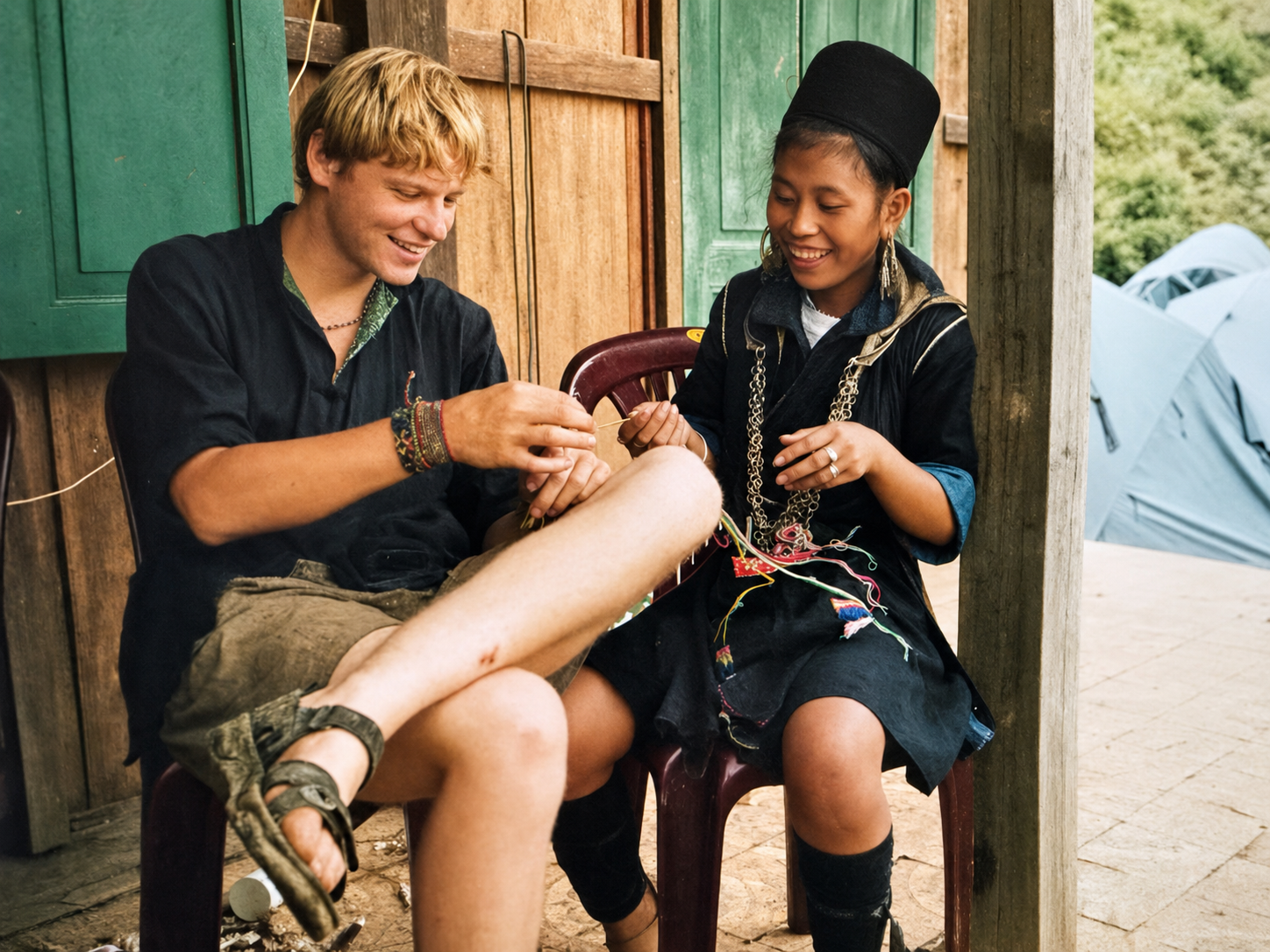
Learning traditional Hmong weaving techniques from my friend My in 1998. What began as a lesson in textile craftsmanship became the beginning of a friendship that lasted many years. My's warmth, patience and generosity remain among my strongest memories of those early days in Sapa. She sadly passed away in a tragic accident many years later, but this photograph remains a treasured reminder of the time we shared together.
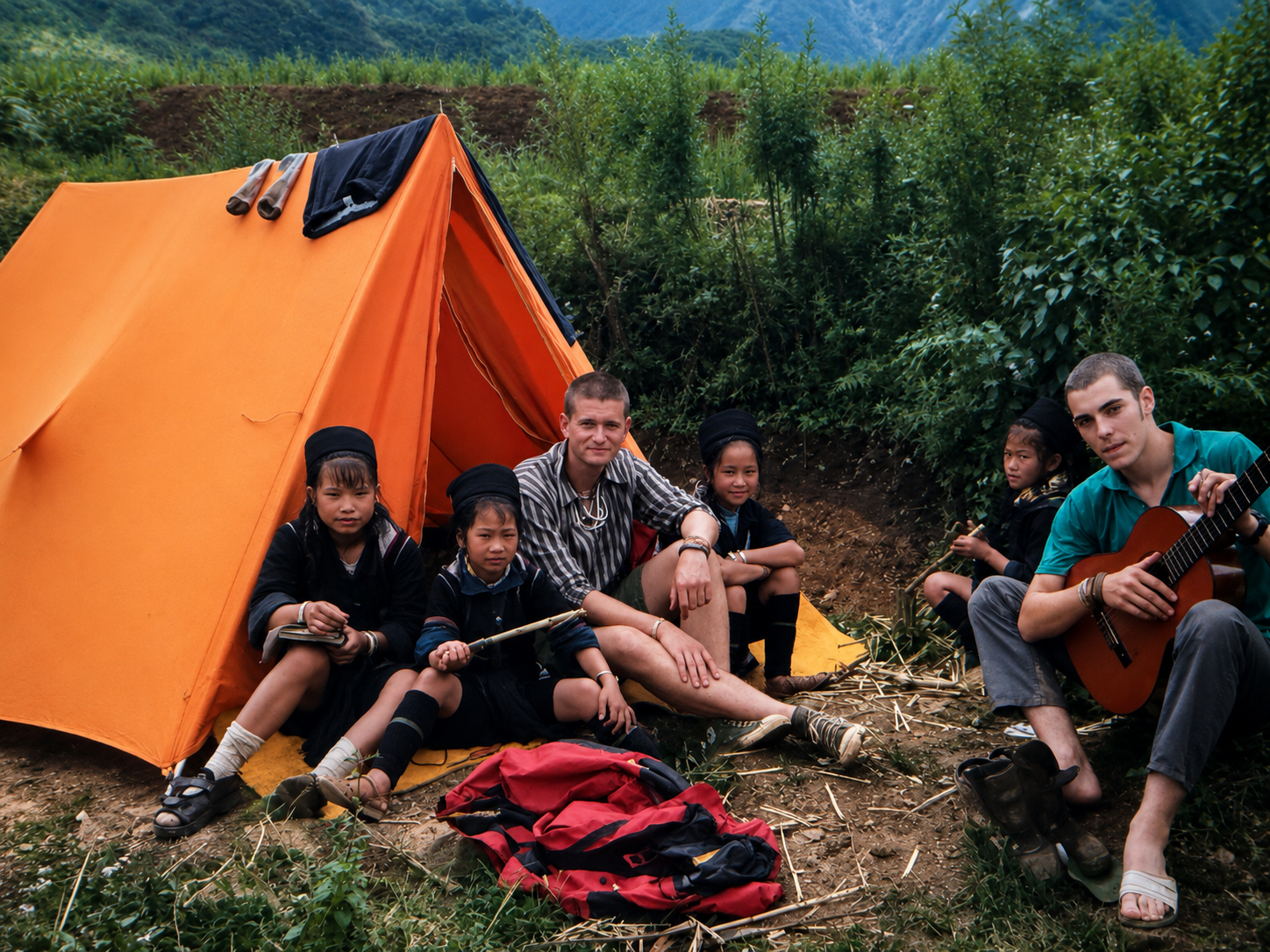
Our base camp became much more than a place to sleep. Almost every morning, local Hmong children wandered over to practise their English, ask endless questions and share stories about life in the surrounding villages. We arrived hoping to study the forests, but those conversations taught us just as much as any scientific survey ever could.
Returning to Town
Every week or so, after days spent beneath dripping forest canopies and nights under canvas, we would shoulder our packs once again and make the long climb back into Sapa. By then our clothes carried the unmistakable smell of wood smoke and damp earth, our boots had acquired another layer of mountain mud and every one of us had begun quietly dreaming about the same two luxuries. The first was a hot shower. The second was food that wasn’t rice.
Phương Nam Hotel became our unlikely oasis. We would arrive looking more like a group of weary mountaineers than scientists, grateful simply to stand beneath steaming water for a few glorious minutes. It is difficult to explain just how extraordinary that felt after washing for days in streams fed directly from the mountains. The water in those streams was crystal clear, wonderfully pure and cold enough to make your teeth ache.
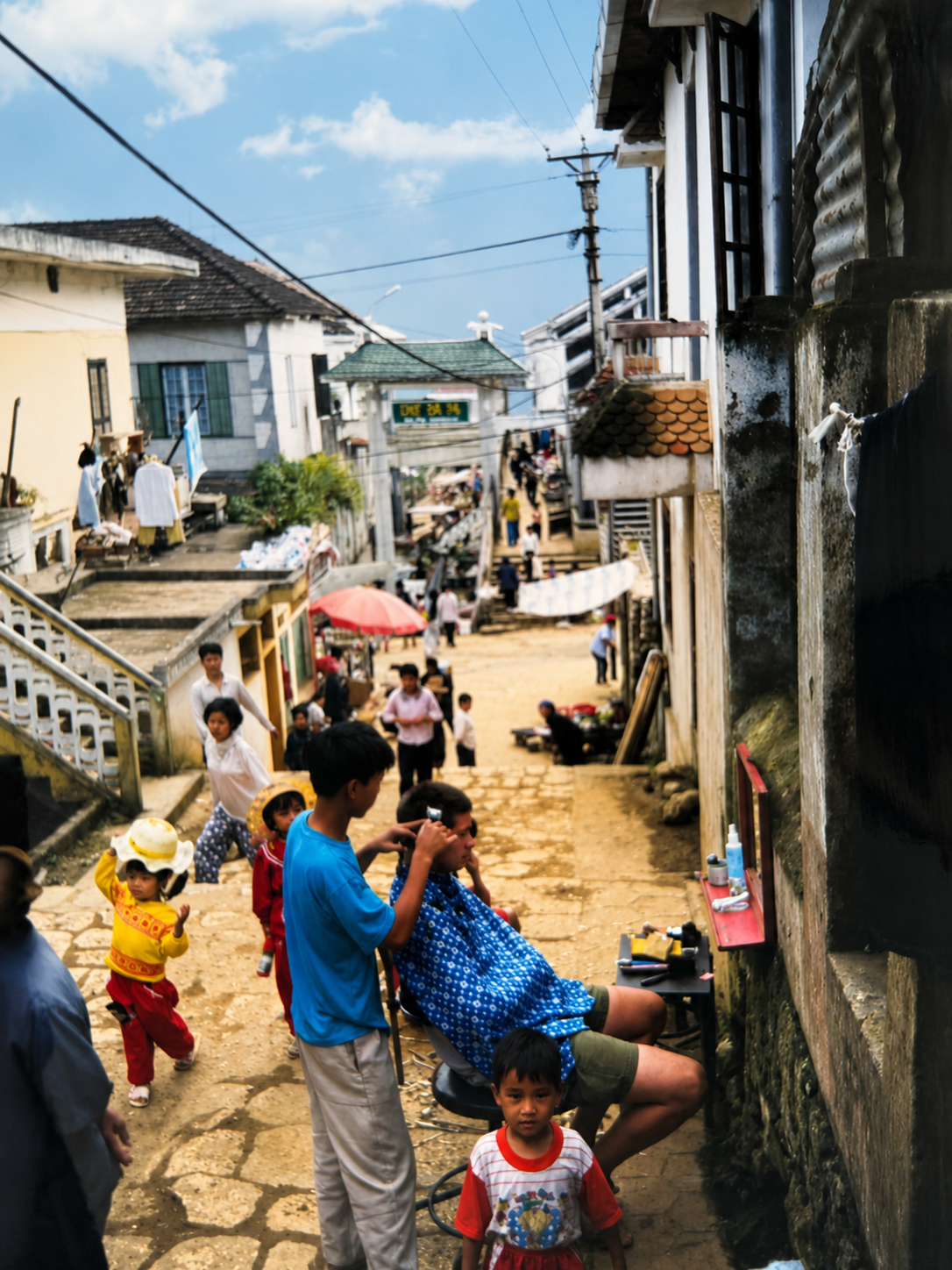
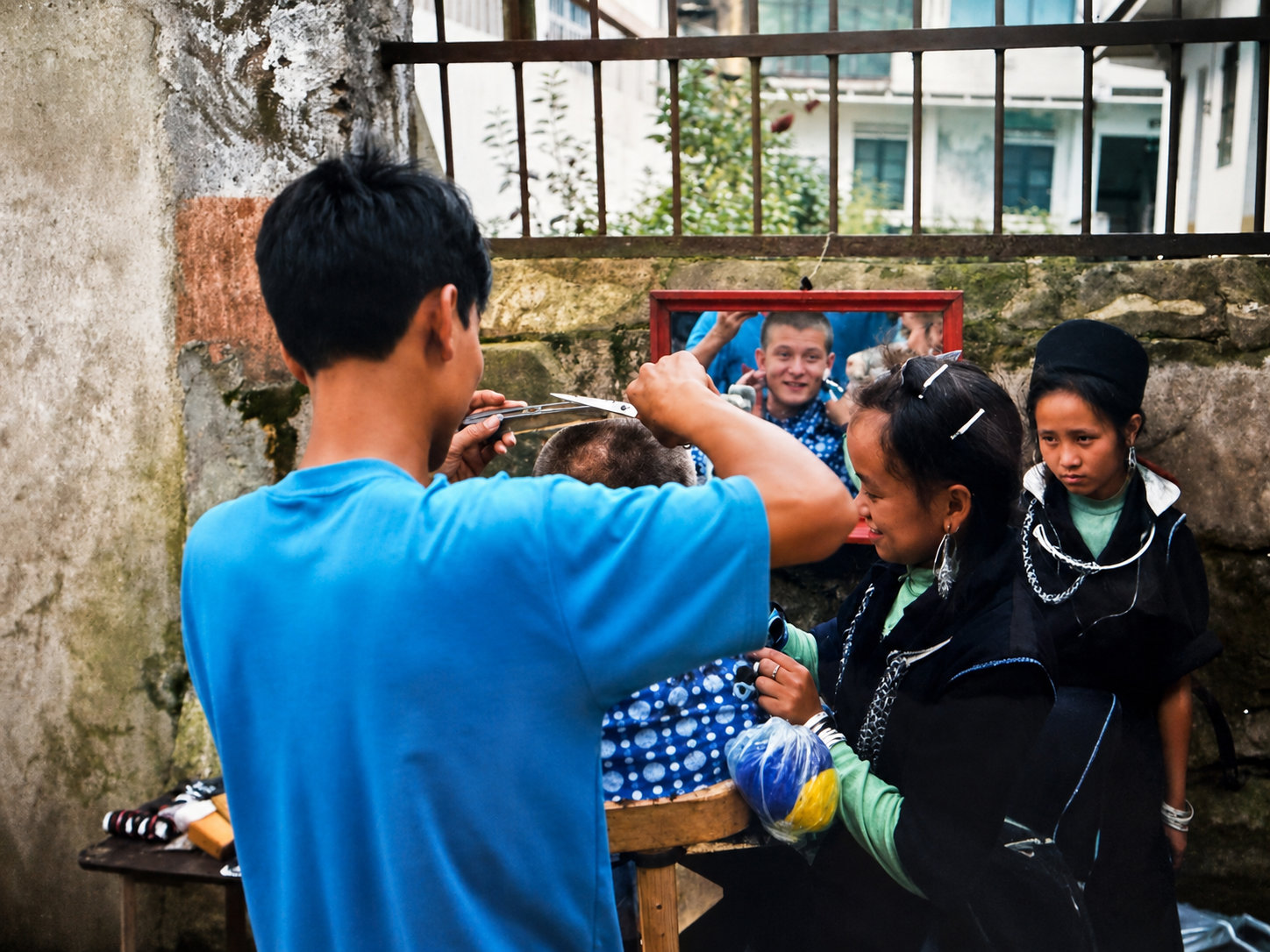
Freshly washed and feeling almost civilised again, we were in no great hurry to leave town. Sapa was where we caught up with friends from other expeditions, exchanged stories from the field over bottles of cold Lào Cai beer and enjoyed the simple pleasure of sitting still for an afternoon. If someone looked particularly scruffy after a week or two in the mountains, a visit to one of the barbers on the market steps was almost inevitable. Their “salons” consisted of little more than a wooden chair, a pair of scissors and a mirror propped against the wall. Formal qualifications appeared entirely optional. The resulting haircuts varied considerably in quality, although nobody complained. After days spent living under canvas, a fresh haircut, however uneven, somehow felt perfectly appropriate.
Sapa Town was also where I searched for fresh rolls of 35 mm film, an expensive commodity that could be surprisingly difficult to find. Every photograph in this article was taken on those precious rolls of film. With only twenty-four or thirty-six exposures in each camera, every frame had to count. There was no screen on the back of the camera to check the result, no second chance and no guarantee that the image had even worked until the film was developed months later.
After a hot shower and errands, our thoughts soon turned to food, and we would wander across town to the Camelia Restaurant. Sapa’s dining scene was wonderfully uncomplicated in those days. Most visitors ate wherever they were staying, and restaurants were few. Camelia had recently introduced something rather exotic to its modest menu. Pizza! News of this culinary revolution spread through our camp with remarkable speed. After another week of rice, vegetables and whatever else the villages had generously placed before us, the thought of pizza assumed almost mythical proportions. We talked about crisp bases, bubbling mozzarella and fragrant herbs all the way into town, each of us unknowingly describing a meal we were not about to receive.
What eventually arrived bore only the faintest family resemblance to anything found in Naples. The base was a piece of flatbread. Thick slices of fresh tomato had been carefully arranged across the top. Instead of melted mozzarella, two or three wedges of Laughing Cow cheese sat proudly in the centre, softening gently in the heat. There may have been a scattering of herbs, although memory is less certain on that particular detail. We looked at one another in complete silence before someone burst into laughter. It was nothing like pizza. Although after another week of rice and forest camps, none of us complained. To this day I cannot see a wedge of Laughing Cow cheese without thinking of Camelia Restaurant, damp boots drying beneath the table and a group of exhausted conservationists convinced they were enjoying the height of international cuisine.
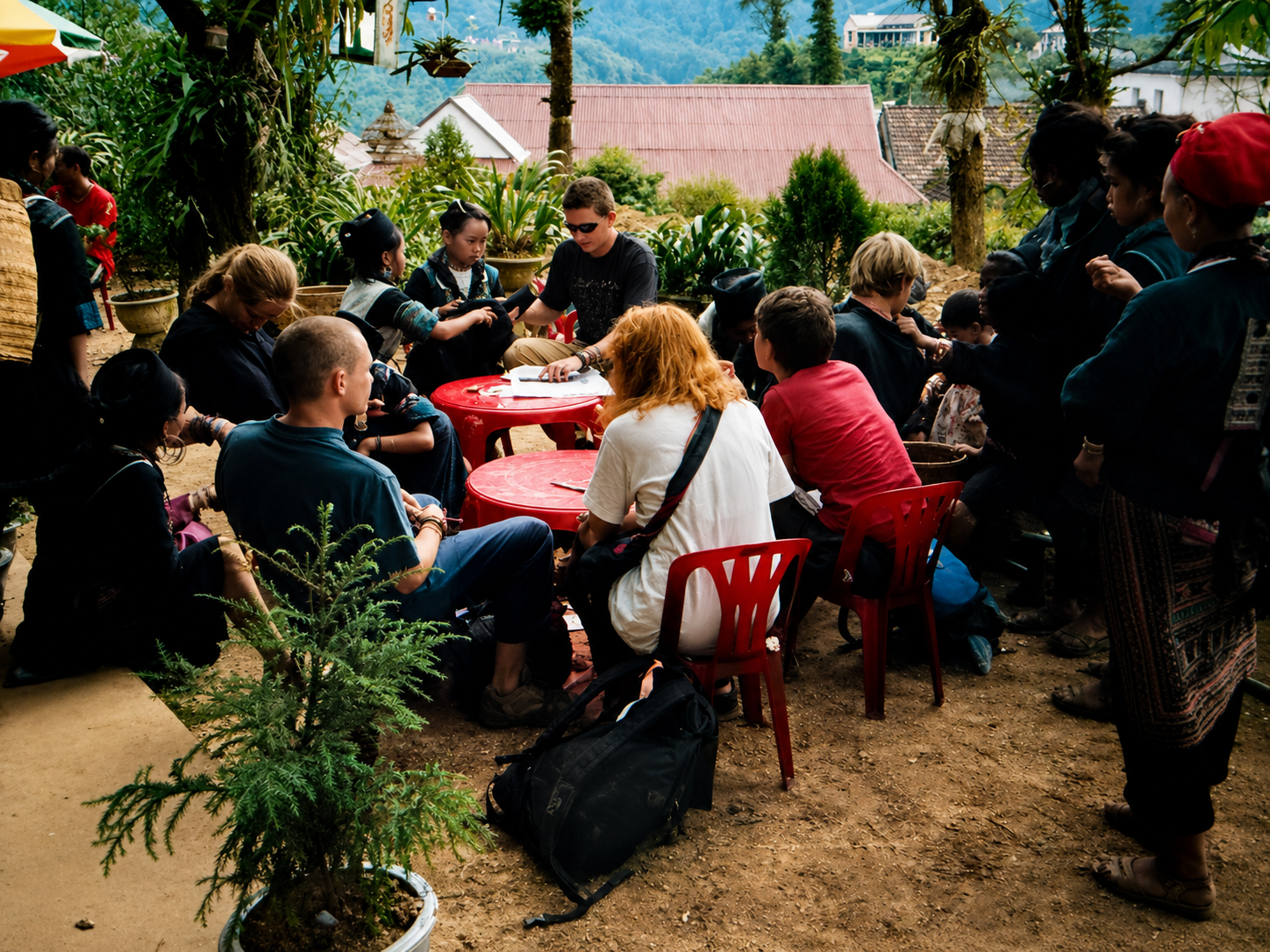
Our Frontier team enjoying a well-earned break after returning from the mountains. After days of rice, forest camps and muddy boots, good food, conversation and a cold beer felt like the greatest luxuries imaginable.
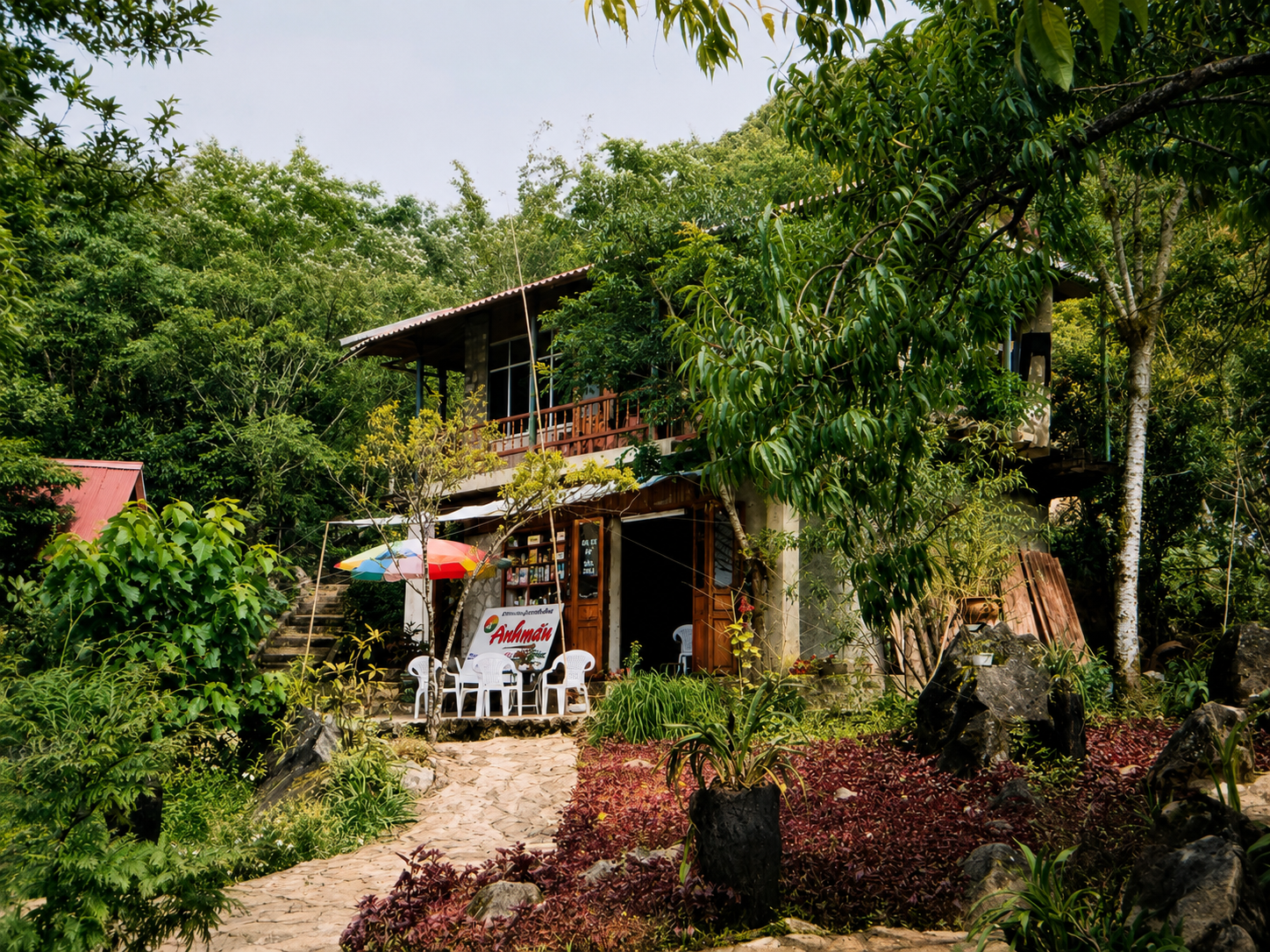
A small family-run shop near the entrance to Hàm Rồng Mountain. Places like this sold simple snacks, soft drinks, beer and everyday essentials, providing a welcome stop for locals, researchers and the handful of travellers passing through Sapa.
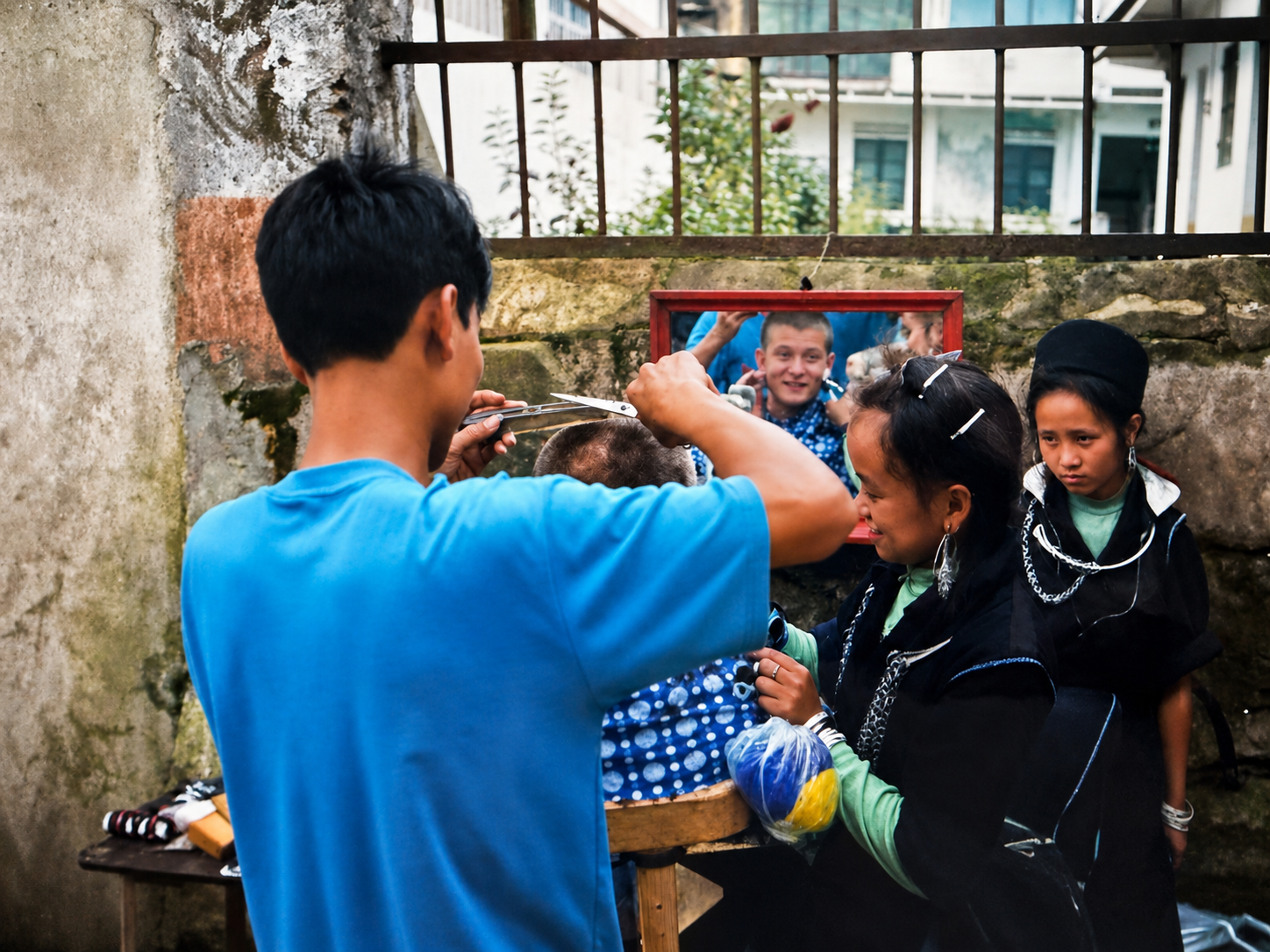
An impromptu haircut on the market steps. Armed with little more than a chair, a pair of scissors and a mirror, Sapa's street barbers offered affordable trims to anyone willing to take a chance on the result.
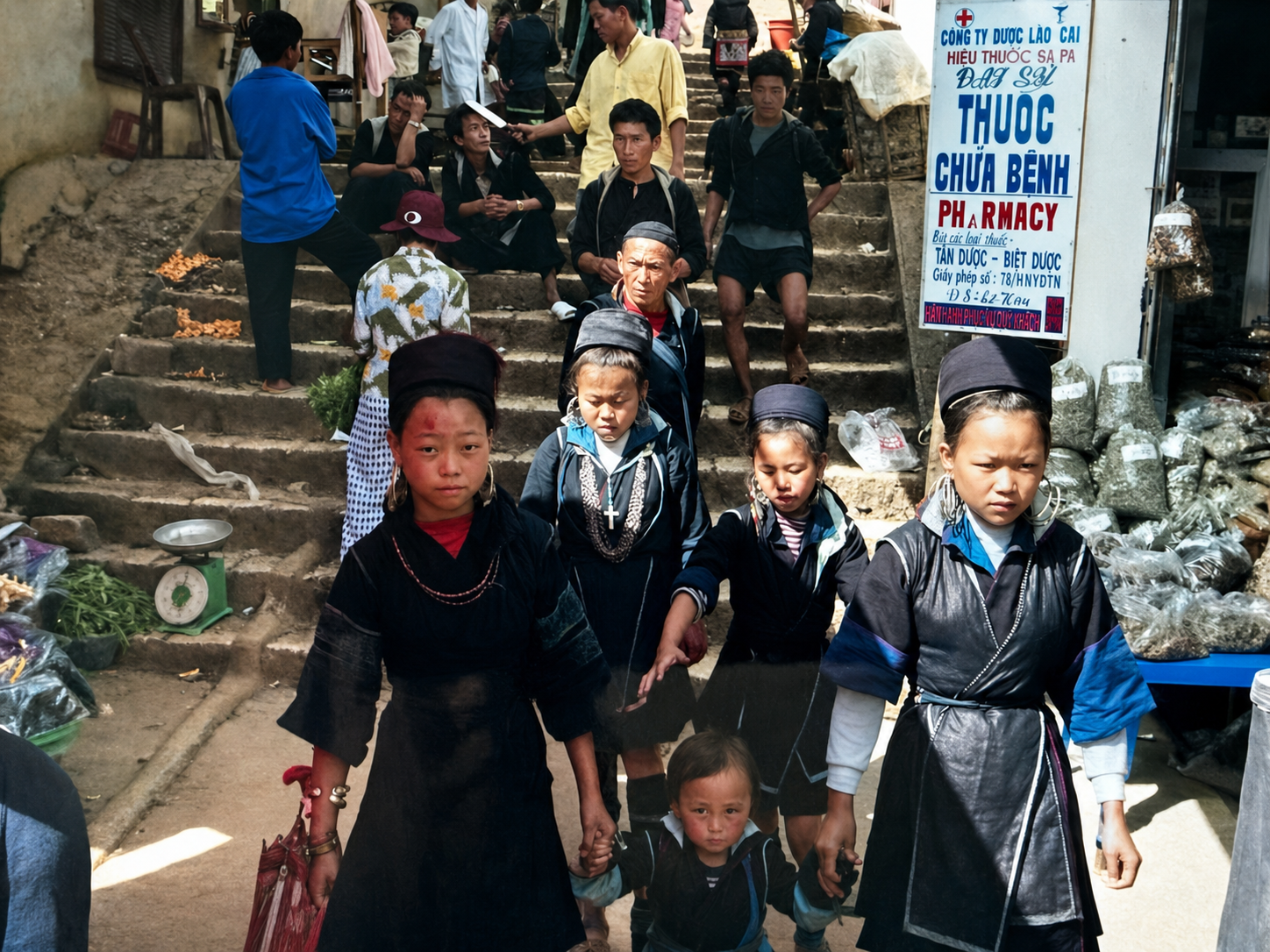
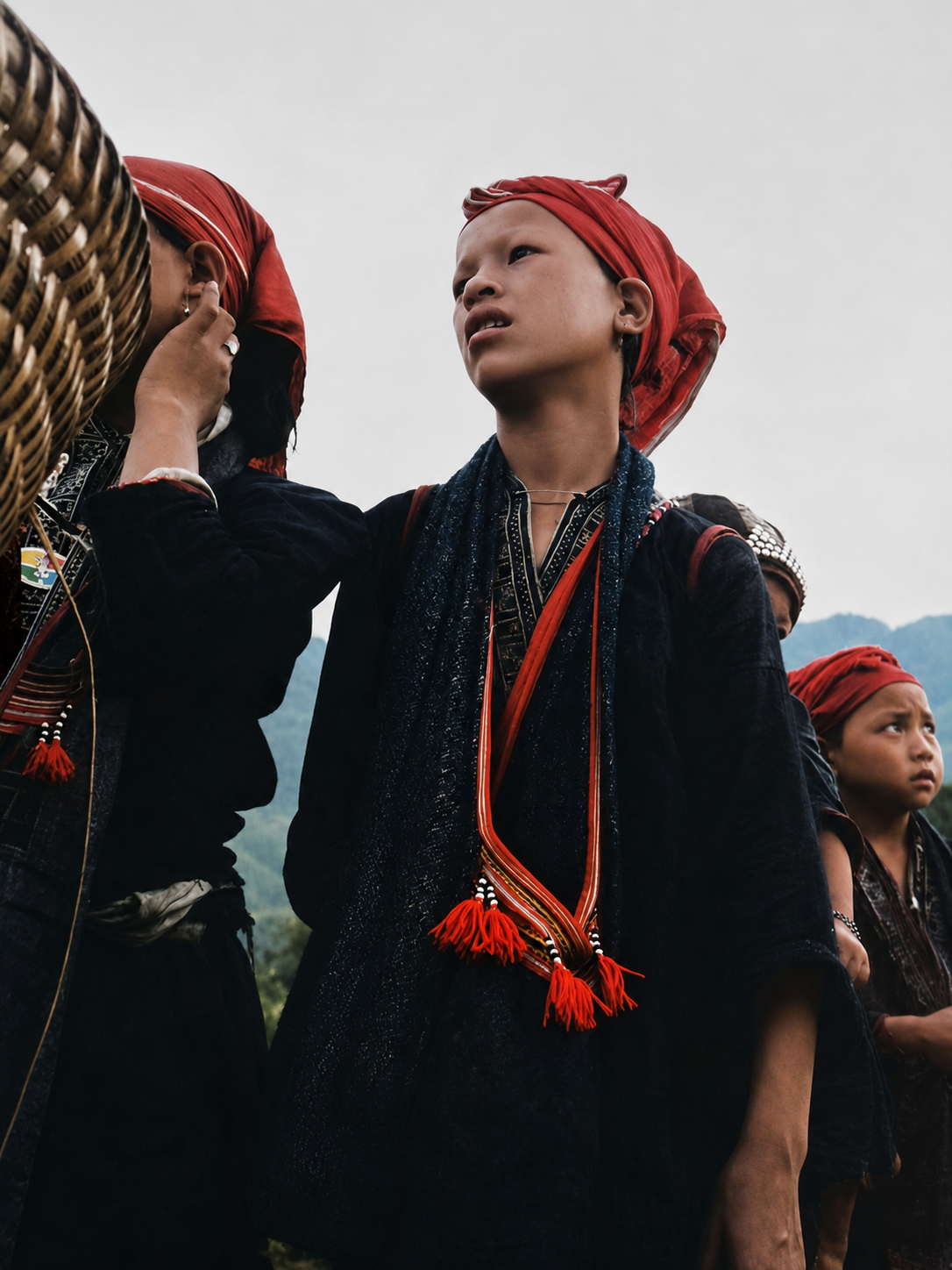
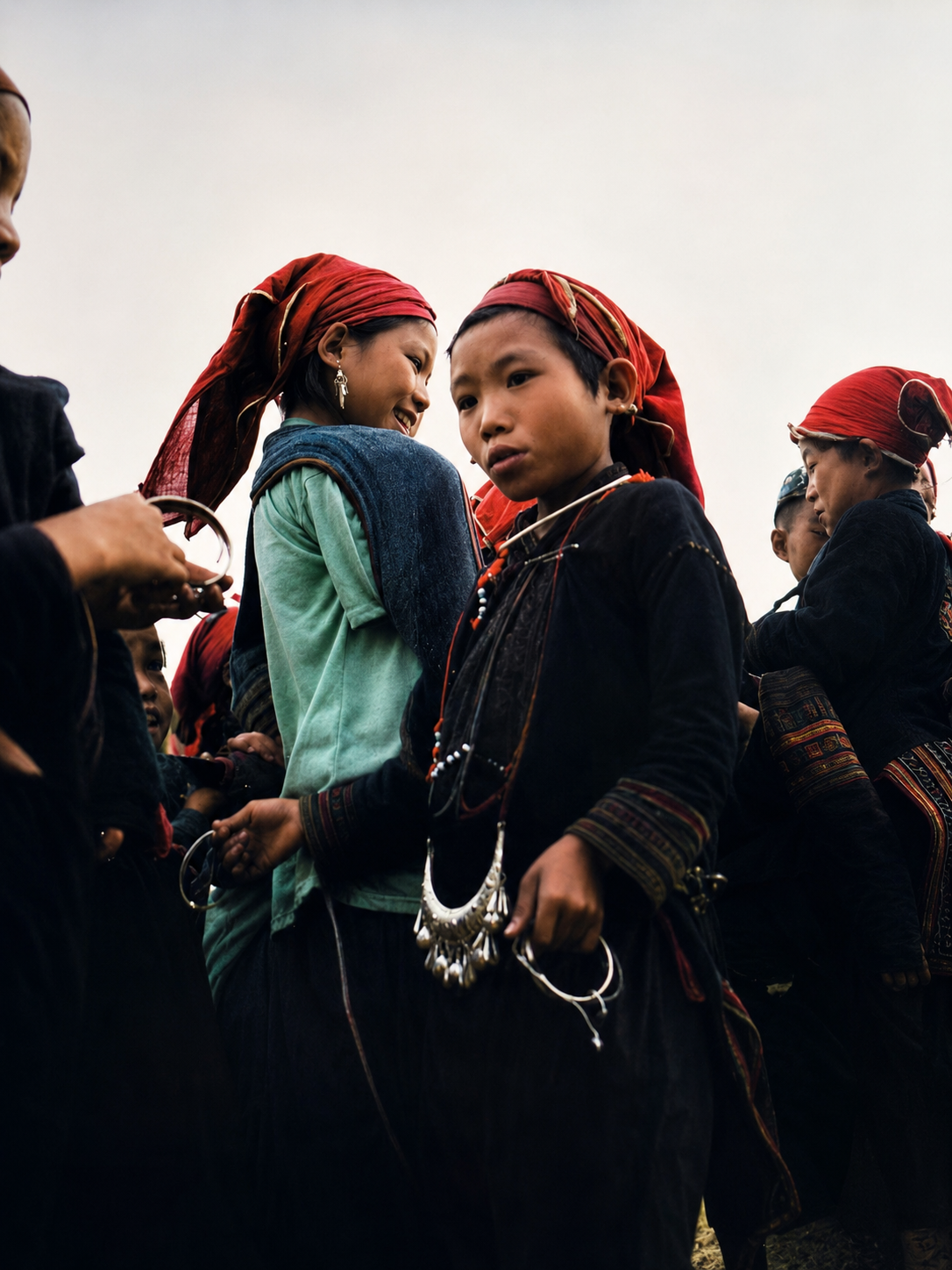
Hmong children arriving at Sapa Market with their families. Market day was about far more than buying and selling; it was an opportunity to meet friends, exchange news and strengthen connections between villages scattered across the mountains.
Around Town
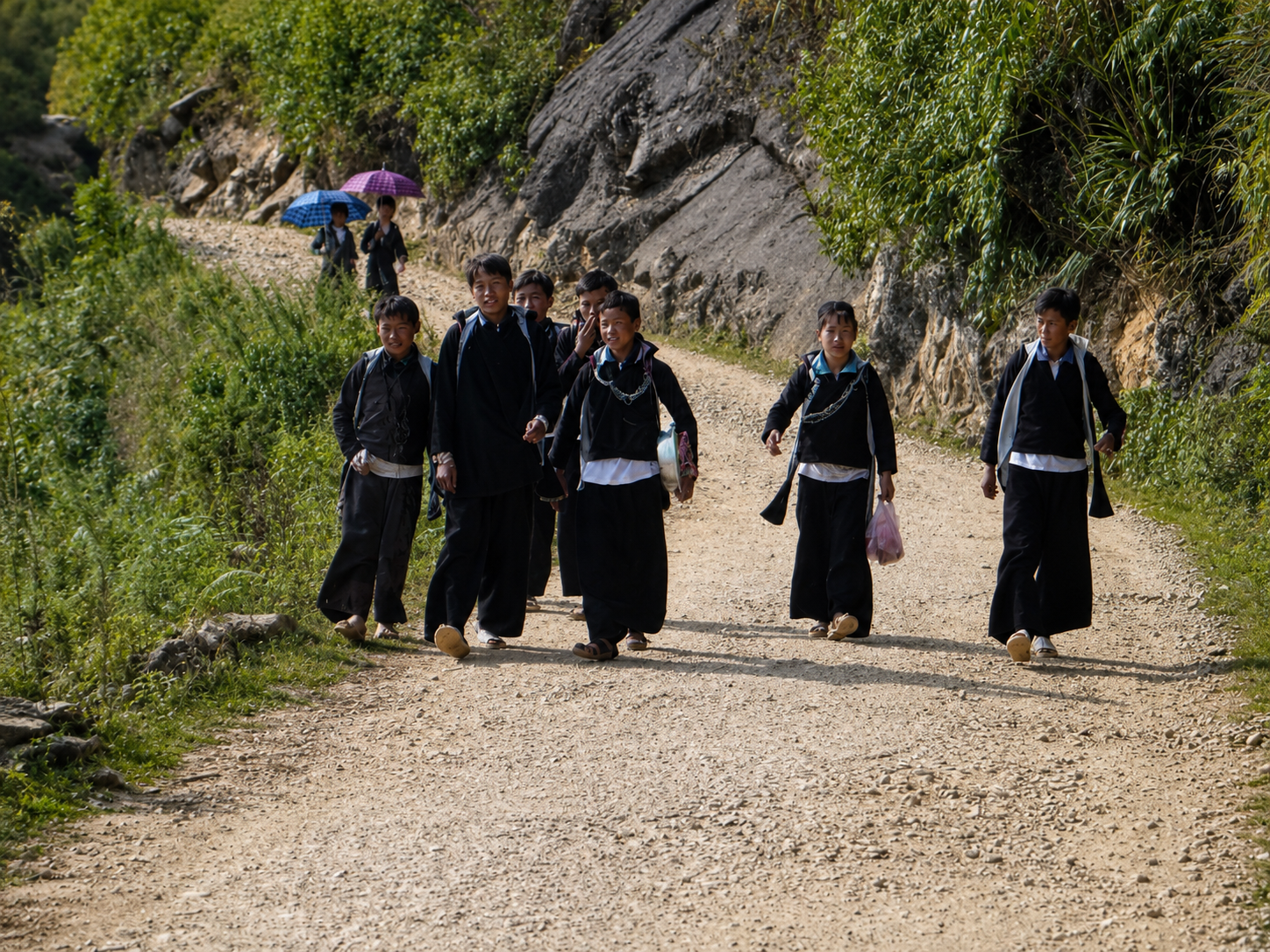
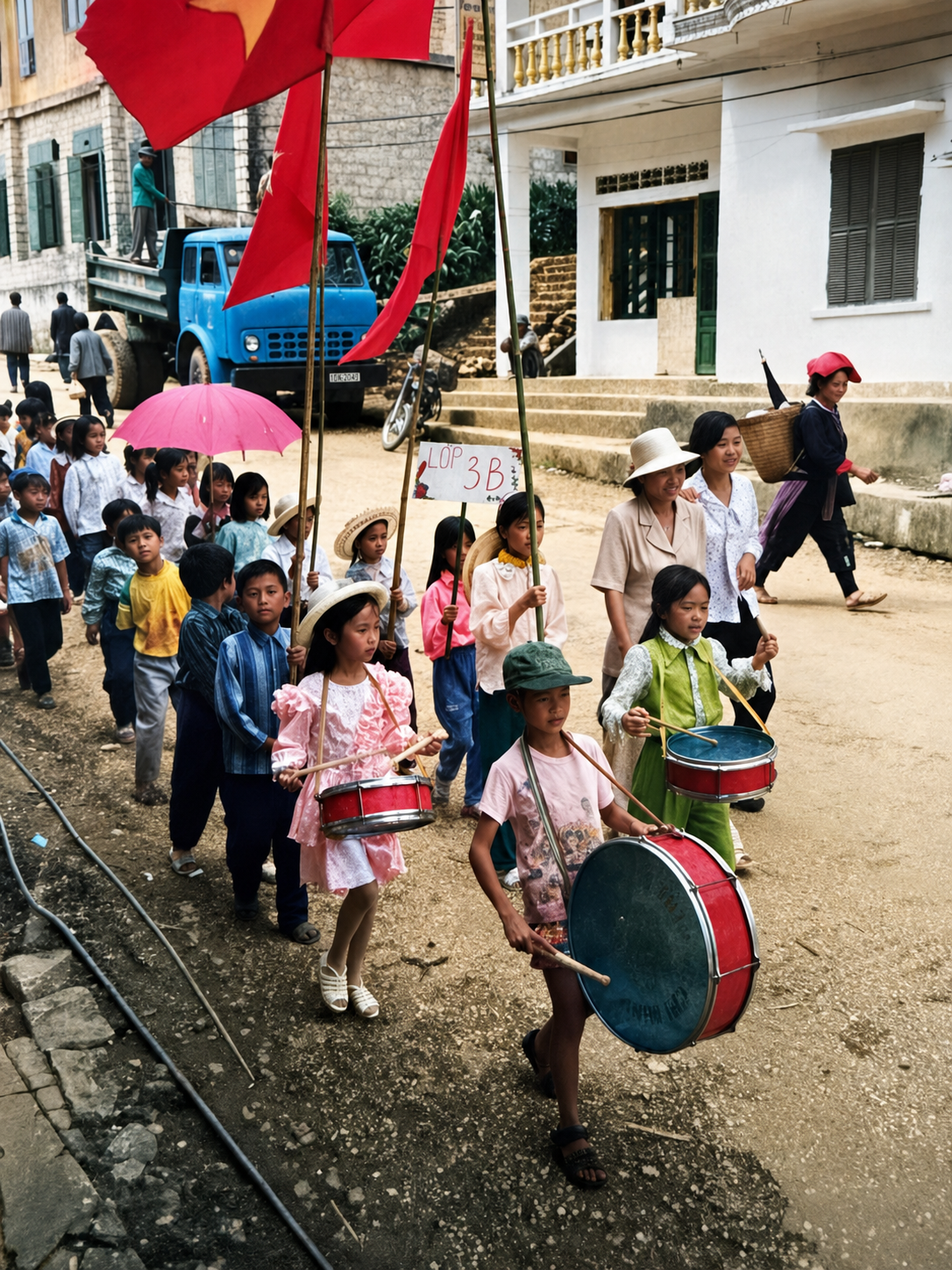
Although Sapa in 1998 was nothing like the busy tourism centre it would later become, it rarely felt quiet. Life spilled naturally onto the streets, and there always seemed to be something drawing my attention. Schoolchildren walked to class in cheerful groups, sometimes marching together behind teachers for school events or local celebrations. Farmers arrived carrying baskets of produce, elderly neighbours paused in conversation beneath the shade of roadside trees, while horses, pigs and the occasional water buffalo wandered through the town with far greater confidence than any motor vehicle.
There was no need to plan an afternoon's entertainment. Simply sitting outside with a beer was enough. Every few minutes another small scene unfolded. Children chased one another along muddy lanes. Someone wheeled a bicycle piled impossibly high with sacks of rice. Market traders packed away the last of their goods before stopping to chat with friends they had not seen since the previous week. Laundry fluttered from balconies, radios drifted through open windows and the sound of hammers echoed from houses being repaired after another mountain winter.
Looking back at these photographs now, what strikes me most is not what they contain, but what they do not. There are almost no coaches, souvenir shops or crowds of visitors. The streets belonged overwhelmingly to the people who lived there. Tourism was already beginning to arrive, but it remained a quiet presence alongside the ordinary business of mountain life. Simply wandering through town for half an hour often revealed more about Sapa than any guidebook ever could.
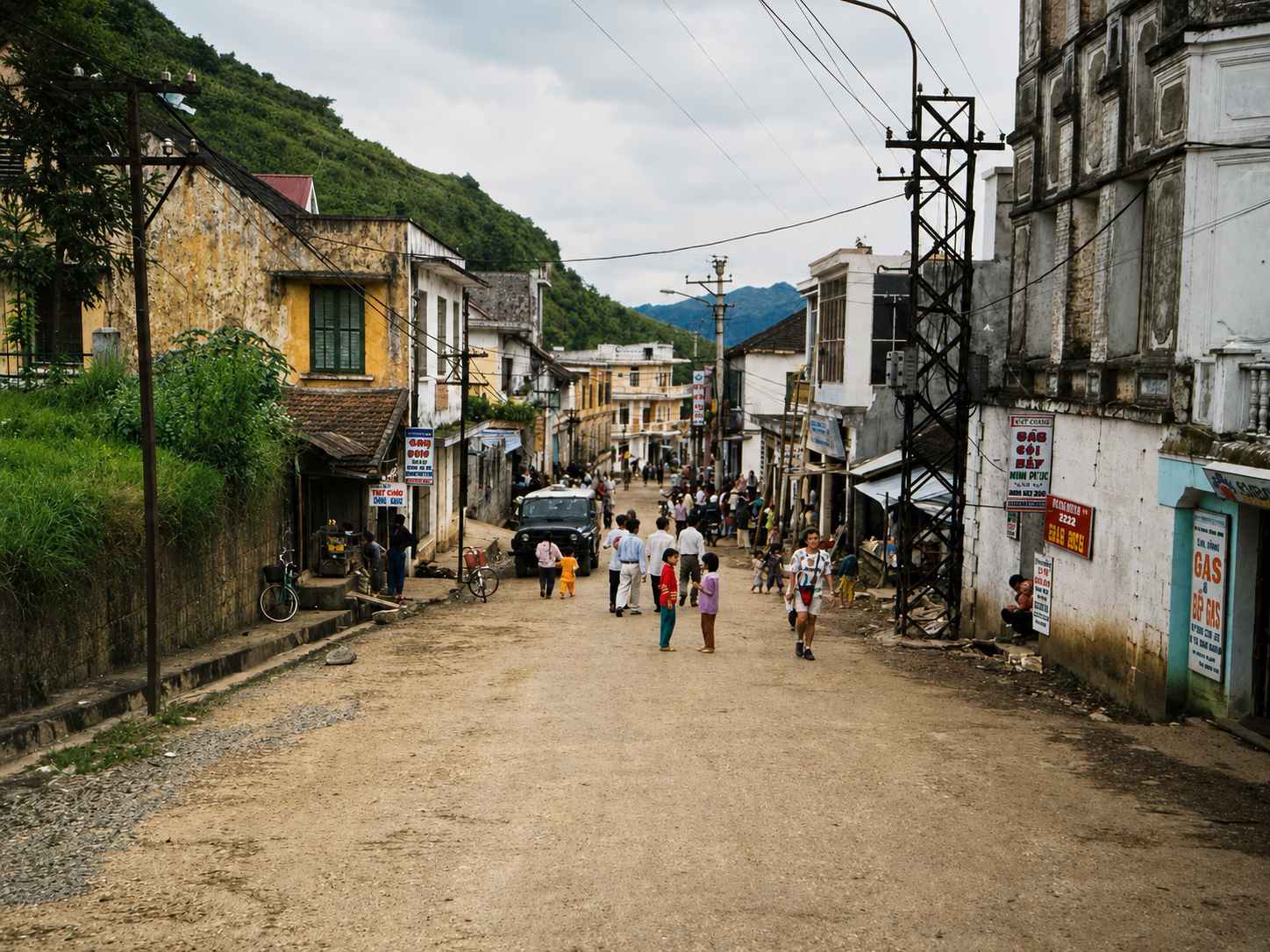
Sapa's main street in 1998. The town was small enough to cross on foot in a matter of minutes, yet there was almost always something happening. Farmers, traders, schoolchildren and local families shared the same muddy streets, each going about the routines of everyday mountain life.
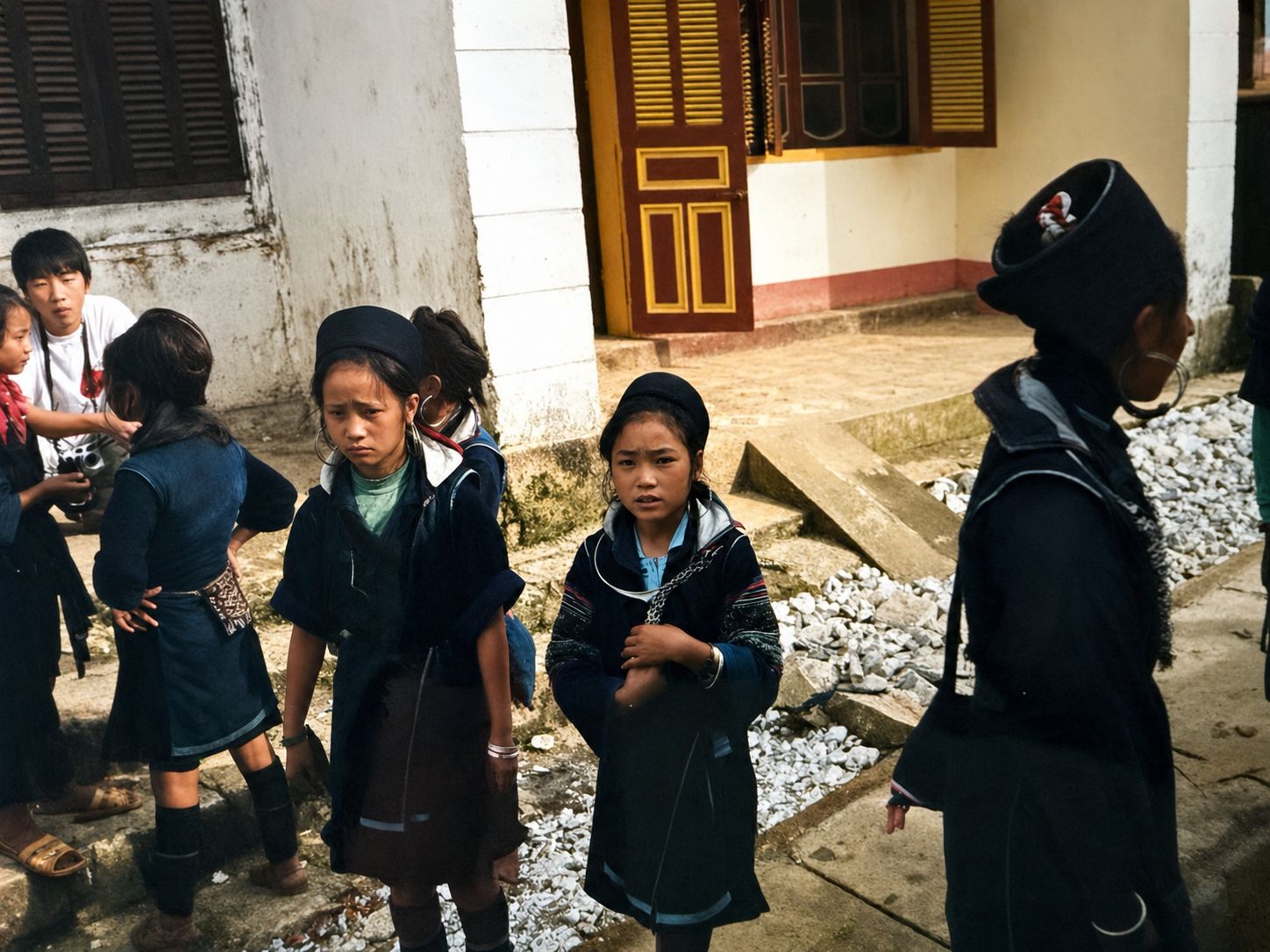
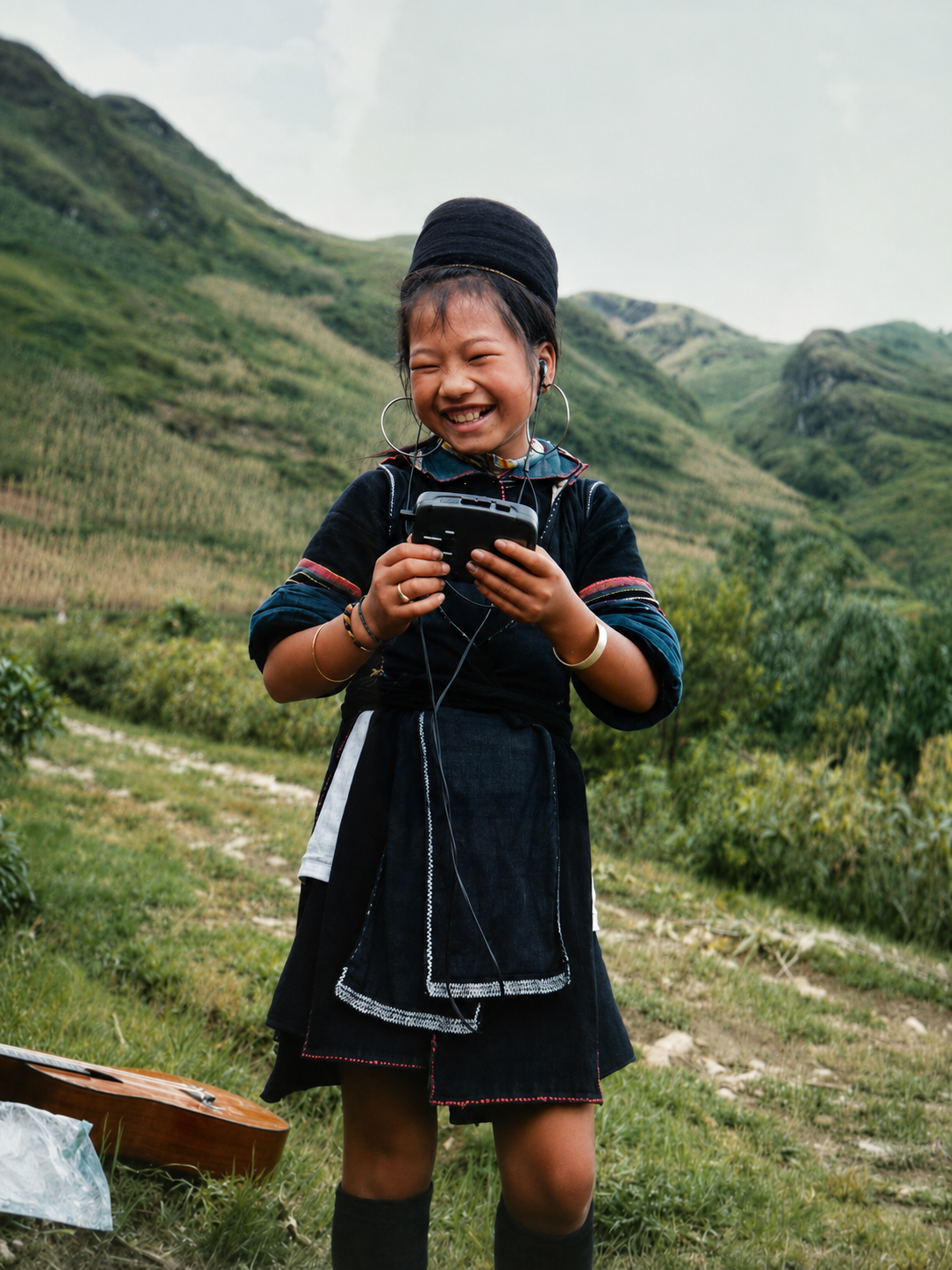
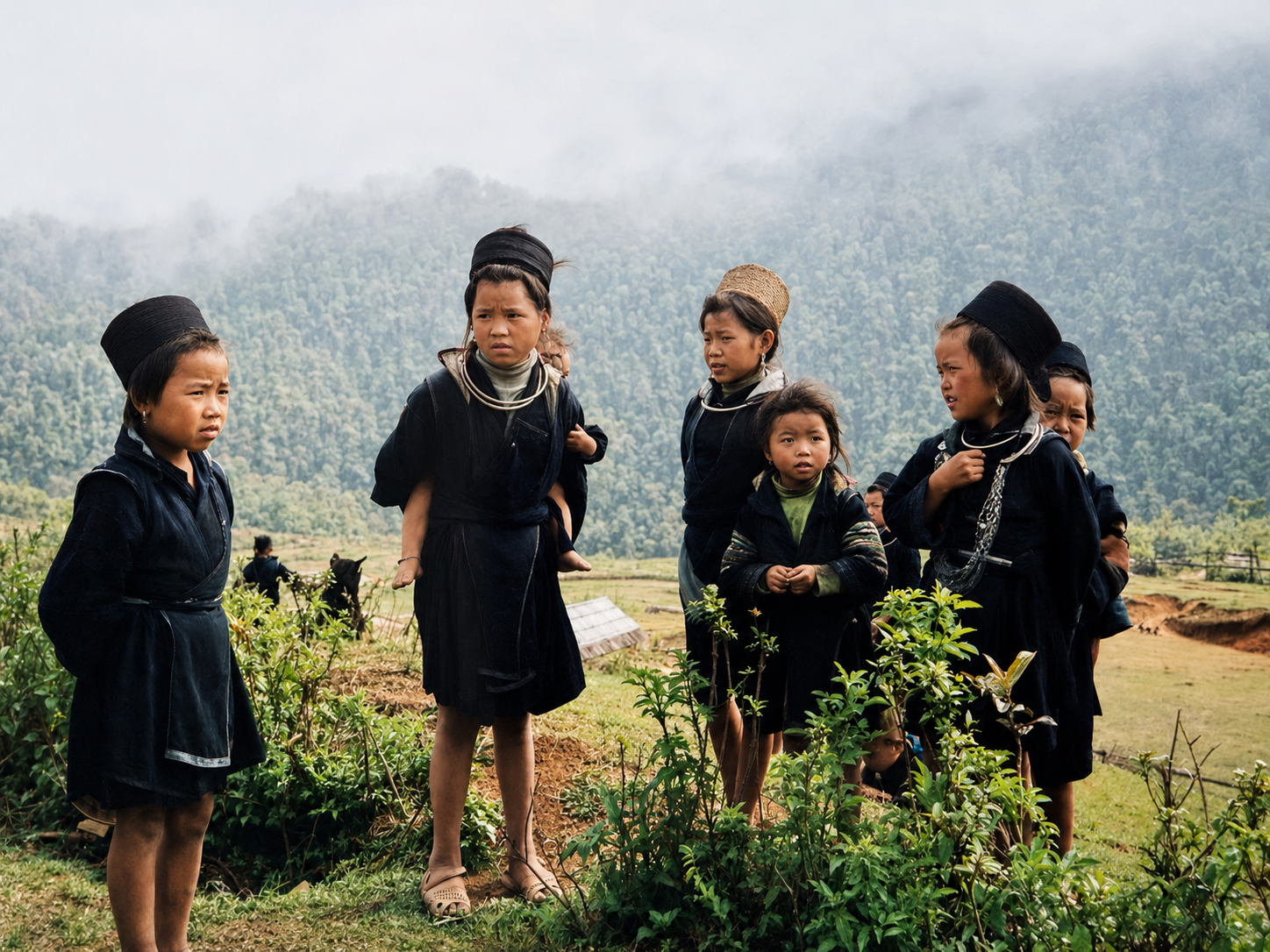
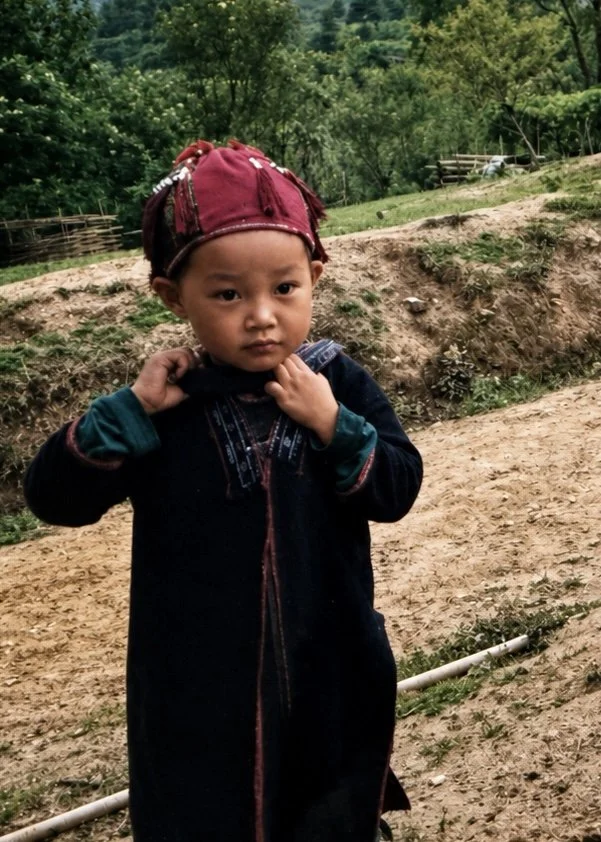
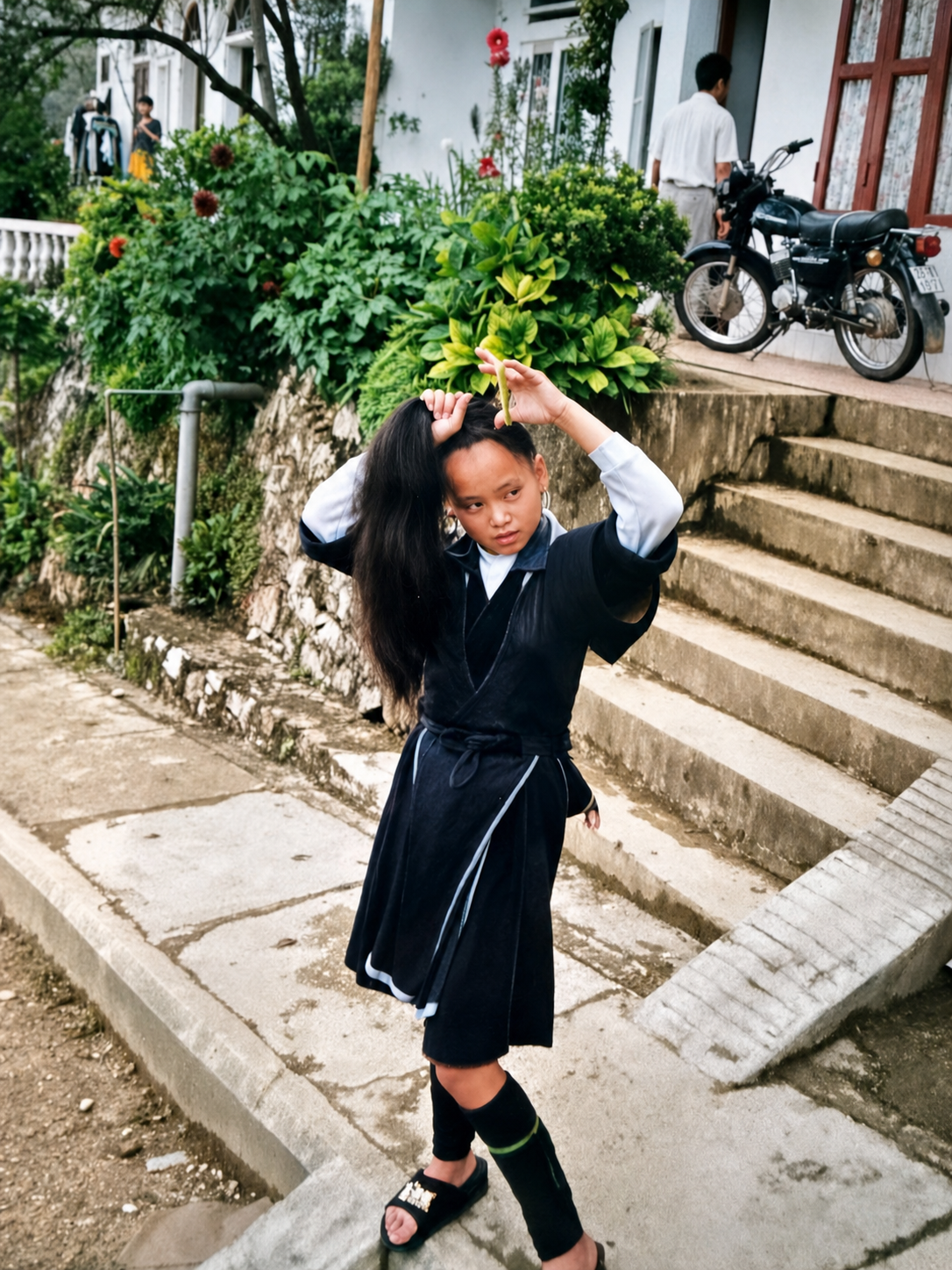
A group of young Hmong children gathered in town hoping to meet newly arrived travellers. Even in 1998, many had already recognised that learning a few words of English could open conversations, friendships and opportunities far beyond their mountain villages.
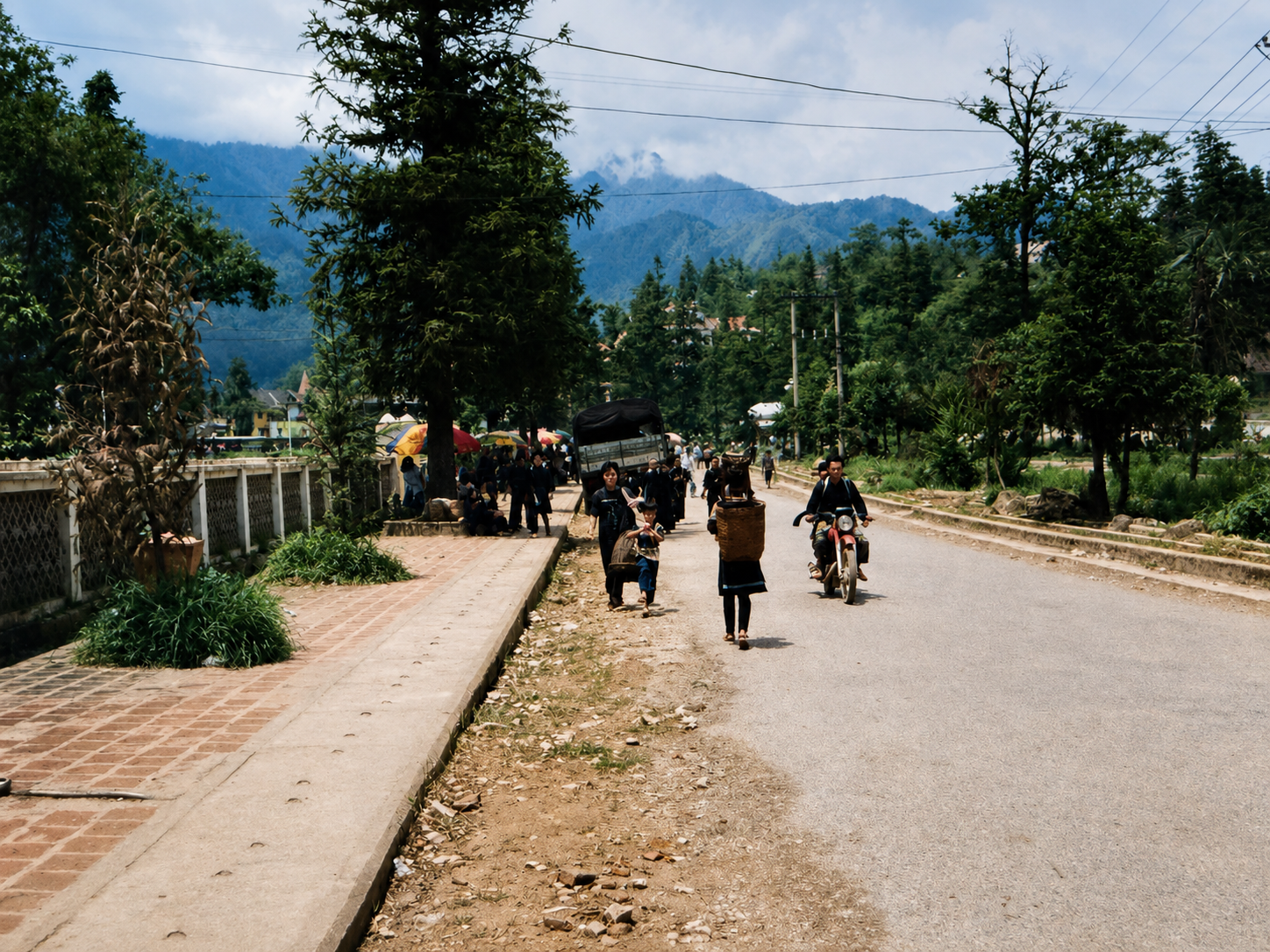
A quiet afternoon near the old stone church. With few vehicles and no crowds, walking was simply the natural way to move around town, offering endless opportunities to stop, chat and watch daily life unfold.
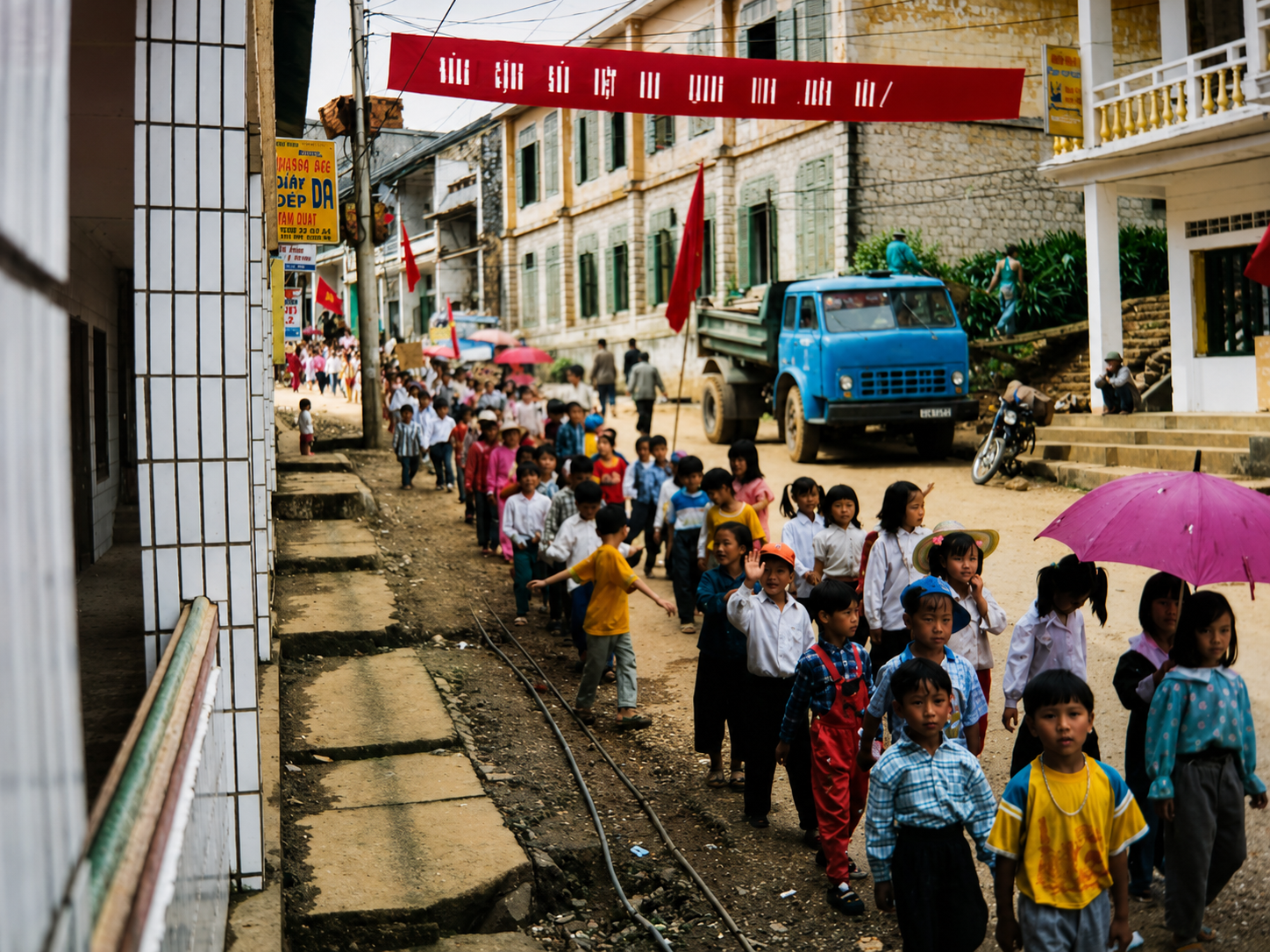
Schoolchildren gathered along the roadside during a local school event. Moments like these were part of the gentle rhythm of everyday life in Sapa, where the whole town often seemed to share in community celebrations.
Sapa Market - The Heartbeat of the Town
Saturday mornings always began before sunrise. Long before the first bowls of phở were ladled into waiting hands, the roads and footpaths leading towards Sapa filled with people who had already been walking for hours. Families descended from villages scattered across the surrounding mountains, woven baskets strapped across their backs. Some carried vegetables fresh from their gardens, while others led buffalo or pigs. Children skipped alongside their parents, somehow finding endless reserves of energy despite the distance already travelled.
By the time the market stirred fully awake, the whole town seemed to breathe a little differently. The smell reached you before the noise. Coal and wood smoke drifted from charcoal stoves where great pots of broth simmered gently beside bunches of fresh herbs, spring onions and rice noodles. Steam rose into the cool mountain air as cooks assembled bowl after bowl of fragrant phở. I still remember standing with cold hands wrapped around warm porcelain, watching the market come alive while sipping broth that somehow tasted richer after days in the forest than any meal I have eaten since.
A bowl of steaming phở cost around 2,000 đồng, making it one of the best breakfasts imaginable after days in the mountains. A bottle of Coca-Cola or Fanta cost about the same, although imported brands were still something of a novelty and far less common than they are today. Cigarettes reflected a similar contrast. A packet of Vinataba might cost around 7,500 đồng, while local brands such as Sapa or Du Lịch (Tourism) sold for closer to 2,000 đồng. Beyond those few familiar products, however, the market remained overwhelmingly local. Stalls overflowed with freshly butchered chicken and pork, mountain vegetables, herbs, mushrooms, fruit, woven baskets, livestock and practical household goods, supplying almost everything local families needed from one week to the next.
The market itself unfolded around the familiar stone steps, much as it had since the French established the hill station decades earlier. It was never designed around visitors and existed because mountain communities needed somewhere to trade. Villagers greeted one another after weeks apart, while relatives exchanged family news. Farmers compared harvests and tools changed hands. Bundles of medicinal plants were inspected with practised eyes. Fresh bamboo shoots lay beside baskets of mushrooms gathered from the forest only hours earlier. Nearby, pigs protested noisily as buyers negotiated prices, while buffalo stood with the quiet patience of animals entirely accustomed to attracting crowds. Chickens fluttered indignantly from wicker baskets. Somewhere a child laughed. Somewhere else somebody called out to an old friend across the square.
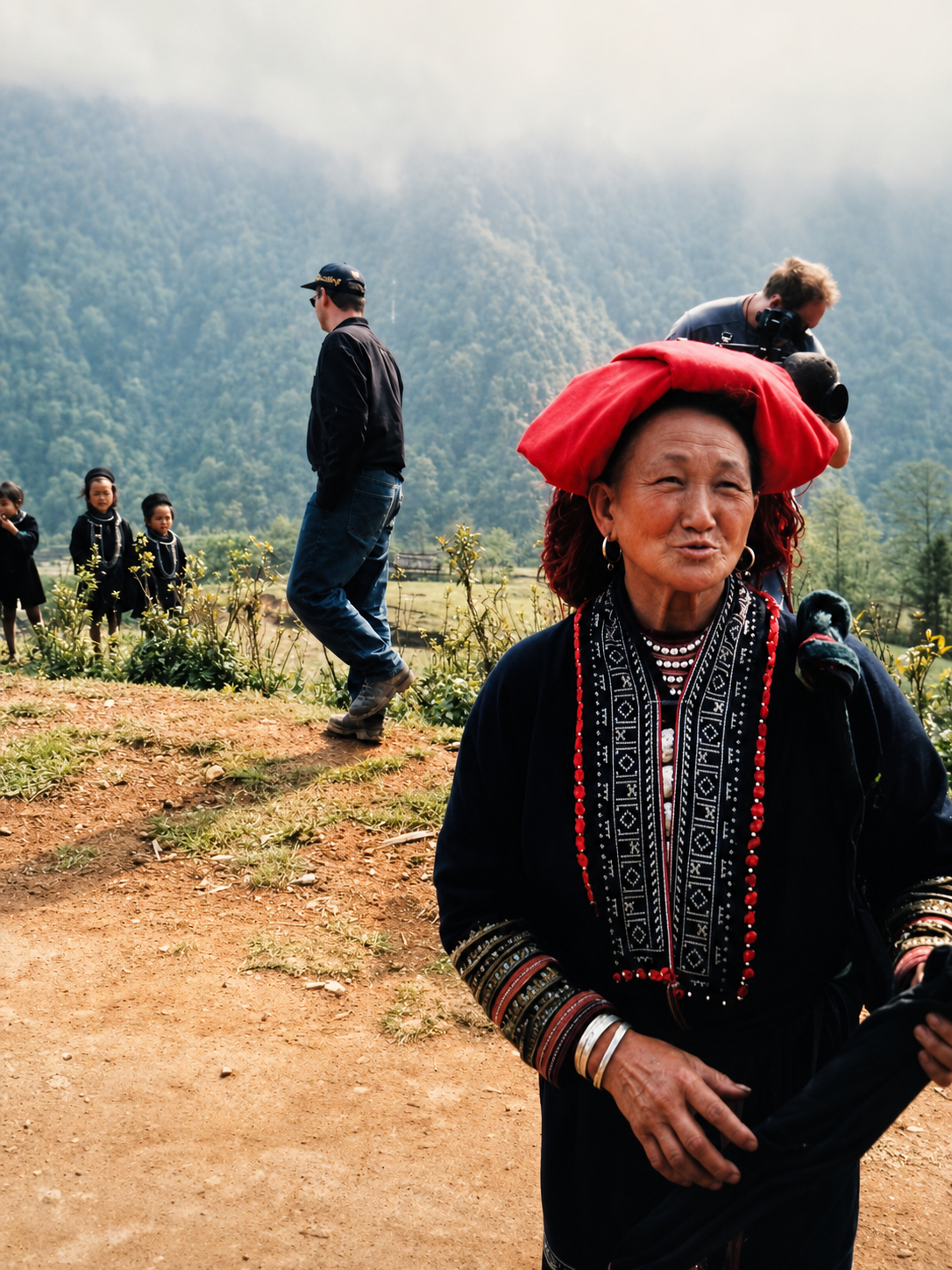
Colour seemed to flow through every corner of the market. Indigo hemp jackets embroidered with intricate bands of red, green and pink moved steadily between the stalls. Red Dao women adjusted richly decorated headscarves while examining silver jewellery. Giáy and Tày families sold vegetables, rice and household goods, while traders from near the Chinese border unpacked tools and practical everyday items that had made their way across the frontier.
Rain often arrived without much warning. Tarpaulins appeared almost instinctively above stalls while conversations continued as though nothing unusual had happened. People simply waited together until the shower passed, sharing tea, exchanging stories or carrying on negotiations interrupted only briefly by the weather. A thin scattering of foreign visitors wandered quietly through the crowds, although we remained observers rather than participants. Tourism still occupied the edges of market life. The market belonged first and foremost to the people who depended upon it each week, and that quiet confidence gave the whole place an atmosphere that is difficult to recreate.
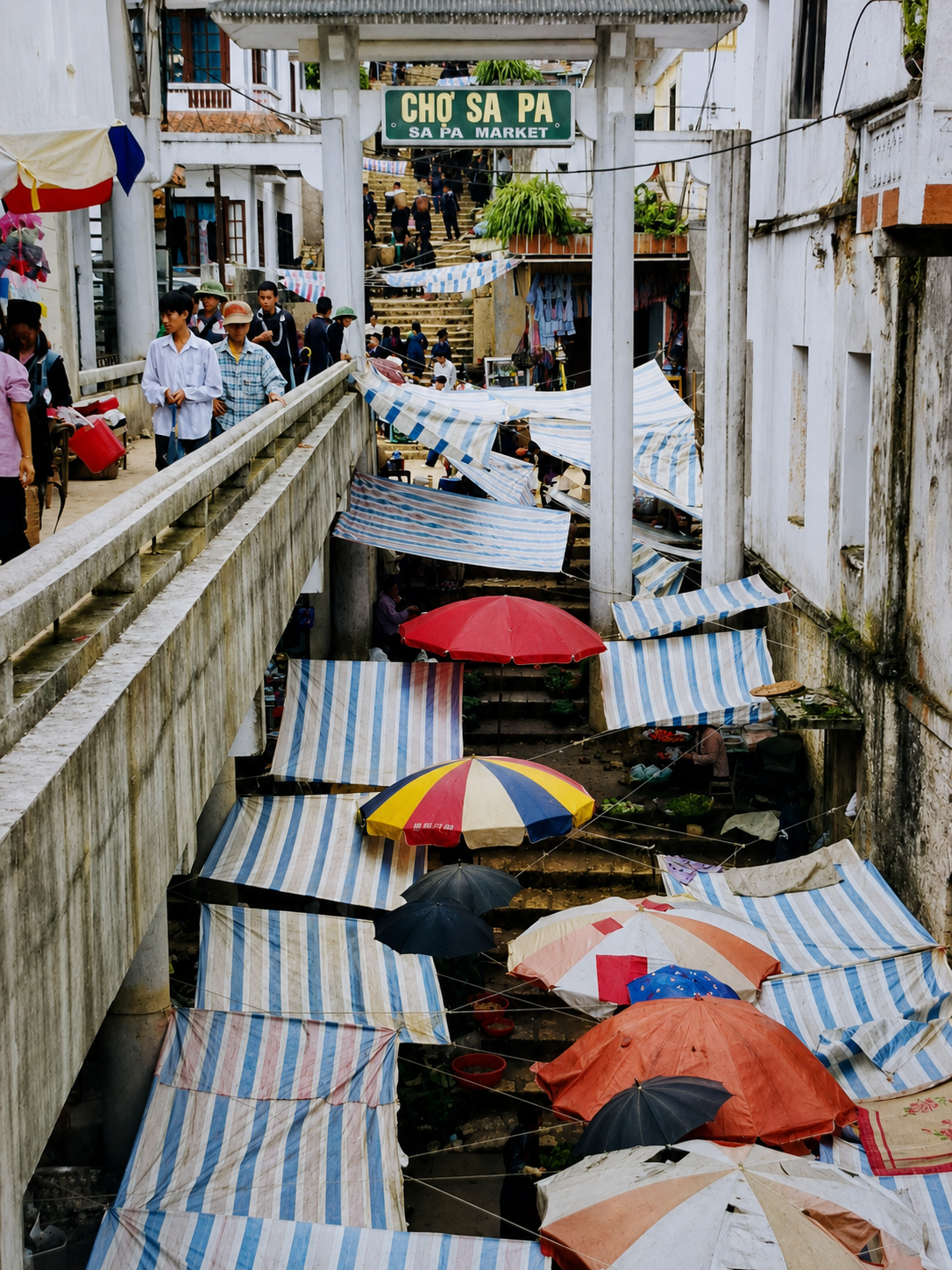
The entrance to Sapa Market in 1998. Beneath a patchwork of striped tarpaulins, traders sold fresh vegetables, meat, clothing, household goods and everyday essentials to families who had often walked for hours from surrounding villages. Before tourism transformed the town, the market existed first and foremost for the people who lived and worked in the mountains. Image courtesy of Sean Adams ©
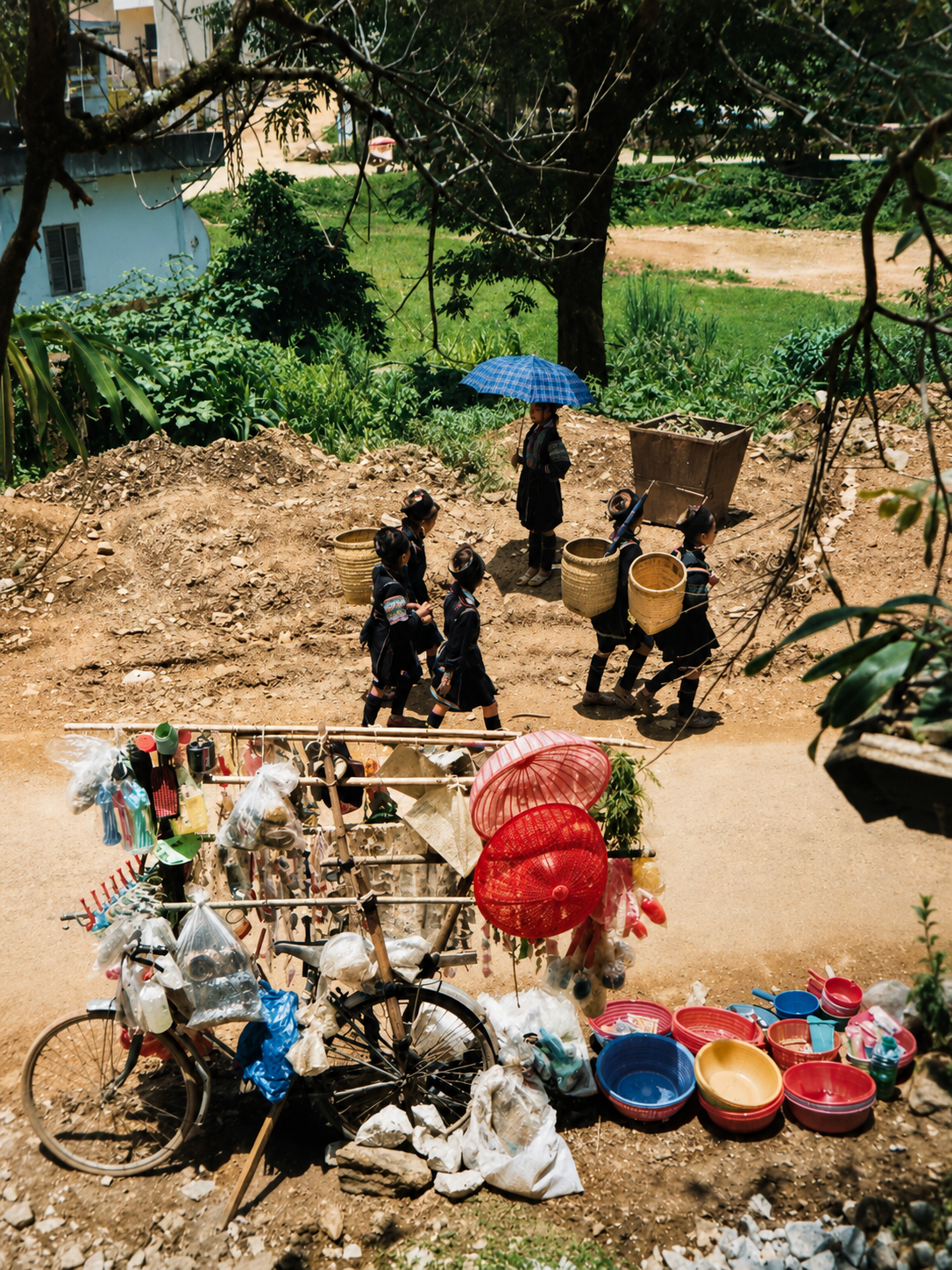
Families heading towards Sapa Market carrying woven baskets filled with produce and household goods. For many people, market day began with a walk of several hours, bringing together communities from across the surrounding mountains.
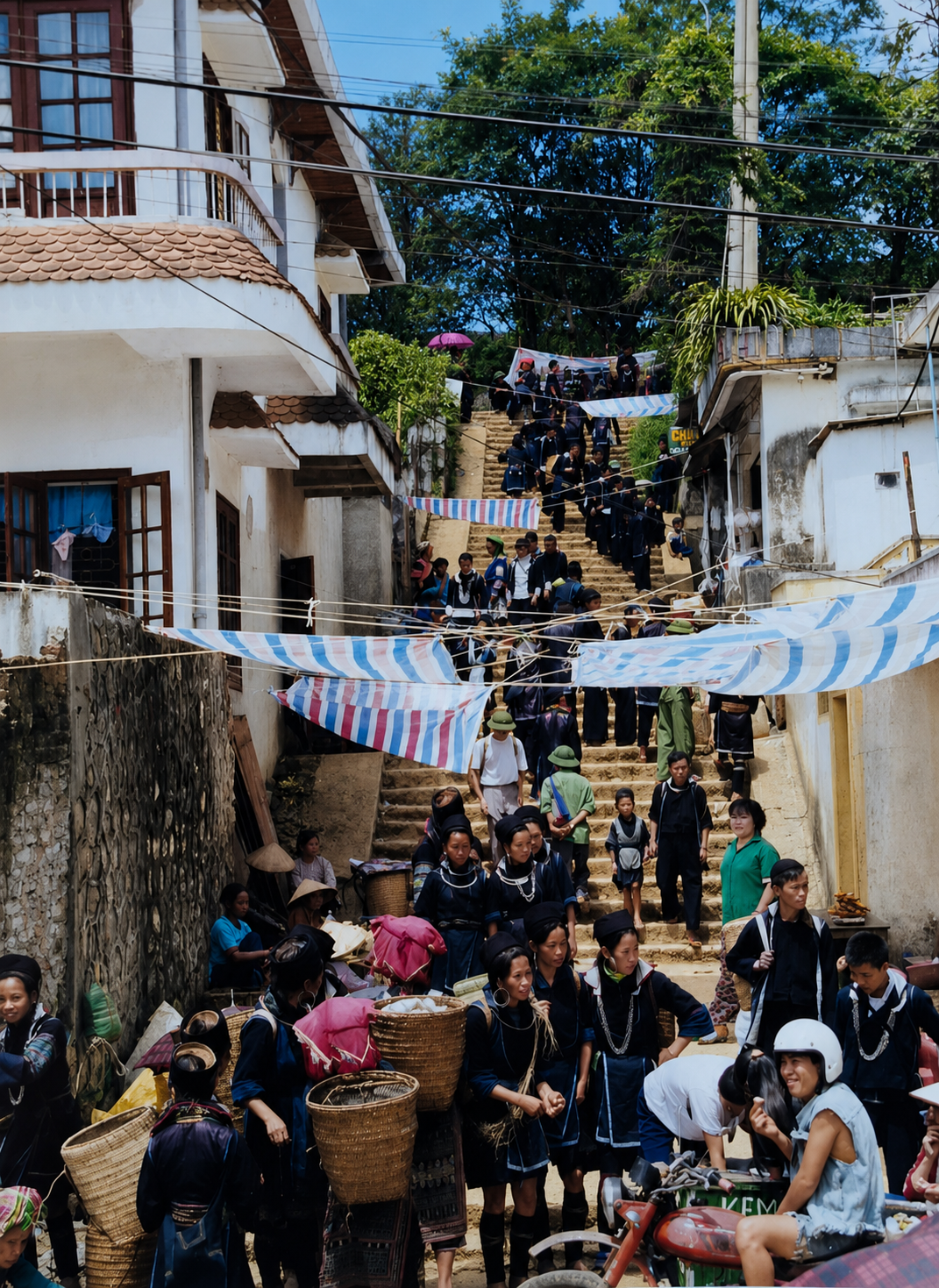
The market spilled through the centre of town, filling every available space with traders, woven baskets, textiles and the conversations that made Saturday the social highlight of the week. Image courtesy of Sean Adams ©
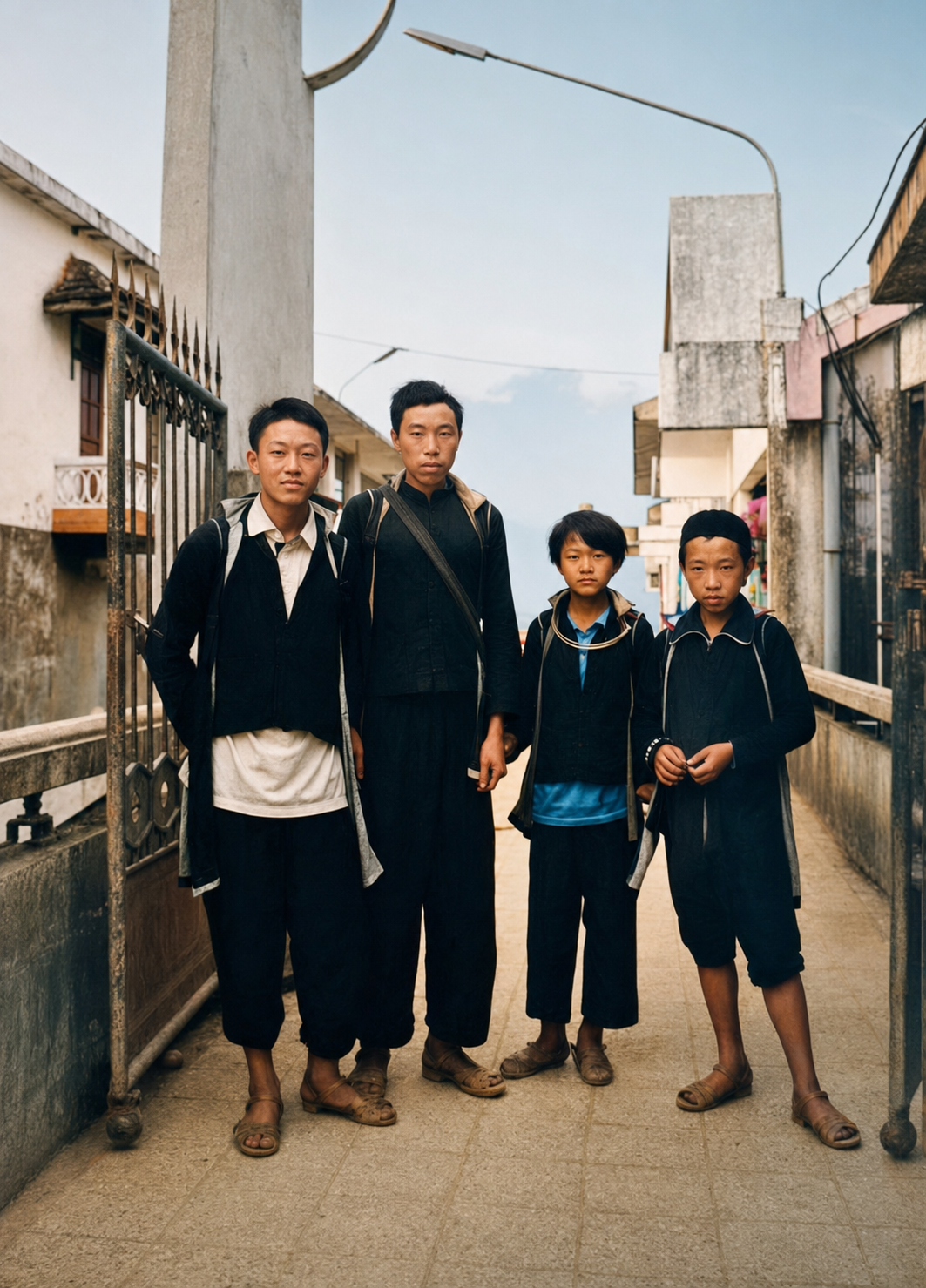
Market day was rarely just about buying and selling. Entire families made the journey into town together, combining trade with the opportunity to visit friends, exchange news and spend time in one of the few places where communities from across the mountains regularly came together. Image courtesy of Sean Adams ©
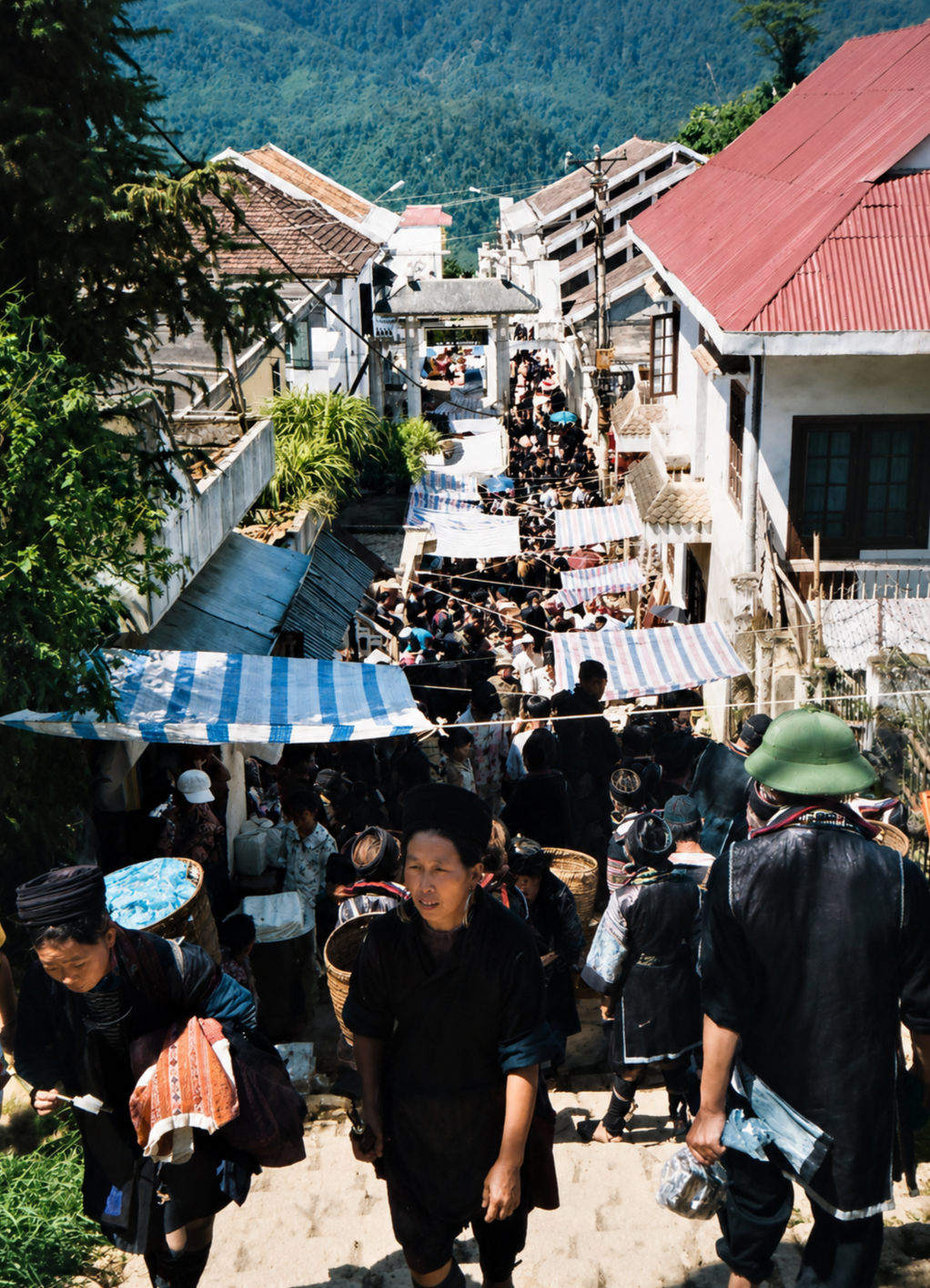
On market days, Sapa's narrow lanes became crowded with people arriving from every direction to trade, meet relatives and stock up on supplies before beginning the long walk home.
Saturday Night and the “Love Market”
As evening settled over Sapa each Saturday, the town seemed to undergo a gentle transformation. The traders who had spent the day buying, selling and catching up with neighbours did not all return home immediately. Many villages lay several hours away on foot, making the journey impractical until morning. Families stayed overnight with relatives or friends, while younger people gathered naturally around the old stone church at the centre of town. This was the gathering visitors later came to call the Love Market.
The name always struck me as slightly misleading. There was no organised event, no performance and certainly nothing staged for outsiders. What unfolded each Saturday evening was simply part of social life in a region where villages could be separated by mountains, rivers and long hours of walking. Market day offered a rare opportunity to see friends, renew acquaintances and, for some young people, begin relationships that might eventually lead to marriage.
Music carried much of the conversation. Young Hmong men played the qeej, its haunting notes drifting softly through the cool night air. Others carried bamboo flutes or mouth harps, using music where words sometimes felt inadequate. Young women responded through songs, conversation, smiles and the quiet language of familiarity that needs no translation. Groups formed and dissolved around the church, laughter rising above the gentle murmur of voices while children chased one another across the open ground.
Visitors often watched with fascination, although it never felt as though we had been invited to spectate. We simply happened to be present while mountain communities continued traditions that belonged entirely to them.
Beyond the Town
Although Sapa itself fascinated me, it was in the surrounding villages that I felt most at home. I had travelled halfway around the world because I wanted to study forests. I imagined my memories would be filled with rare birds, towering trees and scientific discoveries. Instead, it was the people who quietly changed the direction of my life.
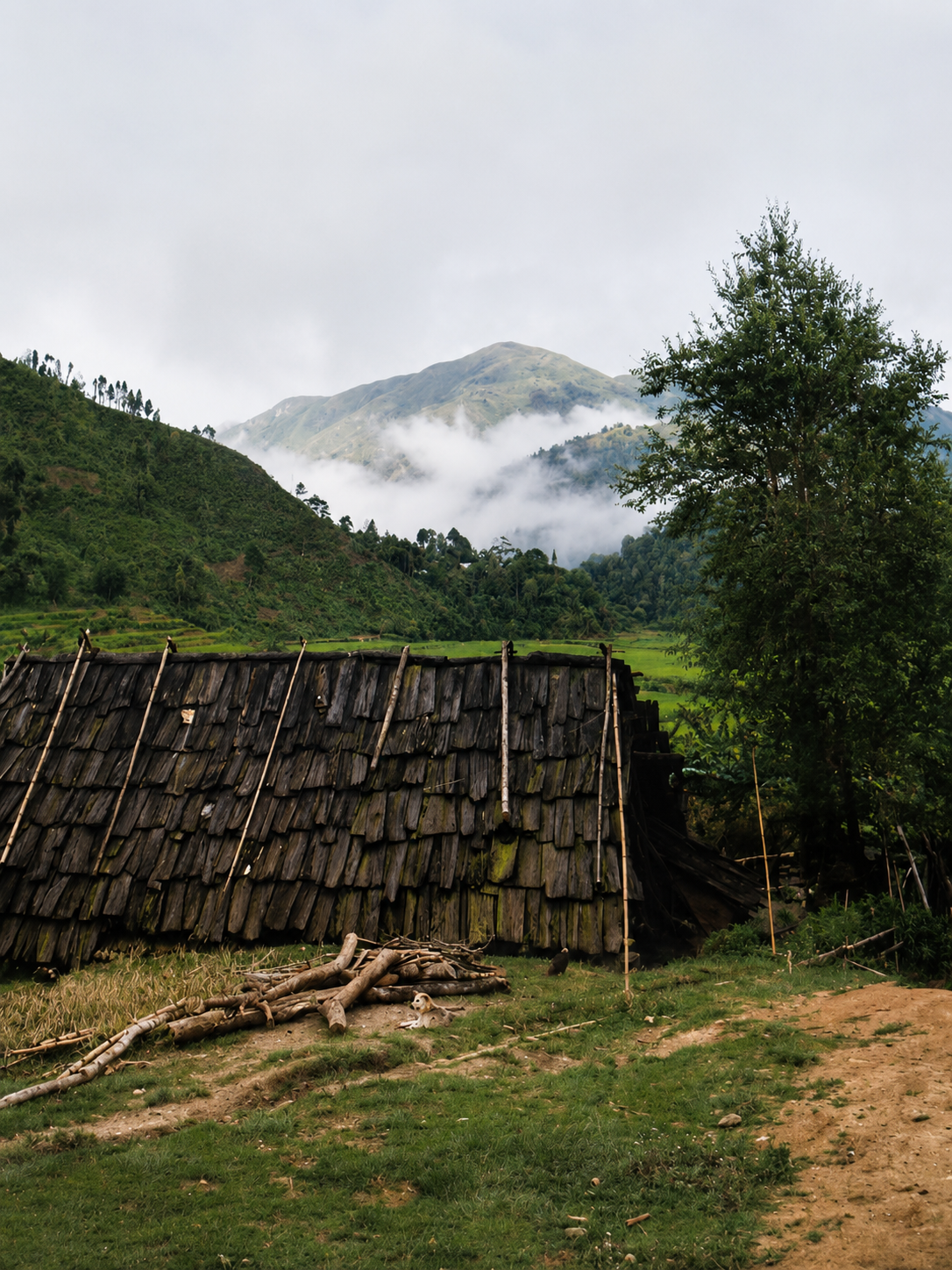
Beyond the last houses of town, the landscape opened into a world that seemed governed entirely by the mountains. Rice terraces followed every fold of impossibly steep hillsides before giving way to forests that climbed towards the cloud-shrouded peaks of the Hoàng Liên Sơn. Villages appeared wherever families had found enough level ground to build a home and cultivate the land around it. Houses were constructed from timber cut from nearby forests, many roofed with hand-split pơ mu shingles that gradually weathered to soft shades of silver and grey. They looked as though they had grown naturally from the landscape itself.
The roads that exist today were, for the most part, still years away. A handful of wider gravel tracks reached some villages, but beyond them almost every journey continued on foot. Narrow trails wound through rice terraces, crossed streams on simple log bridges and disappeared into forests before climbing over ridges towards another valley. We walked because our work demanded it. Local families walked because there was no alternative. Children walked to school. Farmers walked to their fields. Families walked to market, often leaving before dawn and returning long after dark with baskets full of supplies balanced across their backs.
Life revolved around the agricultural calendar. Rice remained the foundation of almost every household, supplemented by maize, vegetables, hemp, livestock and whatever the surrounding forests could provide. There was very little waste because there was very little to spare. Every terrace represented countless hours of labour. Every harvest mattered.
It would be dishonest to write about village life in 1998 without acknowledging the poverty that many families experienced. These were not communities trapped in the past or unwilling to embrace change. They were communities living with profound geographical isolation and generations of limited opportunity. Roads were few, healthcare was basic, secondary education remained beyond the reach of many children and markets for agricultural produce were difficult to access. Tourism was only just beginning to appear and had yet to bring meaningful economic opportunities to most villages.
For many families, life remained precariously balanced. When the previous year's rice harvest had been eaten and the next crop was still months from maturity, hunger was an accepted, if unwelcome, companion. I remember being told that some children tied lengths of hemp cord tightly around their waists because the pressure helped ease the discomfort of an empty stomach. Nobody spoke about it dramatically. It was simply one of many practical ways people coped during the hardest weeks of the year.
What struck me most, however, was that hardship never defined the people I came to know. The villages were full of laughter. People shared food they could scarcely spare, welcomed strangers into their homes without hesitation and possessed a generosity that often left me feeling I had received far more than I could ever hope to repay. Knowledge flowed effortlessly between generations. Children learned to recognise medicinal plants, read the weather, care for livestock and navigate mountain paths long before they reached adulthood. The forests that I had come to study were not simply habitats for wildlife. They were pharmacies, supermarkets, workshops and places of spiritual significance woven into everyday life.
Somewhere during those thirteen weeks I realised that my notebooks were no longer filled solely with observations about birds, butterflies and forests. Increasingly they contained people's names, stories and conversations. I had arrived in northern Vietnam hoping to understand one of Southeast Asia's most remarkable mountain ecosystems. Without really noticing it happening, I found myself captivated by the people who had shaped that landscape for generations. I came for the forest, but it was the people who won my heart.
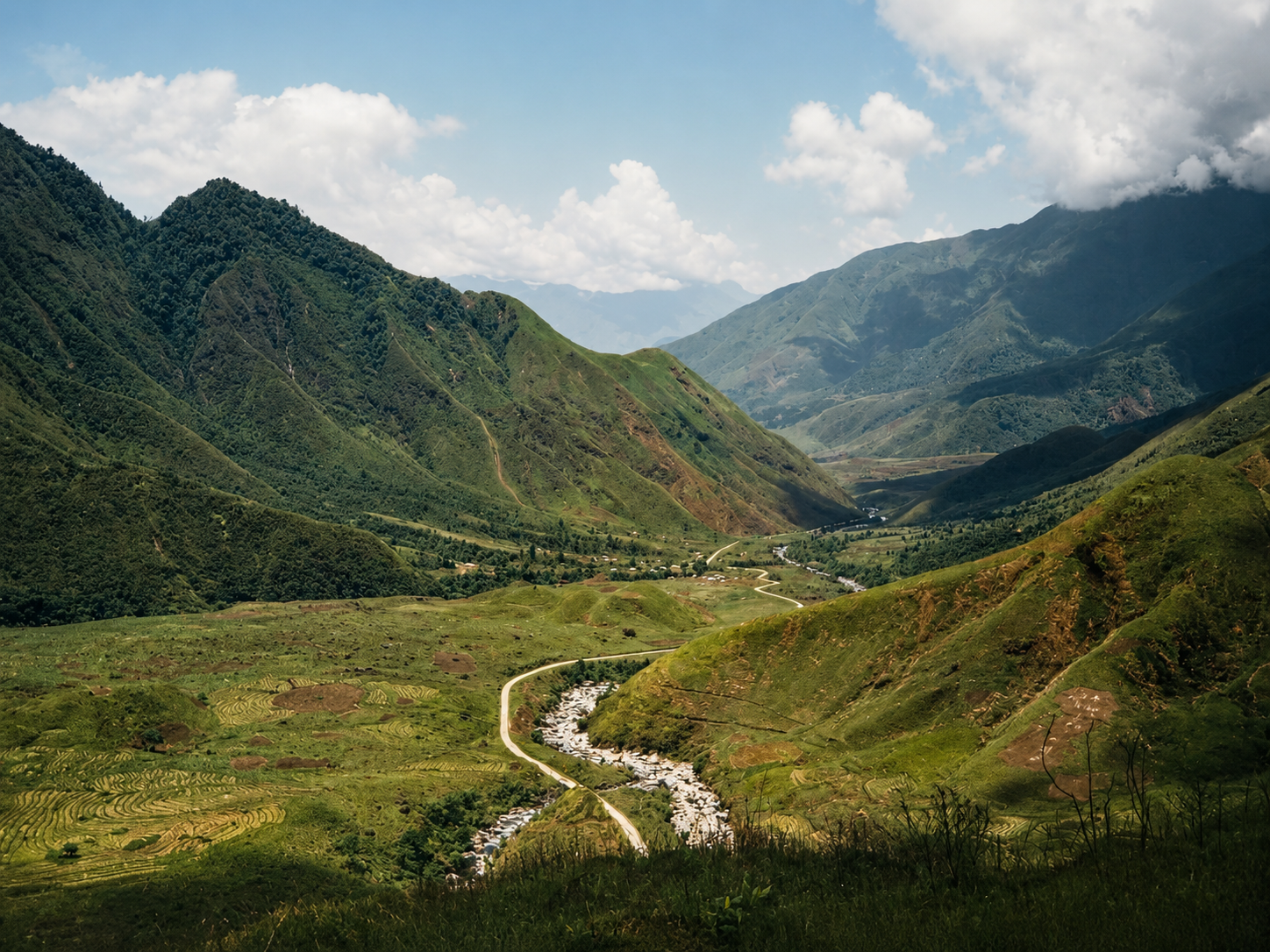
A neighbouring valley near Chu Va in Lai Châu Province. Beyond Sapa, the mountains stretched across northern Vietnam in an almost unbroken landscape of forests, rivers and terraced fields, where villages remained connected by little more than narrow mountain trails.
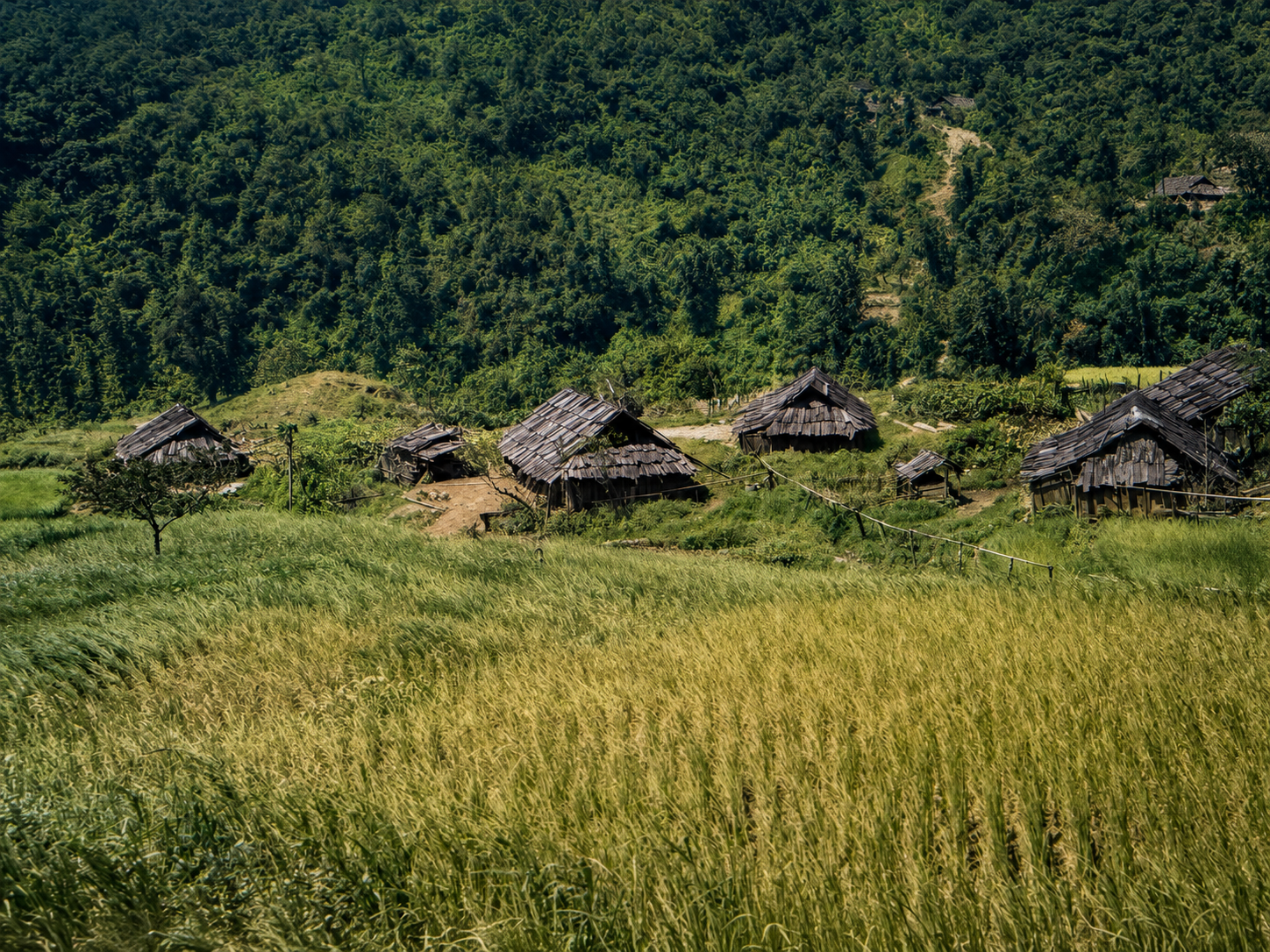
A small Hmong village (Sin Chai) nestled among the rice terraces. Houses were built from locally sourced timber and roofed with hand-split pơ mu shingles, materials that blended naturally into the surrounding landscape and reflected generations of mountain craftsmanship.
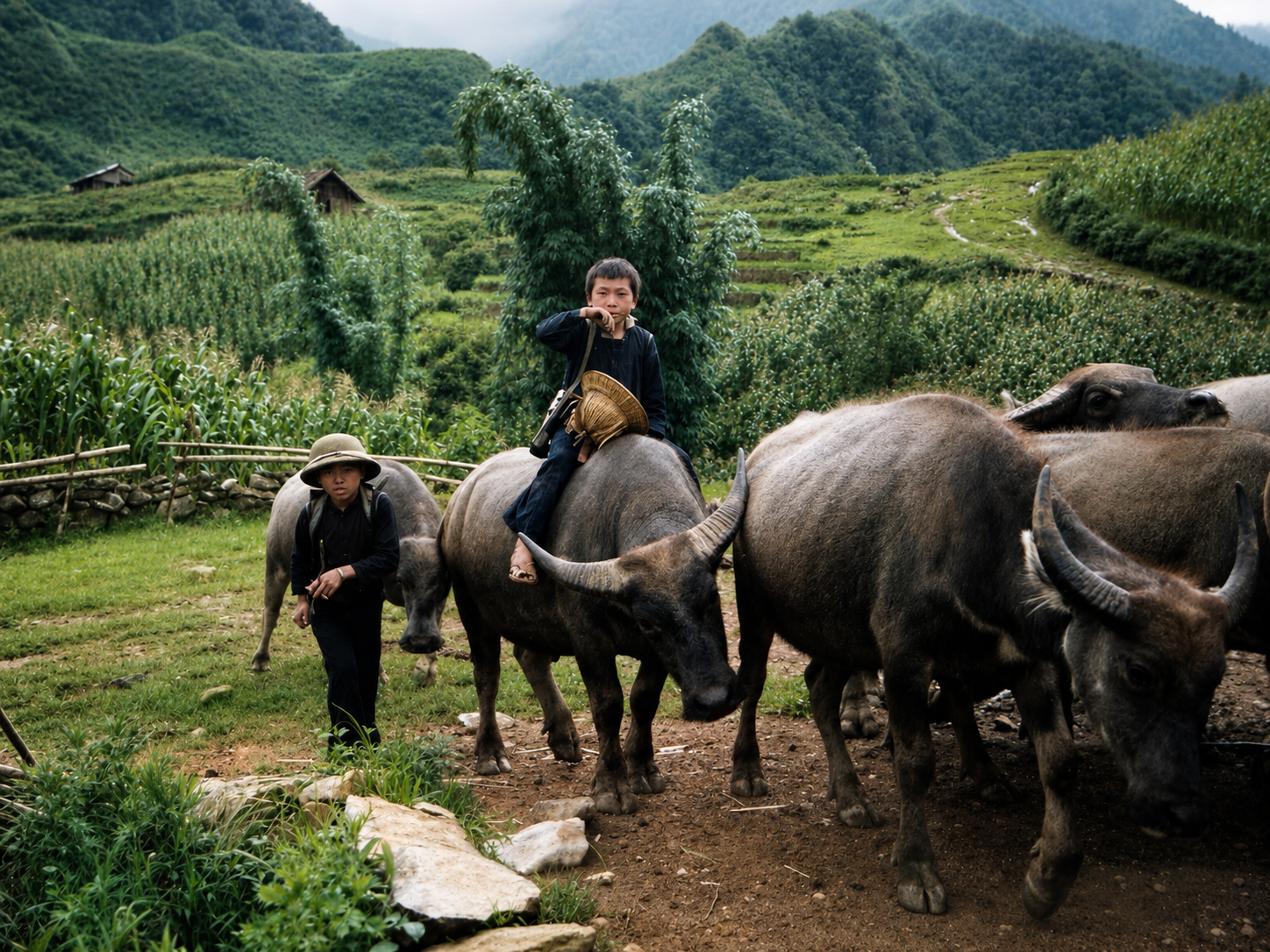
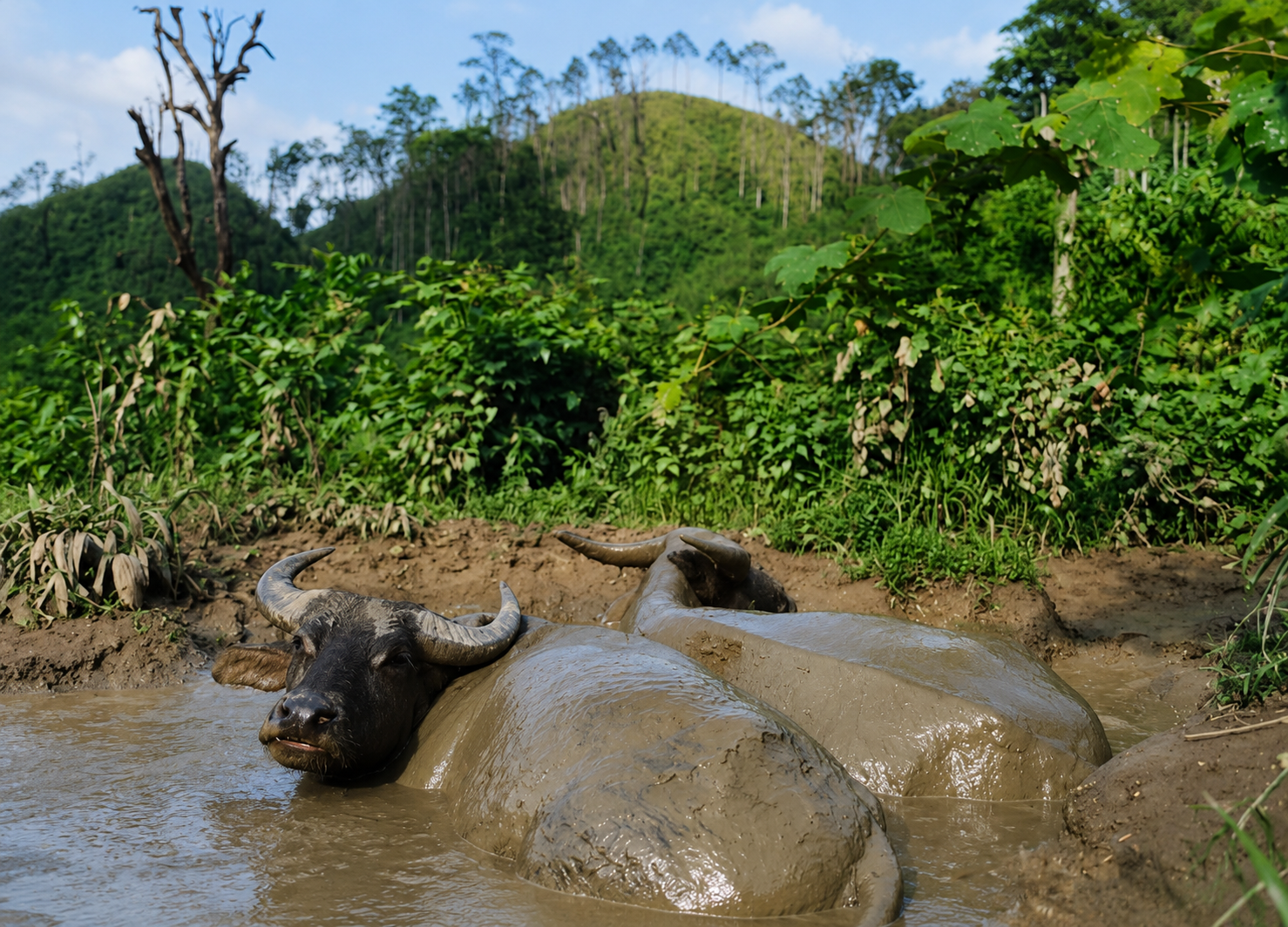
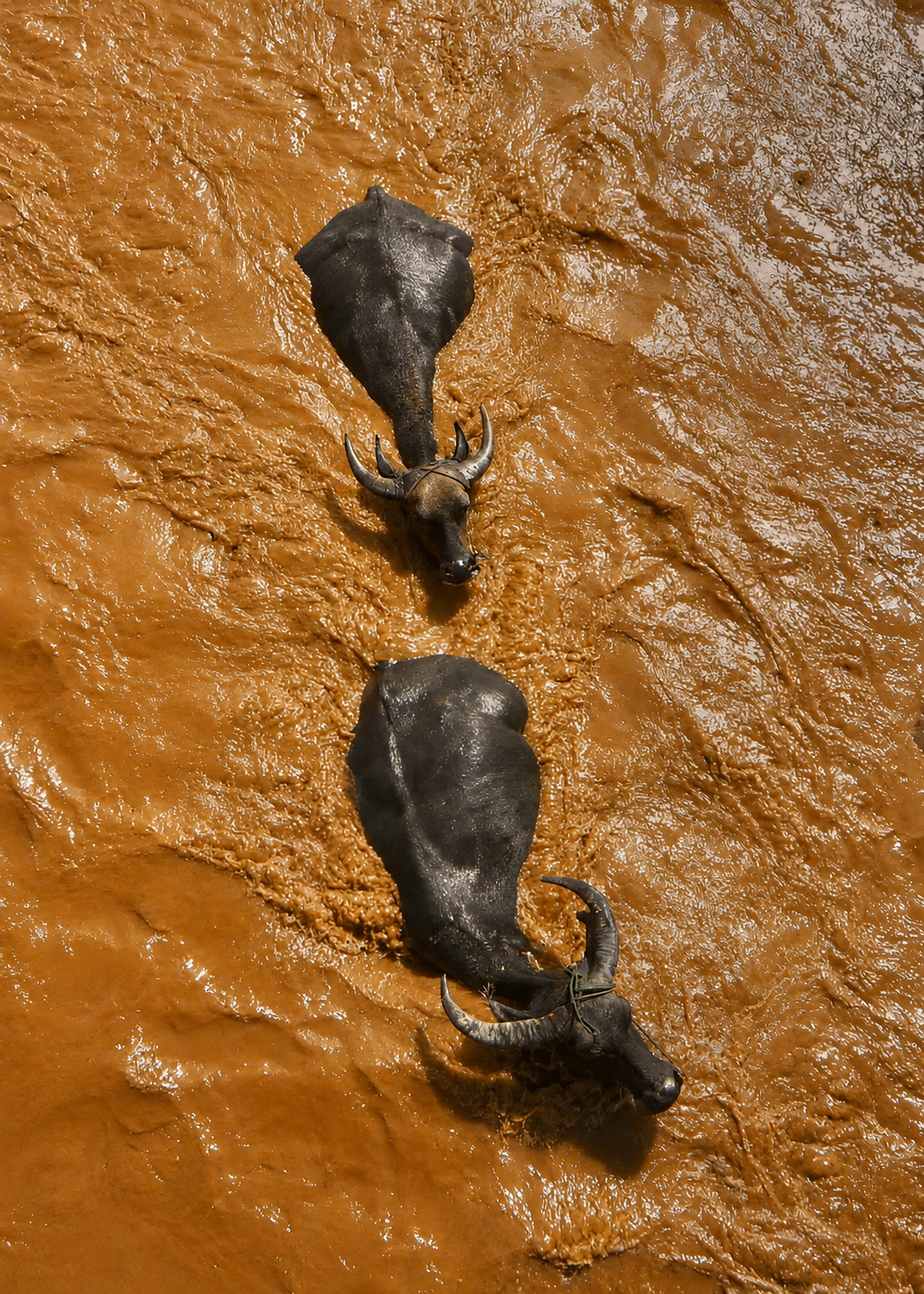
Water buffalo were at the heart of village life, providing the strength to plough steep terraces that could never be worked by machinery. During planting season they were among a family's most valuable possessions.
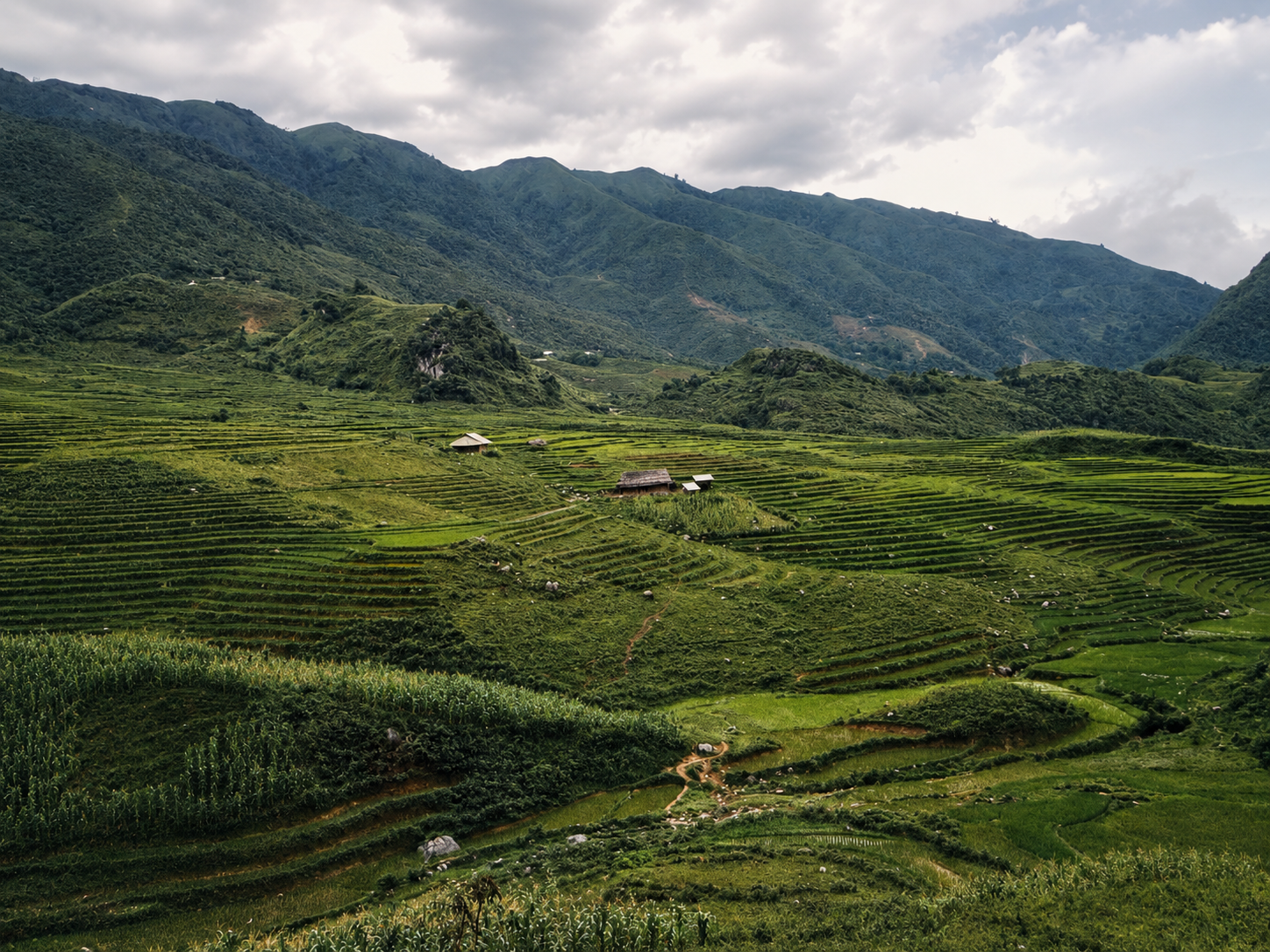
Rice terraces shaped almost every hillside around Sapa. These, in Ta Phin were built and maintained by hand over generations, they transformed some of the steepest mountain slopes in Vietnam into productive farmland and remain one of the region's defining landscapes.
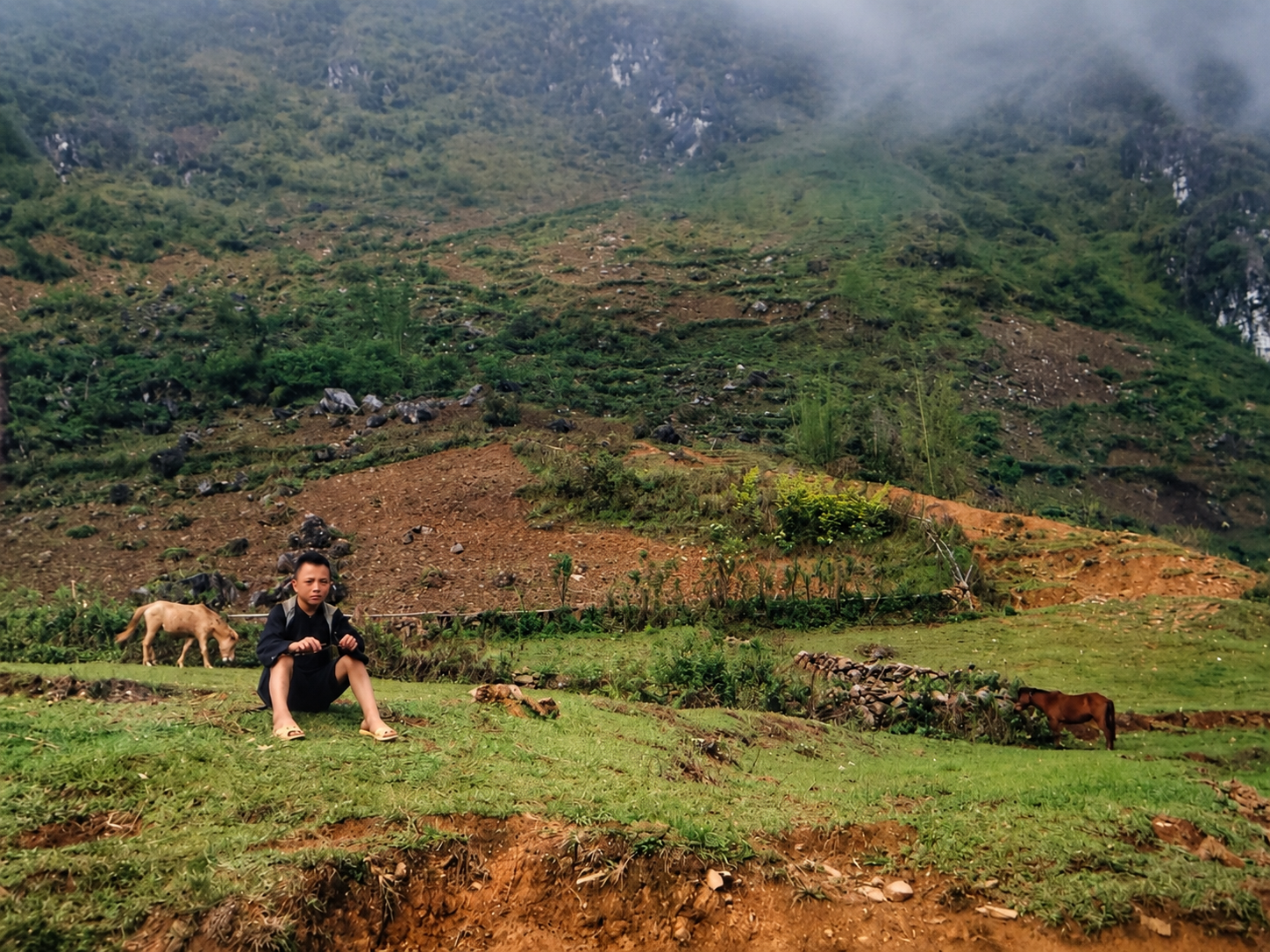
One of countless moments spent simply watching village life unfold. Much of our work involved long walks between settlements, and it was during these journeys that I came to appreciate not only the forests, but also the resilience and generosity of the people who called these mountains home.
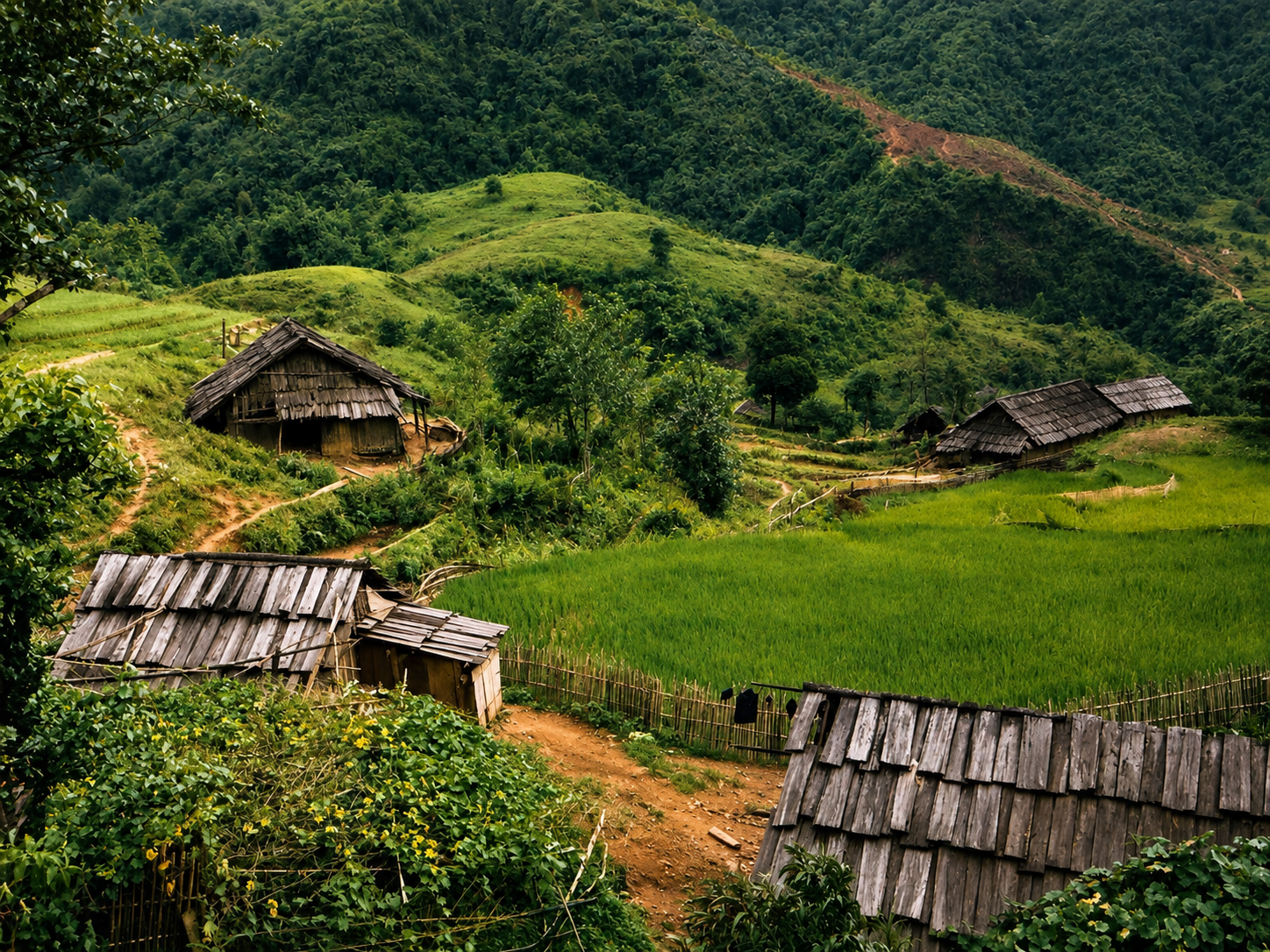
Homes, fields and footpaths formed a closely connected landscape. Every terrace represented years of labour, while the surrounding forests supplied timber, firewood, medicinal plants and countless other essentials for daily life.
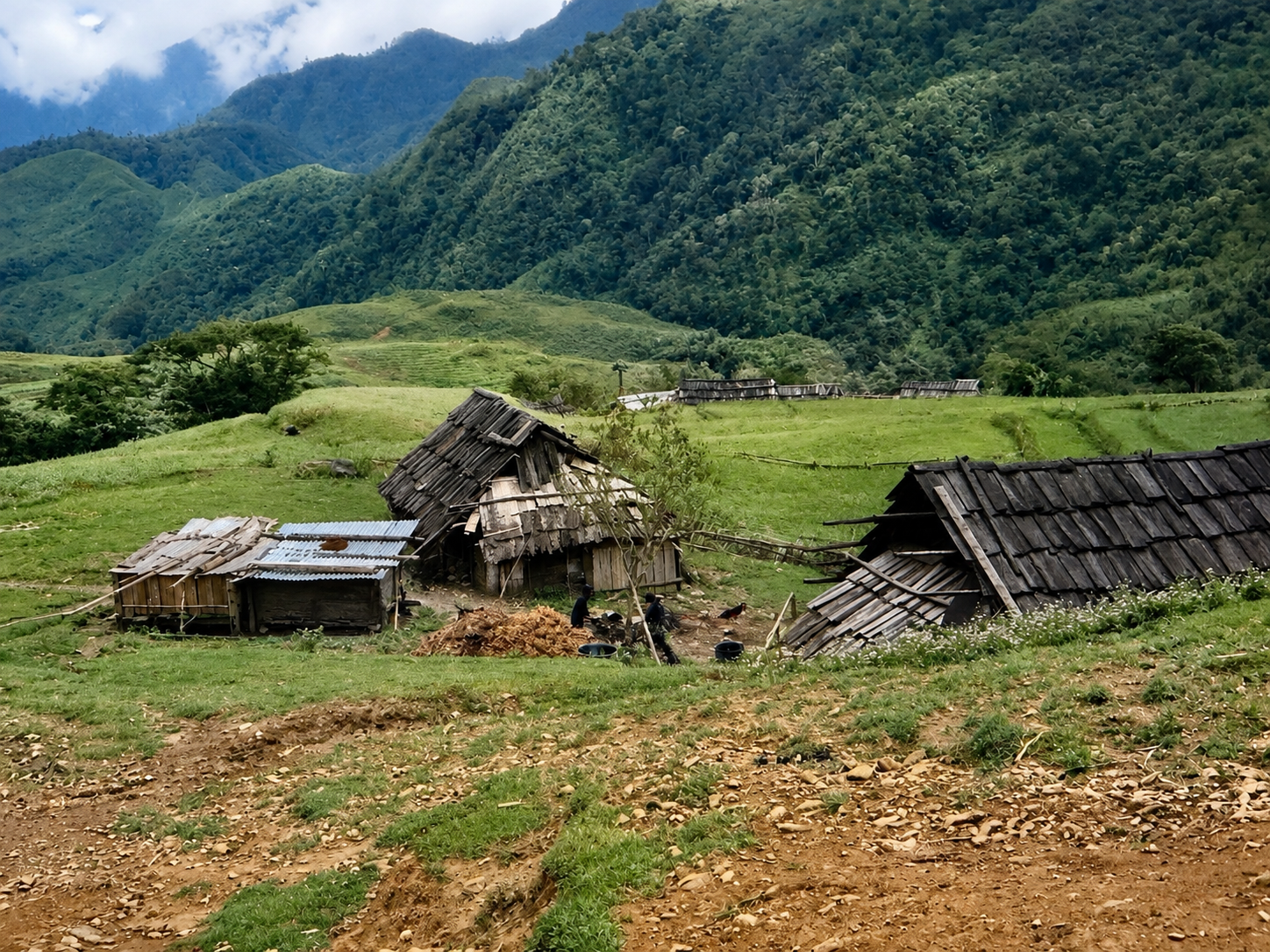
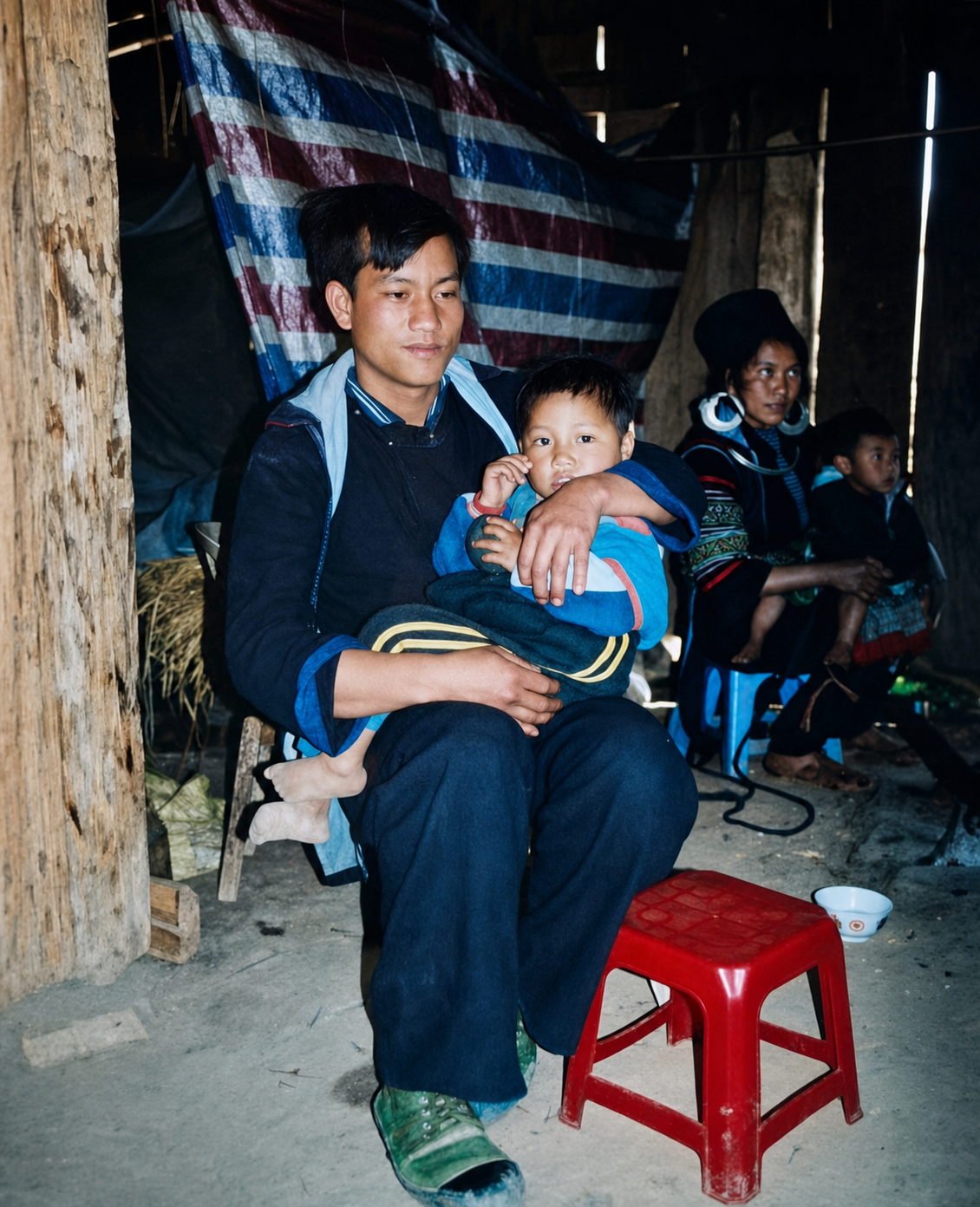
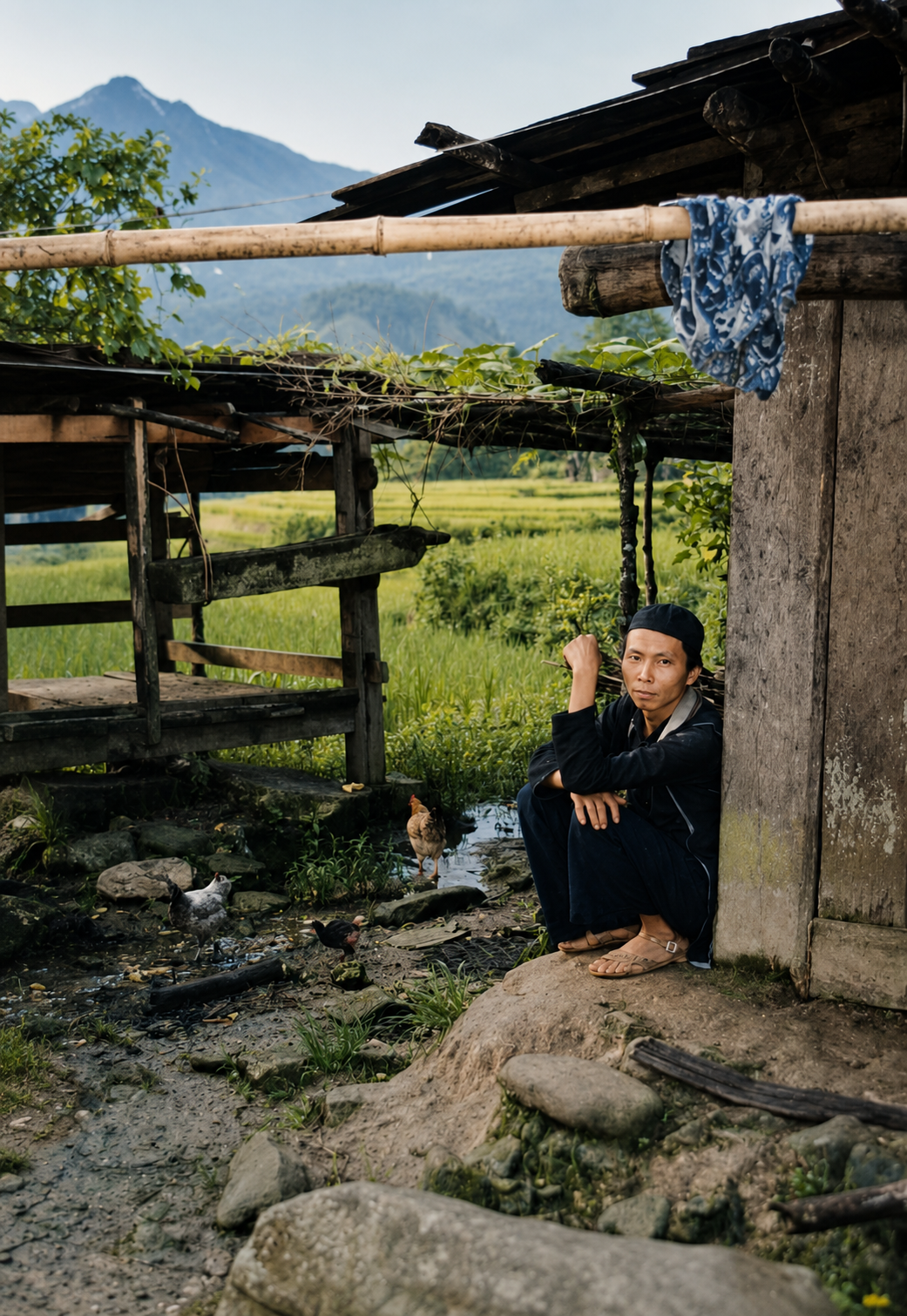
Traditional Hmong homes overlooking their rice fields. In 1998, many villages remained largely self-sufficient, with families relying on agriculture, livestock and the surrounding forests to meet almost every aspect of daily life.
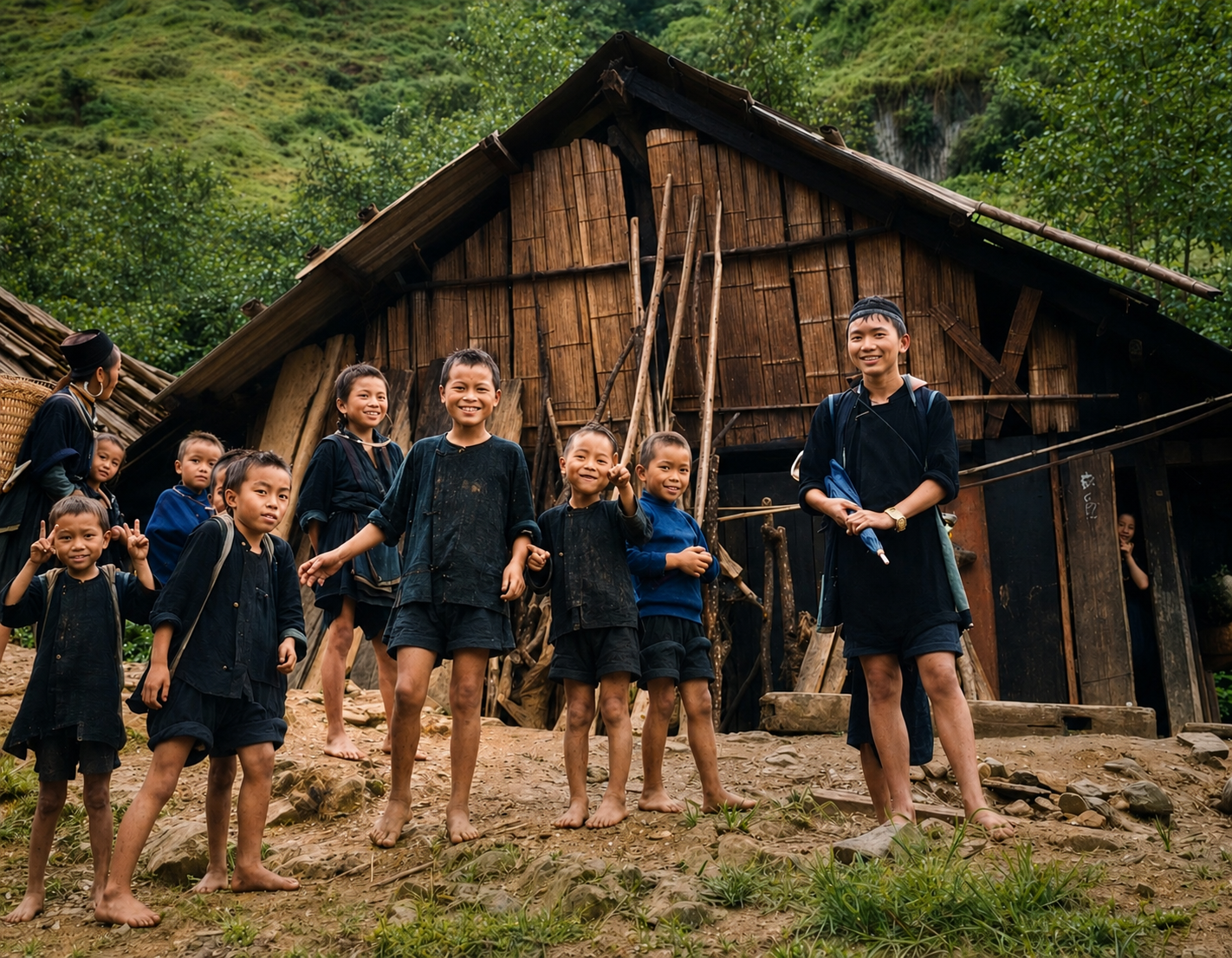
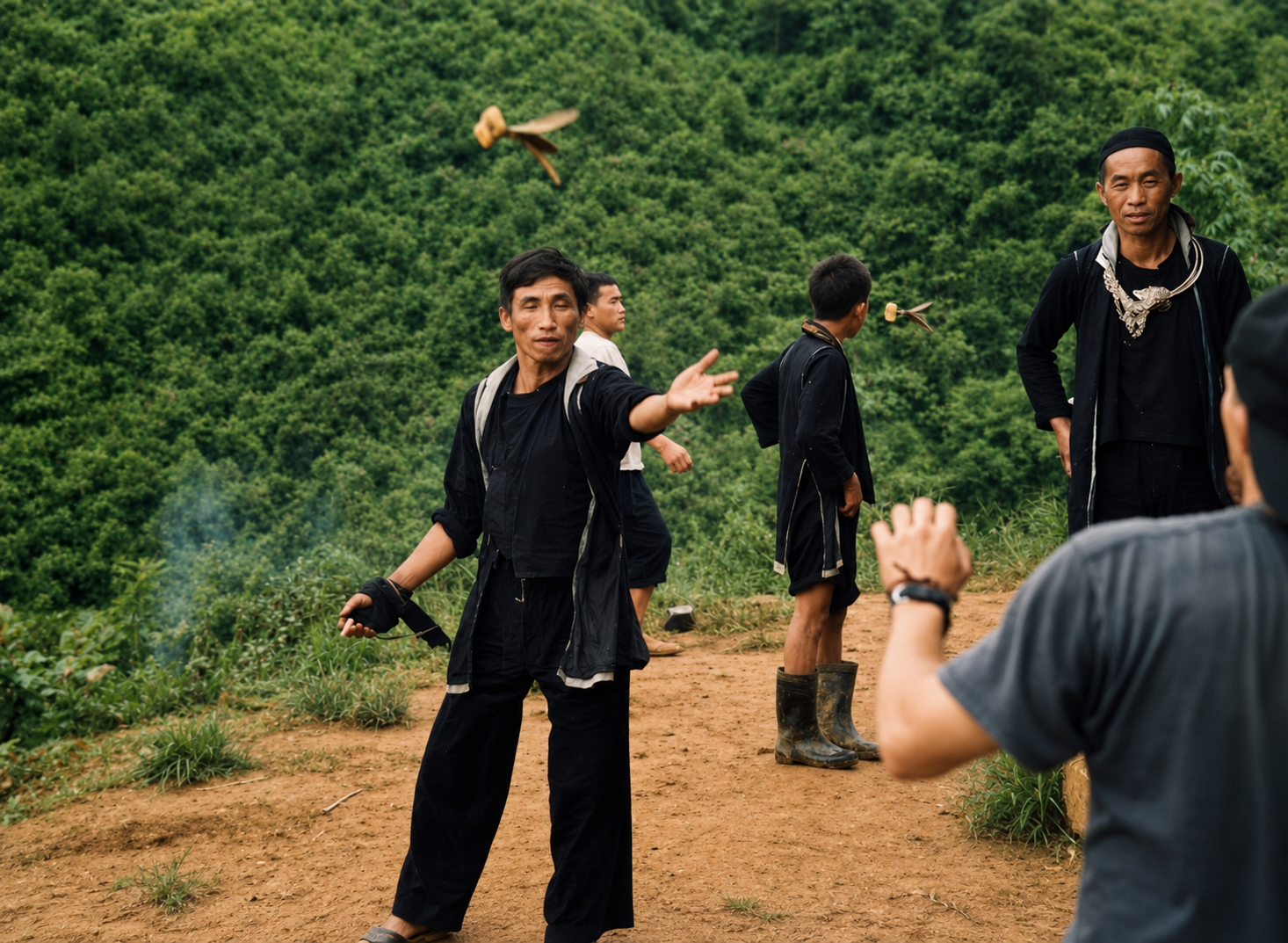
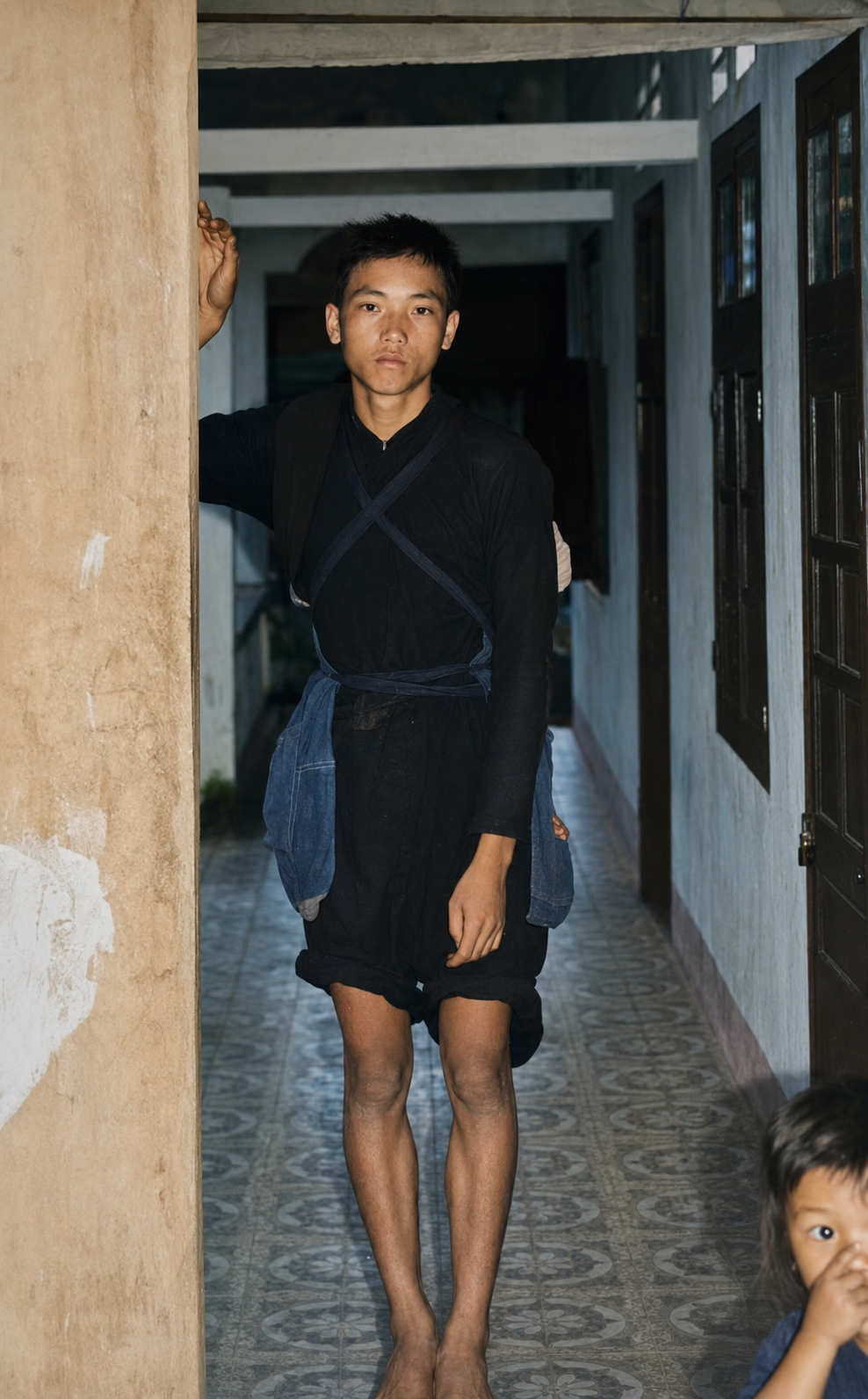
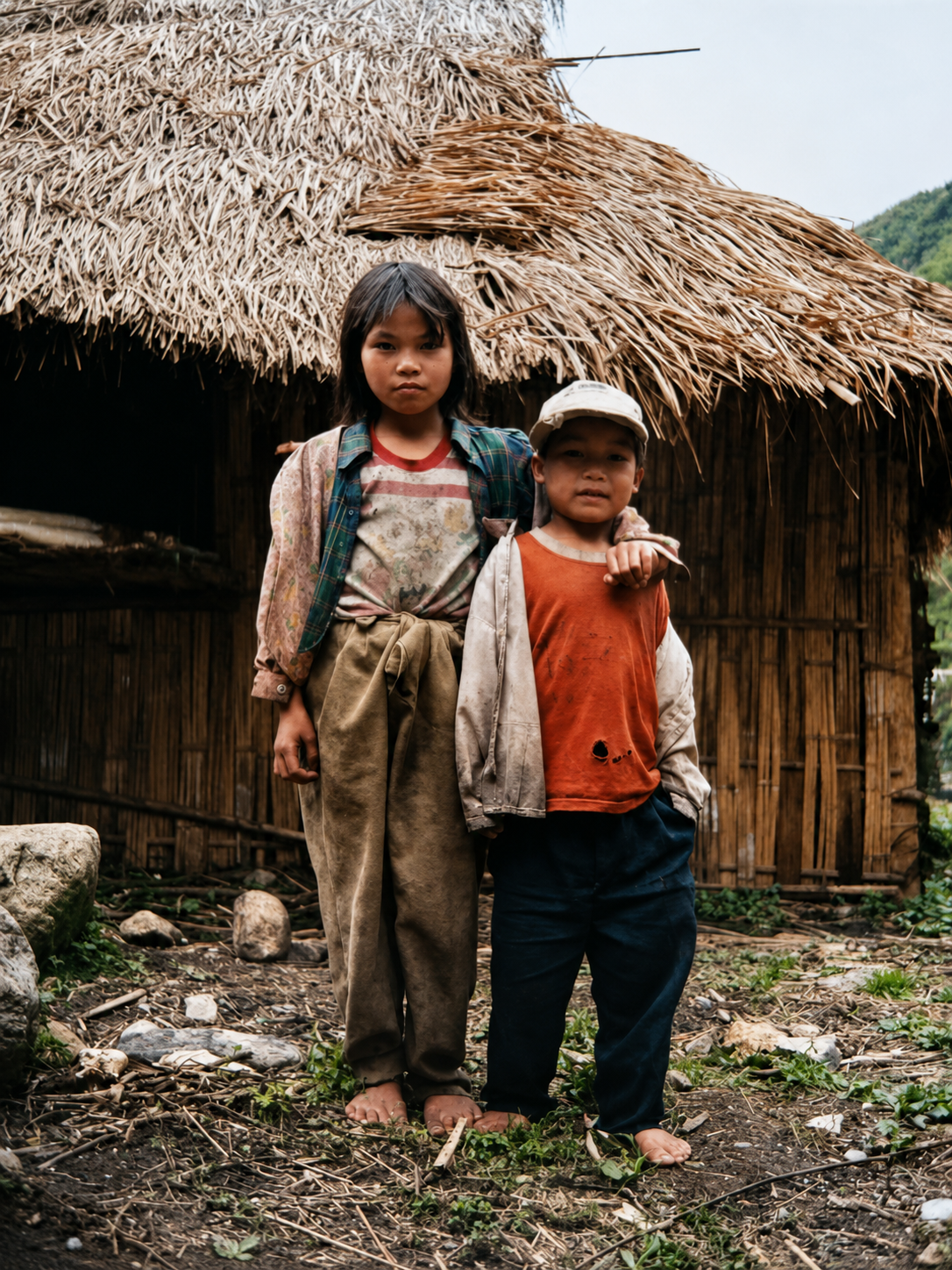
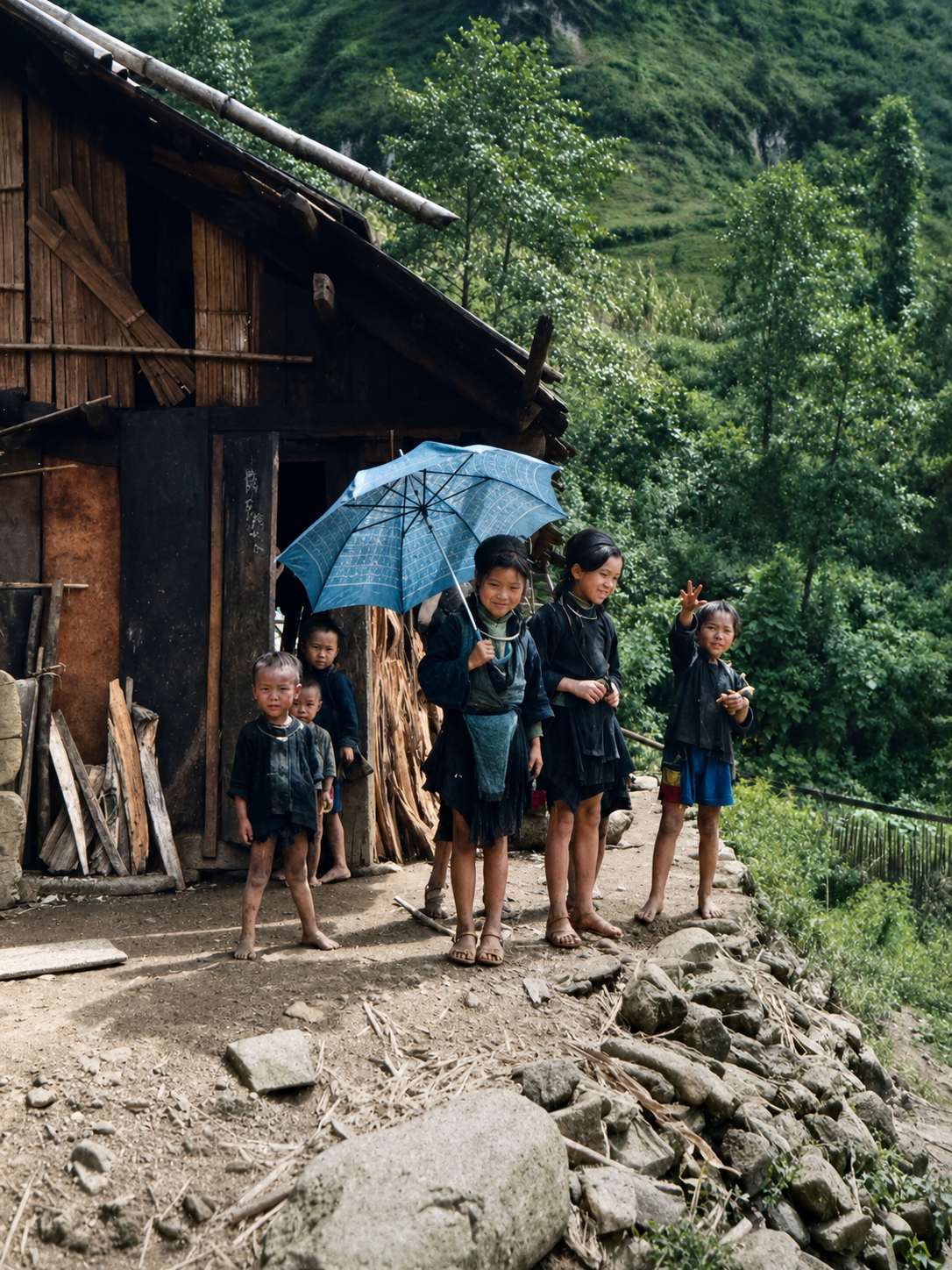
Children outside a traditional Hmong home. Encounters like these became some of my strongest memories of Sapa. Their curiosity, warmth and generosity transformed what began as a scientific expedition into friendships that have lasted a lifetime. Image courtesy of Sean Adams ©
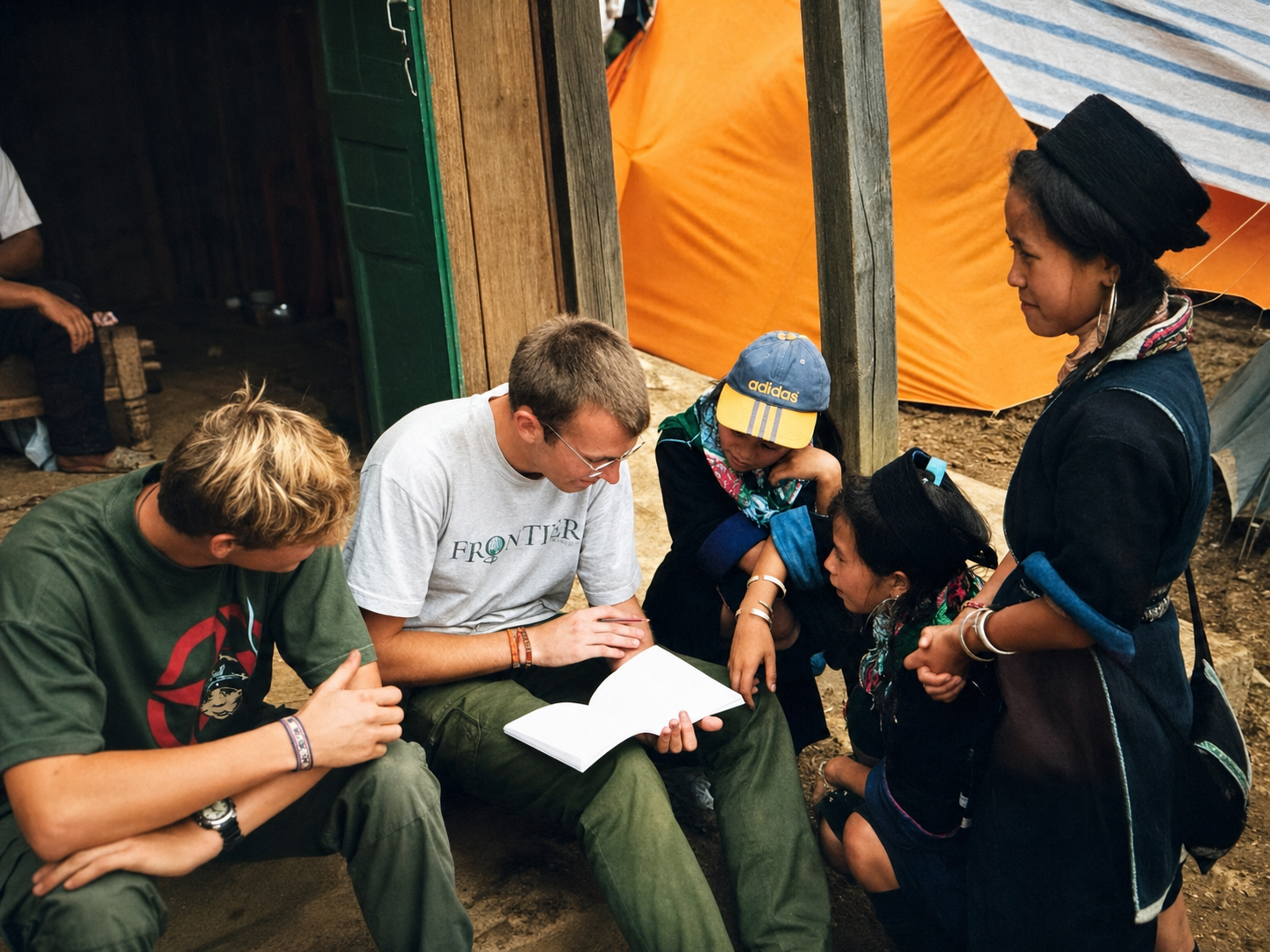
One of the greatest privileges of those thirteen weeks was the opportunity to share everyday life with people whose experiences were so different from my own. We arrived with scientific knowledge, maps and notebooks, but we learned just as much from the communities who welcomed us into their homes and patiently shared their language, traditions and understanding of these mountains. It was never a one-way exchange. We laughed together, worked together, solved problems together and, in doing so, discovered that curiosity and kindness transcend culture, language and nationality. Many of the friendships that began during those weeks have endured for nearly three decades.
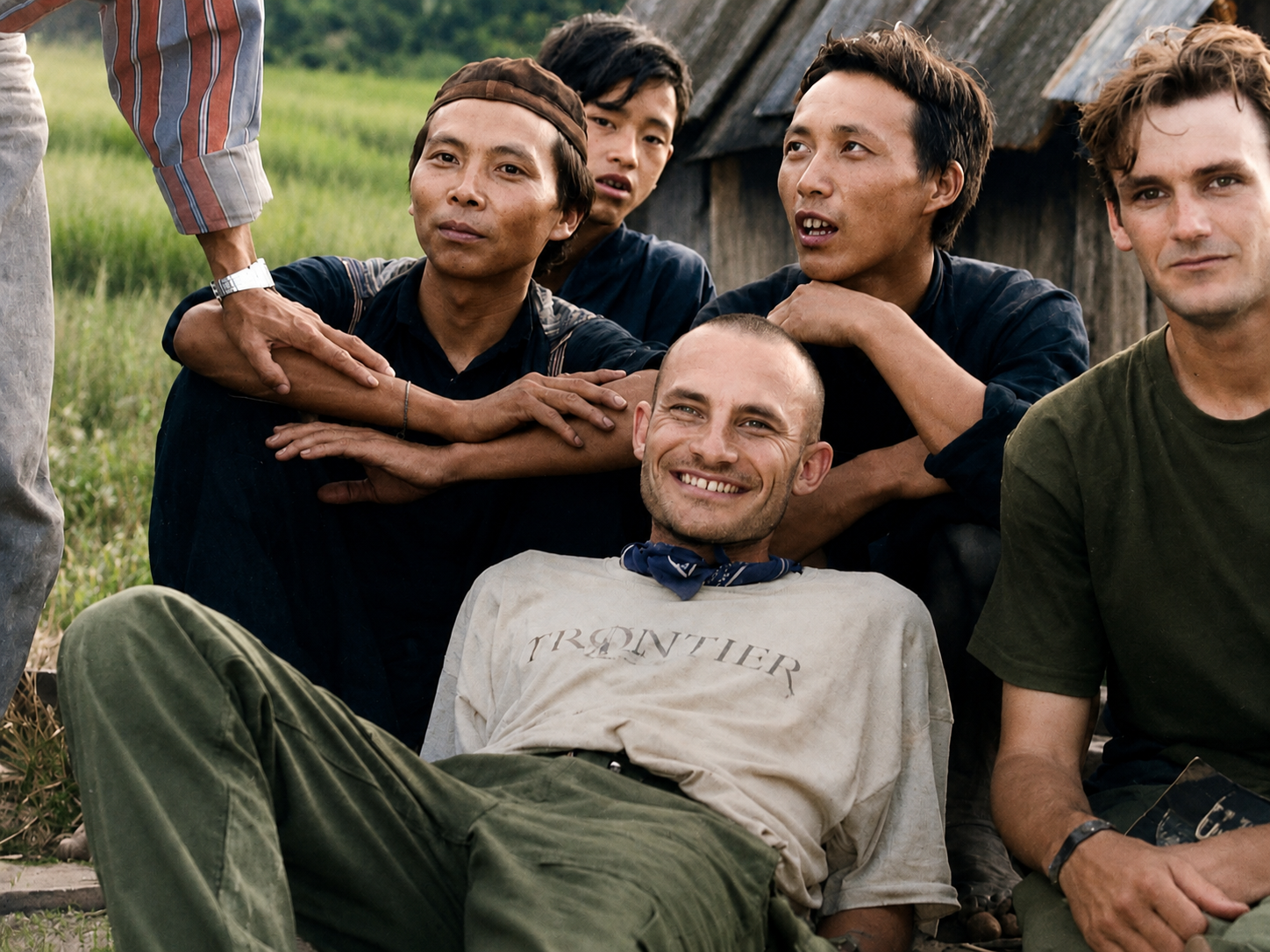
Sharing stories after a day's fieldwork. Some of the strongest memories from the expedition were not made while surveying wildlife, but during simple moments spent talking, laughing and learning from one another. Image courtesy of Sean Adams ©
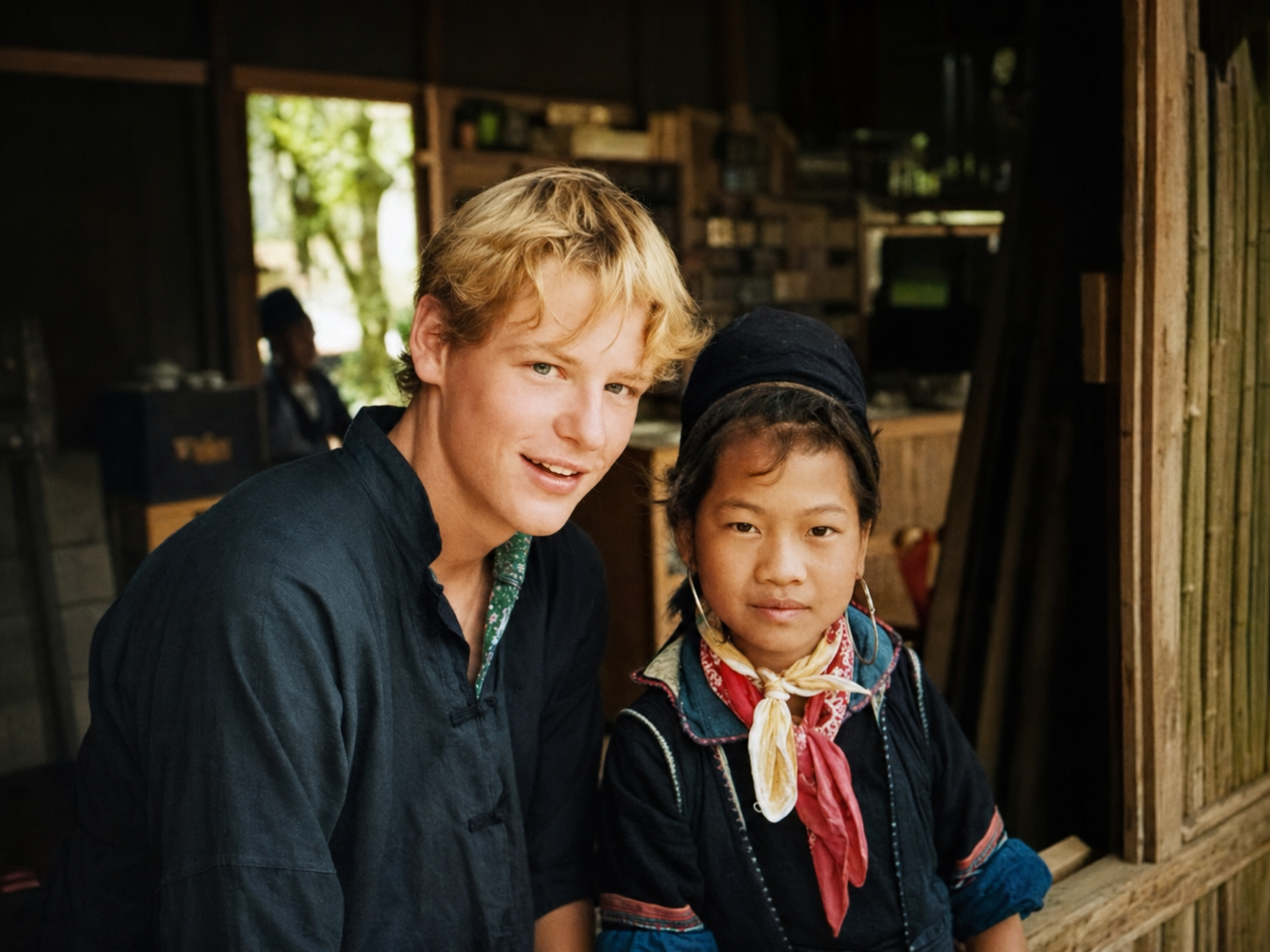
Friendship has no common language. Through gestures, smiles, patience and a growing vocabulary of shared words, we gradually learned about one another's very different worlds.
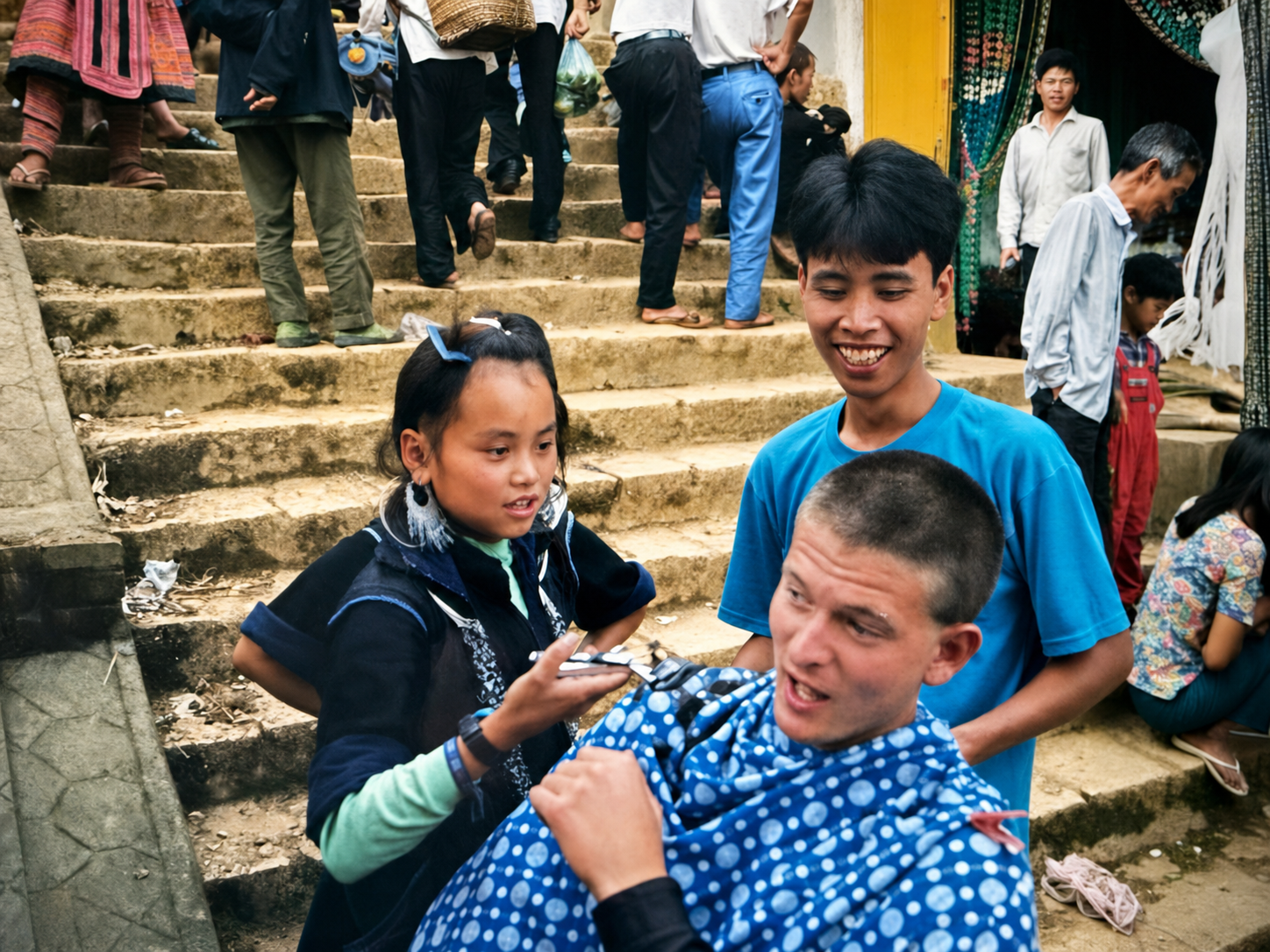
An impromptu haircut in the middle of Sapa. Everyday moments like these often drew a crowd, creating plenty of laughter and reminding us that curiosity flowed in both directions.
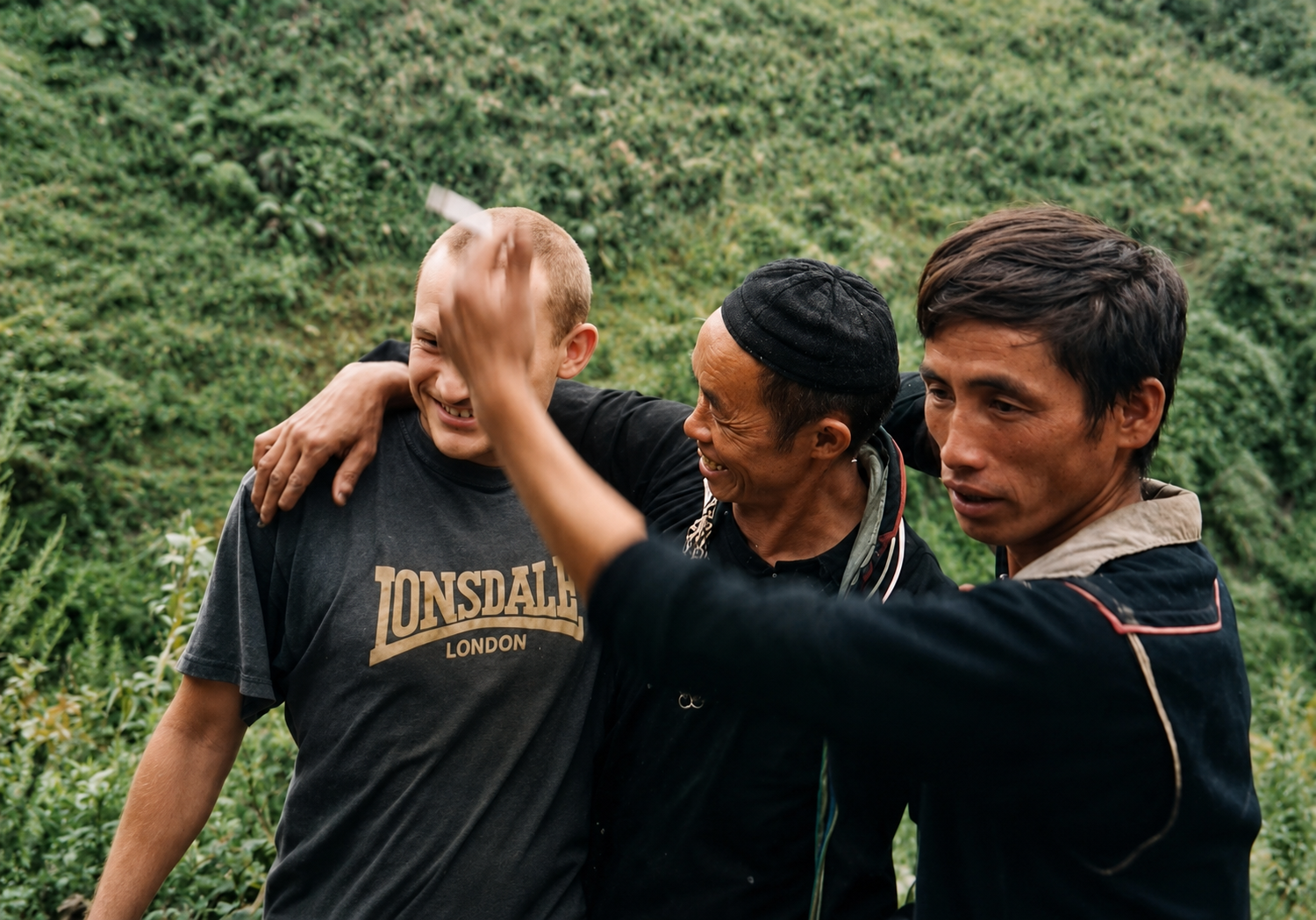
Some photographs tell a story better than words ever could. A hug, a joke, a plume of cigarette smoke and three smiling faces remind me that the greatest discoveries of those thirteen weeks were never recorded in my field notebooks. Image courtesy of Sean Adams ©
Looking Back
When people ask whether Sapa was better in 1998, I always hesitate and find myself wondering, "Better for whom?"
Lived in places are not museum pieces. They change because the people who live within them change too. The children I knew have become parents and grandparents. Farmers also now guide travellers on treks. Dirt tracks have become roads and great forests have gained Nation Park staus and therefore protection. New opportunities have appeared alongside new challenges. It is tempting to compare one era with another, although doing so rarely tells the whole story.
For many Hmong families, living standards have improved beyond anything we might have imagined in the late 1990s. School attendance, once below ten per cent in some of the most remote communities, is now approaching universal levels. Electricity has reached villages that were once lit only by candles and cooking fires, while improved roads have made healthcare, education and markets far more accessible. Infant mortality has fallen, life expectancy has increased and the annual hunger that once accompanied the months before the rice harvest has, for most families, all but disappeared. Life in the mountains remains demanding, and poverty has by no means vanished, but the progress over the past three decades has been extraordinary and unmistakable.
Vietnam's economic transformation has not benefited everyone equally, and inequalities remain both between and within communities. Yet one of the country's greatest achievements has been the improvement in the lives of many of its poorest citizens. Material standards have risen, opportunities have expanded and, perhaps most strikingly, there is a tangible sense of optimism that crosses social and economic boundaries. It is a quality I encounter time and again in villages, towns and cities alike, and one that continues to shape how I see Vietnam today.
The forests we walked so carefully while carrying notebooks and survey equipment are now protected within Hoàng Liên National Park. That alone feels deeply significant. The friendships formed during those months have endured far longer than I ever expected. Some of the young girls who once practised English beside our tents now welcome visitors with remarkable confidence, run businesses, raise families and continue shaping the future of their communities in ways that would have seemed unimaginable to all of us back then.
Despite living in Sapa full time these days, I still catch myself searching for the Sapa I first met. Sometimes I find it in the smell of wood smoke drifting through an early morning market. Sometimes it appears in an old footpath climbing towards the forest, or in the laughter of friends whose children now walk beside us. Places change because people live in them. Memories, though, have a remarkable habit of preserving their own landscapes.
That, perhaps, is what continues to draw me in after all these years. Not a longing for a vanished past, but gratitude for having known these mountains through the generosity of the people who call them home. At ETHOS, those same values continue to shape every walk we share with travellers today. We do not go in search of yesterday. We walk to understand the present, to listen a little more carefully, and to remember that the finest journeys have always begun with curiosity, shared conversation and the kindness of strangers who rarely remain strangers for very long.
Where the Story Led
When I packed my rucksack and left Sapa at the end of those thirteen weeks, I assumed I was closing one chapter of my life. I had come to northern Vietnam to help document one of the country's most remarkable mountain ecosystems, and I left with notebooks full of observations, muddy boots and memories I knew I would never forget. What I didn't realise at the time was that I would spend much of the next three decades returning to and eventually living full time in these mountains.
Many of the people I first met during that expedition became lifelong friends. Some of the curious children who wandered into our camp grew into confident adults with families of their own. Others became guides, community leaders, artisans and entrepreneurs. Several would eventually become integral members of the ETHOS team, helping shape the organisation in ways neither they nor I could possibly have imagined back in 1998.
Looking back now, I can see that those thirteen weeks laid foundations far deeper than a scientific survey. They taught me that conservation is ultimately about people as much as landscapes, and that the strongest protection for culture and nature comes when local communities have genuine opportunities to shape their own future. Those lessons became the philosophy upon which ETHOS was built and continue to guide everything we do today. You can read more about my personal journey here.
If you've enjoyed these memories and would like to understand how they grew into the organisation that ETHOS has become, I'd love to invite you to read more about our story on the About ETHOS page. Many of the friendships that began around a smoky campfire or on a muddy mountain trail nearly thirty years ago continue to shape the journeys we share with travellers today.
History of Sapa, Vietnam: Ethnic Traditions, French Legacy & Modern Tourism
Sapa’s history is written in its landscapes, its people, and its living traditions. To learn more, you can read here.
A Town That Never Stops Transforming
For an even more detailed deep dive into Sapa, its history and its people, you can read our Blog Post “The Beating Heart of the Highlands”
A Note About the Photographs
The photographs throughout this article were taken by Phil Hoolihan and Sean Adams during our time in Sapa in 1998. Originally captured on 35 mm colour film, they have been carefully digitised and professionally restored using modern archival techniques to remove dust, scratches, fading, colour shifts, scanning artefacts and other age-related deterioration. Every effort has been made to preserve the original composition, people, landscapes, colours and documentary integrity of each photograph. Nothing has been added, removed or altered. The images remain faithful historical records of Sapa and the surrounding mountains as we experienced them nearly three decades ago.
These photographs are shared here to preserve and celebrate that history. They remain the copyright of Phil Hoolihan and Sean Adams and may not be copied, reproduced, published, distributed, modified or used in any form without prior written permission from the copyright holders.
© 1998–2026 Phil Hoolihan & Sean Adams. All rights reserved.